NACCHO Aboriginal Heart Health : @HeartAust #NickysMessage “Heart disease is the number one killer of Aboriginal and Torres Strait Islander peoples. “

 “The people you love, take them for heart health checks.

Learn the warning signs of a heart attack and make sure to ring 000 (Triple Zero) if you think someone in your community is having one. Secondly give cigarettes the boot:

If you smoke, stop. I was only a light smoker but it still did me harm, so now I’ve given up.”

Former champion footballer Nicky Winmar always looked after his health, apart from having been a light smoker for years.

Nicky Winmar lifts his jumper in the memorable 1993 St Kilda v Collingwood match. Picture: Wayne Ludbey

But he had a heart attack at only 46, after losing his own father to a heart attack at 50

Read over 50 NACCHO Aboriginal Heart Health articles published in the past 6 years

Watch Nicky’s very moving heart story HERE


What’s a heart health check?

  • All Aboriginal and Torres Strait Islander peoples over the age of 35 should have regular heart health checks. These are simple and painless.
  • A heart health check can be done as part of a normal check up with your ACCHO doctor or health practitioner.
  • Your ACCHO doctor will take blood tests, check your blood pressure and ask you about your lifestyle and your family (your grandparents, parents, brothers and sisters).

  • Give your doctor as much information about your lifestyle and family history as possible.
  • Once your doctor or health practitioner has your blood test results, ask them for your report which will state if you have high (more than 15%); moderate (10-15%) or low risk (less than 10%) of a heart attack or stroke.

Warning signs of a heart attack

  • Pain in the chest – or arms, shoulders, neck, jaw or back
  • Breathless
  • Sick in the stomach
  • Cold sweats
  • Dizzy or light-headed

If someone seems to be having a heart attack:

  • Make them stop what they are doing
  • Give them a tablet of aspirin to chew
  • Call 000 (Triple Zero) for help. The operator will tell you what to do next

Do you have more questions?

The Heart Foundation Helpline is here to answer them. Call 13 11 12 and talk to one of our qualified heart health professionals. If you need an interpreter, call 131 450 and ask for the Heart Foundation.

Download Social media resources

For help also Contact your nearest ACCHO -Download the APP

NACCHO Aboriginal Health Mob : Our first 2018 #NACCHO Members #Deadly good news stories @KenWyattMP #NT #NSW #QLD #WA #SA #VIC #ACT #TAS

1.WA : AHCWA team helps with a Meningococcal vaccination campaign to protect the people living in Central WA Desert Communities

2. QLD: Gurriny Yealamucka Health Service : Hearing loss surgery sounds great for 16 children from Yarrabah FNQ

3.ACT : Winnunga AHCS Healthy Weight Program Epitomises Holistic Health Philosophy

4 .NSW : Riverina Medical and Dental Aboriginal Corporation call for more Indigenous health care professionals to help close the gap

5.VIC : Victorian Aboriginal Health Service VALE GARRY (“GILLA”) JOHN McGUINNESS

6.SA : What is the “Nganampa Health Council Difference”?

7. NT : Katherine West Health , Congress Alice Springs , Anyinginyi Health and Miwatj ACH More Indigenous Health Leaders for Remote Australia

8. Tasmanian Aboriginal Centre : Kipli Kani Open nutrition sessions

 View hundreds of ACCHO Deadly Good News Stories over past 5 years

How to submit a NACCHO Affiliate  or Members Good News Story ?

Our next Deadly News Post is January 25

 Email to Colin Cowell NACCHO Media    

Mobile 0401 331 251

Wednesday by 4.30 pm for publication each Thursday


1.WA : AHCWA team helps with a Meningococcal vaccination campaign to protect the people living in Central WA Desert Communities

AHCWA staff members, Stacee and Veronica recently visited the Central Communities including, Warburton, Warakurna, Blackstone, Jameson, Tjirrkarli, Tjukurla, Wanarn, Wingellina, Cosmo Newberry, Punmu, Jigalong, Parnngurr, Kunawarritji, and Kiwirrkurra to help with a vaccination campaign planned to protect the people living in Central Communities from the recent outbreak of Meningococcal W and to help prevent further spread of the disease.

Under this program, the Meningococcal A, C,W,Y vaccine was offered to all people aged 2 months and older living in these communities.

The team involved were truly amazed at the way the Communities got behind the campaign and encouraged all people, young and old, to have their Meningococcal needles.

The children were incredibly brave and if upset, the families would speak in language to the children.

It was obvious to the team that the children were really listening and took in what the family was saying about how important the needle was.

AHCWA would like to thank all the people from Communities in the NG Lands and Pilbara for the wonderful support that was shown in response to the Meningococcal vaccination campaign.

Also a big thank you to the WACHS teams who invited AHCWA
to participate in this campaign.

2. QLD: Gurriny Yealamucka Health Service : Hearing loss surgery sounds great for 16 children from Yarrabah FNQ

 Up to 16 Aboriginal and Torres Strait Islander kids from Yarrabah will have life-changing hearing health surgery this week at Cairns Day Surgery. Registered Nurse Karen Leeman prepares 7 year old Dallas Sands for surgery on a perforated eardrum. Cairns Post Story and PICTURE: STEWART McLEAN

THE sounds of their tropical home will become much more clearer for 16 children from Yarrabah who have gone under the knife to improve their hearing.

Several health organisations united yesterday to assist the indigenous children with day surgery in Cairns under the federally funded Eye and Ear Surgical Support Services program.

Children ranging from 2-15 years of age were treated for a series of hearing impairments, including perforated eardrums and middle-ear infections.

Aboriginal and Torres Strait Islander children experience some of the highest levels of ear disease and hearing loss in the world. Rates are up to 10 times more than those for non-indigenous Australians.

Gurriny Yealamucka Health Service Aboriginal Corporation nurse Dannielle Gillespie said, due to Yarrabah’s relatively remote location, it was difficult for parents to get their children to doctors.

She said an initial list of 200 children needing hearing loss surgery had to be whittled down to the list treated at Cairns Day Surgery yesterday.

“Hearing loss in Yarrabah is right across all kids,” she said.

“Basically, if the perforations in the ear are not fixed, then that has a future roll-on effect with their speech, their education, their learning abilities – even their social skills, it starts affecting that, too.”

Yarrabah mum Zoe-Ann Sands’ daughter Dallas, 7, had surgery yesterday.

Ms Sands said she was thankful her daughter would finally have better hearing.

Funding for the surgery was provided to health advocacy group CheckUP by the Commonwealth Government

3.ACT : Winnunga AHCS Healthy Weight Program Epitomises Holistic Health Philosophy

Long serving CEO Julie Tongs couldn’t help reminiscing that Winnunga AHCS ACT Government funded Healthy Weight Program replicated the sector’s bedrock philosophy of truly Aboriginal community controlled holistic health services.

‘It means that you can work with a person individually, get to know their real needs, monitor and refer them for support in various ways through the holistic approach to health care that underpins how Winnunga AHCS works,’ Ms Tongs said.

‘This has been a major initiative,’ Ms Tongs said ‘with funding of $640,000 provided over a three year period.’

‘We are confident getting closer to the end of this Program, we will prove decisively that the program has worked and worked brilliantly. It is a preventative health program.’

Ms Tongs said the program which has been operating for over two years now, has achieved a number of significant outcomes, such as:

– Significant participation in the program with over 100 people being monitored on a regular basis

– The employment of a full-time Aboriginal person, Leeton-born, but Cowra raised Christine Saddler as program co-ordinator

– The creation of regular full-time gym training program with a regular clientele

– The training of numerous Winnunga AHCS staff members with the skills to identify at risk clients and to then ensure that once identified they are contacted regularly

‘There is absolutely no doubt this Program works well, within the confines of our sector’s holistic and culturally safe health and wellbeing environment,’ said Christine Saddler. ‘It’s about trust and the ability to work with clients,’ she added.

Christine noted that Winnunga AHCS pushed for the introduction of a Healthy Weight Program with the knowledge that many clients struggled with their weight.

‘There are many reasons why this happens and almost in each case the circumstances are never quite the same’, said Chris, who has worked in the Aboriginal community controlled health sector for many years including at Newcastle’s Awabakal Health Service before joining Winnunga AHCS five years ago.

Chris also explained that once a person joined the program a range of resources were provided, including regular sessions at a local gymnasium. ‘We are running these gym sessions three times a week with each session lasting for one hour. We have tried various formats and tailor the sessions to each person’s needs and capabilities.

‘We have employed personal trainers to assist some of our clients. This has worked. Many of our Program participants have lost a significant amount of weight as well as improved other health factors’ Christine said.


Mother and daughter Lorna and Tammy Cotter, participants of the program from day one, were quick to explain what it has meant for them. Said Mum Lorna ‘Once I heard of this program I joined because I believed it would help me to control my diabetes and to prevent chronic sickness.’

‘I enjoy the program but more importantly it has worked. I have lost 10.5 kilograms and 8 centimetres from my waist and my Hb1Ac diabetes reading has fallen from 10.3 to 8.2.

I have also met many people in our community whom I hadn’t met before. The thing I like most is that I do the program with my daughter and now my granddaughter’.

For daughter Tammy the weight loss figures are also dramatic. ‘I have lost 10.5kg and 16cm from my waist while by BMI (body mass index) has fallen by 3.4kg/m2’.

Tammy said because of the guidance on eating habits the program provided she was eating healthier and her overall health and lifestyle had also improved. ‘It’s something I now will be passing on to my children,’ she said.

Both Tammy and mum Lorna said neither would have been able to afford to access any other health programs and very specifically would definitely not have been able to afford a gym membership or the usually very high cost of personal trainers.

Julie Tongs noted the community feedback on the program had been very positive, adding she had a letter from one male client congratulating Winnunga AHCS on the program while also saying it had made a huge difference to his level of health.

The weight loss factor and its associated many health benefits was also highlighted by Winnunga AHCS’s Executive Director of Clinical Services, Dr Nadeem Siddiqui.

‘Diabetes is a huge health problem within Indigenous communities. We know the Program has helped clients lower the risks of diabetes,’ Dr Siddiqui said. ‘Because we have a dedicated and experienced Aboriginal health worker co-ordinating the program we can make sure participants are not only monitored but directly referred to other Winnunga services as required, be they from our GP’s, nurses, dieticians, psychologists or even our tobacco control workers.’

‘It is by working holistically and just as importantly within a culturally safe Aboriginal health service that this program is succeeding.’ And both he and Christine emphasised that they firmly believed it would not work in other environments.

Dr Siddiqui said strong links had also been established with external mainstream services, for example with The Canberra Hospitals’ Chronic Disease Management Unit, to provide in-reach services to support program clients.

Both emphasised that as many Indigenous people within the ACT suffered from social isolation the fact that they could meet regularly and openly discuss and share issues that impacted on their daily lives, that in itself was a major factor in play to reflect the Program’s overall acceptance and take up within the local Aboriginal community.

And another very simple initiative that had assisted enormously in breaking down barriers was the simple introduction of a post-gym cup of coffee. ‘The Healthy Weight Program is one that works. Not only does it encourage empowerment it also provides support, feedback and guidance that has seen numbers attending gym classes remain high’.

‘We will continue to be innovative’ stated Julie Tongs ‘and have demonstrated this by introducing hypnotherapy sessions and trauma informed yoga, as intergenerational trauma remains a significant factor for many of our people’.

Dr Nadeem noted ‘As a non-Indigenous person and a doctor it opens your eyes as to how holistic medicine in a truly supportive and sensitive environment can work where purely clinical responses don’t.’

4 NSW : Riverina Medical and Dental Aboriginal Corporation call for more Indigenous health care professionals to help close the gap

The key to improving health in Indigenous communities may be to train more Indigenous doctors and health professionals.

CEO of the Riverina Medical and Dental Aboriginal Corporation Darren Carr said Indigenous communities have a mistrust of medical professionals stemming from the Stolen Generations.

“When you look at the Stolen Generations, a lot of removals of kids happened in a health care setting – so if a child had gone to hospital for some reason, that’s where the child would be taken from their parents,” Mr Carr said.

“There is an understandable historical suspicion and mistrust of health services, and that’s why you need Aboriginal health professionals and services – people know they will feel safe going to them, so they’re more likely access those health services.”

Tina Pollard is one of the only Indigenous nurses in Wagga; she said increasing the number of Indigenous health care professionals is vital if we want to close the gap in life expectancy.

“It’s because we come from the same backgrounds and we have more of an understanding of what the issues are for our people, so we can relate to them a lot better and make our clients feel safe,” Ms Pollard said.

“I see it pretty well every day, especially during hospital visits – they feel very uncomfortable when they go to the hospital, so I will go with them to make sure they’re okay, because they’re more likely to come back for followups if they have a good experience.”

Tina hopes she can be a role model for other Indigenous students.

“If we have more people out there showing that this is what aboriginal people can do, then they’ll know they can do it too.”

5.VIC : Victorian Aboriginal Health Service VALE GARRY (“GILLA”) JOHN McGUINNESS

The Victorian Aboriginal Health Service is sad to learn of the passing of Garry (Gilla) John McGUINNESS on the evening of Tuesday 9 January 2018.

Gilla (as he is better known in the community) died peacefully at St Vincent’s Hospital in Melbourne after several days. He is a member of a large family and he leaves behind him a son, John (JBL) and a granddaughter, sisters and brothers and many nieces and nephews.

Gilla graduated from Koori Kollij in the mid-1980s as an Aboriginal Health Worker. He has been associated with the Victorian Aboriginal Health Service for many years as a patient, a member and for several years as a Director on the VAHS Board. Many will remember and talk about Gilla and his family and their close association with the Victorian Aboriginal Health Service. Even as a young person frequenting Fitzroy where VAHS first commenced, Gilla was closely linked in some way.

Gilla always talked about the 3CR Radio Station based in Smith Street, Fitzroy and how he brought Radio participation through the airways for prisoners. He spoke of his long association with 3CR (over 30 or more years) and about being a member of the local ATSIC Melbourne Aboriginal Regional Council where he was part of an elective representation of Aboriginal people in Melbourne.

In his latter years Gilla used the VAHS Healthy Lifestyle Gym and the services of VAHS until he became too sick to come to continue.

Board of Directors and staff pay their condolences to the family of Gilla

6.SA : What is the “Nganampa Health Council Difference”?

A: The Nganampa Health Difference is a term we use to describe the experience that is on offer when you’re working at NHC. We strive to empower people to make a difference on the frontline of primary healthcare for Indigenous Australians. Working and living remotely can be challenging but our people tell us that this is where their sense of fulfilment comes from! They also value the learning culture at NHC, our professional practice and processes, and the support that they feel we provide, to give them what they and their patients need. You will feel a part of our close, collaborative community and have the opportunity to make a direct impact on our communities! The work we do really improves the lives of the communities we work for. Read more about our accomplishments in the regions here

Q: What are some of the benefits of working for NHC?

A: In return for your professionalism, commitment and care, Nganampa Health brings you a truly unique and satisfying career opportunity. We offer excellent financial rewards and the chance to develop a remarkable skill set and experience a different side to Australia. Working remotely can be challenging, so we’re pleased to be able to provide great financial benefits. For example, people working for us on the APY lands tend to earn a higher salary than they would in more mainstream contexts, and they live in rent-free, fully furnished housing with paid electricity, internet and phone line. Please note though – the real benefit is making a difference in the community so if money is your only motivation, you won’t last long!

Q: What if I am not looking for a permanent role?

A: A Locum role could be for you! With highly competitive remuneration and the flexibility of a fly-in-fly-out locum role you can have the opportunity to make a positive impact and also spend time with your family back home. The level of flexibility and diversity offered by these positions means that there is still autonomy in the services you can provide and you’re not limited to supporting only one particular patient type. In all our roles at NHC, you can work with everyone from newborns to the elderly and see all kinds of medical conditions including emergencies, elderly issues, chronic disease as well as the opportunity to provide health advice and disease prevention.

Q: What qualifications or skills do I need to have?

A: NHC employs people in roles from nurses, doctors and aboriginal health workers to personal carer’s at our aged care facility and corporate staff in environmental health, logistics and finance. All of our people come to NHC with a diverse range of skills and we are always in support for people who want to further their education even more! If you have the relevant qualifications listed in our job ads and a particular interest or passion within the areas NHC covers, then please get in touch with us.

Our people all share the desire to make a real difference on the frontline of primary health, whether working directly with clients or in the office. Our people are professional, committed and really care.

Q:  What positions are currently available?

A: Please see our current opportunities page for positions that are currently advertised.  If you don’t see a suitable position right now, you can also express your interest by contacting us here. If you want to find out more about the different career opportunities at NHC, read some of our staff stories and hear about their journey so far!

7. NT : Katherine West Health , Congress Alice Springs , Anyinginyi Health and Miwatj ACH More Indigenous Health Leaders for Remote Australia

 The Turnbull Government will support a further 14 Northern Territory Aboriginal health services staff members to undertake specialised leadership and management training, as it continues moves to bolster the indigenous health workforce.
The Minister for Indigenous Health, Ken Wyatt AM, said the new participants would bring the total number of people supported by the Indigenous Remote Service Delivery Traineeship program to 66.
 
Customised training will help equip these outstanding nominees to become future leaders in the Aboriginal community controlled health sector,” Minister Wyatt said. 
 
Building a strong indigenous health workforce is a key factor in closing the gap.
“Increasing Aboriginal and Torres Strait Islander people representation at all levels of the health system, including administration, service delivery, policy, planning and research is crucial.”
The Turnbull Government’s $715,535 commitment brings the total Commonwealth investment in the Northern Territory traineeship program to more than $5 million since 2012.
 
“Strong local leaders will help ensure Aboriginal and Torres Strait Islander people living in remote communities in the NT have access to high-quality, culturally appropriate and comprehensive primary health care,” said Minister Wyatt.
The successful trainees will receive a nationally accredited Diploma of Leadership and Management. The new funding will be shared between four health services:
  • Katherine West Health Board Aboriginal Corporation
  • Central Australian Aboriginal Congress Aboriginal Corporation
  • Anyinginyi Health Aboriginal Corporation
  • Miwatj Aboriginal Health Corporation

8. Tasmanian Aboriginal Centre : Kipli Kani Open nutrition sessions


Aboriginal Community Controlled and Health Sector #JobAlerts #Doctors #Nursing @Nganampa_Health @IUIH_ @CAACongress This week #TopJob #CEO Pangula Mannamurna ACCHO SA

This weeks #Jobalerts

Please note  : Before completing a job application please check with the ACCHO that the job is still open

This weeks top job

Chief Executive Officer – Pangula Mannamurna Aboriginal Corporation (Mt Gambier, Sth. Aust.)

Pangula Mannamurna Aboriginal Corporation is a Community Controlled Health Service located in Mt Gambier that is committed to closing the health, well-being and quality of life inequity gap experienced by Aboriginal and Torres Strait Islander peoples throughout the Limestone Coast.

The Chief Executive Officer will provide day to day leadership to the Corporation to

• ensure the implementation of the Board’s vision and strategic direction,
• build an organisational culture that taps into the resilience, experience and knowledge of Aboriginal people to improve health outcomes for Aboriginal and Torres Strait Islander people within the Limestone Coast, and
• ensure that the effort of Pangula Mannamurna’s staff is in line with the Corporation’s strategic plan.

You will be a consummate professional experienced in working effectively across the domains of strategy, positive health outcomes and practical support. You will be appropriately qualified with senior management experience within an organisation providing quality health programs from a position of cultural competence. Other skills in your repertoire will include strategic thinking, visionary leadership, negotiation and communication abilities and financial acumen.

Applications close Friday 16 February 2018.

A copy of the job and person specifications may be downloaded from here.

Applicants will need to address the essential requirements in their application.

Phone enquiries directed to Jeff Mountford on 08 8273 7200.

Applications in Word format only should be forwarded by email to jeff.mountford@ahcsa.org.au


How to submit a Indigenous Health #jobalert ? 

NACCHO Affiliate , Member , Government Department or stakeholders

If you have a job vacancy in Indigenous Health 

Email to Colin Cowell NACCHO Media

Tuesday by 4.30 pm for publication each Wednesday


Job Ref : N2018 -1

ACCHO Member : Congress Alice Springs

Position: Childcare Educational Leader

Location : Alice Springs

Closing Date : 9 February

More Info apply :

Job Ref : N2018 -2

ACCHO Member : Congress Alice Springs

Position:   Aboriginal AOD Care Management Worker

Location : Alice Springs

Closing Date : 22 January

More Info apply :

Job Ref : N2018 -3

ACCHO Member : Congress Alice Springs

Position: Continuous Quality Improvement Facilitator

Location : Alice Springs

Closing Date : 5th February

More Info apply :

Job Ref : N2018 -4

ACCHO Member : Congress Alice Springs

Position: MIDWIFE & WOMENS HEALTH NURSE

Location : Alice Springs

Closing Date : 22 January

More Info apply :

Job Ref : N2018 -5

ACCHO Member : Congress Alice Springs

Position: REMOTE AREA NURSES/ABORIGINAL HEALTH PRACTITIONERS

Location : Alice Springs

Closing Date : 22 January

More Info apply :

Job Ref : N2018 -6

ACCHO Member : Congress Alice Spring

Position : Dentist

Location : Alice Springs

Closing Date : 30 january

More Info apply :

Job Ref : N2018 -7

ACCHO Member : Nunyara Aboriginal Health Service

Position: GP. General Practitioner

Location : Wyalla SA

Closing Date : 31 January

More Info apply :

Job Ref : N2018 -8

ACCHO Member : Spinifex Health Service

Position: Remote Chronic Disease Nurse

Location : Tjunjuntjara via Kalgoorlie WA

Closing Date : 9 February

More Info apply :

Job Ref : N2018 -9

ACCHO Member : Nganampa Health Service

Position: Remote Area Nurses and Midwives

Location : Far NW region of SA

Closing Date : 2 February

More Info apply :

Job Ref : N2018 -10

ACCHO Member : Ngaanyatjarra Health Service

Position: Alcohol & Other Drugs Counsellor

Location : Remote WA

Closing Date : 29 January

More Info apply :

Job Ref : N2018- 11

ACCHO Member : Ngaanyatjarra Health Service

Position: Care Coordinator Integrated Chronic Disease Program

Location : Remote WA

Closing Date : 22 January

More Info apply :

Job Ref : N2018-12

ACCHO Member : Ngaanyatjarra Health Service

Position: Men’s Sexual Health Nurse

Location : Remote WA

Closing Date : 22 january

More Info apply :

Job Ref : : N2018-13

ACCHO Member : Ngaanyatjarra Health Service

Position: Primary Health Care Nurse

Location : Remote WA

Closing Date : 22 January

More Info apply :

Job Ref : N2018-14

ACCHO Member : Institute for Indigenous Urban Health

Position: Senior Manager – Birthing in Our Community

Location : Brisbane

Closing Date : 26 January

More Info apply :

Job Ref : N2018-15

ACCHO Member : Institute for Indigenous Urban Health

Position: Business Intelligence Analyst / Developer

Location : Brisbane

Closing Date : 26 January

More Info apply :

Job Ref : 2018-16

ACCHO Member : Institute for Indigenous Urban Health

Position: Early Years Education Coordinator

Location : Brisbane

Closing Date : 2 February

More Info apply :

Job Ref : N2018-17

ACCHO Member : Institute for Indigenous Urban Health

Position: Clinical Optometrist

Location : Brisbane

Closing Date : 31st January

More Info apply :

Job Ref : N2018-18

ACCHO Member : Institute for Indigenous Urban Health

Position: Medical Information System Trainer / Data Support Officer

Location : Brisbane

Closing Date : 19th January

More Info apply :

Job Ref : N2018-19

ACCHO Member : Institute for Indigenous Urban Health

Position: Legal Administration Support Officer

Location : Brisbane

Closing Date : 19th January

More Info apply :

Job Ref : N2018-20

ACCHO Member : Institute for Indigenous Urban Health

Position: Podiatrist

Location : Brisbane

Closing Date : 19th January

More Info apply :

Job Ref : N2018-21

ACCHO Member : Institute for Indigenous Urban Health

Position: Community Liaison Officer

Location : Brisbane

Closing Date : 19th january

More Info apply :

Job Ref : N2018-22

ACCHO Member : Institute for Indigenous Urban Health

Position: Trainer – Aged Care and Disability

Location : Brisbane

Closing Date : 2nd February

More Info apply :

Job Ref : N2018-23

ACCHO Member : Institute for Indigenous Urban Health

Position: Team Leader, Family Support Worker

Location : Brisbane

Closing Date : 25th January

More Info apply :

Job Ref : N2018-24

ACCHO Member : Institute for Indigenous Urban Health

Position: Paediatric Coordinator

Location : Brisbane

Closing Date : 26th January

More Info apply :

Job Ref : N2018-25

ACCHO Member : Institute for Indigenous Urban Health

Position: Early Years Operations Manager

Location : Brisbane

Closing Date : 26th January

More Info apply :

Job Ref : N2018-26

ACCHO Member : Wellington ACCHO

Position: Aboriginal Health Worker (Counsellor) – SEWB

Location : wellington NSW

Closing Date : 31ST January

More Info apply :

Job Ref : N2018-27

ACCHO Member : Wellington ACCHO

Position: Drug & Alcohol Worker- SEWB

Location : Wellington NSW

Closing Date : 31ST January

More Info apply :

Job Ref : N2018- 28

ACCHO Member :Wellington ACCHO

Position: Care Coordinator – GWAHS

Location : Wellington NSW

Closing Date : 18 January

More Info apply :

Job Ref : N2018-29

ACCHO Member : Wellington ACCHO

Position: Aboriginal Outreach Worker – GWAHS

Location : Wellington NSW

Closing Date : 18th January

More Info apply :

Job Ref : N2018 -30

ACCHO Member : South West Aboriginal Medical Services

Position: Health Promotions Officer

Location : Bunbury WA

Closing Date : 25th january

More Info apply :

Job Ref : N2018 -31

ACCHO Member : Yerin Aboriginal Medical Services

Position: Mental Health Worker

Location : Wyong NSW

Closing Date : 23th January

More info

NACCHO Aboriginal #MentalHealth Alert : @AMAPresident calls for a national, overarching mental health “architecture”, and proper investment in both #prevention and #treatment of mental illnesses


“Almost one in three (30 per cent) of Indigenous adults suffered high or very high levels of psychological distress in 2012-13. Indigenous adults are 2.7 times as likely as non-Indigenous adults to suffer these levels of distress.

General practitioners manage mental health problems for Indigenous Australians at 1.3 times the rate for other Australians, and mental health-related conditions accounted for 4.4 per cent of hospitalisations of Indigenous people in 2012-13.”

AMA President, Dr Michael Gannon – Source: Australian Institute of Health and Welfare

Download the AMA 2018 Position Paper

Mental-Health-2018- Position-Statement

Read over 168 NACCHO Mental Health articles published over 5 Years

The AMA is calling for a national, overarching mental health “architecture”, and proper investment in both prevention and treatment of mental illnesses.

Almost one in two Australian adults will experience a mental health condition in their lifetime, yet mental health and psychiatric care are grossly underfunded when compared to physical health, AMA President, Dr Michael Gannon, said today.

Releasing the AMA Position Statement on Mental Health 2018, Dr Gannon said that strategic leadership is needed to integrate all components of mental health prevention and care.

“Many Australians will experience a mental illness at some time in their lives, and almost every Australian will experience the effects of mental illness in a family member, friend, or work colleague,” Dr Gannon said.

“For mental health consumers and their families, navigating the system and finding the right care at the right time can be difficult and frustrating.

“Australia lacks an overarching mental health ‘architecture’. There is no vision of what the mental health system will look like in the future, nor is there any agreed national design or structure that will facilitate prevention and proper care for people with mental illness.

“The AMA is calling for the balance between funding acute care in public hospitals, primary care, and community-managed mental health to be correctly weighted.

“Funding should be on the basis of need, demand, and disease burden – not a competition between sectors and specific conditions. Policies that try to strip resources from one area of mental health to pay for another are disastrous.

“Poor access to acute beds for major illness leads to extended delays in emergency departments, poor access to community care leads to delayed or failed discharges from hospitals, and poor funding of community services makes it harder to access and coordinate prevention, support services, and early intervention.

“Significant investment is urgently needed to reduce the deficits in care, fragmentation, poor coordination, and access to effective care.

“As with physical health, prevention is just as important in mental health, and evidence-based prevention can be socially and economically superior to treatment.

“Community-managed mental health services have not been appropriately structured or funded since the movement towards deinstitutionalisation in the 1970s and 1980s, which shifted much of the care and treatment of people with a mental illness out of institutions and into the community.

“The AMA Position Statement supports coordinated and properly funded community-managed mental health services for people with psychosocial disability, as this will reduce the need for costly hospital admissions.”

The Position Statement calls for Governments to address underfunding in mental health services and programs for adolescents, refugees and migrants, Aboriginal and Torres Strait Islander people, and people in regional and remote areas.

It also calls for Government recognition and support for carers of people with mental illness.

“Caring for people with a mental illness is often the result of necessity, not choice, and can involve very intense demands on carers,” Dr Gannon said.

“Access to respite care is vital for many people with mental illness and their families, who bear the largest burden of care.”

The AMA Position Statement on Mental Health 2018 is available at https://ama.com.au/position-statement/mental-health-2018

Background

  • 7.3 million Australians (45 per cent) aged 16 to 85 will experience a common mental health disorder, such as depression, anxiety, or substance use disorder, in their lifetime.
  • Almost 64,000 people have a psychotic illness and are in contact with public specialised mental health services each year.
  • 560,000 children and adolescents aged four to 17 (about 14 per cent) experienced mental health disorders in 2012-13.
  • Australians living with schizophrenia die 25 years earlier than the general population, mainly due to poor heart health.
  • Almost one in three (30 per cent) of Indigenous adults suffered high or very high levels of psychological distress in 2012-13. Indigenous adults are 2.7 times as likely as non-Indigenous adults to suffer these levels of distress.
  • General practitioners manage mental health problems for Indigenous Australians at 1.3 times the rate for other Australians, and mental health-related conditions accounted for 4.4 per cent of hospitalisations of Indigenous people in 2012-13.
  • About $8.5 billion is spent every year on mental health-related services in Australia, including residential and community services, hospital-based services (both inpatient and outpatient), and consultations with GPs and other specialists.

(Source: Australian Institute of Health and Welfare)

Support Contact your nearest ACCHO or


NACCHO Aboriginal Health and @Zockmelon #Saveadate : Download 53 Pages of 2018 #Indigenous Days #Health days and events calendar HERE

NACCHO Weekly Member Service Aboriginal Health

2018 # Save A Date as at 16 January 2018

Aboriginal Conferences, Events, Workshops, Health Awareness Days

For many years ACCHO organisations have said they wished they had a list of the many Indigenous “ Days “ and Aboriginal health or awareness days/weeks/events.

With thanks to our friends at ZockMelon here they both are!

It even has a handy list of the hashtags for the event.

Download the 50 Page 2018 Health days and events calendar HERE

2018-Health-Days-and-Events-Calendar-by-Zockmelon

Download the 3 Page 2018 Aboriginal / Health  days and events calendar HERE or view below  

NACCHO 2018 Save a Date as at Jan 16

We hope that this document helps you with your planning for the year ahead.

Events have been selected on their basis of relevance to the broad Aboriginal health promotion and public health community in Australia.

Every Tuesday we will update these listings with new events and What’s on for the week ahead

To submit your events or update our info

Contact: Colin Cowell www.nacchocommunique.com

NACCHO Social Media Editor Tel 0401 331 251

Email : nacchonews@naccho.org.au

#Closingthegap featured Save a date Closing 31 March 2018

We want your views on the future of Closing the Gap. What is important, what worked and how can we do better?

“We have to be there to be part of the conversation, so let’s get with it.” – Chris Sarra, Co-Chair Indigenous Advisory Council, and Founder and Chair, Stronger, Smarter Institute

We’re interested in getting your thoughts on a few questions below. You don’t need to answer every question.

Alternatively, you may prefer to upload a submission.

Once you’ve completed your response, click ‘Next’ and we will ask you a few questions about yourself.

Read the discussion paper for more information on the Closing the Gap Refresh.

Submissions close 5pm 31 March 2018


DATE

EVENT

#Hashtag

January

26/1/2018 Australia /Invasion/Survival Day #InvasionDay

#SurvivalDay

February

 TBA  Closing the Gap Govt Report
11/2 – 17/2/2018 National Sexual Health Week #NationalSexualHealthWeek
12/2-18/2/2018 Healthy Weight Week #HealthyweightWeek #AHWW2018
13/2/2018 Apology Day #StolenGensHeroes
20/02/2018 World Day of Social Justice #socialjusticeday
25/2-3/3/2018 Hearing Awareness Week #HearingAwarenessWeek

March

All March Australian Women’s History Month
3/3/2018 World Hearing Day
4/3-10/3 2018 Kidney Health Week #KidneyHealthWeek
8/03/2018 International Women’s Day #InternationalWomensDay #BeingBornaGirl
8/03/2018 World Kidney Day #WorldKidneyDay                       #move4kidneys
16/3/2018 Close the gap Day #Closethegapday
16/3/2018 National Day of Action

Against bullying

#BullyingNoWay
18/3-25/3/2018 Cultural Diversity Week
19/3-25/3/2018 A taste of harmony #TasteofHarmony
20/03/2018 World Oral Health Day #WOHD2018
21/3/2018 International Day for the Elimination of Racial Discrimination #jointogether

#standup4human rights #fightracism

April

31/3-9/4 2018


National Youth Week


#NationalYouthWeek

2/4/2018 World Autism Awareness Day #WorldAutismAwarenessDay #LightitUpBlue

#LIUB

7/4/2018 World Health Day
23/4-29/42018 World Immunisation Week
25/4/2018 World Malaria Day #EndMalaria

May

6/5-12/5/2018 Heart Week #HeartWeek
7/5/2018 National Domestic Violence Remembrance Day
12/5/2018 International Nurses day #IND2017
13/05-19/5/2018 Food Allergy Awareness Week #FoodallergyWeek
15/5- 21/5/2018 National Families Week #FamiliesWeek
18/5/2018 HIV Vaccine Awareness Day #HVDA2018
21/5-28/5/2018 National Palliative Care Week #npcw18

#dying to talk

26/05/2018 National Sorry Day #NationalSorryDay
26/05-2/6/2018 National Reconciliation Week #NRW2018
31/05/2018 World No Tobacco Day #WorldNoTobaccoDay

June

3/6/2018 National Cancer Survivors Day
3/6/2018 Mabo Day #MaboDay
5/6/2018 World Environment Day #WorldEnvironmentDay
11/6-17/6/2018 Men’s Health Week #MENHEALTHWEEK
16/6/2018 Fresh Veggies Day #FreshVeggiesDay
30/6/2018 Red Nose Day #RedNoseDay OZ

July

7/7/2018 AIME National Hoodie Day #AIMEHoodieDay
8/7-14/7/2018 National Diabetes Week #NationalDiabetesWeek #NDW2018

#NDW18

8/7-15/7/2018 Naidoc Week #NAIDOC 2018
27/7/2018 White Ribbon Night #whiteRibbonNight
28/7/2018 World Hepatitis Day #WorldHepatitisDay

#Showyourface

August

4/8-11/8/2018 Dental Health Week #DentalhealthWeek
9/82018 International Day for the Worlds Indigenous Peoples #weareIndigenous
24/8/2018 Daffodil Day #DaffodilDay

September

ALL SEPTEMBER Prostate cancer Awareness Month
1/9- 7/9/2018 Asthma Week #NationalAsthmaWeek
3/9-7/9/2018 Women’s Health Week #WomensHealthWeek
3/9-9/9/2018 National Stroke Week #StrokeWeek

#fightstroke

6/9/2018 Indigenous Literacy Day #IndigenousliteracyDay
9/9/2018 FASD Awareness Day #FASDAwarenessDay
10/09/2018 World Suicide Prevention Day #WSPD
13/9/2018 RU OK ? DAY #RUOK ?


29/9/2018 World Heart Day #WorldHeartDay

October

ALL OCTOBER Breast Cancer Awareness Month #BreastCancerAwarenessMonth
10/10/2018 World Mental health Day #WorldMentalHealthDay
11/10/2018 WORLD Sight Day #WorldSightDay
11/10/2018 World Obesity Day #WorldObesityDay
14/10-20/10/2018 National Nutrition Week #NNW2018
15/10 National Carers Week #Carers2018
20/10-28/10/2018 Children’s Week

November

14/11/2018 World Diabetes Day #WorldDiabetesDay

#WDD2018

25/11/2018 White Ribbon Day #WhiteRibbonDay

#BreakingtheSilence

25/11/2018 International Day for the Elimination of Violence Against Women #orangetheworld

December

1/12/2018 World AIDS Day #WorldAIDSDay

#WAD2018

#GettingtoZero


NACCHO Aboriginal Health @strokefdn @HeartAust New Year’s resolutions : For your health in 2018 have your blood pressure checked , it could save your life. #FightStroke


 ” We hear so much at this time of year about New Year’s resolutions – eat healthy, quit smoking, get more exercise, drink more water. The list goes on and on and on. 

While these are all valid and well intentioned goals, I am urging you to do one simple thing for your health in 2018 which could save your life. 

Have your blood pressure checked.  

High blood pressure is a key risk factor for stroke and one that can be managed.”

By Stroke Foundation Clinical Council Chair Associate Professor Bruce Campbell see full Press Release Part 1 WEBSITE

NACCHO has published 48 Aboriginal Health and Heart  Articles in the past 6 Years

NACCHO has published 86 Aboriginal Health and Stroke Articles in the past 6 Years

  ” High blood pressure, also referred to as hypertension, is a major risk factor for stroke, coronary heart disease, heart failure, kidney disease, deteriorating vision and peripheral vascular disease leading to leg ulcers and gangrene.

Major risk factors for high blood pressure include increasing age, poor diet (particularly high salt intake), obesity, excessive alcohol consumption, and insufficient physical activity . A number of these risk factors are more prevalent among Indigenous Australians

Based on both measured and self-reported data from the 2012–13 Health Survey, 27% of Indigenous adults had high blood pressure.

Rates increased with age and were higher in remote areas (34%) than non-remote areas (25%).

Twenty per cent of Indigenous adults had current measured high blood pressure.

Of these adults, 21% also reported diagnosed high blood pressure.

Most Indigenous Australians with measured high blood pressure (79%) did not know they had the condition; this proportion was similar among non-Indigenous Australians.

Therefore, there are a number of Indigenous adults with undiagnosed high blood pressure who are unlikely to be receiving appropriate medical advice and treatment.

The proportion of Indigenous adults with measured high blood pressure who did not report a diagnosed condition decreased with age and was higher in non-remote areas (85%) compared with remote areas (65%).

PMC Aboriginal and Torres Strait Islander Health Performance Framework 2014 Report see extracts below PART 2 or in full HERE

Closing the gap in Aboriginal and Torres Strait Islander cardiovascular disease

Cardiovascular disease is the leading cause of death for Aboriginal and Torres Strait Islander people, who experience and die from cardiovascular disease at much higher rates than other Australians. 

Aboriginal and Torres Strait Islander people, when compared with other Australians, are:

  • 1.3 times as likely to have cardiovascular disease (1)
  • three times more likely to have a major coronary event, such as a heart attack (2)
  • more than twice as likely to die in hospital from coronary heart disease (2)
  • 19 times as likely to die from acute rheumatic fever and chronic rheumatic heart Disease (3)
  • more likely to smoke, have high blood pressure, be obese, have diabetes and have end-stage renal disease.(3)

From Heart Foundation website

Find your nearest ACCHO download the NACCHO FREE APP

ACCHO’s focusing on primary prevention through risk assessment, awareness and early identification and secondary prevention through medication.

Download the NACCHO App HERE

High blood pressure is a silent killer because there are no obvious signs or symptoms, the only way to know is to ask your ACCHO GP for regular check-ups.

Uncontrolled high blood pressure is one of the greatest preventable risk factors that contributes significantly to the cardiovascular disease burden.

The good news is that hypertension can be controlled through lifestyle modification and in more serious cases by blood pressure-lowering medications.”

Part 1 Stroke Foundation Press Release Continued :

A simple step to prevent stroke in 2018

Stroke is a devastating disease that will impact one in six of us. There is one stroke every nine minutes in Australia. Stroke attacks the human control centre – the brain – it happens in an instant and changes lives forever.

In 2018 it’s estimated there will be more than 56,000 strokes across the country. Stroke will kill more women than breast cancer and more men than prostate cancer this year.

But the good news is that it does not need to be this way. Up to 80 percent of strokes are preventable, and research has shown the number of strokes would be practically cut in half (48 percent) if high blood pressure alone was eliminated.

Around 4.1 million of us have high blood pressure and many of us don’t realise it. Unfortunately, high blood pressure has no symptoms. The only way to know if it is a health issue for you is by having it checked by your doctor or local pharmacist.

Make having regular blood pressure checks a priority for 2018. Include a blood pressure check in your next GP visit or trip to the shops. Be aware of your stroke risk and take steps to manage it. Do it for yourself and do it for your family.

If you think you are too young to suffer a stroke, think again. One in three people who has a stroke is of working age.

Health and fitness is big business. But before you fork out big bucks on a personal trainer or diet plan this year, do something simple and have your blood pressure checked.

It will only take five minutes, it’s non-invasive and it could save your life.

Declaration of Interest : Colin Cowell NACCHO Social Media Editor ( A stroke Survivor) was a board member and Chair of Stoke Foundation Consumer Council 2016-17

Part 2 PMC Aboriginal and Torres Strait Islander Health Performance Framework 2014 Report  or in full HERE

In 2012–13, 10% of Indigenous adults reported they had a diagnosed high blood pressure condition.

Of these, 18% did not have measured high blood pressure and therefore are likely to be managing their condition.

Indigenous males were more likely to have high measured blood pressure (23%) than females (18%).

The survey showed that an additional 36% of Indigenous adults had pre-hypertension (blood pressure between 120/80 and 140/90 mmHg).

This condition is a signal of possibly developing hypertension requiring early intervention. In 2012–13, after adjusting for differences in the age structure of the two populations, Indigenous adults were 1.2 times as likely to have high measured blood pressure as non-Indigenous adults.

For Indigenous Australians, rates started rising at younger ages and the largest gap was in the 35–44 year age group. Analysis of the 2012–13 Health Survey found a number of associations between socio-economic status and measured and/or self-reported high blood pressure.

Indigenous Australians living in the most relatively disadvantaged areas were 1.3 times as likely to have high blood pressure (28%) as those living in the most relatively advantaged areas (22%).

Indigenous Australians reporting having completed schooling to Year 9 or below were 2.1 times as likely to have high blood pressure (38%) as those who completed Year 12 (18%).

Additionally, those with obesity were 2 times as likely to have high blood pressure (37% vs 18%). Those reporting fair/poor health were 1.8 times as likely as those reporting excellent/very good/good health to be have high blood pressure (41% vs 22%).

Those reporting having diabetes were 2.2 times as likely to have high blood pressure (51% vs 23%), as were those reporting having kidney disease (57% vs 26%). One study in selected remote communities found high blood pressure rates 3–8 times the general population (Hoy et al. 2007).

Most diagnosed cases of high blood pressure are managed by GPs or medical specialists. When hospitalisation occurs it is usually due to cardiovascular complications resulting from uncontrolled chronic blood pressure elevation.

During the two years to June 2013, hospitalisation rates for hypertensive disease were 2.4 times as high for Aboriginal and Torres Strait Islander peoples as for non-Indigenous Australians. Among Aboriginal and Torres Strait Islander peoples, hospitalisation rates started rising at younger ages with the greatest difference in the 55–64 year age group.

This suggests that high blood pressure is more severe, occurs earlier, and is not controlled as well for Indigenous Australians.

As a consequence, severe disease requiring acute care in hospital is more common. GP survey data collected from April 2008 to March 2013 suggest that high blood pressure represented 4% of all problems managed by GPs among Indigenous Australians.

After adjusting for differences in the age structure of the two populations, rates for the management of high blood pressure among Indigenous Australians were similar to those for other Australians.

In December 2013, Australian Government-funded Indigenous primary health care organisations provided national Key Performance Indicators data on around 28,000 regular clients with Type 2 diabetes.

In the six months to December 2013, 64% of these clients had their blood pressure assessed and 44% had results in the recommended range (AIHW 2014w).

Implications

The prevalence of measured high blood pressure among Indigenous adults was estimated as 1.2 times as high as for non-Indigenous adults and hospitalisation rates were 2.4 times as high, but high blood pressure accounted for a similar proportion of GP consultations for each population.

This suggests that Indigenous Australians are less likely to have their high blood pressure diagnosed and less likely to have it well controlled given the similar rate of GP visits and higher rate of hospitalisation due to cardiovascular complications.

Research into the effectiveness of quality improvement programmes in Aboriginal and Torres Strait Islander primary health care services has demonstrated that blood pressure control can be improved by a well-coordinated and systematic approach to chronic disease management (McDermott et al. 2004).

Identification and management of hypertension requires access to primary health care with appropriate systems for the identification of Aboriginal and Torres Strait Islander clients and systemic approaches to health assessments and chronic illness management.

The Indigenous Australians’ Health Programme, which commenced 1 July 2014, provides for better chronic disease prevention and management through expanded access to and coordination of comprehensive primary health care.

Initiatives provided through this programme include nationwide tobacco reduction and healthy lifestyle promotion activities, a care coordination and outreach workforce based in Medicare Locals and Aboriginal Community Controlled Health Organisations and GP, specialist and allied health outreach services serving urban, rural and remote communities, all of which can be used to diagnose and assist Indigenous Australians with high blood pressure.

Additionally, the Australian Government provides GP health assessments for Indigenous Australians under the MBS, of which blood pressure measurement is one key element, with follow-on care and incentive payments for improved management, and cheaper medicines through the PBS.

The Australian Government-funded ESSENCE project ‘essential service standards’ articulates what elements of care are necessary to reduce disparity for Indigenous Australians for high blood pressure.

This includes recommendations focusing on primary prevention through risk assessment, awareness and early identification and secondary prevention through medication.


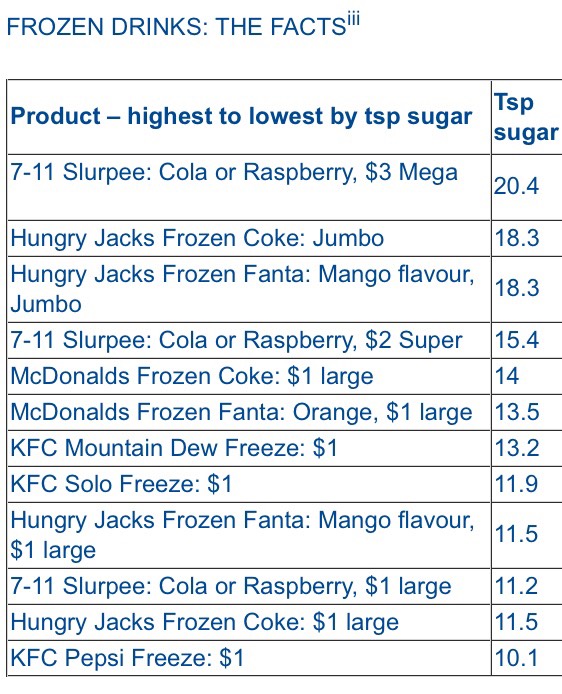
NACCHO Aboriginal Health @VACCHO_org @Apunipima join major 2018 health groups campaign @Live Lighter #RethinkSugaryDrink launching ad showing heavy health cost of cheap $1 frozen drinks


“A cheeky, graphic counter-campaign taking on cheap frozen drink promotions like $1 Slurpees and Frozen Cokes has hit Victorian bus and tram stops to urge Australians to rethink their sugary drink. 

Rather than tempt viewers with a frosty, frozen drink, the “Don’t Be Sucked In” campaign from LiveLighter and Rethink Sugary Drink, an alliance of 18 leading health agencies, shows a person sipping on a large cup of bulging toxic fat. “

NACCHO has published over 150 various articles about sugar , obesity etc

Craig Sinclair, Chair of Cancer Council Australia’s Public Health Committee, said while this graphic advertisement isn’t easy to look at, it clearly illustrates the risks of drinking too many sugary drinks.

“Frozen drinks in particular contain ridiculous amounts of added sugar – even more than a standard soft drink.”

“A mega $3 Slurpee contains more than 20 teaspoons of sugar.

That’s the same amount of sugar as nearly eight lemonade icy poles, and more than three times the maximum recommended by the World Health Organisation of six teaspoons a dayi.”

“At this time of year it’s almost impossible to escape the enormous amount of advertising and promotions for frozen drink specials on TV, social media and public transport,” Mr Sinclair said.

“These cheap frozen drinks might seem refreshing on a hot day, but we want people to realise they could easily be sucking down an entire week’s worth of sugar in a single sitting.”

A large frozen drink from most outlets costs just $1 – a deal that major outlets like 7-Eleven, McDonald’s, Hungry Jacks and KFC promote heavily.

LiveLighter campaign manager and dietitian Alison McAleese said drinking a large Slurpee every day this summer could result in nearly 2kg of weight gain in a year if these extra kilojoules aren’t burnt

“This summer, Aussies could be slurping their way towards weight gain, obesity and toxic fat, increasing their risk of 13 types of cancer, type 2 diabetes, heart and kidney disease, stroke and tooth decay,” Ms McAleese said.

“When nearly two thirds of Aussie adults and a third of kids are overweight or obese, it’s completely irresponsible for these companies to be actively promoting excessive consumption of drinks completely overloaded with sugar.

“And while this campaign focuses on the weight-related health risks, we can’t ignore the fact that sugary drinks are also a leading cause of tooth decay in Australia, with nearly half of children aged 2– 16 drinking soft drink every day.ii 

“We’re hoping once people realise just how unhealthy these frozen drinks are, they consider looking to other options to cool off.

“Water is ideal, but even one lemonade icy pole, with 2.7tsp of sugar, is a far better option than a Slurpee or Frozen Coke.”

Mr Sinclair said a health levy on sugary drinks is one of the policy tools needed to help address the growing impact of weight and diet-related health problems in Australia.

“Not only can a 20% health levy help deter people from these cheap and very unhealthy drinks, it will help recover some of the significant costs associated with obesity and the increasing burden this puts on our public health care system,” he said.

This advertising will hit bus and tram stops around Victoria this week and will run for two weeks. #


FROZEN DRINKS: More  FACTSiii 

About LiveLighter: LiveLighter® is a public health education campaign encouraging Australian adults to lead healthier lives by changing what they eat and drink, and being more active.

In Victoria, the campaign is delivered by Cancer Council Victoria and Heart Foundation Victoria. In Western Australia, LiveLighter is delivered by Heart Foundation WA and Cancer Council WA.

For more healthy tips, recipes and advice visit

www.livelighter.com.au

About Rethink Sugary Drink: Rethink Sugary Drink is a partnership between the Apunipima Cape York Health Council, Australian Dental Association, Australian Dental and Oral Health Therapists’ Association, Cancer Council Australia, Dental Health Services Victoria, Dental Hygienists Association of Australia, Diabetes Australia, Healthier Workplace WA, Kidney Health Australia, LiveLighter, The Mai Wiru Sugar Challenge Foundation, Nutrition Australia, Obesity Policy Coalition, Stroke Foundation, Parents’ Voice, the Victorian Aboriginal Community Controlled Health Organisation (VACCHO) and the YMCA to raise awareness of the amount of sugar in sugar-sweetened beverages and encourage Australians to reduce their consumption.

Visit www.rethinksugarydrink.org.au for more information.

Dr Google will see you now ! NACCHO Aboriginal Health Alert @AMAPresident says Doctor #Google no substitute for a visit to your trusted ACCHO / Family GP.

 ” We live in a digital generation. People use their smartphones and the internet for absolutely everything in life, so it’s to be expected that they’ll use it in regard to their health, and we know that health is one of the main reasons that people access search engines like Google.

One of the reasons doctors do recoil in horror is that some of the quality of the information on the internet leaves a lot to be desired.

So when a patient presents to their GP or another specialist and says they’ve done their own research on vaccinations and they’ve spent 20 minutes and that’s meant to overcome hundreds, thousands of hours of research into different  ” vaccines, that’s the kind of thing that makes doctors upset.

But we need to be clever enough and sensitive enough to listen to people, and often they’ve done part of the work for us.

Dr Michael Gannon President AMA responding to a question about Dr Google from Lisa Barnes  6PR Breakfast Perth 3 January 2018

Will patients stop going to the GP?

 “According to Google, one in 20 Google searches are health-related. Google’s new health cards will include facts vetted by a team of “medical doctors”, the company says, and adds:

“Each fact has been checked by a panel of at least ten medical doctors at Google and the Mayo Clinic for accuracy.”

Google’s Isobel Solaqua also encouraged patients to still seek professional medical attention.

What we present is intended for informational purposes only — and you should always consult a healthcare professional if you have a medical concern.”

Google’s new function might be handy for giving patients more accurate information – rather than having people wind up on dusty message boards and forums with questionable advice.”

Source Dr Google will see you now :

 ” At the first sign of a headache (“brain tumour?”), aching joint (“dengue?”) or a rash (“measles?”) do you find yourself looking to Dr Google? If so, then there’s a chance that your real malaise warrants another moniker: cyberchondria.

With one in 20 Google searches a quest for health information, many of us are likely familiar with the anxiety that goes with compulsively searching online for real (or imagined) health issues.

But is all this googling actually paying off in terms of our health and wellbeing?

For some time, researchers have pointed out that our ability to find out almost anything health-related through a quick online search has its downsides.”

NACCHO would suggest you use Dr Google and download the NACCHO APP that can help you find one of the 302 ACCHO Clinics throughout Australia ( and make a booking with one of our real ACCHO Doctors)  

Download the NACCHO App HERE

And here is why

 ” Well, Dr Google should never, and will never, be a surrogate for a face to face consultation.

There’s a lot of skill in medical practice – sometimes it’s unseen to patients – but there is a skill in taking a history, performing an examination, working out which tests are and aren’t indicated, thinking about how you’re going to interpret those tests and what your follow-up plan is.”

Dr Michael Gannon on why you should see a real Doctor

Full Transcript of Interview

MICHAEL GANNON:   I think there’d be plenty of patients who would have positive experiences, and there’d be plenty of patients that are led down the garden path. I think that if you put into a search engine the basic symptoms, in my experience most patients end up diagnosing themselves with either leukaemia or a brain tumour. But if you ask for something very specific, there’s some very credible and very useful health information that gives patients an idea how to proceed.

GEOF PARRY:   Michael, I think the AMA has been concerned about Dr Google in this sense, that they’ve been presenting to doctors and some doctors have been getting a bit upset about it, and you’re sort of saying, isn’t it, that it’s a bit of a fact of life now and you have to work with it?

MICHAEL GANNON:   I think you’re exactly right, Geof. We live in a digital generation……….

See opening extract

But we need to be clever enough and sensitive enough to listen to people, and often they’ve done part of the work for us.

LISA BARNES:   You’re right though, it is about using a little bit of common sense and being a bit specific with what you’re searching for, isn’t it? Because I know I’ve used Dr Google, and yeah, I seem to come up with about 17 serious diseases that I’ve got. But if you narrow it down, you can use that information for good, can’t you?

MICHAEL GANNON:   You can. I mean, some of the State Health Departments have very high-quality information that’s available. I would encourage people to have a look at where the information’s coming from.

So, if the search engine directs them to a website of one of the learned Colleges or a State or Territory Health Department, one of the august bodies in the English-speaking world like Britain or the United States, you might get valuable information.

I use Wikipedia to look up genetic conditions and rare syndromes all the time and, although I have concerns about how often some of that information’s curated, overall it’s extremely good. It’s when people start googling individual symptoms they usually get led down the garden path.

GEOF PARRY:   Michael, I’m wondering whether it’s any different using Dr Google to, say, the sorts of things that the medical profession has had to counter in the past.

So – and I’m going to get criticised for this – but, say, iridology, where people have used iridology to sort of find out what they might be suffering from, or having their auras, their colours read, those sorts of things which, in some schools of thought, these are just quackery.

MICHAEL GANNON:   Yeah, well, you’re right, Geof. We worry a lot about the quality of the health information that’s out there.

Where this story started- I did an interview with a journalist at the Courier Mail in Brisbane, and it was based on a directive from the NHS in Britain, the NHS asking patients to try Google first. Now, that represents a failing health system.

We don’t have that problem in Australia. We hear individual stories, but overall the statistics show that it’s not hard to get an appointment to see a GP, and let’s not forget that 85 per cent of GP services are bulk billed – it costs nothing.

It represents, in a world where it’s increasingly difficult to find value for money for people on fixed wages, a visit to your GP represents value for money like no other I know in the whole community.

LISA BARNES:   And certainly, Michael, obviously the advice would be double check or get it confirmed by a doctor, don’t just take Dr Google at face value.

MICHAEL GANNON:   Well that’s exactly right, and people should never ignore danger symptoms, and individual human beings, the parents, guardians of young children, people caring for elderly relatives, et cetera, should never hesitate to seek medical attention.

The reality is that GPs and doctors in Emergency Departments do see sometimes odd and not particularly high value presentations, but we would never want a situation where someone second-guessed themselves and didn’t seek health care.

GEOF PARRY:   Yeah, is there a couple of risks – like quite serious risks – here? I mean, you can put your health at risk if you put your trust in something like Dr Google and they get it wrong, or are you just completely wasting time and wasting people’s time by going down that path?

MICHAEL GANNON:   Well, Dr Google should never, and will never, be a surrogate for a face to face consultation.

There’s a lot of skill in medical practice – sometimes it’s unseen to patients – but there is a skill in taking a history, performing an examination, working out which tests are and aren’t indicated, thinking about how you’re going to interpret those tests and what your follow-up plan is.

Medical care’s a lot more complicated than sometimes doctors get given credit for. Looking something up on a search engine can be a useful adjunct. We do need to do better with health literacy in our community. I’d love to see more biological sciences taught in high school, but for now it’s a useful tool that people can use to either give themselves reassurance or to make it clear they do need to see a doctor.

LISA BARNES:   Michael, we appreciate your time. Thank you.

MICHAEL GANNON:   Pleasure. Happy New Year to both of you.

LISA BARNES:   And to you. That’s Dr Michael Gannon, the AMA President

NACCHO Aboriginal Health Workforce : @AMAPresident launches 5 point plan to build #Ruralhealth workforce

 ” About one third of Australia’s population, approximately 7 million people, live in regional, rural and remote areas. These Australians often have more difficulty accessing health services than urban Australians, leading them to have a lower life expectancy and worse outcomes on leading indicators of health.

Death rates in regional, rural, and remote areas (referred to as ‘rural’ in this document unless otherwise specified) are higher than in major cities, and the rates increase in line with degrees of remoteness.”

AMA President, Dr Michael Gannon

Download the AMA Position Statement HERE

AMA Position Statement on Rural Workforce Initiatives

Picture above AIDA : South Australian University’s past and present Australian Rotary Health Indigenous Health scholarship recipients.

(From left: Ian Lee, Jessica Beinke, Bodie Rodman, Olivia O’Donoghue, Kali Hayward, Jonathan Newchurch, Dr Helen Sage and Cheryl Deguara).

 ” Indigenous medical students have three weeks left to apply for the 2018 AMA Indigenous Medical Scholarship.
 
Applications close on 31 January for the Scholarship, a program that has supported Aboriginal and Torres Strait Islander students to study medicine since 1994.  The successful applicant will receive $10,000 each year for the duration of their course.
Fewer than 300 doctors working in Australia identify as Aboriginal and/or Torres Strait Islander – representing 0.3 per cent of the workforce – and only 286 Indigenous medical students were enrolled across the nation in 2017.”
 
THREE WEEKS LEFT TO APPLY FOR 2018 AMA INDIGENOUS MEDICAL SCHOLARSHIP see Part 2 Below

Extracts from AMA Submission

There is a strong link between the health of Indigenous people in rural communities and their access to culturally appropriate health services.

The AMA believes that:

  • greater effort should be made to encourage Indigenous people to undertake medical or health professional training, and incentives provided to encourage Indigenous and non-Indigenous doctors and medical trainees to work in rural and remote Indigenous communities;
  • Aboriginal Medical Services should be resourced to offer mentoring and training opportunities in rural Indigenous communities to Indigenous and non-Indigenous medical students and vocational trainees; and
  • training modules, resource material and ongoing advice should be developed for, and delivered to, all medical schools and rural and remote medical practices on Indigenous health issues, Indigenous-specific health initiatives and culturally appropriate service delivery.

Addressing the mal-distribution of the workforce

There are a number of fundamental reasons why rural areas are not getting their fair share of the medical workforce. These include:

  • inadequate remuneration;
  •  work intensity including long hours and demanding rosters;
  •  lifestyle factors;
  •  professional isolation and lack of critical mass of similar doctors;
  •  reduced access to professional development;
  • reduced access to locum support;
  •  hospital closures and downgrading or withdrawal of other health services;
  •  under-representation of students from a rural background;
  •  poor employment opportunities for other family members, particularly partners;
  •  limited educational opportunities for other family members; and
  •  withdrawal of community services, such as banking, from such areas.

In 2016 the AMA conducted a Rural Health Issues Survey, which sought input from rural doctors across Australia to identify key solutions to improving rural health care.

The almost 600 doctors who took part in the survey said extra funding and resources to support the recruitment and retention of doctors and other health professionals was their top priority in trying to meet the health care needs of their patients.

Doctors also said that for there to be genuine improvements in access to health care for rural patients, there needed to be:

  •  funding and resources to support improved staffing levels and workable rosters for rural doctors;
  •  access to high speed broadband;
  •  investment in hospital facilities and equipment and practice infrastructure;
  •  expanded opportunities for medical training and education in rural areas;
  • improved support for GP proceduralists; and
  •  better access to locum relief.

AMA Press Release 9 January 2018

At least one-third of all new medical students should be from rural backgrounds, and more medical students should be required to do at least one year of training in a rural area to encourage graduates to live and work in regional Australia, the AMA says.

The AMA today released its Position Statement – Rural Workforce Initiatives, a comprehensive five-point plan to encourage more doctors to work in rural and remote locations, and improve patient access to care.

The plan proposes initiatives in education and training, rural generalist pathways, work environments, support for doctors and their families, and financial incentives.

“About seven million Australians live in regional, rural, and remote areas, and they often have more difficulty accessing health services than their city cousins,” AMA President, Dr Michael Gannon, said today.

“They often have to travel long distances for care, and rural hospital closures and downgrades are seriously affecting the future delivery of health care in rural areas. For example, more than 50 per cent of small rural maternity units have been closed in the past two decades.

“Australia does not need more medical schools or more medical school places. Workforce projections suggest that Australia is heading for an oversupply of doctors.

“Targeted initiatives to increase the size of the rural medical, nursing, and allied health workforce are what is required.

“There has been a considerable increase in the number of medical graduates in recent years, but more than three-quarters of locally trained graduates live in capital cities.

“International medical graduates (IMGs) make up more than 40 per cent of the rural medical workforce and while they do excellent work, we must reduce this reliance and build a more sustainable system.”

The AMA Rural Workforce Initiatives plan outlines five key areas where Governments and other stakeholders must focus their policy efforts:

·         Encourage students from rural areas to enrol in medical school, and provide medical students with opportunities for positive and continuing exposure to regional/rural medical training;

·         Provide a dedicated and quality training pathway with the right skill mix to ensure doctors are adequately trained to work in rural areas;

·         Provide a rewarding and sustainable work environment with adequate facilities, professional support and education, and flexible work arrangements, including locum relief;

·         Provide family support that includes spousal opportunities/employment, educational opportunities for children’s education, subsidies for housing/relocation and/or tax relief; and

·         Provide financial incentives to ensure competitive remuneration.

“Rural workforce policy must reflect the evidence. Doctors who come from a rural background, or who spend time training in a rural area, are more likely to take up long-term practice in a rural location,” Dr Gannon said.

“Selecting a greater proportion of medical students with a rural background, and giving medical students and graduates an early taste of rural practice, can have a profound effect on medical workforce distribution.

“Our proposals to lift both the targeted intake of rural medical students and the proportion of medical students required to undertake at least one year of clinical training in a rural area from 25 per cent to 33 per cent are built on this approach.

“More Indigenous people must be encouraged to train and work in health care, as there is a strong link between the health of Indigenous people in rural areas and their access to culturally appropriate health services.

“Fixing rural medical workforce shortages requires a holistic approach that takes into account not only the needs of the doctor, but also their immediate family members.

“Many doctors who work in rural areas find the medicine to be very rewarding, but their partner may not be able to find suitable employment, and educational opportunities for their children may be limited.

“The work environment for rural doctors presents unique challenges, and Governments must work collaboratively to attract a sustainable health workforce. This includes rural hospitals having modern facilities and equipment that support doctors in providing the best possible care for patients and maintaining their own skills.

“Finally, more effort must be made to improve internet services in regional and rural areas, given the difficulties of running a practice or practising telehealth with inadequate broadband.

“All Australians deserve equitable access to high-speed broadband, and rural doctors and their families should not miss out on the benefits that the growing use of the internet is bringing.”

The AMA Position Statement – Rural Workforce Initiatives is available at https://ama.com.au/position-statement/rural-workforce-initiatives-2017

Background:

·         Most Australians live in major cities (70 per cent), while 18 per cent live in inner regional areas, 9 per cent in outer regional areas, and 2.4 per cent in both remote and very remote areas.

·         Life expectancy is lower for people in regional and remote Australia. Compared with major cities, the life expectancy in regional areas is one to two years lower, and in remote areas is up to seven years lower.

·         The age standardised rate of the burden of disease increases with increasing remoteness, with very remote areas experiencing 1.7 times the rate for major cities.

·         Coronary heart disease, suicide, COPD, and cancer show a clear trend of greater rates of burden in rural and remote areas.

·         The number of medical practitioners, particularly specialists, steadily decreases with increasing rurality. The AIHW reports that while the number of full time workload equivalent doctors per 100,000 population in major cities is 437, there were 272 in outer regional areas, and only 264 in very remote areas.

·         Rural medical practitioners work longer hours than those in major cities. In 2012, GPs in major cities worked 38 hours per week on average, while those in inner regional areas worked 41 hours, and those in remote/very remote areas worked 46 hours.

·         The average age of rural doctors in Australia is nearing 55 years, while the average age of remaining rural GP proceduralists – rural GP anaesthetists, rural GP obstetricians and rural GP surgeons – is approaching 60 years.

·         International medical graduates (IMGs) now make up over 40 per cent of the medical workforce in rural and remote areas.

·         There is a health care deficit of at least $2.1 billion in rural and remote areas, reflecting chronic underspend of Medicare and the Pharmaceutical Benefits Scheme (MBS) and publicly-provided allied health services.

Part 2 Update

THREE WEEKS LEFT TO APPLY FOR 2018 AMA INDIGENOUS MEDICAL SCHOLARSHIP
 
Indigenous medical students have three weeks left to apply for the 2018 AMA Indigenous Medical Scholarship.
Applications close on 31 January for the Scholarship, a program that has supported Aboriginal and Torres Strait Islander students to study medicine since 1994.
The successful applicant will receive $10,000 each year for the duration of their course.
Fewer than 300 doctors working in Australia identify as Aboriginal and/or Torres Strait Islander – representing 0.3 per cent of the workforce – and only 286 Indigenous medical students were enrolled across the nation in 2017.
 
“The significant gap in life expectancy between Indigenous and non-Indigenous Australians is a national disgrace that must be tackled by all levels of Government, the private and corporate sectors, and all segments of our community,” AMA President, Dr Michael Gannon, said today.
 
“It’s evident that Indigenous people have a greater chance of improved health outcomes when they are treated by Indigenous doctors and health professionals.
 
“Indigenous people are more likely to make and keep medical appointments when they are confident that they will be treated by someone who understands their culture, their language, and their unique circumstances
“The AMA strongly encourages Indigenous students to apply for the Scholarship, which, along with the AMA’s annual Report Card on Indigenous Health and the work of the AMA Taskforce on Indigenous Health, is part of the AMA’s commitment to improving the health of Aboriginal and Torres Strait Islander Australians.”
 
Previous winners have gone on to become prominent leaders in health and medicine, including Associate Professor Kelvin Kong, Australia’s first Aboriginal surgeon.
 
Applicants must be currently enrolled at an Australian medical school, be in at least their first year of medicine, and be of Aboriginal and/or Torres Strait Islander descent. Further information, including the application form, can be found at https://www.ama.com.au/indigenous-medical-scholarship-2018
 
The AMA Indigenous Medical Scholarship was established in 1994 with a contribution from the Commonwealth Government. The AMA is seeking further donations and sponsorships from individuals and corporations to continue this important contribution to Indigenous health.
 
More information is available at https://ama.com.au/donate-indigenous-medical-scholarship. For enquiries, please contact the AMA via email at indigenousscholarship@ama.com.au or phone (02) 6270 5400.


NACCHO Aboriginal Health #Socialdeterminants and #Aboriginality : “Papunya-Parramatta comparison ” Could GST changes channel more funding to #remote communities “

 ” More effort needed to be put into calculating “indigeneity and need together”.

“It’s a problem that has to be solved given that more than 50 per cent of indigenous Australians are disadvantaged and probably 30 per cent (of those) extremely disadvantaged — you can’t get rid of indigeneity as an indicator,But the question is how to refine it.

The category of Indigenous in terms of distributing the money has become meaningless — proportionally, the Aboriginal population is doing well on the east coast, and as a population is doing extremely badly in central Australia.”

The Papunya-Parramatta comparison was “a good argument”

Indigenous academic Marcia Langton 

FROM Todays The Australian

See previous NACCHO Press Release 8 January 2018

NACCHO Aboriginal Health #Housing and #Socialdeterminants Debate : @NACCHOChair urges Federal Government to invest in remote housing

Changes to the definition of Aboriginality in distributing GST revenue to states and territories are being considered by the Productivity Commission, with a proposal to better prioritise the needs of especially disadvantaged remote communities that would dramatically rewrite a 30-year-old system.

The proposal is contained in a GST review submission by the Yothu Yindi Foundation, which declares “illiterate, welfare-­dependent families in Papunya clearly should rate higher than a double-income, university-­educated family living in their own home in Parramatta”.

The submission suggests that a steady rise in the number of people in the nation’s south identifying as Aboriginal has left the Northern Territory at a demographic disadvantage, with a ­“declining share of the national indigenous population” drawing money away from the “desperate need” in its remote areas.

As it currently stands, “indigeneity” is a factor that can attract more funding in the complex GST redistribution equations used by the Commonwealth Grants Commission.

The submission has the backing of former Liberal deputy leader and Aboriginal affairs minister Fred Chaney, indigenous academic Marcia Langton and others. Professor Langton said the submission, which will be part of a report presented to government in May addressing the horizontal fiscal equalisation regime that redistributes GST revenue to the states and territories, demonstrated more effort needed to be put into calculating “indigeneity and need together”.

“It’d be an outrage if I were to say ‘I’m indigenous (so) I’m disadvantaged’ — it’d be ridiculous. How can people disagree with that notion?”

The CGC determines each year how much state and territory spending is attributable to indigenous programs under six broad headings: schools, health, welfare, housing, justice and service to communities.

However, Professor Langton suggested alternative markers such as high household occupancy rates and chronic disease rates could be more practical than a simple “indigenous” category.

“The (GST) process was invented 30 years ago and for many years was a good system and made sense when all indigenous people were highly disadvantaged, but things have changed and the measurement tools are not keeping up with the changes,” she said.

“It could be something as ­simple as number of people per room — the average on discrete Aboriginal communities in the NT, of which there are 73, is eight or nine per room, which far exceeds the general Australian number, so you could have a number of very powerful indi­cators like that run together,” she said.

Mr Chaney, who served as Aboriginal affairs minister in the Fraser government, said that while it was a “perfectly legitimate and understandable trend” that the Aboriginal population was increasing nationally through self-identification and marriage rather than birth rate, the statistics did not differentiate sufficiently.

“It’s not a headcount matter, it’s much more a locational matter,” he said. “If the funds available are affected by numerical Aboriginal populations then there is a distortion around need.”

GST receipts are lowest in Western Australia, which will receive 34c for every dollar this year, while South Australia, Tasmania and the Northern Territory will receive $1.44, $1.80 and $4.66 respectively.

A 2012 review, to coincide with that year’s census results, showed that indigeneity had historically been the biggest influence on GST distribution, for a total that year of $2360 million or 42 per cent of the total. A similar review will be presented within weeks based on last year’s results.

States and territories are not required, however, to spend the money they receive in line with the CGC’s findings.