Aboriginal Health and the #NDIS #disability debate : Are Aboriginal people being left out of the new @NDIS funding system ?

One year into the national rollout of the NDIS we have 100,000 people with disability living more independent lives, accessing the services and equipment they need, participating in their communities, entering the workforce and contributing to the economy.

To have 100,000 people now receiving reasonable and necessary supports from the NDIS is a major milestone. ”

Minister for Social Services, Christian Porter, said the achievement represented significant progress for the NDIS see Part 1 below for full release

Read over 20 Disability NDIS articles published by NACCHO

 “Nevertheless, the speed of the NDIS rollout, as specified in Bilateral Agreements between governments, has put the scheme’s success and financial sustainability at risk. It has resulted in the NDIA focusing too much on meeting participant intake estimates and not enough on planning processes, supporting infrastructure and market development.

This focus is manifest in poor outcomes such as confusion for many participants about planning processes; rushed phone planning conversations; inadequate pre-planning support for participants; problems for providers with registering, pricing and receiving payment; and a lack of effective communication with both participants and providers.

For the scheme to achieve its objectives, the NDIA must find a better balance between participant intake, the quality of plans, participant outcomes, and financial sustainability.”

From the June Productivity Commission report or Part 4 Below

Download report HERE ndis-costs-position-overview


 ” The NSW peak body for Aboriginal children and families is advocating for urgent action to stop Aboriginal and Torres Strait Islander people “being left behind” by the National Disability Insurance Scheme.

Following the recent milestone of engaging 100,000 participants in the scheme, AbSec has raised concerns that only 5 per cent of that number were Aboriginal and Torres Strait Islander people, despite being 70 per cent more likely to experience disability than the general population.

They claim the figures were even more pronounced for Aboriginal and Torres Strait Islander children aged 14 and younger, who are more than twice as likely to have a disability as other children.”

AbSec is calling for long-term funding for Aboriginal community-controlled organisations, to equip them to provide disability services to their local communities.”

See Peak Body Demands Action to Stop NDIS Leaving Aboriginal People Behind Part 2 Below

 ” AbSec project support officer Brian Edwards, who is an NDIS participant himself, having lost his eyesight after developing a brain tumour at just 18 years of age, said it was not acceptable that those who needed the NDIS most were benefiting from it the least.

Aboriginal people experience disability differently to other Australians.

There’s no word meaning ‘disability’ in our languages – it’s not a widely recognised concept in our culture. So there’s a bit of a communication barrier from the start.”

The 27-year-old is currently developing his NDIS disability support plan, which will provide funds to help him access occupational therapy and keep his guide dog healthy see media SBS

” By any measure Aboriginal and Torres Strait Islander people with disability are amongst some of the most disadvantaged Australians; often facing multiple barriers to meaningful participation within their own communities and the wider community.

The prevalence of disability amongst Aboriginal and Torres Islander people is significantly higher than of the general population. Until recently, the prevalence of disability in Aboriginal and Torres Strait Islander communities has only been anecdotally reported. However, a report by the Commonwealth Steering Committee for the Review of Government Service Provision made the following conclusions:

The proportion of the indigenous population 15 years and over, reporting a disability or long-term health condition was 37 per cent (102 900 people). The proportions were similar in remote and non-remote areas. This measure of disability does not specifically include people with a psychological disability. [note 1]

The high prevalence of disability, approximately twice that of the non-indigenous population, occurs in Aboriginal and Torres Strait Islander communities for a range of social reasons “

SEE First Peoples Disability Network Australia (FPDN) Intro and Ten-point plan for the implementation of the NDIS in Aboriginal and Torres Strait Islander Communities VIEW HERE

See Part 3 below FPDN Ten-point plan for the implementation of the NDIS in Aboriginal and Torres Strait Islander Communities

Part 1 NDIS supporting 100,000 Australians : NDIS Press Release

“All Australians should be very proud of this landmark Scheme that replaces a system where the level of support a person with disability received was determined by their postcode and the vastly different funding provided from all levels of government.”

Whilst this milestone is significant, we know there is much more to do to ensure the best NDIS possible is delivered during the three-year transition to full scheme.”

Assistant Minister for Disability Services, Jane Prentice, said the NDIS was transforming people’s lives.

“In my discussions across Australia with NDIS participants, and their families and carers, it is clear that they believe the NDIS is making their lives better,” Assistant Minister Prentice said.

“The NDIS is focussed on building capacity and delivering outcomes so more people with a disability can participate in their community and enter the workforce and live the life they choose.”

The NDIS commenced on 1 July, 2013 in several trial locations across the country. During the three-year trial period, 30,000 Australians with disability entered the Scheme.

Following the successful trial, the national rollout commenced on 1 July, 2016. The NDIS is being introduced in stages around the country over three years, reflecting the scale and complexity of the reform and the need to ensure it delivers positive outcomes for participants. .

The NDIS will provide about 460,000 Australians under the age of 65 with a permanent and significant disability with the reasonable and necessary supports they need to live an ordinary life, including personal care and support, access to the community, therapy services and essential equipment

Part 2 Peak Body Demands Action to Stop NDIS Leaving Aboriginal People Behind

Following the recent milestone of engaging 100,000 participants in the scheme, AbSec has raised concerns that only 5 per cent of that number were Aboriginal and Torres Strait Islander people, despite being 70 per cent more likely to experience disability than the general population.

They claim the figures were even more pronounced for Aboriginal and Torres Strait Islander children aged 14 and younger, who are more than twice as likely to have a disability as other children.

The organisation is now calling for long-term funding for Aboriginal community-controlled organisations, to equip them to provide disability services to their local communities.

AbSec senior project officer for sector capacity Mick Scarcella told Pro Bono News there were a number of reasons Aboriginal people were not engaging with the scheme, which needed to be addressed.

“In Aboriginal communities, ‘people who are different’ are looked after by family with the minimum of fuss, they do not see them as disabled,”  Scarcella said.

“For example, little Johnny in a wheelchair wants to play at the beach, the local kids being family and friends will pick him up in his wheelchair and throw him into the water with the wheelchair so they can all play together. They see him as Little Johnny in the wheelchair, not Johnny with a disability.

“The other reasons for the low engagement comes to trust issues of government agencies and injustices of the past.

“Access to services is an issue as well. Many Aboriginal people have never accessed disability services because there is none in their local area.”

Scarcella, who said the figures quoted erred “on the conservative side” due to undiagnosed cases and lack of engagement, said it was important Aboriginal people had Aboriginal-run services to turn to.

“It has proven repeatedly that self-determination works in the Aboriginal Community,” he said.

“Aboriginal people need to be listened to and become part of the solution and not be told what their problem is and how to fix it, by people who have no idea of the significant cultural differences and family dynamics Aboriginal people have.

“Establishing a system that enables people to recruit family members needs more discussion as well. The way family members rally around a person with disability and focus on their positives instead of believing they are a burden to society is something mainstream Australia can learn from us.”

He said while a commitment to tailored Aboriginal services already existed in the NDIA’s Aboriginal and Torres Strait Islander Engagement Strategy, the reality on the ground showed “little reflection” to the strategy.

“All of these reports are being generated and are coming back showing all of this information we already knew but very little is being done to reflect the report findings and address the recommendations,” he said.

“One of these reports, without mentioning any names, is a 17-page document and the word Aboriginal or Indigenous is not even mentioned in it at all, not once which is very alarming, considering the fact of the low engagement so far to date with the Aboriginal communities.

“We need transparency and accountability for measurable outcomes not token promises and feel good gestures.”

AbSec project support officer Brian Edwards, who is an NDIS participant himself, having lost his eyesight after developing a brain tumour at just 18 years of age, said it was “not acceptable” that those who needed the NDIS most were “benefiting from it the least”.

“Aboriginal people experience disability differently to other Australians,” Edwards said.

“There’s no word meaning ‘disability’ in our languages – it’s not a widely recognised concept in our culture. So there’s a bit of a communication barrier from the start.”

He said said lifting the number of Aboriginal and Torres Strait Islander people accessing the NDIS was “absolutely vital” to closing the gap in health and wellbeing.

“The NDIS is being billed as a revolution in social services – but its impact can’t be truly revolutionary unless all of us are on-board,” he said.

Part 3 Ten-point plan for the implementation of the NDIS in Aboriginal and Torres Strait Islander Communities

Introduction

We are First Peoples Disability Network Australia (FPDN) – a national organisation of and for Australia’s First Peoples with disability, their families and communities. Our organisation is governed by First Peoples with lived experience of disability

By any measure Aboriginal and Torres Strait Islander people with disability are amongst some of the most disadvantaged Australians; often facing multiple barriers to meaningful participation within their own communities and the wider community.

The prevalence of disability amongst Aboriginal and Torres Islander people is significantly higher than of the general population. Until recently, the prevalence of disability in Aboriginal and Torres Strait Islander communities has only been anecdotally reported. However, a report by the Commonwealth Steering Committee for the Review of Government Service Provision made the following conclusions:

Ten-point plan

  • Recognise that the starting point is the vast majority of Aboriginal people with disability do not self-identify as people with disability. This occurs for a range of reasons including the fact that in traditional languages there are no comparable words for disability. Also, many Aboriginal people with disability are reluctant to take on the label of disability; particularly when they already experience discrimination based on their Aboriginality. In many ways disability is a new conversation in many communities. In these instances the NDIS is starting from a baseline position. As a consequence change in this area is likely to happen on a different timeline to that of the mainstream NDIS.
  • Awareness raising via a concerted outreach approach informing Aboriginal and Torres Strait Islander people with disability, their families and communities about their rights and entitlements, and informing Aboriginal and Torres Strait communities about the NDIS itself and how to work this new system effectively. There is no better way to raise awareness then by direct face-to-face consultation. Brochures and pamphlets will not be appropriate as this is a new conversation in many communities.
  • Establish the NDIS Expert Working Group on Aboriginal and Torres Strait Islander People with disability and the NDIS. In recognition of the fact that there is a stand-alone building block for the NDIS focused upon Aboriginal and Torres Strait Islander people with disability, FPDN views it not only as critical but logical that a specific Expert Working Group be established to focus on Aboriginal and Torres Strait Islander people with disability. The new working group would operate in the same way the four current working groups do, that is it would be chaired by two members of the National People with Disability and Carers Council. To ensure its effectiveness but also critically to influence prominent Aboriginal leaders as well as the disability sector, members would be drawn from Aboriginal and Torres Strait Islander people in community leadership positions, as well as involving prominent disability leaders. The FPDN believes such an approach is warranted not only because of the degree of unmet need that is well established but also because this has the potential to be a very practical and meaningful partnership between government, the non-government sector, and Aboriginal and Torres Strait Islander communities.
  • Build the capacity of the non-Indigenous disability service system to meet the needs of Aboriginal people with disability in a culturally appropriate way. Legislate an additional standard into the Disability Services Act focused upon culturally appropriate service delivery and require disability services to demonstrate their cultural competencies.
  • Conduct research on the prevalence of disability and a range other relevant matters. Critically, this work must be undertaken in partnership with Aboriginal and Torres Strait Islander people with disability to ensure a culturally appropriate methodology. There remains very little reference material about disability in Aboriginal and Torres Strait Islander communities. This needs to be rectified to ensure that we are getting a true picture of the lived experience of Aboriginal and Torres Strait Islander people with disability.
  • Recognise that  a workforce already exists in many Aboriginal and Torres Strait Islander communities that does important work, often informally. This work needs to valued and recognised, with the potential for employment opportunities in some communities.
  • Recognise that it’s not always about services. Many communities just need more resources so that they can continue to meet the needs of their own people with disabilities. There may be perfectly appropriate ways of supporting people already in place, however what is often lacking is access to current technologies or appropriate technical aids or sufficient training for family and community members to provide the optimum level of support.
  • Recruitment of more Aboriginal and Torres Strait Islander people into the disability service sector.
  • Build the capacity of the social movement of Aboriginal and Torres Strait Islanders with disability by supporting existing networks and building new ones in addition to fostering Aboriginal and Torres Strait Islander leaders with disability. These networks play a critical role in breaking down stigma that may exist in some communities but are also the conduits for change, and will be integral to the successful implementation of the NDIS in Aboriginal and Torres Strait Islander communities.
  • Aboriginal and Torres Strait Islander ‘Launch’ sites focused upon remote, very remote, regional and urban settings. It is critical that this major reform be done right. Therefore it is appropriate to effectively trial its implementation. To this end, FPDN can readily identify key communities that would be appropriate as trial sites.

Part 4 From the June Productivity Commission report

Key points
·      The National Disability Insurance Scheme (NDIS) is a complex and highly valued national reform. The scale, pace and nature of the changes it is driving are unprecedented in Australia. If implemented well, it will substantially improve the wellbeing of people with disability and Australians more generally.

·      The level of commitment to the success and sustainability of the NDIS is extraordinary. This is important because ‘making it work’ is not only the responsibility of the National Disability Insurance Agency (NDIA), but also that of governments, participants, families and carers, providers, and the community.

·      Based on trial and transition data, NDIS costs are broadly on track with the NDIA’s long‑term modelling. While there are some emerging cost pressures (such as higher numbers of children entering the scheme), the NDIA has put in place initiatives to address them. The benefits of the NDIS are also becoming apparent. Early evidence suggests that many (but not all) NDIS participants are receiving more disability supports than previously, and they have more choice and control.

·      Nevertheless, the speed of the NDIS rollout, as specified in Bilateral Agreements between governments, has put the scheme’s success and financial sustainability at risk. It has resulted in the NDIA focusing too much on meeting participant intake estimates and not enough on planning processes, supporting infrastructure and market development.

–     This focus is manifest in poor outcomes such as confusion for many participants about planning processes; rushed phone planning conversations; inadequate pre‑planning support for participants; problems for providers with registering, pricing and receiving payment; and a lack of effective communication with both participants and providers.

·      For the scheme to achieve its objectives, the NDIA must find a better balance between participant intake, the quality of plans, participant outcomes, and financial sustainability. Steps are now being taken by the NDIA to better balance these aspects. Greater emphasis is needed on pre‑planning, in‑depth planning conversations, plan quality reporting, and more specialised training for planners. The Commission is unable to form a judgment on whether such a refocus can be achieved while also meeting the rollout timetable.

·      The interface between the NDIS and other disability and mainstream services is also critical for participant outcomes and the financial sustainability of the scheme. Some disability supports are not being provided because of unclear boundaries about the responsibilities of the different levels of government. Governments must set clearer boundaries at the operational level around ‘who supplies what’ to people with disability, and only withdraw when continuity of service is assured.

·      A significant challenge is growing the disability care workforce required to deliver the scheme — it is estimated that 1 in 5 new jobs created in Australia over the next few years will need to be in the disability care sector. Present policy settings are unlikely to see enough providers and workers as the scheme rolls out. Some emerging shortages need to be mitigated by better price monitoring and regulation; better tailored responses to thin markets; formal and informal carers allowed to provide more paid care; and a targeted approach to skilled migration.

·      NDIS funding arrangements could better reflect the insurance principles of the scheme, including by allowing more flexibility around the NDIA’s operational budget and providing a pool of reserves. Funding contributions made ‘in‑kind’ must be phased out.

Aboriginal Health Conferences and Events #SaveAdate #NACCHOAgm2017 #OchreDay2017 @IndigenousLF

6 September NACCHO supports Indigenous Literacy Day

12 – 14 September SNAICC National Conference

13 September : Webinar Reducing the mental health impact of Indigenous incarceration on people, communities and services

20-23 September : AIDA Conference 2017

29 September : Closing the Prison Gap Focus on the Children Tweed Heads NSW

4- 5 October Aboriginal Male Health Ochre Day Darwin NT

9- 10 October  : Indigenous Affairs and Public Administration Conference : Can’t we do better?

10 October  : CATSINAM Professional Development Conference Gold Coast

New 11-12 October 3rd Annual Ngar-wu Wanyarra Aboriginal Health Conference

18 -20 October  : 35th Annual CRANAplus Conference Broome

20 October : ‘Most influential’ health leaders to appear in key forum at major rural medicine conference

18- 20 October First 1000 Days Summit Abstracts close August 11

26-27 October  :Diabetes and cardiovascular research, stroke and maternal and child health issues.

31 October –2 Nov  :NACCHO AGM Members Meeting Canberra

15 November  One Day NATSIHWA Workshop SA Forum

14- 15 November  : 6th Annual NHMRC Symposium on Research Translation.

15 -18 November  :National Conference on Incontinence Scholarship Opportunity close 1 September

27-30 November  :Indigenous Allied Health Australia : IAHA Conference Perth

14 December Shepparton  One Day NATSIHWA Workshop VIC Forum

11-12 April 2018  :6th Rural and Remote Health Scientific Symposium  Canberra call for extracts

If you have a Conference, Workshop Funding opportunity or event and wish to share and promote contact

Colin Cowell NACCHO Media Mobile 0401 331 251

Send to NACCHO Social  Media

mailto:nacchonews@naccho.org.au

REGISTER HERE

Download full 2 day program HERE

Ochre Day Program 4 to 5 Oct Darwin NT

6 September NACCHO supports Indigenous Literacy Day 

Indigenous Literacy Day is a national celebration of Indigenous culture, stories, language and literacy. Through activities on the day, we focus our attention on the disadvantages experienced in remote communities and encourage the rest of Australia to raise funds and advocate for more equal access to literacy resources for remote communities. Whether you are a school, bookseller, publisher, library, business, organisation or individual, here are some ways you can participate on this day:

  • Hold a Great Book Swap
  • Donate a percentage of your product sales on this day – very popular for bookshops!
  • Make a donation through our website
  • Hold a literacy event such as a book launch or storytelling session
  • Take an ILF donation box to work or school
  • Buy an ILF t-shirt for your staff or students to wear to work or school
  • Hold your own fundraising event
  • Advocate for us on social media and tag @IndigenousLiteracyFoundation on Facebook and @IndigneousLF on Twitter with #ILD2017

Indigenous LIteracy Day to launch four new books from community

Four major Indigenous Literacy Day events in Sydney, Perth, Brisbane and Melbourne will see our ambassadors and students from 15 remote communities performing from and launching their new books written in an ILF workshop…

  • In Sydney at the Opera House, ILF ambassadors Josh Pyke, Anita Heiss and Alison Lester will join elders and students from Yakanarra in WA, to launch their book, Yakanarra Song Book. This book celebrates 14 beautiful songs written in Walmajarri language. This is invitation only.
  • In Melbourne ILF ambassadors Andy Griffiths and Jared Thomas will join students from the Tiwi Islands, at Federation Square to launch their book, Shallow in the Deep End, the tale of a water buffalo who thinks he is a pet dog. It was created with Jared Thomas and published by Scholastic Australia. The event is free but bookings are essential – RSVP HERE.
  • In Perth ILF ambassadors, Ann James and Gregg Dreise will join students from four remote communities, Tjuntjuntjara, Mt Margaret, Laverton and Menzies at the State Library of Western Australia to launch and perform I Open the Door, a collection of imaginative stories all that begin and end with opening a door

WEBSITE and DONATE


12 – 14 September SNAICC National Conference

Includes 2 pre-conference masterclasses, 3 plenaries, 56 concurrent sessions, and a social/cultural program.

Register now!

13 September : Webinar Reducing the mental health impact of Indigenous incarceration on people, communities and services

Developed in consultation with NACCHO and produced by the Mental Health Professionals’ Network a federally funded initiative

Join our interdisciplinary panel as we explore a collaborative approach to reducing the mental health impact of Indigenous incarceration on people, communities and services.

The webinar format will include a facilitated question and answer session between panel members exploring key issues and impacts of incarceration on individuals, families and communities.

The panel will discuss strategies to enhance cultural awareness and develop responsive services for Indigenous communities affected by incarceration. Strategies to increase self-esteem and enhance emotional, physical and spiritual wellbeing of individuals will also be explored.

When: Wednesday 13th September, 2017

Time: 4.30pm – 5.45pm (AEST)

Where: Online – via your computer, tablet or mobile

Cost: Free

Panel:

  • Dr Mark Wenitong (Medical Advisor based in QLD)
  • Dr Marshall Watson (Psychiatrist based in SA)
  • Dr Jeffrey Nelson (Clinical Psychologist based in QLD)
  • Julie Tongs (OAM) (CEO Winnunga Nimmityjah Aboriginal Health Service – Narrabundah ACT)

Facilitator:

  • Dr Mary Emeleus (General Practitioner and Psychotherapist based in QLD)

Read more about our panel.

Learning Outcomes:

Through an exploration of incarceration, the webinar will provide participants with the opportunity to:

  • Describe key issues and impacts of incarceration on individuals, families and communities
  • Develop strategies to enhance culturally aware and responsive services for Indigenous people and communities affected by incarceration
  • Identify strategies to increase self-esteem and enhance emotional, physical and spiritual wellbeing

Before the webinar:

Register HERE


20-23 September AIDA Conference 2017

The AIDA Conference in 2017 will celebrate 20 years since the inception of AIDA. Through the theme Family. Unity. Success. 20 years strong we will reflect on the successes that have been achieved over the last 20 years by being a family and being united. We will also look to the future for AIDA and consider how being a united family will help us achieve all the work that still needs to be done in growing our Indigenous medical students, doctors, medical academics and specialists and achieving better health outcomes for Aboriginal and Torres Strait Islander people.

This conference will be an opportunity to bring together our members, guests, speakers and partners from across the sector to share in the reflection on the past and considerations for the future. The conference will also provide a platform to share our individual stories, experiences and achievements in a culturally safe environment.

Conference website

29 Sept : Closing the Prison Gap Focus on the Children Tweed Heads NSW

  • Emeritus Professor Judy Atkinson and Margaret Hayes will “Focus on the Children”, describing their work with young people excluded from mainstream schools due to their behaviour.
  • Leanne Phillips and Cathy Stillwell will talk about “Healing the Womyn Healing the Child”
  • Jyi Lawnton and Casey Bird will describe “Indigenous Policy and the Scientific Gaze”
  • Chris Lee and Associate Professor Helen Farley discuss “Making the Connection”, the use of technology to address the issues of literacy and numeracy in juvenile justice settings
  • Dr Anthea Krieg will talk about her work in Ceduna, South Australia, coordinating services to prevent incarceration of First Nations children.

More info bookings Website

30 Sept : The 2017 Human Rights Photography competition 

The 2017 Human Rights Photography competition is now open to children and adults around the country, with a $600 camera prize up for grabs for the most outstanding image!

For almost a decade, the Australian Human Rights Commission has been holding photo competitions every couple of years. Our last competition attracted a record 450 entries.

Photography is a powerful medium with a long history in the promotion and advancement of human rights around the world. Photos foster empathy for the suffering and experience of others, community engagement and positive social change. No one can forget the impact of photos such as Nick Ut’s famous photo The Terror of War of child Kim Phuc after a napalm attack during the Vietnam War.

Our focus for this year’s competition will be the experiences of people at home. The theme for the 2017 competition is Home, inspired by Eleanor Roosevelt’s famous quote “Where, after all, do universal human rights begin? In small places, close to home…

The shortlisted and winning photos to be displayed at the 2017 Human Rights Awards on 8 December in Sydney.

So, what are you waiting for?

About the competition

  • Enter at https://photocompetition.humanrights.gov.au/
  • There will be two categories for entries: Under 18 and 18 & over.
  • Overall winners will receive their prizes at the 2017 Human Rights Awards on December 8 in Sydney. A selection of photos from the Competition will also be on display.
  • Main prizes worth $600.
  • The competition will close on 30 September 2017.

If you have a query about the competition, please email photocomp@humanrights.gov.au

Photo Credit: Nimboi’s Bat by Sean Spencer, from the 2011 competition.

4- 5 October Aboriginal Male Health Ochre Day Darwin NT  

2017 Ochre Day Registration

Where: Darwin
When: 4th & 5th October 2017

This year NACCHO is pleased to announce the annual NACCHO Ochre Day will be held in Darwin during October 2017.

Beginning in 2013, Ochre Day is an important NACCHO Aboriginal male health initiative. Aboriginal males have arguably the worst health outcomes of any population group in Australia.

NACCHO has long recognised the importance of addressing Aboriginal male health as part of Close the Gap by 2030.

All information provided in registering for the NACCHO Ochre Day remains entirely confidential and will only be used to assist with planning i.e. catering etc.

  • There is no registration cost to attend the NACCHO Ochre Day (Day One or Two)
  • All Delegates will be provided breakfast & lunch on Day One and morning & afternoon tea as well as lunch on Day Two.
  • All Delegates are responsible for paying for and organising your own travel and accommodation.

For further information please contact Kyrn Stevens:
Phone: 08 8942 5400
Email: naccho.ochre@ddhs.org.au

Each Delegate is required to complete a separate applicatiom

REGISTER HERE 

9- 10 October Indigenous Affairs and Public Administration Conference : Can’t we do better?

This year marks 50 years since the 1967 referendum resulted in the Commonwealth gaining national responsibilities for the administration of Indigenous affairs. This is a shared responsibility with state and territory administrations.

Website

ANZSOG and the Department of the Prime Minister and Cabinet are providing travel support and waiving conference fees for Aboriginal and Torres Strait Islander community leaders and public servants attending the conference from remote locations.

To enquire about your eligibility, please contact conference2017@anzsog.edu.au

In partnership, the Department of the Prime Minister and Cabinet (DPMC), the University of Sydney, and the Australia and New Zealand School of Government (ANZSOG) are holding an international conference that questions the impact of the past 50 years of public administration and raise issues for the next 50 years in this important nation building area.

DPMC is seeking to build and foster a public canon of knowledge to open the history of Indigenous policy and administrative practice to greater scrutiny and discussion.

The Indigenous Affairs and Public Administration Conference will be attended by Aboriginal and Torres Strait Islander representatives, other Indigenous peoples, public servants from state and federal governments, and the academic community.

 The conference will feature a range of guest presenters, including Australia’s Chris Sarra, Andrea Mason and Martin Nakata, New Zealand’s Arapata Hakiwai and Geraint Martin, as well as other international speakers.

The deliberations and discussions of the conference will feed into a final report that will be used to guide Federal government policy formation at a series of roundtables in late 2017 and early 2018.

REGISTER

2017 Indigenous Affairs and Public Administration Conference

October 9-10
The Refectory, University of Sydney

October 9, 6:00pm – 9:30pm: Pre-conference dinner
October 10, 8:30am – 5:00pm: Conference

Cost:

Early bird tickets (until September 1): $150
Regular tickets: $250
Full time PhD student concession tickets: $25

Register Here

10 October CATSINAM Professional Development Conference Gold Coast

catsinam

Contact info for CATSINAM

11-12 October 3rd Annual Ngar-wu Wanyarra Aboriginal Health Conference

3rd Annual Ngar-wu Wanyarra Aboriginal Health Conference

The Ngar-wu Wanyarra Aboriginal Health conference is an opportunity for sharing information and connecting people that are committed to reforming the practice and research of Aboriginal health and celebrates Aboriginal knowledge systems and strength based approaches to improving the health outcomes of Aboriginal communities.

The conference will include evidence based approaches, Aboriginal methods and models of practice, Aboriginal perspectives and contribution to health or community led solutions, underpinned by cultural theories to Aboriginal health and wellbeing.

In 2016 the Ngar-wu Wanyarra Aboriginal Health conference attracted over 130 delegates from across the community and state.

Please register online by midday Thursday 5th October, 2017.

18 -20 October 35th Annual CRANAplus Conference Broome

We are pleased to announce the 35th Annual CRANAplus Conference will be held at Cable Beach Club Resort and Spa in Broome, Western Australia, from 18 to 20 October 2017.

THE FUTURE OF REMOTE HEALTH AND THE INFLUENCE OF TECHNOLOGY

Since the organisation’s inception in 1982 this event has served to create an opportunity for likeminded remote and isolated health individuals who can network, connect and share.

It serves as both a professional and social resource for the Remote and Isolated Health Workforce of Australia.

We aim to offer an environment that will foster new ideas, promote collegiate relationships, provide opportunities for professional development and celebrate remote health practice.

Conference Website

18- 20 October First 1000 Days Summit


The First 1000 Days Australia Summit is a three-day event that will bring together Aboriginal and Torres Strait Islander Elders, researchers, community members, front- line workers and policy makers involved in areas relevant to the work of First 1000 Days Australia. Lectures, panel discussions and workshops will address topics such as caring and parenting, infant and child development, family strengthening, implementation and translation, as well as a number of other areas.

The theme for the Summit is ‘Celebrating our leadership, strengthening our families’. We invite interested presenters to submit abstracts for oral presentations, workshops and posters that align with the aims, principles and research areas of First 1000 Days Australia, and of First 1,000 Days international.

20 October : ‘Most influential’ health leaders to appear in key forum at major rural medicine conference 


‘Most influential’ health leaders to appear in key forum at major rural medicine conference

RMA Presidents’ Breakfast
Friday 20 October 2017
Pullman Albert Park, Melbourne


www.ruralmedicineaustralia.com.au

Australia’s most influential health leaders will discuss critical health policy issues in a key Presidents’ Breakfast forum at the Rural Medicine Australia 2017 conference, to be held in Melbourne in October.Dr Ewen McPhee, President of the Rural Doctors Association of Australia (RDAA), will host the forum and will be joined on the panel by Associate Professor Ruth Stewart, President of the Australian College of Rural and Remote Medicine (ACRRM); Dr Bastian Seidel, President of the Royal Australian College of General Practitioners (RACGP); and Dr Tony Bartone, Vice President of the Australian Medical Association (AMA).

26-27 October Diabetes and cardiovascular research, stroke and maternal and child health issues.

‘Translation at the Centre’ An educational symposium

Alice Springs Convention Centre, Alice Springs

This year the Symposium will look at research translation as well as the latest on diabetes and cardiovascular research, stroke and maternal and child health issues.  The event will be run over a day and a half.
The Educational Symposium will feature a combination of relevant plenary presentations from renowned scientists and clinicians plus practical workshops.

Registration is free but essential.

Please contact the symposium coordinator on 1300 728 900 (Monday-Friday, 9am-5pm) or via email at events@baker.edu.au  

31 October2 NovNACCHO AGM Members Meeting Canberra

We welcome you to attend the 2017 NACCHO Annual Members’ Conference.

On the new NACCHO Conference Website  you find links to

1.Registrations now open

2. Booking Your Accommodation

3. Book Your Flights

4. Expressions of Interest Speakers, case studies and table top presentations Close

5. Social Program

6.Conferences Partnership Sponsorship Opportunities

7.NACCHO Conference HELP Contacts

The NACCHO Members’ Conference and AGM provides a forum for the Aboriginal community controlled health services workforce, bureaucrats, educators, suppliers and consumers to:

  • Present on innovative local economic development solutions to issues that can be applied to address similar issues nationally and across disciplines
  • Have input and influence from the ‘grassroots’ into national and state health policy and service delivery
  • Demonstrate leadership in workforce and service delivery innovation
  • Promote continuing education and professional development activities essential to the Aboriginal community controlled health services in urban, rural and remote Australia
  • Promote Aboriginal health research by professionals who practice in these areas and the presentation of research findings
  • Develop supportive networks
  • Promote good health and well-being through the delivery of health services to and by Indigenous and non-Indigenous people throughout Australia.

Where :Hyatt Hotel Canberra

Dates :Members’ Conference: 31 October – 1 November 2017
Annual General Meeting: 2 November 2017

CLICK HERE

15 November  One Day NATSIHWA Workshop SA Forum

National Aboriginal and Torres Strait Islander Health Workers Association (NATSIHWA) 

Join the National Aboriginal and Torres Strait Islander Health Workers Association (NATSIHWA) for a one day CPD networking workshop focussed on current workforce development opportunities.

Upskill and strengthen your skill level in a specialised area and find out what is happening through program development, education and funding opportunities.

Hear from organisations such as: PHN Primary Heath Network, CranaPlus, Autism QLD, Rheumatic Heart, PEPA Program of Experience in the Palliative Approach, Diabetes Australia, IBA Indigenous Business Australia, HESTA Superannuation, 1800 RESPECT, Hearing Australia and more to be annuonced in the coming months (tailored for your specific region).

Register HERE

14-15 November : 6th Annual NHMRC Symposium on Research Translation.

The National Health and Medical Research Council (NHMRC) and the Lowitja Institute, Australia’s national institute for Aboriginal and Torres Strait Islander health research, are proud to be co-hosting the 6th Annual NHMRC Symposium on Research Translation.

This partnership indicates an alignment of priorities and a strong commitment from our two institutions to deliver a measurable, positive impact on the health and wellbeing of Australia’s First Peoples.

Under the theme “The Butterfly Effect: Translating Knowledge into Action for Positive Change”, the Symposium will be an opportunity to bring relevant expertise to the business of Aboriginal and Torres Strait Islander health research translation and put forward Indigenous perspectives that inform the most effective policies and programs. It will also be a forum to share knowledge of what successful research looks like at community level and what the key elements of success are.

We look forward to the participation of delegates with community, research and policy expertise, including outstanding keynote speakers Dr Carrie Bourassa (Canada) and Sir Mason Durie (New Zealand). We are confident that through our joint commitment to Aboriginal and Torres Strait Islander health research, the Symposium will make a significant contribution to the health of Aboriginal and Torres Strait Islander communities, families and individuals. This commitment also signals the importance of working together as equal partners, Indigenous and non-Indigenous.

More info HERE

15 -18 November :National Conference on Incontinence Scholarship Opportunity close 1 September

The Continence Foundation of Australia is offering 10 scholarships to support health professionals to attend the 26th National Conference on Incontinence. The conference will be held in Sydney on 15-18 November 2017.  The conference program and registration brochure can be found here.
This scholarship program is open to registered nurses and physiotherapists with an interest in continence care working in rural and remote areas of Australia. The scholarship includes full conference registration, including clinical workshops and social events, flights and accommodation. The top applicant also has the opportunity to participate in a placement at a Sydney continence clinic. Previous unsuccessful applicants are encouraged to apply.
Applications close Friday 1 September.
Applications are being taken online. Click here to find out more and to apply.  

27-30 November Indigenous Allied Health Australia : IAHA Conference Perth

iaha

Abstracts for the IAHA 2017 National Conference are now open!

We are calling for abstracts for concurrent oral presentations and workshops under the following streams:
– Care
– Cultures
– Connection

For abstract more information visit the IAHA Conference website at: https://iahaconference.com.au/call-for-abstracts/

14 December Shepparton  One Day NATSIHWA Workshop VIC Forum

National Aboriginal and Torres Strait Islander Health Workers Association (NATSIHWA) 

Join the National Aboriginal and Torres Strait Islander Health Workers Association (NATSIHWA) for a one day CPD networking workshop focussed on current workforce development opportunities.

Upskill and strengthen your skill level in a specialised area and find out what is happening through program development, education and funding opportunities.

Hear from organisations such as: PHN Primary Heath Network, CranaPlus, Autism QLD, Rheumatic Heart, PEPA Program of Experience in the Palliative Approach, Diabetes Australia, IBA Indigenous Business Australia, HESTA Superannuation, 1800 RESPECT, Hearing Australia and more to be annuonced in the coming months (tailored for your specific region).

Register HERE

11-12 April 2018 6th Rural and Remote Health Scientific Symposium  Canberra call for extracts

About the Symposium

Drawing upon a tradition which commenced with the first rural and remote health scientific conference ‘Infront Outback’ held in Toowoomba in 1992, the 6th Rural and Remote Health Scientific Symposium will be held in Canberra, 11-12 April 2018.

The Symposium will celebrate 20 years since the establishment of the first university department of rural health in 1997 and will highlight the research and knowledge that followed this innovation.

Outback Infront will celebrate the leadership that has emerged from the rural and remote health research community, while at the same time, support early career academics and the next generation of rural health researchers.

The Symposium will focus on rural and remote health research that informs strategic health policy and health service challenges in rural and remote Australia.

The Symposium will provide an opportunity to share and develop research that seeks to understand and deliver innovative change through building evidence that has the potential to transform health outcomes and service delivery.

Who should attend

The Symposium program will be designed to engage academics, policy makers, expert researchers in rural and remote health and clinician-researchers, as well as emerging and early career researchers.

It will also be relevant to policy makers, university departments of rural health, rural clinical schools, research collaborations and bodies, rural workforce organisations and health services delivery networks and providers.

Program

As well as key presentations from respected researchers in rural and remote health the Symposium will also feature Rogano presentations (scholarly debate on a current research project that answer “how to” questions and encourage scholarly thinking and debate) and a return of the popular Lightning Talk presentations to support early career academics and the next generation of rural health researchers.

Abstracts are now being sought for general presentations, Lightning talks and Rogano presentations

NACCHO #Aboriginal Health and #Diabetes @theMJA the @NHMRC #Indigenous guidelines need update

Early onset of type 2 diabetes is very common in Aboriginal communities following Westernisation, so I agree with the recommendations of NACCHO and the RACGP, which recommended early screening.

Whether you do it annually or every 3 years is a less important question to me, and very patient-dependent.

Only 18% of Indigenous adults were tested for diabetes annually, as per the more intensive guidelines by the National Aboriginal Community Controlled Health Organisation (NACCHO), leading the authors to claim that the RACGP/DA guidelines were more practicable “

Professor Kerin O’Dea, Professor Emeritus at the University of South Australia and Honorary Professor at the University of Melbourne, said that the NHMRC recommendations “really need to be updated”.

Originally published MJA

Read over 120 diabetes related posts by NACCHO over past 5 years

MORE can be done to increase diabetes screening rates among Indigenous Australians and enable earlier intervention, say experts who are calling for a greater focus on young adults.

A study published in the MJA found enormous variation in diabetes screening rates between different Aboriginal Community Controlled Health Services (ACCHSs).

The proportion of Indigenous adults screened for diabetes at least once in 3 years – as per the Royal Australian College of General Practitioners and Diabetes Australia (RACGP/DA) guidelines – ranged from 16% to 90% between different services.

Overall, 74% of Indigenous adults received a screening test for diabetes at least once between 2010 and 2013, the study found, based on de-identified data on 20 978 patients from 18 ACCHSs.

Only 18% of Indigenous adults were tested for diabetes annually, as per the more intensive guidelines by the National Aboriginal Community Controlled Health Organisation (NACCHO), leading the authors to claim that the RACGP/DA guidelines were more practicable.

Extract Overview provided by NACCHO

Download a full copy of 2 nd edition

http://www.racgp.org.au/download/documents/AHU/2ndednationalguide.pdf

Type 2 diabetes is most commonly found in obese adults who develop increasing insulin resistance over months or years. For these patients there is a substantial ‘prediabetic’ window period of opportunity to offer preventive interventions. Screening for diabetes is safe, accurate and cost effective, and detects a substantial proportion of people who may not otherwise have received early intervention.1 This chapter discusses type 2 diabetes in adults who are not pregnant.

The prevalence of type 2 diabetes in Aboriginal and Torres Strait Islander populations is 3–4 times higher at any age than the general population, with an earlier age of onset.2 The precise prevalence is hard to pinpoint; a 2011 systematic review of 24 studies showed prevalence estimates ranged from 3.5–31%, with most lying between 10% and 20%. Diabetes prevalence in remote populations is approximately twice that of urban populations and is higher among Aboriginal and Torres Strait Islander people.3

Aboriginal and Torres Strait Islander men and women die from diabetes at 23 and 37 times the rate of non-Indigenous Australian men and women respectively, in the 35–54 years age group.4 Large scale clinical trials have demonstrated that appropriate management of diabetes can prevent the development or delay the progression of complications such as myocardial infarction, eye disease and renal failure.5

Obesity is a very strong predictor for diabetes; a body mass index (BMI) ≥30 kg/m2 increases the absolute risk of type 2 diabetes by 1.8–19-fold, depending on the population studied. A cohort study of non-diabetic Aboriginal adults aged 15–77 years in central Australia found that those with a BMI of ≥25 kg/m2 had 3.3 times the risk of developing diabetes over 8 years of follow up compared to those with a BMI <25 kg/m2.1 The AusDiab study found that three measures of obesity: BMI, waist circumference and waist-to-hip ratio, all had similar correlations with diabetes and CVD risk.6 Waist circumference performed slightly better than BMI at predicting diabetes in a remote Aboriginal community

The study defined screening tests to include glycated haemoglobin (HbA1c) testing as well as the oral glucose tolerance test and venous glucose level testing.

Barriers to screening included being aged under 50 years, being transient rather than a current patient and attending the service less frequently, the study found. The authors concluded that particular attention should be given to increasing the screening rate in these groups.

The finding that young people were less likely to be tested was “intuitively reasonable”, the authors said, given that the risk of developing diabetes rises with age. However, they suggested that it was still best practice to test Indigenous adults from the age of 18 years, as it provided a “substantial opportunity for limiting the impact of type 2 diabetes”.

Indigenous Australians aged 25–34 years are five times more likely to have diabetes or high blood sugar levels than non-Indigenous Australians of the same age, they noted.

Despite this difference between Indigenous and non-Indigenous people, the National Health and Medical Research Council (NHMRC) only recommends screening Indigenous people for diabetes once they are aged over 35 years, and doing it every 3 years.

Professor Kerin O’Dea, Professor Emeritus at the University of South Australia and Honorary Professor at the University of Melbourne, said that the NHMRC recommendations “really need to be updated”.

“Early onset of type 2 diabetes is very common in Aboriginal communities following Westernisation, so I agree with the recommendations of NACCHO and the RACGP, which recommended early screening,” she told MJA InSight.

“Whether you do it annually or every 3 years is a less important question to me, and very patient-dependent,” she said.

Professor O’Dea said that more widespread use of HbA1c testing could increase the screening rate in Aboriginal communities, particularly among younger people and those who were more transient.

“If screening for diabetes was just a simple opportunistic HbA1c test, you wouldn’t have so many problems getting people to have it done,” she said. “HbA1c testing will give you a good idea of the mean glucose level, and unlike the glucose tolerance test, you don’t have to ask the patient to return in the fasting state.

“If it does turn out that the patient has borderline diabetes, then you can ask if they are prepared to do a glucose tolerance test,” she added.

Study co-author, Associate Professor Christine Paul, said that there was significant variation in the use of HBA1c testing across sites and across time in the study.

“I think it is possible that increasing the use of HbA1c as a screening test may help [to increase screening rates]; however, I don’t think it’s the main answer,” she said. “Clearly some health services need support to get systems in place, regardless of which test they use.”


NACCHO Aboriginal Health #Strokeweek : #Fightstroke Aboriginal people are up to three times more likely to suffer a stroke than non-Indigenous


” Aboriginal and Torres Strait Islander people are up to three times more likely to suffer a stroke than non-Indigenous Australians and almost twice as likely to die, according to the Australian Bureau of Statistics. It’s an alarming figure and one that  prompted the National Stroke Foundation in 2016 to urge the Federal Government to fund a critical $44 million awareness campaign in a bid to close the gap .

The good news is most strokes are preventable and treatable.

However communities need to be empowered to protect themselves from this insidious disease.”

Sharon McGowan, Stroke Foundation CEO ( see full Aboriginal Stroke statistics part 2 below

Download the 48 Page support guide :

journeyafterstroke_indigenous_0

Read over 75 Stroke related articles published by NACCHO over past 5 years

“Never had I ever come across one ( stroke ) or heard much about them. I had nothing to do with them,”

When I woke up, I didn’t know what was going on. I couldn’t communicate. I couldn’t tell anyone I was still here. It was really scary. I’d never seen the effects of a stroke.

First, I lost my voice, then my vision, my [ability to] swallow and my movement of all my body parts. I lost all my bowel and bladder function. I’ve still got bad sight but I can see again. My speech took about six months.

With help from the Aboriginal Disability Network, they advocated to get me out and get the right support equipment at home “

For Tania Lewis, an Awabakal woman, stroke was something that only happened to older people. But in 2011, Tania suffered a severe stroke at the age of 39 that would leave her with permanent right-sided hemiplegia – paralysis of one side of the body.

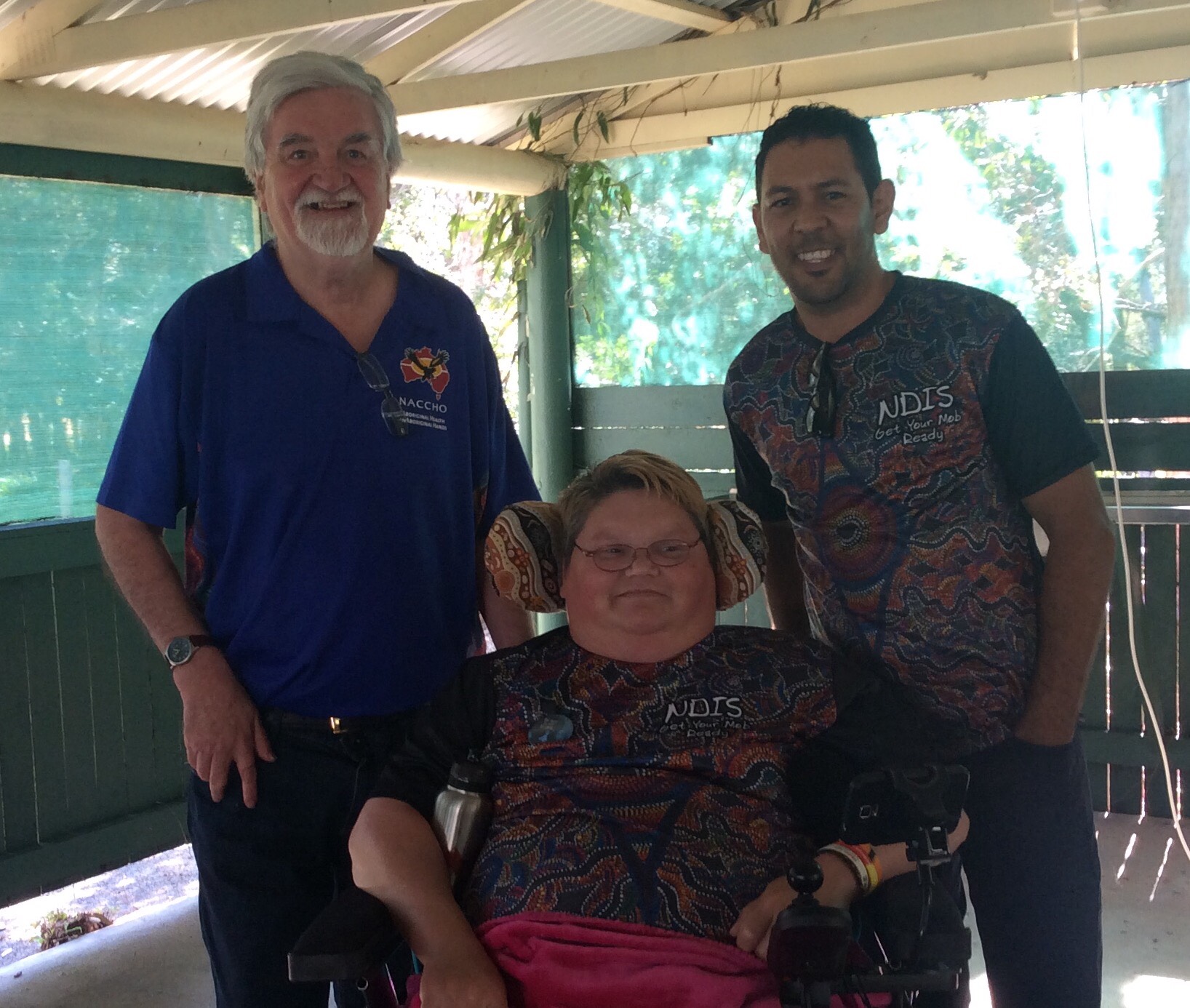
Pictured above : Editor of NACCHO Communique and Stroke Foundation Consumer Council Board Member Colin Cowell (left ) with fellow stroke survivor Tania Lewis at an NDIS workshop in Coffs Harbour conducted by Joe Archibald (right )

Part 1 Stroke Foundation in 2016 called on government to close the gap

Originally published here

A stroke occurs when supply of blood to the brain is disturbed suddenly. The longer it remains untreated, the heightened the risk of stroke-related brain damage.

Medical treatment during the first onset of symptoms can significantly improve a sufferer’s chance of survival and of successful rehabilitation.

In Australia, stroke is the leading cause of long-term disability in adults, accounting for 25 per cent of all chronic disability. The NSF reports that roughly 50,000 strokes occur per year with over 437,000 people living with stroke across the country. While severity varies, two thirds of victims, like Tania, are left with impeding disabilities

But in 2011, Tania suffered a severe stroke at the age of 39 that would leave her with permanent right-sided hemiplegia – paralysis of one side of the body.

The burden of stroke doesn’t just fall on the patient, but can take a significant toll on family and carers.

“The doctor at the hospital tried to take Power of Attorney and Guardianship away from me and give it to the Guardianship Board, because he didn’t believe that [my husband] Len or anyone could look after me,” Tania recalls.

“I was put through hell. I figured life wasn’t worth living anymore because they took everything away from me. I couldn’t go home to my family. So I tried to off myself.

“Then all of a sudden, one day the doctor said, ‘You can go home. We can’t rehabilitate you anymore’. At home, I was having seizures for a while. My hubby wouldn’t sleep. He and his mum would take shifts looking after me. We tried to get assistance but there was nothing for young people. So one day, my husband collapsed on the lounge room floor from exhaustion. It was just a nightmare. That’s how I ended up in aged care.”

Tania spent the next two and a half years between three aged care facilities.

“I wouldn’t wish it upon nobody,” she says.

It was during her nightly ritual of chatting with her daughter via Facebook that Tania typed “young people in nursing homes” into Google. The search engine’s results would lead to her life-changing encounter with the YPINH.

“With help from the Aboriginal Disability Network, they advocated to get me out and get the right support equipment at home. Whatever I need, physio, OT – they’ve got my back. I can’t thank them enough for what they’ve done for me.”

Today, Tania is working with the Aboriginal Disability Network, helping Indigenous Australians navigate their way through the National Healthcare System.

It has long been recognised that Aboriginal and Torres Strait Islander people have a life expectancy that is approximately 20 years less than non-Indigenous Australians (Australian Bureau of Statistics). Recent data from the ABS shows that up to 80 per cent of the mortality gap can be attributed to chronic diseases such as heart disease, stroke, diabetes and kidney disease.

For many Aboriginal communities, especially those in remote regions, socio-economic factors play an important role. Kerin O’Dea from Darwin’s Menzies School of Health Research cites unemployment, poor education outcomes and limited access to fresh foods as key factors in her paper, Preventable chronic diseases among Indigenous Australians.

Lifestyle related risks such as smoking, alcohol misuse, stress, poor diet, and inadequate physical activity also need to be addressed, according to the Australian Institute of Health and Welfare .

But the first step, McGowan says, is for indigenous stroke sufferers to recognise the signs of a stroke in themselves and their family members. The NSF recommends the F.A.S.T. test as the most effective way to remember the most common signs of a stroke.

Face: Check their face. Has their mouth drooped?
Arms: Can they lift both arms?
Speech: Is their speech slurred? Do they understand you?
Time: Is critical. If you see any of these signs call 000 straight away.

“If I had known that because I’d lost my vision I had suffered a stroke, I could’ve put two and two together and got help, but I didn’t know anything,” Tania says.

“I was a heavy smoker, but not anymore – no way. Life’s too important. I didn’t ever know anything about a stroke – I was more thinking when you smoke, you can have lung problems and lose your fingers, like on the packets. But they don’t say anything about a stroke – they don’t advertise that stuff.”

The Stroke Foundation called on the Federal Government to fund an urgent $44 million campaign to address the gap in stroke care. For more information on stroke and the campaign, visit strokefoundation.com.au.

Part 2 Aboriginal Stroke Facts

From here

  • The incidence rate of stroke for Aboriginal and Torres Strait Islander Australians has been found to be 2.6 times higher for men and 3.0 for women (Australian Institute of Health and Welfare, 2008; Katzenellenbogan et al. 2010) compared to non-Aboriginal and Torres Strait Islander Australians and many suggest that these figures may in fact be underestimates (Thrift et al 2011).
  • Aboriginal and Torres Strait Islander Australians are known to experience stroke at a younger age than their non-Aboriginal and Torres Strait Islander counterparts, (Katzenellenbogen et al., 2010; Australian Institute of Health and Welfare, 2004) with 60% of Aboriginal and Torres Strait Islander non-fatal stroke burden occurring in the 25-54 year age-group compared to 24% in the non-Aboriginal and Torres Strait Islander group (Katzenellenbogen et al., 2010).
  • The prevalence of stroke is similarly significantly higher at younger ages among Aboriginal and Torres Strait Islander people (Katzenellenbogen 2013), with a significantly higher prevalence of co-morbidities among Aboriginal and Torres Strait Islander patients under 70 years of age, including heart failure, atrial fibrillation, chronic rheumatic heart disease, ischaemic heart disease, diabetes and chronic kidney disease. This reflects the increased clinical complexity among Aboriginal and Torres Strait Islander stroke patients compared with non-Aboriginal/Torres Strait Islander patients.
  • Aboriginal and Torres Strait Islander stroke patients aged 18–64 years have a threefold chance of dying or being dependent at discharge compared to non-Aboriginal and Torres Strait Islander patients (Kilkenny et al., 2012).

NACCHO Aboriginal Health : 2016 CENSUS of Aboriginal and/or Torres Strait Islanders launched

In 2016, there were 649,171 people identified as being of Aboriginal and/or Torres Strait Islander origin in the Census.

Of these people, 91% (590,056 people) were of Aboriginal origin only, 5% (32,345 people) were of Torres Strait Islander origin only and 4% (26,767 people) identified as being of both Aboriginal and Torres Strait Islander origin.

See Full ABS Data here

 ” The number of Aboriginal Australians living in NSW and Victoria has doubled since 2001, figures released by the Bureau of Statistics show, far outpacing the growth in the non-Indigenous population of both states.

In NSW, the number of Aboriginal and Torres Strait Islanders has increased from 120,000 in 2001 to 216,000 in 2016 while in Victoria the numbers have almost doubled from 25,000 to 47,000. ”

See Part 2 below for Article in full Census 2016: Indigenous population in NSW and Victoria doubles

These proportions have changed very little in the last ten year period (see Data Cube 3, Table 3b).

In the Northern Territory, just under 25% of the population identified as being of Aboriginal and/or Torres Strait Islander origin in the 2016 Census. In all other jurisdictions, 5% or less of the population were of Aboriginal and/or Torres Strait Islander origin. Victoria had the lowest proportion at 0.8% of the state total.

When a response to the Indigenous status question in the Census was not provided, a response of ‘not stated’ is recorded. When these people are excluded from the total population, the proportion of those identifying as Aboriginal and/or Torres Strait Islander increases slightly (between 0.1 and 0.3 percentage points) in all states and territories, with the exception of the Northern Territory which increases by 2.8 percentage points (see Data Cube 3, Table 3a).


Census Counts(a) by Indigenous status — State/Territory, 2016


Aboriginal and/or Torres Strait Islander
Non-Indigenous
Not stated
Total
Aboriginal
and TSI

State/Territory
Count of Persons
Proportion of Persons (%)
Count of Persons
Count of Persons
Count of Persons
Proportion of Persons (%)

New South Wales
216 176
33.3
6 826 286
437 762
7 480 228
2.9
Victoria
47 788
7.4
5 532 275
346 563
5 926 624
0.8
Queensland
186 482
28.7
4 211 020
305 685
4 703 193
4.0
South Australia
34 184
5.3
1 557 001
85 464
1 676 653
2.0
Western Australia
75 978
11.7
2 237 541
160 891
2 474 410
3.1
Tasmania
23 572
3.6
455 137
31 255
509 965
4.6
Northern Territory
58 248
9.0
147 327
23 257
228 833
25.5
Australian Capital Territory
6 508
1.0
370 748
20 143
397 397
1.6

Total Australia(b)
649 171
100.0
21 341 231
1 411 491
23 401 892
2.8

(a) Usual residence, excludes overseas visitors.
(b) Includes Other Territories, comprising Jervis Bay Territory, Cocos (Keeling) Islands, Christmas Island and Norfolk Island, Migratory-Offshore-Shipping, and No Usual Address.
Note: Please note that there are small random adjustments made to all cell values to protect the confidentiality of data. These adjustments may cause the sum of rows or columns to differ by small amounts from table totals. For further information see Census of Population and Housing: Census Dictionary, 2016 (cat. no. 2901.0).

CAPITAL CITIES AND REST OF STATE

In the 2016 Census, just over one-third (35%) of the Aboriginal and Torres Strait Islander population lived in Capital City areas. States with relatively high proportions of Aboriginal and Torres Strait Islander people living in Capital Cities include South Australia (54%) and Victoria (50%). In contrast, 78% of the population who identified as being of Aboriginal and/or Torres Strait Islander origin in the Northern Territory lived outside the Capital City area. Likewise, in Queensland, 71% of the Aboriginal and Torres Strait Islander population lived outside of the Capital City area.

Census Counts(a) by Indigenous Status — Capital City and Rest of State, 2016


Aboriginal and/or Torres Strait Islander
Non-Indigenous
Not stated
Total
Proportion of
Persons

Capital City/Rest of State
Count of Persons
Count of Persons
Count of Persons
Count of Persons
Proportion of Persons (%)

New South Wales (NSW)
Greater Sydney
70 135
4 493 490
260 364
4 823 991
32.4
Rest of State
145 189
2 322 911
175 436
2 643 536
67.2
No Usual Address
839
9 528
1 916
12 288
0.4
Total NSW
216 176
6 826 286
437 762
7 480 228
100
Victoria (Vic)
Greater Melbourne
24 062
4 215 761
245 390
4 485 211
50.4
Rest of State
23 444
1 310 270
100 103
1 433 818
49.1
No Usual Address
279
6 219
1 069
7 565
0.6
Total Vic
47 788
5 532 275
346 563
5 926 624
100
Queensland (Qld)
Greater Brisbane
54 158
2 093 128
123 517
2 270 800
29.0
Rest of State
131 520
2 107 878
180 324
2 419 724
70.5
No Usual Address
799
9 886
1 827
12 510
0.4
Total Qld
186 482
4 211 020
305 685
4 703 193
100
South Australia (SA)
Greater Adelaide
18 403
1 216 624
60 689
1 295 714
53.8
Rest of State
15 530
338 096
24 445
378 074
45.4
No Usual Address
249
2 279
328
2 863
0.7
Total SA
34 184
1 557 001
85 464
1 676 653
100
Western Australia (WA)
Greater Perth
31 214
1 801 031
111 612
1 943 858
41.1
Rest of State
44 169
431 657
48 341
524 167
58.1
No Usual Address
587
4 497
867
5 950
0.8
Total WA
75 978
2 237 541
160 891
2 474 410
100
Tasmania (Tas)
Greater Hobart
8 534
201 462
12 351
222 356
36.2
Rest of State
14 983
252 850
18 791
286 627
63.6
No Usual Address
55
755
104
912
0.2
Total Tas
23 572
455 137
31 255
509 965
100
Northern Territory (NT)
Greater Darwin
11 960
110 004
14 862
136 828
20.5
Rest of Territory
45 590
35 862
7 998
89 443
78.3
No Usual Address
696
1 402
387
2 489
1.2
Total NT
58 248
147 327
23 257
228 833
100
Australian Capital Territory (ACT)
Australian Capital Territory
6 476
370 297
20 084
396 857
99.5
No Usual Address
33
454
62
538
0.5
Total ACT
6 508
370 748
20 143
397 397
100

Total Australia(b)
649 171
21 341 231
1 411 491
23 401 892

(a) Usual residence, excludes overseas visitors.
(b) Includes Other Territories, comprising Jervis Bay Territory, Cocos (Keeling) Islands, Christmas Island and Norfolk Island, and Migratory-Offshore-Shipping, and No Usual Address.
Note: Please note that there are small random adjustments made to all cell values to protect the confidentiality of data. These adjustments may cause the sum of rows or columns to differ by small amounts from table totals. For further information see Census of Population and Housing: Census Dictionary, 2016 (cat. no. 2901.0).

AGE PROFILE

In the 2016 Census, the Aboriginal and Torres Strait Islander population had a younger age distribution than the non-Indigenous population, reflecting higher fertility and lower life expectancy – a trend consistent with 2011 Census results. In 2016, the median age (the age at which half the population is older and half the population is younger) for Aboriginal and Torres Strait Islander people was 23 years (up from 21 years in 2011), compared with 38 years for non-Indigenous people (up from 37 years in 2011). The Northern Territory had the highest median age for Aboriginal and Torres Strait Islander people in both 2011 and 2016 (23 years and 25 years respectively). In 2016, New South Wales and Queensland had the lowest median age (22 years). For 2011 age profiles, see Census of Population and Housing – Counts of Aboriginal and Torres Strait Islander Australians, 2011 (cat. no. 2075.0).

Nationally, just over one-third of Aboriginal and Torres Strait Islander people counted in the 2016 Census were under 15 years of age (34%), while 5% were aged 65 years and over. The age profile of the Aboriginal and Torres Strait population varied only slightly between the states and territories. Queensland had the highest proportion of children aged under 15 years (35%). Tasmania had the highest proportion of older persons aged 65 years and over (6%).

Census Counts(a) — Aboriginal and Torres Strait Islander people by State/Territory and Age, 2016


Total Persons
Persons aged 0-14 years
Persons aged 15-64 years
Persons aged 65 years and over
Median age

State/Territory
Count of Persons
Proportion of Persons (%)
Years

New South Wales
216 176
34.4
60.3
5.4
22
Victoria
47 788
33.3
61.5
5.3
23
Queensland
186 482
35.4
60.2
4.4
22
South Australia
34 184
33.4
62.0
4.6
23
Western Australia
75 978
33.4
62.4
4.2
23
Tasmania
23 572
33.0
60.8
6.2
24
Northern Territory
58 248
30.0
66.2
3.8
25
Australian Capital Territory
6 508
31.2
65.5
3.1
23

Total Australia(b)
649 171
34.0
61.3
4.8
23

(a) Usual residence, excludes overseas visitors.
(b) Includes Other Territories, comprising Jervis Bay Territory, Cocos (Keeling) Islands, Christmas Island and Norfolk Island, and Migratory-Offshore-Shipping, and No Usual Address.
Note: Please note that there are small random adjustments made to all cell values to protect the confidentiality of data. These adjustments may cause the sum of rows or columns to differ by small amounts from table totals. For further information see Census of Population and Housing: Census Dictionary, 2016 (cat. no. 2901.0).

Part2 : Census 2016: Indigenous population in NSW and Victoria doubles

The number of Aboriginal Australians living in NSW and Victoria has doubled since 2001, figures released by the Bureau of Statistics show, far outpacing the growth in the non-Indigenous population of both states.

Originally published HERE

In NSW, the number of Aboriginal and Torres Strait Islanders has increased from 120,000 in 2001 to 216,000 in 2016 while in Victoria the numbers have almost doubled from 25,000 to 47,000.

The Indigenous population is growing – rapidly,” Australian National University associate professor Nicholas Biddle and research fellow Francis Markham told the ANU’s Centre for Economic Policy Research on Friday.

Over the same period the non-indigenous population has grown by between 15 and 20 per cent in NSW and Victoria.

“Apart from the higher fertility rate of Indigenous Australians there is pretty strong evidence for there being a larger number of people who previously weren’t being counted,” said Dr Biddle.

“Part of it is the census getting better at counting the population, and part of it is people being more comfortable identifying themselves to a census collector.”

Nationally, there are now 650,000 Indigenous Australians, according to the updated 2016 Census figures released by the bureau on Thursday, which also show the suburbs with the highest and lowest proportion of Aboriginal residents.

In NSW, the lower North-Shore has just 0.2 per cent of residents identifying as Aboriginal compared to the state average of 1.4 per cent. In Sydney’s east, at 6.6 per cent, La Perouse has the highest rate among Indigenous areas identified in the Sydney city region.

In Victoria, the Melbourne areas of Bayside and Glen Eira have the lowest proportion of Aboriginal residents at 0.2 per cent. The Mornington Peninsula has the Melbourne area’s highest at 1.3 per cent.

While more Aboriginal Australians are moving to urban areas, the majority are staying on city fringes. There are now more than 9000 Indigenous Australians in Blacktown in Sydney’s west and more than 2800 located across Northcote, Preston and Whittlesea in Melbourne.

Dr Biddle said these areas also have high rates of mixed parentage, where Indigenous males and females have a non-indigenous partner causing the rate of the population that identifies as Aboriginal to increase.

“That is kind of what you expect if you have a population that makes up 1 or 2 per cent. The chances of your partner having the same ethnicity as you is relatively low.”

The number of people identifying as Indigenous has significant implications for government policy. The Commonwealth Grants Commission allocates a small share of more than $50 billion in GST revenue to states for Indigenous funding on the basis of the census figures.

Nikita Rotumah and Ben Clark work at one of the few remaining Aboriginal youth outreach centre in the Melbourne city area.

“All the services are under resourced,” said their manager Troy Austin, who has run the Aboriginal Youth Sport and Recreation Co-Operative in Fitzroy for the past three years.

“A lot of the organisations have moved out of the inner city as the community goes out to where housing is more affordable.”

He said while more and more people are identifying as Indigenous that has not translated to greater resources.

“People are becoming more aware of the number of services that you have to have your Aboriginality confirmation for,” he said. “Maybe someone who wasn’t getting services before can now get them.”

“There was a period where it was safer for someone to not poke your head up and say you were Aboriginal, now there is a lot more pride and also a lot more awareness,” he said. “That’s a good thing.”

NACCHO #OchreDay2017 Aboriginal Male Health : Celebrating #IndigenousDads #FathersDay Creating positive images of Aboriginal fathers


” We are surrounded by negative images of Aboriginal men and fathers.

In the mainstream media, and even academic literature, they are mostly portrayed in a negative context: the focus is on crime, domestic violence, alcohol and other drugs, unemployment, and child abuse.

It is time we started seeing more of the positives.

A recent study (Stoneham, Goodman and Daube, 2014) looked at 335 media stories relating to Australian Indigenous health and found that 74% of them were negative, 11% were neutral and only 15% were positive.”

 From Creating positive images of Aboriginal fathers


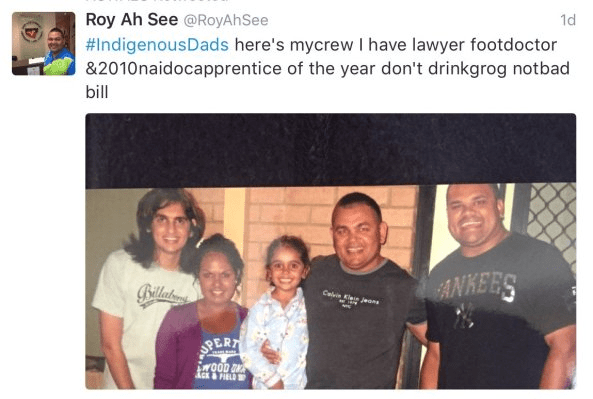
“As the spontaneous expression of Aboriginal identity and pride of #IndigenousDads demonstrated, Aboriginal fathers are teachers, lawyers, academics, employers, actors, animators, athletes.

Above all they are dedicated and devoted role models for future generations and give them hope that they can rise above discrimination and racism, be proud of their identity and culture, and be encouraged to reach their potential.

Roy Ah-See, a Wiradjuri man, is chairman of the NSW Aboriginal Land Council, the largest member-based Aboriginal organisation in Australia : And former chair of Yerin ACCHO  see interview here from NACCHO TV

See full article HERE

Read over 300 NACCHO Male Health articles printed over past 5 years

 ” Recommendations developed from the present study are therefore strongly grounded in strength-based approaches that have the potential to empower urban Aboriginal fathers to develop, strengthen and reclaim relationships with their children and families.”

From Engaging Aboriginal fathers see part 2

We had to ask ourBe strongselves how could it be that a whole society is not thinking of positive images of Aboriginal fathers/men. The images that were available were all about domestic violence, assault, sexual abuse, alcohol and drugs. The messages with these images were about what men shouldn’t do. From there, the project team sat down with men of all ages and talked about the lack of positive images of themselves in the media, on posters and other public spaces. (p. 23)

Working with Aboriginal and Torres Strait Islander  communities in Newcastle, the Tiwi Islands, Yarrabah, Wreck Bay, Alice Springs and Hobart  helped develop a series of beautiful posters that show Aboriginal and Torres Strait Islander in a different light.

The article  (available online from the publisher at a cost of $3.98) includes discussion of the ways in which he engaged local communities. You can read about  other work with Aboriginal fathers (for free)  in the report Reaching the heart of Indigenous families & communities.

Chris Sarra spoke about his work as a principal at Cherbourg School it showed the power of changing how we see Aboriginal people and communities. Despite wide spread negative perceptions about Aboriginal students, he  knew they could be Strong and Smart (the school motto). Unfortunately not all the staff agreed.

We then had to establish a team that believed it could be done; those that didn’t believe it could be achieved were encouraged to move on. And I did sit in the staff room and say to staff, ‘What I believe and what the community believes is that our children can leave here stronger and smarter. If you don’t believe it, then you have to go. And half the staff left. (Sarra, 2005, p. 6. The whole speech is well worth reading.)

It was only when he had staff who really believed in the potential of their students that things could change. These types of negative perceptions are reinforced by the negative images that surround us.

We need to to be exposed to more positive images of Aboriginal families and communities and to hear more from people like Chris and Craig who recognise and build on their strengths.

Darwin October 4-5 Register HERE


Part 2 Findings  : Engaging Aboriginal fathers

Stuart, G., May, C., & Hammond, C. (2015). Engaging Aboriginal fathers. Developing Practice: The Child, Youth and Family Work Journal (42), 4-17.

Read in full here

The Challenges

Some of the participants said that, at times, they found trying to engage  Aboriginal fathers frustrating, challenging and plain hard work.

Yes, it got really, really frustrating. You put all that work in. Especially with this [project] – and I went and saw the boys and said, ‘You make it look so silly, you let yourselves down really.’ I sort of put it all back on them. And then after that the group sort of kicked off again and we just let it go for a while and then it just dies off. (Trent)

Creating and maintaining momentum

A common challenge was creating or maintaining the momentum.

At [name of location]. I told them that I’ve got all these ideas and I wished to put forward to everybody and they’re saying, ‘Oh yes, we’ll be there, we’ll do it, just tell us when.’ Then when the word gets around, they don’t move. Had to go around and knock on his door and chase him up and drag them out of the house. [Chuckles] (Aaron)

Some participants felt that fathers tended to not do anything “until it gets to some sort of a pressure crisis point.” At times this meant that a problem had escalated to the extent where services were limited in the support they could provide and the fathers were unsatisfied with the response. This made further engagement less likely. Sometimes, by the time the worker could make contact, the crisis had passed and the father no longer wanted assistance.

Participants also described how they would establish an effective group for a while but numbers would dwindle off. Attendance could be spasmodic or decrease for a range of reasons – many of which were external to the program.

I started a men’s group at the end of last year called ‘Connecting Fathers’ at our school. It went real well last year – had about 15-18 people there, but this year because of all of the kids that are moving on to high school and a couple of families moving away, we got down to about six, seven people… (Dane)

Lack of male workers

Most participants in this research were female and/or non-Aboriginal, and this was clearly a challenge for some of them.

I just think maybe because I’m female and I’m not Indigenous. I just think that was just – already that’s something there. You’ve got to just keep trying to say ‘hello’ to people and just try and build up a relationship with them and just take it to the next step – but I just find that quite difficult. (Gina)

This challenge may have been particularly salient for services with sole female workers who expressed a need for a male presence to combat a perception that family services were mainly for women as this exchange and Liam’s comment show:

Whitney: I think the thing that’s lacking is just that male presence. Just thinking of the three meetings that we’ve got set up. We don’t even have men on the planning side of things, so that’s – we could start there….

Trent: It starts from there doesn’t it, so there’s no men involved in that meeting or in that group, you’re not going to get men to —

Whitney: Exactly.

and

One of the Aboriginal men I work with at the moment, he came to me he said, ‘I thought you only looked after women. I didn’t think you looked after men.’ (Liam)

Not being an Aboriginal man

While it was not discussed to the same extent as being male, some of the workers discussed the challenge of not being Aboriginal. As one women suggested ‘it’s ideal if you’re black and hairy’, that is, visually clearly both Aboriginal and male. Part of the challenge was in knowing the best way to respond to male Aboriginal culture. At times there was a problem being outside the culture and receiving conflicting advice from different people.

And I was very much told [by a female Aboriginal worker], ‘That’s men’s business. No. Don’t go there.’ Ok. But then, when I was talking with [a male Aboriginal worker] about it, he said, ‘No. Go and talk to them.’ (Jennifer)

One way in which Jennifer attempted to address this issue was by using Aboriginal trainees; however many of these trainees were challenged by limited knowledge and experience.

We found those challenges; we had Indigenous trainees with one of our playgroups at one stage and the aim of those trainees was to bring the Aboriginal perspective to the playgroup and cultural activities. What we found was many of those kids [the trainees] didn’t even have a good sense of their own culture and identity.  How can you impart that information and knowledge? (Jennifer)

Lack of time

Time and funding structures could also become a major constraint for service providers trying to build meaningful relationships with Aboriginal fathers. A male participant, who had extensive experience with a variety of services, found that funding agreements requiring a certain number of clients meant that he didn’t have the time to build and maintain relationships with quite marginalised fathers. Others spoke about the time required to become accepted, particularly when they were not part of the local Aboriginal community.

And time, it takes a long time. My work over in WA for example, it took 18 months nearly, to actually start talking to blokes. So we’d only just started conversations – or men were only just starting to look for me for conversations. (Bruce)

Strategies

The service providers identified a range of strategies that they had used to engage Aboriginal fathers.

Building strong, trusting relationships

Participants frequently spoke about the importance of building strong, trusting relationships with Aboriginal fathers. Jo suggested that relationships were particularly important when working with Aboriginal communities.

I think my experience in the past is that Indigenous people work better with a person, rather than a service… If you can sit down, or you’re working with a man, they’re saying, ‘This is my problem’ they won’t walk into a building and go, ‘Oh, this building says they help kids with problems.’ They’ll go, ‘Who do I know that might be able to help me with this?’ (Jo)

It often took time to build trusting relationships and participants spoke about involvement in the local Aboriginal community and using non-work contexts as a means to help build these relationships.

And living locally where you work, you go shopping and to run in and grab some milk, takes you an hour and a half some days, because you get stopped as you’re walking towards the aisle you want to get to, as you’re walking back, as you get to the car, all by different people… It’s less confronting for them to walk up to you and chat like friends in a public place, they ask you a few things and you just say, ‘Come down and see me another day’, or ‘I can come around to your place.’ (Liam)

Some others, while recognising the value of being seen in the community and building relationships outside of work, expressed concerns about the demands that these expectations placed on their personal life. As one of the workers commented:

If I see someone up the street I’ll never ignore them, ‘Good day mate, how are you going?’ And then I’ll say, ‘No, just doing my shopping. Give me a call Monday morning mate. Come in and see me’ because I don’t, I can’t lower those boundaries… I don’t want to have to go to the shops and have to deal with a client; my life is very separate to my work.

Aboriginal workers who worked in the same community they lived in were under particular pressure.

We had some really good [Aboriginal] health workers in Newcastle. They got burned out and moved on… They get that constant interruption from community when they’re outside their work hours. (Liam)

Having male and Aboriginal workers

In terms of the importance of gender and Aboriginality, many of the participants felt that these factors needed to be taken into account in service design. They described how people coming to a service might want to see a male staff member and how having male or Aboriginal staff encouraged Aboriginal fathers to become involved.

I think it does make a difference if you’ve got an Aboriginal worker or project within your organisation… because what often happens in welfare services is they’re seen as a female service and therefore males aren’t welcome… And I think quite often Aboriginal workers and males in the organisation helps to change that opinion. (Sue)

Where having Aboriginal male staff wasn’t possible, an alternative was having somebody who was known to, and accepted by, the local Aboriginal community.

You could have a non-Aboriginal person, but it’s got to be somebody that really gets [the Aboriginal] culture and gets the diversity of communities… There’s a lot of guys who are well and truly accepted in the Aboriginal community that aren’t Aboriginal, but they’ve grown up there and have been part of that community and are very well accepted. (Jennifer)

Services with only female staff (often projects with a sole worker or only a few staff) sometimes tried to find men who could take a lead role or worked in partnership with other services who could provide a worker who was male, Aboriginal or both.

So when our playgroup first started up… we had a grandad coming along and he’d take his son and they’d come with the grandad. And we found that was brilliant. You’d sit at the table and have five or six dads and uncles and granddads and aunties, so it was really lovely. He got a job, not that far into it and that’s when we found the engagement of the dads really dropped off from the playgroup. The mums would still come, but we lost the dads. (Jennifer)

Creating father friendly environments

Participants also spoke about the importance of creating a father-friendly environment. An important starting point was the physical setting (colours, posters, reading material).

We had lots of pinks and things… and we changed them. There’s the pictures that we put up and we changed a lot of things around encouraging both dads and Aboriginal families, because there wasn’t a lot of that a couple of years ago, there were just scenes with single mothers and kids. (Jo)

As well as the physical setting, it was important to signal to fathers that they were both welcome and safe. As the following discussion suggests, female-dominated services could be challenging for some fathers:

I find that we’ve some of our younger dads are not bad looking and you’ve got all these single mums there. Some of them come out with the most inappropriate comments to the guys ‘Oh, what’s he like?’ ‘Is he single?’ … They [the fathers] laugh it off at the time, but I’m sure for a lot of them, particularly Aboriginal dads, they get quite shamed by it and it puts them well out of their comfort zone. (Jennifer)

Organising specific events or activities

One of the more frequent strategies employed to engage Aboriginal fathers was the organisation of specific events and activities. For example, NAIDOC (National Aboriginal and Islander Day Observance Committee) week was often seen as a good opportunity to engage Aboriginal fathers.

On Monday we had NAIDOC celebrations and we had Rika Alley [an Aboriginal performer] come…. Basically he did this dance to engage with them and the kids came up and it went right through, up to the teachers and then he called parents as well. I was quite surprised how many parents went up. And it was all, you know, with the dads and the kids just loved it and laughed. And it was just breaking that ice. (Gina)

However, relying on these one-off events may not be enough. As one person said, ‘You can’t continually have these big celebration things.’ Fathers would come for the special events but not continue their involvement with the organisation afterwards.

When we have formal assemblies at the school where there’s different awards or whatever, there’ll be a heap of dads. Education week we have big open school, we do get dads through. So, we’re getting them, but it’s just that momentum of keeping them. (Jennifer)

Providing camps and cultural activities

Most of the male participants in the focus groups had been involved in running camps for Aboriginal fathers and saw them as generally being successful in both engaging fathers with the service and in the lives of their children.

One dad said, ‘Well I’ve got three daughters and really I don’t know what to do with them or how to connect with them. At home it’s always mum, mum, mum. If they get hurt, they fall over, whatever, it’s always mum.’ When he went on this camp, he did everything and he had to do everything. And he loved it. (Trent)

Cultural activities were also seen as a particularly good way to engage Aboriginal fathers.

They liked doing Aboriginal painting and stuff, so they wanted to do a painting course… And we got blokes down wanting to do Aboriginal [hunting] weapons and stuff; wanted to show the kids how to make didgeridoos like I make them; wanted to do boomerangs, battle axes, that sort of stuff. (Dane)

Engaging family and community gatekeepers

Focus group participants identified the importance of recognising gatekeepers and ensuring they were supportive. Mothers and other female family members could play an important role in facilitating the engagement of Aboriginal fathers in a service and with their children, particularly in relation to their role as a gatekeeper to engagement with the children. Services needed the support of these important family members.

And I actually think that when I have a lot of Aboriginal clients over the years, of the male clients, probably 80 percent of those, the icebreaker was by a woman, who has actually brought them there; it could have been an aunt, or a mother or a sister, who has actually brought that person into the service, because a male person had the perception we don’t help men. (Janelle)

In Aboriginal communities, elders frequently play a vital role in engaging other community members. Gaining the support of elders could be quite beneficial for services.

And we’ve got a couple of key local elders that did have a lot of grandkids at the school and all those grandkids have now moved on, but we still have very close connections, but it has backed off a bit since the last of the grandkids moved onto high school – which is a shame because we really made a point of having that connection with local elders because they’re really the key people to get involved with. (Jennifer)

Having flexible programming

Flexibility was important in a range of areas including the hours of operation, location and way of working.

We do after hours work, long weekends. It all depends what the client wants. (Liam)

I do my groups of a night. I’ve had more males turn up to the night groups than the day. Out of 46 I’ve had six males. And most of them at night. (Sharon)

Participants also suggested that it was important to be flexible in terms of group membership so that extended family could be involved.

Yes starting to get some of the young fellows coming up to the group too like, some of the kids’ brothers and stuff were coming up – the dad or someone couldn’t make it, the pop would come or the uncle would come, so someone was always coming up to the group. (Dane)

Creating a sense of ownership

Finally it was important that participants had a sense of ownership of the programs.

Almost every group of mine that hasn’t worked has been a suggestion by somebody to do a group that I’ve had no connections with and what happens is I get a flyer out and often what happens is the mothers put down the father’s name and phone number…and it doesn’t work…. There was no connection. (Bruce)

Discussion

The present study identified a number of issues which need to be considered in developing strengths-based programs for engaging Aboriginal fathers and fathers of Aboriginal children. The strategies identified by the participants in this research offer suggestions for ways to address these issues.

It is important to note that our paper is grounded in the specific context of Aboriginal fathers in urban Newcastle/Lake Macquarie and the more rural setting of the Upper Hunter Valley. Despite the Hunter region’s history of colonisation, with the first European settlements being established very early in 1800s, and the major impact of oppressive, divisive and discriminatory policies, there is still a very strong sense of culture and identity within local Aboriginal communities.

While some of the findings may be relevant to other contexts, there may also be differences. The experience of Aboriginal fathers in regional NSW context will be very different to Aboriginal fathers in other contexts such as remote communities. Despite these differences, there are also likely to be similarities.

A key learning from this research is the need to carefully build strong and trusting relationships before meaningful intervention can begin.

Urban Aboriginal men have often moved to be with their partners and therefore their family and community connection are in other communities. This means they may be poorly connected to the community in which they live. Many will also experience distrust that has arisen from factors such as colonisation, cultural disconnection, family disruption and intergenerational trauma (Bowes & Grace, 2014; Lohoar, Butera, & Kennedy, 2014; Secretariat of National Aboriginal and Islander Child Care, 2010). Building connections with these men requires both skill and credibility, particularly as the men often seek informal references from people they know within the community before engaging in any form of relationship with a service’s staff. Having male Aboriginal workers within the program has the potential to minimise barriers such as these and to reduce the risk that an engagement will fail before it has begun. The value of having Aboriginal male workers has been emphasised in previous literature (Beatty & Doran, 2007; Berlyn, Wise, & Soriano, 2008; Communities and Families Clearinghouse Australia, 2010) but, as identified by participants in this research, this can be difficult for sole-worker service or services where all the staff are women. Services can address this by strategies such as adopting partnerships with Aboriginal workers, employing local Aboriginal men on a casual basis and recruiting well supported male volunteers.

Mothers, and their families, play a key role in managing the lives of children in urban Aboriginal communities (Secretariat of National Aboriginal and Islander Child Care, 2010). Mothers are more likely to talk to teachers, attend services and provide a greater proportion of care to their children. If mothers are sceptical or anxious about a program then it is unlikely that fathers will be encouraged, or given permission, to attend (Tehan & McDonald, 2010). A key tenant of a program’s success may therefore lie in the ability to win the confidence and support of mothers. One strategy to manage maternal concerns is to operate programs out of services that mothers know and trust, and to incorporate the involvement of workers that have previously formed trusting relationships with the mothers.

Like fathers in other communities, Aboriginal men often rely on signals that a program is going to focus on their needs rather than fit them into a program designed for mothers.

This may particularly important for Aboriginal men because of highly differentiated maternal and paternal parenting roles that characterise many Aboriginal communities (Department of Families, 2009; Secretariat of National Aboriginal and Islander Child Care, 2010).

Programs should therefore aim to create environments that explicitly welcome men and signal to them that they are in a man’s space (Berlyn et al., 2008). Programs should also aim to focus their activities on factors that relate to fathering roles in Aboriginal communities such as culture and connection to community.

One means of doing this is to link fathering activities with well-established cultural events.

A program, however, needs to create more opportunities than those afforded by these intermittent celebrations of harmony or culture. Holding camps where fathers can engage with their children around cultural activities was identified as an important way to fulfil many of these requirements within a program (see also Communities and Families Clearinghouse Australia, 2010). However, it was also recognised that programs needed to actively engage with, and manage, potential maternal concerns that could easily arise from such activities.

Strengths-based approaches to working with fathers and Aboriginal communities are important in challenging some of the negative, disempowering approaches that have often been adopted when working with Aboriginal communities. Lohoar, Butera, and Kennedy (2014) argue that Aboriginal cultural practice and cultural identity is a strength that ‘acts as a protective force for children and families’ (p. 2) and a range of authors have advocated a strengths-based approach to working with Aboriginal families and communities (Armstrong et al., 2012; Bamblett & Lewis, 2006; Geia, Hayes, & Usher, 2011; McMahon, 2003; Secretariat of National Aboriginal and Islander Child Care, 2010).

Recommendations developed from the present study are therefore strongly grounded in strength-based approaches that have the potential to empower urban Aboriginal fathers to develop, strengthen and reclaim relationships with their children and families.


NACCHO Aboriginal Health : Our ACCHO Members #Deadly good news stories #NACCHOagm2017 #NSW #TAS #QLD #VIC #WA #NT #SA


1. National : 2017 NACCHO Members’ Conference and AGM Registrations

1.2 National : 2017 NACCHO National Aboriginal Male Health Ochre Day registrations Darwin NT

2. Katungul Aboriginal Medical Service going strong after recent awards

3. QLD : B.strong training program to help close the gap

 4.WA : South West Aboriginal Medical Service receives funding to establish a dental clinic

5. SA Tackling Tobacco Team – Nunkuwarrin Yuntiat Flinders Uni

6. NT : Menzies HealthLAB hits the road for Science Week

7.VIC : Mallee District Aboriginal Services aims to reach out

8. Tas : Tasmania Aboriginal community and family events

9. View hundreds of ACCHO Deadly Good News Stories over past 5 years

How to submit a NACCHO Affiliate  or Members Good News Story ? 

 Email to Colin Cowell NACCHO Media    

Mobile 0401 331 251

Wednesday by 4.30 pm for publication each Thursday

1. National : 2017 NACCHO Members’ Conference and AGM Registrations

 This is an opportunity to show case grass roots best practice at the Aboriginal Community Controlled service delivery level.

In doing so honouring the theme of this year’s NACCHO Members’ Conference ‘Our Health Counts: Yesterday, Today and Tomorrow’.

NACCHO Conference Website

1.2 National : 2017 NACCHO National Aboriginal Male Health Ochre Day registrations Darwin NT

Register HERE

2. Katungul Aboriginal Medical Service going strong after recent awards

Katungul Aboriginal Medical Service says it is going from strength to strength, getting more and more healthy outcomes for the Koori community.

Morale was boosted even further by recent Eurobodalla business and NAIDOC awards, and now the service is being recognised as a shining light in the arena of Aboriginal community health and closing the gap.

Katungul Aboriginal Corporation Community and Medical Services was awarded the prestigious Excellence in Business Award at this month’s Eurobodalla Business Awards night, where the service also picked up the People’s Choice Award for the Narooma area.

And then only one month ago, Katungul received the Excellence Award at the Eurobodalla NAIDOC Awards night held in Narooma.

Katungul chief executive officer Rob Skeen said the awards had definitely been a huge boost for staff, particularly receiving the peer-to-peer recognition of both the people’s choice and NAIDOC awards.

“It’s important to all our staff, because even though we work for the organisation, we are still community members and part of the wider family,” Mr Skeen said.

“All our staff have a strong investment in not only seeing Katungul succeed but because of our long community and family history, we also have those ties with the community, so its not only about what’s happening now but also building a strong base for future generations.”

“Those historical family and cultural ties reflects our “Koori health in Koori hands” philosophy.”

Since taking over as CEO last year, Mr Skeen has seen the number of employees grow from 30 to 56 and the health service was getting recognition for its accomplishments from a range of other services and government entities.

Katungul Aboriginal Medical Service now services the entire Far South Coast from Eden to Ulladulla with offices in Bega, Narooma and Batemans Bay, as well as recent moves to service areas west of the ACT.

Only last week, representatives from the Department of Prime Minister and Cabinet had a lengthy meeting at the service’s Narooma office to find out why the service’s reporting system was so good, and Katungul has been recognised one of the four most accountable Aboriginal organisations in Australia.

“They were impressed and had plenty of questions to ask about how we were meeting our key performance indicators,” Mr Skeen said. “It was a good opportunity for us to reinforce that it’s not just about the numbers but also the narrative and story behind our accomplishments that are equally as important.”

So for example, the work being done by the young outreach workers Sean Kinchela and Dean Heycox in the eyes and ear screening program, who in recent months had screened more than 450 primary school and kindergarten students from Bermagui to Batemans bay, checking for conditions such as otitis media.

Their work had been so successful , the pair was next week scheduled to give a presentation to the Aboriginal Health and Medical Research Council as a best practice model on health screening for other Aboriginal medical services in

Other Katungal success stories include the mobile dental van that now was visiting schools and communities all along the Far South Coast thanks to the support of the Poche Centre for Indigenous Health in the Faculty of Dentistry at the University of Sydney.

The dental hygienist supplied by the Poche Centre now had a dental assistant and local Koori trainee working with her for all the school visits in the Bega and Eurobodalla shires.

Mr Skeen said Katungul was also implementing a new holistic approach to medical care that took into account both physical and mental health.

“Because you can’t make healthy decisions about your body without having a healthy mind,” he said.

A new strategic plan for the health service was also being finalised and would begin to be implemented across all its offices and programs in October, he said.

Katungul was working on building partnerships with the three other Aboriginal medical services in Nowra and the Illawarra, and also the Oolong House residential alcohol and drug treatment facility.

“One of the proudest accomplishments for me so far was getting word that the number of emergency room admissions for our Aboriginal people had dropped significantly, which to me means we are making a difference when it comes to preventative medicine and keeping Kouri health in Kouri hands, “Mr Skeen said.

 3. QLD : B.strong training program to help close the gap

Health professionals will receive training on how to provide culturally-appropriate healthy-lifestyle advice to their Aboriginal and Torres Strait Islander clients with the launch of the B.strong training program.

Photo above : (left to right) Professor Noel Hayman, Clinical Director, Inala Indigenous Health Service; Aunty Evelyn Waria, Torres Strait Islander Elder; Aunty Kerry Charlton, Aboriginal Elder; Cameron Dick MP, Minister for Health and Minister for Ambulance Services.  (Photo: Qld Health Hospital and Health Service)

Minister for Health and Ambulance Services Cameron Dick today launched the Palaszczuk Government’s $2.24 million three-year Aboriginal and Torres Strait Islander Brief Intervention Training Program (the B.strong training program) which will be delivered by Menzies School of Health Research over 2017-2019.

“The B.strong training program will build the capacity, skills and confidence of Queensland’s Aboriginal and Torres Strait Islander health workers and other health and community professionals,” Mr Dick said.

The program is of particular importance to the Member for Inala, Premier Annastacia Palaszczuk, after campaigning for further Indigenous health services in the area.

“The program will enable health professionals to deliver appropriate nutrition and physical activity interventions to Aboriginal and Torres Strait Islander clients and to help them stop smoking,” Ms Palaszczuk said.

Photo above : Training delivery photo (Apunipima Cape Capers e-newsletter):

Royden Fagan (bottom left hand photo pointing at paper).

Menzies School of Health Research Brief Intervention Trainer Royden Fagan delivered B.strong Brief Intervention training program to Apunipima health workers earlier this month. Participants who complete the one day session, six two-hour online modules and take part in peer support groups will gain a Statement of Attainment.

“I am excited that the Menzies School of Health Research has been working collaboratively with Aboriginal and Torres Strait Islander stakeholders and Queensland Health to develop the B.strong training program.

“The Townsville Aboriginal and Islander Health Service and Inala Indigenous Health Service worked in partnership with Menzies to test and pilot the face-to-face and online training program.”

Inala Indigenous Health Service Clinical Director Professor Noel Hayman said working in partnership with Menzies for the B.strong training program was crucial for its success.

“We worked together to develop, design and test the B.strong training program and online materials,” Prof Hayman said.

“The shared goal was to produce a best-practice training program in smoking cessation, nutrition and physical activity for health professionals to work more effectively with Aboriginal and Torres Strait Islander people.

“The face-to-face B.strong training program will be delivered flexibly to fit the operational needs of health services to ensure all staff receive training.”

Menzies School of Health Research Director Prof Alan Cass said Aboriginal and Torres Strait Islander Queenslanders have a high prevalence of known risk factors for chronic disease.

“Smoking rates amongst Indigenous Queenslanders are high, including maternal smoking rates, and Indigenous Queenslanders are also more likely to be obese,” Prof Cass said.

“The B.strong training program aims to address the risk factors that significantly contribute to the burden of disease and injury for Indigenous Queenslanders.”

To find out more about the B.strong program see www.bstrong.org.au (external site) ( http://www.bstrong.org.au/ ) or to organise a training workshop contact the B.strong team at: b.strong@menzies.edu.au ( mailto:b.strong@menzies.edu.au ) or Ph: 07 3169 4208.

 4.WA : South West Aboriginal Medical Service receives funding to establish a dental clinic

The South West Aboriginal Medical Service is set to add to its already impressive array of services thanks to the state government’s Local Projects, Local Jobs funding.

Member for Bunbury Don Punch said the funding will help to create a dental clinic at the centre which will help improve the health outcomes for the Noongar community.

“Dental health is such an important part of overall healthcare so I think it is really appropriate SWAMS expand their services in this area,” he said.

“I recently toured the Bunbury SWAMS clinic and was very impressed by the holistic approach they take to health care.

Mr Punch said the $25,000 in funding would go a long way towards turning SWAMS’ long held ambition for a dental clinic into a reality.

“The dental clinic initiative will enhance their services in a very positive way.”

“SWAMS has partnered with WA Dental Health Services and with the Poche Centre for Indigenous Health at the Sydney Medical School to establish the clinic” he said.

5. SA : Tackling Tobacco Team – Nunkuwarrin Yunti at Flinders Uni

 
Our team were at Flinders Uni NAIDOC  – if you’re young and deadly (or even if you’re older and deadly) learn how we can support you to live a smoke-free life! #BeHealthyBeSmokefree #notupinsmokes

6. NT : Menzies HealthLAB hits the road for Science Week

Territorians from Wurrumiyanga on the Tiwi Islands to Gunbalanya in Arnhem Land recently received a snapshot of their overall physical health from one of the NT’s most interesting mobile laboratories.

HealthLAB, an initiative of the Menzies School of Health Research, promoted healthy lifestyle choices to more than 350 Territorians during National Science Week.

As people moved through the various stations, which measured blood pressure, carbon monoxide in their lungs and showed internal organs on ultrasound, they gained a better understanding of their bodies and received information about how to improve their health.

Other stations included a vertical jump that indicated lower body strength, while a grip strength test measured upper body strength.

HealthLAB director Associate Professor Heidi Smith-Vaughan said the mobile lab was a great way for people to have a hands-on experience with the medical technology, and improve their awareness of how current lifestyle choices – such as smoking or healthy eating – can impact their health in the future.

“We received great feedback from schools and the general public during this tour, which saw NT lawmakers and the captain of NT Thunder Shannon Rioli take part,” she said.

HealthLAB manager Nicole Boyd said that since its inception in 2014, more than 5000 Territorians had experienced HealthLAB and learned how they could make healthier choices to help reduce the risk of developing chronic diseases like diabetes or hypertension.

To help people keep track of their scores and measurements, the HealthLAB team launched an app for Apple devices – visit W: https://itunes.apple.com/app/id1226929609 – earlier this year, which also provides messages of encouragement and healthy lifestyle tips.

For more information about Menzies’ HealthLAB, visit W: menzies.edu.au/healthlab

 7.VIC : Mallee District Aboriginal Services aims to reach out

MALLEE District Aboriginal Services took the unusual step of closing its Mildura offices and staff instead offered its services direct to the community from Nowingi Place, on the Mildura riverfront, for the day

The first Mildura organisation-wide Community Engagement Day aims to reach out to people who might otherwise not use MDAS health, community and family ­services.

The focus of the day is on health services, with free health checks, assessments and information, but will have the full range of MDAS services on-site.

“Our health services are really hitting the mark with the community, because we’ve had a 100 per cent increase in the number of health checks at our clinics in the past four years,” MDAS project officer Shanice Kuchel said.

 8. Tas : Tasmania Aboriginal community and family events
 Members of the Aboriginal community and our family’s, we are hosting one of three up-coming gatherings next – Friday, 6:00pm, 1 September 2017 at piyura kitina (Risdon Cove).We are looking for Aboriginal community volunteers to help out for the community dinner. If your able to volunteer  Friday, please contact Kira or Rose at the TAC on – 03 62340700, 1800 132 260.

Aboriginal Health this weeks TOP 30+ #jobalerts @QAIHC_QLD @AHCSA @NATSIHWA @CATSINaM

This weeks #Jobalerts

Please note  : Before completing a job application please check with the ACCHO or stakeholder that job is still available

1.AHCSA : Senior Health Policy & Strategy Officer

2.  General Practitioners : Gunditjmara Aboriginal Cooperative

3. Greater Western Aboriginal Health Service (GWAHS) Aboriginal Health Worker/Practitioner 

4.QAIHC : Regional SEWB Workforce Support Coordinator

5-6 : Galambila and Werin ACCHOs :Coffs Harbour or Port Macquarie Project Coordinator Suicide Prevention / Aboriginal Health Support Worker – Mental Health Project 

7. Nganampa Health Council :Mental Health Nurse (Remote Area)

8. Gidgee Healing Aboriginal Health Worker

9-13 : Ceduna Koonibba Aboriginal Health Service Aboriginal Corporation (CKAHSAC)

14.General Practitioner | Remote Aboriginal Health Service NT
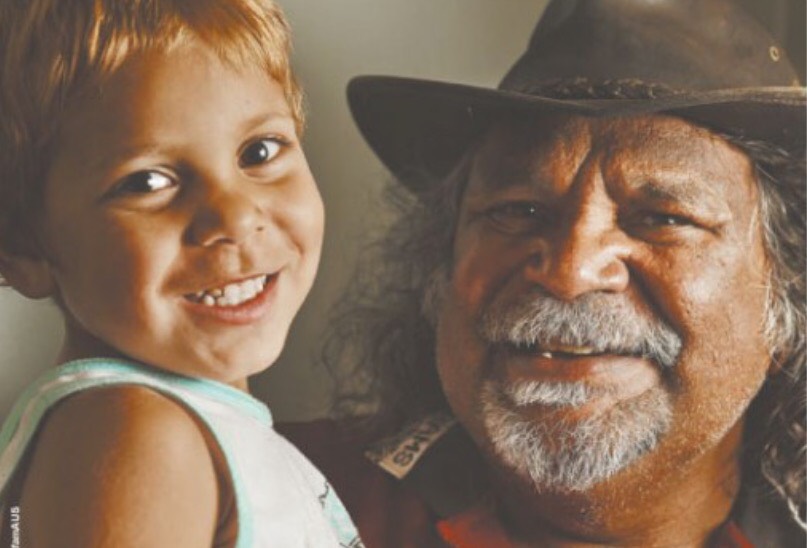
15– 34 Employment at Miwatj Health NT Nurses Health Workers etc

  35. Mulungu ACCHO QLD Tablelands : GENERAL PRACTITIONERS

  Register or more INFO

How to submit a Indigenous Health #jobalert ? 

NACCHO Affiliate , Member , Government Department or stakeholders

If you have a job vacancy in Indigenous Health 

Email to Colin Cowell NACCHO Media

Tuesday by 4.30 pm for publication each Wednesday

1.AHCSA : Senior Health Policy & Strategy Officer
 

About AHCSA

The Aboriginal Health Council of S.A. Ltd. (AHCSA) is an Aboriginal Community Controlled Health Organisation governed by an Aboriginal Board. AHCSA is a membership-based peak body with a leadership, watchdog, advocacy and sector support role, and a commitment to Aboriginal self-determination. It is the health voice for Aboriginal people across South Australia, representing the expertise, needs and aspirations of Aboriginal communities at both state and national levels based on a holistic perspective of health.

About the Opportunity

AHCSA now has an exciting leadership opportunity for a Senior Health Policy & Strategy Officer to join their team in Adelaide, SA. This is a full-time, fixed term role to 30 June, 2019.

Reporting to the Deputy Chief Executive Officer, this pivotal role will see you supporting and implementing the objectives and policies of the AHCSA by assisting Aboriginal communities to identify their health service needs, and assisting the management of Aboriginal community controlled health services by advocating for their needs at a state and national level. As a senior role within AHCSA you will also provide support to the CEO and Deputy CEO by delivering proactive leadership to AHCSA generally and to their own work areas, specifically.

This is an exciting, senior strategic position within AHCSA and as such needs someone who can bring extensive experience in primary health care, community health or community development, particularly in the formulation, analysis and evaluation of policy.

It is crucial you have the ability to work collaboratively with Aboriginal communities, their leaders and health professionals, while respecting traditional culture, values and ways of doing business. Prior experience working alongside Aboriginal communities will be viewed favourably.

Aboriginal and Torres Strait Islanders are strongly encouraged to apply.

About the Benefits

This is a rewarding opportunity for a driven individual looking for an opportunity to bring their strategic direction and policy knowledge to make real change within the area of Aboriginal and Torres Strait Islander health.

In return for your hard work and dedication, you will be rewarded with an attractive AHCSA Level 7 remuneration package of $96,114 plus super and salary sacrificing options to increase your take home pay.

AHCSA holds a strong commitment to the development of its people. You’ll be given ongoing opportunities for skills improvement and career advancement, including access to conferences focusing on personal and professional development.

Don’t miss this rewarding opportunity to make a positive impact on the health outcomes of Aboriginal communities in South Australia

Apply Now!

2.  General Practitioners : Gunditjmara Aboriginal Cooperative
 
An exciting position in the vibrant south-west Victorian city of Warrnambool, great education, arts, culture, shopping and beaches and sport facilities. Be part of an Aboriginal Community Owned Health Care Organisation, helping meet the health care needs of our Aboriginal community.

Our health care center is a bulk-billing environment, currently operating as a standalone entity however with plans progressing to integrate with our social services to help create a ‘wraparound’ service.
Our fully equipped medical center is complimented with Aboriginal health workers, nursing staff, koori midwife, transport worker, smoking cessation worker, psychologist and dental service, along with a dedicated primary healthcare manager.

Warrnambool is a great little city of 35,000 people and growing, but not so large you cannot find a car park near to your favourite restaurant. A good, safe environment for family and children to grow and develop. Affordable housing for all budgets.
Gunditjmara Aboriginal Cooperative employs around 45 people, including 10 within our medical centre, applying best practice governance, management and service delivery.
For further information email our Human Resource Coordinator, Susan Kay on susan.kay@gunditjmara.org.au

3. Greater Western Aboriginal Health Service (GWAHS) Aboriginal Health Worker/Practitioner

These positions will be located at Greater Western Aboriginal Health Service (GWAHS) which operates a Comprehensive Primary Health Care Service on behalf of Wellington Aboriginal Corporation Health Service (WACHS) across Western Sydney, Nepean, and Blue Mountains.

Program Objectives

The Healthy for Life Program at GWAHS is to provide support to Aboriginal residents of the Blue Mountains Local Government Area with the following objectives:

  • Improve the availability and quality of child and maternal health care
  • Improve the prevention, early detection, and management of chronic disease
  • Improve men’s health
  • Improve long term health outcomes for Aboriginal and Torres Strait Islander Australians
  • Position Requirements
  • Provide the delivery of quality care and support in the areas of Maternal and Child Health, Women’s/Men’s Health, and Chronic Disease.
  • Coordinate appointments and support for Healthy for Life programs including Maternal and Child Health and Chronic Disease
  • Provide Health Checks and Client Support as required as part of Healthy for Life Program Goals and Objectives
  • Coordinate client transport service for Healthy for Life Program Guidelines
  • Actively promote Healthy for Life Programs

Aboriginality is a genuine occupational qualification for the above position and is authorised under Section 14D of the Anti-Discrimination Act 1977. Aboriginal and/or Torres Strait Islander heritage is considered essential and therefore Confirmation of Aboriginality may be requested.

Interested persons will need to contact Anthony Carter, WACHS Executive Manager GWAHS at Greater Western Aboriginal Health Service (02) 9832 1356 or email mailto:anthonyc@gwahs.net.aufor an information package which details the “Essential & Desirable Criteria” to be addressed in application or at www.wachs.net.au

Applications close at 5pm on Wednesday 13th September 2017.

No late faxed applications will be accepted.

Anthony Carter, WACHS Executive Manager GWAHS at Greater Western Aboriginal Health Service (02) 9832 1356 or email anthonyc@gwahs.net.au

4.QAIHC : Regional SEWB Workforce Support Coordinator

  • Indigenous Health Organisation
  • Well established program, operating for over 5 years, funding under the Indigenous Advancement Strategy
  • Salary: $75,000 + superannuation
  • Attractive health promotion charity salary packaging
  • 2 vacancies – 1 in Cairns and 1 in Brisbane
  • Aboriginal and Torres Strait Islander people are strongly encouraged to apply for this role.

QAIHC is a non-partisan peak organisation representing 28 Aboriginal and Torres Strait Islander Community Controlled Health Organisations (AICCHOs) across Queensland at both state and national level. Our members deliver comprehensive and culturally appropriate, world class primary health care services to their communities.

We are seeking a high calibre professional for the position of Regional SEWB Workforce Support Coordinator.

Role Overview

The SEWB Unit aims to create and sustain a culturally appropriate and effective state-wide workforce.

The Regional SEWB Workforce Support Coordinator monitors and coordinates the professional development, external professional supervision and cultural mentoring of the SEWB workforce.

Pre-requisite skills & experience

  • Demonstrated experience in working with Aboriginal and Torres Strait Islander people in program delivery and / or training and development in the Social and Emotional Well Being, Alcohol or Other Drug or Mental Health environments.
  • Demonstrated ability to work in a team, develop networks and build strong links to community.
  • Certificate IV, Diploma, or higher level qualification in Social and Emotional Well Being, Alcohol or Other Drug, mental health or social work disciplines.
  • Certificate IV in Training and Assessment desirable but not essential.
  • Current, unrestricted C class driver licence.

To apply, obtain an application pack or any query, please email – applications@qaihc.com.au.  Please apply only via this method.

Applications are required by midnight on Tuesday 12 September 2017.

5-6  : Galambila and Werin ACCHOs :Coffs Harbour or Port Macquarie Project Coordinator Suicide Prevention / Aboriginal Health Support Worker – Mental Health Project 


Who we are:

Galambila is an Aboriginal Community Controlled Health Service located in Coffs Harbour, NSW.   Werin is an Aboriginal Community Controlled Health Service located in Port Macquarie, NSW.

Galambila Aboriginal Health Service and Werin Aboriginal Corporation are collaborating on suicide prevention programs in the region.  The new project will identify improved access pathways for the Aboriginal community, to culturally safe mental health services in the Mid North Coast. This project will identify sustainable skills, structures, systems and develop resources to support, improved mental health service access for Aboriginal people.  The project will work with a panel of experts to define the scope of the project including identifying existing suicide prevention strategies, and identifying existing support services.  The project will include detailed and in-depth analysis of strategies and services to enhance further collaboration and coordination of care to minimise gaps in mental health and / or suicide prevention support and service delivery for Aboriginal people.

The role will be required to travel regularly between Port Macquarie and Coffs Harbour.  The home location will be negotiated with the preferred candidate.

5. Project Coordinator Suicide Prevention 

The Project Coordinator will:

  • Coordinate the delivery of the project to enhance the capacity of Aboriginal people to engage in mental   health and/or suicide prevention services.
  • Collaborate with stakeholders and communities to enhance the capacity of service providers and the health system to improve access for Aboriginal people and deliver culturally competent mental health and/or suicide prevention services to Aboriginal people
  • Collaborate with stakeholders to pilot new models of, or approaches to, mental health services/ suicide prevention services for Aboriginal people to demonstrate the effectiveness and/or efficiency of these models/approaches to achieve service integration and improved access to stepped care options across the service spectrum.

Your role responsibilities:

  • Undertake comprehensive stakeholder engagement in the community ;
  • Manage all aspects of a project;
  • Work in partnership with stakeholders and service providers to build their cultural competency to effectively deliver culturally appropriate Mental Health and / or suicide prevention services and programs to Aboriginal clients and community members;
  • Provide secretariat support to the panel of experts;
  • Undertake evaluation and analysis of projects and services.
  • Provide supervision, leadership, and management for one direct report; and
  • Provide advice and assistance to Galambila AHS and Werin Aboriginal Corporation team members.

To be successful in the role you will:

  • have demonstrated ability to manage projects, plan workloads, identify resource requirements and deliver outcomes against defined objectives;
  • have extensive community and stakeholder engagement skills;
  • have well developed communication skills including the ability to be sensitive, and respectful of Aboriginal Community members affected by suicide;
  • have demonstrated ability to undertake analysis and evaluation of programs and services.

More details on the role responsibilities and the Selection Criteria can be obtained from the application pack.

Application packs can be obtained by emailing your request to Jane at mailto:HR@Galambila.org.au or Jen at Jen.Cook@Galambila.org.au.  Alternatively you may obtain directly from the Galambila website.

Applications will close 5pm Tuesday, 12 September 2017


6. Aboriginal Health Support Worker – Mental Health Project 

As the Aboriginal Health Support Worker – Mental Health Project you will be responsible for supporting the Project Coordinator implement and deliver the Mental Health Access Improvement Project by:

  • Supporting the delivery of consultation and stakeholder engagement to enhance the health of Aboriginal people primarily focusing on the mental health access improvement project;
  • Reviewing the social and emotional wellbeing needs of Aboriginal clients and identifying existing resources, services, service delivery structures, and the accessibility of services against these needs; and
  • Supporting the service delivery improvements that focuses on social and emotional wellbeing of Aboriginal clients and community members.

Your role responsibilities:

  • Support the comprehensive stakeholder engagement in the community;
  • Provide project support to the Project Coordinator ;
  • Work closely with the project coordinator in the delivery of building service providers cultural competency to effectively deliver culturally appropriate Mental health and / or suicide prevention services and programs to Aboriginal clients and community members;
  • Support the evaluation and analysis of programs and services.
  • Provide recommendations and advice on the health care needs of Aboriginal clients and community members;
  • Work closely with the project coordinator to develop, implement and evaluate programs, resources and activities relating to Aboriginal health and wellbeing, illness and distress, including provision of education and information on health care issues to clients, community groups and organisations.

To be successful in the role you will

  • have a proven ability to build rapport with community members, clients and other stakeholders;
  • have extensive knowledge and understanding of Aboriginal traditional culture and history;
  • Ability to function in a multi-disciplinary team; and
  • Proven ability to prepare a variety of types of documentation including briefing notes, reports, and correspondence.

More details on the role responsibilities and the Selection Criteria can be obtained from the application pack.

Application packs can be obtained by emailing your request to Jane at HR@Galambila.org.au or Jen at Jen.Cook@Galambila.org.au.

Alternatively you may obtain directly from the Galambila website.

How to apply?

To submit your application for this role you will need to provide:

  1. Applicant details form;
  2. Your current resume;
  3. A cover letter highlighting your experience in project management and community engagement.

Applications will close 5pm Tuesday, 12 September 2017. 

For more information, opportunity to discuss the role or to submit your application please contact Jane Lennis or Jen Cook By phone: 02) 6652 0850

Email: mailto:HR@Galambila.org.auor mailto:Jen.Cook@Galambila.org.auDrop in: Corner of Harbour Drive and Boambee Street, Coffs Harbour


to improve the health and welfare of Aboriginal Australians will be held in high

Generous salary packaging options are available. Relocation support will be

7. Nganampa Health Council :Mental Health Nurse (Remote Area) 

Nganampa Health Council is an Aboriginal owned and controlled health organisation operating on the Anangu Pitjantjatjara Yankunytjatjara Lands in the far north west of South Australia. Across this area, we operate seven clinics, an aged care facility and assorted health related programs including aged care, sexual health, environmental health, health worker training, dental, women’s health, male health, children’s health and mental health.

When you join Nganampa Health, you are joining a community of primary health care professionals, united by our desire to make a difference. We learn and experience something new every day, and we are supported by the professionalism and spirit of our colleagues and our organisation.

Widely recognised as being an exemplar Aboriginal health service in the country, here at Nganampa Health we understand the power of every small step we make to support the health of our community. We embrace the diversity of our challenge and thrive on the rewards that come with it.

Further information can be found at www.nganampahealth.com.au

At Nganampa Health, our people are our greatest strength.

A fantastic opportunity now exists for a full-time Mental Health Nurse (Remote Area) to join their team. There is a strong preference for the position to be based on the APY Lands, although basing the position in Alice Springs with regular travel to the APY lands is negotiable.

Reporting to the Clinical Services Manager, you’ll be providing mental health intervention, consultancy and liaison to patients with a mental illness on the Anangu Pitjantjatjara Yankunytjatjara Lands. 

Clinical work will be a large feature of this hands-on role, thus you must be confident putting your advanced skills into action on a regular basis.

More specifically, some of your key duties will include::

  • Providing clinical services on referral and case coordination where appropriate, together with consultancy and guidance to clinic staff;
  • Providing mental health services within the framework of an integrated primary health care service, utilising a multidisciplinary approach, and promoting and implementing coordinated care for clients;
  • Providing assessment and crisis intervention services, treatment and case management in consultation with Nganampa Health Council Medical Officers and consultant psychiatrists;
  • Coordinating and participating in psychiatrist visits;
  • Orientation, clinical education, up-skilling, mentoring, and other support to registered nurses and Aboriginal Health Workers;
  • Assisting in the ongoing collection of program data and evaluation of mental health services; and
  • Participating in the development of mental health services and programs, contributing to the development and review of policies and protocols.

To be successful, you will be a Registered Nurse with postgraduate qualifications in Mental Health, in addition to having significant experience in the Mental Health field. You’ll be confident in managing your time effectively as you travel to and from communities, putting your working knowledge of contemporary mental health service delivery and primary health care into practice.

You will be hands-on in your work style and excited by the prospect of taking on a true outback position, from changing tyres on your 4WD to providing sensitive one-on-one care to clients.

We are seeking an adaptable and flexible individual who can display the initiative, discretion and cultural sensitivity needed to support and drive the organisation’s objectives and values. You must be able to both communicate and participate effectively within a cross-cultural, multi-disciplinary health team.

Candidates who are open to change, accepting of and interested in engaging with Aboriginal people, and comfortable living in a remote environment will be best suited to this position. Previous experience working with Aboriginal communities in a remote setting will be advantageous.

The successful candidate must be willing to undergo a Police Check. A manual driver’s licence is required for this position.

Experience driving a 4WD vehicle is also desirable, however a 4WD training course is provided in your orientation week if required.

Why join the Nganampa Health team.

In return for your professionalism, commitment and care, Nganampa Health brings you a truly unique and satisfying career opportunity.

We offer excellent financial rewards and the chance to develop a remarkable skill set and experience a different side to Australia. But most importantly, we empower you to make a difference on the frontline of primary health care for Indigenous Australians.

As a Mental Health Nurse at Nganampa Health, you will receive an excellent remuneration package of approximately $140,000 in cash benefits, plus non cash benefits estimated at $36,970 will be offered.

The range of benefits include:

  • Annual district allowance;
  • Furnished rent-free housing;
  • Penalty & leave loadings and overtime entitlements;
  • Free electricity and subsidised internet and telephone access;
  • Relocation assistance (negotiable);
  • Generous leave provisions: 6 weeks annual leave, 3 weeks recreation leave, 3 weeks sick leave and 2 weeks study leave!
  • Annual airfares; and
  • Salary sacrificing options to greatly increase your take home pay by up to $16,000!

To help you embrace the challenge, we provide a true learning culture, professional processes and unrivalled support for you and your patients. Join us and become an integral part of our close, collaborative staff community.

Aboriginal and Torres Strait Islander people are encouraged to apply.

Please note: Applications will close at 5.00 pm, Friday 1st September

APPLY HERE

8. Gidgee Healing Aboriginal Health Worker

About us:

Gidgee Healing provides a comprehensive and growing range of services to Aboriginal and Torres Strait Islander people across the areas of Mount Isa, North West and Lower Gulf of Carpentaria regions. Our core objective is to support Aboriginal and Torres Strait Islander people to improve their health and welllbeing, whilst continually enhancing the quality and scope of care provided.

The opportunity:

The primary function of this position is to provide high quality services including assessment, examination, treatment and case management, along with contributing to the development of models of holistic health incorporating continuity of care.

The Aboriginal Health Workers work within a clinical team environment with the aim of improving the health status of Aboriginal and Torres Strait Islander people through the provision of comprehensive and culturally valid primary health care services.

The lifestyle:

The Mount Isa region is the gateway to the Outback of Queensland, offers a relaxed and casual lifestyle, with a wealth of camping and exploring, scenic national parks, gorges, as well as top river, lake and open water fishing and recreation.

Aboriginal and Torres Strait Islander people are encouraged to apply

To apply online, please click on the appropriate link below. Alternatively, for a confidential discussion, please contact Bronwyn Morgan on 07 4743 6681, quoting Ref No. 771351.

9-13 : Ceduna Koonibba Aboriginal Health Service Aboriginal Corporation (CKAHSAC)


As a Community Controlled Aboriginal Health Service, Ceduna Koonibba Aboriginal Health Service Aboriginal Corporation (CKAHSAC) provides a range of culturally safe and high quality services specifically designed to improve the wellness and health of Aboriginal and Torres Strait Islander people.

CKAHSAC is an equal opportunity employer and is committed to ensuring there is no discrimination in the workplace. For further information please visit our website www.ckahsac.org.au

These position will be based with Ceduna Koonibba Aboriginal Health Service Aboriginal Corporation. The successful applicant will be required to undertake duties specified in the Job and Person Specification.

All enquiries and requests for Job Descriptions must be directed to Lee-Ann Miller, Human Resources Coordinator via

Email: Lee-Ann.Miller@ckahsac.org.au  or telephone 8626 2500

How to Apply:

Applications in writing should address the selection criteria contained in the Job Description and include a cover letter outlining your suitability to the position.

Applications should be addressed to: Lee-Ann Miller, Human Resources Coordinator, CKAHSAC, PO Box 314, CEDUNA SA 5690.

CLOSING DATE: 5.00PM ON WEDNESDAY 6th SEPTEMBER 2017

Please note: Late applications will not be considered.

9.ABORIGINAL HEALTH PRACTITIONER/WORKER – several positions available

  • Aboriginal Health Practitioner/Worker – Connected Beginnings (0 – 4 Years
  • – 12 months with possibility of extension – Subject to funding
  • Aboriginal Health Practitioner/Worker – New Directions (5 – 14 Years)
  • – 12 month employment contract – Subject to funding
  • Fixed Term Contract , subject to funding
  • AHW 4 – salary range $67,635.00 to $70,762.00 per annum
  • Essential – Certificate IV in Aboriginal and/or Torres Strait Islander Primary Health Care qualifications
  • Full Time 1.0 FTEThe position of Aboriginal and/or Torres Strait Islander Health Practitioner/Worker is to provide flexible, holistic and culturally sensitive health services to clients and community, and to improve health outcomes and better access to health services.

10.Aboriginal Torres Strait Islander Health Practitioner – sexual health

11.ABORIGINAL TORRES Strait Islander Health Practitioner/WORKER – Outreach – Female

12.ABORIGINAL TORRES STRAIT ISLANDER HEALTH PRACTITIONER/WORKER – clinic – MALE

  • Full Time , Up to 12 month contract SUJECT TO FUNDING
  • AHW 4 – salary range $67,635.00 to $70,762.00 per annum
  • Essential – ABORIGINAL AND/OR TORRES STRAIT ISLANDER HEALTH PRACTITIONER Certificate 4 – Sexual Health
  • Essential – ABORIGINAL AND/OR TORRES STRAIT ISLANDER
  • HEALTH PRACTITIONER Certificate and/or 4 Certificate IV in Aboriginal and/or Torres Strait Islander Primary Health Care – Outreach – Female and Clinic Male
  • Several position available

The position of Aboriginal and/or Torres Strait Islander Health Practitioner – Sexual Health is to provide flexible, holistic and culturally sensitive health services to clients and community, and to improve health outcomes and better access to health services.

The position of Aboriginal  and/or Torres Strait Islander Health Practitioner/Worker – Outreach – Female and Clinic – Male is to provide flexible, holistic and culturally sensitive health services to clients and community, and to improve  health outcomes and better access to health services.

13.Registered Nurse – Mother’s and Babies Coordinator

Up to 12 month employment contract with a possible extension

RN 2 , Level 1 (Depending on qualifications)

Essential – Register Nurse with a current practicing certificate and a current Immunisationprovider

Full Time 1.0 FTE

The position of Registered Nurse – Mother’s and Babies Coordinator is to provide flexible, holistic and culturally sensitive health services to clients and community, and to improve health  outcomes and better access to maternal women & child health services.


14.General Practitioner | Remote Aboriginal Health Service NT
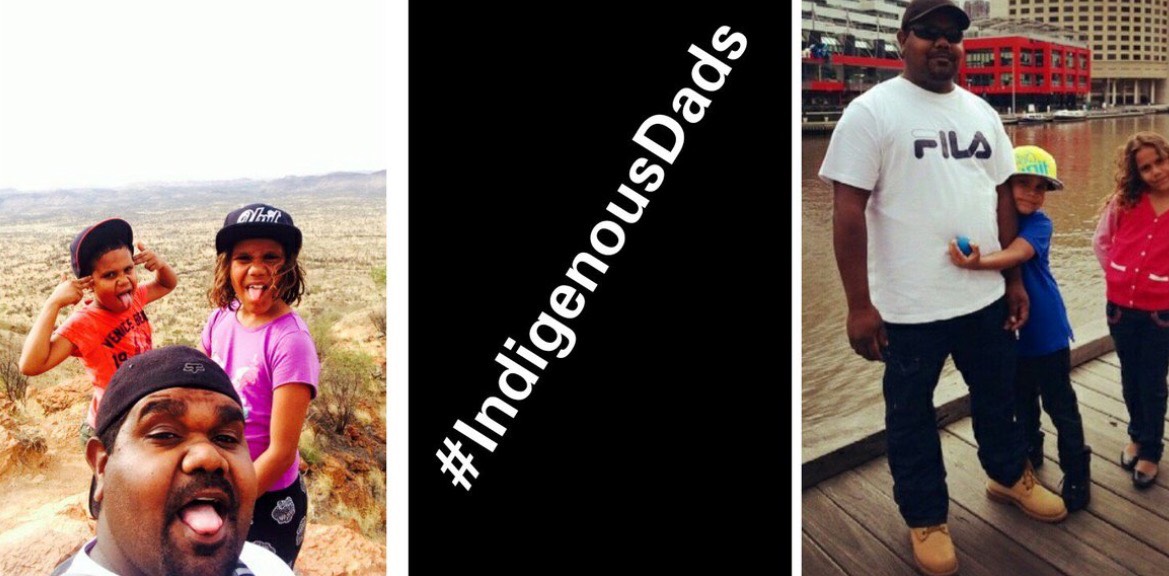
The Role
Cornerstone Medical are seeking Vocationally Registered Doctor for an exciting permanent position within an Aboriginal Medical Service in the NT. You be will be responsible for providing holistic primary health care services alongside an experienced team of Registered Nurses and visiting specialists.

The Centre
You will work alongside an experienced team of 1 additional GP, 14 nurses, allied health workers, and an experienced support team. The hours of work are 5pmwith no on call or after hours. There is a pharmacy onsite, numerous health programs and visiting specialists weekly.The location
You will be located on the beautiful and untouched coastline of NT; right on the coast. This is an is an indigenous community in one of the largest most remote towns of Australia’s Northern Territory. The renowned fishing town is the major service centre for the population of 2,300 as well as more than 30 outstations or homelands, with a school, health clinic, multiple food outlets, two supermarkets, service station, arts centre, créche and a tarmac airport with daily commercial flights to Darwin.The Criteria 
To be eligible for this position you must meet the following criteria:

  • MBBS
  • Vocational AHPRA registration
  • Interest in indigenous health, Chronic Disease and remote GP work

The Package
On appointment for this position, you will be offered:

  • OTE $240-350,000 per annum including
  • Free Accommodation and full relocation assistance
  • Quarterly return flights to Darwin with accommodation
  • Yearly retention allowance lump sum $35,000
  • Salary sacrificing up to $30,000
  • Professional development allowance and Attraction allowance
  • 4 return trips to Darwin per annum incl accommodation
  • House, vehicle, laptop and phone
  • Indemnity insurance reimbursed
This really is a fantastic opportunity to expand your career in Indigenous Health as a part of a supportive and community focused organisation.  For more information on this or other exciting opportunities please phone Aoife (Eva) McAuliffe today on 07 3171 2929 or email aoife@cmr.com.au
Aoife (Eva) McAuliffe
07 3171 2929

15-34 .Employment at Miwatj Health NT

Miwatj Health offers a wide range of employment opportunities for health and other professionals, in a unique primary healthcare environment.

We offer satisfying career paths for doctors, nurses, Aboriginal Health Practitioners, allied health staff, public/population health practitioners, health informatics specialists, administrative, financial and management personnel.

If you are suitably qualified and are looking for a rewarding and challenging experience in one of the most diverse, beautiful and interesting regions of Australia, we invite you to apply for any of the current vacancies listed below.

All applications for current vacancies must include:

  • a current Resumé,
  • names and contact details of at least two referees, at least one of whom must be a employment referee.

We encourage applications from Aboriginal and Torres Strait Islander people, particularly those with links to and knowledge of local communities in the region.

Separately from the list of current vacancies, you may also submit a general expression of interest, with a current Resume, and we shall retain it on file for future reference if an appropriate vacancy arises.

Miwatj strongly prefers that all applications and expressions of interest submit your application via our recruitment platform by clicking the link below.

You may contact HR via recruitment@miwatj.com.au. However, if that is not possible, EOI or resume may be mailed or faxed, to arrive by the closing date, to:
Miwatj Health – Human Resources Department
PO Box 519
Nhulunbuy NT 0881
Fax number (08) 8987 1670

See Website for all details and APPLY

https://miwatj.applynow.net.au/

open to Aboriginal and/or Torres Strait Islander applicants – Medibank considers this to be a genuine occupational requirement under the relevant anti-discrimination legislation.

 35. Mulungu ACCHO QLD Tablelands : GENERAL PRACTITIONERS
 

The Tablelands region has diverse landscapes including world heritage rainforests, crater lakes, expansive savannahs and wetlands, along with a variety of rural and agricultural farming.

Located in Far North Queensland, west of Port Douglas and Cairns, known as the Gateway to Cape York, Mareeba offers friendly country hospitality and a range of experiences – from the Tableland’s beautiful waters to the Heritage Rainforest there is always something to captivate you.

Mareeba has excellent coffee, wineries, and only 45 minutes from Cairns where city meets country. Local Schools, quality high schools in the area

Work in new 2 storey building, state of art clinical equipment, professional team envrionment. Central to shopping centre, up to date technology. Computerised Medical data bases. AGPAL and ISO Accreditated Practice.

Be part of a multi dimensional profession and friendly team that works with an inspirational Primary Health Care model working in the Mareeba, Kuranda and Atherton areas.

We are a large Health Service with a general clinic, with linkages to Wellbeing and Family Support Services. We have a strong focus on Primary Health Care and Chronic Disease prevention.

We require a:

GENERAL PRACTITIONERS

Full and Part Time with the following qualifications:

Bachelor of Medicine, Bachelor of Surgery or equivalent

Registration with the Medical Board of Queensland or able to apply on acceptance of offer. Fellowship of the RACGP or ACRRM

To commence as soon as possible.

For more information please email Human Resources Manager

EMAIL: hr@mulungu.org.au

NACCHO Aboriginal Health and @MHPNOnline free webinar : Reducing the mental health impact of Indigenous incarceration

NACCHO Member Alert speaker update August 30

 ” Our CEO Pat Turner and NACCHO staff would like to invite all health workers to be a part of this free webinar: Reducing the mental health impact of Indigenous incarceration on people, communities and services.
 
Developed by NACCHO and produced by Mental Health Professionals’ Network (MHPN) the webinar features Q&A with a panel of experts and will explore the key issues and the impact that incarceration has on individuals, families and communities.”

Download FLYER HERE and share /promote this free webinar

No need to travel to benefit from this free PD opportunity.
Simply register and log in to participate from your home, work or anywhere you have a computer or tablet with a high speed internet connection.
 
Register now to attend this free webinar for health practitioners on
Wednesday 13 September 2017, from 4:30pm – 5:45pm AEST.
 
NACCHO also invites all Member services to ask staff to register now to access a free Mental Health Professionals’ Network webinar for their own professional development.
 
The Indigenous interdisciplinary panel will explore and discuss ways of reducing the mental health impact of Indigenous incarceration on people, communities and services.
 
This professional development opportunity is free and the previous webinar conducted by the MHPN had 680 participants across Australia.
 
The webinar features a Q&A with a panel of experts and will explore the key issues and the impact that incarceration has on Aboriginal and Torres Strait Islander peoples.
The panel will discuss strategies to enhance cultural awareness and develop responsive services for Indigenous communities affected by incarceration.

WHO’S ON THE PANEL?
 
Julie Tongs OAM : CEO Winnunga Nimmityjah Aboriginal Health Service ACT
Dr Louis Peachy : QLD-based rural medical advisor
Dr Marshall Watson : SA-based psychiatrist
Dr Jeff Nelson : QLD-based psychologist
 
Facilitator: Dr Mary Emeleus (QLD-based general practitioner and psychotherapist).
 
Simply register and log in to participate from your home, work or anywhere you have a computer or tablet with a high speed internet connection.
Registrations close at midnight on Tuesday 12th September, 2017.
 
Please find attached a flyer about the updated webinar and it would be appreciate if you could distribute this to your local network.


NACCHO Aboriginal Health : Tributes to Dr G Yunupingu and Mr Yami Lester – Men without sight but not without a vision


Not far from that creek crossing, at Maralinga, when Yami Lester was a 12-year-old, the British government, in collusion with our Australian government, exploded a series of atomic weapons.

A black mist rolled over their lands, hurting the eyes of this young boy. After a relatively short period of time he became blind.

At his funeral service, we were moved by the singing of Paul Kelly, whose song Maralinga told the story of Mr Lester.

Paul Kelly also worked with the second blind man I wish to commemorate today, Dr G Yunupingu, who brought his beautiful, ethereal voice, in his Yolngu language, to people across the world.

Both men died, in part, due to kidney disease.

Dr Yunupingu had suffered from liver and kidney diseases for many years. He was just 46 years of age. Mr Lester died from end-stage renal failure.”

Extracts from Senator DODSON (Western Australia) Senate Tribute in full Part 2

Picture above from  : Yami Lester: More than 500 people travel to South Australia’s far north for leader’s funeral  : Image and full name used with Permission from family

 ” Dr G Yunupingu ‘s uncle, senior Gumatj elder Djunga Djunga Yunupingu, is reported to have told the crowd at the National Indigenous Awards last week that Dr G Yunupingu ‘built a bridge between Indigenous and non- Indigenous Australia with his music.

Both Yolngu and Balanda walking together hand in hand—two laws, two people, one country.’

These words speak to the moving and reconciling impact of the life Dr G Yunupingu lived, which, sadly, was all too short.

The coalition government and this parliament recognise kidney disease as an important health condition impacting too greatly on our first Australians. Recognising this, we have invested in significant renal services, including dialysis, and we will continue to push for improved services for Territorians.

Dr G Yunupingu’s achievements over his life have left a legacy in the music industry. He will remain one of Australia’s most treasured music artists, described by the Prime Minister as a remarkable Australian who shared Yolngu language with the world through music.

Extracts from Senator Scullion (Northern Territory ) Senate tribute Part 1 Below

 ” We owe him (Mr Lester)  a great debt because he faced adversity with understated courage, with humility, with humour, with great strength.

In a world without nuclear threats and risks Mr Lester would have been a great stockman. In a world with nuclear threats and risks he would crack his whip loud, hard, sharp and constant to sound a different alarm.

Mr Lester made it part of his life’s work to fight for people affected by nuclear testing and to campaign for Indigenous land rights, and we’ve just heard today what a success he made of that and what a difference he made.

Vale, Mr Lester, and our condolences go out to his family and friends.

I was at Garma just a couple of weeks ago, where his legacy was celebrated and his passing very strongly felt.

You could feel it everywhere over the weekend at the time of Garma.

I just want to add, very briefly, to the comments that Senator Dodson just made around kidney disease and the need to address kidney disease in this country, given the impact it has had on these two great Aboriginal Australians.”

Extracts Senator SIEWERT (Western Australia ) senate Tribute in full Part 3 Below

Part 1 Full Text  Senator SCULLION: I move:

That the Senate records its sincere condolences at the deaths, on 21 July 2017 of Mr Kunmanara Lester OAM, and on 25 July 2017 of Dr G Yunupingu, places on record its gratitude and admiration for their service to the nation, and tenders its profound sympathy to their family and community in their bereavement.

I rise on behalf of the coalition government to pay respects and provide sincere condolences to the families, friends and communities of two remarkable men, two First Australians, who have each made such a difference to the nation through their own respective life paths.

Today the Senate pays respects to the outstanding and remarkable contributions of Dr G Yunupingu and Mr Yami Lester. Perhaps what is most striking is that both of these men lived a life without sight, but certainly not without insight and vision, for these two men saw and strived for a better future for their people using both words and action.

I was incredibly saddened by the news of Dr G Yunupingu’s passing, having had the delight of spending time with him in very different circumstances to most people, on his country.

In my previous life as a commercial fisherman, I and my young family at the time spent many years around Dr G Yunupingu’s country, around his home, particularly on the northern end of Elcho Island.

I consider myself blessed to have been able to know this man on his country, when many would see he was most himself.

In fact, I learned that, despite being born blind, Mr G Yunupingu was a great optimist and a man who made the best of everything.

He was a hero of his people and his community and a champion of the Indigenous music industry.

In fact, he was a champion of the Australian music industry, taking Indigenous music and Australian culture to the world.

Learning to play the guitar from an early age, Dr G Yunupingu joined the acclaimed Yothu Yindi band as a teenager.

This band changed the Australian music industry for the better and, more importantly, changed the psyche of our nation through its thought-provoking songs and powerful lyrics.

This music compelled you to listen.

It was music that made all who heard it stop and listen, to listen and learn.

Dr G Yunupingu ‘s uncle, senior Gumatj elder Djunga Djunga Yunupingu, is reported to have told the crowd at the National Indigenous Awards last week that Dr G Yunupingu ‘built a bridge between Indigenous and non- Indigenous Australia with his music.

Both Yolngu and Balanda walking together hand in hand—two laws, two people, one country.’

These words speak to the moving and reconciling impact of the life Dr G Yunupingu lived, which, sadly, was all too short.

The coalition government and this parliament recognise kidney disease as an important health condition impacting too greatly on our first Australians. Recognising this, we have invested in significant renal services, including dialysis, and we will continue to push for improved services for Territorians.

Dr G Yunupingu’s achievements over his life have left a legacy in the music industry. He will remain one of Australia’s most treasured music artists, described by the Prime Minister as a remarkable Australian who shared Yolngu language with the world through music.

Dr G Yunupingu stands among the many Yolngu leaders who have gone before him, including those who were signatories of the Yirrkala bark petitions that were tabled in Parliament this very week back in 1963. Family, friends, fellow Territorians, fans and followers will mark Dr G Yunupingu’s life and provide a final farewell on Tuesday, 19 September at the Darwin Convention Centre.

Today the Senate also provides its sincere condolences to the family and friends of Mr Yami Lester OAM, who passed away on 21 July 2017.

Born in the early 1940s in the APY Lands, on Granite Downs Station in the far north of South Australia, Yami, a Yankunytjatjara man, would go on to live a legacy of leadership that our country acknowledges with sincerity.

The stature of Mr Lester’s leadership was demonstrated in all he did, including as first chair of Pitjantjatjara Council, regional councillor, zone commissioner, driving force of the Institute of Aboriginal Development and chair of the Nganampa Health Council.

Mr Lester is a man who rose from personal tragedy. He was tragically blinded as a young man as a result of the black mist from the nuclear bomb test that blew through his homelands in South Australian when he was only a child. In the decades that followed, Mr Lester’s passion was to fight for justice and restoration for his people and rightful recognition.

He was courageous and persistent. He succeeded in delivering better outcomes for the community he served—for land rights, the health of his people, education, language and culture. He fought for a better future, better health, better education and better jobs.

In all of this, he demonstrated the power of his influence in bringing about major change.

At the state funeral, which I attended with my colleagues Senator Dodson and the member for Lingiari from the other place, I spoke with Mr Lester’s son, Leroy, who shared with me his father’s passion about improving school attendance in his own community.

Mr Lester knew the benefits education can bring not only to his people but to all Australians.

His record of achievement has left a legacy of better outcomes for his community, his people and his nation. Mr Lester advocated for the Pitjantjatjara land rights act. He was part of the historic handover of Uluru-Kata Tjuta, and we remember how he stood alongside Governor-General Sir Ninian Stephen in 1975 and interpreted speech.

He tirelessly advocated for the McMillan royal commission into the British nuclear test that later saw his people compensated.

Mr Lester’s leadership created a legacy that will not be forgotten. He will be remembered as a man of great strength, intelligence, courage and great kindness.

The Prime Minister has described Yami as an extraordinary Australian whose courageous life will be remembered forever.

Both Yami Lester and Dr G Yunupingu leave behind loving families and a nation that is better off for their contribution and worse off for their passing.

We the Australian government commemorate the remarkable lives they lived and pay respect to the legacy they leave. Vale Dr G Yunupingu and Yami Lester.

Part 2 Senator DODSON (Western Australia) :

Today I rise to commemorate the memory of two great Indigenous Australians who have passed since the last sitting of the Senate—Mr Yami (Kunmanara) Lester and Dr G Yunupingu, two blind Aboriginal men who had a vision for Australia. Despite their physical impairment they were far-seeing and insightful, and their lives give testament to their strength and resilience.

From humble beginnings in remote and isolated parts of our continent, one in the desert, the other in the saltwater country, they changed our nation for the better.

Of the two men, I knew Yami Lester the better.

I am proud to call him a friend, a leader and a mentor.

Last week, thanks to the generosity of the Minister for Indigenous Affairs, I was privileged to attend his state funeral in the remote South Australian community of Walatina.

Very few state funerals have occurred in a place so remote.

The hearse, a Land Cruiser embellished with flowers, stopped at a dry creek crossing.

Senior women travelling with his body took the opportunity to point to the dry creek bed at Walkinytjanu, in the middle of the desert, where Mr Lester was born.

While we waited for the Governor, the Premier, the South Australian Minister for Aboriginal Affairs, the Leader of the Opposition and other dignitaries we had a chance to feel the power of the simple birthplace, under the gum trees in the red sand, at a soakage in the desert.

Not far from that creek crossing, at Maralinga, when Yami Lester was a 12-year-old, the British government, in collusion with our Australian government, exploded a series of atomic weapons.

A black mist rolled over their lands, hurting the eyes of this young boy. After a relatively short period of time he became blind.

He believed this was as a direct result of this evil mist. He spent six or so years in a home in Adelaide, where only a younger person spoke his language, Yankunytjatjara. He became a ‘broomologist’, as he used to say, making brooms in the Adelaide school for the blind.

As an adult, with his wife Lucy, he moved to Alice Springs, where I came to know him and learn from his wisdom and insight into life and politics.

He became a leader of Aboriginal organisations there. With the late Reverend Jim Downing he established the Institute for Aboriginal Development, promoting Aboriginal language and culture against the grain of assimilation and forced social and cultural change.

They developed practical measures to assist families living in poverty and worked to reduce infant mortality by helping people to understand the causes of poor health and disease.

I recall giving a speech in Alice Springs on a topic I’ve now forgotten.

Yami pulled me up in the middle of the speech and said words that I took to heart. He said: ‘You’re a smart young man but you have to make a picture book for me in your speech; you need to paint a picture, so that I can see what you are talking about!’.

He was a leader in the struggle to establish Aboriginal controlled and managed organisations in Central Australia; to get recognition of land rights in South Australia; to get Uluru and Kata-Tjuta National Parks returned to traditional owners; and to establish a royal commission into the Maralinga tests.

In all of these struggles his wisdom, courage, determination and commitment were tempered by a wicked and irrepressible sense of humor and an infectious delight in life.

He was a mad supporter of the Melbourne Football Club.

This man, who could not see, showed us a vision of a reconciled Australia and led us on that path.

To his family—Lucy, Leroy, Rosemary and Karina—we express our thanks to you for allowing him to share his time with so many of us.

We wish you well in your future. At his funeral service, we were moved by the singing of Paul Kelly, whose song Maralinga told the story of Mr Lester.

Paul Kelly also worked with the second blind man I wish to commemorate today, Dr G Yunupingu, who brought his beautiful, ethereal voice, in his Yolngu language, to people across the world.

He was born on Elcho Island in the Northern Territory. As his song says, ‘I was born blind. I don’t know why.’ Dr G Yunupingu grew up in Galiwinku, the settlement on Elcho Island, off the north coast of Australia, which is over 500 kilometres northeast of Darwin.

Being blind, he spent his youth with his family absorbed in the Methodist mission environment, and become immersed in the world of music. He was a member of the famous Yothu Yindi band, whose classic song Treaty still resonates today, and the Saltwater Band. It was his solo albums that brought him fame and worldwide acclaim.

His amazing voice was complemented by the cello playing of his collaborator, friend and translator, Michael Hohnen.

Dr G Yunupingu performed for Her Majesty the Queen and for President Barack Obama, but it was the way in which his songs and music brought Yolngu culture and ideas into the minds of so many Australians that is his great gift to us all.

Dr G Yunupingu’s uncle—as the minister has said—senior Gumatj leader David Djunga Djunga Yunupingu, told the crowd in Darwin that his nephew had built a bridge between Indigenous and non-Indigenous Australians with music, but died before the country was truly at peace. He said:

He left us without knowing his place in this nation, without knowing true unity for all Australians.

Both men died, in part, due to kidney disease.

Dr Yunupingu had suffered from liver and kidney diseases for many years. He was just 46 years of age. Mr Lester died from end-stage renal failure.

He made the choice not to move from his home in Walatinna to Alice Springs for dialysis, allowing the disease to take him on his home country.

We’ve lost two great Aboriginal Australians to the scourge of renal disease. In this place we must mark the passing of these great Australians by committing ourselves to doing more to eradicate this epidemic.

Part 3 Senator SIEWERT (Western Australia )

It was with great sadness that I learned of the passing within days of each other of Mr Lester and Mr G Yunupingu.

Both men have made such a great contribution to this country.

I should say that Scott Ludlam would like to be here today to talk about and share his condolences for Mr Lester, because he worked with Mr Lester and other anti-nuclear campaigners to get justice and to campaign against the nuclear industry.

I think it was very fitting, and I’m so pleased, that Mr Lester got to see the commitment to the expansion of the gold card to those affected by the nuclear tests, in the budget in May.

I’m really pleased that he got to see that because he campaigned for such a long time for justice, for the people who are affected by the radiation from the British nuclear tests in Maralinga.

At least he got to see that.

It is a shame that Scott isn’t here to also add to the condolences.

Mr Dave Sweeney, who is a very well-known antinuclear campaigner and who worked with Mr Lester for a very long time, said of his passing:

We owe him a great debt because he faced adversity with understated courage, with humility, with humour, with great strength.

In a world without nuclear threats and risks Mr Lester would have been a great stockman. In a world with nuclear threats and risks he would crack his whip loud, hard, sharp and constant to sound a different alarm.

Mr Lester made it part of his life’s work to fight for people affected by nuclear testing and to campaign for Indigenous land rights, and we’ve just heard today what a success he made of that and what a difference he made.

Vale, Mr Lester, and our condolences go out to his family and friends.

Mr G Yunupingu—what a huge contribution he made to Australia and the world, sharing his music with the world.

It was such beautiful music which made such strong statements, such heartfelt statements, and enabled people to understand his culture through his words and his music.

His music is a lasting contribution to this country.

I was at Garma just a couple of weeks ago, where his legacy was celebrated and his passing very strongly felt.

You could feel it everywhere over the weekend at the time of Garma.

I just want to add, very briefly, to the comments that Senator Dodson just made around kidney disease and the need to address kidney disease in this country, given the impact it has had on these two great Aboriginal Australians.

People are aware that this has been discussed extensively in this chamber, and we need to keep talking about it until it gets the attention that it needs and we stop the going backwards and forwards between the state and territories and the Commonwealth about who pays for what.

It absolutely needs to be addressed. The causes need to be addressed, so that we don’t get to the point where we need end-stage treatment such as dialysis.

These two men’s legacies will constantly remind us of that.

Vale, Dr G Yunupingu and, as I said, the Greens add their condolences to this motion. I should also say thank you to Minister Scullion and Senator Dodson who ensured that we do get to commemorate these two great men in this chamber.

The ACTING DEPUTY PRESIDENT: I now ask all senators to stand in silent support of the motion.

Question agreed to, honourable senators standing in their places.