
NACCHO Aboriginal ehealth technology news: Telehealth,ehealth and the Aboriginal digital divide

Eh ealth

In this issue Telehealth

Roy Monaghan, national telehealth delivery officer at the National Aboriginal Community Controlled Health Organisation (NACCHO), says the lack of reliable broadband in remote and rural Australia has contributed to a digital divide.

Please note that NACCHO plans to launch an ABORIGINAL HEALTH APP this week as part of its Sports Healthy Futures Program ;

Followed by Ehealth below

The PCEHR will become the primary record for all new information, but the MeHR will also be accessible for historical documents.

The NT is also holding off until next year as the national PCEHR cannot yet receive pathology and diagnostic imaging reports, which the MeHR can. The NT is planning to go live just after the major upgrade of the PCEHR planned for April, when pathology reports are expected to be available.

TELEHEALTH: Slow NBN rollout contributing to digital literacy deficit
Roy
The slow roll out of the National Broadband Network is contributing an ongoing digital literacy deficit across Australia, especially in telehealth, according to speakers at the Connected Australia event in Sydney.

“There’s a lot of up-skilling to do, in particular at the home end or recipient end of healthcare. There’s a notion of build it and they will come: If you don’t have the NBN, you won’t generate the digital literacy to maximise the use of it. So it’s a little like chicken and egg,” said Professor Colin Carati, associate head of ICT at Flinders University.

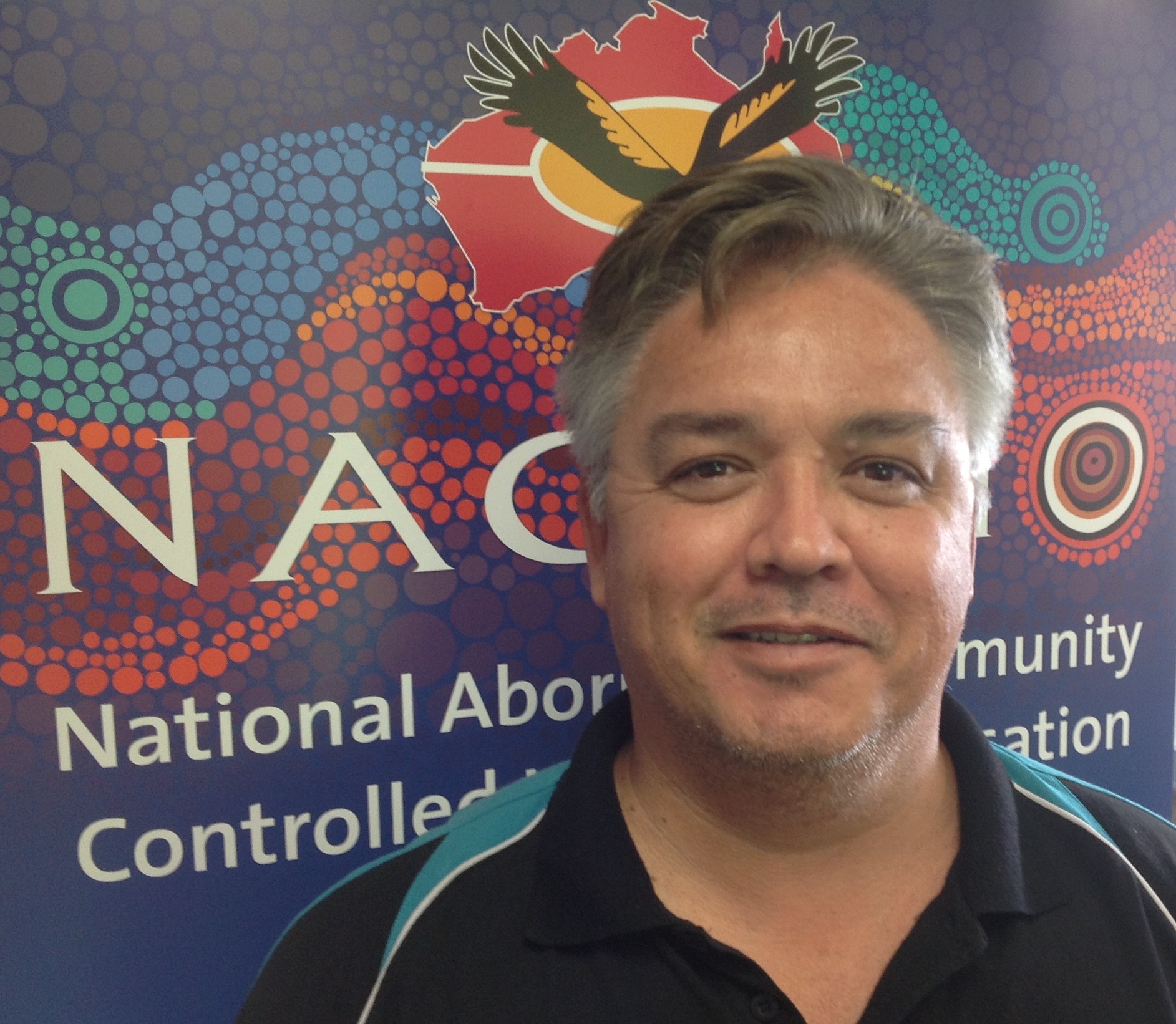
Roy Monaghan, national telehealth delivery officer at the National Aboriginal Community Controlled Health Organisation (NACCHO), agreed, saying the lack of reliable broadband in remote and rural Australia has contributed to a digital divide.

“It’s like having a bike: you don’t really learn what the bike can do until you get on it. You may make a few mistakes, but essentially you have a vehicle that can take you faster than you can with your legs. If people don’t have the ability to jump onto a system and make those mistakes, adjust and learn on how to do things a bit better, we are not going to go places.”

Carati pointed to issues around the NBN rollout schedule not going according to plan, saying it has made the process of providing adequate teleheatlh services difficult.

A NACCHO survey showed that only 30 of about 100 members were actually engaging in telehealth services, with the lack of an effective Internet connection being the main reason why many weren’t engaging in telehealth, said Monaghan.

He added that the new government’s fibre-to-the-node broadband policy is “an incomplete solution”, but it could offer some flexibility in being able to make changes to the network as technology continues evolves over time.

“It could be that wireless technology does evolve and you may be able to [leverage] it at these nodes, and maybe there will be a Wi-Fi tower that can shoot out the information at a very high speed.”

A telehealth project that Carati is working on in South Australia is providing people at home with particular health conditions to have their health status monitored remotely on a regular basis through an iPad app and through video conferencing.

He said he was able to provide this without the need for a large amount of bandwidth; less than 1Mbps per video conference. However, he said he is still limited in the quality of service he can provide due to poor reliability of Internet.

“There are occasions, especially when you are using non NBN related technologies, where you are getting poor quality and reliability of service, primarily though the contention of those technologies where you are getting too many people trying to jump on the bandwidth.

“The NBN will improve access, especially pushing out to the home and the bandwidth demands are likely to increase.”

ehealth

States commit to rapid eHealth integration project

Written by Kate McDonald on 10 October 2013., Pulse IT magazine

The majority of states and territories will have the ability to begin allowing acute care clinicians to view clinical documents and send discharge summaries to the PCEHR system by the end of the year.

In a panel discussion at a recent ICT forum organised by the Department of Health and NEHTA, jurisdictional representatives provided an update on their respective eHealth strategies and how they planned to connect acute care to the PCEHR.

No representatives from South Australia and Western Australia were on the panel, although SA has already begun sending discharge summaries from nine public hospitals and has developed software called Healthcare Information and PCEHR Services (HIPS) that is being used by other states as part of NEHTA’s unfortunately named rapid integration project (RIP).

Paul McRae, the principal enterprise architect with Queensland Health, told the forum that the jurisdictions were all members of a RIP steering committee that he chairs. Mr McRae said the committee had agreed that the first steps to integrating with the PCEHR was to enable discharge summaries to be uploaded and to allow clinicians to view clinical documents.

Mr McRae said Queensland Health had linked with the HI Service in January this year, and those using it were achieving an 85 per cent match rate when pulling in batches of Individual Healthcare Identifiers (IHIs).

He said NASH certificates and HPI-Os were recently acquired for healthcare organisations to support the rapid integration program.

“We are looking to roll out statewide the ability to send discharge summaries to the PCEHR from all facilities that use our enterprise discharge summary application, which is all bar about three,” he said.

“And we are going to provide the ability to view PCEHR information from our clinical portal, which is called The Viewer . That will be available in around 200-plus facilities and that will all happen early in November.

“At the same time, discharge summaries in CDA format level 2 will be able to be sent point to point as well.”

Yin Man, manager of NSW Health’s RIP program – better known as HealtheNet – said CDA discharge summaries and event summaries had been able to be sent to GPs and the NSW clinical repository from within the Greater Western Sydney lead site since August last year.

Clinicians in Greater Western Sydney are now able to access the national system through a clinical portal , which Ms Man said would be rolled out to all public hospitals in the state over the next two years.

“Our clinicians in hospitals within Greater Western Sydney have been viewing CDA discharges since last August and this year we have been integrating with the national,” she said.

“All hospitals will be connected to this one portal. Things have been going quite well and we already have half a million CDA documents within our clinical repository, and we pretty much generate about 6000 a month. As soon as we connect, we will be sending a lot of documents to the national.”

Victoria’s representative on the panel, the Victorian Department of Health’s advisor on eHealth policy and engagement, Peter Williams, did not go into much detail on his state’s plans for integrating with the PCEHR as a review of the state’s health IT sector is currently with the health minister.

It is understood that some local health districts – particularly those that took part in the Wave 1 and 2 lead site projects – are soon to begin sending discharge summaries to the national system, but Victoria does not have the centralised approach that the other states are taking.

Mr Williams said Victoria had put a proposal to NEHTA to look at how to expand the viewing capacity of hospitals outside of the lead sites. “Once you have done it for some, you can extend it to others … using common software, and we have licences across Victoria,” he said.

“With the secure messaging project that is being done in SA, while they are using different technology, the design approach is adaptable in Victoria very quickly. That is absolutely the core of what the RIP project is about – fast-tracking some of those things.”

The Northern Territory is currently working through a major project that it is calling the M2N , in which it is transitioning its successful My eHealth Record (MeHR) system over to the national PCEHR. For that reason, it will not go live with full discharge summary and viewing capability until March or April next year.

Robert Whitehead, director of eHealth policy and strategy with the NT Department of Health, said the territory was probably going to follow Queensland and provide a combined view of both the MeHR and the PCEHR for its departmental staff.

The PCEHR will become the primary record for all new information, but the MeHR will also be accessible for historical documents.

The NT is also holding off until next year as the national PCEHR cannot yet receive pathology and diagnostic imaging reports, which the MeHR can. The NT is planning to go live just after the major upgrade of the PCEHR planned for April, when pathology reports are expected to be available.

“We have a unique set of circumstances in that we’ve been operating [the MeHR] now for eight years,” Mr Whitehead said. “We’ve got an established community of consumers and providers who have expectations about usability.

“We needed … for our clinicians in particular to be confident that what they see in [the PCEHR] matched what they currently are able to see. That has been the driver for asking DoHA and NEHTA to advance some aspects of PCEHR work in terms of a view that would support an aggregation of some key pieces of primary care information and event summaries.

“Our clinicians at the moment have access to a document that aggregates information … and that gives them a bit of a context about what has been going on with that patient in the last little while.

“The other thing is around pathology and diagnostic imaging reports in that our clinicians are used to being able to seeing pathology results that were ordered in a primary care context. Hospital stuff at the moment appears in the discharge summary and we are not arguing that should be changed.

“So our go live is a little later in that we are targeting around March-April next year as the go live date because of this need to do a hard transition from one to the other. We will still do a dual view of MeHR for people who are registered so that historical information is still accessible to our current participating healthcare providers.”

Like Victoria, Tasmania is also currently undertaking a review of its eHealth strategy. Tim Blake, deputy chief information officer with the Tasmanian Department of Health and Human Services, said Tasmania was “on the cusp” of releasing its updated eHealth strategy, which is expected to include more details about connecting to the national system.

Pulse+IT understands that Tasmania will adopt the South Australian technology to begin allowing discharge summaries to be sent and clinical documents to be viewed within its public hospitals.

The ACT has been very active in eHealth, with Calvary Hospital playing a large role in one of the Wave 2 projects and already having the ability to send CDA discharge summaries to the PCEHR and to GPs.

The ACT Health Directorate’s manager for the national eHealth project, Ian Bull, said the territory had been investigating how to quickly verify IHIs for newborn babies, so their parents can register them for a PCEHR from birth.

“Within our jurisdiction we are building a consumer portal , so consumers can log in and look at their appointments for outpatients services,” Mr Bull said.“We are also building a provider portal for clinicians in the region to be able to submit referrals and get bookings.”

He said the ACT was also in discussions with the federal Department of Human Services to investigate using Medicare’s Health Professional Online Services (HPOS) system more widely in the hospital environment.

****

Update 1.00 pm October 16

UGPA calls on Government to address clinical utility of the PCEHR as an urgent priority

Australia’s general practice (GP) leaders are calling on the Government to heed concerns raised by GPs regarding the significant clinical utility issues associated with the Personally Controlled eHealth Record (PCEHR) system and address them as an urgent priority.

At a recent United General Practice Australia (UGPA) meeting in Canberra, representatives of the GP sector unanimously agreed that the focus of the PCEHR needs to be redirected to clinical utility and standardisation to ensure seamless clinical adoption.

Significant issues have been identified and currently there is no alignment between consumer registration and meaningful use through engagement of the clinical community and assurance of improvement of patient health outcomes.

In August 2013 a number of key clinical leads resigned from National E-Health Transition Authority (NEHTA). This was amidst ongoing concerns and requests for NEHTA and the Department of Health and Ageing (DoHA) to review the PCEHR development cycle and re-establish meaningful clinical l input.

Since August, DoHA has become the PCEHR system operator and opportunities for clinical engagement have been less clear.

UGPA is calling on Government to implement strategies to ensure the PCEHR is best structured to improve the health outcomes of all Australians. The process should be profession led and include:

• GP input at every level of the PCEHR development life cycle; including planning through to implementation

• Ensuring the system is clinically safe, usable and fit for purpose

• Supported by an acceptable, and robust legal and privacy framework

• Secure messaging interoperability is a critical dependency priority.

E-health and the PCEHR have the potential to transform Australia’s health system and provide superior, safer and more efficient healthcare to all Australian patients. UGPA members believe that this potential will only be fully realised if there is meaningful clinical engagement at a grassroots level.

The Government has announced it will review implementation of the PCEHR. UGPA supports the review and look forward to contributing to the review and expect that the clinical voice and the concerns raised will be heard.

ENDS

UGPA comprises the Royal Australian College of General Practitioners (RACGP), the Australian Medical Association (AMA), the Australian Medicare Local Alliance (AMLA), the Australian General 2

Practice Network (AGPN), General Practice Registrars Australia (GPRA), the Australian College of Rural and Remote Medicine (ACRRM), and the Rural Doctors Association of Australia (RDAA).

NACCHO0024-1280x1024

Are you interested in working in Aboriginal health?

NACCHO is the national authority in comprehensive Aboriginal primary health care currently has a wide range of job opportunities in the pipeline.

Current NACCHO job opportunities

Human Resource Officer

QUMAX Project Officer

Quality & Accreditation Support Project Officer

Close the Gap Project Officer

NACCHO political news: Warren Mundine flags radical overhaul of Aboriginal regulatory body ORIC.

Abbott and the Mandine

The Coalition Government’s chief Indigenous advisor has flagged a radical overhaul of the body that regulates Aboriginal corporations.

By Karen Michelmore

The Federal Government’s chief Indigenous advisor has flagged a radical overhaul of the body that regulates Aboriginal corporations. There are more than 5,000 incorporated Indigenous entities across Australia, about half of which are under ORIC’s watch and governed by the Corporations Aboriginal and Torres Strait Islander (CATSI) Act. Most are not-for-profit organisations. The top 500 Indigenous corporations last year generated a combined income of $1.6 billion and employed more than 11,000 people.

Mr Mundine, who will chair Prime Minister Tony Abbott’s new Indigenous Advisory Council, says building stronger governance is essential for prosperous, functioning communities, but in many cases it has failed.

Warren Mundine says the Office of the Registrar of Indigenous Corporations (ORIC) needs to be reformed to become tougher.

He says everything is on the table – including bringing Indigenous corporations into the mainstream so everyone is governed by the same laws.

Last nights  Four Corners program explored claims of mismanagement and misuse of funds, which crippled two successful Indigenous organisations in the Northern Territory, one of them fatally.

One complaint in both cases was that the regulator, ORIC, did not intervene quickly enough.

WATCH THE FULL PROGRAM HERE ON IVIEW

Former Jawoyn CEO accused of misusing association’s funds

Four Corners has revealed allegations the former chief executive of the Jawoyn Association Aboriginal Corporation spent hundreds of thousands of dollars of the association’s money on goods and services for himself.

The association was set up as registered charity with the main aim of poverty relief for its members.

Preston Lee denies the allegations made by former Jawoyn employees, who allege it was not uncommon for him to use purchase orders worth $1,000 a day.

Former Jawoyn pilot Chris Morgan has also told Four Corners Mr Lee used $300,000 to $400,000 of the association’s helicopter time.

“There was the girlfriends that he would want me to take out, him and his girlfriends, or obviously one girlfriend at a time, take them out to Arnhem Land,” Mr Morgan said.

“He’s, to be honest, just trying to big-note himself, like it was his own aircraft. He used to call me, refer to me as his pilot, I’d pick him up from his house.”

Former employees of Jawoyn also allege Northern Territory MLA Larisa Lee told them to cover up their former CEO’s misappropriation of funds during her election campaign last year.

Preston Lee is Ms Lee’s brother.

Ray Whear has told Four Corners that Ms Lee saw the evidence, but told him to keep the information quiet because she was campaigning for her seat at the time.

“Larisa specifically said, ‘I won’t get elected and I’m not going to have that’,” Mr Whear said.

The association’s chairman, Ryan Baruwei, alleges it was Mr Whear and former CEO Wes Miller who stopped the evidence going to the board.

ORIC has decided it will not pursue legal action in relation to allegations of fraud, because it found insufficient evidence.

Mundine: ‘Money has disappeared’

There are more than 5,000 incorporated Indigenous entities across Australia, about half of which are under ORIC’s watch and governed by the Corporations Aboriginal and Torres Strait Islander (CATSI) Act. Most are not-for-profit organisations.

The top 500 Indigenous corporations last year generated a combined income of $1.6 billion and employed more than 11,000 people.

Mr Mundine, who will chair Prime Minister Tony Abbott’s new Indigenous Advisory Council, says building stronger governance is essential for prosperous, functioning communities, but in many cases it has failed.

“They’ve let some people who are sitting on boards and corporations and community organisations get away with blue murder, when the biggest amount of people who have suffered in that are Indigenous people,” Mr Mundine said.

“They didn’t get the service they deserved, money has disappeared, there’s a whole nepotism that’s happened and there’s a lot of Aboriginal people who have been cut out of that.

“By taking this kid-glove approach and trying to be kind to Aboriginal people we’ve made the situation worse.”

ORIC, which focuses on training and building capacity in financial literacy and governance, conducted its first successful criminal cases under the CATSI Act last year.

****

NACCHO0024-1280x1024

Are you interested in working in Aboriginal health?

NACCHO is the national authority in comprehensive Aboriginal primary health care currently has a wide range of job opportunities in the pipeline.

Current NACCHO job opportunities

Human Resource Officer

QUMAX Project Officer

Quality & Accreditation Support Project Officer

Close the Gap Project Officer

NACCHO health news : 1,000 doctors to talk Aboriginal health,Ehealth and cheeky docs at Darwin health conference

imagesCAPSBRXS

The Northern Territory is the only place on track to Close the Gap by 2031 and for this to continue we need to continue to grow our General Practice workforce,”

NT Doctor

Approximately 1,000 medical professionals from across Australia will be in Darwin  for  the Royal Australian College of General Practitioners (RACGP) Annual Conference  are set to make a difference to health outcomes for Aboriginal and Torres Strait Islander people , GP13, on 17–19 October.

Aboriginal and Torres Strait Islander health is a primary focus of the GP13 program with the aim of ensuring all general practitioners and their practice staff provide culturally and clinically appropriate healthcare to all Aboriginal and Torres Strait Islander patients.

Associate Professor Brad Murphy, Chair of the RACGP’s  National Faculty of Aboriginal and Torres Strait Islander Health, said ‘Closing the Gap’ on health outcomes and life expectancy between Aboriginal and Torres Strait Islander people and the broader Australian community is one of Australia’s highest health priorities.

“Aboriginal and Torres Strait Islander people have the same right as non-Indigenous Australians to enjoy a high quality of health, including not just the physical wellbeing of the individual, but also the social, emotional and cultural wellbeing of the entire community,” A/Prof Murphy said.

A highlight of the GP13 program is key note speaker, Dr Theresa Maresca (Mohawk Tribe, Kahnawake Band) presenting AKWE:KON (all of us, together): What American Indian communities can teach general practitioners plenary session.

A/Prof Murphy said, “The importance of learning from other cultures success and failures in incorporating Indigenous culture into general practice is critical if Australia is to move closer to removing health disparities between Aboriginal and Torres Strait Islander people and non-Indigenous Australians.”

The RACGP’s National Faculty of Aboriginal and Torres Strait Islander Health, working closely with the Larrakia Nation, is hosting this year’s GP13 conference and offers delegates a wide range of Aboriginal and Torres Strait Islander health related presentations and workshops*, including:

Wednesday 16 October (College Day)

•   National Faculty of Aboriginal and Torres Strait Islander Health annual meeting and the Standing Strong Together Forum

•   Announcements of the RACGP Standing Strong Together Award, recognising partnerships between GPs and Aboriginal and Torres Strait Islander people in improving Aboriginal and Torres Strait Islander health

Thursday 17 October

•   Plenary – Health is a state of mind, Dr Jeff McMullen AM

•   Working successfully in an Aboriginal medical service – building an introductory workshop, Dr Tamsin Cockayne and Ms Leeanne Pena

Friday 18 October

•    Plenary – AKWE:KON (all of us, together): What American Indian communities can teach general practitioners, Dr Theresa Maresca

•   The experience of working in Indigenous medicine on the Tiwi Islands, Dr Rodney Omond

•    Addressing awareness and practice gaps of polycystic ovary syndrome (PCOS) in Aboriginal and Torres Strait Islander women – a comprehensive approach to knowledge creation and translation, Mrs Rhonda Garad

•   Quality training in Aboriginal and Torres Strait Islander health, Dr Tim Senior

•   Islander medicine, A/Prof Bruce Harris

Saturday 19 October

•   The role and responsibilities of the Aboriginal and/or Torres Strait Islander health worker, Ms Jenny Poelina and Mr Clarke Scott

•   Increasing the number of Indigenous medical specialists, Dr Tammy Kimpton

The RACGP is pleased to host two Aboriginal medical students at GP13, who have been given the opportunity to attend through student bursaries offered by the RACGP.

A number of traditional Aboriginal artwork will be available for purchase for the duration of the GP13 conference.

The RACGP is proud to support efforts to tackle health disparities between Aboriginal and Torres Strait Islander people and non-Indigenous Australians and acknowledges the daily work of many of its members to improve health outcomes for their Aboriginal and Torres Strait Islander patients.

Follow GP13 on Twitter @RACGPConference for real-time GP13 conference updates or visit the website for an up-to-date program.

EHEALTH

GP13 – The RACGP Conference for General Practice, set in Darwin on 17–19 October, features a strong e- health program offering the expected 1 000 delegates a wide range of e-health related presentations and workshops.

This year’s theme is ‘Individual. Family. Community.’ and e-health will be a focus across the streams of Dermatology, Clinical skills across general practice, Musculoskeletal medicine, Pain management and chronic conditions, Education and training and Business in practice.

Officially launched at GP13, the revised  Computer and information security standards (CISS) (2nd edition) provides general practices with information and recommendations that will raise awareness of contemporary security issues and help protect against potential loss of sensitive data.

The CISS is being released in an interactive HTML version making compliance to the standards easier for general practices.

Dr Liz Marles, RACGP President, said the conference program has been designed to reflect the current issues and subjects relevant to the general practice environment, none more topical than e-health.

“E-health is the future of healthcare. It has tremendous promise to improve the efficiency, cost-effectiveness, and quality of healthcare delivery,” said Dr Marles.

The RACGP is hosting a high-speed broadband booth to highlight how the National Broadband Network (NBN) can better support both the business of healthcare and the use of technology in clinical care.

Dr Liz Marles said, “The booth offers the opportunity for general practitioners (GPs) to speak with other GPs who have embraced technology in healthcare, and how the national eHealth record system is being implemented into clinical practice.”

GP13 will offer delegates the opportunity to build upon current knowledge and understanding of the benefits of e-health in a series of presentations and workshops*, including:

Thursday 17 October

•   Tweet and blog your way to a medical education – Dr Justin Coleman and Dr Tim Senior

•   Using the eHealth record system to add value to clinical consultations – Dr Rob Hosking

•   Online communication for education – risks, responsibilities and rewards – Prof Hugh Taylor and Mr Mitchell Anjou

•   Mastering e-health in Best Practice Software – Mr William Durnford

Friday 18 October

•   Electronic prescribing to reduce medication error – Dr Trina Gregory

•    The GP guide to social media: an introduction to professional life on the web – Mr David Townsend, Mr Aaron Sparshott and Dr Edwin Kruys

Saturday 19 October

•   Guidelines for quality health records in Australian primary healthcare – Dr Michael Civil

•   When should I share my practice data? – Dr Patricia Williams

•   Test the software: computer clinical support for osteoporosis – Dr Yvonne Selecki

Northern Territory General Practitioners will be promoting the Northern Territory this week to interstate medical professionals by wearing cheekydog shirts designed by local Indigenous artist Dion Beasley.

CHEEKY DOGS AND DOCS

untitled

“The Northern Territory is the only place on track to Close the Gap by 2031 and for this to continue we need to continue to grow our General Practice workforce,” Dr Cockayne who practices part‐time on the Tiwi Islands says.

Interstate doctors will be encouraged to strike up a conversation and share these and photos via social media with any doctors wearing the cheekydog shirts, specifically conversations about the Northern Territory lifestyle.

The initiative has been developed by Northern Territory General Practice Education (NTGPE) together with Dion Beasley to promote working and training as a General Practitioner in the Northern Territory and to create a sense of community for Northern Territory doctors.

“Being a General Practitioner in the Northern Territory is uniquely different to other parts of Australia, this initiative not only promotes working in the Territory but has the added benefit of creating a sense of community for NorthernTerritory GP’s, many of whom work in very remote areas,” Dr Tamsin Cockayne said.

A medical cheekydog band, ten musically talented GP’s who have worked all over the Northern Territory, has also been added to the mix calling themselves ‘Medical cheekydocs’.

The ‘cheekydocs’ will be playing at the Adelaide River Pub Tuesday 15 November and at Crocosaurus Cove Friday 18 November to enable interstate GP’s experience to the territory outside the Conference.

Media opportunities

  • Medical cheekydog band at Adelaide River Pub on Tuesday 15 October
  • Doctors wearing Medical cheekydog shirts – Tuesday 15 October
  • GP13 Conference at Darwin Convention Centre Wednesday 15 – Saturday 19 October
  • Cheekydoc band at Crocosaurus Cove Friday 18 October

Dr Tamsin Cockayne is the Director of Cultural and Medical Education for NTGPE, a part‐time General Practitioner on the Tiwi Islands and a singer of the Medical cheekydog band.

Further information visit the website.

****

NACCHO0024-1280x1024

Are you interested in working in Aboriginal health?

NACCHO is the national authority in comprehensive Aboriginal primary health care currently has a wide range of job opportunities in the pipeline.

Current NACCHO job opportunities

Human Resource Officer

QUMAX Project Officer

Quality & Accreditation Support Project Officer

Close the Gap Project Officer

NACCHO health news:How to improve the health and wellbeing of Aboriginal youth: a new report

11_indigyouthreport_0

Australia can break the impasse in combating Aboriginal and Torres Strait Islander disadvantage by identifying and emulating elements of success, instead of constantly focusing on failures to deliver meaningful change.

This is the key finding of a landmark report into the social and emotional wellbeing of Indigenous youth, released  at a UNSW research symposium on October 10 2013.

DOWNLOAD 132 page REPORT here

UNSW’s Muru Marri, which looks at Indigenous health and wellbeing, set out to learn from successful public health programs, systematically isolating and analysing the key factors in achieving real progress, to create a blueprint for policy makers, service providers and Indigenous communities.

The report – The Social and Emotional Wellbeing of Indigenous Youth: Reviewing and Extending the Evidence and Examining its Implications for Policy and Practice – identifies the importance of tapping into knowledge from Aboriginal and Torres Strait Islander communities to deliver effective and sustainable youth programs.

The work, commissioned by the former Commonwealth Department of Families, Housing, Communities and Indigenous Affairs, includes in-depth case studies, with six outstanding programs across Australia informing the report.

Researchers found the programs shared common processes such as addressing the cause of poverty and other determinants of health as well as current issues; building on the strengths of culture, community and family; using a ‘bottom-up’ approach; and recognising the importance of leadership from Elders.

The report’s lead author, UNSW Associate Professor Melissa Haswell, says the study affirms that programs that authentically embed Aboriginal ways of being and doing could assist youth to achieve profound changes in their life trajectory.

“Based on the evidence in this report, guided by Aboriginal communities themselves, we have to ask ourselves as a society ‘What do we really want for our disadvantaged youth … how committed are we to making appropriate resources available to close the gap in youth opportunity and potential?’” she said.

The Fifth Annual Research Symposium, hosted by the School of Public Health and Community Medicine brings together UNSW, local and international experts on Indigenous public health, including Patricia Anderson, Chairperson of the Lowitja Institute, Professor Michelle Chino, University of Nevada, UNSW’s Professor Lisa Jackson Pulver and other leading researchers from Muru Marri and the School, the Centre for Primary Health Care and Equity, the National Drug and Alcohol Research Centre and the Kirby Institute at UNSW.
Other research topics to be discussed include:

  • Racism: a public health issue
  • The social determinants of Indigenous health
  • A campaign to cut cannabis use among Indigenous young people, the gunja brain story
  • Sexual health
  • Aboriginal health and ageing
  • The social and cultural resilience and emotional wellbeing of Aboriginal mothers in prison
  • Identification of Aboriginality in general practice
  • The best way to devise and assess health programs for Indigenous populations

blogmasthead

VIEW FULL CROAKEY ARTICLE

Out thanks to Melissa Sweet for her continued support of NACCHO media

When it comes to improving Indigenous health, what works?

By Lisa Jackson Pulver on behalf of Muru Marri

Given their numbers and the billions of dollars spent on them, it is surprising how little is known in the wider community about the support programs which work in Aboriginal and Torres Strait Islander communities. More important, why they work has rarely been studied.

That gap in health research has now been addressed substantially with the release of a report, The social and emotional wellbeing of Indigenous youth.

The report is the result of years of work by Muru Marri at the UNSW at the behest of the former Commonwealth Department of Families, Housing, Communities and Indigenous Affairs.

Too much bureaucratic effort and media attention in Indigenous affairs has focused on the negative: how government programs and policies can fail and why, how resources can be wasted and lives broken. The constant negativity only reinforces the harm being done to Indigenous people.

This report takes the opposite approach. It seeks – at long last, most will say – to identify what exactly makes good programs succeed in supporting and enabling Aboriginal and Torres Strait Islander peoples to thrive and succeed.

Six programs, from Sydney, regional NSW, the Northern Territory, Queensland and South Australia, which have been working successfully for extended periods are analysed in detail, and the factors essential to their success identified.

The report was released on Friday at the University of NSW’s fifth annual symposium on Indigenous health research, Dreaming up the future of Aboriginal and Torres Strait Islander public health.

Associate Professor Melissa Haswell, the report’s lead author, explained the report’s approach: “We already know a lot about negative trajectories that Aboriginal and Torres Strait islander youth are taking.”

But with the programs that work, “what is happening that has helped young people move from the negative to the positive?”

From analysing the six projects, the researchers identified a series of factors critical to success. The projects all did these things – though how they did them sometimes differed in ways appropriate to each one.

The report groups the factors in four concentric layers: from the centre, the way an individual program relates to individual clients, outwards to a program’s sustainability, then to its ability to grow, and last to the outermost layer, the attitude of society as a whole to helping its marginalised members reach their full potential.

Indigenous ways of acting and being are crucial to success.

At the core, for example – the interface between program and client – ten factors are critical to effectiveness. They include:

  • working from strengths, not seeking to correct deficits
  • patience in developing a relationship, before using it to move towards positive change
  • reliability and consistency to build trust
  • facilitating connections to Aboriginal culture and community, and witnessing examples of Aboriginal leadership
  • a non-judgmental approach, using mistakes to learn better choices
  • setting rules and boundaries
  • allowing scope for choice and exploration
  • celebrating small achievements and positive changes
  • fun, creative, enjoyable, inspiring interactions.

Of the four sets of critical factors for success, Melissa Haswell says: ‘You read these and think, “Well, of course.”’

But she says, though they may seem obvious, they can get lost – as the fate of less successful programs shows.

“If we put this list of critical factors first, it will be protected and will guide future programs.”

A keynote address to the symposium from Pat Anderson, chair of the Lowitja Institute, made the case that racism has played a central role in undermining the health system’s performance for Indigenous Australians.

Another keynote speaker, Professor Michelle Chino, from the University of Nevada, Las Vegas, described the health and other challenges facing Native Americans as the result of their history of dispossession and neglect or oppression – challenges which the audience will have recognised only too well from the Australian experience.

My own keynote address covered the many pathways to understanding and progress in Aboriginal and Torres Strait Islander health.

The symposium heard of progress on the Gudaga study – a longitudinal study of Aboriginal children in the Tharawal community in south-western Sydney, which after eight years has now evolved into three separate studies, of crucial importance in understanding the link between early life experience and the transition to school for Indigenous children.

Associate Professor Elizabeth Comino told a seminar session of the lengthy and careful process behind the study – the time taken to win the confidence of the community, involving its members and particularly the mothers participating in the study in decisions about the research.

Other papers covered:

  • successful programs to increase Indigenous participation in sexual health programs
  • how well GPs identify the Indigenous status of their patients
  • Aboriginal child health in cities
  • the marijuana campaign The gunja brain story
  • Indigenous and non-Indigenous participation in school studies
  • the social and cultural resilience and emotional wellbeing of Aboriginal mothers in prison (SCREAM) project
  • alcohol and drug use among Aboriginal and Torres Strait Islander men in prison
  • factors influencing access to primary health care for Aboriginal people in contact with the justice system (SPRINT)
  • Indigenous intervention research, and how it might best be designed
  • the Koori Growing Old Well Study
  • the work of the Outback Eye Service
  • cardiovascular risk among Aboriginal and non-Aboriginal smoking male prisoners.

A panel discussion, chaired by Pat Anderson with five other participants (including this writer) discussed issues facing the Aboriginal and Torres Strait Islander public health workforce.

The list illustrates the strength and the breadth of the research effort now under way into Aboriginal and Torres Strait Islander health at the UNSW.  But their impressive variety and wide scope should not divert attention from the truth at their core.

In the papers, in the panel discussion, and in the Social and Emotional Wellbeing report, one theme stood out: the central importance, when researching Aboriginal and Torres Strait Islander phenomena, or devising programs with Aboriginal and Torres Strait Islander people, of valuing, and basing all work on Indigenous ways of learning, knowing and being.

Without that solid foundation, effort and resources will continue to be under-utilised appropriately.

• Professor Lisa Jackson Pulver is Director of Muru Marri Indigenous Health Unit at the University of NSW

****

NACCHO0024-1280x1024

Are you interested in working in Aboriginal health?

NACCHO as the national authority in comprenhesive Aboriginal primary health care currently has a wide range of job opportunities in the pipeline.

Register your current or future interest with our HR TEAM HERE

NACCHO political health alert: Warren Mundine says we must talk about Aboriginal health to close the gap

Close the gap

Close the gap

WE NEED to talk about Indigenous health. And the reason we need to talk about Indigenous health is because Indigenous people have significantly poorer health than other Australians and die much younger.

I have already reached the life expectancy of an indigenous male of my generation. And last year I had quintuple bypass surgery after the doctors found a 75 per cent blockage in the main artery to my heart. I also have diabetes. I have previously been obese. Fortunately I’ve never smoked or I would be dead.

Having cheated death I now live – psychologically at least – on borrowed time.

Please note: Warren Mundine is appearing on Q and A Monday 14 October ABC TV 9.30 pm

You can ask him a question HERE

So I no longer have the time or the patience to wait while the gap between indigenous and non-indigenous Australians in health and life expectancy stagnates or closes at a glacial pace. We can only close the gap by addressing the socio-economic standing of Indigenous people. We can only do that by looking at this issue through an economic and commercial lens.

The full speech is online at http://www.indigenouschamber.org.au/

Photo and article from Daily Telegraph

Most of us are aware of the depressing facts about indigenous health – it all paints a singular picture, a tapestry of interconnected health problems, risk factors and social issues. And when you step back from the tapestry, what you are really seeing here is poverty.

Most Aboriginal people of my generation grew up in poverty or not far above it.

I was no different. When my parents had their first child they lived on the banks of the Clarence River in a tent. By the time I came along, eight children later, they had bought a small house in Grafton.

We were a family of 13 but my father worked as a grader driver which was a good job for an Aboriginal man back then. Still, there wasn’t a lot of income. We were an example of the working poor. But at least we were working. My parents sent us to Catholic schools which were not segregated. Many Aboriginal people were doing much worse.

Then in the early 1970s the law was changed to mandate equal pay for Indigenous people and the government provided them with a welfare framework. Many working as stockmen or domestics lost their jobs. and they received money and services from the government for which they didn’t have to do anything in return.

Indigenous people embarked on a new existence. They would receive housing and other services and be taken care of. The older people coined the phrase “sit-down money” – and they weren’t being complimentary.

Poverty is both a cause and a result of poor health. People living in poverty live in environments that make them sick. If we want to lift people out of poverty then we need to get it right in three crucial areas: education, employment and the economy.

The most effective way to get people out of poverty is to get them into a job. For that they need an acceptable level of education and to live in a real economy. Many indigenous people don’t.

At the moment there are not enough jobs in remote indigenous communities, not because of remoteness but because there is almost a complete absence of commerce.

There are more jobs in urban communities but too many lack the education or training to fill them or are trapped in intergenerational welfare dependency.

One of the things we need to do as a matter of utmost priority is get more indigenous people working in the health sector.

Improving indigenous health is not just about indigenous people as patients. We also need indigenous people to be health workers. We need more indigenous doctors, nurses, midwives, researchers, dentists, dental hygienists, physiotherapists, occupational health therapists, optometrists, disability carers, aged care workers – and I could go on.

Training and actively encouraging Indigenous people to work in the health sector addresses Indigenous health in many ways. Firstly, it means putting Indigenous people in jobs, which is the best way to lift them out of poverty.

Secondly, it should help improve access to health services in remote and regional Australia. Demand for health services in remote and regional areas usually outweighs supply. We also know that the indigenous population is skewed towards remote and regional areas. People who come from those areas are also more likely to want to work there. So if more indigenous people from remote and regional communities who work in the health sector, it should help meet the demand for health services on the ground.

Thirdly, and very importantly, having indigenous people as health providers helps to address the fears and reluctance of some Indigenous people to access services.

I think there may be a perception that the health sector involves high-skilled jobs that are more likely to be out of reach of Indigenous people. Sure, it takes a long time to become a doctor or a researcher. All the more reason to be focused now on the increasing number of young indigenous people who are getting a first-rate education.

But not every job in the health industry is high skilled. There are many supporting, administrative and lower-skilled jobs that don’t require a university degree. Some even provide a pathway to higher-skilled jobs in the future.

In recent years I have been involved with the initiative to train 1000 Indigenous accountants by 2021. Why shouldn’t we also try to train 1000 indigenous doctors or set targets for other health professionals?

Australia should be able to solve these problems. We have skills, money, resources and brain power. Most importantly the Australian people and all Australian governments want to see the gap in indigenous health closed.

I would like to see it closed in my lifetime.

Warren Mundine is the executive chairman of the Australian Indigenous Chamber of Commerce. this is an edited version of a speech for Baker IDI Central Australia in Alice Springs last Friday.

Warren Mundine - Panellist 

Warren Mundine

Warren Mundine was born in Grafton, New South Wales. He is from the first Australian nations of Bundjalung and the Gumbaynggirr people and is the former National President of the ALP.

He succeeded Barry Jones as President of the ALP, beginning his term in January 28, 2006, and became the first Indigenous Australian to serve as President of an Australian political party.

No longer a member of the ALP, Warren is the chair of Tony Abbott’s Indigenous Advisory Council.

Warren is Chief Executive Officer of NTSCORP Ltd, a company that assists traditional owners to achieve social justice and promote economic, environmental and cultural development through native title and other avenues.

As Chair of the Australian Indigenous Chamber of Commerce, Warren provides national leadership for initiatives to promote economic development and help Indigenous people break the welfare cycle, such as the Australian Employment Covenant and the First Australians Business Awards.

Warren has been recognised for his community, government and business achievements by being awarded Doctor of the University at Southern Cross University. He has also been awarded the Centenary Medal for services to the community and local government and the Bennelong Medal for Leadership in Indigenous Affairs.

Warren was the ninth of 11 children in his family, eight boys and three girls. He was raised a Catholic. In 1963, the family moved to Sydney and settled in the inner-western suburb of Auburn. After leaving school, he found work as a fitter and machinist and as a sewerage worker, then later went back to night college to earn his Higher School Certificate. Following a job at the Australian Taxation Office, Warren moved to Adelaide, studying at the South Australian Institute of Technology. He now lives in Sydney and has seven children

NACCHO0024-1280x1024

Are you interested in working in Aboriginal health?

NACCHO as the national authority in comprenhesive Aboriginal primary health care currently has a wide range of job opportunities in the pipeline.

Register your current or future interest with our HR TEAM HERE

NACCHO AFL Indigenous All stars news : Buddy Franklin joins the NACCHO IRS team to fly to Ireland

AM-1785-0913-IRSRecordAd-d06-724x1024

LANCE Franklin, Daniel Wells, Steven Motlop and Lindsay Thomas headline the Indigenous Australian Rules team that will take on Ireland later this month.

The AFL announced the Indigenous team ahead of its departure this Saturday for the International Rules Series in Ireland.

Supported by Coles and the National Aboriginal Community Controlled Health Organisation (NACCHO), the Indigenous team will train in Melbourne on Friday.

NACCHO will be launching a NACCHO HEALTH APP  on October 17

VIEW THE NACCHO AFL page here

Sydney Swans great Michael O’Loughlin will coach the Indigenous team, with support from a senior coaching panel comprising Rodney Eade, Tadhg Kennelly and Andrew McLeod.

The International Rules Series will be contested over two Test matches,

Breffni Park in Cavan on October 19 and

Dublin at Croke Park on October 26.

O’Loughlin confirmed on Tuesday Franklin would miss the second Test, having committed to returning home for the wedding of former Hawthorn teammate Brent Guerra on the same day.

“We can’t wait to chuck that (Australian) jumper on and I know Buddy’s extremely excited about it. We’ll take Buddy anyway we can get him,” O’Loughlin told AFL.com.au’s Gillette Trade Radio.

“It’s been one of those things where the rest of the players have been looking forward to playing with him.

“Obviously, being such a high-profile player himself I think it’s going to be an amazing experience, not just for the team but for Buddy as well.”

Supported by Coles and the National Aboriginal Community Controlled Health Organisation (NACCHO), the Indigenous team will train in Melbourne on Friday.

AFL football operations manager Mark Evans said this year’s International Rules Series was a historic one.

“The series is a fantastic opportunity for the Indigenous All-Stars to come together as a team and to represent Australia for the first time in the International Rules series against Ireland,” Evans said.

In the most recent series in Ireland in 2010, Australia secured a 2-0 victory under former coach Mick Malthouse, before losing 2-0 in Australia in 2011.

Indigenous Australian Rules team:

  • Tony Armstrong (Sydney Swans)
  • Dominic Barry (Melbourne)
  • Eddie Betts (Adelaide)
  • Alwyn Davey (Essendon)
  • Aaron Davey (Melbourne)
  • Shaun Edwards (GWS)
  • Cameron Ellis-Yolmen (Adelaide)
  • Lance Franklin
  • Jarrod Harbrow (Gold Coast)
  • Joshua Hill (West Coast)
  • Leroy Jetta (Essendon)
  • Lewis Jetta (Sydney Swans)
  • Nathan Lovett-Murray (Essendon)
  • Ashley McGrath (Brisbane Lions)
  • Steven Motlop (Geelong)
  • Jake Neade (Port Adelaide)
  • Mathew Stokes (Geelong)
  • Lindsay Thomas (North Melbourne)
  • Sharrod Wellingham (West Coast)
  • Daniel Wells (North Melbourne)
  • Christopher Yarran (Carlton)

NACCHO0024-1280x1024

Are you interested in working in Aboriginal health?

NACCHO as the national authority in comprenhesive Aboriginal primary health care currently has a wide range of job opportunities in the pipeline.

Register your current or future interest with our HR TEAM HERE

NACCHO political alert : Aboriginal Australians suffering “the racism of low expectations”

A T and M

Prime Minister Tony Abbott will today announce the appointment of Mr Forrest to run the review which will be required to report back to him by April 7 next year according to reports in NEWS LTD

INDIGENOUS Australians are suffering “the racism of low expectations” about their job prospects, billionaire miner Andrew Forrest has claimed after taking the reins of a review of Federal Government Aboriginal employment programs.

SEE NACCHO NEWS ALERT: RACISM A DRIVER OF ABORIGINAL ILL HEALTH

The review will provide recommendations to ensure indigenous training and employment services are run to connect unemployed indigenous people with real and sustainable jobs.

It will also consider ways that training and employment services can better link to the commitment of employers and end the cycle of indigenous disadvantage.

Mr Forrest said that while indigenous Australians “continue to suffer the racism of low expectations”, they could make the greatest social and economic contribution to workplaces and the nation when given the opportunity.

“I am looking forward to hearing from as many people as possible throughout this review, to ensure all successful models of training that lead to employment are fully considered,” he said.

“I have seen in my own company Aboriginal people who have turned their lives around when given the guarantee of a job at the completion of training.”

Mr Abbott said the review delivered on an election commitment and showed his government was committed to boosting job opportunities for indigenous Australians.

“Too often, employment and training programs provide ‘training for training’s sake’ without the practical skills that people need to fill the jobs that exist,” he said.

“It is important that attention be given not just to skills training, but practical life education and ongoing mentoring to make sure jobs are lasting and careers are developed for indigenous Australians.”

Mr Abbott has promised to spend a week every year in an indigenous community as Prime Minister.

Mr Forrest said the review would throw open the books of government funding.

“We cannot measure the impact of labour market interventions without examining them from a systems perspective,” he said.

“By understanding the way they connect, and where the gaps are, we can inform policies that will provide holistic support for indigenous jobseekers so they can add value to the workplace on day one of the job.”

NACCHO JOB OPPORTUNITIES

NACCHO0024-1280x1024

Are you interested in working in Aboriginal health?

NACCHO as the national authority in comprenhesive Aboriginal primary health care currently has a wide range of job opportunities in the pipeline.

Register your current or future interest with our HR TEAM HERE

NACCHO political alert: Abbott adviser Warren Mundine urges government to keep NATSHIP Indigenous health plan

dn-mundine-main-20131004151055457607-620x349

The prime minister’s top adviser on Aboriginal affairs has urged the government not to dump NATSHIP the National Aboriginal Torres Strait Islander Health Plan. 

Warren Mundine, chair of the new Prime Minister’s Indigenous Advisory Council, said it was a good scheme.

SEE FULL DETAILS OF NATSIHP HERE

“The real issue is about actions and outcomes, that’s what we’ve got to focus on,” Mr Mundine said in Alice Springs, where he is talking to indigenous health organisations about the plan.

He said he was comfortable with there being no specific indigenous health minister in the government.

Indigenous health will remain within the Department of Health.

The Office of Aboriginal and Torres Strait Islander Health will be replaced with the Indigenous Health Service Delivery Division, a leaked government statement says.

Former indigenous health minister Warren Snowdon has raised concerns about the new Coalition government’s commitment to the national indigenous health plan, which was released in July.

The Coalition then spokesperson Andrew Laming dismissed it as an exercise in political spin and lacking substance when it was unveiled.

NACCHO JOB Opportunities:

Are you interested in working in Aboriginal health?

NACCHO as the national authority in comprenhesive Aboriginal primary health care currently has a wide range of job opportunities in the pipeline.

Register your current or future interest with our HR TEAM HERE

NACCHO Aboriginal Health News: Trust, integrity and respect confirmed as cornerstones of effective Indigenous engagement

Tony

Relationships built on trust, integrity and respect are crucial for effective engagement with Indigenous communities, according to two papers released today on the Closing the Gap Clearinghouse website.

Engaging with Indigenous Australia—exploring the conditions for effective relationships with Aboriginal and Torres Strait Islander communities reviews the evidence on engagement and outlines the conditions required for effective engagement.

DOWNLOAD THE REPORT HERE

The evidence shows that engaging successfully with Indigenous communities requires:

  • an appreciation of the historical, social, cultural and political complexity of specific Indigenous contexts
  • active Indigenous participation from the earliest stage of defining the problem to be solved and defining aspirations, through to implementing the program and evaluating the results
  • long term relationships of trust, respect and honesty, as well as accessible and ongoing communication and clarity about roles and responsibilities
  • genuine efforts to share power, including through negotiated agreements
  • clarity about the purpose of and scale for engagement and appropriate timeframes
  • attention to strengthening governance and capacity within both the Indigenous community and governments themselves, and good leadership
  • negotiation of clear and agreed outcomes  and indicators of success with monitoring and evaluation processes that meet each parties’ needs.

This paper says evidence shows that effective engagement requires strong and strategic Indigenous and government leadership and adequate governance, and that hurried one-off ‘consultations’ that are organised without Indigenous input do not work.

Fragmented arrangements, where each agency tries to engage with the same Indigenous people and organisations, place unnecessarily heavy burdens on Indigenous people.

These findings are consistent with the findings of the second paper, Engagement with Indigenous communities in key sectors. This paper reviews evidence from studies of Indigenous engagement in early childhood services, environmental and natural resource management activities, and health programs at local, regional, state and national levels.

It outlines the common lessons on different levels of engagement from local engagement through to regional, state-wide and national engagement.

The Closing the Gap Clearinghouse is jointly funded by all Australian governments and provides an online source of information on what works to close the gap in Indigenous disadvantage. It is delivered by the Australian Institute of Health and Welfare (AIHW) and the Australian Institute of Family Studies (AIFS).

Canberra, 2 October 2013

Further information: Nigel Harding, AIHW, tel. (02) 6244 1025, mob. 0409 307 671

For media copies of the report: 02 6249 5048/02 6249 5033 or email

NACCHO Aboriginal health sugar debate : A Tax On Soft Drinks Could Be Coming

VIDEO LINK

Rethink Sugary Drink is a partnership between Cancer Council Australia, Diabetes Australia and Heart Foundation (Victoria), and aims to raise awareness of the amount of sugar in sugar-sweetened beverages and to encourage Australians to reduce their consumption.

RETHINK SUGARY DRINKS WEBSITE

According to research by the Centre for Physical Activity and Nutrition Research at Deakin University, children who consume more than one serving (250mL) of sugary drink per day are 26 per cent more likely to be overweight or obese.

DEBATE :Should we tax soft drinks ?

Australia’s leading health organisations are urging the government to introduce a federal tax on sugary soft drinks in a bid to curb obesity rates. Citing a recent US study, the campaign claims that a daily can of soft drink can lead to a weight gain of 6.75kg per year. But is their data actually accurate?

We acknowledge Chris Jager LIFEHACKER for his contribution to this debate

The Cancer Council of Australia, Diabetes Australia and the National Heart Foundation have joined forces to tackle the nation’s addiction to soft drink — and they’re not above using shock-tactics to get their point across.

In the above TV ad, a man gleefully slurps down a glass of liquefied fat, which supposedly indicates what you’re really ingesting when you have a soft drink. Hmm.

VIDEO LINK

“Soft drinks seem innocuous and consumed occasionally they’re fine, but soft drink companies have made it so they’re seen as part of an everyday diet – there’s an entire aisle dedicated to them in the supermarket, most venues and workplaces have vending machines packed with them, they’re often cheaper than bottled water and are advertised relentlessly to teenagers,” Craig Sinclair, Chair of the Public Health Committee at Cancer Council Australia said in a campaign announcement.

“But sugary drinks shouldn’t be part of a daily diet — many people would be surprised to know that a regular 600ml soft drink contains about 16 packs of sugar and that’s a lot of empty kilojoules. Yet they’re being consumed at levels that can lead to serious health issues for the population – it’s time to stop sugar-coating the facts.”

Over the past twelve months, Australian consumers purchased an estimated 447 million litres of cola-flavoured soft drinks — which is enough for nearly 4 million Pepsi baths. When combined with all other soft drink flavours, the total fizzes out to a massive 1.28 billion litres.

A significant proportion of this amount is being consumed by kids, with nearly half of all children aged between two and 16 drinking sugar-sweetened beverages on a daily basis. The campaign is thus urging Federal Government to implement restrictions that will reduce children’s exposure to marketing of sugary drinks.

“State governments too can help to address the problem by limiting the sale of sugary drinks in all schools and encouraging places frequented by children and young adults such as sporting grounds to reduce the availability of these drinks,” said Kellie-Ann Jolly, acting CEO of the Heart Foundation (Victoria).

In addition to reducing availability in the playground, the campaign is also urging the government to introduce a tax on sugar-sweetened soft drinks in a bid to reduce consumer intake. Presumably, a taxation would lead to cheaper diet soft drinks, although we wouldn’t put it past manufacturers to hike up the price of their entire range to avoid “consumer confusion” or somesuch bollocks. Tch, eh?

Here are the key aims of the ‘Rethink Sugary Drinks’ campaign in full:

  1. A social marketing campaign, supported by Australian governments, to highlight the health impacts of sugar-sweetened beverages consumption and encourage people to reduce their consumption levels. An investigation by the Federal Department of Treasury and Finance into tax options to increase the price of sugar-sweetened beverages or sugar-sweetened soft drinks, with the aim of changing purchasing habits and achieving healthier diets.
  2. Comprehensive restrictions by Australian governments to reduce children’s exposure to marketing of sugar-sweetened beverages, including through schools and children’s sports, events and activities.
  3. Comprehensive restrictions by state governments on the sale of sugar-sweetened beverages in all schools (primary and secondary), and encouraging restriction at places frequented by children, such as activity centres and at children’s sports and events (with adequate resources to ensure effective implementation, monitoring and evaluation).
  4. An investigation by state and local governments into the steps that may be taken to reduce the availability of sugar-sweetened beverages in workplaces, government institutions, health care settings and other public places.

One of the chief justifications for the campaign is a recent study published in the Journal of the American Medical Association which found that consuming one can of soft drink per day could lead to a 6.75 kg weight gain in one year.

We think it’s worth pointing out that the majority of soft drinks manufactured in the US are sweetened with high fructose corn syrup rather than cane sugar. This means that any study conducted in the US is largely irrelevant to Australia. Indeed, a 2010 study from Princeton University found that rats that ingested high fructose corn syrup gained significantly more weight than rats that ate an equal calorie amount of table sugar.

With that said, there’s no denying that soft drinks are a key contributor to obesity in Australia which makes this campaign a worthy one (disingenuous comparisons to the US aside). You can learn more about the particulars of the campaign at the official Rethink Sugary Drinks website. We’ll also have a diet soft drink taste-test roundup, coming soon.

See also: How Much Does A Pepsi Bath Cost? [Video] | Ask LH: Is Coffee Worse For You Than Coke? | How Many Soft Drinks Do You Drink Per Day?

NACCHO0024-1280x1024

NACCHO JOB Opportunities:

Are you interested in working in Aboriginal health?

NACCHO as the national authority in comprenhesive Aboriginal primary health care currently has a wide range of job oppportunities in the pipeline.

Register your current or future interest with our HR TEAM HERE