NACCHO Press Release CTG report: Investment in Aboriginal community controlled health key to closing the gap

157 

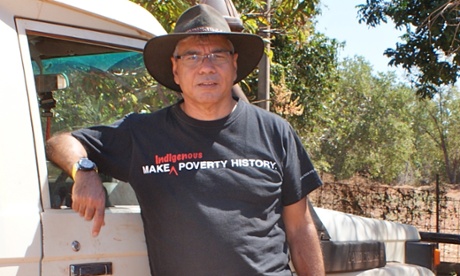
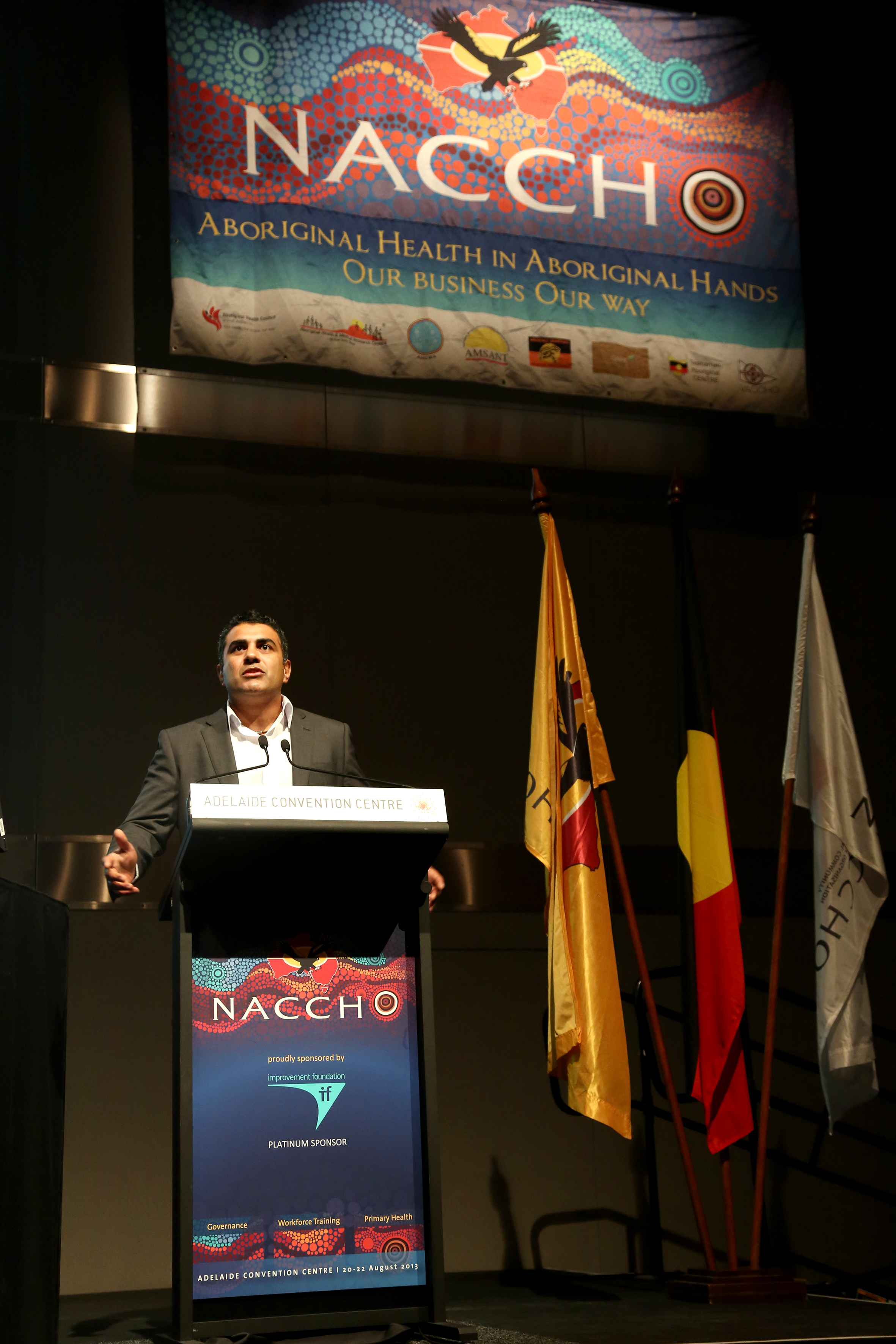
The Chair of the National Aboriginal Community Controlled Health Organisation (NACCHO) Justin Mohamed (pictured above) said evidence continues to mount that investing in services run by Aboriginal people for Aboriginal people makes good economic sense.

“Every new Aboriginal Community Controlled Health Organisation (ACCHO) and every new patient attending an Aboriginal Community Controlled Health Organisation, is a step toward closing the appalling health gap between Aboriginal and non-Aboriginal Australians,”

Close the Gap Progress and Priorities report released  by the Close the Gap Campaign

DOWNLOAD THE PRIME MINISTER 2014 Closing the Gap Report here

A new report reveals that the expansion of Aboriginal Community Controlled Health Organisations is contributing to closing the shameful health gap, prompting the call for continued investment by all levels of government.

The annual Close the Gap Progress and Priorities report released today by the Close the Gap Campaign shows that investment through national partnership agreements has created 30 new Aboriginal Community Controlled Health Organisations since 2008-9 and delivered 400,000 episodes of care.

DOWNLOAD THE REPORT

The Chair of the National Aboriginal Community Controlled Health Organisation (NACCHO) Justin Mohamed said evidence continues to mount that investing in services run by Aboriginal people for Aboriginal people makes good economic sense.

“Every new Aboriginal Community Controlled Health Organisation (ACCHO) and every new patient attending an Aboriginal Community Controlled Health Organisation, is a step toward closing the appalling health gap between Aboriginal and non-Aboriginal Australians,” Mr Mohamed said.

“We are seeing time and again that the biggest health gains are being made when Aboriginal people have control over their own health.

“And the flow on effects are significant. The ability of our services to provide a platform for the generation of jobs and education cannot be underestimated. ACCHOs train and employ more than an estimated 5000 people, many Aboriginal, so the economic benefits are felt throughout our communities and more broadly.”

Mr Mohamed urged all governments to recommit to a national agreement to provide funding certainty to programs and services that are working and also for the Federal Government to move to implement the most recent health plan.

“The programs targeting maternal and child health, largely delivered by ACCHOs, are having an impact.

“Other services and programs are also showing gains. Generational change comes slowly but the incremental gains being made reinforce the need to maintain focus and investment over the long term.

“A new national partnership agreement is now long overdue and all governments must come to the table and demonstrate their commitment to improving the health of Aboriginal people.

“NACCHO would also like to see the Federal Government commit to delivering on the National Aboriginal and Torres Strait Islander Health Plan. Too much was invested by Aboriginal people in its development to have it be just another report gathering dust on a Ministerial shelf.”
C

Close the Gap Campaign Press release: action on health will lead change

The Close the Gap Campaign has called on the Government to continue to prioritise and drive action to ensure this is the generation that ends Aboriginal and Torres Strait Islander health inequality.

“We expect the Government to wholeheartedly grasp the opportunity to lead on closing the gap in health equality between Aboriginal and Torres Strait Islander people and other Australians,” said Close the Gap Campaign co-chairs Mick Gooda and Kirstie Parker.

Today, the Close the Gap Campaign releases its progress and priorities report which coincides with the Prime Minister’s release of the Government’s own closing the gap report.

“We are just starting to see reductions in smoking rates and improvements in maternal and childhood health. We need to build on these successes,” said Mick Gooda, who is also the Aboriginal and Torres Strait Islander Social Justice Commissioner at the Australian Human Rights Commission.

“This is a national effort that can achieve generational change. It is critical that Close the Gap continues as a national priority. We need to stay on track.

“All political parties and almost 200,000 Australians have committed to end the health equality gap by 2030.

“The Prime Minister’s closing the gap report released today continues the bipartisan tradition of reporting publicly on progress to achieving health equality by 2030,” Mr Gooda said.

“We know that empowering Aboriginal and Torres Strait Islander health services has broader benefits. Health services are the single biggest employer of Aboriginal and Torres Strait Islander people,” Ms Parker, who is also the Co-Chair of the National Congress of Australia’s First Peoples, said.

“Community controlled health services create jobs as well as train people in real vocations.

“We call on the Government to renew the National Partnership Agreement on Closing the Gap in Indigenous Health Outcomes (NPA) and forge ahead with implementing the Aboriginal and Torres Strait Islander Health Plan in partnership with our people.

“This is the support needed for Aboriginal and Torres Strait Islander people to continue to exercise responsibility for their health.

“We can make real inroads in the national effort to close the gap if we continue to place a high priority on it.”
ctg

Have you registered your CLOSE THE GAP event

NACCHO Aboriginal Health News alert :Billions $$$ to be reaped in closing the gap

NACCHO0024-1280x1024

AUSTRALIA’S economy would grow by $24 billion and governments would be almost $12bn better off if key gaps between indigenous and non-indigenous people were closed by 2031, according to new modelling released today.

from Rick Morton The Australian

Reconciliation Australia commissioned Deloitte Access Economics to update its 2008 modelling of the economic impacts of social and health equity for Aborigines.

DOWNLOAD THE REPORT HERE

BOOK FOR NACCHO at the NATIONAL PRESS CLUB APRIL 2

Investing in Aboriginal community controlled health makes economic sense”

The new research shows Australia’s GDP would grow by 1.15 per cent, more than the 0.95 per cent predicted in 2008, because there are more indigenous people and, in recent times, employment gaps have widened.

The report comes as Reconciliation Australia co-chair Tom Calma threw his support behind the Prime Minister’s Indigenous Advisory Council and the Coalition’s Commission of Audit, which he said must find and cut “administrative red tape”.

“We have to have confidence that the council and the commission will look closely at what has gone on in the past, what is working and what is not working,” he told The Australian.

“We need to have a strategic approach to closing the gap, not this bloody whimsical approach we see so often.”

Mr Calma said the approach that had clearly been working started with the Council of Australian Governments commitment in 2007 to the ambitious targets and an increasing interest from the business community in driving indigenous engagement.

989431-140210-n-gsp-graphs

The Deloitte report says the Northern Territory economy would grow by 10 per cent if gaps were closed by 2031, although the biggest gain in absolute terms would be in NSW where the economy would grow by $7.4bn. Governments would save $4.6bn in expenditure — almost $3bn on social security alone — and would earn another $7.2bn from the GST and income and corporate tax revenues.

Closing the gap in education would be associated with an 18 per cent boost to the number of indigenous people with a job, about 26,000 extra in today’s terms.

Similarly for health indicators, 13,000 jobs — 9 per cent more — would be created if equity was achieved.

The report notes some factors which contribute to unemployment include racial discrimination and incarceration rates, which are not easily alleviated.

Indigenous employment was strongest in the health, public administration, retail and education sectors and there was a weak appearance in higher paid jobs.

The vast majority of economic gains — $16.5bn — would be made in regional and remote areas, the report finds.

“Given the variation in circumstances between metropolitan, regional and remote areas of Australia, tailored strategies will be necessary to close the gap in Indigenous outcomes in these different regions,” it says.

To analyse these metropolitan, regional and remote trends Deloitte chose three case study areas from around Australia — Blacktown in Sydney’s west, Fitzroy in North Queensland and Alice Springs in the Northern Territory.

Less than one-third of indigenous people in Alice Springs are employed, compared to about 40 and 50 per cent respectively in Blacktown and Fitzroy.

“It is interesting to note that non-indigenous employment and labour force participation is higher in Alice Springs than the other areas,” the report says.

“This shows that jobs in Alice Springs are less likely to be filled by Indigenous people and points to the complexity of understanding the causes for regional disparities in Indigenous employment.”

Mr Calma said there had long been a “Canberra-centric” view of indigenous policy and that this needed to change to effectively close gaps

NACCHO @Indigenous political alert :Q and A with Warren Mundine: on the importance of role models and education

SONY DSC

Each week, a new guest hosts the @IndigenousX Twitter account to discuss topics of interest as Aboriginal and/or Torres Strait Islander people

The Guardian in partnership with IndigenousX, invites its weekly host to tell us about who they are, what issues they’re passionate about, and what they have in store for us during their upcoming week

This weeks host is Warren Mundine and we understand he will be visiting Western Desert communities this week and reporting online

BfclL_ECcAAxLwv

YOUR OPPORTUNITY TO ASK MR MUNDINE A QUESTION

If you are not on TWITTER leave your question (140 characters) in the COMMENTS below and NACCHO media will pass it on  Email mailto: media@naccho.org.au

FROM THE GUARDIAN

Warren Mundine tell us about yourself.

I was born in Grafton in Northern NSW and moved to Auburn in Western Sydney when I was seven years old. I’m from the Bundjalung, Gumbaynggir and Yuin people. My father’s family come from Baryulgil about 80 km north of Grafton, on the Clarence River. He grew up there and moved when he married my mother.

I was one of 11 children and I slept in a single bed with three of my brothers until I was about 12 – which was fine except that my youngest brother wet the bed.
My first name “Nyunggai” means “sun”. It was the skin name that my father gave to me as a child. Recently I changed my name by deed poll to Nyunggai Warren Mundine and so now I use it officially.
My parents worked and sent us to Catholic schools. God, work and school were very important in our family. Even so, as a teenager I started to drift and my reading and writing didn’t progress past primary level. I caused my parents a lot of trouble getting into fights, consuming alcohol and drugs, etc. At one point I was arrested and detained as a juvenile. My parents, a priest and a local white couple stood up for me in court and I was given another chance. They kept an eye on me, I got a labouring job and finished school at TAFE.
I stayed in labouring and trade jobs for about 10 years. My first office job was as a clerk at the Tax Office. I lived in Armidale and Dubbo when my kids were young and got elected to Dubbo Council where I was deputy mayor.

That’s how I got involved in the Labor party, and eventually I was elected its national president. I spent about nine years as CEO of NTSCorp, working with NSW Aboriginal communities on their native title, and I was CEO of GenerationOne in 2013.

I now run my own business and have been appointed to advise the prime minister on Indigenous issues as chair of the Indigenous Advisory Council.
I’m married to Elizabeth and between us we have 10 children (most are grown up). It’s a lot of fun. And of course, I am a mad lover of football.

What do you plan to talk about on @IndigenousX this week?

This week I wrote a blog post which I called The First Tree. It’s about how we address seemingly insurmountable problems.  People laugh at on me on Twitter for having simple suggestions – like getting kids to school – and focusing on practical things.

But I don’t think theorising and admiring a problem from every angle achieves much. Sometimes simple things are what leads to the biggest changes, most quickly.
So I will be focussing on the “bread and butter” issues for closing the gap – jobs, education, school attendance, health, welfare  – and I want to prompt some discussion on our traditional nations and cultures and what they have to offer us. As always I want to prompt conversations which make people think, and where readers are prepared to challenge their own thinking.

What issue(s) affecting Indigenous peoples do you think is most pressing?

If you read my articles, speeches and blogs you will get a good idea of where I think the priorities are. School attendance, welfare to work and incarceration, particularly juvenile detention, are big ones.
And for communities – social stability, economic and commercial development, land ownership.
The high suicide rates amongst Indigenous people is a devastating problem. I’ve been reading and talking to people over the last few months in particular so as to understand it better. It’s not a topic that is easy to discuss on a medium like Twitter, however.

Who are your role models and why?

My father, Roy Mundine, and mother Dolly Mundine (née Donovan) were big role models in my life. Apart from them, my greatest role model was Lionel Rose, world champion boxer. He was a 19 year old Aboriginal boy from Jackson Flats, and he won the world title. He showed me that the world can be your oyster if you are willing to focus and work hard.
Also Charles Perkins and John Moriarty who both overcame adversity, went to university when it wasn’t easy for Aboriginal people to do that – both played football, and John was selected for the national team.

What are your hopes for the future?

This year my hope is that all Indigenous kids are going to school every school day, and that state and territory governments bring in mandatory diversionary programs for juvenile offenders into jobs and education.
I’ve outlined my long term hopes in a number of my articles and speeches, particularly the Garma Speech and my recent Australia Day address.
In the end, my hope is that Indigenous people can be full participants in Australian life and all it has to offer as well as being part of strong and thriving traditional nations where they can take care of their culture, language, traditional lands and build an economic future.

NACCHO National 2014 Close the Gap Day 20 March :Have you registered your Close the Gap event ?

ctg

Commitment needed over a generation

National Close the Gap Day 2014 is a key way your organisation can make a real difference to ensuring ongoing support by government to Indigenous health equality.

We would like you to get involved in National Close the Gap Day this year and help us keep Indigenous health equality and the need for action, on the agenda:

Registrations for National Close the Gap Day 2014 are open right now.

It is crucial that we maintain the public and political momentum needed to ensure that we continue the long-term change needed to Close the Gap.

47769-648x431

Darren Mercy and daughter Avril. Photo: Jason Malouin/OxfamAUS

Please take a moment to register an event for national Close the Gap Day and encourage your colleagues, networks, friends and family to do the same.

The Close the Gap Campaign has made real progress since its inception in 2006. Indigenous infant and child mortality rates have declined significantly and a wide variety of new Indigenous health initiatives have been introduced at both State and Federal levels.

But while we’ve come a long way in terms of public recognition and support, and injection of new resources from government, our ultimate success will require this support and additional resources being further increased and sustained over the next two-three decades.

It is too early for major changes in Indigenous health to have taken place, so it’s sobering to remember that Aboriginal and Torres Strait Islander life expectancy is still 10-17 years less than other Australians. We need a sustained level of support from government over many years to close this health gap.

National Close the Gap Day 2014 is a key way your organisation can make a real difference to ensuring ongoing support by government to Indigenous health equality.

National Close the Gap Day is on Thursday 20th March, 2014. Participation in National Close the Gap Day by your organisation and staff is an excellent way to demonstrate your support for this crucial issue, to give your staff and community a chance to participate in it and to be part of a broad, national movement working for health equality.

It gives your organisation and employees the opportunity to show their support for closing the 10-17 year life expectancy gap between Aboriginal and Torres Strait Islanders and other Australians.

We would like you to get involved in National Close the Gap Day this year and help us keep Indigenous health equality and the need for action, on the agenda:

ACTION

We have a range of web banners, images and logos that are available on request to promote National Close the Gap Day to your organisation and networks .

www.oxfam.org.au/national-day

Tom Widdup
Close the Gap Campaign Coordinator, Oxfam Australia

NACCHO Aboriginal Health: Estimated 400 suicides in our communities in last three years

Image - www.nacchocommunique.com

“Aboriginal and Torres Strait Islander people experience suicide at around twice the rate of the rest of the population. Aboriginal teenage men and women are up to 5.9 times more likely to take their own lives than non-Aboriginal people.

This is a crisis affecting our young people. It’s critical real action is taken to urgently  address the issue and it’was heartening to see the previous Federal Government taking steps to do that.

For any strategy to be effective, local, community-led healthcare needs to be at its core.

But so far we have not heard from this Government on the future of The Aboriginal and Torres Strait Islander Mental Health and Suicide Prevention Advisory Group and the $17.8 million over four years in funding to reduce the incidence of suicidal and self-harming behaviour among Indigenous people.”

Justin Mohamed Chair NACCHO commenting on the crisis 

During the last three years of Aboriginal and Torres Strait Islander suicides are at nearly 400, no less than 380.

Research by Gerry Georgatos

Last year, I aggregated Australian Bureau of Statistics (ABS) hospital collated data on reported suicides of Aboriginal and Torres Strait Islander peoples – 996 suicides from 2001 to 2010. That is 1 in 24 of all deaths of Aboriginal and Torres Strait Islander people – by suicide.

READ previous NACCHO articles on suicide prevention here

NACCHO community support : Raising funds for Elders report into Preventing Self-harm & Indigenous suicide.

Update we reached out goal of $9,500

There is no ABS data available at time to determine whether the crisis has abated or got worse, but I have been record keeping reported suicides – whether through the media, community organisations or via other sources – for my own academic research on premature and unnatural deaths. I have found that from the beginning of 2011 to end 2013 there have been nearly 400 suicides – child, youth and adult – of Aboriginal and Torres Strait Islander peoples.

My own research estimates that the 996 suicides recorded between 2001 to 2010 are an under reporting of the actual numbers, and instead of 1 in 24 deaths by suicide, I have estimated that the rate of suicide was between 1 in 12 to 1 in 16. The 2001 to 2010 suicides average to 99.96 suicides per year. In reflection it was 99 custodial deaths alone over a ten year period in the 1980s that led to the Royal Commission into Aboriginal Deaths in Custody. How many suicides will it take before this nation’s most horrific tragedy is met head on with a Royal Commission?

My research compilations during the last three years of Aboriginal and Torres Strait Islander suicides are at nearly 400, no less than 380. Where there had been an average 99 deaths by suicide from 2001 to 2010, according to my research the annual average for 2011 to 2013 has tragically increased to approximately 130 suicides per annum.

Last year, on October 23, the Chair of the Prime Minister’s Indigenous Advisory Council (IAC), Warren Mundine read my journalism and some of the research published predominately in The National Indigenous Times and by The National Indigenous Radio Service and in The Stringer and Mr Mundine responded with a never-before-seen commitment by a high profile Government official to urgently do something about the out-of-control crisis

He added the crisis to the IAC’s mandate – and he time-limited it to six months so that the crisis would not languish. But three months have passed and we have not heard anything from the Council despite several requests to them for information on any potential progress.

At the time, Mr Mundine expressed his shock at the extent of the crisis.

“The figures sit before your eyes and the scale of it you sort of go ‘oh my god, what the hell is going on?’ I admit that I was probably one of the problems, because we seem to handle mental illness and suicide and shunt it away, we never dealt with it as a society, but we have to deal with it, confront it, because we are losing too many of our people, too many of our young ones… It is about us understanding this and challenging ourselves, and as I said I am just as bad as anyone else out there who put this away and did not want to deal with mental health and the suicide rates, so we have to get over that,” said Mr Mundine.

“We are looking at putting (the suicide crisis) on the table for our first meeting, and looking at over the next three and six months at what’s the advice we will be looking at giving to the Government and the Prime Minister to deal with this issue.”

“My personal opinion, and there is no science in this, this is just my observation, is our self-esteem and culture, I think, plays a major part in these areas.”

“It is a problem and I congratulate The National Indigenous Times for putting it on the front page. We need to really start focusing on this a lot better and I’m not talking about the people who are in there already doing it because they’re the champions. I’m talking about myself and the rest of Australia, we need to get our act together.”

Since October 23 there have been two score suicides.

Dumbartung Aboriginal Corporation CEO Robert Eggington said that in the last two weeks another spate of suicides has blighted both the south west and the north west of Western Australia.

“There have been suicides among our youth in recent weeks, another tragic spate. We met with the Premier last year and we are waiting for his promises to be kept to fund safe spaces and strategies for us to coordinate the helping of our people, but to date we have been kept waiting,” said Mr Eggington.

Chair of the Narrunga People, Tauto Sansbury said that he has been trying to arrange a meeting with Mr Mundine but despite three months of effort this has not occurred – Mr Mundine had promised to organise a meeting with Mr Sansbury following articles about the high rate of suicides among South Australia’s Aboriginal people.

“We have become used to broken promises by our State Government for a 24/7 crisis centre for our people and we hoped that Warren (Mundine) would represent the needs of our people, stand up for our most vulnerable, the at-risk, but to date he is yet to meet us let alone represent us,” said Mr Sansbury.

“Our young people and adults continue to fall victim to suicide.”

To the Northern Territory, where Aboriginal child suicides have increased by 500 per cent since the launching of the infamous “Intervention”, Arrente man and Bond University criminology student, Dennis Braun has reported the dark plight of one of the Territory’s communities – 33 deaths in five months. The community’s Elders have requested that the community is not publicly identified.

“The majority of the deceased were under 44 years of age. The youngest was a 13 year old who committed suicide a couple of days just before Christmas.”

“There should be an inquiry, but there is not despite 33 deaths. If this happened in an urban community like Sydney there’d be an outcry even after three or four deaths, with (residents and the wider community) wanting to know why it is happening and where to go for help.”

This publication has prioritised the suicide crisis for quite some time, sustaining the coverage, and the stories of loss, the grieving families, and we have effectively campaigned to Government to rise to the occasion. We do not apologise for this. On October 23, Mr Mundine and the Indigenous Advisory made a commitment that they must keep.

Links:

Warren Mundine including the suicide crisis to the IAC mandate

Government to address Aboriginal suicides

30 suicides in the last three months as we wait for promises to be kept

996 Aboriginal deaths by suicide – another shameful Australian record

Australia’s Aboriginal children – the world’s highest suicide rate

Whose child will be the next to die?

Suicide gap widening, says researcher

NACCHO Aboriginal Health reports:Sport and recreation programs help health in Aboriginal communities

Balls-1024x457

A paper released last week on the Closing the Gap Clearinghouse website examines the beneficial effects of participation in sports and recreation for supporting healthy Aboriginal and Torres Strait Islander communities.

The paper, Supporting healthy communities through sports and recreation programs, reviews over 30 studies, covering all geographic areas from inner city to remote regions, and age groups ranging from primary school to young adult.

DOWNLOAD THE REPORT HERE

It shows that there are many benefits to Aboriginal and Torres Strait Islander communities from participation in sport and recreational programs, including some improvements in school retention, attitudes towards learning, social and cognitive skills, physical and mental health and wellbeing; increased social inclusion and cohesion; increased validation of and connection to culture; and some evidence of crime reduction.

MAKE A DONATION TO THE NACCHO SPORTS HEALTHY FUTURES PROGRAM

OR VIA THE NACCHO APP

APPLY FOR FUNDING FROM THE NACCHO SPORTS HEALTHY FUTURES PROGRAM HERE

The paper shows that although the effects of sports and recreation programs can be powerful and transformative, these effects tend to be indirect and therefore hard to measure.

For example, programs to reduce juvenile antisocial behaviour largely work through diversion—these can provide alternative and safer opportunities for risk-taking, for maintenance of social status, and in building healthy relationships with elders.

Because of the lack of direct measures on the impact of sports and recreation programs on various outcomes for Indigenous Australians, this resource sheet focussed on some of the principles that can help ensure that the program is successful. These include:

  • Linking sports and recreation programs with other services and opportunities;
  • Promoting a program rather than a desired outcome;
  • Engaging the community in the planning and implementation of programs, as this will ensure that the program is culturally appropriate, and potentially sustainable.

What we know

• There is some evidence, in the form of critical descriptions of programs and systematic reviews, on the benefits to Aboriginal and Torres Strait Islander communities from participation in sport and recreational programs. These include some improvements in school retention, attitudes towards learning, social and cognitive skills, physical and mental health and wellbeing; increased social inclusion and cohesion; increased validation of and connection to culture; and crime reduction.

• Although the effects of sports and recreation programs can be powerful and transformative, these effects tend to be indirect. For example, using these programs to reduce juvenile antisocial behaviour largely work through diversion, providing alternative safe opportunities to risk taking, maintenance of social status, as well as opportunities to build healthy relationships with Elders and links with culture.

• Although Indigenous Australians have lower rates of participation in sport than non-Indigenous people, surveys suggest that around one-third of Indigenous people participate in some sporting activity (ABS 2010). That makes sports a potentially powerful vehicle for encouraging Indigenous communities to look at challenging personal and community issues.

• Within Indigenous communities, a strong component of sport and recreation is the link with traditional culture. Cultural activities such as hunting are generally more accepted as a form of sport and recreation than traditional dance. Therefore sport and recreation are integral in understanding ‘culture’ within Indigenous communities, as well as highlighting the culture within which sport and recreation operate.

What works

There are a range of benefits pertaining to participation in sports and recreation activities. In the absence of evaluation evidence, below is a list of principles of ‘what works’ and ‘what doesn’t work’ to assist with sport and recreation program implementation.

• Providing a quality program experience heightens engagement in the sports or recreational activity.

• Where no activity has been previously made available, offering some type of sport or recreation program to fill that void should be given priority over making selective decisions about which program to carry out.

• Linking sports and recreation programs with other services and opportunities (for example, health services or counselling; jobs or more relevant educational programs) improves the uptake of these allied services. This assists in developing links to other important programs for improving health and wellbeing outcomes, or behavioural change.

• For sporting programs, providing long-term sustained, regular contact between experienced sportspeople and participants allows time to consolidate new skills and benefits that flow from involvement in the program.

• Promoting a program rather than a desired outcome improves the uptake of activities—for example, a physical fitness program is more likely to be well used if promoted as games or sports rather than a get-fit campaign.

• Involving the community in the planning and implementation of programs promotes cultural appropriateness, engagement and sustainability.

• Keeping participants’ costs to a minimum ensures broad access to programs.

• Scheduling activities at appropriate times enhances engagement—for example, for young people, after school, weekends and during school holidays, when they are most likely to have large amounts of unsupervised free time.

• Facilitating successful and positive risk taking provides an alternative to inappropriate risks.

• Creating a safe place through sports or recreation activities, where trust has been built, allows for community members to work through challenges and potential community and personal change without fear of retribution or being stigmatised.

• Ensuring stable funding and staffing is crucial to developing sustainable programs.

NACCHO Aboriginal health news: Aboriginal health isn’t all bad news


It’s easy to feel disheartened by the bombardment of negative statistics about Indigenous health, but we shouldn’t ignore the many successes, writes Lisa Jackson Pulver in the  ABC online DRUM Photo:  (Dave Hunt, file photo: AAP)

Lisa Jackson Pulver holds the Inaugural Chair of Indigenous Health and is a Professor of Public Health at UNSW. View her full profile here.

The media loves a bad news story – and the response to the latest report on Aboriginal and Torres Strait Islander health is no exception.

The Sydney Morning Herald called the past 10 years a “wasted decade“, highlighting increasing rates of diabetes, kidney disease, asthma and osteoporosis among Indigenous people, along with the 11-year gap in life expectancy between Indigenous and non-Indigenous Australians.

But the largest-ever survey of Aboriginal and Torres Strait Islander health released by the Australian Bureau of Statistics also has some good news to report that was all too easily passed over.

Fewer Indigenous people are taking up smoking, and those who do smoke are giving up the habit. This is despite nicotine being an addictive substance, highly influenced by social norms. For years, smoking rates have been much higher in the Indigenous community than in the non-Indigenous community. But according to the Bureau, the proportion of young Aboriginal and Torres Strait Islander people aged 15 to 17 years who have never smoked has increased from 61 per cent to 77 per cent, with an increase from 34 per cent to 43 per cent for those aged 18 to 24 years.

This result is matched by the non-Indigenous community. It should be applauded and recognised by all Australians: it shows the resilience of our young people who are increasingly saying no to smoking. The choice they are making will mean a decrease in the knock-on effects that chronic smoking brings.

While it must be acknowledged that this is only one indicator of success, it is still a win. So, where are the accolades for all the tobacco control programs, the Aboriginal Health Worker mentors and those with the resolve to never smoke or to stop? Why is this not the story?

Among the findings in the ABS report, Indigenous Australians are reported as being more than three times as likely as non-Indigenous Australians to have diabetes. While this is cause for concern, many of the major health problems for Indigenous communities are not only affected by health spending, but by the wider determinants of health. This means it will take much longer before we see viable gains. So it should come as no surprise that in such a short period, since 2009, the Closing the Gap policy framework and funding did not produce positive health outcomes on all measures. The period surveyed (2012-2013) cannot have benefitted from the new money that flowed as a result of Closing the Gap. It is too early. More importantly, the severe disadvantage many of these data reflect reinforces the argument for concerted action and sustained funding over the longer term.

We must also remember that early prevention and intervention is important, so we need to continue to look for the early and intermediate signs of what will become a long-term improvement in health – which of course includes lower smoking rates, a top risk factor for a wide array of other health conditions. Likewise, we should not simply focus on the current rates of chronic disease, but also the factors that contribute to good health in the future: nutritional status and healthy diets, physical activity, access to antenatal care, not smoking, engagement in family and community activities, housing quality and whether there is overcrowding, employment and cultural and psychological wellbeing – all of which lay the foundations to health.

Aboriginal and Torres Strait Islander health, like everyone’s health, is much more than the absence of disease. It involves physical, social, emotional, cultural, spiritual and ecological wellbeing and fulfilment of potential to contribute to the wellbeing of the whole community. Looking more deeply, we can see the outstanding successes in Aboriginal and Torres Strait Islander primary healthcare services, visual and performing arts, drama, music, tertiary education and sport as examples of early indicators that many people are flourishing.

It is very easy to see only the negative, given the statistics that seem to bombard us. That’s unfortunate because it promotes a sense of hopelessness, when what is needed is energy, positive models of change and positive commitment over the long term. There would be great value in capturing these positive changes, in collecting and amplifying the voices of those young people in particular who have made conscious decisions to live well and let these voices join the growing chorus of role models, exemplars and successful ventures in our communities.

Closing the Gap is a great start – and a much needed catalyst for change – but it is necessary to shift the lens towards the kinds of deeper changes that lead to lifelong health, including not smoking. Instead of focusing on the negatives, why not support those effective, community-driven enterprises and programs already having positive impacts, so that the children of our children will again enjoy the great opportunities that life in this magnificent country has to offer.

Lisa Jackson Pulver holds the Inaugural Chair of Indigenous Health and is a Professor of Public Health at UNSW. View her full profile here.

Topics: indigenous-aboriginal-and-torres-strait-islander, indigenous-policy

NACCHO AGM Perth 2013 health news: Aboriginal life expectancy increases to Close the Gap

C

Life expectancy for Aboriginal and Torres Strait Islander men increased by around one and a half years over the last five years, compared to about one year for non-Indigenous men. Life expectancy for Aboriginal and Torres Strait Islander women increased by about half a year over the period, roughly the same increase as non-Indigenous women.

Life expectancy at birth for Aboriginal and Torres Strait Islanders in 2010-2012 was 69.1 years for men and 73.7 years for women, according to figures released November 15 by the Australian Bureau of Statistics (ABS).

Download ABS life tables report 2013

Download ABS life expectancy FACT SHEET 2013

DOWNLOAD THE DATA in Xcel

healthy-futures-great

Justin Mohamed Chair of NACCHO is reporting to the NACCHO AGM in Perth this week that the NACCHO recently  commissioned Healthy for Life report from the Australian Institute of Health and Welfare  gave a great overview of the success of ACCHOs and delivered the evidence of just how big a contribution NACCHO ‘s 150 members are making to improve health outcomes for Aboriginal people.

Follow the NACCHO chair Justin Mohamed in Perth this week on TWITTER #NACCHOAGM13

DOWNLOAD THE AIHW NACCHO Healthy for LIFE Report Card

“The comprehensive report showed that Aboriginal Community Controlled services provided culturally appropriate primary health care to over 310,000 Aboriginal people each year, around half the Aboriginal and Torres Strait Islander population, and we are credited with three quarters of the health gains made against the Close the Gap targets.” Mr Mohamed said.

ABS Director of Demography, Bjorn Jarvis, said “Life expectancy for Aboriginal and Torres Strait Islander men increased by around one and a half years over the last five years, compared to about one year for non-Indigenous men. Life expectancy for Aboriginal and Torres Strait Islander women increased by about half a year over the period, roughly the same increase as non-Indigenous women,”

“The figures show that the gap in life expectancy of Aboriginal and Torres Strait Islander people compared to non-Indigenous people has narrowed,  but only slightly,” said Mr Jarvis.

The new figures for 2010-2012 show that life expectancy of Aboriginal and Torres Strait Islander men is estimated to be 10.6 years lower than non-Indigenous men, while life expectancy of Aboriginal and Torres Strait Islander women is 9.5 years lower than non-Indigenous women. The gap has reduced by 0.8 years for men and 0.1 years for women over the period.

Response from the Close the Gap  Campaign

Life expectancy for Aboriginal and Torres Strait Islander Peoples still lags behind that of non-Indigenous Australians, according to Australian Bureau of Statistics (ABS) data released today.

Close the Gap campaign co-chair, Mick Gooda, said the small improvement disclosed in the data covers a five-year period during which Closing the Gap policies were implemented.

“The ABS data shows a small but very welcome improvement in Aboriginal and Torre Strait Islander life expectancy. However, a significant gap remains,” Mr Gooda said.

Mr Gooda, who is also the Aboriginal and Torres Strait Islander Social Justice Commissioner, said Aboriginal and Torres Strait Islander Peoples don’t want to the health of Australia’s First Peoples to continue to lag behind the broader community.

“When we started the Close the Gap campaign we knew this was a generational effort. We knew that reducing the life expectancy gap was achievable but would take a concerted effort. That’s why we set the 2030 target and are working with the Government and the Opposition to ensure health equality for all Australians.”

Kirstie Parker, co-chair of the Close the Gap campaign and of the National Congress of Australia’s First Peoples, acknowledged the strong support for closing the gap from all political parties and from the wider Australian community.

“It’s heartening to see Government, Opposition and Greens support for the Close the Gap campaign, and almost 200,000 Australians have pledged their support.  Closing the gap is a national priority and an area of bipartisan support that the Government can build on,” Ms Parker said.

In August, the Close the Gap campaign articulated a platform for the first 100 days of the new Government. With that anniversary fast-approaching, Ms Parker said Close the Gap will work with Government so that it:

  • reports back to Parliament on the first parliamentary day of each year;
  • forges an agreement through COAG for a new National Partnership Agreement on Closing the Gap in Health Outcomes; and
  • establishes a clear process to implement the National Aboriginal and Torres Strait Islander Health Plan 2013-2023.

NACCHO Aboriginal health news alert: Aboriginal population will soar to more than one million in the next 20 years.Download the report here

SNAICC

Dr Biddle said the indigenous population was likely to become “more urban and older”. He warned that “it won’t come without costs, as certain determinants of indigenous wellbeing, like cultural participation, language usage and acquisition and maintenance of country, will be more difficult to maintain.”

THE number of Aborigines and Torres Strait Islanders will soar to more than one million in the next 20 years, as the indigenous population rapidly ages and becomes more urbanised.

Report edited from the AUSTRALIAN PATRICIA KARVELAS Follow @PatKarvelas

A groundbreaking report,  released this month, predicts that the fastest indigenous population growth will be in Brisbane, Rockhampton, Cairns, southwestern Western Australia, South Headland, Townsville and Mackay.

DOWNLOAD THE REPORT HERE

The report forecasts that the indigenous population will grow from about 670,000 in 2011 to about 1.06 million by 2031, an increase of about 59 per cent, compared with an increase of about 20 per cent for the non-indigenous population.

NACCHO0024-1280x1024

FOR MORE INFORMATION ABOUT THE NACCHO  HEALTHY FUTURES PLAN 2030

From making up about 3 per cent of the total population in 2011, indigenous people will comprise 3.9 per cent by 2031.

The paper, by the Australian National University’s Nicholas Biddle, finds that even excluding changes in whether people identify as indigenous, the regions in Queensland and Western Australia are projected to grow by at least 3 per cent a year.

Four regions — Apatula, Tennant Creek, Katherine and northwestern NSW — are projected to grow by less than 1 per cent per year over the period.

The indigenous population is projected to become much more urban over the next 20 years. In 2011, the indigenous population of Brisbane was estimated to be 65,000. This is slightly less than the roughly 69,000 indigenous people estimated to live in the whole of the Northern Territory.

By 2031, the Brisbane region is projected to have an indigenous population of a little more than 132,000 people, about 50 per cent more than the Northern Territory, with a little less than 89,000.

Although the total indigenous population is projected to grow by 59 per cent between 2011 and 2031, the population up until age 24 is only projected to grow by 47 per cent. This is still faster than the equivalent projection for the non-indigenous population in that age group, but is much slower than the indigenous population aged 65 and older, which is projected to grow by 200 per cent.

The 65-and-older cohort is forecast to comprise 6.4 per cent of the indigenous population in 2031, compared with about 3.4 per cent at the 2011 census.

This could have profound financial implications, as low rates of employment are likely to mean that indigenous retirees have far less in savings than their non-indigenous counterparts. It is also likely to have implications for health and disability policy.

Dr Biddle said there were two main reasons for the relatively rapid projected growth, including migration from non-urban to urban Australia, and high rates of intermarriage between indigenous and non-indigenous Australians. “As the children of these partnerships tend to be identified as indigenous, there is therefore an additional contribution to growth.”

He said that even in the regions with the slowest growth, the indigenous population was likely to grow faster than the non-indigenous population.

The report, funded by the federal government, warns that a rapidly growing indigenous population could put budget pressures on programs. “For programs that are funded on a fixed-dollar basis per person, a large growth in the eligible indigenous population could mean that the cost of the program would need to be either increased or spread across a greater number of people,” it says.

Dr Biddle said the indigenous population was likely to become “more urban and older”. He warned that “it won’t come without costs, as certain determinants of indigenous wellbeing, like cultural participation, language usage and acquisition and maintenance of country, will be more difficult to maintain.”

NACCHO Aboriginal Health News : Evaluation of the Federal Indigenous chronic disease Package

Menzies delivers evaluation of Federal Indigenous chronic disease Package

imagesCAPSBRXS

Primary healthcare policy and planning experts from the Menzies School of Health Research (Menzies) have welcomed the release of the report into the landscape of chronic disease in Aboriginal and Torres Strait Islander Australians.

DOWNLOAD THE REPORT HERE

Chronic disease contributes to two thirds of the health gap between Indigenous and non-Indigenous Australians.

Commissioned by the federal Department of Health and Ageing, the Sentinel Sites Evaluation (SSE) is a holistic evaluation of the $805 m Indigenous Chronic Disease Package (ICDP) ; a federal initiative designed to improve the capacity of primary health care services to more effectively prevent and manage chronic disease among Indigenous populations.

Menzies Senior Researcher and SSE project leader, Professor Ross Baillie said health authorities around the world were struggling to re-orient their health systems to address the epidemic of chronic disease.

“in 2010, the Australian Government engaged Menzies to undertake a comprehensive evaluation of the Indigenous Chronic Disease Package, “Prof Baillie said.

“The evaluation was undertaken to inform ongoing refinements in design and implementation of the program.”

The evaluation was undertaken to inform ongoing refinements in design and implementation of the program.”

The evaluation team conducted 72 community focus groups with a total of 670 participants, and over 700 interviews with key informants from community controlled, government services and GP sectors. Findings were reported back to local health services and to government in six monthly cycles between 2010-2013.

Prof Baillie said the effective completion of the SSE shows Menzies’ capacity to inform and impact national policy with the view to maximise the potential benefit to Indigenous communities across the country.

“The challenges of providing high quality chronic illness care remain complex and will require stakeholders at multiple levels of the system to grapple with new concepts, and develop and implement sophisticated strategies to address health disparity in Australia, “ Prof Baillie said.

Professor Baillie said the implementation of the ICDP to date has shown some notable achievements. These include :

–          Improved access to primary health care services and to affordable medication for many Aboriginal and Torres Strait Islander People.

–          Improved orientation of the General Practice sector to the needs of Aboriginal and Torres Strait Islander People.

–          Significant steps towards the early establishment of a new workforce that is focused on health promotion and in development of local health promotion initiatives

–          Increased attention to enhancing access to specialist, allied health and team-based approaches to chronic illness care.

–          Professor Baillie emphasised that the evaluation report had been informed by frontline evidence from a variety of healthcare providers and community members. The report provides some direction for how service organisations and policy makers can build on the existing strengths of the ICDP priority areas.

–         “It is clear that the evaluation has influenced program refinement and policy discussions within government, particularly with regard to how the wide variation between regions in service capability can be addressed. This is vital to enhancing efforts to improve prevention and management of chronic illness to those Aboriginal and Torres Strait Islander people who are most in need.”

Interviews :

Interviews are available with Professor Ross Baillie. Professor Baillie is the Scientific Director of the Centre for Primary Health Care Systems and leads the NHRMC funded ABCD National Research Partnership on quality improvement in Indigenous primary health care. He is also involved in research on food supply and environmental health and housing in Aboriginal and Torres Strait Islander communities.

Richmond Hodgson, Senior Communications and Events Officer, 0408 128 099 / communications@menzies.edu.au

Need help about breast cancer or the location of your nearest ACCHO on your SMARTPHONE or IPAD

Info Download the new NACCHO Health APP HERE

screen568x568