NACCHO racism and health news:Sol Bellear takes swipe at NRL star

Sol

Racism causes stress – stress is one of the most powerful contributors to illness and poor health.

Racism causes people to self-medicate with things like drugs and alcohol

Racism makes me sick. It makes Sam sick.

It makes everyone who is the target of it sick. It is one of the key reasons why the health gap in Australia is so wide.

Racism a driver of Aboriginal ill health   See previous ARTICLE

EXCLUSIVE COLUMN: SOL Bellear, the long-serving chairperson of the Aboriginal Medical Service, Redfern, takes a swipe at Brisbane star Sam Thaiday.

PICTURE Above AIATSIS
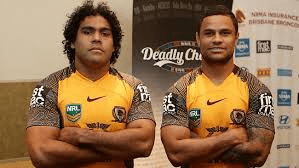
Sam

LATE this week, the Brisbane Broncos unveiled their special Indigenous jersey, a strip designed to honour the contribution of past and current players, and in particular to highlight efforts to ‘Close the Gap’ in Indigenous health.

It’s a great initiative, and not before time.

But for me at least, the event was soured by the comments of Broncos’ star, Sam Thaiday.(picture above left)

I have enormous admiration and respect for Sam. He’s been a great contributor to rugby league and a role model to kids all over Australia. But Sam’s views on racism – that the best way to confront it is to “push it aside” – don’t sit well with me

At the jersey launch, Sam told media: “We’re out there to win at all costs and sometimes things get said in the heat of the moment that I think aren’t said as a hurtful thing.

“It is a tough thing to hear but you can’t really react to those things 
these days. I think the best way to deal with it is to try and
 push it aside as much as possible.”

Sorry Sam. That’s no solution at all.

There is never any excuse for racism, no matter how it is said, no matter how it meant. It is unacceptable in any form.

There are countless reasons why, but the most compelling is precisely one of the reasons why the Broncos launched the jersey in the first place – to highlight the gap in Indigenous health.

Racism makes me sick. It makes Sam sick. It makes everyone who is the target of it sick. It is one of the key reasons why the health gap in Australia is so wide.

For example, countless studies have shown significantly higher rates of smoking among the poor (it’s 50 percent among us blackfellas). And whatever your views about modern Indigenous politics, I challenge anyone to make a case that the poverty suffered by Indigenous Australians today is not a direct result of the racism of our past.

The racism of our present may be less overt, but it still hurts

Racism causes stress – stress is one of the most powerful contributors to illness and poor health.

Racism causes people to self-medicate with things like drugs and alcohol.

The simple reality is that racism affects everyone in this country, and no problem ever went away by “pushing it aside”, as Sam suggests.

As a role model, Sam and other Indigenous players of the NRL have a responsibility to stand up to it whenever they see it.

NACCHO NT grog summit news: Four major outcomes on alcohol policy and its impact on Aboriginal people and communities

untitled

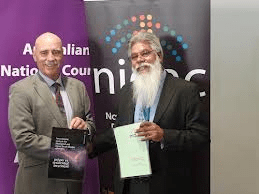
The summit heard also from expert speakers including Associate Professor, Ted Wilkes from the National Indigenous Drug & Alcohol Committee (pictured above recently presenting a NIDAC report the Minister Snowdon)

From 30 to 31 July 2013 a summit on alcohol policy and its impact on Aboriginal people and communities was held in Alice Springs, sponsored by the Aboriginal Peak Organisations Northern Territory [APO NT].

The summit was attended by around 100 people. This summit followed a similar grog summit sponsored by APO NT in Darwin in November 2012.

The summit heard from a number of speakers from Aboriginal communities and organisations across the Territory including: Anyinginyi Health Service; Central Australian Aboriginal Congress; Central Australian Aboriginal Alcohol Programmes Unit; Central Australian Aboriginal Family Legal Unit; Western Aranda Health Aboriginal Corporation; Ngaanyatjarra Pitjantjatjara Yankunytjatjara (NPY) Women’s Council; Borroloola; Ntaria, Papunya and Beswick.

The summit heard also from expert speakers including Associate Professor, Ted Wilkes from the National Indigenous Drug & Alcohol Committee; Professor Dennis Gray from the National Drug Research Institute and June Oscar, Emily Carter and Professor Elizabeth Elliott AM, who have been involved in the successful Fitzroy Valley recovery plan.

The summit delegates agreed that there was an urgent need for action and better evidence to address alcohol related harm both in Alice Springs, and across the NT. All delegates of the summit were concerned about the children’s future and the need to act now.

The summit agreed on a number of priority areas for action including:

Reducing supply as a critical ‘circuit breaker’ in the fight against alcohol harm:

The summit supported stopping the flow of cheap grog through a floor-price and/or volumetric tax, banning alcohol advertising/sponsorship in sport, stronger enforcement of licensing conditions, and encouraging individuals to take a personal stand against grog running.

Focusing on holistic approaches in treatment, including addressing underlying causes:

The summit encourages further measures to support Aboriginal community controlled services providing treatment and other AOD programs; the important work needed to address underlying issues of alcohol misuse; need to increase services out bush; addressing social determinants of health which result in people drinking; examining holistic ways of treating alcohol misuse; focus on early childhood development; supporting development/evaluation of culturally appropriate treatment programs and promoting strong cultural identity as a means of preventing alcohol misuse.

The need to act now to address FASD:

The summit calls for more work on prevention, education and raising awareness of the condition; seek recognition of FASD as a disability, and enabling early diagnosis of fetal alcohol spectrum disorders; and

Building stronger community-based approaches to addressing alcohol related harm:

The summit requests a greater focus on supporting local community responses; ensuring alcohol management plans are representative of the whole community and driven by the community; investing in prevention rather than prisons; and engaging children and young people in education and solutions.

On 26 June 2013 APO NT called for a joint Territory/Commonwealth government Board of Inquiry into Alcohol in the Northern Territory to provide the evidence needed to create a roadmap for action so all sectors can work together to solve the problems of alcohol related harm in the NT.

On 31 July 2013, the Alice Springs Grog Summit delegates endorsed the call for a Board of Inquiry, and the proposed Terms of Reference framed to provide the data and evidence that is needed to develop a comprehensive, evidence-based blueprint for tackling alcohol harm. These will provide for the development of recommendations that include effective alcohol supply controls as well as strong preventative and early intervention measures that address harm minimisation and the need to reduce the demand for alcohol consumption.

APO NT will be producing a full report on the summit outcomes.

For further information contact Sarah Stoller on 0487 341 117.

Ten great reasons why you should not miss the NACCHO Aboriginal health summit In Adelaide

5.Healthy Futures Great

Inaugural Aboriginal health summit: why Aboriginal community control works

The National Aboriginal Community Controlled Health Organisation (NACCHO) will hold their first ever National Aboriginal Primary Health Care Summit in Adelaide later this month.

NACCHO Primary Health Care Summit

20th-22nd August 2013

Adelaide Convention Centre

The inaugural summit, which goes for three days, will bring health service professionals from around the country together to discuss national, state and local best practice in health management, and focus on three key themes: primary health care, governance, and workforce.

10 great reasons why you should not miss the NACCHO summit In Adelaide

  1. Inspiring speakers
  2. Opportunities to meet old friends and make new ones
  3. Practical take-home ideas
  4. Entertainment
  5. Resources to equip you
  6. What about ‘Three streams of break-out sessions each day’
  7. Social events
  8. Opportunities to partner with other organisations and people from inside and beyond the ACCH sector
  9. Delicious food (health of course)
  10. and Aboriginal community control according to Justin Mohamed

For more information and to register visit http://www.naccho.org.au

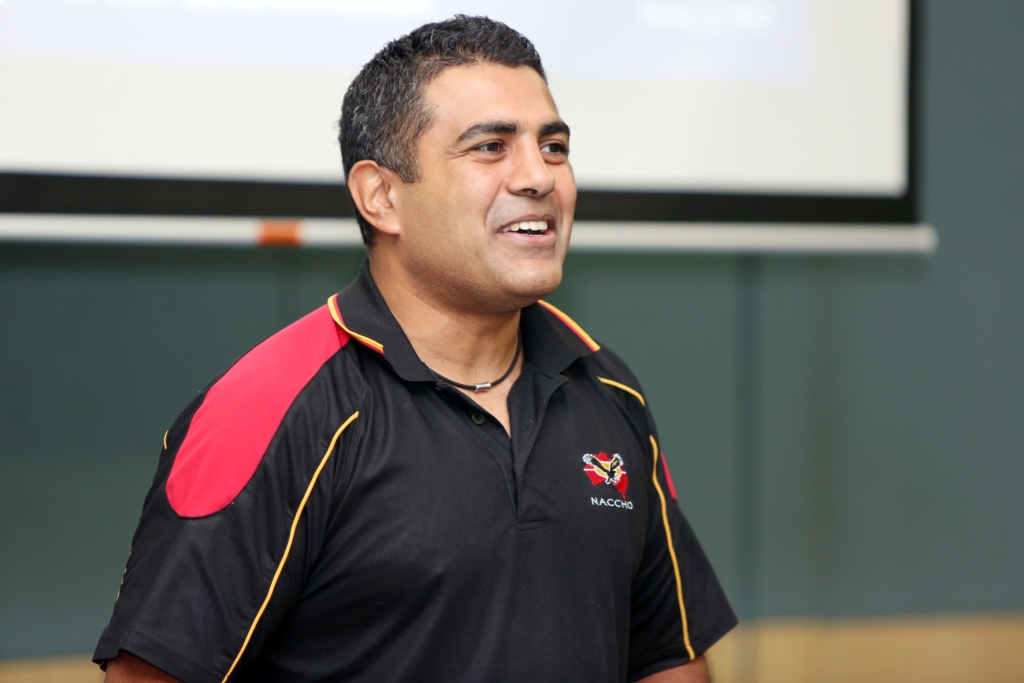
NACCHO Chair, Justin Mohamed (pictured above left with Megan Davis and Deputy Matthew Cooke)  said the Health Summit was a great opportunity to showcase the incredible contribution Aboriginal Community Controlled Health Organisations are making in their communities.

“We have concrete evidence that Aboriginal health in Aboriginal hands is what is really making the difference in achieving health outcomes for our people,” Mr Mohamed said.

“We are seeing big improvements in child birth weights, maternal health and management of chronic diseases like diabetes, highlighted recently in a report by the Australian Institute of Health and Welfare (AIHW) Healthy for Life Report Card.

“The Aboriginal community controlled health model has been working well for 40 years, and it is important that we get together to share best practice and discuss issues and areas where we can make improvements.

“Over the three days, summit participants will hear from Aboriginal leaders who are making a real difference in their communities.

“Our culturally appropriate health providers with majority Aboriginal governance are not only providing comprehensive primary health care to just under half of Australia’s total Aboriginal and Torres Strait Islander population, but are one of the largest employers of Aboriginal people as well.

“There is still a long way to go to Close the Gap and to build a healthy future for all Aboriginal and Torres Strait Islander people. Aboriginal Community Controlled Health Organisations are part of this picture and achieving targets to deliver better health outcomes.

NACCHO Primary Health Care Summit

20th-22nd August 2013

Adelaide Convention Centre

For more information and to register visit http://www.naccho.org.au


 Media contact: Colin Cowell 0401 331 251, Anaya Latter 0432 121 636

NACCHO good story: Healthy result for next generation in Broome WA

Photo by Glenn Cordingly - The Western Australian

Image: Glenn Cordingley

Glenn Cordingley article The West Australian

The daughter of a prominent WA Aboriginal family is the pride of her generation, becoming the first Yawuru Karajarri doctor in Broome.

Kim Isaacs finished 12 years of hard toil on Friday when she passed the Royal Australian College of General Practitioners Fellowship exams.

The 34-year-old will work at the Broome Regional Aboriginal Medical Service, where she completed her GP training. Dr Isaacs said her family had a strong history in medicine. “I am the first western medicine doctor but my grandfather was a traditional healer,” she said.

Dr Isaacs started her medical degree at the University of WA at a time when there were few indigenous doctors nationally.

“Whether to do medical school was a hard decision to make as I had just finished my bachelor of commerce degree, I was broke and I had a job lined up,” she said.

“The poor health statistics of our mob and the small workforce of indigenous health professionals was enough to convince me I wanted to help make a difference, so I signed up.”

Dr Isaacs said she was passionate about child health.

“Our mob trust us, we work at a grassroots level and know what the health issues are facing our community,” she said.

Dr Isaacs’ mother Theresa has worked for the Derbarl Yerrigan Health Service for 35 years.

NACCHO media news: NACCHO CEO Lisa Briggs to host IndigenousX Excellence this week

Indigenous X low res

This week NACCHO CEO Lisa Briggs will be hosting Australia’s leading Indigenous Excellence Twitter account @IndigenousX

Currently NACCHO has over over 3,000 followers

You follow Justin Mohamed Chair  @NACCHOAustralia 

and Lisa Briggs  @NACCHO_CEO

Lisa was interviewed for the Guardian UK this week about why she is involved in this project of Indigenous Excellence

READ ARTICLE ON LINE

What do you plan to talk about on @IndigenousX this week?

 NACCHO will be launching our ten-point plan for better Aboriginal health this week, so I’ll be tweeting about the benefits of Aboriginal health in Aboriginal hands, and some key insights from our sector.  

 What issue affecting Indigenous people do you think is most pressing?

 The appalling life expectancy rates for Aboriginal people and ongoing poor health in our communities is still a huge issue. A concerted effort by all levels of government has been making inroads in closing the gap, but unfortunately levels of commitment by some state governments seem to be wavering. 

 Who are your role models, and why?

 Aunty Alma Thorpe Victorian Elder – the longest servicing CEO of the Victorian Aboriginal health service in Melbourne – is one. Her passion and plight for the rights of her people put me on the path and journey that I am on today.  Her daughter Glenda Thorpe was an Aboriginal health worker who treated me and – I had never been treated in a clinic before by an Aboriginal person. I was 12 at the time and felt proud. From that day on, I want to be like her and do what she does: helping her people. 

 Culturally, my mother and father provided me with the cultural teaching and learnings along my life journey that provided me with an identity, connection to my homelands and a strength and sense of belonging that makes a good foundation. This ensured me being socially and emotionally well, and gave me a sense that anything was possible.

 Michael Woolridge, federal health minister, showed me that there was opportunity when working in true partnership with people – and that innovation and change do occur.  Professor Hugh Taylor, an ophthalmologist, has shown me how other Australians’ commitment and passion when working alongside of Aboriginal people can result in the greatest of gains.

 Aiden Ridgeway becoming a Democrats leader was a proud and inspiring moment in history for Aboriginal people and a testament that Aboriginal people can be at the head of political parties – since then we have seen more Aboriginal people in Parliament, so I look at Aiden as a trail blazer; he worked against all odds through commitment, and made me think that passion and drive you can get there.

 In terms of Aboriginal health you can not forget to mention Aunty Naomi Mayers, the CEO of Redfern Aboriginal Medical Service, who established the first AMS in the country. NACCHO now has 150 members, and it all started because this remarkable woman decided she had seen enough of her people dying younger and getting sicker because of the lack of access to primary health care.

 There are countless others who have joined our efforts towards achieving health equality. They are etched in my heart and I will carry them on my sleeve always.

 What are your hopes for the future?

 Improving Aboriginal health is not a quick fix – it requires a long-term commitment above party politics. We need to prioritise building on the work the 150 Aboriginal community controlled health organisations are already making in their communities. Aboriginal comprehensive primary health care provided by Aboriginal communities is the key to making a difference to Aboriginal health outcomes.

NACCHO member health news alert:Short film highlights healing for depression in urban Aboriginal communities

New Microsoft Publisher Document (6)

Stories for keeping strong :

PREVIEW of the NEW URBAN version

Previous Arrernte Central Australia VIEW here at beyondblue site

A short film will be launched today, Tuesday 4 June, to highlight the importance of family, community and services in helping people with depression to regain social and emotional wellbeing.

beyondblue collaborated with The Aboriginal Medical Service of Western Sydney and producers, isee-ilearn, to develop the script and produce the film Story for Keeping Strong

beyondblue CEO Kate Carnell AO said Aboriginal and Torres Strait Islander people who live with psychological stress, especially depression and anxiety, may not recognise it or talk to family, friends or a health professional about their symptoms.

“We are pleased to have funded this very important project and we hope the film raises awareness of how to talk to someone who might be depressed and assist them to get appropriate help,” Ms Carnell said.

 Nell Angus, Team Leader, Indigenous and Priority Communities at beyondblue said Story for Keeping Strong features a conversation about depression between members of an extended family – a young Aboriginal man talks with two Elders, an Aunt and a young Aboriginal woman.

“The project took 12 months to complete with the first step being to establish a Story Development Group, and the group members defined what depression looks like for them, their family and their community.

“Based on this consultation, the group discussed the things that disconnect people, families and communities and the things that bring them together to start healing. These ideas of a family discussion became the foundation of the story. It is a family conversation about reconnecting to life and community that could be happening in your neighbour’s home,” she said.

The voices of five members of the Western Sydney Aboriginal community were recorded to tell the stories and their photographs taken as a basis for the animation.

beyondblue thanks the five ‘stars’ – Uncle Dennis Dunn, Uncle Kerry McKenzie, Aunty Daphne Bell, Ronald Robinson and Natalie Andrews – for taking part.

 Uncle Dennis Dunn, a Wiradjuri Elder and a ‘star’ in the short film, said he felt positive in helping to develop the story because it related to his people within the urban community of the Western Sydney region.

“The (Keeping Strong) film is so culturally-appropriate to many clans within our communities and it is understood by the community.

“As an Aboriginal Elder, I am often asked, ‘How often do I visit an Aboriginal community?’ and I reply ‘every single day’ as the majority of people think that Aboriginal communities only exist in rural or remote areas. Personally, it shows you how invisible our communities are to the people who live and work side by side with us.

“I feel proud when working with people, Aboriginal and non-Aboriginal, who care about our mob and who help to bring change for our people,” Uncle Dennis said.

The Story for Keeping Strong 

is being launched by the Aboriginal Medical Service Western Sydney, 2 Palmerston Road, Mount Druitt.

A two-minute version of the Western Sydney video is available for preview with the full five-minute version to be available after the launch. Contact Aboriginal Medical Service Western Sydney for broadcast-quality version of the short film

NACCHO 2013 budget press release:Lack of detail leaves a question mark over Aboriginal health

18

 The $777 million commitment to Close the Gap initiatives in the 2013 Federal Budget is welcome however the Aboriginal health Community Controlled sector remains concerned about the lack of detail on how and where the money will be spent.

National Aboriginal Community Controlled Health Organisation (NACCHO) Chair, Justin Mohamed, said it was critical that adequate funding was dedicated to support and grow Aboriginal Community Controlled Health services where the biggest gains were being made in improving Aboriginal health.

Download the Aboriginal Health Budget here also see executive summary below

Download Federal Government Press release on Aboriginal spending here

“The lack of clarity in the Budget around how funding will flow to Aboriginal primary Community Controlled Health services is very concerning,” Mr Mohamed said.

“Aboriginal Community Controlled Health services need to be at the forefront of any comprehensive primary health care model.

“It is these services – run by Aboriginal people, for Aboriginal people – that are making the biggest improvements to the health of their communities.

“The Federal Government also needs to put greater effort into getting the states and territories to re-commit to the National Partnership Agreement – due to expire in just over a month.

“It is simply not OK to leave the fate of Aboriginal health hanging while everyone plays politics up to the 11th hour.”

Mr Mohamed said NACCHO was disappointed that the Budget did not spell out how the upcoming National Aboriginal and Torres Strait Islander Health Plan would be funded.

“The Health Plan will not work unless it is properly resourced and after yesterday we are no clearer on how much of the $777 million will be directed to this critical initiative.

“It is also disappointing to again see the focus on Medicare Locals in the Budget. Medicare Locals are yet to prove their effectiveness in the Aboriginal health space where the community controlled model has made positive health gains.

“If we’re serious about closing the appalling gap in life expectancy between Aboriginal and non-Aboriginal Australians, then Aboriginal health needs to be given the attention it deserves and community controlled services better supported.”

Mr Mohamed said NACCHO would be consulting widely with the Aboriginal Community Controlled sector and providing further comment upon further analysis of the budget papers in the coming days.

Media contact: Colin Cowell 0401 331 251,

ABORIGINAL HEALTH BUDGET EXECUTIVE SUMMARY

Through Outcome 8, the Australian Government aims to improve access for Aboriginal and Torres Strait Islander people to effective health care services essential to improving health and life expectancy, and reducing child mortality.

The Australian Government, through the National Indigenous Reform Agreement, is committed to ‘closing the gap’ between Indigenous and non Indigenous Australians in health, education and employment. This requires a concerted and coordinated effort from all Government agencies and two of the targets in the agreement relate directly to the Health and Ageing Portfolio: to close the gap in life expectancy within a generation; and to halve the gap in mortality rates for Indigenous children under five years of age within a decade.

In 2013-14, the Government will work with states and territories through a renewed National Partnership Agreement (NPA) to consolidate and embed the reforms implemented under the current NPA on Closing the Gap in Indigenous Health Outcomes, including continuing implementation of the Indigenous Chronic Disease Package. This commitment will provide a continued framework for working collaboratively to close the gap in life expectancy within a generation.

The Australian Government is also developing a National Aboriginal and Torres Strait Islander Health Plan, which will build on the gains already being achieved through the Australian Government’s Closing the Gap initiatives. The Health Plan is being developed as a collaborative effort and after extensive consultation with Aboriginal and Torres Strait Islander people and their representatives and is being informed by advice from the National Aboriginal and Torres Strait Islander Health Equality Council. It will involve building links with current initiatives and strategies, identifying gaps for further action and expanding existing initiatives where appropriate.

The Australian Government recognises that closing the gap in life expectancy in the Northern Territory continues to present a significant challenge. The Stronger Futures in the Northern Territory – health initiative focusses on this challenge by providing ongoing funding to deliver a comprehensive health package for Aboriginal and Torres Strait Islander people in the Northern Territory.

The Department is working with Aboriginal and Torres Strait Islander people and organisations, as well as in collaboration with state and territory government agencies to implement these programs.

The Office for Aboriginal and Torres Strait Islander Health leads the work for Outcome 8 by funding the delivery of primary health care services and other

Download the Aboriginal Health Budget here also see executive summary below

Download Federal Government Press release on Aboriginal spending here

NACCHO accreditation resource:RACGP Standards set to assist Aboriginal community controlled health services

RACGP 012

Pictured Sarah Paterson (left) and Aislinn Martin (right) presenting the first copy of RACGP Standards to NACCHO CEO Lisa Briggs here in Canberra

The Royal Australian College of General Practitioners (RACGP) and the National Aboriginal Community Controlled Health Organisation (NACCHO) are proud to launch the

New Interpretive guide to the RACGP Standards set to assist Aboriginal community controlled health services Interpretive guide to the RACGP Standards for general practice (4th edition) for Aboriginal community controlled health services (‘Interpretive guide’).

DOWNLOAD PDF

A companion document to the RACGP’s current Standards for General Practices (4th edition) (‘the Standards’), the Interpretive guide aims to assist Aboriginal community controlled health services to meet the requirements for accreditation against the RACGP standards and to apply quality measures to their everyday practice.

The RACGP and NACCHO acknowledge the efforts made by the Aboriginal Community Controlled Health Services (ACCHS), across Australia, to obtain RACGP accreditation, an important step towards achieving the best possible health outcomes for patients.

The Interpretive guide explains the Standards in a meaningful way for Aboriginal community controlled health services by taking into account their context, culture and service delivery models.

Associate Professor Brad Murphy, Chair of the RACGP National Faculty of Aboriginal and Torres Strait Islander Health, acknowledges that Aboriginal community controlled health services are committed to achieving RACGP and other forms of accreditation, and this new resource aims to assist in identifying the relevance of the Standards to their own health services and communities.

“Thanks to the highly effective collaboration that took place between the RACGP and NACCHO, as well as its state and territory affiliates, we are proud to jointly launch a significant piece of work that will contribute to ongoing quality and safety improvements in the health services delivered to Aboriginal and Torres Strait Islander communities,” A/Prof Murphy said.

By applying the Standards to individual practices, GPs, Aboriginal Health Workers and their practice teams ensure the provision of high quality, safe and contemporary primary healthcare is delivered to all Australians.

“Achieving accreditation demonstrates that a practice has been assessed as having reached defined standards of excellence in safety and quality in primary healthcare. This should be a matter of great pride to the practice itself, its patients and the community,” said A/Prof Murphy.

Justin Mohamed the Chair of NACCHO on behalf of all the 150 members throughout Australia thanked the RACGP for the highly effective collaboration that has taken place between the two peak bodies to produce such an important resource

Both the Interpretive guide and Standards are available to all College stakeholders

as either a downloadable PDF

RACGP 014

Trish Jean NACCHO National Quality and Accreditation Officer (left) checking out the new site

and also via an interactive and topic searchable web resource on the RACGP website

About the RACGP

The Royal Australian College of General Practitioners (RACGP) is Australia’s largest professional general practice organisation and represents urban and rural general practitioners. We represent over 21,500 members working in or towards a career in general practice and are proud that over 19,300 Australian-registered general practitioners have chosen to be a member of the College. There are over 125 million general practice consultations taking place annually in Australia. Visit

http://www.racgp.org.au. The RACGP recognises the traditional custodians of land and sea, on whose lands we work and live. We wish to pay our respects to all Traditional Owners and Elders past, present and future.

NACCHO health news:Some advice for researchers and services wanting to improve Aboriginal health

RHEF A Valued Profession Flyer

Some suggestions for how researchers and health services might do a better job of engaging with Aboriginal patients and communities have come from a research project spanning rural, regional and remote NSW.

The suggestions include taking time to develop trust and relationships (including with community members outside of the health sector), recruiting Aboriginal staff, and engaging patients and communities through art and social media.

The NHMRC-funded Gomeroi gaaynggal program recruits Aboriginal women in early pregnancy and monitors their health and that of their infants throughout pregnancy.  It aims to promote the early detection, diagnosis and prevention of diabetes and kidney disease.

Work began on setting up the program in 2006, recognising that many Aboriginal women are deeply mistrustful of mainstream pregnancy-related healthcare services, and this contributes to low uptake of antenatal care.

Thanks to Lynsey Brown from the Primary Health Care Research and Information Service (PHC RIS), for reporting on a recent article about the program in the journal, Rural and Remote Health.

Our thanks to Melissa Sweet once again for your assistance

blogmasthead

Sharing some strategies that work for Aboriginal health

Lynsey Brown writes:

Based on their experiences in Walgett (NSW) and other regional, rural and remote Aboriginal communities, Dr Kym Rae and colleagues describe strategies to improve recruitment and retention of Aboriginal people in research and antenatal programs.

The lessons learnt stem from the NHMRC-funded Gomeroi gaaynggal program, which investigates health issues across pregnancy and the post-natal period.

The Gomeroi gaaynggal team also works in partnership with the Aboriginal community and a range of health service providers to deliver an ArtsHealth program that addresses health literacy and service use.

The authors describe key strategies for recruitment and retention that can be applied across diverse regions.

Promoting both ownership and engagement, they note how community consultation must occur across multiple levels. For example, when establishing a health service, it is important to include conversations with not only health professionals but also organisations and individuals working in different areas across a range of social determinants of health (eg, housing, education, justice system), and particularly engaging with local community Elders.

It is this open and trusting dialogue that enables partnerships between researchers, clinicians and communities.

Community consultation is a step towards building trust, which is necessary between researchers and the community, and between research teams and partner organisations. However, trust takes time.

The authors describe prioritising recruitment of Aboriginal staff to enable open discussions, friendships and a supportive mentored environment, which helps this trust and sense of collaboration to develop.

The use of new technologies (in areas with adequate internet connectivity) is also discussed in detail. Social media such as Facebook can be beneficial in establishing connections, maintaining contact, keeping up-to-date with developments, providing opportunity for private emails, and encouraging communication at less cost than a phone call.

The importance of addressing local needs is emphasised, with the authors identifying successful recruitment and retention strategies in different areas.

For regional areas, provision of food and transport vouchers reduces costs for families travelling to health services. Further, Aboriginal staff spend time liaising closely with community members and health services staff.

In rural areas arranging transport and improving local access to services are key strategies. Facebook is also particularly valuable in promoting connection between the program and participants in this space.

Additionally, the authors highlight the benefits of requesting details of three contact people for each participant, to enable connection with families who often change residences.

In the remote region, the key factor is collaboration between the research team and the local Aboriginal Medical Service – with co-located offices and matching uniforms promoting an ongoing partnership.

Despite centres in different locations determining their own approach, it seems the generated strategies are applicable to other health professionals working to close the gap.

• Lynsey Brown is Research Associate, PHC RIS

• Rae K, Weatherall L, Hollebone K, Apen K, McLean M, Blackwell C, et al. (2013). Developing research in partnership with Aboriginal communities – strategies for improving recruitment and retention. Rural and Remote Health 13: 2255. (Online)

This article, which can be accessed at http://www.rrh.org.au/articles/subviewnew.asp?ArticleID=2255, features in the 11 April 2013 edition of PHC RIS eBulletin, available at http://www.phcris.org.au/publications/ebulletin/index.php.

The eBulletin is designed to inform readers of recently published articles and reports, news items, media releases, upcoming conferences and courses, research grants, scholarships and fellowships, PHC RIS products and services and relevant websites in the primary health care field. Those interested in receiving the weekly eBulletin are invited to subscribe to the free service at http://www.phcris.org.au/mailinglists/index.php.

NACCHO promotion:Affordable Continuing Professional Development (CPD) for Aboriginal Health Workers

Ad

Nurse and Aboriginal Health Worker registration special

– Save 30% on online CPD

Meets accreditation requirements (RACGP, QIC, ISO) for CPD !

Get 2 years worth of Continuing Professional Development for the low cost of $250* per employee

Usually $345

If purchased before the 24th of May nurses and AHWs can get all of their CPD requirements for 2013 (required by most 30 May) and 2014 !

Developed specifically for Aboriginal Medical Services with a new tutorial released every month.

  • Fully  compliant with AHPRA
  • Fully endorsed for CPD hours !
  • Complete your CPD on the go ! We are compatible with iPhones, ipads and Android devices

 Contact AMSED to register now!

Infection Control in Primary Health Care

Amsed 2

This tutorial details what standard precautions are and when and how to implement them. It is suitable for all health care workers and is based on the National Health and Medical Research Council and the Australian Commission on Safety and Quality in Health Care Australian Guidelines for the Prevention and Control of Infection in Healthcare, 2010.

Managing Difficult or Challenging Behaviours in the Primary Health Care Environment

AMsed 3

Inappropriate verbal or physical behaviours can be distressing for clients and staff, so it is important that health care professionals are able to assess such behaviours and can rapidly implement an effective management plan.

Tobacco Use – Preventive Health Care

cigarette

Smoking is a major cause of death and disease in Australia. This tutorial aims to help health care workers to encourage and assist people who want to stop using tobacco. It examines smoking as a public health issue and a major risk factor for preventable disease and death, explains why it is so addictive and harmful, and looks at a range of smoking cessation interventions.

Legal Issues in Health Care

This tutorial discusses tort law and how the law of negligence relates to the health care profession and practice. The laws governing medical negligence have evolved over time and continue to be substantially common law.

Hundreds of people are now using AMSED for all of their staff – it’s compliant, easy, fun to use and users are loving it!

*20 employees or more

Contact AMSED to register now!