NACCHO Aboriginal Health #RUOKDay : Download @RACGP Report underlines crucial role of GPs in #mentalhealthcare

“With a shortage of psychologists and other mental health professionals in rural and remote areas, the role of rural doctors in providing mental healthcare is already absolutely critical, and is becoming more so.

“Feedback from many rural and remote doctors backs up the findings in today’s RACGP report — namely, that there is a significant mental healthcare load in general practice.

“And this area of general practice care is growing.

“Many rural doctors already undertake additional upskilling in advanced mental healthcare.”

President of the Rural Doctors Association of Australia (RDAA), Dr Ewen McPhee

Download a PDF Copy of report

Health-of-the-Nation-2017-report

Read over 150 Aboriginal Mental Health Articles published over the past 5 years by NACCHO

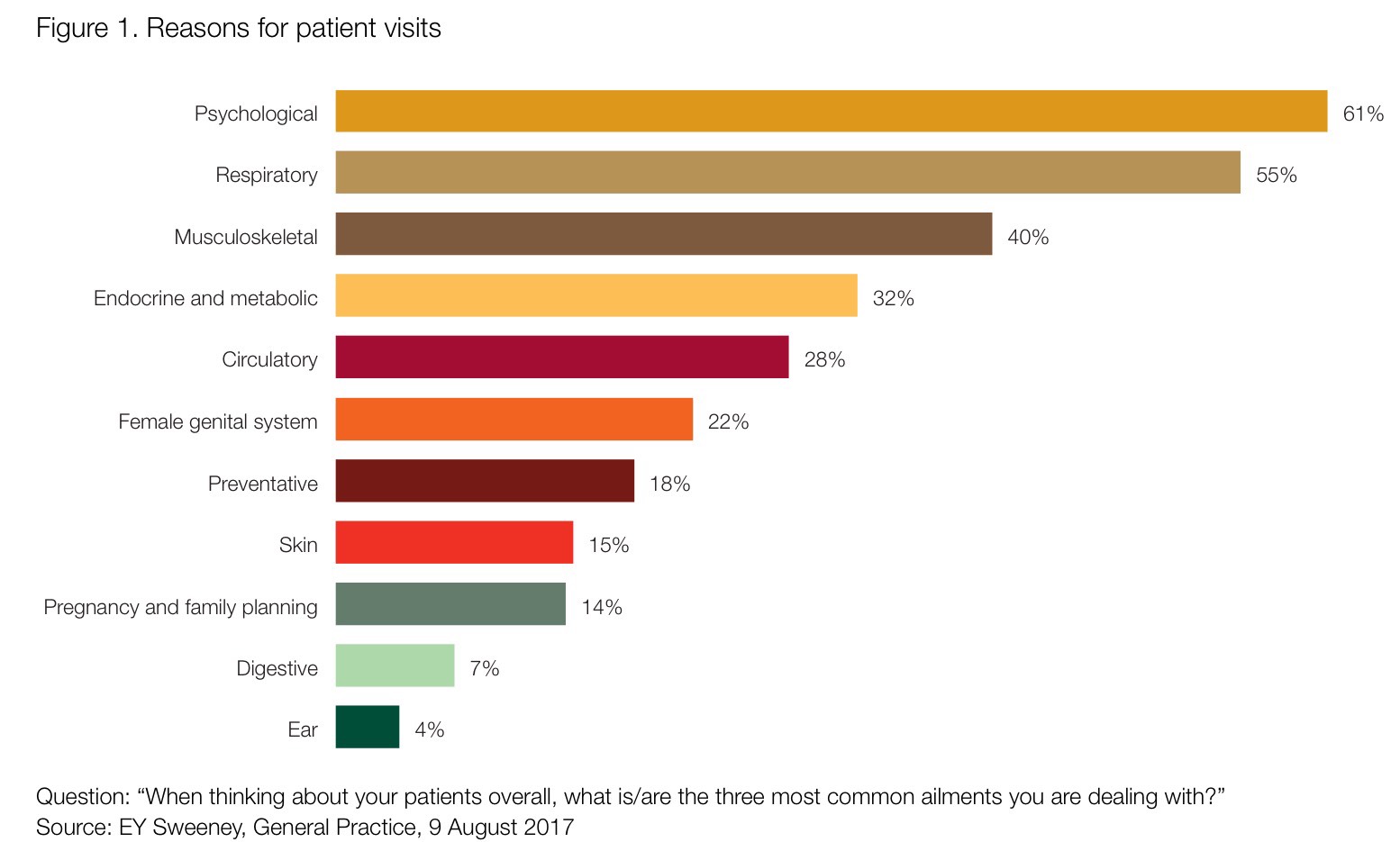
A major report released today on general practice care in Australia shows that the most frequent visits to GPs are for psychological care, demonstrating that the sector plays a critical role in helping patients with their mental health as well as physical health.

The report, General Practice: Health of the Nation, is the first of what will be an annual insight into the state of general practice in Australia, published by the Royal Australian College of General Practitioners (RACGP).

Dr Ewen McPhee continued

“And under the National Rural Generalist Pathway that the Federal Government is progressing, medical graduates training as Rural Generalist doctors will be able to undertake advanced mental healthcare as a key element of their training, alongside other advanced skills.

“Earlier this year, we also welcomed an announcement by the Federal Government that, from November, it will increase access for rural and remote Australians to Medicare-rebated psychological care delivered by video consultations.

“Under the change, psychologists will be able to deliver up to 7 of the currently available 10 face-to-face sessions accessed through a General Practitioner. The rebates for these sessions have previously only been available if provided by a GP.

“This change will help to significantly improve access to tele-psychology services for many rural and remote Australians and the Government deserves full credit for implementing it.”

RDAA has supported concerns raised by the RACGP, however, that despite the fact that over 85% of the Australian population visits their GP each year, the general practice sector receives only 5% of the total annual health budget.

“This should be sending significant warning bells to governments” Dr McPhee said.

“Given the reliance that Australians have on general practice for their primary care — and the ability of investment in general practice to generate significant budget savings by reducing hospital admissions — it is clear that additional investment in general practice needs to be made, sooner rather than later.”

Consumers Health Forum MEDIA RELEASE :

The finding that psychological issues are a leading reason patients see GPs highlights the importance of the GPs’ role as the first base for health concerns in the community.

The Health of the Nation report released by the Royal Australian College of GPs today reveals mental health issues like depression and anxiety are among the most common ailments reported by 61 per cent of GPs.

“That is a disturbingly high figure.  It is also the issue causing GPs most concern for the future,” the CEO of the Consumers Health Forum, Leanne Wells, said.

The next most commonly mentioned as emerging issues by GPs are obesity and diabetes.  The prevalence of these conditions, all of which raise complex challenges for the most skilled GP, underlines the need for a well-coordinated and integrated health system in the community.

“The Consumers Health Forum recognises the GP as the pivotal figure in primary health care who needs more support through such measures as the Government’s Health Care Homes, initiating more integrated care of those with chronic and complex conditions.

“At a recent Consumers Roundtable meeting with Health Minister, Greg Hunt, we set out priorities for a National Health Plan to strengthen Australia’s primary health system, making it more consumer-centred, prevention-oriented and integrated with hospital and social care.

“We also called for more investment in health systems research, shaped by consumer and community priorities, to stimulate services that reflect advances in health sciences and knowledge.

Too often Australians, particularly those with chronic illness, are confounded by our fragmented health system.

We have world class health practitioners and hospitals. But these are disconnected so that patients don’t get the comprehensive top-quality care that should be routine.

“Investing in primary health care led by GPs is the way to a better performing and more consumer-responsive health system,” Ms Wells said.


Aboriginal Community Controlled Health TOP #jobalerts @IUIH_ @AMSANT @CAACongress @MiwatjHealth

This weeks #Jobalerts

Please note  : Before completing a job application please check with the ACCHO or stakeholder that job is still available

1. Miwatj Health NT Senior Social and Emotional Well Being Therapeutic Clinician

2. AMSANT Alice Springs : Indigenous Health Project Officer ( IHPO )

3. Congress Alice Springs Chief Operating Officer at the Central Australia Academic Health Science Centre (CAAHSC)

4. Congress Alice Springs : WOMENS HEALTH NURSE

5 -7 Yerin Aboriginal Health Services Inc. 3 positions 1.Aboriginal Health Worker – Mental Health : Team Leader – Chronic Disease Program Team Leader – Mental Health and AODS (Wellbeing Program)

8-13 : Wurli-Wurlinjang Health NT 6 positions

8.Wurli-Wurlinjang Family Partnership Program (WWFPP) – Various Positions

9.Program Coordinator _ Strong Indigenous Families (FDV)

10.Strong Indigenous Families. Positions include: Counsellors/ Therapists, Case Managers & Community Engagement Support Officers (FDV)

11 .Mental Health Professionals

12.Registered Aboriginal Health Practitioner

13.General Practitioner

14.Mawarnkarra Health Service WA program Manager

15. National Health and Medical Research Council 2017 – 2018 Indigenous Internship program

 16 – 22 JOBS AT IUIH Brisbane

VIEW Hundreds of Jobs on the NACCHO Jobalerts


  Register or more INFO

How to submit a Indigenous Health #jobalert ? 

NACCHO Affiliate , Member , Government Department or stakeholders

If you have a job vacancy in Indigenous Health 

Email to Colin Cowell NACCHO Media

Tuesday by 4.30 pm for publication each Wednesday

1. Miwatj Health NT Senior Social and Emotional Well Being Therapeutic Clinician 

Miwatj Health Aboriginal Corporation is the regional Aboriginal Community Controlled Health Service in East Arnhem Land, providing comprehensive primary health care services for over 6,000 Indigenous residents of North East Arnhem and public health services for close to 10,000 people across the region.

Miwatj Health aims to improve access to integrated, culturally responsive and safe mental health and drug and alcohol services that holistically meet the social and emotional well being and mental health needs of the population in the East Arnhem region.  We  are seeking enthusiastic, dedicated and an appropriately qualified senior therapeutic clinician to fill a role within our organisation.

Our Values

  • Compassion care and respect for our clients and staff and pride in the results of our work.
  • Cultural integrity and safety, while recognising cultural and individual differences.
  • Driven by evidence-based practice.
  • Accountability and transparency.
  • Continual capacity building of our organisation and community.

In this role you will be responsible for working collaboratively with members of the Social and Emotional Well Being (SEWB) team, and the Manager, Mental Health to contribute to the development and delivery of the Miwatj SEWB model.

Key Responsibilities include;

  • Demonstrated experience in working in Aboriginal Community Controlled Health Organisations or environments and fully embrace the concept of Aboriginal Community Control
  • Experience in delivering (culturally adapted) Focused Psychological Strategies to Aboriginal and Torres Strait Islander people
  • Deliver culturally adapted evidence based therapeutic interventions that value and build upon traditional indigenous knowledge
  • Contribute to a coordinated approach for the prevention, assessment, early intervention, referral and shared care arrangements for common mental and behavioral disorders, including alcohol and drug use disorders
  • Develop and articulate a Miwatj SEWB Model that includes the promotion of strong SEWB, screening, self-referral and early intervention for common mental health disorders (including alcohol and drug use disorders) as part of comprehensive primary health care. This includes the development of mental health care plans, clinical pathways, case management, and clear referral pathways and processes
  • Develop clinical governance structures and processes to support the delivery of culturally-adapted evidence-based therapeutic interventions to address common mental health disorders, including alcohol and drug use disorders, as part of comprehensive primary health care
  • Ensure Therapeutic Work complements and works in an integrated way with the existing medical and social/cultural support streams of care
  • Effectively manage a team of two clinicians to deliver, articulate and promote the SEWB Miwatj Model

To apply for this role you must be either a registered Clinical Psychologist, Registered Psychologist, Mental Health experienced Social Worker, or Mental Health experienced Occupational Therapist and be eligible to work in Australia.

For further details please refer to the Job Description.

This is a full time position with benefits and an attractive salary commensurate with experience. The position is Darwin based and will involve regular travel throughout the Miwatj region (locally based and subsidised accommodation may be negotiated).

Applications close 11 October 2017.

Aboriginal and Torres Strait Islanders are encouraged to apply.

2. AMSANT Alice Springs : Indigenous Health Project Officer ( IHPO )

About the Position

AMSANT is seeking a motivated individual with high level knowledge and awareness of the Health and Community Services Sector (Government and non-government) in the NT and on a national scale. The successful candidate will possess effective oral, written and interpersonal skills with the ability to communicate effectively with Indigenous people while also maintaining sound cross cultural skills, strong analytical and problem solving skills and have a passion for contributing to improvements in Aboriginal health in the NT. Qualifications in Health/ Human Services or equivalent experience is essential with sound understanding of chronic disease and clinical background being highly desirable. Qualifications in Public Health, Health Promotion or Health Education is also desirable.

Contract Type & Salary

This is a full time role to 30 June 2018 with salary between $99,995 and $106,084 based on the successful applicant’s experience and qualifications. Generous salary packaging is also available.

Location
Alice Springs

How to apply
Download a copy of the position description and selection criteria from www.amsant.org.au

Your application should address the selection criteria and include a cover letter and two referee’s details. Email applications to hr@amsant.org.au

Application closing date
15th September 2017

For further information

Contact Human Resources on 08 8944 6666

Aboriginal and Torres Strait Islander people are strongly encouraged to apply.


3. Congress Alice Springs Chief Operating Officer at the Central Australia Academic Health Science Centre (CAAHSC)

  • Base salary: $158,554 – $183,085 (p.a)
  • Total effective package: $188, 192 – $220,310 (p.a)
  • Full-Time Maximum Term 3 year contract

The Central Australia Academic Health Science Centre (CAAHSC) is a partnership of 12 organisations from across the Territory including the Central Australian Aboriginal Congress (Congress), to establish a health research centre. The CAAHSC is a construct around innovation in regional health that brings together Aboriginal health services, the Alice Springs hospital and leading research and education institutions under a virtual centre of excellence. The centre has a focus on Aboriginal health, remote health and primary health care in a regional context, with another key focus to translate research into outcomes on the ground. The CAAHSC is an exciting collaborative, and it will be at the forefront of some incredible research and Congress is the leading partner.

The Centre is one of only two consortia nationally to be recognised as a Centre for Innovation in Regional Health (CIRH) by Australia’s peak funding body for medical research, the National Health and Medical Research Council (NHMRC).

The Centre is seeking a Chief Operating Officer who is interested in making a genuine contribution to improving health outcomes for Aboriginal people.

The Chief Operating Officer provides direct strategic and governance support to the Executive Committee of the Central Australia Academic Health Science Centre (CAAHSC) and manages the day to day operations of the CAAHSC.

Alice Springs offers a unique lifestyle in a friendly and relaxed atmosphere in the heart of Australia. It is within easy reach of Uluru (Ayers Rock) and Watarrka (Kings Canyon) and a host of other world heritage sites.

As well as a wonderful lifestyle and rewarding work, Congress offers the following:

  • Competitive salaries
  • Six (6) weeks annual leave
  • 9.5% superannuation
  • Generous salary packaging
  • A strong commitment to Professional Development
  • Family friendly conditions
  • Relocation assistance (where applicable)
  • District allowance

For more information on the position please contact Chief Medical Officer – Public Health, Dr John Boffa (08) 8951 4401 or 0418 812 141 or email john.boffa@caac.org.au.

Application close: MONDAY 2 OCTOBER 2017.

*Total effective package includes: base salary, district allowance, superannuation, leave loading, and estimated tax saving from salary packaging options.

Contact Human Resources on (08) 8959 4774 or vacancy@caac.org.au for more information

To apply for this job go to: http://www.caac.org.au/hr& enter ref code: 3748736.

4. Congress Alice Springs : WOMENS HEALTH NURSE

Full-time, Fixed Term 2 Year Contract based in SANTA TERESA

  • Base Salary: $98,982 – $106,314 (p.a)
  • Total Effective Package: $121,757 – $129,934 (p.a)*
  • Female Identified Position

Central Australian Aboriginal Congress (Congress) has over 40 years’ experience providing comprehensive primary health care for Aboriginal people living in Central Australia. Congress is seeking a Women’s Health Nurse who is interested in making a genuine contribution to improving health outcomes for Aboriginal people.

The Women’s Health Nurse works within a multi discipline team to provide culturally appropriate women’s health services and health promotions to Aboriginal women and children 0 – 8 weeks of age living in Santa Teresa.

This position participates in the after hour on call roster for medical emergencies. All after hour call outs are accompanied.

Central Australia offers a unique lifestyle in a friendly and relaxed atmosphere in the heart of Australia. It is within easy reach of Uluru (Ayers Rock) and Watarrka (Kings Canyon) and a host of other world heritage sites.

As well as a wonderful lifestyle and rewarding work, Congress offers the following:

  • Competitive salaries
  • Six (6) weeks annual leave
  • 9.5% superannuation
  • Generous salary packaging
  • A strong commitment to Professional Development
  • Family friendly conditions
  • Relocation assistance (where applicable)
  • District allowance and Remote Benefits

For more information on the position contact Clinic Manager Jason King on (08) 8956 0911 and Jason.King@caac.org.au

Applications close: SUNDAY 1 OCTOBER 2017

*Total effective package includes: base salary, district allowance, superannuation, leave loading, and estimated tax saving from salary packaging options.

Contact Human Resources on (08) 8959 4774 or mailto:vacancy@caac.org.aufor more information. Only shortlisted applicants will be contacted.

For more information about jobs at Congress visit www.caac.org.au

To apply for this job go to: http://www.caac.org.au/hr & enter ref code: 3736373.

5 -7 Yerin Aboriginal Health Services Inc. 3 positions 1.Aboriginal Health Worker – Mental Health : Team Leader – Chronic Disease Program Team Leader – Mental Health and AODS (Wellbeing Program)


Overview of Positions

Yerin Aboriginal Health Services Inc. is providing services to individuals and families living with Chronic Disease, Mental Health or requiring support for Drug and Alcohol issues.     With the early onset of chronic diseases in our community and the need for early intervention, we encourage you to utilise your experience and community insights to make a difference by applying for one of the following positions.

Aboriginal Positions – Identified (Full Time)

  • Aboriginal Health Worker – Mental Health

Targeted Positions (Full Time)

  • Team Leader – Chronic Disease Program
  • Team Leader – Mental Health and AODS (Wellbeing Program)

Competitive Salary Package is available including salary sacrifice.

To obtain an application pack – please email recruitment@yerin.org.au or contact Alison Trindall on 02 43511040; or visit our website www.yerin.org.au

If you would like to discuss the position requirements, please contact Paul Hussein, Operations Manager at Yerin on 43 511040, or email paul@yerin.org.au

Identified Position is under Section 9A of the NSW Anti-Discrimination Act 1977.

Job Applications close 20 September 2017

Download the Yerin Info

Yerin MULTIPLE ROLES_EMPLOYMENT_PACKAGE_ SEPTEMBER 2017

8-13 : Wurli-Wurlinjang Health NT 6 positions

If you are considering applying for a position with us, we encourage you in the first instance to review the position profile of the vacancy you are interested in. This will assist you in understanding the role you are interested in and will provide details in relation to the position responsibilities and other criteria applicants should consider addressing in their application.

All applications must contain the following as a minimum:

  • completed employment application form
  • current resume or curriculum vitae (CV)
  • a cover letter which provides a clear and concise overview of your ability to meet the requirements of the role.
  • a minimum of two referees (names, positions and telephone contact number) preferably one current and one past supervisor

Note: Applications who are successful must have the ability to satisfactorily complete a Criminal History Check and obtain a Working with Children Card.

Applications may be forwarded using our online Employment Application Form OR by emailing the Human Resources team at hr@nullwurli.org.au

View all details of these Wurli current vacancies HERE

8.Wurli-Wurlinjang Family Partnership Program (WWFPP) – Various Positions

9.Program Coordinator _ Strong Indigenous Families (FDV)

10.Strong Indigenous Families. Positions include: Counsellors/ Therapists, Case Managers & Community Engagement Support Officers (FDV)

11 .Mental Health Professionals

12.Registered Aboriginal Health Practitioner

13.General Practitioner

14.Mawarnkarra Health Service WA program Manager

 Mawarnkarra Health Service is a community controlled Aboriginal health service providing access to and delivering quality medical services to improve the physical, spiritual, cultural, social and emotional wellbeing of the families of the Roebourne area.

We are seeking a Programs Manager to lead a team who provide programs focused on the physical, spiritual, cultural, social and emotional wellbeing of our clients. The successful applicant must have demonstrated relevant experience in program/project management, strong team management skills and the ability to successfully lead a team to achieve required outcomes and objectives.

The remuneration package for this position will be negotiated commensurate with qualifications and experience.

Interested applicants must address specific Selection Criteria in order to be considered for the interview stage.

This position offers an attractive base salary together with a range of other benefits including rental assistance and a work vehicle.

A copy of the Position Description and Selection Criteria for the above advertised position can be requested from Shenae Murphy, MHS Human Resource Officer on 9182 0800 or email hrofficer@mhs.org.au

Applications are to be received no later than 4.00pm, Friday 15th September 2017. Applications can be emailed to hrofficer@mhs.org.au or sent via post to PO BOX 59 Roebourne WA 6718.

15. National Health and Medical Research Council 2017 – 2018 Indigenous Internship program


National Health and Medical Research Council (NHMRC) is pleased to invite eligible applicants to apply to the Indigenous Internship program.
The Indigenous Internship program provides a wide range of opportunities for Aboriginal and Torres Strait Islander students to gain insight into the work of the NHMRC, as well as to enhance their educational experience through practical work experience.
An internship with the NHMRC provides:
·         exposure to government processes and requirements in relation to funding health and medical research
·         experience in developing guidelines, identifying and promoting resolution of ethical issues
·         exposure to mechanisms and challenges of disseminating and increasing uptake of knowledge
·         better understanding of the rationale for, and demands of, public administration and accountability
A limited number of paid placements for internships are available in our Canberra and Melbourne offices.
 
Eligibility
To be eligible you must be:  enrolled in an Undergraduate or Postgraduate degree in a health or medical research related field; able to work independently and as part of a team; and can provide evidence to confirm that you are of Aboriginal and/or Torres Strait Islander descent.
 
Applications for the 2017-18 Indigenous Internship Program close on Friday 29 September 2017.
To find out more please see our Indigenous Internship Information, which details eligibility and selection, as well as the terms and conditions of the program.
If you have any questions, please contact the Indigenous Employment Coordinator TJ Oberleuter on 02 6217 9530.

16 – 22 JOBS AT IUIH Brisbane

IUIH and its members are constantly looking for healthcare workers, GP’s, allied health professionals, medical and health related students to fill short or long term vacancies within their growing operations.Current job opportunities are listed below:

Website HERE

+ Team Leader – Home Support (Hervey Bay) Full Time On going + Manager, Family Wellbeing Services + Business Intelligence Analyst / Developer + Regional Optometrist + Registered Nurse – Full Time Ongoing + Exercise Physiologist, Full Time On going Based at Windsor + Exercise Physiologist – Hervey Bay / Cherbourg – Full time, Fixed Term + Indigenous Outreach Worker (CTG) Bundaberg Full Time Fixed Term

NACCHO Aboriginal Children #SNAICC2017 : Download : UN Report Recommends : Reducing rates of Indigenous child incarceration and removal

 ” The United Nations has criticised Prime Minister Malcolm Turnbull’s government for the soaring rates at which Australia locks up Aboriginal and Torres Strait Islander children.

In her new report, the UN Special Rapporteur on Indigenous Rights, Victoria Tauli-Corpuz, said “the routine detention of young Indigenous children” was “the most distressing aspect of her visit” to Australia.

The report found that Australia locks up Indigenous children, as young as 10 years old, at 24 times the rate of non-Indigenous children.”

Download the UN Special Rapporteur on the Rights of Indigenous Peoples 

UN The Australia Report

 ” The lack of progress to improve education, health and employment standards for Indigenous people had fuelled “escalating” rates of incarceration and child removal.

The Special Rapporteur’s report said a plan of action to address high rates of Indigenous incarceration was a “national priority”.

The current claim by the Government that matters relating to incarceration remain the sole prerogative of states is untenable in the severe “

See ABC Report Part 3 Below  Australia’s progress on Closing the Gap ‘woefully inadequate’, UN says

 ” Aboriginal Community Controlled Health Services have achieved remarkable success in delivering culturally appropriate services for primary health care.

However, the Special Rapporteur was informed by multiple stakeholders during her visit about inequalities in the resources available for rural and remote service delivery and of cuts to community managed primary health care, which play an essential role, for example in the prevention of chronic diseases.”

See Part 2 Below Close the Gap and ACCHO Health Services

Update September 20

CTG Press Release : Australian governments urged to act on scathing UN report

The Close the Gap Campaign urges Australian governments to act on the recommendations of the United Nations Special Rapporteur on the Rights of Indigenous Peoples.

Special Rapporteur, Ms Victoria Tauli-Corpuz, said it is “woefully inadequate” that, after more than two decades of sustained economic growth, governments have failed to improve the health of Aboriginal and Torres Strait Islander peoples.

The co-chairs of the Close the Gap Campaign, Social Justice Commissioner June Oscar and National Congress of Australia’s First Peoples Co-Chair, Mr Rod Little, call on Federal, State and Territory governments to make Indigenous health reform a top priority at the next COAG meeting and in their 2018 Budgets

Download the CTG press Release HERE CTG Special Rep MR Final

Ms Tauli-Corpuz emphasised that PM Turnbull’s Government, not states and territories, is responsible under international law for Aboriginal and Torres Strait Islander people’s “national detention crisis”.

She called for the Federal Government to adopt a National Action Plan to address the crisis.

Tammy Solonec, Indigenous Rights Manager at Amnesty International Australia, said today:

Download Report from Amnesty Amnesty Aboriginal Austrlia

“Locking up Aboriginal and Torres Strait Islander kids in children’s prisons is a national shame. Children are being abused not only in Don Dale in the NT, but in Cleveland in Queensland, in Bimberi in the ACT, in Banksia Hill in WA. This problem is nationwide.”

“The good news is that we already know what will keep Indigenous kids out of children’s prisons and safe in their communities.”

“PM Turnbull must commit to a National Action Plan to fix the youth ‘injustice’ system. That plan must fund Indigenous-led community programs, which are the best at keeping Indigenous kids safe and thriving.”

 Other concerns and recommendations in the Special Rapporteur’s report include

  • The application of criminal responsibility as low as at the age of 10 years across the country is deeply troubling and below international standards. This situation is aggravated by the failure to apply diversion measures and community programmes and the placement of children in high-security facilities.
  • It is wholly inappropriate to detain children in punitive, rather than rehabilitative, conditions. Aboriginal and Torres Strait Islander children are essentially being punished for being poor and, in most cases, prison will only perpetuate the cycle of violence, intergenerational trauma, poverty and crime.
  • Allegations of serious abuses, including violent strip-searches, teargassing, hooding and prolonged isolation committed against Aboriginal children in custody.
  • The focus urgently needs to move away from detention and punishment towards rehabilitation and reintegration. Locking up people costs tax payers vast amounts of money. For instance, the Special Rapporteur was told that detaining a child costs between $A170,000 and $A200,000 per year.
  • The Government must ensure that community-led early intervention programmes invest in families, rather than punish them, in order to prevent children from being in contact with the child protection system.


Part 2 Closing the Gap strategy

  1. The “Closing the Gap” strategy has been in existence for nearly a decade. However, in its 2017 report on health, education and unemployment targets,17 the Government recognizes that only one of the seven targets — to halve the gap in Year 12 attainment rates — is on track. The Government did not expect to meet targets to close or reduce the gap in the remaining six targets, including on life expectancy, infant mortality, education and employment. Aboriginal and Torres Strait Islander peoples continue to die on average 10 years younger than other Australians, with no major improvements being recorded. In the Northern Territory, the life expectancy of Aboriginal people is the lowest in the nation and the gap between the non-indigenous population is 16 years for men and 14 years for women.
  2. It is woefully inadequate that, despite having enjoyed over two decades of economic growth, Australia has not been able to improve the social disadvantage of its indigenous population. The existing measures are clearly insufficient as evidenced by the lack of progress in achieving the “Close the Gap” targets.

Health services

  1. Social and cultural determinants explain almost one third of the health gap between indigenous and non-indigenous people. In 2015, nearly 45 per cent of indigenous peoples reported having a disability or long-term health condition. Understanding the impacts of intergenerational trauma and racism are essential factors in order to address the health situation of indigenous peoples effectively.
  2. The Government has taken steps to improve the health of indigenous peoples through the National Aboriginal and Torres Strait Islander Health Plan 2013-2023, and the Special Rapporteur notes as positive that the plan adopts a human rights-based approach informed by the Declaration.18
  3. In order for the Implementation Plan for the Health Plan to be successful, the Government must invest in partnerships that recognize the leadership of Aboriginal and Torres Strait Islanders. The workforce of indigenous Australian medical professionals has expanded in the past decade and developed valuable expertise. However, parity is still lagging as Aboriginal and Torres Strait Islanders still make up less than 1 per cent of the national health workforce. Support for training more indigenous health professionals is therefore required.
  4. Aboriginal Community Controlled Health Services have achieved remarkable success in delivering culturally appropriate services for primary health care. However, the Special Rapporteur was informed by multiple stakeholders during her visit about inequalities in the resources available for rural and remote service delivery and of cuts to community managed primary health care, which play an essential role, for example in the prevention of chronic diseases.
  5. Aboriginal and Torres Strait Islanders also told the Special Rapporteur about their feelings of powerlessness, loss of culture and lack of control over their lives. Suicide rates among Aboriginal and Torres Strait Islander people are escalating at a shocking rate and are double that of non-Indigenous Australians. The current situation was described to the Special Rapporteur as a suicide epidemic. While visiting the Kimberley region in Western Australia, she learned about youth-developed and -driven projects to prevent suicide among Aboriginal adolescents. She strongly urges that such initiatives be supported and replicated. Adopting a holistic approach to social and emotional well-being that recognizes the need for cultural connection is essential to achieve sustainable improvement in health indicators.
  6. Aboriginal-led health research capacity has been established and should be drawn upon to inform policies. Strengthened financial and political support for Aboriginal- and Torres Strait Islander-led expertise, professional development and research is crucial in order to close the gap in relation to key health inequalities faced by indigenous peoples. In order for such measures to be sustainable, longer-term funding agreements are necessary.

Part 3 Australia’s progress on Closing the Gap ‘woefully inadequate’, UN says

The United Nations has described Australia’s lack of progress on Closing the Gap as “woefully inadequate”, saying the over-incarceration of Indigenous people is a major human rights concern

Key points:

  • The UN supported the call for a referendum to establish a First Nations advisory body in the constitution, the report said
  • It also recommended the Federal Government adopt new targets to reduce the rate of Indigenous incarceration
  • A plan of action to address high rates of incarceration was a “national priority”, it added

UN Special Rapporteur on the Rights of Indigenous Peoples Victoria Tauli-Corpuz visited Australia earlier this year, and today released her report detailing her concerns on the rights of Aboriginal and Torres Strait Islander people.

Ms Tauli-Corpuz said it was unacceptable that despite two decades of economic growth, Australia had not been able to improve the social disadvantage of its Indigenous population.

She said the United Nations supported the call for a referendum to establish a First Nations advisory body in the constitution and urged the Federal Government to establish a treaties and truth-telling commission.

“Such measures would carry momentous significance to resetting the relationship with the First Peoples of Australia,” Ms Tauli-Corpuz said.

The Special Rapporteur’s report also recommended the Federal Government adopt new targets to reduce violence against women and rates of incarceration and child removal.

Ms Tauli-Corpuz said the detention of young Indigenous children was “the most distressing aspect of her visit” to Australia.

“Detention of those children has become so prevalent in certain communities that some parents referred to it as an achievement that none of their children has been taken into custody so far,” she wrote.

“The extraordinarily high rate of incarceration of Aboriginal and Torres Strait Islanders, including women and children, is a major human rights concern.

“There have been allegations of serious abuses, including violent strip-searches, teargassing, hooding and prolonged isolation committed against Aboriginal children in custody.”

She said the lack of progress to improve education, health and employment standards for Indigenous people had fuelled “escalating” rates of incarceration and child removal.

The Special Rapporteur’s report said a plan of action to address high rates of Indigenous incarceration was a “national priority”.

“The current claim by the Government that matters relating to incarceration remain the sole prerogative of states is untenable in the severe,” she said.

Ms Tauli-Corpuz praised the Children’s Koori Court in Victoria, which brings young offenders in front of a panel of elders and aims to reduce imprisonment and recidivism.

“Such culturally sensitive processes could significantly reduce recidivism rates if extended to other jurisdictions,” she said.

NACCHO Aboriginal Health and #WSPD17 World #Suicide Prevention Day “Take a Minute, Change a Life”

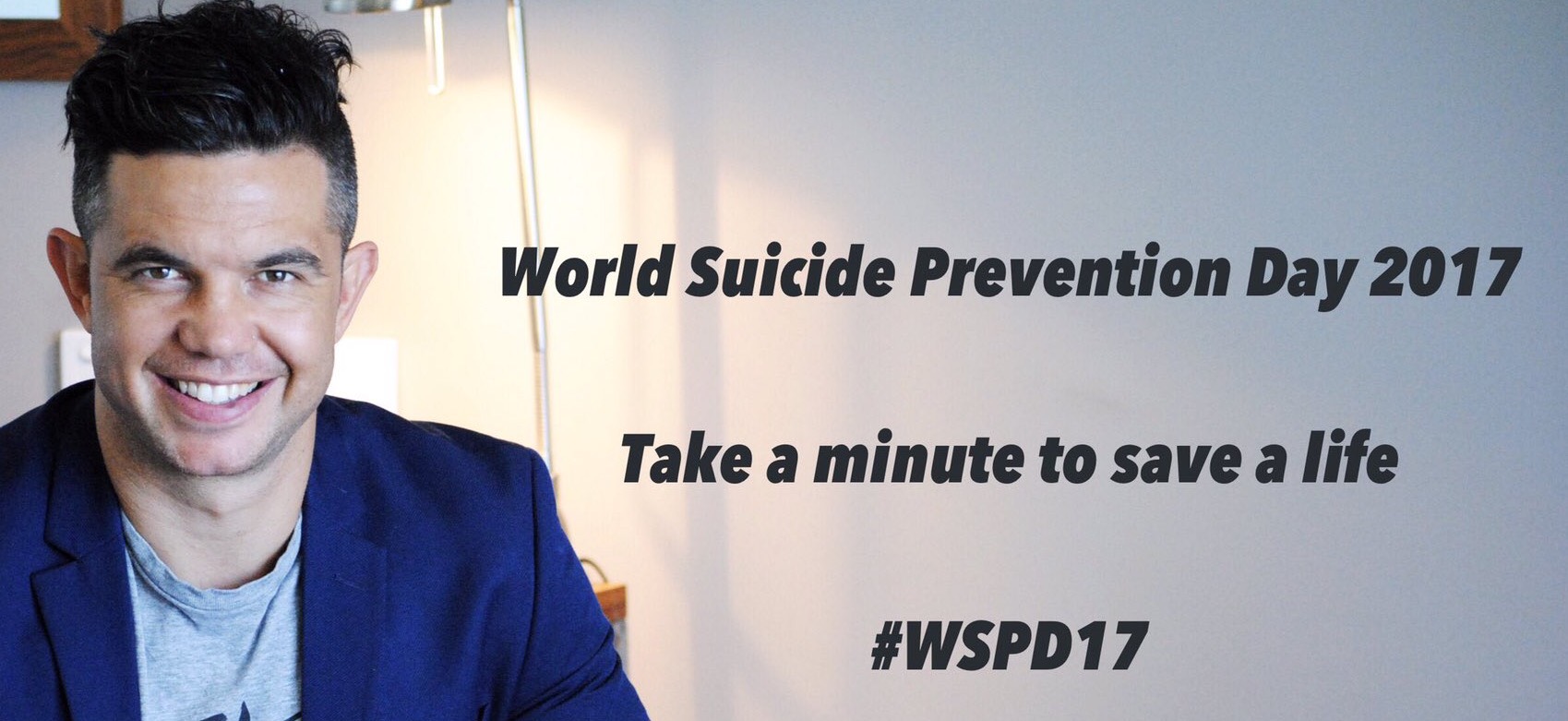
 ” Yesterday ( 10 September ) was World Suicide Prevention Day and this year’s theme, “Take a Minute, Change a Life”, captures the idea that each of us has a role to play in suicide prevention.

The same concept lies behind R U OK? Day, which will be marked next Thursday 14 September

Just a simple, sincere question can show a distressed friend, colleague, family member or even a stranger that they are not alone and that help is available.”

Health Minister Greg Hunt : Marking World Suicide Prevention Day ( see Part 2 Below)  

 ” For me, suicidal ideation is a daily battle. It might be intense for a little bit, then I use my coping mechanisms and strategies I have learnt and they pass. Lately however, the ideations have been crippling – to the point where I can’t get out of bed, I can’t talk to people and at times before one of my education sessions, I felt I couldn’t go on stage. I was behind the curtain sobbing like a baby – petrified to talk to anyone.

The past few months I have been in a real struggle, the biggest and most constant fight I have ever been in.”

Joe Williams ( Pictured above ) will be a guest speaker at NACCHO #OchreDay2017 in Darwin Oct 4-5 : See full text Part 3 Below from the Enemy Within  .

 “The worst response to suicide within Aboriginal and Torres Strait Islander communities is to ignore social disadvantage and instead attribute the loss of life to individual failure or weakness.

“Addressing the social disadvantage plaguing our communities is critical to solving many of the challenges facing our peoples, including suicide.

Our nation must face up to the devastation that has been wrought upon our peoples and which overwhelms us today,”

The Aboriginal and Torres Strait Islander Social Justice Commissioner, June Oscar

Read her full speech Suicide Prevention Speech HERE

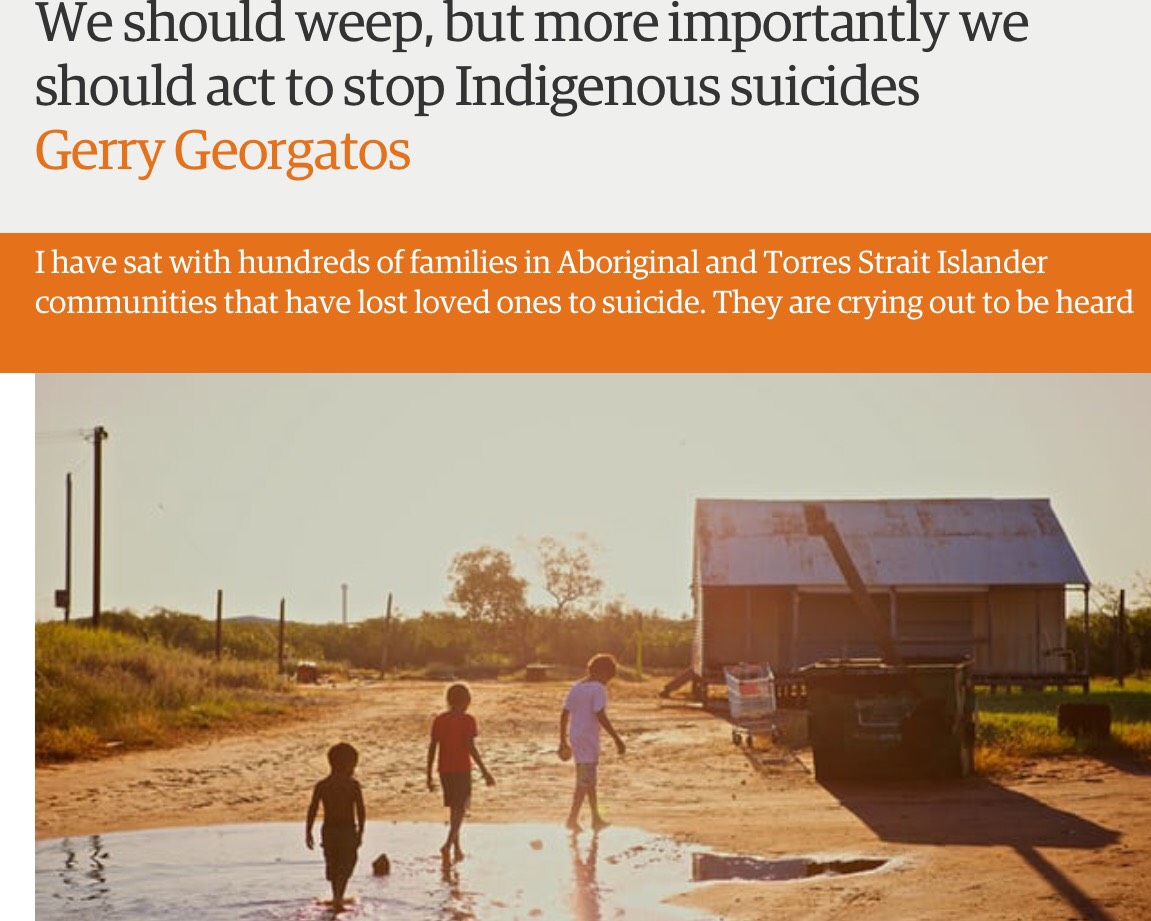
 ” The suicide rate of Aboriginal and Torres Strait Islanders is a catastrophic humanitarian crisis. According to the Australian Bureau of Statistics, one in 18 Aboriginal and Torres Strait Islander deaths is a suicide. However, because of under-reporting issues and circumstances where there is an inability to gather adequate evidence to satisfy the coroner of a suicide, I estimate that rather one in 10 Aboriginal and Torres Strait Islander deaths is a suicide.’

Read full article Here : We should weep, but more importantly we should act to stop Indigenous suicides

NACCHO Aboriginal Health Alert : Launch #ATSISPEP Community-led solutions for Indigenous suicide prevention

Read over 110 Suicide Prevention articles published by NACCHO over 5 years

Solutions that Work: What the Evidence and Our People Tell Us.

Download

atispep-report-final-web-pdf-nov-10

atsispep


The report sets out a new blueprint to improve suicide-prevention services and programmes for Aboriginal and Torres Strait Islander people based on the principle of prioritising community led, culturally-appropriate services.

“This is where the rubber hits the road, working very closely at the community level, involving young people, families and elders,

We now have a strong operational plan based around the communities, to bring promising and proven strategies together in liaison with local people, to make a difference on the ground.”

Indigenous Health Minister Ken Wyatt AM will co-chair a new steering committee working directly with local Aboriginal communities, as the Kimberley Suicide Prevention Trial begins detailed planning and delivery of potentially lifesaving initiatives across the region.

Part 1 Increased youth focus as Minister co-chairs suicide prevention committee

Indigenous Health Minister Ken Wyatt AM will co-chair a new steering committee working directly with local Aboriginal communities, as the Kimberley Suicide Prevention Trial begins detailed planning and delivery of potentially lifesaving initiatives across the region.

“This is where the rubber hits the road, working very closely at the community level, involving young people, families and elders,” the Minister said.

“We now have a strong operational plan based around the communities, to bring promising and proven strategies together in liaison with local people, to make a difference on the ground.”

Minister Wyatt said the recent  suicide prevention roundtable in Broome was important in establishing a strong working partnership between local Aboriginal communities and the Commonwealth, especially through younger people.

He praised a presentation by Kimberley Aboriginal Youth Suicide Prevention Forum members Jacob Corpus (20) from Broome and Montana Ahwon (19) from Kununurra, and said young people must be supported to play key roles in reducing suicide.

“Both Montana and Jacob are incredible and inspiring young leaders who have helped identify key factors that impact on Kimberley youth, which the steering committee will now consider,” he said.

“I will also encourage relevant Commonwealth and State organisations to ensure they include young Aboriginal people on advisory groups, to help empower them to take up future leadership roles.”

Youth forum recommendations included:

– Support for emerging young leaders, positive role models and mentoring

– The teaching in school of local culture and country traditions, the dangers of drugs and alcohol, and the importance of resilience

– Strong youth engagement and networking through sports, arts and local cultural activities

The roundtable also heard of the need for community-run “safe houses” for young people and the potential positive effects of having pairs of youth coordinators employed by Aboriginal community groups in towns across the Kimberley.

The steering committee will be co-chaired by Kimberley Aboriginal Medical Service Deputy CEO Rob McPhee and will report to the Kimberley Suicide Prevention Working Group.

Minister Wyatt commended everyone involved in the development of this work and is looking forward to returning to the Kimberley in November.

Part 2 Health Minister Greg Hunt Marking World Suicide Prevention Day

Marking World Suicide Prevention Day


Today is World Suicide Prevention Day and this year’s theme, “Take a Minute, Change a Life”, captures the idea that each of us has a role to play in suicide prevention.

The same concept lies behind R U OK? Day, which will be marked next Thursday.

Just a simple, sincere question can show a distressed friend, colleague, family member or even a stranger that they are not alone and that help is available.

More than 3000 Australians take their own lives each year and sadly, the rate is increasing. This means that many of us have been touched by this tragedy, directly or indirectly.

But not everyone understands that they can help to reduce this number.

Results of a recent survey by Colmar Brunton show that almost one in five Australians believe that talking about suicide will make a depressed person more likely to take their own life.

More than one in three others surveyed were unsure whether talking about suicide was a good or bad thing to do.

In fact, at the personal level, asking someone who is depressed and suicidal, about their thoughts can be the most effective way to allow them to get perspective, find support and reach a solution.

The Turnbull Government is committed to improving our national suicide prevention effort through new regional approaches, innovative programs and research.

We are spending $34 million over three years on 12 national suicide prevention trials which will gather evidence on better suicide prevention in regional areas of Australia, and particularly, in high risk populations.

Specific areas of focus for the trials include Indigenous communities in the Kimberley and Darwin regions and the former Defence Force members in in Townsville.

Regions of Queensland, NSW, Victoria and SA have also been selected to trial strategies that better target people at risk of suicide and ensure a more integrated, regionally-based approach to suicide prevention.

To support the National Suicide Prevention Trials, we’re also providing $3 million to the Black Dog Institute.

This funding is enabling the Black Dog Institute to provide assistance with the development of local strategies and to share best practice.

We are providing $43 million in funding for national suicide prevention leadership and support activity to organisations across Australia, such as R U OK?, Mates in Construction Australia, Suicide Prevention Australia, United Synergies, Mindframe and Orygen.

Suicide Prevention Australia has also been selected to establish and manage our new $12 million suicide prevention research fund that will tell us what works and how to deliver effective support – to individuals, families and communities.

And to help care for those that care for us, we are providing $1 million to specifically support mental health and reduce suicide in the health workforce.

On 4 August 2017, the Commonwealth and State and Territory Health Ministers endorsed the Fifth National Mental Health and Suicide Prevention Plan and Implementation Plan.

The Turnbull Government will continue working together with the States and Territories to develop a national approach to address suicide prevention and to support health agencies to interact with other portfolios to drive action in this vital area.

The loss of a loved one to suicide is an immense tragedy and this is why the Turnbull Government is delivering on its commitment to provide a range programs and services that support local needs so we avoid this unnecessary loss of life now and into the future.


Part 3 My Daily fight I won’t give up

Have you ever heard the song  by Kate Miller-Heidke called ‘Last Day on Earth’? I’ll get to why it’s important shortly.

I have been in a real internal fight with myself recently. It has been for a few different reasons, triggers that set them off, but for the most part I believe it’s because I have been taking lower doses of my medication. I am doing this under the care of my psychiatrist so that I can go onto another medication.

For me, suicidal ideation is a daily battle. It might be intense for a little bit, then I use my coping mechanisms and strategies I have learnt and they pass. Lately however, the ideations have been crippling – to the point where I can’t get out of bed, I can’t talk to people and at times before one of my education sessions, I felt I couldn’t go on stage. I was behind the curtain sobbing like a baby – petrified to talk to anyone.

The past few months I have been in a real struggle, the biggest and most constant fight I have ever been in. That song I mentioned has been playing through my head, literally every morning as soon as I wake up. The chatter and noise starts in my mind and I have genuinely believed this will be my last day on earth. I have to fight the mental pain that wants to take me away.

With the effects of CTE and concussions over the years, there is every chance this illness I go through, these tough times, may get worse. But I am not ready to go out yet. I’m not ready for my life to be over. So I promise I will fight tooth and nail to make sure I am here; especially for my kids and my loved ones. I will stay in this fight!!

Each day that I have this internal battle, it’s tough. I want it to go away and sometimes I get to the point where I’ve had enough. But it’s this battle that makes me who I am. That makes me resilient and a fighter.

I have to thank my friends who have been quite persistent in checking in and making sure I am ok lately, as I know I isolate and try do it alone.

During the tough times I know it’s beneficial to talk. I know it’s beneficial to get the mess out of my body and my mind – even writing it down helps; but it’s just so hard.

I can’t do it alone. I need my doctor, my friends and my loved ones to stay close – even though I push everyone away, I need them to stay close!! If it were up to me, I would push everyone away – but I know that’s not the right thing to do for me to stay well, I know that verbalising the pain helps.

Minute by minute, moment by moment, one day at a time – I promise to stay in this fight.

It may battle me; but it won’t beat me

 https://youtu.be/KhQ5seprs6s

Last Day On Earth – Kate Miller


Aboriginal Health Lifestyle Campaigns : Minister @KenWyattMP investing in #DeadlyRoos partnership, a Community Controlled initiative. #DeadlyChoices

“Deadly Choices is what I like to call a ‘jewel in the crown’ of Indigenous health, achieving some stunning results since it kicked off in South East Queensland four years ago.

The Deadly Kangaroos is an expansion of this program, using the star power of the ambassadors and the excitement of this year’s World Cup to reach more even communities.

Our national rugby league stars need to be in peak physical condition to play at the top of their game and we appreciate the players’ support to start discussions with Aboriginal and Torres Strait Islander people about ways to improve their health “

Minister for Indigenous Health, Ken Wyatt AM, said legendary Kangaroos coach Mal Meninga and other Indigenous and non-Indigenous players would become ambassadors for the Institute for Urban Indigenous Health’s Deadly Choices program, to extend its reach across Australia.

The launch in Canberra was attended by the NACCHO Chair Matthew Cooke (pictured on right )

Members of the elite Australian Kangaroos Rugby League 2017 World Cup squad will headline the expansion of a successful grassroots campaign to improve Aboriginal and Torres Strait Islander health.

Deadly Choices is a community-based health lifestyle campaign launched in 2013.

There is particular focus on young people and the importance of exercise, education, school attendance, quitting smoking and regular preventive health checks.

Through media campaigns, sports carnivals and community events it has prompted:

    • Almost 19,000 annual health checkups in South East Queensland
    • Active patient numbers to triple to over 330,000
    • 1,155 smoke-free household pledges
    • More than 3,300 smoker interventions

“Experience shows that sport and sporting legends can help communities kick major goals in health awareness and foster real change,” the Minister said.

“I encourage everyone to support Australia in the World Cup in October, just as the Kangaroos are supporting better health outcomes for Aboriginal and Torres Strait Islander people, and all Australians.”

The ambassadors will make appearances at game day events as the Australian team travels through the ACT, New South Wales, the Northern Territory and regional Queensland for the World Cup.

“Key ambassadors for the Deadly Kangaroos are Johnathan Thurston and Greg Inglis,” the Minister said. “Also, the best three players from the national men’s and women’s teams at the Arthur Beetson Deadly Choices Murri Rugby League carnival will also be chosen as community ambassadors to promote positive health messages.

“Merchandise, including a special Deadly Kangaroos World Cup jersey, has been produced as an incentive for people to have a health check.

“The messages will also be promoted through television, radio, social media and at coaching clinics and Aboriginal community controlled health services.”

The Australian Government is contributing $235,000 to help support the Deadly Kangaroos campaign

The Rugby League World Cup runs from 26 October – 2 December 2017.

NACCHO Aboriginal Women’s Health Resources #FASDawarenessDay Consultation National #FASD Strategy 2018 – 2028 #PregnantPause .

Continue reading

Aboriginal Health this weeks TOP #jobalerts @AMSANT@AHCSA @NATSIHWA @CATSINaM @NHMRC

This weeks #Jobalerts

Please note  : Before completing a job application please check with the ACCHO or stakeholder that job is still available

1. AMSANT Alice Springs : Indigenous Health Project Officer ( IHPO )

2. Congress Alice Springs : WOMENS HEALTH NURSE

3.Mawarnkarra Health Service WA program Manager

4. National Health and Medical Research Council 2017 – 2018 Indigenous Internship program

5 -12   Tharawal Aboriginal Corporation NSW 7 positions Social & Emotional Wellbeing (SEWB

13.AHCSA : Senior Health Policy & Strategy Officer
14. Greater Western Aboriginal Health Service (GWAHS) Aboriginal Health Worker/Practitioner 

15 .QAIHC : Regional SEWB Workforce Support Coordinator

16-17 : Galambila and Werin ACCHOs :Coffs Harbour or Port Macquarie Project Coordinator Suicide Prevention / Aboriginal Health Support Worker – Mental Health Project 

VIEW Hundreds of Jobs on the NACCHO Jobalerts


  Register or more INFO

How to submit a Indigenous Health #jobalert ? 

NACCHO Affiliate , Member , Government Department or stakeholders

If you have a job vacancy in Indigenous Health 

Email to Colin Cowell NACCHO Media

Tuesday by 4.30 pm for publication each Wednesday

1. AMSANT Alice Springs : Indigenous Health Project Officer ( IHPO )

About the Position

AMSANT is seeking a motivated individual with high level knowledge and awareness of the Health and Community Services Sector (Government and non-government) in the NT and on a national scale. The successful candidate will possess effective oral, written and interpersonal skills with the ability to communicate effectively with Indigenous people while also maintaining sound cross cultural skills, strong analytical and problem solving skills and have a passion for contributing to improvements in Aboriginal health in the NT. Qualifications in Health/ Human Services or equivalent experience is essential with sound understanding of chronic disease and clinical background being highly desirable. Qualifications in Public Health, Health Promotion or Health Education is also desirable.

Contract Type & Salary

This is a full time role to 30 June 2018 with salary between $99,995 and $106,084 based on the successful applicant’s experience and qualifications. Generous salary packaging is also available.

Location
Alice Springs

How to apply
Download a copy of the position description and selection criteria from www.amsant.org.au

Your application should address the selection criteria and include a cover letter and two referee’s details. Email applications to hr@amsant.org.au

Application closing date
15th September 2017

For further information

Contact Human Resources on 08 8944 6666

Aboriginal and Torres Strait Islander people are strongly encouraged to apply.


2. Congress Alice Springs : WOMENS HEALTH NURSE

Full-time, Fixed Term 2 Year Contract based in SANTA TERESA

  • Base Salary: $98,982 – $106,314 (p.a)
  • Total Effective Package: $121,757 – $129,934 (p.a)*
  • Female Identified Position

Central Australian Aboriginal Congress (Congress) has over 40 years’ experience providing comprehensive primary health care for Aboriginal people living in Central Australia. Congress is seeking a Women’s Health Nurse who is interested in making a genuine contribution to improving health outcomes for Aboriginal people.

The Women’s Health Nurse works within a multi discipline team to provide culturally appropriate women’s health services and health promotions to Aboriginal women and children 0 – 8 weeks of age living in Santa Teresa.

This position participates in the after hour on call roster for medical emergencies. All after hour call outs are accompanied.

Central Australia offers a unique lifestyle in a friendly and relaxed atmosphere in the heart of Australia. It is within easy reach of Uluru (Ayers Rock) and Watarrka (Kings Canyon) and a host of other world heritage sites.

As well as a wonderful lifestyle and rewarding work, Congress offers the following:

  • Competitive salaries
  • Six (6) weeks annual leave
  • 9.5% superannuation
  • Generous salary packaging
  • A strong commitment to Professional Development
  • Family friendly conditions
  • Relocation assistance (where applicable)
  • District allowance and Remote Benefits

For more information on the position contact Clinic Manager Jason King on (08) 8956 0911 and Jason.King@caac.org.au

Applications close: SUNDAY 1 OCTOBER 2017

*Total effective package includes: base salary, district allowance, superannuation, leave loading, and estimated tax saving from salary packaging options.

Contact Human Resources on (08) 8959 4774 or mailto:vacancy@caac.org.aufor more information. Only shortlisted applicants will be contacted.

For more information about jobs at Congress visit www.caac.org.au

To apply for this job go to: http://www.caac.org.au/hr & enter ref code: 3736373.

3.Mawarnkarra Health Service WA program Manager

 Mawarnkarra Health Service is a community controlled Aboriginal health service providing access to and delivering quality medical services to improve the physical, spiritual, cultural, social and emotional wellbeing of the families of the Roebourne area.

We are seeking a Programs Manager to lead a team who provide programs focused on the physical, spiritual, cultural, social and emotional wellbeing of our clients. The successful applicant must have demonstrated relevant experience in program/project management, strong team management skills and the ability to successfully lead a team to achieve required outcomes and objectives.

The remuneration package for this position will be negotiated commensurate with qualifications and experience.

Interested applicants must address specific Selection Criteria in order to be considered for the interview stage.

This position offers an attractive base salary together with a range of other benefits including rental assistance and a work vehicle.

A copy of the Position Description and Selection Criteria for the above advertised position can be requested from Shenae Murphy, MHS Human Resource Officer on 9182 0800 or email hrofficer@mhs.org.au

Applications are to be received no later than 4.00pm, Friday 15th September 2017. Applications can be emailed to hrofficer@mhs.org.au or sent via post to PO BOX 59 Roebourne WA 6718.

4. National Health and Medical Research Council 2017 – 2018 Indigenous Internship program


National Health and Medical Research Council (NHMRC) is pleased to invite eligible applicants to apply to the Indigenous Internship program.
The Indigenous Internship program provides a wide range of opportunities for Aboriginal and Torres Strait Islander students to gain insight into the work of the NHMRC, as well as to enhance their educational experience through practical work experience.
An internship with the NHMRC provides:
·         exposure to government processes and requirements in relation to funding health and medical research
·         experience in developing guidelines, identifying and promoting resolution of ethical issues
·         exposure to mechanisms and challenges of disseminating and increasing uptake of knowledge
·         better understanding of the rationale for, and demands of, public administration and accountability
A limited number of paid placements for internships are available in our Canberra and Melbourne offices.
 
Eligibility
To be eligible you must be:  enrolled in an Undergraduate or Postgraduate degree in a health or medical research related field; able to work independently and as part of a team; and can provide evidence to confirm that you are of Aboriginal and/or Torres Strait Islander descent.
 
Applications for the 2017-18 Indigenous Internship Program close on Friday 29 September 2017.
To find out more please see our Indigenous Internship Information, which details eligibility and selection, as well as the terms and conditions of the program.
If you have any questions, please contact the Indigenous Employment Coordinator TJ Oberleuter on 02 6217 9530.

5 -12   Tharawal Aboriginal Corporation NSW 7 positions Social & Emotional Wellbeing (SEWB

Tharawal Aboriginal Corporation are currently in the process of recruiting 7 new positions in their Social & Emotional Wellbeing (SEWB) team.


This team will complement the existing Drug and Alcohol Unit within SEWB Team at Tharawal to provide a holistic approach to the wellbeing of our community.

Contact Tina Taylor at Tina.Taylor@tacams.com.au for more information.

13.AHCSA : Senior Health Policy & Strategy Officer
 

About AHCSA

The Aboriginal Health Council of S.A. Ltd. (AHCSA) is an Aboriginal Community Controlled Health Organisation governed by an Aboriginal Board. AHCSA is a membership-based peak body with a leadership, watchdog, advocacy and sector support role, and a commitment to Aboriginal self-determination. It is the health voice for Aboriginal people across South Australia, representing the expertise, needs and aspirations of Aboriginal communities at both state and national levels based on a holistic perspective of health.

About the Opportunity

AHCSA now has an exciting leadership opportunity for a Senior Health Policy & Strategy Officer to join their team in Adelaide, SA. This is a full-time, fixed term role to 30 June, 2019.

Reporting to the Deputy Chief Executive Officer, this pivotal role will see you supporting and implementing the objectives and policies of the AHCSA by assisting Aboriginal communities to identify their health service needs, and assisting the management of Aboriginal community controlled health services by advocating for their needs at a state and national level. As a senior role within AHCSA you will also provide support to the CEO and Deputy CEO by delivering proactive leadership to AHCSA generally and to their own work areas, specifically.

This is an exciting, senior strategic position within AHCSA and as such needs someone who can bring extensive experience in primary health care, community health or community development, particularly in the formulation, analysis and evaluation of policy.

It is crucial you have the ability to work collaboratively with Aboriginal communities, their leaders and health professionals, while respecting traditional culture, values and ways of doing business. Prior experience working alongside Aboriginal communities will be viewed favourably.

Aboriginal and Torres Strait Islanders are strongly encouraged to apply.

About the Benefits

This is a rewarding opportunity for a driven individual looking for an opportunity to bring their strategic direction and policy knowledge to make real change within the area of Aboriginal and Torres Strait Islander health.

In return for your hard work and dedication, you will be rewarded with an attractive AHCSA Level 7 remuneration package of $96,114 plus super and salary sacrificing options to increase your take home pay.

AHCSA holds a strong commitment to the development of its people. You’ll be given ongoing opportunities for skills improvement and career advancement, including access to conferences focusing on personal and professional development.

Don’t miss this rewarding opportunity to make a positive impact on the health outcomes of Aboriginal communities in South Australia

Apply Now!

14. Greater Western Aboriginal Health Service (GWAHS) Aboriginal Health Worker/Practitioner

These positions will be located at Greater Western Aboriginal Health Service (GWAHS) which operates a Comprehensive Primary Health Care Service on behalf of Wellington Aboriginal Corporation Health Service (WACHS) across Western Sydney, Nepean, and Blue Mountains.

Program Objectives

The Healthy for Life Program at GWAHS is to provide support to Aboriginal residents of the Blue Mountains Local Government Area with the following objectives:

  • Improve the availability and quality of child and maternal health care
  • Improve the prevention, early detection, and management of chronic disease
  • Improve men’s health
  • Improve long term health outcomes for Aboriginal and Torres Strait Islander Australians
  • Position Requirements
  • Provide the delivery of quality care and support in the areas of Maternal and Child Health, Women’s/Men’s Health, and Chronic Disease.
  • Coordinate appointments and support for Healthy for Life programs including Maternal and Child Health and Chronic Disease
  • Provide Health Checks and Client Support as required as part of Healthy for Life Program Goals and Objectives
  • Coordinate client transport service for Healthy for Life Program Guidelines
  • Actively promote Healthy for Life Programs

Aboriginality is a genuine occupational qualification for the above position and is authorised under Section 14D of the Anti-Discrimination Act 1977. Aboriginal and/or Torres Strait Islander heritage is considered essential and therefore Confirmation of Aboriginality may be requested.

Interested persons will need to contact Anthony Carter, WACHS Executive Manager GWAHS at Greater Western Aboriginal Health Service (02) 9832 1356 or email mailto:anthonyc@gwahs.net.aufor an information package which details the “Essential & Desirable Criteria” to be addressed in application or at www.wachs.net.au

Applications close at 5pm on Wednesday 13th September 2017.

No late faxed applications will be accepted.

Anthony Carter, WACHS Executive Manager GWAHS at Greater Western Aboriginal Health Service (02) 9832 1356 or email anthonyc@gwahs.net.au

16-17  : Galambila and Werin ACCHOs :Coffs Harbour or Port Macquarie Project Coordinator Suicide Prevention / Aboriginal Health Support Worker – Mental Health Project 


Who we are:

Galambila is an Aboriginal Community Controlled Health Service located in Coffs Harbour, NSW.   Werin is an Aboriginal Community Controlled Health Service located in Port Macquarie, NSW.

Galambila Aboriginal Health Service and Werin Aboriginal Corporation are collaborating on suicide prevention programs in the region.  The new project will identify improved access pathways for the Aboriginal community, to culturally safe mental health services in the Mid North Coast. This project will identify sustainable skills, structures, systems and develop resources to support, improved mental health service access for Aboriginal people.  The project will work with a panel of experts to define the scope of the project including identifying existing suicide prevention strategies, and identifying existing support services.  The project will include detailed and in-depth analysis of strategies and services to enhance further collaboration and coordination of care to minimise gaps in mental health and / or suicide prevention support and service delivery for Aboriginal people.

The role will be required to travel regularly between Port Macquarie and Coffs Harbour.  The home location will be negotiated with the preferred candidate.

5. Project Coordinator Suicide Prevention 

The Project Coordinator will:

  • Coordinate the delivery of the project to enhance the capacity of Aboriginal people to engage in mental   health and/or suicide prevention services.
  • Collaborate with stakeholders and communities to enhance the capacity of service providers and the health system to improve access for Aboriginal people and deliver culturally competent mental health and/or suicide prevention services to Aboriginal people
  • Collaborate with stakeholders to pilot new models of, or approaches to, mental health services/ suicide prevention services for Aboriginal people to demonstrate the effectiveness and/or efficiency of these models/approaches to achieve service integration and improved access to stepped care options across the service spectrum.

Your role responsibilities:

  • Undertake comprehensive stakeholder engagement in the community ;
  • Manage all aspects of a project;
  • Work in partnership with stakeholders and service providers to build their cultural competency to effectively deliver culturally appropriate Mental Health and / or suicide prevention services and programs to Aboriginal clients and community members;
  • Provide secretariat support to the panel of experts;
  • Undertake evaluation and analysis of projects and services.
  • Provide supervision, leadership, and management for one direct report; and
  • Provide advice and assistance to Galambila AHS and Werin Aboriginal Corporation team members.

To be successful in the role you will:

  • have demonstrated ability to manage projects, plan workloads, identify resource requirements and deliver outcomes against defined objectives;
  • have extensive community and stakeholder engagement skills;
  • have well developed communication skills including the ability to be sensitive, and respectful of Aboriginal Community members affected by suicide;
  • have demonstrated ability to undertake analysis and evaluation of programs and services.

More details on the role responsibilities and the Selection Criteria can be obtained from the application pack.

Application packs can be obtained by emailing your request to Jane at mailto:HR@Galambila.org.au or Jen at Jen.Cook@Galambila.org.au.  Alternatively you may obtain directly from the Galambila website.

Applications will close 5pm Tuesday, 12 September 2017


 Aboriginal Health Support Worker – Mental Health Project 

As the Aboriginal Health Support Worker – Mental Health Project you will be responsible for supporting the Project Coordinator implement and deliver the Mental Health Access Improvement Project by:

  • Supporting the delivery of consultation and stakeholder engagement to enhance the health of Aboriginal people primarily focusing on the mental health access improvement project;
  • Reviewing the social and emotional wellbeing needs of Aboriginal clients and identifying existing resources, services, service delivery structures, and the accessibility of services against these needs; and
  • Supporting the service delivery improvements that focuses on social and emotional wellbeing of Aboriginal clients and community members.

Your role responsibilities:

  • Support the comprehensive stakeholder engagement in the community;
  • Provide project support to the Project Coordinator ;
  • Work closely with the project coordinator in the delivery of building service providers cultural competency to effectively deliver culturally appropriate Mental health and / or suicide prevention services and programs to Aboriginal clients and community members;
  • Support the evaluation and analysis of programs and services.
  • Provide recommendations and advice on the health care needs of Aboriginal clients and community members;
  • Work closely with the project coordinator to develop, implement and evaluate programs, resources and activities relating to Aboriginal health and wellbeing, illness and distress, including provision of education and information on health care issues to clients, community groups and organisations.

To be successful in the role you will

  • have a proven ability to build rapport with community members, clients and other stakeholders;
  • have extensive knowledge and understanding of Aboriginal traditional culture and history;
  • Ability to function in a multi-disciplinary team; and
  • Proven ability to prepare a variety of types of documentation including briefing notes, reports, and correspondence.

More details on the role responsibilities and the Selection Criteria can be obtained from the application pack.

Application packs can be obtained by emailing your request to Jane at HR@Galambila.org.au or Jen at Jen.Cook@Galambila.org.au.

Alternatively you may obtain directly from the Galambila website.

How to apply?

To submit your application for this role you will need to provide:

  1. Applicant details form;
  2. Your current resume;
  3. A cover letter highlighting your experience in project management and community engagement.

Applications will close 5pm Tuesday, 12 September 2017. 

For more information, opportunity to discuss the role or to submit your application please contact Jane Lennis or Jen Cook By phone: 02) 6652 0850

Email: mailto:HR@Galambila.org.auor mailto:Jen.Cook@Galambila.org.auDrop in: Corner of Harbour Drive and Boambee Street, Coffs Harbour


NACCHO Aboriginal Health : Our ACCHO Members #Deadly good news stories #NACCHOagm2017 #NSW #TAS #QLD #VIC #WA #NT #SA


1. National : 2017 NACCHO Members’ Conference and AGM Registrations

1.2 National : 2017 NACCHO National Aboriginal Male Health Ochre Day registrations Darwin NT

2. Katungul Aboriginal Medical Service going strong after recent awards

3. QLD : B.strong training program to help close the gap

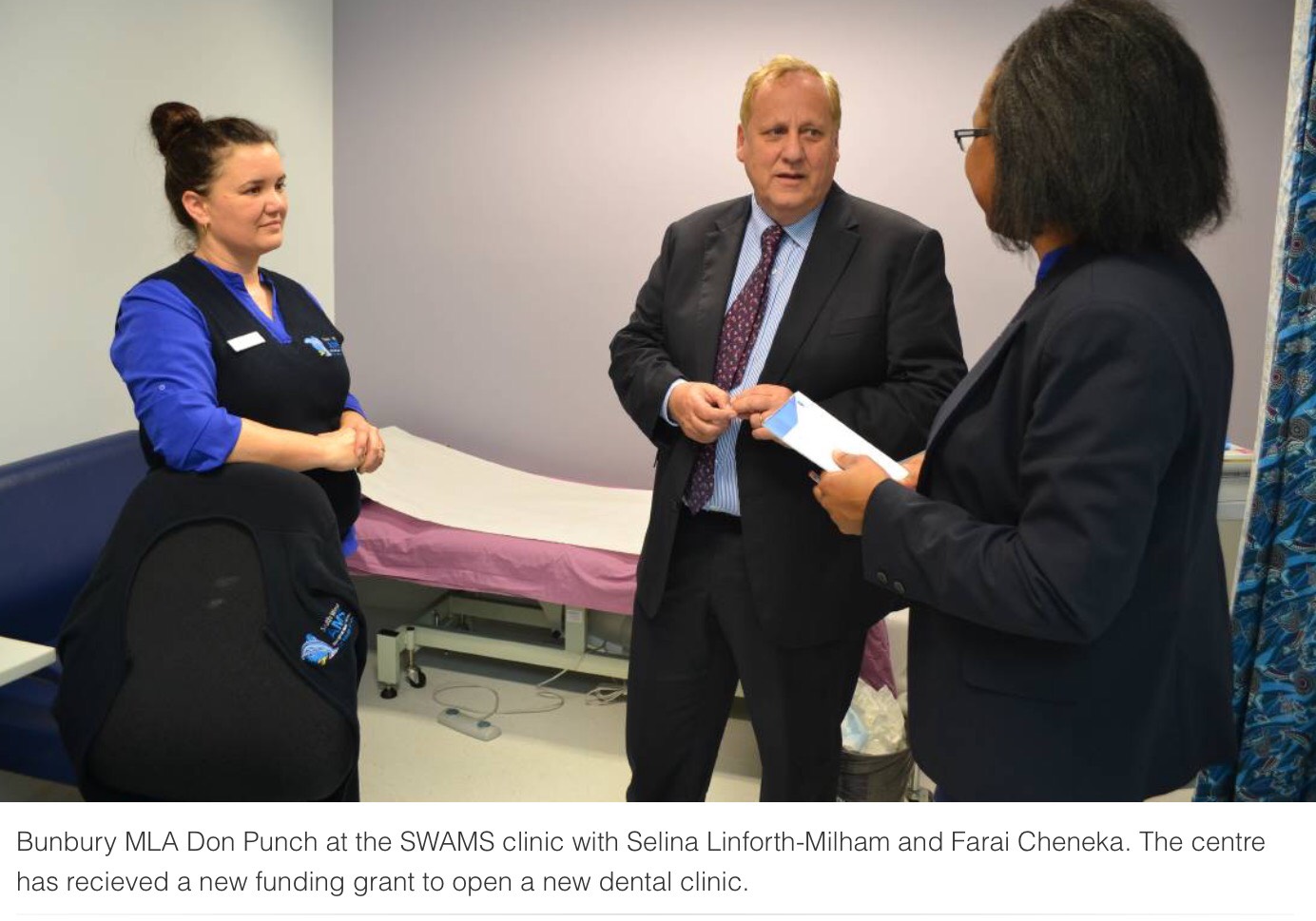
 4.WA : South West Aboriginal Medical Service receives funding to establish a dental clinic

5. SA Tackling Tobacco Team – Nunkuwarrin Yuntiat Flinders Uni

6. NT : Menzies HealthLAB hits the road for Science Week

7.VIC : Mallee District Aboriginal Services aims to reach out

8. Tas : Tasmania Aboriginal community and family events

9. View hundreds of ACCHO Deadly Good News Stories over past 5 years

How to submit a NACCHO Affiliate  or Members Good News Story ? 

 Email to Colin Cowell NACCHO Media    

Mobile 0401 331 251

Wednesday by 4.30 pm for publication each Thursday

1. National : 2017 NACCHO Members’ Conference and AGM Registrations

 This is an opportunity to show case grass roots best practice at the Aboriginal Community Controlled service delivery level.

In doing so honouring the theme of this year’s NACCHO Members’ Conference ‘Our Health Counts: Yesterday, Today and Tomorrow’.

NACCHO Conference Website

1.2 National : 2017 NACCHO National Aboriginal Male Health Ochre Day registrations Darwin NT

Register HERE

2. Katungul Aboriginal Medical Service going strong after recent awards

Katungul Aboriginal Medical Service says it is going from strength to strength, getting more and more healthy outcomes for the Koori community.

Morale was boosted even further by recent Eurobodalla business and NAIDOC awards, and now the service is being recognised as a shining light in the arena of Aboriginal community health and closing the gap.

Katungul Aboriginal Corporation Community and Medical Services was awarded the prestigious Excellence in Business Award at this month’s Eurobodalla Business Awards night, where the service also picked up the People’s Choice Award for the Narooma area.

And then only one month ago, Katungul received the Excellence Award at the Eurobodalla NAIDOC Awards night held in Narooma.

Katungul chief executive officer Rob Skeen said the awards had definitely been a huge boost for staff, particularly receiving the peer-to-peer recognition of both the people’s choice and NAIDOC awards.

“It’s important to all our staff, because even though we work for the organisation, we are still community members and part of the wider family,” Mr Skeen said.

“All our staff have a strong investment in not only seeing Katungul succeed but because of our long community and family history, we also have those ties with the community, so its not only about what’s happening now but also building a strong base for future generations.”

“Those historical family and cultural ties reflects our “Koori health in Koori hands” philosophy.”

Since taking over as CEO last year, Mr Skeen has seen the number of employees grow from 30 to 56 and the health service was getting recognition for its accomplishments from a range of other services and government entities.

Katungul Aboriginal Medical Service now services the entire Far South Coast from Eden to Ulladulla with offices in Bega, Narooma and Batemans Bay, as well as recent moves to service areas west of the ACT.

Only last week, representatives from the Department of Prime Minister and Cabinet had a lengthy meeting at the service’s Narooma office to find out why the service’s reporting system was so good, and Katungul has been recognised one of the four most accountable Aboriginal organisations in Australia.

“They were impressed and had plenty of questions to ask about how we were meeting our key performance indicators,” Mr Skeen said. “It was a good opportunity for us to reinforce that it’s not just about the numbers but also the narrative and story behind our accomplishments that are equally as important.”

So for example, the work being done by the young outreach workers Sean Kinchela and Dean Heycox in the eyes and ear screening program, who in recent months had screened more than 450 primary school and kindergarten students from Bermagui to Batemans bay, checking for conditions such as otitis media.

Their work had been so successful , the pair was next week scheduled to give a presentation to the Aboriginal Health and Medical Research Council as a best practice model on health screening for other Aboriginal medical services in

Other Katungal success stories include the mobile dental van that now was visiting schools and communities all along the Far South Coast thanks to the support of the Poche Centre for Indigenous Health in the Faculty of Dentistry at the University of Sydney.

The dental hygienist supplied by the Poche Centre now had a dental assistant and local Koori trainee working with her for all the school visits in the Bega and Eurobodalla shires.

Mr Skeen said Katungul was also implementing a new holistic approach to medical care that took into account both physical and mental health.

“Because you can’t make healthy decisions about your body without having a healthy mind,” he said.

A new strategic plan for the health service was also being finalised and would begin to be implemented across all its offices and programs in October, he said.

Katungul was working on building partnerships with the three other Aboriginal medical services in Nowra and the Illawarra, and also the Oolong House residential alcohol and drug treatment facility.

“One of the proudest accomplishments for me so far was getting word that the number of emergency room admissions for our Aboriginal people had dropped significantly, which to me means we are making a difference when it comes to preventative medicine and keeping Kouri health in Kouri hands, “Mr Skeen said.

 3. QLD : B.strong training program to help close the gap

Health professionals will receive training on how to provide culturally-appropriate healthy-lifestyle advice to their Aboriginal and Torres Strait Islander clients with the launch of the B.strong training program.

Photo above : (left to right) Professor Noel Hayman, Clinical Director, Inala Indigenous Health Service; Aunty Evelyn Waria, Torres Strait Islander Elder; Aunty Kerry Charlton, Aboriginal Elder; Cameron Dick MP, Minister for Health and Minister for Ambulance Services.  (Photo: Qld Health Hospital and Health Service)

Minister for Health and Ambulance Services Cameron Dick today launched the Palaszczuk Government’s $2.24 million three-year Aboriginal and Torres Strait Islander Brief Intervention Training Program (the B.strong training program) which will be delivered by Menzies School of Health Research over 2017-2019.

“The B.strong training program will build the capacity, skills and confidence of Queensland’s Aboriginal and Torres Strait Islander health workers and other health and community professionals,” Mr Dick said.

The program is of particular importance to the Member for Inala, Premier Annastacia Palaszczuk, after campaigning for further Indigenous health services in the area.

“The program will enable health professionals to deliver appropriate nutrition and physical activity interventions to Aboriginal and Torres Strait Islander clients and to help them stop smoking,” Ms Palaszczuk said.

Photo above : Training delivery photo (Apunipima Cape Capers e-newsletter):

Royden Fagan (bottom left hand photo pointing at paper).

Menzies School of Health Research Brief Intervention Trainer Royden Fagan delivered B.strong Brief Intervention training program to Apunipima health workers earlier this month. Participants who complete the one day session, six two-hour online modules and take part in peer support groups will gain a Statement of Attainment.

“I am excited that the Menzies School of Health Research has been working collaboratively with Aboriginal and Torres Strait Islander stakeholders and Queensland Health to develop the B.strong training program.

“The Townsville Aboriginal and Islander Health Service and Inala Indigenous Health Service worked in partnership with Menzies to test and pilot the face-to-face and online training program.”

Inala Indigenous Health Service Clinical Director Professor Noel Hayman said working in partnership with Menzies for the B.strong training program was crucial for its success.

“We worked together to develop, design and test the B.strong training program and online materials,” Prof Hayman said.

“The shared goal was to produce a best-practice training program in smoking cessation, nutrition and physical activity for health professionals to work more effectively with Aboriginal and Torres Strait Islander people.

“The face-to-face B.strong training program will be delivered flexibly to fit the operational needs of health services to ensure all staff receive training.”

Menzies School of Health Research Director Prof Alan Cass said Aboriginal and Torres Strait Islander Queenslanders have a high prevalence of known risk factors for chronic disease.

“Smoking rates amongst Indigenous Queenslanders are high, including maternal smoking rates, and Indigenous Queenslanders are also more likely to be obese,” Prof Cass said.

“The B.strong training program aims to address the risk factors that significantly contribute to the burden of disease and injury for Indigenous Queenslanders.”

To find out more about the B.strong program see www.bstrong.org.au (external site) ( http://www.bstrong.org.au/ ) or to organise a training workshop contact the B.strong team at: b.strong@menzies.edu.au ( mailto:b.strong@menzies.edu.au ) or Ph: 07 3169 4208.

 4.WA : South West Aboriginal Medical Service receives funding to establish a dental clinic

The South West Aboriginal Medical Service is set to add to its already impressive array of services thanks to the state government’s Local Projects, Local Jobs funding.

Member for Bunbury Don Punch said the funding will help to create a dental clinic at the centre which will help improve the health outcomes for the Noongar community.

“Dental health is such an important part of overall healthcare so I think it is really appropriate SWAMS expand their services in this area,” he said.

“I recently toured the Bunbury SWAMS clinic and was very impressed by the holistic approach they take to health care.

Mr Punch said the $25,000 in funding would go a long way towards turning SWAMS’ long held ambition for a dental clinic into a reality.

“The dental clinic initiative will enhance their services in a very positive way.”

“SWAMS has partnered with WA Dental Health Services and with the Poche Centre for Indigenous Health at the Sydney Medical School to establish the clinic” he said.

5. SA : Tackling Tobacco Team – Nunkuwarrin Yunti at Flinders Uni

 
Our team were at Flinders Uni NAIDOC  – if you’re young and deadly (or even if you’re older and deadly) learn how we can support you to live a smoke-free life! #BeHealthyBeSmokefree #notupinsmokes

6. NT : Menzies HealthLAB hits the road for Science Week

Territorians from Wurrumiyanga on the Tiwi Islands to Gunbalanya in Arnhem Land recently received a snapshot of their overall physical health from one of the NT’s most interesting mobile laboratories.

HealthLAB, an initiative of the Menzies School of Health Research, promoted healthy lifestyle choices to more than 350 Territorians during National Science Week.

As people moved through the various stations, which measured blood pressure, carbon monoxide in their lungs and showed internal organs on ultrasound, they gained a better understanding of their bodies and received information about how to improve their health.

Other stations included a vertical jump that indicated lower body strength, while a grip strength test measured upper body strength.

HealthLAB director Associate Professor Heidi Smith-Vaughan said the mobile lab was a great way for people to have a hands-on experience with the medical technology, and improve their awareness of how current lifestyle choices – such as smoking or healthy eating – can impact their health in the future.

“We received great feedback from schools and the general public during this tour, which saw NT lawmakers and the captain of NT Thunder Shannon Rioli take part,” she said.

HealthLAB manager Nicole Boyd said that since its inception in 2014, more than 5000 Territorians had experienced HealthLAB and learned how they could make healthier choices to help reduce the risk of developing chronic diseases like diabetes or hypertension.

To help people keep track of their scores and measurements, the HealthLAB team launched an app for Apple devices – visit W: https://itunes.apple.com/app/id1226929609 – earlier this year, which also provides messages of encouragement and healthy lifestyle tips.

For more information about Menzies’ HealthLAB, visit W: menzies.edu.au/healthlab

 7.VIC : Mallee District Aboriginal Services aims to reach out

MALLEE District Aboriginal Services took the unusual step of closing its Mildura offices and staff instead offered its services direct to the community from Nowingi Place, on the Mildura riverfront, for the day

The first Mildura organisation-wide Community Engagement Day aims to reach out to people who might otherwise not use MDAS health, community and family ­services.

The focus of the day is on health services, with free health checks, assessments and information, but will have the full range of MDAS services on-site.

“Our health services are really hitting the mark with the community, because we’ve had a 100 per cent increase in the number of health checks at our clinics in the past four years,” MDAS project officer Shanice Kuchel said.

 8. Tas : Tasmania Aboriginal community and family events
 Members of the Aboriginal community and our family’s, we are hosting one of three up-coming gatherings next – Friday, 6:00pm, 1 September 2017 at piyura kitina (Risdon Cove).We are looking for Aboriginal community volunteers to help out for the community dinner. If your able to volunteer  Friday, please contact Kira or Rose at the TAC on – 03 62340700, 1800 132 260.

Aboriginal Health this weeks TOP 30+ #jobalerts @QAIHC_QLD @AHCSA @NATSIHWA @CATSINaM

This weeks #Jobalerts

Please note  : Before completing a job application please check with the ACCHO or stakeholder that job is still available

1.AHCSA : Senior Health Policy & Strategy Officer

2.  General Practitioners : Gunditjmara Aboriginal Cooperative

3. Greater Western Aboriginal Health Service (GWAHS) Aboriginal Health Worker/Practitioner 

4.QAIHC : Regional SEWB Workforce Support Coordinator

5-6 : Galambila and Werin ACCHOs :Coffs Harbour or Port Macquarie Project Coordinator Suicide Prevention / Aboriginal Health Support Worker – Mental Health Project 

7. Nganampa Health Council :Mental Health Nurse (Remote Area)

8. Gidgee Healing Aboriginal Health Worker

9-13 : Ceduna Koonibba Aboriginal Health Service Aboriginal Corporation (CKAHSAC)

14.General Practitioner | Remote Aboriginal Health Service NT

15– 34 Employment at Miwatj Health NT Nurses Health Workers etc

  35. Mulungu ACCHO QLD Tablelands : GENERAL PRACTITIONERS

  Register or more INFO

How to submit a Indigenous Health #jobalert ? 

NACCHO Affiliate , Member , Government Department or stakeholders

If you have a job vacancy in Indigenous Health 

Email to Colin Cowell NACCHO Media

Tuesday by 4.30 pm for publication each Wednesday

1.AHCSA : Senior Health Policy & Strategy Officer
 

About AHCSA

The Aboriginal Health Council of S.A. Ltd. (AHCSA) is an Aboriginal Community Controlled Health Organisation governed by an Aboriginal Board. AHCSA is a membership-based peak body with a leadership, watchdog, advocacy and sector support role, and a commitment to Aboriginal self-determination. It is the health voice for Aboriginal people across South Australia, representing the expertise, needs and aspirations of Aboriginal communities at both state and national levels based on a holistic perspective of health.

About the Opportunity

AHCSA now has an exciting leadership opportunity for a Senior Health Policy & Strategy Officer to join their team in Adelaide, SA. This is a full-time, fixed term role to 30 June, 2019.

Reporting to the Deputy Chief Executive Officer, this pivotal role will see you supporting and implementing the objectives and policies of the AHCSA by assisting Aboriginal communities to identify their health service needs, and assisting the management of Aboriginal community controlled health services by advocating for their needs at a state and national level. As a senior role within AHCSA you will also provide support to the CEO and Deputy CEO by delivering proactive leadership to AHCSA generally and to their own work areas, specifically.

This is an exciting, senior strategic position within AHCSA and as such needs someone who can bring extensive experience in primary health care, community health or community development, particularly in the formulation, analysis and evaluation of policy.

It is crucial you have the ability to work collaboratively with Aboriginal communities, their leaders and health professionals, while respecting traditional culture, values and ways of doing business. Prior experience working alongside Aboriginal communities will be viewed favourably.

Aboriginal and Torres Strait Islanders are strongly encouraged to apply.

About the Benefits

This is a rewarding opportunity for a driven individual looking for an opportunity to bring their strategic direction and policy knowledge to make real change within the area of Aboriginal and Torres Strait Islander health.

In return for your hard work and dedication, you will be rewarded with an attractive AHCSA Level 7 remuneration package of $96,114 plus super and salary sacrificing options to increase your take home pay.

AHCSA holds a strong commitment to the development of its people. You’ll be given ongoing opportunities for skills improvement and career advancement, including access to conferences focusing on personal and professional development.

Don’t miss this rewarding opportunity to make a positive impact on the health outcomes of Aboriginal communities in South Australia

Apply Now!

2.  General Practitioners : Gunditjmara Aboriginal Cooperative
 
An exciting position in the vibrant south-west Victorian city of Warrnambool, great education, arts, culture, shopping and beaches and sport facilities. Be part of an Aboriginal Community Owned Health Care Organisation, helping meet the health care needs of our Aboriginal community.

Our health care center is a bulk-billing environment, currently operating as a standalone entity however with plans progressing to integrate with our social services to help create a ‘wraparound’ service.
Our fully equipped medical center is complimented with Aboriginal health workers, nursing staff, koori midwife, transport worker, smoking cessation worker, psychologist and dental service, along with a dedicated primary healthcare manager.

Warrnambool is a great little city of 35,000 people and growing, but not so large you cannot find a car park near to your favourite restaurant. A good, safe environment for family and children to grow and develop. Affordable housing for all budgets.
Gunditjmara Aboriginal Cooperative employs around 45 people, including 10 within our medical centre, applying best practice governance, management and service delivery.
For further information email our Human Resource Coordinator, Susan Kay on susan.kay@gunditjmara.org.au

3. Greater Western Aboriginal Health Service (GWAHS) Aboriginal Health Worker/Practitioner

These positions will be located at Greater Western Aboriginal Health Service (GWAHS) which operates a Comprehensive Primary Health Care Service on behalf of Wellington Aboriginal Corporation Health Service (WACHS) across Western Sydney, Nepean, and Blue Mountains.

Program Objectives

The Healthy for Life Program at GWAHS is to provide support to Aboriginal residents of the Blue Mountains Local Government Area with the following objectives:

  • Improve the availability and quality of child and maternal health care
  • Improve the prevention, early detection, and management of chronic disease
  • Improve men’s health
  • Improve long term health outcomes for Aboriginal and Torres Strait Islander Australians
  • Position Requirements
  • Provide the delivery of quality care and support in the areas of Maternal and Child Health, Women’s/Men’s Health, and Chronic Disease.
  • Coordinate appointments and support for Healthy for Life programs including Maternal and Child Health and Chronic Disease
  • Provide Health Checks and Client Support as required as part of Healthy for Life Program Goals and Objectives
  • Coordinate client transport service for Healthy for Life Program Guidelines
  • Actively promote Healthy for Life Programs

Aboriginality is a genuine occupational qualification for the above position and is authorised under Section 14D of the Anti-Discrimination Act 1977. Aboriginal and/or Torres Strait Islander heritage is considered essential and therefore Confirmation of Aboriginality may be requested.

Interested persons will need to contact Anthony Carter, WACHS Executive Manager GWAHS at Greater Western Aboriginal Health Service (02) 9832 1356 or email mailto:anthonyc@gwahs.net.aufor an information package which details the “Essential & Desirable Criteria” to be addressed in application or at www.wachs.net.au

Applications close at 5pm on Wednesday 13th September 2017.

No late faxed applications will be accepted.

Anthony Carter, WACHS Executive Manager GWAHS at Greater Western Aboriginal Health Service (02) 9832 1356 or email anthonyc@gwahs.net.au

4.QAIHC : Regional SEWB Workforce Support Coordinator

  • Indigenous Health Organisation
  • Well established program, operating for over 5 years, funding under the Indigenous Advancement Strategy
  • Salary: $75,000 + superannuation
  • Attractive health promotion charity salary packaging
  • 2 vacancies – 1 in Cairns and 1 in Brisbane
  • Aboriginal and Torres Strait Islander people are strongly encouraged to apply for this role.

QAIHC is a non-partisan peak organisation representing 28 Aboriginal and Torres Strait Islander Community Controlled Health Organisations (AICCHOs) across Queensland at both state and national level. Our members deliver comprehensive and culturally appropriate, world class primary health care services to their communities.

We are seeking a high calibre professional for the position of Regional SEWB Workforce Support Coordinator.

Role Overview

The SEWB Unit aims to create and sustain a culturally appropriate and effective state-wide workforce.

The Regional SEWB Workforce Support Coordinator monitors and coordinates the professional development, external professional supervision and cultural mentoring of the SEWB workforce.

Pre-requisite skills & experience

  • Demonstrated experience in working with Aboriginal and Torres Strait Islander people in program delivery and / or training and development in the Social and Emotional Well Being, Alcohol or Other Drug or Mental Health environments.
  • Demonstrated ability to work in a team, develop networks and build strong links to community.
  • Certificate IV, Diploma, or higher level qualification in Social and Emotional Well Being, Alcohol or Other Drug, mental health or social work disciplines.
  • Certificate IV in Training and Assessment desirable but not essential.
  • Current, unrestricted C class driver licence.

To apply, obtain an application pack or any query, please email – applications@qaihc.com.au.  Please apply only via this method.

Applications are required by midnight on Tuesday 12 September 2017.

5-6  : Galambila and Werin ACCHOs :Coffs Harbour or Port Macquarie Project Coordinator Suicide Prevention / Aboriginal Health Support Worker – Mental Health Project 


Who we are:

Galambila is an Aboriginal Community Controlled Health Service located in Coffs Harbour, NSW.   Werin is an Aboriginal Community Controlled Health Service located in Port Macquarie, NSW.

Galambila Aboriginal Health Service and Werin Aboriginal Corporation are collaborating on suicide prevention programs in the region.  The new project will identify improved access pathways for the Aboriginal community, to culturally safe mental health services in the Mid North Coast. This project will identify sustainable skills, structures, systems and develop resources to support, improved mental health service access for Aboriginal people.  The project will work with a panel of experts to define the scope of the project including identifying existing suicide prevention strategies, and identifying existing support services.  The project will include detailed and in-depth analysis of strategies and services to enhance further collaboration and coordination of care to minimise gaps in mental health and / or suicide prevention support and service delivery for Aboriginal people.

The role will be required to travel regularly between Port Macquarie and Coffs Harbour.  The home location will be negotiated with the preferred candidate.

5. Project Coordinator Suicide Prevention 

The Project Coordinator will:

  • Coordinate the delivery of the project to enhance the capacity of Aboriginal people to engage in mental   health and/or suicide prevention services.
  • Collaborate with stakeholders and communities to enhance the capacity of service providers and the health system to improve access for Aboriginal people and deliver culturally competent mental health and/or suicide prevention services to Aboriginal people
  • Collaborate with stakeholders to pilot new models of, or approaches to, mental health services/ suicide prevention services for Aboriginal people to demonstrate the effectiveness and/or efficiency of these models/approaches to achieve service integration and improved access to stepped care options across the service spectrum.

Your role responsibilities:

  • Undertake comprehensive stakeholder engagement in the community ;
  • Manage all aspects of a project;
  • Work in partnership with stakeholders and service providers to build their cultural competency to effectively deliver culturally appropriate Mental Health and / or suicide prevention services and programs to Aboriginal clients and community members;
  • Provide secretariat support to the panel of experts;
  • Undertake evaluation and analysis of projects and services.
  • Provide supervision, leadership, and management for one direct report; and
  • Provide advice and assistance to Galambila AHS and Werin Aboriginal Corporation team members.

To be successful in the role you will:

  • have demonstrated ability to manage projects, plan workloads, identify resource requirements and deliver outcomes against defined objectives;
  • have extensive community and stakeholder engagement skills;
  • have well developed communication skills including the ability to be sensitive, and respectful of Aboriginal Community members affected by suicide;
  • have demonstrated ability to undertake analysis and evaluation of programs and services.

More details on the role responsibilities and the Selection Criteria can be obtained from the application pack.

Application packs can be obtained by emailing your request to Jane at mailto:HR@Galambila.org.au or Jen at Jen.Cook@Galambila.org.au.  Alternatively you may obtain directly from the Galambila website.

Applications will close 5pm Tuesday, 12 September 2017


6. Aboriginal Health Support Worker – Mental Health Project 

As the Aboriginal Health Support Worker – Mental Health Project you will be responsible for supporting the Project Coordinator implement and deliver the Mental Health Access Improvement Project by:

  • Supporting the delivery of consultation and stakeholder engagement to enhance the health of Aboriginal people primarily focusing on the mental health access improvement project;
  • Reviewing the social and emotional wellbeing needs of Aboriginal clients and identifying existing resources, services, service delivery structures, and the accessibility of services against these needs; and
  • Supporting the service delivery improvements that focuses on social and emotional wellbeing of Aboriginal clients and community members.

Your role responsibilities:

  • Support the comprehensive stakeholder engagement in the community;
  • Provide project support to the Project Coordinator ;
  • Work closely with the project coordinator in the delivery of building service providers cultural competency to effectively deliver culturally appropriate Mental health and / or suicide prevention services and programs to Aboriginal clients and community members;
  • Support the evaluation and analysis of programs and services.
  • Provide recommendations and advice on the health care needs of Aboriginal clients and community members;
  • Work closely with the project coordinator to develop, implement and evaluate programs, resources and activities relating to Aboriginal health and wellbeing, illness and distress, including provision of education and information on health care issues to clients, community groups and organisations.

To be successful in the role you will

  • have a proven ability to build rapport with community members, clients and other stakeholders;
  • have extensive knowledge and understanding of Aboriginal traditional culture and history;
  • Ability to function in a multi-disciplinary team; and
  • Proven ability to prepare a variety of types of documentation including briefing notes, reports, and correspondence.

More details on the role responsibilities and the Selection Criteria can be obtained from the application pack.

Application packs can be obtained by emailing your request to Jane at HR@Galambila.org.au or Jen at Jen.Cook@Galambila.org.au.

Alternatively you may obtain directly from the Galambila website.

How to apply?

To submit your application for this role you will need to provide:

  1. Applicant details form;
  2. Your current resume;
  3. A cover letter highlighting your experience in project management and community engagement.

Applications will close 5pm Tuesday, 12 September 2017. 

For more information, opportunity to discuss the role or to submit your application please contact Jane Lennis or Jen Cook By phone: 02) 6652 0850

Email: mailto:HR@Galambila.org.auor mailto:Jen.Cook@Galambila.org.auDrop in: Corner of Harbour Drive and Boambee Street, Coffs Harbour


to improve the health and welfare of Aboriginal Australians will be held in high

Generous salary packaging options are available. Relocation support will be

7. Nganampa Health Council :Mental Health Nurse (Remote Area) 

Nganampa Health Council is an Aboriginal owned and controlled health organisation operating on the Anangu Pitjantjatjara Yankunytjatjara Lands in the far north west of South Australia. Across this area, we operate seven clinics, an aged care facility and assorted health related programs including aged care, sexual health, environmental health, health worker training, dental, women’s health, male health, children’s health and mental health.

When you join Nganampa Health, you are joining a community of primary health care professionals, united by our desire to make a difference. We learn and experience something new every day, and we are supported by the professionalism and spirit of our colleagues and our organisation.

Widely recognised as being an exemplar Aboriginal health service in the country, here at Nganampa Health we understand the power of every small step we make to support the health of our community. We embrace the diversity of our challenge and thrive on the rewards that come with it.

Further information can be found at www.nganampahealth.com.au

At Nganampa Health, our people are our greatest strength.

A fantastic opportunity now exists for a full-time Mental Health Nurse (Remote Area) to join their team. There is a strong preference for the position to be based on the APY Lands, although basing the position in Alice Springs with regular travel to the APY lands is negotiable.

Reporting to the Clinical Services Manager, you’ll be providing mental health intervention, consultancy and liaison to patients with a mental illness on the Anangu Pitjantjatjara Yankunytjatjara Lands. 

Clinical work will be a large feature of this hands-on role, thus you must be confident putting your advanced skills into action on a regular basis.

More specifically, some of your key duties will include::

  • Providing clinical services on referral and case coordination where appropriate, together with consultancy and guidance to clinic staff;
  • Providing mental health services within the framework of an integrated primary health care service, utilising a multidisciplinary approach, and promoting and implementing coordinated care for clients;
  • Providing assessment and crisis intervention services, treatment and case management in consultation with Nganampa Health Council Medical Officers and consultant psychiatrists;
  • Coordinating and participating in psychiatrist visits;
  • Orientation, clinical education, up-skilling, mentoring, and other support to registered nurses and Aboriginal Health Workers;
  • Assisting in the ongoing collection of program data and evaluation of mental health services; and
  • Participating in the development of mental health services and programs, contributing to the development and review of policies and protocols.

To be successful, you will be a Registered Nurse with postgraduate qualifications in Mental Health, in addition to having significant experience in the Mental Health field. You’ll be confident in managing your time effectively as you travel to and from communities, putting your working knowledge of contemporary mental health service delivery and primary health care into practice.

You will be hands-on in your work style and excited by the prospect of taking on a true outback position, from changing tyres on your 4WD to providing sensitive one-on-one care to clients.

We are seeking an adaptable and flexible individual who can display the initiative, discretion and cultural sensitivity needed to support and drive the organisation’s objectives and values. You must be able to both communicate and participate effectively within a cross-cultural, multi-disciplinary health team.

Candidates who are open to change, accepting of and interested in engaging with Aboriginal people, and comfortable living in a remote environment will be best suited to this position. Previous experience working with Aboriginal communities in a remote setting will be advantageous.

The successful candidate must be willing to undergo a Police Check. A manual driver’s licence is required for this position.

Experience driving a 4WD vehicle is also desirable, however a 4WD training course is provided in your orientation week if required.

Why join the Nganampa Health team.

In return for your professionalism, commitment and care, Nganampa Health brings you a truly unique and satisfying career opportunity.

We offer excellent financial rewards and the chance to develop a remarkable skill set and experience a different side to Australia. But most importantly, we empower you to make a difference on the frontline of primary health care for Indigenous Australians.

As a Mental Health Nurse at Nganampa Health, you will receive an excellent remuneration package of approximately $140,000 in cash benefits, plus non cash benefits estimated at $36,970 will be offered.

The range of benefits include:

  • Annual district allowance;
  • Furnished rent-free housing;
  • Penalty & leave loadings and overtime entitlements;
  • Free electricity and subsidised internet and telephone access;
  • Relocation assistance (negotiable);
  • Generous leave provisions: 6 weeks annual leave, 3 weeks recreation leave, 3 weeks sick leave and 2 weeks study leave!
  • Annual airfares; and
  • Salary sacrificing options to greatly increase your take home pay by up to $16,000!

To help you embrace the challenge, we provide a true learning culture, professional processes and unrivalled support for you and your patients. Join us and become an integral part of our close, collaborative staff community.

Aboriginal and Torres Strait Islander people are encouraged to apply.

Please note: Applications will close at 5.00 pm, Friday 1st September

APPLY HERE

8. Gidgee Healing Aboriginal Health Worker

About us:

Gidgee Healing provides a comprehensive and growing range of services to Aboriginal and Torres Strait Islander people across the areas of Mount Isa, North West and Lower Gulf of Carpentaria regions. Our core objective is to support Aboriginal and Torres Strait Islander people to improve their health and welllbeing, whilst continually enhancing the quality and scope of care provided.

The opportunity:

The primary function of this position is to provide high quality services including assessment, examination, treatment and case management, along with contributing to the development of models of holistic health incorporating continuity of care.

The Aboriginal Health Workers work within a clinical team environment with the aim of improving the health status of Aboriginal and Torres Strait Islander people through the provision of comprehensive and culturally valid primary health care services.

The lifestyle:

The Mount Isa region is the gateway to the Outback of Queensland, offers a relaxed and casual lifestyle, with a wealth of camping and exploring, scenic national parks, gorges, as well as top river, lake and open water fishing and recreation.

Aboriginal and Torres Strait Islander people are encouraged to apply

To apply online, please click on the appropriate link below. Alternatively, for a confidential discussion, please contact Bronwyn Morgan on 07 4743 6681, quoting Ref No. 771351.

9-13 : Ceduna Koonibba Aboriginal Health Service Aboriginal Corporation (CKAHSAC)


As a Community Controlled Aboriginal Health Service, Ceduna Koonibba Aboriginal Health Service Aboriginal Corporation (CKAHSAC) provides a range of culturally safe and high quality services specifically designed to improve the wellness and health of Aboriginal and Torres Strait Islander people.

CKAHSAC is an equal opportunity employer and is committed to ensuring there is no discrimination in the workplace. For further information please visit our website www.ckahsac.org.au

These position will be based with Ceduna Koonibba Aboriginal Health Service Aboriginal Corporation. The successful applicant will be required to undertake duties specified in the Job and Person Specification.

All enquiries and requests for Job Descriptions must be directed to Lee-Ann Miller, Human Resources Coordinator via

Email: Lee-Ann.Miller@ckahsac.org.au  or telephone 8626 2500

How to Apply:

Applications in writing should address the selection criteria contained in the Job Description and include a cover letter outlining your suitability to the position.

Applications should be addressed to: Lee-Ann Miller, Human Resources Coordinator, CKAHSAC, PO Box 314, CEDUNA SA 5690.

CLOSING DATE: 5.00PM ON WEDNESDAY 6th SEPTEMBER 2017

Please note: Late applications will not be considered.

9.ABORIGINAL HEALTH PRACTITIONER/WORKER – several positions available

  • Aboriginal Health Practitioner/Worker – Connected Beginnings (0 – 4 Years
  • – 12 months with possibility of extension – Subject to funding
  • Aboriginal Health Practitioner/Worker – New Directions (5 – 14 Years)
  • – 12 month employment contract – Subject to funding
  • Fixed Term Contract , subject to funding
  • AHW 4 – salary range $67,635.00 to $70,762.00 per annum
  • Essential – Certificate IV in Aboriginal and/or Torres Strait Islander Primary Health Care qualifications
  • Full Time 1.0 FTEThe position of Aboriginal and/or Torres Strait Islander Health Practitioner/Worker is to provide flexible, holistic and culturally sensitive health services to clients and community, and to improve health outcomes and better access to health services.

10.Aboriginal Torres Strait Islander Health Practitioner – sexual health

11.ABORIGINAL TORRES Strait Islander Health Practitioner/WORKER – Outreach – Female

12.ABORIGINAL TORRES STRAIT ISLANDER HEALTH PRACTITIONER/WORKER – clinic – MALE

  • Full Time , Up to 12 month contract SUJECT TO FUNDING
  • AHW 4 – salary range $67,635.00 to $70,762.00 per annum
  • Essential – ABORIGINAL AND/OR TORRES STRAIT ISLANDER HEALTH PRACTITIONER Certificate 4 – Sexual Health
  • Essential – ABORIGINAL AND/OR TORRES STRAIT ISLANDER
  • HEALTH PRACTITIONER Certificate and/or 4 Certificate IV in Aboriginal and/or Torres Strait Islander Primary Health Care – Outreach – Female and Clinic Male
  • Several position available

The position of Aboriginal and/or Torres Strait Islander Health Practitioner – Sexual Health is to provide flexible, holistic and culturally sensitive health services to clients and community, and to improve health outcomes and better access to health services.

The position of Aboriginal  and/or Torres Strait Islander Health Practitioner/Worker – Outreach – Female and Clinic – Male is to provide flexible, holistic and culturally sensitive health services to clients and community, and to improve  health outcomes and better access to health services.

13.Registered Nurse – Mother’s and Babies Coordinator

Up to 12 month employment contract with a possible extension

RN 2 , Level 1 (Depending on qualifications)

Essential – Register Nurse with a current practicing certificate and a current Immunisationprovider

Full Time 1.0 FTE

The position of Registered Nurse – Mother’s and Babies Coordinator is to provide flexible, holistic and culturally sensitive health services to clients and community, and to improve health  outcomes and better access to maternal women & child health services.


14.General Practitioner | Remote Aboriginal Health Service NT

The Role
Cornerstone Medical are seeking Vocationally Registered Doctor for an exciting permanent position within an Aboriginal Medical Service in the NT. You be will be responsible for providing holistic primary health care services alongside an experienced team of Registered Nurses and visiting specialists.

The Centre
You will work alongside an experienced team of 1 additional GP, 14 nurses, allied health workers, and an experienced support team. The hours of work are 5pmwith no on call or after hours. There is a pharmacy onsite, numerous health programs and visiting specialists weekly.The location
You will be located on the beautiful and untouched coastline of NT; right on the coast. This is an is an indigenous community in one of the largest most remote towns of Australia’s Northern Territory. The renowned fishing town is the major service centre for the population of 2,300 as well as more than 30 outstations or homelands, with a school, health clinic, multiple food outlets, two supermarkets, service station, arts centre, créche and a tarmac airport with daily commercial flights to Darwin.The Criteria 
To be eligible for this position you must meet the following criteria:

  • MBBS
  • Vocational AHPRA registration
  • Interest in indigenous health, Chronic Disease and remote GP work

The Package
On appointment for this position, you will be offered:

  • OTE $240-350,000 per annum including
  • Free Accommodation and full relocation assistance
  • Quarterly return flights to Darwin with accommodation
  • Yearly retention allowance lump sum $35,000
  • Salary sacrificing up to $30,000
  • Professional development allowance and Attraction allowance
  • 4 return trips to Darwin per annum incl accommodation
  • House, vehicle, laptop and phone
  • Indemnity insurance reimbursed
This really is a fantastic opportunity to expand your career in Indigenous Health as a part of a supportive and community focused organisation.  For more information on this or other exciting opportunities please phone Aoife (Eva) McAuliffe today on 07 3171 2929 or email aoife@cmr.com.au
Aoife (Eva) McAuliffe
07 3171 2929

15-34 .Employment at Miwatj Health NT

Miwatj Health offers a wide range of employment opportunities for health and other professionals, in a unique primary healthcare environment.

We offer satisfying career paths for doctors, nurses, Aboriginal Health Practitioners, allied health staff, public/population health practitioners, health informatics specialists, administrative, financial and management personnel.

If you are suitably qualified and are looking for a rewarding and challenging experience in one of the most diverse, beautiful and interesting regions of Australia, we invite you to apply for any of the current vacancies listed below.

All applications for current vacancies must include:

  • a current Resumé,
  • names and contact details of at least two referees, at least one of whom must be a employment referee.

We encourage applications from Aboriginal and Torres Strait Islander people, particularly those with links to and knowledge of local communities in the region.

Separately from the list of current vacancies, you may also submit a general expression of interest, with a current Resume, and we shall retain it on file for future reference if an appropriate vacancy arises.

Miwatj strongly prefers that all applications and expressions of interest submit your application via our recruitment platform by clicking the link below.

You may contact HR via recruitment@miwatj.com.au. However, if that is not possible, EOI or resume may be mailed or faxed, to arrive by the closing date, to:
Miwatj Health – Human Resources Department
PO Box 519
Nhulunbuy NT 0881
Fax number (08) 8987 1670

See Website for all details and APPLY

https://miwatj.applynow.net.au/

open to Aboriginal and/or Torres Strait Islander applicants – Medibank considers this to be a genuine occupational requirement under the relevant anti-discrimination legislation.

 35. Mulungu ACCHO QLD Tablelands : GENERAL PRACTITIONERS
 

The Tablelands region has diverse landscapes including world heritage rainforests, crater lakes, expansive savannahs and wetlands, along with a variety of rural and agricultural farming.

Located in Far North Queensland, west of Port Douglas and Cairns, known as the Gateway to Cape York, Mareeba offers friendly country hospitality and a range of experiences – from the Tableland’s beautiful waters to the Heritage Rainforest there is always something to captivate you.

Mareeba has excellent coffee, wineries, and only 45 minutes from Cairns where city meets country. Local Schools, quality high schools in the area

Work in new 2 storey building, state of art clinical equipment, professional team envrionment. Central to shopping centre, up to date technology. Computerised Medical data bases. AGPAL and ISO Accreditated Practice.

Be part of a multi dimensional profession and friendly team that works with an inspirational Primary Health Care model working in the Mareeba, Kuranda and Atherton areas.

We are a large Health Service with a general clinic, with linkages to Wellbeing and Family Support Services. We have a strong focus on Primary Health Care and Chronic Disease prevention.

We require a:

GENERAL PRACTITIONERS

Full and Part Time with the following qualifications:

Bachelor of Medicine, Bachelor of Surgery or equivalent

Registration with the Medical Board of Queensland or able to apply on acceptance of offer. Fellowship of the RACGP or ACRRM

To commence as soon as possible.

For more information please email Human Resources Manager

EMAIL: hr@mulungu.org.au

Aboriginal Health Conferences and Events #SaveAdate #StrokeWeek #NACCHOAgm2017 #OchreDay2017 #ClintonsWalk

3 September  : Clintons Walk for Justice arrives in Canberra

6 September Brisbane One Day NATSIHWA Workshop QLD Forum

4 -10 September National Stroke Week, the Stroke Foundation’s annual awareness campaign is taking place

12 – 14 September SNAICC National Conference

13 September : Webinar Reducing the mental health impact of Indigenous incarceration on people, communities and services

20-23 September : AIDA Conference 2017

29 September : Closing the Prison Gap Focus on the Children Tweed Heads NSW

4- 5 October Aboriginal Male Health Ochre Day Darwin NT

9- 10 October  : Indigenous Affairs and Public Administration Conference : Can’t we do better?

10 October  : CATSINAM Professional Development Conference Gold Coast

18 -20 October  : 35th Annual CRANAplus Conference Broome

20 October : ‘Most influential’ health leaders to appear in key forum at major rural medicine conference

18- 20 October First 1000 Days Summit Abstracts close August 11

26-27 October  :Diabetes and cardiovascular research, stroke and maternal and child health issues.

31 October –2 Nov  :NACCHO AGM Members Meeting Canberra ABSTRACTS close 21st August 2017

15 November  One Day NATSIHWA Workshop SA Forum

14- 15 November  : 6th Annual NHMRC Symposium on Research Translation.

15 -18 November  :National Conference on Incontinence Scholarship Opportunity close 1 September

27-30 November  :Indigenous Allied Health Australia : IAHA Conference Perth

14 December Shepparton  One Day NATSIHWA Workshop VIC Forum

11-12 April 2018  :6th Rural and Remote Health Scientific Symposium  Canberra call for extracts

If you have a Conference, Workshop Funding opportunity or event and wish to share and promote contact

Colin Cowell NACCHO Media Mobile 0401 331 251

Send to NACCHO Social  Media

mailto:nacchonews@naccho.org.au

3 September  : Clintons Walk for Justice arrives in Canberra

After almost a year and 5580kms, Clinton’s Walk for Justice is reaching it’s final destination…Canberra

Clinton will soon be welcome in Canberra to speak with the Governor General and share the messages he has received from communities along the way!You are invited to come along and support Clinton during this history making visit to Parliament House!

Clinton’s journey has shown us that one man CAN make a difference, so let’s get behind him and show him he has ALL OF OUR SUPPORT!

The United Ngunnawal Elders Council will be hosting, facilitating and organising the event in unity with community Ngunnawal Elders, community members, The Tent Embassy & Clinton’s Walk for Justice Team.

This event will be completely run on a volunteer basis with everything being donated by community.

If you would like to volunteers to help please contact Selina Walker – mailto:sel_walker@outlook.comto join our volunteer team.

Clintons Facebook Page

6 September Brisbane One Day Workshop QLD Forum

National Aboriginal and Torres Strait Islander Health Workers Association (NATSIHWA) 

Join the National Aboriginal and Torres Strait Islander Health Workers Association (NATSIHWA) for a one day CPD networking workshop focussed on current workforce development opportunities.

Upskill and strengthen your skill level in a specialised area and find out what is happening through program development, education and funding opportunities.

Hear from organisations such as: PHN Primary Heath Network, CranaPlus, Autism QLD, Rheumatic Heart, PEPA Program of Experience in the Palliative Approach, Diabetes Australia, IBA Indigenous Business Australia, HESTA Superannuation, 1800 RESPECT, Hearing Australia and more to be annuonced in the coming months (tailored for your specific region).

Register Here

4 -10 September National Stroke Week, the Stroke Foundation’s annual awareness campaign is taking place

National Stroke Week, the Stroke Foundation’s annual awareness campaign is taking place 4 to 10 September 2017.

Read over 70 Stroke related articles published by NACCHO over 5 years

Australians are being asked to join the FAST response team by knowing the signs of stroke. Paramedics, nurses and doctors can only treat stroke if Australians recognise the signs of stroke and call 000 immediately.

Could your community recognise the signs of stroke F.A.S.T?

Face – Check their face. Has their mouth drooped?
Arms – Can they lift both arms?
Speech – Is their speech slurred? Do they understand you?
Time – Time is critical. If you see any of these symptoms Act FAST and call 000.

Sharing the FAST message with those around you could save their life.

REGISTER online to get your FREE Stroke Week kit

Once you register you will be sent a FREE Stroke Week kit including posters, campaign booklet and resources to support your activity.

Click here to register now.

What does an awareness activity involve?

  • Set up a public awareness display in your local shopping centre.
  • Host a public morning/afternoon tea.
  • Organise a healthy event i.e. social walk around the park or a healthy bake sale.
  • You can also add a health check to your activity. We provide the tools to make this simple.

Visit www.strokefoundation.org.au/strokeweek for more details.

Join the FAST response team for National Stroke Week.

12 – 14 September SNAICC National Conference

Includes 2 pre-conference masterclasses, 3 plenaries, 56 concurrent sessions, and a social/cultural program.

Register now!

13 September : Webinar Reducing the mental health impact of Indigenous incarceration on people, communities and services

Developed in consultation with NACCHO and produced by the Mental Health Professionals’ Network a federally funded initiative

Join our interdisciplinary panel as we explore a collaborative approach to reducing the mental health impact of Indigenous incarceration on people, communities and services.

The webinar format will include a facilitated question and answer session between panel members exploring key issues and impacts of incarceration on individuals, families and communities.

The panel will discuss strategies to enhance cultural awareness and develop responsive services for Indigenous communities affected by incarceration. Strategies to increase self-esteem and enhance emotional, physical and spiritual wellbeing of individuals will also be explored.

When: Wednesday 13th September, 2017

Time: 4.30pm – 5.45pm (AEST)

Where: Online – via your computer, tablet or mobile

Cost: Free

Panel:

  • Dr Mark Wenitong (Medical Advisor based in QLD)
  • Dr Marshall Watson (Psychiatrist based in SA)
  • Dr Jeffrey Nelson (Clinical Psychologist based in QLD)
  • Julie Tongs (OAM) (CEO Winnunga Nimmityjah Aboriginal Health Service – Narrabundah ACT)

Facilitator:

  • Dr Mary Emeleus (General Practitioner and Psychotherapist based in QLD)

Read more about our panel.

Learning Outcomes:

Through an exploration of incarceration, the webinar will provide participants with the opportunity to:

  • Describe key issues and impacts of incarceration on individuals, families and communities
  • Develop strategies to enhance culturally aware and responsive services for Indigenous people and communities affected by incarceration
  • Identify strategies to increase self-esteem and enhance emotional, physical and spiritual wellbeing

Before the webinar:

Register HERE


20-23 September AIDA Conference 2017

The AIDA Conference in 2017 will celebrate 20 years since the inception of AIDA. Through the theme Family. Unity. Success. 20 years strong we will reflect on the successes that have been achieved over the last 20 years by being a family and being united. We will also look to the future for AIDA and consider how being a united family will help us achieve all the work that still needs to be done in growing our Indigenous medical students, doctors, medical academics and specialists and achieving better health outcomes for Aboriginal and Torres Strait Islander people.

This conference will be an opportunity to bring together our members, guests, speakers and partners from across the sector to share in the reflection on the past and considerations for the future. The conference will also provide a platform to share our individual stories, experiences and achievements in a culturally safe environment.

Conference website

29 Sept : Closing the Prison Gap Focus on the Children Tweed Heads NSW

  • Emeritus Professor Judy Atkinson and Margaret Hayes will “Focus on the Children”, describing their work with young people excluded from mainstream schools due to their behaviour.
  • Leanne Phillips and Cathy Stillwell will talk about “Healing the Womyn Healing the Child”
  • Jyi Lawnton and Casey Bird will describe “Indigenous Policy and the Scientific Gaze”
  • Chris Lee and Associate Professor Helen Farley discuss “Making the Connection”, the use of technology to address the issues of literacy and numeracy in juvenile justice settings
  • Dr Anthea Krieg will talk about her work in Ceduna, South Australia, coordinating services to prevent incarceration of First Nations children.

More info bookings Website

30 Sept : The 2017 Human Rights Photography competition 

The 2017 Human Rights Photography competition is now open to children and adults around the country, with a $600 camera prize up for grabs for the most outstanding image!

For almost a decade, the Australian Human Rights Commission has been holding photo competitions every couple of years. Our last competition attracted a record 450 entries.

Photography is a powerful medium with a long history in the promotion and advancement of human rights around the world. Photos foster empathy for the suffering and experience of others, community engagement and positive social change. No one can forget the impact of photos such as Nick Ut’s famous photo The Terror of War of child Kim Phuc after a napalm attack during the Vietnam War.

Our focus for this year’s competition will be the experiences of people at home. The theme for the 2017 competition is Home, inspired by Eleanor Roosevelt’s famous quote “Where, after all, do universal human rights begin? In small places, close to home…

The shortlisted and winning photos to be displayed at the 2017 Human Rights Awards on 8 December in Sydney.

So, what are you waiting for?

About the competition

  • Enter at https://photocompetition.humanrights.gov.au/
  • There will be two categories for entries: Under 18 and 18 & over.
  • Overall winners will receive their prizes at the 2017 Human Rights Awards on December 8 in Sydney. A selection of photos from the Competition will also be on display.
  • Main prizes worth $600.
  • The competition will close on 30 September 2017.

If you have a query about the competition, please email photocomp@humanrights.gov.au

Photo Credit: Nimboi’s Bat by Sean Spencer, from the 2011 competition.

4- 5 October Aboriginal Male Health Ochre Day Darwin NT  

2017 Ochre Day Registration

Where: Darwin
When: 4th & 5th October 2017

This year NACCHO is pleased to announce the annual NACCHO Ochre Day will be held in Darwin during October 2017.

Beginning in 2013, Ochre Day is an important NACCHO Aboriginal male health initiative. Aboriginal males have arguably the worst health outcomes of any population group in Australia.

NACCHO has long recognised the importance of addressing Aboriginal male health as part of Close the Gap by 2030.

All information provided in registering for the NACCHO Ochre Day remains entirely confidential and will only be used to assist with planning i.e. catering etc.

  • There is no registration cost to attend the NACCHO Ochre Day (Day One or Two)
  • All Delegates will be provided breakfast & lunch on Day One and morning & afternoon tea as well as lunch on Day Two.
  • All Delegates are responsible for paying for and organising your own travel and accommodation.

For further information please contact Kyrn Stevens:
Phone: 08 8942 5400
Email: naccho.ochre@ddhs.org.au

Each Delegate is required to complete a separate applicatiom

REGISTER HERE 

9- 10 October Indigenous Affairs and Public Administration Conference : Can’t we do better?


This year marks 50 years since the 1967 referendum resulted in the Commonwealth gaining national responsibilities for the administration of Indigenous affairs. This is a shared responsibility with state and territory administrations.

Website

ANZSOG and the Department of the Prime Minister and Cabinet are providing travel support and waiving conference fees for Aboriginal and Torres Strait Islander community leaders and public servants attending the conference from remote locations.

To enquire about your eligibility, please contact conference2017@anzsog.edu.au

In partnership, the Department of the Prime Minister and Cabinet (DPMC), the University of Sydney, and the Australia and New Zealand School of Government (ANZSOG) are holding an international conference that questions the impact of the past 50 years of public administration and raise issues for the next 50 years in this important nation building area.

DPMC is seeking to build and foster a public canon of knowledge to open the history of Indigenous policy and administrative practice to greater scrutiny and discussion.

The Indigenous Affairs and Public Administration Conference will be attended by Aboriginal and Torres Strait Islander representatives, other Indigenous peoples, public servants from state and federal governments, and the academic community.

 The conference will feature a range of guest presenters, including Australia’s Chris Sarra, Andrea Mason and Martin Nakata, New Zealand’s Arapata Hakiwai and Geraint Martin, as well as other international speakers.

The deliberations and discussions of the conference will feed into a final report that will be used to guide Federal government policy formation at a series of roundtables in late 2017 and early 2018.

REGISTER

2017 Indigenous Affairs and Public Administration Conference

October 9-10
The Refectory, University of Sydney

October 9, 6:00pm – 9:30pm: Pre-conference dinner
October 10, 8:30am – 5:00pm: Conference

Cost:

Early bird tickets (until September 1): $150
Regular tickets: $250
Full time PhD student concession tickets: $25

Register Here

10 October CATSINAM Professional Development Conference Gold Coast

catsinam

Contact info for CATSINAM

18 -20 October 35th Annual CRANAplus Conference Broome

We are pleased to announce the 35th Annual CRANAplus Conference will be held at Cable Beach Club Resort and Spa in Broome, Western Australia, from 18 to 20 October 2017.

THE FUTURE OF REMOTE HEALTH AND THE INFLUENCE OF TECHNOLOGY

Since the organisation’s inception in 1982 this event has served to create an opportunity for likeminded remote and isolated health individuals who can network, connect and share.

It serves as both a professional and social resource for the Remote and Isolated Health Workforce of Australia.

We aim to offer an environment that will foster new ideas, promote collegiate relationships, provide opportunities for professional development and celebrate remote health practice.

Conference Website

18- 20 October First 1000 Days Summit


The First 1000 Days Australia Summit is a three-day event that will bring together Aboriginal and Torres Strait Islander Elders, researchers, community members, front- line workers and policy makers involved in areas relevant to the work of First 1000 Days Australia. Lectures, panel discussions and workshops will address topics such as caring and parenting, infant and child development, family strengthening, implementation and translation, as well as a number of other areas.

The theme for the Summit is ‘Celebrating our leadership, strengthening our families’. We invite interested presenters to submit abstracts for oral presentations, workshops and posters that align with the aims, principles and research areas of First 1000 Days Australia, and of First 1,000 Days international.

20 October : ‘Most influential’ health leaders to appear in key forum at major rural medicine conference 


‘Most influential’ health leaders to appear in key forum at major rural medicine conference

RMA Presidents’ Breakfast
Friday 20 October 2017
Pullman Albert Park, Melbourne


www.ruralmedicineaustralia.com.au

Australia’s most influential health leaders will discuss critical health policy issues in a key Presidents’ Breakfast forum at the Rural Medicine Australia 2017 conference, to be held in Melbourne in October.Dr Ewen McPhee, President of the Rural Doctors Association of Australia (RDAA), will host the forum and will be joined on the panel by Associate Professor Ruth Stewart, President of the Australian College of Rural and Remote Medicine (ACRRM); Dr Bastian Seidel, President of the Royal Australian College of General Practitioners (RACGP); and Dr Tony Bartone, Vice President of the Australian Medical Association (AMA).

26-27 October Diabetes and cardiovascular research, stroke and maternal and child health issues.

‘Translation at the Centre’ An educational symposium

Alice Springs Convention Centre, Alice Springs

This year the Symposium will look at research translation as well as the latest on diabetes and cardiovascular research, stroke and maternal and child health issues.  The event will be run over a day and a half.
The Educational Symposium will feature a combination of relevant plenary presentations from renowned scientists and clinicians plus practical workshops.

Registration is free but essential.

Please contact the symposium coordinator on 1300 728 900 (Monday-Friday, 9am-5pm) or via email at events@baker.edu.au  

31 October2 Nov NACCHO AGM Members Meeting Canberra

We welcome you to attend the 2017 NACCHO Annual Members’ Conference.

On the new NACCHO Conference Website  you find links to

1.Registrations now open

2. Booking Your Accommodation

3. Book Your Flights

4. Expressions of Interest Speakers, case studies and table top presentations Close

5. Social Program

6.Conferences Partnership Sponsorship Opportunities

7.NACCHO Conference HELP Contacts

The NACCHO Members’ Conference and AGM provides a forum for the Aboriginal community controlled health services workforce, bureaucrats, educators, suppliers and consumers to:

  • Present on innovative local economic development solutions to issues that can be applied to address similar issues nationally and across disciplines
  • Have input and influence from the ‘grassroots’ into national and state health policy and service delivery
  • Demonstrate leadership in workforce and service delivery innovation
  • Promote continuing education and professional development activities essential to the Aboriginal community controlled health services in urban, rural and remote Australia
  • Promote Aboriginal health research by professionals who practice in these areas and the presentation of research findings
  • Develop supportive networks
  • Promote good health and well-being through the delivery of health services to and by Indigenous and non-Indigenous people throughout Australia.

Where :Hyatt Hotel Canberra

Dates : Members’ Conference: 31 October – 1 November 2017
Annual General Meeting: 2 November 2017

CLICK HERE

15 November  One Day NATSIHWA Workshop SA Forum

National Aboriginal and Torres Strait Islander Health Workers Association (NATSIHWA) 

Join the National Aboriginal and Torres Strait Islander Health Workers Association (NATSIHWA) for a one day CPD networking workshop focussed on current workforce development opportunities.

Upskill and strengthen your skill level in a specialised area and find out what is happening through program development, education and funding opportunities.

Hear from organisations such as: PHN Primary Heath Network, CranaPlus, Autism QLD, Rheumatic Heart, PEPA Program of Experience in the Palliative Approach, Diabetes Australia, IBA Indigenous Business Australia, HESTA Superannuation, 1800 RESPECT, Hearing Australia and more to be annuonced in the coming months (tailored for your specific region).

Register HERE

14-15 November : 6th Annual NHMRC Symposium on Research Translation.

The National Health and Medical Research Council (NHMRC) and the Lowitja Institute, Australia’s national institute for Aboriginal and Torres Strait Islander health research, are proud to be co-hosting the 6th Annual NHMRC Symposium on Research Translation.

This partnership indicates an alignment of priorities and a strong commitment from our two institutions to deliver a measurable, positive impact on the health and wellbeing of Australia’s First Peoples.

Under the theme “The Butterfly Effect: Translating Knowledge into Action for Positive Change”, the Symposium will be an opportunity to bring relevant expertise to the business of Aboriginal and Torres Strait Islander health research translation and put forward Indigenous perspectives that inform the most effective policies and programs. It will also be a forum to share knowledge of what successful research looks like at community level and what the key elements of success are.

We look forward to the participation of delegates with community, research and policy expertise, including outstanding keynote speakers Dr Carrie Bourassa (Canada) and Sir Mason Durie (New Zealand). We are confident that through our joint commitment to Aboriginal and Torres Strait Islander health research, the Symposium will make a significant contribution to the health of Aboriginal and Torres Strait Islander communities, families and individuals. This commitment also signals the importance of working together as equal partners, Indigenous and non-Indigenous.

More info HERE

15 -18 November  :National Conference on Incontinence Scholarship Opportunity close 1 September

The Continence Foundation of Australia is offering 10 scholarships to support health professionals to attend the 26th National Conference on Incontinence. The conference will be held in Sydney on 15-18 November 2017.  The conference program and registration brochure can be found here.
This scholarship program is open to registered nurses and physiotherapists with an interest in continence care working in rural and remote areas of Australia. The scholarship includes full conference registration, including clinical workshops and social events, flights and accommodation. The top applicant also has the opportunity to participate in a placement at a Sydney continence clinic. Previous unsuccessful applicants are encouraged to apply.
Applications close Friday 1 September.
Applications are being taken online. Click here to find out more and to apply.  

27-30 November Indigenous Allied Health Australia : IAHA Conference Perth

iaha

Abstracts for the IAHA 2017 National Conference are now open!

We are calling for abstracts for concurrent oral presentations and workshops under the following streams:
– Care
– Cultures
– Connection

For abstract more information visit the IAHA Conference website at: https://iahaconference.com.au/call-for-abstracts/

14 December Shepparton  One Day NATSIHWA Workshop VIC Forum

National Aboriginal and Torres Strait Islander Health Workers Association (NATSIHWA) 

Join the National Aboriginal and Torres Strait Islander Health Workers Association (NATSIHWA) for a one day CPD networking workshop focussed on current workforce development opportunities.

Upskill and strengthen your skill level in a specialised area and find out what is happening through program development, education and funding opportunities.

Hear from organisations such as: PHN Primary Heath Network, CranaPlus, Autism QLD, Rheumatic Heart, PEPA Program of Experience in the Palliative Approach, Diabetes Australia, IBA Indigenous Business Australia, HESTA Superannuation, 1800 RESPECT, Hearing Australia and more to be annuonced in the coming months (tailored for your specific region).

Register HERE

11-12 April 2018 6th Rural and Remote Health Scientific Symposium  Canberra call for extracts

About the Symposium

Drawing upon a tradition which commenced with the first rural and remote health scientific conference ‘Infront Outback’ held in Toowoomba in 1992, the 6th Rural and Remote Health Scientific Symposium will be held in Canberra, 11-12 April 2018.

The Symposium will celebrate 20 years since the establishment of the first university department of rural health in 1997 and will highlight the research and knowledge that followed this innovation.

Outback Infront will celebrate the leadership that has emerged from the rural and remote health research community, while at the same time, support early career academics and the next generation of rural health researchers.

The Symposium will focus on rural and remote health research that informs strategic health policy and health service challenges in rural and remote Australia.

The Symposium will provide an opportunity to share and develop research that seeks to understand and deliver innovative change through building evidence that has the potential to transform health outcomes and service delivery.

Who should attend

The Symposium program will be designed to engage academics, policy makers, expert researchers in rural and remote health and clinician-researchers, as well as emerging and early career researchers.

It will also be relevant to policy makers, university departments of rural health, rural clinical schools, research collaborations and bodies, rural workforce organisations and health services delivery networks and providers.

Program

As well as key presentations from respected researchers in rural and remote health the Symposium will also feature Rogano presentations (scholarly debate on a current research project that answer “how to” questions and encourage scholarly thinking and debate) and a return of the popular Lightning Talk presentations to support early career academics and the next generation of rural health researchers.

Abstracts are now being sought for general presentations, Lightning talks and Rogano presentations