NACCHO community support : Raising funds for Elders report into Preventing Self-harm & Indigenous suicide.

The Elders report into Preventing Self-harm & Indigenous suicide.

Elders

DONATIONS

PROJECT WEBSITE

Indigenous youth suicide in Australia has now risen to become one of the highest in the world.

In the Kimberley alone there is one attemped Indigenous suicide per week.

The percentage of Indigenous suicide has increased from 5% of total suicide in 1991 to 50% in 2010.

The most dramatic increase was in youth aged 10 – 24, where the percentage of Indigenous youth suicide increased from 10% in 1991 to 80% in 2010.

The suicide incidence in relation to gender shows that 91 per cent of Indigenous suicides were male victims and 9% female victims from 2000–2005.

The relationship changed in the 2006–2010 period, with 82% male and 18% female, with half the female suicides under the age of 17 years, an emerging trend.

“Girls now account for a previously unheard of 40 per cent of all suicides of children under the age of 17 – an unprecedented rate in Northern Territory indigenous communities. The proportion of indigenous girls committing suicide in the Territory is now the highest in the Western world.” Dr Howard Bath, Children’s Commissioner for the Northern Territory, February 2012.

Non-existent 20 years ago, it is now a social issue that is tearing communities and families apart across remote, regional and urban Aboriginal Australia. Survival of traditional cultural life in these Communities is now at crossroads, urgent action is needed. Government approaches to Aboriginal mental health are not working. Communities are calling out to be heard, and for community-led solutions to be supported.

The Elders and Community leaders understand many of the causes behind the self harm and suicide phenomenon and are asking to lead in the healing process of their people.

The Culture is Life campaign has been spearheaded by Indigenous Elders to create a solutions-based report (film, photography and written) on community perspectives for preventing, and ultimately ending, Indigenous youth suicide.

32 Elders from across Australia were chosen by their Communities to be involved in the report. The Elders healing solutions have been recorded and directly transcribed to build the report (there are no non-Indigenous voices within this report).

Funds are now needed to design, print and distribute the report to all members of the State and Federal parliament as well as key stakeholders in the medical, academic and legal communities.

The report features an Introduction by Prof Pat Dudgeon, Co chair Aboriginal Mental Health and Suicide Prevention Advisory Group, Commissioner National Mental Health Commission.

                                    Tipping Point Goal: $5,000

                                    Total Funding Goal: $9,500

If we reach the tipping point of $5,000 we can design and print 3000 copies of the report (in black and white).

If we reach the total amount of $9,500 we can design and print 3000 copies of the report (in colour) and distribute the report (postage & handling) Nation wide.

– See more at: http://startsomegood.com/Venture/culture_is_life/Campaigns/Show/culture_is_life_elders_report#sthash.1P06tdri.dpuf

NACCHO Aboriginal health news : Aboriginal’s in more remote areas would like to ‘take their medicine’

QUMAX

” Many Aboriginal people in remote areas access medicines through Section 100 arrangements but there is often insufficient professional pharmacist advice provided in these settings.

Better funding could allow greater access for these vulnerable Australians to professional pharmacy services the rest of us take for granted.”

The National Rural Health Alliance has published a Discussion Paper about the relatively poor access to medicines and pharmaceutical advice available to people in rural and remote areas.

DOWNLOAD THE NRHA 2014 DISCUSSION PAPER HERE

FOR MORE INFO ABOUT NACCHO QUMAX PROGRAM

Tim Kelly, Chairperson of the Alliance, described the situation as an important healthcare deficit which has received insufficient attention – but one that could be resolved with some simple and low-cost changes to programs and regulations.

“The new paper demonstrates the extent to which people in Australia’s rural and remote areas have poorer access to prescribed and non-prescribed medicines, less advice about the use of medicines, and poorer access to professional pharmacy services,” Dr Kelly said.

“As with so many other issues in the rural and remote health sector, there is a gradient of deficit as one moves from major cities through regional areas to remote and very remote places. Our Discussion Paper explores these issues and begins scoping for a project which could advise Australian governments on the best ways to improve the situation.”

The paper describes how and where people access medicines and considers the bottlenecks and inefficiencies that need to be addressed.

Reimbursement through the Pharmaceutical Benefits Scheme (PBS) is the main means by which the Australian Government funds access to medicines and there should be action to bolster the supply of pharmacists (and the services they provide) to rural and remote areas of Australia. For instance there could be scholarships for pharmacy students from rural areas and increased incentives for rural pharmacists to provide training opportunities for pharmacy interns.

The Alliance proposes the investigation of ways to simplify medication prescribing and dispensing legislation and evaluate how such things as pharmacy outposts and telepharmacy can allow more equitable access. Small rural hospitals often do not have the capacity to employ a pharmacist, but they could if the role also provided professional support to local Aboriginal Health Services and professional medicines reviews in the community.

People living outside major cities also have poorer access to advice related to medicines, and this has implications for both the safety of patients and for the effectiveness of their medications. There should be better integration of various programs already in place for the provision of medicines and pharmaceutical advice. By prioritising Quality Use of Medicine initiatives, the government could better manage and reduce chronic disease in rural and remote areas.

Many Aboriginal people in remote areas access medicines through Section 100 arrangements but there is often insufficient professional pharmacist advice provided in these settings. Better funding could allow greater access for these vulnerable Australians to professional pharmacy services the rest of us take for granted.

The Alliance is calling for action on this issue and for further investigation of potential solutions. It is time to ensure that people in rural and remote Australia receive the same level of health care as those in the major cities, including access to medicines.

NACCHO funding alert:Telehealth Infrastructure Support Grants 2013

TH logo

Telehealth Infrastructure Support Grants 2013 Round 2 January 2014

NACCHO has received funds from the Department of Health and Ageing under the Telehealth Delivery Project to provide services with grants that will allow them to purchase the necessary infrastructure to undertake Telehealth consultations between specialists and patients.

The grant funding under Round 2 is for amounts up to $7,000 (GST inclusive) to be provided to eligible Aboriginal Community Controlled Health Services.

Services that have been successful in receiving a Telehealth Infrastructure Support Grant from Round 1 will not be eligible to apply.

To ensure all successful member services purchase their Telehealth Infrastructure and are reimbursed in a timely manner it is advised that all applications meet the current dates as outlined in both in this document and the applications form.

Download HERE (3 word files in TELEHEALTH SECTION)

Information Pack

Application form

Draft contract

 Infrastructure eligible for grant support

Infrastructure under this grant includes:

  • Computers and associated video conferencing equipment such as cameras, speakers, monitors, monitor stands, etc.
  • Specialised applications.
  • Specialised medical equipment.
    • Supporting back end equipment (servers, databases, virtualisation application etc).
    • High speed networks equipment (Modems, Switches, Routers, cables) for land-based connections.
    • Satellite equipment (satellite dish, bracket, cables, decoders) for satellite-based connections.
  • Infrastructure installation costs.
  • Internet service provision costs.
  • Reasonable transport costs to get equipment to your service.

Making an application

To apply for funding you will need to fill out and sign the application form outlining the costs of the equipment and /or services you would like to purchase to assist you with Telehealth implementation. You will also need to get a quote that specifies costs for each item. All applications must be received by NACCHO by 27 January 2014.

Quotes

Quotes for the items you propose to purchase must be scanned and attached to the application. If scanning the quote/s is not possible, please make a note of this in the application and post copies of the quotes to NACCHO via Australia Post. Please make sure that they reach NACCHO within 5 business days of the closing date of the grant application process.

Submission of applications

Completed and signed applications must be received by NACCHO no later than 27 January 2014 by email to Troy Combo: telehealth@naccho.org.au or by mail to Troy Combo at PO Box 3205 South Brisbane 4101.

Notification of success of application

 Applicants will be notified by 3 February 2014 if their application has been approved. A contract for the approved amount will be sent for signing by the person of authority at your service and needs to be returned to NACCHO it will then be counter-signed by NACCHO then a fully signed copy of the contract will be sent to your service.

Payment of funds

Funds will be paid on receipt of an invoice supported by copies of receipts indicating that the agreed purchases have been made.

NACCHO will not pay more than the agreed amount for items as specified in the quote/s that were submitted with the application.

It is required to provide documentary evidence by 7 February 2014 for your service to be reimbursed the agreed amount as stated in the contract.

Enquiries

Contact Troy Combo on (07) 3328 8500 or telehealth@naccho.org.au

Other NACCHO NEWS

HAVE You checked out the NACCHO APP HERE ?

afl 010

DOWNLOAD links here

The NACCHO App contains a geo locator, which will help you find the nearest Aboriginal Community Controlled Health Organisation in your area and automatically creates a number to call .

2014-01-13 07.27.37

NACCHO Smoke Free News : Indigenous smoking rates declining-Tom Calma

Tom%20Calma

“We know that when provided appropriately targeted information and encouraged to lead the solutions, Indigenous people are responding in an overwhelmingly positive manner.  

But, while the decline of smoking is encouraging, we need to be sure we don’t become complacent.  

The challenge to reduce smoking or not take it up is immense and will require a sustained and well-funded effort to really make a difference for our people and close the healthy inequality gap.”

Dr Tom Calma AO National Coordinator Tackling Indigenous Smoking

Smoke

The recent release of the Victorian Cancer Council report highlighting that one in ten smokers do not believe that smoking causes illness, only a quarter of smokers could link smoking with heart attacks and half with lung cancer means that there is still work to do.

Two in five Aboriginal and Torres Strait Islander people continue to smoke, with one in five dying due to tobacco related illness and costing too many of our peoples’ lives every year.  This burden is too high and emphasises the importance and the urgency needed to continue, and accelerate, efforts to tackle smoking.

However, there are encouraging signs. This research also shows a dramatic increase in awareness of the effects of second-hand smoke on children and unborn babies and generally, strong public awareness of the harms of smoking.

This also follows the promising signs from the 2012-13 Aboriginal and Torres Strait Islander Health Survey which showed that the number of Aboriginal and Torres Strait Islander people smoking is decreasing, declining 10% over the last decade. The survey also showed a decrease in smoking uptake, with more than one third (37.2%) of Aboriginal and Torres Strait Islander adults never smoking (up from 30% in 2002).

Tackling Indigenous smoking programmes are making traction through a population health and capacity development and empowerment approach.

We know that when provided appropriately targeted information and encouraged to lead the solutions, Indigenous people are responding in an overwhelmingly positive manner.  But, while the decline of smoking is encouraging, we need to be sure we don’t become complacent.  The challenge to reduce smoking or not take it up is immense and will require a sustained and well-funded effort to really make a difference for our people and close the healthy inequality gap.

ABS 2012-13 Aboriginal and Torres Strait Islander Health Survey: CLICK HERE

The Perceptions about health effects of smoking and passive smoking among Victorian adults 2003-2011 report found

  • about a quarter of the smokers surveyed could not spontaneously say that heart attacks were caused by smoking.
  • the data also shows less than 10 per cent of current smokers can connect smoking with asthma, gangrene, eye problems or pregnancy problems.
  • And only half of all smokers surveyed could spontaneously link smoking with lung cancer.

Source:

Smoke-Free1

Contact the NACCHO SMOKE free team

Contact the NACCHO TATS Talking About The Smokes team

Cancer Council Victoria releases fresh research on the attitudes of smokers, to mark the anniversary of the 1964 report by the US Surgeon General.

On the 50th anniversary of a landmark report linking smoking to cancer, a new report shows one in 10 smokers do not believe smoking causes illness.

Cancer Council Victoria is releasing fresh research on the attitudes of smokers, to mark the anniversary of the 1964 report by the US Surgeon General.

The survey of 4,500 Victorians was conducted by the charity and included a cross-section of smokers and non-smokers.

Todd Harper from Cancer Council Victoria says about a quarter of the smokers surveyed could not spontaneously say that heart attacks were caused by smoking.

He says the data also shows less than 10 per cent of current smokers can connect smoking with asthma, gangrene, eye problems or pregnancy problems.

And only half of all smokers surveyed could spontaneously link smoking with lung cancer.

“I think what we’ve also seen is some improvement over that period of time, we have a majority of people who recognise the harms of passive smoking, but we still have much more to do,” he said.

“Given that smoking still kills 15,000 people every year, given that smoking will kill one in two long-term users, I think it shows the importance and the urgency of keeping up the fight on tobacco.

“We can’t assume for a second that this job is done when we have 15,000 a year in Australia dying because of smoking.”

Health groups call for tougher tobacco laws

Mr Harper says there needs to be tighter licensing rules governing where cigarettes can be sold in some states, and higher licensing fees in the states that have an existing regulatory environment.

Shops do not need a licence to sell cigarettes in Queensland or Victoria.

Licensing arrangements exist in the other states and territories, but Mr Harper says the licences are far too cheap.

“It’s a remarkable contradiction that cigarettes are more freely available than milk and bread, I think we do need to look at ways of restricting the availability of tobacco products,” he said.

“We also need to be doing more to invest in public education campaigns to encourage smokers to quit and to continue to build on the success that we’ve had with smoke-free environments.

“What we’d like to see is that tobacco products weren’t freely available, particularly in places were children are likely to be frequenting.

“So that might be achieved by for example, increasing licence fees for sellers of tobacco products and I think we can also do more to extend smoke-free environments.

“We don’t do enough to recognise that selling tobacco products is not a right, it’s a privilege, these are products that kill one in two long-term users.

“So we do need to see a fee that is appropriate for the level of harm that’s caused and certainly in many cases, we’re seeing fees in the order of hundreds of dollars rather than thousands of dollars which might be a more appropriate starting point.”

A report published in the American Medical Journal this week says despite progress in reducing the prevalence of daily smoking since the 1980s, the number of smokers has “steadily increased” worldwide due to population growth.

The report says: “Although many countries have implemented control policies, intensified tobacco control efforts are particularly needed in countries where the number of smokers is increasing.”

It says between 1980 and 2012, the estimated prevalence of daily smoking for men declined from 41.2 per cent to 31.1 per cent, and women fell from 10.6 per cent to 6.2 per cent.

But it says more than 50 per cent of men are smoking in countries including Indonesia, Laos, Papua New Guinea and East Timor.

50th anniversary of landmark US report linking cigarettes to cancer

Saturday marks 50 years since the US Surgeon General Luther Terry released his report linking cigarettes to cancer.

Simon Chapman is the Professor of Public Health at the University of Sydney.

“This was the second big review after the English reviewed the evidence, which pulled everything together, all the research that existed and said ‘this is a major health problem’, it set the scene for years to come and has caused literally hundreds of millions of people to give up smoking,” Professor Chapman said.

“The Surgeon General is the leading office that pulls together reports about health in the United States and they’ve produced many reports over the years on smoking.

“I think people had understood for many years, people had understood expressions like smoking ‘stunted your growth’, but people had never really understood that smoking was a leading cause of death, in fact it kills more people in the world today than any other single cause.

“This really consolidated that evidence and said that the science was in on it, that smoking killed, as we know today, about half of people who are long term users.”

In 1964, smoking rates sat around 70 per cent for men and 30 per cent of women.

Since then, smoking rates among adults have more than halved, with current figures putting the smoking rate at 17.5 per cent.

Professor Chapman says there was little response in Australia at the time to the report.

“I think that many people found it difficult to take on board that smoking was as harmful as the report concluded, but in the years since that message has been amplified over and over again,” he said.

“There is really nothing in the history of medical science which is so conclusively demonstrated as the relationship of smoking to disease.

“Publicity which the report attracted immediately started causing many people to give up smoking, if you looked at what was happening particularly post-war, smoking was going up and up and up, and when those reports came out it started immediately going down and it’s been going down ever since.

“The tobacco industry were, predicably, very aggressive in their criticisms of the report. They started hiring tamed scientists who travelled around the world including to Australia, saying ‘Oh, it’s air pollution that’s doing this, it’s not cigarette smoking’, it was genetic and issues like that were raised continually by them.

“Unfortunately in Australia we had to wait 10 years for the government to take its first action which was to put very tiny health warnings on the bottom of cigarette packs.

“There was a lot of political pressure, there were a lot of connections of the tobacco industry into government, some of our leading politicians, documents show, had friendly relations with the tobacco industry at the time and so I think that they were reluctant to act against an industry which was in their own words, just another business.”

NACCHO Aboriginal Health news: Prevention rather cure lost in medical jumble

sunset 2

“Lack of an effective infrastructure to help us avoid illness is a serious flaw in our healthcare system that needs urgent attention. Its establishment will require more money for Medicare but save us a fortune and provide us with a healthier population. We are frustratingly insular when it comes to introducing the changes contemporary Australia needs to meet health-related demands”.

John Dwyer  emeritus professor of medicine at the University of NSW writing in THE AUSTRALIAN

THERE is a lot that is disturbing about the federal government’s flirtation with a $6 co-payment for a service from a GP. Certainly no signal to the community that healthcare is expensive is needed. Last year we spent more than $29 billion from our hip pockets to subsidise our taxpayer-funded health system.

Most commentators have criticised a co-payment, as it will act as a further deterrent for poorer Australians to seek the care they need, yet provide only paltry savings in a $120bn-a-year health system. Studies show that already too many patients delay seeking help and fail to take prescribed medications because of the costs involved. With the exception of illness caused by excessive alcohol consumption, all risk factors for serious disease are more prevalent in less advantaged Australians. Healthcare in our wealthy country is distressingly and increasingly inequitable.

However, the major frustration with the current debate is associated with the lack of political understanding of the changes we do need to make to provide better health outcomes from a system that is financially sustainable. We do need to extract far more health from the dollars we invest in our health system but cost-effectiveness can only be tackled with a whole-of-system analysis not just a focus on the federally funded Medicare program that supports the delivery of primary care.

If the government were serious about reducing the cost of our health system while improving outcomes and equity, it would start by tackling the appalling waste and inefficiency associated with having nine departments of health to care for 23 million people. Not only does this result in duplication costs estimated to be between $3bn and $4bn annually, the associated jurisdictional mess that sees states responsible for hospitals and the federal government responsible for primary care perpetuates all the inefficiency associated with a lack of patient-focused integrated services. We are the only OECD country so burdened.

This compartmentalisation is represented by Health Minister Peter Dutton’s focus on the cost of Medicare. Hospital expenditure dwarfs primary care expenditure. In the real healthcare delivery world, the success or otherwise of our Medicare-funded primary care system has a significant influence on how much we need to spend on hospital care. Indeed the pertinent truth is that hospital funding into the future will be manageable only if a modernised and remodelled primary care system can reduce the demand for hospital admissions.

The Productivity Commission reports that between 600,000 and 750,000 public hospital admissions could be avoided annually with an effective community intervention in the three weeks prior to hospitalisation. An average hospital admission costs at least $5000 while a community intervention to prevent that admission would cost about $300. Better quality control and attention to the evidence base supporting procedures to avoid unnecessary interventions would also save us billions of dollars.

Most of the $18bn provided annually by Medicare is utilised for treatment available from our GPs. Primary care is doctor-centric and sickness-orientated. We visit our GP because we have a problem, not to get help to stay well. GPs are swamped with patients with chronic and complex diseases most of which could have been avoided or minimised as they are related to unhealthy lifestyle practices.

Lack of an effective infrastructure to help us avoid illness is a serious flaw in our healthcare system that needs urgent attention. Its establishment will require more money for Medicare but save us a fortune and provide us with a healthier population. We are frustratingly insular when it comes to introducing the changes contemporary Australia needs to meet health-related demands.

Around the world the trend is to establish primary care systems that encourage citizens to enrol in a wellness maintenance program and benefit from the delivery of healthcare by teams of health professionals working as “first among equals” in the one practice, integrated primary care. Medicare would cover the services provided by the team.

The psychology associated with voluntary enrolment is important. The philosophy involves acceptance of the concept that we need to take more responsibility for our own health but, when necessary, with personalised and ongoing assistance from appropriate health professionals. The infrastructure involves having such a prevention program available from one’s primary care practice and is not necessarily delivered by doctors.

Contemporary primary care should also provide earlier diagnosis and intervention in potentially chronic conditions, team management for established chronic disease, and care in the community for many who are currently admitted to hospital.

The benefit of spending more on Medicare to reduce hospital admissions is a no-brainer if one is looking at the cost of the entire system but, of course, our governments don’t do this. The savings would more than cover the expense of introducing integrated primary care into Australia.

The Abbott government will probably govern us for six years. It should commit to taking us on a health reform journey so that in six years the above changes and the introduction of a single funder for our health system are providing us with far more health from the available healthcare dollars. To be talking about $6 is to trivialise a major policy challenge.

John Dwyer is emeritus professor of medicine at the University of NSW.

NACCHO political alert: An open letter to the Prime Minister’s Indigenous Advisory Council from a NACCHO member

DON

“I believe passionately in the creation of relevant and workable policies that can bring real change into our communities, policies that have the ability to create better health, education and social outcomes for our people.

I am keenly aware of the many and far-reaching issues surrounding Aboriginal Affairs, as Chief Executive Officer of Awabakal Newcastle Aboriginal Co-Operative, I am faced with these challenges daily.

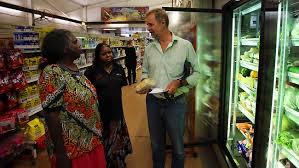
Don MacAskill  (pictured above in plain shirt with the Deadley Choices mob)

An open letter to the Prime Minister’s Indigenous Advisory Council:

Reasonable questions regarding the Terms of Reference

 To the members of the Prime Minister’s Indigenous Advisory Council, firstly, I thank you for your service and commitment to Aboriginal affairs and issues facing our communities today.

Like many Indigenous people, I was encouraged and hopeful after the announcement of an Indigenous Advisory Council, dedicated to representing the needs and concerns of Aboriginal people across the country. I hope that the Council’s opportunity to work closely with Prime Minister Abbott as he strives to improve the health and welfare of Aboriginal people is maximised, and that you will be courageous in your efforts to ensure he truly is the ‘Prime Minister for Indigenous Affairs’.

While I believe this has the potential to be a worthwhile initiative, I do have a few concerns regarding the transparency of the Council and what the reporting obligations will be to the community. I have listed a few of these concerns below, and look forward to receiving your thoughts on the following.

After some basic research, I have been unable to locate any information detailing the policies and frameworks around the Council. I, and many others in the community, are curious as to how members were elected, and what selection process was undertaken?

Will the frameworks around the Council, for example, code of conduct, reporting responsibilities, minutes of meetings, key performance indicators of both individual and whole of council performance, be made publicly available?

Another area I felt was unclear was relating to the scope of the Council, and the specific impacts it has on policy creation, the assessment of existing policies relating to the Indigenous community, or whether it is simply there to provide advice when requested by the Prime Minister?

Has a strategic plan, complete with objectives and evaluation models, been developed and will this be available for the public? What reports will be made available to the public? As I noted with some concern, stated within the Terms of Reference, ‘the deliberation of the Council will be confidential, but the Council may choose to issue a statement after its meetings.’ There appears to be a worrying lack of transparency, and I have concerns this may undermine the meaningful changes the Council has the opportunity to effect.

I believe passionately in the creation of relevant and workable policies that can bring real change into our communities, policies that have the ability to create better health, education and social outcomes for our people.

I am keenly aware of the many and far-reaching issues surrounding Aboriginal Affairs, as Chief Executive Officer of Awabakal Newcastle Aboriginal Co-Operative, I am faced with these challenges daily. I have been following with some interest, the debate which has been raging within mainstream media regarding the decision making process of not only the Council, but also of Government as a whole.

Pragmatism vs ideology, has dominated the conversation and I believe this is a conversation all Australians need to have.

Our social justice values and the policies and laws that govern wider Australia, are based on several ideologies, mateship, a fair go for all, and taking care of the less fortunate. This is what forms the basis, in my opinion, of what makes us Australian.

The Council itself has been founded on the bipartisan ideology of ‘Closing the Gap’ and all the critical work that needs to be done to achieve this now and into the future.

In order to achieve real outcomes for the Aboriginal community, I believe Ideology should form the basis of every policy developed by those elected to govern, for those they represent. Should it not be the structure, implementation and evaluation of these policies that is pragmatic? Pragmatic solutions solidly rooted in the fundamental ideals we, as a country, support and embody?

I for one do not agree that the decision-making process must be simply ideological, or pragmatic, surely the integration of these concepts has not been eroded from our public consciousness so completely that they are now mutually exclusive.

I do not want to imagine a country, where decisions that impact on our most vulnerable and disenfranchised groups are made purely on economic or political reasons, nor do I want to see policy created based on ideology that has not root in best practice or better outcomes for the community.

I hope through the creation of this Council, you can find a way to engage the broader Aboriginal community and marry these two fundamental concepts in a way that achieves socially just, financially responsible and transparent outcomes for the community.

I look forward to seeing the outcomes you achieve through this Council, on the ground in my community.

Kind regards, Don MacAskill Awabakal Newcastle Aboriginal Co-Operative 0249 408 103

NACCHO news

HAVE You checked out the NACCHO APP HERE ?

afl 010

DOWNLOAD links here

The NACCHO App contains a geo locator, which will help you find the nearest Aboriginal Community Controlled Health Organisation in your area and automatically creates a number to call .

2014-01-13 07.27.37

NACCHO Aboriginal health news : How will Assistant Health Minister Fiona Nash fix the regional doctor shortage in 2014 ?

Fiona Nash

“You don’t want to reinvent the wheel, but we also need to look with fresh eyes at why aren’t we getting more allied health professionals and doctors in regional areas, and what can be done better.”

Assistant Health Minister Senator Fiona Nash (BIO and contact details below)

FIXING the broken incentive scheme for doctors to come to regional Australia will be the top priority for Assistant Health Minister Senator Fiona Nash this year.

The Abbott Government’s minister responsible for rural and regional health, Sen Nash said fixing the geographical classification system that governs incentives to encourage doctors to leave the city was the most important issue facing rural health this year.

Exclusive South Burnett Times

The Australian Standard Geographical Classification – Remoteness Area (ASGC-RA) effectively decides whether doctors can access payments from $2500 a year to move to an inner regional area up to $13,000 for working in a very remote area

But long-standing problems have dogged the system since it was introduced in 2001, because it pays the same rates to doctors working in some major regional cities as those in some smaller, more remote towns.

“The previous (Howard) government put in place the incentives program to help ensure doctors move to regional areas, but it actually pays the same incentives for doctors to go to a town of 2000 to those who might move to a major town of 60,000,” Sen Nash said.

“Addressing that and other regional workforce issues and how to improve the incentive scheme is my priority this year.”

While Sen Nash was part of a Senate inquiry last year that closely examined the issue, she said she would not be rushing to meet a deadline this year – instead focussing on “getting it right”.

“What we have after many years of not enough doctors in Australia, is we now have enough, but the problem for rural and regional areas is we have a maldistribution, they largely reside in the cities, but it’s my target that by the end we will be able to say there are better outcomes for rural health,” Sen Nash said.

“You don’t want to reinvent the wheel, but we also need to look with fresh eyes at why aren’t we getting more allied health professionals and doctors in regional areas, and what can be done better.”

Sen Nash said she would also be focused on improving mental health, nutrition and food labelling as chair of the Food Ministers Council.

BIO and contact details Senator the Hon Fiona Nash

Assistant Minister for Health

Minister Nash was first elected to the Senate for the NSW Nationals at the 2004 Federal Election, and was re-elected in 2010.Prior to becoming Assistant Minister for Health, Senator Nash held a range of Parliamentary and Senate Committee positions.

In 2007 she was appointed Party Whip and in 2008, was elected Deputy Leader of the Nationals in the Senate. Also in 2008, Minister Nash was appointed as Shadow Parliamentary Secretary for Water Resources and Conservation, and in 2010 became Shadow Parliamentary Secretary for Regional Education.

In her role as Shadow Parliamentary Secretary for Regional Education, Minister Nash led a successful campaign to make the independent youth allowance criteria fair for thousands of students living in inner regional areas.
In the Senate, Senator Nash chaired the Rural and Regional Affairs and Transport References Senate committee from 2008 – 2010, heading up inquiries on issues such as biosecurity, grains, BSE-affected meat and regional education.

As a resident and representative of regional Australia, Minister Nash has a deep understanding of the challenges faced by people living outside metropolitan Australia.
Minister Nash and her husband, David, have two sons, William and Henry, and operate a mixed farm near Young in south west NSW.

HAVE You checked out the NACCHO APP HERE ?

afl 010

DOWNLOAD links here

The NACCHO App contains a geo locator, which will help you find the nearest Aboriginal Community Controlled Health Organisation in your area and automatically creates a number to call .

2014-01-13 07.27.37

NACCHO Aboriginal health news alert :War on sugar: Food industry likened to big tobacco in debate

BdgP_x9CYAA3UBg

The food and beverage sector is hitting back against new campaigns aimed at reducing sugar consumption, prompting critics to compare the industry’s position to that of tobacco companies decades ago.

ABC Report

In Australia, three major health organisations want a sugar tax on all sweetened beverages – not just soft drinks, but also products like flavoured milk and sports drinks – to limit consumption.

Meanwhile, in Britain a campaign called Action on Sugar has just been launched, hoping to reverse that country’s obesity epidemic by targeting the “huge and unnecessary amounts of sugar that are currently being added to our food and soft drinks”.

The campaign’s expert advisors include heavyweights from the scientific and medical community.

And last month leaked draft guidelines from the World Health Organisation (WHO) suggested the organisation is considering halving the recommended daily intake of sugar from ten teaspoons to five.

Its latest “global strategy on diet” also says an unhealthy diet is a major risk factor for chronic disease and recommends reducing sugar intake to help prevent conditions like type 2 diabetes and dental problems.

Australia’s Food and Grocery Council, however, says there is nothing wrong with sugar.

The council’s deputy chief executive, Geoffrey Annison, says scientific evidence, including data from WHO, shows that sugar is not related to obesity.

“There’s no demonstration that sugar of itself is particularly obesogenic or related to any health outcomes,” he said.

Professor Greg Johnson from Diabetes Australia says the Food and Grocery Council argument is eerily familiar.

“These are the sorts of responses that we saw out of the tobacco industry decades ago, when we first started hearing from the College of Surgeons in the United States and leading clinicians and researchers around the problems of tobacco and ill health,” he said.

“So it’s not a surprise to hear this. But all we can say is: look at the evidence that’s coming out and being talked about by many independent, reputable experts and organisations around the world.”

Diabetes Australia calls for sugar tax on sweetened drinks

Professor Johnson says the UK’s Action on Sugar campaign has the right idea.

Diabetes Australia is calling for a sugar tax on sweetened drinks, as just one of a series of measures to combat Australia’s rising obesity rates and the rise in diabetes.

“Australia’s in the top 10 countries for the per capita consumption of these products,” he said.

“From 2007 we know that one in two, nearly 50 per cent of all Australian children consume sugar-sweetened beverages every day. Every day.

“There is no dietary need to have sugar-sweetened beverages. And the other part of it is: they’re particularly associated with weight gain.”

The Food and Grocery Council says the industry is already responding by putting out low-calorie products.

Dr Annison claims not only is there no direct correlation between sugar consumption and obesity but Australia’s sugar consumption is dropping.

“There’s absoutely no doubt that we’re consuming less sugar than before,” he said.

“For example, in 1938 they were consuming about 55 kilograms per person, and it went down to 42 kg per person by 2011.”

NACCHO political alert : Aboriginal ‘industry’ muddies the waters as January 26 approaches.

Aust

A hallmark ideology of the Aboriginal industry is its insistence on blaming colonisation and “white” governments for the problems facing Aboriginal people today.

We are sure to be reminded about this by the Aboriginal industry as January 26 approaches.”

View article re image above ALDI and Big W

Anthony Dillon is a researcher at the University of Western Sydney and co-editor of In Black and White: Australians All at the Crossroads. As published in The Australian (views are not endorsed by NACCHO)

IN the past week, two high-achieving Aboriginal men have written for this newspaper on Aboriginal issues. Both Warren Mundine and Ben Wyatt talk about the need for diversionary programs that can be used to prevent juvenile offenders from going to jail, and hopefully into jobs and education or training.

Mundine argued: “Legal aid is vital, but it deals with the problem at the tail end.” I believe Mundine is correct and that too much of the energy invested in Aboriginal affairs focuses at the tail end.

This is fine, but I think we should be focusing on preventing Aboriginal people of all ages from engaging in antisocial behaviour and crime in the first place, something on which I think both Mundine and Wyatt would agree.

I want to focus on an approach that deals with the underlying causes and contributors to the high incarceration rates. Such an approach will be useful to dealing with many other problems that plague Aboriginal people, such as unemployment and homelessness. As an analogy to the problems facing Aborigines, imagine a river that is dirty and polluted.

You can try all sorts of clean-up strategies downstream, but you will be forever performing the same strategies unless you identify the source of the problem upstream and clean that up.

There are many problems upstream, but clearly the major one is a factory upstream that is dumping waste into the river. Common sense dictates that efforts should be directed upstream if it is clean water downstream that is desired. I would argue that the “Aboriginal industry” is the factory. By Aboriginal industry, I mean the collective mindset produced by those promoting the view that Aboriginal people are totally distinct from the general population, requiring separate services and separate solutions to the problems they face.

Some of these people work in positions specific to addressing Aboriginal issues while others are contributors, in one form or another, whether they be commentators, journalists or activists.

Obviously, to clean up the water downstream – which in this analogy means addressing poverty, crime, unemployment and sickness – means closing down the Aboriginal industry or at least giving it a major overhaul, which will mean removing the incomes and pedestals of many.

This is not likely to happen any time soon. The words of American writer and activist Upton Sinclair resonate here: “It’s difficult to get a man to understand something when his salary depends upon his not understanding it.”

I am not suggesting that all players in the Aboriginal industry are less than helpful, as I have met some amazing people (both Aboriginal and non-Aboriginal) who work tirelessly to close the gap.

Speaking of the gap, while there may be some evidence of it closing slowly, such as the health and wellbeing of Aboriginal people as a whole catching up with the health and wellbeing of non-Aboriginal people, I suspect there is a broadening of the internal gap.

That is, among those who identify as Aboriginal, much of the improvement has been with those who were already relatively advantaged. For many of those Aboriginal people living in extreme poverty, the gains have not been as substantial as for their more advantaged cousins.

This problem of an internalised gap is recognised by Tony Abbott. Nicolas Rothwell reported in this newspaper that there was a need to highlight the distinction between remote and urban Aboriginal societies, their circumstances and their needs. It is in remote communities that there is the most need, and it is in these communities that the actions and ideologies of the Aboriginal industry impact the most.

While some consideration of Aboriginality should be given, the focus should be on need, and those in most need are more likely to live in remote areas, where they lack access to opportunities and services that most of us take for granted.

A hallmark ideology of the Aboriginal industry is its insistence on blaming colonisation and “white” governments for the problems facing Aboriginal people today. We are sure to be reminded about this by the Aboriginal industry as January 26 approaches.

Demonising government with words such as “genocide”, “assimilation” and the like simply makes it less likely that those Aboriginal people most in need will embrace any opportunity or service provided by the government.

Another pillar of the industry is its strident insistence that culture, often a romanticised version bearing little resemblance to authentic Aboriginal culture, be given absolute priority. Matters of culture are fine, but not at the expense of child safety and family wellbeing. The hearts of thousands of Australians break whenever we read how a child’s safety has been compromised, sometimes with fatal outcomes – all because placing a child with Aboriginal carers was considered more important than safety. We read daily of fears of another “Stolen Generation”.

When considering how best to close the gap on unemployment, ill-health and dysfunction, it is surely education and jobs that must be priorities, not culture. Individuals can decide for themselves what role culture plays in their lives, and I am all for people embracing and expressing their culture in a way that suits them, but this must not be focused on at the expense of jobs and education.

Let’s focus upstream so that we get better results downstream. If this means overhauling the Aboriginal industry, or at the very least giving it a major shake-up and wake-up, so be it. Surely what really matters is the lives and the potential of Aboriginal people.

Anthony Dillon is a researcher at the University of Western Sydney and co-editor of In Black and White: Australians All at the Crossroads.

NACCHO political news alert : Federal government inquiry to only look into alcohol misuse and violence in Aboriginal communities.

Nigel

AAP Update from earlier reports

The federal government is planning an inquiry into alcohol misuse in Indigenous communities across the nation.

Indigenous Affairs Minister Nigel Scullion is in early talks with the chair of the House of Representatives’ standing committee on indigenous affairs Dr Sharman Stone.

Alcohol-fuelled violence in indigenous communities will be considered for the inquiry’s terms of reference.

Earlier on Wednesday Senator Scullion told ABC radio the federal government was planning a wide-ranging inquiry into alcohol-fuelled violence across the country – from downtown Sydney to remote outback communities

However, the coalition government later put that down to a misunderstanding, with a spokesman for Senator Scullion saying the inquiry would only look into alcohol misuse in indigenous communities.

Indigenous Affairs Minister Nigel Scullion announces parliamentary inquiry into alcohol-fuelled violence

The Federal Government will hold a national inquiry into how to tackle increasing rates of alcohol-fuelled violence.

Indigenous Affairs Minister Nigel Scullion says the terms of reference will be wide-raging, and will include everything from an evaluation of the Northern Territory’s scrapped Banned Drinker Register to reducing violence outside Sydney’s pubs.

The inquiry will consider solutions tied to both the supply of, and demand for, alcohol.

Senator Scullion says alcohol abuse is so severe nationally that it is time for politicians to abandon one-eyed solutions.

“We become welded to one end of the spectrum and we have a polarised argument, this is the only way,” he said.

He says the Government is still deciding which parliamentary committee will be the best forum for the bipartisan national inquiry.

“This sort of inquiry that can look at alcohol management measures in all its shapes and forms,” Senator Scullion said.

“I think it can inform us to make sure that the regulators and law makers across all the jurisdictions of Australia have the very best evidence under which to ensure that all our management plans in the future are effective and really change those negative aspects of alcohol consumption.”

The Australian National Council on Drugs says the inquiry must focus on the price, promotion and availability of alcohol, not just on pubs and hotels.

The council’s executive director, Gino Vambuca, says the two big retailers must also be examined.

“People often talk about the responsibility of the individual, that’s true but there’s a responsibility on the alcohol industry and in particular Coles and Woolworths,” he said.

“As major retailers look at their practices and start to look at what they do and so that’s what the inquiry should focus on as well as the hotels and bars and clubs.”