NACCHO youth healthy futures : Aboriginal youth encouraged to apply for Indigenous Youth Parliament 2014

NIYP 2014 flyer_Page_1

NACCHO and the Australian Electoral Commission (AEC) is urging all Indigenous Australians aged 16 to 25 to apply now for the National Indigenous Youth Parliament (NIYP).

NIYP is a week-long leadership program for young Indigenous Australians, to be held in Canberra in May 2014.

DOWNLOAD THE NIYP application form now

AEC NT Indigenous Community Engagement Officer Ruth Walker said this is a once-in-a-life time opportunity. Fifty young Indigenous Australians will travel to Canberra to learn directly from the people making decisions that affect Indigenous communities.

“No specific skills or experience are required. But we hope young Indigenous Australians from NT who are passionate about issues and willing to stand up and have a say will seize this great opportunity,” Ms Walker said.

“They’ll get expert training in public speaking and in dealing with the media, and they’ll meet members of Parliament and other national leaders”.

NIYP will be held from 28 May to 3 June 2014. The centrepiece of the program is a two-day simulated parliament in the Museum of Australian Democracy at Old Parliament House where participants will debate bills and important issues.

Young Indigenous Australians aged 16 to 25 must apply no later than Monday 10 March 2014. Participants will be chosen based on their ideas and interest in government and parliament and their potential leadership skills. Application forms are at

http://www.aec.gov.au/Indigenous.

The Youth Parliament is run by the AEC in collaboration with the YMCA and Museum of Australian Democracy at Old Parliament House.

More information on the National Indigenous Youth Parliament is at

http://www.aec.gov.au/Indigenous or contact Ruth Walker (08) 8982 8006.

NACCHO UPDATE

Have you downloaded the new NACCHO APP

screen568x568

Here are the URL links to the App – alternatively you can type NACCHO into both stores and they come up!

iPhone/iPad

ios.giveeasy.org/naccho

Android

android.giveeasy.org/naccho

“The NACCHO App contains a geo locator, which will help you find the nearest Aboriginal Community Controlled Health Organisation in your area and  provides heath information online and telephone on a wide range of topics and where you can go to get more information or assistance should you need urgent help “

– See more at: http://www.naccho.org.au/naccho-app/#sthash.hwdIQ3dt.dpuf

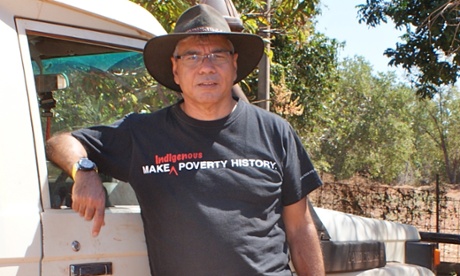
NACCHO @Indigenous political alert :Q and A with Warren Mundine: on the importance of role models and education

SONY DSC

Each week, a new guest hosts the @IndigenousX Twitter account to discuss topics of interest as Aboriginal and/or Torres Strait Islander people

The Guardian in partnership with IndigenousX, invites its weekly host to tell us about who they are, what issues they’re passionate about, and what they have in store for us during their upcoming week

This weeks host is Warren Mundine and we understand he will be visiting Western Desert communities this week and reporting online

BfclL_ECcAAxLwv

YOUR OPPORTUNITY TO ASK MR MUNDINE A QUESTION

If you are not on TWITTER leave your question (140 characters) in the COMMENTS below and NACCHO media will pass it on  Email mailto: media@naccho.org.au

FROM THE GUARDIAN

Warren Mundine tell us about yourself.

I was born in Grafton in Northern NSW and moved to Auburn in Western Sydney when I was seven years old. I’m from the Bundjalung, Gumbaynggir and Yuin people. My father’s family come from Baryulgil about 80 km north of Grafton, on the Clarence River. He grew up there and moved when he married my mother.

I was one of 11 children and I slept in a single bed with three of my brothers until I was about 12 – which was fine except that my youngest brother wet the bed.
My first name “Nyunggai” means “sun”. It was the skin name that my father gave to me as a child. Recently I changed my name by deed poll to Nyunggai Warren Mundine and so now I use it officially.
My parents worked and sent us to Catholic schools. God, work and school were very important in our family. Even so, as a teenager I started to drift and my reading and writing didn’t progress past primary level. I caused my parents a lot of trouble getting into fights, consuming alcohol and drugs, etc. At one point I was arrested and detained as a juvenile. My parents, a priest and a local white couple stood up for me in court and I was given another chance. They kept an eye on me, I got a labouring job and finished school at TAFE.
I stayed in labouring and trade jobs for about 10 years. My first office job was as a clerk at the Tax Office. I lived in Armidale and Dubbo when my kids were young and got elected to Dubbo Council where I was deputy mayor.

That’s how I got involved in the Labor party, and eventually I was elected its national president. I spent about nine years as CEO of NTSCorp, working with NSW Aboriginal communities on their native title, and I was CEO of GenerationOne in 2013.

I now run my own business and have been appointed to advise the prime minister on Indigenous issues as chair of the Indigenous Advisory Council.
I’m married to Elizabeth and between us we have 10 children (most are grown up). It’s a lot of fun. And of course, I am a mad lover of football.

What do you plan to talk about on @IndigenousX this week?

This week I wrote a blog post which I called The First Tree. It’s about how we address seemingly insurmountable problems.  People laugh at on me on Twitter for having simple suggestions – like getting kids to school – and focusing on practical things.

But I don’t think theorising and admiring a problem from every angle achieves much. Sometimes simple things are what leads to the biggest changes, most quickly.
So I will be focussing on the “bread and butter” issues for closing the gap – jobs, education, school attendance, health, welfare  – and I want to prompt some discussion on our traditional nations and cultures and what they have to offer us. As always I want to prompt conversations which make people think, and where readers are prepared to challenge their own thinking.

What issue(s) affecting Indigenous peoples do you think is most pressing?

If you read my articles, speeches and blogs you will get a good idea of where I think the priorities are. School attendance, welfare to work and incarceration, particularly juvenile detention, are big ones.
And for communities – social stability, economic and commercial development, land ownership.
The high suicide rates amongst Indigenous people is a devastating problem. I’ve been reading and talking to people over the last few months in particular so as to understand it better. It’s not a topic that is easy to discuss on a medium like Twitter, however.

Who are your role models and why?

My father, Roy Mundine, and mother Dolly Mundine (née Donovan) were big role models in my life. Apart from them, my greatest role model was Lionel Rose, world champion boxer. He was a 19 year old Aboriginal boy from Jackson Flats, and he won the world title. He showed me that the world can be your oyster if you are willing to focus and work hard.
Also Charles Perkins and John Moriarty who both overcame adversity, went to university when it wasn’t easy for Aboriginal people to do that – both played football, and John was selected for the national team.

What are your hopes for the future?

This year my hope is that all Indigenous kids are going to school every school day, and that state and territory governments bring in mandatory diversionary programs for juvenile offenders into jobs and education.
I’ve outlined my long term hopes in a number of my articles and speeches, particularly the Garma Speech and my recent Australia Day address.
In the end, my hope is that Indigenous people can be full participants in Australian life and all it has to offer as well as being part of strong and thriving traditional nations where they can take care of their culture, language, traditional lands and build an economic future.

NACCHO Aboriginal health political alert:’PM for Indigenous affairs’ has his task cut out on that front

sunset 2

EARLY life experiences become hard-wired into the body, with lifelong effects on health and wellbeing.”

A very important statement – but not news. Research demonstrating the complex interplay of “givens” (genetics) and early-life “contingent factors” (the environment of pregnancy and early childhood) in determining lifelong risk of ill-health dates back to the middle of the last century.

From diabetes to depression, the intra-uterine and early childhood environments critically influence the quality and length of our lives.

FROM THE AUSTRALIAN Ernest Hunter is a medical practitioner in north Queensland.

Photo courtesy Apunipima Cape York Health Council Photovoice project. Photographer Grace Morris’.

The quote opens the Australian Medical Association’s Aboriginal and Torres Strait Islander Health Report Card 2012-2013, with Steve Hambleton, president of the AMA, commenting in the introduction on “gaps in preventive child health care, the promotion of early childhood development, and the alleviation of key risks for adverse developmental outcomes, especially in remote communities”.

Download report card here

In fact, it can reasonably be argued that developmental adversity is the main contributor to the continuing poor health status of indigenous Australians. That’s the bad news; to the extent that those effects “become hard-wired into the body”, it may not be possible to rectify – at times even to modify – the harms done.

In my role as a psychiatrist and public health physician in Cape York, most of my work is about mitigating the downstream consequences, be it psychosis, depression, interpersonal violence, self-harm, alcohol abuse or chronic disease. There is no shortage of work for clinicians.

While indigenous developmental vulnerability and its effects should be cause for alarm, it is not a reason for fatalism. Indeed, the good news is that the scope for intervention and prevention is enormous and, broadly, we know what needs to be achieved: equity in pregnancy and early childhood health and social outcomes.

Unfortunately, we do not know how to get there – although, clearly, it’s not through business as usual. Even if it is achievable it will take generations for the full effects of healthy pregnancies and early childhoods to be reflected in a reduction in the burden of chronic disease from midlife on, particularly in remote Aboriginal communities.

Imagine if somehow the pregnancies of young indigenous women, right now, were no more likely than non-indigenous pregnancies to be exposed to smoking, alcohol consumption, other drug use, the effects of violence, high levels of maternal stress hormones and inadequate nutrition; if the babies were born to women at no greater risk of prematurity and labour complications, who have had access to the same quality of antenatal and birthing services. Don’t stop – imagine if those babies, now as healthy as their peers across Australia – could spend their infancies in safe, nurturing and stimulating environments in which they were nourished and cherished by their parents, no more likely to be exposed to abuse, neglect or removal from their families; if they did not live in overcrowded houses and were protected from the waves of chaos and stress that wash through homes in remote communities. Imagine.

Even if this miracle did occur, service demands will remain unchanged for a long time as the developmental adversity experienced by older relatives works its effects through the population. Indeed the consequences are evident already among their older siblings, let alone those suffering chronic diseases in middle age.

Educational disadvantage has received a lot of media attention, as has fetal alcohol exposure, both of which predispose affected children to a range of additional risks that will follow them through their lives. Lives that in many cases will be much shorter: the Commission for Children and Young People and the Child Guardian annual report on the deaths of children in Queensland records that between 2004-05 and 2012-13 the suicide rate of indigenous children aged 10 to 17 was more than 5.5 times higher than that of their non-indigenous peers.

The Australian public was given cause for some optimism with the announcement by Tony Abbott prior to the federal election that he intended to be the “prime minister for indigenous affairs” and that he would be “hands on”. Since becoming PM he has appointed, with fanfare, an Indigenous Advisory Council, which first met in December under the leadership of Warren Mundine. Unsurprisingly, this move has been divisive in the wider indigenous population (indeed there is a petition initiated by writer Ken Canning for it to be replaced by an elected body).

Abbott has many other pressing demands; he has alluded also to the sobriquet of “the infrastructure PM” and he could be a contender for the title of “tow/push the boats back PM” too – and much more. But his statements about indigenous affairs were clearly broadcast, and the implication was that he would brook no obstruction to pursuing it as a national – and personal – priority.

So it is surprising to hear rumours, just months after his seemingly heartfelt assurance, that he has reconsidered (or been forced to reconsider) his and the Coalition’s political investment.

While the Indigenous Advisory Council is now at the table and constitutional reform placed back on it, the setting is, so far, pretty humble. The main course may be a way off but the entrees are hardly satisfying.

Following on the heels of the announcement of funding cuts for legal services, Mundine has anticipated that Aboriginal and Torres Strait Islander Australians may have to share the pain of national economic recovery.

In Queensland, of course, they are already sharing it. Among the outcomes of the cuts and divestments since the change of the Queensland government has been a reduction in human resources and institutional capacity in population health and social programs which will have the greatest consequences for those most disadvantaged, the residents of remote Queensland Aboriginal communities.

As they have less visibility and voice, and as the effects will be delayed, it’s a safe political strategy. And, of course, it can always be passed off as a commonwealth responsibility.

Who should pay – commonwealth or state – has been argued ad nauseam. That has been and remains a major obstacle to effective action. But, in terms of responsibility, Abbott made a commitment – to the nation – that he would personally take on the challenge of making a difference for indigenous Australians.

I want to believe that it was sincere and that he understood, in making it, that it will require broad support and long-term effort. Whether he is sufficiently inclusive or overly reliant on particular individuals will be debated and will play out. But if he really is the “PM for indigenous affairs” then he needs to lead and be seen to do so – “hands on”. And he needs to be in there for the long haul.

These two issues, developmental determinants and opportunities, and assertive political leadership, are linked. Sufficient and sustained investment in the former is the surest means to effect significant gains in indigenous health (though perhaps not the most politically visible in the short term) and is dependent on the latter.

In election mode Abbott also frequently commented that “we say what we mean and we do what we say”. Now it’s time for doing.

Ernest Hunter is a medical practitioner in north Queensland.

NACCHO research career alert: Opportunities for Aboriginal and Torres Strait Islander people

661354_10a_base661354_9_top

The newly formed NHMRC CENTRE OF RESEARCH EXCELLENCE IN ABORIGINAL CHRONIC DISEASE KNOWLEDGE TRANSLATION AND EXCHANGE invites applications from enthusiastic Aboriginal or Torres Strait Islander people seeking to develop a career in research with a focus on improving health outcomes.

Over the next five years, the Centre will synthesise, translate and implement the best available evidence related to chronic disease prevention and management in Aboriginal communities, with priorities chosen by those communities.

RESEARCH FELLOWS

We are seeking two (2) Research Fellows.

One Fellow will be employed by the National Aboriginal Community Controlled Health Organisation [NACCHO).

Working with CREATE Chief Investigator Prof Ngiare Brown, the focus of the role will be on (a) participating in the systematic review of evidence as part of the core CRE program and (b) working with communities to build capacity around the use of evidence in Aboriginal healthcare and the translation of evidence into practice.

Initial inquiries should be addressed to Prof Ngiare Brown, tel: 02 6246 9306, email: ngiare@naccho.org.au

One Fellow will be located in the School of Population Health at the University of Adelaide. Working with CREATE Chief Investigator Prof Annette Braunack-Mayer, the focus of the role will be on (a) participating in the systematic review of evidence as part of the core CRE program and (b) working with communities to develop new understandings of the ethical practices associated with translating external evidence in Aboriginal Communities.

Initial inquiries should be addressed to Prof Annette Braunack-Mayer, tel: 08 8313 1636, email: annette.braunackmayer@adelaide.edu.au

 Successful applicants will have a PhD; however, exceptional applicants with a Master’s degree and significant experience will be considered.

You will possess research and critical thinking skills, be a competent communicator and writer, and be comfortable working in a flexible environment.

These positions will be based in Adelaide.

Appointments will be made for three years with the option of a two year extension and may be for 0.8-1.0 FTE, dependent on negotiations.


NHMRC PhD Scholarships

 A number of full-time PhD scholarships ($35,000 pa) are available for students seeking to enhance their knowledge of evidence-based health care in four areas of translation research:

  • Under the guidance of Prof Ngiare Brown (located in Canberra), research into evidence based best practice related to models of care delivery in Aboriginal Community Controlled Health Organisations. (Initial inquiries can be directed to Prof Ngiare Brown, tel: 02 6246 9306; email: ngiare@naccho.org.au)
  • Under the guidance of Prof Alex Brown (located in Adelaide), research into the meta-analysis of prevalence data related to chronic disease in Aboriginal peoples. (Initial inquiries can be directed to Prof Alex Brown, tel: 08 8116 4427  08 8116 4427 ; email: alex.brown@sahmri.com)
  • Under the guidance of Prof Annette Braunack-Mayer (located in Adelaide), research into the practical ethics of implementing evidence in Aboriginal communities. (Initial inquiries can be directed to Prof Annette Braunack-Mayer, tel: 08 8313 1636; email: annette.braunackmayer@adelaide.edu.au)
  • Under the guidance of Assoc Prof Edoardo Aromataris (located in Adelaide), research into the synthesis of evidence related to Aboriginal health gain. (Initial inquiries can be directed to Assoc Prof Edoardo Aromataris, tel: 08 8313 0124; email: ed.aromataris@adelaide.edu.au

All PhD students will become part of the CREATE team and gain expertise in evidence synthesis, guideline development, evidence implementation science, and the emerging field of translational health science.

Applicants will have a degree and/or significant work experience in Aboriginal and Torres Strait Islander health.

For further information about the Research Fellow roles or PhD scholarships, and to formally apply, please contact Associate Professor Eldoardo Aromataris on 08 8313 0124 .


Please send applications, including a CV and cover letter, to Associate Professor Edoardo Aromataris via email to ed.aromataris@adelaide.edu.au or, by mail, to CREATE, School of Translational Health Science, The University of Adelaide, Level 1, 115 Grenfell Street, Adelaide, SA 5000.

 Applications close February 21st 2014.

NACCHO0024-1280x1024

Are you interested to work in Aboriginal health at a national level ?

NACCHO as the national authority in comprenhesive Aboriginal primary health care currently has a wide range of job opportunities lining up for 2014.

We are investing in Healthy Futures for generational change.

And we are always looking for highly motivated and committed health professionals that want to be part of the NACCHO team making those changes.

In the first instance we would encourage you to send your CV to our HR department

NACCHO JOB LINK HERE

NACCHO political news: Right wing Andrew Bolt claims in a “Diatribe ” I am an Indigenous Australian and “Australia is now under threat”

BfMPzU6CUAA6QrH

Provocative Melbourne columnist Andrew Bolt has done it again, starting his recent Herald-Sun column  with the claim “I am an indigenous Australian” and warning that Prime Minister Tony Abbott’s plan to recognise Aboriginal Australians in the Constitution is “the path to apartheid”.

SEE full transcript below

We have resisted over two years to give Mr Bolt any “oxygen” but we felt that our members and stakeholders needed to read this latest diatribe

Mr Bolt, who was born in Adelaide to Dutch immigrant parents, goes on to declare “Australia is now under severe threat” due to the Prime Minister and in a series of increasingly alarmist pronouncements, often in quotation marks, says it’s socially dangerous, is racism and racial division and the move will permanently divide the nation.

Michael Mansell is an Aboriginal lawyer from Tasmania and a founding member and secretary of the Aboriginal Provisional Government

Here is Michael’s  response

The Guardian

Right wing commentator Andrew Bolt is at it again, this time arguing the sky will fall in if there is any constitutional recognition of the fact of Aboriginal people being here before whites arrived.

Everyone knows Indigenous people were here, so what’s the great fuss? Bolt’s view is an attempt to revive the Terra nullius doctrine which, for 200 years, fictionalised that the British came to an empty land and settled peacefully.

That myth was discredited  by the high court of Australia with its Mabo ruling 22 years ago, but people like Bolt are still yet to catch on.

Bolt also plays mischief-maker, claiming to be an Indigenous Australian. Like Pauline Hanson did in her maiden speech to the parliament in 1996, Bolt makes his claim based on a technical view that everyone born in Australia is legally, but not socially, an Indigenous Australian. His mischief is to ignore common sense and community normality which distinguishes between Indigenous Australians on the one hand, and white Australians like Bolt on the other.  Bolt wants to lead his followers through the chaos he ferments.

As part of the scare-mongering tone of his article, Bolt gets it wrong about the aim of the Aboriginal provisional government (APG), claiming it is a separatist movement. The APG wants an Aboriginal assembly of elected Aboriginal people with legislative power, returned land and a budget – in the same way different states do. And this aim is  within the federation of Australia. How is that separatism?

Bolt also claims the courts lean “too far” towards Aboriginal people. This is a case of never letting the facts get in the way of a good story. Aboriginals make up 26% of the prisoner population, yet only constitute 2.5% of the Australian population.  In 20 years since the Royal Commission into Aboriginal deaths in custody, Aboriginal imprisonment rates have climbed from one in seven to one in four. Too far? Come on.

There is a big difference between theoretical equality – a belief that 20m Australians all live the same and have the same opportunities – and real equality. Rich and poor cannot be treated alike for stealing bread. Sentencing courts across Australia acknowledge that people are not all the same. A woman suffering domestic violence who strikes out because she’s had enough should not get the same penalty as an alcohol fuelled king-hit merchant. Nor should the background of people suffering daily discrimination, leading to family dysfunction, be ignored as Bolt would have it. Yet Bolt implies that the courts should consider everyone’s background except that of Aboriginal people, and claims that is equality.

Bolt claims “Australia is now under threat” from just talking about constitutional reforms – but then again, he is very prone to exaggeration. What is really at stake is whether constitutional recognition will benefit Aboriginal people or merely warm the hearts of middle-class Australians – that’s the nub of the debate.

This national discussion can be robust if the views of all – including the alleged beneficiaries of constitutional recognition – are to be heard. I support Bolt’s right to participate in the debate, but he should avoid inflaming prejudice against Aboriginal people which leads to personalising and dismissal of Indigenous opinion.

Black Hip

Sadly, Bolt is secure in the knowledge he can regularly attack fair skinned Aboriginal people as not being eligible to speak for their people (the federal court found Bolt breached racial vilification laws), and thereby deny them the same freedom to participate in public debate that he enjoys.

ANDREW BOLT Article from all NEWS LTD papers

I AM an indigenous Australian, like millions of other people here, black or white. Take note, Tony Abbott. Think again, you new dividers, before we are on the path to apartheid with your change to our Constitution.

I was born here, I live here and I call no other country home. I am therefore indigenous to this land and have as much right as anyone to it.

What’s more, when I go before the courts I want to be judged as an individual. I do not want different rights according to my class, faith, ancestry, country of birth … or “race”.

I’m sure most Australians feel the same. We are Australians together, equal under the law and equal in our right as citizens to be here. That’s how we’ve been for generations. It’s why we’ve welcomed lawful immigrants and damned racists.

But this Australia is now under severe threat. Most incredibly, that threat is now led by Prime Minister Abbott, a Liberal. Abbott says he wants a “national crusade” to change the Constitution to recognise Aborigines as the “first Australians”.

“If we had known in 1901 what we know now, if our hearts had been as big then as now, we would have acknowledged indigenous people in the Constitution back then,’’ he said this week.

This is nonsense. The writers of our Constitution no more lacked heart than do people today.

The difference is they were inspired by the creed that all citizens — those, at least, we admitted — are as one before the law.

True, they did not always live up to that ideal (although, contrary to popular myth, they granted Aborigines the vote in all states where they had the franchise).

But even if we don’t always follow our moral compass, the answer never is to break it. Changing the Constitution to divide Australians between the “first” and the rest — on the basis of the “race” of our ancestors — is not just immoral and an insult to our individuality.

Worse, it is socially dangerous. This will not “reconcile” us but permanently divide. It would do no good to a single Aboriginal in bush camps, but would concede a critical point: that Australians in our most fundamental legal document are now to be divided by “race”.

Abbott insists he will not endorse any change that will have that practical effect in the courts. He means to treat the Constitution in this matter as if it were just a history book, not the foundation of our law.

But once he concedes the principle he concedes everything.

He will not get the “reconciliation” he imagines, some shiny day when we all hug each other in happy tears.

He will instead license demands from people, particularly race industry professionals, who will in some cases be satisfied with nothing less than apartheid.

Consider the history of this disastrous “reconciliation” movement. First, we were told we simply needed to say sorry to be reconciled.

As Aboriginal activist Professor Mick Dodson claimed: “The apology has the potential to transform Australia and, once and for all, to put black and white relationships in this country on a proper footing.”

Prime minister Kevin Rudd duly said sorry in 2008, but then another step was needed, after all — a law to recognise Aborigines as the First Australians.

As Ballarat elder “Uncle” Murray Harrison put it: “As far as I’m concerned this is what it’s all about, just being recognised would put the icing on the cake, mate.”

So last year Parliament passed an “act of recognition”, but that wasn’t enough, either. Now the Constitution itself must change, and already we’re told even that won’t do.

Abbott’s chief adviser on Aboriginal issues, Warren Mundine, this week said we must then negotiate treaties with each of Australia’s hundreds of tribal “nations” to “acknowledge Australia’s right to exist”.

Pardon? Argue with hundreds of Aboriginal “leaders” over whether our nation actually is entitled to exist? Have the incendiary debate Israel has with its Muslim enemies?

What next? Well, Aboriginal leader Sol Bellear, chairman of the Aboriginal Medical Service, Redfern, spelled it out on the ABC: a future in which “no Australian court has the right to sit in judgment of my people.”

Indeed, we already have an “Aboriginal Provisional Government”, led by Michael Mansell, with such a separatist agenda. So when exactly will we be “reconciled”? When our country is torn apart on ethnic lines, with more recently arrived groups demanding their own customary laws, too?

Stop now. Say no to racism. Say no to racial division. Say no to changing our Constitution

intelligent-argument

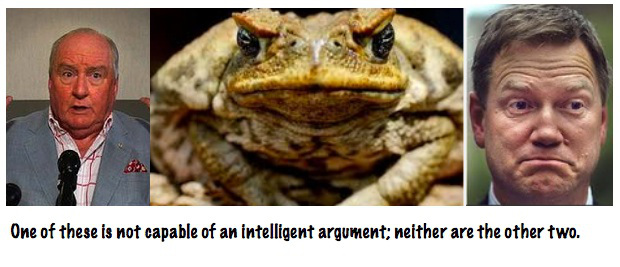
Andrew Bolt and Cane Toads, Both As Indigenous As Each Other!

And further response from THE Australian independent Media network

A few days ago, Andrew Bolt shared a rather strange idea:

“I AM an indigenous Australian, like millions of other people here, black or white. Take note, Tony Abbott. Think again, you new dividers, before we are on the path to apartheid with your change to our Constitution.

I was born here, I live here and I call no other country home. I am therefore indigenous to this land and have as much right as anyone to it.”

Of course, that caused a bit of a controversy. And, I am aware that Bolt thrives on controversy and does so deliberately – because let’s face it when it comes to his place in the media, it’s really all he has. Yes, I’m sure that some of you will say that if you just ignore him, then he’ll go away. While I can see some merit in that argument, I also think that lies and misinformation need to be challenged. Otherwise, we end up with things like Jon Faine telling a talkback caller that the Liberals took the sale of Australia Post to the election as one of their policies. Does anyone remember that? The sale of Medibank Private was tucked away in their fine print, but I can find nothing nor can I remember anything about it.

And so to the word “indigenous”. People are arguing. Some are saying that “technically” he’s right. However, I can find no definition to support even a technical argument to enable someone to argue that he or she is indigenous, simply by virtue of being born in a place.

The Oxford Dictionary defines it:

originating or occurring naturally in a particular place; native:

the indigenous peoples of Siberia 

coriander is indigenous to southern Europe

If someone can find a definition that includes zoo animals which are born here, then I’ll be willing to concede that Bolt is as indigenous as a cane toad. (Or almost, cane toads have been here for several generations now).

But Bolt is not content with manglng the word indigenous in order to inflame and insult. He goes on to quote Tony Abbott, before twisting history:

“If we had known in 1901 what we know now, if our hearts had been as big then as now, we would have acknowledged indigenous people in the Constitution back then,’’ he said this week.

This is nonsense. The writers of our Constitution no more lacked heart than do people today. The difference is they were inspired by the creed that all citizens — those, at least, we admitted — are as one before the law.

True, they did not always live up to that ideal (although, contrary to popular myth, they granted Aborigines the vote in all states where they had the franchise).

But even if we don’t always follow our moral compass, the answer never is to break it. Changing the Constitution to divide Australians between the “first” and the rest — on the basis of the “race” of our ancestors — is not just immoral and an insult to our individuality.

There is much in this that’s highly questionable, but his assertion that “although, contrary to popular myth, they granted Aborigines the vote in all states where they had the franchise)” can’t be allowed to go unchallenged.

Section 41 of the Constitution ensured that people who already had the right to vote weren’t disenfranchised by the new Federal Parliament.

 ’No adult person who has or acquires a right to vote at elections for the more numerous House of the Parliament of a State, shall, while the right continues, be prevented by any law of the Commonwealth from voting at elections for either House of Parliament of the Commonwealth.’

Its main impetus was to protect the rights of women in South Australia who had already gained the vote. As a by-product it gave rights to a number of others, including “non-white” migrants who had arrived before the “White Australia” policy and Indigenous Australians if they already had voting rights.

While two states specifically excluded Aborigines from voting – Queensland and Western Australia, others did little to make them aware of their rights or to encourage them to enrol.

The initial interpretation of Section 41, by the first Solicitor General was that franchise rights only included those who were on the role at the time of Federation, meaning that no new Aboriginal voters could be enrolled. While this was challenged successfully in 1924 by an Indian man who’d been rejected as a Commonwealth voter in spite of being enrolled at State Level, the history of the  voting rights of Aboriginal people is not as simple as Andrew Bolt implies with his throwaway line about “popular myth”. It wasn’t until the 1967 Referendum that the voting rights were ensured; to suggest otherwise, is to be mischievous.

But Bolt has always been one for contradictions. He suggests that he just wants us to be all one, but points out that both the judge and the prosecutor at his trial were Jewish. Not that he has a problem with that – it’s just that he thought that such people would understand the dangers of an oppressive government trying to shut down free speech. However, a media organisation should never use its free speech to “aid the enemy” by publishing allegations about who’s being spied on – even if it’s us – or  which suggest that our navy has treated people roughly when turning their boats around. In the case of the ABC, the whole organisation should be shut down or sold off for daring to publish that which the public has no right to know. A celebrity’s hacked phone records, however, are no reason to launch an inquiry which may inhibit the media from doing its job.

However, the thing I find worrying is not the fact that Bolt has made a fool of himself with his inaccurate and inflammatory use of language. It’s that – for just a millisecond – he’s made Tony Abbott look good. Oh, I know that some of you will question Abbott’s motives about the constitutional addition, but that’s not the point. When Bolt starts criticising Abbott as being too trendy and left wing, it almost makes Abbott sound like he’s mainstream. (No, of course, not to you died in the wool Left wing socialist, latte-sippers who lap up sites like this :)  ). While we’re making effigies of Bolt to throw on the bonfire, we can be distracted from the fact that he’s not the one in government. In the end, Bolt is an irrelevant errand boy who’ll write what he’s told.

And yes, I am aware of the irony of spending an entire blog only to say that Bolt doesn’t matter. However, I make the simple defence that one can’t allow misinformation to spread, no matter who’s spreading it.

“Much has been accomplished when one man says ‘No’!” Bertold Brecht

WE WELCOME YOUR COMMENTS BELOW

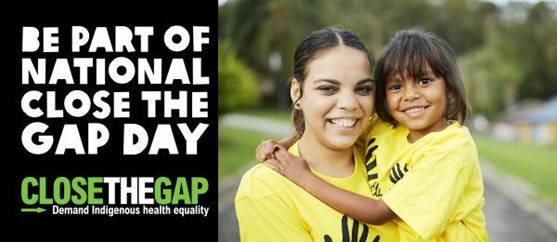
NACCHO National 2014 Close the Gap Day 20 March :Have you registered your Close the Gap event ?

ctg

Commitment needed over a generation

National Close the Gap Day 2014 is a key way your organisation can make a real difference to ensuring ongoing support by government to Indigenous health equality.

We would like you to get involved in National Close the Gap Day this year and help us keep Indigenous health equality and the need for action, on the agenda:

Registrations for National Close the Gap Day 2014 are open right now.

It is crucial that we maintain the public and political momentum needed to ensure that we continue the long-term change needed to Close the Gap.

47769-648x431

Darren Mercy and daughter Avril. Photo: Jason Malouin/OxfamAUS

Please take a moment to register an event for national Close the Gap Day and encourage your colleagues, networks, friends and family to do the same.

The Close the Gap Campaign has made real progress since its inception in 2006. Indigenous infant and child mortality rates have declined significantly and a wide variety of new Indigenous health initiatives have been introduced at both State and Federal levels.

But while we’ve come a long way in terms of public recognition and support, and injection of new resources from government, our ultimate success will require this support and additional resources being further increased and sustained over the next two-three decades.

It is too early for major changes in Indigenous health to have taken place, so it’s sobering to remember that Aboriginal and Torres Strait Islander life expectancy is still 10-17 years less than other Australians. We need a sustained level of support from government over many years to close this health gap.

National Close the Gap Day 2014 is a key way your organisation can make a real difference to ensuring ongoing support by government to Indigenous health equality.

National Close the Gap Day is on Thursday 20th March, 2014. Participation in National Close the Gap Day by your organisation and staff is an excellent way to demonstrate your support for this crucial issue, to give your staff and community a chance to participate in it and to be part of a broad, national movement working for health equality.

It gives your organisation and employees the opportunity to show their support for closing the 10-17 year life expectancy gap between Aboriginal and Torres Strait Islanders and other Australians.

We would like you to get involved in National Close the Gap Day this year and help us keep Indigenous health equality and the need for action, on the agenda:

ACTION

We have a range of web banners, images and logos that are available on request to promote National Close the Gap Day to your organisation and networks .

www.oxfam.org.au/national-day

Tom Widdup
Close the Gap Campaign Coordinator, Oxfam Australia

NACCHO health news : Making Medicare relevant in the 21st Century: AMA and Catherine King

IMG_2368

AMA President Dr Steve Hambleton (pictured right with NACCHO chair Justin Mohamed at a recent Canberra Event) ,

AHHA Medicare Anniversary Roundtable

Making Medicare Relevant in the 21st Century

I would like to acknowledge the traditional owners of the land on which we meet and pay my respects to their elders past and present.

The future of Medicare

I want to speculate about Medicare’s future today – and the key role of doctors, particularly GPs, in that future.

I will make some suggestions about how Medicare can improve its relevance in a changing environment, and how it can best serve the Australian people by continuing to deliver quality, affordable and accessible health services.

As you know, I am not the only person into Medicare speculation recently.

December and January are traditionally the silly season in the Australian media.

The news is full of sport and celebrations … and stories that are recycled, and stories that normally would not see the light of day.

For health, it has been a very silly season.

We have recently seen many opinions about the health system and health financing

People are speculating about the changes to be made to ensure we have a sustainable health care system.

These opinions became stories that inevitably focused on Medicare – because for most Australians Medicare is the Australian health system.

The most notable proposal was the oft-recycled patient co-payment.

The AMA does not support this concept and we have made our view very well known.

There are better ways.

It is interesting that this speculation has come at a time when a new Lancet Commission, when considering global health up to 2035, has recommend that countries should lower the barriers to early use of health services and increase access to disease prevention and minimise the impact of medical expenses.

While I acknowledge the growth in Medicare expenditure, it is important that any changes do not throw the baby out with the bath water.

Any changes must be in the context of the long term goal to improve population health, which will deliver real cost savings.

In terms of spending on medical services, via the Medicare Benefits Schedule, doctors have done their bit over the past decade on containing costs.

As I have said in other fora, medical services costs are not the problem.

Let’s once again set the record straight.

Here are the facts …

Health expenditure

The proportion of health expenditure on medical services was 18.8 per cent in 2001-02 compared to 18.1 per cent in 2011-12.

The average annual growth in total health expenditure on medical services in the decade to 2011-12 was four per cent, compared to growth in PBS expenditure of 6 per cent and 9.3 per cent for products at the pharmacy.

The growth in average health expenditure by individuals on medical services in the decade to 2011-12 was four per cent, compared to 5.3 per cent for PBS medicines and 7.5 per cent for products at the pharmacy.

The average growth in Medicare benefits paid per service in the decade to 2012-13 was 4.7 per cent, less than the real growth in total health spending of 5.4 per cent in the decade to 2011-12.

It is clear that the MBS – combined with the private health insurers’ schedules – is an effective price dampener for medical services.  At least that is what my members keep telling me!

In terms of access to care – despite the low growth in the Medicare Rebate, today, 81 per cent of GP consultations are bulk billed.

And 89 per cent of privately insured in-hospital medical services are charged according to the patient’s private health insurer’s schedule of medical benefits.

This means that patients had no out-of-pocket cost for their doctor’s fee for 93.5 million GP consultations in 2012-13, and over 26 million privately insured in-hospital services.

When Governments get nervous about spending in health, they have three options: reduce the price they pay; spend more wisely; or collect more revenue.

I think that the recent focus on price, in terms of the Medicare Benefits Schedule, is a bit misdirected.

The focus should be on spending that money wisely.  Today, Minister Dutton is quoted as saying that we need to invest in the areas of greatest benefit.

The medical profession stands ready to do its bit in this regard, too.

Australia must change the way it provides health care, where it provides care, and when it is provided for the major driver of health care costs – non-communicable diseases.

Medicare needs to facilitate this.

With the rapid increase in medical knowledge and the rate of change of best practice care, evaluation and change must be part of the medical practitioner DNA.

In terms of our clinical practice, we are going to have to translate what we know into what we do – and we need the tools to do it.

We will need to do this in a structured way so that we stop doing the things we do that don’t provide real outcomes for the patient.

Our clinical practice must be about doing the right things at the right time in the right part of the health system.

Once people get to hospital, their care becomes very expensive.

Keeping people out of hospital is cheaper and it frees up resources, but it might need an increased investment from Medicare, not a decrease.

That investment must be sufficient to improve the coordination of primary care services.

Population Health in the Community – Medicare Locals

The AMA understands the need for community-based health care organisations to improve the coordination of health care outside of the hospital environment.

Such organisations can help to break down the silos in the non-hospital space, build better links between the hospital sector and community based care, support improved population health, and address gaps in the delivery of primary care services.

The former Government set up 61 Medicare Locals to undertake this role.

Despite now having been in operation for a number of years, few Australians understand what Medicare Locals do.

Many GPs feel disenfranchised by them – and so do almost all community-based medical specialists.

We have welcomed the incoming Government’s review and have made a strong submission, based on frontline medical practitioner input.

We believe the former Government pursued the wrong governance model.

They substituted or downplayed the role of GP leaders in Medicare Locals and in their decision-making structures.

They made the same mistakes that the New Zealand Government made in 2001 when it decided to implement ‘skills based boards’ that excluded GPs.

These boards were initially made up of people who, while experienced in governance, did not understand the complexity of health care delivery.

Clinical leadership was absent in many areas in New Zealand and the models failed to deliver.

The leadership role of GPs has now been restored.

The PHOs in New Zealand are now playing a more meaningful role in support of improved health outcomes for local communities.

In New Zealand, the PHOs are now:

  • supporting GPs to focus on population health;
  • supporting improved quality in general practice by facilitating information sharing among GPs;
  • supporting pro-active management of chronic disease;
  • supporting e-health initiatives;
  • funding specific initiatives to keep people out of hospital; and
  • helping support more sustainable general practice by building improved IT and delivering business support.

These are initiatives that are being built from the ground up and led by GPs, not imposed from the top down.

We are calling on the Abbott Government to overhaul the Medicare Locals model to make them responsive to local health needs and to be fully engaged with GPs, who are the engine room of non-hospital based care.

But enough about Medicare Locals, which have got nothing to do with Medicare.

That is why we have suggested a name change.

Complex and chronic disease

The challenges for primary care are growing with our ageing population.

Complex and chronic disease represents a huge burden to the health system.

It accounts for about 70 per cent of the allocated health expenditure on disease and is estimated to increase significantly in the immediate future.

This is both a threat and an opportunity for the Medicare of tomorrow.

Current Medicare-funded chronic disease management arrangements are limited, can be difficult for patients to access, and involve considerable red tape and bureaucracy.

We need less red tape and more streamlined arrangements allowing GPs to refer patients to appropriate Medicare-funded allied health services.

We need a more structured, pro-active approach to managing patients with complex and chronic disease.

The Department of Veterans Affairs is doing some great work in this area with its Coordinated Veterans Care (CVC) Program.

DVA is supporting GPs to provide comprehensive planned and coordinated care to eligible veterans with the support of a practice nurse or community nurse contracted by the Department.

The CVC program is a proactive interactive approach to the management of high acuity chronic and complex diseases.

It supports GPs to spend more time on these patients on a longitudinal basis.  This is something that Medicare currently works against.

The CVC program recognises the non-face-to-face work required, including regular follow-up to see how patients are going without relying on the patient returning to the surgery.

We need to look at how we can roll out this type of pro-active approach more broadly.

It would allow us to invest in a healthier future with better disease management, and prevention of avoidable costly hospital admissions.

The overall message is that if we as a nation do not wish to spend more on health – and that is the clear message coming from the new Government – than we must spend smarter.

We must invest in the things that work.

We must share the knowledge that our various organisations gather from the coalface of health service delivery.

Above all, we must be spending more time building on the things we agree on – and there are a lot of things that we agree on.

Doctors are ready to be a major part of the solution.

GPs are the foundation of primary care – and they save the health system money.

The GP role in population wellness and, ultimately, cost control must be enhanced by Medicare – not eroded or substituted.

The AMA strongly believes that 2014 and beyond must be the years of the GP who can deliver the right care at the right time to the right person.

Medicare must rise to the challenge.

CATHERINE KING MP SHADOW MINISTER FOR HEALTH

MEMBER FOR BALLARAT

images


Introduction

Thank you Alison Verhoeven for that introduction, and thank you for the invitation to make this address today.

May I also acknowledge AMA President Steve Hambleton, Con Costa the President of the Doctors Reform Society, Stephen Duckett from the Grattan Institute, John Glover and all of the other esteemed speakers and guests here with us today.

When Bob Hawke introduced Medicare 30 years ago he warned that without it, two million Australians ‘faced potential financial ruin in the event of major illness’. Today more than 39% of Australia’s population is under 30 – that’s more than eight and a half million Australians who are growing up without knowing what healthcare in Australia looks like without Medicare.

And of the two million Australians who faced potential financial ruin in 1984, it’s worth considering just how many hundreds of thousands of people have had their lives changed thanks to Medicare. It’s quite an achievement, particularly given how hard Labor has had to fight not just to introduce, or reintroduce, the architecture of a universal healthcare system, but to protect it.

That we are celebrating Medicare’s 30th birthday is particularly commendable when a comparison is made of international health systems.  No one health system is perfect, but on this 30th anniversary it is right to be celebrating and reflecting on what is important about our health system.

It’s also important that we focus on what needs to be done to preserve the fundamental principles on which it is based:

  • Universal access
  • Overcoming health inequality
  • Access to new medicines and treatments
  • And prevention.

History

For the millions of Australians who have grown up with Medicare it must be difficult to appreciate how different Australia’s healthcare system was in 1984 compared with the system of universal care we are afforded today.

Of course the Medicare we know is different from the scheme that was originally introduced. Gough Whitlam introduced Medibank in August 1974 only to have Malcolm Fraser and his government overturn it in 1976. The legislation for Medibank had been blocked in the Senate, and was one of the key issues Labor campaigned on during the 1974 election – indeed it was one of the measures on which the Governor-General granted a double dissolution.

At the time, Whitlam argued that the conservatives had:

‘Preserved the inequity, inefficiency and injustice of an antiquated health scheme. They have prevented one million of our fellow-citizens from having any protection against hospital and medical charges.’

Whitlam’s victory in ’74 would prove to be one of the most important steps in achieving a system of universal healthcare but it would not be a decisive one. It took two Labor governments more than two decades to embed what is now Medicare.

When Neal Blewett, the reforming health minister in the Hawke government, introduced the legislation that would re-establish a system of universal care he told the parliament:

“In a society as wealthy as ours there should not be people putting off treatment because they cannot afford the bills. Basic health care should be the right of every Australian.”

It’s a statement that says everything about what Labor stood for 30 years ago and it says everything about what Labor stands for today.

Bulk billing and co-payments

It’s appropriate therefore to focus on some of the achievements of the past two terms in government. When Labor left office bulk billing rates were at more than 80%. This is an achievement I’m very proud of but also something that also causes me deep concern. The increase in bulk billing rates to this historical high did not happen by accident.

The incentives my colleague Tanya Plibersek introduced, and before her Nicola Roxon, for GPs to bulk bill, particularly to bulk bill concessional patients, have made it easier for all Australians to get to see a doctor, but in particular they have benefited those members of the community who most need the assistance Medicare affords. Over the past month we’ve seen the government repeatedly refuse to rule out the introduction of a Medicare co-payment. This would end bulk billing and put considerable pressure on some of the most vulnerable Australians, many of whom already have very low access to GPs.

Labor’s legacy

To strengthen primary care Labor established a network of 61 Medicare Locals servicing every region. Medicare Locals are intended to save money on secondary care and prevent hospital admissions. They are also one of the important ways Labor strengthened Medicare when in government by refocussing on the importance of primary care.

The benefits of the work Medicare Locals are undertaking are already being seen in communities across Australia. Medicare Locals are identifying specific needs for local services and planning for services to address these gaps, such as through the engagement of additional nurses and other allied health professionals at GP clinics, as well as the provision of after-hours GP services.

But most importantly Labor made funding available to ensure these services could be delivered effectively.  Medicare Locals provide the architecture for a stronger reengagement of the Commonwealth in local primary care and planning. Medicare Locals for example are working to increase breastfeeding rates in areas where breastfeeding rates are low; in areas where smoking rates are high there are programs tailored specifically to those communities to reduce smoking rates, as there are programs to reduce rates of type two diabetes in communities that have a significant prevalence of this disease.

Despite the rhetoric of the new government, the vast majority of people employed by Medicare Locals are directly responsible for providing care and improving health services in local regions.

Viability of Medicare

As the demands on the MBS and PBS continue, it’s important to ensure governments get the best value for money on health expenditure and that all Australians continue to get access to the best quality medical care. The sustainability of Medicare is about much more than purely academic arguments.  It’s important that new policies be pragmatic and can actually be implemented by governments. A good example of this is the price disclosure reforms we pursued when in government.

But it’s important to acknowledge too the challenges that had to be met to implement this policy.  I am concerned however that some of the rhetoric of the past few months is more about softening the Australian public and media up for an assault on the universality of Medicare and a further move towards a two tiered health system. Today for example we have seen the Health Minister use a Productivity Commission report as an excuse to talk about cutting ‘waste’ in health.

On its record to date it’s difficult to trust this government, and I fear the Minister is only using this rhetoric as an opportunity to justify cuts to satisfy the Prime Minister’s agenda. Over the next couple of years I am particularly interested in working with you to develop new ways we can ensure greater equity in our health system and make sure the Medicare of the 21st century is something its original architects and the Labor party that introduced it, can be proud of today.

Private Health Insurance

It’s important to acknowledge that the private health insurance industry does play an important role in healthcare in Australia. Labor’s position remains that governments have a responsibility to ensure that the private health insurance industry remains sustainable and that private health insurance is affordable and provides good value. The means testing of the private health insurance rebate that Labor introduced in government meant a number of the health programs and infrastructure projects I’ve already mentioned could be delivered.

Despite the criticism at the time we did not see tens of thousands of Australians giving up their cover as was claimed would occur. On the contrary, the number of people with both general and hospital cover is at the highest rate ever and continues to grow. For the first time ever, 55% of Australians have general cover, with 47% having hospital treatment cover.

The challenge for the government now is to ensure the cost of private health insurance is kept as low as possible and that the system does not undermine Medicare. At the end of last year Minister Dutton announced the largest increase to private health insurance premiums in a decade. In government, we had always taken several months to agree on premium increases, often going back to individual insurers several times to ensure consumers received the smallest increase possible. This was a particularly cynical announcement by this government and one that would be a mistake to repeat.

I want to mention briefly the government’s intention to sell Medibank Private.  Labor has reservations about what the sale of Medibank will do for competition in the sector and what this will mean for consumers. Having a government-owned insurer has had a balancing factor in the sector which would be lost should Medibank be sold.  More concerning again is the new government’s rhetoric about the move of the private health insurance industry into general practice.

I am interested from a policy perspective in good models of care. I am interested in how there can be a stronger role for prevention and more integrated case management, better consumer health literacy, more consumer engagement. There are very good examples across the country, including some of the work private health insurers are doing with their captured population of patients.

But I remain fundamentally concerned as a Labor Shadow Health Minister about health inequality and my very real fear is that there is a genuine danger of a shift toward a two tiered health system.

Conclusion

Today, some 30 years since the introduction of our universal health system – Medicare – debates about its structure, its funding, its principles and its implementation continue. But it is clear that Australians value it and that it is embedded as a fundamental aspect of our society.

I want to wish you well in your deliberations today.

I wish to congratulate the AHHA on pulling together speakers who have been responsible for the establishment, implementation and defence of Medicare.

Labor stands for a system of universal care.

As Neal Blewett told parliament 30 years ago, basic healthcare should be the right of every Australian.

30 years later, it is.

Medicare is a system worth defending and we will do exactly that.


NACCHO political health alert : Federal Health Minister Peter Dutton pushes overhaul to cut ‘waste’

QUESTION TIME

Health Minister Peter Dutton says new figures showing an escalation in health spending demonstrate why the government must cut ”waste” in health.

Figures to be published by the Productivity Commission on Thursday (30 Jan) show that between 2002-03 and 2011-12, federal government spending on health grew at an average of 4.9 per cent a year, while state government spending grew at 6.8 per cent a year, and non-government spending – by individuals and insurers – grew by 5 per cent a year.

The report is now available from the NACCHO resources website

Government Website with reports in Xcel and word

This report from SMH Dan Harrison

Health spending per head by all governments rose 37 per cent over the period in real terms, from $4474 to $6230. Adjusting for inflation, non-government health spending per person rose from $1259 to $1802 over the same period.

From the NACCHO Healthy for Life report card 2013-DOWNLOAD HERE

How much money is spent by Australian governments on health of Indigenous Australians?

Indigenous health expenditure was estimated to be $4.55 billion in 2010–11, 3.7% of the total Australian health expenditure. The corresponding figure for non-Indigenous Australians was $119 billion. In 2010–11 health expenditure per Indigenous person was $7,995, an increase of 12.0% from $7,139 in 2008–09.

 For non-Indigenous people per person expenditure in 2010–11 was $5,436. For every dollar spent per non-Indigenous Australian $1.47 was spent per Indigenous Australian (AIHW 2013b). Australian Government expenditure on Indigenous-specific health services has continuously increased since 1995–96. In 2010–11, the Commonwealth funding for Indigenous-specific programs was $624 million. This is a real growth of 265% since 1995–96 (AHMAC 2012).

Mr Dutton said the figures demonstrated the challenge the government faced in placing the health system on a stable financial footing. ”It    is the reason we have to cut waste in health and invest in areas that provide the greatest benefits to patients.”

Earlier this month, Mr Dutton flagged an overhaul of Medicare, warning spiralling costs would make the system ”unmanageable” without change.

”In the end, we want to strengthen Medicare and we want to strengthen our health system, but we can’t do that if we leave change to the 11th hour,” he said.

The  government’s Commission of Audit is considering a proposal by a former adviser to Tony Abbott, Terry Barnes, for a $6 fee to visit the doctor to discourage avoidable GP visits.

Mr Dutton has also left open the possibility of regulatory change, which would allow private insurers to pay for GP visits, prompting warnings from consumer advocates that such a change would undermine universal healthcare.

Asked about the proposal for a $6 fee on Wednesday, Liberal deputy leader Julie Bishop said the government had “no plan for co-payments,” and accused Labor of ”scaremongering”. ”I’m in the cabinet. This has never been proposed. This is not before the cabinet.”

The Productivity Commission report shows the Commonwealth spent $7.4 billion on GP services in 2012-13, up from $6.2 billion in 2006-07 after adjusting for inflation. But GP spending per person has increased little, from $301.60 in 2006-07 to $304.40 in 2011-12.

The number of GP services per 1000 people has also seen only a modest increase, from 5553 in 2008-09 to 5768 in 2012-13.

More than 80 per cent of GP visits were bulk-billed in 2012-13. However, 5.8 per cent of people reported deferring seeing the doctor because of cost, while 8.5 per cent of people said they had deferred purchasing medicines.

Welcome your comments

NACCHO Aboriginal Health: Estimated 400 suicides in our communities in last three years

Image - www.nacchocommunique.com

“Aboriginal and Torres Strait Islander people experience suicide at around twice the rate of the rest of the population. Aboriginal teenage men and women are up to 5.9 times more likely to take their own lives than non-Aboriginal people.

This is a crisis affecting our young people. It’s critical real action is taken to urgently  address the issue and it’was heartening to see the previous Federal Government taking steps to do that.

For any strategy to be effective, local, community-led healthcare needs to be at its core.

But so far we have not heard from this Government on the future of The Aboriginal and Torres Strait Islander Mental Health and Suicide Prevention Advisory Group and the $17.8 million over four years in funding to reduce the incidence of suicidal and self-harming behaviour among Indigenous people.”

Justin Mohamed Chair NACCHO commenting on the crisis 

During the last three years of Aboriginal and Torres Strait Islander suicides are at nearly 400, no less than 380.

Research by Gerry Georgatos

Last year, I aggregated Australian Bureau of Statistics (ABS) hospital collated data on reported suicides of Aboriginal and Torres Strait Islander peoples – 996 suicides from 2001 to 2010. That is 1 in 24 of all deaths of Aboriginal and Torres Strait Islander people – by suicide.

READ previous NACCHO articles on suicide prevention here

NACCHO community support : Raising funds for Elders report into Preventing Self-harm & Indigenous suicide.

Update we reached out goal of $9,500

There is no ABS data available at time to determine whether the crisis has abated or got worse, but I have been record keeping reported suicides – whether through the media, community organisations or via other sources – for my own academic research on premature and unnatural deaths. I have found that from the beginning of 2011 to end 2013 there have been nearly 400 suicides – child, youth and adult – of Aboriginal and Torres Strait Islander peoples.

My own research estimates that the 996 suicides recorded between 2001 to 2010 are an under reporting of the actual numbers, and instead of 1 in 24 deaths by suicide, I have estimated that the rate of suicide was between 1 in 12 to 1 in 16. The 2001 to 2010 suicides average to 99.96 suicides per year. In reflection it was 99 custodial deaths alone over a ten year period in the 1980s that led to the Royal Commission into Aboriginal Deaths in Custody. How many suicides will it take before this nation’s most horrific tragedy is met head on with a Royal Commission?

My research compilations during the last three years of Aboriginal and Torres Strait Islander suicides are at nearly 400, no less than 380. Where there had been an average 99 deaths by suicide from 2001 to 2010, according to my research the annual average for 2011 to 2013 has tragically increased to approximately 130 suicides per annum.

Last year, on October 23, the Chair of the Prime Minister’s Indigenous Advisory Council (IAC), Warren Mundine read my journalism and some of the research published predominately in The National Indigenous Times and by The National Indigenous Radio Service and in The Stringer and Mr Mundine responded with a never-before-seen commitment by a high profile Government official to urgently do something about the out-of-control crisis

He added the crisis to the IAC’s mandate – and he time-limited it to six months so that the crisis would not languish. But three months have passed and we have not heard anything from the Council despite several requests to them for information on any potential progress.

At the time, Mr Mundine expressed his shock at the extent of the crisis.

“The figures sit before your eyes and the scale of it you sort of go ‘oh my god, what the hell is going on?’ I admit that I was probably one of the problems, because we seem to handle mental illness and suicide and shunt it away, we never dealt with it as a society, but we have to deal with it, confront it, because we are losing too many of our people, too many of our young ones… It is about us understanding this and challenging ourselves, and as I said I am just as bad as anyone else out there who put this away and did not want to deal with mental health and the suicide rates, so we have to get over that,” said Mr Mundine.

“We are looking at putting (the suicide crisis) on the table for our first meeting, and looking at over the next three and six months at what’s the advice we will be looking at giving to the Government and the Prime Minister to deal with this issue.”

“My personal opinion, and there is no science in this, this is just my observation, is our self-esteem and culture, I think, plays a major part in these areas.”

“It is a problem and I congratulate The National Indigenous Times for putting it on the front page. We need to really start focusing on this a lot better and I’m not talking about the people who are in there already doing it because they’re the champions. I’m talking about myself and the rest of Australia, we need to get our act together.”

Since October 23 there have been two score suicides.

Dumbartung Aboriginal Corporation CEO Robert Eggington said that in the last two weeks another spate of suicides has blighted both the south west and the north west of Western Australia.

“There have been suicides among our youth in recent weeks, another tragic spate. We met with the Premier last year and we are waiting for his promises to be kept to fund safe spaces and strategies for us to coordinate the helping of our people, but to date we have been kept waiting,” said Mr Eggington.

Chair of the Narrunga People, Tauto Sansbury said that he has been trying to arrange a meeting with Mr Mundine but despite three months of effort this has not occurred – Mr Mundine had promised to organise a meeting with Mr Sansbury following articles about the high rate of suicides among South Australia’s Aboriginal people.

“We have become used to broken promises by our State Government for a 24/7 crisis centre for our people and we hoped that Warren (Mundine) would represent the needs of our people, stand up for our most vulnerable, the at-risk, but to date he is yet to meet us let alone represent us,” said Mr Sansbury.

“Our young people and adults continue to fall victim to suicide.”

To the Northern Territory, where Aboriginal child suicides have increased by 500 per cent since the launching of the infamous “Intervention”, Arrente man and Bond University criminology student, Dennis Braun has reported the dark plight of one of the Territory’s communities – 33 deaths in five months. The community’s Elders have requested that the community is not publicly identified.

“The majority of the deceased were under 44 years of age. The youngest was a 13 year old who committed suicide a couple of days just before Christmas.”

“There should be an inquiry, but there is not despite 33 deaths. If this happened in an urban community like Sydney there’d be an outcry even after three or four deaths, with (residents and the wider community) wanting to know why it is happening and where to go for help.”

This publication has prioritised the suicide crisis for quite some time, sustaining the coverage, and the stories of loss, the grieving families, and we have effectively campaigned to Government to rise to the occasion. We do not apologise for this. On October 23, Mr Mundine and the Indigenous Advisory made a commitment that they must keep.

Links:

Warren Mundine including the suicide crisis to the IAC mandate

Government to address Aboriginal suicides

30 suicides in the last three months as we wait for promises to be kept

996 Aboriginal deaths by suicide – another shameful Australian record

Australia’s Aboriginal children – the world’s highest suicide rate

Whose child will be the next to die?

Suicide gap widening, says researcher

NACCHO Health Workforce reports : Australia’s medical workforce continues to grow across all regions of Australia

thumbs_waynequilliamphotographywannik913

The medical workforce is continuing to grow, with increased supply across all regions of Australia, according to a report released by the Australian Institute of Health and Welfare (AIHW).

DOWNLOAD THE AIHW REPORT HERE

Report :ACCC proposes to re-authorise collective negotiations by the AMA (see below)

The report, Medical workforce 2012, provides information on the demographic and employment characteristics of medical practitioners who were registered in Australia in 2012.

It shows that in 2012, there were 91,504 medical practitioners registered in Australia.

‘Between 2008 and 2012, the number of medical practitioners employed in medicine rose by just over 16% from 68,455 to 79,653,’ said AIHW spokesperson Teresa Dickinson.

The supply of medical practitioners across all states and territories compared to the population rose by almost 9% between 2008 and 2012, from 344 to 374 full-time equivalent medical practitioners per 100,000 people.

About two thirds (66%) of medical practitioners gained their initial medical qualification in Australia.

The supply of medical practitioners was not uniform across the country, with supply generally being greater in Major cities than in Remote or Very remote areas. However, the supply of general practitioners was highest in Remote and Very remote areas, at 134 full-time equivalent GPs per 100,000 people.

About 94% (75,258) of employed medical practitioners were working as clinicians, of whom 35% were specialists and 35% were general practitioners. ‘Physician’, which includes general medicine, cardiology and haematology, was the largest main speciality of practice (5,918). ‘Surgery’ was the second largest (4,275). Of employed non-clinicians, more than half were researchers (27.8%) or administrators (24.5%).

‘Women are increasingly represented in the medical practitioner workforce, with the proportion of female medical practitioners up from 35% to 38% between 2008 and 2012,’ Ms Dickinson said.

The average age of medical practitioners remains steady at around 46.

The average weekly hours worked by employed medical practitioners remained stable between 2008 and 2012. In 2012, male medical practitioners worked an average of 45 hours per week, while female medical practitioners worked an average of 38 hours per week.

The AIHW is a major national agency set up by the Australian Government to provide reliable, regular and relevant information and statistics on Australia’s health and welfare.

ACCC proposes to re-authorise collective negotiations by the AMA

The Australian Competition and Consumer Commission has issued a draft determination proposing to re-authorise a collective bargaining arrangement put forward by the Australian Medical Association (AMA)* for ten years.

The collective bargaining arrangements allow each relevant state and territory AMA to negotiate on behalf of general practitioners who provide services in public hospitals and health facilities in rural and remote areas.

“Collective negotiation can deliver reduced transaction costs. A single negotiation and sharing these cost savings should provide more effective input into contracts,” ACCC Deputy Chair Dr Michael Schaper said.

“This may also lead to greater attraction and retention of doctors in rural areas, where access to sufficient medical services could otherwise be limited.”

The ACCC has also granted interim authorisation for the proposed arrangements. The ACCC’s previous authorisation of these arrangements expires on 28 February 2014.

“Interim authorisation will allow the relevant AMAs to continue to collectively bargain with state and territory health departments, providing some stability and certainty in this area,” Dr Schaper said.

Interim authorisation allows the parties to engage in the conduct prior to the ACCC considering the substantive merits of the application.

Interim authorisation will commence on 1 March 2014 and will remain in place until the date that the ACCC’s final determination comes into effect or is revoked.

Authorisation provides immunity from court action for conduct that might otherwise raise concerns under the competition provisions of the Competition and Consumer Act 2010.  Broadly, the ACCC may grant an authorisation when it is satisfied that the public benefit from the conduct outweighs any public detriment.

Further information about the application for authorisation and the granting of interim authorisation is available on the authorisation register.