NACCHO Aboriginal Health News: How and when will the Abbott Government CLOSE THE GAP?

Abbott and the Mandine

Two months have passed since Tony Abbott became Prime Minister, promising to be a prime minister for indigenous affairs.

He brought the portfolio into his own department. But nothing much has happened as a consequence out in the suburbs, or the towns or the settlements where Aboriginal Australians actually live. It’s now getting to the stage where one might expect to see signs of a government, and a commitment, in action.

From Jack Waterford Canberra Times And we thank Jack for his article

Here’s a few notes from near HQ.

Hundreds of Commonwealth public servants are now inside the Prime Minister and Cabinet portfolio, if not its offices. Not all are from the old FaHCSIA department, which once led the national efforts to reduce Aboriginal disadvantage. Others have come from Education, from Science, and from the miscellaneous units once created in many different agencies to connect the hopes and aspirations for Aborigines with more general parts of national endeavour. Health retains its indigenous health units.

But one will search in vain for any evidence or proof of this transition, indication of the new order or battle, or for signs, beyond broad election policy statements, describing new priorities, programs and activities. Indigenous responsibilities are yet to be reflected on the PM&C website, and the order of battle – who, for example, is responsible to whom, and for what, has yet to be published, certainly to outsiders.

No doubt it has been business as usual, in Canberra, regional offices, or even at the front line. But one thing missing is a steady stream of press statements issued locally, regionally or centrally, announcing actions, reactions, progress or setbacks. There has been an absolute reduction in the number of self-serving statements praising the courage, wisdom, vision and personal generosity of the former minister, Jennie Macklin, but there has not been a commensurate increase in statements associating the new minister, Nigel Scullion, with everything desirable and good.

Most Aboriginal organisations are treating the hiatus much as Russians treat winter at times of invasion. They are waiting to see what the enemy wants and does. Even many of the cynical believe that Abbott is fair dinkum in wanting to achieve change, though they have little idea of what it is he actually wants or plans, or how it will change their lives. For most, if experience is any guide, life will go on, though the quality and quantity of people bossing them around, to no effect, may change.

Abbott plans, apparently, to listen respectfully to ideas from people such as Nyunggai Warren Mundine, chairman of the new Prime Minister’s Indigenous Advisory Council, Noel Pearson, and, probably, Dr Peter Shergold, a former PM&C chief who was once the head of the Aboriginal and Torres Strait Islander Commission, when it was the primary government executive body in indigenous affairs .No doubt this advice will be important in shaping policy. But it is not clear how much it will shape day-to-day decision making, nor does it tell us much about who will be making the decisions.

The council is to meet three times a year with Abbott and senior ministers. Mundine will meet Abbott and Scullion once a month. The council ”will include indigenous and non-indigenous Australians with a broad range of skills, including experience in the public sector, business acumen, and a strong understanding of indigenous culture”; it will be, in short, just the sort of important sounding, but actually powerless body that the government spent much of the past week axing as surplus to requirements.

One of the potential problems of the advisory council was highlighted in a perhaps unintentionally ironic, but not inaccurate, summary of an article by Mundine in the Financial Review this week. This read: ”Policy in the past 40 years has not altered the appalling position of indigenous people. That is why we need an advisory council.”

Gosh, why didn’t anyone think of that before?

Perhaps adding to the (or my) depression was an advertisement from the Menzies School of Health Research for a co-ordinator for its indigenous youth life skills development project. This $70,000 position, based in Darwin to work in the Top End, is to devise an anti-suicide program.

”The indigenous youth life skills development project is a multi-disciplinary intervention study aimed at building an evidence-based suicide prevention program for indigenous youth in remote settings. The project involves the design, pilot and evaluation of a skills-based suicide prevention intervention designed to build strength and resilience amongst indigenous school-aged youth. The project will involve a range of stakeholders in the East Arnhem region to ensure a culturally appropriate, strategic and coordinated approach.

”The project coordinator will support the design, implementation and evaluation of the indigenous youth life skills development project in the East Arnhem region including facilitating and coordinating stakeholder and community consultations, facilitating youth engagement with the program and assisting with the collection of evaluation data in a timely manner.”

One could quote more of the essentially meaningless abstract nouns and other verbiage describing a job for which indigenous people ”are strongly encouraged to apply”. Provided, that is, they have a ”willingness and ability to undertake air travel by light aircraft and use available accommodation in remote communities for several nights per week” and ”an understanding and awareness of relevant workplace health and safety as well as equal opportunity principles and legislation along with a commitment to maintaining a healthy and safe workplace for all Menzies staff, students, volunteers and visitors.”

Heaven knows the suicide problem is bad enough, and the need to do something important. But why wouldn’t any observer recognise immediately that people who see the problem in terms of such agglomerations of abstract nouns are hardly likely to have the insights to do much about it? Indeed, it is in part such a bureaucratic and logorrheic approach to social problems that is making so many despair.

Meanwhile, Abbott might be confirmed in thinking a radical break with the past is needed by the pathetic scorecard accorded to Council of Australian Governments’ ”initiatives” on almost everything, but certainly closing the gap on indigenous disadvantage.

The COAG Reform Council reported during the week that while there were odd signs of progress, it was clear the rate of improvement had slowed over the past five years or so (should one say the period of the Rudd and Gillard governments?). In some areas, things went backwards; in others it was impossible to say whether there had been any change.

The comparisons, and the statistics, were coming primarily from economists and accountants, rather than people able to properly compare slices of life. Even with imagined randomness, and purportedly objective measures (say percentages of children passing a reading exam, or the number of people waiting too long to see a doctor), the results, though interesting and perhaps indicative, were hardly ever likely to be significant in any statistical sense. That the council supposed they were illustrates one of its problems.

Thus the indigenous child death rate fell from 212 per 100,000 in 2008 to 196 per 100,000 in 2012, and this was ticked as evidence of ”good progress”. I very much doubt that it is of even slight statistical significance.

The disappointing or indifferent results from Commonwealth-state initiatives were to be found in the general areas of health and hospitals, schools (including preschools, reading and numeracy) and indigenous affairs.

Perhaps it is all the fault of an incompetent (whether or not well-meaning) Labor government. But it was just this Labor government that brought great energy, zeal and extra resources into precisely these fields, compared with before. Commonwealth spending in indigenous affairs may have increased by 50 per cent. More and, supposedly, more focused, spending on health and education were supposedly big positives of the Labor era. So positive that Abbott decided, late in the election campaign, to ”adopt” Labor policies.

So all that extra money, and all of the earnest and sometimes sanctimonious talk, made hardly any difference? Even if it sometimes did, if not by much, it was quite plain to the COAG Reform Council that the marginal benefits of all of this extra activity and spending were very low.

When politicians and bureaucrats face this fact – and there is no evidence they have done so yet – there are usually three possible responses. One is to recognise that there is something wrong with the policies, and to change course. Another is to ignore the evidence, and to carry on regardless, wasting more and more money, until it all runs out. Another is to redouble efforts and do and spend more, convinced that the plan will work, must work, or is not working only because of some managerial or ideological obstructionism. This is the ”policy is right in theory, so it must work in practice” approach.

This is pretty much the story of Aboriginal affairs, considered from Canberra as a harmless activity or game for ineffectual but zealous bureaucrats. (Considered in the field, by ”clients”, it’s a different, tragic matter, if with surprisingly little relationship to the prattle, the buzz, the memos, or even the relentless search for usable ”good news stories” by inspectors-general for indigenous affairs.)

Ten years from now, indeed, hardly anyone in Aboriginal affairs will even remember that there was a Labor government, although they may regard Kevin Rudd with vague affection for saying sorry. The lamentable Macklin era will have become assimilated into stories of the John Howard-Malcolm Brough intervention. This saw the re-bureaucratisation of the field, the hollowing out of Aboriginal organisations and politics, the abandonment of ”consultation” and the advent of a command ”engagement” economy, and the blaming of most personal and community ”dysfunction” on the victims or their parents. Australian taxpayers invested an extra $7 billion in trying to make a difference, with ever diminishing returns, if any.

Abbott, and those to whom he pays the most respectful attention, will insist that they will be different with a switch away from welfarist policies, ”sit-down” money and cultures of dependency. They will reward initiative, promote enterprise, education, employment and involvement with the wider economy. Yet they do not admit that a good deal of the ineffectual bossiness and reorientation of the past seven years has also been about the same thing. Noel Pearson, to use just one example, has consistently received handsome funding and encouragement from Canberra. One can, perhaps, learn lessons from the experiences of people in his area. But if they were capable of delivering salvation – as Abbott sometimes seems to urge – one ought to have, by now, seen some signs.

NACCHO Smoke Free news: Stickin’ It Up The Smokes – has there been a catchier campaign name?

photo (6)

The recent NACCHO Summit had a number of presentations about different tobacco control projects that are underway across the country.

While their goals differ, they all are harnessing new technologies and online communications channels, reports journalist John Thompson-Mills.

***

Tobacco control projects in the spotlight 

John Thompson-Mills writes:

Tablets are being used to survey Aboriginal and Torres Strait Islander people and the staff and clients of community controlled services about smoking-related issues.

The Talking About the Smokes project aims to better understand the pathways to smoking and quitting for Aboriginal and Torres Strait Islander people, and to evaluate what works in helping them to quit smoking. (Many organisations are involved in the project, as outlined here).

So far, more than 2400 Aboriginal and Torres Strait Islander people have completed the first wave of the survey, which has seen health workers and even community Elders involved in collecting the data, using tablet technology.

Vouchers to supermarket and other major shopping chains are also used as inducements to encourage participation. A second wave of the survey is about to begin.

Jamahl, a Townsville health-worker, has been smoking since he was sixteen. He’s been convinced quitting is a good idea since recently losing a dearly loved Aunty to cancer.

Jamahl has taken the survey, and was surprised about what he learnt.

He says it’s made him think differently about his community and is convinced other respondents will feel the same way.

***

Making it Work

In NSW, more than 1000 “Tobacco Resistance Toolkits” have been downloaded since the Australian Health & Medical Research Council launched “Making It Work” in October last year.

Aimed at new Aboriginal service providers who lack training or culturally appropriate resources, the Tobacco Resistance and Control team (ATRAC) toolkit is a series of three modules.

These offer a practical template for data collection, creating a smoke-free workplace policy and how to source current facts and figures, called “Let’s Get Started.” A fourth module, Social Marketing, is about to be launched.

The three-year program has placed no limit as to how many modules will be available to its service providers. The more the community needs, the more consultation-based modules will be developed.

Once again, the community will shape and drive the program.

Jasmine Sarin who presented the seminar at the NACCHO Summit said defining success won’t be about the Toolkit’s effect on smoking prevalence.

“It’s more about measuring how people move through stages of change,” she says. “So, not smoking in the home anymore, or no longer smoking around children, any improvements in those areas would represent a success for us.”

***

Stickin’ It Up The Smokes

In South Australia, a unique program IS looking to reduce smoking prevalence – among young pregnant Aboriginal women.

In SA, the smoking rate for pregnant women is three times higher for Indigenous women than non-Indigenous women, totalling nearly 53%.

South Australia also has the highest number of low birth-weight babies.

The answer is Stickin’ It Up The Smokes, put together by the Aboriginal Health Council of South Australia (AHCSA).

Using social media, a series of flyers, posters and regional radio ads, a multi-faceted campaign has been pulled together in very quick fashion and for very little cost.

Mary Anne Williams, the Maternal Health Tackling Smoking Program Officer at AHCSA, says her initial campaign costs were heading towards $20,000.

But by bringing in a number of Aboriginal media students and finding a young social marketing expert, the final outlay was a fraction of that, at $2,000.

Speaking at the NACCHO Summit, Williams said the campaign only took four months to go from concept to delivery; a massive eight months quicker than a Government-led process would have taken.

She even managed to get some help from X-Factor finalist Ellie Lovegrove who wrote a rap for the campaign.

There were some challenges though. Convincing some community Elders about the merits of the strategy took time. And it was a struggle to find the nine non-smoking ambassadors until a Facebook campaign was launched. Then the quota was filled within two days.

The target audience is primarily pregnant SA Aboriginal women aged in their early 20s.

The secondary targets include: Aboriginal mothers with young babies, especially those who are breastfeeding; families, and particularly partners, of pregnant Aboriginal women; young Aboriginal women who have not yet taken up smoking or had children (especially those aged 10-14 years); and Aboriginal communities throughout South Australia.

The aim of the Stickin It Up The Smokes campaign is modest:  a 2.1% per year reduction in smoking during pregnancy for Aboriginal women by June 2016.

The Summit also heard yesterday about anti-smoking efforts by the Kimberley Aboriginal Medical Services Council, in WA. Some tweet reports follow.


NACCHO Aboriginal health :Culture is an important determinant of health: Professor Ngiare Brown at NACCHO Summit

Ian Ring

It’s time to move away from the deficit model that is implicit in much discussion about the social determinants of health, and instead take a strengths-based cultural determinants approach to improving the health of Aboriginal and Torres Strait Islander people. This is one of the messages from Ngiare Brown, Professor of Indigenous Health and Education at the University of Wollongong.

Professor Brown also stresses the importance of a focus on resilience, and the value of the Aboriginal Community Controlled Health sector as a national network for promoting cultural revitalisation and sustainable intergenerational change.

The summary below is taken from her presentation at the recent NACCHO summit

***

Connections to culture and country build stronger individual and collective wellbeing

Professor Ngiare Brown writes:

Although widely accepted and broadly researched, the social determinants approach to health and wellbeing appear to reflect a deficit perspective – demonstrating poorer health outcomes for those from lower socioeconomic populations, with lower educational attainment, long term unemployment and welfare dependency and intergenerational disadvantage.

The cultural determinants of health originate from and promote a strength based perspective, acknowledging that stronger connections to culture and country build stronger individual and collective identities, a sense of self-esteem, resilience, and improved outcomes across the other determinants of health including education, economic stability and community safety.

Exploring and articulating the cultural determinants of health acknowledges the extensive and well-established knowledge networks that exist within communities, the Aboriginal Community Controlled Health Service movement, human rights and social justice sectors.

Consistent with the thematic approach to the Articles of the United Nations Declaration on the Rights of Indigenous Peoples (UNDRIP), cultural determinants include, but are not limited to:

•Self-determination;

•Freedom from discrimination;

•Individual and collective rights;

•Freedom from assimilation and destruction of culture;

•Protection from removal/relocation;

•Connection to, custodianship, and utilisation of country and traditional lands;

•Reclamation, revitalisation, preservation and promotion of language and cultural practices;

•Protection and promotion of Traditional Knowledge and Indigenous Intellectual Property; and

•Understanding of lore, law and traditional roles and responsibilities.

The power of resilience

The exploration of resilience is a powerful and culturally relevant construct.

Resilience may be defined as the capacity to “cope with, and bounce back after, the ongoing demands and challenges of life, and to learn from them in a positive way”, positive adaptation despite adversity or “a class of phenomena characterized by good outcomes in spite of serious threats to adaptation or development”

Resilience is important because:

• It is culturally significant – we are a resilient culture, surviving and thriving;

• Resilient people/communities are better prepared for stronger, smarter, healthier, successful futures and have better outcomes across the social determinants of health (education, health, employment);

• Resilient individuals are more likely to provide a positive influence on those around them and are better able to develop and maintain positive relationships with others – family, friends, peers, colleagues;

• Resilience promotes collective benefits – social cohesion, community pride in success, economic stability, and improved health and wellbeing.

There is a developing body of international work describing cultural continuity and cultural resilience.

Scholars such as Fleming and Ledogar propose dimensions including traditional activities, traditional spirituality, traditional languages, and traditional healing.

Further, Native American educators propose cultural protective factors and cultural resources for resilience such as symbols and proverbs from common language and culture, traditional child rearing philosophies, religious leadership, counselors and Elders.

(For example, Chandler, M. J. & Lalonde, C. E. (2008). Cultural Continuity as a Protective Factor Against Suicide in First Nations Youth. Horizons –A Special Issue on Aboriginal Youth, Hope or Heartbreak: Aboriginal Youth and Canada’s Future. 10(1), 68-72; Olsson 2003, Stockholm Resilience Centre; John Fleming and Robert J Ledogar, ‘Resilience, an Evolving Concept: A Review of Literature Relevant to Aboriginal Research’,  Pimatisiwin. 2008 ; 6(2): 7–23. Iris Heavyrunner et al 2003).

The cultural determinants of health and wellbeing may be seen to be wrapping around, or cutting across individual, internal, external and collective factors.

A ‘social and cultural determinants’ approach recognises that there are many drivers of ill-health that lie outside the direct responsibility of the health sector and which therefore require a collaborative, inter-sectoral approach.

There is an increasing body of evidence demonstrating that protection and promotion of traditional knowledge, family, culture and kinship contribute to community cohesion and personal resilience.

Current studies show that strong cultural links and practices improve outcomes across the social determinants of health.

There are certain services only NACCHO and ACCH sector can and should do – child protection; mental health; women’s business; and men’s health.

This is useful in assisting policy and resourcing decision-making dependent upon context, geography, demography and tailoring services to local needs and priorities

The ACCH sector provides a true national network and a vehicle for cultural revitalisation. A cultural determinants approach and cultural revitalisation drive sustainable intergenerational change.

NACCHO Aboriginal Health News: Aboriginal health groups express concern over cholesterol and statins debate

untitled


ELEANOR HALL: Indigenous health groups are expressing concerns that the ABC’s Catalyst program into cholesterol and statins will hurt Aboriginal and Torres Strait Islander people.

As a genetic group, Indigenous Australians are at a high risk of heart disease.

And health experts say statins are a tool which can dramatically help the condition.

The Australian Indigenous Doctors’ Association is urging people to keep taking their prescribed drugs, and talk to their GPs if they’re worried.

Will Ockenden has our report.

WILL OCKENDEN: The major investigation by ABC TV’s Catalyst program questioned the scientific evidence linking cholesterol to heart disease.

It also claimed that taking anti-cholesterol medication called statins could have a detrimental effect to our health.

The reaction from some public health experts was swift and negative.

NORMAN SWAN: Essentially statins will reduce your cholesterol at any level. The magnitude of the benefit depends on the magnitude of your personal risk. So if you’ve got a high magnitude of risk, then you need to be on a statin.

WILL OCKENDEN: Because Aboriginal and Torres Strait Islander people are genetically at a higher risk of cardiovascular disease, ABC RN’s Health Report presenter Norman Swan says it’s worth taking statins.

NORMAN SWAN: People in Aboriginal and Torres Strait Islander communities, almost all, male and female, are at high risk of premature death, tragically premature death, from coronary heart disease, stroke. Statins work at all levels of risk, it’s just that they’re only worth taking when you’re getting towards high risk.

And there’s this unacceptable life expectancy gap. 17 years, 11 years depending on how you calculate it. If people at high risk in Aboriginal communities were put on a statin and blood pressure lowering medications to the extent that they need them, we’d probably close that gap by six years. Six years.

WILL OCKENDEN: The Australian Indigenous Doctors’ Association president, Dr Tammy Kimpton, says she hasn’t had any patients talk to her about stopping their statins, but it’s still a big worry that they might.

Other Indigenous health groups echo her concerns.

Dr Mark Wenitong is a public health medical officer at the National Aboriginal Community Controlled Health Organisation.

MARK WENITONG: What we were most concerned about from the Aboriginal community control centre, was that the wrong message would clearly be sent out to the population that is most at risk in Australia, and that has the most to gain from being on medications. And the most to lose from not being on medications.

WILL OCKENDEN: What kind of message do you think was sent out?

MARK WENITONG: What happens to real people in a real world, particularly in our communities, is they hear that somebody said that this is what happened, that statins are bad for you so you should go off them. They mightn’t see a doctor for the next six months. So when these kind of things go out through our communities, we need to be able to communicate effectively what this is really about.

And if this is really about, why don’t you go see your doctor, talk to him about what medications, trying to find out exactly what each of them are for, and the justification for being on them, that’s all fine. But when you don’t have that kind of access and when you have the risk profiles that we have in our communities, that’s a big issue.

WILL OCKENDEN: Why are statins such a valuable tool in treating cholesterol for Indigenous people?

MARK WENITONG: As we know, cardiovascular is the biggest killer in Aboriginal and Torres Strait Islander populations. Statins are a part of the toolkit that we use to control people’s risk factors for heart disease.

WILL OCKENDEN: The ABC’s Director of Corporate Affairs told The World Today that the Catalyst episodes have so far received about 15 complaints.

Most appear to be from doctors.

Michael Millett says the second Catalyst program carried an advisory at the beginning and the end, that said it was not a medical program

ELEANOR HALL: Will Ockenden with our report

NACCHO Aboriginal health news : Aboriginal women take hands on role in health

mb_wide_graduations_20131105230947769051-620x349

Picture above: Dea Delaney-Theile, third from left, rear, and her fellow graduates with Lisa Jackson Pulver, right.

NACCHO congratulates Sheila Hure, Elaine Lomas, Joanne Delaney, Jennifer King, Sethy Willie and Ms Delaney-Theile who all received their degrees while working full-time at the Aboriginal Medical Service in Mount Druitt – home to Australia’s largest urban Aboriginal population.

Photo: Supplied     Story Sydney Morning Herald Lucy Carroll

When her mother died of a heart attack aged only 44, Dea Delaney-Theile needed answers.

”She dropped dead on the streets of St Marys,” she said. ”At that moment I had to find out why my people were dying so young.”

Now, 30 years later, Ms Delaney-Theile is one of six Aboriginal women – all of them the first in their families to gain a university qualification – to graduate with public health degrees from the University of NSW this week.

It is the largest group of Aboriginal people to graduate from a university medical faculty at one time.

Sheila Hure, Elaine Lomas, Joanne Delaney, Jennifer King, Sethy Willie and Ms Delaney-Theile all received their degrees while working full-time at the Aboriginal Medical Service in Mount Druitt – home to Australia’s largest urban Aboriginal population.

”Twenty years ago it was a very rare thing to have an Aboriginal person studying medicine or public health,” said Lisa Jackson Pulver, professor of public health at UNSW. ”These women have worked incredibly hard.”

Ms Delaney-Theile, who has worked in Aboriginal health for 23 years, plans to ”overhaul” research to reduce the high incidence of chronic disease, including heart disease, diabetes, renal disease and mental health, in the western Sydney community. ”Incarceration rates are still really high and there is still a 10-year life expectancy gap,” she said.

Ms Delaney-Theile said the role of education – particularly in urban areas – was crucial to improving health outcomes. Often boarding school scholarships only help kids from rural communities.

”But we have big Aboriginal populations in the cities and you don’t hear about many kids who get the opportunity to go to Joey’s or Saint Ignatius,” she said.

Professor Jackson Pulver estimates there are about 100 Aboriginal and Torres Strait Islander students studying public health in Australia – a number that is on the rise.

But university is still out of the ”reality” for many young Aboriginal people, she said. ”Universities are normally in very expensive cities and most Aboriginal families don’t have the financial resources behind them to support their children,” she said.

School guidance councillors often discourage children from entering health, she said. Despite this, there are 260 indigenous students studying medicine in Australia and 56 of those are studying at UNSW.

“We’ve come great strides and we have a lot to shout about,” Professor Jackson Pulver said.

****

Are you interested in working in Aboriginal health?

NACCHO0024-1280x1024

Are you interested in working in Aboriginal health?

NACCHO is the national authority in comprehensive Aboriginal primary health care currently has a wide range of job opportunities in the pipeline.

Current NACCHO job opportunities

NACCHO Aboriginal Health News: Warren Mundine responds to $25.4 billion spent on Aboriginal disadvantage lie

Abbott and the Mandine

Warren Mundine responds to “$25.4 billion lie”

On October 26, The Stringer published Gerry Georgatos’ article – $25.4 billion spent on Aboriginal disadvantage is a lie. On October 30, another version of Georgatos’ article was published as the front page story of The National Indigenous TimesA $25.4 billion lie!

As published in the  The Stringer
November5th,2013

Dr Warren Mundine’s response:

Last week’s front page of the National Indigenous Times was intended to debunk one of the common myths about Indigenous Affairs funding – that Aboriginal and Torres Strait Islander people are personally receiving around $25 billion of special government funding.

NIT points out that this $25 billion figure includes Indigenous people’s share of funding that is provided to all Australians equally (such as social security, education and health). Based on its analysis of the latest Productivity Commission report NIT estimates that, of the funding allotted specifically to Indigenous Australians, a majority is spent on bureaucrats, advisers, contractors and the like, many of whom are non-Indigenous.

These figures are no surprise to me. On the ABC’s Q&A last month I said that Senator Scullion and I had estimated during a quick review that around a third of Government funding for Indigenous programs doesn’t even make it past the front doors of office buildings in Canberra and other cities. It’s like an inverted pyramid – funding passes through several layers of bureacracy and other administration before reaching the people it’s intended to help, by which time it’s substantially depleted.

This is why one of the first acts of the Prime Minister’s Indigenous Advisory Council will be to get a precise understanding of where funding is actually landing. Administrative and auxillary functions will be just as much a focus of the review as anything else.

However, the NIT article also created some new myths.

The first is that the Council has been set up to find savings or improve the budget bottom line. This is incorrect. The Council has not been established because of concern that too much money is being spent. It’s been established because the lives of Indigenous people are not improving enough. I certainly don’t believe that there are “billions to be saved by cutting into Indigenous programs” as the article stated.

The second myth is that the problems could all be solved simply by redirecting funding away from bureacracy and administration and directly to Indigenous people. This is a false hope. Poverty isn’t solved by giving communities money. Poverty is solved by economic development, by communities making money.

This year The Economist reported the extraordinary figure that between 1990 and 2010 the number of people living in extreme poverty globally halved – reducing from 43% to 21% as a percentage of the total population of developing countries. This equates to 1 billion people lifting out of extreme poverty over a 20 year period.

According to The Economist, two-thirds of a country’s poverty reduction comes from economic growth. In the 3 decades after China began to implement economic reform, for example, its extreme-poverty rate fell from 84% to 10%. The remaining third of poverty reduction is mainly through greater equality. This could include things like democracy, reduced corruption and equal access to education for girls, for example.

Indigenous communities will be no different. The only way we’ll see poverty and disadvantage reduce, and ultimately eliminated, is through commercial activity and economic development. Maintaining good community and organisational governance is of course a given.

I think Indigenous media and opinion is misreading the mood in Australia. There is genuine goodwill amongst the Australian public towards Aboriginal and Torres Strait Islander people and a strong desire to see a closing of the gap, particularly the business community. People don’t quote the $25 billion figure to disparage Indigenous people or because of concern about the money. When people quote the $25 billion they are are expressing exasperation that the gap isn’t closing despite Government efforts and despair that if such large amounts invested aren’t making a difference then what will?

The $25 billion figure symbolises the failure of a 40 year strategy to bring Indigenous people to an equal standing with other Australians – even that the part of the funding which is for services and benefits available to all Australians. This is because Indigenous people disproportionately rely on government services and benefits such as public housing, social security and health services. The size of that figure reflects the fact that Indigenous people are far more likely to be poor, unemployed or suffering from chronic illness.

I would like nothing more than for the $25 billion figure to go down – not through cutting services and benefits, but through Indigenous people needing fewer of these services and benefits in the first place. I would like to see fewer Indigenous people receiving welfare and more Indigenous people in real jobs. I would like to see fewer Indigenous people in need of medical treatment for Type 2 diabetes, heart disease and kidney disease and more Indigenous people fit, healthy and smoke-free. I would like to see fewer Indigenous children needing intervention or specialist health care and improved maternal health. I would like to see all Indigenous children going to school every day.

We need to stop being defensive about funding and start working with government to identify and implement real change for Indigenous people. We need to stop being fixated on programs and start focussing on results in education, jobs, commercial activity and economic development.

The Indigenous Advisory Council is not a razor gang but it will only endorse a strategy of spending and service delivery that achieves demonstrated outcomes for Indigenous people. We should all demand this.

Nyunggai Warren Mundine is Chair of the Prime Minister’s Indigenous Advisory Council.

NACCHO Aboriginal health news: HIPPY help for Aboriginal parents and carers in 25 communities

HIPPY Coordinators and Tutors at a training forum

HIPPY Coordinators and Tutors at a training forum

Assistant Minister for Education Sussan Ley today announced the providers chosen to deliver the 2014 Home Interaction Program for Parents and Youngsters (HIPPY) in an extra 25 Indigenous communities.

Children in Aboriginal and Torres Strait Islander communities will benefit as parents and carers receive Australian Government support to be their child’s first – and best – teacher.

For further information about the HIPPY program, please visit

http://www.hippyaustralia.org.au/ and

http://education.gov.au/further-information-about-hippy

Assistant Minister for Education Sussan Ley today announced the providers chosen to deliver the 2014 Home Interaction Program for Parents and Youngsters (HIPPY) in an extra 25 Indigenous communities.

“This programme is critical in helping make a real difference in the lives of Aboriginal families and I’m excited to see it so close to starting in so many regions,” Ms Ley said.

“Rolling HIPPY out to these communities means almost 2000 four-year-old children will benefit from the programme throughout the next year.”

Already operating in 50 communities around Australia, HIPPY is a home-based initiative which develops foundations for school success in the home during the crucial early years.

It also offers some parents a supported pathway to employment and local level community leadership.

“I am particularly pleased we can provide the support of HIPPY to more families in rural and regional Australia,” Ms Ley said.

“The new providers I announce today have a track record of success in working with families in need. I look forward to them bringing that expertise to many more families and children as they prepare for school”, Ms Ley concluded.

The Brotherhood of St Laurence delivers HIPPY for the Australian Government. More than $100 million has been committed to the programme.

New Aboriginal and Torres Strait Islander HIPPY Communities and Programme Providers to commence early 2014


New South Wales

Albury/Wodonga – Gateway Community Health

Armidale – Armidale Family Support Service

Broken Hill – Maari Ma Health Aboriginal Corporation

Moree – Miyay Birray

Orange – CareWest

Raymond Terrace/Port Stephens – Port Stephens Family Support Services

Wellington – Barnardos

Willmot/Shalvey/Emerton/Hebersham – Catholic Care Social Services

Queensland

Bundaberg – Bundaberg Baptist Family Day Care Scheme

Burdekin – Centacare Townsville

Hervey Bay – Australian Red Cross

Palm Island – Cathy Freeman Foundation

Toowoomba – Goolburri Aboriginal Health Advancement Corporation

Upper Ross – NQ Community Services

Warwick – Australian Red Cross

South Australia

Riverland – Anglican Community Care

Murray Bridge – Anglican Community Care

City of Onkaparinga (Aldinga Beach/Christie Downs/Morphett Vale/Hackham West/
Huntfield Heights/Noarlunga Downs) – Anglicare SA

Victoria

East Gippsland – UnitingCare Gippsland

La Trobe Gippsland – Anglicare Victoria

Mildura – To be confirmed

Western Australia

City of Armadale – Parkerville Children and Youth Care

City of Gosnells – Parkerville Children and Youth Care

East Kimberley – Wunan Foundation

Northern Territory

Palmerston – Good Beginnings

NACCHO ehealth news:Failed $1 billion electronic health records system faces the axe

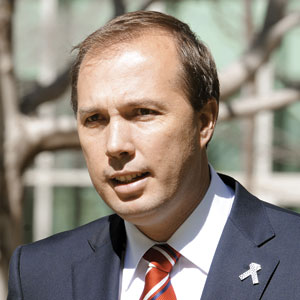
Dutton_PeterWEB

LABOR’S bungled $1 billion electronic health records system will be reviewed after being used by so few people it ended up costing $200,000 per patient.

Health Minister Peter Dutton yesterday said just a few hundred doctors were using the system with just 5000 patients using the Personally Controlled Electronic Health Records program which has previously been described as “shambolic”.

NACCHO Aboriginal ehealth technology news: Telehealth,ehealth and the Aboriginal digital divide

Peter Dutton shifts into high gear for e-health overhaul

A lack of software had prevented many doctors even accessing patient records.

“The problem is that the former government spent about $1 billion in this area and the number of people actively using the records numbers in the thousands,” he told Sky News. “There are only a few hundred doctors actually uploading details into people’s files. It has been a scandal. On those numbers it runs at about $200,000 a patient.”

Executive director of the UnitingCare Health Group in Queensland, Richard Royle, who is also vice president of the Australian Private Hospitals Association, has been given the job of reviewing the program.

Are online medical records safe?

Australian Medical Association president Dr Steve Hambleton will help with the review.

Mr Dutton said: “The government fully supports the concept of electronic health records but it must be fit for purpose and cost effective.”

He compared the roll-out of the e-health records program to the cost blowouts associated with the National Broadband Network.

The review will be open to submissions from the public

Need help about Aboriginal health or the location of your nearest ACCHO on your SMARTPHONE or IPAD

Info Download the new NACCHO Health APP HERE

screen568x568

NACCHO Aboriginal health : Coalition’s focus on improving Aboriginal health service access for regional Australians

2045314

“Our vision is for a sustainable system that delivers quality health outcomes for all Australians, including indigenous Australians whose health and well-being are a key priority for this government.”

Assistant Minister for Health, Senator Fiona Nash pictured above

THE largest rural medicine conference ever held in Australia has been told the federal government has a reform program in place to ensure better access to health services for people living in regional, rural and remote communities. 

Story Picture Brad Cooper

Assistant Minister for Health, Senator Fiona Nash (pictured) told 650 delegates in Cairns today that there would be more time and effort put into consulting local professionals and communities about their needs.

The centrepiece of Senator Nash’s address was a commitment to provide $40 million over the forward estimates to support up to 100 additional intern places each year in private hospitals and non-traditional settings, with priority given to positions and rotations in rural and regional areas.

She said the government would provide $13.4 million for an additional 500 scholarships for nurses and allied health professionals, and allow more rural allied health workers to take leave, on top of the 100 allied health locum placements provided each year.

“Further, the government will invest $119 million to double the Practice Incentive Program (PIP) Teaching Payment for GPs who provide teaching opportunities with an additional benefit paid to those in rural and remote areas,” Senator Nash said.

“GP practices can also apply for expansion grants for teaching infrastructure based on an equal financial commitment, starting next July.

“Training for existing doctors and nurses in rural areas is also vital to keep up their skill levels and allow them to develop as professionals.

“Our vision is for a sustainable system that delivers quality health outcomes for all Australians, including indigenous Australians whose health and well-being are a key priority for this government.”

Rural Doctors Association of Australia president Dr Sheilagh Cronin, Cloncurry, said more support for training students was one of the best ways of increasing doctor numbers in the bush.

“We know that students who spend time in rural communities to get their training and have a positive experience there are more likely to return as registrars before moving to become qualified general practitioners,” she said.

NACCHO Aboriginal health news; Aboriginal organisations to put communities back in control

131031 - Media Release re NGO principles endorsement (EMBARGOED UNTIL MIDNIGHT 30 October)_Page_1

An alliance of Aboriginal organisations and non-Aboriginal NGOs will today launch a set of principles aimed at empowering Aboriginal organisations and communities in the NT to take control of their futures.

DOWNLOAD THE PRINCIPLES HERE

“Today a number of local, national and international NGOs have publically endorsed a set of principles which will guide partnership centred approaches for NGOs working in Aboriginal communities” said Ms Priscilla Collins, spokesperson for Aboriginal Peak Organisations NT (APO NT). (A copy of the principles is attached.)

“These non-Aboriginal NGOs have agreed to work together with Aboriginal organisations and communities to promote Aboriginal community-control of service delivery. It’s about putting Aboriginal people back in the driver’s seat”, said Mr John Paterson, spokesperson for APO NT.

Organisations endorsing the principles include national and international NGOs engaged in delivery of health and community services in the Northern Territory. A full list of NGOs that have endorsed the principles is below.

Development of the principles was informed by a forum in Alice Springs in February that brought together sixty participants from twenty-seven non-Aboriginal NGOs and six NT Aboriginal representative organisations – the first gathering of its kind in the NT. The forum acknowledged that there are a number of NGOs that already have good working relationships with Aboriginal organisations, but this is not systematic.

The principles present significant opportunities for these organisations to learn from each other, create better partnerships and working relations with Aboriginal organisations operating at the ground level and achieve better outcomes for communities.

Organisations leading the initiative include APO NT, Strong Aboriginal Families, Together (SAF,T), the National Congress of Australia’s First Peoples, the Australian Council of Social Service (ACOSS) and the NT Council of Social Service (NTCOSS).

“It is important that Aboriginal and non-Aboriginal organisations work side by side in partnership to put Aboriginal people back in control of service delivery in their communities,” said Mr Lindon Coombes, CEO of The National Congress of Australia’s First Peoples (Congress).

The general consensus reached at the Alice Springs Forum was that the formal endorsement of the principles by organisations should effectively operate as a voluntary code.

“This work represents significant leadership and partnership from both the Aboriginal and non-Aboriginal NGO sector, in pioneering new ways to work together to get the best possible outcomes for Aboriginal people in remote NT communities,” said Mr Simon Schrapel, President of ACOSS.

The next stage of the collaboration will be to operationalise the principles.

“We look forward to working together to develop operational guidelines for how these important principles will work in practice,” said Ms Wendy Morton, Executive Director of NTCOSS.

“This is something that Aboriginal agencies have been wanting for a long time. These principles will guide the development of true partnerships that will result in better understanding and outcomes for all concerned,” said Terry Chenery, Acting CEO of SAF,T.

Need help about Aboriginal health or the location of your nearest ACCHO on your SMARTPHONE or IPAD

Info Download the new NACCHO Health APP HERE

screen568x568