NACCHO Aboriginal Health : Our ACCHO Members #Deadly good news stories #NT #NSW #QLD #WA #SA #VIC #TAS

1.1 NACCHO CEO Pat Turner to build on the success of Aboriginal Community Control Health Services

1.2 National : 2017 NACCHO Members’ Conference and AGM Registrations : Only 28 days to go

2. Vic : VAHS ACCHO Healthy Lifestyle Team love supporting the Fitzroy Stars Netball Club

3.NSW : In the Shoalhaven region Aboriginal Health is everyone’s business

4.NT : Ken Wyatt opens our NACCHO #OchreDay2017 summit in Darwin

5. QLD : Inquiry into service delivery in remote and discrete Aboriginal and Torres Strait Islander communities : Draft report consultation

6.ACT : NACCHO/Winnunga Nimmityjah Aboriginal Health Service mental health webinar  in conjunction with the Mental Health Professionals Network

7.WA : Puntukurnu Aboriginal Medical Service’s Tackling Indigenous Smoking team to create Anti Smoking Ads

8. Tas : Tasmanian Aboriginal Centre to celebrate our communities journey of breast cancer & raise awareness

9.SA : Aboriginal Health Council of SA  and South Australian Aboriginal Chronic Disease Consortium

10. View hundreds of ACCHO Deadly Good News Stories over past 5 years

How to submit a NACCHO Affiliate  or Members Good News Story ? 

 Email to Colin Cowell NACCHO Media    

Mobile 0401 331 251

Wednesday by 4.30 pm for publication each Thursday

1.1 NACCHO CEO Pat Turner to build on the success of Aboriginal Community Control Health Services

Pat Turner has been appointed for a further three years until July 2020 by the National Aboriginal Community Controlled Health Organisation (NACCHO) Board.

NACCHO Deputy Chairperson, Sandy Davis welcomed Ms Turner’s appointment highlighting her extensive life experiences in Aboriginal affairs, government, academia and corporate practice.

Sandy also ‘acknowledged her invaluable record of public service achievements and that her leadership style comes at an important time for NACCHO with new governance arrangements to be discussed with members’ at our Annual General Meeting in Canberra in November.

Pat will help create real, meaningful and lasting change for NACCHO that will strengthen community control and keep Aboriginal health in Aboriginal hands’ he said.

Pat recently finalised a new network funding agreement for supporting community controlled Aboriginal health service with the Commonwealth. This will allow for better, more targeted investment in efforts to close the health gap for Aboriginal people. Pat has consistently said that ‘governments at all levels must do more to join the dots between education, housing, employment and other social determinants if we are to significantly improve health outcomes for our people and Close the Gap they have spoken about for the best part of a decade.’

Pat has been delivering on the Board’s agenda to consult with members to update our NACCHO Constitution and she has spent the last few months criss-crossing Australia to obtain the views and opinions of our Members and Affiliates about NACCHO constitutional changes.

She will continue to work on strengthening and expanding the Aboriginal Community Controlled Health Sector, maintaining its strategic directions, cutting unnecessary red tape and building a closer relationship between all our organisations. ‘We want to build on the success of community control in improving health outcomes for our people’ she said.

Pat is of Arrernte and Gurdanji descent and was awarded the Order of Australia (AM) in 1990 for her contribution to public service.

1.2 National : 2017 NACCHO Members’ Conference and AGM Registrations : Only 28 days to go

On Tuesday 2 October there was only 28  days to go and due to high demand  the conference AGM is nearly booked out

This is an opportunity to show case grass roots best practice at the Aboriginal Community Controlled service delivery level.

In doing so honouring the theme of this year’s NACCHO Members’ Conference ‘Our Health Counts: Yesterday, Today and Tomorrow’.

Download NACCHO 2017 Members Conference and AGM Draft

NACCHO Conference Website

2. Vic : VAHS ACCHO Healthy Lifestyle Team love supporting the Fitzroy Stars Netball Club

Photos above : Introducing the Fitzroy Stars Junior Netball Carnival Teams!

The VAHS Healthy Lifestyle Team love supporting our Fitzroy Stars Football/Netball Club netballers.

These girls and boys are representing the Healthy Lifestyle Values and doing us proud today! Well done everyone on being deadly team players and making healthy choices!

Check out their other healthy lifestyle tips below. HERE

#vahsHLT #StaySmokeFree #BePositive #BeDeadly #BeAware #Lovethegame

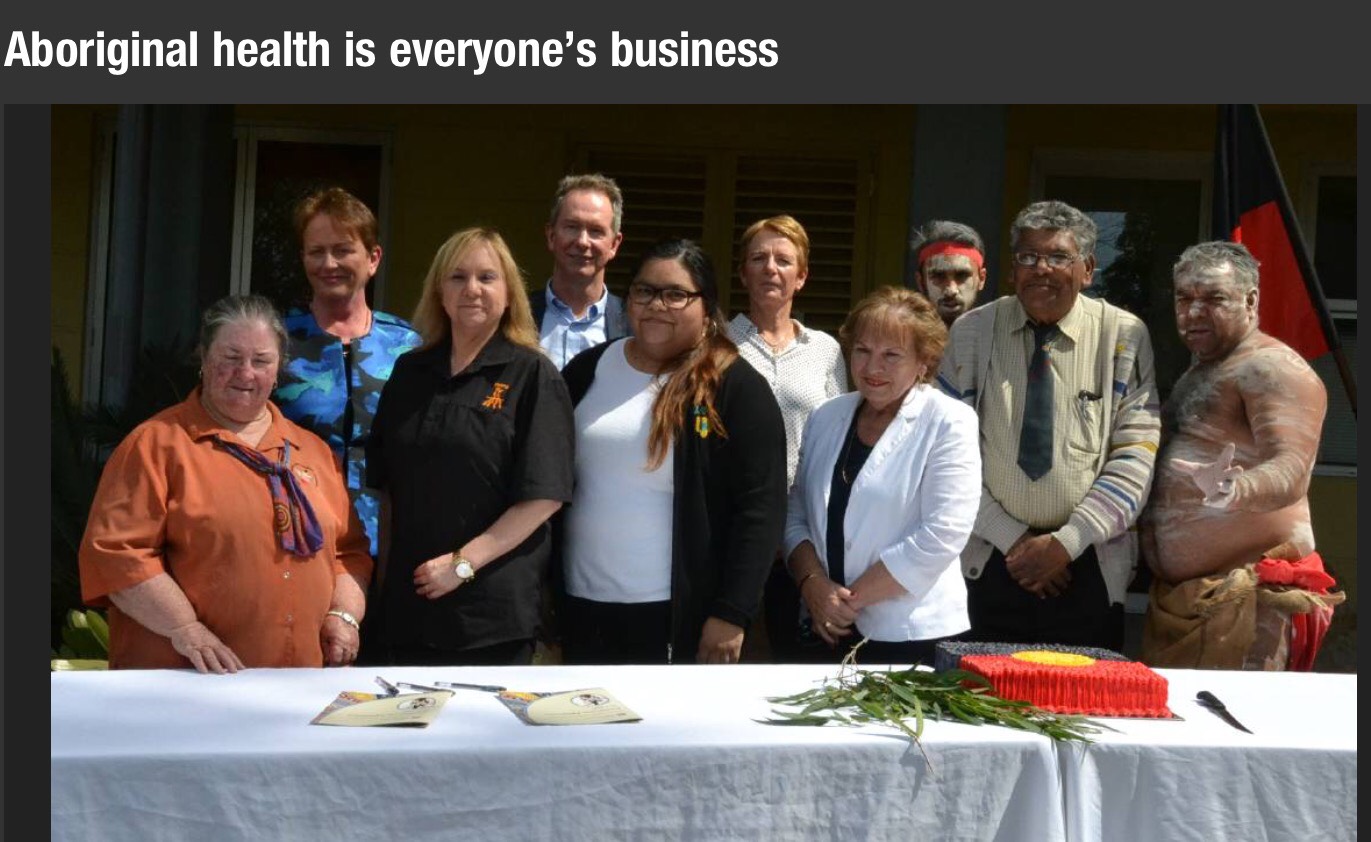
3.NSW : In the Shoalhaven region Aboriginal Health is everyone’s business

Illawarra Shoalhaven Local Health District (ISLHD) has joined local Aboriginal Community Controlled Health Services, the Primary Health Network and the University of Wollongong in committing to work together to bring about positive changes to Close the Gap on health inequalities for our Aboriginal communities.

From Here

A partnership agreement was formally signed on Friday by leaders of the South Coast Aboriginal Medical Service; Oolong House – Drug and Alcohol Rehabilitation Centre; Illawarra Aboriginal Medical Service; Waminda South Coast Women’s Health and Welfare Aboriginal Corporation; University of Wollongong; COORDINARE – South Eastern NSW Primary Health Network; and Illawarra Shoalhaven Local Health District.

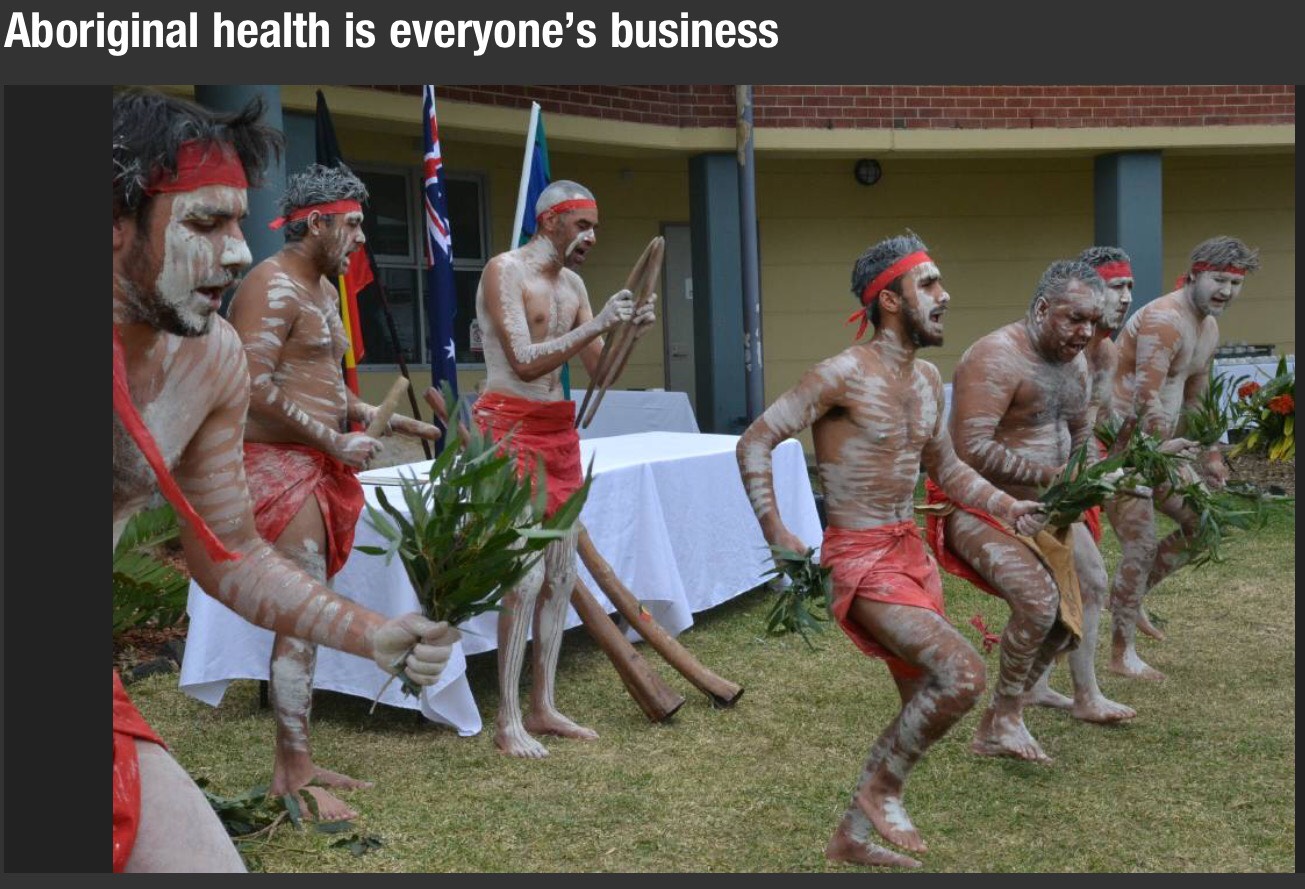
A special ceremony, including a corroboree, smoking ceremony and performances by the Doonooch Dancers led by Joe Brown-McLeod and Larry McLeod,

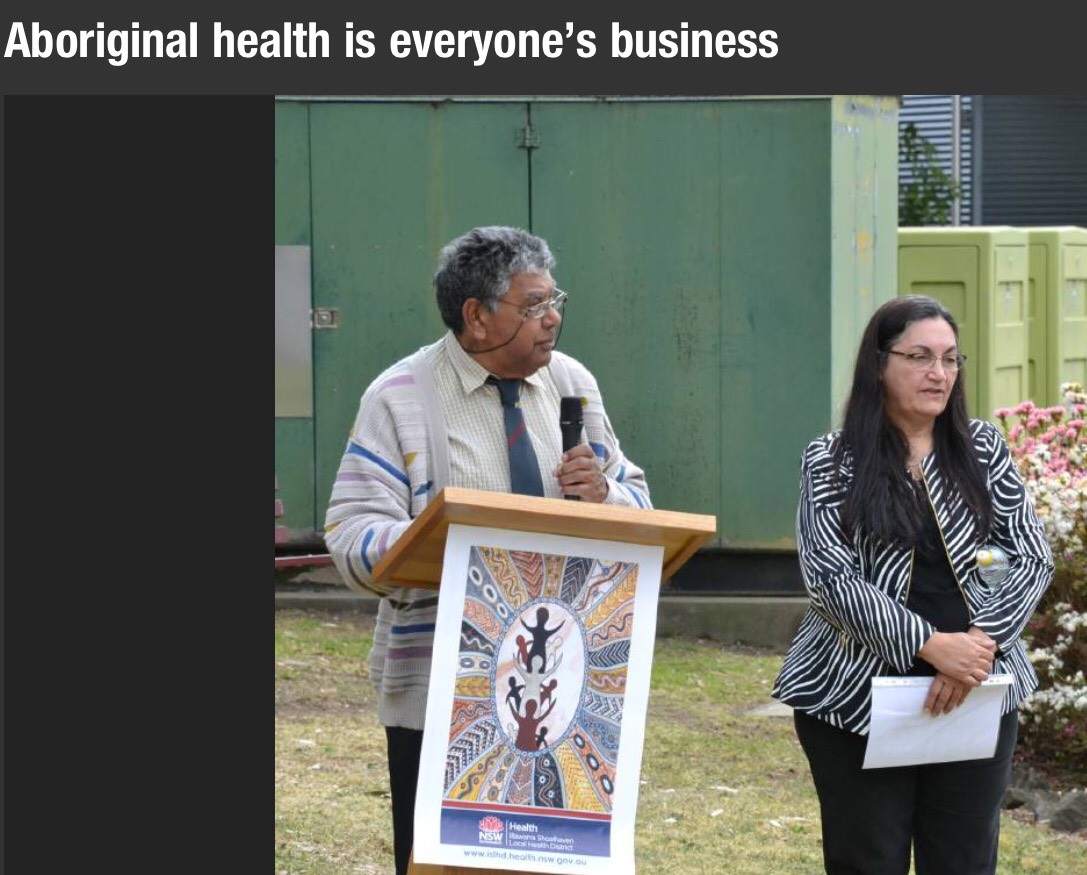
and a stirring welcome to country by Uncle Tom Moore preceded the official signing of the agreement.

ISLHD Chief Executive Margot Mains said the agreement aims to support, promote and strengthen the existing local relationships and strong ties that have been developed over many years.

“The signing of the partnership agreement marks a new beginning for our journey in working collaboratively to close the health and life expectancy gap between Aboriginal people and non-Aboriginal Australians,” Ms Mains said.

4.NT : Ken Wyatt opens our NACCHO #OchreDay2017 summit in Darwin

Losing his nephew to the same preventable disease that afflicts so many Aboriginal Australians galvanised Ken Wyatt to make indigenous men’s health a “top priority” of his political agenda.

Read full speech here NACCHO Aboriginal Male Health @KenWyattMP Speech ” Men’s health, our way. Let’s own it!” – is a powerful conference theme

Read NACCHO Aboriginal Male Health #OchreDay2017 Conference Press release

@KenWyattMP and @jpatto12 raising awareness of issues in Aboriginal men’s health

The Federal Indigenous Health Minister says his nephew was a promising musician but died in June, aged just 35, after a battle with diabetes and chronic renal and heart disease.

“One of Jason’s killers was kidney failure, the same devastating condition that claimed the life of beloved musician, Dr G Yunipingu,” Mr Wyatt told a national men’s health conference in Darwin.

“His close family and friends are now working on a media project to fulfil his dying wishes – to get the word out to indigenous men in particular, to take their health seriously, to own it.”

Aboriginal men have the poorest health of any group within the Australian population, which Mr Wyatt says is “nothing short of a national tragedy”.

They suffer kidney health problems at five times the rate of their non-indigenous counterparts, and are dying more than 10 years younger.

Winner of the Jaydons Adams Award 
From the left, Mr Mark and Mrs Lizzie Adams with Nathan Cubillo-Jones and AMSANT CEO John Paterson
 He’s just graduated this year from his studies as an Indigenous health practitioner and in between playing local Aussie rules and Rugby league, he worked tirelessly with Danila Dilba health service and has recently been appointed manager of the new Malak clinic.

5. QLD : Inquiry into service delivery in remote and discrete Aboriginal and Torres Strait Islander communities : Draft report consultation

The draft report is scheduled to be released in early October 2017.
We are seeking your comments and views on the draft report, and will be undertaking further consultation during October and early November.

The Commissioner Bronwyn Fredericks will be briefing and consulting with stakeholders in the following locations:

  • 9 October 2017 (1pm to 3pm) – Cairns, Doubletree Hilton Hotel
  • 10 October 2017 – Yarrabah
  • 11 October 2017 – Kowanyama
  • 12 October 2017 – Lockhart River
  • 13 October 2017 – Aurukun
  • 16 October 2017 – Gladstone (LGAQ conference)
  • 17 October 2017 – Woorabinda
  • 20 October 2017 – Brisbane

Further consultations will be scheduled in the coming weeks at Mt Isa, Mornington Island, and Thursday Island – details will be published on the QPC website as they become available.

Consultations will include round tables in Cairns, Mt Isa, Thursday Island and Brisbane.

Please register your interest to attend a consultation or round table here.
If you would like to meet with the Commissioner or the inquiry team either as part of the consultation rounds or via teleconference, please contact us on (07) 3015 5111 or enquiry@qpc.qld.gov.au

6.ACT : NACCHO/Winnunga Nimmityjah Aboriginal Health Service mental health webinar  in conjunction with the Mental Health Professionals Network 

On Wednesday the 13th of September 2017, NACCHO facilitated a mental health webinar in conjunction with the Mental Health Professionals Network as part of its professional development work.

This mental health webinar focused on reducing the mental health impacts of indigenous incarceration on people, communities and services.

The discussion was conducted by an Indigenous interdisciplinary panel (see below for further details). A post-discussion Q&A was also conducted between the panel and guests, recordings of which can be accessed below.

THE PANEL

Julie Tongs OAM                      (CEO Winnunga Nimmityjah Aboriginal Health Service)

Dr Louis Peachey                      (Rural Generalist)

Dr Marshall Watson                 (Psychiatrist)

Dr Jeff Nelson                            (Psychologist)

Facilitator: Dr Mary Emeleus (General Practitioner and Psychotherapist).

7.WA : Puntukurnu Aboriginal Medical Service’s Tackling Indigenous Smoking team to create Anti Smoking Ads

The project, organised by Puntukurnu Aboriginal Medical Service’s Tackling Indigenous Smoking team, will be carried out with funding from a Healthway Indigenous Health Promotion grant and the Federal Government’s Tackling Indigenous Smoking Program.

Puntukurnu Aboriginal Medical Service regional tobacco coordinator Danika Tager said smoking rates in the East Pilbara were exceptionally high and more needed to be done to support communities to address tobacco addiction.

Filmmakers will work with youth in four remote Aboriginal communities in the East Pilbara to shed light on the personal stories of local smokers and warn about the perils of the deadly habit.

Young people, assisted by a professional production team, will create a series of short films as part of the “you CAN quit” project, to document the stories of community members who have successfully kicked the habit and those who have been affected by smoking-related illnesses in Jigalong, Parnngurr, Punmu and Kunawarritji.

Statistics from the Federal Department of Health show that tobacco smoking is responsible for one in five Aboriginal and Torres Strait Islander deaths, with the number substantially higher in remote areas.

“Smoking rates in remote East Pilbara communities are as high as 80% and tobacco use is the single most preventable cause of death and disease in this population,” Ms Tager said.

“Through this important film project we hope to encourage people in these communities to quit smoking, as well as air the many benefits of quitting and where they can find help and support.”

Filming of the four short films will start September 19. It is expected the films will be screened in each community on completion and also be aired on indigenous television stations and social media.

Ms Tager said the project was unique in that the films would be entirely community owned and directed, giving young people the opportunity to actively make a difference in their community.

“Youth will be responsible for all aspects of researching, shooting, editing and promoting the films” she said.

“All too often NGOs will come into a community with a health message that may or may not be relevant, and expect it to change people’s behaviour,” she said.

“What we are doing here is empowering the community to send its own messages and fight tobacco-related harm using its own experience and stories.”

The project will also involve a series of posters to celebrate non-smokers in the communities, and offer education sessions and details about the availability of support programs.

The Puntukurnu Aboriginal Medical Service (PAMS) is a community controlled health organisation that provides primary health care, 24-hour emergency services and preventative health and education programs in the communities of Jigalong, Parnngurr, Punmu and Kunawarritji.

8. Tas : Tasmanian Aboriginal Centre to celebrate our communities journey of breast cancer & raise awareness

Please join us at piyura kitina (Risdon Cove) on Thursday, 12th October at 1.30pm, to celebrate our communities journey of breast cancer & raise awareness of this disease.
Afternoon tea, will be provided, please contact Emma on
6234 0777 or Freecall 1800 132 260 if you require transport.

9.SA : Aboriginal Health Council of SA  and South Australian Aboriginal Chronic Disease Consortium

The South Australian Aboriginal Chronic Disease Consortium (the Consortium) was launched on 18 May 2017, as a collaborative partnership formed between the South Australian Aboriginal Health Partnership (comprising of SA Health, Aboriginal Health Council of SA and Department of Health – Commonwealth) and the South Australian Academic Health Science and Translation Centre.The Translation Centre represents a partnership between SA Health, South Australian Health and Medical Research Institute (SAHMRI), University of Adelaide, Flinders University, University of South Australia, Aboriginal Health Council of South Australia, Health Consumers Alliance of South Australia, Adelaide Primary Health Network, Country SA Primary Health Network and Cancer Council SA. The Translation Centre has 9 priority areas of which one is Aboriginal Health.
Consortium Vision

The Consortium’s vision is to reduce the impact of chronic disease experienced by Aboriginal and Torres Strait Islander people living in South Australia through the successful implementation of the priorities identified within 3 plans: The South Australian Aboriginal Cancer Control Plan 2016-2021, the South Australian Aboriginal Heart and Stroke Plan 2017-2021 and the South Australian Aboriginal Diabetes Strategy 2017-2021.How will the Consortium Work

The responsibility to oversee the implementation activity of the SA Aboriginal Chronic Disease Consortium rests within its governance structures. The Consortium has 5 active working groups including an Executive Group, an Aboriginal Community Reference Group and three condition-specific leadership groups representing Diabetes, Cancer and Heart and Stroke. We refer to the people and organisations on these groups as our members.

Who is working in the Consortium Coordinating Centre?

The team comprises of two full time staff. Wendy Keech is the Senior Research Translation Manager and Executive Officer. Wendy is supported by Douglas VJ Clinch, in a Project Officer role overseeing and supporting the various governance groups of the Consortium. Strategic policy and cultural advice and support is being provided by Kim Morey and Neville Fazulla both on a part-time basis to the team, and have particular focus on supporting the community reference group. Andrea McKivett, has been providing her clinical, technical and cultural support to the team since the inception of the Consortium, with Katharine McBride recently joining the team to provide technical support one day a week. The team come from various backgrounds and disciplines required to support the work of the Consortium, and all are passionate people with a strong commitment to making a difference to the health and wellbeing of Aboriginal people in South Australia.
If you would like any further information please don’t hesitate to contact Wendy Keech, on (08) 81284228, email: wendy.keech@sahmri.com or Doug VJ Clinch, on (08) 81284893 or email: douglas.clinch@sahmri.com.

NACCHO Aboriginal Health and #PSA17Syd Part 2 of 2 Health Minister asks pharmacists to help Close the Gap

“For too long Aboriginal people have suffered shorter lifespans, been sicker and poorer than the average non-Indigenous Australian, however, highly trained pharmacists have a proven track record in delivering improved health outcomes when integrated into multidisciplinary practices,” Ms Turner said.

“Strong international evidence supports pharmacists’ ability to improve a number of critical health outcomes, including significant reductions in blood pressure and cholesterol and improved diabetes control. A number of studies have also supported pharmacists’ cost-effectiveness.

Some ACCHOs have already shown leadership in the early adoption of pharmacists outside of any national programs or support structures. NACCHO and PSA are committed to supporting ACCHOs across Australia to meet the medicines needs in their communities by enhancing support for those wishing to embed a pharmacist into their service.”

NACCHO CEO Pat Turner said disparities in the health between Indigenous and non-Indigenous Australians are confronting.

The Pharmaceutical Society of Australia (PSA) and the National Aboriginal Community Controlled Health Organisation (NACCHO) have welcomed the announcement of a trial to support Aboriginal health organisations to integrate pharmacists into their services.

The trial was announced today by the Federal Minister for Health Greg Hunt at PSA17, PSA’s national conference.

Both PSA and NACCHO thank the Minister for supporting this innovative project that will improve the health of Aboriginal and Torres Strait Islander people.

This practical new trial measure has strong stakeholder support and there is growing evidence pharmacists employed by Aboriginal Community Controlled Health Organisations (ACCHOs) can assist to increase the life expectancy and improve the health of Aboriginal and Torres Strait Islander patients.

PSA and NACCHO celebrate the Federal Government’s initiative to implement these important reforms and to further investigate the development of new funding models to help close the gap between the health outcomes of Aboriginal

PSA National President Dr Shane Jackson said having a culturally responsive pharmacist integrated within an Aboriginal Health Service (AHS) builds better relationships between patients and staff, leading to improved results in chronic disease management and Quality Use of Medicines.

“Integrating a non-dispensing pharmacist in an AHS has the potential to improve medication adherence, reduce chronic disease, reduce medication misadventure and decrease preventable medication-related hospital admissions to deliver significant savings to the health system,” Dr Jackson said.

“Additionally, pharmacists integrated within an AHS have a key role to play in assisting Aboriginal and Torres Strait Islander patients navigate Australia’s complex health system.”

“Local community pharmacies will be first approached to see if they are able to provide a pharmacist to work within the AHS according to service requirements of the AHS. If they are unable to or this is not accepted by the AHS in line with principles of self-determination, then the AHS may employ a pharmacist directly.”

A range of stakeholders, including the Pharmacy Guild of Australia, will be on the advisory group.

This trial has been funded through the 6th Community Pharmacy Agreement Pharmacy Trial Program. PSA and NACCHO wish to credit the Pharmacy Guild of Australia for supporting such an important initiative. This trial aims to improve equity of access for Aboriginal and Torres Strait Islander people and further demonstrate the fundamental role that community pharmacists play in primary health care, strengthening the future for all pharmacists and contributing to a sustainable health system.

NACCHO Aboriginal Health : The #NTIntervention 10 years on – history and evaluations

 ” And when the government announced the Intervention and commenced it, they sent in what they called ‘government business managers’ who were, in effect, the old, you know, ‘protectors’ of Aboriginals, the, you know, the old superintendents, the mission managers.

I mean, this is 10 years ago, this is not a hundred years ago, and Aboriginal people were being treated like this. It was almost a violation of every possible human right you could think of.”

Pat Turner AM CEO NACCHO speaking to Nick Grimm ABC (see full Interview Below


 Picture above : Powerhouse panel at UTS Sydney last night talking about the 10th anniversary of the #NTIntervention: @KylieSambo @Bunbajee Pat Turner & @LarissaBehrendt #IndigenousX

  ” In August 2007 the Howard Liberal Government enacted the Northern Territory National Emergency Response Act, or, “the Intervention”. Liberal politicians marketed it as a solution to problems within Indigenous communities in the Northern Territory.

These problems include health, housing, employment and justice.  When Labor was in power it continued the Intervention’s major initiatives.

See 10 Years history of the NT Intervention Below Part 2 after the Interview

 Major General David Chalmers, of the Inter-Agency Northern Territory Emergency Response Task Force, and Mal Brough, indigenous affairs minister, are greeted by David Wongway, a member of the Imanpa Local Community Council

 ” In 2008, following the change of government after the 2007 Federal Election, the Rudd Labor Government re-framed the intervention through a new national policy focus on “Closing the Gap”. Rudds’ intention to re-work the Intervention to focus more closely on reforming the welfare system linked closely with the already existing targets of the Close the Gap Campaign.

The aims of the campaign are set out in the 2012 National Indigenous Reform Agreement ”

 The Intervention and the Closing the Gap Campaign see part 3

 ” Evaluating the Intervention is not an easy task. Impartial data is difficult to find and there is a mass of complex and conflicting information. However, by looking at the Closing the Gap targets that were set by the Government and considering human rights concerns, we have provided our assessment. Below we give major features of the Intervention a score out of 10.  We also score it for compliance with human rights.”

Issues with Evaluating the Interventionhow did we work out our grades? Part 4

NT Intervention – nothing has changed for the better: Pat Turner

Hear Interview HERE

NICK GRIMM: Ten years ago this week, one of the defining moments in Australian national life began unfolding in remote communities in the outback.

The Northern Territory intervention was launched by the then Howard government in response to reports of social dysfunction and allegations of endemic abuse of women and children in remote communities.

Since then, the policy has continued under governments of both persuasions.

But 10 years on critics of the Intervention say it’s fixed nothing.

Pat Turner is currently CEO of the National Aboriginal Community Controlled Health Organisation.

She was previously a CEO of the Aboriginal and Torres Strait Islander Commission, ATSIC, and had a long career as a senior Commonwealth public servant.

I spoke to Pat Turner a little earlier.

Pat Turner, can I start by asking you this: Ten years on, what’s the best thing you have to say about the Northern Territory Intervention?

PAT TURNER: (Laughs) Nothing, really, I’m afraid.

It was a complete violation of the human rights of Aboriginal people in the Northern Territory.

It came out of the blue, following the Commonwealth Government’s reading and response to The Little Children Are Sacred report.

NICK GRIMM: So how would you describe the legacy of the process that began 10 years ago?

PAT TURNER: Well, I think it’s still a shambles.

You know, both sides of politics were responsible.

While it was introduced by the Liberal government, the Coalition under John Howard and Mal Brough, it was carried on also by Jenny Macklin and Kevin Rudd and Gillard and so on.

So the legacy is that Aboriginal people were completely disempowered.

They had the Army going into communities in their uniforms. They had no idea why the Army was there.

You know, to send the Army in at a time like that was just totally confusing. People were terrified that they’d come to take the kids away. There would be no explanation as to why they were going in.

And it wasn’t their fault; it was the way the Government handled it.

The government also, at the time, insisted that every child under 16 have a full medical check. Now, actually what they were looking for, I think, was whether a child had been sexually abused.

And we said, at the time, those of us who were opposed to the way the Government was handling this, “You cannot do that without parental permission. You must have parental permission. You would not do a medical check on any other child in Australia and you should not do that with our children without their parents’ say-so”.

And what’s more, fine, go ahead, do a full medical check, but what are you going to do when you find the otitis media, when you find the trachoma, when you find the upper respiratory diseases, when you find rheumatic heart disease? Where…

NICK GRIMM: All those common medical conditions in those areas.

PAT TURNER: Absolutely, absolutely. And what are you going to do to treat these people?

Because you don’t have the health services that Aboriginal people should have. You don’t have those in place.

And they were paying doctors a phenomenal salary.

They also, of course, introduced the infamous cashless welfare card, called it ‘income management’, where 60 per cent of the income was quarantined for food and clothes and so on.

People weren’t allowed to get access to video, so that was a… and that was fine for X-rated videos and adult videos, but certainly not for entertainment, which a lot of families relied on in outlying communities.

And it had ramifications. I mean, there was a young Aboriginal businesswoman in Tennant Creek whose business went bust because she couldn’t hire out videos.

NICK GRIMM: Well, in your view, can we say that anything has changed for the better in those remote communities?

PAT TURNER: No.

Look, the other thing that happened at the time, Nick, was there was a reform in local government.

So, from the hundreds of Aboriginal community councils that were in place, they all became part of these super shires, nine super shires, so all the decision making at the local community level had evaporated.

And when the government announced the Intervention and commenced it, they sent in what they called ‘government business managers’ who were, in effect, the old, you know, ‘protectors’ of Aboriginals, the, you know, the old superintendents, the mission managers.

I mean, this is 10 years ago, this is not a hundred years ago, and Aboriginal people were being treated like this. It was almost a violation of every possible human right you could think of.

And what’s more, I called it at the time the Trojan Horse to get the land that our people have under freehold inalienable title in the Northern Territory.

And I thought it was a land grab, and I still believe that, you know, the Commonwealth certainly wanted to have a greater say over Aboriginal land in the Northern Territory – as did the Northern Territory Government, by the way.

NICK GRIMM: Yeah, well we’ve talked about the situation on the ground there in the Northern Territory.

What then would you say have been the national implications of the Intervention?

PAT TURNER: Well, I think without the evidence they’ve adopted – you know, Alan Tudge is very keen on the cashless welfare card, as is Twiggy Forrest, who promoted it.

While I see that, you know, there may be, you know, some opportunity for women to buy more food, it’s fine if you have access to fresh produce at a reasonable price that you could expect to pay in a major regional centre like Alice Springs.

You go out to the communities, the prices are at least double if not tripled, and they’re stale, rotten, old vegetables and meats and so on.

So, you know, that’s where government services need to step up through their outback stores and make sure that people are getting really fresh produce all the time, and healthy produce.

NICK GRIMM: Alright, Pat Turner, thanks very much for talking to us.

PAT TURNER: You’re most welcome. Thank you.

NICK GRIMM: Pat Turner is CEO of the National Aboriginal Community Controlled Health Organisation.

Part 2

” In August 2007 the Howard Liberal Government enacted the Northern Territory National Emergency Response Act, or, “the Intervention”. Liberal politicians marketed it as a solution to problems within Indigenous communities in the Northern Territory.

These problems include health, housing, employment and justice.  When Labor was in power it continued the Intervention’s major initiatives. “

See 10 Years history of the NT Intervention

Intervention was directed at addressing the disproportionate levels of violence in Indigenous communities in the Northern Territory, as well as the endemic disadvantage suffered in terms of health, housing, employment and justice.

It was also a direct response to the Ampe Akelyernemane Meke Mekarle Report (‘Little Children are Sacred Report’) into sexual abuse of Indigenous children. This report was commissioned by the then Northern Territory Chief Minister Clare Martin following an interview on the ABC’s Lateline program, in which Alice Springs Senior Crown Prosecutor Dr Nanette Rogers SC commented that the violence and sexual abuse of children that was entrenched in Indigenous society was ‘beyond most people’s comprehension and range of human experience’. The then Commonwealth Minister for Families, Community Services and Indigenous Affairs, Mal Brough, indicated in his second reading speech introducing the NTNERA that “[t]his bill… and the other bills introduced in the same package are all about the safety and wellbeing of children.”

The Little Children are Sacred Report was the result of in-depth research, investigation and community consultation over a period of over eight months by members of the Northern Territory Board of Inquiry. The focus of their inquiry was instances of sexual abuse, especially of children, in Northern Territory Indigenous communities. The findings were presented to Chief Minister Martin in April 2007 and released to the public in June. The striking facts, graphic imagery and ardent plea for action contained in this report saw this issue gain widespread attention both in the media and in the political agenda, inciting divisive debate and discussion.

The NTNERA was enacted by the Howard Government just two months after the report was released to the public, allowing little time for consultation with Indigenous communities. It was framed as a ‘national emergency’ with army troops being deployed to Indigenous communities in the Northern Territory. This took place in the lead up to the 2007 Federal Election, in which the Labor Party under Kevin Rudd defeated the Howard Government after four terms of Liberal government.

The Intervention in 2007

The Intervention was a $587 million package of legislation that made a number of changes affecting specified Indigenous communities in the Northern Territory. It included restrictions on alcohol, changes to welfare payments, acquisition of parcels of land, education, employment and health initiatives, restrictions on pornography and other measures.

The package of legislation introduced included:

  • NorthernTerritory National Emergency Response Act 2007.
  • Social Security and Other Legislation Amendment (Welfare Payment Reform) Bill 2007.
  • Families, Community Services and Indigenous Affairs and Other Legislation Amendment. (Northern Territory National Emergency Response and Other Measures) Act 2007.
  • Appropriation (NorthernTerritory National Emergency Response) Bill (No. 1) 2007-2008.
  • Appropriation (NorthernTerritory National Emergency Response) Bill (No. 2) 2007-2008.

In order to enact this package of legislation, several existing laws were affected or partially suspended, including:

  •  Racial Discrimination Act 1975.
  •  Aboriginal Land Rights (Northern Territory) Act 1976.
  • Native Title Act 1993(Cth).
  • Northern Territory Self-Government Act and related legislation.
  • Social Security Act 1991.
  • IncomeTax Assessment Act 1993.

A raft of reforms and regulations were introduced by this package of legislation, including:

  • Restricting the sale, consumption and purchase of alcohol in prescribed areas. This included the prohibition of alcohol in certain areas prescribed by the legislation, making collection of information compulsory for purchases over a certain amount and the introduction of new penalty provisions.
  • ‘Quarantining’ 50% of welfare payments from individuals living in designated communities and from beneficiaries who were judged to have neglected their children.
  • Compulsorily acquiring townships held under title provisions of the Native Title Act 1993 with the introduction of five year leases in order to give the government unconditional access. Sixty-five Aboriginal communities were compulsorily acquired.
  • Linking income support payments to school attendance for all people living on Aboriginal land, and providing mandatory meals for children at school at parents’ cost.
  • Introducing compulsory health checks for all Aboriginal children.
  • Introducing pornography filters on publicly funded computers, and bans on pornography in designated areas.
  • Abolishing the permit system under the Aboriginal Land Rights Act 1976 for common areas, road corridors and airstrips for prescribed communities,.
  • Increasing policing levels in prescribed communities. Secondments were requested from other jurisdictions to supplement NT resources.
  • Marshalling local workforces through the work-for-the-dole program to clean-up and repair communities.
  • Reforming living arrangements in prescribed communities through introducing market based rents and normal tenancy arrangements.
  • Commonwealth funding for the provision of community services.
  • Removing customary law and cultural practice considerations from bail applications and sentencing in criminal trials.
  • Abolishing the Community Development Employment Projects (CDEP).

Changes under successive governments

After an initial focus on preventing child sexual abuse, successive federal governments re-designed and re-framed the Intervention. This involved linking the Intervention with the broader ‘Closing the Gap’ campaign, introducing new measures such as the BasicsCard and tougher penalties for the possession of alcohol and pornography. Changes were also made to the operation of the Racial Discrimination Act (see section on Human Rights). The current package of legislation retains the support of the Liberal Government and is due to expire in 2022.

2008 Changes

The Intervention was introduced in 2007 by the Howard Government, but a change of government in September of that year saw the Labor Government under Kevin Rudd gain power. After some consultation and minor changes, the NTNERA and associated legislation were initially maintained.

In 2008 Rudd apologised to the members of the Stolen Generations on behalf of the nation. In 2009, Rudd also declared support for the most substantive framework for the rights of Indigenous peoples, the UN Declaration on the Rights of Indigenous Peoples. The previous Howard government had voted against the ratification of this treaty. Article 3 of the Declaration states that:

‘Indigenous peoples have the right of self-determination. By virtue of that right they freely determine their political status and freely pursue their economic, social and cultural development’.

The failure to recognise this right to self-determination would become one of the major points of criticism for the Intervention.

In 2009 Rudd implemented the BasicsCard.  The card is used to manage income in certain areas of the Northern Territory. It cannot be used to purchase alcohol, tobacco, tobacco-products, pornography, gambling products or services, home-brew kits or home-brew concentrate.

During the period 2009-2010 the Rudd Government committed itself to a re-design of the Intervention, with a focus on reinstating the suspended provisions of the Racial Discrimination Act (RDA). The Social Security and Other Legislation Amendment (Welfare Reform and Reinstatement of Racial Discrimination Act) Act 2010 (Cth) repealed the ‘special measures’ that had been created under the original Intervention to suspend the operation of the RDA. However, this new legislation still did not comply with the RDA as it continued to discriminate against Indigenous Australians through land acquisition and compulsory income management.These measures overwhelmingly  affect Indigenous people.

The focus of the government then shifted slightly, concentrating more closely on the need to ‘tackle the destructive, intergenerational cycle of passive welfare’ (see then Minister for Families, Community Services and Indigenous Affairs Jenny Macklin’s second reading speech). The Rudd government explicitly linked the Intervention to the ‘Closing the Gap’ targets, changing the focus of the Intervention from the protection of children from sexual abuse to the reform of the welfare system.

2012 changes

The legislative basis for the Intervention was due to expire in 2012.  Decisions regarding its future had to be made. Under the Gillard Government, the StrongerFuturesin the Northern Territory Act 2012 (Stronger Futures) replaced the NTNERA and extended the Intervention for a further ten years to 2022.  The StrongerFutureslegislation comprises three principal Acts (the Stronger Futures package), plus associated delegated legislation. The three Acts are:

  • Stronger Futures in the Northern Territory Act 2012;
  • Stronger Futures in the Northern Territory (Consequential and Transitional Provisions) Act 2012; and
  • Social Security Legislation Amendment Act 2012.

In 2013, the  Parliamentary Joint Committee on Human Rights examined Stronger Futures and the related legislation in their 11th Report. They noted that although the StrongerFutureslegislative package repealed the Northern Territory Emergency Response (‘NTER’) legislation, it retained three key policy elements:

  • The tackling alcohol abuse measure: the purpose of this measure was ‘to enable special measures to be taken to reduce alcohol-related harm to Aboriginal people in the Northern Territory.
  • The land reform measure: the land reform measure enabled the Commonwealth to amend Northern Territory legislation relating to community living areas and town
  • camps to enable opportunities for private home ownership in town camps and more flexible long-term leases.
  • The food security measure: the purpose of this measure was ‘to enable special measures to be taken for the purpose of promoting food security for Aboriginal communities in the Northern Territory’; modifying the legislation involves a 10 year timeframe with most provisions other than the alcohol measures being reviewed after 7 years.

The key changes imposed under the 2012 Stronger Futures legislation package consist of:

  • Expansion of income management through the BasicsCard and the increase of ‘quarantined’ payments to 70%.
  • Increased penalties related to alcohol and pornography, with as much as 6-months jail time for a single can of beer.
  • Expansion of policy that links school attendance with continued welfare payments.
  • Introduction of licences for ‘community stores’ to ensure the provisions of healthy, quality food.
  • Commonwealth given power to make regulations regarding the use of town camps.

{Sources: SBS Factbox, Stronger Futures in the NT, Listening but not Hearing Report}

Although consultation with Indigenous communities did take place, there was much criticism of the nature of the consultative process and the extent to which it was acted upon. The ‘Listening butnot Hearing’ report by the Jumbunna Indigenous House of Learning concluded that “the Government’s consultation process has fallen short of Australia’s obligation to consult with Indigenous peoples in relation to initiatives that affect them”.

The Australian Council of Human Rights Agencies has also stated that it was ‘invasive and limiting of individual freedoms and human rights, and require[s] rigorous monitoring’. Amnesty International commented that the new package of legislation was the same as the original ‘Intervention, but with the pretence of being non-discriminatory.’

2014 changes

The current Intervention legislation is not due to expire until 2022. During his time as Opposition Leader, Tony Abbott supported extending the intervention into the future.

In a speech in February of 2014, then Prime Minister Abbott identified the importance of closing the gap through investment in indigenous programs, with a specific focus on school attendance. However, this speech was followed by massive budget cuts to Aboriginal legal and health services, early childhood education and childcare, and the consolidation of 150 Indigenous programs into 5 core programs. While the 2015 Budget reinstated funding to Family Violence legal services, these ongoing cuts are expected to detrimentally affect attempts to Close the Gap of Indigenous disadvantage.

The 2015 Budget modified the  Stronger Futures NPA, redirecting $988.2 million in funds to the new National Partnership Agreement on Northern Territory Remote Aboriginal Investment  (NPA) over eight years. This new NPA prioritises schooling, community safety and employment. This funding also aims to help the Northern Territory Government take full responsibility for the delivery of services in remote Indigenous communities. Additional funding will also be made available to extend the income management scheme until 2017. However, the new NPA has halved the spending allocated to health measures, and means that the Federal Government will have less control over target outcomes.

Government administered funding of $1.4 billion, previously available under Stronger Futures, will not be transferred to the new NPA, but will be delivered by the departments of Prime Minister and Cabinet and Social Services, outside the NPA framework. The new NPA will be complemented by a Remote Indigenous Housing Strategy that will receive $1.1 billion nationally.

Part 3 The Intervention and the Closing the Gap Campaign

The Council of Australian Governments (COAG) had identified six areas of Indigenous disadvantage to target as the basis for the Closing the Gap Campaign. These were:

  1. Early childhood;
  2. Schooling;
  3. Health;
  4. Economic Participation;
  5. Safe Communities; and
  6. Governance and Leadership (see Right to Self Determination below).

The Closing the Gap in the Northern Territory National Partnership Agreement (2009) ceased on the 30 June 2012. The Stronger Futures in the Northern Territory package which started on 1 July 2012 continued to support the Closing the Gap reforms.

The 6th Annual Progress Report on Closing the Gap was tabled in Parliament by then Prime Minister Tony Abbott on 12 February 2014. It outlined the commitments made by the Coalition government, including:

  • Consolidating the administration of Indigenous programs from eight government departments into the Department of the Prime Minister and Cabinet.
  • Establishing the Prime Minister’s Indigenous Advisory Council.
  • Increasing indigenous school  attendance  through  providing  $28.4 million funding for a remote school attendance program.
  • Improving indigenous  access to employment by commissioning a review and funding employment initiatives.
  • Supporting a referendum for the recognition of the First Australians in the Australian Constitution.

However, in the seventh annual progress report of 11 February 2015, then PM Tony Abbott labelled progress as ‘profoundly disappointing‘. The report concluded that 4 out of 7 targets were not on track to be met by their deadlines, with little progress in literacy and numeracy standards and a decline in employment outcomes since 2008.

Link to 2012 National Indigenous Reform agreement here.

Part 4 Issues with Evaluating the Intervention – how did we work out our grades? Part 4

Quantity of Evaluation:

The controversial nature of the Intervention and the need for expenditure to be accounted for has meant that there have been a large number of evaluations undertaken regarding various aspects of the Intervention. Within five years of the establishment of the Intervention, by December 2012, 98 reports, seven parliamentary inquiries and hundreds of submissions had been completed. However, the sheer quantity of these reports actually hinders the evaluation process, as it obstructs proper evaluation of effectiveness.

Impartiality of Evaluation:

The majority of evaluations of the Intervention have been undertaken by government departments and paid consultants. Australian National University researchers Jon Altman and Susie Russell suggest that the evaluation of the Intervention, instead of being an independent objective process, has been merged into the policy process and, in many cases, is performed by the policy-makers themselves. This means there is a real risk of evidence being ignored or hidden to suit an agenda.

Independent reports and government commissioned reports have often contradicted each other, with the government seeking to discredit independent reports rather than gathering additional data. This includes independent reports by researchers at Jumbunna Indigenous House of Learning at the University of Technology Sydney, Concerned Australians and the Equality Rights Alliance, all of which have often come to different conclusions than government reports.

Quality and Consistency of Evaluation:

The ‘final evaluation’ of the Intervention under the NTNER occurred in November 2011 with the publication of the Northern Territory Emergency Response Evaluation ReportHowever, the Stronger Futures legislation did not come into effect until August 2012. This left eight months unaccounted for.

Closingthe Gap in the Northern Territory Monitoring Reports are conducted every six months. A significant criticism is that they focus on bureaucratic ‘outputs’ rather than outcomes. Income management studies, for example, have reported on ‘outputs’ such as the number of recipients of the Basics Card or the total amount of income quarantined, rather than focusing on the card’s effectiveness for health and child protection outcomes.

Much of the data collected has also relied on self-assessment in the form of surveys, such as asking individuals to rate their own health rather than collecting and analysing data on disease. Another issue is the ad hoc nature of some reports. For example, the review of the Alcohol Management Plan in Tennant Creek was only conducted once. This makes it difficult to make comparisons over the life of the policy and evaluate the effectiveness of particular measures.

Independent statistical data can be hard to find, since information compiled by the Australian Bureau of Statistics is national in scope and cannot be translated directly into the context of the individual Indigenous communities in the Northern Territory. Indigenous Australians also have a lower median age than other Australians, meaning data on employment rates or incarceration rates can be statistically skewed.

Benchmarks for Evaluation:

ANU researchers Jon Altman and Susie Russell have noted that the “absence of an overarching evaluation strategy has resulted in a fragmented and confused approach”. They found that the 2007 Intervention did not have any documentation articulating the basis of the policy, nor how it should be evaluated. The first document to address this was the unpublished Program Logic Options Report which was developed in 2010; three years after the Intervention began. This means that there are no original benchmarks for evaluation, and that the decision to extend the program in 2012 was made without clear evidence as to its effectiveness. Furthermore, there is a limited connection between the benchmarks proposed in the 2010 Report and those used in later evaluations.

NACCHO Aboriginal Health Priorities : 1st Anniversary of the #RedfernStatement


” One year ago today, Aboriginal leaders marked the Redfern Speech by launching the Redfern Statement, which asked governments to re-engage with Australia’s first peoples in a meaningful and constructive way to deal with the appalling health and social conditions experienced by far too many of Australia’s First Peoples.

The Redfern Statement was initially created as an election manifesto but our determination now is for it to become a roadmap for positive and effective engagement between Aboriginal peoples and Governments.”

The co-chairs of the National Congress of Austraia’s First Peoples, Dr Jackie Huggins and Mr Rod Little pictured above with NACCHO CEO Pat Turner June 9 2016 ( See First Peoples Health Priorities below )

The Redfern Statement

Download the 18 Page document here

Redfern Statement June 2016 Elections 18 Pages

First Peoples call for urgent action to tackle home-grown poverty

This year marks the 25th Anniversary of the Redfern Speech by Prime Minister Paul Keating, and Aboriginal and Torres Strait Islander leaders from peak representative organisations are calling on Australian governments at all levels to redouble their efforts to address the unacceptable poverty and disadvantage experienced by Australia’s First Peoples.

The co-chairs of the National Congress of Australia’s First Peoples, Dr Jackie Huggins and Mr Rod Little, said mounting evidence suggests that Australia is failing to meet the ‘Close the Gap’ targets. Despite this, governments are still unwilling to make the necessary commitments to bring about positive change.

“We are after an improved relationship with Federal, State and Territory Governments. We acknowledge the work that has been done to date however we can no longer afford to wait a generation for the change that is necessary now for our people”.

“Far too many First Peoples attend funerals of young and middle-aged people. This is because the Government’s Closing the Gap targets are failing Aboriginal and Torres Strait Islander people as shown by the latest 2017 report,” the co-chairs said.

“We are seeking a new relationship with the Federal, State and Territory Governments through COAG, to bring about a paradigm shift that stops the policy drift and amnesia which has impacted negatively on Australia’s First People.”

“We want to engage with Federal, State and Territory Governments in a positive way to develop an enduring framework which would feed into the 2018 Federal Budget and the COAG Closing the Gap Policy”.

The Redfern Statement outlined how the many reports released since 1992 called for real reconciliation based on facing the truths of the past and creating a just and mature relationship between the non-Indigenous Australian community and the First Peoples. But today, First Peoples face the same struggles as they did in 1992.

55 leaders met  9th of June 2016, in Redfern where in 1992 Prime Minister Paul Keating spoke truth about this nation – that the disadvantage faced by First Peoples affects and is the responsibility of all Australians.

An urgent call for a more just approach to Aboriginal and Torres Strait Islander Affairs

“When we drafted the Redfern Statement we wanted to remind the nation of Prime Minister Keating’s historic Redfern Speech in 1992, which spoke so many truths about our history and the reality we face today,” the co-chairs said.

“The Federal Government and each of the State and Territory Governments, share responsibility to right this nation’s past injustices. The current Government has an unprecedented nation-building opportunity to meaningfully address Aboriginal and Torres Strait Islander disadvantage. They have the mandate to act”

First Peoples Health Priorities

Closing the Gap in health equality between Aboriginal and Torres Strait Islander people and non-Indigenous Australians is an agreed national priority. The recognised necessity and urgency to close the gap must be backed by meaningful action.

All parties contesting the 2016 Federal Election must place Aboriginal and Torres Strait Islander affairs at the heart of their election platforms, recognising the health equality as our national priority.

Despite the regular upheaval of major policy changes, significant budget cuts and changes to Government in the short election cycles at all levels, we have still managed to see some encouraging improvements in Aboriginal and Torres Strait Islander health outcomes. But much remains to be achieved and as we move into the next phase of Closing the Gap, enhanced program and funding support will be required.

We appeal to all political parties to recommit to Closing the Gap and to concentrate efforts in the priority areas in order to meet our goal of achieving health equality in this generation.

We call on the next Federal Government to commit to:

  1. Restoration of funding

The 2014 Federal Budget was a disaster for Aboriginal and Torres Strait Islander people. This is not an area where austerity measures will help alleviate the disparity in health outcomes for Australia’s First Peoples.

The current funding for Aboriginal health services is inequitable. Funding must be related to population or health need, indexed for growth in service demand or inflation, and needs to be put on a rational, equitable basis to support the Implementation Plan for the National Aboriginal and Torres Strait Islander Health Plan (2013–2023).

  1. Fund the Implementation Plan for the National Aboriginal and Torres Strait Islander Health Plan (2013–2023)

Future Budgets must adequately resource the Implementation Plan’s application and operation. As a multi-partisan supported program, the Implementation Plan is essential for driving progress towards the provision of the best possible outcomes from investment in health and related services.

  1. Make Aboriginal Community Controlled Services (ACCHS) the preferred providers

ACCHS should be considered the ‘preferred providers’ for health services for Aboriginal and Torres Strait Islander people. Where there is no existing ACCHS in place, capacity should be built within existing ACCHS to extend their services to the identified areas of need. This could include training and capacity development of existing services to consider the Institute of Urban Indigenous Health strategy to self-fund new services. Where it is appropriate for mainstream providers to deliver a service, they should be looking to partner with ACCHS to better reach the communities in need.

  1. Create guidelines for Primary Health Networks

The next Federal Government should ensure that the Primary Health Networks (PHNs) engage with ACCHS and Indigenous health experts to ensure the best primary health care is delivered in a culturally safe manner. There should be mandated formal agreements between PHNs and ACCHS to ensure Aboriginal and Torres Strait Islander leadership.

  1. Resume indexation of the Medicare rebate, to relieve profound pressure on ACCHS

The pausing of the Medicare rebate has adversely and disproportionately affected Aboriginal and Torres Strait Islander people and their ability to afford and access the required medical care. The incoming Federal Government should immediately resume indexation of Medicare to relieve the profound pressure on ACCHS.

  1. Reform of the Indigenous Advancement Strategy

The issues with the Indigenous Advancement Strategy (IAS) are well known. The recent Senate Finance and Public Administration Committee Report into the tendering processes highlighted significant problems with the IAS programme from application and tendering to grant selection and rollout.

The next Federal Government must fix the IAS as an immediate priority and restore the funding that has been stripped from key services through the flawed tendering process.

  1. Fund an Implementation Plan for the National Aboriginal and Torres Strait Islander Suicide Prevention Strategy

The National Aboriginal and Torres Strait Islander Suicide Prevention Strategy encompasses Aboriginal and Torres Strait Islander peoples’ holistic view of mental health, as well as physical, cultural and spiritual health, and has an early intervention focus that works to build strong communities through more community-focused and integrated approaches to suicide prevention.

The Strategy requires a considered Implementation Plan with Government support to genuinely engage with Aboriginal and Torres Strait Islander communities, their organisations and representative bodies to develop local, culturally appropriate strategies to identify and respond to those most at risk within our communities.

  1. Develop a long-term National Aboriginal and Torres Strait Islander Social Determinants of Health Strategy

The siloed approach to strategy and planning for the issues that Aboriginal and Torres Strait Islander people face is a barrier to improvement. Whilst absolutely critical to closing the gap, the social determinants of health and wellbeing – from housing, education, employment and community support – are not adequately or comprehensively addressed.

The next Federal Government must prioritise the development of a National Aboriginal and Torres Strait Islander Social Determinants of Health Strategy that takes a broader, holistic look at the elements to health and wellbeing for Australia’s First Peoples. The Strategy must be developed in partnership with Aboriginal and Torres Strait Islander people through their peak organisations.

Please note the balance of document can be read here

Redfern Statement June 2016 Elections 18 Pages

NACCHO #SorryDay #NRW2017 supports @HeartAust and AHHA @AusHealthcare 18 Hospitals signed to #Lighthouse Hospital Project


“Aboriginal and Torres Strait Islander peoples are two-and-a-half times more likely to be admitted to hospital for heart events than non-Indigenous Australians.

For both sexes, Aboriginal and Torres Strait Islander peoples are more likely to have high blood pressure, be obese, smoke and a poor diet.”

Chief Executive Officer Heart Foundation Adjunct Professor John Kelly see Part 2 below Heart map

 ” I thought I was healthy and was quite prepared to ignore the warning signs.

I had a heart attack and survived. It could have been very different.

Having had the scare of a lifetime, Winmar made immediate changes 

At the time I had to change a lot of my dieting, the way you use salts in your food, alcohol, smoking. Those were the sacrifices you have to do as well, which don’t come easily,

“You’ve got to make that choice if you want to fulfil the rest of your life. I’m 52 this year and hopefully [for] another 10 or 15 years I’ll still be around.”

Heart and home: Nicky Winmar and his second chance at life

Nicky Winmar is famously remembered as the Indigenous player who confronted the crowd and pointed to his skin at Victoria Park in the early 1990s in a triumphant stand against racism in footy see full story Part 3 :

A chance meeting with the ACT chief executive of the Heart Foundation, Tony Stubbs, meant he simply had to endorse its message about a positive diet and lifestyle, especially with what’s at stake in Indigenous communities

” NACCHO will provide leadership and guidance to the Lighthouse team in enabling the local Aboriginal and Torres Strait Islander community and Aboriginal health workforce to be intimately involved in designing and implementing the program.

We are very supportive of this program and its contribution to National Sorry Day today, and to Reconciliation Week which starts tomorrow ’

CEO of the National Aboriginal Community Controlled Health Organisation (NACCHO) Patricia Turner pictured below

Download Press Release

Media Release_Sorry Day_Joint HF AHHA NACCHO V2 l

Part 1 : Press Release 18 hospitals sign up to close the gap in Aboriginal and Torres Strait Islander heart health

Eighteen hospitals from around Australia have signed up to the Lighthouse Hospital Project aimed at improving the hospital treatment of coronary heart disease among Indigenous Australians.

See Info HERE Phase 3

Lighthouse is operated and managed by the Heart Foundation and the Australian Healthcare and Hospitals Association (AHHA). It is funded by the Australian Government.

The 18 hospitals cover almost one-half of all cardiac admissions in Australia for Aboriginal and Torres Strait Islander peoples.

Heart Foundation National CEO Adjunct Professor John Kelly said closing the gap in cardiovascular disease between Indigenous and non-Indigenous Australians was a key Heart Foundation priority, and it was highly appropriate that today’s announcement coincided with National Sorry Day.

‘Cardiac care for Aboriginal and Torres Strait Islander peoples is serious business. Australia’s First Peoples are more likely to have heart attacks than non-Indigenous Australians, and more likely to have early heart disease onset coupled with other health problems, frequent hospital admissions and premature death[1].

‘Deaths happen at almost twice the rate for non-Indigenous Australians, yet Indigenous Australians appear to have fewer tests and treatments while in hospital, and discharge from hospital against medical advice is five times as high[2]’, Professor Kelly said.

AHHA CEO Alison Verhoeven says that Lighthouse aims to ensure Indigenous Australians receive appropriate evidence-based care in a culturally safe manner.

‘A critical component of success will be close and genuine collaboration with local Aboriginal and Torres Strait Islander leaders, communities and organisations in the design and implementation of the activities.

‘To borrow from the words of the Prime Minister, Lighthouse will encourage and support hospitals to do things ‘with’ Aboriginal people not ‘to’ them[3].

Free Blood Pressure HERE

See Previous NACCHO Heart Posts

“Many of the hospital admissions for Aboriginal and Torres Strait Islander peoples are preventable and the Heart Foundation is committed to closing the gap in health outcomes for Aboriginal and Torres Strait Islander peoples.”

Heart Foundation National Chief Executive Officer Adjunct Professor John Kelly said these maps brought together for the first time a national picture of hospital admission rates for heart-related conditions at a national, state and regional level.

Or Download report and press release

Australian Heart Maps Report 2016

What is the Lighthouse hospital project?

  • The Lighthouse hospital project is a joint initiative of the Heart Foundation and the Australian Healthcare and Hospitals Association (AHHA).
  • The aim: to improve care and health outcomes for Aboriginal and Torres Strait Islander peoples experiencing coronary heart disease, the leading cause of death among this population.

Australia is a privileged nation by world standards. Despite this, not everyone is equal when it comes to heart health and Aboriginal and Torres Strait Islander people are the most disadvantaged. The reasons are complex and not only medical in nature. Aboriginal and Torres Strait Islander people have a troubled history with institutions of all kinds, including hospitals.

The Lighthouse Hospital project aims to change this experience by providing both a medically and culturally safe hospital environment. A culturally safe approach to healthcare respects, enhances and empowers the cultural identity and wellbeing of an individual.

This project matters because the facts are sobering. Cardiovascular disease occurs earlier, progresses faster and is associated with greater co-morbidities in Aboriginal and Torres Strait Islander peoples. They are admitted to hospital and suffer premature death more frequently compared with non-Indigenous Australians[1].

Major coronary events, such as heart attacks, occur at a rate three times that of the non- Indigenous population. Fatalities because of these events are 1.5 times more likely to occur, making it a leading contributor to the life expectancy gap [2].

PART 3

http://www.theage.com.au/afl/afl-news/nicky-winmar-and-the-moment-he-got-his-second-chance-20170525-gwd8g4.html

Nicky Winmar thought he was healthy and was quite prepared to ignore the warning signs.

The former AFL champion was only 46 and initially dismissed his chest pains as indigestion. Even the next morning, as the pains continued, it took Winmar’s partner to convince him to see a doctor.

Thankfully they got to him in time. Winmar was admitted to hospital and had surgery to insert a stent in an artery. A great of the St Kilda Football Club, he’d had a heart attack and survived. It could have been very different.

That scary episode five years ago has served as Winmar’s wake-up call. His father died the same way, aged 50, on the eve of Winmar’s solitary appearance in an AFL grand final 20 years ago.

“The doctor looked at me and put me in a room with all these machines and said I was having a heart attack,” Winmar recalls.

“It knocked me for six. I’d always trained hard and kept myself well with good food. It gave me a shake-up.

“They put a stent in an artery to keep it open. Afterwards I was so weak I couldn’t get out of bed. I had to learn to walk again.”

Having had the scare of a lifetime, Winmar made immediate changes

“At the time I had to change a lot of my dieting, the way you use salts in your food, alcohol, smoking. Those were the sacrifices you have to do as well, which don’t come easily,” Winmar said.

“You’ve got to make that choice if you want to fulfil the rest of your life. I’m 52 this year and hopefully [for] another 10 or 15 years I’ll still be around.”

Winmar is famously remembered as the Indigenous player who confronted the crowd and pointed to his skin at Victoria Park in the early 1990s in a triumphant stand against racism in footy. The moment was captured by an Age photographer, Wayne Ludbey, and remains an iconic image in footy history.

Then last year Winmar publicly supported his son to highlight the importance of gay rights. Winmar had little to do with his son for nearly 20 years and the pair hadn’t spoken for a decade until, three years ago, Tynan Winmar decided it was time to reconnect and tell his father about his sexuality.

When Nicky Winmar decides to support a cause, he throws his full weight behind it. A chance meeting with the ACT chief executive of the Heart Foundation, Tony Stubbs, meant he simply had to endorse its message about a positive diet and lifestyle, especially with what’s at stake in Indigenous communities.

“When I first met him, he took a step back, thought about it and said this is my opportunity to do something about it,” Stubbs said.

The statistics around heart disease and Indigenous communities are disturbing.

“It’s the biggest single killer of Indigenous Australians,” Stubbs said.

“It’s nearly twice the rate of death of non-Indigenous. We think that gap is too big and we actually want to do something about that and bridge that.

“Unfortunately the Indigenous smoking rate is about 43 per cent, which is about two-and-a-half times the non-Indigenous rate. And in remote areas it’s actually 60 per cent.

“One of the key messages is around quitting smoking and making that decision. Certainly Nicky has done that. And he’s found a huge amount of benefit from that.”

Winmar has a simple message for those in Indigenous communities.

“It’s the No.1 killer in Indigenous communities and towns and country areas that we come from,” he said.

“It’s important that you do go and see your local GP with symptoms that do happen. Ring triple zero and do something about it straight away.”

Winmar is a Saints great across more than 200 matches but played his final AFL season with the Western Bulldogs in 1999. He enjoyed last year’s Doggies breakthrough premiership, especially because they were coached by his friend Luke Beveridge, but the thought of St Kilda’s first flag since 1966 brings a big smile to his face.

Perhaps a smile as big as the one he had when he realised he had a second chance.

1] Austalian Institute of Health and Welfare (AIHW) 2016. Australia’s health 2016. Australia’s health series no. 15. Cat. No AUS 199. Canberra: AIHW

[2] AIHW 2014, CHD and COPD in Indigenous Australians, Cat.No IHW 126

[3] Prime Minister Malcolm Turnbull. 10 February 2016. Speech to Parliament on the 2016 Closing the Gap Report.

NACCHO Aboriginal #HealthBudget17 : Indigenous health funding not enough says #ClosetheGap co-chairs

“The Close the Gap Campaign priorities are not new. Governments know these priorities well. Yet the health gap remains a national tragedy,”

Indigenous people have a life expectancy of at least 10 years less than their non-Indigenous peers.

A nation as wealthy as ours should fund the critical health care of less than 3 per cent of its entire population,

The Commonwealth must work in full partnership with the state and territory governments to address all Aboriginal health needs.We especially need to agree on a national strategy to address the social and cultural determinants of health.

Every child under four must have ready access to early childhood education; every family should be able to live in decent social housing which is not over-crowded; and every working age person should be able to be gainfully employed.

These are immediate priorities because the social determinants of health account for more than 30% of the burden of disease that affects our people.

There is no other sector of Australian society that would tolerate the conditions our people live in and the lack of opportunity we have to improve these conditions.”

Pat Turner (pictured above), Co-Chair of the Close the Gap Campaign and CEO of National Aboriginal Community Controlled Health Organisation.Pictured above at Redfern Statement launch

Indigenous health representatives met in Canberra this week to consider the Federal Government’s 2017 budget, with Close the Gap Campaign Co-Chair Dr Jackie Huggins reflecting disappointment in the figures.

“More investment is needed to close the health gap experienced by Aboriginal and Torres Strait Islander peoples. Funding cuts will not close this gap,” Dr Huggins said.

“We need to train and support more Indigenous health practitioners, doctors and nurses; and it is essential that we put the social determinants of health at the centre of this debate.”

Dr Huggins, who is also Co-Chair of the National Congress of Australia’s First Peoples, said she would like to see disability, incarceration and justice measurements added to the Close the Gap targets.

The Close the Gap Campaign’s 2017 Budget Position paper (pdf) lists eight priorities that will help close the gap in health inequality for Aboriginal and Torres Strait Islander peoples.

Including Recommendation 4

Aboriginal Community Controlled Health Services (ACCHS) are supported to provide high-quality, comprehensive and accountable services that are locally responsive to identified Aboriginal and Torres Strait Islander health needs by:

a. Providing sufficient funding to identify and fill the primary health care service gaps; and

b. Systematic assessment of health outcomes/needs, workforce capability and service capacity undertaken to inform the development of the core services model, future workforce requirements and investment and capacity building priorities

c. Ensure Primary Health Networks are directed to support and partner with ACCHS as the preferred providers of Aboriginal and Torres Strait Islander health services.

The ACCHS sector provides inherent advantages for closing the gap. Firstly, its service model is the provision of comprehensive primary health care. This model of care is needed because of the higher levels and earlier age onset of illness, the much greater levels of comorbidity in Aboriginal and Torres Strait Islander people – and the need to address the fundamental determinants of health if the gap is to be closed. ACCHS were established because of the inability of mainstream services to deliver for Aboriginal and Torres Strait Islander people and have a critical role to play in closing the Gap.

The ACCHS sector is a major employer of Aboriginal and Torres Strait Islander people at all levels. In many Aboriginal and Torres Strait Islander communities, the ACCHS operates as the primary employer. These are real and essential, skilled jobs. A long-term plan for building the capabilities of ACCHS is overdue.

The Campaign calls on Government to provide greater surety of funding to enable ACCHS to enhance their capacity to undertake long-term service and workforce planning – particularly in relation to primary health care service gaps. We know that sustainable, long-term services deliver the best health outcomes.

We further propose that ACCHS be treated as preferred providers for health services for Aboriginal and Torres Strait Islander people unless it can be shown that alternative arrangements can produce better outcomes in terms of quality of care and access to services. We believe the evidence shows this and we support government using an objective, informed evidence base to guide future decisions.

Press release part 2

The Indigenous Health budget for the next financial year is $881 million, compared to $798 million allocated this financial year. The $83 million increase is primarily attributed to population increase and indexation.

Dr Huggins and Ms Turner said the Government’s decision to restore indexation of the Medicare Benefits Scheme is a good outcome. They said this was a priority for the Close the Gap Campaign after Parliament introduced the freeze on Medicare benefits in 2013-14.

The Government had previously announced a $40 million investment over four years to strengthen the evaluation of Indigenous Affairs programs. Improved reporting, monitoring and evaluation of contracts, programs and outcomes is expected to underpin this.

The Federal Health Minister, Greg Hunt, has released statements about the Medicare Guarantee Fund and other budget commitments on health.

The Minister for Indigenous Affairs, Nigel Scullion, has released statements about investment in Indigenous research and evaluation and the Indigenous business sector strategy.

Photo: Close the Gap Campaign Co-Chair Pat Turner.

NACCHO Aboriginal Health #Budget2017 : Indigenous leaders focus on health funding in May 2017 budget

The Close the Gap campaign priorities are not new. Governments know these priorities well. Yet the health gap remains a national tragedy. Indigenous people have a life expectancy of at least 10 years less than their non-Indigenous peers.

A nation as wealthy as ours should fund the critical health care of less than 3 per cent of its entire population. Aboriginal and Torres Strait Islander health is a national priority, and we are repeatedly told it has bi-partisan support.

We need to listen to Aboriginal and Torres Strait Islander communities and involve them in developing solutions. We need to employ Indigenous people to deliver services in their own communities.”

Patricia Turner CEO of National Aboriginal Community Controlled Health Organisation pictured above at last years Redfern Statement with Dr Jackie Huggins Co-Chair of the Close the Gap Campaign

Download the Campaign’s 2017 Budget Position paper list of nine priorities

2017 CTG Campaign Federal Budget Position Paper

The Close the Gap campaign has a close eye on the Federal Government’s commitment to Indigenous health in its May 2017 budget.

The Campaign’s 2017 Budget Position paper lists nine priorities that will help close the gap in health inequality for Aboriginal and Torres Strait Islander

The Close the Gap campaign urged the Federal Government to commit to adequately funding the National Aboriginal and Torres Strait Islander Health Plan 2013-2023 and its subsequent Implementation Plan.

“The Implementation Plan has targeted activities that require adequate resourcing,” said Dr Jackie Huggins, Co-Chair of the Close the Gap Campaign and Co-Chair for the National Congress of Australia’s First Peoples.

Example Recommendation 4

Aboriginal Community Controlled Health Services (ACCHS) are supported to provide high-quality, comprehensive and accountable services that are locally responsive to identified Aboriginal and Torres Strait Islander health needs by:

a. Providing sufficient funding to identify and fill the primary health care service gaps; and

b. Systematic assessment of health outcomes/needs, workforce capability and service capacity undertaken to inform the development of the core services model, future workforce requirements and investment and capacity building priorities

c. Ensure Primary Health Networks are directed to support and partner with ACCHS as the preferred providers of Aboriginal and Torres Strait Islander health services.

The ACCHS sector provides inherent advantages for closing the gap. Firstly, its service model is the provision of comprehensive primary health care.

This model of care is needed because of the higher levels and earlier age onset of illness, the much greater levels of comorbidity in Aboriginal and Torres Strait Islander people – and the need to address the fundamental determinants of health if the gap is to be closed.

ACCHS were established because of the inability of mainstream services to deliver for Aboriginal and Torres Strait Islander people and have a critical role to play in closing the Gap.

The ACCHS sector is a major employer of Aboriginal and Torres Strait Islander people at all levels. In many Aboriginal and Torres Strait Islander communities, the ACCHS operates as the primary employer. These are real and essential, skilled jobs. A long-term plan for building the capabilities of ACCHS is overdue.

The Campaign calls on Government to provide greater surety of funding to enable ACCHS to enhance their capacity to undertake long-term service and workforce planning – particularly in relation to primary health care service gaps. We know that sustainable, long-term services deliver the best health outcomes.

We further propose that ACCHS be treated as preferred providers for health services for Aboriginal and Torres Strait Islander people unless it can be shown that alternative arrangements can produce better outcomes in terms of quality of care and access to services. We believe the evidence shows this and we support government using an objective, informed evidence base to guide future decisions

Press Release Cont:

Ms Donna Murray, CEO of Indigenous Allied Health Australia, urged the Government to invest for the long-term by supporting the Aboriginal and Torres Strait Islander health workforce.

“Dedicated funding for allied health, medicine, nursing, midwifery and health workers as well as for the national Indigenous organisations who are involved in workforce development will contribute significantly to improving the health and wellbeing outcomes for our people and communities.

“Aboriginal and Torres Strait Islander people are 3 per cent of our population but less than 1 per cent of our health workforce,” Ms Murray said.

The Close the Gap campaign called on the Government to ensure that funding for the National Disability Insurance Scheme (NDIS) recognises the estimated 45 per cent of Aboriginal and Torres Strait Islander people with disability.

“The NDIS and the Indigenous Advancement Strategy should prioritise Aboriginal and Torres Strait Islander people with disability,” said Damian Griffis, CEO of the First Peoples Disability Network.

The Close the Gap campaign remains optimistic that health equality is possible if governments commit to long-term investment and to  working with Aboriginal and Torres Strait Islander communities.

7 BETTER WAYS TO SPEND $7 BILLION – INDIGENOUS HEALTH

The Australian Healthcare Reform Alliance (AHCRA) today called on the Government to re-direct funding in the upcoming Budget from the $7 billion private health insurance (PHI) rebate to improve the health and well-being of Aboriginal and Torres Strait Islanders.

AHCRA is a coalition of peak health organisations working together to create a better and fairer health system for Australia’s future.

“Indigenous health is the number one health issue facing Australia. It is unacceptable that in Australia today Indigenous people have significantly poorer health and a much lower life expectancy than the non-Indigenous population,” Jennifer Doggett, ACHRA Chair, said today.

“It is also unacceptable that despite their much greater health need, Indigenous Australians receive much less benefit from the $7b PHI rebate than non-Indigenous Australians (due to their much lower levels of PHI membership).

“Re-directing funding from the PHI rebate to Indigenous health services would help address this imbalance in funding. This should be used to support a comprehensive population-wide approach that incorporates the social determinants of health and empowers people to take control of their own lives and improve their health through culturally appropriate mechanisms.

“At the centre of efforts to close the health and life expectancy gap are community- controlled health services which provide person-centred and to culturally relevant care, including both a biomedical and preventative health focus. These services, and their representative body NACCHO, require more consistent and assured long-term funding to enable effective planning and capacity development that will deliver the best possible outcomes.

“Therefore, AHCRA supports the allocation of funding from the PHI rebate to achieve the following:

Allocate secure long-term funding to progress the strategies and actions identified in the National Aboriginal and Torres Strait Islander Health Plan Implementation Plan.

Provide secure, long-term funding for the Rural Health Outreach Fund and Medical Outreach Indigenous Chronic Disease Program.

Allocate sufficient and secure long-term funding to the Aboriginal Community Controlled Health Sector to support the sector’s continued provision of Indigenous-led, culturally sensitive healthcare.

Build and support the capacity of Indigenous health leaders by committing secure long-term funding to the Indigenous National Health Leadership Forum.

 Reinstate funding for a clearinghouse modelled on the previous Closing the Gap clearinghouse, as recommended in the latest draft of the Fifth National Mental Health Plan.

“The health and well-being of Indigenous Australians should be a higher priority for funding than PHI industry subsidies. AHCRA calls on the Federal Government to re-direct funding from the $7b rebate in order to close the health and life expectancy gap between Indigenous and non-Indigenous Australians,” Ms Doggett said.


NACCHO celebrating #IWD2017 Women in Aboriginal Health leadership : Pat Turner AM CEO and @DrDawnCasey COO


” She describes her current role with NACCHO as “going back to her roots” after many years working for the museum sector.

At NACCHO she looks at health care policies seeking to promote health for Aboriginal communities. “Indigenous people are much more affected by chronic diseases because of their genetics so we try to help them and improve their situation.

She has always followed a strategy to involve professionals from different origins into her teams. “I always wanted to be sure that our job vacancies were advertised on those media easy to access by migrant and indigenous communities.

This is how she has managed to develop greatly multicultural teams.”

From recently published article see article 1 Below

 ” As a public servant in the Commonwealth Department of Education, I quickly gathered that recruitment practices and regulations severely limited employment and promotion opportunities for women and Aboriginal and Torres Strait Islander people.”

Read more:  How woman of influence Dawn Casey closed the gap on racism

Dr Dawn Casey PSM FAHA , currently the chief operating officer for the National Aboriginal Community Controlled Health Organisation (NACCHO), has a solid background across multiple sectors.

Dr  Casey is the former chairperson of the Indigenous Land Corporation and Indigenous Business Australia, and a former director of the Powerhouse Museum, Western Australian Museum and the National Museum of Australia.

In both 2012 and 2015, she was selected as one of The Australian Financial Review and Westpac 100 Women of Influence.

 Pat Turner AM CEO

 ” The National Aboriginal Community Controlled Health Organisation (NACCHO) in 2016 appointed a new Chief Executive Officer, Patricia Turner.

NACCHO Chairperson, Matthew Cooke when welcoming Ms Turner and said he looked forward to working with her to build on NACCHO’s successes and continue work to improve the health of Aboriginal and Torres Strait Islander people across Australia.

“We are thrilled to have a leader of Pat’s calibre join our team,” Mr Cooke said.

“Her breadth of experience in senior leadership positions in government, business and academia for more than 40 years means she is well placed to continue to implement NACCHO’s strategic plan to enhance and expand the Aboriginal Community Controlled Health Sector.

“Her high level experience in government gives her good insights into negotiating the best possible solutions to increase our chances of Closing the Gap in ensuring improved health outcomes for our people

From NACCHO press release April 2016 see full Bio Article 2 Below

Dawn Casey NACCHO COO

 ” Like many Aboriginal and Torres Strait Islander people, I have always believed I had the responsibility to speak out and to help in any way I could. I was a little older than 13 in the 1960s when, attending homework classes arranged by the One People of Australia League, I explained how my parents were finding it hard to find a house. Not long after we had a house to rent.

At that time I began to realise how unfairly I and other Aboriginal and Torres Strait Islander students were being treated. Living in Cairns, I didn’t fully appreciate how Australia had developed and continues to develop laws and policies that are racist and not conducive to creating and maintaining a just society.

Though we were all poor, lived in old and dilapidated houses and were confronted with discrimination on a daily basis, there was a great community spirit. On the one hand there was the agitating for justice and civil rights and on the other the organisation of social activities. Aboriginal and Torres Strait Islander families came together for dances, huge weddings and weekend card games. Our fathers worked as labourers in various places: Cairns City Council, the Queensland Railways, the wharves, sugar cane farms, sawmills. We marched every year in the Labour Day parade.”

Read more: http://www.afr.com/leadership/how-woman-of-influence-dawn-casey-closed-the-gap-on-racism-20160203-gmkhrn#ixzz4afaMCVMn

Dawn Casey – “Museums usually talk about dead things… Contemporary issues should also fit in these spaces

From recently published article

However, it is her experience within the arts that is especially remarkable. She has been in charge of the direction of three of the largest Australian museums: The National Museum of Australia, Western Australia Museum and the Powerhouse Museum.

Unquestionably, one of her bigger achievements has been her contribution to what she calls the “democratization of museums.” Or, in other words, her assistance to “make the arts and museums more stimulating and accessible to bigger audiences.”

Raised in Cairns, Australia, Casey comes from the Tagalaka clan. As she explains, her personal experience and professional background has been determined because of her indigenous and female identity. She was denied access to education. “I always wanted to study French but it was not possible for indigenous people to take that course. Also, my parents would have never allowed me to do it,” she remembers. Casey’s story is a tale of hard work and overcoming obstacles. Her persistence had a clear intention.

“I know what been discriminated means. My own experience showed me how unfair and wrong the system was.”

Being a woman made things even more complicated. “Sometimes I didn’t even have the opportunity to be interviewed,” Casey recognizes.

Despite these difficulties, she has not allowed them to stop her having a successful career. Her career and contributions have been acknowledged with a number of awards, such as three Commonwealth Public Service Australia Day Medals.

Remarkably for someone who has worked with so many of Australia’s leading museums, Casey admits that she only stepped into a museum for the first time when she was 30. “It was quite a boring experience,” she admits, but this experience convinced her of the power that these institutions could have to act as effective communicative tools able to make communities understand both their pasts and presents.

“Museums usually talk about dead things, explorers and settlers,” says Casey. “They are the place to showcase very well-researched materials that make us aware of our history. These are extremely relevant. But I think that contemporary issues – that can be more accessible and interesting to everyone – should also fit in these spaces,” she adds.

Casey has thus worked very hard to this end. While working as a director at the Powerhouse Museum in Sydney she helped to organize Muslim cultural exhibitions aiming to attract people from diverse communities to come together, techno-nights looking to engage younger generations, and even Harry Potter exhibitions seeking to capture the attention of children.

“I think it is a matter of combining very in-depth researched topics with lighter subjects that can arrive to other types of audiences,” she explains.

At the Salzburg Global Seminar session in February 2017, The Art of Resilience: Creativity, Courage, and Renewal, Casey helped to link the challenges affecting indigenous communities with other current issues such as the difficulties that refugees all over the world are facing.

“They might look as opposite problems. But in my opinion they are both issues saying a lot about the nature of a country. In both situations, either when we stop a boat and do not allow people to enter our country, or when we do not recognize the rights of certain groups of people in their own land, we are disrespectful with human beings and this says a lot about the nature of a nation,” she states.

This was the second time that Casey attended a session at Salzburg Global Seminar. She was a previously a participant in 2011 at the session Libraries and Museums in an Era of Participatory Culture. She fondly remembers that the session was “a great opportunity to share and exchange ideas – something that does not happen frequently when you are a museum director and it is always you who is supposed to sell things to others. This is one of the reasons why I appreciate being part of this open space again to enjoy the dialogue and be able to exchange ideas

 ” Eye health and good vision is an important issue for everyone, but particularly for Aboriginal and Torres Strait Islander people.

It accounts for a significant proportion of the health gap between Indigenous and non-Indigenous people. I’m pleased to report that progress is being made.

The National Eye Health Survey, released on World Sight Day this year, also tells an important story. Rates of blindness amongst Aboriginal and Torres Strait Islander people have improved from 6 times to 3 times as much compared with non-Indigenous people.

And the prevalence of active trachoma among children in at-risk communities fell from 21% in 2008 to 4.6% in 2015.

The Roadmap to Close the Gap for Vision has played a part in prompting actions that contribute to this improvement. The Roadmap outlines a whole of system approach to improving Indigenous eye health, and achieving equity between Aboriginal and non-Aboriginal eye health outcomes.

There is however still work to be done on Closing the Gap for Vision. For example, half of Indigenous participants with diabetes had not had the recommended retinal examination.

NACCHO has been involved with the Roadmap from its inception, and had a long relationship with Indigenous Eye Health at the University of Melbourne, and with RANZCO. We’re pleased with the great work and good progress being made.”

 Ms Patricia Turner, Chief Executive Officer, of the National Aboriginal Community Controlled Health Organisation (NACCHO) launching  The 2016 Annual Update on the Implementation of the Roadmap to Close the Gap for Vision

Pat Turner pictured above with Mark Daniell President, RANZCO,  and Prof Hugh Taylor at the launch.

Born and raised in Alice Springs in the Northern Territory, Patricia (Pat) Turner ‘s long association with Canberra began with a temporary position with the Public Service Board, leading to the Social Policy Branch of the Department of Aboriginal Affairs (DAA) in 1979.

Joining the Australian Public Service (APS) in Alice Springs as a switchboard operator in the Native Affairs Department , she moved to Canberra in 1978, joining the senior executive ranks of the public service in 1985, when she became Director of the DAA in Alice Springs, N.T. (1985-86). Pat then became First Assistant Secretary, Economic Development Division in the DAA, and in 1989, Deputy Secretary. She worked as Deputy Secretary in the Department of the Prime Minister and Cabinet during 1991-92, with oversight of the establishment of the Council for Aboriginal Reconciliation and with responsibility for the Office of the Status of Women among other matters. Between 1994 -1998, Pat was CEO of the Aboriginal and Torres Strait Islander Commission, which made her the most senior Indigenous government official in Australia. After stints in senior positions at the Department of Health and at Centrelink, Pat Turner left the APS and Canberra in 2006, returning to Alice Springs with her mother to live. There, she has continued to advocate on the behalf of indigenous people, including taking on what she described as ‘one of the best working experiences of my life’ as CEO of National Indigenous Television (2006 -2010). Other memorable experiences include the period when she was Festival Director of the 5th Festival of Pacific Arts in Townsville, Queensland (1987 -88) and when she held the Chair of Australian Studies at Georgetown University in Washington DC (1998-99). Turner holds a Masters Degree in Public Administration from the University of Canberra where she was awarded the University prize for Development Studies.

Pat Turner, the daughter of an Arrente man and a Gurdanji woman, was born in 1952 and raised in Alice Springs. She had three Aboriginal grandparents and one white grandfather and asserts that ‘[t]he only thing I inherited from the latter was his surname’. From the other three she inherited a strong sense of family and Aboriginal identity that has been a constant source of strength and support throughout the course of her life, regardless of where she was living. She is related to Aboriginal activist and public servant, the late Charles Perkins though her paternal grandmother’s family line.

The third of five children, Turner was a good student who loved to read anything and everything. A book about the Russian ballerina, Anna Pavlova, was one of her favourites, a fact that now makes Turner laugh. ‘I can see the humour,’ she says, ‘in a little Aboriginal girl in the desert idolising a graceful dancer from Russia, but I can’t really explain it!’ Life during term was a disciplined one with her mother and siblings, attending school, doing chores and homework and helping out her grandmother after school. During holidays, she would travel out bush with her Dad while he erected windmills on far flung properties. He was one of a handful of Aboriginal men who fought the odds to establish his own business. Although it meant he spent substantial amounts of time away from the family, it made a significant financial difference, not the least being the stability of home ownership. The family was able to gather the resources to build a brick home on the east side of town, away from the fibro cottages at ‘The Gap’ to the south.

In 1963 the family was shattered by Alec Turner’s death in an accident at work. Apart from the obvious emotional trauma brought about by his death, the family experienced extreme financial hardship, as their mother experienced great difficulty in the search for permanent employment. As a widow, Emma Turner was entitled to welfare but the lack of respect she was accorded by the welfare officers charged with determining her fitness to receive a widow’s pension had a profound impact on young Pat, who bristled with indignation and their intervention. Her mother’s courage and grit in the face of such difficult circumstances was a constant source of inspiration. She was one of many strong women leaders in their community, says Turner, who kept their families together against many odds and with little assistance. ‘Their integrity, courage and family values were second to none. They knew when and how to use their authority.’

Another source of inspiration was that provided by the example of Uncle Charlie Perkins. In 1965, Woman’s Day magazine provided funds for thirteen-year-old Pat and her Nanna Hetty Perkins to travel to Sydney to attend his graduation from Sydney University. The graduation ceremony had a very big impact on her and the importance of the model provided by her uncle, who stressed the importance of education to improving the lives of indigenous people, cannot be under-estimated. Pat determined that she would get a good education herself, and approached the local welfare branch in Alice Springs with her high school reports, telling them she wanted to go to school in Adelaide. In her third year at high school, and with a day’s notice to travel, they agreed to her request.

Living in a Church of England Girls’ Hostel that mainly housed white girls from the country, Pat began school in Adelaide at Adelaide Girls High School. She missed her family, but was not isolated from extended family. Indeed, she would attend Aboriginal Progress Association meetings with her Uncle John Moriarty, and met Don Dunstan on one occasion. Her time in Adelaide introduced her to Aboriginal politics and the history of their struggle for self determination and she brought that interest and commitment home when she returned for holidays.

Turner transferred her enrolment to Nailsworth Technical College in her last two years so she could get some practical education in commercial subjects that she thought would help her to get a job. After obtaining her leaving certificate, she and some friends embarked on a working holiday around Australia. She stopped long enough in Melbourne to complete her matriculation through the Council of Adult Education.

Turner’s career in the APS began in the early 1970s. Returning to Alice Springs from Melbourne, she joined the Department of Interior (Welfare Branch) as a switchboard operator. Her tenure coincided with the election of the Whitlam Federal Government in 1972 and the subsequent extensive changes to the administration of Aboriginal Affairs in Australia, including the creation of a specific Department of Aboriginal Affairs. One of Turner’s first acts as a public servant keen to influence the agenda was to request the role of driver for the Minister, Gordon Byrant, whenever he came to town, so that she ‘could talk to him directly about the way things are’.

She was still in Alice Springs when her talent was spotted and she was selected to receive training in a new program to establish community welfare offices. Upon completing this education, she moved from administration into a role as a welfare officer, the first Aboriginal woman to hold the position in Alice Springs. She became adept at rolling out programs to assist Aboriginal youths at risk and worked hard at building collaborative links between branches of the public service in order to achieve better outcomes for the public. This was a skill that she was renowned for throughout the course of her career, whether the tasks be working as a liaison officer at the Commonwealth heads of Government Meeting (CHOGM) in Melbourne, in 1981, a member of the taskforce set to manage the Papal visit to Alice Springs in 1986, or directing the 5th Festival of Pacific Arts in Townsville, Queensland in 1987-88.

As time went by and her experience developed Turner became more committed to the politics of self determination for Aboriginal people over the assimilationist policies that prevailed. At a professional level, this meant being a firm supporter of community based service delivery of health and welfare programs for Aboriginal people. It also meant that she became increasingly frustrated by the tertiary studies in community development and social work that she undertook in 1976 at the South Australian Institute of Technology. Moving with a radical group of students, she found the subject offerings did not engage deeply enough with need for real social change, instead offering ‘band aid solutions’ that weren’t relevant to Australian conditions.

The mid to late 1970s were a time of deep political engagement for Pat, as she connected with the politics of women’s liberation, the union movement, the anti-uranium movement and the struggle for social justice and land rights for Aboriginal people. She was elected Vice President of the Federal Council for the Advancement of Aborigines and Torres Strait Islanders (FCAATSI) in 1976, and worked hard in the position to get students involved in Aboriginal politics. The organization itself underwent some stressful times, as the nature of Aboriginal politics changed and as funding for organisations became far more competitive. Pat eventually presided over the winding up of FACAATSI in the late 1970s. She moved to Canberra in 1978 and got a temporary job with the Public Service Board in the Equal Opportunity Branch, undertaking an audit of APS positions to identify those that should be filled by Aboriginal and Torres Strait Islander people. This gave her an ideal opportunity to learn and understand the APS pecking order, and the authority to shake up the thinking of some old heads. After meeting the human resources manager at the Department of Aboriginal Affairs, she was dismayed to be told that of a staff of two hundred, only twenty positions would be suitable! ‘As a junior officer, I found myself telling quite senior staff to reassess their thinking’. She also learned how resistant many individuals were to change. She used the time to observe, campaign, learn who was important, who had the power to get results, and how to get money to fund programs she was interested in. It was time well spent, because it provided demonstrable prove that a well prepared, effective public service could affect real change for the good. The summary note (above) indicates just how effective Pat was as a public servant.

Determined to use her position as a place where she could demonstrate her value while encouraging new ways of thinking about the administration of Aboriginal Affairs, Turner never described herself as a rebel; rather, she was an administrator who was prepared to speak up and put racists in the public service in their place. She learned the value of good preparation, of treating staff and colleagues with respect and stressed the importance of diversity; of people, and experiences, to the public service. And while she argues that people like Lowitja O’Donoghue and Charles Perkins were the real Aboriginal leaders in the public service, she accepts that her climb through the ranks did provide her with positional leadership opportunities that gave her the power to influence policy matters. She was lucky to be able to combine her personal interests with positional leadership, but was careful to never abuse this privilege, through her scrupulous attention to process and her devotion to hard work. Leadership, for her, was balancing the best interest of the government with the best interests of Aboriginal people. As a public servant, she was always driven to serve Aboriginal people to the best of her ability while fostering open lines of communication with the minister of the day and providing full and frank advice.

Turner retired from the APS in 2006, not particularly happy with the state of the organisation she was leaving, but happy about the prospect of spending more time with family and focusing on grass roots projects. She worked on the development of the recently launched (2013) National Indigenous Television until 2010. In 2011, she was appointed to the advisory council of the Australian National Preventative Health Agency. Her much loved mother, whose courage and commitment to family were a constant source of support, passed away in 2010. Turner now lives back in Alice Springs with her sister and niece. And no matter how dissatisfied she might feel about how her career in the APS ‘wound down’ she is, deservedly, very proud of her own career. ‘I’ve had a wonderful career,’ she says, ‘and I am grateful for the opportunity I had to contribute to nation building’.

View the full record at Australian Women’s Register

NACCHO CEO Press Release #ClosingtheGap : Aboriginal led solutions the key to closing the health gap #Redfernstatement

the-guardian

The Prime Minister committed to working with our people this morning and from this date on we expect nothing less,

For NACCHO the acceptance that our Aboriginal controlled health services deliver the best model of integrated primary health care in Australia is a clear demonstration that every Aboriginal and Torres Strait Islander person should have ready access to these services, no matter where they live.

We can more than double the current 140 Aboriginal medical services that will improve health outcomes.”

NACCHO  CEO  Pat Turner Press Release : 

Malcolm Turnbull and Bill Shorten receive the Redfern statement, a blueprint for improvement in Aboriginal and Torres Strait Islander affairs, before the release of the Closing the Gap report. Photograph: Mike Bowers for the Guardian

Download :  naccho-1702-mr-naccho-response-to-closing-the-gap

ICYMI Todays other NACCHO posts below

NACCHO Aboriginal Health download the #ClosingtheGap report #Redfernstatement Post 4 of 5

Today’s Closing the Gap Report demonstrates the need to more than double the network and reach of Aboriginal controlled medical services to Close the Gap in health outcomes for Aboriginal and Torres Strait Islander people.

National Aboriginal and Community Controlled Health Organisation (NACCHO), CEO, Pat Turner, said despite some improvement in education outcomes, only one out of seven Closing the Gap targets is on track ( see ABC link below )

c4lxpvzvmau10-8

The 9th Closing the Gap Report shows there have been small improvements over time in some areas of health but we are not on track to Close the Gap in average life expectancy and the gap in deaths from cancer is widening.

“Governments at all levels need to make a massive long term investment to redress the social and cultural determinants of health, which are responsible for more than 30 per cent of ill health in our communities.

“Early childhood education delivered in a culturally respectful manner by our own people, trained to work locally in their communities must be a priority.”

Ms Turner said current Commonwealth Government policies remain disconnected and siloed.

“In 2017 we need to see greater connectivity across all government portfolios at the Ministerial and departmental levels and more accountability from state and territory governments for the funding they receive to improve the lives of Aboriginal people.

“In every jurisdiction we see inconsistent data collection.  In 2017, with such innovative information technology available, all governments should implement open, transparent, consistent data collection and reporting to ensure their accountability to the Australian people at large.

“NACHHO stands ready, willing and able to work with everyone to negotiate better solutions to public policy and program investments that affect Aboriginal and Torres Strait Island people”

redfern-statement-logo-2017


ICYMI todays posts

NACCHO Aboriginal Health #Redfernstatement 1 of 5 posts : PM to release #closingthegap report today

NACCHO #closingtheGap Aboriginal Health and the #Redfernstatement Its time for this new approach

NACCHO Aboriginal Health #Redfernstatement #closingtheGap Post 3 of 5 : New relationship with government is desperately needed

NACCHO Aboriginal Health download the #ClosingtheGap report #Redfernstatement Post 4 of 5

NACCHO SNAPSHOT progress Against Health Targets:

We are not on track to close the gap in life expectancy by 2031.

Over the longer term, Indigenous mortality rates have declined significantly by 15 per cent since 1998.

There have been significant improvements in the Indigenous mortality rate from chronic diseases, particularly from circulatory diseases (the leading cause of death) since 1998.

However, Indigenous mortality rates from cancer (second leading cause of death) are rising and the gap is widening.

There have been improvements in health care access and reductions in smoking which should contribute to long-term improvements in the health of Aboriginal and Torres Strait Islander peoples.

Working collaboratively across governments, the health sector and with Aboriginal and Torres Strait Islander communities on local and regional responses is central to the Government’s approach to improve life expectancy.

c4lxpvzvmau10-8

See ABC Website for all Targets

Indigenous Australians don’t live as long as other Australians. Their children are more likely to die as infants. And their health, education and employment outcomes are worse than non-Indigenous people.

Australia has promised to close this gap on health, education and employment. But a new report card finds we are failing on six out of seven key measures.

Target: To close the gap in life expectancy between Indigenous and non-Indigenous Australians within a generation (by 2031).

  • Progress: Indigenous Australians die about 10 years younger than non Indigenous Australians, and that hasn’t changed significantly.
  • With increasing life expectancy in the non-Indigenous population, to close the gap “Indigenous life expectancy would need to increase by 16 years and 21 years for females and males respectively”.
  • That means gains of at least 0.6 years per annum, but in the five years to 2012 there was only a gain of 0.8 years for men and 0.1 for women — a fraction of what is needed.
  • The mortality rate (the number of deaths per 100,000 people in a year) for Aboriginal people is 1.7 times that of the Australian population, and that hasn’t changed since 1998.

Target: To halve the gap in mortality rates for Indigenous children under five within a decade (by 2018).

  • Progress: There has been no significant decline in child mortality rates since 2008, and child mortality rates actually increased slightly from 2014 to 2015.
  • In 2015, there were 124 Indigenous child deaths. This was four deaths outside the range of the target and an increase of six deaths since 2014.
  • Between 2011 and 2014 Indigenous children aged 0-4 were more than twice as likely to die than non-Indigenous children.

Advertising and editorial wanted for the April 5  #Closingthegap  #Redfernstatement edition ?

nhn

NACCHO has announced the publishing date for the 9 th edition of Australia’s first national health Aboriginal newspaper, the NACCHO Health News .

Publish date 6 April 2017

Working with Aboriginal community controlled and award-winning national newspaper the Koori Mail, NACCHO aims to bring relevant advertising and information on health services, policy and programs to key industry staff, decision makers and stakeholders at the grassroots level.

And who writes for and reads the NACCHO Newspaper ?

km-kw

While NACCHO’s websites ,social media and annual report have been valued sources of information for national and local Aboriginal health care issues for many years, the launch of NACCHO Health News creates a fresh, vitalised platform that will inevitably reach your targeted audiences beyond the boardrooms.

NACCHO will leverage the brand, coverage and award-winning production skills of the Koori Mail to produce a 24 page three times a year, to be distributed as a ‘lift-out’ in the 14,000 Koori Mail circulation, as well as an extra 1,500 copies to be sent directly to NACCHO member organisations across Australia.

Our audited readership (Audit Bureau of Circulations) is 100,000 readers

For more details rate card

Contact : Colin Cowell Editor

Mobile : 0401 331 251

Email  : nacchonews@naccho.org.au

NACCHO Aboriginal Health and Cashless Welfare Card : NACCHO CEO Pat Turner questions lack of evidence

the-card

“The cashless welfare card is unfair, a form of control and reminds Aboriginal people every day that they are treated as second- and third-class citizens in their own land,”

One of the key issues in many of the areas where the card operates, such as in remote areas of South Australia, is the difficulty of accessing fresh produce at reasonable prices.

Where is the evidence that this card increases this access and enables Aboriginal people to get the healthy food they need?

A person’s dignity can also be lost when having to use such a card which can also have detrimental impacts on both their mental and physical health and wellbeing.”

Pat Turner, the chief executive of NACCHO  national peak body on Aboriginal health

From Melissa Davey The Guardian

pat-naccho-ceo2

The welfare card was “unfair” and “a form of control”, Turner said in response to a Guardian Australia report from the South Australian town of Ceduna which found welfare recipients on the card felt disempowered and dictated to.

But Turner, who before being appointed to the National Aboriginal Community Controlled Health Organisation (Naccho) was the longest-serving chief executive of the Aboriginal and Torres Strait Islander Commission and spent 18 months as Monash Chair of Australian Studies at Georgetown University in Washington, questioned the evidence from the government’s report

The trial of the card, known as the indue card, began in Ceduna in March and in the Western Australian towns of Kununurra and Wyndham in April. Welfare recipients in those towns now receive 80% of their welfare payments into the indue card, which cannot be used to withdraw cash or buy alcohol or gambling products. The remaining 20% can be withdrawn as cash.

The government, including the prime minister, Malcolm Turnbull, and the human services minister, Alan Tudge, say the card has so far been a success.

In a report released six months into the card’s trial, anecdotal evidence and early data found poker machine revenue in the Ceduna region between April and August last year was 15.1% lower than for the equivalent period in 2015.

There had also been a strong uptake of financial counselling, the report said, with 300 people seeking counselling since the trial began. Anecdotally, there had been a significant decline in people requesting basic supplies like milk and sugar from the Koonibba Community Shopfront in Ceduna, the report also said.

Most people on welfare in the trial towns are Aboriginal.

Guardian Australia has contacted the Department of Health and Human Services for comment.

The strength of data used in the government’s cashless welfare card progress report has been questioned by Aboriginal elders, health economists and the Greens senator, Rachel Siewert.