Aboriginal Women’s Health @DiabetesAus #Diabetes #WDD2017 Our #SuperSHEroStrong Karen West Gidgee Healing ACCHO Mt Isa QLD

 ” It’s World Diabetes Day today and around the global, we’re acknowledging the extraordinary effort of women who are living with or caring for someone with diabetes.

Diabetes doesn’t take a break & neither do our Diabetes Super SHEroes! Who’s your SuperSHEro?

Our Hero : Karen West Gidgee Healing ACCHO Mt Isa QLD

Aboriginal and Torres Strait Islander people are almost four times more likely than non-Indigenous Australians to have diabetes or pre-diabetes. Improving the lives of people affected by all types of diabetes and those at risk among Aboriginal and Torres Strait Islander communities is a priority for Diabetes Australia.

You can reduce the risk of developing type 2 diabetes by eating a more healthy diet and being physically active which will help maintain a healthy weight to keep your sugar (glucose) levels normal and your body strong.

If you have any worries about diabetes, check the symptoms below and find out more from your Aboriginal Health Worker, Health Clinic/Community Centre, Aboriginal Medical Service or doctor.

See Part 2 Below

Part 1 : Gestational diabetes – the epidemic posing an immediate threat to thousands of pregnancies, and a future threat to the health of mothers, babies and families.

NACCHO has published over 130 articles Aboriginal Health and Diabetes over the past 5 years

https://nacchocommunique.com/category/diabetes/

Health experts this week warned of the alarming increase in gestational diabetes which in the past 12 months has affected 38,000 Australian women during pregnancy.

“In the last ten years, more than 200,000 women have developed gestational diabetes. Latest projections show that over the next decade more than 500,000 women could develop gestational diabetes during pregnancy,” said Professor Greg Johnson, CEO of Diabetes Australia
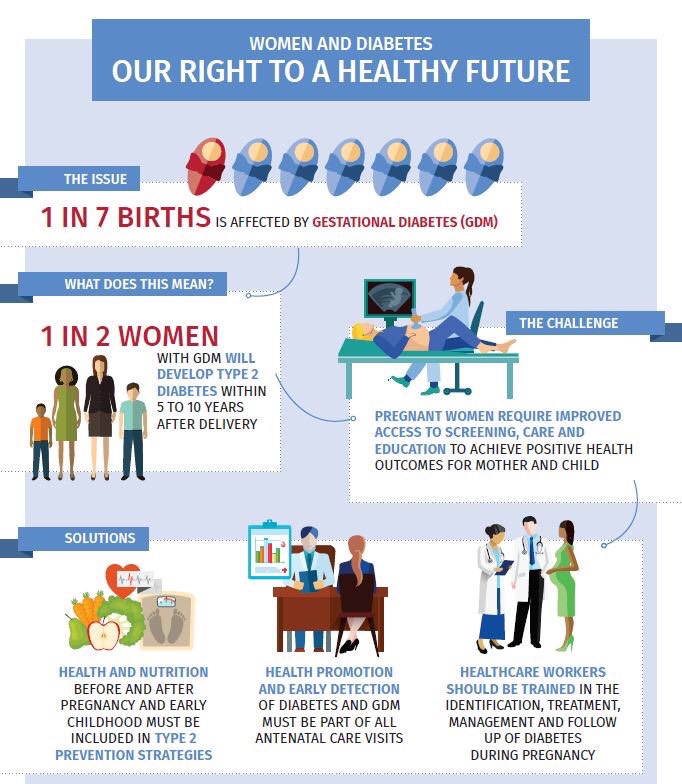
14 November was World Diabetes Day and Diabetes Australia has warned that gestational diabetes is now the fastest growing type of diabetes in Australia.

“Importantly, gestational diabetes poses a dual threat – firstly without appropriate management and care, it can be a serious risk to mother and baby during the pregnancy, and secondly it poses a serious future risk for both mother and baby developing type 2 diabetes and other health issues,” he said.

“After gestational diabetes, women are at high risk of developing type 2 diabetes and children born to mothers who have gestational diabetes are also at an increased risk of being overweight or obese, or developing type 2 diabetes later in life.”

“The alarming increase in number of women developing gestational diabetes presents an intergenerational diabetes issue and threatens to make the type 2 diabetes epidemic even bigger in future.”

“Our latest projections suggest that gestational diabetes could trigger over 250,000 women to develop type 2 diabetes or prediabetes in the coming decade.”

“Developing gestational diabetes is one of the biggest risk factors for type 2 diabetes and we need to ensure Australian mums and families get the support they need after gestational diabetes to reduce their risk of type 2 diabetes. We need to break this intergenerational cycle of diabetes.”

A/Professor Alison Nankervis, an Endocrinologist at the Royal Melbourne and Royal Women’s Hospital said the short term complications for mother and baby can be serious, but the risk of complications can be reduced with good treatment and care.

“Gestational diabetes is a form of diabetes that occurs during pregnancy and usually goes away after the baby is born. The abnormal blood glucose levels can affect both the mother and baby,” A/Professor Nankervis said.

“The condition makes pregnancy higher risk for both. Babies born to mothers with gestational diabetes are more likely to be born prematurely or via C-section, be larger babies, have shoulder dystocia and a range of other complications.”

“Women with gestational diabetes may need intensive glucose management to avoid serious problems. But with the best possible management and care, the risks can be reduced and women can avoid complications.”

A/ Prof Nankervis said growth in gestational diabetes was already putting pressure on health services with the number of women with the condition doubling at the Royal Women’s Hospital since 2014.

“There are a number of factors contributing to the growing rates of gestational diabetes including the age women are falling pregnant, the changing ethnic makeup of Australia’s society, and the weight of women when they fall pregnant. The growth of gestational diabetes has been exacerbated by recent lowering of the diagnostic threshold,” she said.

Professor Johnson said diabetes in pregnancy was a major priority in the Australian National Diabetes Strategy 2016-20 but there was still no clarity on the implementation plans from the Australian Government and the State and Territory Governments.

“New approaches are needed for pre-pregnancy, during pregnancy, and after pregnancy,” said Professor Johnson.

“There needs to be help for women to be a healthy weight before pregnancy. We need to improve access to diabetes education and support for women with gestational diabetes during pregnancy as well as ensuring they are getting the care and support they need after the birth.”

“This includes seeing their GP for follow up testing to detect type 2 diabetes or prediabetes, and access to type 2 diabetes prevention programs and health professionals including diabetes educators, dietitians and exercise physiologists who can help with lifestyle management to reduce their risk of type 2 diabetes.”

“Sitting back and doing nothing is not an option. This is an avalanche that will bury the health system if we don’t act,” he said.

Melbourne mum Karla Jennings developed gestational diabetes during pregnancy and subsequently developed type 2 diabetes at the young age of 30.

“I had great support while I was managing gestational diabetes but it wasn’t enough to prevent me from developing type 2 diabetes,” she said.

“The day of my type 2 diabetes diagnosis was devastating. I cried and I cried for days.”

“It was much harder for me to accept than being diagnosed with gestational diabetes but I am determined to manage diabetes and keep living my life.”

“I do think it is critical that Australia does more to support mums like me and help reduce the number of people diagnosed with type 2 diabetes in the future.”

Diabetes Australia is the national body for people affected by all types of diabetes and those at risk. Diabetes Australia is committed to reducing the impact of diabetes.

We work in partnership with diabetes health professionals, researchers and the community to minimise the impact of diabetes.

PART 2

Aboriginal and Torres Strait Islanders

Aboriginal and Torres Strait Islander people are almost four times more likely than non-Indigenous Australians to have diabetes or pre-diabetes. Improving the lives of people affected by all types of diabetes and those at risk among Aboriginal and Torres Strait Islander communities is a priority for Diabetes Australia.

Watch the short video below for a quick guide to the benefits of the National Diabetes Services Scheme (NDSS).

You can reduce the risk of developing type 2 diabetes by eating a more healthy diet and being physically active which will help maintain a healthy weight to keep your sugar (glucose) levels normal and your body strong.

If you have any worries about diabetes, check the symptoms below and find out more from your Aboriginal Health Worker, Health Clinic/Community Centre, Aboriginal Medical Service or doctor.

The following information is from the ‘Keep Culture Life & Family Strong; Know Early About Diabetes’ flipcharts for Indigenous Australians. It is of a general nature only and should not be substituted for medical advice or used to alter medical therapy. It does not replace consultations with qualified healthcare professionals to meet your individual medical

The ‘Keep Culture Life & Family Strong; Know Early About Diabetes’ resource was originally developed by Healthy Living NT with funding provided by the Department of Health and Ageing through Diabetes Australia. The reprinting and distribution of the most recent addition has been made possible with funding by the National Diabetes Services Scheme (NDSS) – an initiative of the Australian Government administered by Diabetes Australia.

How do you feel? (Symptoms)

If you have any of the following symptoms you should talk to your doctor, health worker or nurse.

  • Feeling tired or weak
  • Go to the toilet a lot
  • Feeling thirsty
  • Leg cramps
  • Feeling itchy
  • Sores and boils that won’t heal
  • Blurry vision
  • Pins and needles
  • Feeling grumpy or angry.

Through a simple test, a doctor can find out if they’re the result of diabetes.

What is it? (About diabetes)

Sugar (glucose) gives your body energy. The sugar (glucose) moves from your blood into your muscles with something called insulin. With diabetes your insulin isn’t working properly, so the sugar (glucose) doesn’t get into your muscles and body easily and there is too much sugar (glucose) in your blood.

Everyone has a little bit of sugar (glucose) in their blood. The optimum sugar (glucose) level is between 4 to 6 mmol/L (after fasting).

Sugar (glucose) is fuel that comes from some of the food you eat and drink. It gives your body energy to do all sorts of things:

  • Walk
  • Think
  • Play sports
  • Hunt
  • Work
  • Rake
  • Gardening
  • Resting.

To help the sugar (glucose) move into your muscles and body cells your body needs something called insulin. Insulin is made in the pancreas – a body part which is near your stomach.

Insulin helps keep your sugar (glucose) levels normal.

With diabetes, the insulin isn’t helping the sugar (glucose) move from your body into your muscles and body cells. So it stays and builds in your body, making your blood sugar (glucose) level high.

Type 2 Diabetes

There are different types of diabetes. A lot of Aboriginal and Torres Strait Islanders have type 2 diabetes. Type 2 is when your body stops the insulin working properly.

Fat bellies, not being active enough, eating a big mob of fatty food can stop the insulin working properly in your body.

Being active, eating healthy and being a healthy weight can help your insulin work better to keep your sugar (glucose) normal. Sometimes people might need to take tablets and insulin everyday to keep their sugar (glucose) levels normal.

Gestational Diabetes

Another type of diabetes is gestational diabetes. This happens when you are pregnant, but not all women get it. It goes away after pregnancy but you and your baby can get type 2 diabetes later in life.

Pre Diabetes

There is also Pre Diabetes or Impaired Glucose Tolerance (IGT). This happens when your sugar (glucose) level is high, but not high enough to be called diabetes. It doesn’t mean you have diabetes now, but it does mean you might get it later. Being active and eating healthy you can slow down the start of type 2 diabetes.

Type 1 Diabetes

Some Aboriginal and Torres Strait Islanders have type 1 diabetes. This usually happens in kids and teenagers. Type 1 diabetes is when your body kills the insulin making part in the pancreas and no insulin is made in your body. To give the body the insulin it needs, insulin injections are needed every day for the rest of their life.

What do I do? (Management of diabetes)

When there is too much sugar (glucose) in your blood it damages your heart, kidneys, feet, eyes and nerves.

You can keep your sugar (glucose) levels normal by:

Eating healthy

  • Have plenty of bush tucker and have shop foods and home cooked meals that are low in fat, sugar and salt.
  • Have something from each of the core food groups every day. They give you energy, fight sickness and help care for your body to keep it strong.
  • Drink plenty of water.

Avoiding and eat less fat, sugar and salt

  • Eat less fat as it makes you put on weight and gives you problems with your heart.
  • Pick meat with no fat or only small bits of fat on it. Cut the fat off the meat and take the skin off chicken.
  • Drain the juices (fat) after cooking meat and scoop out the fat from the top of stews.
  • Avoid cooking with or having fats like butter, oil, margarine or dripping.
  • It is better to boil, steam, stew, grill, microwave or stir-fry food.

Being a healthy weight (not too fat and not too skinny)

  • Do this by eating less, eating healthy and being more active.

Keeping active

  • It helps you lose weight and keep it off and it keeps you healthy.
  • It helps your insulin to work properly.
  • Walk, job, play sport, hunt, garden, work around the place.
  • Be active for 30 minutes or more every day OR do 10 minutes 3 times a day.

Taking your medicine

  • Take your medicine at the times the doctor tells you.
  • Take them with or after eating in the morning, afternoon and supper time every day.
  • Refill your medicine box in the morning (get some more medicine before it gets low and so you don’t run out).
  • Take your medicine with you when you go to see family, walkabout or away from home.
  • Put your medicines somewhere cool, dry and safe so they won’t go bad.
  • Keep your medicines out of reach of kids.

Remember to:

  • Have your check-ups with your doctor, health worker or nurse. Have regular check-ups for your eyes, feet, kidneys, blood pressure, skin and teeth. If you notice anything different about your body talk to your doctor, health worker or nurse.
  • Check your sugar (glucose) levels at the times your doctor, health worker or nurse tells you.
  • See your doctor, health worker or nurse straight away if you feel sick.
  • Check your feet and skin for sores and/or cracks every day.

Why take medicine for? (Medications for diabetes)

Indigenous

Diabetes medicine helps to keep your body strong and well and it helps to keep your sugar (glucose) levels normal.

When eating healthy, being active and being a healthy weight isn’t working at keeping your sugar (glucose) levels normal, you might need to take tablets and/or insulin.

The doctor might put you on tablets called Metformin to help your insulin work better and to lower the amount of sugar (glucose) in your blood.

After a while the pancreas gets tired from working too hard and can’t make enough insulin, so your doctor might put you on tablets called Sulphonylurea. This medicine helps your body make more insulin.

Or, after awhile, the doctor might need to add another lot of tablets called Glitazone or Acarbose.

Remember to have your medicine with or after eating, in the morning, afternoon or supper time. Take them at the time the doctor tells you to.

All tablets work differently and some can have side effects.

If the following problems don’t go away or if you are still worried about them, then talk to your doctor.

  • Feel sick like you want to vomit (nausea)
  • A sore belly
  • Diarrhoea
  • Sugar (glucose) levels going too low
  • Have fluid build-up (retention)

When your sugar (glucose) levels get too high and stays high the doctor might put you on tablets and give you insulin.

  • Having insulin doesn’t mean you have type 1 diabetes.
  • Insulin isn’t like tablets so it shouldn’t be swallowed.
  • You inject the insulin under your skin in different places on your belly.

Talk to your doctor, health worker or nurse about insulin and what is right for you.

Having too much insulin or taking too many Sulphonylurea tablets can make your sugar (glucose) levels go too low (under 3) and make you hypo (hypoglycaemia).

You can also go hypo (hypoglycaemia) if you are:

  • Not eating, not eating enough or eating too late
  • Being extra active
  • Drinking grog (alcohol).

You might not feel anything when you have a hypo (hypoglycaemia), but sometimes you might feel:

  • Shaky
  • Hungry
  • Get headaches
  • Weak
  • Confused
  • Angry
  • Talk like you’re drunk when you’re not
  • Sweaty.

When you have these feelings or think you are having a hypo (hypoglycaemia), get your sugar (glucose) level up fast by drinking or eating something sweet.

Keep your sugar (glucose) level normal and stop having another hypo (hypoglycaemia) by eating a sandwich or meal after you have something sweet.

Remember, after taking your tablets or insulin:

  • Keep them somewhere cool, dry and safe (maybe in the fridge at home or at the clinic) so that they won’t go bad
  • Keep them out of reach of children
  • Get rid of your syringes/needles and finger pricking needles by putting them in a “sharps container” or “hard plastic” empty container with a lid (see if the clinic has one).

Remember when you go see family, walkabout or are away for home take your tablets and/or insulin with you.

Why me? (Risk factors)

Nobody knows how or why some people get diabetes but there are some things we know that can add to your chances of getting it. You have more chance of getting it when you are Aboriginal or Torres Strait Islander, but not all Aboriginal or Torres Strait Islande people have diabetes.

Aboriginal or Torres Strait Islander people live different to how they used to live. Changes that add to your chances of getting diabetes are:

  • Not as active
  • More overweight
  • Eating fatty salty, sugary foods.

People living the old way were:

  • Active
  • Leaner and fit
  • Eating healthy food (bush tucker).

Other chances of getting diabetes include:

  • It is in your family tree or when someone in your family has diabetes
  • You had diabetes when pregnant
  • You get older
  • You eat too much and you eat too many fatty and sugary foods
  • You are overweight
  • You are not active enough
  • You have pancreatitis (a sickness of the pancreas).

There are things you can’t change or stop you from getting diabetes:

  • It’s in your family
  • You are Aboriginal or Torres Strait Islander
  • You are pregnant with diabetes
  • You are getting older.

The things you can do to slow down the start of diabetes:

  • Eat healthy and be a healthy weight
  • Be active
  • Don’t drink too much grog.

Nobody knows why or how people get diabetes. After a while it can damage your heart, kidneys, eyes, feet and nerves making you really sick.

Talk to your doctor, clinic, nurse or health worker about having a test to find out if you have diabetes. You can’t always feel it or see it happening, so you might not kn

NACCHO Aboriginal Health #researchtranslation17 @NHMRC and @KenWyattMP announce $12 Million Investment Aiming to #ClosetheGap in #Indigenous Health

‘We hope it can improve the health of Aboriginal babies,’

Darwin mother Dianne Walker (pictured above )   entered her newborn daughter Rekeesha into the study 29 years ago to track her development, and is happy the project is getting more funding.

Hear ABC interview HERE

http://www.abc.net.au/radio/sydney/programs/pm/aboriginal-health-research/9139838

Menzies will also continue the nation’s longest cohort study of Aboriginal health which examines almost 700 children to identify disease risk factors.

“These nine important projects aim to improve and save lives and will provide more opportunities for health breakthroughs,

From diet improvement to vitamin supplements and antibiotics, this broad range of critical work will continue to increase our clinical knowledge.

I congratulate the Menzies School of Research for its work over more than 30 years, with health services and community partners, on people-focused projects to make a real difference on the ground.”

Indigenous Health Minister Ken Wyatt AM said medical research was critical to closing the gap on Indigenous life expectancy.

Indigenous Affairs Minister Nigel Scullion and Indigenous Health Minister Ken Wyatt AM last Friday  announced the National Health and Medical Research Council (NHMRC) funding for researchers at Darwin’s Menzies School of Medical Research, covering Indigenous-specific and broader health projects

The Turnbull Government will fund nine landmark Northern Territory medical research projects worth over $12 million, aiming to save children’s lives and help close the gap in Indigenous health.

“This research’s focus on child health and chronic disease will help address significant challenges in Aboriginal and Torres Strait communities,” Minister Scullion said.

“This demonstrates how the Coalition Government works closely with important Territory institutions like Menzies School of Medical Research to deliver better outcomes for Territorians.

“The funding includes major support for Menzies to undertake a trial of maternal immunisation to prevent pneumonia in infants and to continue a 30-year ground-breaking cohort study of 689 Aboriginal children born to mothers at the Royal Darwin Hospital.”

The grants continue the Turnbull Government’s commitment to world-leading medical research, with the NHMRC tasked with expending at least 5 per cent of its funding to Aboriginal and Torres Strait Islander Health research.

“Through NHMRC, the government is also developing Road Map 3 A Strategic Framework for Improving Aboriginal and Torres Strait Islander Health through Research,” Minister Wyatt said.

“This guide will communicate our objectives and investment in Aboriginal and Torres Strait Islander health research for the next decade.”

Menzies School of Health Research funding:

CIA NAME TITLE
BUDGET
Prof Anne Chang Preventing early-onset pneumonia in Indigenous infants through maternal immunisation: a multi-centre randomised controlled trial


$3,210,617.60
Dr Michael Binks Vitamin D supplementation to prevent respiratory infections among Indigenous children in the Northern Territory: a randomised controlled trial.


$3,164,378.55
A/Pr Gurmeet Singh Early life and contemporary influences on body composition, mental health, and chronic disease risk markers in the Aboriginal Birth Cohort


$3,117,044.30
Prof Anne Chang Prophylactic antibiotics to prevent recurrent lower respiratory tract infections in children with neurological impairment (PARROT) study


$1,193,515.70
A/Pr Julie Brimblecombe Healthy Stores 2020: Reducing retail merchandising of discretionary food and beverages in remote Indigenous community stores


$903,135.10
Dr Anna Wood Diabetes and cardiovascular risk among Indigenous women after pregnancy complicated by hyperglycaemia.


$126,437.00
Dr Simon Smith A prospective study of the aetiology, associations, clinical features and outcomes of community-acquired pneumonia in children and adults in tropical Australia


$126,437.00
Ms Jemima Beissbarth Vaccine and antibiotic selective pressures on the microbiology of otitis media in Aboriginal and Torres Strait Islander children in northern Australia


$87,302.00
Ms Christina Spargo 2017 Equipment Grant
$84,491.50

NACCHO Aboriginal Health @KidneyHealth : Download @MenziesResearch Indigenous Australians travelling 1000 kilometres for kidney dialysis: report


” Remote Aboriginal Australians with kidney disease have demanded equitable access to life-saving treatment closer to home to prevent the removal of people from their traditional homelands.

In a new Menzies School of Health Research report, patients and carers from across northern and central Australia called on state, territory and federal government health ministers to overhaul the system to provide more holistic care.”

Download Report Here

Menzies IPV_REPORT_FINAL_09112017

Report lead author Dr Jaquelyne Hughes says the current model meets medical needs, but missed the mark in helping indigenous people feel connected to their country, families and culture.

“We heard, overwhelmingly, of how people felt lonely, distressed and isolated following relocation to access treatment,” Dr Hughes said.

Some patients reported homelessness and desperation because of this disconnect, describing having to stay in the long grass when Darwin hostels are booked out.

A Torres Strait Islander said many sick people are forced to travel up to 1000 kilometres to Cairns and Townsville to receive dialysis.

“And they cry, their tears are running, because they want to go back home, they miss their families, they miss the lifestyle of the islands, because they are islanders,” the patient said.

Many noted the disease can fracture communities as elders become ill and are relocated together with their relatives, who miss out on cultural obligations and suffer disruptions to education and employment.

“We want them (the elders) to stay in communities. They are the old people; they have to hold country and family together for us,” one patient said.

“Families living in Darwin (for dialysis) are missing out on ceremonies, funerals and other important stuff,” another person said.

Dr Hughes said the only type of care available to most indigenous renal failure sufferers was designed by and for people in cities at the expense of those in the bush.

MENZIES Press Release

Indigenous people with kidney disease living in remote and rural Australia as well as their support networks have made a resounding call for equitable health care closer to home in a report released today by Menzies School of Health Research (Menzies).

In the ‘Indigenous Patient Voices: Gathering Perspectives, Finding Solutions for Chronic and End-Stage Kidney Disease’ 2017 symposium report, renal patients and carers from across northern and central Australia highlighted the need for more holistic care and services to be made available closer to home.

Report lead author Dr Jaquelyne Hughes said current health care systems met medical care needs, but missed the mark in helping Indigenous people feel connected to their country, communities and culture while they received treatment.

“We heard, overwhelmingly, of how people felt lonely, distressed and isolated following relocation to access treatment,” Dr Hughes said.

“Some patients reported homelessness and desperation because of this disconnect. They are not rejecting the desire to live well; they are rejecting the only model of care available to them.

“The care available to kidney patients was designed by and for people who live close to cities. This automatically excludes people who live further away and in the bush.”

The report follows the Indigenous Patient Voices Symposium held during September in Darwin in conjunction with the 53rd Annual Scientific Meeting of the Australia and New Zealand Society of Nephrology (ANZSN).

Dr Hughes is one of many health practitioners urging the Australian state, territory and federal government health ministers to respond to this call to action.

“Consumer engagement is a national priority of Australian health services, and the symposium showed many Aboriginal and Torres Strait Islander people are willing to provide feedback to support the necessary health care transformation,” she said.

“We’ve highlighted the patient-reported barriers to accessing quality services for chronic and end-stage kidney disease, how and where services are delivered, how information is communicated and developing pathways and career opportunities for Indigenous Australians within the renal health care workforce.”

The report is available via the Menzies website at http://bit.ly/2znSx7d.

The Indigenous Patients’ Voices Symposium was supported by Kidney Health Australia, Astellas Pharma Australia and Novartis Pharmaceuticals Australia.


NACCHO Aboriginal Health : Download The @RACGP Five steps towards excellent Aboriginal and Torres Strait Islander healthcare


 ” The RACGP’s Five steps towards excellent Aboriginal and Torres Strait Islander healthcare has been developed to provide a clear and concise summary of the programs and funding options available to support better care for Aboriginal and Torres Strait Islander patients “

Download 1Five-steps-guide

Download 2. Five-steps-summary-sheet

RACGP Aboriginal and Torres Strait Islander Health produced these resources to help give busy GPs and practice teams practical advice that builds on a foundation of cultural awareness.

The five steps:

1. Prepare and register for the Practice Incentives Program (PIP)
Register for the Indigenous Health PIP Incentive, staff complete accredited cultural awareness training, create a welcoming practice environment.

2. Identify your Aboriginal and Torres Strait Islander patients
Asking whether someone identifies as Aboriginal and/or Torres Strait Islander can cause discomfort in practice staff; however, evidence shows that patients are comfortable when asked if the reasons can be explained.

If patients choose to identify as Aboriginal and/or Torres Strait Islander, they will do so when prompted.

3. Perform a health assessment
Performing a Medicare health assessment for Aboriginal and Torres Strait Islander people (MBS item 715) opens access to an additional five allied health visits.

Conducting a health assessment with a patient is an opportunity to build rapport and trust, and to develop an ongoing relationship. In addition to identifying physical health problems, discussing psychological and social functions is an effective approach to two-way communication with Aboriginal and Torres Strait Islander patients.

4. Register patients with, or at risk of, a chronic disease for the Closing the Gap (CTG) Pharmaceutical Benefits Scheme (PBS) co-payment
Once a practice is registered for the Indigenous PIP (Step 1), it is able to register patients for the CTG PBS co-payment.

5. Use appropriate clinical guidelines and programs from the RACGP, Medicare and Primary Health Networks to enhance access and quality of care
The National Aboriginal Community Controlled Health Organisation (NACCHO)/RACGP National guide to a preventive health assessment for Aboriginal and Torres Strait Islander people (the National guide) outlines the activities that are effective for preventive health.

More information is also available in the Australian Indigenous Health InfoNet Indigenous Health service eLearning program.

Other resources in the Five steps towards excellent Aboriginal and Torres Strait Islander healthcare include a Five steps guide, which features detailed information to support GPs and practice teams to access programs and funding options; a quick reference guide to MBS items, policy and programs; and a Five steps visual poster, which is a condensed version of the five steps that can be displayed in a practice.

The RACGP will also be developing supplementary resources throughout 2018 to support GPs to implement the five steps in a way that achieves the best outcomes for practices and Aboriginal and Torres Strait Islander patients.

First published in newsGP. Reproduced with permission of the RACGP.


THE AUTHOR: Mr Paul Hayes Paul is an experienced healthcare journalist and the editor of newsGP.

Aboriginal Health and #Respectourelders @KenWyattMP Launching education for aged care facilities cultural considerations caring for elders


Caring for Indigenous Australians: Aboriginal and Torres Strait Islander People is an important program which will help address the fundamental need for culturally appropriate care for Aboriginal people, some who may need to use aged care services at an earlier stage of their lives

Programs like this are a vital part of ensuring the care of senior Indigenous people is as culturally continuous as possible”

Minister for Aged Care and Indigenous Health Ken Wyatt has welcomed the new course, which coincides with his announcement of a new North West Ageing and Aged Care Strategy which aims to create age-friendly communities across the Pilbara and the Kimberley, while encouraging more seniors support services and greater local employment in aged care.

Photos above Ken Wyatt meeting with the elders from the Yindjibarndi Aboriginal Corporation in Roebourne WA\.

The launch of Caring for Indigenous Australians: Aboriginal and Torres Strait Islander People will be streamed live via the Aged Care Channel at 10.45am AEDT on 22 November with Aboriginal Elder Mr Elliot taking part in answering live questions from members.

Developed by the Aged Care Channel (ACC) in partnership with the Department of Health, the Caring for Indigenous Australians: Aboriginal and Torres Strait Islander People course aims to help inform aged care facilities across Australia of the cultural considerations of caring for Indigenous Australians.

ACC Group Manager Content and Production, Steve Iliffe says the program took six months to put together with the help of research, lots of resources, government input and guidance of Indigenous people as well as visits to different aged care facilities in Pilbara and northern Adelaide.

“We thought it was an important program to do because Indigenous Australians do have a series of complex needs different to the rest of the population due to their history and access to health in areas,” he explains.

“They have a connection to the land, a connection to their family and want to still have access to bush tucker and do things that they traditionally do.

“We went out to a number of different aged care facilities to talk to the people there about what they do to provide tailored care.”

ACC Learning and Development Manager Nicola Burton says providing culturally-appropriate care is a crucial part of the person-centred approach.

“The goal of this program is to recognise how to respond to the cultural needs of Indigenous Australians receiving care,” she says.

“There are significant regional differences between Aboriginal and Torres Strait Islander groups, each with complex and diverse ways of life.

“Language, music and art vary in each area, but a connection with culture, community and the land seems to be common to all Aboriginal and Torres Strait Islander people.”

While working of the course and program, the ACC team spoke to and sought the advice of subject matter expert Ngarrindjeri elder and Chair of the Aboriginal and Torres Strait Islander Ageing Advisory Group Mark Elliott.

“It was important for us to work with an indigenous leader – he guided us through the process and the research,” Mr Iliffe says.

“With this new course, we hope that we can increase understanding between cultures because at the end of the day, it’s about creating a home for people in aged care and providing them with a life they are still living.”

The new Strategy announced by the Minister includes short, medium and long-term goals, from the engagement and inclusion of seniors in local communities, through to tailored home and residential care support.

“[Caring for Indigenous Australians: Aboriginal and Torres Strait Islander People] is an important program which will help address the fundamental need for culturally appropriate care for Aboriginal people, some who may need to use aged care services at an earlier stage of their lives,” Minister Wyatt says.

“Programs like this are a vital part of ensuring the care of senior Indigenous people is as culturally continuous as possible.

“It will contribute to this goal by helping staff understand the impact of historical events and past government policies, along with broadening their appreciation of Indigenous culture and the health challenges faced by some people.

“Giving staff these insights can contribute to better care, and I encourage everyone involved in indigenous aged care to take the course.”

He adds that the aim of the North West Ageing and Aged Care Strategy is to foster quality and culturally relevant residential aged care facilities that allow people to stay connected to community and age safely with dignity.

“Hopefully the new course will contribute to achieving this outcome,” he says.

“The program showcases the Pilbara’s Yaandina residential aged care facility, whose staff are experienced in providing residents with culturally sensitive care.”

Mr Iliffe says the result of the research and creation of the program is close to the hearts of all involved.

“The people involved had the most amazing time and it is something they will cherish forever,” he says.

“These experiences help us more closer to closing the gap.”

The launch of Caring for Indigenous Australians: Aboriginal and Torres Strait Islander People will be streamed live via the Aged Care Channel at 10.45am AEDT on 22 November with Aboriginal Elder Mr Elliot taking part in answering live questions from members.

Aboriginal Health News : Our #NACCHO Members #Deadly good news stories #NT #NSW #QLD #WA #SA #VIC #TAS

1.1 National: NACCHO members elect new Chair and Deputy

1.2 NACCHO TV view NACCHO AGM videos on line

1.3 Heart Foundation survey Aboriginal and Torres Strait Islander heart health resources

2.ACT : Deadly Choices promote Deadly Roos at Winnunga Nimmityjah ACCHO 

3.QLD : Johnathan Thurston 2018 Queensland Australian of the Year

 4. 1 WA : Kalgoorlie Tackling Indigenous Smoking (TIS) team – Make a Change” hip hop project

4.2 WA  : SWAMS celebrates two decades of Aboriginal health care

5. 1 NSW : Wellington Aboriginal Corporation Health Service (WACHS) clocks up 25 years

5.2 NSW : Katungul Aboriginal Corporation has joined forces with the Institute for Urban Indigenous Health Brisbane (IUHI) to deliver the Deadly Choices program on the Far South Coast.

6. Vic : VAHS Healthy Lifestyle Ambassadors win title

7.NT Miwatj Health Service : Christina’s Story on Quit Smoking Tobacco

8 SA : Artists painting their Indigenous songlines to stay healthy and strong

 View hundreds of ACCHO Deadly Good News Stories over past 5 years

How to submit a NACCHO Affiliate  or Members Good News Story ? 

 Email to Colin Cowell NACCHO Media    

Mobile 0401 331 251

Wednesday by 4.30 pm for publication each Thursday

1.1 National: NACCHO members elect new Chair and Deputy

National Aboriginal Community Controlled Health Organisation (NACCHO) members have elected John Singer as their new Chairperson and Donella Mills as Deputy Chairperson at the last week NACCHO Annual General Meeting in Canberra

See Background

News from #NACCHOagm2017 143 #ACCHO members vote in new NACCHO Chair and Deputy Chair

1.2 NACCHO TV view NACCHO AGM videos on line

View over 40 videos HERE

https://www.facebook.com/pg/NacchoAboriginalHealth/videos/?ref=page_internal

1.3 Heart Foundation survey Aboriginal and Torres Strait Islander heart health resources


The Heart Foundation is committed to improving the heart health of Aboriginal and Torres Strait Islander peoples.
In this survey, we are seeking your feedback on how we can improve the use and effectiveness of our Aboriginal and Torres Strait Islander heart health resources, for both health professionals and Aboriginal and Torres Strait Islander people and communities.
 
We would greatly appreciate your time and opinions on our information resources and tools, to better understand the:
 
use and awareness of our resources,
– cultural appropriateness of our resources for the Aboriginal and Torres Strait Islander Community,
– suitability of the language, format and style of our resources.
We recognise that your time is valuable and thank you for your help. Link below


2.ACT : Deadly Choices promote Deadly Roos at Winnunga Nimmityjah ACCHO 

“Winnunga is excited to be part of the Deadly Choices Deadly Roos campaign. The more organisations like ours can work together, the closer we can move towards Closing the Gap and improving the health outcomes in our communities”,

Winnunga Nimmityjah CEO Julie Tongs OAM.

“We know from our Deadly Choices campaign that people respond to health promotion messages from celebrities and sporting legends.

Partnerships like this one with the Deadly Roos and Winnunga Nimmityjah are a powerful vehicle for positive change in the lifestyle of Aboriginal and Torres Strait Islander peoples.”

Institute for Urban Indigenous Health CEO, Adrian Carson, echoed Ms Tongs’ sentiment.

Pictured above Julie Tongs with the Deadly Choices team and Team NACCHO Oliver Tye and Kayla Ross

Prevention being better than cure is the message of the day at Winnunga Nimmityjah Aboriginal Health and Community Services today, as the Narrabundah clinic welcomed Australian rugby league legends in Canberra for their 2017 Rugby League World Cup game against France.

Australian Kangaroos squad members Cooper Cronk and Dane Gagai, and Coach Mal Menginga, joined former Kangaroo Steve Renouf to spread the word about the importance of getting regular health checks. The clinic visit is one of a series of events throughout Australia during the 2017 World Cup.

In September, Federal Minister for Indigenous Health, Ken Wyatt AM announced that legendary Kangaroos coach Mal Meninga and other Indigenous and non-Indigenous players would become ambassadors for the Institute for Urban Indigenous Health’s Deadly Choices program, to extend its message across Australia.

Deadly Choices is a community-based healthy lifestyle campaign launched in 2013. There is particular focus on young people, as well as the importance of exercise, education, school attendance, quitting smoking, and regular preventive health checks.

Through media campaigns, sports carnivals and community events Deadly Choices has prompted:

  •  almost 19,000 annual health check-ups in South East Queensland;
  •  1,155 smoke-free household pledges; and
  •  more than 3,300 smoker interventions.

Community members who get their 715 Health Check at a participating Aboriginal Medical Service – such as Winnunga Nimmityjah – during the World Cup can score a special edition Deadly Kangaroos World Cup jersey.

3.QLD : Johnathan Thurston 2018 Queensland Australian of the Year 

HE IS a legend on the field, a hero in the community — and now Johnathan Thurston is on his way to becoming Australian of the Year.

The NRL star was last night recognised for his tireless commitment to helping others, taking out the 2018 Queensland Australian of the Year award at a ceremony in Brisbane.

His stellar career as a rugby league player is matched by his community endeavours, which includes championing the Achieving Results through Indigenous Education academy and serving as an ambassador for an anti-ice campaign ran by the Apunipima Cape York Health Council.

4. 1 WA : Kalgoorlie Tackling Indigenous Smoking (TIS) team – Make a Change” hip hop project


The Tackling Indigenous Smoking (TIS) team at Bega Garnbirringu Health Service created a music video to educate and empower young people in the Goldfields region to not take up smoking. The hip hop music video was created during a week-long workshop in June 2017.

The Bega Garnbirringu TIS team also created TV ads, radio ads and other informational materials by using the video as a main theme.

The Bega Garnbirringu TIS team engaged and educated the hip hop participants on smoking cessation through regular visits. Participants included East Kalgoorlie Primary School and Kalgoorlie-Boulder Community High School students (Clontarf and Kalgoorlie Girls Academy).

Participants were also informed about smoking issues and how to change the culture of smoking. Participants were provided with information about second-hand smoke and prevention strategies. The education sessions assisted participants to create a hip hop song. The participants were given the opportunity to write poetry/raps which included local heritage and culture in their health messages, vocal coaching and learnt how to create a video clip.

In less than four months, the hip hop video received more than 5,700 views on Bega Garnbirringu YouTube channel. Community Members liked the video sharing on Facebook and other social media platforms. Community Members recognised participants in the video, and complimented them on their enthusiasm, participation and efforts.

The participants were interviewed informally during and after the workshop. It was reported that they loved and enjoyed the workshop. Participants were aware of smoking harms and recognise support services of Bega Garnbirringu TIS team that delivers education to the local community on a regular basis. Participants noted that they will never smoke, and ask family and friends to not smoke or to quit smoking.

The Hip Hop video can be found here. The TV advertisement can be found here. The GWN7 promotional segment can be found here.

4.2 WA  : SWAMS celebrates two decades of Aboriginal health care

The South West Aboriginal Medical Service (SWAMS) is celebrating its milestone 20th birthday with a week-long festival of events being held across the South West from 16-22 December 2017.

SWAMS, an Aboriginal Community Controlled organisation, plays a pivotal role in improving the quality of life for Aboriginal people in the South West, through the delivery of culturally focused primary health care.

“Twenty years ago, no such service existed. Aboriginal people were dying from preventable disease, diabetes was rife, and a lack of cultural awareness in tertiary medicine made it difficult for Aboriginal people to get the specialist care needed,” SWAMS CEO Lesley Nelson said.

“All that has changed now. We are a thriving organisation with highly trained staff working across six clinics to improve the quality and quantity of life for thousands of Aboriginal people under our care,” Ms Nelson said.

“This isn’t just a celebration for SWAMS. This is a celebration for an entire community and for those community members who had a vision for better Aboriginal health care back in 1997.”

“We still have a long way to go, but I think it’s safe to say that they would be proud of the organisation SWAMS has become and the difference we make to the community.”

The celebrations will take place in Bunbury, Busselton, Manjimup, Collie and Harvey and will include a series of free family picnics in each town, featuring a BBQ lunch, birthday cake and entertainment.

The highlight of the festival programme is a ticketed 20th Anniversary Gala Evening at the Bunbury Regional Entertainment Centre, with live entertainment by The Merindas and comedian Kevin Kropinyeri.

Gala tickets can be purchased from http://www.trybooking.com/329821 or from the SWAMS administration building located at 3/30 Wellington Street, Bunbury (cash only).

SWAMS 20th Anniversary Festival events:

Please refer to the attached schedule.

For more information on the SWAMS 20th Anniversary Festival, contact the office on (08) 9791 1166 or email info@swams.com.au.

5. 1 NSW : Wellington Aboriginal Corporation Health Service (WACHS) clocks up 25 years

“From little things big things grow.”

That is what founding member of the Wellington Aboriginal Corporation Health Service (WACHS), Aunty Joyce Williams, said to herself 25 years ago when the service was launched.

It has certainly been the case for the organisation which flourished over the last two decades to now service locations across the state.

The milestone was celebrated with the help of community members, ambassadors and services at Pioneer Park on Friday – a sight to behold for Aunty Joyce who reminisced on the service’s early days.

“From little things big things grow – I always said that and I believe it,” she said.

“It’s still happening, it’s still growing.

“Look at all the students here – in years to come these children will remember this day.”

Aunty Joyce gave credit to CEO Darren Ah-See who she said has done a wonderful job in the organisation’s progression.

WACHS chairperson, Marsha Hill, agreed the milestone was a big day for the indigenous community of Wellington.

The Move it Mob Style crew kept school students entertained.

“It is a massive milestone acknowledging the Elders who set up the service,” she said

“It took a lot of time, effort and dedication for a mob of people in a time that it wasn’t a positive experience for Aboriginal people.”

She said the service initially started with one drug and alcohol worker, and has since grown to employ close to 100 staff members across NSW.

“It has allowed opportunities for staff to train and earn professional qualifications so the best quality service can be delivered to the community,” Marsha said.

She added the service has expanded across the state to include Moree, Dubbo, Mt Druitt, and soon to be Penrith and the Blue Mountains.

“It’s a really good service to work for and an absolute pleasure to see our community healthy and have access to the best and quality health care,” Marsha said.

Friday’s celebrations were attended to by local schools and services, QuitBFit ambassadors, and special guests including Move it Mob Style, NRL and former NRL players Timana Tahu, Nathan Merritt, Ash Taylor, Will Smith Braidon Burns, and Tyrone Roberts.

5.2 NSW : Katungul Aboriginal Corporation has joined forces with the Institute for Urban Indigenous Health Brisbane (IUHI) to deliver the Deadly Choices program on the Far South Coast.

Steve Renouf (left), Aidan Sezer (centre), and Jack Wighton (right) were on hand to help promote Katungul’s partnership with Deadly Choices.

Rugby league legend Steve Renouf announced the partnership at a community event in Narooma on Saturday, November 4.

Current Canberra Raiders players Jack Wighton and Aidan Sezer also attended the event at NATA Oval.

The partnership expands the delivery of Deadly Choices across Australia, representing an ongoing commitment by community controlled health organisations to Close the Gap in Indigenous life expectancy.

Deadly Choices is a community-based healthy lifestyle campaign launched in 2013. It has a particular focus on young people, as well as the importance of exercise, education, school attendance, quitting smoking, and regular preventive health checks.

Renouf said the partnership with Katungul was an important part of Deadly Choices’ aim to spread its Indigenous health message across Australia.

“The big thing for Deadly Choices is we get Aboriginal and Torres Strait Islander people who historically weren’t getting their health check to get them,” he said.

“We’ve launched a partnership with the Kangaroos and the Rugby League World Cup. We were in Canberra on Friday night, and we launched a week ago in Melbourne with the Victorian Aboriginal Health Service down there.”

Robert Skeen, CEO of Katungul, said the partnership was an achievement born from months of planning.

“We are really excited to partner with Deadly Choices to further expand the program and the benefits it provides to community,” he said.

“We’re empowering our community to make Deadly Choices, by getting their health checked and spreading the message that prevention is better than cure.”

Wighton and Sezer, both of an Indigenous background, helped promote the new partnership, with Wighton stressing the importance of such events.

“I love coming out to these things,” he said. “Helping our people is a big thing, and these events are giving a rise to people getting healthy.”

Sezer also sees the importance in community events, and thinks the pathway to health is often a mindset.

“You can see from the turnout how much the Indigenous community appreciates the fact that Deadly Choices have provided this day for them to enjoy,” he said.

“I think it (staying healthy) is more about people keeping a good mind-frame, and taking days like this as a blessing to come down and enjoy it.”

In September, Federal Minister for Indigenous Health Ken Wyatt AM announced that legendary Kangaroos coach Mal Meninga and other Indigenous and non-Indigenous players would become ambassadors for the Deadly Choices program.

Community members who get their 715 Health Check at a participating Aboriginal Medical Service – such as Katungul – during the World Cup can score a special edition Deadly Kangaroos World Cup jersey.

6. Vic : VAHS Healthy Lifestyle Ambassadors win title

Congratulations to NJS Storm for winning the grand final at the A.C.T Aboriginal and Torres Strait Islander Netball Tournament! What an honour to be able to take home the trophy in memory of Neil Smith! Good job to the girls who played all 8 games undefeated. We are proud to have you as healthy lifestyle ambassadors! Enjoy the victory!

#vahsHLT #BePositive #BeBrave #BeStrong #StaySmokeFree

7.NT Miwatj Health Service : Christina’s Story on Quit Smoking Tobacco

Check out the incredible Christina from Galiwin’ku, Elcho Island, NT, Australia her sharing story on why she decided to quit smoking tobacco.

Ft. our legendary #YakaNgarali workers, Glen Gurruwiwi and Oscar Datjarranga.

We could not be more proud of the strength and determination Christina has shown in her quitting journey. If you want to #StartTheJourney like Christina, contact Glen or Oscar today!

8 SA : Artists painting their Indigenous songlines to stay healthy and strong

Dorothy Ward taps her head and her heart as she explains the process of painting her songlines.

“My family had the knowledge, the knowledge with culture, of every dreamtime rock hole … they bring the story into the painting,” she says.

“They start doing their own dreaming, from their grandmother or grandfather. They bring that story up to the canvas, they make it known, they do it with their mind and heart and it strengthens them and they be, you know, they strong.”

Article originally published here

https://www.theguardian.com/australia-news/2017/oct/17/the-artists-painting-their-indigenous-songlines-to-stay-healthy-and-strong

Ward is one of several hundred Indigenous artists who travelled to Adelaide for the Tarnanthi festival of contemporary Aboriginal and Torres Strait Islander art at the weekend.

She is sitting with other artists from the Warakurna arts centre in remote Western Australia. Warakurna represents artists from the Ngaanyatjarra lands, communities whose country is on the Western Australian side of the Gibson desert, 330km east of Uluru.

They are waiting for the three-day art fair to begin. Twenty-four stallholders, representing Indigenous arts centres from around Australia, have brought their best work to Adelaide to sell in the Tandanya National Aboriginal Cultural Institute. The art fair is part of the Tarnanthi festival of contemporary Aboriginal and Torres Strait Islander art, a citywide festival that runs until 22 October.

In the Ngaanyatjarra lands, as in many remote communities, art is one of the main sources of income.

“Art provides another income stream,” Warakurna arts centre’s manager, Jane Menzies, tells Guardian Australia. “One can’t live off the Centrelink dole payments. It’s woeful, unsustainable out there … the cost of living is so high.”Welfare payments range between $540 a fortnight for the unemployment benefit and $890 for the aged care pension. Once the bills are taken out, it’s barely enough to cover the cost of petrol.

“A lot of our artists are travelling for funerals, and funerals are not just 10km up the road, it’s 800km up the road,” Menzies says. “The elders are doing this sometimes three times a month. The cost of doing this is much higher than the money that they receive from the government.”

Art is also a way of building resilience in communities straddling the divide between Indigenous cultural traditions and the western expectations of state and federal governments.

“It empowers people to share their knowledge, to collaborate and paint that knowledge and ensure that it has a place that’s ongoing: a legacy, which clearly has huge benefits for mental health and wellness,” Menzies says.

The role of art as cultural maintenance is particularly important when people become too old or unwell to travel on country themselves.

Once a week, a busload of artists from Warakurna travel 100km down the Great Central Road to Kungkarrangkalpa aged care facility in Wanarn to paint and hear the stories of old people who can no longer return home.

“It gives the old people an opportunity to paint their Tjukurrpa [a Ngaanyatjarra word meaning culture or dreaming] with artists and to see their family,” Menzies says.

When they age they go there and they paint, paint, paint

Dorothy Ward

Ward, who takes part in the visits every Friday, says it helps to keep both older and younger people “healthy and strong”.

“They keep the knowledge into their system, whole body, to work through it,” she says. “When they age they go there and they paint, paint, paint.”

Across the border in the Anangu Pitjantjatjara Yankunytjatjara lands in South Australia, art is playing a more direct role in improving the health of people in remote communities. They are holding an auction to raise money to pay for nurses to run a dialysis centre at Pukatja, a remote community formerly known as Ernabella. Pukatja is about 1,300km north of Adelaide and 420km south of Alice Springs.

Since the Northern Territory closed its borders to out-of-state dialysis patients in 2009, dialysis patients in Pukatja and other APY communities have had to travel more than 1,000km south to Port Augusta

or to Adelaide, to receive treatment.

Purple House, a community-controlled health organisation based in Alice Springs that has helped six remote communities in the territory and three in WA open local dialysis centres, has secured a federal funding grant to build a four-chair dialysis centre and nurses’ accommodation in Pukatja.

But the funding does not cover operational costs. Purple House has already raised $180,000 and hoped to raise the final $150,000 needed to cover the first 12 months at an auction on the last day of the art fair on Sunday.

Leading artists from the APY lands’ prolific arts centres, including Jimmy Pompey, Robert Fielding Punnagka and Nura Rupert, donated works to the auction. A number of the artists also have pieces showing in the Tarnanthi exhibition at the Art Gallery of SA, which will run until January.

The largest piece at the auction, a women’s collaborative work from Tjala Arts, was expected to sell for $30,000 alone.

It sold for $69,000 and has been donated to the SA Museum to form part of an installation with dialysis machines about the impact of kidney failure in remote communities.

In total, the auction raised $169,300, enough to open the doors of the new dialysis centre.

Addressing the crowd following the auction, one Pukatja/Ernabella elder, who had been living in Adelaide to receive dialysis, said she was going to roll up her swag and “hit the road to Ernabella!”.

Others who might otherwise have put off treatment to avoid leaving their home will also be able to receive treatment locally, Purple House chief executive Sarah Brown says.

“There are a number of senior artists who have got family on dialysis and this will mean that they’ll be able to get home from Adelaide, Port Augusta and Alice Springs back to the APY lands, and there’s a lot of people who know that they’re going to need dialysis soon who may actually otherwise choose not to start dialysis and pass away on country,” she says. “And if that happens, all their cultural knowledge and all their creative spirit will be lost to the whole of Australia.”

Diabetes is the second leading cause of death for Aboriginal and Torres Strait Islander peoples, behind heart disease. According to Australian Bureau of Statistics figures, rates of death from diabetes in 2016 were 4.9 times higher for Indigenous Australians than non-Indigenous Australians.

Indigenous people are five times more likely to be hospitalised from chronic kidney disease, whether linked to diabetes or other causes, than non-Indigenous Australians. In remote communities in the central desert region, Brown says, rates of kidney disease can be between 15 and 30 times the national average.

Purple House opened its first remote dialysis centre at Kintore in the Pintupi homelands, 550km west of Alice Springs, in 2004.

Paniny Mick and Wawiriya Burton with the APY women’s painting. Photograph: Tjala Arts

“We started to get people home, very gently and quietly and carefully, and people’s health just improved enormously,” Brown says. “People who had been stuck in town painting for carpetbaggers, dodgy art dealers, were suddenly back out in their community able to support their family through painting for their art centre.”

The Kintore clinic and the central Purple House clinic in Alice Springs were kickstarted by funds raised at an art auction, just like the Pukatja centre. Subsequent centres have been built and run using mining royalties, government grants and philanthropic donations.

Brown hopes a new Medicare item number for remote community dialysis, proposed by the expert taskforce conducting a review of the Medicare Benefits Scheme, will provide ongoing funding.

“So then we know as long as people want to go home for dialysis and they’re well enough to go that we’ll have the money to be able to do it,” she says. “We’re really hoping that that’s going to start in the next year or so, and the donated money will run the service up until then. Anything left can go to making sure that this service is really robust and we’re working to help people get home safely.”

  • Guardian Australia travelled to Adelaide courtesy of the Art Gallery of South Australia.


NACCHO Aboriginal #AMS #MentalHealth Funding 2016-19 @KenWyattMP announces $9.1 Million funding for Aboriginal Health Services

“The nine Aboriginal Medical Services in the North Coast region of NSW , such as Bulgarr Ngaru, Jullums and Bullinah are doing some outstanding work to support their patients.

This includes ensuring that community members with chronic disease get to see the health practitioners they need to, are provided with specialised medical aids where necessary and are assisted with transport to attend medical appointments.

The tremendous work being done by the Aboriginal Community Controlled organisations such as Durri and Rekindling The Spirit, and the other organisations who have received funding, will go a long way to improving health and wellbeing,”

The Federal Minister for Indigenous Health, Mr Ken Wyatt AM, has announced that the Commonwealth has invested more than $9.1 m in a range of health services specifically for Aboriginal communities across the North Coast.

See full list below or Download

20171107-Commissioning-Summary-Aboriginal-Health

North Coast NSW – comprising Northern NSW and the Mid North Coast – has an average Aboriginal population of 4.5%, nearly double that of other areas of Australia (2.5%).

Funding distributed through North Coast Primary Health Network (NCPHN) enables 14 different service providers to deliver a range of services and programs from Tweed Heads down to the Clarence Valley. These services help fill identified health service gaps and provide specialised training for both health professionals and community members.

In the Needs Assessment conducted by NCPHN last year, health service providers said that mental health and drug and alcohol counselling were the two health services that Aboriginal and Torres Strait Islander people found most difficult to access.

Mr Wyatt said he was delighted that a significant amount of the funding had been distributed to deliver such services and programs to meet the needs of the Aboriginal population.

He also praised the work being done by Aboriginal Medical Services.

See Quotes above

North Coast Primary Health Network Chief Executive Dr Vahid Saberi said it is pleasing that NCPHN had been successful in commissioning such a range of health services specifically for Aboriginal people.

“Our commissioning process has resulted in selecting excellent providers to deliver these services. There is some exciting work happening and I look forward to seeing what is achieved, recognising that more work needs to be done.”

The funding is also providing much needed training in suicide prevention for both community members and health professionals, as well as specialist support for clinicians working with people with drug and/or alcohol issues.

Key North Coast PHN Indigenous investments:

  • Integrated Team Care: $5.029 million (2016-18) to improve access to coordinated care for chronic conditions and culturally appropriate care.
  • Drug and Alcohol Treatment Services for Aboriginal and Torres Strait Islanders: $2.095 million (2016-19) to increase capacity of the drug and alcohol treatment sector though improved regional coordination and by commissioning additional drug and alcohol treatment services for Aboriginal and Torres Strait Islander people.
  • Indigenous Mental Health Flexible Funding: $2.006 million (2016-18) to improve access to integrated, culturally appropriate and safe mental health services that holistically meet the needs of Aboriginal and Torres Strait Islander people.

Source: Ice dependence, chronic disease among targets of North Coast health blitz

Click here to download a summary of current NCPHN commissioned services.


EXAMPLES OF CURRENT ABORIGINAL HEALTH PROJECTS LISTED BELOW:

INTEGRATED TEAM CARE & OUTREACH PROGRAM

Providers: Jullums Aboriginal Medical Service (AMS) Lismore, Bullinah AMS, Ballina, Bulgarr Ngaru Aboriginal Medical Corporation; Durri Aboriginal Medical Corporation; Werin Aboriginal Corporation Medical Clinic; Bawrunga Coffs Harbour GP Super Clinic Ltd.

This program is run through Aboriginal Medical Services and supports Aboriginal patients with chronic disease in purchasing specialised medical aids and with transport and support to attend GP and specialist medical appointments. Delivered across the entire region.


DRUG AND ALCOHOL SERVICE REDESIGN PROJECT

Provider: Jullums AMS and Rekindling The Spirit

The project aim is to align the Alcohol and Other Drug (AOD) service delivered by Jullums to national guidelines for managing people with co-occurring alcohol and drug issues and mental health conditions in community settings. The guidelines will be amended to ensure that the service is culturally appropriate and is tailored to meet the needs of each patient.


ADDICTION SPECIALIST CLINICAL SUPPORT SERVICE

Provider: Bulgarr Ngaru Aboriginal Medical Corporation

Addiction specialist support to the clinicians working in Bulgarr Ngaru medical clinics, located in Grafton, Casino and Tweed Heads.


CLINICIAN SUPPORT FOR MANAGEMENT AND TREATMENT OF DRUG/ALCOHOL ISSUES

Provider: Bulgarr Ngaru Aboriginal Medical Corporation

Clinician support for management and treatment of drug/alcohol issues – Grafton and surrounds.


HEALTHY LIFESTYLE PROGRAM

Provider: Bulgarr Ngaru Aboriginal Medical Corporation

A holistic and culturally appropriate cardiac health prevention and management program – Clarence Valley


KIDNEY HEALTH PROJECT

Provider: Bulgarr Ngaru Aboriginal Medical Corporation

The Kidney Health Project aims to improve early identification and interventions to achieve better kidney health, thus preventing the onset of chronic kidney disease. Run in collaboration with Northern NSW Local Health District. To be run across Northern NSW.


CLINICIAN SUPPORT FOR MANAGEMENT AND TREATMENT OF DRUG/ALCOHOL ISSUES

Provider: Jullums Aboriginal Medical Service

Clinician support for management and treatment of drug/alcohol issues. Delivered in Lismore and surrounds.


HEALTHY LIFESTYLE PROGRAM

Provider: Werin Aboriginal Corporation Medical Clinic

A holistic and culturally appropriate cardiac health prevention and management program. Delivered in the Port Macquarie LGA.


BOWRAVILLE FAMILY THERAPY

Provider: Durri Aboriginal Medical Corporation

Assisting families with a range of health related matters, identifying ways to improve health outcomes. Delivered in the Nambucca region.


MENTAL HEALTH IMPROVEMENT PROJECT

Provider: Galambila Aboriginal Health Service Corporation

Working with Mid North Coast LHD staff to improve mental health and wellbeing. Mid North Coast region.


MAAYU MALI (GROW STRONG PROGRAM)

Provider: Galambila Aboriginal Health Service Corporation

Maayu Mali means to “make better”. It offers a 3-month residential rehabilitation program followed by after-care services, delivered in a culturally sensitive context to people experiencing drug and alcohol addiction. Hastings-Macleay region.


EXTENSION OF NAMATJIRA HAVEN “GULGIHWEN” RESIDENTIAL POGRAM & WITHDRAWAL MANAGEMENT SERVICE

Provider: Namatjira Haven

This is a program for Aboriginal men with both alcohol and/or other drug issues and mental health problems. It works to re-connect Indigenous men to their history, culture and community. Delivered for residents in Ballina, Lismore, Byron Bay, Casino and Kyogle.


MENTAL HEALTH FIRST AID TRAINING

Provider: Namatjira Haven

Mental Health First Aid courses teach mental health first aid strategies to community members. The first aid is given until appropriate professional help is received or the crisis resolves. Delivered in Alstonville.


ALCOHOL AND DRUG TREATMENT INTEGRATION PROJECT

Provider: The Buttery

Aboriginal workforce development, capacity building, information and education for health professionals to improve the coordination and integration of drug and alcohol treatment services. Delivered across Northern NSW.


GARIMALEH WERLA NA (TAKING CARE OF YOURSELF PROGRAM)

Provider: University Centre for Rural Health, Lismore

Enhances social and emotional wellbeing, particularly with complex health needs in relation to disconnection, trauma and substance misuse. Delivered in Lismore, Alstonville and Ballina.


THE LIFE TREE MENTAL HEALTH & SUICIDE PREVENTION TRAINING FOR ABORIGINAL COMMUNITY MEMBERS

Provider: CRANES

The Life Tree Mental Health & Suicide Prevention Training Program for Aboriginal community members. Delivered across North Coast.


THE LIFE TREE MENTAL HEALTH & SUICIDE PREVENTION TRAINING FOR CLINICIANS WORKING IN ABORIGINAL HEALTH

Provider: CRANES

The Life Tree Mental Health & Suicide Prevention Training Program for clinicians working in Aboriginal Health. Delivered across North Coast.


ART ON BUNDJALUNG COUNTRY

Provider: North Coast Primary Health Network

A creative arts project to nurture local Indigenous artists and to prepare work for a special exhibition at the new Lismore Regional Gallery late in the year. It’s well known that engagement in the arts can enhance health and wellbeing. Delivered in the Northern Rivers region.


HEALTHY MINDS

Provider: North Coast Primary Health Network

A free, referral-based psychological service for those needing access to mental health services who are financially disadvantaged, including members of the Aboriginal community. Delivered across North Coast.


MENTAL HEALTH NURSING SERVICES

Provider: North Coast Primary Health Network

For people with a mental illness impacting severely on their lives, including members of the Aboriginal community. Delivered across North Coast.


“WE YARN” ABORIGINAL SUICIDE AWARENESS & PREVENTION WORKSHOPS

Provider: Centre for Rural and Remote Mental Health, University of Newcastle

For Aboriginal community members interested in suicide prevention. Delivered across the region

Aboriginal Community Controlled and Health Sector #JobAlerts #Doctors #Nursing @NATSIHWA This week @ClosetheGapOZ @CAACongress @IUIH_


This weeks #Jobalerts

Please note  : Before completing a job application please check with the ACCHO or

1. Yerin Aboriginal Health Services Inc. Social Worker

2.Aboriginal and Torres Strait Islander Peoples’ Program National Manager (Indigenous Identified)

3.Batchelor Institute Lecturer B – Bachelor of Nursing

4.November : Applications open for the 2018 Australian Medical Association (AMA) Indigenous  Medical Scholarship : Close 31 January 2018 

5.Senior Rural Medical Practitioner – Port Augusta 

6. Miwatj Health NT Tackling Indigenous Smoking Community Worker

7-19  Congress ACCHO Alice Springs 11 positions

20-29  JOBS AT IUIH Brisbane

VIEW Hundreds of past Jobs on the NACCHO Jobalerts


How to submit a Indigenous Health #jobalert ? 

NACCHO Affiliate , Member , Government Department or stakeholders

If you have a job vacancy in Indigenous Health 

Email to Colin Cowell NACCHO Media

Tuesday by 4.30 pm for publication each Wednesday


 1.Yerin Aboriginal Health Services Inc. Social Worker

We are an Aboriginal Community Controlled Health Organisation, you will join a multidisciplinary team where you will provide professional social work services whilst working in a supportive environment. If you are passionate about improving health outcomes for Aboriginal and Torres Strait Islander people through counselling services for our community experiencing mental health, then we would like you to join our team!

You will provide support, counselling and other intervention strategies to enhance individuals wellbeing.

Contact Jo Stevens 02 43511040 to obtain an application pack before applying

Job Closes 5pm 10th November 2017

Apply here

2.Aboriginal and Torres Strait Islander Peoples’ Program National Manager (Indigenous Identified)

  • An excellent opportunity to join one of Australia’s leading international not for profits
  • Permanent, 35 hours per week
  • Melbourne based

Around the globe, Oxfam works to find practical, innovative ways for people to lift themselves out of poverty and thrive. We save lives and help rebuild livelihoods when crisis strikes. And we campaign so that the voices of the poor influence the local and global decisions that affect them.

The Role

The Aboriginal and Torres Strait Islander Peoples’ Program National Manager plays a central role in planning, managing and delivering programs and developing strong partnerships with  Aboriginal and Torres Strait Islander communities. The Aboriginal and Torres Strait Islander Peoples’ Program sits within Oxfam Australia’s Program Section and is responsible for setting and delivering on our strategy to work alongside Aboriginal and Torres Strait Islander organisations, communities and individuals. The program collaborates with and supports the voices of Aboriginal and Torres Strait Islander people to bring change in their lives and communities.

Having worked for more than 30 years to support self-determination, Oxfam Australia is seeking a committed leader to lead the Aboriginal and Torres Strait Islander Peoples’ Program’s team in strategy development, program funding, awareness raising and to develop and maintain relationships with a wide range of internal and external stakeholders.

This is an Indigenous Identified role and is part of Oxfam Australia’s commitment to creating a culturally competent and diverse workforce.

We have a number of measures in place to support our Indigenous staff including an Aboriginal and Torres Strait Islander Employment Strategy, RAP and cultural protocols.

You will have

The successful candidate will be able to meet the following selection criteria:

  • Experience leading and supporting teams of Aboriginal and Torres Strait Islander staff, and building culturally strong, high functioning and effective teams
  • High level of understanding of the development and public policy issues affecting Aboriginal and Torres Strait Islander Australians, including a proven track record of working effectively with or alongside Aboriginal and Torres Strait Islander Peoples’ organisations and movements
  • Demonstrated success in program management supported by strong financial management and administration skills
  • Advanced knowledge of a technical or skill area relevant to Oxfam Australia’s program (i.e.gender, campaigns, advocacy, capacity building)

We can offer you

  • A base salary of $107,720 plus superannuation and access to generous NFP tax concessions (specifically, a salary packaging scheme offering up to $18,450 of your salary tax free)
  • The opportunity to match your career to a compelling cause
  • A flexible and supportive workplace with ample opportunities for career progression and development
  • The chance to meet and work with people who are some of the best in their fields

This is an Indigenous Identified role only open to Aboriginal and Torres Strait Islander peoples.

The filling of this position is intended to constitute a special measure under section 8(1) of the Racial Discrimination Act 1975 (Cth), and s 12 of the Equal Opportunity Act 2010 (Vic).

Appointment to this position will require a satisfactory clearance of a police check and/or Working with Children Check.

Oxfam Australia is committed to the safeguarding of children and young people.

To be eligible for this position, you must have the legal right to work in Australia.

For enquiries relating to this position, please contact Emma O’Brien via emmao@oxfam.org.au

Click on the Apply Online button at the base of the advertisement
Complete the on-line application form and attach three separate documents, cover letter (max 2 pages), CV (max 2 pages) and a response addressing the selection criteria outlined in the ad
Applications close: Friday 17 November at 11pm (AEST)

APPLY

3.Batchelor Institute Lecturer B – Bachelor of Nursing

This lecturing position is responsible for the preparation and delivery of units within the Bachelor of Nursing (Pre-Registration) taught by Batchelor Institute, based at Casuarina Campus (CDU).

The appointee will work in partnership with a wider teaching team of colleagues in the CDU School of Health. The successful applicant will, through the development and delivery of relevant courses, units, programs of study, clinical training blocks, including those intended for off-campus and flexible delivery, provide expert advice related to at least one specialist clinical area.

This position requires a high level of professional knowledge and skills, experience in higher education course delivery and a Postgraduate qualification, preferably at a Masters or PhD level. Other responsibilities include contributing to the management and operations of the Division.

The salary range for this position is $89,602 – $106,403 + 10% superannuation.

Priority consideration will be given to Aboriginal and / or Torres Strait Islander applicants.

The position description is available from the Institute’s website www.batchelor.edu.au/people/current-vacancies or by contacting the Human Resources Unit on (08) 8939 7207 or (08) 8939 7393.

Applicants are required to submit a completed application lodgement form available from our website and include a covering letter and current resume.

All enquiries and applications are to be forwarded directly to Batchelor Institute via email at recruitment@batchelor.edu.au

Applications close Sunday 19th November 2017

4.November : Applications open for the 2018 Australian Medical Association (AMA) Indigenous  Medical Scholarship : Close 31 January 2018

Applications are now being sought for the 2018 Australian Medical Association (AMA) Indigenous  Medical Scholarship. Applicants must be of Aboriginal and/or Torres Strait Islander background.

Applicants must be currently enrolled full-time at an Australian medical school and at least in their first year of medicine. Preference will be given to applicants who do not already hold any other scholarship or bursary.

The Scholarship will be awarded on the recommendation of a selection panel appointed by the AMA. The value of the Scholarship for 2018 will be $10,000 per annum. This amount will be paid in a lump sum for each year of study.

The duration of the Scholarship will be for the full course of a medical degree, however this is subject to review.

Applications close 31 January 2018.

To receive further information on how to apply, please contact Sandra Riley, Administration Officer, AMA on (02) 6270 5400 or email

indigenousscholarship@ama.com.au

An application package can be also downloaded from the AMA website http://www.ama.com.au/indigenous-medical-scholarship-2018

The Indigenous Peoples’ Medical Scholarship Trust Fund was established in 1994 with a contribution from the Australian Government. In 2016, the Trust Fund became The AMA Indigenous Medical Scholarship Foundation.  The  Foundation is administered by AMA Pty Ltd.

The AMA would like to acknowledge the contributions of the following donors:  Reuben Pelerman Benevolent Foundation; the late Beryl Jamieson’s wishes for donations towards the Indigenous Medical Scholarship; the Anna Wearne Fund and Deakin University.

5. Senior Rural Medical Practitioner – Port Augusta


Established in the early 1970’s, Pika Wiya Health Service Aboriginal Corporation provides culturally appropriate, comprehensive primary health care services, social support and training to all Aboriginal and Torres Strait Islander people.

The organisation operates from its premises in Port Augusta and also has clinics at Davenport, Copley and Nepabunna communities. Pika Wiya Health Service Aboriginal Corporation also provides services to the communities of Quorn, Hawker, Marree, Lyndhurst and Beltana.

About the Opportunity

Pika Wiya Aboriginal Health Service Aboriginal Corporation (Pika Wiya) now has a full-time opportunity for a Senior Rural Medical Practitioner to join their team in Port Augusta, SA.

Reporting to the Medical Director, you will be responsible for the provision of high-level primary health care, ensuring continuity care for individuals, and for prevention programs for the population.

This will be done primarily through the Port Augusta clinic (bulk-billing clinic) – servicing a combination of booked and walk in clients – and also by visiting a remote clinic once a month.

To be successful in this position, you will hold an AHPRA recognised medical degree including general or specialist registration and a Medicare Australia Provider Number.

You will also have demonstrated experience working in a medical practice and have the ability to provide high-quality clinical skills in a rural general practice. Additionally, you must have a good knowledge of the Australian health system and the Medicare billing system.

It is crucial to this role that you have a good understanding of Aboriginal community and health and be willing to involve yourself in the community.

About the Benefits

In return for your hard work and dedication, you will be rewarded with an attractive base salary of $225,000 plus super.

You will also be eligible generous salary packaging, up to$16,000 through Maxxia, to increase your take home pay!

Pika Wiya is also willing to negotiate relocation assistance and accommodation subsidies for the right candidate.

Make a real difference to the health and well-being of a vibrant community – Apply Now!

 in business in the Eurobodalla and Far South Coast NSW Business Awards.

The role will involve working with a multi disciplinary team of health workers and other staff to provide culturally attuned, integrated health and community services on the Far South Coast of New South Wales.
Applicants will ideally be fully accredited as General Practitioners with experience working in an Aboriginal Medical service. However other General Practitioners  who do not meet this criteria will be considered.
Remuneration and terms of employment will be negotiated with the successful candidate(s).


7. Miwatj Health NT Tackling Indigenous Smoking Community Worker

Job No: MHAC19
Location: Ramingining
Employment Status: Part Time
No. of Vacancies: 2
Closing Date: 30 Dec 2020

Miwatj Health Aboriginal Corporation is the regional Aboriginal Community Controlled Health Service in East Arnhem Land, providing comprehensive primary health care services for over 6,000 Indigenous residents of North East Arnhem and public health services for close to 10,000 people across the region.

Tackling Indigenous Smoking Community Worker .5

Are you reliable, self-motivated and hardworking? Do you want to make a difference to Indigenous health? You will work with individuals, clients, families and communities to help quit tobacco use. You will deliver and promote healthier life choices and encourage smoke free behaviour. You will report to the Coordinator TIS on progress and issues. You will need to maintain confidential client information, have the ability to speak and understand Yolngu Matha and have a good understanding of Yolngu kinship and traditional systems.

You must have a current NT Class C Drivers License and a current Ochre Card (or the ability to obtain one).

Click here for Job Description

Aboriginal and Torres Strait Islanders are encouraged to apply.

7-19 Congress ACCHO Alice Springs 12 positions

Thank you for your interest in working with Congress!

CONGRESS HR Website

We have two types of applications for you to consider:

General Application

  • Submit an expression of interest for a position that may become available.
  • This should include a covering letter outlining your job interest(s), an up-to-date resume and three current employment referees.

Applying for a Current Vacancy

  • Applying for a specific advertised vacancy.
  • Before applying for any position general or current please read the section ‘Job App FAQ‘.

TRANSPORT OFFICER

Hourly Rate: $22.78 + 25% casual loading

Location: Alice Springs | Job ID: 3696530| Closing Date: 01 Dec 2017

GENERAL PRACTITIONER – ALICE SPRINGS

Central Australian Aboriginal Congress (Congress) has over 40 years’ experience providing comprehe …

Location: Alice Springs | Job ID: 3677297| Closing Date: 30 Dec 2017

EXPRESSIONS OF INTEREST – EARLY CHILDHOOD EDUCATORS

Multiple Positions Available

Location: Alice Springs | Job ID: 3683459

EXPRESSIONS OF INTEREST- CLIENT SERVICE ROLES

Client Service Officer     …

Location: Alice Springs | Job ID: 3672944| Closing Date: 31 Dec 2017

EXPRESSIONS OF INTEREST- CLINICAL ROLES

Location: Alice Springs | Job ID: 3672893 | Closing Date: 31 Dec 2017


20-29 JOBS AT IUIH Brisbane


IUIH and its members are constantly looking for healthcare workers, GP’s, allied health professionals, medical and health related students to fill short or long term vacancies within their growing operations.Current job opportunities are listed below:


Website HERE

30-33 RHDAustralia

RHD Project Assistant

$86,549 – $95,175 salary package (comprising gross salary $66,118 – $73,622, superannuation & salary packaging benefits)

full time contract until 30 June 2021 based in Darwin 

Australia’s Aboriginal and Torres Strait Islander peoples living in remote areas have some of the highest rates of acute rheumatic fever and rheumatic heart disease in the world and account for almost all newly identified cases. RHDAustralia (RHDA) aims to close the gap on death and disability related to acute rheumatic fever (ARF) and rheumatic heart disease (RHD) in Australia.The Project Assistant will provide administrative and systems support to achieve the objectives of RHDA.  This includes support for education, training and communications activities.The successful applicant will have:

  • Previous experience in a similar role.
  • Excellent organisational and time management skills.
  • Demonstrated capacity to work independently with limited supervisor and an ability to prioritise workload and requirements of teams.
  • Sound financial management skills, including familiarity with credit card acquittals, reimbursements, invoicing and budgets.
  • High level computer literacy including an ability to work competently in common office software applications and the ability to quickly acquire skills in new software packages.
  • Ability to communicate effectively to a range of audiences.

Contact: Catherine Halkon on 08 8946 8603 or catherine.halkon@menzies.edu.au

Closing date:  19 November 2017

Aboriginal and/or Torres Strait Islander people are encouraged to apply

 Senior Nurse Advisor / Clinical Nurse Consultant

$116,499 – $140,632 salary package (comprising gross salary $91,911 – $111,605, superannuation & salary packaging benefits)

Full time contract until 30 June 2021 based in Darwin 

Australia’s Aboriginal and Torres Strait Islander peoples living in remote areas have some of the highest rates of acute rheumatic fever and rheumatic heart disease in the world and account for almost all newly identified cases. RHDAustralia (RHDA) aims to close the gap on death and disability related to acute rheumatic fever (ARF) and rheumatic heart disease (RHD) in Australia.Under direction from the Program Manager this position will implement the RHDA Education and Training Plan, provide clinical education and contribute to a range of activities in support of the key work areas.  The successful applicant will be required to work in partnership with the RHDA Cultural Advisor to facilitate a better understanding of and respect for Aboriginal and Torres Strait Islander cultures, particularly in relation to ARF/RHD issues and associated work of RHDA specifically in relation to policy and program development.

The successful candidate will have:

  • Bachelor of Applied Science (Nursing) with current registration as a practitioner with the Australian Health Practitioners Regulation Agency (AHPRA) with extensive post grad experience.
  • Tertiary qualification in public health or other relevant discipline (or progress towards this) and/or extensive work experience in a relevant field.
  • Clinical skills in the care and management of acute rheumatic fever/rheumatic heart disease patients.
  • Demonstrated high level program management skills in health projects, with a proven record of managing a diverse operational group that achieves project outcomes.
  • Excellent communication and interpersonal skills.
  • Demonstrated responsibility for educational program development and implementation.
  • Experience in workforce training and education and/or adult education.
  • Knowledge of the social determinants of health for Aboriginal and Torres Strait Islander people, particularly relating to the development of chronic disease.
  • Demonstrated IT literacy and the ability to work with technology based education tools.

Contact: Claire Boardman on 08 8946 8651 or claire.boardman@menzies.edu.au.

Closing date:  19 November 2017

 Aboriginal and/or Torres Strait Islander people are encouraged to apply


RHDAustralia Program Manager

$133,487 – $140,632 salary package (comprising gross salary $105,977 – $111,605, superannuation & salary packaging benefits)

Full time contract until 30 June 2021


Australia’s Aboriginal and Torres Strait Islander peoples living in remote areas have some of the highest rates of acute rheumatic fever and rheumatic heart disease in the world and account for almost all newly identified cases. RHDAustralia (RHDA) aims to close the gap on death and disability related to acute rheumatic fever (ARF) and rheumatic heart disease (RHD) in Australia.


The Program Manager will provide leadership and management to ensure effective and efficient operation of RHDAustralia. The Program Manager will initiate, plan, manage and deliver key projects in three priority areas, the:

·        Review, development and implementation of the 3rd edition of the Australian Guideline for the prevention, diagnosis and management of acute rheumatic fever and rheumatic heart disease which will be the keystone of RHDAustralia’s work in this funding period.

·        Development and implementation of national education, training and self-management multimodal resources to assist with the detection, treatment, management and awareness of ARF/RHD with a particular focus on providing support to patients affected by ARF/RHD and their families and communities. RHDAustralia uses a variety of delivery methods, including an increased emphasis on new technologies.

·        Enhancing support for health systems to achieve evidence based practice for focused prevention activities in high-risk communities.


The successful candidate will have:

  • Tertiary qualifications in a relevant field combined with extensive relevant management experience and proven management expertise.
  • High level program management experience.
  • Demonstrated success in leadership and management of multidisciplinary teams.
  • Ability to build strong productive relationships within an organization and externally with a diverse range of individuals and organisations, including the ability to work cross-culturally, in particular with Aboriginal and Torres Strait Islander people and organisations.
  • Demonstrated responsibility for financial management and knowledge of budgetary processes.
  • Excellent interpersonal, written and oral communication skills.
  • An understanding of the broad health environment, in particular sectors of health care servicing Aboriginal and/or Torres Strait Islander populations.
  • Willingness and ability to travel as well as the flexibility and ability to work outside normal hours when required.
  • Awareness of and willingness to adopt new technologies as well as demonstrated high level computing skills.

Contact: Claire Boardman on 08 8946 8651 or claire.boardman@menzies.edu.au.

Closing date:  19 November 2017


Aboriginal and/or Torres Strait Islander people are encouraged to apply For information on how to apply for these positions and to obtain the Position Description and Selection Criteria please visit www.menzies.edu.au/careers or phone 08 8946 8626. 


NACCHO Aboriginal Health #Data : Dr Ray Lovett #Indigenous health data and the path to healing

 ” The health disadvantages of Indigenous peoples around the world have their roots in colonisation and discrimination and are related to a loss of autonomy over lands and culture.

This history has profoundly affected social determinants of health, such as poverty and marginalisation, and contributed to higher rates of communicable and non-communicable diseases in Indigenous people, and life expectancies that are typically 5 years or more lower than in non-Indigenous populations. 

Despite persistent health inequities, Indigenous peoples are determining the path to healing their communities.”

Download the research HERE  Ray Lovett ANU

” There has been major progress in the reduction of smoking rates, cardiovascular deaths and vaccine coverage among Indigenous people, but these achievements get overshadowed by the bad news stories.”

Dr Ray Lovett from the ANU Research School of Population Health said studies and media reports often portrayed Indigenous health as only a problem and overemphasised negative findings, rather than highlighting progress (Pictured above at the recent #NACCHOagm2017

View NACCHO TV Interview with Dr Lovett at #NACCHOagm2017


There has been major progress in the reduction of smoking rates, cardiovascular deaths and vaccine coverage among Indigenous people, but these achievements get overshadowed by the bad news stories.

Major gaps in data are impeding the ability of Indigenous communities to gain a clear picture of their health and access to services, an Indigenous health expert from The Australian National University (ANU) has found.

Dr Lovett is part of an international research collaboration from Australia, New Zealand and Canada that has proposed a new way to ensure Indigenous people maintain control of their health data.

The research and proposed governance processes for use of routinely collected Indigenous health data are published in The Lancet .

“The landscape of health data is changing with increasing access to diverse sources, including health system encounters, health payment claims and disease registries,” Dr Lovett said.

“The value of these routinely collected data is enhanced if they can be linked securely and anonymously at the level of the individual to create reliable health records.”

In Australia, the Federal Government has responsibility for primary health care through Medicare and Indigenous identity can be registered when enrolling for coverage.

“The problem is that enrolment in Medicare is incomplete, as is Indigenous self-identification,” Dr Lovett said.

He said Medicare data was not linked with other administrative and registry data at the national level to investigate the health and care of Indigenous people.

No national agreements on the governance of Indigenous health data exist in Australia, New Zealand or Canada.

ANU conducted the research with the Laurentian University and Institute for Clinical Evaluation Sciences and The Chiefs of Ontario in Canada, The University of Waikato in New Zealand and Bond University in Queensland.

NACCHO #SaveADate Aboriginal Health Conferences Workshops @IAHA @NATSIHWA , @ama_media Scholarships and @HealthInfoNet Webinars :


This week

November : Applications open for the 2018 Australian Medical Association (AMA) Indigenous  Medical Scholarship : Close 31 January 2018

8 November : Join in on a free eye health webinar

Next weeks

15 November  One Day NATSIHWA Workshop SA Forum

14- 15 November  : 6th Annual NHMRC Symposium on Research Translation.

15 -18 November  :National Conference on Incontinence Scholarship Opportunity close 1 September

27-30 November  :Indigenous Allied Health Australia : IAHA Conference Perth

7- 8 December  Aboriginal Men and Family Violence Conference in Adelaide

8 December  : 30th Human Rights Awards Sydney

14 December Shepparton  One Day NATSIHWA Workshop VIC Forum

11-12 April 2018  :6th Rural and Remote Health Scientific Symposium  Canberra call for extracts

If you have a Conference, Workshop Funding opportunity or event and wish to share and promote contact

Colin Cowell NACCHO Media Mobile 0401 331 251

Send to NACCHO Social  Media

mailto:nacchonews@naccho.org.au

November : Applications open for the 2018 Australian Medical Association (AMA) Indigenous  Medical Scholarship : Close 31 January 2018

Applications are now being sought for the 2018 Australian Medical Association (AMA) Indigenous  Medical Scholarship. Applicants must be of Aboriginal and/or Torres Strait Islander background.

Applicants must be currently enrolled full-time at an Australian medical school and at least in their first year of medicine. Preference will be given to applicants who do not already hold any other scholarship or bursary.

The Scholarship will be awarded on the recommendation of a selection panel appointed by the AMA. The value of the Scholarship for 2018 will be $10,000 per annum. This amount will be paid in a lump sum for each year of study.

The duration of the Scholarship will be for the full course of a medical degree, however this is subject to review.

Applications close 31 January 2018.

To receive further information on how to apply, please contact Sandra Riley, Administration Officer, AMA on (02) 6270 5400 or email

indigenousscholarship@ama.com.au

An application package can be also downloaded from the AMA website http://www.ama.com.au/indigenous-medical-scholarship-2018

The Indigenous Peoples’ Medical Scholarship Trust Fund was established in 1994 with a contribution from the Australian Government. In 2016, the Trust Fund became The AMA Indigenous Medical Scholarship Foundation.  The  Foundation is administered by AMA Pty Ltd.

The AMA would like to acknowledge the contributions of the following donors:  Reuben Pelerman Benevolent Foundation; the late Beryl Jamieson’s wishes for donations towards the Indigenous Medical Scholarship; the Anna Wearne Fund and Deakin University.

8 November : Join in on a free eye health webinar

8 November : Join in on a free eye health webinar

 A free, one hour webinar, Eye care for Aboriginal and Torres Strait Islander people with diabetes: what can primary health care staff do? is brought to you by the Australian Indigenous HealthInfoNet and The Fred Hollows Foundation.

There is real concern about rising levels of diabetes among Aboriginal and Torres Strait Islander people, and the complications that are associated with this. Diabetic retinopathy (DR) is a serious eye condition that can lead to vision loss and blindness among people with diabetes if it isn’t managed appropriately.

Dr Fabrizio D’Esposito, Research Advisor at The Fred Hollows Foundation, will be talking with us from London about key priorities and new approaches for addressing DR among Aboriginal and Torres Strait Islander people. There will also be time to talk briefly about information on the Eye health web resource, including a new series of multimedia DR resources developed to support the primary health care workforce, and to respond to questions from webinar participants.

The webinar will be held on Wednesday, 8 November at:

  • 4pm AEDT (NSW, Vic and Tas)
  • 3.30pm ACDT (SA)
  • 3pm AEST (Qld)
  • 2.30pm ACST (NT)
  • 1pm AWST (WA).

We hope you will join us. To attend, simply click on this link about five minutes before the webinar is due to start. If you have any questions before the webinar please refer to the contact details below.

Links


15 November  One Day NATSIHWA Workshop SA Forum

National Aboriginal and Torres Strait Islander Health Workers Association (NATSIHWA) 

Join the National Aboriginal and Torres Strait Islander Health Workers Association (NATSIHWA) for a one day CPD networking workshop focussed on current workforce development opportunities.

Upskill and strengthen your skill level in a specialised area and find out what is happening through program development, education and funding opportunities.

Hear from organisations such as: PHN Primary Heath Network, CranaPlus, Autism QLD, Rheumatic Heart, PEPA Program of Experience in the Palliative Approach, Diabetes Australia, IBA Indigenous Business Australia, HESTA Superannuation, 1800 RESPECT, Hearing Australia and more to be annuonced in the coming months (tailored for your specific region).

Register HERE

14-15 November : 6th Annual NHMRC Symposium on Research Translation.

The National Health and Medical Research Council (NHMRC) and the Lowitja Institute, Australia’s national institute for Aboriginal and Torres Strait Islander health research, are proud to be co-hosting the 6th Annual NHMRC Symposium on Research Translation.

This partnership indicates an alignment of priorities and a strong commitment from our two institutions to deliver a measurable, positive impact on the health and wellbeing of Australia’s First Peoples.

Under the theme “The Butterfly Effect: Translating Knowledge into Action for Positive Change”, the Symposium will be an opportunity to bring relevant expertise to the business of Aboriginal and Torres Strait Islander health research translation and put forward Indigenous perspectives that inform the most effective policies and programs. It will also be a forum to share knowledge of what successful research looks like at community level and what the key elements of success are.

We look forward to the participation of delegates with community, research and policy expertise, including outstanding keynote speakers Dr Carrie Bourassa (Canada) and Sir Mason Durie (New Zealand). We are confident that through our joint commitment to Aboriginal and Torres Strait Islander health research, the Symposium will make a significant contribution to the health of Aboriginal and Torres Strait Islander communities, families and individuals. This commitment also signals the importance of working together as equal partners, Indigenous and non-Indigenous.

More info HERE

15 -18 November :National Conference on Incontinence Scholarship Opportunity

The Continence Foundation of Australia is offering 10 scholarships to support health professionals to attend the 26th National Conference on Incontinence. The conference will be held in Sydney on 15-18 November 2017.  The conference program and registration brochure can be found here.
This scholarship program is open to registered nurses and physiotherapists with an interest in continence care working in rural and remote areas of Australia. The scholarship includes full conference registration, including clinical workshops and social events, flights and accommodation. The top applicant also has the opportunity to participate in a placement at a Sydney continence clinic. Previous unsuccessful applicants are encouraged to apply.
Applications closed Friday 1 September.
Applications are being taken online. Click here to find out more and to apply.  

27-30 November Indigenous Allied Health Australia : IAHA Conference Perth

iaha

IAHA 2017 National Conference

Concurrent oral presentations and workshops under the following streams:
– Care
– Cultures
– Connection

More information visit the IAHA Conference website at: https://iahaconference.com.au/call-for-abstracts/

December 7-8 Aboriginal Men and Family Violence Conference in Adelaide

Unlike so many other conferences on this subject, our gathering will consist of over 95% Aboriginal speakers and examine what’s really going on with Aboriginal men and their use of violence.

Kornar Winmil Yunti (KWY) and No To Violence will be hosting the event which will support and promote good initiatives and ground-breaking approaches to working with Aboriginal men and families to address family violence. Our aim is to take the outcomes of the conference to government and other funding sources to draw attention to the initiatives being undertaken by Aboriginal communities.
Registrations are open for this conference now and we’d love it if you could promote the event with the below website.
KWY is an Aboriginal organisation based in Adelaide delivering services across South Australia to Aboriginal families to address family violence. No To Violence is the peak body for organisations and individuals working with men to end their violence and abuse towards family members. Both KWY and NTV are non-profit organisations.
8 December 30th Human Rights Awards Sydney
 

Tickets are now on sale for the 30th Human Rights Awards to be held in Sydney on Friday, 8 December 2017. What better way to recognise the individuals and organisations that are dedicated to human rights and celebrate their achievements!

Each year, more than 500 people from the community sector, government and business come together to recognise the impact of human rights in Australia.

Finalists for each of the eight categories are soon to be announced.

Emeritus Professor Rosalind Croucher, President of the Australian Human Rights Commission, will deliver the keynote address. Attorney-General, Senator the Hon George Brandis QC will be attending.

Event details

Date: Friday 8 December
Time: 12 to 3 pm
Location: The Westin Sydney

Each ticket includes a 2-course lunch and beverages.

Buy your ticket today: hrawards.humanrights.gov.au/tickets

For any questions, please contact (02) 9284

14 December Shepparton  One Day NATSIHWA Workshop VIC Forum

National Aboriginal and Torres Strait Islander Health Workers Association (NATSIHWA) 

Join the National Aboriginal and Torres Strait Islander Health Workers Association (NATSIHWA) for a one day CPD networking workshop focussed on current workforce development opportunities.

Upskill and strengthen your skill level in a specialised area and find out what is happening through program development, education and funding opportunities.

Hear from organisations such as: PHN Primary Heath Network, CranaPlus, Autism QLD, Rheumatic Heart, PEPA Program of Experience in the Palliative Approach, Diabetes Australia, IBA Indigenous Business Australia, HESTA Superannuation, 1800 RESPECT, Hearing Australia and more to be annuonced in the coming months (tailored for your specific region).

Register HERE

11-12 April 2018 6th Rural and Remote Health Scientific Symposium  Canberra call for extracts

About the Symposium

Drawing upon a tradition which commenced with the first rural and remote health scientific conference ‘Infront Outback’ held in Toowoomba in 1992, the 6th Rural and Remote Health Scientific Symposium will be held in Canberra, 11-12 April 2018.

The Symposium will celebrate 20 years since the establishment of the first university department of rural health in 1997 and will highlight the research and knowledge that followed this innovation.

Outback Infront will celebrate the leadership that has emerged from the rural and remote health research community, while at the same time, support early career academics and the next generation of rural health researchers.

The Symposium will focus on rural and remote health research that informs strategic health policy and health service challenges in rural and remote Australia.

The Symposium will provide an opportunity to share and develop research that seeks to understand and deliver innovative change through building evidence that has the potential to transform health outcomes and service delivery.

Who should attend

The Symposium program will be designed to engage academics, policy makers, expert researchers in rural and remote health and clinician-researchers, as well as emerging and early career researchers.

It will also be relevant to policy makers, university departments of rural health, rural clinical schools, research collaborations and bodies, rural workforce organisations and health services delivery networks and providers.

Program

As well as key presentations from respected researchers in rural and remote health the Symposium will also feature Rogano presentations (scholarly debate on a current research project that answer “how to” questions and encourage scholarly thinking and debate) and a return of the popular Lightning Talk presentations to support early career academics and the next generation of rural health researchers.

Abstracts are now being sought for general presentations, Lightning talks and Rogano presentations