NACCHO Aboriginal Health News Alert : Major #Redfernstatement by leadership for #healthelection16

untitled

55 leaders met today  9th of June 2016, in Redfern where in 1992 Prime Minister Paul Keating spoke truth about this nation – that the disadvantage faced by First Peoples affects and is the responsibility of all Australians.

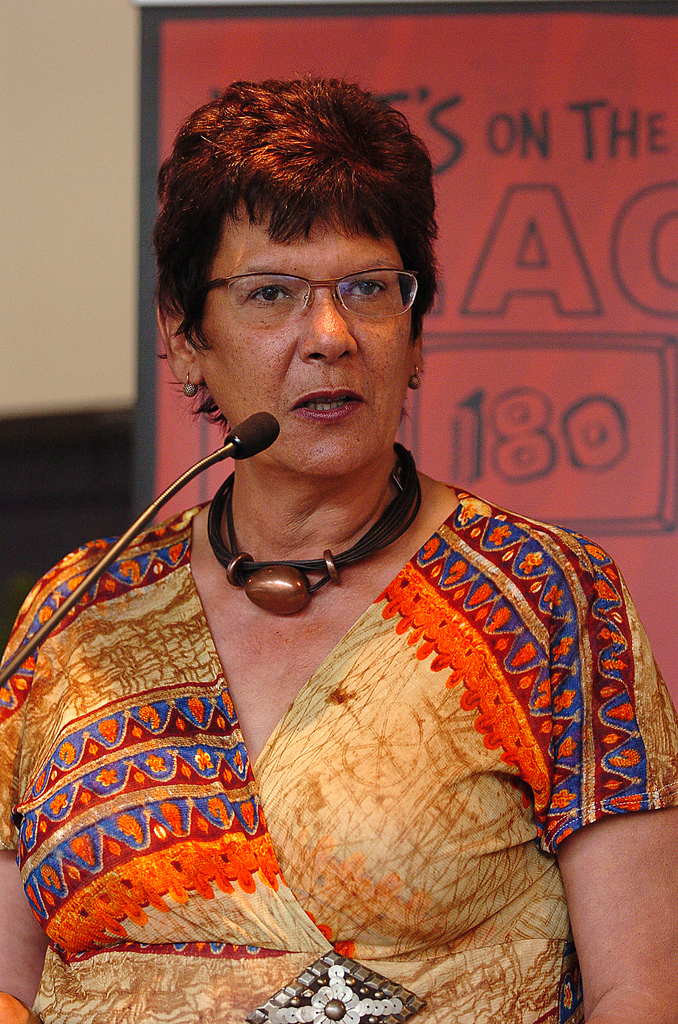
Photo above NACCHO CEO Pat Turner addressing the national media

An urgent call for a more just approach to Aboriginal and Torres Strait Islander Affairs

“Social justice is what faces you in the morning. It is awakening in a house with adequate water supply, cooking facilities and sanitation. It is the ability to nourish your children and send them to school where their education not only equips them for employment but reinforces their knowledge and understanding of their cultural inheritance. It is the prospect of genuine employment and good health: a life of choices and opportunity, free from discrimination.”

Mick Dodson, Annual Report of the Aboriginal and Torres Strait Islander Social Justice Commissioner, 1993.

The Redfern Statement

Download the 18 Page document here

Redfern Statement June 2016 Elections 18 Pages

Redfern Statement

A call for urgent Government action

In the past 25 years – a generation in fact – we have had the Royal Commission into Aboriginal Deaths in Custody, the Bringing them home Report and Reconciliation: Australia’s Challenge: the final report of the Council for Aboriginal Reconciliation. These reports, and numerous other Coroner and Social Justice Reports, have made over 400 recommendations, most of which have either been partially implemented for short term periods or ignored altogether.

In the last 25 years we have seen eight Federal election cycles come and go, with seven Prime Ministers, seven Ministers for Indigenous Affairs, countless policies, policy changes, funding promises and funding cuts – all for the most marginalised people in Australia.

For the last quarter century, then, we’ve seen seminal reports which have repeatedly emphasised that our people need to have a genuine say in our own lives and decisions that affect our peoples and communities. This, known as self-determination, is the key to closing the gap in outcomes for the First Peoples of these lands and waters.

All of these reports call for better resourcing of Aboriginal and Torres Strait Islander organisations and services for Aboriginal and Torres Strait Islander communities.

All of these reports call for real reconciliation based on facing the truths of the past and creating a just and mature relationship between the non-Indigenous Australian community and the First Peoples.

The next Federal Government will take on the same responsibility to right this nation’s past injustices as the last eight Federal Governments have had. The next Government of Australia will take power with our First Peoples facing the same struggles as they were in 1992. But this next Federal Government also has an unprecedented nation-building opportunity to meaningfully address Aboriginal and Torres Strait Islander disadvantage. They have the mandate to act. We therefore call on the next Federal Government to:

  • Commit to resource Aboriginal and Torres Strait Islander led-solutions, by:
  • Restoring, over the forward estimates, the $534 million cut from the Indigenous Affairs portfolio in the 2014 Budget to invest in priority areas outlined in this statement; and
  • Reforming the Indigenous Advancement Strategy and other Federal funding programs with greater emphasis on service/need mapping (through better engagement) and local Aboriginal and Torres Strait Islander organisations as preferred providers.
    • Commit to better engagement with Aboriginal and Torres Strait Islander peoples through their representative national peaks, by:
  • Funding the National Congress of Australia’s First Peoples (Congress) and all relevant Aboriginal and Torres Strait Islander peak organisations and forums; and
  • Convening regular high level ministerial and departmental meetings and forums with the Congress and the relevant peak organisations and forums.
    • Recommit to Closing the Gap in this generation, by and in partnership with COAG and Aboriginal and Torres Strait Islander people:
  • Setting targets and developing evidence-based, prevention and early intervention oriented national strategies which will drive activity and outcomes addressing:
    • family violence (with a focus on women and children);
    • incarceration and access to justice;
    • child safety and wellbeing, and the over-representation of Aboriginal and Torres Strait Islander children in out-of-home care; and
    • increasing Aboriginal and Torres Strait Islander access to disability services;
  • Secure national funding agreements between the Commonwealth and States and Territories (like the former National Partnership Agreements), which emphasise accountability to Aboriginal and Torres Strait Islander peoples and drive the implementation of national strategies.
    • Commit to working with Aboriginal and Torres Strait Islander leaders to establish a Department of Aboriginal and Torres Strait Islander Affairs in the future, that:
  • Is managed and run by senior Aboriginal and Torres Strait Islander public servants;
  • Brings together the policy and service delivery components of Aboriginal and Torres Strait Islander affairs and ensures a central department of expertise.
  • Strengthens the engagement for governments and the broader public service with Aboriginal and Torres Strait Islander people in the management of their own services.
    • Commit to addressing the unfinished business of reconciliation, by:
  • Addressing and implementing the recommendations of the Council for Aboriginal Reconciliation, which includes an agreement making framework (treaty) and constitutional reform in consultation with Aboriginal and Torres Strait Islander peoples and communities.

The health and wellbeing of Aboriginal and Torres Strait Islander peoples cannot be considered at the margins.

It is time that Aboriginal and Torres Strait Islander voices are heard and respected, and that the following plans for action in relation to meaningful engagement, health, justice, preventing violence, early childhood and disability, are acted upon as a matter of national priority and urgency.

National Representation for Aboriginal and Torres Strait Islander Peoples

It is critical that Australia’s First Peoples are properly represented at the national level to ensure meaningful engagement with Government, industry and the non-government sectors to advance the priorities of our people.

Since 2010, the National Congress of Australia’s First Peoples (Congress) has gone some way to fill the gap in national representation since the demise of the Aboriginal and Torres Strait Islander Commission in 2005.

However, there remain too many gaps in adequate national level representation for Aboriginal and Torres Strait Islander people – particularly for employment and education. Without Congress or equivalent national bodies where Aboriginal and Torres Strait Islander leaders are supported to engage with Government it will be difficult for the next Federal Parliament to meet the multi-partisan priority and commitment to work ‘with’ Aboriginal and Torres Strait Islander people.

We call on the next Federal Government to commit to:

  1. Restoration of funding to the National Congress of Australia’s First Peoples

The National Congress of Australia’s First Peoples (Congress) was established in 2010 to be the representative voice of Aboriginal and Torres Strait Islander peoples and to advocate for positive change. The decision to defund Congress, just as it is beginning to emerge as a unifying element among Aboriginal and Torres Strait Islander groups, is a mistake.

Without support, Congress’ ability to do its job of representing Aboriginal and Torres Strait Islander interests is severely compromised. Congress must be supported to provide a mechanism to engage with our people, develop policy, and advocate to Government.

Congress should be supported to reach sustainability and independence as soon as possible.


  1. A national Aboriginal and Torres Strait Islander representative body for Education

Although there are many good quality Aboriginal and Torres Strait Islander organisations, and strong leaders, working at the State and local level in the education sector, there is currently no national body to promote and engage in education policy for Australia’s First Peoples.

The education sector is fragmented across early childhood, primary and secondary education, vocational education and training, and higher education, with each of state and territory having public, catholic and private school systems. In the absence of a single national education voice for Aboriginal and Torres Strait Islander people, Congress has been active in coordinating and promoting unity across these sectors. Congress has consulted widely with its members, educators and organisations, many of which have a long history of working in this area.

We call on the next Federal Government to establish a national body that can call for policies support Aboriginal and Torres Strait Islander students and communities across all of these educational systems.

  1. A national Aboriginal and Torres Strait Islander representative body for Employment

The highly disadvantaged employment and income status of Aboriginal and Torres Strait Islander peoples is well documented. While we appreciate attempts at advancing opportunities for Aboriginal and Torres Strait Islander peoples, the many issues around employment require a unified and expert voice.

Beyond skills training, mentoring and targeted employment services to enhance the job readiness of

Aboriginal and Torres Strait Islander peoples, concerted effort needs to be directed to creating jobs that are suitable and meaningful for our people. This is of particular concern in remote areas, where mainstream commercial and labour market opportunities are limited. In urban and rural areas, Aboriginal and Torres Strait Islander people are faced with issues of racism and discrimination in the workplace.


The next Federal Government should establish and fund a national representative body of Aboriginal and Torres Strait Islander leaders to drive employment and economic solutions for our people, in order to:

  • Work with our communities to develop their own strategies for economic development, and promote community participation and management;
  • Promote strategies to create Aboriginal and Torres Strait Islander-friendly workplaces; and
  • Work with Government to design welfare policy that encourages, rather than coerces, Aboriginal and Torres Strait Islander peoples into employment.
    1. A national Aboriginal and Torres Strait Islander representative body for Housing

Federal and State Government policies concerning Aboriginal and Torres Strait Islander housing is currently disjointed, wasteful and failing. For example, Aboriginal and Torres Strait Islander people in urban and regional markets face many barriers in accessing and securing safe and affordable housing, including discrimination and poverty.

The next Federal Parliament should support the development of a national representative body of Aboriginal and Torres Strait Islander leaders who can focus on housing security for Aboriginal and Torres Strait Islander peoples, and:

  • Advocate for the ongoing support for remote communities to prevent community closures;
  • Work with communities to develop a national Aboriginal and Torres Strait Islander housing strategy, with the aim of improving the housing outcomes for our people across all forms of housing tenure; and
  • Provide culturally appropriate rental, mortgage and financial literacy advice.

First Peoples Health Priorities

Closing the Gap in health equality between Aboriginal and Torres Strait Islander people and non-Indigenous Australians is an agreed national priority. The recognised necessity and urgency to close the gap must be backed by meaningful action.

All parties contesting the 2016 Federal Election must place Aboriginal and Torres Strait Islander affairs at the heart of their election platforms, recognising the health equality as our national priority.

Despite the regular upheaval of major policy changes, significant budget cuts and changes to Government in the short election cycles at all levels, we have still managed to see some encouraging improvements in Aboriginal and Torres Strait Islander health outcomes. But much remains to be achieved and as we move into the next phase of Closing the Gap, enhanced program and funding support will be required.

We appeal to all political parties to recommit to Closing the Gap and to concentrate efforts in the priority areas in order to meet our goal of achieving health equality in this generation.

We call on the next Federal Government to commit to:

  1. Restoration of funding

The 2014 Federal Budget was a disaster for Aboriginal and Torres Strait Islander people. This is not an area where austerity measures will help alleviate the disparity in health outcomes for Australia’s First Peoples.

The current funding for Aboriginal health services is inequitable. Funding must be related to population or health need, indexed for growth in service demand or inflation, and needs to be put on a rational, equitable basis to support the Implementation Plan for the National Aboriginal and Torres Strait Islander Health Plan (2013–2023).

  1. Fund the Implementation Plan for the National Aboriginal and Torres Strait Islander Health Plan (2013–2023)

Future Budgets must adequately resource the Implementation Plan’s application and operation. As a multi-partisan supported program, the Implementation Plan is essential for driving progress towards the provision of the best possible outcomes from investment in health and related services.

  1. Make Aboriginal Community Controlled Services (ACCHS) the preferred providers

ACCHS should be considered the ‘preferred providers’ for health services for Aboriginal and Torres Strait Islander people. Where there is no existing ACCHS in place, capacity should be built within existing ACCHS to extend their services to the identified areas of need. This could include training and capacity development of existing services to consider the Institute of Urban Indigenous Health strategy to self-fund new services. Where it is appropriate for mainstream providers to deliver a service, they should be looking to partner with ACCHS to better reach the communities in need.

  1. Create guidelines for Primary Health Networks

The next Federal Government should ensure that the Primary Health Networks (PHNs) engage with ACCHS and Indigenous health experts to ensure the best primary health care is delivered in a culturally safe manner. There should be mandated formal agreements between PHNs and ACCHS to ensure Aboriginal and Torres Strait Islander leadership.

  1. Resume indexation of the Medicare rebate, to relieve profound pressure on ACCHS

The pausing of the Medicare rebate has adversely and disproportionately affected Aboriginal and Torres Strait Islander people and their ability to afford and access the required medical care. The incoming Federal Government should immediately resume indexation of Medicare to relieve the profound pressure on ACCHS.

  1. Reform of the Indigenous Advancement Strategy

The issues with the Indigenous Advancement Strategy (IAS) are well known. The recent Senate Finance and Public Administration Committee Report into the tendering processes highlighted significant problems with the IAS programme from application and tendering to grant selection and rollout.

The next Federal Government must fix the IAS as an immediate priority and restore the funding that has been stripped from key services through the flawed tendering process.

  1. Fund an Implementation Plan for the National Aboriginal and Torres Strait Islander Suicide Prevention Strategy

The National Aboriginal and Torres Strait Islander Suicide Prevention Strategy encompasses Aboriginal and Torres Strait Islander peoples’ holistic view of mental health, as well as physical, cultural and spiritual health, and has an early intervention focus that works to build strong communities through more community-focused and integrated approaches to suicide prevention.

The Strategy requires a considered Implementation Plan with Government support to genuinely engage with Aboriginal and Torres Strait Islander communities, their organisations and representative bodies to develop local, culturally appropriate strategies to identify and respond to those most at risk within our communities.

  1. Develop a long-term National Aboriginal and Torres Strait Islander Social Determinants of Health Strategy

The siloed approach to strategy and planning for the issues that Aboriginal and Torres Strait Islander people face is a barrier to improvement. Whilst absolutely critical to closing the gap, the social determinants of health and wellbeing – from housing, education, employment and community support – are not adequately or comprehensively addressed.

The next Federal Government must prioritise the development of a National Aboriginal and Torres Strait Islander Social Determinants of Health Strategy that takes a broader, holistic look at the elements to health and wellbeing for Australia’s First Peoples. The Strategy must be developed in partnership with Aboriginal and Torres Strait Islander people through their peak organisations.

Please note the balance of document can be read here

Redfern Statement June 2016 Elections 18 Pages

untitled

#HealthElection16 

Advertising and editorial is invited from

All political parties

NACCHO 150 Members and Affiliates

Stakeholders/ Aboriginal organisations

Peak Health bodies

Editorial Proposals Close 10 June 2016

Closing 17 June for publishing election week 29 June

Contact for Advertising rate cards/bookings/editorial


NACCHO #HealthElection16 : 55 peak groups demand an Indigenous treaty

JH

National treaty talks must begin as part of a radical shift in indigenous affairs policy, a coalition of peak groups says, arguing that the long-term failure by governments to address disadvantage has made reform “a matter of national priority and urgency”.

Updated 10.00 am on release of Redfern Statement Press Release

CONGRESS Redfern statement Press Release

“In the area of health, the alliance calls on all parties to recommit to Closing the Gap in order to achieve health equality in this generation. The alliance views funding the Implementation Plan for the National Aboriginal and Torres Strait Islander Health Plan (2013–2023), a policy developed through best-practice community consultation, as a priority. The alliance also recommends making Aboriginal Community Controlled Services (ACCHS) the preferred providers for health services, a measure which would promote the self-determination essential to closing the gap in life outcomes for First Peoples.”

As reported in todays Australian

Meeting in Sydney’s inner-city Redfern today, indigenous leaders will present an election manifesto saying their people have seen little benefit from 25 years of government and coroners’ reports and more than 400 recommendations, many of which have been partly implemented for short periods or ignored altogether.

They will express “deep concern” that indigenous Australians continue to experience unacceptable disadvantage, are isolated to the margins of the national debate and suffer because of policies that “continue to be made for and to, rather than with, Aboriginal and Torres Strait Islander people”.

“In the last 25 years we have seen … seven prime ministers, seven ministers for indigenous affairs, countless policies, policy changes, funding promises and funding cuts — all for the most marginalised people in Australia,” they will say.

To be delivered by National Congress of Australia’s First Peoples co-chairwoman Jackie Huggins, the statement will be signed on behalf of at least 55 organisations including Reconciliation Australia, the First Peoples Disability Network, the National Aboriginal and Torres Strait Islander Legal Services, the National Aboriginal Community Controlled Health Organisations, the Secretariat for National Aboriginal and Islander Health Care and the Lowitja institute. Non-indigenous signatories include the Australian Council of Social Service, Amnesty, Oxfam, the Law Council of Australia, Save the Children and the Fred Hollows Foundation.

The group will call for a government commitment to “address the unfinished business of reconciliation … (including an) agreement making framework (treaty) and constitutional reform”. This will be followed within days by a campaign on social media and elsewhere for treaty talks and the establishment of national working groups.

The peak group will also demand the restoration of $500 million funding cut from the 2014 federal budget, reform in how government funds are spent, a commitment by the federal government to deal with all peak bodies and to make a new Closing the Gap commitment, including a focus on women and children as victims of family violence and on high rates of child out-of-home care, and access to justice and disability services.

The group’s make-up is a rebuke to Indigenous Affairs Minister Nigel Scullion, who has questioned whether the Congress is representative of indigenous Australia. Dr Huggins said the elected peak organisation was “taking the advice of the minister and making ourselves as front and centre (as possible)” by its involvement in today’s statement with the other peak organisations.

Last month’s budget committed $5m to the Recognise campaign, to raise awareness around plans for constitutional recognition of indigenous Australians in a referendum.

untitled

#HealthElection16 

Advertising and editorial is invited from

All political parties

NACCHO 150 Members and Affiliates

Stakeholders/ Aboriginal organisations

Peak Health bodies

Editorial Proposals Close 10 June 2016

Closing 17 June for publishing election week 29 June

Contact for Advertising rate cards/bookings/editorial
 

NACCHO #HealthElection16 : Ongoing commitment required to close the gap says NACCHO CEO

image

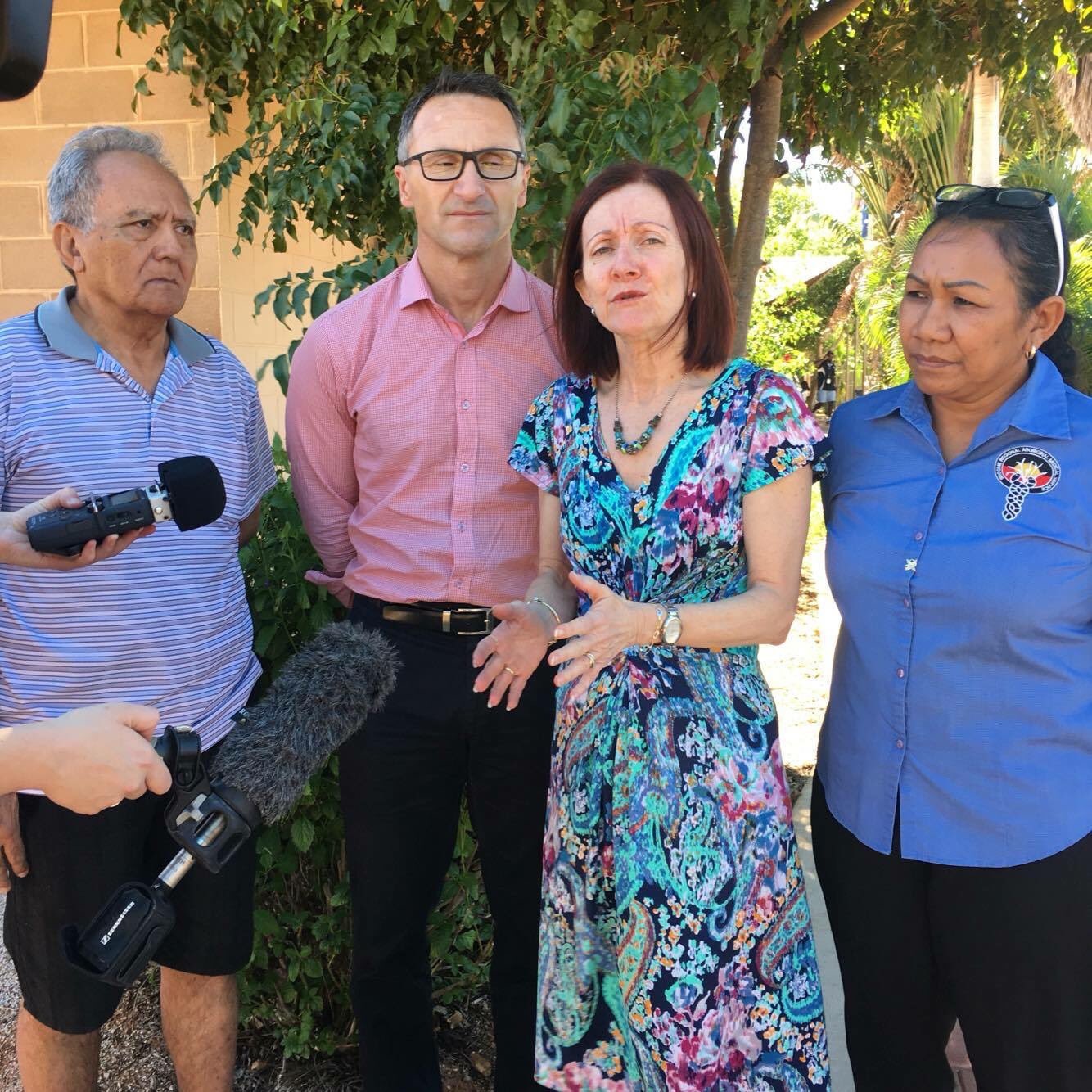
PHOTO ABOVE : Senator Rachel Siewert visiting the Broome Regional Aboriginal Medical Centre yesterday with Senator Richard Di Natale to announce the Greens Aboriginal Health policy. Prior to entering parliament, Richard was a general practitioner and public health specialist. He worked in Aboriginal health in the Northern Territory.

image

“Perhaps the most important part of The Greens’ commitments is the restoring of over half a billion dollars in cuts since 2013 and their earlier promise to index Medicare rebates, which have been frozen for several years. This has been causing unnecessary hardship to medical services across Australia.

“The Greens policy is a very comprehensive plan for Aboriginal health and we challenge the other parties to outline in detail what their plans are in these areas of concern.”

NACCHO CEO Patricia Turner ( Pictured above ) has welcomed the release of The Greens’ Aboriginal Health policy yesterday.

Ms Turner said The Greens’ policy is so far the only one this election to focus specifically on Aboriginal health and make commitments in nearly all of the key areas in Aboriginal health.

Read Greens Press release HERE

Download the full Aboriginal Health Policy document

Greens Aboriginal Health platform 2016 Elections

“The Greens have touched on many issues of serious concern for the ACCHO sector,” Ms Turner said.

“Avoidable blindness accounts for 11 per cent of the gap between Aboriginal and non-Aboriginal health. $42.3 million will go a long way to providing spectacles and other eye health measures and implement the Roadmap to Close the Gap for Vision.

“Almost $100 million to Close the Gap in hearing is also very welcome. We know that educational outcomes improve when children can hear properly in class and the $4 million a year for sound field systems in classrooms will be a great help.

“There is a desperate need for mental health services for Aboriginal people and the $720 million The Greens have committed to this is very important.

“Hear our Voices -Aboriginal Health in Aboriginal Hands “

View our new NACCHO TV Interviews HERE

untitled

#HealthElection16 

Advertising and editorial is invited from

All political parties

NACCHO 150 Members and Affiliates

Stakeholders/ Aboriginal organisations

Peak Health bodies

Editorial Proposals Close 10 June 2016

Closing 17 June for publishing election week 29 June

Contact for Advertising rate cards/bookings/editorial
 

NACCHO #HealthElection16 : Greens act on Aboriginal Health by launching a comprehensive package

Greens

The Australian Greens have today launched a package specifically aimed to Close the Gap on Aboriginal and Torres Strait Islander peoples’ health.

Download the document here

Greens Aboriginal Health platform 2016 Elections

“Despite teary eyes and rhetoric from the old parties who talk regularly of Closing the Gap, Aboriginal and Torres Strait Islander peoples continue to experience poorer health outcomes than non-Indigenous Australians”, Greens leader Richard Di Natale said today.

“As a doctor that has worked in regional communities on Aboriginal health it makes me incredibly pleased to put forward tangible solutions to the unnecessary health issues amongst our First Peoples. It was devastating having to treat health problems that could have been avoided.

Rachel Siewert Australian Greens spokesperson on Aboriginal and Torres Strait Islander issues said: “To meet our commitments to Close the Gap we need to act now. I think many nonindigenous Australians would be shocked to hear we can Close the Gap on eye health with a well-resourced national eye health strategy, the only reason it hasn’t happened is a lack of political will.

“The Greens are proud to announce a comprehensive Aboriginal and Torres Strait Islander health package which will serve as an investment in helping to create healthy communities.

The package commits $42.3m to work to limit preventable blindness; $99.8m to Close the Gap in hearing health; as well as $10m to address the challenges of chronic kidney disease. The time to genuinely act in this space is now”.

160T1748_Page_2

160T1748_Page_3


NACCHO #HealthElection16 : Rebate freeze will set GPs back $11 per general patient consultation, but they’re likely to charge them more

RACGP

Health is shaping up to be one of the major election issues, with proposed changes to Medicare rebates and the Pharmaceutical Benefits Scheme (PBS) potentially costing patients more to receive health care.

From The Conversation

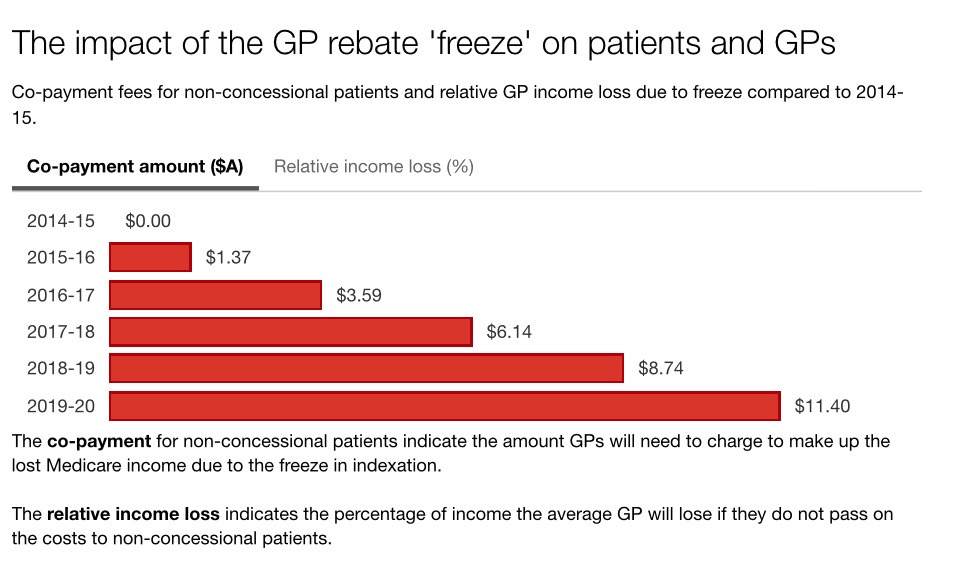
Our new research shows that, by the end of June 2020, an average full-time GP will have lost A$109,000 in total income due to the freeze since July 2015.

By July 2019, this GP would need to charge their general patients an A$11.40 co-payment per consultation to make up for their lost income (relative to 2014-15).

Our modelling also shows the Coalition’s proposed increase to the PBS co-payment will most affect pensioners.

What is the ‘freeze’?

When GPs bulk-bill their patients, they directly charge the government for the service provided. What GPs are paid for each consultation depends on the Medicare Benefits Schedule (MBS) item charged, with longer and more complex consultations earning them more. A “standard” consultation rebate is A$37.05, while a “long” consultation rebate is A$71.70.

Traditionally, the amount for each item increases year to year to account for the increased cost of care. This is called indexation. Since July 2014, the government has paused or “frozen” this indexation. The government initially planned this freeze to last until 2017-18.

At the time, we modelled the effect of this initial freeze. We found that by 2017-18, a bulk-billing GP would have a relative income loss of 7.1% (5.8%-8.5%) compared with their 2014-15 level of Medicare income.

We concluded that if GPs wished to keep bulk-billing their concessional patients (those with a government health care card), they would need to charge their non-concessional patients an A$8.43 (A$6.71-A$10.16) co-payment for each consultation to make up this loss.

The 2016 federal budget extended the freeze until 2020.

Using the same assumptions we used in our previous modelling, we found that by 2019-20, a bulk-billing GP will have had a relative Medicare income loss of 11.6% compared to their 2014-15 income level (assuming a CPI of 2.5% a year).

However, CPI has been lower than earlier projected. The CPI projections in the federal budget were 1.25% in 2015-16, 2.0% in 2016-17 and 2.25% in 2017-18. Using these figures and assuming CPI of 2.25% per year in 2018-20, we estimate a relative income loss of 9.4%.

Docs

https://datawrapper.dwcdn.net/QYNnp/3/

For an “average” GP (who bills 5,050 consultations a year), this 9.4% income loss will equate to approximately A$26,300 in 2019-20 alone. For an average full-time GP (7,680 consultations a year, assuming 160 consultations per 40-hour week, 48 weeks a year) the loss of relative income will be A$40,000 in 2019-20.

By June 30 2020, a full-time GP will have lost a total of A$109,000 since 2014-15 due to the freeze.

What does this mean for patients?

The 9.4% reduction in income may force GPs who bulk-bill to cover their loss by charging general patients (who make up 45.6% of encounters) a co-payment. This co-payment would need to be A$11.40 to maintain 2014-15 levels of income.

Our estimates are conservative as they would be the minimum charge needed to make up for the GP’s lost income. We did not account for:

  • administrative costs in implementing new billing systems
  • increased bad debt from patients who are charged, but never pay
  • the previous freeze of fees
  • lost income when a GP chooses to bulk-bill general patients facing financial hardship.

It’s therefore likely that GPs who opt to charge a co-payment will charge more than our estimates. Further, after abandoning bulk-billing, some GPs may take the opportunity to charge more than required to merely recoup their rebate loss.

A poll by Australian Doctor, a newspaper for GPs, found that over the next 12 months, almost one-third of the responding GPs said they would charge A$35 or more. More than half the sample said they would charge their general patients A$25 or more for a standard consultation.

In 2013, the Australian Medical Association (AMA) recommended a fee of A$73 for a standard GP consultation. That equates to a co-payment of over A$35 if GPs chose to charge this amount, and even this would only be at 2013 AMA rates.

The freeze is likely to have a greater impact on practices that serve socioeconomically disadvantaged people, as the practices would have to absorb the reduction in gross income, which may not be viable.

Labor’s alternative

Isn’t Labor proposing to reverse the freeze?

Well, yes and no. Labor announced it will reintroduce indexation from January 1, 2017. This means the freeze will remain until then.

Prime Minister Malcom Turnbull has dismissed the potential impact of Labor’s proposed increase, saying:

If the indexation were to be restored from 1 July, the increase in the benefit paid to doctors would be around 60 cents. 60 cents. And by 2019-20, it would be A$2.50.

This is true only if you are talking about the rebate for a single “Level B” item (which is below the average rebate per consultation) and if indexation was set at only 1.65% a year, well below the CPI projections in the 2016 federal budget.

A more accurate estimate would be to use the average rebate claimed per consultation (A$50) and use the CPI projections in the budget. This would mean an average increase per consultation of A$1 in 2016-17 and A$4.50 in 2019-20.

Compared with continuing the freeze, the indexation would mean an additional A$34,700 in earnings in 2019-20 alone for an average full-time GP and an additional A$84,400 combined to 2020.

Changes to the cost of medication

The government subsidises the cost of important medications through the PBS. General patients currently pay a maximum of A$38.30 for a PBS-subsided medication and concessional patients pay a maximum of A$6.20. These thresholds are indexed yearly, usually in line with CPI.

In the 2014 federal budget, the Coalition proposed that these co-payments increase by A$5.00 and A$0.80 respectively – additional to the regular indexation. So far, this proposal has been blocked in the Senate, but associated savings are included in the May 2016 budget.

While it would seem that the A$0.80 increase for concessional patients is small, our modelling from 2014 shows this increase would be larger in dollar terms for concessional patients. Nearly all medications prescribed for concessional patients face this increase, whereas only a fraction of medications prescribed to general patients cost more than the current threshold, so far fewer medications would incur an additional cost.

An average 45- to 64-year-old would pay an additional A$12.99 a year if they were a general patient and A$16.59 if a concessional patient.

The patients most impacted by the PBS co-payment increase will be aged pensioners, who on average would see their co-payment for medications increase by A$29.65 a year.

These estimates are conservative as they only include the number of instances where a script is written and do not include any repeats scripts provided on these occasions.

Labor has announced it will not introduce this increase, but will allow the regular threshold indexation (which both parties support).

NACCHO #HealthElection16 : How Australians die : No1 Heart diseases/stroke

UuDie

This is the first in the How Australians Die series that focuses on the country’s top five causes of death and how we can drive down rates of these illnesses. Tomorrow’s piece will explore the second leading cause of death: cancers.

Aboriginal and Torres Strait Islander Causes of Death

( NACCHO post)

The top three WHO leading causes of death for Aboriginal and Torres Strait Islander Australians in 2014 were Ischaemic heart diseases (I20-I25), Diabetes (E10-E14) and Chronic lower respiratory diseases (J40-J47).

Compared to the non-Indigenous population, death rates were 1.7 times higher for Ischaemic heart diseases (I20-I25), 5.9 times higher for Diabetes (E10-E14) and 3.0 times higher for Chronic lower respiratory diseases (J40-J47) for Aboriginal and Torres Strait Islander Australians.

Further information can be found in the Deaths of Aboriginal and Torres Strait Islander section of this publication.

There were 2,914 deaths registered across Australia in 2014 where the deceased person was identified as being of Aboriginal and Torres Strait Islander origin. This represents 1.9% of all deaths registered.


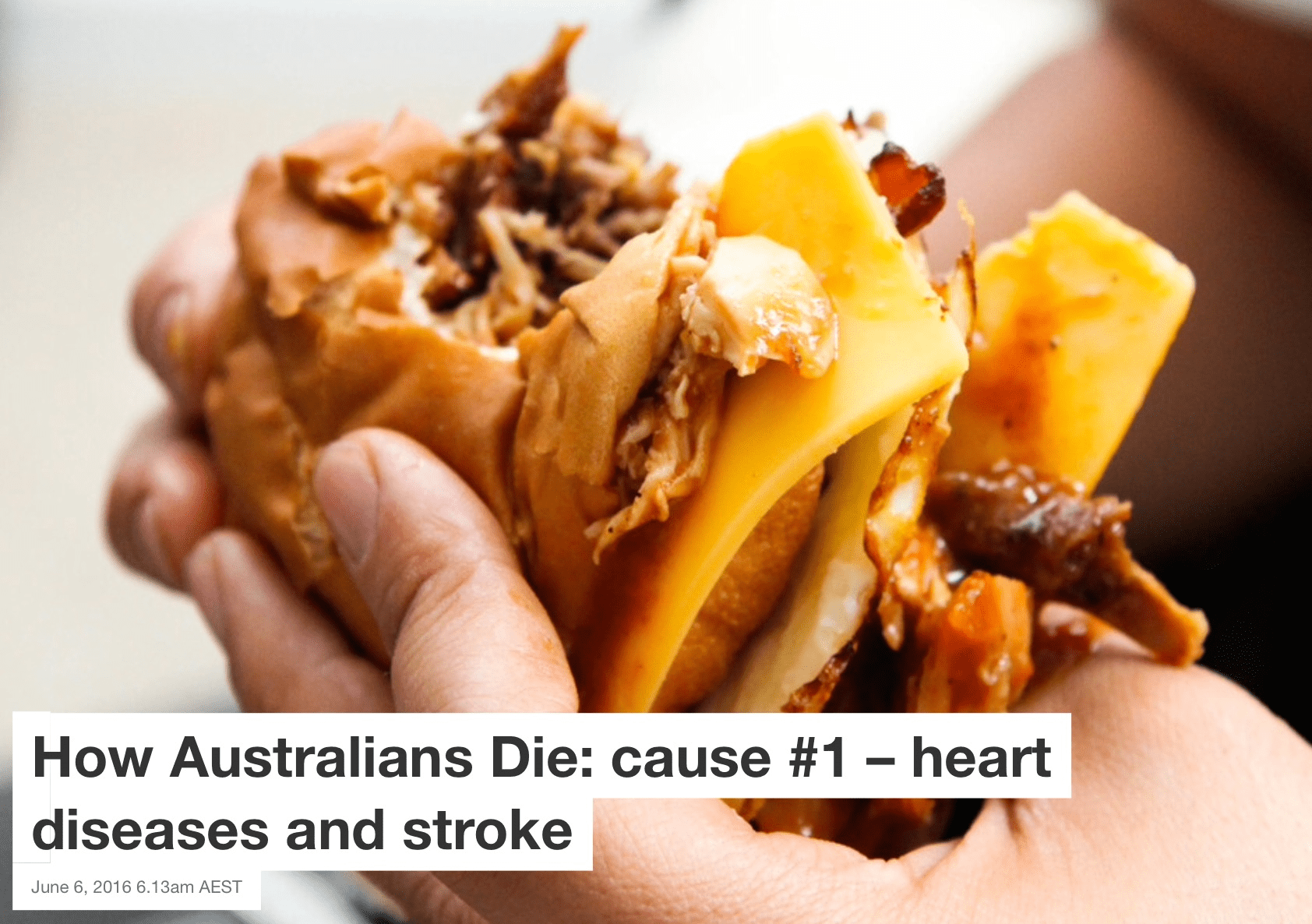
Diseases of the heart and the vessels running to and from it are the number one reason people die in Australia, and we’re not alone. They are the number one cause of death in the world.

According to the Australian Bureau of Statistics, ischaemic heart disease (IHD) is the leading cause of death in Australia. In 2014, 20,173 people died from it.

But ischaemic heart disease is not really the disease itself. Rather, it is the term used to cover the clinical manifestations of coronary heart disease such as heart attacks and angina.


Pic 1

The How Australians Die series has combined all cancer deaths to make them the second leading cause of death after heart diseases and stroke. Alzheimer’s is third, respiratory diseases fourth and diabetes fifth.

Coronary heart disease

Coronary heart disease is almost always a consequence of atherosclerosis. This is a build-up of cholesterol and other material in the walls of our arteries (tubes that carry blood and oxygen to the heart). The build-up can cause heart attack and block access to the brain, leading to stroke – another of Australia’s top killers.

Ischemia describes insufficient oxygen supply to the heart muscle. Lack of oxygen can cause discomfort in the chest, such as a tightness or squeezing known as angina. This is most often brought on by exercise but is more serious when it happens at rest.

Persistence of angina over time, particularly at rest, can lead to death of some heart muscle. This is called an acute coronary syndrome, or colloquially, a heart attack. We used to call this myocardial infarction. No wonder people find the terminology confusing.


Pic 2


The Australian Bureau of Statistics classifies ischaemic heart disease as the leading cause of death in Australia. Cerebrovascular diseases (stroke) are the third, heart failure is at number seven; hypertensive diseases are at 13, and cardiac arrythmias at 19.

But there is considerable overlap among these, which is why this article has combined them under one umbrella. Hypertension (high blood pressure), for instance, is a major cause of stroke and a risk factor for coronary disease. At least half of heart failure is due to coronary heart disease, while the most common cardiac arrhythmia (irregular heartbeat), atrial fibrillation, is often caused by hypertension, heart failure or coronary heart disease. Further, atrial fibrillation is the cause of about one-third of strokes.

Although ischaemic heart disease is responsible for 20,173 deaths in 2014, the number of deaths due to the above circulatory diseases in 2014 was 38,741.

History of heart disease

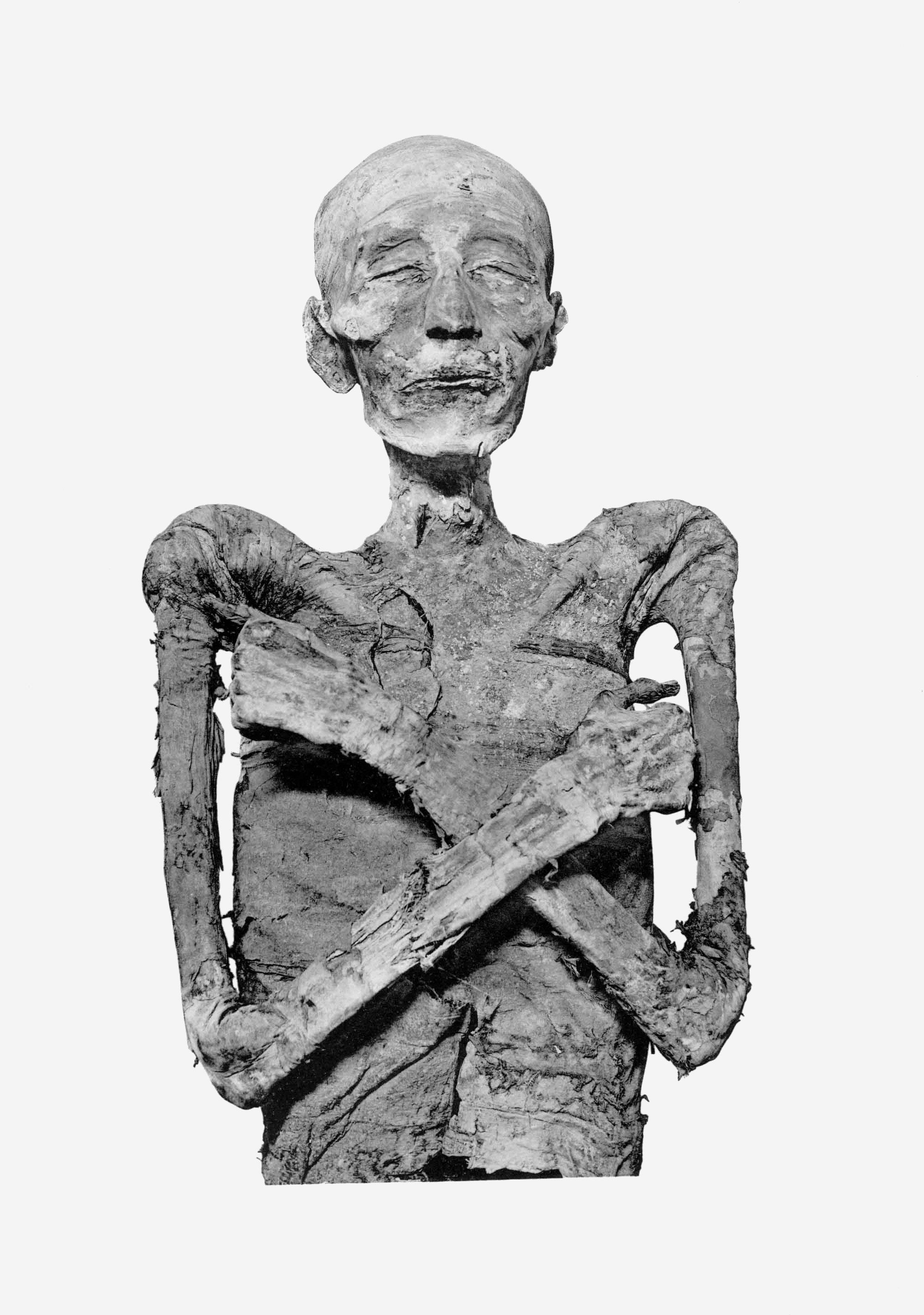
Heart disease is not new. CT scans of Egyptian mummies who lived 3,500 years ago show they had narrowings in their arteries, which means they had coronary heart disease. Pharaoh Merneptah, for instance, who died in 1203 BC, had severe coronary disease.

CT scans show Pharaoh Merneptah had atherosclerosis. G. Elliot Smith/Wikimedia Commons

The real and documented epidemic of heart disease occurred after the second world war. This could in part be explained by higher rates of smoking, blood pressure and poor diets after and during the war. Rates increased for three decades at this time.

Then they fell; first in Australia and the United States, and then in other developed countries. Half of this fall could be attributed to public health measures such as tobacco control and availability of blood pressure and cholesterol treatments; the other half to better treatment of people with heart disease.

A province of Finland, North Karelia, initially held the dubious record for the highest rates of heart disease in the world. In the early 1970s, the region had around 672 per 100,000 people dying from heart disease. The mantle then passed to Eastern Europe and Russia where rates are currently 320 per 100,000 people. This is astounding compared to Australia where the rate is 54 per 100,000.

In 1990, heart disease was the third-highest cause of death in developing countries, but by 2013 it was number one. The rates rose from 70 per 100,000 people to 91 per 100,000 people in those years respectively. This is because the developing world acquired the habits of the developed world. There are now more people in the world who are overweight than underweight.

Hypertensive diseases are rising in most developing countries, together with diabetes, while smoking remains common. Infections and trauma used to cause death in people too young to have heart disease, but that is no longer the case due to antibiotics, immunisations and better safety standards.

In 1990, there were 12.3 million deaths globally from heart disease. By 2013, this had risen to 17.3 million. Most of this 40.8% increase occurred in developing countries and in disadvantaged people in developed countries like Australia.


ABS Causes of Death, Australia, 2014, CC BY-SA

Every country in the world is at some point in the transition from low to high to medium rates of heart disease related to their stage of development. There is nothing inevitable about heart disease being the number one cause of death in Australia or the world as a whole.

The stereotype of a harassed executive having a heart attack no longer applies. Heart disease has become a blue-collar disease or one seen initially in urban populations in developing countries.

Where to from here?

The documented epidemic of heart disease occurred after the second world war. AV Dezign | www.avdezign.ca/Flickr, CC BY

Today (and for the foreseeable future) global rates of heart disease are driven by development, inequality and prosperity. The rate of heart disease deaths was almost double for Australians in the lowest socioeconomic group compared to the highest socioeconomic group, and 20% more for those living in remote to very remote regions compared to those in major cities. They were 40% higher for Indigenous Australians compared to their non-Indigenous counterparts.

For years, we have been comforted by falling rates of heart disease deaths in Australia. But as the population increases, ages and people survive diseases such as cancer earlier in life, the burden on the health system has not been falling to the extent that rates would suggest.

Alarmingly, in people aged 55-69 both rates and the absolute number of people dying from heart disease have increased, according to the latest data.

As Australia has become one of the fattest nations in the world, with rates of diabetes increasing and other metabolic consequences leading to heart disease, overweight and sedentary men and women with multiple risk factors have replaced the thin male smokers who died of heart disease in the 50s.

NACCHO #HealthElection16 : The National Indigenous Human Rights Awards announced this week

NIHRA Statement_Page_1These awards are for those among our people who fight for every life, who fight for change, who fight for equality, who fight for our identities, who fight within the greatest rights struggle this nation has ever known,”

Tauto Sansbury Judging Panel

The National Indigenous Human Rights Awards are in their 3rd year, recognising social justice stalwarts in the greatest human rights struggle in this nation, that of the Aboriginal and Torres Strait Islander rights struggle.

Who will be the recipient of this year’s Dr Yunupingu Human Rights Award?

Who will win the Eddie Mabo Social Justice Award?

Who will win the Anthony Mundine Award for Courage?

Up for the Dr Yunupingu Award are Elcho Island’s human rights champion, Dr Djininy Gondarra, Broome based LGBQTI campaigner and founder of Black Rainbow, and Leonora based cultural campaigner Kado Muir.

Up for the Eddie Mabo Award are Redfern based youth worker, Keenan Mundine, Perth based Stolen Generations tyro James Morrison, Maningrida based suicide prevention hero Noeletta McKenzie and Perth based Ngalla Maya prison to education to work champion Mervyn Eades.

Up for the Anthony Mundine Award are Beagle Bay suicide prevention stalwart Mary O’Reeri and Palm Island anti-racism campaigner Lex Wotton.

The event’s MC is NITV News presenter, Natalie Ahmat.

Doltone House Jones Bay Wharf, Pyrmont

26-32 Pirrama Rd, Pyrmont

Thursday 9th of June 2016, 6:30pm for 7:00 Start

The judging panel comprised incumbent NAIDOC Lifetime Award recipient, Narungga Elder, Tauto Sansbury, Kamilaraoy language speaker and academic Dr Marcus Woolombi Waters and relentless human rights campaigner tyro and suicide prevention researcher, Gerry Georgatos.

BACKGROUND

The National Indigenous Human Rights Awards is an annual Australian awards ceremony that recognises the contribution of Indigenous Australians to human rights and social justice.[1] It is the first national Australian award ceremony dedicated solely to Indigenous human rights achievements.[2]

Award categories

There are three categories of awards:

  • The Dr Yunupingu Award for Human Rights
  • The Eddie Mabo Award for Social Justice
  • Anthony Mundine Award for Courage

2014 awards

The inaugural National Indigenous Human Rights Awards were held on 24 June at Parliament House, Sydney. Indigenous leaders from all over Australia travelled to Sydney for the event.[3] The ceremony was emceed by Deputy Leader of the Opposition, Linda Burney, with a keynote speech by Yalmay Yunupingu.[4] The presenters of the awards were Yalmay Yunupingu, the partner of the late Dr Yunupingu, founder and lead singer of Yothu Yindi, and Gail Mabo, daughter of the late Eddie Mabo, and world champion boxer Anthony Mundine.[5] The awards were founded by NSW Labor Parliamentarian, Shaoquett Moselmane.

The inaugural recipient of the Dr Yunupingu Award for Human Rights was Rosalie Kunoth-Monks.

The inaugural recipient of the Eddie Mabo Award for Social Justice was family of the late Eddie Murray.

The inaugural recipient of the Anthony Mundine Award for Courage was Barbara McGrady.

2015 awards

Jenny Munro holding her award at the National Indigenous Human Rights Awards

The 2015 awards were emceed by SBS journalist and Arrernte woman Karla Grant. The keynote speech was delivered by Narungga Elder Tauto Sansbury.[6]

The recipient of the Dr Yunupingu Award for Human Rights was Tauto Sansbury.

The recipient of the Eddie Mabo Award for Social Justice was Jenny Munro.

The recipient of the Anthony Mundine Award for Courage was Adam Goodes.

NACCHO #HealthElection16 : Fraud suspected in 44 remote Indigenous programs

JM

There are pockets where exploitation has taken place, people have come in and done the wrong thing “

Reconciliation Australia chief executive and former NACCHO Chair Justin Mohamed told the program

“They’re amongst the most disadvantaged people in Australia. The residents of our remote communities who battle chronic unemployment, terrible health problems and third world living conditions. It’s why billions of dollars in taxpayers money has been poured into Indigenous programs aimed at “closing the gap”. So it’s extraordinary to think anyone would want to exploit such vulnerable people.

“How could you do that to us? We trusted you, we had faith in you. I just feel real sad, not ashamed, but sad that this guy could just come in and blind us.” Community Board Member

“In the 2016-17 Budget, the Australian Government allocated $4.9 billion to the IAS, over four years to 2019-20, for grant funding processes and administered procurement activities that address the objectives of the IAS. 2

Of the 996 organisations recommended for funding through the IAS 2014 funding round, 46 per cent were Indigenous organisations (up from 30 per cent) and they received 55 per cent of total funding”

Spokesperson from the Department of the Prime Minister and Cabinet in response to questions from 4 Corners ( see Below )

From the Australian 7 June

Unscrupulous business advisers and a lack of business literacy in indigenous corporations have combined to produce high levels of fraud in ­remote communities, with 44 ­organisations and programs under investigation nationwide.

The ABC’s Four Corners last night revealed a range of questionable schemes in the multi-­billion-dollar sector, including one by Perth businessman Gary Johnson, who in 2013 was paid $6.6 million in management fees and profits through an arrangement with the Marra Worra Worra corporation at Fitzroy Crossing in Western Australia.

The corporation receives more than $14m in taxpayer funding annually to deliver services inclu­ding housing, health and financial counselling. However, in a deal a former board director described as “an unconscionable contract”, Mr Johnson’s agreement with Marra Worra Worra gave him 50 per cent of all profits, 50 per cent of all assets sales and 5 per cent of all turnover.

Board director Lynette Shaw told the program that of two ­directors whose signatures were on the document, one was financially illiterate.

Former director Joe Ross was quoted as saying “the poor directors at the time wouldn’t have had any clue about the ramifications and the implications of what the community was losing in economic benefits from the contract”.

Mr Johnson, who the program said was in the process of remodelling his $5.3m Peppermint Grove mansion, initially refused to answer Four Corners questions. He later sent a statement saying “the contract was willingly entered into by both parties”.

Warren Mundine, chairman of the Prime Minister’s Indigenous Advisory Council, said: “We wouldn’t accept in the wider ­Australian community … people sitting on boards who have no ­financial or no business background. ”

Reconciliation Australia chief executive Justin Mohamed told the program “there are pockets where exploitation has taken place, people have come in and done the wrong thing”.

The Department of Prime Minister and Cabinet was investigating 44 organisations for misuse and waste of funds, the program reported.

In another instance, serial conman Craig Dale swindled the organisation running the East Kimberley town of Warmun of $3m, with promises of a state-funded building program after the town was destroyed by flood.

Statement from the Department of the Prime Minister and Cabinet

Four Corners

Please find below answers to your questions with many links where you can find additional information that may be of use. Should you wish, this can be attributed to a spokesperson from the Department of the Prime Minister and Cabinet.

How many open cases does the PMC’s IAG Risk, Compliance and Integrity Branch currently have as at today’s date? (That is, open cases among the indigenous organisations and corporations funded by the Department which are examining any or all of the following allegations: misuse of funds, nepotism, conflict of interest, probity, performance management and misleading information?)

Answer:

The Department currently has 44 open compliance cases, representing less than 4 per cent of the currently funded organisations under the Indigenous Advancement Strategy (IAS).

IAS grant funding provided by the Department is subject to reporting and risk management requirements. As part of this approach, additional risk mitigation strategies are established for funded organisations that are assessed as higher risk. The Indigenous Advancement Strategy Guidelines March 2016 provides an overview of the Department’s management of organisational risk and compliance. The IAS Guidelines are available at https://www.dpmc.gov.au/indigenous-affairs/grants-and-funding/funding-under-ias.

The Department takes non-compliance matters seriously and has a responsibility to ensure funding is expended in accordance with the relevant funding agreement. The Department’s IAS Provider Compliance Framework outlines strategies to manage non-compliance by funded organisations, including an escalation process where non-compliance is identified. Where there is suspected complex or serious non-compliance, the Department’s undertakes a comprehensive compliance review to address any allegations or potential breaches of the funding agreement.

The Department does not tolerate dishonest or fraudulent behaviour. We are committed to deterring, preventing and detecting such behaviour in the delivery of programmes to disadvantaged Australians. For further information refer to our website at: https://www.dpmc.gov.au/who-we-are/accountability-and-reporting/fraud-control-and-fraud-reporting.

What is the current status of the PMC investigations into: Julalikari Council Aboriginal Corporation, Warmun Community (Turkey Creek) Incorporated, Marra Worra Worra Aboriginal Corporation and Garnduwa Amboorny Wirnan Aboriginal Corporation.

Answer:

The Department is unable to comment on specific matters.

What are the total number of Aboriginal organisations currently funded by PMC and what is the size of the current total funding pool?

Answer:

In the 2016-17 Budget, the Australian Government allocated $4.9 billion to the IAS, over four years to 2019-20, for grant funding processes and administered procurement activities that address the objectives of the IAS. 2

Of the 996 organisations recommended for funding through the IAS 2014 funding round, 46 per cent were Indigenous organisations (up from 30 per cent) and they received 55 per cent of total funding.

More up-to-date IAS grant funding information is published on the Department’s website and is available here: https://www.dpmc.gov.au/indigenous-affairs/grants-and-funding/indigenous-grants-reporting.

In the past five years, how much funding in total has been released to Aboriginal organisations by PMC?

Answer:

Responsibility for most Indigenous policies, programmes and service delivery transferred from eight Australian Government agencies to PM&C as part of the machinery of government changes in September 2013. Refer also to the answer above.

What governance training has PMC provided to these organisations in the past five years? That is, if you can please break down the number of organisations, individuals and training sessions.

Answer:

The Department does not deliver a programme of governance training to Indigenous organisations.

Under the Government’s Strengthening Organisational Governance policy, Indigenous organisations receiving grant funding of $500,000 (GST exclusive) or more in any single financial year from funding administered by the Indigenous Affairs Group within the Department of the Prime Minister and Cabinet are required to incorporate under the Corporations (Aboriginal and Torres Strait Islander) Act 2006 (CATSI Act). Indigenous organisations already incorporated under the Corporations Act 2001 are excluded from the requirement and do not need to change their incorporation status.

Incorporation under Commonwealth legislation provides a more robust regulatory framework and access to specialist assistance that helps to improve public confidence in the security and delivery of services to Indigenous people.

The Office of the Registrar of Indigenous Corporations (ORIC) provides governance training, support and advice to organisations incorporated under the CATSI Act.

Kind regards,

PM&C Media

Communications Branch

FROM THE 4 CORNERS WEBSITE

Background Information

STATEMENTS

Statement from the Department of the Prime Minister and Cabinet [pdf]

Statement from Northern Territory Government Departments [pdf]

Joint Statement from the WA Housing Authority and the Kimberley Development Commission [pdf]

Statement from Ralph Addis, Director General of WA Department of Regional Development [pdf]

Statement from Marra Worra Worra Aboriginal Corporation [pdf]

Statement from Gary Johnson [pdf]

Response from Pat Brahim (Redacted) [pdf]

They’re amongst the most disadvantaged people in Australia. The residents of our remote communities who battle chronic unemployment, terrible health problems and third world living conditions. It’s why billions of dollars in taxpayers money has been poured into Indigenous programs aimed at “closing the gap”. So it’s extraordinary to think anyone would want to exploit such vulnerable people.

“How could you do that to us? We trusted you, we had faith in you. I just feel real sad, not ashamed, but sad that this guy could just come in and blind us.” Community Board Member

On Monday night Four Corners exposes how millions of dollars have been ripped out of remote communities, leaving a trail of broken promises, unfinished work and a burning sense of betrayal.

“We bust arse to try and improve the lives of Aboriginal people and you know there’s this despicable act going on, it was just absolutely gutting.” Indigenous CEO

In some cases, communities have been the victims of out and out fraud:

“(We) were taken in by someone that was extraordinarily clever …It’s hard to describe somebody who would use people like that for some scheme for their own ends.” Former Community CEO

In others, it’s a case of sheer incompetence:

“I just cry out when I see people living in poverty, in destitute situations. And yet they’ve got Aboriginal corporations that have multimillions of dollars there that’s supposed to be there for their own benefit, and it’s not reaching the ground and helping them.” Indigenous Leader

Reporter Linton Besser goes on a 4000km journey to some of Australia’s most remote communities and finds evidence scattered all around, from abandoned constructions sites and dilapidated buildings, to state of the art facilities, locked up – because there’s no money left to run them.

He investigates who’s to blame:

“Linton Besser from Four Corners. I’d just like to ask you some questions…”

And finds communities determined to speak out and demand action:

“It’s taxpayers money and we’re saying taxpayers money is being wasted here, surely that’s government business, to come and work with us to sort it out.” Community Elder

untitled

Send your Aboriginal Health issue message to Canberra for

#HealthElection16 25 days to go

Advertising and editorial is invited from

All political parties

NACCHO 150 Members and Affiliates

Stakeholders/ Aboriginal organisations

Peak Health bodies

Closing 17 June for publishing election week 29 June

Contact for Advertising rate cards/bookings/editorial

NACCHO #HealthElection16 : Rural doctors call on major parties to commit to Rural Rescue Package

Mackay

Aboriginal medical services are under-resourced, under-funded right across Australia , we currently employ three full-time GPs and have 4000 patients. In Queensland, Indigenous health services received funding for primary health care, but not for GPs. We have to fund doctors out of our self-generated Medicare funds, so it’s hard for us to attract doctors, because we’re not competitive to the private sector,”

UNDERSTAFFED: Aboriginal and Torres Strait Islander Community Health Services Mackay (ATSICHS) executive manager Valerie Pilcher says more government funding could mean the health centre could attract another GP to its staff ( see full story below )

Rural doctors are calling on the major political parties to get behind a ‘Rural Rescue Package’ jointly proposed by the Rural Doctors Association of Australia (RDAA) and Australian Medical Association (AMA) to attract to rural practice more doctors with the advanced medical skills needed by country communities.

RDAA President, Dr Ewen McPhee, said the proposed Package would go a long way towards reversing the decline in health services available in rural and remote areas.

“Rural communities need to have locally available doctors, with the appropriate generalist skills, to meet the broad-ranging health needs of their communities” Dr McPhee said.

“Unfortunately, we have seen a decline in the number of rural generalist doctors over the past few decades, creating gaps in local health services and impacting on overall health outcomes for those living in rural and remote Australia.

“RDAA teamed with the AMA to develop the ‘Rural Rescue Package’, which provides the framework for addressing this problem.

“The first tier of the Package is designed to encourage more GPs, other specialists, and registrars to work in rural areas. It takes into account the greater isolation of rural practice, both for doctors and their families.

“The second tier is aimed at boosting the number of doctors in rural areas with essential advanced skills training in a range of areas such as obstetrics, surgery, anaesthetics, acute mental health, and emergency medicine. Rural areas need doctors with strong skills in these areas to ensure that communities have accessto appropriate acute services locally, including on-call emergency services.

“Fair and realistic incentives to encourage doctors to relocate to, and remain in, rural practice, and which increase with actual rurality, are necessary to reverse the trend of a declining rural generalist workforce.

“We also need a commitment from the major political parties to provide realistic levels of funding to support the development of advanced skills that doctors need when practising in the bush.

“Rural towns need doctors who can provide generalist services.

“This ranges from pre-natal to palliative care, after-hours care, emergency care and hospital services, in addition to their general practice skills.

“The establishment of a nationally recognised rural generalist model of practice, where general practitioners are supported to develop the skills most needed by their communities, is also necessary to help reverse the trend of declining access to healthcare in the bush.

“We call on the Coalition and Federal Labor to commit to the Rural Rescue Package, and to work toward building a sustainable future for rural generalist practice.”

To read the joint RDAA and AMA Rural Rescue Package, and RDAA’s 2016 Election Platform, VIEW HERE  RDAA Election policy 2016

VALERIE Pilcher says a lack of government funding has made it difficult for the Aboriginal and Torres Strait Islander Community Health Services Mackay (ATSICHS) to attract a GP.

From

Ms Pilcher, the ATSICHS Mackay executive manager, says the health clinic has had to stop taking on new patients, as it’s understaffed and struggling to fill an advertised position for a general practitioner.

ATSICHS Mackay currently employs three full-time GPs and has 4000 patients. Aboriginal medical services are under-resourced, under-funded right across Australia,” Ms Pilcher said.

Ms Pilcher said in Queensland, indigenous health services received funding for primary health care, but not for GPs.

“We have to fund doctors out of our self-generated Medicare funds, so it’s hard for us to attract doctors, because we’re not competitive to the private sector,” she said.

“We can’t offer the salaries that they would get in a private sector.”

Ms Pilcher said if the health care service received more funding, it would spent it on GPs, primary health care and outreach services to areas outside Mackay.

Ms Pilcher said mortality and chronic illness were the major health issues faced by indigenous Australians in Mackay.

“Non-indigenous Australians tend to live on average 10 years longer than indigenous Australians,” she said.

Ms Pilcher has been with ATSICHS Mackay for more than four years.

“For me it’s about helping my people, trying to close the gap on indigenous health and help my mob,” she said.

untitled

#HealthElection16 25 days to go

Advertising and editorial is invited from

All political parties

NACCHO 150 Members and Affiliates

Stakeholders/ Aboriginal organisations

Peak Health bodies

Closing 17 June for publishing election week 29 June

Contact for Advertising rate cards/bookings/editorial


NACCHO Weekly Save the date : Contribute #HealthElection16 Register Aboriginal Male Health #OchreDay16


Save

Improving NACCHO communications to members and stakeholders

To reduce the number of NACCHO Communiques we are sending out each week , we now  send out on Mondays  an executive summary -Save the date on important events /Conferences/training , members news, awards, funding opportunities :

Register and promote your event , send to

nacchonews@naccho.org.au

1.Registrations now open

Aboriginal Male Health National -NACCHO OCHRE DAY

ochreday

This year NACCHO is pleased to announce the annual NACCHO Ochre Day will be held in Perth during September 2016. This year the activities will be run by the National Aboriginal Community Controlled Health Organisation (NACCHO) in partnership with both the Aboriginal Health Council of Western Australia (AHCWA) and Derbarl Yerrigan Health Service Inc.

Beginning in 2013, Ochre Day is an important NACCHO Aboriginal male health initiative. As Aboriginal males have arguably the worst health outcomes of any population group in Australia.

NACCHO has long recognised the importance of addressing Aboriginal male health as part of Close the Gap by 2030.

  • There is no registration cost to attend the NACCHO Ochre Day (Day One or Two)
  • There is no cost to attend the NACCHO Ochre Day Jaydon Adams Memorial Oration Dinner, (If you wish to bring your Partner to this Dinner then please indicate when you register below)
  • All Delegates will be provided breakfast & lunch on Day One and morning & afternoon tea as well as lunch on Day Two.
  • All Delegates are responsible for paying for and organising your own travel and accommodation.

For further information please contact Mark Saunders;

REGISTRATION / CONTACT PAGE

2. Aboriginal Health Newspaper Editorial and Advertising closes 17 June

N3

Send your Aboriginal Health issue message to Canberra for

#HealthElection16 26 days to go

Advertising and editorial is invited from

All political parties

NACCHO 150 Members and Affiliates

Stakeholders/ Aboriginal organisations

Peak Health bodies

Closing 17 June for publishing election week 29 June

Contact for Advertising rate cards/bookings/editorial

                                       Contact Tel 0401 331 251

3. NACCHO AGM: Save a date  : Please note revised dates 6-8 December 2016  Melbourne Further details

Anaccho

4.The 23rd National Australian Health Promotion Association Conference

On behalf of the Local Organising Committee it is our pleasure to welcome you to the 23rd National Australian Health Promotion Association Conference.

John Gregg NACCHO COO will be a keynote speaker

This Conference will be one to be remembered:

More Info

AHPA

5 . National Children’s Day

Childers Day