NACCHO Eye Health : 1 in 2 Australians affected by eye problems—higher for Indigenous Australians

image(1)

More than half (54%) of all Australians report having at least one long term eye health condition, with nearly half the population wearing glasses or contact lenses, according to data released today by the Australian Institute of Health and Welfare (AIHW).

SEE EYE HEALTH DATA PAGE

Eye health conditions may be present from birth, may exist as a result of illness or injury, or may have developed over time due to ageing.

PHOTO Above : SEE NACCHO Report Great Progress in Indigenous eye health

‘In 2011-12, almost 12 million Australians reported having an eye health condition, with long and short sightedness the most commonly reported conditions, and there’s been an increase in these conditions in recent years,’ said AIHW spokesperson Mardi Ellis.

Between 2001 and 2012, the proportion of the population affected by long sightedness rose from about 22% to 26%, while short sightedness increased from around 21% to 23%.

The likelihood of having a long term eye condition increased with age, with 95% of people aged 55 and over affected by an eye health condition, compared with 11% of those aged 0-14.

‘Eye conditions were more common among females than males, and much more common among Indigenous Australians than nonindigenous Australians,’ Ms Ellis said.

Aboriginal and Torres Strait Islander people experience higher rates of preventable blindness and vision loss than other Australians, and are more than twice as likely as non Indigenous Australians to have complete or partial blindness.

Aboriginal and Torres Strait Islander Australians are almost one and a half times more likely to have cataracts, but despite this, are less likely than other Australians to undergo cataract extraction surgery.

‘Some improvements have been seen, however cataract extraction among Indigenous Australians has increased from 5.6 per 1,000 population in 2010-11 to 7.3 per 1,000 in 2013-14,while the rate for other Australians remained steady,’ Ms Ellis said.

The AIHW is a major national agency set up by the Australian Government to provide reliable, regular and relevant information and statistics on Australia’s health and welfare.

NACCHO Women’s Health : AIHW report download : Indigenous mums skipping antenatal checks


Apunipima's midwives will be able to support expectant mums in more ways

Indigenous mothers and those from poor backgrounds are not seeking or do not have access to the full range of antenatal checks during pregnancy, although ­almost all women in Australia had at least one check in 2013.

The Australian Institute of Health and Welfare report on mothers and babies, compiling 2013 data, revealed a country where the rate at which women give birth has increased in the past decade and the age at which they give birth has dropped.

DOWNLOAD the Report

File picture from 2014 above : Apunipima’s midwives are able to support expectant mums in more ways

As reported in todays AUSTRALIAN

There were almost 310,000 babies born that year, an increase of 20 per cent from 2003.

Almost every woman who did give birth in 2013 had at least one antenatal check but only 43 per cent visited in the first 10 weeks of pregnancy and 62 per cent ­attended in the first trimester.

Indigenous women were less likely to get checked in their first trimester — just 52 per cent did — and were also less likely to attend five or more antenatal visits, 85 per cent compared with 95 per cent of non-indigenous mothers.

Rates of smoking among pregnant women have dropped from 15 per cent to 12 per cent in the decade to 2013 and these mothers-to-be were more likely to get check-ups later in the pregnancy and less often.

“Tobacco smoking during pregnancy is the most common preventable risk factor for pregnancy complications, and is associated with poorer peri-natal outcomes including low birthweight, preterm birth and peri-natal death,” AIHW spokeswoman Fadwa Al-Yaman said.

“Despite higher rates of smoking during pregnancy and low birthweight babies, most indigenous mothers and their babies are doing well and there have been some recent improvements in areas such as in antenatal visits, and smoking during pregnancy.”

Among indigenous mothers, the average age is also increasing — to 25.3 years old — but they are still seven times more likely than non-indigenous mothers to be teenagers and 2½ times as likely to live in low socio-economic regions.

For those who gave birth, one-fifth were obese, a condition which contributes to complications for both women and babies.

There were 10 perinatal deaths — during pregnancy and shortly after birth — for every 1000 births recorded in 2013, most of which were fetal deaths.

About 6.4 per cent of live born babies recorded low birth weights of less than 2500 grams.

Most women — 97 per cent — gave birth in hospitals that year and just 0.3 per cent had home births. The rate of multiple births declined from 17 per 1000 mothers in 2003 to 15 in 2013. More than two-thirds of women had vaginal births while one-third had a caesarean section.

NACCHO good news story: A grandfather’s dream come true: proud Aboriginal elder dances with granddaughter at graduation


gali-yalkarriwuy-gurruwiwi-and-sasha-mulungunhawuy-yumbulul-data

Aboriginal elder Gali Yalkarriwuy Gurruwiwi has travelled from a remote island north-east of Arnhem Land to Victoria, to perform a special dance with his granddaughter. Sasha says she walks proudly in both worlds. She plans to complete year 11 and 12 at Clontarf Aboriginal College in WA and dreams of becoming a nurse, working in her own community and in Melbourne.

By Margaret Burin from ABC News

NACCHO would like to end the year with a good news story

Gali Yalkarriwuy Gurruwiwi speaks limited English, mostly conversing in traditional language of the Galpu clan.

He says “proud” as he touches his heart.

His wife Jane Garrutju translates the rest.

“It was his dream, to dance with his granddaughters here,” she says.

He has flown down from remote Galiwin’ku on Elcho Island in north-east Arnhem Land.

That’s about 3,000 kilometres away from Worawa Aboriginal College in Healesville, north-east of Melbourne, where his granddaughter Sasha has been boarding for the past two and a half years.

This is her year 10 graduation.

“I am proud of my grandchildren, Sasha and Alicia, I am proud that this college was taken care of and that they got a good education,” Gali says

Gali is a Yolngu Mala leader, known as the Morning Star dancer.

Despite feeling unwell on the morning of the ceremony the elder, who does not know his exact age, insisted on following through with the special group performance involving two of his granddaughters.

The traditional dance called Lunggurrma, which means north wind, incorporates the feathered ceremonial Banumbirr (morning star pole).

Pic

View Performance Here

“When visitors come to Elcho Island my grandfather always dances, and all the grandchildren dance with him,” Sasha says.

“I always love to dance with my grandparents.

“This was a bit unique.”

Sasha has a strong connection to her culture — something that’s strengthened during her time at boarding school.

“I love hunting, looking for oysters and fishing and looking for mangrove worms and dancing traditional, we call it bunggul, that’s what I miss, and telling stories around the campfire,” she says.

“I speak three Indigenous languages.

“Going to a boarding school like this, I learnt new Indigenous languages and cultures from different communities as well.”

The absence has been difficult for her family back home.

But Jane says the family decided to send her granddaughter to Worawa because they wanted to give her a chance to be anything she wanted to be.

“[Gali’s] very strong in teaching his grandchildren to cling on to their values, to be able to balance Western culture and our culture.

Jane Garrutju

“Culture, we value it like land and sea and we are proud of it,” Jane says.

“[Gali’s] very strong in teaching his grandchildren to cling on to their values, to be able to balance Western culture and our culture.

“They need to know who they are, where they come from.”

That was the aim of Worawa founder Hyllus Maris, who started the college in 1983 with the idea of educating young Indigenous people in a way that celebrates their culture and their past, but helps them have a bright future.

Sasha says she walks proudly in both worlds.

She plans to complete year 11 and 12 at Clontarf Aboriginal College in WA and dreams of becoming a nurse, working in her own community and in Melbourne.

“I would still love to practice culture and teach people my culture,” she says.

“I also want to be a role model to younger girls and show them that they can do something with their lives and be happy.”

NACCHO Promotion

NACCHO will be sharing many good news stories about our ACCHO workforce in 2016 with our travelling photographic and video exhibition:

Details here

naccho-Video Project

NACCHO Aboriginal Health NEWS : Lost in the great desert , preventing Aboriginal suicide

Punmu sports carnival, Punmu, Western Desert - Kiwirrkurra Lions play the Warralong Bombers. Picture - Lee Griffith / The West Australian 23 June 2010

Answers that have the potential to halt WA’s Aboriginal “suicide crisis” in less than a decade have already been pinpointed, says leading suicide prevention researcher Gerry Georgatos.

Now, greater commitment and adequate funding were needed to begin the move forward.

But he warned if the current “piecemeal approaches” to suicide prevention were not replaced with the well-researched evidence-based strategies now on offer, then the crisis was likely to “increase and worsen”.

December 09, 2015

Mr Georgatos, a member of the research team at the University of WA-based Aboriginal and Torres Strait Islander Suicide Prevention Evaluation Project, said WA was in the grip of a “catastrophic humanitarian crisis”, with one in four of the nation’s Aboriginal and Torres Strait Islander suicides occurring in the State and the Kimberley’s indigenous suicide rate among the highest in the world. Deaths had occurred in Aboriginal children aged under 12.

“But what we have long known are the ways forward,” he said.

Gains would be made, he said, when Aboriginal-specific mental health plans and social and emotional wellbeing strategies were introduced and poverty and economic inequalities were addressed.

The project had also determined that racism was still at unacceptable levels in Australia and must be tackled. Internalising the effects of racism had been shown to cause “toxic levels” of stress, distress, depression and feelings of powerlessness that were associated with suicidal thoughts and behaviour and could negate the protective impact of good parenting and a supportive family. The Telethon Kids Institute’s WA Aboriginal Child Health Survey found those who had experienced racism had more than double the risk of having seriously thought about ending their own life.

Increased effort was needed to reduce everyday stress and critical stress events faced by Aboriginal families. Analysis of available data revealed those children and young people presenting with suicidal behaviour were frequently living in overcrowded and substandard housing, exposed to domestic violence and drug and alcohol abuse, not attending school and likely to have chronic health concerns.

Mr Georgatos said first up there was a pressing need for an Australia-wide critical response service for indigenous suicide.

The project is funded by the Australian Government to evaluate the effectiveness of existing suicide prevention services and programs in combating suicide and suicide ideation in Aboriginal and Torres Strait Islander communities.

“We are working at a pace to make a real difference but in the end it will come down to governments recognising that Aboriginal and Torres Strait Islander suicide is a catastrophic humanitarian crisis. If you are an Aboriginal and Torres Strait Islander aged 15 to 35, nearly one in three deaths will be a suicide,” Mr Georgatos said. “We have the capacity to radically reduce the suicide crisis within less than a decade but we need the political will to underwrite this.

“The problem is that despite the evidence-based research into strategies that will work, governments fail to implement these strategies. We have proposed to the Federal Government, through the Minister for Indigenous Affairs, a critical response model that will save lives.”

Source: Aboriginal and Torres Strait Islander Suicide Prevention Evaluation Project, University of WA. Go to atsispep.sis.uwa.edu.au. If you or someone you know is thinking of suicide, phone Lifeline WA on 13 11 14.

Preventing Aboriginal suicide

Suicide is one of the most common causes of death among Aboriginal people, accounting for one in 19 deaths. Those between the ages of 15-34 are at highest risk, with suicide accounting for nearly one in three deaths. Poverty and historical factors contribute to the suicide rate being, on average, twice as high as that for the non-indigenous population.

Needed to strengthen communities:

  • focusing on youth — providing activities, drop-in centres, camps, connecting youth to elders, providing health promotion and education sessions, parenting programs and restoring sporting competitions.
  • strengthening the sense of community — through shared activities and community events such as fun days, competitions and projects.
  • supporting self-determination.
  • supporting men’s and women’s groups.
  • providing access to employment, education, housing and transport.
  • addressing family violence and substance abuse.

What Works? UWA indigenous studies professor Pat Dudgeon says evidence, expert opinion and experience suggests that:

  • For those at immediate risk of suicide — Culturally safe treatment and support should be delivered through Aboriginal community-controlled health services where possible.
  • For at-risk groups, particularly young people and adults — Developmental factors that can predispose to suicide must be addressed at an early age. Increased efforts are needed to promote positive cultural identity. The WA Aboriginal Child Health Survey 2004 reported clinically significant emotional or behavioural difficulties were lowest in areas of extreme isolation, where adherence to traditional culture and ways of life was strongest.
  • For whole communities — Healing, empowerment and leadership programs and strategies that build social and emotional wellbeing and resilience.

Aboriginal communities agree on the problem and how to fix it

When eight Aboriginal communities across Australia — differing in size, location, history and levels of remoteness — were asked what challenges had a negative impact on social and emotional wellbeing, their answers were similar. It was exactly the same when they were asked what needed to be done to make things better. Their responses were collected by the Aboriginal-led National Empowerment Project, which conducted interviews in Narrogin, Perth, Northam and Toodyay.

What WA leaders say should be done

A four-point action plan to turn around high suicide rates was put together in June last year when 50 Aboriginal and non-indigenous leaders and experts met at a “Call to Action” round-table meeting.

  1. Prioritise Aboriginal “ways of working” (community-led and culturally appropriate).
  2. Establish an Aboriginal and Torres Strait Islander youth forum.
  3. Strengthen the evidence base for Aboriginal suicide prevention.
  4. Develop an Aboriginal cultural framework for suicide prevention services and programs.

Programs showing the way forward — On-Country programs, mentoring, identity building, language reclamation, programs focused on social and emotional wellbeing and empowerment and stand-by services to back up at-risk individuals and grieving families.

Examples in WA:

ALIVE AND KICKING GOALS! — Aims to prevent youth suicide through the use of football and peer education. Volunteer youth leaders, who are well-respected sportsmen, educate others about suicide prevention and demonstrate that seeking help is not a sign of weakness.

YIRIMAN PROJECT — An intergenerational, “on-Country” cultural healing and education program, developed by elders from four Kimberley language groups: Nyikina, Mangala, Karajarri and Walmajarri.


NACCHO Health Survey : Aboriginal people taking part in bowel screening

Andreas Smetana Photography

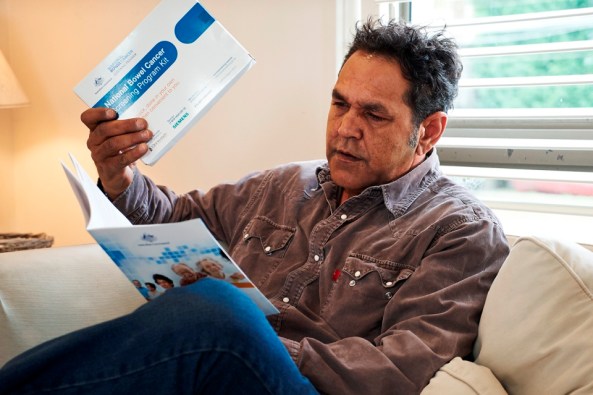
“Bowel cancer is the third most common cancer affecting Aboriginal and Torres Strait Islander people. The more of our mob that do the bowel screening test, the more lives could be saved.”

Have a say in planning to get more Aboriginal and Torres Strait Islander people taking part in bowel screening

Please click on the link to complete a survey: https://www.surveymonkey.com/r/NIBSP_S1

Menzies School of Health Research has been funded by the Australian Government to consult about and develop a plan for a national pilot aimed at increasing the number of Aboriginal and Torres Strait Islander people who take part in bowel screening.

Bowel screening can pick up tiny changes in the gut, which if not removed could go on to become cancerous. Most can be removed easily, if found early. A bowel screening test could save your life.

Bowel screening is free if you’re between 50 and 74. But participation in screening is low, amongst both non-Indigenous and Aboriginal and Torres Strait Islander populations.

We’re particularly keen to hear your views if you:

  • Are an Aboriginal and / or Torres Strait Islander person (particularly aged 40 or over)
  • Work as a health care practitioner (such as an Indigenous Health Worker, GP or practice nurse) in a community controlled health service or other primary health care service providing services to Aboriginal and Torres Strait Islander clients
  • Work in a policy or program role that could support primary health care practitioners to get more involved with promoting bowel screening

Other consultations for this project include: two national workshops; interviews with key stakeholders, and advisory groups with strong representation from Aboriginal and Torres Strait Islander people, the primary health care sector, and the cancer screening sector.

The survey provides a way for you to still have a say, even if you can’t attend a workshop.

Please click on the link to complete a survey: https://www.surveymonkey.com/r/NIBSP_S1

NACCHO Aboriginal Health News: Interactive spotlight on areas with most preventable hospitalisations

aboriginal-woman-at-dialysis

People living in some areas in Australia are nine times more likely than others to be admitted to hospital for a condition that could have been more effectively treated in the community by GPs or other health workers, a new National Health Performance Authority report shows.

Measuring ‘potentially preventable hospitalisations’ provides important insights into how well health systems are performing in keeping Australians healthy and out of hospital. The report finds that across more than 300 local areas called Statistical Areas Level 3 (SA3s) in 2013–14, the rate of these potentially preventable hospitalisations varied from as few as 1,400 hospitalisations per 100,000 people in one area, to as many as 12,700 per 100,000 people in another – even after adjusting for differences in the age of people across local areas.

The new report is the Performance Authority’s second that looks at the number and population rate of potentially preventable hospitalisations in public and private hospitals in local areas across the country. As some conditions tend to require longer stays in hospital than others, the report also states the numbers of hospital bed days that each of the conditions accounts for in each geographic area.

Nationally, there were 600,276 admissions in 2013–14 for the 22 conditions for which hospitalisation has been agreed by all governments as being potentially preventable, accounting for 6% of the total of 9.7 million hospital admissions in that year. These 600,276 potentially preventable hospitalisations also accounted for about 2.4 million bed days, nearly 8% of the total number of bed days across Australia.

For the first time, this new report focuses on a subset of five of the 22 conditions that accounted for almost half of all potentially preventable hospitalisations and nearly two-thirds of hospital bed days for these conditions in 2013–14 – allowing local areas to identify with greater precision which conditions could most benefit from different models of care.

The report finds:

  • Across local areas (SA3s), potentially preventable hospitalisations ranged from 1,406 hospitalisations per 100,000 people in Pennant Hills-Epping (NSW) to 12,705 per 100,000 people in Barkly (NT)
  •  Across similar local areas in major cities with lower socioeconomic status, the rate of potentially preventable hospitalisations varied more than two-fold, ranging from 1,800 hospitalisations per 100,000 people in Hurstville (NSW) to 4,062 per 100,000 in Mount Druitt (NSW)
  • Across all 31 Primary Health Network (PHN) areas, hospitalisation rates for each of the five conditions ranged markedly: for COPD, from 112 hospitalisations per 100,000 people in Northern Sydney to 600 per 100,000 in the Northern Territory; while for cellulitis, rates ranged from 149 hospitalisations per 100,000 people in Perth North to 696 per 100,000 in Western Queensland.

Performance Authority CEO Dr Diane Watson said the fact that hospitalisations for a specific condition had been classified as potentially preventable did not mean a person admitted to hospital for one of those conditions did not need to be hospitalised at the time.

“Rather, it indicates that the admission may have been prevented by timely access to adequate primary health care to prevent the condition, or that the condition once developed could have been better treated in the community,” Dr Watson said.

To assist PHNs and health decision-makers to target improvements in their community, one-page ‘result profiles’ for each PHN area are included in the report that help spotlight which conditions are responsible for the most hospitalisations in their communities.

Additionally, a new interactive web tool has been launched on the

MyHealthyCommunities website

that allows users to easily search results for their community across all 22 conditions.

The full list of the 22 conditions for which hospitalisation is considered potentially preventable is located at Attachment A.

344S1902_Page_3

 What where and when Aboriginal Health

NACCHO Women’s Health resources :New translated resources aim to promote BreastScreening to Aboriginal women

BC

Breast screening. It’s an invitation that could save your life.

Posters and brochures in four community languages are now available, with each promoting the key message that breast screening can save your life.

The free posters and brochures are available in Arrernte, Pitjantjatjara, Torres Strait Islander Creole and Warlpiri, and are available to any health service or community organisation that would like to promote the importance of regular breast screening.

Breast cancer is the most common form of cancer for women in Australia, and the second most common cause of cancer related deaths.

Having a free BreastScreen test every two years is the best way for Aboriginal and Torres Strait Islander women to detect breast cancer early, which could save their life.

Erica Higgins from the Central Australian Aboriginal Media Association says it’s important for Indigenous women to hear these messages in their own language from another woman.

“Many speakers in this age group don’t read language as well as they understand hearing it,” she says.

“It’s reassuring to the translators who have worked on these materials to know that they are doing their bit towards promoting health messages of this sort, especially for their own women.”

The Australian Government has expanded the invitation for free breast screening to include all women aged 70 to 74.

The easiest way for Aboriginal and Torres Strait Islander women to get a test is to call 13 20 50 and make an appointment at their nearest BreastScreen Australia clinic, or visit one of the mobile clinics when it comes to their community.

Translated copies of an animated video explaining the importance of breast screening and the process used during a breast screen will also be available in the near future.

For copies of the translated brochures and posters, please email screening@gilimbaa.com.au

Breast screening. It’s an invitation that could save your life.

image2-350x350

Download a free PDF copy of our current NACCHO NEWSPAPER


NACCHO CTG news : Closing the gap? Productivity Commission shows how far there is to go

CTG

“Ultimately the responsibility for driving the Closing the Gap effort lies with the Prime Minister and his Department. Former Prime Minister Tony Abbott was correct to see tackling Indigenous disadvantage as requiring a whole-of-government approach.

However the program disruptions and savage funding cuts simply sent the agenda backwards rather than forwards. While the impacts of these changes on progress in Closing the Gap have yet to flow through in the reporting, they will certainly contribute to yet another failing grade next year.”

Dr Lesley Russell is an adjunct associate professor at the Menzies Centre for Health Policy at the University of Sydney.

Last week, the Productivity Commission released the sixth annual report of performance assessments for the ‘Closing the Gap’ targets to address Indigenous disadvantage.

Download the report here

These reports were previously produced by the COAG Reform Council, which was abolished by the Abbott government in 2014. However this lamentable decision has delivered an unexpected benefit: the Productivity Commission has produced a report for 2013-14 that is exemplary for its stark findings, forthright criticisms and thoughtful recommendations for future, more productive reporting and evaluations.

PHOTO and Report :Little progress has been made in addressing the profound and persistent social and economic gaps experienced by Indigenous Australians. Photo: Glenn Campbell

NACCHO Media NOTE:  The views expressed here are those of the author and do not necessarily reflect those NACCHO and member organisation.

The news is depressing. Little progress has been made in addressing the profound and persistent social and economic gaps experienced by Indigenous Australians. Few of the targets set by Australian governments in 2008 will be met and in some cases the gaps have widened. The data present national averages that hide substantial variations in achievements between the states and territories and situations that are worse in more remote areas.

The issues around life expectancy highlight the problems. The target, which will not be met, is to reduce the current gap of 10 years within a generation. Mortality rates are used as a proxy for life expectancy, but these do not take account of the high levels of disability experienced by Indigenous Australians. Mortality rates are not even available for Victoria, South Australia, Tasmania and the ACT due to problems with death registration data. Given that key risk factors like smoking, obesity and suicide remain unacceptably high, there is little likelihood that health outcomes and life expectancy will dramatically improve in the near future.

While infant mortality has improved, the mortality gap between Indigenous and non-Indigenous children aged 1-4 years has widened and Indigenous children face high levels of hearing and vision loss and rheumatic fever rates among the highest in the world. These health problems affect their ability to learn and future job prospects. Up to one half of the health gap is attributable to social determinants and so progress must be made on the full suite of targets, plus others such as housing, incarceration and social justice, in order to see real changes in any one target.

The Productivity Commission makes it clear that the thousands of pages of reports and data published annually by a variety of public and private agencies are too often duplicative and not very useful or informative. Surveys of health and social wellbeing targeted at Indigenous people are done sporadically, not regularly, and often lack future funding. Many of the recent improvements in health data sets are not included in the National Reform Agreement indicators.

The commission is very critical of the fact that current reports deliver little or no evidence about what works. It recommends that the future focus should be on ensuring independent reporting and especially on evaluation. Just 17 per cent of recently completed Indigenous-specific health programs had been evaluated to assess their effectiveness and the evaluation rate is even lower in non-health areas. The report finds that, in the absence of a strong evaluation culture with resources to facilitate this, policymakers will continue to flounder and programs will continue to fail to deliver the expected outcomes.

A system for building the evidence base about what works and does not work in Indigenous programs existed in the Closing the Gap Clearing House, but again, this is now defunded and defunct. The Clearing House had identified a number of key principles that are necessary for effective Indigenous programs and services. These include: flexibility in design and delivery to meet local needs; community involvement in design and decision making; trusting relationships; good governance on the part of all the organisations, communities and governments involved; retention of a well-trained and well-resourced workforce; and continuity and co-ordination of services and support.

There are difficulties in evaluating Indigenous programs but these are not insurmountable, they simply mean that more effort is needed. Too often Indigenous initiatives are time-limited pilots and trials that run their course and cease without any formal public evaluation, thus ensuring the loss of learning opportunities, regardless of the success or failure of the initiative.

Ultimately the responsibility for driving the Closing the Gap effort lies with the Prime Minister and his Department. Former Prime Minister Tony Abbott was correct to see tackling Indigenous disadvantage as requiring a whole-of-government approach. However the program disruptions and savage funding cuts simply sent the agenda backwards rather than forwards. While the impacts of these changes on progress in Closing the Gap have yet to flow through in the reporting, they will certainly contribute to yet another failing grade next year.

As the Productivity Commission makes very clear, Closing the Gap is not about making work for bureaucrats, collecting data and producing reports. It is about a long-term commitment to delivering programs and services in ways that are consultative, meaningful and productive for the very people they are meant to benefit.

The report sums it up this way: “The answer to how to Close the Gap lies in knowing more about what works and why.”

naccho-Video Project

Register here on our NACCHO website

NACCHO #ice NEWS: Download the new $600 m. action plan to tackle ice


Ice Action Plan Dec 2015

PRIME Minister Malcolm Turnbull says Australia cannot “arrest its way to success” and local health professionals will get most of the $300 million in new funding to tackle the ice scourge.

BACKING all 38 recommendations of the National Ice Taskforce, the federal government is putting an extra $297 million towards drug treatment, after care, education and other community-based preventive measures.

The new funding is on top of the current $310 million for treatment services

The Turnbull Government has release a new action plan to tackle ice

via the National Ice Taskforce Final 249 page Report and

the Commonwealth response.

The Taskforce’s Report is a thorough analysis of Australia’s ice problem, and has provided a clear direction for both the Government’s response and the National Ice Action Strategy.

Full Transcript here of Press Conference which includes this reference to NACCHO and ACCHO’s

PRIME MINISTER:

Just one second, Fiona is going to address the, you asked about the regions and that is very important, Fiona is going to address the indigenous component in this package.

MINISTER NASH:

I did flag in my earlier remarks that is part of the $241.5 million going to treatment services, we will have a specific focus on indigenous treatment services. We need to make sure that they have culturally appropriate treatment services in place.

So, while we will be doing this through the primary health networks, there is a very strong expectation that the PHNs will work very very closely with the Aboriginal community controlled health sector in how we ensure those treatment services are appropriate. I have already spoken to the sector about this, to the head of NACCHO, Matt Cooke, and also my adviser on the Advisory Council, Ted Wilkes, about ensuring that we work very very closely with the sector to make sure that we get those indigenous treatment services right.

THE REPORT

In its Report, the Taskforce has made 38 recommendations across five areas of priority.

  1. The first priority must be supporting families, workers and communities to better respond to people affected by ice.
  2. Efforts to reduce demand for ice through prevention activities must be strengthened.
  3. Ice users need treatment and support services that cater to their needs.
  4. Efforts to disrupt supply must be more coordinated and targeted.
  5. Better data, more research and regular reporting is needed to strengthen Australia’s response and keep it on track.

The response sets out a comprehensive package to reduce the demand for ice and reduce the harm it causes, while continuing efforts to disrupt supply.

Proportionally, Australians use more methamphetamine, including ice, than almost any other country. Evidence suggests that there are well over 200,000 ice users in Australia.

Ice is an extremely powerful stimulant and it is causing significant harm to our community, disproportionate to that caused by other drugs.

The Government has already made significant investment in policing our borders and our streets to combat the supply of ice.

The weight of ice seized at the Australian border grew almost 60 times between 2010 and 2014 and police made record busts and 26,000 arrests for possession or distribution of amphetamine-type stimulants in 2013-14.

The National Ice Taskforce made it clear that we cannot arrest our way out of the ice problem – we must also work to reduce the demand for this drug.

The Government will invest almost $300 million over four years to improve treatment, after care, education, prevention, support and community engagement to tackle ice. The package includes:

$241.5 million to be invested through the 31 Primary Health Networks (PHNs), which will use their local knowledge to boost the alcohol and other drug treatment sector and reduce demand for ice.

An additional $13 million to introduce new MBS items for Addiction Medicine Specialists to increase the availability of treatment.

 An additional $24.9 million to help families and communities by providing the resources, information and support they need to respond to ice.

 An additional $18.8 million to establish better research, evidence and guidelines on ice, including a new Centre for Clinical Excellence for Emerging Drugs of Concern.

The Government understands that local knowledge is best. That is why our local Primary Health Networks will work with communities to determine what form of treatment will be most effective in each local area.

Given the close correlation between mental health and drug abuse, we have closely aligned delivery of drug and alcohol treatment services with the delivery of mental health packages through PHNs.

Ensuring that indigenous-specific treatment services and culturally appropriate mainstream treatment services are available for Indigenous Australians will be a key priority.

The package also includes significant investment in rural and regional areas, where the Taskforce Report indicated service gaps and a misalignment between service priorities and community need.

The measures from the package will form part of the new National Ice Action Strategy, which will be considered by the Commonwealth and all state and territory governments at the next COAG meeting.

For more information about the National Ice Taskforce, including the Final Report, go to http://www.pmc.gov.au/ice 

Labor Response

GOVERNMENT ANNOUNCEMENT WON’T MAKE UP FOR TREATMENT SERVICE CUTS

Labor welcomes the Government’s announcement that new funds will be directed towards rehabilitation and grass roots responses to help communities get on top of ice.

However, the Government needs to confirm that this new money won’t be sourced from cuts to existing drug and alcohol programs.

In its first two budgets the Abbott-Turnbull Government slashed funds and plunged the sector into chaos by failing to fund services until the 11th hour.

This included:

Close to $800 million cut from the Health Flexible Funds including funds supporting alcohol and illicit drug rehabilitation and treatment as well as prevention strategies.

 Mishandling of NGO treatment grants for a sector already struggling to meet demand with funding only extended at the very end of the financial year and then for just twelve months leading to an urgent funding crisis.

Labor’s spokesperson for alcohol and other drugs policy, Stephen Jones, today called on the Turnbull Liberal Government to listen to the experts.

“The release of the National Ice Taskforce report today will no doubt prove uncomfortable reading for the Abbott-Turnbull Government.

“The head of the Taskforce Ken Lay has stated that throwing more and more people in jail isn’t a real solution. We need to invest in treatment services, the very services that have been abandoned by an out-of-touch Liberal Government.

David Feeney, Shadow Minister for Justice, said that the report supported Labor’s call for a greater integration of justice and public health systems.

“Despite the best efforts of officers on the ground, law enforcement efforts have actually failed to halt the supply of ice even though there have been increased seizure and arrests rates.

“The wholesale price of ice has fallen over the past year in Australia.

“That is why the Government needs to end their disdain for treatment services and enable a strong health-based approach to complement law enforcement efforts.”

Action is needed to help the workers on the frontline doing their best with one arm tied behind their backs.

NACCHO Promotion

10th anniversary of ‘Close the Gap’ campaign in March 2016 Travelling Exhibition

Negotiations are underway to launch the CTG exhibition at Parliament House Canberra on the Anniversary next year and then make the portable exhibition available to participating members and affiliates to hold their own state based events.

The National Aboriginal Community Controlled Health Organisation (NACCHO) in partnership with Wayne Quilliam Photography has developed a visual narrative that exists to foster awareness, exploration and understanding of Indigenous health and well-being.

The exhibition of 24 photographic images, melded with a series of video interviews embedded within the images will stimulate individual thinking and dialogue relating to the 10th anniversary of ‘Close the Gap’ campaign in March 2016.

The exhibition offers valuable insight into the workings of Indigenous health including the social, economic and cultural impact of organisations and individuals.

The exhibition will also be offered to other major Aboriginal and Health conferences who wish to celebrate Aboriginal Health and Close the Gap.

 Submit your “Expression of Interest ” to host the exhibition in 2016


NACCHO Mental Health Update :NATSILMH response to the National Review of Mental Health Programmes and Services:

Roundtable%2023%20june%202014

‘Promising Start, But Meet With Us to Discuss the Detail’, Say Indigenous Leaders

The National Aboriginal and Torres Strait Islander Leadership in Mental Health (NATSILMH) welcomed the Australian Government’s response to the National Mental Health Commission’s National Review of Mental Health Services and Programmes last Thursday, but reserved its final judgment.

Please find below a media release from the National Aboriginal and Torres Strait Islander Leaders in Mental Health (NATSILMH),  outlining the group’s position on the Australian Government’s response to the National Review of Mental Health Programmes and Services.

Photo Above :Aboriginal and Torres Strait Islander mental health leaders from all over Australia in Perth on June 23 and 24

NATSILMH Chair Professor Pat Dudgeon said:

‘In particular, we welcome the $85m new funding promised to Indigenous mental health, and the broad recognition of our wellbeing and mental health needs as a priority. Further, the commitment to a ‘stepped’ mental health system, a digital mental health gateway, regional level planning and the integration of our mental health, suicide prevention, alcohol and drug services building on the social and emotional wellbeing concept all hold great promise. But we need to meet with the Australian Government and learn more before we can wholeheartedly endorse the response.’

NATSILMH and Australian Suicide Prevention Advisory Council member Ms Adele Cox is concerned about Indigenous suicide prevention:

‘The response discusses ‘refocusing efforts to prevent Indigenous suicide’ but does not elaborate. In particular, there is no indication as to whether the $17.8m pledged to the National Aboriginal and Torres Strait Islander Suicide Prevention Strategy continues to be quarantined, or whether it has been counted in the $85m of new funding. We need clarification in both areas’, she said.

NATSILMH member Mr Tom Brideson is concerned about workforce:

‘The response focuses on using the existing workforce better. But it is critical that gaps are filled particularly in those rural and remote areas where mental health services are almost non-existent, and that means training and employing additional staff in addition to upskilling existing staff’, he said.

NATSILMH member Professor Tom Calma AO also struck a note of caution:

‘Of course, the additional Indigenous mental health funding and focus is welcome, but the reliance on Primary Health Network-led regional planning has risk. Requiring the PHNs to proactively support Indigenous communities and services to be partners in these planning processes, and to be accountable for better mental health outcomes over time, is key. It is also important that the roll out of the National Disability Insurance Scheme for Indigenous people living with a psychiatric disability, and a broader, preventative approach to reducing the contribution of negative social determinants to mental illness among us, is coordinated with this planning,’ he said.

Professor Dudgeon added:

‘It is also critical that the National Service Planning Framework that will guide regional planning incorporates the National Strategic Framework for Aboriginal and Torres Strait Islander Peoples Mental Health and Social and Emotional Wellbeing as an overarching Indigenous mental health and related areas service planning framework.’

She closed by saying:

‘The next step of the response, where much of the detail will be decided, is critical. NATSILMH welcomes the additional funding and congratulates the Australian Government on a promising start. But, as a priority, we call on Ministers Ley, Nash and Scullion to maintain the Aboriginal and Torres Strait Islander Mental Health and Suicide Prevention Advisory Group as their primary ongoing source of advice for this next step. Further, to meet with Indigenous mental health, suicide prevention and substance abuse leaders and stakeholders to discuss this next step at the national and regional levels. Such a partnership approach will help ensure we get the detail right, and that the reforms result in better mental health and related outcomes for our peoples.’

NACCHO Promotion Travelling CTG exhibition 2016

The exhibition of 24 photographic images, melded with a series of video interviews embedded within the images will stimulate individual thinking and dialogue relating to the 10th anniversary of ‘Close the Gap’ campaign in March 2016.

The exhibition offers valuable insight into the workings of Indigenous health including the social, economic and cultural impact of organisations and individuals.

The exhibition will also be offered to other major Aboriginal and Health conferences who wish to celebrate Aboriginal Health and Close the Gap.

 Submit your “Expression of Interest ” to host the exhibition in 2016