NACCHO NEWS: Aboriginal and Torres Strait Islander medical student numbers jump

Australian Indigenous Doctors’ Association (AIDA) MEDIA RELEASE

Tuesday 21 August 2012

Aboriginal and Torres Strait Islander medical student numbers jump

The intake of first-year Aboriginal and Torres Strait Islander medical students in Australian universities has reached a new high of 2.5 per cent, matching the percentage of Australia’s Aboriginal and Torres Strait Islander population.

The increase, up from 0.8 per cent in 2004, comes as a new Collaboration Agreement is signed today between the Australian Indigenous Doctors’ Association (AIDA) and the Medical Deans of Australian and New Zealand (Medical Deans) to further promote Aboriginal and Torres Strait Islander  medical education and help close the gap in health disparities between Indigenous and non-Indigenous Australians.

It is the third such agreement between AIDA and the Medical Deans, the first of which was signed in 2005.

“What makes our work with the Medical Deans important is we have made positive, sustainable and long term change over the life of our previous Collaboration Agreements,” said AIDA President Associate Professor Peter O’Mara. “The new agreement will build on this success.”

“Importantly, this Collaboration Agreement gives us the continuing capacity to jointly influence broader structural reform and policy and program agendas in health and education,” said Medical Deans President Professor Justin Beilby.  “From this basis we are better able to work towards recruiting and graduating Aboriginal and Torres Strait Islander students.”

While positive progress has occurred in recruiting first-year Aboriginal and Torres Strait Islander medical students, the total enrolment rate stands at 1.6 per cent of total domestic medical student enrolments and graduations currently account for approximately 0.5 per cent of total domestic graduations.

“The rise in the number of Aboriginal and Torres Strait Islander medical students is a great way we can build the numbers of Aboriginal and Torres Strait Islander doctors. It’s important to ensure that these students can access appropriate cultural and academic support to graduate,” said AIDA Student Director, Ms Dana Slape.

Although total Aboriginal and Torres Strait Islander student enrolment and graduation percentages are expected to increase over the coming years, an important joint priority of AIDA and Medical Deans under their new Collaboration Agreement will be to advocate for reform within medical schools to ensure appropriate support processes are in place to increase the numbers of Aboriginal and Torres Strait Islander doctors. Medical Deans’ Leaders in Indigenous Medical Education (LIME) Network will continue to provide significant leadership within the schools to achieve this reform.

“Australia’s first Aboriginal doctor graduated in 1983,” said AIDA CEO Mr Romlie Mokak. “In 2009, Aboriginal and Torres Strait Islander doctors comprised approximately 0.2 per cent of the total number of medical practitioners in Australia. To come close to population parity, there would need to be an additional 1,200 Aboriginal and Torres Strait Islander doctors today.”

To achieve this requires sustained and accelerated support from governments, education and health sectors to increase the recruitment, retention and completion rates of students, as well as work environments that encourage medical graduates to practice and specialise in their chosen field. 

Aboriginal and Torres Strait Islander medical practitioners currently fulfil a range of leadership roles across policy, service delivery, research and academia, contributing not only to improving Aboriginal and Torres Strait Islander health outcomes but to positive health reform for all Australians. For example, six Aboriginal and Torres Strait Islander doctors were recently announced as members of the new National Health and Medical Research Council’s Principal Committees. A priority under the new agreement, AIDA and Medical Deans have committed to develop stronger pathways for Indigenous medical academic leaders.

 AIDA Contact:                                       Romlie Mokak  0427 786 153

Medical Deans Contact:                      Justin Beilby  0403 017
NACCHO Press Release:The battle to reduce smoking rates and Close the Gap?

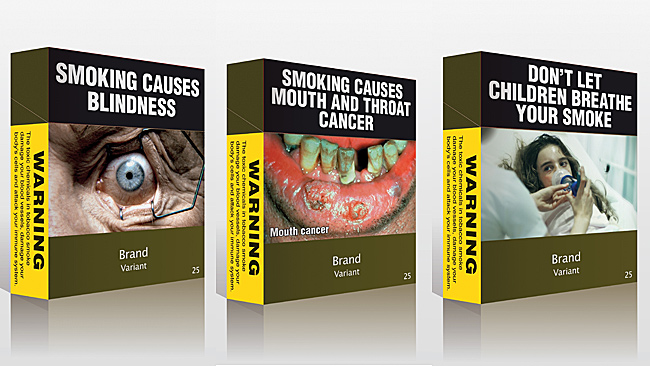
Aboriginal health leaders say changes to tobacco packaging are a small step in the battle to reduce smoking rates and Close the Gap?

Mr  Justin Mohamed, Chair of NACCHO representing over 150 Aboriginal Community Controlled Health Organisations today welcomed the decision of the High Court of Australia to reject the legal challenge by big tobacco companies, but cautioned that changes in packaging would have only minor impact in reducing the current Aboriginal (15 yrs.+) smoking rate of 47%   (no n Aboriginal rate 15.1%).

“Tobacco smoking is the single greatest preventable cause of premature death amongst Aboriginal people, impacting on the health of individuals and contributing to the devastation of our communities. It accounts for one out of every five (20%) of deaths among Aboriginal Australians and for 17% of the health gap between Aboriginal and non-Aboriginal people.Tobacco-related diseases such as cancer, cardiovascular and respiratory disease account for one third of all deaths’’ Mr Mohamed said.

Mr  Mohamed explained it is important to understand that smoking is not a single issue for Aboriginal people but is interwoven with other factors such as poverty, low levels of education, lack of employment opportunities, poor nutrition, disempowerment and stress.

“In many Aboriginal communities where stress is a lived daily reality it is therefore not surprising that smoking rates remain high especially with the unemployed and others on various welfare subsidies and that children are exposed to smoking behavior, “ Mr Mohamed said.

Our NACCHO Talking about the Smokes (TATS) research partner Menzies School of Health Research recently cautioned that efforts to tackle high smoking rates amongst Aboriginal and Torres people must not add to the stigma often faced by these groups. They stated that Australian’s should blame the industry, not the people who suffer from its products. This High Court decision goes a long way to support this argument.”

“The  efforts of hard-working staff across our member services, to address the depth and  the complexity of health issues facing our communities,  is inspirational but they are battling to Close the Gap within a generation if the governments at all levels do not address the  wide range of social issues faced by many  Aboriginal  Australians.”

In closing Mr Mohamed said NACCHO would especially acknowledge the work of Minister Nicola Roxon who in her former role as Health Minister and her current role as Attorney-General has driven this.

NACCHO Media Contact:

Colin Cowell

National Communications and Media Advisor

(02) 6246 9309 | 0401 331 251| colin@naccho.org.au | www.naccho.org.au/connect

NACCHO concerned “NO message on the bottle” for pregnancy warning

NACCHO is supporting Russell Family Fetal Alcohol Disorders Association and FARE’s campaign on alcohol labelling in Australia – we are now asking you to join us.

 A year ago, Australian and New Zealand Food and Health Ministers decided to place the alcohol industry in charge of developing and implementing their own health warning labels.

Food and Health Ministers indicated that after two years they would move to regulating a pregnancy health warning label. eg of labelling

However, eight months later there has been no mention of how the Government intends to do this.

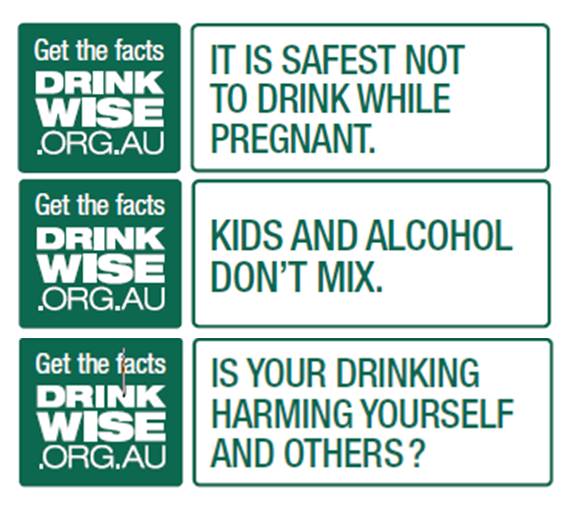
 Last week FARE released a commissioned independent audit of the alcohol industry’s voluntary DrinkWise warning labels, and it’s no surprise that the result has been nothing short of a joke.

To date, only a small proportion (16%) of alcohol products carry the industry’s labels and when the label is applied, it’s barely noticeable with 98% of the messages taking up less than 5% of the label or face of the packaging.

See the FARE media release 

As a result of the Government’s inaction on this issue, FARE has mounted a campaign  to ensure that the Government keeps to its word by letting them know that labelling is too important to be left in the hands of the alcohol industry.

 A key component of the campaign is an online petition to the Chair of Legislative and Governance Forum on Food Regulation, the Hon Catherine King, calling for an evidence-based alcohol labelling regime, which will be delivered to her office on Monday 3 September.

 The petition has now been signed by over 400 people, including a number of national not-for-profit leaders, health researchers, clinical psychologists, mums and dads, and even journalist and comedian, Julie McCrossin.

The campaign has also been featured in the Sydney Morning Herald, ABC TV, ABC News Radio, Nine MSN, AAP, and across a wide range of online media.

 FARE is aiming to gain 1000 signatures by the end of the month, and one of the most powerful actions you can take to help us reach this goal is to ask your friends to sign the online petition

 SIGN UP HERE

You can also:

 1. forward this email to a friend

 2. Like the campaign page on Facebook

 3. Tweet about this campaign to your followers

 Remember, grassroots movements succeed because people like you are willing to get involved and spread the word.

 Elizabeth (Anne) Russell

 p: (07) 40 333 409 | f: (07) 40 333 417 | m: 0412 550 540 | e: anne@enterprisemg.com.au<mailto:anne@enterprisemg.com.au> elizabeth@rffada.org<mailto:elizabeth@rffada.org>

| 84-88 Cook Street Portsmith | PO Box 6795 | Cairns Queensland 4870

NO MESSAGE ON THE BOTTLE:

INDUSTRY FAILS TO ADOPT OWN LABELS

Full release

See the FARE media release

2 August 2012:

An independent audit of the alcohol industry’s DrinkWise warning labels has found that a full year after the voluntary initiative was launched, fewer than one in six (16%) alcohol products carry the consumer information messages.

The evaluation conducted by IPSOS Social Research Institute also found most DrinkWise messages are largely hidden, with 98 per cent of the messages taking up less than 5 per cent of the label or face of the packaging.

Foundation for Alcohol Research and Education (FARE) Chief Executive, Michael Thorn, says the IPSOS audit demonstrates the abject failure of the voluntary industry regime and shows the industry isn’t serious about labelling.

“It’s impossible to see the audit results as anything but a complete failure on industry’s part. Twelve months on, and for the most part the DrinkWise messages have simply not been adopted. In the case of the few products that do carry the messages, they are so inconspicuous as to be worthless,” Mr Thorn said.

The audit also highlighted a total lack of uniformity and consistency on labelling. When used, industry’s Drinkwise messages were applied selectively. Confusingly, many products were found to have consumer messages from overseas jurisdictions such as the alcohol industry’s United Kingdom’s ‘Drinkaware’ campaign.

The audit also found that messages on alcohol products such as the vodka brand that suggests ‘Enjoy with Absolut Responsibility’, were little more than glib advertising tag lines that do nothing to educate and inform consumers about responsible drinking.

“The IPSOS audit brings into sharp relief the fundamental weaknesses of industry’s voluntary scheme. What we need are evidence-based warning labels that are applied consistently across all alcohol products. That’s something industry’s half-baked voluntary scheme can clearly never deliver,” Mr Thorn said.

In December 2011, Australian and New Zealand Food and Health Ministers recommended that the alcohol industry would be given two years to voluntarily implement alcohol warning labels, after which time the government would move to mandate pregnancy alcohol warning labels.

In the eight months since, Government has shown no interest in evaluating the progress of the alcohol industry’s voluntary efforts, entrusting industry to set its own targets and assess its own progress.

“Delaying the introduction of mandatory labels for two years was a mistake, but the government’s current hands-off approach borders on negligence. Industry might wish to set the bar low, fail to clear it, and still award itself a passing grade, but this audit puts paid to that industry spin,” Mr Thorn said.

Rather than correct the mistake, Mr Thorn says the Commonwealth now plans on rewarding the alcohol industry further with a tax-payer-funded handout, with the Department of Health and Ageing set to provide DrinkWise with funding to promote its flawed labelling regime.

“What is surprising is that in the face of industry failure, the Government seems content to not only let industry continue to take the lead in such an important national health initiative, but now is prepared to throw public funds at industry to promote a largely non-existent labelling initiative,” Mr Thorn said.

Summary of Key Findings – IPSOS DrinkWise Audit

See the FARE media release

FARE is an independent, charitable organisation working to prevent the harmful use of alcohol in Australia. Since 2001, FARE has invested over $115 million in research and community projects to minimise the impact of alcohol misuse on Australians. Through its national grants program and commissioned research, FARE has established itself as a leading voice on alcohol and other drugs issues. FARE works with community groups, all levels of government, police, emergency workers, research institutions and the private sector to address alcohol-related problems. For further information visit FARE’s website: http://www.fare.org.au

Rates of Aboriginal suicide “a national tragedy” Tom Calma


The advisory group

The Menzies School of Health Research in Darwin is working with the advisory group headed by Dr Calma and the National Aboriginal Community Controlled Health Organisation (NACCHO) to ensure the strategy is coherent and comprehensive, and backed by a strong evidence base.

Reporter: Kirstie Parker and photograph KOORI MAIL

Reproduced from the Guardian 15 August 2012

Indigenous wellbeing champion Tom Calma has called on the Australian government to properly resource and implement the nation’s first Indigenous suicide prevention strategy once it is finalised.

Aboriginal and Torres Strait Islander people’s suicide rates revealed in a new Australian Bureau of Statistics (ABS) report were “a national tragedy” that must be addressed, Dr Calma said.

The ABS report covers the period 2001 to 2010 and actually found that the suicide rate in Australia had decreased by 17 percent over that period, from 12.7 to 10.5 deaths per 100,000 people.

But it also revealed the overall rate of suicide for Aboriginal and Torres Strait Islander peoples to be twice that of non-Indigenous people. Nearly 1,000 Indigenous suicide deaths throughout Australia between 2001 and 2010 represented about five percent of all suicide deaths registered in this period.

Dr Calma, who chairs the Aboriginal and Torres Strait Islander Suicide Prevention Advisory Group, said the gap in rates of suicide in young people was particularly disturbing.

“Suicide rates for Aboriginal and Torres Strait Islander females aged 15-19 years were 5.9 times higher than those for non-Indigenous females in this age group, while for males the corresponding rate ratio was 4.4,” he said.

“This is an appalling national tragedy that is not only depriving too many of our young people of a full life, but is wreaking havoc among our families and communities.

“As anyone who has experienced a friend or family member committing suicide will know, the effects are widespread and devastating and healing can be elusive for those left behind.

“… It is time that we draw a line under this tragic situation that is impacting so significantly on Aboriginal and Torres Strait Islander individuals, families and communities in this nation.”

In June, the Gillard government appointed the Menzies School of Health Research in Darwin to help develop the National Aboriginal and Torres Strait Islander Suicide Strategy.

Advisory group

Dr Calma said the ABS report highlighted the timeliness of the developing strategy and commended the government “for taking the issue seriously”. “However, I also call on the Australian government to properly resource and implement the strategy once it is finished,” he said. “Australian governments must support, and work in partnership with, Aboriginal and Torres Strait Islander communities to develop these community based solutions.

“As the example of programs in the Kimberleys demonstrates, just as disempowerment is part of the problem, so empowerment of our communities must be part of the solution to suicide among our young people.”

Dr Calma said it was also vital that mainstream mental health services were properly equipped and staffed to work with young Indigenous people at risk of suicide.

The ABS report said the exact scale of difference between the suicide rates for Aboriginal and Torres Strait Islander and non-Indigenous people was difficult to establish conclusively.

National Mental Health Commission (NMHC) chairman Allan Fels said as much when he addressed the National Press Club (NPC) last week on the commission’s progress in developing Australia’s First National Report Card on Mental Health and Suicide Prevention.

“Scandalously, we don’t know the true rates in Aboriginal and Torres Strait Islander communities but it is at least 2.5 times higher,” Professor Fels said. “And for every completed suicide, there are up to 50 attempts.”

He said mental health and Indigenous health – of which mental health was a very significant component – were the two profound weaknesses of a health system that was good by international standards.

The NMHC will meet in Alice Springs next week, giving Professor Fels and commissioners, including Aboriginal psychologist Pat Dudgeon, their first opportunity to dedicate a whole meeting to Indigenous mental health, social emotional wellbeing and suicide prevention.

In his NPC address, Professor Fels expressed concern that the mentally ill could be excluded from Labor’s national disability insurance scheme (NDIS) as the federal government negotiates with the states and territories on the costs of trial sites.

He said it was “critical” the scheme covered people with serious psychiatric conditions as well as the physically disabled.

“It is a key need for the mental illness agenda,” he told journalists.

* If you or someone you know is thinking about suicide, call Lifeline (13 11 14), Suicide Call Back Service (1300 659 467) or Kids Helpline (for young people aged 5 to 25 years) (1800 551 800).

Press Release: AFL and music give Strong Choices to digital-savvy Indigenous youth


Press release from NACCHO affiliate AMSANT

“Many Aboriginal people have progressed from being ‘bush mechanics’ to ‘digital mechanics’ in recent years, but with these communication advantages come many challenges.”

 The powers of music and sport have combined with the Australian Federal Police as Skinnyfish Music and AFL Northern Territory launch Strong Choices at Milikapiti on Melville Island.

The innovative campaign aims to strengthen Indigenous communities by reducing the growing incidence of cyber-bullying, cyber-payback, ‘sexting’ and the distribution of inappropriate images through emerging technologies.

 VIEW THE CLIP HERE

The campaign, funded by FaHCSIA and supported by Telstra, is a series of video clips that will be distributed through Indigenous communities via a technology-driven distribution strategy using social media, chat rooms, mobile phones, advertising and Bluetooth.

 The distribution strategy of the Strong Choicesvideoclip utilises key networks and social cohorts headed by the Tiwi Island’s hottest band, B2M, who will spread the word with the assistance of AFLNT Regional Development Managers who are living and working in communities across the Northern Territory. 

 Managing Director of Skinnyfish Music, Mark Grose, believes in the powerful combination of football and music to deliver outcomes: Football and music in many communities are life-savers, and one of the few combinations that will engage an entire community and give a sense of purpose to young people in particular.

 “Nowhere else in Australia are we using Bluetooth technology to fight social issues. The Strong Choices program is unique as it utilises the technology itself to combat the problems it can cause.

 “Aboriginal people in remote areas are progressively becoming more tech-savvy than people in the mainstream, as they take up new technology as fast as it is developed.”

 B2M singer and role model Yellow, says the campaign is about teaching people to respect themselves, their countrymen and their culture when they’re on the phone or online.

 “Young Tiwi people love new technologies and we get into them as soon as they’re released, but until now there hasn’t been enough thought about the harm some of our messages and posts might cause,” Yellow says.

 “I’ve seen it myself, the pain that can come from someone being bullied online and on the phone; it’s something that’s alien to our culture and our traditional way of life up here.  We do need these new technologies—we just need to learn how to use them better and safer.”

 AFLNT has Regional Development Managers in nine remote locations across the NT along with staff in all the major centres who will assist with the Strong Choices Bluetooth seeding program.

 “This unique fusion of AFL football and music combines two of the Indigenous population’s passions into one, delivering a key message. Through this partnership we will be able to reach out directly to remote Indigenous communities with much more effectiveness,” says the Tiwi Islands AFL NT Regional Development Manager, Ian Brown.   

 Federal Agent James Braithwaite, the Team Leader of the High-tech Crime Prevention Unitof the Australian Federal Police is acutely aware of the negative impacts that cyber-bullying and ‘payback’ has in Indigenous communities around the nation.

 “The abuse of mobile phone technologies is a problem right across Australia. The high uptake of new technologies amongst Indigenous youth makes this an issue of particular importance for them,” James says.

 “Strong Choices is about educating, protecting and making individuals aware that using technology to circulate harmful and offensive material can hurt individuals, can hurt families and can hurt communities. You never know where this material can end up.

 “People need to remember that once you’ve made an inappropriate post or sent an offensive message online then you may never be able to delete it. It can be copied, forwarded, saved or cached. Like a digital footprint, it can stay out there for everyone to see.”

 John Paterson, CEO of the Aboriginal Medical Services Alliance Northern Territory (AMSANT), says the strength of Strong Choices comes from community involvement and a willingness to face up to social problems that are caused by new technology.

 “A few years ago no one could have conceived of problems with cyber-payback or ‘sexting’ but now everyone—young and old—have realised that we’ve got to tackle these new issues before they get out of hand and cause more division within communities.”

 Lauren Ganley, Telstra’s General Manager Indigenous Directorate, says that Telstra has been connecting Australian communities for over a hundred years.

 “We know that today, more than ever, modern communications technologies are essential for social and economic participation, and having the skills to stay safe online is critical.”

  Media Contact:        Peter Bonner                                      0422 283 714


Press release:Award for Aboriginal dentistry student who puts a smile into Cherbourg

NACCHO -Rural Health Workforce Media Release 15 August 2012

 A student volunteer who coordinates emergency dental care in the Queensland Aboriginal community of Cherbourg has won a prestigious national health award.


David Baker, a dentistry student at Griffith University on the Gold Coast, is the winner of the 2012 Award for Outstanding Contribution to Indigenous Communities sponsored by Rural Health Workforce and the National Aboriginal Community Controlled Health Organisation (NACCHO).

 David has been involved in the emergency dental clinic project since 2011, through his university rural health club Hope4Health. He organises four trips a year to Cherbourg for 10 students and a supervising dentist.

 They provide care to the local community who otherwise do not have access to dentistry services and are in chronic pain and discomfort.

 The program is delivered in partnership with Barambah Regional Medical Health Service which provides facilities and accommodation for the students.

 “We take portable dental chairs with us and convert their nursing rooms into four dental surgeries,” explains David. “I do it because for me it’s something I can give back to the community and I absolutely love it.”

 The clinic is something of a personal mission for David, who is a descendant of the Yuggera and Biri Gubba people. Before taking up dentistry, David was an Aboriginal health worker doing hearing tests for children at Brisbane South.  He went on to become a principal program advisor with Queensland Health for Indigenous HIV/AIDS, hepatitis C and sexual health.

 David says the Cherbourg clinic is a great way for Griffith students to broaden their skills and gain positive experience in Indigenous health.

 “They benefit and so do the community. It’s a fantastic outcome and it shows the value of rural health clubs in giving students professional development opportunities,” he says.

 Hope4Health is one of 29 university rural health clubs that belong to the National Rural Health Students Network supported by Rural Health Workforce (RHW). David was presented with his award at the network’s National University Rural Health Conference in Creswick, Victoria, last week.

 RHW CEO Greg Sam praised David for his commitment to the cause of Indigenous health. “David is a great role model for his peers. We need more people like him in order to meet the health needs of local communities.”

 The Chair of NACCHO, Justin Mohamed, says David’s leadership is inspirational. “The clinic project is very important to the wellbeing of the people of Cherbourg. We are delighted to see students like David get involved in Aboriginal health because it helps us build the workforce of the future.”

 Media inquiries: Colin Cowell (NACCHO) 0401 331 251 or Tony Wells (RHW) 0417 627 916

For print media a high res photo of David above can be sent

 NOTE TO EDITORS

 RHW is the peak body for the state and territory Rural Workforce Agencies – including Health Workforce Queensland. These not-for-profit agencies meet community health needs by attracting, recruiting and supporting doctors, nurses and allied health professionals in rural and remote Australia.

 NACCHO is the national peak body representing over 150 Aboriginal Community Controlled Health Services across the country on Aboriginal health and wellbeing issues.

Follow NACCHO on Social media


Northern Territory homelands residents take their stories to Canberra

This is an AMNESTY INTERNATIONAL  release 14 August 2012

Not NACCHO policy but provided for information of our members and subscribers

The Federal Government and both major parties in the Northern Territory have committed to support the long-term viability of Aboriginal homelands in the NT, but how has this support translated into actual improvements in the lives of homelands residents?

Next week at a public forum in Canberra, Aboriginal elders and community leaders from four homelands across the Northern Territory will discuss what has changed on homelands one year on from the launch of Amnesty International’s report, The land holds us: Aboriginal Peoples’ rights to traditional lands in the Northern Territory.

A year ago at Parliament House, Amnesty International launched the report in collaboration with the Alyawarr Peoples of the Utopia homelands, 250km northeast of Alice Springs. The report found that as a result of government policy, Aboriginal Peoples were being forced to make the choice between their right to land or rights to essential services like housing and infrastructure.

Moderated by SBS Living Black presenter Karla Grant, panellists of the forum will include:

  • David Daniels, Urapunga homelands
  • Jack Green, Borroloola
  • Rosalie Kunoth-Monks, Utopia homelands
  • Nancy McDinney, Wandangula homelands

Audience members will have the opportunity to pose questions to the panellists on issues ranging from Stronger Futures to the challenges of living on their traditional lands.

As well as the forum, the delegation will spend time in Canberra meeting with Parliamentarians and Parliamentary Committees.

Members of the delegation, as well as representatives of Amnesty International, will be available for interviews following the forum and on Wednesday 22 August following parliamentary meetings.

What: Public forum: Stories from the ground of Aboriginal homelands in the Northern Territory

When: Monday 20 August, 6:00-7:00pm (5:45pm arrival, drinks and nibbles to follow the forum)

Where: Reception Room of the ACT Legislative Assembly, Canberra. (See here for map: http://goo.gl/maps/NF5uL)

Who: 

David Daniels is a senior elder from the Urapunga homelands outside of Ngukurr who is committed to the development and betterment of Aboriginal homelands in the Northern Territory. A supporter of private enterprise, he condemns the Government’s investment in growth towns at the expense of remote homelands. His contribution to the negotiation and signing of the Mutual Respect Agreement between the Ngukuur people and the police force of the Northern Territory exemplifies his active involvement in the development of positive relations with the wider community.

Jack Green is a Senior Cultural Advisor to the Garawa and Waanyi/Garawa Ranger programs in the Gulf region of the Northern Territory. He is a member of the Borroloola Aboriginal Peoples and has contributed significantly to Aboriginal community-based development programs in remote regions of Australia. An active participant in the “People on Country Healthy Landscapes and Indigenous Economic Futures”, Green has aided in the gathering of evidence to support the contention that the activities of land and sea managers benefit Aboriginal well-being. Green is a strong supporter of the maintenance of Aboriginal connection to the land.

Rosalie Kunoth-Monks is an Alywarr and Amnatyerr elder and spokesperson from Utopia homelands.  Rosalie has been a long-time activist engaged in social work and campaigning for the advancement of her community and people. She previously held the posts of Barkly Shire President and advisor on Aboriginal affairs for the then Northern Territory Chief Minister Paul Everingham. One year ago Rosalie joined Amnesty International in Canberra to launch the report, The land holds us: Aboriginal Peoples’ rights to traditional lands in the Northern Territory.

Nancy McDinny is an artist from the Wandangula homeland outside of Borroloola. Her paintings depict Dreaming stories and capture the rich traditional life that she, her parents and grandparents live including hunting, bushtucker and travelling.

For more information or to arrange an interview contact:

Pui-Yi Cheng, 02 8396 7644 / 0423 280 658

Menzies Health questions press coverage of petrol sniffing & roll out of Opal LAF

Further to NACCHO’s OPAL submission view copy here

By Peter d’Abbs, Menzies School of Health Research

Reproduced from the Conversation

Once again, petrol sniffing in Indigenous communities is in the headlines.

And once again, sadly, the restraint that newspapers normally exercise in reporting drug issues among non-Indigenous Australians has been thrown aside.

A July front page of The Australian showed two young Aboriginal men, both identifiable, one with a hose in his mouth siphoning petrol from a car, the other clutching a soft drink bottle apparently containing petrol.

“The scourge is back”, declared Nicolas Rothwell at the beginning of his accompanying article: “confronting the eye, disturbing the heart, exposing the failure of remote community management in the Northern Territory after five long years of intervention”.

And so on until, in a concluding paragraph, he pronounces:

All that is clear is failure: after millions of dollars, reports, studies and programs, the combined efforts of the commonwealth and NT governments to stop the plague have come to nothing.

What are we to make of this denigrating outburst, this narrative of hopelessness in which Aboriginal petrol sniffers and those aspiring to help them alike are ensnared in delusion, and in which the only one who can really see what is going on is, by implication, the omniscient journalist? What an extraordinary conceit, in several senses of the word.

Rothwell’s article and the photographs appeared the day before the Senate Community Affairs Legislation Committee commenced two days of hearings in Alice Springs on the Low Aromatic Fuel Bill 2012, which had earlier been introduced into the Senate as a private member’s bill by Greens Senator Rachel Siewert.

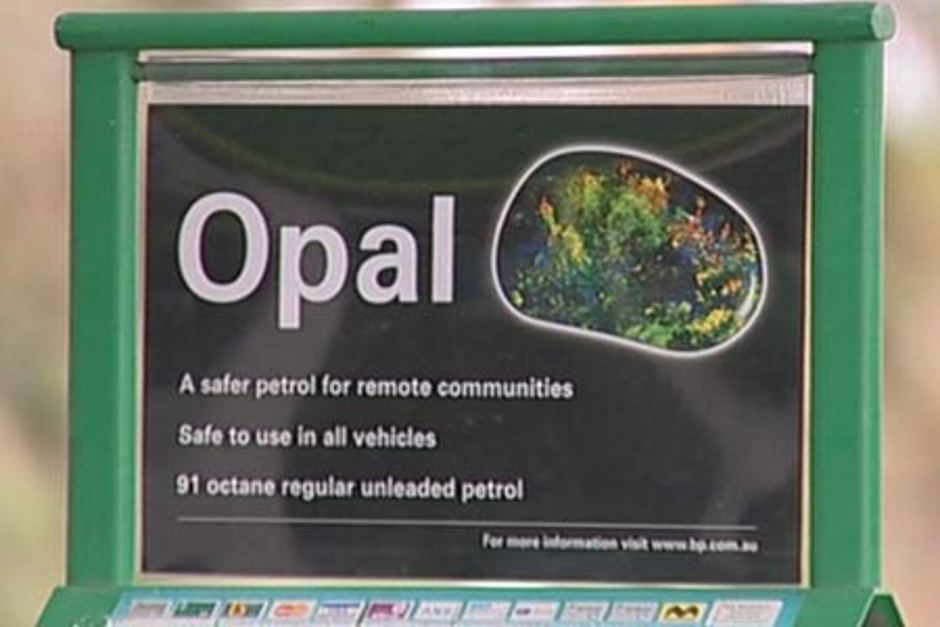
The purpose of the bill is to enable the Commonwealth to compel petrol retailers in designated areas to sell Low Aromatic Fuel instead of regular unleaded petrol. (“Low Aromatic Fuel” is the officially preferred term for what up to now has been more widely known as Opal fuel. The shift signifies a policy commitment to support a particular kind of fuel, regardless of who manufactures it, rather than the particular brand manufactured by BP.)

Most of those appearing before the hearings expressed support for the bill, as did The Australian in an editorial.

As several submissions make clear, however, the reason why Low Aromatic Fuel should be mandated is not because everything that has gone before has failed, as Rothwell claims, but rather because the rollout of Opal fuel to date has been successful in reducing petrol sniffing, and because these successes continue to be undermined by the refusal of some outlets to stock the fuel, and by the reluctance of the Rudd and Gillard governments to compel them to do so.

In 2005 and again in 2008, Gillian Shaw and I were engaged by the Commonwealth Department of Health and Ageing to assess the prevalence of petrol sniffing in Indigenous communities prior to and following the introduction of Opal fuel.

In our initial study we gathered data from 74 communities; the 2008 study examined trends in 20 of these communities located in NT, WA, SA and Queensland. In 17 of the 20 we found a decline in petrol sniffing, attributable at least in part to the introduction of Low Aromatic Fuel.

Overall, the number of current sniffers in the 20 communities fell by 70% from 622 to 187. Because individual communities are identified, the reports themselves have not been released. An executive summary of the 2008 report is, however, here.

We are now engaged in a further follow-up survey of petrol sniffing patterns in 40 Indigenous communities for DoHA. While not at liberty to disclose results to date, we can say they do not support the catastrophic picture conjured by Rothwell. In particular, the community he singled out for attention, Yirrkala in north-eastern Arnhem Land, where petrol sniffing is indeed a serious problem at present, is by no means typical of communities in the NT or elsewhere.

In 2009, the Senate Standing Committee on Community Affairs conducted an inquiry into petrol sniffing in central Australia, in which it recommended that in the event of continuing resistance by individual retailers to stock Low Aromatic Fuel, the Commonwealth should legislate to compel them to do so or, failing that, state and territory governments take similar steps.

In the following year, DoHA commissioned the South Australian Centre for Economic Studies to conduct a cost-benefit analysis of mandating supply in designated areas. The authors of the study concluded that over 25 years the benefits of mandating the fuel would exceed costs by $780 million.

Despite these arguments, the Commonwealth Government has continued to baulk at mandating Low Aromatic Fuel, although it has substantially increased budgetary commitments to the rollout of Opal and to other measures under an eight-point plan to combat petrol sniffing.

Whether these latest moves will shift the government’s stance remains to be seen. Even if they do, two notes of caution should be sounded.

First, and this should go without saying, supply reduction is a necessary but not a sufficient condition for the prevention of volatile substance misuse; measures to reduce demand are also needed.

Second, most of the discussions about mandating Low Aromatic Fuel have focused on isolated roadhouses in central Australia. In several communities where petrol sniffing continues to cause problems, however, the source of petrol is not a remote roadhouse, but a nearby town, such as Katherine or Nhulunbuy. These towns have several outlets, and the social, economic and political dynamics implicated in any move to mandate Low Aromatic Fuel are considerably more complex. Legislating in these settings will need to be accompanied by sound community engagement if they are not to generate the kinds of resentment and resistance that, if nothing else, frighten politicians.

In the meantime, is it too much to ask that journalists who report petrol sniffing in Aboriginal communities respect some of the conventions of privacy, use of evidence and balance that we take for granted when other people’s social problems are being aired?

Peter d’Abbs receives funding from Commonwealth Department of Health and Ageing.

The Conversation

Why Facebook should Unlike racism and the health sector needs to step up to the plate on racism

Our thanks to CROAKEY (Melissa Sweet) and Dr Tim Senior writes

As of this moment, more than 10,000 people have signed this petition calling on Facebook to take down the racist attack on Indigenous Australians that is in the news.

And more than 16,000 people have signed this one.

I wonder how many people from the health sector signed the petitions?

In the article below, Dr Tim Senior, a GP who works in Aboriginal health, argues that the health sector needs to step up to the plate in tackling racism. It is a public health issue well beyond the pages of Facebook.

***

Why Facebook should Unlike racism and the health sector needs to step up to the plate on racism

Dr Tim Senior writes:

Yesterday, news broke of a Facebook page called Aboriginal Memes, containing offensive stereotyping of Aboriginal people. Apparently, Facebook took the page down briefly, before reposting it with an addition to the title: “Controversial humour.”

I have had a look at the site, and I didn’t find any humour. I have written and performed comedy in a previous life, and my sense of humour hasn’t deserted me.

There was none there – just offensive racial vilification that made me feel sick. Humour doesn’t throw stones down from powerful to powerless – it throws rocks back up!

As of this morning, it looks like the original pages may have been taken down, but that the site appears to be back up, under a slightly different  name (which I’ve reported to Facebook).

Clearly, this is racist material. People who know better than I, say this breaks the law, not to mention Facebook’s own community standards.

However, there will be many who say, that while they disagree profoundly with what is said, they believe that this is an issue of free speech.

If, for just a moment, we allow that as an argument, it does not follow that free speech means that your ideas aren’t challenged. If you are really going to make the free speech argument about offensive material such as this, then you also have to allow free speech to those vigorously opposed.

But what if the law were changed, so this wasn’t illegal, as Tony Abbott has suggested he might do. What if Facebook changed their community standards to allow for any sort of speech (except the depiction of breast feeding of course!)

Would there be any reason, then, to ask for the site to be removed? Is there any particular role of health professionals and health policy advocates? I believe there is.

It is already well established in tobacco control, seatbelt wearing and drink driving that the freedom to do something can be restricted by the excess risks this puts on people’s health.

Significantly, with all of these, the decision of one individual affects the health of others, through passive smoking (especially in children), and through traffic accidents to others.

The case is also being made convincingly in the availability of junk food (or “edible food like substances” as Michael Pollan correctly calls them). There is the start of a case being made for the health issues involved in man-made climate disruption, and in the health effects of inequality.

Which brings us to racism. There is a clear effect of the experience of racism on health. Some examples, quoted by Dr Angela Durey, who has researched the health effects of racism:

  • Those who experience racist verbal abuse are 50% more likely to report their health being fair or poor than those who haven’t experienced it.
  • Those who believed that most employers were racist were 40% more likely to report their health was fair or poor.
  • A US systematic review reported an inverse correlation of racial discrimination with physical and mental health
  • Experiences of Maori people in New Zealand with verbal or physical abuse or unfair treatment in health, employment or housing resulted in a wide range of worse physical and mental health – including higher smoking rates.

On an individual level, I know people who hate going to hospital because of their experiences, who won’t go to the police if they have trouble because of their experience of racism from police officers. Many people will have their own stories.

When we talk about Aboriginal health, we often talk as if the problem is “Being Aboriginal” but in reality, “Being Aboriginal” is a marker for having experienced racism, discrimination and colonisation.

Experiencing racism is a cause of so many of the health problems we keep describing, including lifestyle risks factors.

It seems clear that the experience of racism is a cause of ill health, and so working to eradicate racism is something we should do as a public health measure.

It’s also not enough to say that people can avoid experiencing racism by not visiting the website. This assumes that those contributing to the website and those visiting “just for a laugh” do not exist outside Facebook, that at work,or with friends, none of these attitudes come into play.

It assumes that an Aboriginal person can read that someone contributing to this website works for Consumer Affairs Victoria, Centrelink, an insurance company, a catering company, and believe that they will be treated fairly when they get there.

Those contributing to this group and reading it are reinforced in their beliefs that it is OK to talk like this, that it’s all just a bit of a laugh. But in the same way that drink driving harms other people, racism harms other people. It’s not OK, and that needs to be made clear.

What is the way forward? A first step has been taken – Facebook seems to have taken some action. But we need to remain vigilant, as others will pop up.

We should compare providing these pages to making someone work in a smoke filled room or lending the drunk driver your car keys.

Tweet your displeasure, post your disagreement to Facebook. We could all leave Facebook if the site if they persist in being slow to remove unhealthy racist material and quick to remove healthy breast feeding material.

We should follow with interest the investigations by ACMA and the Human Rights Commission.

We can challenge racism wherever you see it – All Together Now campaign well on this, and you can support them here.

And finally, as Durey says, we need to turn the lens on ourselves – “white privilege is an invisible package of unearned assets” that we seldom examine, or as John Scalzi imaginatively puts it “The lowest difficulty setting there is.

This is not about white guilt or self flagellation. This is recognising that we are stood at the top of a cliff, not at the end of a level playing field.

How are we constructing our health services? What is the experience of Aboriginal people using them?

The answers won’t usually be as dramatic as those Facebook pages, but they may be just as damaging.

To do this, however, we need to listen more closely to the Aboriginal voices out there. For they are telling us about their experiences if we care to listen.

Declaration: Tim Senior has represented the RACGP at the Close the Gap Steering Committee and works for the Tharawal Aboriginal Corporation.Though the organisations I work for would not disagree with these statements, they may not express it in these terms. These are personal opinions and not the official position of any organisations I work for.

***

Introduction to the NACCHO Telehealth program from Dr Mark Wenitong


From Dr Mark Wenitong Acting CEO NACCHO

To all NACCHO members

This is to introduce Dr Suzanne Jenkins

The new manager of the NACCHO Telehealth Support project ( TH1):

As you may already be aware NACCHO is currently undertaking a Telehealth Support Project (TH1) supported by the Department of Health and Aging (DOHA).

Working with your state and Territory affiliate offices through an appointed Working Party, the project will undertake (over 12 months) to produce guidelines, an accredited online training module, and workshop training materials.

As well the project will provide financial and other support to the state and Territory affiliates to undertake training workshops for member services.

The state affiliates will contact you within the next few months to let you know when and where the workshops will be in your state/Territory.

Within the next 3-6 months NACCHO will have established a website and links to the guidelines, training modules and information regarding events in your state.

It will also provide links to a range of other resources including those  on the Australian college of Remote and Rural Medicine (ACCRM) website. ACCRM are collaborating with us on this project

NACCHO believes that Telehealth, once established, will provide great benefits to our services and clients and are pleased to be able to work with you to develop proficiency and capacity in this new area of health care delivery.

What is Telehealth?

Telehealth enables consultations between health service providers and their patients to be delivered at a distance. A Telehealth consultation is a consultation which occurs through real time telecommunication systems such as videoconferencing, between a patient and specialist in another location.

This project will equip the health staff of Aboriginal Community Controlled Health Services (ACCHSs) with training and support to allow them to manage and implement Telehealth online video conferencing  in their services for their patients.

Once established Aboriginal people’s access to specialists through Telehealth facilitated patient consultations within across Australia will be dramatically improved.

The project operates as part of the Australian Government’s ‘Connecting Health Services with the Future: Modernising Medicare by Providing Rebates for Online Consultations’ initiative.

Telehealth  Objectives

 There are five main objectives of the program:

 Develop customised national telehealth guidelines/principles tailored to the ACCHS’s workforce;

 Develop an accredited National Training Module (online) for ACCHS staff;

 Develop a national ‘Online Telehealth Orientation Event Management Kit’ for ACCHSs/Affiliates iforthe conduct of State/Territory workshops (see below);

 Establish a Virtual Telehealth Community on the NACCHO Communication Network (NCN);

 Conduct State and Territory Telehealth Training workshops by funding and supporting NACCHO Affiliates. These will provide training and support to ACCHSs in:

  • the installation and usage of teleconferencing equipment;
  • undertaking telehealth consultations and claiming Medicare rebates;
  • implementation of the above NACCHO guidelines,
  • ways to engage existing specialists to offer telehealth services to their ACCHS;
  • enhancing access to other specialists providing telehealth services through a national database.

 The workshops will also assist in evaluation activities, including data collection for this project.

 For further information

Dr Suzanne Jenkins is the Telehealth Support Officer managing this project and would be please to hear from you if you have any queries. She will inform you when the resources become available

Her contact details are below.

Dr Suzanne Jenkins

Telehealth Support Officer

Bolands Centre, 14 Spence St. Cairns 4870 PO Box 5419, Cairns 4870

(07) 40807344 | 0429918934

suzanne.jenkins@naccho.org.au | www.naccho.org.au/connect