1 August 2024

The NACCHO Sector News is a platform we use to showcase the important work being done in Aboriginal and Torres Strait Islander health, focusing on the work of NACCHO, NACCHO members and NACCHO affiliates.

We also share a curated selection of news stories that are of likely interest to the Aboriginal and Torres Strait Islander health sector, broadly.

Mixed progress in latest Closing the Gap Report: Achievements and setbacks

The latest Closing the Gap Annual Data Compilation Report, released Wednesday night, revealed both positive strides and ongoing challenges in addressing disparities for Aboriginal and Torres Strait Islander communities. The report highlights that five out of 19 targets are currently “on track,” showcasing notable achievements in areas such as healthy birth weights, preschool enrolments, and overall employment.

These successes reflect the tireless efforts of community leaders and organisations working to create positive health outcomes. Healthy birth weights signify better maternal and child health services, and increased preschool enrolments lay a solid foundation for lifelong learning. Improvements in overall employment demonstrate progress in creating job opportunities and economic stability for Aboriginal and Torres Strait Islander people.

However, the report also highlights areas where the gap is widening, such as the increasing number of Aboriginal and Torres Strait Islander children in out-of-home care, more children not being developmentally on track, higher rates of incarceration among adults, and rising suicide rates. These indicators highlight the urgent need for targeted interventions and systemic changes.

There was no available data on five other targets, including access to clean drinking water, sewerage treatment, electricity, and the proportion of women and children experiencing family violence. This data gap stresses the necessity for comprehensive and transparent reporting to ensure all aspects of community well-being are addressed.

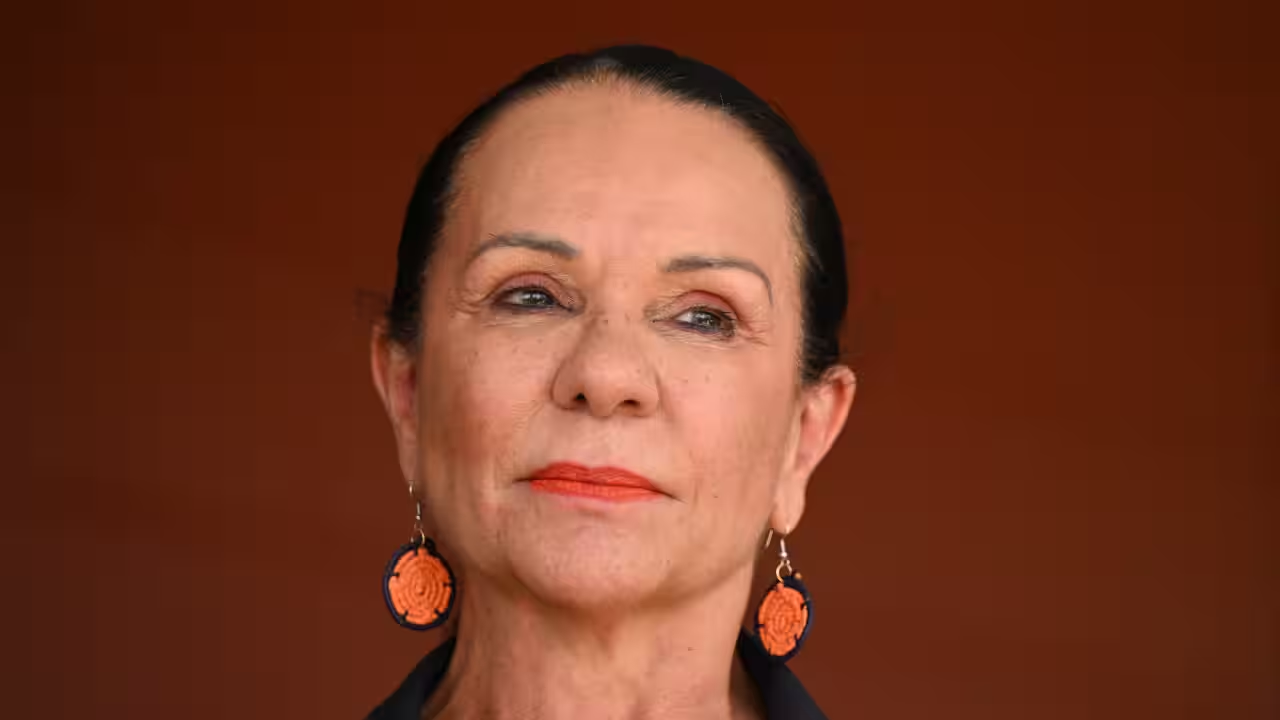
Malarndirri McCarthy, Minister for Indigenous Australians, described the latest figures as “deeply troubling” and is advocating for a “bipartisan approach” to address these issues comprehensively.

For further details, readers are encouraged to view the full Closing the Gap Annual Data Compilation Report.

If this article brought up any concerns for you or someone you love, please reach out to the resources listed below for support. Immediate help is available 24 hours a day, 7 days a week.

  • 13 Yarn (13 92 76)
  • Beyond Blue (1300 224 636)
  • Brother-to-brother (1800 435 799)
  • Kids Helpline (1800 551 800 + webchat)
  • Lifeline (13 11 14 + online chat)
  • MensLine Australia (1300 789 978)
  • NACCHO Connection, Strength and Resilience Portal
  • QLife – anonymous LGBTIQ support (1800 184 527 + webchat)
  • Suicide Call Back Service (1300 659 467)

This report reflects the ongoing commitment of community leaders, health professionals, and advocates who strive daily to close the gap and improve the health and well-being of Aboriginal and Torres Strait Islander communities. While challenges remain, the dedication and resilience of these communities continue to drive progress and hope for a better future.

Closing the Gap Annual Data Compilation Report.

First Nations women are at greater risk of stillbirth. Here’s why – and what we can do about it

Australian national data show First Nations women face almost twice the risk of stillbirth or “sorry business babies” compared to non-First Nations women. To address this inequity, Australia’s national stillbirth action plan focuses on ensuring culturally safe stillbirth prevention and care for First Nations women.

Colonisation saw First Nations women stripped of their traditional pregnancy and birthing practices, including use of medicinal plants, techniques for active labour and pain control, and songs for labour. Historical violence and exclusion have led to an intergenerational distrust of colonial systems, services and spaces among First Nations people. First Nations people have been expected to adapt to a Western health service, rather than these services adapting to First Nations people’s ways of knowing, being and doing. Recognition of the importance of Birthing on Country has led to services like Waminda and Birthing In Our Community.

Pregnancy information resources have historically been designed for a colonial audience. These resources do not speak to First Nations women and have rarely been developed by and with First Nations people. More contemporary initiatives have better engaged First Nations people in, or have them lead, resource development. The Centre of Research Excellence in Stillbirth’s Indigenous Advisory Group recently led the development of the Stronger Bubba Born pregnancy information website and resources for First Nations women. The information is the same as that given to non-First Nations women, as part of the Safer Baby Bundle, but it has been culturally adapted for its target audience.

While some First Nations women face overt racism in maternity services, many more are discriminated against through implicit biases. This is where care providers’ unconsciously held beliefs about First Nations people influence their judgements of and interactions with pregnant First Nations women. To eliminate racial disparities in stillbirth rates in Australia, our health system and broader society needs to recognise the effects of colonisation and the structural forces that continue to influence First Nations people’s health.

To read The Conversation article in full, go here.

Stronger Bubba Born.

Funding boost for key Townsville youth intervention service

A boost of $750,000 from The Miles Government will allow Townsville’s The Lighthouse: Youth After Hours Diversion Service to extend the hours that services are available to support young people at risk. The service is operated by the Townsville Aboriginal and Islander Health Services (TAIHS) with the increased funding through the Miles Government’s Townsville Engagement and Integrated Diversion initiative targeting youth offending.

New staff employed by The Lighthouse with the additional $750,000 over two years will complement its existing workforce to provide intensive outreach and engagement activities during peak hours.

The Lighthouse supports 10- to 17-year-olds, who may:

  • not have adequate adult supervision.
  • not feel safe at home and need a place to go.
  • be in trouble.
  • need someone to talk to.

Its new youth workers will connect with young people who are gathering in key locations, such as Townsville Shopping Centre, and transport them to The Lighthouse where they are able to access meals, diversionary activities, health and wellbeing services and a bed of rest if they cannot safely return home.

The after-hours expansion builds on The Lighthouse programs already delivered by TAIHS, which was selected because of its experience, staff capacity and ability to deliver the expanded service.

To learn more, go here.

New research to examine male violence

Associate Professor Jocelyn Jones has been awarded a grant from Australia’s National Research Organisation for Women’s Safety for a groundbreaking project titled ‘Learning from the stories of young Aboriginal men and adolescents convicted of domestic, family and sexual violence’. Associate Professor Jones said that the research is crucial for “breaking the cycle of violence by providing young Aboriginal men and adolescents with the opportunity to heal from past violence and address their own harmful behaviours.”

“The findings will inform health and other interventions in WA, with wider implications for national and other state and territory jurisdictions,” she said.

The study will employ a mixed-methods approach, including a phenomenological research design with narrative interviews to explore participants’ experiences and data collection using nationally developed standardised measures of social and emotional wellbeing, health and violent behaviours.

Participants will include young Aboriginal men and adolescents in juvenile detention or recently released, as well as stakeholders from Aboriginal Community Controlled Health Organisations (ACCHOs) and relevant government services.

To read the National Indigenous Times article in full, go here.

Family and domestic violence support:

Associate Professor Jocelyn Jones. Image: UNSW Kirby Institute.

Ending the abuse of older people begins with a yarn

Elders are the backbone of our families and communities, and they deserve dignity and respect. But sometimes, abuse can happen to our older people. Abuse can be difficult to spot because it’s often carried out by someone a person knows and trusts, such as a partner, family member, or carer. This is never okay, and as a community, we need to support older people who might be experiencing abuse.

To help support the hard work already being done in community, a range of new resources have been developed for use in your workplace, clinic or local community centre. These encourage and support mob to identify the different types of abuse and yarn about the problem.

To download the resources, go here.

This campaign aims to help older people, together with their families, friends and community, feel more comfortable yarning about abuse and increase awareness that support is available.

Sector Jobs – you can see sector job listings on the NACCHO website here.

Advertising Jobs – to advertise a job vacancy click here to go to the NACCHO website current job listings webpage. Scroll down to the bottom of the page to find a Post A Job form. You can complete this form with your job vacancy details – it will then be approved for posting and go live on the NACCHO website.

World Breastfeeding Week – 1–7 August 2024

World Breastfeeding Week aims to promote the numerous health benefits of breastfeeding, provide support to breastfeeding mothers, and educate mob about the vital role breastfeeding plays in nurturing healthier futures.

A small study in rural NSW found that Aboriginal and Torres Strait Islander women value trust and knowledge passed on to them from extended family members and women within their community. Another study in an urban area in QLD found that individual circumstances strongly influence infant feeding strategies and that community strengths are underused in supporting breastfeeding mothers.

There is evidence of the effectiveness of culturally appropriate Indigenous health programs in Australia delivered within holistic primary health care services controlled by Indigenous organisations. Multiple opportunities to provide mothers and communities with consistent breastfeeding promotion, education and support also occur when maternity care and maternal and child health services:

  • follow a model of continuity of woman-centred care from pregnancy through to preschool age
  • are delivered by Indigenous community controlled organisations and Indigenous health professionals and other staff, including Indigenous health and childcare workers.

To learn more, go here.

Image source: AH&MRC.

ACCHO Governance Workshops

Free, specialised governance workshops for ACCHOs will be delivered in multiple locations across the country during 2024 and 2025. 

Registrations are now open for:

  • Port Macquarie: 20-21 August
  • Dubbo: 22-23 August.

The program is delivered by legal experts and covers:  

  • Delegation of powers 
  • Finance for Boards
  • Governance documents
  • Managing conflicts of interest 
  • Managing risk  
  • Principles of good governance  
  • Structure and role of boards and sub-committees 

To register, go here.

For more information, please contact NACCHO using this email link.

31 July 2024

The NACCHO Sector News is a platform we use to showcase the important work being done in Aboriginal and Torres Strait Islander health, focusing on the work of NACCHO, NACCHO members and NACCHO affiliates.

We also share a curated selection of news stories that are of likely interest to the Aboriginal and Torres Strait Islander health sector, broadly.

Help shape a brighter future for mums and bubs: Maternal and Child Health regional workshops

NACCHO is inviting you to attend Maternal and Child Health regional workshops as part of the consultation to inform the development of an Aboriginal and Torres Strait Islander Maternal and Child Health Plan (the Plan) 2025-2035. This Plan will set out an approach to Close the Gap for mums and bubs, and guide governments’ investment in Aboriginal and Torres Strait Islander MCH services over the short, medium, and long-term.

The Plan has been receiving extensive consultation with Members, including through the survey, an Aboriginal and Torres Strait Islander MCH Expert Advisory Group and a series of face-to-face opportunities for discussion.

Noting the excellent services delivered by members and common experiences faced, we are inviting you to engage in the regional workshop to inform NACCHO and Government on the MCH needs of ACCHOs Australia-wide.

With your help, we hope to highlight and scale up your successes and sustainably address gaps and barriers to improve maternal and child health services. Please contact the NACCHO Maternal and Child Health team if you require assistance or have any questions about the regional workshops or the consultation process.

Workshop Locations, Venues & Dates:

  • Perth: 7 August – Mercure Perth
  • Darwin: 14 August – Double Tree by Hilton Esplanade
  • Sydney: 16 August – Novotel Sydney Airport
  • Brisbane: 20 August – Waters Edge Events – Hamilton

Registrations are still open, to RSVP go here.

For any questions, reach out to the friendly NACCHO Maternal and Child Health team:


More than 1,000 First Nations Queenslanders underwent surgery to restore sight

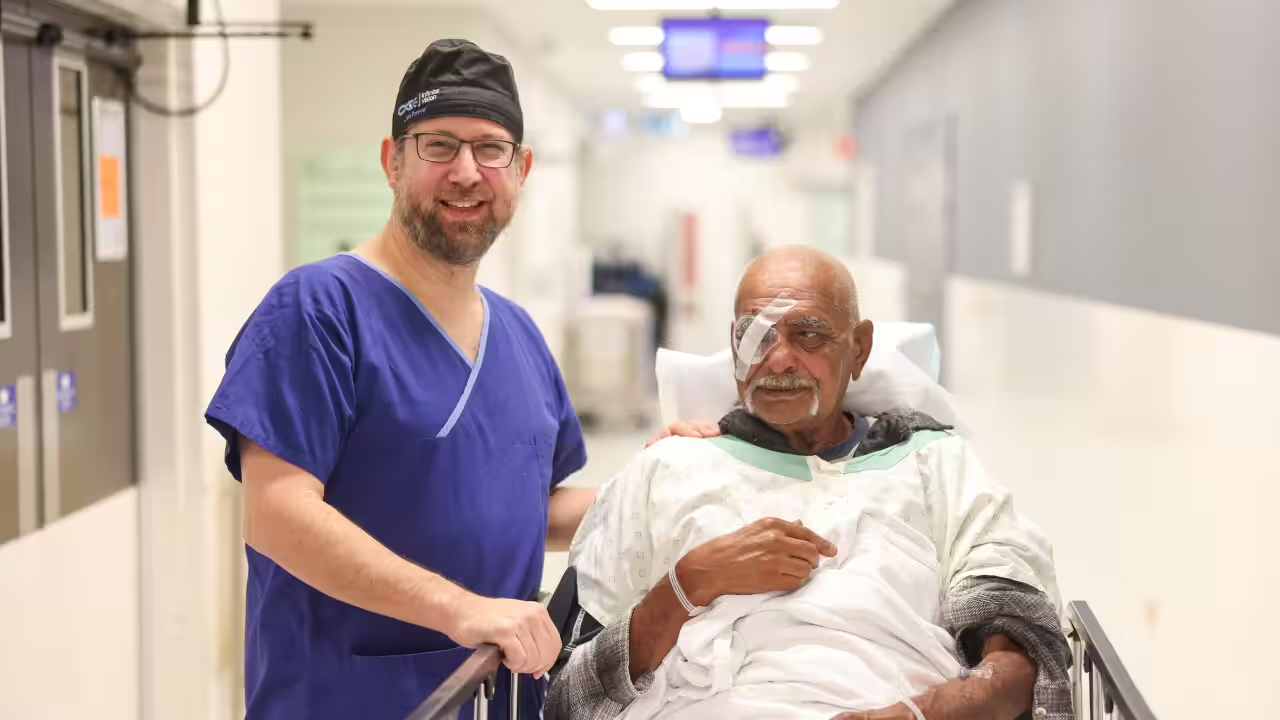
First Nations people are more likely to suffer serious sight deterioration at an earlier age than non-Indigenous Australians. However, in many cases this fate can be reversed: a cataract surgery can restore sigh in even near-blind patients. Thanks to a partnership between Urban Indigenous Health (IUIH) and Mater, over 1,000 patients got that care.

NITV Radio spoke to one of the surgeons, Dr. Jon Farrah about cataract problems, surgeries that change lives and what is needed to help even more First Nations People, who are suffering from this condition.

To listen, go here.

Dr Jon Farrah with patient Ian Delaney. Source: Supplied / Peter Wallis.

First Nations Cancer Scholarship: A new generation of leaders in cancer

Cancer Australia, in partnership with Aurora Education Foundation, is proud to announce one of Australia’s largest scholarships to support Aboriginal and Torres Strait Islander people to complete postgraduate study or research in cancer-related fields.

The scholarship will see Aboriginal and Torres Strait Islander scholars receive up to $120,000 per year over three years, as well as academic, wellbeing and community support. Up to four scholarships will be awarded each year from 2024 – 2027.

The First Nations Cancer Scholarship is a $5.9 million investment funded by the Australian Government through Cancer Australia to help deliver better cancer outcomes for Aboriginal and Torres Strait Islander communities.

The scholarship aims to grow the network of Aboriginal and Torres Strait Islander leaders who contribute to cancer control, including through research.

Applications are open now until Friday 30 August 2024. 

For more information, go here.

Image source: Aurora Education Foundation.

Postpartum contraception video created with community, for community

Postpartum contraception video resources co-developed by Aboriginal health workers and the NSW Government Syndey Local Health District explain why it is important to leave some time between each pregnancy and how you can use birth control (contraception) after having your baby. The resources show different types of contraception and where to find support and information to help you make the decisions that are right for you.

To view the video resources, go here.

Screenshot from First Nations postpartum contraception video.

Lowitja Institute Major Research Grants Program applications closing soon

Lowitja Institute provides Major Research Grants to Aboriginal and Torres Strait Islander community controlled organisations. The grant period is two years and the maximum amount available per project is $200,000. This grant opportunity specifically supports innovative and responsive community research led by Aboriginal and Torres Strait Islander community controlled organisations to improve the health and wellbeing of our mobs. The Major Research Grants provide Aboriginal and Torres Strait Islander communities and organisations to transform their ideas into reality.

Aboriginal-led research will influence policy and practice within the National Health and Medical Research Council (NHMRC), Australian Research Council (ARC) and other relevant funding organisations to ensure knowledge is rapidly translated into measurable improved outcomes for Aboriginal and Torres Strait Islander people Australia-wide.

Applications are open until this Friday 2 August 2024.

For more information, go here.

Image source: Lowitja Institute.

Students from the Deadly Start program graduate in Townsville ready to start healthcare careers

Prepared with new skills and ready to enter the healthcare industry, 10 Aboriginal and Torres Strait Islander students have gained hands-on experience working in a hospital, with some of the students inspired by their families to work in health. Graduating with a Certificate III in Health Support Assistance, Year 12 students from the inaugural Deadly Start Program in Townsville were congratulated by the community and proud family members on Tuesday morning.

Graduating student Zali Tambo has followed in her mother’s footsteps and is looking to start her career in the healthcare industry.

“It’s been really great to be part of this group,” she said.

“We’ve been in the hospital in all the different areas and also at Kirwan (Health Campus).”

With a goal of one day working in aged care, Zali said she enjoyed the practical training.

The ceremony marked the completion of 12 months of training and theory, doing placements with the Townsville Hospital and Health Service in collaboration with Connect ‘N’ Grow and Seed Foundation Australia. While also doing Year 11 and 12 studies, students did work placement one day a week and took part in study sessions with Connect ‘N’ Grow twice a week.

Seed Foundation Australia administration officer De’arne French said the program highlighted the importance of having First Nations health workers in the community.

“Thirty per cent of people that attend the hospital are Aborigional and Torres Strait Islander, and we know that they feel more comfortable when being looked after by Aborigional and Torres Strait Islanders.”

To read the NT News article in full, go here.

First Nations students, with Connect ‘N’ Grow trainer Rob Wilcock and Seed Foundation pathways support officer Sharon Phineasa, graduated from the Deadly Start Program at a ceremony at Townsville PCYC. Picture: Nikita McGuire.

Sector Jobs – you can see sector job listings on the NACCHO website here.

Advertising Jobs – to advertise a job vacancy click here to go to the NACCHO website current job listings webpage. Scroll down to the bottom of the page to find a Post A Job form. You can complete this form with your job vacancy details – it will then be approved for posting and go live on the NACCHO website.


ACCHO Governance Workshops

Free, specialised governance workshops for ACCHOs will be delivered in multiple locations across the country during 2024 and 2025. 

Registrations are now open for:

  • Port Macquarie: 20-21 August
  • Dubbo: 22-23 August.

The program is delivered by legal experts and covers:  

  • Delegation of powers 
  • Finance for Boards
  • Governance documents
  • Managing conflicts of interest 
  • Managing risk  
  • Principles of good governance  
  • Structure and role of boards and sub-committees 

To register, go here.

For more information, please contact NACCHO using this email link.

30 July 2024

The NACCHO Sector News is a platform we use to showcase the important work being done in Aboriginal and Torres Strait Islander health, focusing on the work of NACCHO, NACCHO members and NACCHO affiliates.

We also share a curated selection of news stories that are of likely interest to the Aboriginal and Torres Strait Islander health sector, broadly.

NT Aboriginal health alliance urges consultation on CLP pharmacy proposal

The Aboriginal Medical Services Alliance Northern Territory (AMSANT) has raised concerns with the Country Liberal Party about its proposal to allow pharmacists to treat more medical conditions currently treated by GPs. The Aboriginal Community Controlled Health Services peak body said the proposal “blurs the line” between diagnosis and treatment for a range of potential complex medical conditions.

Dr John Paterson AMSANT chief executive said while the Alliance supported community pharmacy playing a significant role in the frontline health system, the CLP proposals went “too far”.

“We have written to the CLP to flag our concerns and I know that other health organisations have done so as well,” said Dr Paterson.

“We need to make sure local communities have good quality medical services, joined up across the system. That can involve using the capacity of pharmacists and we’ve seen that in areas like vaccinations.

“But we also need to be cognisant of boundaries that are there for good reason. General practitioners should be diagnosing conditions and pharmacists treating conditions where medications are required.”

Dr Paterson said he would welcome consultation with the Alliance to plan policy reforms that will be effective in local communities.

“Surely by now we have learned the lessons of the past – the first step in tackling local problems, including the need for more investment in local community health is to speak with those communities,” he said.

“I’ll take a call from anyone interested in practical solutions to get more and better health service to local Aboriginal communities.”

To read the National Indigenous Times article in full, go here.

Image source: NT News.

Malarndirri McCarthy steps up as new minister for Indigenous Australians

Yanyuwa Senator Malarndirri McCarthy has been appointed as the new Minister for Indigenous Australians, stepping up from the assistant ministry to fill the vacancy created when Linda Burney moved to the backbench last Thursday. Senator McCarthy, from the Gulf country in the NT, was sworn in to the ministry in Canberra on Monday. Senator McCarthy paid tribute to her friend and mentor Linda Burney on social media.

“It’s been an extraordinary journey and a wonderful privilege to walk beside both her and former Senator Pat Dodson for the last eight years.”

Senator McCarthy was named assistant Minister for Indigenous Australians and Indigenous Health in 2022. In her First Speech she spoke about land rights, her support for the union movement and same-sex marriage and the challenges of walking in two worlds as an educated Aboriginal woman.

To read the NITV article in full, go here.

Minister for Indigenous Australians Malarndirri McCarthy with Australian Governor-General Sam Mostyn during the Federal ministry swearing in ceremony today. Source: AAP / Lukas Coch.

Case of meningococcal disease reported in WA

WA Health has reported that a child was diagnosed with meningococcal serogroup B disease and is currently recovering at home. Meningococcal disease is an uncommon, life-threatening illness caused by a bacterial infection of the blood and/or the membranes that line the spinal cord and brain, and occasionally of other sites, such as the throat, lungs or large joints. To date in 2024, five meningococcal cases have been reported in WA – four cases were serogroup B and one was serogroup W.

Due to a higher rate of meningococcal disease in Aboriginal children in WA, the MenACWY vaccine is offered free to Aboriginal children aged from six weeks to 12 months old.  The MenB vaccine is free for all Aboriginal children aged up to two years old. Both these vaccines are also free for people of all ages with certain medical risk conditions. People not eligible for free vaccines can request them through their immunisation provider for a fee.

Meningococcal bacteria are not easily spread from person-to-person. The bacterium is present in droplets discharged from the nose and throat when coughing or sneezing but is not spread by saliva and does not survive more than a few seconds in the environment. Meningococcal bacteria are carried harmlessly in the back of the nose and throat by about 10-20% of the population at any one time. Very rarely, the bacteria invade the bloodstream or tissues and cause serious infections.

Sometimes – but not always – symptoms may be accompanied by the appearance of a spotty red-purple rash that looks like small bleeding points beneath the skin or bruises. Symptoms of invasive meningococcal disease may include high fever, chills, headache, neck stiffness, nausea and vomiting, drowsiness, confusion, and severe muscle and joint pains. Young children may not complain of symptoms, so fever, pale or blotchy complexion, vomiting, lethargy (inactivity), poor feeding and rash are important signs.

Although treatable with antibiotics, meningococcal infection can progress very rapidly, so it is important that anyone with these symptoms seeks medical attention urgently.

For more information, go here.

Campaign for rehab centre gains momentum, pushes for regional drug forum

A campaign to build Tamworth’s first 24-hour drug and alcohol rehabilitation facility is picking up steam as it seeks a space for open advocacy and discussion. The state government has announced a two-day summit in Sydney in December to bring together a range of experts and stakeholders to build consensus on the way NSW deals with drug use and harms. In the lead up to the summit there will be two days of regional forums in October, and the Fair Treatment campaign wants Tamworth to host one.

To push for better AOD [alcohol and other drug] services in the region, a number of community groups and organisations have come together to form the Tamworth Strategy Group, the driving force behind Tamworth’s Fair Treatment campaign.

Tamworth Aboriginal Medical Service (TAMS) drug and alcohol counsellor Sandy Hawley got involved with Tamworth Strategy Group at the start of the year. She and minister for the Tamworth region Uniting Churches, Reverend Geoff Flynn, have been running petitions, surveys, and advocacy sessions since the start of the year.

To read the article in full, go here.

The Tamworth Strategy Group has been building momentum since 2021, though interest from the community has really come up a notch in the last year. Picture by Gareth Gardner.

Waminda National Conference September 2024

Waminda South Coast Women’s Health and Wellbeing Aboriginal Corporation is proudly inviting you to celebrate 40 years of Aboriginal Women in Leadership hosting the “Strong Women, Strong Community, Leading the Way” conference in Nowra, NSW. Waminda grew from a vision and need Community Women saw, to create safe spaces for Aboriginal Women’s health and wellbeing on the South Coast. Since its first inception as Jilimi in 1984 and through its transition into Waminda one thing has held true- the privileging of Aboriginal women’s voices and the leadership of strong, staunch and nurturing Community women. This has led to the incredible milestone of Waminda’s operation in community for 40 years.

During the conference the Waminda Executive Leadership team, Keynote Speakers, Waminda Program Managers and Coordinators, along with community leaders in the Aboriginal women’s health and wellbeing space will take you on a journey of looking back to celebrate how far Waminda has come; whilst giving insight into the now and inspiring what is emerging in Aboriginal women’s leadership, health, and wellbeing.

For more information, go here.

Image source: Waminda.

Sector Jobs – you can see sector job listings on the NACCHO website here.

Advertising Jobs – to advertise a job vacancy click here to go to the NACCHO website current job listings webpage. Scroll down to the bottom of the page to find a Post A Job form. You can complete this form with your job vacancy details – it will then be approved for posting and go live on the NACCHO website.

ACCHO Governance Workshops

Free, specialised governance workshops for ACCHOs will be delivered in multiple locations across the country during 2024 and 2025. 

Registrations are now open for:

  • Port Macquarie: 20-21 August
  • Dubbo: 22-23 August.

The program is delivered by legal experts and covers:  

  • Delegation of powers 
  • Finance for Boards
  • Governance documents
  • Managing conflicts of interest 
  • Managing risk  
  • Principles of good governance  
  • Structure and role of boards and sub-committees 

To register, go here.

For more information, please contact NACCHO using this email link.
26 July 2024

The NACCHO Sector News is a platform we use to showcase the important work being done in Aboriginal and Torres Strait Islander health, focusing on the work of NACCHO, NACCHO members and NACCHO affiliates.

We also share a curated selection of news stories that are of likely interest to the Aboriginal and Torres Strait Islander health sector, broadly.

Partnerships for culturally safe cancer care grant program

Cancer Australia has launched the Partnerships for culturally safe cancer care grant program, a new $16.9 million initiative aimed at accelerating the delivery of culturally safe cancer care for Aboriginal and Torres Strait Islander communities across Australia.

Addressing long-standing equity and cultural safety issues within mainstream health services, particularly in specialist cancer care, is crucial to ensuring Aboriginal and Torres Strait Islander people can access and complete treatments with improved outcomes. The program emphasises the importance of a culturally safe system, where respect for cultural values and elimination of racism and inequity are paramount. These are key outcomes of both the Australian Cancer Plan and the Aboriginal and Torres Strait Islander Cancer Plan.

This national grant program will allocate up to $16.9 million over three years to support up to 20 partnerships between cancer services and Aboriginal and/or Torres Strait Islander community-controlled organisations. Partnerships, with funding of up to $1 million each, will focus on innovative, community-driven local activities designed to improve the delivery of cancer care for Aboriginal and Torres Strait Islander people.

Applications for the Partnerships for culturally safe cancer care grant program are open until 23 October 2024.

For more information, go here.

Image source: Cancer Australia.

Linda Burney calls time on an extraordinary political career of firsts

Linda Burney has announced she will retire at the next election, and in the meantime will relinquish her role as Minister for Indigenous Australians and move to the backbench. Burney became the first Indigenous person to serve in the NSW parliament when she was elected as the Member for Canterbury in 2003. The Wiradjuri woman then stepped into federal politics in 2016, when she won the southern Sydney seat of Barton, becoming the first Aboriginal woman in the House of Representatives.

As Minister for Indigenous Australians, Burney pledged to work closely with Indigenous organisations on Closing the Gap and announced increased funding for justice reinvestment and Indigenous-led health programs in partnership with NACCHO.

An emotional Burney said that during her long career, she had seen a lot, including Paul Keating’s famous Redfern speech in 1993, the 2000 walk for reconciliation across the Sydney Harbour Bridge and Kevin Rudd’s Apology to the Stolen Generations in 2008.

“Progress doesn’t always move in a straight line,” she said.

“We make progress and then we have setbacks, that’s the history of Indigenous justice in this country.

“But with every passing generation, the arc bends a little bit more towards justice.”

Assistant Minister for Indigenous Australians Senator Malarndirri McCarthy is expected to move into the senior portfolio.

To read the NITV article in full, go here.

Minister for Indigenous Australians Linda Burney. Source: AAP / Lukas Coch.

Kowanyama man’s inspiring journey to close healthcare gap

A Kowanyama man is making strides in his dreams of becoming a nurse, empowering his community, and closing the gap in healthcare. Through his work at Mookai Rosie Bi-Bayan, a First Nations health and wellbeing facility for women and children from Cape York, Liamon Mudd has already made a significant impact in providing culturally safe care for his mob and is now pursuing a Bachelor of Nursing at Deakin University to further upskill.

“You can be anything you want to be if you’re passionate and want to make a difference for your community,” Mr Mudd said.

“I feel blessed to be connected with mob from the Cape and Torres and provide essential services.

“It’s good to see mob taking up work in the health industry; health is a big issue for First Nations people, and having our own people on the ground, providing a service for their own community and their own people will really help close the gap in healthcare.”

Mr Mudd’s passion for nursing initially led him to TAFE, where he undertook a Certificate IV in Aboriginal and Torres Strait Islander Primary Health Care and a Diploma of Aboriginal and Torres Strait Islander Primary Health Care Management. The aspiring nurse’s university degree will only add to his list of accomplishments – previously, he won the 2020 Tropical North Queensland Aboriginal and Torres Strait Islander Student of the Year and was a finalist for Vocational Student of the Year at the Queensland Training Awards.

Ultimately, Mr Mudd hopes to return to his community and improve health outcomes for Kowanyama’s next generation.

“I’ve got another couple of years before I graduate, but hopefully I can come out as a registered nurse so that one day, I can go back and make that change in healthcare for my community,” he said.

To read the Cape York Weekly article in full, go here.

Liamon Mudd is following his dreams of becoming a nurse as he pursues a Bachelor of Nursing at Deakin University. Image source: Cape York Weekly.

Lupus is more common and severe in Aboriginal and Torres Strait Islander peoples. Learning why is crucial

Lupus is an inflammatory autoimmune illness, where the body’s immune system mistakenly attacks itself. Lupus can affect virtually any part of the body, although it most commonly affects the skin, joints and kidneys. Lupus is two to four times more common in Aboriginal and Torres Strait Islander peoples compared to those who do not identify as Aboriginal or Torres Strait Islander. Lupus is also more common in Aboriginal and Torres Strait Islander children, with rates four to 18 times that of the general Australian child population.

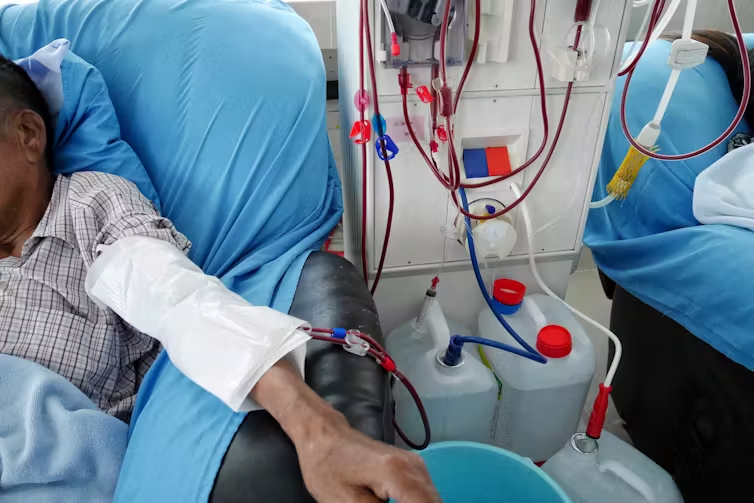
Lupus also tends to present with different symptoms, and is more severe, in Aboriginal and Torres Strait Islander peoples. For example, Aboriginal and Torres Strait Islander peoples tend to develop more of the severe, life-threatening or organ-threatening symptoms of lupus, such as kidney problems. As a result, Aboriginal and Torres Strait Islander patients with lupus have high rates of kidney failure, and are more likely to require dialysis than non-Aboriginal and Torres Strait Islander patients.

The reasons for the increased rates and severity of lupus in Aboriginal and Torres Strait Islander peoples are not well understood. However, it’s likely that socioeconomic factors, environmental factors and biological factors all play a role. To date, no published studies have specifically explored this.

The reasons for the increased rates and severity of lupus in Aboriginal and Torres Strait Islander peoples are not well understood. However, it’s likely that socioeconomic factors, environmental factors and biological factors all play a role. To date, no published studies have specifically explored this. Drugs already in use which target these genes or proteins could also be better selected for patients who are likely to benefit from them. This may help treat lupus more effectively in Aboriginal and Torres Strait Islander peoples in the future.

Other strategies to improve outcomes for Aboriginal and Torres Strait Islander peoples with lupus include:

  • improving access to specialist care for patients living in rural and remote areas
  • eliminating structural racism in health care
  • raising awareness of lupus in Aboriginal and Torres Strait Islander communities.

To read The Conversation article in full, go here.

Image source: khawfangenvi16/Shutterstock.

Thousands of student nurses funded for placements in ACCHOs, community health and general practice

Thousands of student nurses will be funded for placements in primary care settings under federal government plans to support the sector while giving the students valuable experience. The plan will see an additional 6,000 nurses funded for placements across the country including in community health, Aboriginal community-controlled health organisations (ACCHOs), general practice and schools.

Assistant Minister for Health and Aged Care Ged Kearney – a former nurse – announced the $4.2m National Nurse Clinical Placements program details on Friday at the Australian Primary Health Care Nurses Association congress in Adelaide. The Association will work with education providers and clinical settings to place students. The move comes as this month the government boosts Medicare rebates for care provided by nurse practitioners by 30%, making such care more affordable and accessible, particularly in rural and regional areas.

To read the NT News article in full, go here.

Image source: ABC News.

Diabetes Management Workshop

The Diabetes Management Workshop is designed to support nurses, Aboriginal and Torres Strait Islander Health Practitioners and Health Workers, and other health professionals to better support patients with or at risk of developing diabetes.

Learning outcomes include:

  • refresh knowledge on the pathophysiology of diabetes and different types of diabetes mellitus
  • describe common diabetes medications, their actions, side effects and contraindications
  • discuss insulin therapy, including different modes of actions and the education to offer clients around insulin administration
  • demonstrate an understanding of hypoglycaemia, hyperglycaemia and diabetic ketoacidosis
  • review principles of blood glucose monitoring and the education to offer to clients regarding this
  • explore psychological impact of living with diabetes
  • understand local diabetes care pathways.

For workshop dates and registration, go here.

Image source: Benchmarque Group.

Sector Jobs – you can see sector job listings on the NACCHO website here.

Advertising Jobs – to advertise a job vacancy click here to go to the NACCHO website current job listings webpage. Scroll down to the bottom of the page to find a Post A Job form. You can complete this form with your job vacancy details – it will then be approved for posting and go live on the NACCHO website.

ACCHO Governance Workshops

Free, specialised governance workshops for ACCHOs will be delivered in multiple locations across the country during 2024 and 2025. 

Registrations are now open for:

  • Port Macquarie: 20-21 August
  • Dubbo: 22-23 August.

The program is delivered by legal experts and covers:  

  • Delegation of powers 
  • Finance for Boards
  • Governance documents
  • Managing conflicts of interest 
  • Managing risk  
  • Principles of good governance  
  • Structure and role of boards and sub-committees 

To register, go here.

For more information, please contact NACCHO using this email link.

25 July 2024

The NACCHO Sector News is a platform we use to showcase the important work being done in Aboriginal and Torres Strait Islander health, focusing on the work of NACCHO, NACCHO members and NACCHO affiliates.

We also share a curated selection of news stories that are of likely interest to the Aboriginal and Torres Strait Islander health sector, broadly.

Helping Mob Live Healthy and Prevent Cancer Toolkit

The Helping Mob Live Healthy and Prevent Cancer Toolkit is designed for the Aboriginal health workforce as a one-stop shop for the latest culturally tailored information and resources on cancer screening and prevention. Co-created by mob, for mob – use this toolkit today to help you yarn about cancer and, better the health and wellbeing of Aboriginal peoples in NSW.

Proud Gamilaroi woman Rebecca Murray is a passionate advocate for healthy mob. With a health career spanning more than seven years and a passion for health research, Rebecca is always on the lookout for tools and resources to support the important work she does with community clients and at times cancer patients.

As an Aboriginal Health Worker and Care Coordinator for South West Sydney, Rebecca has been quick to use the new free toolkit. She shared how helpful it is to pull up on a screen when in conversation with a client, to show them why you might be asking questions about aspects of their health and to highlight the supports available to all mob.

“I would describe the toolkit as very informative, simple, succinct and easy to navigate, useful to give structure and questions when working with a new client,” said Rebecca.

Rebecca was led to the toolkit through a number of resources provided by her current boss, someone she considers a leader and mentor. She says the toolkit helps her to tailor the information each client needs.

“The toolkit helps me focus on the social and emotional wellbeing of the client, including useful sources of further information. It’s a good checklist to build a client health plan from.”

The toolkit is something Rebecca uses at least once or twice a week, to obtain resources or to prompt conversations with community. Rebecca encourages other Aboriginal and Torres Strait Islander health workers to discover and share resources amongst one another, to help more people to stay healthy and prevent cancer.

For more information, go here and to access the toolkit, go here.

Rebecca Murray.

NT unveils framework to combat chronic health issues

NT Health, Aboriginal Medical Services Alliance Northern Territory (AMSANT) and Northern Territory Primary Health Network (NT PHN) have come together to launch a new framework to help prevent chronic conditions in the NT.

Titled Healthy, Well and Thriving: The Northern Territory’s prevention and early intervention framework for chronic conditions 2024 – 2030, the framework’s aim is to help keep Territorians healthy and well for as long as possible by focussing on chronic condition prevention and early intervention.

To achieve this, the framework will deliver a range of strategies to improve health and wellbeing, including creating more health-promoting environments and settings, embedding prevention within the healthcare system and strengthening screening services to enhance early detection.

The framework recognises the need for a holistic approach to health to effectively address the complex social drivers of chronic conditions within communities, including among disadvantaged populations. It will prioritise addressing key risk factors – such as unhealthy food and drink, inactive lifestyles, alcohol consumption, tobacco use (including e-cigarettes) and poor social and emotional wellbeing – to improve long-term health outcomes.

“AMSANT members are often at the end of the line treating the health impacts and symptoms of inequality and disadvantage without the power to prevent it,” says Dr John Paterson, AMSANT CEO.

“This framework sets the foundation to change that, strengthening our health system and the way we work together across the sector to address the social drivers of chronic conditions within our communities.

“It allows for more collaboration between service providers and, importantly, strengthened Aboriginal leadership to provide this much-needed whole of health sector response, fitting within the broader change needed to prevent ill-health for Aboriginal people.”

To read the framework, go here.

Healthy, Well and Thriving: The Northern Territory’s prevention and early intervention framework for chronic conditions 2024 – 2030.

AH&MRC Social and Emotional Wellbeing Community Forum

AH&MRC are launching a series of workshops bringing together service providers in Aboriginal and Torres Strait Islander Social and Emotional Wellbeing (SEWB), Alcohol and Other Drugs (AOD), and Mental Health from regions across NSW.

Expected outcomes:

  • Enhanced collaboration and networking among service providers.
  • A consolidated list of best practices and innovative solutions applicable across NSW.
  • A clear professional development plan supporting continuous improvement in service delivery.
  • Established framework for skill development within the network.

To register, go here.

Changes needed to keep First Nations children out of incarceration

More culturally responsive diversion programs are needed to prevent the incarceration of Aboriginal and Torres Strait Islander children, according to University of Queensland research. UQ’s School of Nursing, Midwifery and Social Work PhD candidate Lorelle Holland, a Mandandanji woman, led a study which analysed the effectiveness of dozens of diversion programs across Australia which attempt to keep Indigenous children out of the youth justice system.

“In 2021 an Australian Institute of Health and Welfare report found Indigenous children aged 10-17 were 20 times more likely to end up incarcerated than non-Indigenous youths – we need to change that,” Ms Holland said.

“We found only 10 out of 31 diversion programs addressed areas such as Indigenous connection to land, culture, spirituality, ancestry, family, and community.”

The study focused on Aboriginal and Torres Strait Islander children aged 10 to 18 years who were participating in diversion programs ranging from residential remand and bail support, homelessness assistance and help for those appearing before specialist Indigenous courts.

“The best performing programs addressed the complex needs of Indigenous children by supporting their social and emotional wellbeing through Indigenous-led, place-based, and interdisciplinary collaboration, which resulted in a decline in offending behaviour,” Ms Holland said.

“Our findings highlight the need to stop the incarceration of Indigenous children with complex needs and instead invest in funding, policy directions and public health to develop and deliver culturally responsive diversion approaches.”

To read the UQ News article in full, go here.

Image source: Rafael Ben-Ari, Getty Images.

The Aboriginal and Torres Strait Islander population is projected to have reached over a million

The Aboriginal and Torres Strait Islander population is projected to reach almost 1.2 million by 2031, according to the Australian Bureau of Statistics. According to that estimation, that means the Indigenous population has reached over a million already. First Nations people currently make up 3.8% of the total Australian population. That’s an estimated 19.1% to 21.3% increase of the population by 2031.

The average annual growth rate of Aboriginal and Torres Strait Islander peoples is between 1.8% and 2.0% per year. The states with the fastest average annual growth rate of Aboriginal and Torres Strait Islander peoples are QLD, the ACT and VIC.

By 2031, inner and outer regional Australia is projected to continue to have the largest population of Aboriginal and Torres Strait Islander peoples at 44%. While the Aboriginal and Torres Strait Islander population in major cities in Australia are projected to increase by just under two per cent by 2031, the population in remote areas is projected to decrease by two per cent in 2031.

To read the NITV article in full, go here.

A third of the Indigenous population are children 14 and younger. AAP: Mick Tsikas Credit: MICK TSIKAS/AAPIMAGE.

Sector Jobs – you can see sector job listings on the NACCHO website here.

Advertising Jobs – to advertise a job vacancy click here to go to the NACCHO website current job listings webpage. Scroll down to the bottom of the page to find a Post A Job form. You can complete this form with your job vacancy details – it will then be approved for posting and go live on the NACCHO website.

ACCHO Governance Workshops

Free, specialised governance workshops for ACCHOs will be delivered in multiple locations across the country during 2024 and 2025. 

Registrations are now open for:

  • Port Macquarie: 20-21 August
  • Dubbo: 22-23 August.

The program is delivered by legal experts and covers:  

  • Delegation of powers 
  • Finance for Boards
  • Governance documents
  • Managing conflicts of interest 
  • Managing risk  
  • Principles of good governance  
  • Structure and role of boards and sub-committees 

To register, go here.

For more information, please contact NACCHO using this email link.

24 July 2024

The NACCHO Sector News is a platform we use to showcase the important work being done in Aboriginal and Torres Strait Islander health, focusing on the work of NACCHO, NACCHO members and NACCHO affiliates.

We also share a curated selection of news stories that are of likely interest to the Aboriginal and Torres Strait Islander health sector, broadly.

AMSANT welcomes new remote urgent care clinics

Six new bulk-billing Urgent Care Clinics are being built in the NT, with assistant Minister for Indigenous Australians, Malarndirri McCarthy saying they will support the health and wellbeing of the predominantly Indigenous Territorians in the new locations. On Tuesday, the Labor Senator was joined by Chief Executive of the Aboriginal Medical Services Alliance NT (AMSANT) John Paterson, and FCD Health Ltd chief executive Bernie Cummins, to announce the new clinics at Ali Curung, Galiwinku, Alyangula, Wurrumiyanga, Lajamanu and Maningrida.

“We know that these Urgent Care Clinics are quite important to be able to transition from their current status, to be able to provide more support for First Nations people in particular in our communities, to have the after-hours service to hopefully reduce the aeromedical services,” Senator McCarthy said.

“If they don’t need to be [medevaced] to Katherine or to Darwin or to Alice Springs, if these Urgent Care Clinics can provide that support, then this will go a long way to assisting our communities,” she said.

Mr Paterson concurred, arguing it will allow “after-hour care in those remote clinics that have been successful in becoming the Urgent Care Clinics”.

“It’ll also provide and hopefully reduce the medivac arrangements that may require patients to be treated locally with the specialist care that these clinics will provide and reduce some of those strains on the hospitals as well,” he said.

“So, the more we can do local communities, the better. And we are very confident that these models of care will do exactly that.”

To read the National Indigenous Times article in full, go here.

The remote community of Lajamanu, 560 kilometres south-west of Katherine, is set to receive a new urgent care clinic. Image source: Stephanie Zillman/ABC News.

What it takes to help First Nations children thrive at school

Research shows that ages zero to five are crucial for a child’s brain development. Nationally in 2021, only 34.3% of Aboriginal and Torres Strait Islander children commencing school were assessed as being developmentally on track – emotionally, physically and socially — compared to 56.2% of non-Indigenous children. Under the National Closing the Gap Agreement, governments have committed to having First Nations children on par with the rest of the population by 2031.

“Closing the Gap starts with our children,” said Arrernte and Luritja woman Catherine Liddle, the CEO of the peak body representing First Nations children, SNAICC.

Ms Liddle said investing in accessible, affordable and culturally safe early education is so important because of the profound impacts on children’s life outcomes down the line.

On latest count, 16.4% of First Nations children in the NT were developmentally ready for school, about half that of other states and territories. But services like Congress are working to change that.

Southern Arrernte and Pitjantatjara woman Samara Swan is the family engagement officer at Congress, where she builds relationships with the community to encourage them to send their kids to preschool.

“I support them [parents] with filling out enrolment forms, because even walking through the doors of a preschool can be quite scary for family, especially if they’ve been living out bush.”

Ms Swan also works with parents to assess whether their children need a little extra help.

“Doing that screening helps us identify areas of strength … and the areas where we can best support them and then we can refer them on if we need to.”

The centre offers a range of healthcare services to help with things like hearing, speech or learning disabilities.

To read the ABC News article in full, go here.

Congress uses play-based activities to get kids ready for preschool. Image source: ABC News: Kirstie Wellauer.

‘Millie’ Breast Screening Bus Parked in Katherine

For the next three weeks Millie the BreastScreenNT bus will be located at Katherine Hospital offering free breast mammograms for women over the age of 40. Millie’s visit to the Big Rivers region started last week at the Wurli Wurlinjang Aboriginal Health Service, where around 45 women were screened. From Katherine, Millie will continue to the Big Rivers community of Mataranka, where screening will take place from 26 to 30 August.

Breast cancer is the most common cancer experienced by Aboriginal and Torres Strait Islander women and is the second leading cause of cancer death after lung cancer. Regular screening is the most effective way to detect breast cancer at an early stage before it can be felt or noticed. Early detection followed by early treatment can improve survival rates following a breast cancer diagnosis.

BreastScreenNT works with remote primary healthcare centres to ensure all eligible women are aware and encouraged to have a mammogram when Millie is in their community. Of the 6,400 Territorian women who were screened in 2023, 49 women who were found to have breast cancer.

To read the article in full, go here.

‘Millie’ Breast Screening Bus. Image source: NT Health.

Nominations open for RACGP Awards

The annual RACGP Awards celebrate people and practices who go the extra mile for the health of their communities. Nominations are open for Aboriginal and Torres Strait Islander health awards.

The awards include:

  • Standing Strong Together award – celebrating partnerships between GPs and communities.
  • Growing Strong award – Aboriginal and/or Torres Strait Islander GPs in training are invited to nominate for the Growing Strong Award.
  • Medical student bursary – The Medical Student Bursary award is open to Aboriginal and/or Torres Strait Islander medical students currently studying at an Australian University.

Nominations close 11.59pm AEST on Wednesday 14 August 2024. For more information, go here.

Rural Health West Aboriginal Health Conference 2024

The Aboriginal Health Conference 2024 taking place on August 10 and August 11, will provide an opportunity to come together and learn from each other. Through presentations, panel sessions, case study discussions and workshops Rural Health West will provide an engaging and informative conference program for delegates. The 2024 theme, “Circling the Fire: Connecting, Celebrating, and Committing to Aboriginal Health,” embodies the spirit of unity, celebration, and dedication to improving Indigenous health outcomes. This theme aligns seamlessly with the NAIDOC theme for 2024, ‘Keep the Fire Burning! Blak, Loud and Proud.’

The conference program will have five streams, providing comprehensive insights into crucial aspects of Aboriginal health:

  • Chronic disease
  • Culturally safe practice
  • Health across the life course
  • Sexual health
  • Social and emotional wellbeing

Keynote speakers include Keisha Calyun-Clarke from the Aboriginal Health Council of Western Australia (AHCWA) and Mechelle Turvey, Advocate for victims of crime & Humanity.

Registrations close this Friday, July 26. For more information, go here.

Keisha Calyun-Clarke, AHCWA.

Sector Jobs – you can see sector job listings on the NACCHO website here.

Advertising Jobs – to advertise a job vacancy click here to go to the NACCHO website current job listings webpage. Scroll down to the bottom of the page to find a Post A Job form. You can complete this form with your job vacancy details – it will then be approved for posting and go live on the NACCHO website.

ACCHO Governance Workshops

Free, specialised governance workshops for ACCHOs will be delivered in multiple locations across the country during 2024 and 2025. 

Registrations are now open for:

  • Port Macquarie: 20-21 August
  • Dubbo: 22-23 August.

The program is delivered by legal experts and covers:  

  • Delegation of powers 
  • Finance for Boards
  • Governance documents
  • Managing conflicts of interest 
  • Managing risk  
  • Principles of good governance  
  • Structure and role of boards and sub-committees 

To register, go here.

For more information, please contact NACCHO using this email link.

23 July 2024

The NACCHO Sector News is a platform we use to showcase the important work being done in Aboriginal and Torres Strait Islander health, focusing on the work of NACCHO, NACCHO members and NACCHO affiliates.

We also share a curated selection of news stories that are of likely interest to the Aboriginal and Torres Strait Islander health sector, broadly.

Six remote urgent care clinics for the NT

Six Medicare Urgent Care Clinics (Medicare UCCs) will be established in remote regions of the NT providing free, culturally appropriate urgent care services to local communities. Existing remote urgent care clinics in Alyangula (Groote Eylandt), Wurrumiyanga (Tiwi Islands), and Maningrida (Top End Region) will transition to become part of the Medicare Urgent Care Clinic program. In addition, a further three remote clinics will also be established in Galiwinku (Elcho Island), Lajamanu (Big Rivers Region), and Ali-Curung (Barkly Region).

These locations were chosen in partnership with NT Health and Aboriginal Medical Services Alliance Northern Territory to better meet the needs of First Nations communities while also creating new workforce models and increasing the capacity of primary care services in remote areas.

Funding has been provided to expand the remote urgent care clinics through increased workforce support, additional infrastructure and equipment to support urgent care delivery. Current opening hours will also be extended.

These clinics have been adapted to operate differently to other Medicare UCCs across the country. This is because of the remote location of the clinics and the need to adapt to local circumstances, including workforce availability and limited medical services in the area.

In 2023–23, about 52 per cent of presentations to hospitals in the NT were for non-urgent or semi-urgent care. Establishing these new remote Medicare UCCs will help reduce the number of aeromedical retrievals, ease the burden of urgent conditions on existing primary care centres and provide care closer to home.

There are already two Medicare UCCs in the Northern Territory located in Palmerston and Alice Springs. There have been more than 582,000 visits across Australia since the first Medicare UCCs opened in June 2023, with more than 19,000 of these visits happening in the two NT clinics.

The six remote Medicare UCCs in the NT are part of the extra 29 clinics announced and funded through the 2024-25 Budget as part of a $227 million expansion of the Medicare UCC Program.

To read the media release in full, go here.

Upcoming Webinars – Get the facts: supporting self-collect cervical screening in your Community

NACCHO is hosting two CPD accredited webinars for healthcare workers on the cervical screening self-collection option. The webinars will focus on how to support Aboriginal and/or Torres Strait Islander women and people with a cervix in their cervical screening.

Did you know, rates of cervical cancer for Aboriginal and Torres Strait Islander women are three times the non-Indigenous population? The option to self-collect a Cervical Screening Test is one of our most effective tools in encouraging patients to undergo regular cervical screening. Offering under or never-screened patients the option to collect their own Cervical Screening Test provides greater choice and empowerment in screening and discussing screening in a culturally sensitive manner can remove many barriers to participation.

NACCHO will deliver one-hour webinars for staff from ACCHOs and AMSs. Other healthcare workers who work with Aboriginal and/or Torres Strait Islander patients can also attend. Come along to learn more about how we can increase cervical screening awareness and participation amongst Aboriginal and/or Torres Strait Islander women and people with a cervix.

RACGP and/or ACRRM CPD points are available for attending this training.

Hear from:

  • ACCHO sector staff on how self-collect is being implemented in their Community
  • Professor Marion Saville, Executive Director at the Australian Centre for the Prevention of Cervical Cancer

Dates:

A link to the webinar recording will be sent following the training date to those who register.

The webinars will be delivered in partnership with the Australian Government Department of Health and Aged Care and the Australian Centre for the Prevention of Cervical Cancer.

For more information, go here.

Exploring the future of healing programs that address family violence

A new report led by Distinguished Professor Bronwyn Carlson, from Macquarie University’s Department of Critical Indigenous Studies, explores the future of healing programs that address family violence. The report, commissioned by Australia’s National Research Organisation for Women’s Safety (ANROWS), also aimed to specifically investigate the availability of such programs for Aboriginal and/or Torres Strait Islander LGBTQIASB+ people and those with disability.

Healing programs can take many forms, from cultural and gender specific camps, dedicated programs that focus on trauma within health and wellbeing services, and outreach services that deliver face-to-face in home or community support.

Family violence serves as both a cause and effect of intergenerational trauma experienced by Aboriginal and Torres Strait Islander peoples. This trauma stems from colonial violence, including settler policies of extermination, segregation, and cultural and racial elimination, and is perpetuated by continuing policies and practices that target Aboriginal and Torres Strait Islander peoples such as high levels of incarceration and removal of children.

“People who have experienced family violence need to be front and centre in conceptualising, developing, and evaluating healing programs that are preventative and that target people who have perpetrated family violence.”

Healing programs are not distinct services and activities. They are integral components in the fostering of health and wellbeing of Aboriginal and Torres Strait Islander communities. Healing programs need to target those who have perpetrated family violence as well as those who have experienced it. Responses should focus on rehabilitation and healing, rather than criminalisation and removal of the offender. They should incorporate the community as a whole.

Professor Bronwyn Carlson says programs that respond to family violence must be conceptualised and led by Aboriginal and Torres Strait Islander peoples at a local level. As respondents said, “Mob needs to be the ones designing programs for mob.”

To read the article in full, go here.

If this article brought up anything for you or someone you love, please reach out to, call or visit the online resources listed below for support. The four organisations in blue offer immediate help, 24 hours a day, 7 days a week.

Family and domestic violence support:

Distinguished Professor Bronwyn Carlson. Image source: Macquarie University, The Lighthouse.

New advance care yarning resources for First Nations Queenslanders

Your care, your choice, your belonging. This is the catch cry for the new advance care yarning resources made with and for First Nations Queenslanders. Advance care yarning is the process of letting others know about what you want for your future and ongoing health care. The resources feature a suite of three short education videos and a brochure that support the important processes of planning for future health care.

The videos share information about the importance of advance care yarning, the relevant forms used in Queensland and give an example of a family advance care yarning conversation. The videos feature local First Nations Elders, First Nations health professionals and a family story shared by Uncle Stan Barry and his daughter Bonnie.

The resources were produced by the PallConsult First Nations Palliative Care Project, with funding from the First Nations Health Office, Queensland Health.

To access the resources, go here.

NAATSIHWP Scope of Practice Consultations for VIC

NAATSIHWP is conducting a national consultation to understand more about your scope of practice and the way it aligns to your qualification. This project will result in greater national consistency for the Aboriginal and/or Torres Strait Islander Health Worker and Health Practitioner professions. The consultations will assist in the delivery of recommendations on national minimum scopes of practice and the harmonisation of regulations governing the workforce across jurisdictions.

Upcoming consultations for VIC:

  • Melbourne: 5 August
  • Shepparton: 6 August
  • Kalgoorlie: 8 August
  • Online: 13 August

Project background:

The need for a national minimum scope of practice supported by harmonised legislation has been a goal of the workforce for decades. The need was first acknowledged in government policy over ten years ago in the Health Workforce Australia Final Report. It was then made a commitment by the COAG Health Council in August 2018. Following this, the National Aboriginal and Torres Strait Islander Health Workforce Strategic Framework and Implementation Plan 2021–2031 (National Workforce Plan) was developed by Aboriginal and/or Torres Strait Islander people in partnership with the federal government.

For more information, go here. To see upcoming consultations in other states/territories, go here.

Puntukurnu healthy hygiene behaviours music video

This animated music video aims to promote healthy hygiene behaviours including washing faces, cleaning ears and brushing teeth for good health. The video was produced by Puntukurnu Aboriginal Medical Service (PAMS) as part of its environmental health program that draws on the No Germs on Me health promotion campaign. It was developed for children and their families living in the remote Jigalong, Parnngurr, Kunawarritji and Punmu communities in the Pilbara region of WA, and features lyrics in both English and Martu languages.

To watch the healthy hygiene behaviours music video, go here.

Image source: Australian Indigenous HealthInfoNet.

Sector Jobs – you can see sector job listings on the NACCHO website here.

Advertising Jobs – to advertise a job vacancy click here to go to the NACCHO website current job listings webpage. Scroll down to the bottom of the page to find a Post A Job form. You can complete this form with your job vacancy details – it will then be approved for posting and go live on the NACCHO website.

ACCHO Governance Workshops

Free, specialised governance workshops for ACCHOs will be delivered in multiple locations across the country during 2024 and 2025. 

Registrations are now open for:

  • Port Macquarie: 20-21 August
  • Dubbo: 22-23 August.

The program is delivered by legal experts and covers:  

  • Delegation of powers 
  • Finance for Boards
  • Governance documents
  • Managing conflicts of interest 
  • Managing risk  
  • Principles of good governance  
  • Structure and role of boards and sub-committees 

To register, go here.

For more information, please contact NACCHO using this email link.

22 July 2024

The NACCHO Sector News is a platform we use to showcase the important work being done in Aboriginal and Torres Strait Islander health, focusing on the work of NACCHO, NACCHO members and NACCHO affiliates.

We also share a curated selection of news stories that are of likely interest to the Aboriginal and Torres Strait Islander health sector, broadly.

Antibiotic shortages disproportionately affecting Indigenous patients

Shortages of antibiotics used to treat rheumatic heart disease, syphilis, pneumonia and chlamydia have left many Aboriginal and Torres Strait Islander health organisations concerned about how this is disproportionately affecting remote Indigenous communities. Currently, there are limited supplies of bicillin and azithromycin, and earlier this year there was also a shortage of ciproxin.

National Aboriginal Community Controlled Health Organisation (NACCHO) Medicines Policy and Programs Director Mike Stephens​​​​ said health providers have had to ‘get creative’ to manage the ongoing shortages.

“It’s interesting to note that some medications which are in shortage are certainly disproportionately used for the Aboriginal and Torres Strait Islander sector than other Australians,” he told newsGP.

“Clinical outcomes and patients are manifestly impacted in a negative way.

“Just managing shortages is complex, and it creates confusion and complications for health professionals, clients, the system, and policy makers more generally.”

Various tactics have been employed, Mr Stephens said, to meet demand.

“For example, there may be an ACCHO (Aboriginal community controlled health organisation) that has quite a lot of residual stock who is able to share or transfer some of that stock to another site and mitigate that burden,” he said.

“Or they can develop a protocol with a hospital where stock is reserved for very specific cases.

“Using a network and working within the stakeholders in the local area is very important.”

According to the Therapeutic Goods Administration (TGA), shortages of benzathine benzylpenicillin tetrahydrate are due to a global increase in demand, with stocks of higher strength injections expected to improve by mid-2024, but lower strength shortages will last until next year.

To read the News GP article in full, go here.

Image source: ABC News.

TAC and Danila Dilba Health Service receive Supporting People with Cancer grants

The Supporting People with Cancer grants fund community organisations and Aboriginal and Torres Strait Islander organisations to support First Nations people, multicultural groups and rural and regional populations affected by cancer. The grants will aim to reduce the impact of cancer, improve outcomes and better support people with cancer.

The funded projects supporting First Nations Australians affected by cancer include:

Tasmanian Aboriginal Centre: “Increasing cancer screening and treatment rates in the Tasmanian Aboriginal community.” This project aims to identify barriers to cancer screening within the Tasmanian Aboriginal community, develop solutions to improve screening rates, and implement activities to foster early cancer identification and timely treatment.

Danila Dilba Butji Binnilutlum Health Service Limited: “Streamlining cultural safe cancer care for Danila Dilba.” This project focuses on defining local clinical care pathways within the Darwin region and provides clinicians and community members the resources to support culturally appropriate care.

Assistant Minister for Indigenous Health, Senator Malarndirri McCarthy, commended the dedication of these organisations “in championing the cause of supporting individuals and communities affected by cancer”.

“We know community-based organisations, such as this year’s recipients, make a positive impact in creating more fair and equal communities so that all people with cancer can access the support they need,” she said.

To read the National Indigenous Times article in full, go here.

Image: Danila Dilba.

Nominations now open for the 2024 NAATSIHWP Excellence Awards

NAATSIHWP Excellence Awards celebrate and acknowledge Aboriginal and Torres Strait Islander Health Workers and Health Practitioners who have made exceptional professional contributions to their communities and workplaces.

The awards also acknowledge organisations committed to the creation of exemplary models of care that comprehensively engage Aboriginal and Torres Strait Islander Health Workers and Health Practitioners and provide support for their career pathways.

NAATSIHWP Excellence Awards are open to individuals and organisations who meet the category eligibility criteria outlined here.

The Excellence Awards will be judged by an independent panel of three judges.

The five categories are:

  • NAATSIHWP Young Warrior
  • NAATSIHWP Individual Champion
  • NAATSIHWP Workforce Legend (or Respected Elder)
  • NAATSIHWP Models of Care and Career Pathways Innovation
  • NAATSIHWP Board Memorial Lifetime Achievement (Previously Lifetime Achievement Award, Nominated & Selected by the NAATSIHWP Board)

NAATSIHWP Excellence Award winners will be announced at the 2024 NAATSIHWP Conference “Reaping in the rewards of resilience” Gala Dinner to be held at Perth Convention Centre on September 3, 2024.

For the 2024 NAATSIHWP Excellence Awards Nomination Form, go here.

Image source: NAATSIHWP

24 years dedicated to the Wiluna Community

Dr Toby McLeay AM retires from Ngangganawili Aboriginal Health Service in Wiluna after 24 years of dedicated service to the community. Dr Toby’s commitment to his patients and to the staff that have worked alongside him on Martu Country is a testament to the difference that one person can make in a community.

In a local newspaper article published some 20 years ago, a fresh-faced Dr Toby described his ambition to develop strong doctor-patient relationships “because it was from there that you can start to influence outcomes and behaviours”.

The strength of the relationships he has since nourished in Wiluna shine through the depth and respect of his everyday interactions with the community, which he has served as local GP for up to three generations of one family over the years.

Dr Toby has made a significant contribution to building Ngangganawili Aboriginal Health Service into the medical service it is today. Leading among his many health initiatives in the community were his staunch support and active use of My Health Record and Communicare the introduction of ‘Dr Toby’s Healthy Food Choice’ labels at the local supermarket to help guide the community to make the best nutritional choices when buying products in the shop.

To read the full article, go here.

Image source: Aboriginal Health Council of Western Australia.

Have your say on the NSW Draft Aboriginal Water Strategy

The Cowra Aboriginal community is being encouraged to have their say on the draft Aboriginal Water Strategy, a landmark first for the state that will strengthen and empower Aboriginal voices in matters relating to water across NSW.

The Strategy aims to ensure Aboriginal people are involved in the decision making, planning and management of our most precious resource, providing them with greater ownership and better access to water for cultural and economic purposes.

The draft objectives and actions were developed over five years through a series of targeted consultations, workshops, and interviews that involved Aboriginal community members, Traditional Owners and Custodians, and NSW Government departments. In addition, 11 Aboriginal peak bodies along with 14 NSW Regional Aboriginal Water Committees were also involved in developing the draft concepts.

Feedback will now be sought after at a range of engagement workshops both in person and online to ensure the actions and commitments made during the early development phase have been properly reflected.

A workshop will be held in Cowra between 10am – 2pm on the 1st August.

There will also be online workshops for the general public, Aboriginal Peak organisations and government departments between 13-15 August.

To read the article in full, go here.

Image source: NSW Government.

Sector Jobs – you can see sector job listings on the NACCHO website here.

Advertising Jobs – to advertise a job vacancy click here to go to the NACCHO website current job listings webpage. Scroll down to the bottom of the page to find a Post A Job form. You can complete this form with your job vacancy details – it will then be approved for posting and go live on the NACCHO website.

ACCHO Governance Workshops

Free, specialised governance workshops for ACCHOs will be delivered in multiple locations across the country during 2024 and 2025. 

Registrations are now open for:

  • Port Macquarie: 20-21 August
  • Dubbo: 22-23 August.

The program is delivered by legal experts and covers:  

  • Delegation of powers 
  • Finance for Boards
  • Governance documents
  • Managing conflicts of interest 
  • Managing risk  
  • Principles of good governance  
  • Structure and role of boards and sub-committees 

To register, go here.

For more information, please contact NACCHO using this email link.

19 July 2024

The NACCHO Sector News is a platform we use to showcase the important work being done in Aboriginal and Torres Strait Islander health, focusing on the work of NACCHO, NACCHO members and NACCHO affiliates.

We also share a curated selection of news stories that are of likely interest to the Aboriginal and Torres Strait Islander health sector, broadly.

What is FASD, and why do so many children with it end up in Australia’s justice system?

Vulnerable young people and communities concerned about crime would both benefit from better screening and support for foetal alcohol spectrum disorder (FASD), experts say.

FASD is caused by exposure to alcohol in the womb. There is no known safe level of alcohol that can be consumed during pregnancy. Because alcohol crosses the placenta, maternal and foetal blood alcohol concentrations can rapidly reach the same level but the foetus’s organs are not developed enough to break the alcohol down and remove it. This disrupts brain and other organ development.

Most crucial to preventing children with FASD ending up embedded in the justice system, is early screening, and alcohol and drinking education.

Dr Robyn Williams, a senior research fellow and FASD expert at Curtin University medical school, says she has many stories of youth receiving early treatment for FASD who never encounter the justice system, and who find employment and independence as adults.

The Noongar woman from WA runs training in Indigenous communities about FASD, and has researched how families caring for Aboriginal children with FASD understand the condition and access care.

Common misconceptions about FASD are prevalent among GPs and child protection and youth justice workers, she says, further delaying diagnosis and care. A myth also persists that “FASD is only an Aboriginal problem”.

“This is not an Aboriginal problem and the majority of Aboriginal people don’t even drink,” she says. But about 60% of all pregnant women in Australia drink, with about half stopping once they realise they are pregnant.

Aboriginal people who do drink are more likely to drink at risky levels. This means that the prevalence of FASD among Aboriginal and Torres Strait Islander people is disproportionately higher than the non-Indigenous population, says Pat Turner, the chief executive of the National Aboriginal Community Controlled Health Organisation (NACCHO).

“This is a direct consequence of colonisation, racism and poor social health determinants,” she says. “It is essential approaches to prevent and support people living with FASD are culturally safe, trauma-aware and led by the Aboriginal and Torres Strait Islander community.”

To read The Guardian news article in full, go here.

Children with FASD have a brain injury that means their cognitive skills are well below their chronological age. They might not be able to differentiate right from wrong, which can get them in trouble with the youth justice system. Illustration: James Gulliver Hancock/The Guardian.

Help shape a brighter future for mums and bubs

NACCHO is inviting you to attend Maternal and Child Health regional workshops as part of the consultation to inform the development of an Aboriginal and Torres Strait Islander Maternal and Child Health Plan (the Plan) 2025-2035. This Plan will set out an approach to Close the Gap for mums and bubs, and guide governments’ investment in Aboriginal and Torres Strait Islander MCH services over the short, medium, and long-term.

The Plan has been receiving extensive consultation with Members, including through the survey, an Aboriginal and Torres Strait Islander MCH Expert Advisory Group and a series of face-to-face opportunities for discussion.

Noting the excellent services delivered by members and common experiences faced, we are inviting you to engage in the regional workshop to inform NACCHO and Government on the MCH needs of ACCHOs Australia-wide.

With your help, we hope to highlight and scale up your successes and sustainably address gaps and barriers to improve maternal and child health services. Please contact the NACCHO Maternal and Child Health team if you require assistance or have any questions about the regional workshops or the consultation process.

Maternal and Child Health regional workshops dates and locations:

  • Perth: 7 August
  • Darwin: 14 August
  • Sydney: 16 August
  • Brisbane: 20 August

We kindly ask that you RSVP by 1st August 2024. To RSVP, go here.

For any questions, reach out to the friendly NACCHO Maternal and Child Health team:

Ballarat and District Aboriginal Cooperative launches Aboriginal Children in Aboriginal Care program

Aboriginal and Torres Strait Islander children are 22 times more likely to be removed from their families and placed in the child protection system than non-Indigenous children in Victoria. Massive steps are underway across the state to change that statistic as Aboriginal people are given legal authority to become decision makers for Aboriginal children in out-of-home care. The Ballarat and District Aboriginal Cooperative has become the third organisation in Victoria to run the Aboriginal Children in Aboriginal Care program, following Bendigo and Melbourne.

Program manager Jess Wall said it was changing the trajectories of Aboriginal children.

“It is giving community, families and children self determination back and decision making back with Aboriginal people instead of having the department make those decisions,” she said.

Ms Wall said while her staff were required to operate within the same legislation as the Victorian child protection service, their approach was vastly different.

“Working within community, we usually know the family,” she said.

“Working together with the family is the point of difference, really hearing their voices and working alongside them.”

Njernda Aboriginal Cooperative in Echuca and Rumbalara Aboriginal Cooperative in Shepparton have been going through the authorisation process. Ballarat and District Aboriginal Cooperative director of child safety and cultural support, Jodie Kinsmore, said she had seen higher rates of family reunification.

Ms Kinsmore said they have received feedback from people saying they wouldn’t have their kids back if it wasn’t for them or the Aboriginal Children in Aboriginal Care program. She said the Aboriginal Children in Aboriginal Care program was healing of intergenerational trauma that had created distrust in child protection services.

To read the ABC News article in full, go here.

The Ballarat and District Aboriginal Cooperative has become part of the program.(Supplied: Ballarat and District Aboriginal Cooperative).

Calls for greater diabetes technology access

Diabetes Australia is calling on the government to support access to life-changing diabetes technology for Aboriginal and Torres Strait Islander people. Attending a community event hosted by Marrin Weejali Aboriginal Corporation in Sydney’s Mount Druitt area, Diabetes Australia Group CEO Justine Cain highlighted the advantages of continuous glucose monitoring (CGM) devices for people living with type 2 diabetes.

This National Diabetes Week (July 14-20), Ms Cain is calling on the Federal Government to invest $200 million in access to life-changing diabetes technologies for those Australians who need it the most.

“Our recent report, the State of the Nation, outlined how diabetes is disproportionately affecting Aboriginal and Torres Strait Islander people,” Ms Cain said.

“The evidence is clear. The diabetes epidemic is having a profound impact in Aboriginal and Torries Strait Islander communities and there is an urgent need to bring about change.”

Gomeroi man and award-winning exercise physiologist Ray Kelly has delivered the successful Too Deadly for Diabetes program through Marrin Weejali and said CGMs provide great education on glucose management.

“However, they aren’t subsidised, and are out of reach for many people who can’t afford them,” Mr Kelly said.

“We began using the technology in the Too Deadly for Diabetes program in 2022 and the impact was instant. We were already getting great health outcomes for our participants, but CGMs made it easier and safer to transition people off insulin.

“Many of the people in the program had been on insulin for over a decade so reading their glucose levels in real time gave them confidence in what they were doing.

“The alarm settings warned them if their glucose levels dropped too low, and the time in range reports gave their GPs clear information on how they were progressing. It’s been a game-changer!”

To read the article in full, go here.

Image source: Diabetes Australia.

Kimberley Aboriginal Health Planning Forum launches new Strategic Plan

Co-chairs of the Kimberley Aboriginal Health Planning Forum (KAHPF) launched the new Strategic Plan 2024-2028 Together in Wellness, last week. The new Strategic Plan now firmly aligns the work of the KAHPF with the National Agreement on Closing the Gap and the four priority reforms – which is important to further bolster efforts to make an impact on the socio-economic targets that have an impact on life outcomes for Aboriginal and Torres Strait Islander people.

Strategic priorities outlined in the new plan include:

  • Reform: Embed the elements of the four priority reforms of the National Agreement on Closing the Gap into all collaborative efforts of the KAHPF.
  • Improved health system: Deliver holistic health, aged care and disability services to Kimberley Aboriginal people and communities, focusing on environmental health, health promotion, and the prevention and management of primary and acute care issues.
  • Aboriginal workforce: Prioritise, grow, and sustain Aboriginal representation and leadership across the Kimberley health, disability, and aged care workforces.
  • Shared knowledge: Ensure that health research and evaluation initiatives are co-designed in a culturally secure manner and clear outcomes are achieved.
  • Genuine partnership: Embed shared decision-making, genuine partnerships, and collaborative approaches across Kimberley health, disability, and aged care planning, coordination, advocacy, and service delivery.

KAHPF also recently marked its 26-year anniversary. Formed in 1998, KAHPF has grown to become the leading regional health and wellbeing forum in the Kimberley region of WA.

To read the Kimberley Aboriginal Health Planning Forum Strategic Plan 2024-2028 Together in Wellness, go here.

Kimberley Aboriginal Health Planning Forum (KAHPF) launched the new Strategic Plan 2024-2028 Together in Wellness and celebrated 26 years of the Forum. Image source: KAMS.

Research into the commercial determinants of Aboriginal and Torres Strait Islander health

Five expert research teams will share in an investment of $7 million in funding to support targeted health and medical research into the commercial determinants of Aboriginal and Torres Strait Islander health. The funding, to be provided through the National Health and Medical Research Council’s (NHMRC) Targeted Call for Research (TCR): Commercial determinants of Aboriginal and Torres Strait Islander health 2023, will stimulate innovative research aiming to drive better health and wellbeing outcomes for Aboriginal and Torres Strait Islander peoples.

Researchers from across Australia will share in this funding with project scopes that recognise and adjust for the interplay between social, cultural, economic, and commercial determinants of health and how they compound to influence health outcomes. These projects are intended to collectively deliver on developing evidence that contributes towards a response to strengthen national systems, inform policy design and development, and contribute towards information that will empower Aboriginal and Torres Strait Islander leaders to take action.

Ms Carol-Lynne Christophersen from Menzies School of Health Research will lead Project White-Ant with Dr Cassandra Wright, which aims to generate knowledge that can support Aboriginal and Torres Strait Islander communities to protect against harms caused by commercial systems.

Conducted in partnership with Aboriginal communities in the NT and Aboriginal community-controlled organisations, this project will improve our understanding of how communities can take action to protect against harms caused by commercial entities, and what protections are preferred.

To read the NHMRC media release in full, go here.

Sector Jobs – you can see sector job listings on the NACCHO website here.

Advertising Jobs – to advertise a job vacancy click here to go to the NACCHO website current job listings webpage. Scroll down to the bottom of the page to find a Post A Job form. You can complete this form with your job vacancy details – it will then be approved for posting and go live on the NACCHO website.

ACCHO Governance Workshops

Free, specialised governance workshops for ACCHOs will be delivered in multiple locations across the country during 2024 and 2025. 

Registrations are now open for:

  • Port Macquarie: 20-21 August
  • Dubbo: 22-23 August.

The program is delivered by legal experts and covers:  

  • Delegation of powers 
  • Finance for Boards
  • Governance documents
  • Managing conflicts of interest 
  • Managing risk  
  • Principles of good governance  
  • Structure and role of boards and sub-committees 

To register, go here.

For more information, please contact NACCHO using this email link.
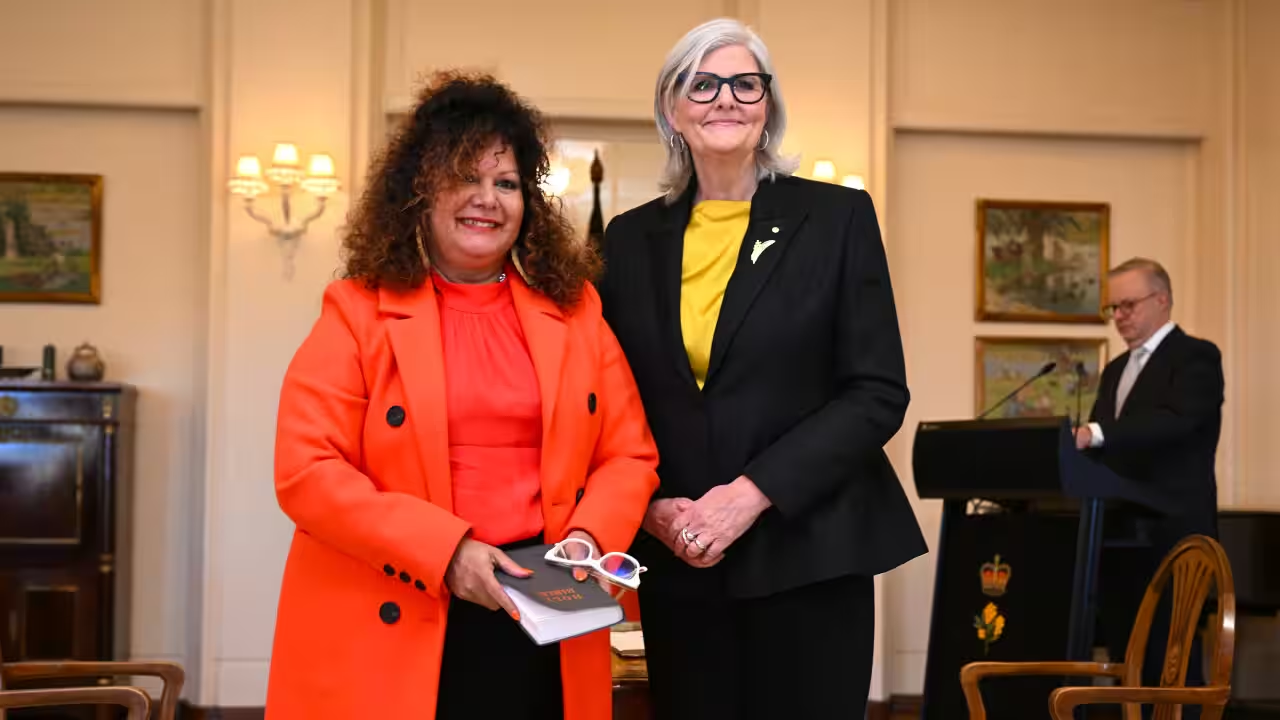
18 July 2024

The NACCHO Sector News is a platform we use to showcase the important work being done in Aboriginal and Torres Strait Islander health, focusing on the work of NACCHO, NACCHO members and NACCHO affiliates.

We also share a curated selection of news stories that are of likely interest to the Aboriginal and Torres Strait Islander health sector, broadly.

New renal dialysis units announced for remote Australia

Three new renal dialysis units have been announced in remote WA and QLD which the federal government says will allow First Nations people with severe kidney disease better access to lifesaving treatment closer to their home, family, and Country. The units, to be delivered to the Wakaid Tribal Council for Badu Island in QLD, and the Pilbara Aboriginal Health Alliance for Tom Price and Ngangganawili Aboriginal Health Services for Wiluna, in WA, come as part of the federal government’s $73.2 million investment in towards better renal services for Indigenous people.

Data shows First Nations adults are twice as likely and non-Indigenous people to have chronic kidney disease, and four times as likely to die from the ailment. Assistant Minister for Indigenous Australians, Malarndirri McCarthy said on Wednesday it was “absolutely critical” the renal dialysis units were closer to the homes of remote communities in Australia.

“This is a scourge of a disease that impacts so many First Nations families right across Australia,” Senator McCarthy told ABC news radio.

“People on renal dialysis normally have to travel a long way from their home community and ultimately can never really return…as that Elder said, ‘a lot of them return to pretty much die on Country.'”

Senator McCarthy’s mother had to travel a 1000 km from her home Country of Borroloola to be looked after in Darwin when she needed kidney treatment, and the Labor senator said the travelling meant “we never were able to return her home to live on Country”.

When I travel Australia now to listen to the stories of First Nations families asking for these chairs in their remote areas, I can certainly understand fully the importance of that request,” she said.

For patients with end-stage kidney disease, dialysis is essential and lifesaving. Without it, the only treatment is a kidney transplant. The closer to home a patient is, the better support they receive, the government says, which in turn, improves their quality of life.

To read the National Indigenous Times article in full, go here.

Tommy with the new renal dialysis unit in Coober Pedy. Image source: National Indigenous Times.

New trial launched to support domestic violence victim-survivors in accessing mental health care

A trial aiming to increase access to mental healthcare for survivors of family, sexual and domestic violence (FSDV) is beginning across the country as the number of incidents continues to climb. Analysis from Australia’s National Research Organisation for Women’s Safety found for women experiencing violence, mental health problems can overlap with trauma, complex trauma and disability, making simple diagnoses and treatment difficult.

The $67.2 million Supporting Recovery Program will trial providing up to two years of case management and specialised mental health support for survivors, aiming to assist in long-term recovery. Funded in the 2022-23 budget, after years of consultation and planning the trial is now underway in South Western Sydney and Gippsland, with a further four areas to join before the year is out.

The trial has been designed in consultation with an expert reference group made up of service providers like MacKillop Family Services, peak bodies including the National Aboriginal Community Controlled Health Organisation (NACCHO), the National Women’s Safety Alliance and government departments.

To read the full ABC News article, go here.

If this article brought up anything for you or someone you love, please reach out to, call or visit the online resources listed below for support. The four organisations in blue offer immediate help, 24 hours a day, 7 days a week.

Family and domestic violence support:

Analysis from Australia’s National Research Organisation for Women’s Safety found for women experiencing violence, mental health problems can overlap with trauma, complex trauma and disability, making simple diagnoses and treatment difficult.(eyepark / iStock / Getty Images).

Culture Care Connect mental health first aid training in Warakurna

The Aboriginal Health Council of Western Australia (AHCWA) writes: Derise Jones and Wayne Coles delivered Aboriginal Mental Health First Aid Training in Warakurna last week. Warakurna is a remote Aboriginal community in WA, situated near the NT border. It is part of the Ngaanyatjarra lands, an area governed by the Ngaanyatjarra Council, which represents the interests of the Aboriginal people living in these communities. The community is rich in cultural traditions, languages, and practices. The Ngaanyatjarra people maintain a strong connection to their land, central to their identity and way of life. Traditional ceremonies, storytelling, and art are important aspects of their cultural heritage.

The communities of Warburton and Wingellina (surrounding Community) face numerous challenges, particularly in terms of housing, substance abuse, mental health, and high staff turnover. Despite these obstacles, significant efforts are being made to improve the situation through various support groups, Culturally appropriate professional services, and community engagement.

Several service providers from Warakurna, Wingalina, and Warburton participated. Four traditional owners were among the service providers. 14 participants commenced the training, and 9 completed it and can now become eligible to be Accredited Mental Health First Aiders.

Participants stated that doing this workshop is a bonus as they have been able to meet other service providers working on the lands, this has encouraged networking in the future, also there are participants in the group who have only been on the lands for the last month.

This training was delivered through the Culture Care Connect program AHCWA and Bega Garnbirringu Health Service.

For more information on the Culture Care Connect program, go here.

Image source: Aboriginal Health Council of Western Australia (AHCWA).

Meet the Tiwi man using the power of bush medicine to revive his community

Walking through the vast bushland of Wurankuwu on Bathurst Island – one of the Tiwi Islands just north of Darwin – Ron Poantumilui is proud to call this Country home. For generations, his people, the Wurankuwu clan, have harvested their Country for food and traditional bush medicine.

One of those is a species is the Corymbia Nesophila, a bloodwood tree endemic to northern Australia. Its thick, blood-red sap, crystalises like a ruby once dry and is known for its healing properties. Wurankuwu Elders say it can be processed into a paste to treat skin conditions.

“When someone has the scabies, when you put the cream on the scabies it will clean it after two days and then it will go away,” Mr Poantumiliui said.

It’s one of more than a dozen known medicinal plants found on the Tiwi Islands islands. Knowledge of how they’re used has been passed down for generations, with Tiwi Elders documenting it in a book.

“All those knowledge is part of our Tiwi foundation, it was given to us by our ancestors,” Tiwi Elder Molly Munkara told NITV.

With job creation and economic development in mind, elders on the Tiwi Islands partnered with Menzies School of Health Research and industry giant Integria Healthcare to explore the commercial potential for some of those species.

Botanist Dr Greg Leach has been instrumental in work to develop medicinal plants in the north. The Honorary Fellow at Menzies School of Health Research started documenting plant species from Alice Springs to the Top End 30 years ago. Working with Aboriginal communities, he documented more than a hundred medicinal plants as part of that collection.

“A lot of people challenge this sort of work about the Indigenous knowledge, but those books and other publications have effectively put that knowledge in the public domain,” Dr Leach said.

To read the NITV article in full, go here.

Charles Michael Tipungwuti, Paul Gerard Pilakui and Ron Poantimilui harvest plant samples on Bathurst Islands Source: NITV / Laetitia Lemke.

Workforce wellbeing guide for ACCHOs in the Kimberley

The Workforce wellbeing guide: a self-reflection and self-care resource for Aboriginal Community Controlled Health Services in the Kimberley focuses on the role of self-reflection and self-care in safeguarding and promoting worker wellbeing.

It includes practical activities and resources that can be used in a range of settings, by individual workers, supervisors or managers. The information and activities provided in the guide are centered around holistic understanding of wellbeing, in order to be broadly applicable to both Aboriginal and Torres Strait Isander and non-Indigenous workers.

The guide was developed by the Wellbeing Informed Care – Kimberley project team, in collaboration with Kimberley Aboriginal Medical Services, and the University of Western Australia’s Rural Clinical School and the School of Indigenous Studies.

To view the Workforce wellbeing guide: a self-reflection and self-care resource for Aboriginal Community Controlled Health Services in the Kimberley resource, go here.

Workforce wellbeing guide: a self-reflection and self-care resource for Aboriginal Community Controlled Health Services in the Kimberley. Image source: Kimberley Aboriginal Medical Services.

Working Together…ten years on

The Working Together…ten years on webinar will celebrate the 10-year anniversary of the groundbreaking book Working Together: Aboriginal and Torres Strait Islander Mental Health and Wellbeing Principles and Practice (second edition) with Professors Pat Dudgeon, Helen Milroy, and Roz Walker.

On Wednesday 31 July, the three co-editors will be yarning about the journey to publishing, the authors they worked with and the issues they explored in the text, and how the landscape for Aboriginal and Torres Strait Islander mental health and wellbeing has changed in the last ten years.

Hear from these leaders in social and emotional wellbeing about this groundbreaking text -the go-to book on Aboriginal and Torres Strait Islander mental health and social and emotional wellbeing in Australia.

For more information and to register, go here.

Image source: Centre of Best Practice.

Sector Jobs – you can see sector job listings on the NACCHO website here.

Advertising Jobs – to advertise a job vacancy click here to go to the NACCHO website current job listings webpage. Scroll down to the bottom of the page to find a Post A Job form. You can complete this form with your job vacancy details – it will then be approved for posting and go live on the NACCHO website.