14 August 2024

The NACCHO Sector News is a platform we use to showcase the important work being done in Aboriginal and Torres Strait Islander health, focusing on the work of NACCHO, NACCHO members and NACCHO affiliates.

We also share a curated selection of news stories that are of likely interest to the Aboriginal and Torres Strait Islander health sector, broadly.

What’s in store at the ACN’s national forum

The Australian College of Nursing’s National Nursing Forum is set to take place from 14-16 August in Cairns. The forum will feature around 700 nurses from across Australia and will include presentations from various speakers, including nursing advocate Professor Dame Anne Marie Rafferty. The theme for the forum is “Regenerate, Reinvigorate, Reclaim: Sustainable Solutions for our Future,” and it will cover a wide range of topics such as palliative care, Indigenous health, mental health, aged care, and more. Government representatives, including federal health minister Mark Butler, will address the forum through video messages.

More information about the NNF 2024 is available online.

To read the article in full, go here.

Internationally acclaimed nursing advocate, Professor Dame Anne Marie Rafferty leads a stellar line up of speakers.

Enhanced oral health services for Wagga

Wagga Wagga will receive $45,000 worth of improved dental services for First Nations people as part of a funding boost to the region. The Riverina Aboriginal Medical and Dental Corporation (RIVMED) will purchase an intraoral camera and additional dental equipment.

This funding is part of a $1,705,000 allocation to 15 Aboriginal Community Controlled Health Organisations (ACCHOs) to support equipment purchase and delivery of additional dental services. The aim is to address disparities experienced in vulnerable populations and positively impact the overall population’s health and well-being.

Further information on public dental services can be found online.

To read the article in full, go here.

Riverina Medical and Dental Aboriginal Corporation provides culturally safe, holistic health and wellbeing services to the Aboriginal and Torres Strait Islander people of Wagga Wagga and surrounding areas. Photo: Riverina Medical and Dental Aboriginal Corporation.

Blue Plaque honours legacy of Aboriginal healthcare pioneer Emma Jane Callaghan

The legacy of Aboriginal healthcare pioneer Emma Jane Callaghan has been honoured through the unveiling of a blue plaque in New South Wales. Ms. Callaghan, who died in 1979 at the age of 95, was an Aboriginal nurse, midwife, missionary, and advocate who dedicated her life to breaking barriers in healthcare and advocating for the rights of Aboriginal people.

She was known for opening her home as an impromptu hospital and caring for everyone in need. Her granddaughter, Kodie Mason, said she nominated her grandmother for a blue plaque because her story deserves to be told and remembered.

The New South Wales government said the blue plaque ensures her story is shared with generations to come and serves as a reminder of her significant contributions to improving healthcare for Aboriginal communities and advocating for their rights.

To read the article in full, go here.

Member for Coogee Dr Marjorie O’Neill, LPLALC chief executive Chris Ingrey, NSW Minister for Heritage Penny Sharpe and great, great, great granddaughter of Emma Jane Callaghan, Kodie Mason at Sunday’s plaque unveiling.

Women’s health funding for VIC

The State Government of Victoria is investing $18 million in women’s health organisations to provide initiatives focused on sexual and reproductive health, chronic illness, and reducing the impact of family violence on women and the health system.

The work will be delivered by women, for women, including those from multicultural backgrounds, Aboriginal and Torres Strait Islander women, and women with disabilities. This investment aims to improve health outcomes for women across the state.

This funding is part of the government’s broader investment into women’s health to close the gender pain gap and deliver equity in healthcare.

To read the article in full, go here.

Victoria Parliament Building

Indigenous yoga training program part of Curtin mental health campaign

Curtin University has been awarded $1.1 million from Healthway to continue its Act Belong Commit mental health promotion campaign for the next two years, with an Australian-first Indigenous youth yoga training program among the initiatives.

The latest National Study of Mental Health and Wellbeing found that a significant percentage of Australians had experienced a mental health disorder at some point in their lives. Curtin has been running Act Belong Commit since 2008 and has partnered with over 400 organisations to encourage Western Australians to take action to improve their mental well-being.

Additionally, they have taken stewardship of Deadly Minds, Australia’s first Indigenous youth yoga teacher training program, which aims to improve mental, cultural, physical, and spiritual health.

To read the article in full, go here.

Image credit: Act Belong Commit | Mentally Healthy WA

Batemans Bay to host public hearings on Healthcare Funding

The Special Commission of Inquiry into Healthcare Funding will hold public hearings in Batemans Bay on Thursday, August 15th, and Friday, August 16th, 2024.

The hearings aim to gather evidence on various healthcare issues, including Aboriginal and Torres Strait Islander health services, workforce development and support programs, funding challenges, healthcare workforce, education and training, specialist healthcare, collaboration between providers, innovation, and issues relating to local healthcare facilities. The public can observe the proceedings in person or via live streaming.

For more information, including the Terms of Reference, please visit the Special Commission website.

To read the article in full, go here.

Eurobodalla Regional Hospital

Sector Jobs – you can see sector job listings on the NACCHO website here.

Advertising Jobs – to advertise a job vacancy click here to go to the NACCHO website current job listings webpage. Scroll down to the bottom of the page to find a Post A Job form. You can complete this form with your job vacancy details – it will then be approved for posting and go live on the NACCHO website.

ACCHO Governance Workshops

Free, specialised governance workshops for ACCHOs will be delivered in multiple locations across the country during 2024 and 2025. 

Registrations are now open for:

  • Port Macquarie: 20-21 August
  • Dubbo: 22-23 August.

The program is delivered by legal experts and covers:  

  • Delegation of powers 
  • Finance for Boards
  • Governance documents
  • Managing conflicts of interest 
  • Managing risk  
  • Principles of good governance  
  • Structure and role of boards and sub-committees 

To register, go here.

For more information, please contact NACCHO using this email link.

1 August 2024

The NACCHO Sector News is a platform we use to showcase the important work being done in Aboriginal and Torres Strait Islander health, focusing on the work of NACCHO, NACCHO members and NACCHO affiliates.

We also share a curated selection of news stories that are of likely interest to the Aboriginal and Torres Strait Islander health sector, broadly.

Mixed progress in latest Closing the Gap Report: Achievements and setbacks

The latest Closing the Gap Annual Data Compilation Report, released Wednesday night, revealed both positive strides and ongoing challenges in addressing disparities for Aboriginal and Torres Strait Islander communities. The report highlights that five out of 19 targets are currently “on track,” showcasing notable achievements in areas such as healthy birth weights, preschool enrolments, and overall employment.

These successes reflect the tireless efforts of community leaders and organisations working to create positive health outcomes. Healthy birth weights signify better maternal and child health services, and increased preschool enrolments lay a solid foundation for lifelong learning. Improvements in overall employment demonstrate progress in creating job opportunities and economic stability for Aboriginal and Torres Strait Islander people.

However, the report also highlights areas where the gap is widening, such as the increasing number of Aboriginal and Torres Strait Islander children in out-of-home care, more children not being developmentally on track, higher rates of incarceration among adults, and rising suicide rates. These indicators highlight the urgent need for targeted interventions and systemic changes.

There was no available data on five other targets, including access to clean drinking water, sewerage treatment, electricity, and the proportion of women and children experiencing family violence. This data gap stresses the necessity for comprehensive and transparent reporting to ensure all aspects of community well-being are addressed.

Malarndirri McCarthy, Minister for Indigenous Australians, described the latest figures as “deeply troubling” and is advocating for a “bipartisan approach” to address these issues comprehensively.

For further details, readers are encouraged to view the full Closing the Gap Annual Data Compilation Report.

If this article brought up any concerns for you or someone you love, please reach out to the resources listed below for support. Immediate help is available 24 hours a day, 7 days a week.

  • 13 Yarn (13 92 76)
  • Beyond Blue (1300 224 636)
  • Brother-to-brother (1800 435 799)
  • Kids Helpline (1800 551 800 + webchat)
  • Lifeline (13 11 14 + online chat)
  • MensLine Australia (1300 789 978)
  • NACCHO Connection, Strength and Resilience Portal
  • QLife – anonymous LGBTIQ support (1800 184 527 + webchat)
  • Suicide Call Back Service (1300 659 467)

This report reflects the ongoing commitment of community leaders, health professionals, and advocates who strive daily to close the gap and improve the health and well-being of Aboriginal and Torres Strait Islander communities. While challenges remain, the dedication and resilience of these communities continue to drive progress and hope for a better future.

Closing the Gap Annual Data Compilation Report.

First Nations women are at greater risk of stillbirth. Here’s why – and what we can do about it

Australian national data show First Nations women face almost twice the risk of stillbirth or “sorry business babies” compared to non-First Nations women. To address this inequity, Australia’s national stillbirth action plan focuses on ensuring culturally safe stillbirth prevention and care for First Nations women.

Colonisation saw First Nations women stripped of their traditional pregnancy and birthing practices, including use of medicinal plants, techniques for active labour and pain control, and songs for labour. Historical violence and exclusion have led to an intergenerational distrust of colonial systems, services and spaces among First Nations people. First Nations people have been expected to adapt to a Western health service, rather than these services adapting to First Nations people’s ways of knowing, being and doing. Recognition of the importance of Birthing on Country has led to services like Waminda and Birthing In Our Community.

Pregnancy information resources have historically been designed for a colonial audience. These resources do not speak to First Nations women and have rarely been developed by and with First Nations people. More contemporary initiatives have better engaged First Nations people in, or have them lead, resource development. The Centre of Research Excellence in Stillbirth’s Indigenous Advisory Group recently led the development of the Stronger Bubba Born pregnancy information website and resources for First Nations women. The information is the same as that given to non-First Nations women, as part of the Safer Baby Bundle, but it has been culturally adapted for its target audience.

While some First Nations women face overt racism in maternity services, many more are discriminated against through implicit biases. This is where care providers’ unconsciously held beliefs about First Nations people influence their judgements of and interactions with pregnant First Nations women. To eliminate racial disparities in stillbirth rates in Australia, our health system and broader society needs to recognise the effects of colonisation and the structural forces that continue to influence First Nations people’s health.

To read The Conversation article in full, go here.

Stronger Bubba Born.

Funding boost for key Townsville youth intervention service

A boost of $750,000 from The Miles Government will allow Townsville’s The Lighthouse: Youth After Hours Diversion Service to extend the hours that services are available to support young people at risk. The service is operated by the Townsville Aboriginal and Islander Health Services (TAIHS) with the increased funding through the Miles Government’s Townsville Engagement and Integrated Diversion initiative targeting youth offending.

New staff employed by The Lighthouse with the additional $750,000 over two years will complement its existing workforce to provide intensive outreach and engagement activities during peak hours.

The Lighthouse supports 10- to 17-year-olds, who may:

  • not have adequate adult supervision.
  • not feel safe at home and need a place to go.
  • be in trouble.
  • need someone to talk to.

Its new youth workers will connect with young people who are gathering in key locations, such as Townsville Shopping Centre, and transport them to The Lighthouse where they are able to access meals, diversionary activities, health and wellbeing services and a bed of rest if they cannot safely return home.

The after-hours expansion builds on The Lighthouse programs already delivered by TAIHS, which was selected because of its experience, staff capacity and ability to deliver the expanded service.

To learn more, go here.

New research to examine male violence

Associate Professor Jocelyn Jones has been awarded a grant from Australia’s National Research Organisation for Women’s Safety for a groundbreaking project titled ‘Learning from the stories of young Aboriginal men and adolescents convicted of domestic, family and sexual violence’. Associate Professor Jones said that the research is crucial for “breaking the cycle of violence by providing young Aboriginal men and adolescents with the opportunity to heal from past violence and address their own harmful behaviours.”

“The findings will inform health and other interventions in WA, with wider implications for national and other state and territory jurisdictions,” she said.

The study will employ a mixed-methods approach, including a phenomenological research design with narrative interviews to explore participants’ experiences and data collection using nationally developed standardised measures of social and emotional wellbeing, health and violent behaviours.

Participants will include young Aboriginal men and adolescents in juvenile detention or recently released, as well as stakeholders from Aboriginal Community Controlled Health Organisations (ACCHOs) and relevant government services.

To read the National Indigenous Times article in full, go here.

Family and domestic violence support:

Associate Professor Jocelyn Jones. Image: UNSW Kirby Institute.

Ending the abuse of older people begins with a yarn

Elders are the backbone of our families and communities, and they deserve dignity and respect. But sometimes, abuse can happen to our older people. Abuse can be difficult to spot because it’s often carried out by someone a person knows and trusts, such as a partner, family member, or carer. This is never okay, and as a community, we need to support older people who might be experiencing abuse.

To help support the hard work already being done in community, a range of new resources have been developed for use in your workplace, clinic or local community centre. These encourage and support mob to identify the different types of abuse and yarn about the problem.

To download the resources, go here.

This campaign aims to help older people, together with their families, friends and community, feel more comfortable yarning about abuse and increase awareness that support is available.

Sector Jobs – you can see sector job listings on the NACCHO website here.

Advertising Jobs – to advertise a job vacancy click here to go to the NACCHO website current job listings webpage. Scroll down to the bottom of the page to find a Post A Job form. You can complete this form with your job vacancy details – it will then be approved for posting and go live on the NACCHO website.

World Breastfeeding Week – 1–7 August 2024

World Breastfeeding Week aims to promote the numerous health benefits of breastfeeding, provide support to breastfeeding mothers, and educate mob about the vital role breastfeeding plays in nurturing healthier futures.

A small study in rural NSW found that Aboriginal and Torres Strait Islander women value trust and knowledge passed on to them from extended family members and women within their community. Another study in an urban area in QLD found that individual circumstances strongly influence infant feeding strategies and that community strengths are underused in supporting breastfeeding mothers.

There is evidence of the effectiveness of culturally appropriate Indigenous health programs in Australia delivered within holistic primary health care services controlled by Indigenous organisations. Multiple opportunities to provide mothers and communities with consistent breastfeeding promotion, education and support also occur when maternity care and maternal and child health services:

  • follow a model of continuity of woman-centred care from pregnancy through to preschool age
  • are delivered by Indigenous community controlled organisations and Indigenous health professionals and other staff, including Indigenous health and childcare workers.

To learn more, go here.

Image source: AH&MRC.

ACCHO Governance Workshops

Free, specialised governance workshops for ACCHOs will be delivered in multiple locations across the country during 2024 and 2025. 

Registrations are now open for:

  • Port Macquarie: 20-21 August
  • Dubbo: 22-23 August.

The program is delivered by legal experts and covers:  

  • Delegation of powers 
  • Finance for Boards
  • Governance documents
  • Managing conflicts of interest 
  • Managing risk  
  • Principles of good governance  
  • Structure and role of boards and sub-committees 

To register, go here.

For more information, please contact NACCHO using this email link.

31 July 2024

The NACCHO Sector News is a platform we use to showcase the important work being done in Aboriginal and Torres Strait Islander health, focusing on the work of NACCHO, NACCHO members and NACCHO affiliates.

We also share a curated selection of news stories that are of likely interest to the Aboriginal and Torres Strait Islander health sector, broadly.

Help shape a brighter future for mums and bubs: Maternal and Child Health regional workshops

NACCHO is inviting you to attend Maternal and Child Health regional workshops as part of the consultation to inform the development of an Aboriginal and Torres Strait Islander Maternal and Child Health Plan (the Plan) 2025-2035. This Plan will set out an approach to Close the Gap for mums and bubs, and guide governments’ investment in Aboriginal and Torres Strait Islander MCH services over the short, medium, and long-term.

The Plan has been receiving extensive consultation with Members, including through the survey, an Aboriginal and Torres Strait Islander MCH Expert Advisory Group and a series of face-to-face opportunities for discussion.

Noting the excellent services delivered by members and common experiences faced, we are inviting you to engage in the regional workshop to inform NACCHO and Government on the MCH needs of ACCHOs Australia-wide.

With your help, we hope to highlight and scale up your successes and sustainably address gaps and barriers to improve maternal and child health services. Please contact the NACCHO Maternal and Child Health team if you require assistance or have any questions about the regional workshops or the consultation process.

Workshop Locations, Venues & Dates:

  • Perth: 7 August – Mercure Perth
  • Darwin: 14 August – Double Tree by Hilton Esplanade
  • Sydney: 16 August – Novotel Sydney Airport
  • Brisbane: 20 August – Waters Edge Events – Hamilton

Registrations are still open, to RSVP go here.

For any questions, reach out to the friendly NACCHO Maternal and Child Health team:


More than 1,000 First Nations Queenslanders underwent surgery to restore sight

First Nations people are more likely to suffer serious sight deterioration at an earlier age than non-Indigenous Australians. However, in many cases this fate can be reversed: a cataract surgery can restore sigh in even near-blind patients. Thanks to a partnership between Urban Indigenous Health (IUIH) and Mater, over 1,000 patients got that care.

NITV Radio spoke to one of the surgeons, Dr. Jon Farrah about cataract problems, surgeries that change lives and what is needed to help even more First Nations People, who are suffering from this condition.

To listen, go here.

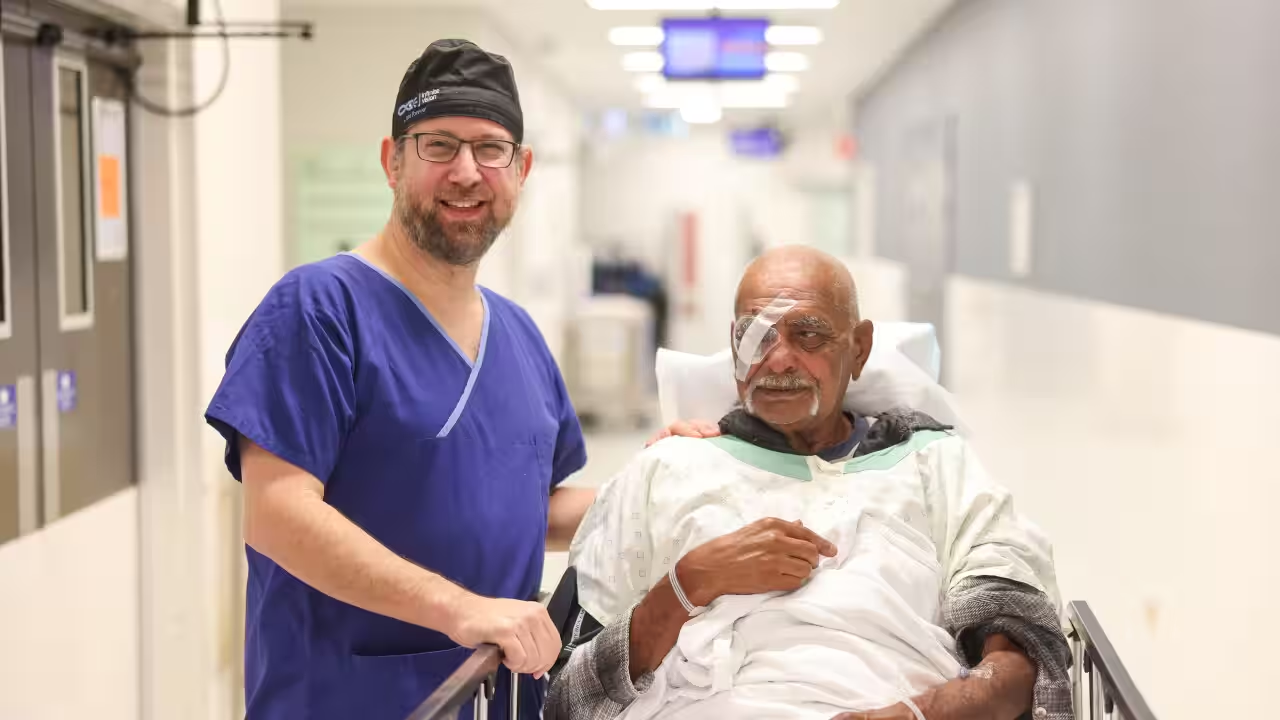
Dr Jon Farrah with patient Ian Delaney. Source: Supplied / Peter Wallis.

First Nations Cancer Scholarship: A new generation of leaders in cancer

Cancer Australia, in partnership with Aurora Education Foundation, is proud to announce one of Australia’s largest scholarships to support Aboriginal and Torres Strait Islander people to complete postgraduate study or research in cancer-related fields.

The scholarship will see Aboriginal and Torres Strait Islander scholars receive up to $120,000 per year over three years, as well as academic, wellbeing and community support. Up to four scholarships will be awarded each year from 2024 – 2027.

The First Nations Cancer Scholarship is a $5.9 million investment funded by the Australian Government through Cancer Australia to help deliver better cancer outcomes for Aboriginal and Torres Strait Islander communities.

The scholarship aims to grow the network of Aboriginal and Torres Strait Islander leaders who contribute to cancer control, including through research.

Applications are open now until Friday 30 August 2024. 

For more information, go here.

Image source: Aurora Education Foundation.

Postpartum contraception video created with community, for community

Postpartum contraception video resources co-developed by Aboriginal health workers and the NSW Government Syndey Local Health District explain why it is important to leave some time between each pregnancy and how you can use birth control (contraception) after having your baby. The resources show different types of contraception and where to find support and information to help you make the decisions that are right for you.

To view the video resources, go here.

Screenshot from First Nations postpartum contraception video.

Lowitja Institute Major Research Grants Program applications closing soon

Lowitja Institute provides Major Research Grants to Aboriginal and Torres Strait Islander community controlled organisations. The grant period is two years and the maximum amount available per project is $200,000. This grant opportunity specifically supports innovative and responsive community research led by Aboriginal and Torres Strait Islander community controlled organisations to improve the health and wellbeing of our mobs. The Major Research Grants provide Aboriginal and Torres Strait Islander communities and organisations to transform their ideas into reality.

Aboriginal-led research will influence policy and practice within the National Health and Medical Research Council (NHMRC), Australian Research Council (ARC) and other relevant funding organisations to ensure knowledge is rapidly translated into measurable improved outcomes for Aboriginal and Torres Strait Islander people Australia-wide.

Applications are open until this Friday 2 August 2024.

For more information, go here.

Image source: Lowitja Institute.

Students from the Deadly Start program graduate in Townsville ready to start healthcare careers

Prepared with new skills and ready to enter the healthcare industry, 10 Aboriginal and Torres Strait Islander students have gained hands-on experience working in a hospital, with some of the students inspired by their families to work in health. Graduating with a Certificate III in Health Support Assistance, Year 12 students from the inaugural Deadly Start Program in Townsville were congratulated by the community and proud family members on Tuesday morning.

Graduating student Zali Tambo has followed in her mother’s footsteps and is looking to start her career in the healthcare industry.

“It’s been really great to be part of this group,” she said.

“We’ve been in the hospital in all the different areas and also at Kirwan (Health Campus).”

With a goal of one day working in aged care, Zali said she enjoyed the practical training.

The ceremony marked the completion of 12 months of training and theory, doing placements with the Townsville Hospital and Health Service in collaboration with Connect ‘N’ Grow and Seed Foundation Australia. While also doing Year 11 and 12 studies, students did work placement one day a week and took part in study sessions with Connect ‘N’ Grow twice a week.

Seed Foundation Australia administration officer De’arne French said the program highlighted the importance of having First Nations health workers in the community.

“Thirty per cent of people that attend the hospital are Aborigional and Torres Strait Islander, and we know that they feel more comfortable when being looked after by Aborigional and Torres Strait Islanders.”

To read the NT News article in full, go here.

First Nations students, with Connect ‘N’ Grow trainer Rob Wilcock and Seed Foundation pathways support officer Sharon Phineasa, graduated from the Deadly Start Program at a ceremony at Townsville PCYC. Picture: Nikita McGuire.

Sector Jobs – you can see sector job listings on the NACCHO website here.

Advertising Jobs – to advertise a job vacancy click here to go to the NACCHO website current job listings webpage. Scroll down to the bottom of the page to find a Post A Job form. You can complete this form with your job vacancy details – it will then be approved for posting and go live on the NACCHO website.


ACCHO Governance Workshops

Free, specialised governance workshops for ACCHOs will be delivered in multiple locations across the country during 2024 and 2025. 

Registrations are now open for:

  • Port Macquarie: 20-21 August
  • Dubbo: 22-23 August.

The program is delivered by legal experts and covers:  

  • Delegation of powers 
  • Finance for Boards
  • Governance documents
  • Managing conflicts of interest 
  • Managing risk  
  • Principles of good governance  
  • Structure and role of boards and sub-committees 

To register, go here.

For more information, please contact NACCHO using this email link.

23 July 2024

The NACCHO Sector News is a platform we use to showcase the important work being done in Aboriginal and Torres Strait Islander health, focusing on the work of NACCHO, NACCHO members and NACCHO affiliates.

We also share a curated selection of news stories that are of likely interest to the Aboriginal and Torres Strait Islander health sector, broadly.

Six remote urgent care clinics for the NT

Six Medicare Urgent Care Clinics (Medicare UCCs) will be established in remote regions of the NT providing free, culturally appropriate urgent care services to local communities. Existing remote urgent care clinics in Alyangula (Groote Eylandt), Wurrumiyanga (Tiwi Islands), and Maningrida (Top End Region) will transition to become part of the Medicare Urgent Care Clinic program. In addition, a further three remote clinics will also be established in Galiwinku (Elcho Island), Lajamanu (Big Rivers Region), and Ali-Curung (Barkly Region).

These locations were chosen in partnership with NT Health and Aboriginal Medical Services Alliance Northern Territory to better meet the needs of First Nations communities while also creating new workforce models and increasing the capacity of primary care services in remote areas.

Funding has been provided to expand the remote urgent care clinics through increased workforce support, additional infrastructure and equipment to support urgent care delivery. Current opening hours will also be extended.

These clinics have been adapted to operate differently to other Medicare UCCs across the country. This is because of the remote location of the clinics and the need to adapt to local circumstances, including workforce availability and limited medical services in the area.

In 2023–23, about 52 per cent of presentations to hospitals in the NT were for non-urgent or semi-urgent care. Establishing these new remote Medicare UCCs will help reduce the number of aeromedical retrievals, ease the burden of urgent conditions on existing primary care centres and provide care closer to home.

There are already two Medicare UCCs in the Northern Territory located in Palmerston and Alice Springs. There have been more than 582,000 visits across Australia since the first Medicare UCCs opened in June 2023, with more than 19,000 of these visits happening in the two NT clinics.

The six remote Medicare UCCs in the NT are part of the extra 29 clinics announced and funded through the 2024-25 Budget as part of a $227 million expansion of the Medicare UCC Program.

To read the media release in full, go here.

Upcoming Webinars – Get the facts: supporting self-collect cervical screening in your Community

NACCHO is hosting two CPD accredited webinars for healthcare workers on the cervical screening self-collection option. The webinars will focus on how to support Aboriginal and/or Torres Strait Islander women and people with a cervix in their cervical screening.

Did you know, rates of cervical cancer for Aboriginal and Torres Strait Islander women are three times the non-Indigenous population? The option to self-collect a Cervical Screening Test is one of our most effective tools in encouraging patients to undergo regular cervical screening. Offering under or never-screened patients the option to collect their own Cervical Screening Test provides greater choice and empowerment in screening and discussing screening in a culturally sensitive manner can remove many barriers to participation.

NACCHO will deliver one-hour webinars for staff from ACCHOs and AMSs. Other healthcare workers who work with Aboriginal and/or Torres Strait Islander patients can also attend. Come along to learn more about how we can increase cervical screening awareness and participation amongst Aboriginal and/or Torres Strait Islander women and people with a cervix.

RACGP and/or ACRRM CPD points are available for attending this training.

Hear from:

  • ACCHO sector staff on how self-collect is being implemented in their Community
  • Professor Marion Saville, Executive Director at the Australian Centre for the Prevention of Cervical Cancer

Dates:

A link to the webinar recording will be sent following the training date to those who register.

The webinars will be delivered in partnership with the Australian Government Department of Health and Aged Care and the Australian Centre for the Prevention of Cervical Cancer.

For more information, go here.

Exploring the future of healing programs that address family violence

A new report led by Distinguished Professor Bronwyn Carlson, from Macquarie University’s Department of Critical Indigenous Studies, explores the future of healing programs that address family violence. The report, commissioned by Australia’s National Research Organisation for Women’s Safety (ANROWS), also aimed to specifically investigate the availability of such programs for Aboriginal and/or Torres Strait Islander LGBTQIASB+ people and those with disability.

Healing programs can take many forms, from cultural and gender specific camps, dedicated programs that focus on trauma within health and wellbeing services, and outreach services that deliver face-to-face in home or community support.

Family violence serves as both a cause and effect of intergenerational trauma experienced by Aboriginal and Torres Strait Islander peoples. This trauma stems from colonial violence, including settler policies of extermination, segregation, and cultural and racial elimination, and is perpetuated by continuing policies and practices that target Aboriginal and Torres Strait Islander peoples such as high levels of incarceration and removal of children.

“People who have experienced family violence need to be front and centre in conceptualising, developing, and evaluating healing programs that are preventative and that target people who have perpetrated family violence.”

Healing programs are not distinct services and activities. They are integral components in the fostering of health and wellbeing of Aboriginal and Torres Strait Islander communities. Healing programs need to target those who have perpetrated family violence as well as those who have experienced it. Responses should focus on rehabilitation and healing, rather than criminalisation and removal of the offender. They should incorporate the community as a whole.

Professor Bronwyn Carlson says programs that respond to family violence must be conceptualised and led by Aboriginal and Torres Strait Islander peoples at a local level. As respondents said, “Mob needs to be the ones designing programs for mob.”

To read the article in full, go here.

If this article brought up anything for you or someone you love, please reach out to, call or visit the online resources listed below for support. The four organisations in blue offer immediate help, 24 hours a day, 7 days a week.

Family and domestic violence support:

Distinguished Professor Bronwyn Carlson. Image source: Macquarie University, The Lighthouse.

New advance care yarning resources for First Nations Queenslanders

Your care, your choice, your belonging. This is the catch cry for the new advance care yarning resources made with and for First Nations Queenslanders. Advance care yarning is the process of letting others know about what you want for your future and ongoing health care. The resources feature a suite of three short education videos and a brochure that support the important processes of planning for future health care.

The videos share information about the importance of advance care yarning, the relevant forms used in Queensland and give an example of a family advance care yarning conversation. The videos feature local First Nations Elders, First Nations health professionals and a family story shared by Uncle Stan Barry and his daughter Bonnie.

The resources were produced by the PallConsult First Nations Palliative Care Project, with funding from the First Nations Health Office, Queensland Health.

To access the resources, go here.

NAATSIHWP Scope of Practice Consultations for VIC

NAATSIHWP is conducting a national consultation to understand more about your scope of practice and the way it aligns to your qualification. This project will result in greater national consistency for the Aboriginal and/or Torres Strait Islander Health Worker and Health Practitioner professions. The consultations will assist in the delivery of recommendations on national minimum scopes of practice and the harmonisation of regulations governing the workforce across jurisdictions.

Upcoming consultations for VIC:

  • Melbourne: 5 August
  • Shepparton: 6 August
  • Kalgoorlie: 8 August
  • Online: 13 August

Project background:

The need for a national minimum scope of practice supported by harmonised legislation has been a goal of the workforce for decades. The need was first acknowledged in government policy over ten years ago in the Health Workforce Australia Final Report. It was then made a commitment by the COAG Health Council in August 2018. Following this, the National Aboriginal and Torres Strait Islander Health Workforce Strategic Framework and Implementation Plan 2021–2031 (National Workforce Plan) was developed by Aboriginal and/or Torres Strait Islander people in partnership with the federal government.

For more information, go here. To see upcoming consultations in other states/territories, go here.

Puntukurnu healthy hygiene behaviours music video

This animated music video aims to promote healthy hygiene behaviours including washing faces, cleaning ears and brushing teeth for good health. The video was produced by Puntukurnu Aboriginal Medical Service (PAMS) as part of its environmental health program that draws on the No Germs on Me health promotion campaign. It was developed for children and their families living in the remote Jigalong, Parnngurr, Kunawarritji and Punmu communities in the Pilbara region of WA, and features lyrics in both English and Martu languages.

To watch the healthy hygiene behaviours music video, go here.

Image source: Australian Indigenous HealthInfoNet.

Sector Jobs – you can see sector job listings on the NACCHO website here.

Advertising Jobs – to advertise a job vacancy click here to go to the NACCHO website current job listings webpage. Scroll down to the bottom of the page to find a Post A Job form. You can complete this form with your job vacancy details – it will then be approved for posting and go live on the NACCHO website.

ACCHO Governance Workshops

Free, specialised governance workshops for ACCHOs will be delivered in multiple locations across the country during 2024 and 2025. 

Registrations are now open for:

  • Port Macquarie: 20-21 August
  • Dubbo: 22-23 August.

The program is delivered by legal experts and covers:  

  • Delegation of powers 
  • Finance for Boards
  • Governance documents
  • Managing conflicts of interest 
  • Managing risk  
  • Principles of good governance  
  • Structure and role of boards and sub-committees 

To register, go here.

For more information, please contact NACCHO using this email link.

19 July 2024

The NACCHO Sector News is a platform we use to showcase the important work being done in Aboriginal and Torres Strait Islander health, focusing on the work of NACCHO, NACCHO members and NACCHO affiliates.

We also share a curated selection of news stories that are of likely interest to the Aboriginal and Torres Strait Islander health sector, broadly.

What is FASD, and why do so many children with it end up in Australia’s justice system?

Vulnerable young people and communities concerned about crime would both benefit from better screening and support for foetal alcohol spectrum disorder (FASD), experts say.

FASD is caused by exposure to alcohol in the womb. There is no known safe level of alcohol that can be consumed during pregnancy. Because alcohol crosses the placenta, maternal and foetal blood alcohol concentrations can rapidly reach the same level but the foetus’s organs are not developed enough to break the alcohol down and remove it. This disrupts brain and other organ development.

Most crucial to preventing children with FASD ending up embedded in the justice system, is early screening, and alcohol and drinking education.

Dr Robyn Williams, a senior research fellow and FASD expert at Curtin University medical school, says she has many stories of youth receiving early treatment for FASD who never encounter the justice system, and who find employment and independence as adults.

The Noongar woman from WA runs training in Indigenous communities about FASD, and has researched how families caring for Aboriginal children with FASD understand the condition and access care.

Common misconceptions about FASD are prevalent among GPs and child protection and youth justice workers, she says, further delaying diagnosis and care. A myth also persists that “FASD is only an Aboriginal problem”.

“This is not an Aboriginal problem and the majority of Aboriginal people don’t even drink,” she says. But about 60% of all pregnant women in Australia drink, with about half stopping once they realise they are pregnant.

Aboriginal people who do drink are more likely to drink at risky levels. This means that the prevalence of FASD among Aboriginal and Torres Strait Islander people is disproportionately higher than the non-Indigenous population, says Pat Turner, the chief executive of the National Aboriginal Community Controlled Health Organisation (NACCHO).

“This is a direct consequence of colonisation, racism and poor social health determinants,” she says. “It is essential approaches to prevent and support people living with FASD are culturally safe, trauma-aware and led by the Aboriginal and Torres Strait Islander community.”

To read The Guardian news article in full, go here.

Children with FASD have a brain injury that means their cognitive skills are well below their chronological age. They might not be able to differentiate right from wrong, which can get them in trouble with the youth justice system. Illustration: James Gulliver Hancock/The Guardian.

Help shape a brighter future for mums and bubs

NACCHO is inviting you to attend Maternal and Child Health regional workshops as part of the consultation to inform the development of an Aboriginal and Torres Strait Islander Maternal and Child Health Plan (the Plan) 2025-2035. This Plan will set out an approach to Close the Gap for mums and bubs, and guide governments’ investment in Aboriginal and Torres Strait Islander MCH services over the short, medium, and long-term.

The Plan has been receiving extensive consultation with Members, including through the survey, an Aboriginal and Torres Strait Islander MCH Expert Advisory Group and a series of face-to-face opportunities for discussion.

Noting the excellent services delivered by members and common experiences faced, we are inviting you to engage in the regional workshop to inform NACCHO and Government on the MCH needs of ACCHOs Australia-wide.

With your help, we hope to highlight and scale up your successes and sustainably address gaps and barriers to improve maternal and child health services. Please contact the NACCHO Maternal and Child Health team if you require assistance or have any questions about the regional workshops or the consultation process.

Maternal and Child Health regional workshops dates and locations:

  • Perth: 7 August
  • Darwin: 14 August
  • Sydney: 16 August
  • Brisbane: 20 August

We kindly ask that you RSVP by 1st August 2024. To RSVP, go here.

For any questions, reach out to the friendly NACCHO Maternal and Child Health team:

Ballarat and District Aboriginal Cooperative launches Aboriginal Children in Aboriginal Care program

Aboriginal and Torres Strait Islander children are 22 times more likely to be removed from their families and placed in the child protection system than non-Indigenous children in Victoria. Massive steps are underway across the state to change that statistic as Aboriginal people are given legal authority to become decision makers for Aboriginal children in out-of-home care. The Ballarat and District Aboriginal Cooperative has become the third organisation in Victoria to run the Aboriginal Children in Aboriginal Care program, following Bendigo and Melbourne.

Program manager Jess Wall said it was changing the trajectories of Aboriginal children.

“It is giving community, families and children self determination back and decision making back with Aboriginal people instead of having the department make those decisions,” she said.

Ms Wall said while her staff were required to operate within the same legislation as the Victorian child protection service, their approach was vastly different.

“Working within community, we usually know the family,” she said.

“Working together with the family is the point of difference, really hearing their voices and working alongside them.”

Njernda Aboriginal Cooperative in Echuca and Rumbalara Aboriginal Cooperative in Shepparton have been going through the authorisation process. Ballarat and District Aboriginal Cooperative director of child safety and cultural support, Jodie Kinsmore, said she had seen higher rates of family reunification.

Ms Kinsmore said they have received feedback from people saying they wouldn’t have their kids back if it wasn’t for them or the Aboriginal Children in Aboriginal Care program. She said the Aboriginal Children in Aboriginal Care program was healing of intergenerational trauma that had created distrust in child protection services.

To read the ABC News article in full, go here.

The Ballarat and District Aboriginal Cooperative has become part of the program.(Supplied: Ballarat and District Aboriginal Cooperative).

Calls for greater diabetes technology access

Diabetes Australia is calling on the government to support access to life-changing diabetes technology for Aboriginal and Torres Strait Islander people. Attending a community event hosted by Marrin Weejali Aboriginal Corporation in Sydney’s Mount Druitt area, Diabetes Australia Group CEO Justine Cain highlighted the advantages of continuous glucose monitoring (CGM) devices for people living with type 2 diabetes.

This National Diabetes Week (July 14-20), Ms Cain is calling on the Federal Government to invest $200 million in access to life-changing diabetes technologies for those Australians who need it the most.

“Our recent report, the State of the Nation, outlined how diabetes is disproportionately affecting Aboriginal and Torres Strait Islander people,” Ms Cain said.

“The evidence is clear. The diabetes epidemic is having a profound impact in Aboriginal and Torries Strait Islander communities and there is an urgent need to bring about change.”

Gomeroi man and award-winning exercise physiologist Ray Kelly has delivered the successful Too Deadly for Diabetes program through Marrin Weejali and said CGMs provide great education on glucose management.

“However, they aren’t subsidised, and are out of reach for many people who can’t afford them,” Mr Kelly said.

“We began using the technology in the Too Deadly for Diabetes program in 2022 and the impact was instant. We were already getting great health outcomes for our participants, but CGMs made it easier and safer to transition people off insulin.

“Many of the people in the program had been on insulin for over a decade so reading their glucose levels in real time gave them confidence in what they were doing.

“The alarm settings warned them if their glucose levels dropped too low, and the time in range reports gave their GPs clear information on how they were progressing. It’s been a game-changer!”

To read the article in full, go here.

Image source: Diabetes Australia.

Kimberley Aboriginal Health Planning Forum launches new Strategic Plan

Co-chairs of the Kimberley Aboriginal Health Planning Forum (KAHPF) launched the new Strategic Plan 2024-2028 Together in Wellness, last week. The new Strategic Plan now firmly aligns the work of the KAHPF with the National Agreement on Closing the Gap and the four priority reforms – which is important to further bolster efforts to make an impact on the socio-economic targets that have an impact on life outcomes for Aboriginal and Torres Strait Islander people.

Strategic priorities outlined in the new plan include:

  • Reform: Embed the elements of the four priority reforms of the National Agreement on Closing the Gap into all collaborative efforts of the KAHPF.
  • Improved health system: Deliver holistic health, aged care and disability services to Kimberley Aboriginal people and communities, focusing on environmental health, health promotion, and the prevention and management of primary and acute care issues.
  • Aboriginal workforce: Prioritise, grow, and sustain Aboriginal representation and leadership across the Kimberley health, disability, and aged care workforces.
  • Shared knowledge: Ensure that health research and evaluation initiatives are co-designed in a culturally secure manner and clear outcomes are achieved.
  • Genuine partnership: Embed shared decision-making, genuine partnerships, and collaborative approaches across Kimberley health, disability, and aged care planning, coordination, advocacy, and service delivery.

KAHPF also recently marked its 26-year anniversary. Formed in 1998, KAHPF has grown to become the leading regional health and wellbeing forum in the Kimberley region of WA.

To read the Kimberley Aboriginal Health Planning Forum Strategic Plan 2024-2028 Together in Wellness, go here.

Kimberley Aboriginal Health Planning Forum (KAHPF) launched the new Strategic Plan 2024-2028 Together in Wellness and celebrated 26 years of the Forum. Image source: KAMS.

Research into the commercial determinants of Aboriginal and Torres Strait Islander health

Five expert research teams will share in an investment of $7 million in funding to support targeted health and medical research into the commercial determinants of Aboriginal and Torres Strait Islander health. The funding, to be provided through the National Health and Medical Research Council’s (NHMRC) Targeted Call for Research (TCR): Commercial determinants of Aboriginal and Torres Strait Islander health 2023, will stimulate innovative research aiming to drive better health and wellbeing outcomes for Aboriginal and Torres Strait Islander peoples.

Researchers from across Australia will share in this funding with project scopes that recognise and adjust for the interplay between social, cultural, economic, and commercial determinants of health and how they compound to influence health outcomes. These projects are intended to collectively deliver on developing evidence that contributes towards a response to strengthen national systems, inform policy design and development, and contribute towards information that will empower Aboriginal and Torres Strait Islander leaders to take action.

Ms Carol-Lynne Christophersen from Menzies School of Health Research will lead Project White-Ant with Dr Cassandra Wright, which aims to generate knowledge that can support Aboriginal and Torres Strait Islander communities to protect against harms caused by commercial systems.

Conducted in partnership with Aboriginal communities in the NT and Aboriginal community-controlled organisations, this project will improve our understanding of how communities can take action to protect against harms caused by commercial entities, and what protections are preferred.

To read the NHMRC media release in full, go here.

Sector Jobs – you can see sector job listings on the NACCHO website here.

Advertising Jobs – to advertise a job vacancy click here to go to the NACCHO website current job listings webpage. Scroll down to the bottom of the page to find a Post A Job form. You can complete this form with your job vacancy details – it will then be approved for posting and go live on the NACCHO website.

ACCHO Governance Workshops

Free, specialised governance workshops for ACCHOs will be delivered in multiple locations across the country during 2024 and 2025. 

Registrations are now open for:

  • Port Macquarie: 20-21 August
  • Dubbo: 22-23 August.

The program is delivered by legal experts and covers:  

  • Delegation of powers 
  • Finance for Boards
  • Governance documents
  • Managing conflicts of interest 
  • Managing risk  
  • Principles of good governance  
  • Structure and role of boards and sub-committees 

To register, go here.

For more information, please contact NACCHO using this email link.

16 July 2024

The NACCHO Sector News is a platform we use to showcase the important work being done in Aboriginal and Torres Strait Islander health, focusing on the work of NACCHO, NACCHO members and NACCHO affiliates.

We also share a curated selection of news stories that are of likely interest to the Aboriginal and Torres Strait Islander health sector, broadly.

Have your say on the National Lung Cancer Screening Program

More opportunities to have your say are now available, with consultation for the Development of the Program Guidelines for the National Lung Cancer Screening Program.

In the coming weeks, the team at Yardhura Walani will host:

  1. Focus groups on the primary care components of the lung cancer screening program guidelines.
  2. Workshops to discuss and develop a shared decision making tool for Aboriginal and Torres Strait Islander peoples.

Please choose a time to participate in one or more sessions by following this link: Doodle Sign-Up Sheet.

What is this about?

  • Australia is starting a National Lung Cancer Screening Program (NLCSP) in 2025.
  • This program will use low-dose CT scans to find lung cancer early in people who smoke or have smoked but show no symptoms.
  • The goal is to reduce deaths from lung cancer by picking it up early.
  • The program is for people aged 50-70 who smoke or have quit within the last ten years.
  • The University of Melbourne and the Yardhura Walani Centre at ANU are developing the guidelines for this program, with the ANU led by A/Prof Lisa Whop focusing on Aboriginal and Torres Strait Islander communities.
  • We will also create a 2-page summary and materials for shared decision-making and informed consent.

Who do we want to hear from?

  • Aboriginal and Torres Strait Islander community members who meet the eligibility criteria now or will in the next five years.
  • Healthcare providers and organisations who care for Aboriginal and Torres Strait Islander peoples and communities.
  • Carers and support workers of Aboriginal and Torres Strait Islander peoples.
  • Anyone with experience caring for someone with lung cancer.

We need your input

Your feedback will help us make sure the guidelines and the shared decision making tool are culturally safe and relevant for Mob.

Feel free to share this invitation with Aboriginal and Torres Strait Islander colleagues, friends or family members using the attached social media tiles.

If these times don’t work for you, please email Lisa Whop (Lisa.Whop@anu.edu.au) to try to arrange another time. Alternatively, please reach out to Lisa or any of the team if you would like to organise a session(s) with members of your community/service separately.

Upcoming Webinars – Get the facts: supporting self-collect cervical screening in your Community

NACCHO is hosting two, hour-long training sessions, open to all ACCHO staff wanting to learn more about self-collect cervical screening. We will hear from a guest presenter and expert in the field Professor Marion Saville from the Australian Centre for the Prevention of Cervical Cancer.

Each webinar will also showcase the stories of different representatives working in the ACCHO sector sharing some amazing stories of how self-collect is being implemented in their Community. RACGP (The Royal Australian College of General Practitioners) and ACRRM (Australian College of Rural and Remote Medicine) have provided CPD endorsement for the training.

Come along to learn more and yarn about self-collect cervical screening. To register visit the links below:

New menopause resource for First Nations communities

Jean Hailes for Women’s Health has just launched a new suite of menopause resources designed especially for First Nations women and the health professionals who care for them. Over the past four years, Jean Hailes for Women’s Health has been working with First Nations-led organisations to develop culturally appropriate health information. Menopause was identified as an information gap during this work.

The booklet on menopause – or ‘the change’ as it’s known in some First Nations communities – includes helpful information on why the life stage happens, the common symptoms and changes that occur, and life after menopause. The booklet is the culmination of insight, wisdom and knowledge that was generously provided from rural, remote and urban communities from Arnhem Land to Gadigal Land.

The release of this new resource will help to fill the information gap on menopause in these communities. Laura Hinds, a remote area nurse and midwife with the Miwatj Health Aboriginal Corporation explains:

“Working within the remote space, at times, there is not enough information about sensitive women’s health issues … we talk about puberty and conception and what it is like to have a period, or what it’s like to have a baby, but resources that support women later in life are very few and far between.”

Alongside the booklet, there is a new educational toolkit, in digital or flip chart format, for health professionals. This resource can be used by health workers to support Aboriginal and Torres Strait Islander women to stay healthy during and after menopause.

It was developed in consultation with several First Nations organisations, including Greater Western Aboriginal Health Service Penrith (NSW), Kalwun Development Corporation Ltd (Qld), Kimberley Aboriginal Medical Services (WA), Miwatj Health Aboriginal Corporation (NT), Nepean Blue Mountains LHD (NSW), and Winda-Mara Aboriginal Corporation (VIC).

For more information, go here.

Image source: Jean Hailes for Women’s Health.

Help improve food security outcomes in First Nations communities

In partnership with state and territory governments, and Aboriginal Community Controlled Health Organisations (ACCHOs), the Australian Government is developing a National Strategy for Food Security in Remote First Nations Communities.

To help shape the final Strategy and suite of actions, the Australian Government, state and territory governments and First Nations health organisations are seeking feedback. There is an upcoming Mackay consultation on Friday 19 July, 10am to 1pm at Sarina Meeting Room, Jubilee Community Centre (258 Alfred St, Mackay).

To register to attend a forum, go here. You can also make an online submission before Sunday 11 August.

Mackay consultation to provide feedback on the National Food Security Strategy for Remote First Nations Communities is on Friday 19 July.

Genocide in the Wildflower State: New documentary shines light on Stolen Generation

Genocide in the Wildflower State is a 59-minute documentary about a violent, state-run system of eugenics, racial absorption, and social assimilation in twentieth century, WA.

‘Stolen Generation’ Survivors give vivid and at times heartbreaking testimony of cruel isolation, abuse and humiliation in the system. Their accounts are supported by documentary evidence from state records, public archives and historical scholarship.

Genocide in the Wildflower State is truth telling and a demand for justice. It holds to account successive parliaments in WA that have failed to make redress. It is about helping to heal the trauma in the Survivor community, and building understanding in broader society.

For more information, go here.

Genocide in the Wildflower State screening at Parliament House.

Malpa Young Doctors for Life program set to expand

Students at schools in Waroona and Bunbury are set to benefit from a culturally-based health program’s expansion into WA. Waroona District High School and Djidi Djidi Aboriginal School students will participate in the Malpa Young Doctors for Life program in Terms 3 and 4, which seeks to empower Indigenous and non-Indigenous students aged 9-12 years to be health ambassadors.

As part of the 15 week program, students will learn skills from Aboriginal Elders, doctors and paramedics in nutrition, hygiene, and wellbeing. It is inspired by the work of Ngangkari, who are Aboriginal healers in central Australia that pass their skills down to younger generations. The program also leans on the deeply embedded idea in First Nations culture of children being “doctors”, with students encouraged to spread their newfound knowledge with families and the community. It will aim to improve education outcomes, with studies showing improved physical and mental health can increase engagement and learning.

Students at the two schools will be among the first in WA to take part in the program, which is being supported by a $100,000 donation by the Alcoa Foundation to the Aspen Medical Foundation to help the latter’s work with Malpa.

To read the Bunbury Herald article in full, go here.

The Alcoa Foundation has provided funding for the Malpa Young Doctors for Life program.

Sector Jobs – you can see sector job listings on the NACCHO website here.

Advertising Jobs – to advertise a job vacancy click here to go to the NACCHO website current job listings webpage. Scroll down to the bottom of the page to find a Post A Job form. You can complete this form with your job vacancy details – it will then be approved for posting and go live on the NACCHO website.

11 July 2024

The NACCHO Sector News is a platform we use to showcase the important work being done in Aboriginal and Torres Strait Islander health, focusing on the work of NACCHO, NACCHO members and NACCHO affiliates.

We also share a curated selection of news stories that are of likely interest to the Aboriginal and Torres Strait Islander health sector, broadly.

NACCHO and Snow Foundation partner to tackle RHD

NACCHO and The Snow Foundation have announced their partnership to prevent acute rheumatic Fever (ARF) and rheumatic heart disease (RHD) in remote Aboriginal and Torres Strait Islander communities. The Snow Foundation’s grant of $1m will expand NACCHO’s ARF and RHD Prevention Program into more ACCHOs and their communities.

ARF and RHD are preventable diseases triggered by a bacterial streptococcal infection with lifelong impact. The effects are compounded by the ongoing effects of colonisation, poverty and inadequate access to comprehensive, culturally safe primary health care. A person diagnosed with either ARF or RHD requires lifelong care, including many years of preventive antibiotics and, sometimes, invasive cardiac surgery.

According to the latest Australian Institute of Health and Welfare (AIHW) report released in March 2024, Australia continues to record some of the highest rates of RHD globally. This disease disproportionately affects Aboriginal and Torres Strait Islander people.

“As Australia’s peak community-controlled body for Aboriginal and Torres Strait Islander peoples’ health and wellbeing, NACCHO acknowledges The Snow Foundation as one of the first in Australia to support community-controlled program design and delivery. We all have a part to play in closing the gap,” Dr Dawn Casey, Acting CEO of NACCHO said.

To view the media release NACCHO and The Snow Foundation partner to empower Aboriginal and Torres Strait Islander communities to tackle rheumatic heart disease published by medianet. in full click here

Members of the NACCHO ARF & RHD Prevention Program Community of Practice, at their first national CoP and Echo Familiarisation session on Larrakia Country (Darwin) in June 2023

Members of the NACCHO ARF and RHD Prevention Program Community of Practice, at their first national CoP and Echo Familiarisation session on Larrakia Country (Darwin) in June 2023. Image source: medianet.

National Healthcare Identifiers Roadmap released

The Australian Digital Health Agency (ADHA) has released its National Healthcare Identifiers Roadmap – a five-year plan to support the wider uptake of healthcare identifiers. Developed in conjunction with the Department of Health and Aged Care (DoHAC) and Services Australia, the Health Identifiers (HIs) Roadmap provides a framework for bringing in HIs — unique numbers used to identify individuals and are used by healthcare providers and healthcare organisations to connect the right information with the right person at the point of care – and a crucial part of progressing interoperability across the sector.

“Healthcare identifiers are the linchpin for safe, secure and seamless information sharing across the nation’s healthcare system in near real time,” said the ADHA’s chief digital officer Peter O’Halloran. “Increased adoption of the national healthcare identifiers will mean Australians will avoid having to retell their story as they move across the health system,” said Mr Cleverley.

Work is set to being on conducting analysis and engagement with ACCHOs and key stakeholders to work on developing and implementing a plan of identified data matching improvements for Aboriginal and Torres Strait Islander peoples. It will include investigation into possible design model(s) of interaction with the HI Service for Aboriginal and Torres Strait Islander peoples that will ensure accurate and consistent identification, with trust and community at the centre.

To view The Medical Republic article Drive to healthcare identifiers begins with roadmap’s release in full click here

text 'START' in yellow on highway

Image source: The Medical Republic.

Consulting Elders delivers better mental health services

Aboriginal Elders in Perth are working with mainstream mental health service leaders to improve mental health services for their community. The Looking Forward research project has enabled mental health service providers in Perth and Nyoongar Elders to be active partners in a steady and sustained engagement process. In this part of the project, four elders worked with one mental health service leader for eight years to pass on this knowledge and transform the way his service treats Aboriginal and Torres Strait Islander consumers.

A recent research paper shows how Perth-based mental health services are now becoming more culturally informed and responsive, with Aboriginal people more likely to feel acknowledged, respected and safer when accessing services. The Elders stressed it was vital to work boss to boss, or biddiya to biddiya in Nyoongar language. Strong leadership is needed to ensure changes are embedded across all levels of services.

It is unrealistic to expect quick-fixes and rapid changes to the western medical model, which tends to function in a transactional and clinical way. There is limited scope and time for service providers to interact more personably, so consumers often feel unheard and alienated. For Aboriginal people in particular, the western medical model has done very little for them to feel culturally safe. Cultural safety requires an understanding of their specific needs, as well as the time and commitment of service providers to be respectful and responsive.

To view The Conversation article Mental health services that consult with Elders can deliver better care to Aboriginal people in full click here

Curfews have a long history of causing harm

When news about youth crime hits the headlines in the US, the response has often been to introduce curfews even though the evidence shows these are ineffective. The extent of youth crime is often greatly overstated in the US, especially by politicians, while less attention is paid to issues affecting at-risk children such as trauma, poverty and a criminal justice system that has been historically unfair.

In Australia Commissioners from the Australian Human Rights Commission has criticised the tough on crime rhetoric that is infecting Queensland election debate, and the controversial new laws introduced in the NT in May giving the Police Commissioner the power to declare snap, three-day curfews over areas of the NT in response to “public disorder”, which may be extended for a further seven days if the Police Minister approves.

Professor Thalia Anthony and Professor Juanita Sherwood, from the University of Technology Sydney have conducted a review of the colonial history of curfews and research about their contemporary use, and concluding the approach has “high risks for little proven gain”. Those most at risk include Aboriginal young people, people who are homeless, young people in the child protection system, and people with mental health and trauma needs.

To view the Croakey Health Media article Curfews have a long history of causing harm, and their use is not backed by evidence in full click here.

red alarm light

Photo: Pixabay. Image source: Croakey Health Media.

Leadership reflections, Mabo and beyond

In the 2023 Eddie Mabo Lecture recorded by James Cook University in Cairns on 16 May 2024 Yuin woman Ngiare Brown reflects on Indigenous leadership, and explores how we can create the right conditions for all Indigenous people to flourish, and to “leave a legacy that uplifts, enriches and empowers”.

Ngiare Brown, now the Chancellor of James Cook University, was one of Australia’s first Aboriginal medical graduates, and went on to become a senior leader in Indigenous health. N

To listen to the ABC Radio National Big Ideas podcast episode A reflection on Indigenous leadership, from Mabo and beyond click here.

ABC Radio National Big Ideas podcase banner with text 'A reflection on Indigenous leadership, Mabo and beyond'

Image source: ABC News website.

Caring for First Nations women facing violence

Family violence disproportionately affects First Nations women. In fact, Aboriginal and Torres Strait Islander women are 33 times more likely to be hospitalised due to family violence than non-Indigenous women. Antoinette Braybrook AM has been working on the frontline of Indigenous women’s safety for more than two decades, and she has only seen the rate of male violence against women increase. Yet in her work with governments on coming up with solutions, she is still sidelined, excluded and shut out of important conversations.

“This is because what I have to say represents the real experiences of Aboriginal women and children and makes some people uncomfortable,” Braybrook said. “It’s also because what I have to say is about Aboriginal women leading and determining solutions for ourselves.”

Antoinette Braybrook is the CEO of Djirra, Victoria’s first specialty family violence legal service established, designed and led by and for Aboriginal women. Her organisation provides holistic care for First Nations women in Victoria who experience family, domestic and sexual violence. “All Djirra’s programs support Aboriginal women’s journey to safety and wellbeing,” Braybrook said.

“We identified a gap in support services in Victoria that rendered Aboriginal women invisible at a time when staying silent was often the safest option and where existing legal and other support services reinforced the paternalistic and racist practices of the past 200 years.” As family, domestic and sexual violence continues to have detrimental health impacts on Aboriginal women in Australia, Braybrook is committed to accessing more government funding and support – now more than ever. “Djirra means everything to me. It is in my blood, it is who I am,” Braybrook said.

To view the Women’s Agenda article Antoinette Braybrook’s fire is burning as bright as ever as she cares for First Nations women facing violence in full click here

Antoinette Braybrook

Antoinette Braybrook. Image source: Women’s Agenda.

Sector Jobs – you can see sector job listings on the NACCHO website here.

Advertising Jobs – to advertise a job vacancy click here to go to the NACCHO website current job listings webpage. Scroll down to the bottom of the page to find a Post A Job form. You can complete this form with your job vacancy details – it will then be approved for posting and go live on the NACCHO website.

28 June 2024

The NACCHO Sector News is a platform we use to showcase the important work being done in Aboriginal and Torres Strait Islander health, focusing on the work of NACCHO, NACCHO members and NACCHO affiliates.

We also share a curated selection of news stories that are of likely interest to the Aboriginal and Torres Strait Islander health sector, broadly.

New Aboriginal-led service for mob affected by FV

Aboriginal communities have worked with the Victorian government to deliver a new, Aboriginal-led service to support people affected by family violence  (FV) in the Barwon / Wadawurrung Country area. Victoria’s Minister for Prevention of Family Violence, Vicki Ward, this week officially opened the Aboriginal Access Point Barwon service, which is being operated by Wathaurong Aboriginal Co-operative.

Ms Ward said the state government is “investing in needed Aboriginal-led family violence supports that are culturally safe and tailored to meet the needs of Aboriginal people”. The service is fully staffed by an Aboriginal workforce who provide culturally safe support for local Aboriginal families affected by family violence, living on Wathaurong, Gulidjan and Gadabanud Country, in the Geelong, Bellarine and Colac regions.

Wathaurong Aboriginal Co-operative CEO Simon Flagg said the Co-operative “welcomes the investment into culturally safe support services for Aboriginal and Torres Strait Islander people in our region. This service, alongside services that Wathaurong already provides with The Orange Door, will allow us to support our community who are experiencing or at risk of family violence.”

To view the National Indigenous Times article Aboriginal-led service to help people affected by family violence on Wadawurrung Country in full click here.

Wathaurong Aboriginal Co-operative CEO Simon Flagg. Image: Wathaurong Aboriginal Co-operative

Wathaurong Aboriginal Co-operative CEO Simon Flagg. Image source: National Indigenous Times.

VACCHO framework aims to improve cancer outcomes

The Victorian government has announced their support of a new initiative to improve cancer outcomes for Indigenous people in the state, as well as helping to close the gap in cancer research and care. Yesterday (Thursday 27 June 2024), Health Minister Mary-Anne Thomas announced $3.87m towards Framework Respect – a culturally responsive and safe framework to boost participation in cancer clinical trials – led by VACCHO in partnership with local ACCHOs.

VACCHO CEO and cancer survivor, Jill Gallagher said VACCHO’s journey strategy “provides the roadmap for improving cancer outcomes” for Indigenous Victorians. “This commitment means Aboriginal and Torres Strait Islander people will have greater access to the latest approaches to detect and treat cancers, with ACCOs providing that access,” the Gunditjmara woman said.

This framework will form part of the Cancer Clinical Trials Program 2024–2028 and is on top of the $7.8m plan by the government to “support the development and implementation” of VACCHO’s Aboriginal Cancer Journey Strategy 2023–2028. “Equity in healthcare must be a priority, and we can’t ignore the fact that Aboriginal and Torres Strait Islander have worse outcomes when it comes to cancer – this funding will help address that gap,” Minister Thomas said. “These new guidelines will ensure that health services have a clear and consistent framework when engaging with Aboriginal and Torres Strait Islander in clinical cancer trials in a meaningful and respectful way.”

To view the National Indigenous Times article New funding a roadmap to improving cancer outcomes for Aboriginal Victorians in full click here.

van painted with Aboriginal art outside VACCHO office building

Image source: National Indigenous Times.

Murdered First Nations Women report due soon

A major investigation into violence against First Nations women and children will soon be released, almost two years after the Senate referred an inquiry to the Legal and Constitutional Affairs References Committee. The inquiry into Missing and Murdered First Nations Women and Children has since published  87 submissions and held multiple hearings.

Jade Bradford, a Ballardong Noongar freelance journalist based in WA, has been following the inquiry closely, and undertaken a thematic analysis of some of the key issues raised by submissions. Ms Bradford  found that while many different organisations and individuals from different places and contexts have made submissions to the inquiry, three clear themes emerged from hre systematic view:

Truth telling is foundational, including truth telling about the connections between colonial violence and the violence experienced by First Nations women. In their submission QAIHC cited research suggesting that the decision made by Aboriginal and Torres Strait Islander women on whether or not to disclose violence was directly related to the cultural safety of services.

Self-determination was another key theme was the importance of self-determination in all responses, whether in prevention, or policy and service development and delivery. In their submission the Central Australian Aboriginal Congress (CAAC) said “ACCOs, especially ACCHOs, should be recognised as preferred providers for government funded services to address family violence, in recognition of their greater service effectiveness, their higher levels of employment of Aboriginal women, and their formal structures for involving Aboriginal communities in general and women in particular in decision-making.”

Investment in social and cultural determinants of health especially poverty and housing, and a lack of cultural safety in policy and services was highlighted in many submissions, including the one from CAAC, “Increased investment in housing for both remote and urban areas as an important underpinning strategy to support women’s independence and address mental health and social and emotional wellbeing issues, including family violence.”

To view the Croakey Health Media article Truth telling and self-determination are critical for addressing violence against First Nations women and children in full click here

Michael, Rose and Orlyn at the graveside of their mother

Michael, Rose and Orlyn at the graveside of their mother, Constance Watcho. Photo: David Maguire, Four Corners. Image source: ABC News website.

Important Stronger Bubba Born surveys

The Stillbirth Centre of Research Excellence (CRE) has developed two very important surveys to evaluate and improve the Stronger Bubba Born program. Both surveys are anonymous and will take about 10–15 minutes to complete.

One survey is for Health Care Professionals and is titled Co-design of stillbirth prevention and care resources for diverse communities in Australia. It is a part of the evaluation of the Cultural Adaptation of the Safer Baby Bundle (inclusive of Stronger Bubba Born and Growing a Healthy Baby). This survey is aimed at clinicians who provide maternity care to Aboriginal and Torres Strait Islander women and/or migrant or refugee women. You can access this survey here or by clicking on the QR code below:Stronger Born Bubba QR codeThe second survey is titled Developing resources for a safer pregnancy: a survey for Indigenous women. This is targeted at Aboriginal and Torres Strait Islander women who are 16 years of age and above and are either currently pregnant or were pregnant in the previous 3 years. Due to ethics requirements, the QR code can’t shared here but will be sent out to ACCHO practice managers to promote within house.

Please contact the NACCHO Maternal and Child Health team via email here if you have any questions.

culturally-sensitive resources for ATSI women to have a safer pregnancy

Culturally-sensitive resources for Aboriginal and Torres Strait Islander women. Image source: Stillbirth CRE website.

Workforce Wellbeing Guide for Kimberley ACCHOs

The Workforce Wellbeing Guide: A self-reflection and self-care resource for Aboriginal Community Controlled Health Services in the Kimberley was written in Rubibi (Broome). It was developed by the Wellbeing Informed Care – Kimberley (WIC-K) research project in collaboration with the Kimberley Aboriginal Medical Service (KAMS), and the University of WA (Rural Clinical School of WA and School of Indigenous Studies).

The WIC-K project team would like to thank the Social and Emotional Wellbeing (SEWB) workers, and Aboriginal Health Workers who contributed their time, knowledge, and lived experience to the development of this guide.

You can access the Workforce Wellbeing Guide on the Transforming Indigenous Mental Health and Wellbeing blog here.

cover of KAMS Workforce Wellbeing Guide for Kimberly ACCHOs

Image source: TIMHWB blog.

OAMS staff visit Nikinpa Aboriginal Child and Family Centre

Orange Aboriginal Medical Service (OAMS) staff Linda, Facilities & Assets Maintenance Manager and Ri, CQI Coordinator recently travelled to Toronto near Newcastle, NSW, to visit the Nikinpa Aboriginal Child and Family Centre. The centre brings together a range of education, health, and family support and early childhood services to improve local Aboriginal families’ overall health, education and wellbeing.

It was an exchange of ideas meet up where Emma, Centre Manger and Jennifer DCJ Program Director gave a centre tour and talked about their various free programs such as women’s art therapy, nutrition and healthy lifestyle activities. They also host events such as community breakfasts, and many other organisations, such as the AECG (Aboriginal Education Consultative Group), who use their space to hold regular meetings.

A highlight was a viewing of the artwork from members of the Nikinpa art group. One member of the artists group is Aunty Brenda Simon is a proud Wiradjuri woman from Gulargambone. All seven of Brenda’s children were taken from her by government authorities in the 1970s, and her story is now the subject of a powerful new documentary, The Last Daughter, on Netflix. Aunty Brenda attends the art group each week and says painting leaves has helped build connections in her community.

You can find more information about the Nikinpa Aboriginal Child and Family Centre on the Muloobinba Aboriginal Corporation website here and watch a trailer to The Last Daughter here.

collage 3 images, 4 women, woman with artwork, painted gumnut leaves

Images from the OAMS staff visit to the Nikinpa Aboriginal Child & Family Centre. Photos supplied by OAMS.

Sector Jobs – you can see sector job listings on the NACCHO website here.

Advertising Jobs – to advertise a job vacancy click here to go to the NACCHO website current job listings webpage. Scroll down to the bottom of the page to find a Post A Job form. You can complete this form with your job vacancy details – it will then be approved for posting and go live on the NACCHO website.

26 June 2024

The NACCHO Sector News is a platform we use to showcase the important work being done in Aboriginal and Torres Strait Islander health, focusing on the work of NACCHO, NACCHO members and NACCHO affiliates.

We also share a curated selection of news stories that are of likely interest to the Aboriginal and Torres Strait Islander health sector, broadly.

Community-led family violence responses needed

In a recent article for the National Indigenous Times Dr Hannah McGlade says the federal government shocked and hurt Aboriginal women across Australia with its announcement on 28 May of an Expert Panel tasked with conducting a Rapid Review of violence against women, with a focus on the killings of women, with not one Aboriginal woman included as a member of the panel.

Considering Aboriginal women are at exceptionally high risk of violence and even murder and have been standing strong against violence for many decades, this was a serious oversight and concern. Now last week, with no consultation with Aboriginal women, WA Premier Roger Cook and Minister Sabine Winton announced new family violence laws to include coercive and controlling behaviour, as well as electronic monitoring of high-risk offenders.

Violence against Aboriginal women will never be addressed while Aboriginal women’s expertise and leadership is denied and undermined. It’s time all forms of violence are addressed, including racism and the imposition of yet more laws that carry unacceptable risk of harm to First Nations women and children.

To view the National Indigenous Times article Aboriginal community-led responses to family and domestic violence are needed, not more police powers in full click here.

Dr Hannah McGlade portrait shot, Aboriginal painting in the background

Dr Hannah McGlade, a Kurin Minang human rights expert, law academic and member of the United Nations Permanent Forum on Indigenous Issues. Photo: Rangi Hirini, NITV.

Project aims to improve custodial healthcare for mob

At the end of January this year, Lynore Geia, Palm Island Bwgcolman woman and Professor of Nursing and Midwifery at Edith Cowan University, contacted NACCHO to request the dissemination of a letter via the NACCHO Sector News newsletter. It has only now come to light that this unfortunately did not occur.

The letter, available here, was written to inform Aboriginal and Torres Strait Islander community members and families of a project initiated by the Nursing and Midwifery Board of Australia (NMBA) titled An analysis of Coronial Tribunal findings of deaths in custodial settings of Aboriginal and/or Torres Strait Islander People that involved a nurse or midwife. The project is driven by a commitment to enhancing cultural safety and addressing health equity and racism as public health issues through improved nursing and midwifery care for our community members. The aim is to carefully examine the role of nurses and midwives in custodial settings.

This significant project is being undertaken by a diverse and skilled team, comprising four respected Aboriginal registered nurse researchers, namely Professors Lynore Geia (Bwgcolman), Roianne West (Kalkadoon, Djunke), Juanita Sherwood (Wiradjuri), and Janine Mohamed (Narrunga Kaurna); and three non-Indigenous registered nurse researchers – Professors Karen Strickland, Lisa Whitehead, and Dr. Belinda Lovell, along with Psychologist Professor Andrew Day, who specialises in criminology and psychology.

The project team has been carefully reviewing coroners reports from 2012 to 2022 that are publicly accessible through databases such as the Australasian Legal Information Institute website, State and Territory Coroner’s websites, and The Deaths in Custody Project. As health professionals the team is concerned that past and recent coronial inquires have raised questions around nursing and midwifery care where a nurse/midwife has been involved in the health care of an Aboriginal and Torres Strait Islander person who has died in custody. The primary purpose of the project is to analyse the nursing or midwifery care as described in the coroner’s reports to identify any areas that require change to improve the cultural safety of nursing and midwifery care of Aboriginal and Torres Strait Islander people in custodial settings.

It is anticipated that this strategic work will significantly contribute to necessary reforms in nursing and midwifery care for Aboriginal and Torres Strait Islander people in custodial settings.

custodial nurse Hugo Chatwin-Smith

Registered nurse Hugo Chatwin-Smith, Victoria Police Custodial Health Service. Image source: Australian Nursing and Midwifery Journal.

Health costs widen gap for rural, remote mob

From sleeping rough in parklands to skipping medical appointments, the additional burden of out-of-pocket healthcare expenditure is widening the healthcare gap for Aboriginal households in rural and remote regions. The rising cost of living, including the need to travel long distances to medical appointments, as well as income limits and shortages of housing and medical services, also adds to the health burden on rural and remote communities.

In particular, Aboriginal families in remote regions face even higher out-of-pocket healthcare expenditure (or OOPHE) – which includes additional healthcare expenses not covered by universal taxpayer insurance (i.e. Medicare) – due to additional health needs and multiple barriers to getting appropriate care.

In a new article in Rural and Remote Health journal experts in Indigenous health worked closely with Aboriginal communities from SA’s Far West region to examine these impacts. Aboriginal and Torres Strait Islander peoples have a rate of potentially preventable hospitalizations 4.9 times greater than other Australians. Poor communication is a well-established risk factor contributing to adverse medicine events. For a medicine to be used effectively, treatment decisions need to be conveyed to consumers and their support people in ways they understand.

To view the Rural and Remote article Experiences and impacts of out-of-pocket healthcare expenditure on remote Aboriginal families in full click here

RFDS nurse treating young Aboriginal boy on plane

Image source: Royal Flying Doctor Service website.

PSA Faye McMillan grant winners announced

The Pharmaceutical Society of Australia (PSA) has announced the recipients of the second annual PSA Faye McMillan Conference Grant as Timothy Hockam, Elizabeth Dening, and Kirralee Natty.

Inspired and supported by Prof McMillan, the annual grant offers an opportunity for First Nations pharmacists to attend the PSA National Conference (PSA24) next month, which will foster their professional development.

McMillan, a Wiradjuri yinaa (woman) originally from Trangie, NSW, was the first Indigenous Australian to hold a western degree in pharmacy. She congratulated all the recipients and said, “belonging is such a critical aspect of being part of a profession, and the relationship with PSA gives that feeling”.

To view the Pharmacy Daily article McMillian grant winners in full click here.

tile with text PSA Faye McMillan Conference Grant - 2024 Winners Announced, PSA logo & photo of Faye McMillan

Image source: PSA website.

Genocide in the Wildflower State documentary

Yokai (Western Australian Stolen Generations Aboriginal Corporation) support the needs of individuals and families in WA adversely affected by policies and practices of separating Aboriginal peoples from their families, communities, countries and cultures. Yokai’s Chairperson, Mr Jim Morrison, will be attending Parliament House in Canberra next week for the screening of their latest documentary Genocide in the Wildflower State.

The 60 minute documentary is about a violent, state-run system of eugenics, racial absorption, and social assimilation in Twentieth Century, WA. For the more than six decades between 1905 and 1970, thousands of mixed-race Aboriginal children in WA were forcibly removed from their families. Systematically organised by the State, overwhelmingly supported by WA society, generation after generation, for over 60 years — the State worked to destroy Aboriginal families, culture, and language, for the purpose of securing white, settler dominance.

In 1997 a National Inquiry called this for what it was — Genocide. ‘Stolen Generation’ Survivors give vivid and at times heartbreaking testimony of cruel isolation, abuse and humiliation in the system. Their accounts are supported by documentary evidence from state records, public archives and historical scholarship. “Genocide in the Wildflower State” is truth telling and a demand for justice. It holds to account successive parliaments in WA that have failed to make redress. It is about helping to heal the trauma in the Survivor community, and building understanding in broader society.

Yokai, through Senator Sue Lines’s invitation here, are inviting Community and government employees to attend the documentary launch.

You can view the trailer to the Genocide in the Wildflower State documentary here

first image of documentary text 'GENOCIDE in the Wildflower State' against backdrop outback trees & sky

Image source: Yakai.

$550k for Kempsey Her Futures Wellbeing project

The NSW Government is investing more than $2.6m to deliver seven women’s health, wellbeing and empowerment projects from 2024–2027 as part of the statewide Investing In Women Funding Program. Through this program, the NSW Government is working in partnership with community organisations to improve women’s economic opportunity and advancement, health and wellbeing and participation – the three priority areas of the NSW Women’s Strategy.

One of the projects to receive  2023-2024 funding is the Her Futures Foundation – The ‘Her Futures Wellbeing’ project is designed to reduce the major health concerns among Aboriginal women in Kempsey through a tailored health and wellbeing group program.

Commencing in 2024, the Her Futures Foundation’s health and wellbeing project will have a total funding of $550,000 to help tackle major health concerns among women in Kempsey. The foundation will deliver a 12-week group program of facilitated fitness and healthy lifestyle sessions to improve fitness, self-care, guided access to services and social participation for local women.

To view the NSW Government media release $2.6 million invested in women’s health, wellbeing and empowerment in full click here

mural of Aboriginal woman, snake & stars

Kelly Purvis Mural, Savages Lane, Kempsey. Image source: visitnsw.com.

Sector Jobs – you can see sector job listings on the NACCHO website here.

Advertising Jobs – to advertise a job vacancy click here to go to the NACCHO website current job listings webpage. Scroll down to the bottom of the page to find a Post A Job form. You can complete this form with your job vacancy details – it will then be approved for posting and go live on the NACCHO website.


24 June 2024

The NACCHO Sector News is a platform we use to showcase the important work being done in Aboriginal and Torres Strait Islander health, focusing on the work of NACCHO, NACCHO members and NACCHO affiliates.

We also share a curated selection of news stories that are of likely interest to the Aboriginal and Torres Strait Islander health sector, broadly.

Aged Care leaders commit to cultural safety

Four major Australian aged care providers signed a Memorandum of Understanding (MOU) with ACCO Yokai this week signalling the groups’ commitment to enhancing culturally appropriate services for Aboriginal customers. Juniper, MercyCare, Bethanie, and Hall and Prior reached the MOU with Yokai, an Aboriginal rights and Stolen Generations advocacy group.

Yokai’s CEO Jim Morrison, “It’s encouraging to see aged care organisations committing to understanding that caring for older Aboriginal people, especially Stolen Generations Survivors, should focus not only on their clinical needs but also on their cultural needs, such as their connection to Country and lived experience.”

Yokai, a term derived from the Noongar language, serves as a powerful call to action, conveying the message of ‘enough is enough’. The initiative has been collaboratively developed by the Bringing Them Home Committee (WA) and the WA Stolen Generations Aboriginal Corporation, which serves as the representative body for Stolen Generation Survivors in WA. The work undertaken by Yokai is grounded in thorough consultation and extensive research, with the aim of achieving improved outcomes for the Aboriginal community and Stolen Generations Survivors.

To view the National Indigenous Times article Aged care leaders commit to Aboriginal cultural safety with Yokai agreement in full click here.

Russell Bricknell & Jim Morrison shake hands at culturally safe aged care MOU signing

Russell Bricknell and Jim Morrison shake hands at the MOU. Image source: National Indigenous Times.

Denticare is the goal but long road ahead

The Australian Healthcare and Hospitals Association’s (AHHA) Deeble Institute for Health Policy Research has released an issues paper titled ‘integrating oral health into primary healthcare for improved access to oral health care for rural and remote populations’, available here. The brief collated information on issues, particularly for rural and remote and Indigenous Australians, in accessing oral health care, namely maldistribution of oral health services and a constrained dental workforce supply in these areas. The brief found that integrating oral health promotion, screening and non-invasive preventive care provision into primary care could have far reaching effects.

“Primary care providers are often the first point of contact for health services in rural and remote communities and are well positioned to provide basic oral health care,” said AHHA chief executive Kylie Woolcock. “However, limited oral health knowledge and skills and boundaries to professional scopes of practice curb the possibility of leveraging existing primary healthcare resources for oral health care provision.”

According to Adjunct Associate Professor at the Menzies Centre for health policy and economics Lesley Russell while the goal should eventually be a Medicare-like support system for oral health care, “Denticare”, or incorporation of dentistry into Medicare, getting there would need to be an iterative process. In the interim, Professor Russell suggested that health checks could be broadened to include the mouth and particular populations could be supported through Medicare for oral health care, such as those with relevant chronic conditions like cancer, HIV/AIDS and diabetes – and Indigenous communities. “Ideally, you’d have a dentist or at least a dental technician within an ACCHO or a primary care practice,” she said.

To view the Medical Republic article ‘Denticare’ is the goal, but it’s a long road ahead here.

Aboriginal woman in dental chair

Image source: Central Australian Aboriginal Congress website.

National Anti-Racism Framework workshops

The Australian Human Rights Commission (AHRC) is developing a National Anti-Racism Framework as a central reference point for anti-racism action by government, non-profits, businesses, communities, and other sectors. Guided by a community-led and human rights-based approach, the Commission is currently progressing national First Nations and multicultural community-level consultations to seek community advice and input on designing the Framework. These consultations are all led, designed, and facilitated by First Nations Co., and offer various modes of participation.

Following the completion of in-person consultations, First Nations Co. is excited to announce 12 virtual workshops dedicated to informing the development of a National Anti-Racism Framework. If you work in the Education, Health, or Justice sectors, your voice is crucial!

Healthcare Services, ACCHOs, Health Organisations/Departments

  • Wednesday 26 June, 2:00 pm – 3:00 pm (AEST)
  • Thursday 27 June, 2:00 pm – 3:00 pm (AEST)
  • Wednesday 3 July, 10:00 am – 11:00 am (AEST)
  • Thursday 4 July, 2:00 pm – 3:00 pm (AEST)

To register complete this registration form and receive your meeting invite from the First Nations Co. team.

Can’t attend? Share your insights via our online survey. Your participation is invaluable in building a framework that truly represents our community’s needs.

If needed and preferred, the First Nations Co. team is open to engaging in one-on-one virtual consultations with individuals and peak bodies, and these sessions can be arranged with First Nations Co. directly on a case-by-case basis. Written submissions are also accepted if this method is preferred.

If you have questions or want to learn more about this project, you can access the First Nations Co. website here or contact First Nations Co. by email here.

You can view NACCHO’s National Anti-Racism Framework Submission to the Australian Human Rights Commission – February 2022 here. 

Australian Human Rights Commission national Anti-Racism Framework tile, AHRC logo & circle with different colour wedges

Image source: AHRC website.

Identifying upper GI cancers GP training

The Pancare Foundation, which provides support to people impacted by a diagnosis of Upper Gastrointestinal cancer, have launched their first GP education module: Trust your gut: identifying upper gastrointestinal cancers in general practice. This comprehensive module focuses on recognising signs and symptoms for earlier detection of oesophageal and stomach cancers.

Trust Your Gut is a video-based activity, for GPs and nurses, designed to increase awareness of symptoms warranting urgent referral for stomach and oesophageal cancers. By the end of the activity, participants will be able to:

  • identify patients at high risk of oesophagogastric cancer and those who present with symptoms.
  • facilitate appropriate and timely referral of patients at risk of, or with suspected, oesophagogastric cancer for further investigations and/or specialist intervention.

You can access the GP module here and the nurse module here.

You can view a flyer for the education modules here.

More support for birthing on Country

More First Nations families now have access to culturally safe maternal healthcare in NE Arnhem Land thanks to a growing workforce of Djäkamirr. Djäkamirr are First Nations skilled companions and caretakers of pregnancy and birth, who use both Yolŋu and western knowledge to support women in Birthing on Country.

First Nations women and their babies experience poorer health outcomes compared to non-Indigenous mothers and their babies. The rate of preterm birth in First Nations mothers is almost double that of non-Indigenous mothers (14.1% in First Nations mothers, compared with 7.9% in non-Indigenous mothers in 2021).

The federal government said in a statement yesterday (Sunday, 23 June 2024) that as part of its commitment to Closing the Gap, it is investing $6m in funding in the Djäkamirr Birthing on Country Project in Galiwin’ku. Molly Wardaguga Institute for First Nations Birth Rights director of research and innovation, Professor Sue Kildea, said the initiative “is an absolute game changer that is likely to have lifelong impact and change the way we deliver services across Australia – a landmark in cultural recognition and the blending of western and Yolŋu knowledges and culture.”

To view the National Indigenous Times article Funding boost for maternal healthcare in North East Arnhem Land in full click here.

Aboriginal mum & baby

Image source: National Indigenous Times.

Millions unknowingly at risk of heart failure

Heart failure is estimated to affect approximately half a million Australians, with over 67,000 Australians being diagnosed each year. Heart failure patients often suffer from multiple comorbidities (cardiovascular and non-cardiovascular), such as an irregular heart rate or rhythm, high blood pressure, kidney disease, type 2 diabetes, obesity, iron deficiency, and mental health conditions like anxiety and depression. A new survey commissioned by YouGov, on behalf of leading charity Hearts4heart, indicates more than four million Australians are not aware of the comorbidities that can increase the risk of heart failure.

Despite the name, heart failure doesn’t mean the heart has stopped or failed, it means that the heart is ‘failing’ to keep up with the body’s demands. A comorbidity, which is any co-existing health condition, is one contributing factor to heart failure if not properly managed so, it’s essential to speak to your GP to understand your risks and treat any underlying medical conditions you may have.

In May 2023, the Heart Health Check program, subsidised by Medicare, was extended for another two years, allowing people aged 45 and over and Aboriginal and Torres Strait Islander people aged 30 and over to assess their risk of heart disease during a 20-minute consultation with a medical practitioner.

To view the The Heart4Heart article Millions of Australians unknowingly at increased risk of heart failure article in full click here

Sector Jobs – you can see sector job listings on the NACCHO website here.

Advertising Jobs – to advertise a job vacancy click here to go to the NACCHO website current job listings webpage. Scroll down to the bottom of the page to find a Post A Job form. You can complete this form with your job vacancy details – it will then be approved for posting and go live on the NACCHO website.