16 August 2024

The NACCHO Sector News is a platform we use to showcase the important work being done in Aboriginal and Torres Strait Islander health, focusing on the work of NACCHO, NACCHO members and NACCHO affiliates.

We also share a curated selection of news stories that are of likely interest to the Aboriginal and Torres Strait Islander health sector, broadly.

“Social prescribing” another stolen Indigenous concept?

Holistic comprehensive care is the core of community-controlled primary care services for Aboriginal and Torres Strait Islander peoples. To achieve this, Aboriginal and Torres Strait Islander community-controlled health organisations (ACCHOs) have routinely delivered or connected people using these services since 1971 to address socio-economic and cultural determinants through a caring approach rooted in Indigenous knowledge and practices. ACCHOs also offer social and cultural connections to housing, education, and legal aid services.

There has been a surge in social prescribing research and policy interest globally. However, the ACCHO model has been delivering holistic care for patients and the community with a more sustainable workforce model that needs to be recognised, celebrated, replicated and shared nationally and globally.

A national funding model must be developed to adequately support the ACCHO sector, provide flexible, holistic care models, and expertly guide how the concept is adopted by primary care. While doing so, it is crucial to have a directory of culturally safe and responsive services, need assessment tools, and linking data on referrals and services to people to measure outcomes.

Importantly, Australian academics, policy makers and the primary care sector should acknowledge this long history and learn from it by looking to Indigenous models of “social prescribing” that address the holistic needs of people to guide the implementation of social prescribing programs in Australia.

To read more, go here.

ACCHO Map.

Meningococcal B outbreak in Yarrabah community near Cairns

Two cases of meningococcal B have been detected in Yarrabah, an Indigenous community near Cairns, with authorities on the lookout for more infections. Contact tracing has begun with close contacts of the infected children to be given antibiotics.

The meningococcal B vaccine is free for Aboriginal and Torres Strait Islander babies under the age of two and for people with specified medical risk conditions that make them more vulnerable to the invasive disease. An immunisation program will begin in Yarrabah next week focusing on about 50 close contacts, and catch-up vaccinations for those who are eligible.

Suzanne Andrews, CEO of Gurriny Yealamucka Health Service, said the cases were compounded by an ongoing influenza outbreak. The Aboriginal community-controlled health organisation will deliver vaccinations in people’s homes as well as in its clinic.

To read the ABC News article in full, go here.
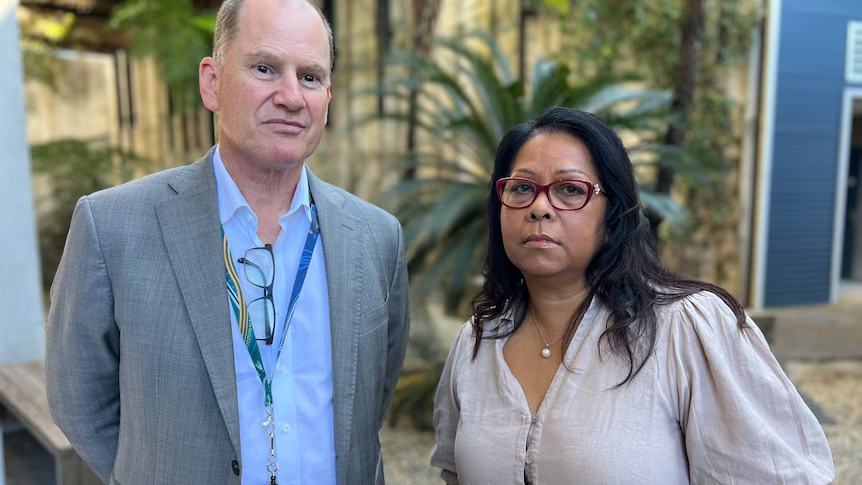
Professor Paul Dugdale and Suzanne Andrews believe close contacts through overcrowding are compounding the issue. (ABC Far North: Christopher Testa).

Disaster resilience inquiry highlights the need for better mental health support

The need to protect and support the mental health and wellbeing of disaster-affected people and communities is a key focus of the final report of the Select Committee inquiry on Australia’s Disaster Resilience. Evidence given during the inquiry showed the significant mental health impacts on people who live through and respond to natural disasters.

Three of the ten recommendations in the final report, ‘Boots on the ground: raising resilience’, tabled last week, incorporate suggestions to better address mental health and wellbeing of people involved in natural disasters:

  • The Australian Government should establish a national disaster mental health hub to coordinate and provide mental health resources, training, and support for first responders and communities affected by disasters across the nation. This hub should serve as a comprehensive resource centre for addressing the mental health needs of all stakeholders involved in disaster response and recovery efforts.
  • The Australian Government should design and implement consistent national trauma-informed care principles, ensuring that first responders – both professional and volunteer – receive training and support in these national principles to better address the mental health and wellbeing of disaster-affected individuals and communities.
  • The Australian Government should convene a disaster resilience mental health summit to hear from all related agencies and stakeholders to identify solutions to the mental health impacts of disasters.

The inquiry – chaired by Senator Jacqui Lambie – conducted 17 public hearings and received 174 written submissions, ten of which were made by health and social service organisations including the Department of Health and Aged Care, Rural Doctors Association of Australia, Lifeline Australia, Kimberley Aboriginal Medical Services and Australian Council of Social Services.

To read the Croakey Health Media article in full, go here.

Flooded road near Windsor, Western Sydney, 2022. Photo by Wes Warren on Unsplash.

Kit the Koala: the mob-made animation destigmatising and embracing neurodivergence

A two-part animated series developed by palawa woman Nicole Hewlett and the Strong Mothers group at Carbal Aboriginal Medical Service in Toowoomba, follows the adventures of Kit the Koala, who lives with fetal alcohol spectrum disorder (FASD). FASD is a term used to describe the life-long impacts on the brain and body that people can experience following prenatal exposure to alcohol.

“We hope to build the capacity of families to live well with those who have FASD and understand how we can better support our loved ones with FASD,” said Hewlett.

In the series, Kit is joined by a host of other cute characters – a possum living with autism, a wallaby with ADHD and a platypus with a combination of the two.

Hewlett, PhD student at the University of Queensland, has worked on strengths-based, healing-informed and trauma aware approaches to FASD for over ten years. She says the intention of the project is to change the narrative around neuro-divergence, especially FASD.

She said the project leans into the power of Aboriginal humour to connect with audiences and from start to finish, script, music and voices, is mob-made.

Carbal Aboriginal Medical Service brings together the Strong Mothers group to offer holistic support.

To read the NITV article in full, go here.
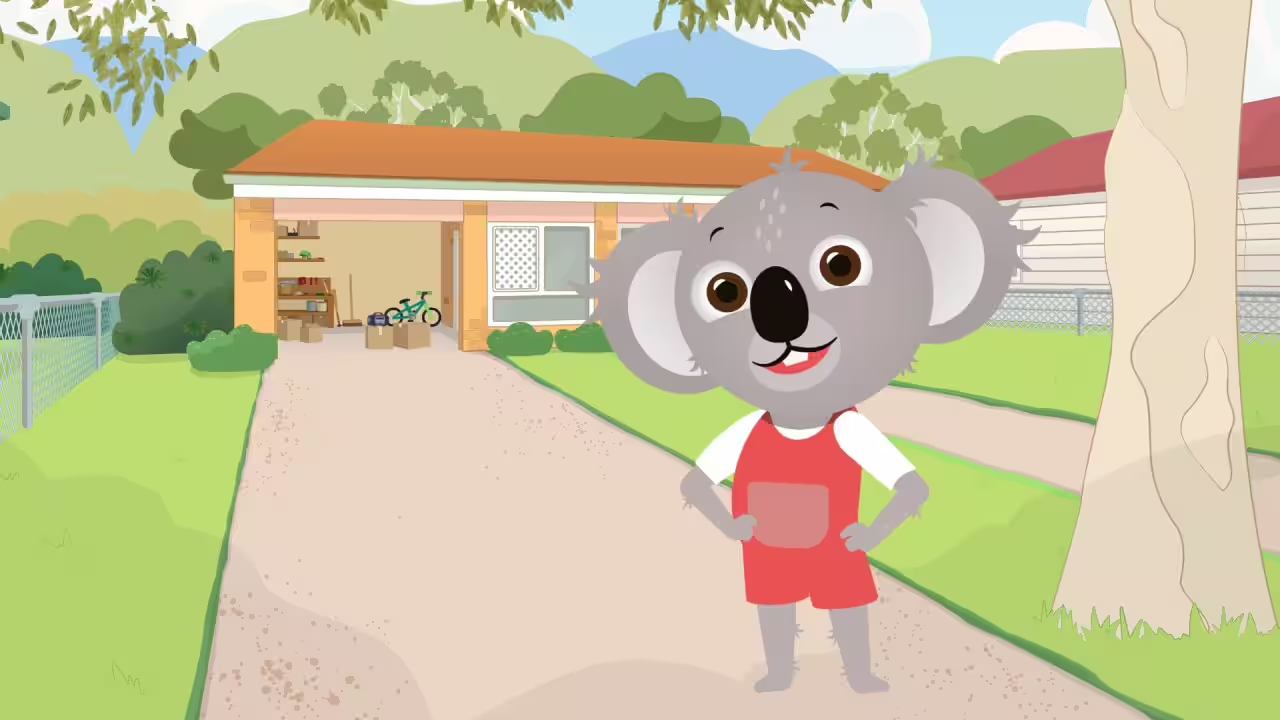
The Carbal Strong Mothers group hopes Kit the Koala will help people all over the country.

Waminda’s National Conference to highlight Birthing on Country

Waminda South Coast Women’s Health and Wellbeing Aboriginal Corporation is inviting all women and non-binary friends to come explore and experience the intricacies of Birthing on Country with the incredible team at Waminda’s National Conference taking place on the South Coast NSW from September 17 to September 19, 2024.

The two-day event is stacked with an incredible lineup of speakers and a dynamic and exciting agenda. During the conference the Waminda Executive Leadership team, Keynote Speakers, Waminda Program Managers and Coordinators, along with community leaders in the Aboriginal women’s health and wellbeing space will take you on a journey of looking back to celebrate how far Waminda has come; whilst giving insight into the now and inspiring what is emerging in Aboriginal women’s leadership, health, and wellbeing.

For more information and to register, go here.

Mel Briggs, Waminda Senior Balaang and Birthing on Country Manager.

Sector Jobs – you can see sector job listings on the NACCHO website here.

Advertising Jobs – to advertise a job vacancy click here to go to the NACCHO website current job listings webpage. Scroll down to the bottom of the page to find a Post A Job form. You can complete this form with your job vacancy details – it will then be approved for posting and go live on the NACCHO website.

25 July 2024

The NACCHO Sector News is a platform we use to showcase the important work being done in Aboriginal and Torres Strait Islander health, focusing on the work of NACCHO, NACCHO members and NACCHO affiliates.

We also share a curated selection of news stories that are of likely interest to the Aboriginal and Torres Strait Islander health sector, broadly.

Helping Mob Live Healthy and Prevent Cancer Toolkit

The Helping Mob Live Healthy and Prevent Cancer Toolkit is designed for the Aboriginal health workforce as a one-stop shop for the latest culturally tailored information and resources on cancer screening and prevention. Co-created by mob, for mob – use this toolkit today to help you yarn about cancer and, better the health and wellbeing of Aboriginal peoples in NSW.

Proud Gamilaroi woman Rebecca Murray is a passionate advocate for healthy mob. With a health career spanning more than seven years and a passion for health research, Rebecca is always on the lookout for tools and resources to support the important work she does with community clients and at times cancer patients.

As an Aboriginal Health Worker and Care Coordinator for South West Sydney, Rebecca has been quick to use the new free toolkit. She shared how helpful it is to pull up on a screen when in conversation with a client, to show them why you might be asking questions about aspects of their health and to highlight the supports available to all mob.

“I would describe the toolkit as very informative, simple, succinct and easy to navigate, useful to give structure and questions when working with a new client,” said Rebecca.

Rebecca was led to the toolkit through a number of resources provided by her current boss, someone she considers a leader and mentor. She says the toolkit helps her to tailor the information each client needs.

“The toolkit helps me focus on the social and emotional wellbeing of the client, including useful sources of further information. It’s a good checklist to build a client health plan from.”

The toolkit is something Rebecca uses at least once or twice a week, to obtain resources or to prompt conversations with community. Rebecca encourages other Aboriginal and Torres Strait Islander health workers to discover and share resources amongst one another, to help more people to stay healthy and prevent cancer.

For more information, go here and to access the toolkit, go here.

Rebecca Murray.

NT unveils framework to combat chronic health issues

NT Health, Aboriginal Medical Services Alliance Northern Territory (AMSANT) and Northern Territory Primary Health Network (NT PHN) have come together to launch a new framework to help prevent chronic conditions in the NT.

Titled Healthy, Well and Thriving: The Northern Territory’s prevention and early intervention framework for chronic conditions 2024 – 2030, the framework’s aim is to help keep Territorians healthy and well for as long as possible by focussing on chronic condition prevention and early intervention.

To achieve this, the framework will deliver a range of strategies to improve health and wellbeing, including creating more health-promoting environments and settings, embedding prevention within the healthcare system and strengthening screening services to enhance early detection.

The framework recognises the need for a holistic approach to health to effectively address the complex social drivers of chronic conditions within communities, including among disadvantaged populations. It will prioritise addressing key risk factors – such as unhealthy food and drink, inactive lifestyles, alcohol consumption, tobacco use (including e-cigarettes) and poor social and emotional wellbeing – to improve long-term health outcomes.

“AMSANT members are often at the end of the line treating the health impacts and symptoms of inequality and disadvantage without the power to prevent it,” says Dr John Paterson, AMSANT CEO.

“This framework sets the foundation to change that, strengthening our health system and the way we work together across the sector to address the social drivers of chronic conditions within our communities.

“It allows for more collaboration between service providers and, importantly, strengthened Aboriginal leadership to provide this much-needed whole of health sector response, fitting within the broader change needed to prevent ill-health for Aboriginal people.”

To read the framework, go here.

Healthy, Well and Thriving: The Northern Territory’s prevention and early intervention framework for chronic conditions 2024 – 2030.

AH&MRC Social and Emotional Wellbeing Community Forum

AH&MRC are launching a series of workshops bringing together service providers in Aboriginal and Torres Strait Islander Social and Emotional Wellbeing (SEWB), Alcohol and Other Drugs (AOD), and Mental Health from regions across NSW.

Expected outcomes:

  • Enhanced collaboration and networking among service providers.
  • A consolidated list of best practices and innovative solutions applicable across NSW.
  • A clear professional development plan supporting continuous improvement in service delivery.
  • Established framework for skill development within the network.

To register, go here.

Changes needed to keep First Nations children out of incarceration

More culturally responsive diversion programs are needed to prevent the incarceration of Aboriginal and Torres Strait Islander children, according to University of Queensland research. UQ’s School of Nursing, Midwifery and Social Work PhD candidate Lorelle Holland, a Mandandanji woman, led a study which analysed the effectiveness of dozens of diversion programs across Australia which attempt to keep Indigenous children out of the youth justice system.

“In 2021 an Australian Institute of Health and Welfare report found Indigenous children aged 10-17 were 20 times more likely to end up incarcerated than non-Indigenous youths – we need to change that,” Ms Holland said.

“We found only 10 out of 31 diversion programs addressed areas such as Indigenous connection to land, culture, spirituality, ancestry, family, and community.”

The study focused on Aboriginal and Torres Strait Islander children aged 10 to 18 years who were participating in diversion programs ranging from residential remand and bail support, homelessness assistance and help for those appearing before specialist Indigenous courts.

“The best performing programs addressed the complex needs of Indigenous children by supporting their social and emotional wellbeing through Indigenous-led, place-based, and interdisciplinary collaboration, which resulted in a decline in offending behaviour,” Ms Holland said.

“Our findings highlight the need to stop the incarceration of Indigenous children with complex needs and instead invest in funding, policy directions and public health to develop and deliver culturally responsive diversion approaches.”

To read the UQ News article in full, go here.

Image source: Rafael Ben-Ari, Getty Images.

The Aboriginal and Torres Strait Islander population is projected to have reached over a million

The Aboriginal and Torres Strait Islander population is projected to reach almost 1.2 million by 2031, according to the Australian Bureau of Statistics. According to that estimation, that means the Indigenous population has reached over a million already. First Nations people currently make up 3.8% of the total Australian population. That’s an estimated 19.1% to 21.3% increase of the population by 2031.

The average annual growth rate of Aboriginal and Torres Strait Islander peoples is between 1.8% and 2.0% per year. The states with the fastest average annual growth rate of Aboriginal and Torres Strait Islander peoples are QLD, the ACT and VIC.

By 2031, inner and outer regional Australia is projected to continue to have the largest population of Aboriginal and Torres Strait Islander peoples at 44%. While the Aboriginal and Torres Strait Islander population in major cities in Australia are projected to increase by just under two per cent by 2031, the population in remote areas is projected to decrease by two per cent in 2031.

To read the NITV article in full, go here.

A third of the Indigenous population are children 14 and younger. AAP: Mick Tsikas Credit: MICK TSIKAS/AAPIMAGE.

Sector Jobs – you can see sector job listings on the NACCHO website here.

Advertising Jobs – to advertise a job vacancy click here to go to the NACCHO website current job listings webpage. Scroll down to the bottom of the page to find a Post A Job form. You can complete this form with your job vacancy details – it will then be approved for posting and go live on the NACCHO website.

ACCHO Governance Workshops

Free, specialised governance workshops for ACCHOs will be delivered in multiple locations across the country during 2024 and 2025. 

Registrations are now open for:

  • Port Macquarie: 20-21 August
  • Dubbo: 22-23 August.

The program is delivered by legal experts and covers:  

  • Delegation of powers 
  • Finance for Boards
  • Governance documents
  • Managing conflicts of interest 
  • Managing risk  
  • Principles of good governance  
  • Structure and role of boards and sub-committees 

To register, go here.

For more information, please contact NACCHO using this email link.

19 July 2024

The NACCHO Sector News is a platform we use to showcase the important work being done in Aboriginal and Torres Strait Islander health, focusing on the work of NACCHO, NACCHO members and NACCHO affiliates.

We also share a curated selection of news stories that are of likely interest to the Aboriginal and Torres Strait Islander health sector, broadly.

What is FASD, and why do so many children with it end up in Australia’s justice system?

Vulnerable young people and communities concerned about crime would both benefit from better screening and support for foetal alcohol spectrum disorder (FASD), experts say.

FASD is caused by exposure to alcohol in the womb. There is no known safe level of alcohol that can be consumed during pregnancy. Because alcohol crosses the placenta, maternal and foetal blood alcohol concentrations can rapidly reach the same level but the foetus’s organs are not developed enough to break the alcohol down and remove it. This disrupts brain and other organ development.

Most crucial to preventing children with FASD ending up embedded in the justice system, is early screening, and alcohol and drinking education.

Dr Robyn Williams, a senior research fellow and FASD expert at Curtin University medical school, says she has many stories of youth receiving early treatment for FASD who never encounter the justice system, and who find employment and independence as adults.

The Noongar woman from WA runs training in Indigenous communities about FASD, and has researched how families caring for Aboriginal children with FASD understand the condition and access care.

Common misconceptions about FASD are prevalent among GPs and child protection and youth justice workers, she says, further delaying diagnosis and care. A myth also persists that “FASD is only an Aboriginal problem”.

“This is not an Aboriginal problem and the majority of Aboriginal people don’t even drink,” she says. But about 60% of all pregnant women in Australia drink, with about half stopping once they realise they are pregnant.

Aboriginal people who do drink are more likely to drink at risky levels. This means that the prevalence of FASD among Aboriginal and Torres Strait Islander people is disproportionately higher than the non-Indigenous population, says Pat Turner, the chief executive of the National Aboriginal Community Controlled Health Organisation (NACCHO).

“This is a direct consequence of colonisation, racism and poor social health determinants,” she says. “It is essential approaches to prevent and support people living with FASD are culturally safe, trauma-aware and led by the Aboriginal and Torres Strait Islander community.”

To read The Guardian news article in full, go here.

Children with FASD have a brain injury that means their cognitive skills are well below their chronological age. They might not be able to differentiate right from wrong, which can get them in trouble with the youth justice system. Illustration: James Gulliver Hancock/The Guardian.

Help shape a brighter future for mums and bubs

NACCHO is inviting you to attend Maternal and Child Health regional workshops as part of the consultation to inform the development of an Aboriginal and Torres Strait Islander Maternal and Child Health Plan (the Plan) 2025-2035. This Plan will set out an approach to Close the Gap for mums and bubs, and guide governments’ investment in Aboriginal and Torres Strait Islander MCH services over the short, medium, and long-term.

The Plan has been receiving extensive consultation with Members, including through the survey, an Aboriginal and Torres Strait Islander MCH Expert Advisory Group and a series of face-to-face opportunities for discussion.

Noting the excellent services delivered by members and common experiences faced, we are inviting you to engage in the regional workshop to inform NACCHO and Government on the MCH needs of ACCHOs Australia-wide.

With your help, we hope to highlight and scale up your successes and sustainably address gaps and barriers to improve maternal and child health services. Please contact the NACCHO Maternal and Child Health team if you require assistance or have any questions about the regional workshops or the consultation process.

Maternal and Child Health regional workshops dates and locations:

  • Perth: 7 August
  • Darwin: 14 August
  • Sydney: 16 August
  • Brisbane: 20 August

We kindly ask that you RSVP by 1st August 2024. To RSVP, go here.

For any questions, reach out to the friendly NACCHO Maternal and Child Health team:

Ballarat and District Aboriginal Cooperative launches Aboriginal Children in Aboriginal Care program

Aboriginal and Torres Strait Islander children are 22 times more likely to be removed from their families and placed in the child protection system than non-Indigenous children in Victoria. Massive steps are underway across the state to change that statistic as Aboriginal people are given legal authority to become decision makers for Aboriginal children in out-of-home care. The Ballarat and District Aboriginal Cooperative has become the third organisation in Victoria to run the Aboriginal Children in Aboriginal Care program, following Bendigo and Melbourne.

Program manager Jess Wall said it was changing the trajectories of Aboriginal children.

“It is giving community, families and children self determination back and decision making back with Aboriginal people instead of having the department make those decisions,” she said.

Ms Wall said while her staff were required to operate within the same legislation as the Victorian child protection service, their approach was vastly different.

“Working within community, we usually know the family,” she said.

“Working together with the family is the point of difference, really hearing their voices and working alongside them.”

Njernda Aboriginal Cooperative in Echuca and Rumbalara Aboriginal Cooperative in Shepparton have been going through the authorisation process. Ballarat and District Aboriginal Cooperative director of child safety and cultural support, Jodie Kinsmore, said she had seen higher rates of family reunification.

Ms Kinsmore said they have received feedback from people saying they wouldn’t have their kids back if it wasn’t for them or the Aboriginal Children in Aboriginal Care program. She said the Aboriginal Children in Aboriginal Care program was healing of intergenerational trauma that had created distrust in child protection services.

To read the ABC News article in full, go here.

The Ballarat and District Aboriginal Cooperative has become part of the program.(Supplied: Ballarat and District Aboriginal Cooperative).

Calls for greater diabetes technology access

Diabetes Australia is calling on the government to support access to life-changing diabetes technology for Aboriginal and Torres Strait Islander people. Attending a community event hosted by Marrin Weejali Aboriginal Corporation in Sydney’s Mount Druitt area, Diabetes Australia Group CEO Justine Cain highlighted the advantages of continuous glucose monitoring (CGM) devices for people living with type 2 diabetes.

This National Diabetes Week (July 14-20), Ms Cain is calling on the Federal Government to invest $200 million in access to life-changing diabetes technologies for those Australians who need it the most.

“Our recent report, the State of the Nation, outlined how diabetes is disproportionately affecting Aboriginal and Torres Strait Islander people,” Ms Cain said.

“The evidence is clear. The diabetes epidemic is having a profound impact in Aboriginal and Torries Strait Islander communities and there is an urgent need to bring about change.”

Gomeroi man and award-winning exercise physiologist Ray Kelly has delivered the successful Too Deadly for Diabetes program through Marrin Weejali and said CGMs provide great education on glucose management.

“However, they aren’t subsidised, and are out of reach for many people who can’t afford them,” Mr Kelly said.

“We began using the technology in the Too Deadly for Diabetes program in 2022 and the impact was instant. We were already getting great health outcomes for our participants, but CGMs made it easier and safer to transition people off insulin.

“Many of the people in the program had been on insulin for over a decade so reading their glucose levels in real time gave them confidence in what they were doing.

“The alarm settings warned them if their glucose levels dropped too low, and the time in range reports gave their GPs clear information on how they were progressing. It’s been a game-changer!”

To read the article in full, go here.

Image source: Diabetes Australia.

Kimberley Aboriginal Health Planning Forum launches new Strategic Plan

Co-chairs of the Kimberley Aboriginal Health Planning Forum (KAHPF) launched the new Strategic Plan 2024-2028 Together in Wellness, last week. The new Strategic Plan now firmly aligns the work of the KAHPF with the National Agreement on Closing the Gap and the four priority reforms – which is important to further bolster efforts to make an impact on the socio-economic targets that have an impact on life outcomes for Aboriginal and Torres Strait Islander people.

Strategic priorities outlined in the new plan include:

  • Reform: Embed the elements of the four priority reforms of the National Agreement on Closing the Gap into all collaborative efforts of the KAHPF.
  • Improved health system: Deliver holistic health, aged care and disability services to Kimberley Aboriginal people and communities, focusing on environmental health, health promotion, and the prevention and management of primary and acute care issues.
  • Aboriginal workforce: Prioritise, grow, and sustain Aboriginal representation and leadership across the Kimberley health, disability, and aged care workforces.
  • Shared knowledge: Ensure that health research and evaluation initiatives are co-designed in a culturally secure manner and clear outcomes are achieved.
  • Genuine partnership: Embed shared decision-making, genuine partnerships, and collaborative approaches across Kimberley health, disability, and aged care planning, coordination, advocacy, and service delivery.

KAHPF also recently marked its 26-year anniversary. Formed in 1998, KAHPF has grown to become the leading regional health and wellbeing forum in the Kimberley region of WA.

To read the Kimberley Aboriginal Health Planning Forum Strategic Plan 2024-2028 Together in Wellness, go here.

Kimberley Aboriginal Health Planning Forum (KAHPF) launched the new Strategic Plan 2024-2028 Together in Wellness and celebrated 26 years of the Forum. Image source: KAMS.

Research into the commercial determinants of Aboriginal and Torres Strait Islander health

Five expert research teams will share in an investment of $7 million in funding to support targeted health and medical research into the commercial determinants of Aboriginal and Torres Strait Islander health. The funding, to be provided through the National Health and Medical Research Council’s (NHMRC) Targeted Call for Research (TCR): Commercial determinants of Aboriginal and Torres Strait Islander health 2023, will stimulate innovative research aiming to drive better health and wellbeing outcomes for Aboriginal and Torres Strait Islander peoples.

Researchers from across Australia will share in this funding with project scopes that recognise and adjust for the interplay between social, cultural, economic, and commercial determinants of health and how they compound to influence health outcomes. These projects are intended to collectively deliver on developing evidence that contributes towards a response to strengthen national systems, inform policy design and development, and contribute towards information that will empower Aboriginal and Torres Strait Islander leaders to take action.

Ms Carol-Lynne Christophersen from Menzies School of Health Research will lead Project White-Ant with Dr Cassandra Wright, which aims to generate knowledge that can support Aboriginal and Torres Strait Islander communities to protect against harms caused by commercial systems.

Conducted in partnership with Aboriginal communities in the NT and Aboriginal community-controlled organisations, this project will improve our understanding of how communities can take action to protect against harms caused by commercial entities, and what protections are preferred.

To read the NHMRC media release in full, go here.

Sector Jobs – you can see sector job listings on the NACCHO website here.

Advertising Jobs – to advertise a job vacancy click here to go to the NACCHO website current job listings webpage. Scroll down to the bottom of the page to find a Post A Job form. You can complete this form with your job vacancy details – it will then be approved for posting and go live on the NACCHO website.

ACCHO Governance Workshops

Free, specialised governance workshops for ACCHOs will be delivered in multiple locations across the country during 2024 and 2025. 

Registrations are now open for:

  • Port Macquarie: 20-21 August
  • Dubbo: 22-23 August.

The program is delivered by legal experts and covers:  

  • Delegation of powers 
  • Finance for Boards
  • Governance documents
  • Managing conflicts of interest 
  • Managing risk  
  • Principles of good governance  
  • Structure and role of boards and sub-committees 

To register, go here.

For more information, please contact NACCHO using this email link.

10 July 2024

The NACCHO Sector News is a platform we use to showcase the important work being done in Aboriginal and Torres Strait Islander health, focusing on the work of NACCHO, NACCHO members and NACCHO affiliates.

We also share a curated selection of news stories that are of likely interest to the Aboriginal and Torres Strait Islander health sector, broadly.

Heartbreaking problem uncovered a life calling 

In the heart of a thriving country town Lynette Bullen gets ready to go into work and inspire Australia’s next generation of healthcare workers. The proud Wiradjuri woman from Orange, NSW, has spent three decades in the health sector dedicating much of her efforts towards children and families trying to overcome the clutches of drug and alcohol addiction.

In communities around Australia, the devastating impacts of multigenerational trauma continue to surface through high rates of substance use disorders. A recent report by the Australian Institute of Health and Welfare (AIHW) states that mental and substance use disorders are the leading cause of disease burden for Aboriginal and Torres Strait Islander people with a significant amount experiencing high levels of psychological distress.

The harsh reality of this hit Lynette once she began working for a service to support mothers and babies through drug and alcohol dependency. “Seeing the effect on children, it was heartbreaking, and I thought if I could provide some stability for the children while they were there with their mothers and I suppose not to be so much a role model, but sort of show and do for the parents, like giving them the skills to be able to set boundaries with their children,” she said.

To view the Women’s Agenda article A heartbreaking problem that uncovered a life calling for Lynette Bullen in full click here.

Lynette Bullen

Lynette Bullen. Image source: Women’s Agenda.

Accelerated action needed to end viral hepatitis

Australia has been urged to accelerate action to eliminate viral hepatitis, with Health Minister Mark Butler MP addressing a renewed push to curb the epidemics. He spoke alongside Senators Louise Pratt and Dean Smith, Co-Chairs of Parliamentary Friends for ending HIV, STIs and Other Blood Borne Viruses, at last week’s federal parliamentary World Hepatitis Day event.

Minister Butler highlighted the need for further action on prevention. “In partnership with affected communities, national peak bodies, peer and community organisations and the clinical multidisciplinary workforce, we are examining how to reduce the transmission of hepatitis C in the prison system,” he said.

Minister Butler also said the government was committed to funding hepatitis B elimination, with $7.8m for a public awareness campaign and workforce training. Hepatitis Australia Vice President Frank Carlus said ongoing investment was crucial to meet Australia’s goals of eliminating viral hepatitis by 2030.

To view The Pharmacy Guild of Australia article Australia urged to accelerate action to end viral hepatitis in full click here.

image of viral hepatitis cell

Photo: kipargeter on Freepik. Image source: The Pharmaceutical Guild of Australia Gold Cross website.

RACGP general practice standards workshops

The Royal Australian College of General Practitioners (RACGP) has a long-standing tradition of developing standards for general practice with the aim of protecting patients from harm by improving the quality and safety of health services. These standards help general practices identify and address any gaps in their systems and processes, ultimately ensuring higher quality care for patients.

You can find the current 5th edition of these standards – RACGP – Introduction to the Standards for general practices (5th edition) here.

As the RACGP embarks on developing the 6th edition of the Standards for General Practices, the RACGP Working Group – Patient Participation (RWG-PP) and the Standards Team is seeking to involve consumers in this crucial process. Your participation will ensure the new standards reflect the needs and perspectives of those who use general practice services.

Why Your Participation Matters

By participating in these workshops, you will contribute to shaping standards that directly impact the quality and safety of general practice care across Australia. Your insights and experiences will help ensure that the standards are comprehensive, inclusive, and truly reflective of the community’s needs. This collaborative approach aims to embed the concept of co-production within the standards, enhancing service delivery and quality improvement.

What We Are Requesting

The RACGP is inviting individuals who regularly use general practice services and can provide valuable input from both personal and community perspectives to join us in a series of workshops. They are particularly interested in a diverse range of demographics to ensure the standards are inclusive.

Workshop Details

  • Format: Three  workshops in August.
  • Role: Participants will read background materials, actively engage in discussions, and contribute to post-meeting discussions electronically.
  • Remuneration: Participants will be compensated for their time and any travel and accommodation costs, if necessary.
  • Confidentiality: Participants will be required to sign a nondisclosure agreement prior to the first workshop.

Workshop Schedule

  • Face-to-Face Workshop: 2 August at the Park Royal, Melbourne Airport
  • Two Online Workshops: 23 and 30 August, 11am–1pm via Zoom

How to Express Your Interest

If you are interested in participating, please contact the RACGP Standards Team via email here. They look forward to your valuable contribution to enhancing the quality and safety of general practice care in Australia.

cover of 5th edition RACGP Standards for general practices overlaid with text '6th edition being developed - HAVE YOUR SAY'

Image source: RACGP website.

‘Condoman’ a world leader in HIV prevention

When HIV arrived on Australian shores in the early 1980s, politicians and healthcare workers worried the virus would run rampant in remote Aboriginal and Torres Strait Islander communities. This didn’t happen – thanks to highly successful health promotion campaigns and public health programs rolled out around the country by Aboriginal-controlled medical services, from 1987.

The most famous of these was “Condoman”, the First Nations superhero whose safe-sex directive “Don’t be shame, be game: Use condoms!” captured hearts and minds across the continent. Aunty Gracelyn Smallwood, a proud Birrigubba, Kalkadoon and South-Sea Islander woman and registered nurse/midwife, was central to this public health response, working alongside her colleague and friend Phillip Mills and other health workers throughout the state.

Her advocacy took her from her hometown of Townsville all the way to the highest offices of Australia’s HIV and AIDS response, where she played a part in shaping a world-leading approach to the virus.

To view The Conversation article First Nations superhero ‘Condoman’ was a world leader in HIV prevention. Aunty Gracelyn Smallwood made it happen in full click here.

First Nations safe-sex superhero, Condoman

First Nations safe-sex superhero, Condoman. Christian Haugen/Flickr, CC BY. Image source: The Conversation.

CDU urges NT government to adopt health policies

Charles Darwin University is urging the next NT government to implement a raft of policies to improve the health, wellbeing and economic prosperity of First Nations people. The university wrote to the Members of the Legislative Assembly ahead of the NT election on 24 August 2024, outlining 22 policy requests for the future government in the Top End to deliver, which include measures on First Nations leadership, housing and economic growth.

The list from the university features ongoing funding of the Remote Aboriginal Teacher Education Program; installing a Chief Scientist for the NT; creating a Traditional Uses Forest in Katherine; developing a pilot plant for Northern Australia Food Technology and Innovation; supporting rural placement scholarships for allied health students in the NT; and developing a campus in the Alice Springs CBD.

Under First Nations Leadership, the university wants to see an expansion of the Bidjipidji Program – a four-night residential program designed to provide Indigenous students in years 10, 11 and 12 with an opportunity to experience campus life at CDU. It also wants to see an extension of their pre-programs which target mature-aged First Nations students from across the Northern Territory and interstate.

To view the National Indigenous Times article Charles Darwin University urges NT government to enact series of reforms to help Indigenous communities in full click here

Charles Darwin Uni Prof Scott Bowman

Charles Darwin University Professor Scott Bowman. Photo: CDU. Image source: National Indigenous Times.

Rap music video Vaping is a Fool’s Game

For the past few months, students from the Top End’s Clontarf and Stars programs have been undergoing workshops conducted by Tackling Indigenous Smoking (TIS) to develop resources aimed at informing Indigenous kids on the dangers of vaping. The workshop inspired the students to leverage their talent to further highlight the risks associated with vaping and filmed a rap music video titled ‘Vaping is a Fool’s Game’ (available on the Danila Dilba Health Service YouTube channel).

Main rapper, Jade Jackson, said she hoped to make a difference with the creative video. “I’m inspired by my feelings and then I wrote about my feelings to try to make change,” she said. “The aim is to really stop people from vaping and spread the message, hopefully people will listen to it and stop.”

As of July 1, 2024, nicotine vapes in Australia are regulated as therapeutic goods are only available at pharmacies to help people quit smoking or manage dependence. However, despite the crackdown on vaping well under way, Jade said the health risk associated with electronic cigarettes needed to be emphasised. “Vaping is not healthy for you or people around you, you can buy fruits instead of buying vaping flavours,” she said.

The above text has been extracted from an article Northern Territory kids drop rap music video Vaping is a Fool’s Game published by NT News earlier today (Wednesday 10 July 2024).

Sector Jobs – you can see sector job listings on the NACCHO website here.

Advertising Jobs – to advertise a job vacancy click here to go to the NACCHO website current job listings webpage. Scroll down to the bottom of the page to find a Post A Job form. You can complete this form with your job vacancy details – it will then be approved for posting and go live on the NACCHO website.

8 July 2024

The NACCHO Sector News is a platform we use to showcase the important work being done in Aboriginal and Torres Strait Islander health, focusing on the work of NACCHO, NACCHO members and NACCHO affiliates.

We also share a curated selection of news stories that are of likely interest to the Aboriginal and Torres Strait Islander health sector, broadly.

300+ enrol in health worker traineeship program

More than 300 people have enrolled in a First Nations Health Worker Traineeship Program (FNHWTP), the federal government announced last Friday (5 July 2024) during a Joint Council on CTG meeting on Kaurna Country. The program was launched in March this year by NACCHO, and aims to certify up to 500 Indigenous people as either AHWs or AHPs by 2027.

NACCHO CEO Pat Turner said they were witnessing “remarkable progress” in only four months since the program was launched, “This initiative not only equips trainees with essential skills and wrap-around supports through culturally nuanced programs, but also bridges critical gaps in our healthcare system. Critically, growing the Aboriginal and Torres Strait Islander health and human services workforce is key to achieving CTG Targets in health, wellbeing and education.”

Delivered by ACCH Registered Training Organisations, and involving on-the-job experience, 51 trainees have already completed the program, which has been designed by Indigenous organisations in partnership with the government, who have contributed $54.3m. Kimberley Aboriginal Medical Service (KAMS), is one of the ACCHOs helping deliver Indigenous health practitioners under the FNHWTP. KAMS provides wrap-around support for students, with the extra funding from the program resulting in significantly boosted completion rates, with the end goal being a building a strong and sustainable Aboriginal and Torres Strait Islander health workforce.

To view the National Indigenous Times article Self-determination in healthcare closer to a reality with over 300 enrolments in health worker traineeship program in full click here.

Pat Turner addressing Joint Council of Closing the Gap meeting in Adelaide

NACCHO CEO and Lead Convener of the Coalition of Peaks, Pat Turner at the Joint Council on Closing the Gap. Image source: National Indigenous Times.

TAMS secures funding for new facility

Tamworth Aboriginal Medical Service (TAMS) is one of 10 Indigenous health services to get funding for infrastructure projects across NSW. TAMS has secured $4.3m to buy land and build a new primary health care facility in Tamworth. The organisation long ago outgrew it’s current facility in Peel Street, but had to date been unsuccessful in securing the necessary funding to build a new one.

The funding is part of $100m the Federal Government is investing into 33 Indigenous health infrastructure projects across Australia. The investment will go towards constructing new clinics, renovating existing clinics, and building staff housing for workers to make it easier for Aboriginal people to access health services. Improved clinics and safer housing will also make working in ACCHOs more attractive to health professionals.

Minister for Indigenous Australians Linda Burney said, “ACCHOs provide crucial medical care and are often the only health service available in rural and remote communities. The new and upgraded clinics will make it easier for First Nations people to access primary health care.”

To view the New England Times article TAMS secures funding for new facility in full click here.

Tamworth Aboriginal Medical Service street sign

Image source: New England Times.

Cheap or free medicine access depends on postcode

Recent research shows policies designed to ensure Indigenous Australians have equitable access to medicines aren’t being accessed uniformly across the nation. Aboriginal and Torres Strait Islander people’s access to a free or discounted medicines under the Closing the Gap PBS Co-payment program is patchy and depends on where a person lives.

The program has gone some way to reduce inequities in access to health care, with Indigenous Australians using more prescription medicines and chronic disease services, making more GP visits and having fewer hospitalisations for chronic conditions.

Despite these benefits, uptake varies dramatically depending on where an Aboriginal and Torres Islander person lives. 10 years after the policy was introduced there are parts of northern Australia where less than 30% of the Indigenous population has ever received a CTG script.

To view The Conversation article Indigenous people can get cheap or free medicines. But we show access depends on your postcode in full click here.

female pharmacist explaining script to Aboriginal man

Image source: RACGP newsGP.

Improving food security in remote communities

The Federal Government has announced their intention to address food scarcity in remote Aboriginal and Torres Strait Islander communities. Partnering with state and territory governments as well as Aboriginal health organisations, the government has invested $11.8m over two years to develop a strategy, which will see face-to-face consultation with communities.

Minister for Indigenous Australians, Linda Burney, said the prevalence of affordable, fresh, and healthy food for everyone was vital, but especially important for children and older people, “Proper change will take state and territory governments working together with First Nations health organisations. We want people to have their say on what will work to improve the price, quality of food and other essential groceries in remote communities.”

Local land councils and Indigenous corporations from remote communities have long called for help with skyrocketing prices for everyday items – sometimes up to 50% more than even regional supermarkets – as well as often not being of the same freshness, quality, and nutritional value.

To view the National Indigenous Times article Consultations to improve food security in remote communities set to begin in full click here.

Milingimbi Store

Milingimbi Store. Photo: Blue Mountain Gazette. Image source: National Indigenous Times.

Aunty Dulcie earns lifetime achievement award

Dulcie Flower was just a few months into her nursing career when she encountered a patient she knew had suffered a grave injustice. On this day in 1950s Cairns this revered Elder in the Torres Strait Islander community of Cairns, was in the custody of a policeman who Dulcie says had given him a split and bloodied lip. Aunty Dulcie’s  formal complaint at the police station led to an abrupt end to her stint in the emergency department.

But far from stunting her career in health care, it set the then 18-year-old on the path to bringing about great change in the way First Nations people are looked after. Having been made a member of the Order of Australia (AM) in 2019, the now 85-year-old is the recipient of this year’s NAIDOC lifetime achievement award.

Aunty Dulcie saw recalled a female relative who died young, having developed septicaemia following a miscarriage, leaving two little girls motherless, “The health system just didn’t seem to look after the people in the north in the same way that they did the people of the south.”

To view the ABC News article From nurse to Indigenous rights icon, Aunty Dulcie Flower earns NAIDOC lifetime achievement award in full click here

Aunty Dulcie Flower standing on beach looking out to the sea

Aunty Dulcie Flower. Photo: Christopher Testa, ABC Far North. Image source: ABC News.

Filicide study shows action needed to keep kids safe

Content warning: this article contains information that may be distressing. Please refer to the services at the bottom of this article for support.

The myth that parents kill their children in random acts of violence has been dismissed by groundbreaking research, highlighting the need for a whole-of-society response. Filicide – or the killing of one’s child – is the second most common type of domestic homicide, after deaths involving an intimate partner. While other forms of domestic homicide are declining, Australia’s filicide rate remains at about 20 cases a year.

Aboriginal and Torres Strait Islander children were disproportionately killed in filicide cases, with the issue being rooted in racism, colonisation and intergenerational trauma, the study found.  Researchers found a lack of culturally safe services, while Aboriginal and Torres Strait Islander-led services that are better placed to provide support are often under-resourced. “The safety of Aboriginal and Torres Strait Islander children and women needs to be prioritised through urgent investment in Aboriginal-led solutions and services,” the report said.

The study highlighted the need for focus on regional and remote parts of Australia, with domestic and family violence being more frequent and severe in such areas. Major cities are home to 72% of the general population compared to 58% of filicide offenders. In close-knit communities, it may be hard to discreetly access victim or perpetrator services and reporting violence may be uncomfortable or unsafe due to a lack of anonymity. The researchers said any risk of intimate partner violence towards women needed to be seen as a risk of violence towards their children.

To view the CBR City News article Filicide study finds action needed to keep kids safe in full click here.

For more detailed information about the research referred to in this article you can access the Australian Domestic and Family Violence Death Review Network data report: Filicides in a domestic and family violence context 2010–2018 here.

toy bunny left on cracked footpath

Photo: Lukas Coch, AAP Photos. Image source: CBR City News.

If this article brought up anything for you or someone you love, please reach out to, call or visit the online resources listed below for support. The four organisations in blue offer immediate help, 24 hours a day, 7 days a week.

13 Yarn (13 92 76)

Beyond Blue (1300 224 636)

Brother-to-brother (1800 435 799)

Kids Helpline (1800 551 800 + webchat)

Lifeline (13 11 14 + online chat)

MensLine Australia (1300 789 978)

NACCHO Connection, Strength and Resilience Portal

QLife – anonymous LGBTIQ support (1800 184 527 + webchat)

Suicide Call Back Service (1300 659 467)

Sector Jobs – you can see sector job listings on the NACCHO website here.

Advertising Jobs – to advertise a job vacancy click here to go to the NACCHO website current job listings webpage. Scroll down to the bottom of the page to find a Post A Job form. You can complete this form with your job vacancy details – it will then be approved for posting and go live on the NACCHO website.

5 July 2024

The NACCHO Sector News is a platform we use to showcase the important work being done in Aboriginal and Torres Strait Islander health, focusing on the work of NACCHO, NACCHO members and NACCHO affiliates.

We also share a curated selection of news stories that are of likely interest to the Aboriginal and Torres Strait Islander health sector, broadly.

$100m towards Indigenous health infrastructure

The federal government will today (Friday 5 July 2024) announce $100m worth of support for 33 Indigenous health infrastructure projects across the country. The investment will go towards the construction of new health clinics, as well as renovating existing ones and constructing housing for workers. Assistant Minister for Indigenous Health, Malarndirri McCarthy, said “Roughly half of all First Nations people receive their medical care through an ACCHOs, so it is essential that these clinics are fit for purpose, and ensuring health workers have access to accommodation will help ACCHOs to hire and keep staff, resulting in greater access to health care services for First Nations people.”

The grants were co-designed with NACCHO on behalf of the ACCHO sector. The announcement comes as the government is pressured by ACCHOs to embrace self-determination in healthcare after a scathing productivity commission report, earlier this year found progress to implement the National Agreement on Closing the Gap (National Agreement) reforms were “weak”.

NACCHO CEO and lead convener of the Coalition of Peaks, Pat Turner, said she was pleased the funding was being delivered in line with the National Agreement, and in genuine partnership with ACCHOs, “This funding supports the critical role that ACCHOs play and the contribution they make every day in improving health outcomes for our people. Ms Turner said the flailing infrastructure could compromise the delivery of healthcare, as well as posing a risk to patients and staff, and act as a deterrent for future staff seeking employment. The Government’s injection of $100m is a welcome support for those services under funding pressures to better serve their communities.”

To view the National Indigenous Times article Government pledges $100m towards Indigenous health infrastructure in full click here.

Pat Turner

NACCHO CEO and Lead Convener Coalition of Peaks, Pat Turner. Photo: AAP. Image source: National Indigenous Times.

Moorundi medical centre construction underway

Construction is underway on a new community health clinic on Adelaide Road in Murray Bridge. The $10m Moorundi Aboriginal Community medical centre is being built, following 20 years of planning and advocacy and a $9m federal government investment. Thanks to a partnership between Aboriginal health workers and non-Indigenous GPs, Moorundi has grown into an organisation with more than 40 staff in Murray Bridge, Raukkan and Victor Harbor.

Moorundi Aboriginal Community Controlled Health Service Limited CEO Steven Sumner said when completed, the new centre will offer health care for all community members, “It’s not just Indigenous people that come to us, we have non-Indigenous people that come to our service because they like the way its delivered but we have our own people that still love other services within Murray Bridge and other areas, so just by giving them that choice I think that allows them to take care of their health a lot better.”

Sumner said his team collaborates with other organisations to offer career pathways for young Indigenous people, “We’re trying to channel our school leavers especially, into the health field. If there’s an opportunity there, we’ve taken on trainees for the last six years and have had some really good success with retention, so that’s what we’re about. We’re about the future, not just the past.” He is expecting the keys to be handed by June 2025 with an opening date soon after.

To view the 5MU article Work Underway on Murraylands Moorundi Clinic in full click here

Moorundi CEO Steven Sumner

Steven Sumner, CEO of Moorundi. Photo: Jennie Lenman / ARN. Image source: 5MU website.

AMA praises push for soft drink sugar tax

The AMA has praised a federal parliamentary probe into diabetes which has recommended a sugar tax on all soft drinks to help address the nation’s obesity and diabetes rates. The AMA says the parliamentary inquiry into diabetes grasped an opportunity to recommend a tax on sugar-sweetened beverages, which could help prevent obesity and raise crucial funds to tackle chronic disease.

“A sugar tax would have a huge impact on Australia’s health system and the AMA’s modelling suggests a sugar tax could result in government revenue of $4b across four years, which could be used to fund further preventative health activities,” AMA President Professor Steve Robson said.

“We are 100% behind this sugar tax on sugar-sweetened beverages because we know it could help
reduce the prevalence of type 2 diabetes in Australia, as well as reducing other chronic diseases. “Prevention is better than cure and this inquiry has realised we need to be ahead of what is a national health crisis.” Research shows a tax of this nature is estimated to result in 16,000 fewer cases of type 2 diabetes, 4,400 fewer cases of heart disease, and 1,100 fewer cases of stroke over 25 years. It is a simple but effective way to improve the lives of Australians.

To view the AMA media release AMA welcomes sweet push on sugar tax reform in full click here.

bottles of different soft & energy drinks with sugar cubes representing the amount of sugar in each drink

Image source: Public Health Association Australia website.

More support needed for remote communities

New research led by the University of Adelaide reveals remote Indigenous communities need improved infrastructure and services to support residents and visitors. Funded by the Australian Housing and Urban Research Institute (AHURI), the research explores how movement between remote communities and urban centres is vital for many Indigenous Australians, however mobility patterns can add pressure to already underfunded infrastructure and services in remote communities.

Findings reveal that remote Indigenous populations are growing and ageing; incomplete data on remote community population and mobility means real needs are unmet; and inconsistent population movement affects community requirements particularly in regard to funding and housing. Population projections undertaken for the research, suggest the Indigenous population will continue to grow strongly in outer regional, remote, and very remote Australia by more than 10% between 2021 and 2026.

This predicted growth is concentrated in the older cohorts from age 45 to 49 years and older, indicating a rapidly ageing Indigenous population. This will have implications for the type of housing, infrastructure and services that will be needed in remote communities. Real needs of the community are being unmet due to inadequate existing data on remote community populations and mobility.

To view The University of Adelaide article More support needed for remote Indigenous communities in full click here.

aerial photo of far western town Eulo, Qld

Far western town of Eulo, Qld. Image source: The University of Adelaide Newsroom webpage.

Diabetes Inquiry recommendations need adoption NOW

The Federal Government must urgently implement the recommendations outlined in the final report of the Diabetes Inquiry held by the Parliamentary Committee on Health, Aged Care and Sports, the Royal Australasian College of Physicians (RACP) has said.

Professor Jennifer Martin, President of the RACP, said that if implemented, the recommendations would help provide vital medical support to people living with diabetes and obesity and would help significantly improve their quality of life, “The implementation of these recommendations will be transformative for people living with diabetes and obesity. The Committee has rightly recognised that people living with diabetes often have to contend with very high prices and long waiting times when trying to access vital medical supports that can greatly help with insulin and weight management. Consistent with our recommendations, the Committee has called on the Government to fund longer MBS consultations, support telehealth and broaden case coordination models for people with obesity and diabetes.

“Over the past few decades, we have seen a gradual but steady increase in the rates of people living with diabetes, especially type two diabetes, and obesity across Australia. This has put an immense amount of pressure on families, patients themselves and also Australia’s health care system. Making access to essential therapeutics and other forms of medical care more affordable for people living with diabetes and obesity will have immense impact and the Government must act now.”

To view the RACP media release Physicians urge Government to swiftly adopt recommendations of diabetes inquiry to support patients in full click here.

patient arm connected to a monitor, 'diabetes' written on notepad

Image source: Health Times.

Indigenous perspective on plant-based medicine

In this final episode of BLA.C.K. Medicine, a health podcast for Indigenous peoples by Indigenous peoples, host Dr Mikayla Couch shares an Indigenous perspective on plant-based medicine, as she chats with Bundjalung man and Gardening Australia presenter Uncle Clarence Slockee about the medicinal and health benefits of Indigenous plants.

As holistic solutions to health issues increase in popularity, Indigenous plant-based medicines are enjoying a boom. But as the benefits become more widely acknowledged, corporations enter the picture, demand grows, and prices do too. It is of national significance that we maintain control over our native species.

Horticulturist Uncle Clarence Slockee walks Mikayla through the beneficial properties of some common plants that are making waves in the health industry. The rainforest plum, for example, is really high in antioxidants, really high in vitamin C. People are understanding just how good they are for you. So it pushes the price up, but it’s one of those things you can grow yourself.

To listen to the NITV Radio SBS BLA.C.K Medicine podcast episode Bush medicine: The healing properties of Indigenous plant-based medicine in full click here.

Horticulturalist Uncle Clarence Slockee

Horticulturalist Uncle Clarence Slockee. Image source: SBS NITV Radio website.

Sector Jobs – you can see sector job listings on the NACCHO website here.

Advertising Jobs – to advertise a job vacancy click here to go to the NACCHO website current job listings webpage. Scroll down to the bottom of the page to find a Post A Job form. You can complete this form with your job vacancy details – it will then be approved for posting and go live on the NACCHO website.

3 July 2024

The NACCHO Sector News is a platform we use to showcase the important work being done in Aboriginal and Torres Strait Islander health, focusing on the work of NACCHO, NACCHO members and NACCHO affiliates.

We also share a curated selection of news stories that are of likely interest to the Aboriginal and Torres Strait Islander health sector, broadly.

CTG PBS Co-payment Program has been expanded

The Closing the Gap (CTG) PBS Co-payment Program has been expanded to include section 100 (S100) PBS medicines dispensed by community pharmacies, approved medical practitioners, and private hospitals in Australia. This expansion is in addition to the section 85 (general schedule) medicines which are also dispensed under this program. The initiative also covers all section 100 PBS medicines supplied under Continued Dispensing arrangements. Starting from 1 January 2025, the program will extend to all section 85 and 100 PBS medicines currently dispensed by public hospitals around the country.

The CTG PBS Co-payment Program aims to improve access to PBS medicines for First Nations people with or at risk of chronic diseases, and addresses the significant barrier of medicine costs. It helps ensure they can adhere to their prescribed medication regimen, reducing the likelihood of setbacks in the prevention or management of their conditions.

Registered participants on the CTG PBS Co-payment Register who would normally pay the full general PBS co-payment amount now pay the concessional rate. Those who already pay the concessional rate receive their medicines for free, without any co-payment costs. Additionally, the Remote Area Aboriginal Health Services (RAAHS) program complements this initiative by allowing clients in remote areas to receive free PBS medicines directly from their RAAHS without the need for a normal PBS script.

You can find more detailed information about the expansion of the CTG PBS Co-Payment Program on the Australian Government Department of Health and Aged Care’s PBS News webpage here

New programs to combat diabetes and chronic conditions

Two new programs will be rolled out this year to help combat diabetes and other chronic conditions in Aboriginal and Torres Strait Islander peoples. This is good news for the Mackay community, according to the Aboriginal and Torres Strait Islander Community Health Service (ATSICHS) Mackay Integrated Team Care (ITC) team.

ATSICHS Mackay Indigenous Health Project Officer Sharni Scott-Knight (nee Dorante) said the ITC team recently participated in the Diabetes Australia Aboriginal and Torres Strait Islander Diabetes training as well as the My Health for Life facilitator training. “These programs are currently in the planning stages and will be rolled out this year,” Mrs Scott-Knight said.

“These programs will be extremely beneficial to help people manage their chronic conditions and continue to access culturally safe and high-quality health care services, at both ACCHOs and mainstream private practice” said Mrs Scott-Knight.

To view the PHN Northern Queensland article Our Region, Our People: Meet Sharni in full click here.

-R: ITC Outreach Worker Atha Power, ITC Care Coordinator - Private Practices patients Alma Hawdon, ITC Care Coordinator - ATSICHS Mackay patients Thelma Fry, and Indigenous Health Project Officer/Team Leader Sharni Scott-Knight

L-R: ITC Outreach Worker Atha Power, ITC Care Coordinator – Private Practices patients Alma Hawdon, ITC Care Coordinator – ATSICHS Mackay patients Thelma Fry, and Indigenous Health Project Officer/Team Leader Sharni Scott-Knight. Image source: PHN Northern Queensland website.

GPs key to overcoming immunisation misinformation

AMA President Professor Steve Robson says support for general practitioners (GPs) in continuing to play the lead role in vaccinating the community must be at the heart of Australia’s next National Immunisation Strategy. In its submission, available here, to the federal government’s public consultation on the 2025–2030 National Immunisation Strategy, the AMA has highlighted the critical role GPs have played in the achievement of world leading rates of vaccination in Australia and calls for this to be strengthened even further. Prof Robson said the situation around the world was concerning, as a drop in childhood vaccinations is driving a global resurgence of measles and other infectious diseases.

“Australia’s world-leading National Immunisation Program has led to an exceptionally high rate of childhood immunisation, but there are many challenges to overcome on the path to the national coverage target of 95%,” Professor Robson said. “We are unfortunately still seeing misinformation about vaccines spreading like wildfire on social media, while a mixture of vaccine hesitancy and fatigue set in following the COVID-19 pandemic.”

Data shows immunisation rates are falling among Australia’s most vulnerable cohorts, including the elderly and children, amid a significant rise of respiratory illnesses, including COVID-19, influenza, RSV and whooping cough this winter. “GPs have proven to be the best at ensuring Australians receive their vaccinations in a safe and timely manner, as shown by the impressive growth in vaccination rates over the past 25 years,” Professor Robson said. “This is because GPs spend time with patients to answer questions and discuss any concerns a patient might have, helping to counter the rise of dangerous misinformation.”

To view the AMA’s media release GPs critical to overcoming vaccine misinformation and fatigue in full click here.

Utju (Areyonga) NT resident receiving a vaccination

Residents in the remote NT community of Utju (Areyonga) were proud of the community’s vaccination efforts during the COVID-19 pandemic. Photo: Samantha Jonscher, ABC Alice Springs.

Healthcare workforce growing slower than demand

The Australian Institute of Health and Welfare’s (AIHW) report Australian’s Health 2024 shows Australia’s healthcare system is facing increasing strain despite record resourcing. Despite workforce growth, increasing demand on the healthcare system has led to a shortage of healthcare workers across the country. Four out of five (82%) of health occupations were in shortage in 2023, with particularly acute shortages of general practitioners, nurses and mental health professionals.

The report gives three main reasons for the growth in healthcare demand: an aging population, rising concerns about mental health, and redistribution. As people age, there is a higher prevalence of chronic conditions and a greater need for medical care. AIHW CEO Zoran Bolevich said “Chronic conditions present a key challenge for individuals, health providers and society as a whole. Individuals with chronic conditions often have complex needs that require services from all levels of the health system.”

AIHW reports routinely show the relationship between healthcare quality and proximity to a major city is almost linear. The cost of programs that redistribute health resources to under-serviced areas increases costs to the system as a whole. Health inequalities persist for many population groups in Australia — including for Aboriginal and Torres Strait Islander people and people living in rural and remote communities.

To view The Mandarin article AIHW data shows healthcare workforce growing slower than demand in full click here.

Shield yourself from shingles – what you need to know

In the video below Dr Richard Mills (GP) speaks with Trina Scott (Registered Nurse and Bundjalung woman) about the shingles vaccine, Shingrix, that’s just been made free for nearly 5 million eligible Australians. Dr Mills has been a GP for over 30 years with half that time spent working as a GP for an ACCHO in Qld and also in the NT.  Trina Scott works in primary health care, First Nations health, diabetes education and nurse navigation.

Dr Mills and Ms Scott explain what shingles is and why it’s important for people to protect themselves against shingles, especially as they get older and if they are immunocompromised. Over 95% of Australians over the age of 30 have had chickenpox. If you’ve had chickenpox as a child, there’s a good change that you’ll have shingles as an adult. About one in three people will get shingles in their lifetime with the risk increasing with age and in those 65 years and older. First Nations Australians are more likely to experience complications from shingles from the age of 50.

There are changes to the shingles vaccine under the National Immunisation Program. The shingles vaccine, Shingrix, replaced Zostavax and is available for free for a broader group of people at higher risk of serious illness. You’re eligible for the free Shingrix vaccine if you’re aged 65 years and over, you’re a First Nations person aged 50 and over, or you’re an immunocompromised adult with eligible medical conditions.

To view the Australian Government Department of Health and Aged Care’s webpage Shield yourself from shingles – Get your questions answered here.

Integrated PHC key oral health in remote areas

Access to oral health care for rural and remote Australians is limited, particularly for underserved populations that rely on public dental services. This includes First Nations Peoples. This is largely due to poor distribution of oral health services and a limited dental workforce supply in these areas.

Released on 20 June by Australian Healthcare and Hospitals Association’s (AHHA) Deeble Institute for Health Policy Research, the Issues Brief ‘Integrating oral health into primary healthcare for improved access to oral health care for rural and remote populations’ synthesises evidence about the extent of access challenges in rural and remote Australia.

AHHA CEO Kylie Woolcock said the Issues Brief “highlights the missed opportunities for inter-professional collaboration and interoperability of oral and primary healthcare professionals, as there are no mandated data reporting, management, and sharing mechanisms between dental and broader healthcare systems.” The Issues Brief recommends improving health training for rural and remote primary healthcare professionals, allowing primary healthcare professionals to include oral health care in their scope of practice, identifying oral health as a ‘core’ primary healthcare service, increasing interoperability and data sharing, and improving access to oral health care under Medicare for rural and remote populations.

To view the Retail Pharmacy article Integrated Primary Health Care key to oral health improvement in rural and remote Australia in full click here.

UQ Dental Clinic in Dalby; Aboriginal man receiving treatment

University of Queensland Dental Clinic in Dalby. Photo: Laura Cocks, BC Southern Qld.

Sector Jobs – you can see sector job listings on the NACCHO website here.

Advertising Jobs – to advertise a job vacancy click here to go to the NACCHO website current job listings webpage. Scroll down to the bottom of the page to find a Post A Job form. You can complete this form with your job vacancy details – it will then be approved for posting and go live on the NACCHO website.

24 June 2024

The NACCHO Sector News is a platform we use to showcase the important work being done in Aboriginal and Torres Strait Islander health, focusing on the work of NACCHO, NACCHO members and NACCHO affiliates.

We also share a curated selection of news stories that are of likely interest to the Aboriginal and Torres Strait Islander health sector, broadly.

Aged Care leaders commit to cultural safety

Four major Australian aged care providers signed a Memorandum of Understanding (MOU) with ACCO Yokai this week signalling the groups’ commitment to enhancing culturally appropriate services for Aboriginal customers. Juniper, MercyCare, Bethanie, and Hall and Prior reached the MOU with Yokai, an Aboriginal rights and Stolen Generations advocacy group.

Yokai’s CEO Jim Morrison, “It’s encouraging to see aged care organisations committing to understanding that caring for older Aboriginal people, especially Stolen Generations Survivors, should focus not only on their clinical needs but also on their cultural needs, such as their connection to Country and lived experience.”

Yokai, a term derived from the Noongar language, serves as a powerful call to action, conveying the message of ‘enough is enough’. The initiative has been collaboratively developed by the Bringing Them Home Committee (WA) and the WA Stolen Generations Aboriginal Corporation, which serves as the representative body for Stolen Generation Survivors in WA. The work undertaken by Yokai is grounded in thorough consultation and extensive research, with the aim of achieving improved outcomes for the Aboriginal community and Stolen Generations Survivors.

To view the National Indigenous Times article Aged care leaders commit to Aboriginal cultural safety with Yokai agreement in full click here.

Russell Bricknell & Jim Morrison shake hands at culturally safe aged care MOU signing

Russell Bricknell and Jim Morrison shake hands at the MOU. Image source: National Indigenous Times.

Denticare is the goal but long road ahead

The Australian Healthcare and Hospitals Association’s (AHHA) Deeble Institute for Health Policy Research has released an issues paper titled ‘integrating oral health into primary healthcare for improved access to oral health care for rural and remote populations’, available here. The brief collated information on issues, particularly for rural and remote and Indigenous Australians, in accessing oral health care, namely maldistribution of oral health services and a constrained dental workforce supply in these areas. The brief found that integrating oral health promotion, screening and non-invasive preventive care provision into primary care could have far reaching effects.

“Primary care providers are often the first point of contact for health services in rural and remote communities and are well positioned to provide basic oral health care,” said AHHA chief executive Kylie Woolcock. “However, limited oral health knowledge and skills and boundaries to professional scopes of practice curb the possibility of leveraging existing primary healthcare resources for oral health care provision.”

According to Adjunct Associate Professor at the Menzies Centre for health policy and economics Lesley Russell while the goal should eventually be a Medicare-like support system for oral health care, “Denticare”, or incorporation of dentistry into Medicare, getting there would need to be an iterative process. In the interim, Professor Russell suggested that health checks could be broadened to include the mouth and particular populations could be supported through Medicare for oral health care, such as those with relevant chronic conditions like cancer, HIV/AIDS and diabetes – and Indigenous communities. “Ideally, you’d have a dentist or at least a dental technician within an ACCHO or a primary care practice,” she said.

To view the Medical Republic article ‘Denticare’ is the goal, but it’s a long road ahead here.

Aboriginal woman in dental chair

Image source: Central Australian Aboriginal Congress website.

National Anti-Racism Framework workshops

The Australian Human Rights Commission (AHRC) is developing a National Anti-Racism Framework as a central reference point for anti-racism action by government, non-profits, businesses, communities, and other sectors. Guided by a community-led and human rights-based approach, the Commission is currently progressing national First Nations and multicultural community-level consultations to seek community advice and input on designing the Framework. These consultations are all led, designed, and facilitated by First Nations Co., and offer various modes of participation.

Following the completion of in-person consultations, First Nations Co. is excited to announce 12 virtual workshops dedicated to informing the development of a National Anti-Racism Framework. If you work in the Education, Health, or Justice sectors, your voice is crucial!

Healthcare Services, ACCHOs, Health Organisations/Departments

  • Wednesday 26 June, 2:00 pm – 3:00 pm (AEST)
  • Thursday 27 June, 2:00 pm – 3:00 pm (AEST)
  • Wednesday 3 July, 10:00 am – 11:00 am (AEST)
  • Thursday 4 July, 2:00 pm – 3:00 pm (AEST)

To register complete this registration form and receive your meeting invite from the First Nations Co. team.

Can’t attend? Share your insights via our online survey. Your participation is invaluable in building a framework that truly represents our community’s needs.

If needed and preferred, the First Nations Co. team is open to engaging in one-on-one virtual consultations with individuals and peak bodies, and these sessions can be arranged with First Nations Co. directly on a case-by-case basis. Written submissions are also accepted if this method is preferred.

If you have questions or want to learn more about this project, you can access the First Nations Co. website here or contact First Nations Co. by email here.

You can view NACCHO’s National Anti-Racism Framework Submission to the Australian Human Rights Commission – February 2022 here. 

Australian Human Rights Commission national Anti-Racism Framework tile, AHRC logo & circle with different colour wedges

Image source: AHRC website.

Identifying upper GI cancers GP training

The Pancare Foundation, which provides support to people impacted by a diagnosis of Upper Gastrointestinal cancer, have launched their first GP education module: Trust your gut: identifying upper gastrointestinal cancers in general practice. This comprehensive module focuses on recognising signs and symptoms for earlier detection of oesophageal and stomach cancers.

Trust Your Gut is a video-based activity, for GPs and nurses, designed to increase awareness of symptoms warranting urgent referral for stomach and oesophageal cancers. By the end of the activity, participants will be able to:

  • identify patients at high risk of oesophagogastric cancer and those who present with symptoms.
  • facilitate appropriate and timely referral of patients at risk of, or with suspected, oesophagogastric cancer for further investigations and/or specialist intervention.

You can access the GP module here and the nurse module here.

You can view a flyer for the education modules here.

More support for birthing on Country

More First Nations families now have access to culturally safe maternal healthcare in NE Arnhem Land thanks to a growing workforce of Djäkamirr. Djäkamirr are First Nations skilled companions and caretakers of pregnancy and birth, who use both Yolŋu and western knowledge to support women in Birthing on Country.

First Nations women and their babies experience poorer health outcomes compared to non-Indigenous mothers and their babies. The rate of preterm birth in First Nations mothers is almost double that of non-Indigenous mothers (14.1% in First Nations mothers, compared with 7.9% in non-Indigenous mothers in 2021).

The federal government said in a statement yesterday (Sunday, 23 June 2024) that as part of its commitment to Closing the Gap, it is investing $6m in funding in the Djäkamirr Birthing on Country Project in Galiwin’ku. Molly Wardaguga Institute for First Nations Birth Rights director of research and innovation, Professor Sue Kildea, said the initiative “is an absolute game changer that is likely to have lifelong impact and change the way we deliver services across Australia – a landmark in cultural recognition and the blending of western and Yolŋu knowledges and culture.”

To view the National Indigenous Times article Funding boost for maternal healthcare in North East Arnhem Land in full click here.

Aboriginal mum & baby

Image source: National Indigenous Times.

Millions unknowingly at risk of heart failure

Heart failure is estimated to affect approximately half a million Australians, with over 67,000 Australians being diagnosed each year. Heart failure patients often suffer from multiple comorbidities (cardiovascular and non-cardiovascular), such as an irregular heart rate or rhythm, high blood pressure, kidney disease, type 2 diabetes, obesity, iron deficiency, and mental health conditions like anxiety and depression. A new survey commissioned by YouGov, on behalf of leading charity Hearts4heart, indicates more than four million Australians are not aware of the comorbidities that can increase the risk of heart failure.

Despite the name, heart failure doesn’t mean the heart has stopped or failed, it means that the heart is ‘failing’ to keep up with the body’s demands. A comorbidity, which is any co-existing health condition, is one contributing factor to heart failure if not properly managed so, it’s essential to speak to your GP to understand your risks and treat any underlying medical conditions you may have.

In May 2023, the Heart Health Check program, subsidised by Medicare, was extended for another two years, allowing people aged 45 and over and Aboriginal and Torres Strait Islander people aged 30 and over to assess their risk of heart disease during a 20-minute consultation with a medical practitioner.

To view the The Heart4Heart article Millions of Australians unknowingly at increased risk of heart failure article in full click here

Sector Jobs – you can see sector job listings on the NACCHO website here.

Advertising Jobs – to advertise a job vacancy click here to go to the NACCHO website current job listings webpage. Scroll down to the bottom of the page to find a Post A Job form. You can complete this form with your job vacancy details – it will then be approved for posting and go live on the NACCHO website.

17 June 2024

The NACCHO Aboriginal and Torres Strait Islander Health News is a platform we use to showcase the important work being done in Aboriginal and Torres Strait Islander health, focusing on the work of NACCHO, NACCHO members and NACCHO affiliates.

We also share a curated selection of news stories that are of likely interest to the Aboriginal and Torres Strait Islander health sector, broadly.

New guaranteed funding boosts ACCHOs nationwide

First Nations health services will have certainty to plan for the medium-term future, as the federal government announced four-year rolling funding agreements from 1 July, along with a $300m funding boost. ACCHOs play an integral role in First Nations health and self-determination, delivering holistic, comprehensive, and culturally appropriate health care to the community which controls it. Last year, 120 ACCHOs delivered health care to more than 410,000 people in First Nations communities across the country. NACCHO Acting CEO Dawn Casey said the new rolling arrangements and increased funding would provide “crucial financial stability” for the sector. “This recognition further reflects the Sector’s longstanding provision of healthcare across diverse settings, from very remote to urban areas,” Dr Casey said.

Indigenous Minister Linda Burney said the government knows “communities have the solutions to so many challenges that face us. This new funding agreement will give ACCHOs the certainty they need to plan for the future, and work towards long term solutions.” Assistant Minister for Indigenous Australians, Malarndirri McCarthy said ACCHOs “are a place that’s culturally safe for First Nations people to go to. They are also fluent in languages; for example, in Miwatj with the Yolngu language in central Australia, there are certainly languages there that need to be spoken and interpreted. So, it is a place that First Nations people feel they can go to talk about really important health issues.”

She highlighted the role ACCHOs play in education, noting it is a key component of chronic disease prevention. In reference to the NT – where more than 30% of residents identify as First Nations – Senator McCarthy said places such as Ampilatwatja which will see its funding increase by 5%, while there will also be increases for Anyinginyi in Tennant Creek, Katherine West, the Laynhapuy Homelands in northeast Arnhem Land and the Marthakal Homelands Aboriginal Corporation.

To view the National Indigenous Times article New funding and four-year guarantee boosts Aboriginal Community Controlled Health Organisations nationwide in full click here.

Linda Burney and Malarndirri McCarthy

L-R: Linda Burney and Malarndirri McCarthy say ACCHOs are vital for First Nations health outcomes. Photo: AAP. Image source: National Indigenous Times.

Telstra outage causes ACCHOs to temporarily shut

Two SA Aboriginal health services say they have had to temporarily close their clinics due to a nationwide data outage impacting some Telstra customers, which has also left three councils unable to perform critical services for almost two weeks. Yadu Health Aboriginal Corporation in Ceduna, on the west coast of SA, is one of the organisations impacted. Its CEO, Simon Prideaux, said the corporation had been without access to patient medical records, allergy information, specialist letters or appointment bookings since 1 June, prompting it to temporarily close its clinic this week.

“It’s extremely limiting the medical care that we’re able to provide safely … [and] it’s very concerning considering most of our cohort are Aboriginal people with chronic illnesses,” Mr Prideaux said. “We’ve had a loss of specialists coming over with their flights, their salaries and their accommodation that we’ve already pre-paid. We’ve had to cancel diabetes educators because we’re unable to access their bookings and phone numbers for clients, so the list is quite extensive.”

The Nunyara Aboriginal Health Service in Whyalla has also had to cancel its services, including visiting specialists. “It’s very frustrating not only for the backlog of work that people are going to have to do, but for all of the patients who are really quite vulnerable, walking around not being able to access healthcare,” Nunyara CEO Cindy Zbierski said. “It’s a lot safer to not provide a service and so we’ve been providing transport to other services and the hospital.”

To view the ABC News article Telstra outage forces Aboriginal health clinics to temporarily shut and causes ‘frustrating’ disruptions at regional councils in full click here.

sign at front of Nunyara Aboriginal Health Service Inc indicating location of parking

The Nunyara Aboriginal Health Service at Whyalla is one of the medical clinics that has been forced to shut. Photo: Nunyara Aboriginal Health Service. Image source: ABC News.

Telehealth program to provide support after infant loss

Cassidy Barlow’s friends didn’t understand when she told them her daughter was born sleeping. Health workers and relatives couldn’t always find the right words to comfort the 18-year-old after Delylah was stillborn at 24 weeks in 2020. With the Queensland health system in lockdown at the height of the COVID-19 pandemic, Barlow was often alone without any visitors. Then when she tried to access mental health support, she was turned away due to long waiting lists. “Having a healthy baby is isolating on its own but having a baby where you don’t get to bring them home is even more isolating,” Barlow said.

Barlow is one of many women whose stories informed the launch of a new national perinatal psychology service. The telehealth program is run by social enterprise Rural Health Connect. It is funded by the federal government for four years to support rural, Indigenous, migrant and young women and families after infant loss. Rural Health Connect founder Megan Gomez said the service aims to overcome common barriers to accessing care, like distance, social stigma, long waiting times and high costs.

“Telehealth has really changed everything for people living in the bush,” Gomez said. “Before, you had to drive to the practitioner you wanted to see and you didn’t have any choice in who you could see. Now, suddenly, you can access an expert in a particular field even if they live in another state.” The platform’s psychologists have been given specialist training in perinatal support, including culturally sensitive care. Patients need to be referred by their GP and bulk billing or low gap fees are available for those in financial need.

To view the SBS News article When Cassidy’s baby was stillborn, she couldn’t access support. Now, that’s changing in full click here.

Waminda midwife Mel Briggs

Waminda midwife Mel Briggs says stillbirth can be reduced in Aboriginal communities through early and frequent access to trusted, professional and community-based maternity care that is immersed in tradition and culture. Photo: Janie Barrett. Image source: The Sydney Morning Herald.

‘If the land is sick, so are we’

First Nations peoples have been present on the Australian continent for more than 65,000 years. During this time, they have managed to develop and maintain continuous, unbroken connections with the land, water and sky. Understanding the deep interrelatedness between humans and their (human and nonhuman) kin and ancestors instilled a sense of responsibility, through custodianship of their environment. The aim of this was to survive, and to promote a sense of ecological and cosmological balance. Indigenous Australian spiritualities understand this balance, which is essential to living in harmony with all things in creation.

More than two-thirds of young Australians are experiencing eco-anxiety, while almost half of Australians believe our country is in “decline”. First Nations spiritualities may have some answers. First Nations spirituality promotes a strong sense of interrelatedness and interconnectedness between all things, particularly people and the planet. Aboriginal Elders have said we are a reflection of the Country: if the land is sick, so are we. If the land is healthy (or punyu), so are we.

Wik First Nations scholar Tyson Yunkaporta says our collective wellbeing can only be sustained through a life of communication with a sentient landscape and all things on it. In a time when we as a global human population are navigating the complex challenges of modernity, an immersion into First Nations’ spirituality may help us better live in harmony with all things – and importantly, ourselves and each other. We can explore the depths of these teachings and learn to appreciate them (rather than appropriating them) by reconnecting with the land in meaningful ways, under the guidance of First Nations Elders and Traditional Custodians.

To view The Conversation article ‘If the land is sick, so are we’: Australian First Nations spirituality explained in full click here

Nourlangie Rock, the site of Aboriginal rock art in the World Heritage listed Kakadu National Park

Nourlangie Rock, the site of Aboriginal rock art in the World Heritage listed Kakadu National Park. Photo: Dean Lewins/AAP. Image source: The Conversation.

Indigenous knowledge and global health strategies

The first regional World Health Summit took place in Melbourne earlier this year (22–24 April 2024), bringing together participants from around the world to explore the intersection of Indigenous knowledge, climate change and planetary health. Under the bold theme, “Shape the future of health across Asia and the Pacific”, this ground-breaking conference, the first of its kind in the region, united over 1,100 participants from Australia, the Pacific region and worldwide from diverse spheres of global health. During the Summit emphasis was placed on the intersection of Indigenous knowledge, climate change and planetary health.

The health of Indigenous peoples, and their long-held world views were repeatedly highlighted for inclusion and respect in global health strategies. The challenges and opportunities presented by the intertwined issues of Indigenous knowledge, climate change and planetary health are vast and demand a hopeful and deeply considered approach to discourse and action. The way forward must be collaborative, integrating scientific research with Indigenous wisdom to develop health strategies that are effective, sustainable and culturally respectful.

The summit’s focus on planetary health, emphasised by the presence of global health leaders and Indigenous scholars, sends a strong message: the health of humanity is inextricably linked to the health of our planet. This realisation should drive all stakeholders, including governments, health care providers and academia, to pursue a more integrated approach to health that respects and learns from Indigenous ways of knowing, being and doing. The Summit set the stage for continued dialogue and action that bridges Indigenous knowledge and scientific research to tackle the pressing health challenges of our time. As we move forward, it is essential that these discussions translate into actionable strategies that prioritise the health of both the planet and its people, ensuring a sustainable future for generations to come.

To view the InSight+ article Indigenous knowledge meets global health strategies at regional World Health Summit in full click here

gathering of World Health Summit Regional Meeting 2024 at Melbourne Convention & Exhibition Centre foyer

The World Health Summit Regional Meeting 2024 was held at the Melbourne Convention and Exhibition Centre Photo: World Health Summit Melbourne. Image source: InSight+.

Bra fittings helping save rural women’s lives

Not far from yacht clubs, shimmering beaches and five star resorts, a homeless woman had sought shelter from the summer heat and humidity. Crisis counsellor Jane Holmes found her beneath the Sundale Bridge on Queensland’s Gold Coast, in agony. Lily quietly lifted her shirt to reveal severe chafing, having never been able to afford a bra. “It was absolutely horrific, it really shook me to the core,” Ms Holmes said. “I couldn’t believe in a first world country that is so wealthy we had a person in a situation where she couldn’t afford a bra.”

Lily was the catalyst for Ms Holmes to launch the charity Support the Girls, which offers free bra fittings, underwear and menstrual products to women in rural and Indigenous communities. A van dubbed Brabarella hits the road with volunteers and donated items on board, reaching more than 2,000 women in regional Queensland and NSW each year. The organisation has partnered with BreastScreen NSW and Aboriginal health organisations to encourage more than 400 Indigenous women to have mammograms since last May.

The program boosted screening rates from 9% to 74%in some areas, providing scans and fittings in culturally safe environments that fostered conversation and compassion. It’s crucial to reach Indigenous women, who are often highly reluctant to get checked, BreastScreen NSW health promotion officer Heather Hillam says. “For Aboriginal women, the idea of being vulnerable and standing naked from the waist up and having someone touch and move their breast … a word you hear a lot is ‘shame’,” she said. “But the prospect of having a bra fitting and a lovely, supportive women-only environment has been enough to get a lot of women over that fear.”

To view the Australian Associated Press article How bra fittings are helping save rural women’s lives in full click here.

Support the Girls worker sorting bras

Support the Girls offers free bra fittings to rural and Indigenous women. Photo: Support the Girls/AAP. Image source: The Advocate.

Sector Jobs – you can see sector job listings on the NACCHO website here.

Advertising Jobs – to advertise a job vacancy click here to go to the NACCHO website current job listings webpage. Scroll down to the bottom of the page to find a Post A Job form. You can complete this form with your job vacancy details – it will then be approved for posting and go live on the NACCHO website.

12 June 2024

The NACCHO Aboriginal and Torres Strait Islander Health News is a platform we use to showcase the important work being done in Aboriginal and Torres Strait Islander health, focusing on the work of NACCHO, NACCHO members and NACCHO affiliates.

We also share a curated selection of news stories that are of likely interest to the Aboriginal and Torres Strait Islander health sector, broadly.

NACCHO to co-design lung cancer screening program

Australia’s first new cancer screening program in 20 years, the National Lung Cancer Screening Program (NLCSP) is on track to start in July 2025. The program will be available to people aged 50 to 70 years who have a history of cigarette smoking and do not have symptoms of lung cancer. It will support free, low-dose computed tomography (CT) scans every 2 years, with new Medicare items.

The Australian Parliament passed the National Lung Cancer Screening Amendment Bill 2024 on 16 May 2024 to allow the program to be established. The Australian Government has invested more than $60m in organisations assisting with designing and developing the program, including a partnership with NACCHO to co-design the program with and for First Nations people, ensuring it is culturally safe.

Lung cancer is the most common cause of cancer-related death in Australia, and disproportionately affects First Nations people and people living in rural and remote areas. In 2023, an estimated 14,800 Australians were diagnosed with lung cancer and 8,700 Australians died from lung cancer. By finding lung cancer in its early stages, when it is more treatable, the program is expected to save around 500 lives each year.

You can read more about the National Lung Cancer Screening Program here and view the Australian Government Department of Health and Aged Care media release Progress towards the National Lung Cancer Screening Program in full click here.

tile vector of lungs & text 'National Lung Cancer Screening Program'

Image source: Cancer Council NSW – X Post 4 May 2023.

Culturally informed model helps mob with heart disease

Aboriginal and Torres Strait Islander people are more likely to have a heart attack, and be on average 20 years younger than the non-Indigenous patient in the hospital bed next to them when they do.  Staff at the Princess Alexandra Hospital in Brisbane could see first-hand that our health system wasn’t delivering the care First Nations patients needed, so they sought to develop a culturally informed model of care for First Nations patients with heart disease. The results of a trial of the model indicate this culturally informed model of care eliminated the gap between First Nations patients and non-Indigenous patients when we looked at heart health outcomes after they left hospital.

The model was developed for First Nations patients with acute coronary syndrome and the project co-designed with First Nations stakeholders. Training was tailored and delivered to build cultural capability across the cardiology department and to increase staff knowledge of relevant services available to First Nations patients outside the hospital. Staff formed formal partnerships with local ACCHOs. They improved the hospital environment with First Nations artwork and uniforms (displaying First Nations flags and artwork). They brought together a “Better Cardiac Care” team including an Aboriginal and Torres Strait Islander hospital liaison officer, a cardiac nurse and a pharmacist. This team visited First Nations patients at their bedside, providing additional support, advocacy, education and care co-ordination.

Patients could confidently ask questions and yarn about their diagnosis and treatment in their own words without feelings of shame or embarrassment. The team was focused on the patient’s needs. For example, they could co-ordinate accommodation for a patient’s relative who was travelling to the hospital from far away. They could tell a patient’s doctor if the patient needed more time to talk or make a decision, or a better explanation. Before the patient left hospital, the team could co-ordinate with the patient’s local chemist to supply their medications and book a follow-up appointment with their GP.

To view the The Conversation article How a culturally informed model of care helped First Nations patients with heart disease in full click here.

Aboriginal woman in hospital bed with woman from the Aboriginal Interpreter Service & health professional

Photo: Menzies School of Health Research. Image source: CKN article Single test could rule out heart attack in Indigenous Australians.

Stigma less but schizophrenia services haven’t improved

Raewyn Pepper screamed for days when she checked into a Tamworth mental health hospital in 1996, thinking she had been operated on. By that stage, the then 38-year-old had been suffering from hallucinations and hearing voices in her head for several months. “I was apparently screaming for a couple of days before I had any intervention.” She was diagnosed with schizophrenia, brought on by extreme pressures from her transport business and family life.

Ms Pepper said during the 1990s she was able to receive in-home care, with mental health nurses visiting her regularly. Now she can get medication to help manage lingering symptoms and local services to help with basic living assistance. But when more severe symptoms emerge she heads to the emergency department. “Before you could ring the local mental health hospital, or your mental health nurse and they would come and support you,” Ms Pepper said. Her concern with the current system is that people experiencing schizophrenia may not go to hospital on their own because they are unaware of what is happening to them. “By the time they get noticed they are very unwell,” she said.

Mental Illness Fellowship of Australia chief executive Tony Stevenson said mental health had been neglected by state and federal governments for decades. “Governments promised when they closed psychiatric institutions in the 1980s that there would be support available for people to live well and to live safely in the community,” he said. “That’s with housing, employment, just the daily living skills.” Recently, the NSW Legislative Council found the fragmentation of mental health services in NSW had led to extraordinary difficulties for mentally ill people and their carers.

To view the ABC News article Stigma around schizophrenia has improved but services have not, Raewyn Pepper says in full click here.

Dr Amanda Cohn

Dr Amanda Cohn says people with complex mental health issues do not know where to go for support. Image source: ABC News.

Smokers and vapers urged to ‘Give Up For Good’

Advertising agency BMF has created the integrated ‘Give Up For Good’ campaigns for the Australian Government. The national public health campaigns work to help Australians give up vaping and smoking, particularly targeting at-risk groups and young Australians. Falling under the behaviour change platform, the campaigns are structured around three streams: Youth Vaping, Tobacco, and Adult Vaping. All campaigns are aimed at increasing awareness and reinforcing the harms of vaping and smoking, and highlighting the tools and resources available to help people quit.

Tom Hoskins, group creative director, at BMF, said: “Recent research revealed that people who vape are more likely to take up cigarette smoking, compared to those who have never vaped. And, with access to these products becoming increasingly difficult due to regulatory change, there is an increasing need to support people to quit. So, addressing the wider issue effectively meant creating nuanced and audience-specific work that talks to the insidious nature of both vaping and smoking.

The anti-smoking campaign for the Australian Government Department of Health and Aged Care – targeted to all adult Australian smokers – highlights why smoking is one of the most harmful behaviours we can adopt, acknowledging that whilst quitting is hard, the alternative is harder. The adult anti-vaping campaign reinforces the support and tools available to vapers, to help them quit the habit.  The youth anti-vaping campaign aims to re-frame the social norm of vaping, asking young Australians to have a moment of self-reflection and ‘join the thousands quitting vapes’. Also under the ‘Give Up For Good’ platform Carbon Creative have developed anti-smoking messaging to communicate with Aboriginal and Torres Strait Islander people.

To view the Mediaweek article BMF encourages smokers and vapers to ‘Give Up For Good’ in government campaigns in full click here.

Dr Helen Milroy keynote speaker at AIFS conference

The Australian Institute of Family Studies (AIFS) biennial conference commences in Melbourne today, with internationally renowned researchers and experts in the family wellbeing space gathering at the Melbourne Convention and Exhibition Centre. Importantly for the early childhood education and care (ECEC) sector, AIFS’ Dr Kristel Alla will be presenting a preliminary report on the benefits of nature play, highlighting that children spend a large proportion of their time indoors, and why this is problematic.

Keynote speakers include:

  • expert in gender equity, family care time, employment-care balance and social policy, Professor Lyn Craig
  • Australia’s first Indigenous doctor and child psychiatrist, and expert in Aboriginal mental health provision, Dr Helen Milroy
  • clinical psychologist, researcher and leading men’s mental health expert, Dr Zac Seidler, and
  • speech pathologist, autism researcher, community advocate for children and science communicator, Professor Andrew Whitehouse.

More than 700 delegates from the child and family wellbeing sector are expected to attend the conference, held over four days with speakers including researchers, policy makers, service providers, practitioners and thought leaders from around Australia and overseas. Dr Emily Stevens will present a new report on improving the safety and wellbeing of vulnerable children – a collaboration between AIFS and the Australian Human Rights Commission, with funding from The Ian Potter Foundation.

You can find more information about the conference here and view The Sector article AIFS biennial conference kicks off at Melbourne Convention and Exhibition Centre in full click here

portrait photo of Prof Helen Milroy & AIFS 2024 conference logo

Professor Helen Milroy. Image source: Gayaa Dhuwi (Proud Spirit) Australia website. AIFS 24 Conference logo from AIFS website.

Sector Jobs – you can see sector job listings on the NACCHO website here.

Advertising Jobs – to advertise a job vacancy click here to go to the NACCHO website current job listings webpage. Scroll down to the bottom of the page to find a Post A Job form. You can complete this form with your job vacancy details – it will then be approved for posting and go live on the NACCHO website.

International Men’s Health Week – 10–16 June 2024

International Men’s Health Week celebrates its 30th anniversary this year and takes place from Monday 10 June to Sunday 16 June 2024. This year’s theme is Men’s Health Checks.

International Men’s Health Week is a great opportunity for organisations, workplaces, and communities to focus on some of the different ways to keep men and boys healthier, including taking advantage of the Australian Men’s Health Forum’s (AMHF) free Know Your Man Facts toolkits. These toolkits cover a range of men’s health topics, such as Men’s Mental Health, Men’s Heart Health, Exercise + Men’s Health, and Mateship + Men’s Health. The latest toolkit on Men’s Health Checks, explains how health checks can save lives, and which ones men should have at different life stages.

You can access the Know Your Man Facts toolkits and find more information about Men’s Health Week 2024 on the AMHF website here.

2024 International Men's Health Week 10-16 June; older ATSI man having a vaccine

Image source: Healthy male webpage Support the Aboriginal and Torres Strait Islander Male Health project.