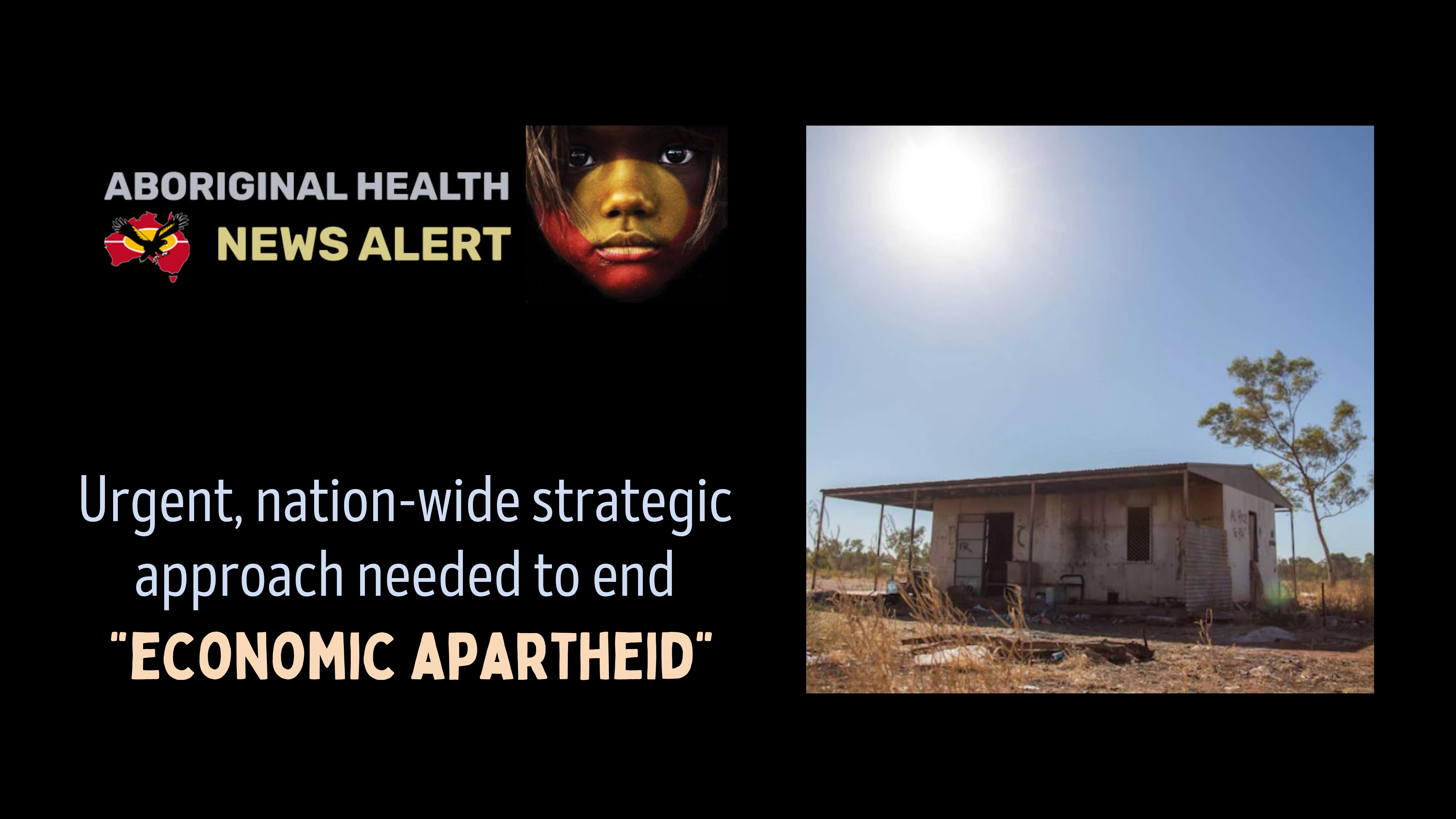
Image in feature tile is of shack outside of Tennant Creek. Image source: ABC News.
Time to end First Nations “economic apartheid”
Experts from The Australian National University (ANU) have raised alarm bells about the “economic apartheid” facing Aboriginal and Torres Strait Islander peoples and are calling for an urgent, nation-wide strategic approach to ensure their economic self-determination. This is the key theme of a landmark series of events to be held this week and led by the ANU First Nations Portfolio.
A first for Australia, the forum and symposium will chart the path to First Nations Australians’ economic development, wealth creation and a self-determined economy. Professor Peter Yu AM, Vice-President First Nations at ANU, said Australia remains the only Commonwealth country to have never signed a treaty with its Indigenous people.
To view the ANU’s media release Time to end First Nations “economic apartheid” in full click here.
A town camp outside Alice Springs, NT. Photo: Children’s Ground. Image source: The Guardian.
Children protection system under fire
Every year, Australia’s child safety departments remove thousands of children from their parents on the grounds they are not safe at home and need urgent protection. In doing so, the government becomes their guardian, taking responsibility for their lives. Far from being safe, some of these children are then preyed upon by the very people the government has vetted to look after them.
Indigenous children are 10 times more likely to be removed from their families. Departmental policy dictates that they are then placed with Indigenous carers to maintain contact with their culture, but that doesn’t always happen. Instead, Aboriginal children can languish in care hours from their land while some workers dismiss signs of sexual abuse in First Nations children as “cultural” behaviour.
Lisa Wellington from Aboriginal women’s health and welfare organisation Waminda said the child protection system had been failing Indigenous families since it had been set up. “In order for change to happen, the department needs to engage with the Indigenous community and listen to the families and walk alongside them,” she said.
To view the ABC article Bad Parent in full click here.
Image source: Aboriginal Family Legal Services website.
Health reform issues for new government
Is Australia on the verge of a long-awaited and sorely needed move towards cooperative federalism to drive health reform? Encouraging noises to this effect have emerged from the first National Cabinet meeting (Friday 16 June) since the Federal election.
The NSW Premier said there had been “a real focus of working with the States and Territories in relation to substantive health reform going forward” something that had “been in the too-hard basket for too long.” The Queensland Premier said it had been “a refreshing change to be able to discuss health. Previously, we have tried to get this on the agenda. We’ve got a PM who listens and understands that health is a big issue and it is a national issue that’s affecting everybody across our nation”.
The Victorian Premier said: “…on behalf of every nurse, every ambo, every doctor, every patient in Victorian public hospitals I want to thank the Prime Minister. Politics was put aside at this meeting and we’ve put patients first and that is the most important thing. Now, the test for all of us will be to work hard in the weeks and months to come, to come up with practical ways in which we can make the system work as a true system.”
Associate Professor Lesley Russell will monitor the efforts of the Albanese Government to deliver on their election commitments in health, healthcare, Indigenous health and climate change (and in fact any issue that improves the health status and reduces the health disparities of Australians).
To view the Croakey Health Media article The Health Wrap: as National Cabinet sets a course for health reform, here are some key issues to address in full click here.
Image source: Choose Your Own Health Career website.
Call for action against racism, racial violence
A Brisbane author brought her defiant call to action against racism and racial violence to Cherbourg last week, welcoming South Burnett community members to the Ration Shed Museum for a workshop on her 2021 book ‘Another Day in the Colony’. ‘Another Day in the Colony’ has attracted praise from fellow academics as well as members of the public, who commend the author on her uncompromising truth-telling and exposure of Australia’s intolerance.
“While I work as an academic, the book was written just for anyone to read – I wanted to write for mob and wanted my kids to be able to read it, regardless of whether they got a degree or not,” Dr Watego explained. “The thing that’s really hit me is mob getting back to me and saying ‘you wrote what I feel! You gave a language to what I already knew but didn’t know how to express.’
“Mob have been really moved by it, and that’s what I wanted to do – I wanted to speak to the souls of blackfellas. That’s the beautiful part: not the reprints, but the imprint it’s had on the community.”
To view the Burnett Today South, Central & North article Cherbourg Celebrates book tour in full click here.
Dr Chelsea Watego and her book Another Day in the Colony.
Top 3 men’s health questions
In celebration of Men’s Health Week (13-19 June 2022), Dr Lucas de Toca from the Australian Government Department of health has spoken on how family history and lifestyle impact our health and provides tips to help maintain a healthy lifestyle. The three top questions answered by Dr de Toca are:
What is Men’s Health Week?
How can men build healthier outcomes and reduce the risk of chronic disease?
How can men better engage with Australia’s health services?
To view the Department of Health’s Top 3 Qs article click here.
Health conference abstracts FINAL CALL
A final call for abstracts for the upcoming Ngar-wu Wanyarra Aboriginal & Torres Strait Islander Health Conference is being put out. The closing date is just one week away – COB Monday 27 June 2022.
For further event information click here and to registerto present clickhere.
Adam Goodes (virtually attending) and Sue-Anne Hunter will be keynote speakers at The 7th Annual Ngar-wu Wanyarra Aboriginal & Torres Strait Islander Health Conference.
Mob left out of low unemployment figures
The National Employment Services Association says First Nations people and other disadvantaged Australians are being left out of record low unemployment figures. Last week the Australian Bureau of Statistics (ABS) data reported unemployment remained at a record low 3.9% in May.
The real numbers were much higher. The employment rate among Indigenous Australians is considerably lower than it is for the rest of the population. Many First Nations people have historically been excluded from statistical analysis such as employment figures. Historically Aboriginal Torres Strait Islander peoples unemployment rates have sat fairly consistently at three times that of their non Indigenous counterparts.
Discrimination is a factor in the employment of Aboriginal and Torres Strait Islander people. That is ever so slowly changing so that disparity you know is trending in the right way, but not rapidly. To view the National Indigenous Times article Industry peak body calls out Indigenous exclusion in latest unemployment rates in full click here.
Image source: Monash University Lens website.
New process for job advertising
NACCHO have introduced a new system for the advertising of job adverts via the NACCHO website and you can find the sector job listings here.
Click here to go to the NACCHO website where you can complete a form with job vacancy details – it will then be approved for posting and go live on the NACCHO website.
Earlier this morning NACCHO Chair Donnella Mills addressed The Federation of Ethnic Communities’ Councils of Australia (FECCA) 2022: Advancing Multicultural Australia conference. The event is Australia’s premier conference on multiculturalism, diversity and inclusion, and migration and hosts multicultural communities, policy makers, service providers, academics and many more over two days of presentations, speakers and topics.
Ms Mills said, “It is important that when we are talking about today’s systemic racism in the health system, we understand two fundamental points. The first is that Aboriginal and Torres Strait Islander peoples are foremost and always Aboriginal and Torres Strait Islander peoples. We have our own distinct identities, languages and beliefs about what contributes to health and wellness and what causes sickness. Australia’s health system, however, is built around the identities and beliefs of the white settler and their western model of health and wellness and causes of sickness. This immediately puts Aboriginal and Torres Strait Islander peoples on the back foot in accessing health care in Australia. For us to access mainstream health services, we are required to suspend our own beliefs and cultures and adopt or accept the western model of health.”
You can access Ms Mills’ speech in full here. For more information about the FECCA2022 conference click here.
ACCHO CEO awarded honorary doctorate
Aboriginal Medical Services Alliance NT (AMSANT) has issued a media release saying it is proud to acknowledge the awarding of an Honorary Doctor of Arts to its Chair and Central Australian Aboriginal Congress Congress (CAAC) CEO, Donna Ah Chee, by Charles Darwin University yesterday. The award took place at a ceremony in Mparntwe (Alice Springs) where she has lived and worked for the past 30 years.
AMSANT CEO, Dr John Paterson congratulated Ms Ah Chee on her well-deserved honour in recognition of her significant contribution to the health of First Nations peoples. “Donna has distinguished herself through the outstanding leadership she has provided to the Aboriginal community-controlled health services (ACCHS) sector, including many years as CEO of CAAC and as Chair and Director of AMSANT”, Dr Paterson said.
“Her leadership has also been recognised through many high-level appointments to boards and advisory bodies in Aboriginal health and related areas, including the NACCHO, the NT Aboriginal Health Forum and the NT Children and Families Tripartite Forum. “Donna has been a driving force in the development and expansion of the model of Aboriginal comprehensive primary health care delivered by our ACCHSs and broader reforms of the health system that together are required to achieve better health outcomes for our people. Her passion and significant contribution in the areas of early childhood development, education, health research and reducing alcohol harm have been widely recognised.”
To view AMSANT’s media release AMSANT Chair, Donna Ah Chee, awarded Honorary Doctorate in full click here.
Donna Ah Chee. Image source: Health Voices Journal of the Consumers Health Forum of Australia.
Remote houses are dangerous hot boxes
In remote Indigenous communities that are already very hot and socioeconomically disadvantaged, climate change is driving inequities even further. New research, published in the Medical Journal of Australia shows how higher temperatures in remote Indigenous communities in the NT will drive inequities in housing, energy and health.
Existing housing in remote areas is old and poorly constructed. In many remote Indigenous communities in the NT, you don’t need a building permit or even a qualified builder to build a house. Houses have missing doors, boarded-up windows, no air conditioners, are often un-insulated, have failed plumbing and have been poorly maintained over decades. These houses become dangerously hot as climate change bears down.
The researchers conclude the solution is Indigenous communities need a say; buildings need to be climate resilient; energy needs to be safeguarded and houses need to be maintained.
To view The Conversation article How climate change is turning remote Indigenous houses into dangerous hot boxes in full click here.
Shoddy NT remote homes lethal
Indigenous Australians living in remote, shabby housing with unstable electricity connections in the NT’s extreme heat are enduring life-threatening conditions. A research paper published this month in the Medical Journal of Australia found that Indigenous Australians with chronic diseases who depend on cool storage and electrical equipment are vulnerable to dying earlier.
The study was conducted by the ANU in partnership with the Julalikari Council Aboriginal Corporation in the NT, where extreme heat stress has become a reality in the past few years. ANU researcher Simon Quilty says excessive heat, poor housing, energy insecurity and chronic disease have reached critical levels and a multi-sector response is needed to avert catastrophe. He says a constant electricity supply is often a luxury, rather than a right.
“Most houses in remote communities are old, poorly constructed and poorly maintained,” Dr Quilty said. He said tenants pay rent for houses with no doors, no windows and no insulation in the ceiling, falling well below national building codes. “All of the houses in these communities rely on pre-paid power cards and as a result there are extreme rates of electricity disconnection, making those with chronic disease particularly vulnerable,” Dr Quilty said.
To view the Kyabram Free Press article Shoddy homes lethal to Indigenous patients in full click here.
Unserviced shacks in Tennant Creek shelter some people on the public housing waiting list. Photo: Samantha Jonscher. ABC News.
Diabetes epidemic hits Central Australia
The latest health research has shown type two diabetes in remote Aboriginal communities has reached epidemic proportions, with children as young as four diagnosed. The rates of type 2 diabetes in remote communities are some of the highest in the world and getting worse, according to new research released by the Menzies School of Health Research.
Menzies researchers examined seven years of health data from 21,000 Aboriginal people across 51 remote communities in the NT. It found a staggering 40% of adults in Central Australia now have the condition, which can cause kidney disease, heart disease, strokes, impaired vision and amputations due to infections. 29% of the Aboriginal adult population in the rest of the Territory are also living with the condition. In 2020 it became the leading cause of death in communities, and those diagnosed with it are getting younger.
Shiree Mack and her family have lived with type two diabetes for years and many of her extended family are also battling the condition. With younger generations increasingly affected, she says the time for change is now. “The effects are huge and our little people are getting diagnosed at five and six,” she said. Ms Mack said any proposed solutions need to come from the community. “Let’s listen to the community let them tell us what will work. They know.”
To view the SBS NITV article Diabetes epidemic hits Central Australia in full click here.
The Mack and Ross families from Alice Springs are all living with type two diabetes as the number of cases in the Centre skyrocket. Image source: NITV.
Integrating kidney health into patient care
Chronic kidney disease (CKD) affects one in 10 Australian adults. For Aboriginal and Torres Strait Islander peoples, the prevalence is even higher, affecting nearly one in five adults. CKD contributes to 11% of all deaths and is associated with 37% of all cardiovascular deaths in Australia. However, the asymptomatic nature of CKD means it can be difficult to diagnose unless there is targeted screening for it. Timely management can slow or even prevent the deterioration in kidney function, and improve cardiovascular outcomes. GPs are in a prime position to detect and diagnose CKD early. This involves targeted screening and performing investigations that are mostly already part of regular clinical practice.
Dr Tim Senior, GP at Tharawal Aboriginal Corporation, clinical senior lecturer at the University of Western Sydney Medical School and CKD expert in general practice says that “Rather than seeing the kidneys as a single, separate, complex and difficult organ, it is straightforward to integrate them into the overall care of your patients along with other organ systems. You’ll find, for instance, that what’s needed to diagnose CKD is largely already what you’re doing for other conditions like cardiovascular disease and diabetes. So when you assess your patients for risk factors and test for cardiovascular disease and diabetes, you should also think of their kidneys.”
To view the NPS MedicineWise article CKD – Integrating kidney health into patient care in full click here.
Dr TIm Senior. Image source: RACGP newsGP.
Indigenous assistant minister sworn in
Indigenous Australians assistant minister Malarndirri McCarthy has vowed health outcomes for First Nations people will be placed at the forefront of the Albanese government’s bid to close the gap. The NT senator was sworn into the ministry by Governor-General David Hurley at Government House on yesterday.
Senator McCarthy said commitments taken to the election campaign focused on health policies, but also included improving access to education and job opportunities for people in regional and remote communities. A key focus would be closing the gap in life expectancy between Indigenous and non-Indigenous people, with better health outcomes being essential to improving the lives of First Nations people.
Senator McCarthy said she will be working closely with Indigenous Australians Minister Linda Burney – who was appointed to cabinet – on progressing a constitutionally enshrined voice to parliament in the government’s first term.
To read Yass Tribune article Indigenous assistant minister sworn in in full click here.
Malarndirri McCarthy with her partner Richard and their children following her swearing-in at Parliament House. Photo: AAP, Image source: SBS News.
Indigenous Eye Health Conference
Health leaders from Aboriginal and Torres Strait Islander communities, who recently attended a national eye health conference, called on non-Indigenous Australians to support efforts to establish an Indigenous led approach to closing the gap in eye health. The 2022 National Aboriginal and Torres Strait Islander Eye Health Conference (NATSIEHC22), co-hosted by Indigenous Eye Health (IEH) at the University of Melbourne and Aboriginal Medical Services Alliance Northern Territory (AMSANT), took place on Larrakia country in Darwin from 24–26 May 2022.
The conference theme, Our Vision in Our Hands, was reflected in a consistent call for “greater leadership and ownership of eye health by Aboriginal and Torres Strait Islander people, along with the shift in power that is necessary to produce the outcomes that we are all working towards”.
One of the conference co-chairs, Anne-Marie Banfield, who is the National Manager of Engagement and Awareness at Hearing Australia said that while First Nations peoples must play a key role in leading eye health initiatives that improve outcomes in their communities they cannot do this on their own – non-Indigenous people are needed as allies to “amplify the voice of Aboriginal and Torres Strait Islander people”.
To view the mivision The Ophthalmic Journal article Making Change: Indigenous Eye Health Conference in full click here.
New process for job advertising
NACCHO have introduced a new system for the advertising of job adverts via the NACCHO website and you can find the sector job listings here.
Click here to go to the NACCHO website where you can complete a form with job vacancy details – it will then be approved for posting and go live on the NACCHO website.
Image in feature tile is of Stacey Foster-Rampant with her baby boy, Tyler, at a Malabar Community Midwifery Link Service clinic. Photo: Louise Kennerley. Image source: The Sydney Morning Herald.
Racism in perinatal health services
After nine months, imagine giving birth to a beautiful, healthy baby. As tired as you are, you adapt to your new sleep-deprived routine, feeding your newborn at any time of the day and night as needed. But then child protection services arrive with the police, and a court order, to take your baby from your arms and place them in the care of a stranger. Sadly, this is the case for too many First Nations women in Australia.
Issues relating to the removal of First Nations infants from their families by contemporary child protection systems can be traced to perinatal health services. Tracey Stephens, a Kurnai woman and registered midwife, sees racism towards Aboriginal and Torres Strait Islander women across mainstream healthcare settings on a regular basis. “Stereotypically in mainstream midwifery there’s this strong sense that all Aboriginal women are going to smoke cannabis and drink alcohol and are drug addicts. However, this isn’t the case.” she says. “Far too much of my time is spent trying to educate others and address unconscious bias and racism amongst the healthcare workforce.
To read the article Separated at birth: Racism and unconscious bias in perinatal health services by Research Fellow, Health and Social Care Unit, Monash University in full click here.
Image source: Monash University Lens webpage.
SA to start Voice to Parliament journey
South Australian Attorney-General Kyam Maher wants to begin talks on a state version of the First Nations Voice to Parliament ahead of a launch of the body next year. It would provide advice to Parliament about decisions affecting the lives of First Nations people. Mr Maher — SA’s first Aboriginal Attorney General and Aboriginal Affairs Minister — said South Australian Labor made a commitment to adopt the Statement from Uluru after the 2019 federal election.
He said he believed the state should not have to wait for the federal government to act. “At its core, it’s about Aboriginal people having more a say in decisions that affect their own lives,” Mr Maher said. “I find that pretty hard to argue against.”
To view the ABC News story Consultation to start on SA Indigenous Voice to Parliament ahead of 2023 launch in full click here.
Kyam Maher is the only Indigenous person elected to parliament in South Australia at a state or federal level. Photo: Ethan Rix, ABC News.
First Nations more likely to die in childbirth
While Australia is one of the safest places in the world to give birth, First Nations women are three times more likely to die in childbirth than other Australian women and First Nations infants are almost twice as likely to die in the first month of life with preterm birth the biggest cause of mortality.
The causes of these gaps in life expectancy are complex and stem from colonisation, including:
racism and lack of cultural safety in hospitals and from healthcare providers
pregnant First Nations women avoiding antenatal care for fear of child protection services taking their children. This is a legacy of the “stolen generations” with continuing high rates of child removals
closures of regional and remote birthing services requiring more First Nations women to leave home and travel long distances to give birth, often alone. Some women opt to give birth without a midwife, which can have significant issues for mother and baby.
Ensuring First Nations children are born healthy and strong is the second Closing the Gap target – a critical foundation for “everyone enjoying long and healthy lives”. A much needed step to guarantee this is to increase First Nations health workers, particularly midwives and nurses.
To view The Conversation article First Nations mothers are more likely to die during childbirth. More First Nations midwives could close this gap in full click here.
Geraldine at the Gudang Dalba Hostel, Darwin NT. Image source: ABC News.
Mental health restraint concerns
Patients in Victoria’s mental health hospitals are being restrained at higher rates and for longer than the national average, a new report has found. Aboriginal and Torres Strait Islander people are being secluded and restrained at higher rates, which the Victorian Aboriginal Community Controlled Health Organisation (VACCHO) said is concerning.
“Many Aboriginal people have complex trauma,” a spokesman for VACCHO said. “We are concerned with this data and would like to know more on the reasons that drive this over-representation. A model of care that is focused on healing, social and emotional wellbeing and cultural safety is what works for Aboriginal people.”
To view the 7 News article Restraint concerns in Vic Mental health in full click here.
Image source: The University of Melbourne Pursuit webpage.
Approaches for non-Aboriginal health professionals
SA’s outstanding young leaders were recently celebrated through the 40 Under 40 Awards. Annabelle Wilson, Associate Professor of Implementation Science at Flinders University, SA was included in the list. 38-year-old Professor Wilson is a dietician and PhD with a clear focus on Indigenous health. “Through my research and leadership, I have disrupted and challenged current thinking about how non-Aboriginal health professionals work in Aboriginal and Torres Strait Islander health, specifically in nutrition and dietetics,” Annabelle says.
“My research has impacted health professional practice by identifying and translating approaches that non-Aboriginal health professionals can use when working in Aboriginal and Torres Strait Islander health, including reflexivity and awareness of one’s own attitudes and biases.” Annabelle’s work led her to develop models of practice, which were adopted in mentoring and training courses for health professionals. “In the next few years I plan to continue and extend the work I have been doing. In particular, I have applied for funding to lead transformation in nutrition and dietetics related to Aboriginal and Torres Strait Islander health.”
To view the InDailyand CityMag article SA’s top young business leaders click here.
Associate Professor Annabelle Wilson. Image source: citymag.indaily.com.au.
Indigenous Health Division is recruiting
Do you want to make a real contribution to improving Aboriginal and Torres Strait Islander health outcomes? Do you have a unique set of skills and experiences to contribute to this challenging undertaking? The Indigenous Health Division of the Department of Health has multiple roles for you across both the APS5 and APS6 levels.
The Department of Health is seeking experienced and committed people to develop relationships, policies and programs that improve the health outcomes of Aboriginal and Torres Strait Islander people. You will help to shape the development and implementation of the Australian Government’s healthcare commitments to Aboriginal and Torres Strait Islander communities.
Applications close on Monday 27 June 2022. Further detail on the roles is available on the APSJobs and the Department of Health’s website or by using this link.
Remote PHC Manuals project June update
The Remote Primary Health Care Manuals (RPHCM) are currently being reviewed and updated. Monthly updates are being provided to keep health services and other organisations up-to-date as RPHCM moves through the review process. It is now almost two years into the manuals updating project and activities are continuing to meet planned timelines (despite some COVID impacts that have tightened deadlines for reviews).
All protocols will be finalised for publication on Thursday 20 June 2022. After this date, there will be no further changes to the manuals as they move into the final editing and publication stage. The new editions are planned for release (online and hardcopy) in November 2022. The project team will meet with key stakeholders shortly to discuss major changes and prepare health services to use the new editions.
You can view the RPHCM Project Update June 2022 flyer here.
New process for job advertising
NACCHO have introduced a new system for the advertising of job adverts via the NACCHO website and you can find the sector job listings here.
Click here to go to the NACCHO website where you can complete a form with job vacancy details – it will then be approved for posting and go live on the NACCHO website.
Take Heart: Deadly Heart screening
A virtual screening of the Take Heart: Deadly Heart – A Journey to an RHD Free Future followed by a Q&A panel session will take place from 11:00 AM–12:00 PM AEST on Wednesday 29 June 2022.
A guest speaker for the Q&A panel session is a senior Noongar woman, Vicki Wade, who has over 40 years of experience in healthcare. Vicki is a co-producer of Take Heart: Deadly Heart. She has guided the production process in a culturally appropriate way and employed a series of yarning circles throughout the pre-production phase. Vicki is well respected for the work she has done to close the gap. She sits on the National Close the Gap steering committee and is a previous board member of the Congress of Aboriginal Nurses and Midwives.
The screening is an opportunity to see the work that is being done across Australia, in regional and remote communities, to eliminate Rheumatic Heart Disease. Attendance is free but registration is essential. To register click here.
Image in feature tile is of Tristan who features in an Australian Government Department of Health Twitter post, saying “It’s best that we all get the 715 check.”
Men’s Health, Our Way – Let’s Own It!
Earlier this morning NACCHO released the following media release to mark Men’s Health Week 2022:
Men’s Health, Our Way – Let’s Own It!
Men’s Health Week 2022: Building Healthy Environments for Men and Boys
In the 2022 Men’s Health Week, the National Aboriginal Community Controlled Health Organisation (NACCHO), draws attention to the importance of improving health outcomes for Aboriginal and Torres Strait Islander men, across Australia.
The Aboriginal community-controlled health sector has made vast changes to outreach, education, and engagement with men, providing a wide range of preventative and early intervention, and culturally sound men’s programs that address critical social and emotional issues that some men face.
Donnella Mills, NACCHO Chair, states, ‘Our goal is for Aboriginal and Torres Strait Islander males to live longer, healthier lives and we urge them to visit their local Aboriginal Community Controlled Health Services more often to discuss their health.’
Aboriginal and Torres Strait Islander men access primary health care services at the lowest rate, compared to other Australians, and health statistics indicate they have the poorest health outcomes in Australia. Research shows there are various barriers for Aboriginal men accessing health services including, societal related issues such as, stigma and gender differences; cultural differences, including language, beliefs, and law; logistical challenges, such as distance and transportation; trust in health services, financial challenges, and individual reasons including, health understanding, previous experiences and illnesses, self-esteem, and confidence, etc.
Ms Mills said, ‘The theme of this year’s National Men’s Health Week, Building Healthy Environments for Men and Boys is about the importance of Aboriginal Community Controlled Health Services creating a holistic, culturally safe and engaged space for men to discuss and treat their health issues.
‘NACCHO are committed to reducing the rate of hospitalisations, which is almost three times higher than for other Australian men; and reducing suicide rates, which is one of the highest leading causes of death for Aboriginal males in this country.’
Chris Bin Kali, NACCHO Deputy Chair, said, ‘NACCHO works alongside the Aboriginal Community Controlled Health sector to ensure quality health services reach all Aboriginal and Torres Strait Islander people, in a culturally appropriate and safe environment. Ongoing support from governments to ensure these services continue, are essential.
‘A great way to check on your overall health is with a 715 Health Check that our health services offer, and I would stress the importance to get them done regularly for our men! The 715 Health Check assesses your overall health with the aim to provide health care matched to your specific needs via early detection, diagnosis, and intervention for common, treatable conditions. It is designed to support the physical, social, and emotional wellbeing of Aboriginal and Torres Strait Islander patients of all ages.’
Case study Yerin Eleanor Duncan Aboriginal Health Services, NSW:
The Yerin Men’s Group sessionsare a local group that partner with other Aboriginal health organisations and host a session every month touching upon various issues that support men’s business, sharing knowledge, assistance and guidance amongst each other.
The Glen Drug and Alcohol Rehabilitation centre recently joined the Men’s Group session to share their personal stories and assist with information. In March, they invited Yadhaba Aboriginal Health Workers and community Elders to host a day of yarning about mental health and well-being and fishing on Country.
You can access this media release on NACCHO’s website here.
Image source: Australian Nursing & Midwifery Journal.
Apunipima hosts Men’s Health Summit
Apunipima Cape York Health Council (ACYHC) is hosting its annual Cape York Men’s Health Summit in Hope Vale this week. The event will see 120 males from all over Cape York descend on Elim Beach for a week of camping with a focus on men’s health. The theme of the week is ‘growing together as fathers, providers and protectors’ and there will be a range of activities and discussions throughout the week, focusing on men’s business with a host of talented guest speakers presenting over the whole week.
“We’re very excited about the return of the Apunipima Men’s Health Summit in 2022. We haven’t been able to hold a Men’s Summit for the last two years due to Covid, so there’s been a lot of interest in this year’s event. Our male staff are excited to be hosting so many men from across the Cape and providing a space where they can come together to talk about issues that are important to them,” said Apunipima CEO, Debra Malthouse.
Headlining the week will be one of FNQ’s funniest comedians, Sean Choolburra. The very popular former cultural dancer will address the summit with his unique blend of history, cultural knowledge and spiritual wisdom, delivered with loads of energy and plenty of cheek. Also speaking throughout the summit will be BBM Cairns’ National TalkBlack radio host Trevor Tim, former Gold Coast Titans player Davin Crompton and more including academics, athletes, motivational speakers and health industry professionals.
The event runs all week from Monday 13 to Friday 17 June, 2022.
To view the ACYHC’s media release Apunipima Hosts Men’s Health Summit in Hope Vale in full click here.
Elim Beach, 25km east of Hope Vale. Image source: ACYHC.
Life expectancy improvement too slow
The main point of an editorial from the current online issue of the Medical Journal of Australia is that while it is possible to Close the Gap, current efforts are inadequate. Life expectancy for Indigenous people is improving, but closing the gap remains unacceptably slow
Although recent boosts to funding are welcome, much more needs to be done by the Commonwealth to fill service gaps with ACCHOs and by jurisdictional governments on social determinants especially housing, justice and education. In key matters like housing, national leadership would be welcome and it may be time to reintroduce National Partnership Agreements. Despite the editorial comments referencing an NT article, it has national relevance.
You can read the editorial Life expectancy for Indigenous people is improving, but closing the gap remains unacceptably slow in full click here.
Photo: Chloe Geraghty. Image source: Amnesty International Australia website.
Qld mob to have bigger healthcare say
Indigenous Queensland communities are set to have a much bigger say on their own healthcare and housing needs, as well as how their children are educated. The state’s 26 Indigenous councils will soon start deciding how Queensland government services such as health care, housing and education are delivered.
Advisory panels will be appointed in each Indigenous community within two years to advise the government. Aboriginal and Torres Strait Island Partnerships Minister Craig Crawford says the move is an important step towards self-determination. “Progressing local solutions and decision-making with Aboriginal people and Torres Strait Islander people is critical for communities to thrive,” he said yesterday. The new Local Decision Making Bodies (LDMBs) will be told how much money the government is investing in each community. Information will include details such as how much is spent on services, the amount of funding for each service contract, who is delivering the contracts, and whether they employ local people.
To view the Northern Beaches Review article Qld Indigenous to be handed more control in full click here.
Image source: Northern Beaches Review.
Funding for eating disorders research
Sydney’s first eating disorders research and translation centre is offering a nationwide grant opportunity to progress prevention, treatments and support in partnership with research, lived experience, clinical and community experts. The Australian Eating Disorders Research and Translation Centre, led by InsideOut Institute at the University of Sydney, has launched the IgnitED Fundto unearth new ideas that have the potential to solve the problem of eating disorders. IgnitED is offering grants of up to $25,000 to develop and test innovative ideas that have potential to improve outcomes for people with eating disorders and their loved ones. It is the Centre’s first funding initiative following the $13 million grant awarded in January to establish the new national centre.
According to the Centre’s Aboriginal and Torres Strait Islander Co-Lead, Leilani Darwin, First Nations Australians are believed to experience high rates of eating disorders, disordered eating and food insecurity issues. People with lived experience expertise and Aboriginal and Torres Strait Islander peoples are encouraged to apply for the grants. To view The University of Sydney Faculty of Medicine and Health News article National eating disorders centre ignites research fund for new solutions in full click here.
Additional $400m NSW CTG funding
The NSW Government has announced $401 million in additional funding over four years in the 2022-23 Budget, to prioritise Closing the Gap and other projects that improve outcomes for Aboriginal people across the state. Premier Dominic Perrottet said the significant investment reflected the need for a fresh approach to meaningfully shift the dial on Closing the Gap targets.
It’s clear traditional Government-led approaches haven’t worked. This needs to be done hand-in-hand with Aboriginal communities, who know best what changes need to be made to help communities thrive, Mr Perrottet said. That’s why we’ve worked in partnership with Aboriginal stakeholders to co-design a suite of initiatives across all areas of Government to make a greater difference.
To view the media release $400 million to empower Aboriginal communities & deliver outcomes in full click here.
Image source: Canberra Times website.
TB treatment safe during pregnancy
Seven out of 10 pregnant women were cured of their multidrug-resistant tuberculosis and delivered healthy babies after taking a medication that had previously been considered unsafe in pregnancy, a new Curtin and Telethon Kids Institute study has found. Published in JAMA Network Open, the study examined the experiences of 275 pregnant women with multidrug-resistant tuberculosis living in South Africa, Peru, Brazil, Iran and Uganda.
Lead researcher Dr Kefyalew Alene, from the Curtin School of Population Health and Telethon Kids Institute, said the study had found a medication used to treat multidrug-resistant tuberculosis, Linezolid, was associated with favourable pregnancy outcomes and high treatment success. “This is the first comprehensive review of treatment outcomes for multidrug-resistant tuberculosis in pregnant women, who remain one of the most vulnerable groups among the half a million people living with the disease globally,” Dr Alene said. Dr Alene said the study answered a challenging global issue of when to treat pregnant patients living with multidrug-resistant tuberculosis.
You can view the full paper Treatment Outcomes Among Pregnant Patients With Multidrug-Resistant Tuberculosis’ online here and the Curtin University article Study finds TB treatment during pregnancy is safe for mum and babyhere.
Image source: SBS NITV website.
HESTA Excellence Awards nominations open
HESTA has opened nominations for the 2022 HESTA Excellence Awardsto celebrate exceptional professionals working in disability, allied health, aged care and community services in Australia. With a $60,000 prize pool on offer, the national Awards celebrate professionals from the four sectors who are going above and beyond the everyday high-quality care they provide to achieve outstanding health outcomes for Australians.
HESTA CEO Debby Blakey said coming out of the pandemic and adapting to a ‘new normal’ has demonstrated the critical importance of these professionals to protecting and supporting our communities and our economic recovery. “Our world has changed so much these past few years and through it all, these amazing professionals adapted and innovated to continue supporting our communities, our families and our nation to keep us safe and healthy,” Ms Blakey said.
“Each year we’re privileged to find and recognise incredible people and organisations for their exceptional work. I’m very proud of the platform HESTA and these Awards provides to help share their stories and draw attention to the extensive impact these individuals have had on so many lives.” Anyone working in the four sectors – allied health, disability services, aged care or community services – and who are involved in the delivery of exceptional care or service can nominate or be nominated.
Nominations are open for both the Outstanding Organisation and Team Excellence categories. Independent judging panels comprising industry experts will select finalists and choose a winner from each sector and for each category. Nominations will close at midnight on Sunday 14 August 2022.
For more information or to submit a nomination, visit the HESTA Awards webpage here.
New process for job advertising
NACCHO have introduced a new system for the advertising of job adverts via the NACCHO website and you can find the sector job listings here.
Click here to go to the NACCHO website where you can complete a form with job vacancy details – it will then be approved for posting and go live on the NACCHO website.
World Elder Abuse Awareness Day
World Elder Abuse Awareness Day (WEAAD) is commemorated each year on 15 Juneto highlight one of the worst manifestations of ageism and inequality in our society, elder abuse. Elder abuse is any act which causes harm to an older person and is carried out by someone they know and trust such as a family member or friend. The abuse may be physical, social, financial, psychological or sexual and can include mistreatment and neglect.In many parts of the world elder abuse occurs with little recognition or response. It is a global social issue which affects the health, well-being, independence and human rights of millions of older people around the world, and an issue which deserves the attention of all in the community.
In Australia the safety of older Aboriginal people and a better understanding of Elder abuse prevention is a clear priority as the number of Aboriginal and Torres Strait Islander people aged 55 years and over is increasing and is projected to more than double from 59,400 in 2011 to up to 130,800 in 2026. Identifying and measuring Elder abuse in Indigenous settings is challenging. The Australian Institute of Family Studies (2016) reported that mainstream conceptualisation of elder mistreatment requires reconsideration in Indigenous contexts; substantially more work and the collection of quality and consistent data is required to better understand Elder mistreatment amongst Indigenous peoples. There are no precise statistics on the prevalence of Elder abuse in the Aboriginal population in Australia and the strategies which would be effective in preventing this abuse have not been identified.
You can read more about Aboriginal and Torres Strait Islander Elder abuse in the South Australian Health & Medical Research Institute report What keeps you safe: approaches to promote the safety of older Aboriginal peoplehere. You can also access a range of resources associated with the The Queensland Government’s Together we can stop elder abuse campaign, including the video belowhere.
Image in feature if of Helicopter Joey Tjungurrayi Waruwiyi – Canning Stock Route Project website.
Closing First Nations life expectancy gap
Closing the gap in life expectancy for Aboriginal and Torres Strait Islander peoples will be the focus of an Australian first health alliance. The Research Alliance for Urban Goori Health will unite a research organisation, health service and primary health care provider to improve health for Aboriginal and Torres Strait Islander peoples.
The partnership between UQ’s Poche Centre for Indigenous Health, the Institute for Urban Indigenous Health (IUIH) and Metro North Health, has identified cancer care, rehabilitation programs and innovative models of care, such as hospital in the home, as priority areas.
Poche Centre Director Professor James Ward said the Alliance’s work would be transformational, helping to accelerate Australia’s progress towards closing the gap in life expectancy. “Some of the issues we’re looking to explore is where the health system works well for Aboriginal and Torres Strait Islander patients, and where it needs to be improved,” Professor Ward said. “As a Pitjantjatjara and Nukunu man, I know how important it is to ensure our peoples’ voices are at the center of service design and delivery, to ensure equal access across the healthcare system.”
To view the University of Queensland article Australian-first health alliance aims to close life expectancy gap for Aboriginal and Torres Strait Islander people published on the New Medical Life Sciences website click here.
Image source: SNAICC website.
Pain Scales don’t work for mob
Presenting at the Australian Rheumatology Association Annual Scientific Meeting last week, Dr Manasi Murthy Mittinty said it was critical to address cultural differences into the diagnosis and management of pain. “Conventional pain scales have only been tested for Caucasian populations and do not capture the significant influence of spirituality and chronic harm,” said Dr Mittinty, clinician and pain scientist from the Royal North Shore Hospital, Sydney.
Dr Mittinty’s research on conceptualisation of pain by Aboriginal and Torres Strait Islander peoples revealed that it is embedded in a psycho-socio-spiritual context that is core to perceptions of health and wellbeing in Indigenous Australian communities. The research revealed that some experiences of pain by Indigenous people are unique. These perceptions of pain incorporate factors such as spiritual connection with pain, grief and loss, history of trauma and injury, fear of addiction to pain medication and exposure to pain from early childhood.
To view the Oncology Republic article Why pain scales won’t work for Indigenous Australians in full click here.
Image source: Gidgee Healing website.
Food insecurity not only a remote issue
A new study has found Aboriginal families in urban and regional NSW regularly experience food insecurity and has identified five key contributing factors that need to be addressed. The research – led by Aboriginal Doctoral researcher Simone Sherriff and senior researcher Sumithra Muthayya from the Sax Institute – is based on collaborative work with two Aboriginal Medical Services (AMSs): Tharawal Aboriginal Corporation in Campbelltown in outer Sydney and Riverina Medical and Dental Aboriginal Corporation in Wagga Wagga in regional NSW. Extensive interviews were conducted with local Aboriginal people and AMS staff from the two communities, along with stakeholders from local food relief and government agencies, food suppliers and schools.
Aboriginal people felt strongly that food insecurity was a huge issue facing many Aboriginal families in the two communities, despite not being in remote areas. When data obtained from both sites were analysed, the authors identified five key drivers of food insecurity unique to Aboriginal communities in non-remote areas.
To read the Sax Institute media release Aboriginal families strongly impacted by food insecurity, study finds in full click here. The research paper Murradambirra Dhangaang (make food secure): Aboriginal community and stakeholder perspectives on food insecurity in urban and regional Australia is available here.
Let’s Yarn About Sleep program
Young Indigenous people in Mt Isa will be taught about the mental health benefits of a good night’s sleep as part of a nation-leading program developed by The University of Queensland. Australia’s first ever Indigenous sleep coaches, Karen Chong and Jamie Dunne from Mt Isa, will work with 120 local youth on sleep education, sleep health coaching and narrative therapy as part of UQ’s Let’s Yarn About Sleep program (LYAS).
Launched last year by the Institute for Social Science Reseach, Senior Research Fellow Dr Yagoot Fatima saidthe programwas an Australian first that promotes sleep health in Aboriginal and Torres Strait Islander communities by integrating traditional knowledge with Western sleep science. “The LYAS program provides holistic, inclusive and responsive solutions to improve Aboriginal and Torres Strait Islander adolescents’ understanding of sleep and empowers them to embrace sleep health,” Dr Fatima said.
To view The University of Queensland UQ News article Dreamtime: Australia’s first Indigenous youth sleep program forges ahead in full click here.
Community members have created an artwork, “Lets Yarn about Sleep”. The artwork is a powerful representation of how the research team, community Elders, youth workers, and service providers work together to connect young people with their culture and improve their sleep and SEWB. Image source: The University of Queensland website.
Good Medicine Better Health online modules
The Good Medicine Better Health IGMBH) team at NPS MedicineWise have developed a series of seven education courses for Aboriginal and Torres Strait Islander Health Workers and Practitioners. The free online learning modules are designed to improve quality use of medicines (QUM) in Aboriginal communities, with each module featuring a member of a family as they learn more about their medicines.
In the video below, proud Ankamuthi and Erub woman and Advanced Aboriginal and Torres Strait Islander Health Worker, Judith Parnham, talks about the importance of QUM education and introduces the modules which cover a range of medical conditions: asthma, chronic pain, hypertension, type 2 diabetes, respiratory tract infections, and anxiety and depression, with more to come in 2022. All modules are self-paced, free to enrol in and earn CPD points.
To find out more you can access the GMBH program webpage here.
Prevocational standards committee EOIs sought
The Australian Medical Council (AMC) is currently seeking expressions of interest for a member of its Prevocational Standards Accreditation Committee who is an international medical graduate (IMG) and who has been granted general registration following completion of an AMC-accredited workplace based assessment (WBA) program. As the AMC is planning to undertake a review of the WBA processes (along with other assessment pathways for IMGs) they are hoping to receive expressions of interest from IMGs with experience working in an Aboriginal Medical Service, to share their insights on this, as well as the other areas of responsibility of this Committee.
You can find information regarding the position and how to apply on the AMC website: here. Expressions of interest should be submitted to using this email link by Friday 24 June 2022.
For more information, please contact Brooke Pearson, Manager, Prevocational Standards and Accreditation, using the above email link or by phoning 02 6270 9732.
Act now on Ice Inquiry recommendations
The Law Society of NSW is calling on the NSW Government to act without further delay on the recommendations of the Ice Inquiry to implement a health focused approach to battling the scourge of drug abuse. President of the Law Society of NSW Joanne van der Plaat says that it has taken far too long for the Government to act on the recommendations of the Ice Inquiry, and now is the time to make a decision and start implementing programs that will tackle the drug problem in earnest.
“The Law Society agrees with the experts called to give evidence during the Special Commission of Inquiry into the Drug Ice that the current prohibitionist approach is not working. We agree with law enforcement authorities who have said we can’t arrest our way out of drug problems,” Ms van der Plaat said.
To view The Law Society of NSW media release No MERIT in further delay of bold drug law reform and rehab in full click here.
New process for job advertising
NACCHO have introduced a new system for the advertising of job adverts via the NACCHO website and you can find the sector job listings here.
Click here to go to the NACCHO website where you can complete a form with job vacancy details – it will then be approved for posting and go live on the NACCHO website.
National Aboriginal and Torres Strait Islander Children’s Day
The National Aboriginal and Torres Strait Islander Children’s Day will be held on Thursday 4 August 2022with this year’s theme “My Dreaming, My Future.”
Children’s Day is an opportunity to celebrate our children and their connection to culture, family and community. Each year the Secretariat of National Aboriginal and Islander Child Care (SNAICC) promotes the event to engage children and communities across the country.
People are encouraged get involved with the day by hosting their own event. You can register your event on the SNAICC website here.
Image in the feature tile is of Pat Turner AM with A Report on Engagements with Aboriginal and Torres Strait Islander People to Inform a New National Agreement on Closing the Gap in June 2020.
National Agreement on CTG vital to making change
Today, at the commencement of National Reconciliation Week Friday 27 May to June 2022, NACCHO CEO Pat Turner AM has issued the following media release :
National Agreement on Closing the Gap vital to making change
This National Reconciliation Week, Australians are challenged to be brave and make change. Members of the Coalition of Peaks have been doing change-making work in and for their communities for more than 50 years. The National Aboriginal Community Controlled Health Organisation (NACCHO) which has a membership of 144 community-controlled health services in every jurisdiction of Australia is one of the key members of the Coalition of Peaks and strongly supports the National Agreement on Closing the Gap.
It was a desire to continue driving change that led the Coalition of Peaks – now a representative body of over 70 Aboriginal and Torres Strait Islander community-controlled peak organisations– to enter a genuine, formal partnership with Australian governments to Close the Gap.
This historic partnership and associated National Agreement on Closing the Gap set out how governments and the Coalition of Peaks will change the way they work together, to improve the lives of Aboriginal and Torres Strait Islander people. It also provides a framework for governments, policy makers, service delivery organisations and institutions, and all Australians, to take meaningful action towards reconciliation.
“A reconciled Australia is a country in which Aboriginal and Torres Strait Islander people have full control over our own destinies. A country where we live freely and equally, unencumbered by trauma and poor life outcomes, and where there is true recognition of our rights as First Peoples of this land, and our cultures and languages are honoured, protected and flourish”, said Lead Convener of the Coalition of Peaks and CEO of NACCHO, Ms Pat Turner AM.
“The National Agreement can make real changes in the lives of our people, but we won’t get there without Australians understanding it and the part they play in its implementation.
“The National Agreement’s outcomes are centred on what Aboriginal and Torres Strait Islander people have been saying for decades is needed to achieve equality in life outcomes between our people and other Australians, while strengthening our right to self-determination and identity as First Nations peoples.”
NACCHO Chair Donnella Mills said, “NACCHO has been working on this new National Agreement on Closing the Gap, as a member of the Coalition of Peaks. This agreement belongs to all of us!
“The National Agreement is built on four priority reforms to address ongoing critical issues around the social determinants of health such as housing, environment, access to health services, education, justice and others as the targets in there.
“We have worked with Aboriginal and Torres Strait Islander communities for decades on matters that are important to our people and are best placed to represent areas like health, early childhood, education, land and legal services.”
For those wanting to be brave and make change this National Reconciliation Week, the Coalition of Peaks is putting out the challenge to:
Support their implementation and promote them in your own organisation or business.
Encourage your community to become involved.
Talk to governments on how to apply the commitments under the Agreements to communities and organisations across the country.
You can view NACCHO’s media release National Agreement on Closing the Gap vital to making change here. You can also find out more about National Reconciliation Week on the Reconciliation Australia website here.
Completing unfinished business of reconciliation
For Ken Markwell, National Reconciliation Week from Friday 27 May to Friday 3 June 2022 is a time for Australians to learn about our shared history, culture and achievements – and to find ways we can contribute to achieving reconciliation. NRW is a time to reflect on how we as a country treat our Indigenous elders and the gaps and barriers that currently exist in Australia that prevent them from ageing well. It is widely accepted that how a society treats its elderly is a measure of its humanity. NRW provides an opportunity to consider our most vulnerable older Australians, our First Nations elders, and to measure our progress towards reconciliation by how well we care and look after them. This will be critical in the coming years when Stolen Generations survivors will be aged over 50 years and eligible for aged care support.”
This year’s theme “Be Brave. Make Change.” is a challenge to us all to be brave and complete the unfinished business of reconciliation so we can make change for all. There is no better place to address the unfinished business of reconciliation than to implement aged care reforms improving access to aged care for Aboriginal and Torres Strait Islander people. The aged care royal commission expressed concerns that Aboriginal and Torres Strait Islander people were not “accessing aged care at a rate commensurate with their level of need”.
The royal commission identified a range of factors for this, including social and economic disadvantage, a lack of culturally safe care, and the intergenerational impacts of colonisation and prolonged discrimination. Their findings also revealed that long-term health conditions affected 88 per cent of Aboriginal and Torres Strait Islander people over the age of 55 years and that Aboriginal and Torres Strait Islander people “should be receiving proportionately higher levels of aged and health care” than the rest of the population. Yet sadly, we find this is not happening.
To view the Australian Ageing Agenda article Completing the Unfinished business of reconciliation in full click here.
Ken Markwell is a Mununjhali man and executive general manager for indigenous services at Australian Unity. Image source: Australian Ageing Agenda.
‘They hug a blackie and move on’
Julie Tongs, CEO of Winnunga Nimmityjah Aboriginal Health and Community Services, has characterised Canberra’s Reconciliation Day as “tokenistic”, highlighting that more needs to be done to address the treatment of Aboriginal people in the ACT. Ms Tongs has asked “How many people actually turn up for Reconciliation Day? Most of them jump in their car and go down to the coast for the weekend.” Tongs argues that Reconciliation Day – to be celebrated on Monday 30 May this year – is meaningless without greater action to address the ongoing issues facing indigenous people in Canberra. “For me it’s about actions and until the government and the wider community take Aboriginal issues seriously I think that reconciliation is a long way off,” says Tongs.
Tongs, who has worked in Aboriginal Affairs for more than 30 years, says there’s more to addressing the plight of indigenous people in the ACT than merely on one day of the year. “A friend of mine, [the late] Dr ‘Puggy’ Hunter – who was chair of NACCHO used to say ‘They turn up, they hug a blackie and they move on’.” “If we are fair dinkum then people need to turn out and turn up every day not just Reconciliation Day.”
To view the CBR City News article ‘They turn up, they hug a blackie and more on’ click here.
Julie Tongs… “It’s tokenistic. How many people actually turn up for Reconciliation Day? Most of them jump in their car and go down to the coast for the weekend.” Photo: Belinda Strahorn. Image source: CBR City News.
Chance to put children front and centre
With the formation of the newly elected Government imminent as seats are finalised, advocacy body Secretariat of National Aboriginal and Islander Child Care (SNAICC) – National Voice for our Children has expressed its satisfaction at the prominent positioning of early years issues in the campaigning, calling on the new Government to continue to make early learning education and care (ECEC) a priority.
CEO Catherine Liddle said SNAICC is looking forward to working with the new Government to progress much needed policy reform to ensure Aboriginal and Torres Strait Islander children have their needs and voices heard. While describing the elevation of early learning by both major parties and independents as heartening, Ms Liddle said more needed to be done to consider the unique needs of Aboriginal and Torres Strait Islander families. “The current policies and systems just aren’t working for our families or our early leaning and support centres,” she explained.
To view The Sector article Formation of a new Government is a chance to put children front and centre: SNAICC in full click here.
Image source: The Indigenous Literacy Foundation.
Keynote for Dr Mickey Dewar oration
Pat Turner AM, CEO of NACCHO, will give the keynote address at National Archives of Australia’s biennial Dr Mickey Dewar oration. The oration will be held at NT Parliament House, Darwin from 5:30PM next Tuesday 31 May 2022, and streamed live from 6:00PM. National Archives’ Aboriginal and Torres Strait Islander Engagement Director Phyllis Williams said this year’s event, which is held during National Reconciliation Week, is an opportunity to learn about Indigenous matters and explore how each of us can contribute to reconciliation in Australia.
“The oration will bring together notable Indigenous figures Arrernte/Gurdanji woman Pat Turner and MC for the night Gurindji man Charlie King OAM. National Archives will also have key representatives attending the event, including new Director-General Simon Froude”, Ms Williams said. “The Dr Mickey Dewar oration is a not-to-be-missed event. This year’s discussion promises to be lively and engaging for anyone wishing to attend.”
Every second year, a speaker from the NTis invited to give an oration about the history, society or culture of the territory. Ms Turner was raised in Alice Springs and is at the forefront of community efforts to close the gap in health outcomes for Aboriginal and Torres Strait Islander people. Her talk will provide a fascinating insight into the challenges and achievements in relation to Indigenous issues. “I am delighted to be a part of such a prestigious and important event”, Ms Turner said. “With the impacts of the pandemic exposing critical issues in the healthcare system and Australia’s ongoing struggle to close the gap, now is the time to inspire change and action from all Australians.”
To view the National Archives of Australia media release Pat Turner AM to deliver keynote for 2022 Dr Mickey Dewar oration click here. You can book to attend this free event here.
The late Dr Mickey Dewar. Image source: Perth Now.
Asymptomatic STI testing research
Dr Simon Graham is an epidemiologist in the Department of Infectious Diseases at the Peter Doherty Institute for Infection and Immunity, University of Melbourne. He received the 2021 Sandra Eades Investigator Grant Award (Emerging Leadership) for his research which aims to increase opportunistic sexually transmitted infections (STI) testing to identify asymptomatic infections early so treatment is provided to prevent poor health outcomes.
Dr Graham said he had wanted to stay in the field of sexual health but gain specific academic skills via a Master of Applied Epidemiology at the ANU. Dr Graham said, “The bit I enjoy the most is the field work. Not surprising since one of the components of my master’s degree was investigating outbreaks. Whether its visiting Aboriginal Health Services to visiting prisons in regional Victoria, I have always felt the real work is out in the field connecting with others and listening to people who live in the local area about what they think could be a solution. My brain starts ticking at that point in how I can team up with that local community and test that idea or measure what that community just spoke about.
“I hope that my greatest contribution is to listen, connect, and deliver on what l promised. I aim to design things that communities can own and lead and most importantly keep after the project ends. For me the writing and statistics comes second to the ability to listen and connect. The COVID-19 pandemic has really highlighted this. Although l have won fellowships overseas, I have never planned for my work to have national or international relevance. I am focused on the relevance of the intervention for the communities I work with. Sometimes we are successful at highlighting that this intervention or program made a difference and then we can share it with other communities so they can succeed.”
To view the National Health and Medical Research Council (NHMRC) article Research excellence: Build grit and set out a plan in full click here.
Action needed to protect kids in detention
On Wednesday this week Amnesty International Australia issued a statement welcoming election pledges from the new Albanese Government on key human rights issues, and asking for swift action on 11 issues in the Government’s first 100 days, including raising the minimum age of criminal responsibility to at least 14 nationally, establishing a National Justice Reinvestment Unit, and implementing a process for real time national reporting of deaths in custody.
Another human rights issue for the incoming Government’s urgent attention is the 5-year delay in meeting out obligations under the United Nations Optional Protocol to the Convention Against Torture and other Cruel, Inhuman, or Degrading Treatment or Punishment (OPCAT), ratified by Australian in 2017. In an article published this week in Croakey Health Media Lindsay Pearce (University of Melbourne and Murdoch Children’s Research Institute), Andreea Lachsz (Victorian Aboriginal legal Service) and Tiffany Overall (Youthlaw) discuss why this delay is putting children and young people in Australian detention facilities at risk, and highlight the importance of consulting with ACCHOs on the implementation of our OPCAT obligations.
To view the Croakey Health Media article Australia must act now to protect children and young people in detention in full click here.
Image source: The Conversation.
New process for job advertising
NACCHO have introduced a new system for the advertising of job adverts via the NACCHO website and you can find the sector job listings here.
Click here to go to the NACCHO website where you can complete a form with job vacancy details – it will then be approved for posting and go live on the NACCHO website.
Image in the feature tile is of Australian opposition leader Anthony Albanese as he walks off the stage during a reception after winning the 2022 general election in Sydney. Image source: SBS NITV.
NACCHO congratulates ALP on election win
The National Aboriginal Community Controlled Health Organisation (NACCHO) congratulates the Australian Labor Party for its win in the 2022 Federal election and looks forward to working with the incoming government in continuing to fight for improved outcomes in Aboriginal and Torres Strait Islander health.
In particular, NACCHO welcomes the emphasis that Senator Penny Wong and Prime Minister elect, Anthony Albanese, gave to the Uluru Statement from the Heart in their victory speeches on election night. The Uluru Statement from the Heart sets out the way forward for all Australians in a process of genuine reconciliation. There must be no further delay in implementing a Voice to Parliament for First Nations peoples enshrined in the constitution.
The CEO of NACCHO, Pat Turner, speaking in Canberra, said, ‘NACCHO congratulates Linda Burney for her strong win in Barton. We are looking forward to seeing the first Aboriginal woman serve as Minister for Indigenous Australians and, presumably, in the new Albanese Cabinet.’
NACCHO also congratulates all the elected Aboriginal and Torres Strait Islander people in the new Parliament and thanks Ken Wyatt, the outgoing Minister for Indigenous Australians, for his contribution to Aboriginal and Torres Strait Islander affairs over the past three years.
NACCHO commits to working with the incoming government and the likely new Health Minister, Mark Butler, on the $111m package announced for Aboriginal and Torres Strait Islander health.
The Chair of NACCHO, Donnella Mills, said at Cairns on Sunday, ‘The ALP’s package was a welcome pre-election announcement. It includes the 500 trainees for our ACCHOs and badly needed dialysis clinics. It also includes action in combatting rheumatic heart disease, a preventable disease that is killing so many of our children, needlessly. Our youths are 55 times more likely to die from rheumatic heart disease than other Australian youths. This must stop. The ALP’s funding commitment is a critical step.’
The ACCHO sector serves over 410,000 clients per year, delivering over 3.1 million episodes of care, of which 1 million are delivered in remote communities. Our clinics are favoured by Aboriginal and Torres Strait Islander people and are directly controlled by the communities they serve.
You can view the NACCHO congratulates the ALP media statement on NACCHO’s website here.
Image source: The Guardian.
It comes down to working together, differently
When the landmark National Agreement on Closing the Gap was signed in 2020, Pat Turner AM, lead convener of the Coalition of Peaks and CEO of NACCHO called for celebration – and hard work. “Today we celebrate this historic Agreement and those who fought hard to make it a reality,” said Turner, at the time. “But tomorrow, the true work begins when we start to implement its commitments within our communities.”
Tomorrow has well and truly arrived. And so, while we continue to applaud the intent of the agreement between federal, state/territory and local governments, and the Coalition of Peaks; it’s time to get down to work. There’s a shared understanding that working together should look different in 2022. Australian governments have committed to working in new ways with Aboriginal and Torres Strait Islander people so they can achieve self-determination. Aboriginal and Torres Strait Islander communities, meanwhile, have expressed a desire to work alongside governments to design and implement outcomes that are identified by – and with – Indigenous communities.
This new approach is not about changing Indigenous ways of knowing, being and doing. In fact, it’s about embracing them. This change is about governments and Indigenous communities finding ways to work in the ‘middle space’ together. It’s about collective decision-making and shared accountability. And it’s about common outcomes and positive change. The key, however, will be working differently.
To view the PwC’s Indigenous Consulting article Meeting in the middle: How governments and Indigenous communities can work together, differently published in The Mandarin in full click here.
Image source: The Mandarin.
What now for mob under Labor?
The National Indigenous Times editor, Tom Zaunmayr, has looked at what is in store for Indigenous Australians following Labor’s win in the 2022 Federal election. Zaunmayr says it is good news for First Nations people, as there will be a referendum on a Voice to Parliament enshrined in the constitution by 2025. By putting a nation-changing Indigenous policy front-and-centre of its campaign, Labor showed how serious it is about First Nations issues. The talk has been promising, now it is time for action. Suring up the Voice – how it will look, who will be involved and when the vote will happen is priority number one. Truth and treaty, the other two key elements of the Uluru Statement are as important to get to work on.
Bringing the Federal Government back to the table in funding remote housing is critical, and Labor now needs to follow through. Labor’s campaign policies on justice and deaths in custody were lacklustre and remain a point of concern. The money pledged for remote justice initiatives is chicken feed and is insufficient for one region, let alone the entire nation. The promise to bring a stronger Indigenous voice to deaths in custody cases lacks detail.
Climate action in the Torres Strait Islands remains a sticking point too. We heard plenty about long-term plans for a net-zero economy, but nothing about what will be done for communities being swallowed by the sea right now. Without short-term infrastructure fixes, the first climate refugees to mainland Australia may very well be our own Indigenous island nation inhabitants.
To view the National Indigenous Times article Labor has won the election and the Greens may have power. What now for Indigenous Australians? in full click here. You can view a related article ‘This will change Australia’: Linda Burney says Labor committed to Indigenous Voice published today in The Sydney Morning Heraldhere.
Incoming Indigenous Affairs Minister Linda Burney says Australia is ready for a referendum on a Voice to parliament. Photo: Brook Mitchell. Image source: The Sydney Morning Herald.
First Nations eating disorders research
Sydney’s first eating disorders research and translation centre offers nationwide grant opportunity to progress prevention, treatments and support in partnership with research, lived experience, clinical and community experts. The Australian Eating Disorders Research and Translation Centre, led by InsideOut Instituteat the University of Sydney, focuses on risk and protective factors, very early intervention and individualised medicine as part of the top 10 research priorities identified in the National Eating Disorders Research and Translation Strategy 2021–31.
The Centre has launched the IgnitED Fund to unearth new ideas that have the potential to solve the problem of eating disorders. IgnitED offers grants of up to $25,000 to develop and test innovative ideas that have potential to improve outcomes for people with eating disorders and their loved ones. It is the Centre’s first funding initiative following the $13 million grant awarded in January to establish the new national centre.
According to the Centre’s Aboriginal and Torres Strait Islander Co-Lead, Leilani Darwin, First Nations Australians are believed to experience high rates of eating disorders, disordered eating and food insecurity issues. “The IgnitED Fund facilitates Indigenous innovation,” said Darwin. “For the first time, we are uniquely positioned to elevate the need to better understand the issue of eating disorders and to build the evidence and best practice for our communities.”
For further information and to apply for an IgnitED Fund grant ,visit The University of Sydney Faculty of Medicine and Health webpage National eating disorders centre ignites research fund for new solutionshere.
WA bowel cancer screening campaign relaunch
Due to its great success, the Cancer Council WA recently relaunched its 2021 bowel cancer campaign on social media platforms to raise awareness of bowel cancer amongst the Aboriginal WA community. The campaign encourages eligible people to do the National Bowel Cancer Screening Program (NBCSP) home test. Bowel cancer is the third most common cancer affecting the Aboriginal Australian community but is one of the most treatable cancers if found early. Less than half of all eligible West Australians participate when they receive the home test kit which is designed to detect bowel cancer in its very early stages. When detected early, more than 90% of bowel cancers can be treated successfully.
The campaign shares social media tiles featuring local people who are keen to share the message about bowel screening with their communities and encourage more people to do the NBCSP test when they receive it in the mail. Cancer Council WA has teamed up with Mary G, an Aboriginal personality, educator, and radio presenter to raise awareness of bowel cancer amongst the Pilbara and Kimberley Aboriginal communities. The campaign was developed in consultation with Aboriginal Health Council of Western Australia and Derbarl Yerrigan Health Service, with Aboriginal Medical Services, Elders, and Aboriginal staff from local clinics and organisations in the regions, including WA Country Health Service being consulted in the process.
You can access further information to the Cancer Council WA website here.
Irrkerlantye forgotten for 40 years
Nestled in the hills east of Alice Springs lies Irrkerlantye, a community in limbo. Irrkerlantye has none of the basic services the rest of Australia takes for granted: water is trucked in and a meagre power supply is provided by a few solar panels. There is no sewerage. The residents live in tin sheds and a few decaying demountables that offer little protection from Central Australia’s extreme desert temperatures.
Felicity Hayes has lived at Irrkerlantye most of her life. The stoic Elder is at her wit’s end, saying “We’ve been asking the government for housing and essential services this whole time, however nothing has been done to provide the most basic services that all people are entitled to. We just want people to come here and have a look and not sit in their offices all day and make decisions about us. They need to come here and talk to us because we’re the ones that are suffering.”
The only water supply to the community was cut in 2014 under a Country Liberal government and was never restored. At the time it was seen as an attempt to force the closure of Irrkerlantye. Felicity Hayes and her family could be facing another forty years forgotten on the fringes of one of the world’s most developed countries. “We’ve been fighting for forty years and we’ve got children, the next generation, and they’re still going to be living here” Ms Hayes said.
To view the SBS NITV article How governments have forgotten this NT community for 40 years click here.
Locals say Irrkerlantye has been ignored by all levels of government for decades. Image source: SBS NITV.
‘Through the rood’ food prices in remote NT
John Paterson regularly has people from remote communities text him grocery receipts to show how prices have spiked over the past few months. Travelling across the NT in his role as CEO of Aboriginal Medical Services Alliance Northern Territory (AMSANT) Paterson says he notices prices increase sharply the more remote the location. “It has almost become unaffordable now,” he says.
In the NT, food in supermarkets is 56% more expensive in remote communities than regional supermarkets due to long supply chains and poor quality roads, according to a 2021 reportby AMSANT. Inflation – predicted to reach 6% by year’s end – has increased pressure. The Arnhem Land Progress Association (ALPA), supports 27 remote community stores by securing grocery items and covering the store’s freight budgets to reduce the cost of food. Normally, its annual freight budget is $250,000. But in the past 18 months, the fuel levy to deliver food to just five of its remote communities – that require delivery by sea – has risen from $37,000 to $279,000. Rob Totten, store manager of a supermarket in Maningrida, Arnhem Land, says the price of some food products has “gone through the roof”.
Paterson is advocating to extend the footprint of an Aboriginal controlled organisation like ALPA to increase the buying power of remote community stores. “People want fresher food, they want cheaper food, and the way to do that is bulk purchasing by community stores that are run and led by Aboriginal people,” he says. “If we want to close the gap, plus the life expectancy gap between Aboriginal and non-Aboriginal people, then food security is a major issue that needs serious attention.”
To view The Guardian article ‘Through the roof’ food prices in remote NT are forcing Aboriginal families to make impossible choices in full click here.
Docker River Community Store. Image source: B4BA. Docker River Community Store NT $9.20 receipt for 2L of milk. Image source: The Guardian.
New process for job advertising
NACCHO have introduced a new system for the advertising of job adverts via the NACCHO website and you can find the sector job listings here.
Click here to go to the NACCHO website where you can complete a form with job vacancy details – it will then be approved for posting and go live on the NACCHO website.
National Palliative Care Week
National Palliative Care Week (NPCW), held from Sunday 22 to Saturday 28 May 2022, is Australia’s largest annual awareness-raising initiative held to increase understanding of the many benefits of palliative care. The theme for National Palliative Care Week 2022 is It’s your right. The theme seeks to raise awareness about the rights of all Australians to access high-quality palliative care when and where they need it. One of the great myths about palliative care is that it is only a synonym for end-of-life care. It is so much more than that. Anyone with a life-limiting illness has the right to live as well as possible, for as long as possible.
Virtual and face-to-face events will be held across the country during National Palliative Care Week 2022 to acknowledge and celebrate the commitment and dedication of all those working and volunteering in the palliative care sector across Australia. Now in its 27th year, and traditionally held in the last full week of May, NPCW is organised by Palliative Care Australia (PCA) and supported by the Australian Government Department of Health.
To find out more about National Palliative Care Week 2022you can access the PCA website here. You can also view a range of palliative care resources PCA have developed specifically for Aboriginal and Torres Strait Islander Peoples here.
The image in the feature tile is of a house in the remote Aboriginal community of Mulan, WA with water leakage. Image source: NITV.
Lack of safe housing a health concern
Access to safe, secure housing is a key determinant of health and life expectancy. Across Australia, residents in remote Aboriginal communities are often left waiting for urgent repairs, while their homes deteriorate to unliveable conditions. A SBS World News report describes how 57-year-old Mulan (WA) resident Veronica Lulu has difficulty walking around her community unassisted. Making it even harder for Veronica is the pool of water surrounding her house that appears to be coming from a broken underground pipe.
Veronica reported the issue to the WA state government which is responsible for maintenance in the remote Aboriginal community of Mulun, but she says that after nearly two years and repeated requests the problem still hasn’t been fixed and the leak has become so bad that the entire house is now encircled by water. Afraid she might fall, Veronica has moved in with a relative next door where the water is slightly less of a problem.
You can view the video of this SBS News segment, which includes footage of NACCHO CEO Pat Turner reiterating that “housing for health is so important to our people” here and a related SBS NITV News article A third of remote Aboriginal houses at ‘unacceptable’ standard published today here.
Veronica Lulu outside the home she cannot get into. Photo: Aaron Fernandes, SBS NITV.
ACCHO assists votes with candidate information
To assist our ocals understand who the candidates are in the upcoming federal election, and what those candidates believe in, Gurriny Yealamucka Health Service Aboriginal Corporation (GYHSAC) has asked every candidate key questions of importance to Yarrabah. Visitors to the GYHSAC have been invited to read through the candidates responses and “make your decision as to who you wish to vote for after you understand what is on offer.”
GYHSAC posed the following questions to the ALP, United Australia Party, Green, Independent and Katter’s Australian Party candidates:
How do you plan to improve the telecommunication services in Yarrabah?
Overcrowding in housing is an issue in Yarrabah, how do you propose to address this issue?
What do you propose to do about the funds lost by Indigenous Australians after the collapse of the ACBF?
How do you propose to increase community services in Yarrabah – e.g.: Meals on Wheels?
NAPLAN scores were not strong in Yarrabah. How do you propose lifting literacy and numeracy skills in Yarrabah?
RHD is a disease of disadvantage and poverty. What do you propose to do about tackling RHD in Yarrabah?
Training and employment opportunities are lacking in Yarrabah. What are your plans to address this?
You can access the responses to the above key questions on the GYHSAC website here.
Gurriny Yealamuck Health and Wellbeing Centre (Gurriny).
Independents with First Nations issues focus
Long-time human rights advocates Megan Krakouer and Gerry Georgatos are fighting to put First Nations issues on the agenda at this Federal election. With more than 500 Indigenous deaths in custody since the end of the Royal Commission into Deaths in Custody in 1991, and a huge gap between Indigenous and non-Indigenous people in health, education, housing, employment and other areas, the “social justice independents” are running to represent Western Australia in the Senate.
Ms Krakouer said they have experience working with the most vulnerable and marginalised people across the nation. “We have seen too many brothers and sisters left behind because of racist policies and legislation. We come across a lot of people who are silenced, who are voiceless. We have been failed by one government after another. They make the same promises and they don’t deliver, and that’s reflected in the incarceration rate, in child removals, deaths in custody, homelessness and suicides.
Ms Krakouer said the fact First Nations people make up a small percent of the national population was one factor driving political inaction. “There is no political will to address the suffering and mistreatment of people, particularly when they are in prisons. That is something I can’t accept.” She said she and Mr Georgatos were running as independents so they would be free to “say what needs to be said”.
To view the National Indigenous Times article Meet the independents determined to put First Nations issues front and centre in full click here.
Gerry Georgatos and Megan Krakouer. Image source: National Indigenous Times.
Flu vax questions answered
Yesterday the Australian Government Department of Health First Assistant Secretary COVID-19 Primary Care Response, Dr Lucas De Toca, who leads the vaccine rollout for COVID-19 for GPs, pharmacies and Aboriginal health services, spoke about flu, “I had my flu shot yesterday, and more and more people are getting their flu shot every day. So, it’s really important that we answer some of your questions about flu vaccination as we approach winter.”
Dr De Tocas continued, “How do we decide what virus strains we put in them, also what the ingredients are. And if you look at a list of ingredients of pretty much anything, it can sound pretty scary, but it doesn’t have to be. And we’re also going to talk about whether the vaccines are safe. So, first of all, virus, and the flu virus is no exception, mutates. And when viruses mutate, new strains, variants, versions come up. And we all know that too well with all the talk about variants with COVID.”
“But flu is a virus that generally mutates on a seasonal basis, and there’s several strains of influenza A and influenza B, the viruses that cause the flu, that cause a flu season in one hemisphere, generally during winter. And then once people who could get infected, get infected and the epidemic stops, then they cause a flu season on the other hemisphere, normally in time for their winter. And when that happens, the virus can mutate, which means that by the time it comes back for the following flu season, it could be different.”
You can view Dr De Toca’s presentation in full below and access a transcript of the presentation on the Australian Government Department of Health website here.
$600m for initiatives aimed at Closing the Gap
The WA Government has committed more than $600 million to strengthen services that deliver positive outcomes for Aboriginal people and communities. The significant State Budget investment supports the WA government’s Aboriginal Empowerment Strategy and Closing the Gap Implementation Plan, targeting initiatives that will improve economic and social opportunities for Aboriginal people.
The funding has been targeted at priority reform areas, which align with the Closing the Gap Implementation Plan; formal partnerships and shared decision making; building the community-controlled sector and transforming government organisations. Initiatives of particular relevance to the health sector include:
$7 million to implement an Aboriginal Midwifery Group Practice and Stronglinks to improve the uptake of antenatal care and improve maternity health outcomes for Aboriginal women
$3.7 million of additional funding for a pilot program to establish and commence the Aboriginal Health Practitioners (AHP) profession in WA
$1.6 million for tympanometers to improve Aboriginal children’s ear health
To read the WA Government’s media statement in full click here.
Clockwise: Baby Coming You Ready? website; Wirraka Maya Health Service, Port Hedland website; Earbus Foundation of WA website.
NHMRC Indigenous intern program
Sara Lai found her first Indigenous intern experience with NHMRC in 2017–18 so rewarding that she applied again for the 2021–22 program. Sara was in her first year of university in 2017 and is now in her final year. The project that she undertook this time around involved interviewing childcare centres in rural and regional Australia as well as Indigenous communities to determine how the ‘Staying Healthy’ resource is used in remote settings.
Reflecting on her intern experience Ms Lai said, “My research and communication skills have exponentially increased, and I have thoroughly enjoyed being part of a team. I am also now considering pursuing a Master of Public Health in the future as I have seen first-hand how very important primary health promotion is at the community level.” Ms Lai said “I thoroughly believe that to solve the healthcare gaps in Indigenous and non-Indigenous communities we need Indigenous problem solvers and I hope to be able to contribute to this.”
To view the NHMRC article To solve the healthcare gaps in Indigenous and non-Indigenous communities, we need Indigenous problem solvers click here.
Sara Lai, 2022–22 NHMRC Indigenous intern. Image source: NHMRC website.
Mum’s experience of racism impacts kids
A University of Adelaide student has submitted a Master thesis: A longitudinal mediation analysis of the effect of Aboriginal Australian mothers’ experiences of racism on children’s socio-emotional well-being. Although it is known that parental experiences of racism are associated with poorer mental health in children, little is known about how racism is intergenerationally transmitted in Australian Aboriginal and Torres Strait Islander persons. The thesis explores the effect of Aboriginal mothers’ experiences of racism on children’s socio-emotional well-being mediated by parenting sense of competence.
The conclusion of the thesis is that mothers who experienced racism were at a 28% increased odds of their five-year-old child experiencing socio-emotional problems and this effect was not mediated by sense of parenting competence, despite an effect between parenting competence and children’s socio-emotional well-being. The findings suggest that maternal experiences of racism have a longitudinal effect on their children’s socio-emotional well-being, and this effect is not mediated through the mothers’ sense of parenting competence. These findings highlight the importance of reducing experiences of racism as these have far-reaching effects across generations on socioemotional well-being.
Sasha Houthuysen and her two children. Photo: Amnesty International. Image source: NITV website.
Regional roles led Glenice home
Glenice Smith is a Perth-based Aboriginal Practice Leader for the Department of Communities. She says her regional roles led her home to her Mother’s Country and her Father’s Country. Her trip to Kununurra and current deployment in the Midwest, working in Emergency Services for the Department, provided her with unexpected and amazing opportunities. Glenice was removed from my family on her first birthday in Port Hedland and flown to Perth where she was placed with her foster family in the late 1960s. During her time with the Tropical Cyclone Seroja recovery team in 2021, she was able to work in the Midwest and strengthen her connections with her Mother’s Country and family. Glenice said that being able to reconnect with her biological family this year, has been due to the places her work has taken her.
To view the story published today on the WA Government website in full click here.
Perth-based Aboriginal Practice Leader for the Department of Communities. Image source: WA Government website.
New process for job advertising
NACCHO have introduced a new system for the advertising of job adverts via the NACCHO website and you can find the sector job listings here.
Click here to go to the NACCHO website where you can complete a form with job vacancy details – it will then be approved for posting and go live on the NACCHO website.
Image in feature tile is of registered nurse and midwife, Matthew Shields, Aboriginal Medical Service in Redfern. Photo: Isabella Moore. Image source: The Guardian.
International Nurses Day 2022
International Nurses Day is celebrated around the world every May 12, the anniversary of Florence Nightingale’s birth. The International Council of Nurses (ICN) commemorates this important day each year with the production and distribution of the International Nurses’ Day (IND) resources and evidence. The theme for the 2022 resource is Nurses: A Voice to Lead – Invest in Nursing and respect rights to secure global health. For more information about International Nurses Day click here.
This year the Congress of Aboriginal and Torres Strait Islander Nurses and Midwives (CATSINaM), Australia’s peak advocacy body representing Aboriginal and Torres Strait Islander nurses and midwives is celebrating its 25th anniversary. As part of the celebrations CATSINaM is promoting a book In Our Own Right: Black Australian Nurses’ Stories edited by Sally Goold OAM and Kerrynne Liddle. The intimate, private, and heart wrenching stories told in this book, the first of its kind in Australia, will penetrate the hearts and souls of even the most hardened reader.
Told with incredible dignity and humility, each of the individual and deeply personal stories recounted is a powerful testimony to the gross inhumanity and brutal capacity of white people in Australia – colonists who selectively destroy and humiliate, without remorse, the lives and souls of their fellow black Australians. In Our Own Right: Black Australian Nurses’ Stories provides a powerful catalyst for questioning and calling into question the taken-for-granted humanity of us all. For more information about the book click here.
Major parties silent on First Nations housing
Overcrowding in remote Aboriginal communities is as bad as its ever been, but neither of the major parties has a nationwide strategy to solve it. At 66 years of age, Dulcie Nanala has lived virtually her entire life in the same house. There are mattresses sprawled through every room. Four generations of her family live here too, including her mother, who sleeps in the dining room. “My mother, my son and daughter and a partner, and two grandkids. Plus another son. Eight people.” she says.
Australia hasn’t had a national strategy to address overcrowding in remote Aboriginal communities since 2018, when the last one was discontinued by the Liberal government under Malcolm Turnbull. The overcrowding and maintenance issues in Dulcie’s house are a major concern for her. Most of the lights aren’t working and turning on the shower or flushing the toilet caused the house to flood. “When we have showers, it’s all filling up and then it comes out (through the hallway). I’ve got an old house from the seventies, nothing is done,” she says.
It’s a similar situation across Wirrimanu, also known as Balgo, a remote Aboriginal community on the edge of the Great Sandy Desert in WA’s East Kimberley Region. The Wirrimanu Aboriginal Corporation estimates the majority of houses are overcrowded and in urgent need of repairs. Making the situation worse, the community is going through an outbreak of COVID-19, with most of the 450 residents needing to isolate at home in recent weeks. “There was nowhere that they could isolate other than in those houses,” Aboriginal Health Council of Western Australia chairperson Vicki O’Donnell says. “You end up with spikes of strep A, rheumatic heart fever. You end up with spikes of skin infections, ear infections, because you’ve got overcrowded housing and the limited space that people can move around in.”
To view the SBS News story Why is no-one talking about Aboriginal community housing in this election? in full click here.
Dulcie Nanala at her home in Wirrimanu. Photo: Kearyn Cox, SBS. Image source: SBS News.
Fixing primary care – GPs have solutions
GPs have proven they are capable of implementing major national health initiatives, and politicians and policymakers need to start trusting them with programs that can deliver accessible, high quality care to all Australians over the next 5 years. Professor Claire Jackson, Director of the Centre for Health System Reform and Integration at the University of Queensland, and a practising GP, says three major issues are plaguing primary care currently, but, in conjunction with the recently announced National Primary Health Care 10 Year Plan, GPs were ready and able to solve those problems.
Professor Jackson, speaking in an exclusive podcast, said workforce problems, funding and access were “the three biggest issues we are confronting at the moment”. “It’s a lively time, particularly in general practice. COVID-19 made us reflect a lot on what is great and going well in general practice, and the obvious frailties in the system,” she said. “The general practice workforce is heading towards where we were in 2001, when we had eight-person practices down to three-person practices in rural areas, where the situation is absolutely dire. The issue that underpins that workforce problem is funding. It’s very difficult to deliver a high quality, comprehensive general practice service when you’re being funded [a Medicare rebate of] $38 for 19 minutes with a patient and there’s no other opportunity to bring in income very much.”
To read the InSight article How to fix primary care: trust, fund and reward GPs in full click here.
Image source: Medical Journal of Austalia.
CTG in health disparities – a place for Elders?
An Australian Health Review research article Closing the Gap in Aboriginal health disparities: is there a place for Elders in the neoliberal agenda? outlines the findings of a project examining how Elders consider the Closing the Gap (CTG) programs for improving community health outcomes, in light of concerns surrounding neoliberal government approaches to addressing Aboriginal disadvantage. Neoliberalism is a political approach that favours free-market capitalism, deregulation and a reduction in government spending.
The participatory action research project was undertaken in collaboration with Elders from a remote Aboriginal community in Tasmania.The Closing the Gap programs were seen by Elders as having instrumental value for addressing Aboriginal community disadvantage. However, the programs also represented a source of ongoing dependency that threatened to undermine the community’s autonomy, self-determination and cultural foundations. The findings emerged to represent Elders attempting to reconcile this tension by embedding the programs with cultural values or promoting culture separately from the programs. Ultimately, the Elders saw culture as the core business of community well-being and effective program delivery.
Jason Thomas, Oyster Cove, Southern Tasmania. Image source: ABC News.
Calls for action on rural road toll
Researchers who analysed ten years of Australian road traffic deaths are calling for immediate reforms as the numbers reveal huge disparities among those killed on our roads. Hannah Mason is an Associate lecturer at James Cook University’s College of Public Health, Medical & Vet Sciences. She was the lead author of a study that examined all road deaths in Australia between 2006 and 2017. “Other studies have shown road traffic fatalities are five times higher for those living in very remote areas, compared to their urban counterparts. Our study examined the trends and risk factors contributing to the inequities in rural motor vehicle collision (MVC) fatalities,” said Miss Mason.
She said the researchers found MVC fatalities rise with increasing remoteness. “Females, children under 14 years, pedestrians, and Aboriginal and Torres Strait Islander peoples are at a significantly higher risk of fatal collisions than their respective metropolitan counterparts. Road fatality rates in the NT, WA, and all rural and remote areas require immediate attention and targeted action,” said Miss Mason. “Risk was higher for Aboriginal and Torres Strait Islander peoples than for non-Aboriginal peoples in outer regional, remote and very remote areas. The highest risk for males and females occurred in very remote areas,” said Miss Mason.
To view the James Cook University media release in full click here.
Roadside memorial on the Great Northern Highway; Photo: Lisa Herbert, ABC Kimberley.
Darwin Elder recognised with Honorary degree
A life of incredible contribution to community and overcoming the odds has seen respected Darwin Elder Richard Fejo presented with a coveted Honorary Doctorate by Flinders University. Uncle Richie, as he is known to many is a Larrakia man of direct male descent who has dedicated his life to cross-cultural education and improvement of outcomes for Aboriginal people.
“Uncle Richie plays a pivotal role in educating Northern Territory staff and students about culture and the importance of understanding and committing to holistic solutions for health in his role as an Elder on Campus” Chancellor Stephen Gerlach said. “Not only that, but he has been instrumental in advising and supporting the Poche SA+NT team in developing improved links and profile with Aboriginal and Torres Strait Islander communities to improve health outcomes. His substantial contributions to our knowledge and capacity as a University have enabled us to strengthen the linkages between the University and Aboriginal communities.”
You can rad the Flinders University media release in full here.
Darwin Elder Richard Fejo.
Gunditjmara Adult SEWB Program
The Gunditjmara Aboriginal Cooperative Adult Social and Emotional Wellbeing Program aims to provide holistic support for Aboriginal and Torres Strait Islander people in the Warrnambool region of south west Victoria that are experiencing social, emotional, cultural and mental health challenges.
The program works to:
support Aboriginal adults to be strong and stay strong
raise community awareness about the importance of being healthy in mind, body, spirit and connecting with Aboriginal culture
support individuals to identify and build on their strengths and reduce their worries
encourage clients to develop a strong sense of cultural identity and cultural connection as a way to facilitate healing and growth.
You can access a brochure on the Gunditjmara Family and Community Services Adult Social & Emotional Wellbeing (SEWB) program here.
Tanya Geier, Aboriginal Health Practitioner, Gunditjmara Aboriginal Corporation.
New process for job advertising
NACCHO have introduced a new system for the advertising of job adverts via the NACCHO website and you can find the sector job listings here.
Click here to go to the NACCHO website where you can complete a form with job vacancy details – it will then be approved for posting and go live on the NACCHO website.
The Palliative care curriculum for undergraduates (PCC4U) project has launched the Caring for Australian Indigenous peoples affected by life-limiting illness toolkit. The PCC4U is a QUT-led initiative funded by the Australian Government Department of Health to support development of graduate capabilities in palliative care.
National Indigenous Project Manager, Nicole Hewlett, a Palawa woman from Lutruwita (Tasmania), from the QUT School of Nursing worked with PCC4U to ensure culturally safe resources are developed and delivered. She said the new toolkit formed part of the PCC4U curriculum for educators, health and aged care providers, and would bring greater awareness to inequity. “Given the history, trauma and current experience of racism in healthcare, it can be particularly difficult for Australian Indigenous peoples to talk about the kind of care and support they would like as they age or become seriously ill,” Ms Hewlett said.
“As a result, most communities are not receiving the best quality of care and support while they live with chronic Illness and at the end of life. This can have a profound effect on both the sick person and their loved ones’ experience during this end-of-life journey.” Ms Hewlett said the toolkit had not just been redeveloped, but decolonised.
You can access further information about the Caring for Australian Indigenous peoples affected by life-limiting illness toolkit on the QUT website here.
The Glen for Women opens doors
The songs of bellbirds fill Coral Hennessy with peace. They echo around a picturesque rural landscape at Wyong Creek, on the NSW Central Coast. “Just what people need for healing,” Malyangapa woman Ms Hennessy said. Now, the 4.45 hectare property is home to the state’s first Aboriginal community controlled women’s drug and alcohol residential rehabilitation centre. The Glen for Women is a decades-old dream that will open intake applications this week.
The 20-bed facility will house 80 to 100 clients each year, with a focus on local Aboriginal women. During their 12 week stay, women will drive their activities, including a yarning circle, sports and art. Ms Hennessy said her daughter, who struggled with alcohol addiction, died in late 2020. “I always found it hard to find a place for her to go to,” she said. “There never seemed to be the right place … so that was one of my reasons for getting a rehab to be run along the lines of The Glen centre.”
Ms Hennessy is the chair of The Glen for Men, as well as this new women’s offshoot. Her passion to improve lives through drug and alcohol rehabilitation is a legacy of her late brother Cyril, who founded the nearby men’s centre in 1994. The name was in honour of his son, Glen, who died after a battle with addiction.
Network of Alcohol and other Drugs Agencies (NADA) CEO Robert Stirling said the centre will respond to a gap in treatment. “NADA is excited that The Glen for Women is about to become a reality – a culturally secure place for Aboriginal women to address alcohol and drug related harms,” he said. The Glen for Women chief operating officer Kylie Cassidy said it had already been inundated with calls from women.
To read the ABC News article The Glen for Women, Aboriginal community controlled drug and alcohol rehabilitation centre, opens doors in full click here.
The Glen for Women is a 20-bed drug and alcohol rehabilitation centre set on more than four hectares. Photo: Sofie Wainwright, ABC Central Coast. Image source: ABC News website.
80% of mob over 16 have had 2 doses
It’s FANTASTIC to see that 80% of Aboriginal and Torres Strait Islander people over the age of 16 have had 2 doses of the COVID-19 vaccine.
NACCHO is extending a huge thank you to all ACCHOs for their tireless efforts so far in the vaccination roll-out, and to all the deadly mob who have stepped up to protect themselves, their families and community.
Now, let’s aim for 100%.
To book your vaccination, contact your local Aboriginal health service or visit the Australian Government Department of Health COVID-19 Vaccine Clinic Finder website here.
CTG dashboard update
The Australian Government Productivity Commission Closing the Gap Information Repository is being developed (in stages) to help support reporting . The latest update to the Dashboard (31 March 2022) includes disaggregations of data for a subset of targets under the socioeconomic outcome areas (with a new year of data for five socioeconomic outcome areas) and refinements to the method for assessing progress against the targets.
A further update to the Dashboard will be available in late June 2022. It will include reporting on a further 20 indicators across the Priority Reform areas and socioeconomic outcome areas. The release of the second Annual Data Compilation Report is anticipated by end July 2022.
You can view the fact sheet about the dashboard here.
Image source: wingaru.com.au
New BCNA First Peoples resources
BCNA is thrilled to advise that this month they have launched new content to support First Peoples women who are diagnosed with breast cancer. The development of the content, created with support from Cancer Australia, has enabled BCNA to expand their resources for First Peoples women to help them feel empowered to make decisions about their treatment and care and to help them through their breast cancer journey. The information was developed with significant input and contribution through BCNA’s First Peoples Advisory Group and those First Peoples who are part of the BCNA network.
In addition to written information, the information for First Peoples now includes a series of eight new videos in which First Peoples women from around Australia share their experiences with breast cancer. Video topics include: Advice for First Peoples and their communities; Family and support; Connection to culture; and Treatment.
In the coming weeks, a webcast on the Optimal Care Pathway for Aboriginal and Torres Strait Islanders will be recorded and made available. The videos and webcast will be available to watch on My Journey via this link and on the BCNA website. You can read more about resources available for First Peoples communities here.
National Pancreatic Cancer Roadmap released
The Australian Government has today launched the National Pancreatic Cancer Roadmap (Roadmap) and has committed funding of $20.3 million to support improved outcomes and survival for Australians affected by pancreatic cancer. The Roadmap, developed by Cancer Australia and overseen by a multidisciplinary national expert Steering Group, is for the Australian community. Its implementation will be a collective responsibility involving people affected by pancreatic cancer, health professionals, professional colleges, researchers, pancreatic cancer organisations, peak bodies, non-government and government organisations.
Cancer Australia has created the Roadmap as an interactive, easy to use web-based tool where users can easily identify information in their areas of interest across the continuum of pancreatic research, treatment and care.
To access the National Pancreatic Cancer Roadmap, visit the Australian Government Cancer Australia website here.
Hepatitis elimination needs longer-term funding
Hepatitis Australia welcomes the Australian Government’s commitment of short-term (12 months) funding under the National Preventive Health Strategy 2021–2030 to support key organisations to continue existing programs in the national response to hepatitis B, C, HIV and STIs. “The Government has allocated $8.6 million in 2022–23 allowing key organisations to continue important work towards elimination by 2030,” said Carrie Fowlie, CEO of Hepatitis Australia, the national peak body representing the interests of 350,000 people living with viral hepatitis and the State and Territory Hepatitis Organisations.
It should be noted that the $8.6 million includes a $5 million commitment to implement key activities under the Fifth National Aboriginal and Torres Strait Islander Blood Borne Viruses and Sexually Transmissible Infections Strategy 2018–2022, to improve health outcomes for Aboriginal and Torres Strait Islander people living with, or at risk of blood borne viruses and/or sexually transmissible infections.
To view the Healthcare Channel article in full click here.
Blood testing to detect HIV. Photo: Mak Remissa, EPA. Image source: SBS NITV website.
Health disparity for LGBTQIA+ people
Yesterday on International Transgender Day of Visibility (TDoV), the Australian College of Nursing (ACN) is celebrated the achievements, presence and community of transgender (trans) and gender-diverse people and highlighted the immediate need to address the health gaps they experience. “Today, I would like to acknowledge the persistent contribution trans and gender-diverse people make to our society and especially those who are my colleagues in the nursing profession,” ACN CEO Adjunct Professor Kylie Ward FACN said.
“It is unconscionable that this group continues to experience discrimination in accessing many of our areas of society such as health, education and sports. The flow on effect means trans and gender diverse people are more likely to experience much higher rates of violence, mental health problems and homelessness – just to name a few examples. These statistics are even more troubling for those in already marginalised groups, such as people of colour, Aboriginal and Torres Strait Islander peoples and young Australians. Our society must not tolerate discrimination based on gender or any other form.” Adjunct Professor Ward also highlighted how the nursing profession has a leading role to play in tackling the systemic issues trans and gender-diverse people experience.
You can view the Australian College of Nursing Health disparities of transgender and gender diverse people require urgent attention media release in full here.
Image source: MJA InSight.
The Australian Medical Students’ Association (AMSA) have also issued a media release saying they are extremely disappointed by the lack of measures in the Federal Budget to improve the access to healthcare for LGBTQIA+ Australians. “Transgender and gender diverse Australians are in urgent need of support. The failure of the Government to direct funding to increase access to gender-affirming services will cause significant harm to patients who are unable to afford access,” Jasmine Davis, AMSA President said.
AMSA is also disappointed to see a lack of specific funding for LGBTQIA+ mental health. “Queer Australians already experience higher rates of mental-ill health and suicide. Nearly a third of LGBTI Australians aged 18 and over have attempted suicide, a number which is eight times higher than the general population,” Flynn Halliwell, Chair of AMSA Queer, said. “The federal government has itself continued to perpetuate direct harm to the mental health of these communities through attempts to introduce harmful legislation, as well as political weaponizing of trans and gender diverse people in public discourse. If the Government is serious about improving mental health, and reducing suicide rates in Australia, there should be specific funding for LGBTQIA+ mental health services,” Mr Halliwell said.
You can view the AMSA’s media release in full here.
Image source: The Conversation.
New process for job advertising
NACCHO have introduced a new system for the advertising of job adverts via the NACCHO website and you can find the sector job listings here.
Click here to go to the NACCHO website where you can complete a form with job vacancy details – it will then be approved for posting and go live on the NACCHO website.
World Health Day
The Australian Global Health Alliance, in partnership with the Climate and Health Alliance,Australian WHO Collaborating Centre Network, Melbourne Climate Futures, and Monash Sustainable Development Institute are delighted to present an expert panel on World Health Day 2022 to celebrate and reflect on our past, present and future connections to this year’s theme: Our Planet, Our Health.
Many groups and individuals claim knowledge in the field of planetary health and global health, and it can sometimes be a cacophony of competing rather than joined interest to act. Our expert panel will explore lived experiences facing floods and heatwaves in Australia and the region, the application and respect for all global and First Nation’s knowledge, and the processes and platforms we use to communicate for action – and for whom.
Our discussion will be co-chaired by Australian Global Health Alliance Executive Director, Dr Selina Lo and Georgia Langmaid, a young generation lead in planetary health from 12:00–1:30PM (AEST) Thursday 7 April, 2022. You can register for the event here.
Parkinson’s Awareness Month
April is Parkinson’s Awareness Month with World Parkinson’s Day recognised on 11 Aprileach year. Parkinson’s Disease (PD) is a movement and mood disorder typically presenting with symptoms such as slowness of movement, muscle rigidity, instability, tremor, depression and anxiety and diagnosis can occur at any age. With one person every hour of every day diagnosed with Parkinson’s, it is important to continue education, research and support for consumers, families and support people who are living with PD.
For more information about PD and Parkinson’s Awareness Month click here.
Parkinson’s disease (PD) is the second most common neurodegenerative disease in the elderly after Alzheimer’s disease. It is expected that PD cumulative incidence will increase in the future, as there are far more people surviving into late age than there ever used to be. Socioeconomic, cultural and genetic factors may influence the way in which anti-parkinsonian medications are prescribed, and how patients respond to them. There is growing recognition that more detailed Australian-specific data are required and that special consideration should be given to obtaining estimates for the Aboriginal and Torres Strait Islander populations of Australia.
You can access the BMJ Neurology Open article Variations in the patterns of prevalence and therapy in Australasian Parkinson’s disease patients of different ethnicities containing the above information here.