The NACCHO Sector News is a platform we use to showcase the important work being done in Aboriginal and Torres Strait Islander health, focusing on the work of NACCHO, NACCHO members and NACCHO affiliates.
We also share a curated selection of news stories that are of likely interest to the Aboriginal and Torres Strait Islander health sector, broadly.
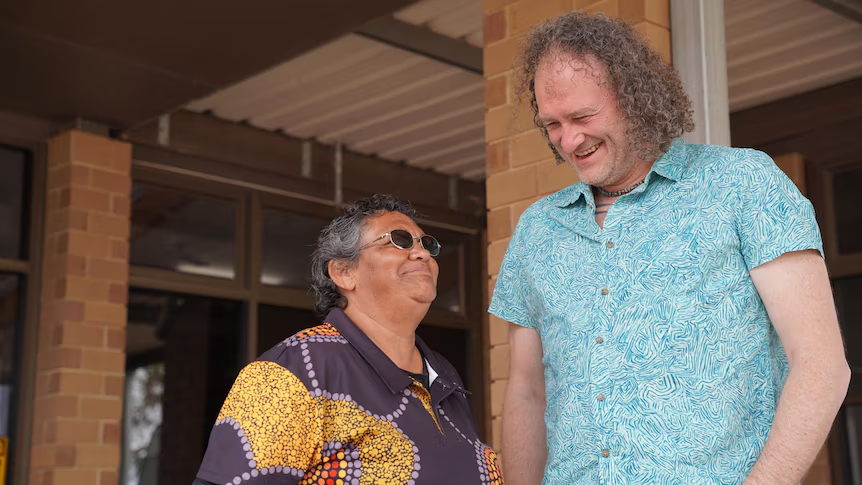
That’s a wrap on the National Yarning Circle 2025!
Over two powerful days on Kaurna Country, we’ve come together to honour Elders, strengthen culture-led aged care, and weave the wisdom of community into the future of care.
From dementia care grounded in culture, to navigating aged care reforms and measuring what matters, voices from across the country shared truth, strategy, and strength.
Workshops like “What’s Strong, Not What’s Wrong” reframed ageing through a cultural and strengths-based lens.
Culture Weave sessions brought generations together in quiet reflection and connection.
Together, we’re not just talking aged care, we’re leading it. The Elder Care Support Program is proof that when community leads, everyone is better cared for.
Thank you to every Elder, connector, carer and voice in the room. Onward, together.
Learn more about the National Yarning Circle here.
Learn more about the Elder Care Support program here.
Image source: NACCHO.
Don’t miss this powerful yarn with our CEO, Pat Turner AM
From a lifetime of public service to leading the Coalition of Peaks and NACCHO, Pat Turner has been at the forefront of the fight for First Nations justice. Tune in to Living Black with Karla Grant Monday 5 May, 8:30pm on NITV, as she reflects on her journey, shares her hopes for the 2025 Federal Election, and calls for change led by our people.
Image source: Coalition of Peaks.
New program to support healing and recovery from family, domestic and sexual violence in the Big Rivers region
Katherine West Health Board, in partnership with Wurli-Wurlinjang Health Service, Sunrise Health Service and NT Health, will soon accept referrals to their pilot program to support women and children across the Big Rivers region to heal and recover from family, domestic and sexual violence.
The pilot program has been funded and commissioned by Northern Territory Primary Health Network with funding received from the federal Department of Health and Aged Care.
The three Aboriginal community-controlled health services in the region, together with NT Health, have a long history and wide-ranging experience providing culturally safe health care and social and emotional wellbeing services to the Big Rivers communities.
NT PHN chief executive Gill Yearsley. Image: NT News.
If you or someone you know is experiencing, or at risk of experiencing, domestic, family, or sexual violence, call 1800RESPECT on 1800 737 732, chat online via www.1800RESPECT.org.au, or text 0458 737 732.
If you are concerned about your behaviour or use of violence, you can contact the Men’s Referral Service on 1300 766 491 or visithttp://www.ntv.org.au
Feeling worried or no good? No shame, no judgement, safe place to yarn. Speak to a 13YARN Crisis Supporter, call 13 92 76. This service is available 24 hours a day, 7 days a week.
Galangoor Duwalami Primary Health Care Service CEO Steven Ober receives Order of Australia
Galangoor Duwalami Primary Health Care Service was proud to see CEO Stevan Ober receive his Order of Australia medal at this week’s Investiture at Government House. Stevan has worked tirelessly for the community and the health sector, following in the footsteps of his Mum.
Image source: Galangoor Duwalami Primary Health Care Service
Deadly Choices and Dolphins continue to champion community health in 2025
Deadly Choices, an initiative of the Institute for Urban Indigenous Health’s (IUIH), empowers Aboriginal and Torres Strait Islander peoples to eat nutritious food, be physically active, quit smoking or vaping and connect with their local Community Controlled Health Service (CCHS) for a regular 715 Health Check. A 715 Health Check is an Aboriginal and Torres Strait Islander specific health check which identifies key areas of risk.
In particular, the Dolphins partnership supports Deadly Choices’ Moreton Bay and North Brisbane footprint through the Moreton Aboriginal and Torres Strait Islander Community Health Service (Moreton ATSICHS).
In 2025, the partnership will again promote the highly anticipated Deadly Choices x Dolphins health check shirts, featuring three new exclusive designs. The shirts are utilised as an impactful incentive to encourage community members to complete a 715 Health Check at their local CCHS and take home a free and exclusive shirt.
Sector Jobs – you can see sector job listings on the NACCHO website here.
Advertising Jobs – to advertise a job vacancy click hereto go to the NACCHO website current job listings webpage. Scroll down to the bottom of the page to find a Post A Job form. You can complete this form with your job vacancy details – it will then be approved for posting and go live on the NACCHO website.
The NACCHO Sector News is a platform we use to showcase the important work being done in Aboriginal and Torres Strait Islander health, focusing on the work of NACCHO, NACCHO members and NACCHO affiliates.
We also share a curated selection of news stories that are of likely interest to the Aboriginal and Torres Strait Islander health sector, broadly.
Support for Gudjaga Gunyahlamai Birth Centre and Community Hub
The South Coast Women’s Health and Wellbeing Aboriginal Corporation (Waminda) Gudjaga Gunyahlamai Birth Centre and Community Hub in Nowra will receive $45.5 million over seven years from the state government to support culturally safe holistic maternity care for Aboriginal and Torres Strait Islander women and their families in the South Coast region.
Birthing on Country supports Aboriginal and Torres Strait Islander women and their babies by providing culturally safe continuity of midwifery care through the pregnancy, from antenatal to birthing to postnatal support.
Waminda’s Minga Gudjaga and Birthing on Country Manager, Melanie Briggs, thanked all levels of government for their commitment to Birthing on Country which will “implement and improve the maternal and neonatal outcomes for Aboriginal families on the south coast of NSW”.
“The life expectancy gap between Aboriginal and non-Aboriginal people will be significantly improved through care that is culturally safe and respectful through Waminda’s Birthing on Country initiative,” she said.
“Waminda are honoured to continue our ancestors’ dreams for birthing that is woman centred, sacred and honours LORE and culture at its core.
“Waminda’s Birthing on Country initiative is a key milestone for increasing the First Nations workforce that will fundamentally enhance generational wealth and sustainability for our people.”
Nowra’s Waminda Gudjaga Gunyahlamai Birth Centre and Community Hub will receive $45.5 million from the NSW government to support culturally safe holistic maternity care for Aboriginal women and their families in the South Coast region. (Image: Waminda).
Aboriginal clinician Darryle Barnes is changing Indigenous health outcomes one GP visit at a time
After almost 20 years as a registered nurse, proud Barkindji man and Aboriginal clinician Darryle Barnes is now behind a push to close the gap in health outcomes for Indigenous communities in South Australia’s Riverland region. Mr Barnes has been at the helm of the Riverland’s only dedicated Aboriginal Health Clinic as team leader and nurse unit manager for 18 months. Mr Barnes has been at the helm of the Riverland’s only dedicated Aboriginal Health Clinic as team leader and nurse unit manager for 18 months.
Since Mr Barnes started working with the clinic the number of healthcare services available to First Nations people has increased by 30%. His self-described “takeaway menu” of health care includes more than 13 services such as podiatry, physiotherapy, rehabilitation services, diabetes, hearing, and social work clinics.
For local First Nations people, the efforts of Mr Barnes and his team to expand the availability of culturally safe health services in the Riverland have not gone unnoticed.
Nganguraku and Ngintait woman Sheryl Giles said the clinic was playing a vital role in “breaking down barriers” for local Aboriginal people seeking healthcare in the region.
“I now have people who understand and are culturally aware. The fact it is run by an Aboriginal, at the Aboriginal Health Clinic in Barmera, is a blessing,” she said.
Sheryl Giles says Darryle Barnes has managed to put a “cultural lens” on the health care he and his team are providing in the Riverland. (ABC Riverland: Will Hunter).
Push for MBS health assessment eligibility for all ages
As recommendations from the 2020 MBS Review Taskforce continue to be investigated, the RACGP has submitted its thoughts on the latest review of health assessment items and called for eligibility to be expanded.
In a submission to the Department of Health and Aged Care, the college stated ‘health assessments should be available to patients of all ages, with recommended intervals varying depending on healthcare need’.
It has also recommended expanding target groups for time-based assessments, and ensuring item 715 for Aboriginal and Torres Strait Islander health assessments align with the NACCHO-RACGP National Guide.
New study to improve health literacy in NSW prisons
People in NSW prisons, particularly Aboriginal and Torres Strait Islander people, have poorer health outcomes and lower health literacy than those in the broader community, according to recent research. Numerous studies have found that people in NSW prisons have higher rates of communicable and non-communicable diseases compared to the general population, including mental health conditions, Hepatitis A, B and C, HIV, drug and alcohol disorders, asthma, cardiovascular and pulmonary disease.
The landmark study is being delivered in partnership with the Swinburne University of Technology Centre for Global Health and Equity, as one of nine projects funded through the NSW Health Translational Research Grants Scheme (TRGS). The study aims to develop solutions that will provide people in NSW Correctional Centres with better and more equitable access to health information and services.
Waminda celebrates 40th Anniversary with Yilaag Marring Family Fun Day
South Coast Women’s Health and Wellbeing Aboriginal Corporation (Waminda) 40th Anniversary celebrations continue with its Yilaag Marring Family Fun Day.
“The family fun day is all about celebrating 40 years of Waminda,” said Cleone Wellington, Waminda’s chief executive leader.
“It is about bringing our community together, having families come together to celebrate everything that Waminda is, and have a really fun day.”
Waminda’s chief executive leader Cleone Wellington and Senior Balaang and Birthing Country manager Melanie Briggs. Picture by Abi Kirkland.
Sector Jobs – you can see sector job listings on the NACCHO website here.
Advertising Jobs – to advertise a job vacancy click hereto go to the NACCHO website current job listings webpage. Scroll down to the bottom of the page to find a Post A Job form. You can complete this form with your job vacancy details – it will then be approved for posting and go live on the NACCHO website.
The image in the feature tile is of the Victorian Aboriginal Health Service (VAHS) premises on Nicholson Street, Fitzroy. The image appeared in an article by Bertrand Tungandame – VAHS celebrates 50 years making a difference and saving lives, published by NTIV Radio on 25 Auguste 2023.
The NACCHO Aboriginal and Torres Strait Islander Health News is platform we use to showcase the important work being done in Aboriginal and Torres Strait Islander health, focusing on the work of NACCHO, NACCHO members and NACCHO affiliates.
We also share a curated selection of news stories that are of likely interest to the Aboriginal and Torres Strait Islander health sector, broadly.
VAHS marks 50 years of saving lives
The Victorian Aboriginal Health Service (VAHS) was set up in 1973 by Aunty Alma Thorpe, Uncle Bruce McGuiness and other Aboriginal community advocates as a place where Aboriginal people could access medical and social care in a time when racism and other barriers prevented Aboriginal people accessing care. Marking the 50th anniversary on August 18, 2023, VAHS Chairperson Tony McCartney reflected on the importance of the date in the history of not only Aboriginal health, but in the Aboriginal rights movement of Melbourne, Victoria, and Australia at the time.
“…VAHS is the oldest Aboriginal Community Controlled Health Organisation in Victoria, and second oldest in the country. Since its inception VAHS has been instrumental in self-determined Aboriginal health and wellbeing in Australia. Since starting from humble beginnings and with volunteers at the small shop front in Fitzroy to a place community members called a home away from home – we have grown into a service with sites across Fitzroy, Preston, Epping and expanding to St Albans in our 50th year,” Tony McCartney said.
Over the years VAHS has achieved many supports and firsts in Australia – including establishing the first Aboriginal dental clinic that travelled around Victoria and to border towns, the first Aboriginal women and children’s program and the country’s leading Aboriginal health worker education program Koori Kollij.
To read the VAHS media release VAHS celebrates five decades of making a difference and saving lives in full click here. You can also listen NITV Radio podcast of VAHS Chairperson Tony McCartner talking about the history of VAHS here.
UQ student dental clinic making a difference
Gavin Saltner, Wulli Wulli man is among more than 800 rural patients who attend a student-run dental clinic in SW Queensland each year. The UQ Dental Clinic — run by supervised fifth-year dental students — opened at Dalby 10 years ago, with another practice opening more recently at St George. Mr Saltner said having access to the clinic was important, with cost and travel time making dental treatment prohibitive for some Western Downs residents.
A report from the Australian Institute of Health and Welfare (AIHW) earlier this year found that regional and remote populations had poorer oral health standards than those in the city. It also found that access to fewer dentists, longer travel times and limited transport options impacted the oral health care rural residents received. But the model of the dental clinics in SW Queensland has been deemed so successful it could be used elsewhere. The clinics are a partnership between the university and Indigenous organisation Goondir Health Services.
Goondir Health Services executive Shubham Weling said the unique co-location model and a student-led workforce had the potential to be replicated across a range of allied health fields. “We’re opening a clinic in Chinchilla as well and we want to advocate for this model out there,” Mr Weling said. He said placing the clinics’ treatment rooms within the Indigenous organisation’s building allowed for easy referrals to other services. “So you’ve got cross influence between GPs, dentists, as well as disability support workers for the one client,” Mr Weling said. “It improves the uptake of services and just overall health outcomes and family gain because it’s all interrelated.”
To view the ABC News article UQ free dental health clinic in Dalby improves Indigenous oral health outcomes in full click here.
Gavin Saltner is a regular patient at the UQ Dalby Dental Clinic. The clinic is embedded within the Goondir Health Services facility and treats about 800 Indigenous patients a year. Photo: Laura Cocks, ABC Southern Qld.
Kidney Health 4 Life effectiveness study
Newly diagnosed with kidney disease and want more support? Then Kidney Health 4 Life might be for you!!
This September, Kidney Health Australia is launching a research study to assess the effectiveness of Kidney Health 4 Life , a pilot program designed to help people with kidney disease to self-manage their condition. By participating in the study, you will have access to the program before it goes to the wider public, as well as helping to shape the future of kidney disease support.
You may be eligible for the study if you meet the following criteria:
Adults (18+ years) diagnosed with early to mid-stage CKD (Stages 1-4) within the past 12 months (from time of enrolment)
Adults (18+ years) who have commenced dialysis (both PD and HD) in the past 12 months (from time of enrolment)
Eligible participants will be assigned to either the program group or standard support group. This will help determine how effective the program is compared to Kidney Health Australia’s standard support. People assigned to the program group will have access to online modules covering topics such as diet and nutrition, disease management, exercise, and managing stress and sleep. Health coaching will also be offered.
People assigned to the standard support group will have access to Kidney Health Australia’s current services including Helpline and Kidney Buddy peer support program and extensive resources. The good news for those assigned to the standard support group is that they will have access to the full KH4L program once the study is complete
If you think you fit the eligibility criteria, you can submit an EOI form on the Kidney Health Australia website here. HURRY. Places are limited.
Just 3 in 10 kids had a health check in 2021–22
Just three in 10 First Nations children aged 0–14 years received a health check within the past year, according to new data released by the Australian Institute of Health and Welfare (AIHW). The AIHW report — Aboriginal and Torres Strait Islander specific primary health care: results from the OSR and nKPI collections, available here, contained data collected from more than 200 organisations.
A total of 586,000 First Nations patients were treated between 2021 and 2022, but only 30% of children had a formal health check in the previous 12 months, making target 4 of the Closing the Gap agreement’s socioeconomic outcome areas — which reads “Aboriginal and Torres Strait Islander children thrive in their early years” — seemingly further away than ever.
With regards to other preventive health measures, 45% of patients received an Aboriginal and Torres Strait Islander health assessment and 47% received a risk assessment for heart disease in the last two years. 70% of patients aged 11 and over had their smoking status recorded in the past year, of which 53% reported quitting smoking or never smoking. Among First Nations patients assessed for CVD risk, 58% aged 35-74 with no known history of CVD reported a low absolute risk within the last two years, 35% were high risk and 7% had a moderate risk. 65% of First Nations patients with type two diabetes reported blood pressure results within recommended guidelines in the past six months, while more than half had a chronic disease management plan completed within the past two years.
To view the Health Services Daily article Just three in 10 First Nations kids had health check in past year in full click here.
Image source: QLD Government Children’s Health Queensland Hospital and Health Service webpage.
Mental Health for Mob fills service gap
Walgalu-Ngambri and Dharawal woman and Mental Health for Mob founder Kristen Franks has seen and heard a lot over the past decade working in the mental health sector. She has worked across towns in central west NSW and in Canberra and its surrounding regions and helped an array of people – from children, the young, schools and families to pregnant women, the suicidal or self-harming, those with behavioural disorders and in the criminal justice system.
“Throughout all this, I noticed that I was often the first Aboriginal mental health clinician an Aboriginal or Torres Strait Islander person would see,” Kristen says. “It was incredibly difficult to hear this was the first time they’d felt culturally safe [and that] they’ve never felt heard or connected because there was no lived experience understanding.” A decade of hearing this message reached fever pitch in late 2021 when Kristen’s community and Elders supported her to meet this cultural need.
While Kristen never intended to make a profit from offering free mental health care, she soon found herself staring down the hard realities of starting a non-profit organisation. Insurance, registrations and finding a space for clients, to name a few. All while Kristen held down a full-time job and tried to begin to address an “overwhelming” community need. Over the following six months, crowdfunding and some modest grants transformed Mental Health for Mob from an Instagram page that shared mental health resources to a fully fledged mental health service.
You can read the Riotact article How Kristen turned an Instagram page into a culturally safe mental health service in less than six months in full here.
Kristen Franks established Mental Health for Mob. Image source: National Indigenous Times.
Emergency aeromedical evacuation training
About 7 million of Australians (about 30%) live in rural and remote areas. People living in these areas have poorer health outcomes overall according to the Australian Institute of Health and Welfare (AIHW), and also have access to fewer primary, secondary and tertiary health services. Potentially preventable hospitalisations are twice as high as for those in metropolitan and regional areas. A 2023 Royal Flying Doctor Service (RFDS) report found that Australians in rural and remote settings are at substantially higher risk of heart, stroke and vascular disease (accounting for a quarter of all RFDS missions), and the health services are not always there to support them.
A new agreement between CareFlight and Charles Darwin University (CDU) will give health students the opportunity to work in the Top End with emergency aeromedical retrieval teams on flights. The agreement creates clinical placements for future medical students at the CDU Menzies School of Medicine. The university will apply for 40 of 80 places in the Australian Government’s $114.2m Increasing Rural Medical Training Grant Opportunity to support the placements.
Ms Quinn is excited about the CDU partnership. “It is something we have wanted to do for years,” Ms Quinn said. “It is really important for building our workforce for the future. Our patients are some of the most disadvantaged in Australia; they have complex medical problems and disease processes. Students will see what it’s like to be an independent practitioner. It’s not just the medicine – it’s about logistics and making quick decisions,” Ms Quinn said, who added it was a privilege to work in those remote locations.
To view the InSight+ article Tyranny of distance: emergency aeromedical retrieval in outback Australia in full click here.
Sector Jobs – you can see sector job listings on the NACCHO website here.
Advertising Jobs – to advertise a job vacancy click here to go to the NACCHO website current job listings webpage. Scroll down to the bottom of the page to find a Post A Job form. You can complete this form with your job vacancy details – it will then be approved for posting and go live on the NACCHO website.
The image in the feature tile is of Wayne Nannup, CEO of the Aboriginal Legal Service of WA as it appeared in a National Indigenous Times article Imagine what our country would be like without racism published on Wednesday 31 May 2023. Photo: Giovanni Torre.
The NACCHO Aboriginal and Torres Strait Islander Health News is platform we use to showcase the important work being done in Aboriginal and Torres Strait Islander health, focusing on the work of NACCHO, NACCHO members and NACCHO affiliates.
We also share a curated selection of news stories that are of likely interest to the Aboriginal and Torres Strait Islander health sector, broadly.
Imagining Australia without racism
Wayne Nannup, CEO of the Aboriginal Legal Service of WA has written an opinion piece for the National Indigenous Times where he asks us to imagine a life without racism: “We could live at peace in a country that values its First Nations Peoples and recognises us within the Constitution. We could walk freely through shopping centres or ride on trains without the fear of being followed or harassed.”
Mr Nannup says “racism doesn’t discriminate between how little or well-known we are. The colour of our skin continues to be targeted by the ill-informed and bigoted members of society. Racism, or discrimination based on race or ethnicity shatters the world that so many of us live in. It generates depression, affects self-esteem and creates a sense of helplessness and loss and also contributes to increasing physical and mental health disparities amongst our people. The reality is that racism is more evident now than ever before.”
To view the National Indigenous Times article Imagine what our country would be like without racism in full click here.
In a related story the Australian Human Rights Commission (AHRC) is currently working on a national anti-racism framework (NARF), which will be a national, central reference point for anti-racism action.
Following on from the release of the NARF Scoping Report 2022, the AHRC has launched a community guide to the scoping report findings to better support understanding of a NARF including how communities can be part of the ongoing process to develop it. The Community Guide (currently being translated into 7 languages alongside the development of an Easy Read Guide) summarises the initial findings outlined in the NARF Scoping Report 2022.
The AHRC have also prepared an amplification kit, available here, which includes a suite of digital and social media content for organisations to raise awareness of the newly published Community Guide availablehere.
Health checks for mob fell during pandemic
The Australian Institute of Health and Welfare (AIHW) has released a report about Indigenous-specific health checks during the COVID-19 pandemic.
This report explores the impacts of COVID‑19 and associated restrictions on the number of Indigenous-specific MBS health check services provided to Aboriginal and Torres Strait Islander people between January 2020 and December 2021. The analysis examines the impacts of COVID‑19 by year and month at the national, state/territory and Greater Capital City Statistical Areas levels.
Following a decade of annual growth, 2020 and 2021 were the first years without an increase in Indigenous-specific health check numbers. The number of health checks delivered during the first 2 years of the pandemic were somewhat lower than during the peak year of 2019 – despite the continuing growth of the Indigenous population.
New telehealth options for Indigenous-specific health checks were introduced at the start of the pandemic. These were used most commonly shortly after being introduced, but then the numbers of health checks delivered this way declined gradually. The impact of the pandemic on the use of Indigenous health checks varied across Australia. Tasmania, which was relatively unaffected by cases and restrictions, stood out as the state that appeared to be the least affected during 2020 and 2021.
To read the AIHW report Indigenous-specific health checks during the COVID-19 pandemic in full click here.
Stolen Generations survivors need Healing Card
The Healing Foundation is urging the Federal Government to implement its recommendations for a universal Healing Card for Stolen Generations survivors, modelled on the existing “Gold Card” scheme for veterans.
Under proposals submitted by the Healing Foundation for Federal Budget considerations over the past two years, eligible Gold Card holders would have access to all primary healthcare needs to support them to stay out of hospital, all clinically necessary treatment, and supports and services that assist them to live at home including respite services for survivors and their carers. The Gold Card would also enable them to access healing programs that involve family and community.
By implementing the proposal, Federal Aged Care Minister Anika Wells and Health and Aged Care Minister Mark Butler could make a real difference to the lives of Stolen Generations survivors and their families, Fiona Cornforth, CEO for the Healing Foundation said.
To view the Croakey Health Media article Timely call for health reform to support healing for the Stolen Generations in full click here.
Stolen Generations survivors Valerie Woods (L) and Brenda Greenfield-Woods in Canberra, for the Healing Foundation’s 15th Anniversary of the National Apology Event. Photo: Luke Currie-Richardson. Image source: Croakey Health Media.
GPs encouraged to call out racism
While reconciliation touches on all aspects of Australian society, RACGP Aboriginal and Torres Strait Islander Chair Dr Karen Nicholls says its role in improving Indigenous health outcomes cannot be overstated.
In particular, she said it is important for GP allies to recognise and acknowledge that racism is present within Australia’s healthcare system and has a significant impact on the health and wellbeing patients, as well as their families and communities. “Clearly, we want a health system that is far more culturally safe than what it is,” Dr Nicholls said. “Part of that means that when you see racism, call it out. Definitely, definitely call it out.”
She also says more needs to be done to protect people who speak up about racism, while continued effort is required to dismantle the structural features that allow it to thrive in Australian healthcare.
To view the RACGP newsGP article GPs encouraged to call out racism in healthcare in full click here.
National Reconciliation Week 2023 is promoting allyship by encouraging all Australians to ‘be a voice for generations’. Image source: RACGP newsGP.
Brewarrina’s water, land, future all connected
Water has always been the basis of life in the bush. Speak to any local and they will remember the spark of life that returned to the community when water breached the Brewarrina Weir after years and years of drought. To local Aboriginal communities, cultural water flows create the basis of life for plants, animals, bush medicine – and impact on the physical and mental health of Aboriginal communities right across the region.
Brewarrina Local Aboriginal Land Council is currently in the process of developing opportunities to bring water and life back to local lands and they have taken a group of experts to assess a block of land close to everyone’s heart, the lands associated with the local Aboriginal Mission. A big part of the discussions related to Cultural Flows, the understanding of local Indigenous needs, and how Aboriginal needs are included in future water usage.
According to the Echuca Declaration of 2010, “Cultural flows are water entitlements that are legally and beneficially owned by the Indigenous Nations of a sufficient and adequate quantity and quality to improve the spiritual, cultural, environmental, social, and economic conditions of those Nations. This is our inherent right.”
To view the Western Plains App article Leaders connecting land, water and Brewarrina’s future in full click here.
Brewarrina Fish Traps. Photo: Urain Warraweena. Image source: Brewarrina Local Aboriginal Land Council Facebook site.
Sector Jobs
Sector Jobs – you can see sector job listings on the NACCHO website here.
Advertising Jobs – to advertise a job vacancy click here to go to the NACCHO website current job listings webpage. Scroll down to the bottom of the page to find a Post A Job form. You can complete this form with your job vacancy details – it will then be approved for posting and go live on the NACCHO website.
Key Date – Reconciliation Week – 27 May–3 June
In the lead up to National Reconciliation Week(27 May – 3 June 2023)Reconciliation Australia expressed their support for Stan Grant in the face of the racist attacks he has been subjected to, and urged Australians to engage in the national debate on these matters in an informed and respectful manner.
Reconciliation Australia said that while Stan’s experience demonstrated once again that Australia still has a long way to go towards building a reconciled and just society, it retained its hope and optimism in the good hearts of most Australians.
Even while Stan Grant was being savaged online for speaking truthfully about the experiences of colonialism during the recent coronation, 84% of Australians believe it is important to know about the histories of Aboriginal and Torres Strait Islander people in Australia.
You can read Reconciliation Australia’s media release Stan Grant and Racism in full here.
The image in the feature tile is from an RACGP Twitter post on 27 March 2020 about racism being unacceptable and harmful, for patients, staff members in practices, health services and doctors in training.
The NACCHO Aboriginal and Torres Strait Islander Health News is a platform we use to showcase the important work being done in Aboriginal and Torres Strait Islander health focusing on the work of NACCHO, NACCHO members and NACCHO affiliates.
We also share a curated selection of news stories that are of likely interest to the Aboriginal and Torres Strait Islander health sector, broadly.
First Nations to guide health regulation process
First Nations representatives will be central to regulatory decisions about medical practitioners, nurses and midwives where Aboriginal and Torres Strait Islander Peoples are involved under a new process being rolled out. Details about a new culturally safe process being implemented to consider such matters are being released as part of the Australian Health Practitioner Regulation Agency (Ahpra) and the National Board’s commitment to eliminating racism from healthcare.
A minimum of two Aboriginal and Torres Strait Islander representatives, plus practitioners from each of the relevant profession and community members, will together make decisions about matters concerning culturally safe health care and racism in line with the legislation governing health practitioners in Australia. The Indigenous experts will make decisions with other Board representatives about any notification involving Aboriginal andTorres Strait Islander Peoples. In the most serious matters, this will include the decisions about whether to refer a practitioner to an independent Tribunal.
A proud descendent of the Darumbal and Juru clans of the Birra Gubba Nation with South Sea Islander heritage, Associate Professor Carmen Parter, is an Ahpra Board member. As co-Founder and Director at the Learning Centre for Systemic Change and Research and the inaugural Co-chair of the Indigenous Working Group of the World Federation of Public Health Association, A/Prof Parter said elevating Indigenous involvement in the consideration of matters concerning race was “real and significant action. Racism is the biggest public health issue that Australia faces today and no-one wants to talk about it or do anything about it.”
To view the National Indigenous Times article Indigenous representatives to guide vital health regulation process in full click here.
Associate Professor Carmen Parter. Image source: National Indigenous Times.
ACCHO now home to life-changing equipment
The North Coast Aboriginal Corporation for Community Health (NCACCH) Gympie clinic is now home to a life-changing digital retina scanning (DRS) device. The machine, donated by St John Ambulance on Monday 20 March, will provide preventative treatment against glaucoma. Diabetes occurs in Aboriginal and Torres Strait Islander people nearly five times more than non-Indigenous Australians, and diabetic retinopathy can increase the risk of an individual developing glaucoma.
NCACCH Gympie practice manager Katrina Johnston said this diagnostic tool is especially important, as it will aid in Closing the Gap in life expectancy. “We know that diabetes is probably one of the major chronic conditions that affect our Aboriginal and Torres Strait Islander patients,” Ms Johnston said. “If we can get on top of it early and be more proactive than reactive, it makes our lives a lot better.”
Ms Johnston also said the newest addition could potentially be added to the annual health check the clinic provides. “It’s not just about our diabetic patients, every Indigenous person is at risk,” she said.
To view the Gympie Today article NCACCH receives ‘life-saving’ equipment in full click here.
The new DRS with members of St John Ambulance and NCACCH staff. Image source: Gympie Today.
Mob urged to get vaccinated against measles
NT Health is issuing a warning about measles ahead of the upcoming Easter holidays following a rise in cases overseas and interstate. Measles outbreaks are occurring in the USA and Europe, while the virus remains common in countries across Asia, Africa and in the Middle East. Cases of measles have recently been diagnosed in returned overseas travellers in other Australian states and territories, as well as in NZ.
The most recent cases of measles in the NT were in 2019, when 31 were recorded. Vaccination is the best protection against measles and help to prevent outbreaks from occurring. Two doses of measles, mumps and rubella (MMR) vaccine are required for immunity against measles and are given to children in Australia at 12 and 18 months of age.
To view the NT Government media release Public health alert: Territorians urged to get vaccinated against measles ahead of Easter holidays in full click here.
While this media release is for the NT the advice is applicable across Australia for anyone born after 1966 without two documented doses. Measles is highly infectious and while most don’t become seriously unwell, because of potentially large numbers of cases, there are likely to be some with more serious complications.
Ngarrindjeri elder Aunty Eunice Aston knows how important is is to have your voice heard, as she remembers living through the harsh government policies forced upon Indigenous people. Born in 1959 in Point McLeay Mission, now known as Raukkan, she was exiled from her birthplace as an infant, unable to legally return until she was about 15-years-old. At the time, Aboriginal people who received exemption certificates were promised access to the benefits of Australian citizenship that they were otherwise denied. This included access to education, health services, housing and employment, but to apply for and hold an exemption, individuals were required to relinquish their language, identity and ties to kin.
In her time growing up, she experienced all of what Australia had to offer Indigenous people at the time, which consisted of racism and forced assimilation. Under protection and assimilation policies, Aboriginal and Torres Strait Islander people were treated harshly, which has had an intergenerational effect that continues to this day.
Aunty Eunice says the effect has stunted the growth of Indigenous people which she hopes a Voice to parliament can start to rectify. “Sometimes I get really bewildered by the state that we‘re in and then I see a little ray of hope with the Voice … that’s a ray of hope for me,” she said.
This story featured in the Gold Coast Bulletin article The Voice is ‘my little ray of hope’, says Aunty Eunice Astonhere.
Ngarridnjeri Elder, Aunty Eunice Aston at Murray Bridge, overlooking the Murray, with her son Gordon Rigney. Photo: Dean Martin. Image source: Gold Coast Bulletin.
Long fight for clean drinking water finally over
An Indigenous community that has fought for decades for basic utilities despite being just a five-minute drive from Alice Springs finally has access to clean drinking water. American company Source Global has installed its hydropanels in Irrkerlantye, with the innovative solar-powered technology capturing water vapour from the air, turning it into liquid and adding minerals to make it safe to drink.
Australian basketball legend Patty Mills has previously partnered with Source to bring drinking water to six other remote communities. Mills and Source founder Cody Friesen headlined an event in New York last week to spruik the technology during the first United Nations water conference held in almost half a century.
Children’s Ground chief Jane Vadiveloo agreed, saying it was “unacceptable that so many remote Indigenous communities in Australia still face significant challenges in accessing this essential resource”. Describing clean drinking water as a “basic human right”, she said: “There are real solutions that can work to solve these problems now.”
This story featured in the The Chronicle article Alice Springs community wins decades-long fight for access to clean drinking waterhere.
Irrkerlantye (White Gate) Traditional Owner Felicity Hayes teaches the younger generation at Trephina Gorge near Alice Springs. Photo: Riley Walter. IMage source: The Chronicle.
Seasonal respiratory and other challenges webinar
Benchmarque Group (TBG) is offering a FREE webinar Seasonal Respiratory & Other Challenges: Influenza, RSV & Meningococcal B. presented by TBG Trainer John Gullifer alongside a guest speaker from the Immunisation field.
Benchmarque Group’s first Webinar for 2023 focuses on the practical aspects of immunisation for our upcoming winter season, including a:
brief review of the essentials of influenza vaccination
an explanation of RSV, the clinical picture of the infant infected with RSV and treatments available to protect against infection
when the long anticipated RSV vaccine coming
The webinar will be held from 7:00 PM – 8:00 PM AEST Monday 17 April 2023 – it will go for 1 hour with 45 mins of content and 15 minutes of Q&A. This webinar will not be recorded.
Make sure to put this date in your diary and register here to join the Seasonal Respiratory & Other Challenges: Influenza, RSV & Meningococcal B Webinar.
Sector Jobs
Sector Jobs – you can see sector job listings on the NACCHO website here.
Advertising Jobs – to advertise a job vacancy click here to go to the NACCHO website Current job listings webpage. Scroll down to the bottom of the page to find a Post A Job form. You can complete this form with your job vacancy details – it will then be approved for posting and go live on the NACCHO website.
The image in the feature tile is of the CATSINaM logo created by Lesley Salem, a descendent of the Gringai-Wonnarua Nation in NSW, a Nurse Practitioner and member of CATSINaM. Image source: CATSINaM website.
CATSINaM 25th Anniversary Conference highlights
Yesterday, as part of its 25th Anniversary National Conference the Congress of Aboriginal and Torres Strait Islander Nurses and Midwives (CATSINaM):
• celebrated the opening of its In Our Own Right: Black Australian Nurses and Midwives Stories Exhibition. The exhibition pays tribute to Aboriginal and Torres Strait Islander nursing and midwifery trailblazers and role models, showcasing individual and collective stories of educational achievement and of facing and overcoming challenges, like racism, in order to effect change within health services for the benefit of Aboriginal and Torres Strait Islander people. You can view CATSINaM’s media release relating to exhibition here.
• launched the highly anticipated report: ‘gettin em n keepin em n growin em’: Strategies for Aboriginal and Torres Strait Islander nursing and midwifery education reform (GENKE II). A formative work in CATSINaM’s 25 Years of Aboriginal and Torres Strait Islander nursing and midwifery activism was the original 2002 ‘getting em n keepin em’: Report of the Indigenous Nursing and Education Working Group (GENKE I) that aimed to address the detrimentally low numbers of Aboriginal and Torres Strait Islander nurses and midwives in the health workforce. Honoring and reviewing this work, this year CATSINaM developed GENKE II 2022 presenting renewed strategies to address the persistent. CATSINaM’s media release, about the GENKE II report is available here.
Today, for the first time in Australian history, a national nursing and midwifery leadership group will deliver an apology to Aboriginal and Torres Strait Islander people, for the hurt and harm caused by non-Indigenous nurses and midwives. Professor Karen Strickland, Chair of the Council of Deans of Nursing and Midwifery (CDNM), will deliver an apology on behalf of the CDNM and its members, to over 300 delegates attending the 2022 CATSINaM National Conference. The majority of delegates will be Aboriginal and Torres Strait Islander practising or retired, and student nurses and midwives. CATSINaM’s media release relating to the apology is available here.
Photos from the CATSINaM 2022 National Conference. CATSINaM Tweet Friday 19 August 2022.
NACCHO CEO delivers keynote address
Earlier this morning NACCHO CEO and Lead Convener of the Coalition of Aboriginal and Torres Strait Islander Peaks organisations, Pat Turner AM delivered a keynote address at the CATSINaM National Conference. In her address Ms Turner said she received a letter last week from the PM confirming his government’s commitment to the National Agreement on Closing the Gap. Although Ms Turner believes “there is no single strategy, idea, or group that will deliver the equity and change [Aboriginal and Torres Strait Islander people] are entitled to, the National Agreement on Closing the Gap is fundamental to driving reform in how Australian governments interact with all Aboriginal and Torres Strait Islander people.”
The National Agreement on Closing the Gap, Ms Turner said “is the first intergovernmental agreement designed to improve the lives of our people that has been negotiated and agreed with representatives of Aboriginal and Torres Strait Islander people across Australia. The National Agreement commits this country to a new direction and is a pledge from all governments to fundamentally change the way they work with Aboriginal and Torres Strait Islander communities and organisations.”
You can read Pat Turner’s keynote address in full on the NACCHO website here.
Pat Turner, 2022 CATSINaM National Conference. Image source: Lowitja Institute Tweet.
Reducing cervical cancer impacts
Aboriginal organisations across NSW will benefit from six new Cervical Screening Community Grants which will provide culturally responsive and targeted health promotion initiatives within Aboriginal communities. The locally-led programs are aimed at boosting the number of Aboriginal women across the state who access cervical screening, reducing the impact of cervical cancer.
Minister for Women, Regional Health and Mental Health, Bronnie Taylor said the grants are part of $114,350 in funding awarded to Local Health Districts and non-profit organisations through the Cancer Institute NSW to promote the National Cervical Screening Program. “Aboriginal and Torres Strait Islander women are almost four-times more likely to die from cervical cancer than non-Aboriginal women and these grants work towards closing the gap,” Mrs Taylor said. “Cervical cancer is one of the most preventable cancers and we know having a Cervical Screening Test every five years is now the best way to prevent it. By funding these grants, we are working to provide opportunities to educate local communities on the ground about the importance of cervical screening.”
To view the NSW Government media release Grants awarded to reduce the impact of cervical cancer in Aboriginal communities in full click here.
Yorta Yorta, Dja Dja Wurrung and Gamiloroi artist Madison Connors was commissioned by Cancer Council Victoria to create 12 unique art pieces to raise awareness about cervical screening to Aboriginal and Torres Strait Islander communities. Image source: Cancer Council VIC website.
Mental health support for flood victims
The Albanese Government is delivering $13.1 million in targeted mental health support for NSW communities impacted by the devastating recent floods. Disasters don’t just affect the economy – there are also severe environmental and social impacts, including impacts on the wellbeing and mental health of individuals and communities – manifesting in increased rates of anxiety, post-traumatic stress disorder and domestic and family violence. The compounding effect of multiple floods in these communities will have a lasting impact, so improving the availability and accessibility of support is critical during this stage of recovery.
This funding will ensure those most impacted by the floods can receive the support they need to recover. First Nations communities most impacted by the floods will be supported by $3 million to NACCHO to distribute across impacted community controlled organisations to provide much needed trauma counselling, healing and support for Aboriginal and Torres Strait Islander communities.
To view the Minister for Health and Aged Care, the Hon Mark Butler MP’s media release Mental health support for NSW floods in full click here.
AIHW releases health check data
Through Medicare, Aboriginal and Torres Strait Islander people can receive Indigenous‑specific health checks from their doctor, as well as referrals for Indigenous‑specific follow‑up services. According to an Australian Institute of Health and Welfare report released this week:
In 2020–21, 237,000 Indigenous Australians had one of these health checks (27% of the projected population).
The proportion of Indigenous health check patients who had an Indigenous‑specific follow‑up service within 12 months of their check increased from 12% to 47% between 2010–11 and 2019–20.
The report presents data on Indigenous‑specific health checks and follow‑up services for a time period up until the end of June 2021 (i.e. overlapping with the COVID‑19 period). It also includes data on telehealth MBS items that were introduced in 2020 as part of the response to COVID‑19.
To view the AIHW web report Indigenous health checks and follow-ups in full click here.
Image source: Galambia Aboriginal Health Services website.
Bowel screening webinar series
Cancer Council, in partnership with the Australian Government, recently launched a national campaign to encourage people to Get2it and participate in the National Bowel Cancer Screening Program (NBCSP). As a part of this, content and resources have been developed specifically for GPs and other primary care health professionals to continue to encourage their patients to take part in bowel cancer screening. This includes a free three-part webinar series titled ‘Getting to the bottom of bowel screening’ for GPs, nurses, and other health professionals. This educational series will be presented by an array of experts from across Australia talking to key topics in the bowel screening space, providing valuable insights to GPs and health professionals to help drive participation in screening.
You can register for each webinar via the below links, or sign up to receive the recording if you are unable to make the 8–9 PM (AEST) webinars on the night.
• Bowel cancer screening – from the GP perspective – Wednesday 31 August, register here
• Getting to the bottom of colonoscopy use in bowel screening – Wednesday 31 August, register here
You can access a range of GP and health professional specific resources, videos (such as the one below), newsletter and social media content, key messages and calls to action by visiting the Cancer Council Campaign Hubhere.
Video consults find niche in mental health
Mental health consults are the top reason for clinicians to use video-based telehealth services, according to the national virtual public health information service. It’s been just over a month since the Department of Health ditched a swathe of MBS phone items, a move which many GPs were concerned would ultimately harm vulnerable mental health patients the most.
While phone consults were wholeheartedly embraced from the beginning of the pandemic, video telehealth uptake has lagged. From the beginning of the pandemic through to April 2022, phone consults have accounted for 96% of all GP telehealth consults.
Despite this general avoidance, there is at least one area where video telehealth is being embraced: mental health. One in every five video consults made using the Healthdirect video call program – which is currently free for general practices and ACCHOs to integrate into their services – is a mental health consult.
To read the Wild Health article Video consults find niche in mental health by Holly Payne in full click here.
Some studies have found that video mental-health therapy can be as effective as in-person treatment. Photo: Getty Images. Image source: The Wall Street Journal.
New process for job advertising
NACCHO have introduced a new system for the advertising of job adverts via the NACCHO website and you can find the sector job listings here.
Click here to go to the NACCHO website where you can complete a form with job vacancy details – it will then be approved for posting and go live on the NACCHO website.
Image in the feature tile is from the ACT Government 2022–23 Aboriginal and Torres Strait Islander Budget Statement. The ‘Walk through Wiradjuri country’ painting was completed by two Wiradjuri men, Tony “TK” Levett and Trevor Ryan.
More community control needed
The ACT Council of Social Service’s Gulanga Program says the recent 2022–23 ACT Budget, which featured an Aboriginal and Torres Strait Islander Budget Statement, responded to some of the calls from the ACT’s Aboriginal and Torres Strait Islander communities, but much more is needed to be done to improve outcomes for First Nations peoples in the ACT. Head of the Gulanga Program, Ms Rachelle Kelly-Church said: “While welcomed, these announcements follow a long period of inaction in implementing recommendations under the Our Booris Our Way and We Don’t Shoot Our Wounded Reports.
“We also need to see significant increases in investment to establish and expand Aboriginal community-controlled organisations (ACCOs). We need to ensure there is a better distribution of funds so that new initiatives targeting our communities are delivered through Aboriginal community-controlled organisations – not just through ACT Government services. Time after time, experience shows that Aboriginal community-controlled organisations are best placed to support our community and achieve the improved outcomes that we are all desperate for.
“We also need investment to ensure that the services provided to Aboriginal and Torres Strait Islander people are culturally safe and respectful. The announcement of $12m for the implementation of Corrections ACT’s Blueprint for Change must include the delivery of mandatory Aboriginal cultural competence training for staff involved in our justice system so that we can challenge ongoing systemic discrimination and racism.”
To read the ACTCOSS media release Gulanga Media Release: ACT Budget – more community control needed in full click here.
Mobile healthcare to remote NSW
A retrofitted motorhome will be used to bring medical care to remote NSW communities to help minimise the spread of COVID-19. Aboriginal Health and Medical Research Council (AH&MRC) revealed it had purchased the vehicle through a BHP donation to provide medical care outside of traditional clinical spaces. It will allow ACCHOs to hold mobile vaccination clinics in communities, negating the need for people to travel to get vaccines.
AHMRC chief executive Robert Skeen said the service’s response team had been integral to the vaccine rollout. “With the help of the valuable partnership of BHP we’re able to provide care to all our mob in every community across the state,” he said. The motorhome will initially be used in the Northern Rivers region where flooding has impacted community clinics.
To view the National Indigenous Times article Aboriginal medical group prepares new motorhome for flood-hit NSW healthcare roadtrip in full click here. You can also find more details about the motorhome on the AH&MRC website here.
Image source: AH&MRC website.
Clinic doubles usual 715 health checks
A clinic in WA more than doubled its usual number of health checks for Aboriginal and Torres Strait Islander patients after introducing free walk-in assessments during NAIDOC week. Lockridge Medical Centre in Perth offered free MBS 715 Indigenous Health Checks to any Aboriginal and Torres Strait Islander patients who came along during the week. “The health assessments were a great opportunity to offer support for preventive healthcare,” Dr Kayla MacKinnon, a GP at the clinic said.
The clinic doctors were given additional spaces to meet demand and accommodate walk-ins and all nurses agreed to work additional shifts for the week. All doctors were rostered for one session per week, thereby sharing the experience. Dr Shashi Ponraja, also a GP at the clinic, said it was ‘an excellent opportunity for outreach’ and ‘patients seemed to really appreciate the flexibility in the appointment setup’.
When reflecting on the success of their NAIDOC week experience and increased health assessments, Director Mrs Watts said that “success is measured in many ways, such as the centre’s agreement to undertake Aboriginal Health Workers through Marr Mooditj Training, with the hope of employing an Aboriginal Health Worker as a result and the networking, the collaboration and the improvement in preparing the practice to be a culturally safe healthcare home for the local Aboriginal and Torres Strait Islander community.”
To view the RACGP newsGP article NAIDOC week leads to more health assessments in full click here.
Boxing champion fights for mental health
Newly-crowned Australian masters boxing champion Darcy Brown knows whatever faces him in the ring, the larger fight on his hands is breaking down stigmas mental health, ADHD and autism. The 51-year-old Wiradjuri man won the national 75.1-80kg class in the 50-55 age bracket in July. Fighting under the name Buddy Oldman, Brown took to the sport fewer than two years ago to get back into physical shape before realising the bigger battle was fought upstairs.
Sexually abused as a child and later suffering from PTSD and depression through adulthood, Mr Brown shied away from boxing earlier in life. It was labelled a mug’s game by his late late father, who himself had been an exhibition tent-fighter in his youth. Brown’s dramatic rise from novice to national champ is spurred on partly by his own struggles, but even more so by the opportunity he hopes it brings to the lives of others.
Now living in Albury, he and his wife have fostered Aboriginal kids for 20 years and are currently the guardian to a neurodivergent child. Working in special needs and with an autistic son and grandson, Brown said representation through sport could have wide-reaching advantages. He fights to raise awareness for these conditions and for those diagnosed to be treated equally in all area’s of life. His message has stretched to include the Aboriginal health in general, and at times the LGBTQ+ community. “I’ve just taken it upon myself to make it happen,” Brown said.
To view the National Indigenous Times article Boxing novice-turned national champion Buddy Oldman fights for mental health with every venture into the ring in full click here.
Newly-crowned Australian masters boxing champion Darcy Brown. Image source: National Indigenous Times.
Telehealth provides care closer to home
A boy who accidentally slashed his throat when he rode his motorbike into a fence, a burns victim, and an elderly Indigenous woman who wanted to die on country – all are among rural patients successfully treated by telehealth, a conference has heard. The trio were seen by specialists through the WA Country Health Service Command Centre, which provides telehealth via video conferencing to help frontline doctors treat patients at rural hospitals. The centre is part of the world’s biggest rural service in geographical terms, covering more than 2.5 million square kms from Kalumburu in the Kimberley to Albany in the south.
Speaking at the National Rural Health Conference in Brisbane, the command centre’s managing director, Justin Yeung, said it aims to provide “care closer to home” for people in rural and remote areas across the vast state. “We see the whole gamut,” Dr Yeung told the conference, which is focusing on collaboration and innovation in rural health. The centre runs emergency care, inpatient treatment to reduce the number of patients who need to be transferred to bigger hospitals, maternity care, psychiatry and palliative care. Dr Yeung said telehealth is not a replacement for face-to-face care, but supplements traditional treatment.
To read The West Australian article Burns and injuries treated via video in WA in full click here.
Image source: The Medical Journal of Australia.
Diabetes youth webinar series
Menzies Diabetes Across the Lifecourse Northern Australia Partnership aims to improve the health of Aboriginal and Torres Strait Islander people by targeting the intergenerational cycle of type 2 diabetes and is hosting a 10-part webinar series to give a comprehensive overview of youth type 2 diabetes, screening, management, multidisciplinary care, models of care and preventative strategies. The discussions will be co-led by Aboriginal and Torres Strait Islander health professionals and community members in partnership with clinicians and researchers. Delivered fortnightly starting on Thursday 4 August from 12:45–1:45 PM. Those who cannot attend the live sessions but would still like to view the sessions can sign up to be sent a recording of the presentation.
You can view a flyer about tomorrow’s webinar here. Please register for the first event by following this link. Registered participants will be sent a calendar invite and a zoom link for the live presentation and a link to the recorded presentations for later viewing. Subsequent events will be communicated thereafter.
HealthInfoNet user survey and prize draw
Australian Indigenous HealthINfoNet is conducting an online survey designed to gather feedback from users of the Australian Indigenous HealthInfoNet (HealthInfoNet) as part of its continual improvement.
The survey will take about 5-10 minutes to complete.
Survey responses will remain anonymous. Choosing to answer the survey questions indicates your informed consent to participate. You can stop the survey at any time by closing the computer window in which the survey appears.
At the end of the survey, you have the option to submit an entry for a prize draw for a $350 Coles Group & Myer gift voucher. The winner’s name will be drawn at random and they will be contacted by phone or email after the survey closes. Your contact details will not be linked to your survey responses. Survey respondents who enter the prize draw within its first week will automatically be entered twice.
The survey is open now until 11.59pm (AWST) Sunday 21 August 2022.
You to complete the 2022 Australian Indigenous HealthInfoNet User Survey by clicking here.
New process for job advertising
NACCHO have introduced a new system for the advertising of job adverts via the NACCHO website and you can find the sector job listings here.
Click here to go to the NACCHO website where you can complete a form with job vacancy details – it will then be approved for posting and go live on the NACCHO website.
Image in feature tile is of Tristan who features in an Australian Government Department of Health Twitter post, saying “It’s best that we all get the 715 check.”
Men’s Health, Our Way – Let’s Own It!
Earlier this morning NACCHO released the following media release to mark Men’s Health Week 2022:
Men’s Health, Our Way – Let’s Own It!
Men’s Health Week 2022: Building Healthy Environments for Men and Boys
In the 2022 Men’s Health Week, the National Aboriginal Community Controlled Health Organisation (NACCHO), draws attention to the importance of improving health outcomes for Aboriginal and Torres Strait Islander men, across Australia.
The Aboriginal community-controlled health sector has made vast changes to outreach, education, and engagement with men, providing a wide range of preventative and early intervention, and culturally sound men’s programs that address critical social and emotional issues that some men face.
Donnella Mills, NACCHO Chair, states, ‘Our goal is for Aboriginal and Torres Strait Islander males to live longer, healthier lives and we urge them to visit their local Aboriginal Community Controlled Health Services more often to discuss their health.’
Aboriginal and Torres Strait Islander men access primary health care services at the lowest rate, compared to other Australians, and health statistics indicate they have the poorest health outcomes in Australia. Research shows there are various barriers for Aboriginal men accessing health services including, societal related issues such as, stigma and gender differences; cultural differences, including language, beliefs, and law; logistical challenges, such as distance and transportation; trust in health services, financial challenges, and individual reasons including, health understanding, previous experiences and illnesses, self-esteem, and confidence, etc.
Ms Mills said, ‘The theme of this year’s National Men’s Health Week, Building Healthy Environments for Men and Boys is about the importance of Aboriginal Community Controlled Health Services creating a holistic, culturally safe and engaged space for men to discuss and treat their health issues.
‘NACCHO are committed to reducing the rate of hospitalisations, which is almost three times higher than for other Australian men; and reducing suicide rates, which is one of the highest leading causes of death for Aboriginal males in this country.’
Chris Bin Kali, NACCHO Deputy Chair, said, ‘NACCHO works alongside the Aboriginal Community Controlled Health sector to ensure quality health services reach all Aboriginal and Torres Strait Islander people, in a culturally appropriate and safe environment. Ongoing support from governments to ensure these services continue, are essential.
‘A great way to check on your overall health is with a 715 Health Check that our health services offer, and I would stress the importance to get them done regularly for our men! The 715 Health Check assesses your overall health with the aim to provide health care matched to your specific needs via early detection, diagnosis, and intervention for common, treatable conditions. It is designed to support the physical, social, and emotional wellbeing of Aboriginal and Torres Strait Islander patients of all ages.’
Case study Yerin Eleanor Duncan Aboriginal Health Services, NSW:
The Yerin Men’s Group sessionsare a local group that partner with other Aboriginal health organisations and host a session every month touching upon various issues that support men’s business, sharing knowledge, assistance and guidance amongst each other.
The Glen Drug and Alcohol Rehabilitation centre recently joined the Men’s Group session to share their personal stories and assist with information. In March, they invited Yadhaba Aboriginal Health Workers and community Elders to host a day of yarning about mental health and well-being and fishing on Country.
You can access this media release on NACCHO’s website here.
Image source: Australian Nursing & Midwifery Journal.
Apunipima hosts Men’s Health Summit
Apunipima Cape York Health Council (ACYHC) is hosting its annual Cape York Men’s Health Summit in Hope Vale this week. The event will see 120 males from all over Cape York descend on Elim Beach for a week of camping with a focus on men’s health. The theme of the week is ‘growing together as fathers, providers and protectors’ and there will be a range of activities and discussions throughout the week, focusing on men’s business with a host of talented guest speakers presenting over the whole week.
“We’re very excited about the return of the Apunipima Men’s Health Summit in 2022. We haven’t been able to hold a Men’s Summit for the last two years due to Covid, so there’s been a lot of interest in this year’s event. Our male staff are excited to be hosting so many men from across the Cape and providing a space where they can come together to talk about issues that are important to them,” said Apunipima CEO, Debra Malthouse.
Headlining the week will be one of FNQ’s funniest comedians, Sean Choolburra. The very popular former cultural dancer will address the summit with his unique blend of history, cultural knowledge and spiritual wisdom, delivered with loads of energy and plenty of cheek. Also speaking throughout the summit will be BBM Cairns’ National TalkBlack radio host Trevor Tim, former Gold Coast Titans player Davin Crompton and more including academics, athletes, motivational speakers and health industry professionals.
The event runs all week from Monday 13 to Friday 17 June, 2022.
To view the ACYHC’s media release Apunipima Hosts Men’s Health Summit in Hope Vale in full click here.
Elim Beach, 25km east of Hope Vale. Image source: ACYHC.
Life expectancy improvement too slow
The main point of an editorial from the current online issue of the Medical Journal of Australia is that while it is possible to Close the Gap, current efforts are inadequate. Life expectancy for Indigenous people is improving, but closing the gap remains unacceptably slow
Although recent boosts to funding are welcome, much more needs to be done by the Commonwealth to fill service gaps with ACCHOs and by jurisdictional governments on social determinants especially housing, justice and education. In key matters like housing, national leadership would be welcome and it may be time to reintroduce National Partnership Agreements. Despite the editorial comments referencing an NT article, it has national relevance.
You can read the editorial Life expectancy for Indigenous people is improving, but closing the gap remains unacceptably slow in full click here.
Photo: Chloe Geraghty. Image source: Amnesty International Australia website.
Qld mob to have bigger healthcare say
Indigenous Queensland communities are set to have a much bigger say on their own healthcare and housing needs, as well as how their children are educated. The state’s 26 Indigenous councils will soon start deciding how Queensland government services such as health care, housing and education are delivered.
Advisory panels will be appointed in each Indigenous community within two years to advise the government. Aboriginal and Torres Strait Island Partnerships Minister Craig Crawford says the move is an important step towards self-determination. “Progressing local solutions and decision-making with Aboriginal people and Torres Strait Islander people is critical for communities to thrive,” he said yesterday. The new Local Decision Making Bodies (LDMBs) will be told how much money the government is investing in each community. Information will include details such as how much is spent on services, the amount of funding for each service contract, who is delivering the contracts, and whether they employ local people.
To view the Northern Beaches Review article Qld Indigenous to be handed more control in full click here.
Image source: Northern Beaches Review.
Funding for eating disorders research
Sydney’s first eating disorders research and translation centre is offering a nationwide grant opportunity to progress prevention, treatments and support in partnership with research, lived experience, clinical and community experts. The Australian Eating Disorders Research and Translation Centre, led by InsideOut Institute at the University of Sydney, has launched the IgnitED Fundto unearth new ideas that have the potential to solve the problem of eating disorders. IgnitED is offering grants of up to $25,000 to develop and test innovative ideas that have potential to improve outcomes for people with eating disorders and their loved ones. It is the Centre’s first funding initiative following the $13 million grant awarded in January to establish the new national centre.
According to the Centre’s Aboriginal and Torres Strait Islander Co-Lead, Leilani Darwin, First Nations Australians are believed to experience high rates of eating disorders, disordered eating and food insecurity issues. People with lived experience expertise and Aboriginal and Torres Strait Islander peoples are encouraged to apply for the grants. To view The University of Sydney Faculty of Medicine and Health News article National eating disorders centre ignites research fund for new solutions in full click here.
Additional $400m NSW CTG funding
The NSW Government has announced $401 million in additional funding over four years in the 2022-23 Budget, to prioritise Closing the Gap and other projects that improve outcomes for Aboriginal people across the state. Premier Dominic Perrottet said the significant investment reflected the need for a fresh approach to meaningfully shift the dial on Closing the Gap targets.
It’s clear traditional Government-led approaches haven’t worked. This needs to be done hand-in-hand with Aboriginal communities, who know best what changes need to be made to help communities thrive, Mr Perrottet said. That’s why we’ve worked in partnership with Aboriginal stakeholders to co-design a suite of initiatives across all areas of Government to make a greater difference.
To view the media release $400 million to empower Aboriginal communities & deliver outcomes in full click here.
Image source: Canberra Times website.
TB treatment safe during pregnancy
Seven out of 10 pregnant women were cured of their multidrug-resistant tuberculosis and delivered healthy babies after taking a medication that had previously been considered unsafe in pregnancy, a new Curtin and Telethon Kids Institute study has found. Published in JAMA Network Open, the study examined the experiences of 275 pregnant women with multidrug-resistant tuberculosis living in South Africa, Peru, Brazil, Iran and Uganda.
Lead researcher Dr Kefyalew Alene, from the Curtin School of Population Health and Telethon Kids Institute, said the study had found a medication used to treat multidrug-resistant tuberculosis, Linezolid, was associated with favourable pregnancy outcomes and high treatment success. “This is the first comprehensive review of treatment outcomes for multidrug-resistant tuberculosis in pregnant women, who remain one of the most vulnerable groups among the half a million people living with the disease globally,” Dr Alene said. Dr Alene said the study answered a challenging global issue of when to treat pregnant patients living with multidrug-resistant tuberculosis.
You can view the full paper Treatment Outcomes Among Pregnant Patients With Multidrug-Resistant Tuberculosis’ online here and the Curtin University article Study finds TB treatment during pregnancy is safe for mum and babyhere.
Image source: SBS NITV website.
HESTA Excellence Awards nominations open
HESTA has opened nominations for the 2022 HESTA Excellence Awardsto celebrate exceptional professionals working in disability, allied health, aged care and community services in Australia. With a $60,000 prize pool on offer, the national Awards celebrate professionals from the four sectors who are going above and beyond the everyday high-quality care they provide to achieve outstanding health outcomes for Australians.
HESTA CEO Debby Blakey said coming out of the pandemic and adapting to a ‘new normal’ has demonstrated the critical importance of these professionals to protecting and supporting our communities and our economic recovery. “Our world has changed so much these past few years and through it all, these amazing professionals adapted and innovated to continue supporting our communities, our families and our nation to keep us safe and healthy,” Ms Blakey said.
“Each year we’re privileged to find and recognise incredible people and organisations for their exceptional work. I’m very proud of the platform HESTA and these Awards provides to help share their stories and draw attention to the extensive impact these individuals have had on so many lives.” Anyone working in the four sectors – allied health, disability services, aged care or community services – and who are involved in the delivery of exceptional care or service can nominate or be nominated.
Nominations are open for both the Outstanding Organisation and Team Excellence categories. Independent judging panels comprising industry experts will select finalists and choose a winner from each sector and for each category. Nominations will close at midnight on Sunday 14 August 2022.
For more information or to submit a nomination, visit the HESTA Awards webpage here.
New process for job advertising
NACCHO have introduced a new system for the advertising of job adverts via the NACCHO website and you can find the sector job listings here.
Click here to go to the NACCHO website where you can complete a form with job vacancy details – it will then be approved for posting and go live on the NACCHO website.
World Elder Abuse Awareness Day
World Elder Abuse Awareness Day (WEAAD) is commemorated each year on 15 Juneto highlight one of the worst manifestations of ageism and inequality in our society, elder abuse. Elder abuse is any act which causes harm to an older person and is carried out by someone they know and trust such as a family member or friend. The abuse may be physical, social, financial, psychological or sexual and can include mistreatment and neglect.In many parts of the world elder abuse occurs with little recognition or response. It is a global social issue which affects the health, well-being, independence and human rights of millions of older people around the world, and an issue which deserves the attention of all in the community.
In Australia the safety of older Aboriginal people and a better understanding of Elder abuse prevention is a clear priority as the number of Aboriginal and Torres Strait Islander people aged 55 years and over is increasing and is projected to more than double from 59,400 in 2011 to up to 130,800 in 2026. Identifying and measuring Elder abuse in Indigenous settings is challenging. The Australian Institute of Family Studies (2016) reported that mainstream conceptualisation of elder mistreatment requires reconsideration in Indigenous contexts; substantially more work and the collection of quality and consistent data is required to better understand Elder mistreatment amongst Indigenous peoples. There are no precise statistics on the prevalence of Elder abuse in the Aboriginal population in Australia and the strategies which would be effective in preventing this abuse have not been identified.
You can read more about Aboriginal and Torres Strait Islander Elder abuse in the South Australian Health & Medical Research Institute report What keeps you safe: approaches to promote the safety of older Aboriginal peoplehere. You can also access a range of resources associated with the The Queensland Government’s Together we can stop elder abuse campaign, including the video belowhere.
Medicare, Australia’s universal health insurance scheme, provides financial protection against the cost of medical bills, and makes public hospital care available without any charge to the patient. For the large majority of Australians in urban settings, it is a brilliant system – providing subsidised access to care. But subsidised access is only useful for those who have access. If there is no doctor nearby, there is nothing to subsidise. This creates a huge inequity – most of Australia has good access to doctors, but the NT does not.
NT residents receive roughly 30% less Medicare funding per capita than the national average (A$648 compared with A$969). The gap is worse for First Nations Australians in the NT, who attract only 16% of the Medicare funding of the average Australian. The inequitable funding is even worse when the poorer health status of First Nations Australians and the additional costs associated with geographical remoteness are taken into account. Despite Medicare’s intended universality, the NT is systematically disadvantaged.
People in the Territory have poorer access to primary health care, which includes GP services and those provided by Aboriginal community-controlled health services. Aboriginal health services receive some special additional funding separate from the Medicare-billing funding. However, even with that extra funding, there is still a shortfall to NT residents of about A$80 million each year.
To view The Conversation article First Nations people in the NT receive just 16% of the Medicare funding of an average Australian click here.
Photo: Shutterstock. Image source: The Conversation.
Comprehensive truth-telling project
The most comprehensive truth-telling project in Australian history is documenting every law and policy that has targeted or had a disproportionate impact – deliberate and accidental – on Indigenous people since 1788 commencing with NSW. “Towards Truth” is the first attempt to chronicle in forensic, legal detail the story of how Australian governments and institutions have touched every aspect of the lives of Aboriginal and Torres Strait Islander people.
The interactive databaseThe interactive database has drawn on the pro-bono skills of legal researchers from some of Australia’s top law firms to document the story of colonisation in NSW. Pioneered by Professors Megan Davis and Gabrielle Appleby, two constitutional lawyers from UNSW Law involved in the Uluru Statement from the Heart, the Public Interest Advocacy Centre and the University of NSW’s Indigenous Law Centre are creating the database and website to tell the story of how dispossession has occurred methodically under the rule of law.
Towards Truth’s project coordinator is 30-year-old lawyer Corey Smith, a Ngemba man whose work on the database helped him understand in vivid detail the pressures on his own great grandmother May Biles not to be proud of her Aboriginality. May lived in Brewarrina at a time when the NSW government exempted Aboriginal people from the draconian restrictions of the Aborigines Protection Act if they could prove they did not speak their language or associate with other Aboriginal people. “It meant access to publicly-funded health, education and housing,” Mr Smith said.
To view The Australian article Facing the truth about Indigenous Australians in full click here.
Indigenous lawyer Corey Smith. Photo: John Feder. Image source: The Australian.
AMA election health report card
The AMA’s election health report card released yesterday, gives Australians an overview of each of the major parties’ health commitments made during the campaign so far. AMA President Dr Omar Khorshid said healthcare, for good reason, had been one of the major concerns of the public during the election campaign, but despite this neither major party had committed to a public hospital funding model which would help alleviate the enormous stress on the hospital system.
“The AMA’s logjam campaign has called on Government and Opposition to commit to a new hospital funding agreement with State Governments, aimed at addressing the crisis of ambulance ramping, overloaded emergency departments and delayed essential surgery,” he said. “But the lack of commitment to the necessary $20.5 billion investment is disappointing as the incoming PM, whoever it may be, will be forced to negotiate a new agreement with States regardless.
To view the AMA’s media release AMA releases its election report card in full click here.
Lifting of alcohol bans “disgraceful”
Booze will be allowed back into hundreds of NT remote Indigenous communities under “disgraceful” new laws replacing Intervention-era alcohol bans. The NT government says its amended liquor laws, which were passed by parliament late on Tuesday this week, will give communities “greater power” to choose if they want alcohol restrictions when a commonwealth law expires in July.
But social service groups say the legislation is disappointing, disgraceful, and lacks integrity. “The passing of this legislation before any consultation has been done with Aboriginal communities and against the advice of Aboriginal community controlled organisations in the NT is disgraceful,” NT Council of Social Service chief executive Deborah Di Natale says. “At best the government’s process around these significant liquor changes, lacks integrity.”
Under the law, communities must choose to remain alcohol free. If they don’t there will be no alcohol restrictions or bans when the commonwealth law expires on 17 July this year. The Northern Land Council called on the NT government to withdraw the legislation and consult with health experts and Indigenous groups. “For us this is about our lives and our people,” chair Samuel Bush-Blanasi said. “The government has to take time to listen to the concerns of our health professionals and community leaders when they are making these important decisions that affect our mob out bush.”
To view the The West Australian article NT laws replacing remote booze ban slammed click here.
Image source: news.com.au.
Optimising health checks research
UNSW Sydney researchers will receive $4.7 million in funding from the NSW government for prevention research in infectious diseases, drug and alcohol use and primary health care.
The funding, announced as part of NSW Health’s Prevention Research Support Program (PRSP), is designed to support NSW research organisations conducting prevention and early intervention research that aligns with NSW Health priorities. The program supports research infrastructure and strategies to build research capability and translate evidence from research into policy and practice.
A team of researchers at The Kirby Institute at UNSW have been awarded $1.8 million to undertake research aimed at preventing people acquiring a range of infectious diseases, including:
Developing capacity for the evaluation of HIV prevention interventions implemented within clinics and community settings
Monitoring and evaluation of hepatitis C elimination
Organising and co-designing HPV immunisation services with students with disabilities
Community led models to optimise the uptake of Aboriginal and Torres Strait Islander health checks and embed syphilis testing.
“The Kirby Institute has a strong track record of impactful prevention and early intervention research, including scale-up of HIV prevention programs, research to prevent STIs among young Aboriginal people and studies to prevent the spread of hepatitis C in prisons,” the Kirby Institute’s Director, Professor Anthony Kelleher, said.
To view UNSW Sydney Newsroom article UNSW receives $4.7m to pursue health prevention research click here.
Image: Shutterstock, UNSW Sydney website.
Protecting mob this winter
The NSW Government has produced a range of COVID-19 and flu information resources specifically for Aboriginal communities
You can access the resources, including the video below here.
Concerns over lack of gender-affirming care
The Australian Medical Students’ Association (AMSA) is extremely disappointed with recent comments made by members of the federal government regarding the trans and gender diverse community. AMSA expresses deep concern over the stigmatising representations of the trans community in the political debate, a lack of gender-affirming care in political statements and the disregard for the mental health of trans and gender diverse communities.
“Gender affirming care is not a matter of personal belief or subjective concern – it is a matter of access to evidence-based, patient-centred healthcare,” said Flynn Halliwell today, Chair of AMSA Queer. “Not only is the ‘concern’ purported by our politicians regarding children’s access to gender affirming surgery stigmatising, but it is also factually incorrect,” continued Mr Halliwell. In Australia, genital surgery is only available to adults over the age of 18 years old [1].
“Trans and gender diverse people are continually being framed as talking points for political attention, without consideration of subsequent effects on the mental health and wellbeing of these communities. Publicly debating the validity of gender-affirming healthcare is not the solution. It is part of the problem.”
To view the AMSA media release in full click here.
Image source: University of Florida website.
New process for job advertising
NACCHO have introduced a new system for the advertising of job adverts via the NACCHO website and you can find the sector job listings here.
Click here to go to the NACCHO website where you can complete a form with job vacancy details – it will then be approved for posting and go live on the NACCHO website.
Labor have issued a media release outlining the focus of their Indigenous health policy. An Albanese Labor Government will train 500 additional First Nations Health Workers and invest in life-saving dialysis and rheumatic heart disease treatments to help close the gap in First Nations health outcomes.
Aboriginal community-controlled health services worked tirelessly to keep First Nations communities safe during the pandemic. Their workforce has been stretched to its limits and vital programs such as chronic disease prevention and First Nations health checks have had to be scaled back.
Labor will work in partnership with community-controlled and other health services to strengthen the sector and improve health outcomes for First Nations people by:
Training 500 First Nations Health Workers – building the First Nations health workforce, creating jobs and revitalising community-controlled health services after the pandemic.
Delivering up to 30 new dialysis units – so people living in the city and the bush can access lifesaving treatment for chronic kidney disease.
Doubling federal funding to combat Rheumatic Heart Disease – so that fewer people miss out on lifesaving screening, treatment and prevention programs in high-risk communities.
To view the Labor media release Labor will Strengthen First Nations Health in full click here.
Bibbulmun woman Corina Abraham-Howard from Perth receives dialysis at the Purple House in Alice Springs. Photograph: Photo: Mike Bowers. Image source: The Guardian.
Calls for healthcare language boost
A NT collective responsible for aiding Yothu Yindi member Witiyana Marika manage a serious illness say appropriate health messaging could halve medical conditions in Aboriginal communities. Mr Marika recently underwent a second operation to treat his rheumatic heart disease thanks to education provided by Why Warriors co-founder Richard Trudgen.
For years Mr Marika lived with his condition without properly understanding it as language used by doctors was difficult to comprehend. Mr Trudgen said this has been a failure of the system for some time. Why Warriors aim to provide First Nations people with radio and on-demand content presented in language for this purpose.
In cases like Mr Marika’s, messaging form Western and Aboriginal medical services are not adjusted for patients who use English as a second language, if at all. Mr Trudgen said simplifying the information does little more than restrict people from the important details. “They want evidential information that shows the cause and effect right down to a biomedical level.” Why Warriors hope to secure funding to stretch their processes to First Nations communities around the country.
To view the ABC News article Yothu Yindi legend undergoes operation amid calls for healthcare language boost in full click here.
Founding Yothu Yindi member Witiyana Marika. . Image source: NT News.
Why Western therapy is not the answer
Portia Walker-Fernando was 16 when she first saw a counsellor, overwhelmed by anger and distress that her brother was being bullied at school because he was Indigenous. “The racism was fairly frequent,” says Walker-Fernando, a Bundjalung woman, from the Northern Rivers of NSW, who, at 24, still carries anxiety and depression.
“As a 16-year-old who was trying to understand why, it really, really hurt. Being Indigenous and being black is something you can’t change.”
Walker-Fernando says intergenerational trauma and racism have contributed to her mental health issues, with her anxiety spiking every year about January 26. “Looking at our history and our story, there’s so much trauma embedded in that. I have a panic attack pretty much every Survival Day – or Australia Day – because of that really strong impact that it has on me,” she says. “No one’s been given the life tools to be able to heal from these traumas, so we’re still carrying them today.”
Half the Aboriginal and Torres Strait Islander people who experience racial discrimination report feelings of psychological distress, according to a Victorian study by the Lowitja Institute, meaning they are vulnerable to developing anxiety and depression.
To view The Age article ‘I have a panic attack every Survival Day’: Why Western therapy wasn’t the answer for Portia in full click here.
Portia Walker-Fernando from Casino pictured with her children. Photo: Natalie Grono. Image source: The Age.
Broncos support IUIH’s Deadly Choices
The Brisbane Broncos will continue to encourage Queensland’s Indigenous youth to get active and healthy, as part of its ongoing support of the Institute for Urban Indigenous Health’s (IUIH) Deadly Choices preventative health program.
By prioritising healthy eating, exercise, the avoidance of tobacco and alcohol use, and ensuring individuals continue to complete an annual health check, the Club hopes to unearth and foster future talent of the calibre of current players, Selwyn Cobbo and Kotoni Staggs.
Cobbo, a proud Wakka Wakka man from Cherbourg was today joined by the Burnett’s original Broncos flyer, current and fellow Deadly Choices Ambassador, Steve Renouf to unveil a new suite of health check shirts, used as incentives to encourage local communities to visit the Aboriginal and Torres Strait Islander Community Health Service (ATSICHS) Brisbane for an annual check-up.
Broncos CEO Dave Donaghy said: “Deadly Choices is an outstanding program making a real difference and we are proud of our partnership with the IUIH that now extends beyond a decade.
To view the Broncos promote ‘Deadly’ Communities media release in full click here.
Selwyn Cobbo. Image source: Broncos website.
NT AHW Excellence Awards noms open
The NT’s best and brightest Health Workers and Practitioner’s have the chance for their efforts and work to be recognised, with nominations opening for the 2022 Northern Territory Aboriginal and Torres Strait Islander Health Worker and Practitioner Excellence Awards.
The awards are held annually to recognise and acknowledge the significant contribution Aboriginal health workers and practitioners make to their families, communities and the healthcare system across the Northern Territory. These awards acknowledge the outstanding contribution made by our highly valued Aboriginal and Torres Strait Islander Health Workers and Practitioners workforces within the previous 12 months.
Nominations are open from Tuesday 26 April 2022 to Sunday 19 June 2022. To submit a nomination, visit the awards webpage Aboriginal and Torres Strait Islander Health Worker and Practitioner Excellence Awards – Department of Health here, or contact Aboriginal Workforce Development
using this email link or ring (08) 89227 278.
To view the NT Government Health Minister Natasha Fyles’ media release in full click here.
Aboriginal health workers, Sherryl King and Keinan Keighran, from Wurli-Wurlinjang Aboriginal Health Service were recognised for their work at the 2021 NT Aboriginal and Torres Strait Islander Health Worker and Practitioner Excellence Awards. Photo: Charlie Bliss. Image source: Katherine Times.
Swapping the screen for nature
Model and actor Magnolia Maymuru is careful about how she spends her time. When not in the make-up chair, she retreats into nature – a habit she wishes the rest of the world would adopt, too.
Modern science may have only recently uncovered the link between exposure to nature and increased wellbeing, but Indigenous Australians such as Magnolia Maymuru have been aware of it for thousands of years. “Up here, we have connections to everything around us, from the ground to the sky,” the model and actor said.
Born in Darwin, Maymuru belongs to the Yolngu people – a group of Aboriginal clans from north-east Arnhem Land – who believe that they don’t only come from the land, they are the land, too. “We’re born into our connection [with the outdoors],” she explains. “Every time I come back from the city and hear the waves crash, it just does something to me.”
To view the Body + Soul article Magnolia Maymuru on swapping screen time for real connections with nature in full click here.
Physical activity has cultural significance and population health benefits. However, Aboriginal and Torres Strait Islander adults may experience challenges in participating in physical activity. A review that aims to synthetize existing evidence on facilitators and barriers for physical activity participation experienced by Aboriginal and Torres Strait Islander adults in Australia has been undertaken.
The review identified 63 barriers: 21 individual, 17 interpersonal, 15 community/environmental and 10 policy/program barriers. Prominent facilitators included support from family, friends, and program staff, and opportunities to connect with community or culture. Prominent barriers included a lack of transport, financial constraints, lack of time, and competing work, family or cultural commitments. Aboriginal and Torres Strait Islander adults experience multiple facilitators and barriers to physical activity participation. Strategies to increase participation should seek to enhance facilitators and address barriers, collaboratively with communities, with consideration to the local context.
To view the Facilitators and Barriers to Physical Activity and Sport Participation Experienced by Aboriginal and Torres Strait Islander Adults: A Mixed Method Review in the International Journal of Environmental Research and Public Health in full click here.
Photo: IUIH. Image source: Exercise Right website.
New process for job advertising
NACCHO have introduced a new system for the advertising of job adverts via the NACCHO website and you can find the sector job listings here.
Click here to go to the NACCHO website where you can complete a form with job vacancy details – it will then be approved for posting and go live on the NACCHO website.
World Immunisation Week
World Immunisation Week, celebrated in the last week of April, aims to highlight the collective action needed and to promote the use of vaccines to protect people of all ages against disease.
The World Health Organisation works with countries across the globe to raise awareness of the value of vaccines and immunisation and ensures that governments obtain the necessary guidance and technical support to implement high quality immunisation programmes.
The ultimate goal of World Immunization Week is for more people – and their communities – to be protected from vaccine-preventable diseases.
In a related article parents and carers are being reminded of the importance of getting their children vaccinated against COVID-19 in a new information video from the Department of Health.
The video features GP and Senior Doctor at Wirraka Maya Health Service Aboriginal Corporation (HSAC), Dr Aleeta Fejo who answers important questions about children and the COVID-19 vaccines.
Dr Fejo, a Larrakia and Warumungu traditional owner and Elder, said fake stories and misinformation about COVID-19 vaccines were unfortunately very common, especially on social media.
She said it was natural for parents to have questions about giving their kids the jab. “COVID-19 is a serious illness that can affect everyone—including children,” Dr Fejo said. “Vaccines can help stop your child becoming very sick, or even dying, if they catch the virus,” she said.
You can view a three-minute video featuring Dr Fejo below.
Also related is a advice from AMA NSW: with shorter days and cooler temperatures, NSW residents are urged to talk to their GP about getting their flu jab. “Flu season usually occurs from June to September in Australia, and we urge patients to time their vaccination to achieve the highest level of protection during the peak of the season,” said AMA (NSW) President, Dr Danielle McMullen.
“Your GP can provide you with advice on when to get your flu shot. Patients should also know that influenza vaccination is recommended for everyone aged six months and over and is free for patients most at risk. “This includes adults over 65 years and over, children under five, pregnant women, Aboriginal and Torres Strait Islander people, and people with certain medical conditions.”
To view the AMA NSW media release Flu season around the corner – time to plan click here.