4 June 2024

The NACCHO Aboriginal and Torres Strait Islander Health News is a platform we use to showcase the important work being done in Aboriginal and Torres Strait Islander health, focusing on the work of NACCHO, NACCHO members and NACCHO affiliates.

We also share a curated selection of news stories that are of likely interest to the Aboriginal and Torres Strait Islander health sector, broadly.

ACCHOs, how many screening kits can you issue this Bowel Cancer Awareness Month?

Bowel cancer is a preventable cancer and if caught early it can be successfully treated in more than 90% of cases. We know that more Aboriginal and Torres Strait Islander people participating in bowel cancer screening means that more cancers will be prevented or detected early, and more lives will be saved.

June is Bowel Cancer Awareness Month. ACCHO’s can issue bowel cancer screening kits direct to community. To make sure your ACCHO has enough kits on hand for Bowel Cancer Awareness Month, issue kits through the Healthcare Provider Portal. There is a prize up for grabs for the ACCHO who can issue the highest number of kits in June.

For more information on bowel cancer screening, go here.

Prize up for grabs for the ACCHO who can issue the highest number of kits in June.

Billy goes to BRAMS children’s book launches in Broome

The story of a young boy who visits Broome Regional Aboriginal Medical Service (BRAMS) for a health check has been launched in a new children’s book, Billy goes to BRAMS. Children and parents gathered at Broome Public Library on May 29 for the official book reading by BRAMS Kids Club educators Maxine Briggs and Kiara Malcolm, with early education worker Mystique Dia facilitating the event. Written by Melanie Prewitt and illustrated by Maggie Prewitt, the book is the first resource developed for the BRAMS Kids Club, a membership-based program that gives children access to free activities and giveaways.

After the engaging storytelling and vibrant illustrations, children were taught about the importance of healthy habits and health checks, including demonstrations of how to brush their teeth. BRAMS health promotion co-ordinator Liz Bakowski said the book has had a “great response” from the community so far. It aims to engage children about regular health checks even when people look and feel well.

“Health checks can pick up on small problems before they become big ones,” sh­­­­­e said.

“Healthy kids are more likely to be healthy teenagers and adults. This book is so important to build a good relationship between children and BRAMS now and into their future.”

Those who wish to be a member of the BRAMS Kids Club can sign up here and can get their own copy of Billy goes to BRAMS.

Read the Broome Advertiser article here.

BRAMS Kids Club educators Maxine Briggs and Kiara Malcolm at the Billy goes to BRAMS book launch.

Free online smoking and vaping cessation group program for women

Which Way? have officially launched a new online group smoking and vaping cessation platform developed for and by Aboriginal and Torres Strait Islander women. Over six weeks, Which Way? Will provide women with resources and information, answering questions they might have and support connection through the quitting journey. Women can do this from their phone, computer or tablet at any time that suits them.

The program is open for Aboriginal and Torres Strait Islander woman over 16 years old, pregnant, or planning to be, who love in NSW and want to quit smoking. Before joining, they will be asked to consent to the research component of this work.

Once women register, the Which Way team will send a text message with the details of how to access the Women’s Group page.

Registrations are open until June 14. For more information and to register, go here.

First Nations truth telling project

NSW leading health LGBTQIA+ organisation ACON has launched a First Nations Listening and Truth Telling Project to improve its ongoing commitment to reconciliation and the promotion of health equity for LGBTQ+SB* Aboriginal and Torres Strait Islander communities. Launched last week as part of National Reconciliation Week 2024, ACON is reflecting on its history as well as its role in the reconciliation process and the actions needed to increase our efforts to further this objective.

“As an organisation, we are dedicated to creating opportunities for all people in our communities to live their healthiest lives, which includes LGBTQ+SB Aboriginal and Torres Strait Islander people,” ACON CEO Nicolas Parkhill AM said.

“We stand firmly by the ideals of self-determination for First Nations people, ensuring our programs and interventions are guided by those they are intended to serve.”

“To amplify First Nation voices within our organisation, and to improve our capacity to address the unique challenges these communities face, ACON is launching a Listening and Truth Telling process. This initiative aims to create a culture of meaningful listening within the organisation, to ensure that the voices of Aboriginal and Torres Strait Islander communities are amplified, and their needs are more effectively prioritised.”

The objectives of the Project are to strengthen dialogue, inform program development, guide strategic health outcomes, and identify how ACON’s role in addressing issues affecting First Nations LGBTQ+SB people can be improved.

To learn more, go here.

Photo: Ann-Marie Calilhanna.

Sector Jobs – you can see sector job listings on the NACCHO website here.

Advertising Jobs – to advertise a job vacancy click here to go to the NACCHO website current job listings webpage. Scroll down to the bottom of the page to find a Post A Job form. You can complete this form with your job vacancy details – it will then be approved for posting and go live on the NACCHO website.

RSV Awareness Week – 4-10 June

RSV Awareness Week is from June 4 to June 10, and aims to shine a spotlight on an unpredictable and potentially dangerous virus that puts thousands of infants in hospital each year and can cause serious long-term health issues.

In an Australian first, WA infants under eight months old are being offered immunisation as part of a state government-funded program expected to prevent about 700 infant hospitalisations from the highly communicable virus, which infects more than 65%of all infants in their first year of life.

Since the program started in April, more than 8,361 infants in the state have had a dose of RSV immunisation.

The program launched as more than 100 cases of RSV were recorded in the Kimberley for the month of April, compared to the monthly average of about 20 to 30.

Aboriginal Health Council of Western Australia Public Health Medical Officer Dr Caitlyn White said recorded RSV cases and hospitalisations for the state were higher already this year than at this time in 2023, indicating the start of a big RSV season.

She urged parents across WA to immunise their young babies, whose smaller airways make them more likely to have a serious outcome following an RSV infection – including potential hospitalisation and an increased risk of developing childhood asthma.

“Every year RSV hospitalises around 1,000 babies in WA, with Aboriginal infants being hospitalised at higher rates than non-Indigenous children,” Dr White said.

“Now is the time to visit your local AMS and get your young infants immunised.”

One dose of nirsevimab, given via injection, protects infants for at least five months, covering them for the duration of an average RSV season, which is typically May through to September. For every 25 infants who receive nirsevimab, one RSV-related hospitalisation is prevented.

All Aboriginal babies born on or after 1 October 2022 are eligible for RSV immunisation at GP practices, Community Health Clinics and Aboriginal Medical Services that provide childhood immunisations.

For more information, go here.

Image source: Aboriginal Health Council of Western Australia.

3 June 2024

The NACCHO Aboriginal and Torres Strait Islander Health News is a platform we use to showcase the important work being done in Aboriginal and Torres Strait Islander health, focusing on the work of NACCHO, NACCHO members and NACCHO affiliates.

We also share a curated selection of news stories that are of likely interest to the Aboriginal and Torres Strait Islander health sector, broadly.

Organ donation would be higher if more education

Leslie Schultz spent years watching birds flit past his window. But without their song in his ears, the scent of eucalypts in his nostrils nor the glorious outback sun on his back, the sight only made him homesick for the bush. For the Ngadju Elder, spending hour after hour, day after day, shut inside was one of the worst things about kidney failure. Sometimes it felt his entire life revolved around sitting in a chair, waiting for toxins to be flushed from his blood.

That was until the kindness of a stranger and their family gave him back his freedom. According to a recent inquiry, Australia’s organ donation and transplantation rates are among the lowest in the developed world, and only 36% of eligible adults are on the organ donation register. In 2022, 34 people died while on the waiting list for an organ.

Indigenous West Australians are among those most impacted by the shortfall. The community experiences chronic kidney disease at almost seven times the rate of the wider population — the biggest disparity of all Australian jurisdictions — yet, for a range of complex reasons, are far less likely to ever have the life-saving procedure.

To view the ABC News article Organ donation content rates would be better if there were more education about it, advocate says in full click here.

older ATSI man Leslie Schultz in hospital for kidney transplant

Leslie Schultz had his transplant about three years ago. Photo supplied by: Les Schultz. Image source: ABC News.

NT remote communities way behind on menstrual health

The NT is “behind the rest of Australia” regarding period health, claims a leading menstrual health advocate, who is calling on the Lawler government to make tampons and pads more accessible for remote communities. The claim comes after the Albanese government pledged $12.5m in period products toward remote Indigenous communities as part of the 2024–25 Budget announced in May. Rochelle Courtenay, who founded Share the Dignity – a not-for-profit charity dedicated to making period products accessible to vulnerable women says “The top half of Australia is where we spend most of our (organisation’s) money supporting women.”

This year, Share the Dignity launched a nationwide survey – the Big Bloody Survey – to understand the issues that Australian women face. The survey, which remains live, has garnered more than 150,000 responses so far, however less than 2,000 of the respondents were Territory-based. “There are barriers – not everyone has a laptop or even knows there is an online survey and because of that we don’t hear their voice.” Ms Courtenay said the survey’s preliminary findings were “really sad”. “So far, we know more than 25% of Australian women can’t afford period products and we know that in remote Indigenous communities this is much higher,” she said.

NT Health Minister Selena Uibo said her government had facilitated and signed 15 Local Decision Agreements where the community voices their priorities and are involved in solutions that work for their communities, which often include health priorities. “As part of this, close to half the Territory’s remote primary health centres are run by ACCHOs with local leadership for decision making.” Ms Courtenay, however, said the Territory had engaged with her organisation the least of any jurisdiction and maintained she would reapproach the NT government in the coming months.

The above is an extract from the article Northern Territory’s remote communities ‘way behind’ on menstrual health, says Share the Dignity founder published in the NT News yesterday, 2 June 2024.

NT Health Minister Selena Uibo

NT Health Minister Selena Uibo says the government has empowered local communities to make decisions around health issues. Image source: NT News.

Health campus native landscape use improving wellbeing

Health campuses across Australia can improve wellbeing for both patients and staff by incorporating the natural environment using biophilic design. Biophilic design is an architectural approach to the built environment that enhances human function through nurturing connectivity with nature. It seeks to improve cultural security and health outcomes for Indigenous peoples who are over-represented in Australian hospitals.

A volunteer project at Royal Darwin Hospital (RDH) is using native landscapes to adapt to climate while enhancing wellbeing, Indigenous cultural security and local biodiversity. Hospital-based care at RDH may be world-class from a Western perspective, but imposes cultural challenges for Indigenous patients who constitute almost 31% of the NT’s population but 56% of inpatients and 83% of renal dialysis patients. National Indigenous rates of “discharge against medical advice” are five times higher than than non-Indigenous rates, reflecting culturally unsafe hospital environments.

The causes for this disparity are complex, but encompass patients reporting loneliness, isolation and lack of cultural safety. 70% of Territorians who live remotely are Indigenous and reside in one of 600 communities or remote outstations. Access to specialist care by these patients comes at a price: separation from country, supportive family networks and place-based spiritual, cultural and healing practices that include the use of bush medicines. Many Indigenous patients prefer to sit outside where they can also avoid constraint by walls and the built environment. This creates a double jeopardy of reducing access to health care that the Western paradigm restricts to hospital interiors, and socialises the perverse view of Indigenous “non-compliance” with ward-based care.

To view the InSight+ article Top End hospital leads the green revolution in health care in full click here.

vegetation planted at the Royal Darwin Hospital

Vegetation planted at the Royal Darwin Hospital. Photo: Mark de Souza. Image source: InSight+.

Football team missing three future leaders this season

WARNING: Aboriginal and Torres Strait Islander readers are advised that this article contains the name of an Indigenous person who has died, used with the permission of their family. This article also contains references to suicide.

Kids and teenagers flock to an AFL field of a coastal Aboriginal community, 1,000 kms east of Darwin to watch the men of the Djarrak football club. Run by Elders of the Rirratjiŋu clan, Djarrak is one of four Aussie Rules clubs on the Gove Peninsula, where kids grow up on the sidelines of the footy field. But three of the club’s brightest leaders will be missing this season. The three Yolŋu men died in a series of sudden tragedies last year. The health crisis in north-east Arnhem Land is also playing out in First Nations communities across the NT and Australia. According to the AIHW, of the 10 Indigenous regions in Australia with the highest rates of avoidable deaths in 2018, six were in the NT.

Steve Rossingh, CEO of Miwatj Health, an ACCHO in NE Arnhem Land says that without the strong cultural leadership of Elders Yolŋu health would be far worse. But Mr Rossingh says barriers in the region including severe overcrowding, limited job opportunities, feelings of disempowerment and the impacts of colonialism and racism make it difficult to have a healthy lifestyle. “If you wanted to nail it onto one thing, it’s that people are living in poverty – which is really hard to believe in a first-world country like Australia, that we’ve got big cohorts in pockets of the country where people are living in poverty,” he says.

And when Yolŋu die young, Mr Rossingh says, the impacts ripple throughout the community, “They are the future leaders, and the less future potential leaders you have, the greater the difficulty in maintaining culture and maintaining order within communities.”

To view the ABC News article Arnhem Land football team without three future leaders this season following series of sudden tragedies in full click here.

Miwatj Health workers at a health promotion stand at the scratch match

Miwatj Health workers at a health promotion stand at the scratch match. Photo: Lillian Rangiah, ABC News.

If you need someone to talk to, call:

Call for First Nations Board member EOIs

The Australian Physiotherapy Council (the Council) is the accreditation authority for physiotherapy education and overseas practitioners who wish to practice physiotherapy in Australia. The Council’s purpose of ‘Ensuring tomorrow’s physiotherapy workforce through providing world class accreditation and assessment services’ is underpinned by a passionate and committed team of people.

As part of their ongoing commitment to diversity and representation, the Council are currently recruiting several Board member roles, including another First Nations Board member to join their Chair Elect Michael Reynolds.

For more details about the role and the application process, please refer to the Call for Expression of Interest, here. If you have any questions or require further information, please do not hesitate to contact the Council’s Company Secretary Emily Wiltshire here.

Australian Physiotherapy Council logo & vector image ATSI hand holding weight tile from CAAC physiotherapy webpage

Image sources: Australian Physiotherapy Council website; Central Australian Aboriginal Congress Physiotherapy webpage.

Sector Jobs – you can see sector job listings on the NACCHO website here.

Advertising Jobs – to advertise a job vacancy click here to go to the NACCHO website current job listings webpage. Scroll down to the bottom of the page to find a Post A Job form. You can complete this form with your job vacancy details – it will then be approved for posting and go live on the NACCHO website.

Mabo Day – 3 June 2024


Mabo Day is marked annually on 3 June. It commemorates Mer Island man Eddie Koiki Mabo and his successful efforts to overturn the legal fiction of terra nullius, or ‘land belonging to no-one’. Short for Mabo and others v Queensland (No 2) (1992), the Mabo case, led by Eddie Koiki Mabo, an activist for the 1967 Referendum, fought the legal concept that Australia and the Torres Strait Islands were not owned by Indigenous peoples because they did not ‘use’ the land in ways Europeans believed constituted some kind of legal possession.

Despite the fact that Aboriginal and Torres Strait Islander peoples occupied the land, spoke their own languages and had their own laws and customs before the British arrived in 1788, ‘Terra nullis’ was an attempt to give ‘legitimacy’ for the British and Australian governments to allow the dispossession of all Indigenous peoples of their land. Aboriginal and Torres Strait Islander people also had – and continue to have – a strong connection to ‘Country’ – the Australian land.

The Mabo case was heard over ten years, starting in the Queensland Supreme Court and progressed through to the High Court of Australia. Following the Mabo decision, Australia’s Federal Parliament passed the Native Title Act 1993 which established a legal framework for native title claims throughout Australia by Aboriginal and Torres Strait Islander peoples. Sadly, Eddie Mabo died 5 months before the historic decision came on 3 June 1992 that ‘native title’ did exist.

You can find more information about Mabo Day and Native Title on the Reconciliation Australia website here.

artwork of Eddie Mabo by Gordon Bennett

Eddie Mabo by Gordon Bennett 1996. Image source: Queensland Art Gallery website.

World Eating Disorders Action Day – 2 June 2024

World Eating Disorders Action Day is a grassroots movement designed for and by people affected by an eating disorder, their families, and the medical and health professionals who support them. Uniting activists across the globe, the aim is to expand global awareness of eating disorders as genetically linked, treatable illnesses that can affect anyone. The below list contains nine truths about eating disorders:

  • Many people with eating disorders may look healthy, yet they may be extremely ill.
  • Families are not to blame, and can be the patients and providers best allies in treatment.
  • An eating disorder diagnosis is a health crisis that disrupts personal and family functioning.
  • Eating disorders are not choices, but serious biologically influenced illnesses.
  • Eating disorders affect people of all genders, ages, races, ethnicities, body shapes, weights, sexual orientation, and socio-economic status.
  • Eating disorders carry an increased risk for both suicide and medical complications.
  • Genes and environment play important roles in the development of eating disorders.
  • Genes do not predict who will develop eating disorders.
  • Full recovery from an eating disorder is possible. Early detection and intervention are important.

You can find more information about eating disorders, including resources for Aboriginal and Torres Strait Islander people, on the Butterfly Foundation website here.

31 May 2024

The NACCHO Aboriginal and Torres Strait Islander Health News is a platform we use to showcase the important work being done in Aboriginal and Torres Strait Islander health, focusing on the work of NACCHO, NACCHO members and NACCHO affiliates.

We also share a curated selection of news stories that are of likely interest to the Aboriginal and Torres Strait Islander health sector, broadly.

Register now to help your community members get screened for bowel cancer

Bowel cancer is a preventable cancer and if caught early it can be successfully treated in more than 90% of cases. We know that more Aboriginal and Torres Strait Islander people participating in bowel cancer screening means that more cancers will be prevented or detected early, and more lives will be saved.

June is Bowel Cancer Awareness Month. ACCHO’s can issue bowel cancer screening kits direct to community. To make sure your ACCHO has enough kits on hand for Bowel Cancer Awareness Month, issue kits through the Healthcare Provider Portal.

For more information on bowel cancer screening, go here.

Investment and wide-ranging efforts are needed to improve healthcare outcomes for First Nations people in prisons

Funding Aboriginal and Torres Strait Islander health services to play a much bigger role in prison healthcare, and the provision of healing programs are critical for First Nations people in prisons, who too often receive sub-standard, poorly coordinated and culturally unsafe healthcare from mainstream services, a CroakeyLIVE webinar was told this week.

Indigenous prison health experts also highlighted the need to challenge and rewrite harmful public and policy narratives that contribute to shocking levels of overincarceration for Aboriginal and Torres Strait Islander people and the need to transform services that inflict harm and punishment rather than delivering therapeutic care to those who have experienced racism, violence and trauma.

“A lot of these men and women, they were victims before they were perpetrators,” said Julie Tongs OAM, a Wiradjuri woman and CEO of the Canberra-based Winnunga Nimmityjah Aboriginal Health and Community Services, one of the few Aboriginal Community Controlled Health Services contracted to work directly in prisons.

“What we’re dealing with is poverty, trauma and addiction,” she told the webinar.

Tongs said Winnunga Nimmityjah’s prison health service provides doctors, nurses, clinical psychologists, a forensic psychologist, mental health nurse, optometrists, and an Aboriginal support worker to Aboriginal and Torres Strait Islander people held in the Alexander Maconochie Centre (AMC), the ACT’s mixed prison.

Winnunga also offers a justice reinvestment program and is awaiting approval for a 24-bed cultural residential rehabilitation centre, with medicinal gardens, where residents will be able to learn about how to make traditional medicine and art and share in family gatherings. Critically, the Winnunga AMC Health and Wellbeing Service is run as part of the overall Winnunga service, allowing integration of care between prison and community.

However, many improvements are needed, ranging from adequate funding overall to timely access to medical appointments outside the prison, improved access to outpatient specialist services at Canberra Hospital, and more focus on mental health and disability services, she earlier told Croakey.

To read the full Croakey Health Media article, go here.

Panel members: Julie Tongs OAM, Dr Mark Wenitong, Jack Bulman and Professor Megan Williams. Image by Mitchell Ward.

AMA calls for more support for First Nations doctors

About 30% of First Nations doctors leave medicine. AMA Queensland is calling for funding in the state budget to roll out Townsville’s successful Indigenous Intern Pathway across all the state Hospital and Health Services.

“In National Reconciliation Week, we encourage Queensland Health to fund similar programs across the state,” AMA Queensland President Dr Nick Yim says.

The AMA Queensland Budget Submission 2024-25 calls for Queensland Health to fund and implement programs such as the Townsville HHS Indigenous Intern Pathway as a priority.

“It is disgraceful that First Nations people continue to experience unacceptable differences in health outcomes compared to the general population,” AMA Queensland President Dr Nick Yim said.

“First Nations doctors are an essential component in eliminating this gap – yet we know about 30 per cent of Indigenous doctors leave the profession altogether.

“…Our First Nations communities must receive the culturally appropriate, best practice health care they deserve.”

AMA Queensland is also calling for investment and support for programs advocated for by First Nations health organisations including the Institute for Urban Indigenous Health (IUIH) and the Queensland Aboriginal and Islander Health Council (QAIHC). These include Mob Link, Birthing in Our Community, Surgery Pathways, Deadly Choices, and the Indigenous Hospital Network Wisdom Group.

To read more, go here.

Image source: Shutterstock.

Pain management in the outback

Speaking as part of a panel on rural and remote pain management and cultural engagement at the Annual Scientific Meeting of the Australian Pain Society in Darwin last month, Dr Matthew Bryant, director of rural and Indigenous medical services at the Townsville Hospital and Health Service, shared his experiences in providing culturally informed care in remote areas.

Dr Bryant spoke about the importance of involving Aboriginal and Torres Strait Islanders in clinical and research initiatives as equals from the outset, rather than bringing them in last minute as a tokenistic gesture.

“It’s important that we put the relationships before the business,” he said.

Ms Marayah Taylor, indigenous hospital liaison officer at Townsville Hospital, encouraged delegates to become familiar with clinical yarning – a patient-centred approach where relationships are built around finding and sharing common ground.

“Don’t say you’re doing patient-centred work if you don’t know that’s truly at that person’s centre [and] what matters to them. What are their priorities in their life to make health a priority?”

To read the full article, go here.

Image source: The Medical Republic.

Sector Jobs – you can see sector job listings on the NACCHO website here.

Advertising Jobs – to advertise a job vacancy click here to go to the NACCHO website current job listings webpage. Scroll down to the bottom of the page to find a Post A Job form. You can complete this form with your job vacancy details – it will then be approved for posting and go live on the NACCHO website.

World No Tobacco Day – 31 May 2024

May 31, 2024, marks World No Tobacco Day. The theme for 2024 is “Protecting Children from Tobacco Industry Interference,” focusing on preventing the tobacco industry from targeting young people with harmful products and promoting policies that shield them from manipulative practices.

This yearly celebration informs the public on the dangers of using tobacco, the business practices of tobacco companies, what governments are doing to fight the tobacco epidemic, and what people around the world can do to claim their right to health and healthy living and to protect future generations.

iSISTAQUIT are partnering with health services to implement the iSISTAQUIT health professional training, printed materials and digital resources as wrap-around support for pregnant Aboriginal and Torres Strait Islander women who are wanting to quit smoking/vaping.

To register your Health Service to partner with iSISTAQUIT, reach out to the team today via the iSISTAQUIT Dashboard here.

For wrap-around support for pregnant Aboriginal and Torres Strait Islander women who are wanting to quit smoking/vaping, visit the iSISTAQUIT website here, or call 13 78 48.

You can also reach out to your local ACCHO, or the Koori Quitline on +61 137848.

Image source: iSISTAQUIT.

30 May 2024

The NACCHO Aboriginal and Torres Strait Islander Health News is a platform we use to showcase the important work being done in Aboriginal and Torres Strait Islander health, focusing on the work of NACCHO, NACCHO members and NACCHO affiliates.

We also share a curated selection of news stories that are of likely interest to the Aboriginal and Torres Strait Islander health sector, broadly.

National Own It Cervical Screening Campaign talent callout

The National Own It Cervical Screening Campaign aims to communicate the importance of cervical screening and the availability and the efficacy of the self-collect test. It encourages women and people with a cervix aged 25-74 years, particularly those from First Nations and culturally and linguistically diverse (CALD) backgrounds, to have a cervical screen. The campaign will also raise awareness about the importance of the screening and the availability of the self-collection option.

We are seeking a diverse group of women and people who have a cervix aged 25-74 years to share your cervical screening journey to motivate others to get screened.

Requirements:

  • Camera-confidence and energy. A comfortability discussing sexual health and cervical screening.
  • Comfortable working with a film crew, taking direction, and conveying emotions and expressions.
  • People who have completed a Cervical Screening Test are desirable, but not mandatory.

What’s in it for you:

  • You will be participating in making a positive impact towards raising the health awareness of all women and people with a cervix!
  • You will receive $800 to compensate for your time (half a day) and effort. This amount will be directly deposited into your bank account. Your travel and accommodation expenses (if applicable) to Sydney for filming will also be reimbursed.
  • You will be featured across multiple advertising channels and appear in print advertising in both metropolitan and regional areas across Australia.

The campaign is being developed by ACON in partnership with the Australian Government Department of Health and Aged Care, the National Aboriginal Community Controlled Health Organisation (NACCHO), the Australian Multicultural Health Collaborative an initiative of the Federation of Ethnic Communities’ Councils of Australia (FECCA), and Cultural Perspectives.

The national Own It campaign is planned to launch September 2024 and will run through 2025.

For more information visit the ACON website here.

Indigenous people waiting longer for elective surgery in ACT

Across Australia, Aboriginal people wait longer for elective surgery compared to other Australians, as measured by median (50th percentile) wait times. On that measure, while the ACT is not unique, it does not have the challenges in service provision that remote communities, in the states and the NT, with sizeable remote Aboriginal populations, face. In theory, there should be no discernible difference in the ACT in access between Aboriginal and non-Aboriginal peoples given its geographic compactness and urban population.

In 2021-22, the median wait time for elective surgery for Aboriginal and Torres Strait Islander people in the ACT was 50 days compared to 43 days for other Australians, a 16% longer wait for First Nations people. In 2022-23, wait times for Aboriginal people in the ACT were 24% longer than for non-Aboriginal people, while nationally it dropped to 14%. VIC was the only jurisdiction in which the variance in median wait times for Aboriginal people awaiting surgery compared to non-Aboriginal people was larger than in the ACT.

The Productivity Commission report also shows that compared to non-Aboriginal people, in the emergency department, Aboriginal Canberrans are 1.6 times more likely not to wait, 2.2 times more likely to leave at their own risk, and 2.8 times more likely to discharge themselves against medical advice.

To read the full article, go here.

Canberra Hospital. Image source: CBR City News.

New transitional facility in NSW enhances hopes of women in recovery

A new First Nations-owned $9 million transition facility on Darkinjung Country in NSW will further empower rehabilitated Indigenous women to have meaningful impacts on their return to community. Located in Wyong the new accommodation space can safely house 40 Indigenous and non-Indigenous women each year transitioning from residential programs at The Glen for Women Rehabilitation Centre. The new female-only transition facility will provide a safe housing space for women to obtain job-skills training, seek employment opportunities and receive essential social support services as they transition back into the community.

One former resident said the comfort of knowing a transition house was now available for women in recovery gave them renewed hope of making meaningful returns from addiction to lead better, healthier lives.

“I’m comforted knowing other women will be given the opportunity to live a life free from addiction, and go home healthy to their families,” the ex-resident said.

Cultural dance and education, significant site visits, meetings with Elders, traditional cooking, artistic pursuits, storytelling and craftsmanship are some holistic elements of the new program. Emphasis on the womens’ connection to land, ancestry and Indigenous identity also aims to embed a sense of familial and communal belonging. Participants can also draw inspiration and behavioural learnings by talking with Elders and Indigenous workers who have overcome substance abuse problems and share their lived experiences of recovery and reintegration.

Read the full National Indigenous Times article here.

The Glen for Women program along the NSW coast first opened in 2022. (Image: The Glen Group).

Durri Aboriginal Medical Service receives iPads for patients’ well-being

Staff from Deadly Science, Optus, and Learning the Macleay have recently handed over three iPads to the Durri Aboriginal Medical Service in West Kempsey to assist elderly patients in staying connected to their families while undergoing medical treatment at the hospital.

The initiative originated from a conversation earlier in the year between Norma Kelly from Durri AMS and Corey Tutt from Deadly Science at the Culture in the Park event in Kempsey. Kelly expressed concerns about the mental well-being of patients undergoing dialysis, a treatment that can last for hours each week.

“These iPads will have a significant impact on the lives of our patients undergoing dialysis treatment,” said Tony McMahon, Clinical Team Leader at Durri Chronic Care in West Kempsey.

“They are required to spend extended time each week with us, and the opportunity to stay connected while they are doing so will have a positive impact on their mental and physical health.”

Read more here.

From L to R: Chris Simon (Optus), Taylor Kelly-Scholes (Learning the Macleay), Corey Tutt (Deadly Science), Tony McMahon (Durri AMS), Norma Kelly (Durri AMS). Image source: The Macleay Argus.

How initiatives like WSLHD’s Byala speech pathology clinic are Closing the Gap in paediatrician and speech pathology care

The Aboriginal Health Hub is home to programs dedicated to providing culturally appropriate, familiar and high-quality healthcare services, addressing the healthcare needs of the local community. One new initiative is the speech pathology clinic named “Byala” which has been established to provide timely and culturally appropriate speech pathology services for Indigenous children.

WSLHD Speech Pathologists Narelle Ferris-Smith and Angela Stankovska highlighted the clinic’s focus on early childhood development and support services, aiming to support families and children in their early developmental stages.

By offering individual therapy sessions and early language playgroups, the clinic aims to address language and speech delays in Aboriginal children. Early intervention is crucial in closing the gap between Aboriginal and non-Aboriginal children, setting them on the right track for future success.

By operating within the community, the clinic becomes an extension of the existing support network, tapping into cultural knowledge and community resources to empower families to take charge of their children’s healthcare.

“What we provide in the Aboriginal Health Hub is so special because we can work holistically with all the other health professionals to ensure that we’re able to not just provide our service but we can identify any other needs for the family,” said Angela Stankovska, WSLHD Speech Pathologist.

To read the full article, go here.

Image source: The Pulse.

Bridging cultures while improving dental health

For Flight Lieutenant Maryam Ferooz, storytelling proved to be a bridge between two cultures in supporting improved dental health. As a dental officer in 2 Expeditionary Health Squadron, Ferooz led a team providing dental care and training to remote First Nations peoples in Derby near RAAF Base Curtin, WA.

“Some patients have to travel hundreds of kilometres to get to Derby, and when there isn’t a dentist they face an even larger, and more expensive, commute to Broome,” Ms Ferooz said

“Not everyone can afford the travel, nor do they want to be so far from home, especially for things they dismiss as ‘just a toothache.”

Ferooz first found it challenging to communicate with the patients about their dental concerns.

“Working with our Indigenous Liaison Officers, I started to change how I asked questions, and I found it made a significant difference in how open people were with me,” she said.

“For example, I found that using the word ‘hurt’ instead of ‘pain’ helped people share their needs.”

She also reflected on how her own cultural heritage helped her engage with First Nations communities in a more meaningful way.

“Sometimes, rather than answering my question directly, people would tell me a story, which might reference a family member or anecdote,” she said.

“In Persian culture, storytelling is often passed through generations, weaving narratives that embody the essence of our identity. Similarly, among Indigenous Australians, songlines are integral to cultural heritage and passing knowledge.”

To read the full article, go here.

Flight Lieutenant Maryam Ferooz discusses dental hygiene with Norma, a resident of the Juniper Numbala Nunga Aged Care Facility in Derby.

Sector Jobs – you can see sector job listings on the NACCHO website here.

Advertising Jobs – to advertise a job vacancy click here to go to the NACCHO website current job listings webpage. Scroll down to the bottom of the page to find a Post A Job form. You can complete this form with your job vacancy details – it will then be approved for posting and go live on the NACCHO website.

29 May 2024

The NACCHO Aboriginal and Torres Strait Islander Health News is a platform we use to showcase the important work being done in Aboriginal and Torres Strait Islander health, focusing on the work of NACCHO, NACCHO members and NACCHO affiliates.

We also share a curated selection of news stories that are of likely interest to the Aboriginal and Torres Strait Islander health sector, broadly.

Allyship essential to achieving health equity

National Reconciliation Week 2024 (27 May-3 June) is an opportunity for all Australians to learn about our shared histories, cultures, and achievements, and to explore how each of us can contribute to achieving reconciliation in Australia. This year’s theme, Now More Than Ever, is a reminder to all of us, particularly non-Indigenous people, that the fight for justice and the rights of Aboriginal and Torres Strait Islander people must continue.

Over six million Australians voted ‘YES’ in the recent Voice to Parliament referendum, so there are still plenty of reasons why non-Indigenous people should stay engaged and connected to reconciliation efforts. Dr Julia McCartan, a senior lecturer in the Department of Nutrition, Dietetics and Food in the School of Clinical Sciences at Monash Health and an accredited practising dietitian, believes that the principles of critical allyship offer a positive way forward. A non-Indigenous person and first-generation Australian, Dr McCartan is a firm believer in non-Indigenous academics stepping up to take responsibility for preparing students to be anti-racist health practitioners with the skills to provide Aboriginal and Torres Strait Islander people with equitable healthcare.

Dr McCartan said that teaching Indigenous health equity involved helping non-Indigenous students explore and unpack feelings, biases, and previous learnings and challenging representations of Indigenous people that promote a deficit view. “This is particularly important in health, and especially in my subject area of nutrition and dietetics,” Dr McCartan said. “We teach students to consider not just individual factors and choices, but the current and historical influence of racism and settler colonialism on Indigenous health outcomes.”

To view the Monash University article Critical allyship essential to achieving Indigenous health equity in full click here.

collage: tile text 'Now More Than Ever' & portrait shot of Dr Julia McCartan

Reconciliation Week theme ‘No More Than Ever’. Image source: Reconciliation Australia. Dr Julia McCartan. Image source: X.

A must: solutions developed and delivered at a local level

The First Peoples’ Assembly’s appearance at the Yoorrook Justice Commission yesterday saw the co-chairs Rueben Berg and Ngarra Murray argue the impacts of colonisation and previous injustices are still being felt in relation to the outcomes for First Peoples in housing, health and education.

“For too long government policies have actively excluded Aboriginal people from getting ahead in life and we still face unfair barriers and carry the burden of deliberately created disadvantage,” Mr Berg said. “We need to reset the system, so Aboriginal communities have the economic opportunities we’ve been denied. That way we can create prosperity that we can hand down the generations, just like everyone else has been able to do.”

The Assembly will soon enter into treaty negotiations with the Victorian government, and the “voice” of First Peoples in the state repeatedly arguing that nothing was “off the table”. Mr Berg said one of the focuses of the talks was going to centre on how to best transfer the decision-making powers from the Government to First Peoples. “Obviously Aboriginal people are the experts when it comes to Aboriginal matters,” he said. “So, when it comes to Aboriginal communities and cultures and things like looking after our sacred sites and burial grounds and so on, of course we think it should be us making the decisions.”

To view the National Indigenous Times article “Develop and deliver practical solutions at a local level”: First Peoples’ Assembly argue Treaty will empower Aboriginal communities in full click here.

Ngarra Murray & Reuben Berg at Smoking Ceremony

Ngarra Murray and Reuben Berg say Treaty will empower Aboriginal communities at a local level. Photo: Joel Carrett, AAP. Image source: National Indigenous Times.

Yoorrook Commission resumes public hearings

Content warning: This article contains reference to suicide. Please refer to the services at the bottom of this article for support.

 The death of a young Aboriginal woman who died by suicide inside a Melbourne hospital earlier this year has been raised at Victoria’s truth-telling inquiry as part of its new investigation into injustice in the state’s health systems. VACCHO CEO Aunty Jill Gallagher told the Yoorrook Justice Commission she was concerned that three Aboriginal people had died by suicide in Victorian hospitals in the past two years. “They were not going there to die,” she said. “They were going there for help and to live.”

The Yoorrook Justice Commission has resumed public hearings this week with a focus on injustice and racism in the state’s health, housing and education systems. Designed and led by First Nations people, the Yoorrook Justice Commission is Victoria’s truth-telling process. It has the powers of a royal commission and is hearing evidence about the past and ongoing impacts of colonisation in Victoria.

This week, it heard evidence that Aboriginal Victorians were three times more likely than non-Aboriginal Victorians to experience high or very high levels of psychological distress. Self-harm emergency department admissions for First Nations people were four times the rate of non-Aboriginal Victorians, Yoorrook heard. Australian National University epidemiologist Ray Lovett gave evidence that, according to his research, a significant proportion of the increased distress experienced by Aboriginal people could be attributed to their experiences of racism.

To view the ABC News article Victoria’s truth-telling inquiry begins examining gaps in housing, health and education in full click here.

VACCHO CEO Gill Gallagher addresses Yoorrook Commission

VACCHO CEO Gill Gallagher. Photo: James Ross, AAP. Image source: ABC News.

If this article brought up anything for you or someone you love, please reach out to, call or visit the online resources listed below for support:

13YARN – 13 92 76, 13yarn.org.au

Lifeline – 13 11 14, lifeline.org.au

Beyond Blue – 1300 224 636, beyondblue.org.au/forums

MensLine – 1300 789 978

Kids Helpline – 1800 551 800

Suicide Call Back Service – 1300 659 467

How bikes are changing lives of at-risk WA kids

A bike is more than just a bike. It can be: transport, exercise and sport, health, freedom, and importantly can build a sense of connection and community. That’s the ideology behind the Cycling Development Foundation’s (CDF) Indigenous bike education program in remote WA, which uses the power of the bike to engage with, educate and empower, at-risk and Indigenous youth and communities.

The CDF’s Laverton Cycling Project started as a two-week trial in 2018 in the Goldfields town of Laverton, 1,100 km east of Perth. Hosted alongside the Laverton school and with support from the Laverton Leonora Cross Cultural Association, the goal was the mentoring of youths through rebuilding second-hand bikes and providing guidance and practical skills, by fostering a sense of community, self-sustainability, and pride. It also incorporated an exercise program using cycling to educate the local community about how exercise could be brief, effective, and improve health and wellbeing.

Six years on, the project is now the longest running dedicated Indigenous cycling program in Australia, and continues to grow each year, CDF managing director Brad Hall said. “It keeps scaling up each year, and with that comes an increase in service,” Hall explains. “We are now running programs in some of the Aboriginal communities in Cosmo Newbery and Mulga Queen in really remote communities where they haven’t seen non-government organisations working out there. It’s a nice frontier to be working on with these kids and providing opportunity for them to access cycling.”

To view the AusCycling article How bikes are changing the lives of at-risk and Indigenous kids in remote Western Australia in full click here.

instructor assisting young Aboriginal child to ride a bicycle

The program has this year expanded into Mulga Queen. Image source: AusCycling Nat.

Wee Waa student now registered psychologist

Michelle Combo’s natural leadership skills, outstanding academic abilities and strong work ethic meant she was always destined to achieve great success, according to former Wee Waa Public School teacher Kath Hamilton. While Michelle still considers Wee Waa home, she is currently living in Brisbane with her family, where her career progression continues to go from strength to strength.

“I am a registered psychologist, and I am currently working at the Mental Health Alcohol and Other Drugs Strategy and Planning Branch as the manager, First Nations. “I wanted to pursue psychology because people had been coming to me for pseudo-counselling during high school years, possibly due to my personality or just being able to listen to their problems. I also had grown up observing what I perceived to be mental health issues around our community and wanted to find a way to help, especially for Aboriginal people – being mindful of historical trauma and the ongoing impacts of colonisation.”

“Seeing and experiencing the difference I can and have made as an Aboriginal woman working in mental health and addictions – has been incredibly rewarding and confirmed my initial thoughts that more Aboriginal and Torres Strait Islander people would access mental health help if they could do so with someone who they felt safe and comfortable to speak to.” A true testament to the saying ‘you can’t be what you can’t see’, Michelle has stepped up as an incredible role model and confidante to many, creating positive changes while providing professional guidance and comforting assistance.

To view The Courier article WWPS and high school graduate goes from strength to strength in full click here.

Michelle Combo with former teacher Kath Hamilton & mum Colleen Combo

Michelle Combo with her former teacher Kath Hamilton and mum Colleen Combo. Michelle Combo is a Wee Waa Public and High School graduate who has achieved great success, she is now a registered psychologist working for the Queensland health department. Image source: The Courier.

Sector Jobs – you can see sector job listings on the NACCHO website here.

Advertising Jobs – to advertise a job vacancy click here to go to the NACCHO website current job listings webpage. Scroll down to the bottom of the page to find a Post A Job form. You can complete this form with your job vacancy details – it will then be approved for posting and go live on the NACCHO website.

White Wreath Day – 29 May 2024

The White Wreath Association (WWA) established National White Wreath Day, held annually on 29 May, in remembrance of all those who have died by suicide. All around Australia thousands of white wreaths are laid in remembrance of individuals who have died tragically by suicide circumstances.

According to WWA, in Australia, we have to come to terms with the trauma of thousands of our fellow citizens (men, women and children) dying by suicide every year. Society’s response to these surviving families and friends is vastly different from the help offered in other kinds of medical and social tragedies. WWA says the families and friends of those who die by suicide are in as much need of help, support, understanding and respect as the family and friends of people who die from other causes. WWA aims to bring awareness to the Australian society that people who die by suicide are not statistic figures but dearly loved human beings loved by their family, carers and friends.

Suicide is one of the leading causes of death for Aboriginal and Torres Strait Islander people. A recent study found that ‘silence’ around suicide, the ‘ripple’ effect of trauma and feeling ‘powerless’ to prevent suicide were important drivers of barriers to discussing suicide and seeking assistance for Aboriginal people when experiencing a suicide crisis. The findings highlight the interrelatedness between individual and community-level barriers of fear and shame and system-level considerations that result in Aboriginal people not receiving appropriate mental health care.

Authors of the study argue that to be effective, future suicide prevention initiatives must address both the ‘silence’ around suicide and the ‘ripple effect’ of trauma that already exists within Aboriginal communities and seek to improve access to culturally competent mental health care for Aboriginal communities.  Caution must be exercised in attempts to address these factors independently, as this may unintentionally result in an increased risk of suicide. Instead, a holistic and community-led approach is required.

You can also find more information about White Wreath Day on the White Wreath Association Ltd “Action Against Suicide” website here and read the related article The ripple effect, silence and powerlessness: hidden barriers to discussing suicide in Australian Aboriginal communities published in BMC Psychology on 7 February 2022 here.

28 May 2024

The NACCHO Aboriginal and Torres Strait Islander Health News is a platform we use to showcase the important work being done in Aboriginal and Torres Strait Islander health, focusing on the work of NACCHO, NACCHO members and NACCHO affiliates.

We also share a curated selection of news stories that are of likely interest to the Aboriginal and Torres Strait Islander health sector, more broadly.

Ministers reflect on Reconciliation Week 2024

Yesterday, the Hon Linda Burney MP, Minister for Indigenous Australians and Senator the Hon Malarndirri McCarthy, Assistant Minister for Indigenous Australians and Assistant Minister for Indigenous Health issued a joint media release about Reconciliation Week – 27 May to 3 June 2024. They said the week is an opportunity for all Australians to remember the significant milestones in Australia’s journey towards reconciliation and consider how we can work towards a better future.

Minister Burney said the Australian Government is calling on everyone to reflect on the significance of this year’s theme: Now More Than Ever. Following a difficult 2023 for many First Nations people – Now More Than Ever is a reminder to all of us, the fight for justice and the rights of Aboriginal and Torres Strait Islander people will continue.

Minister Burney continued, “from William Cooper and Eddie Mabo, to Faith Bandler and Lowitja O’Donoghue: we walk in the footsteps of giants who were fearless in their determination to build a better future for First Nations Australians. Reconciliation requires us to understand our history, recognise the injustices of the past and work towards a better and more just future. In the spirit of Reconciliation Week, all Australians are encouraged to come together and play a part in our journey towards a unified Australia, one that has achieving better outcomes for Aboriginal and Torres Strait Islander people at its heart.”

To view the Hon Linda Burney MP, Minister for Indigenous Australians’ media release Now More Than Ever – Reconciliation Week 2024 in full click here.

Indigenous Australians Minister Linda Burney looking down, holding papers, Australian, Aboriginal & Torres Strait Islander flags in background

Indigenous Australians Minister Linda Burney. Photo: Steven Saphore, AAP Photos. Image source: National Indigenous Times.

Unity and action needed to overcome disadvantage

Aboriginal and Torres Strait Islander Social Justice Commissioner, Katie Kiss, marked the start of Reconciliation Week by calling on Australians to “overcome generations of disadvantage and division when it comes to First Nations rights, and forge a path for unity”. The Commissioner warned that systemic failures facing Indigenous communities in all sectors of society including health, racism, and youth justice, were “compounded by the failed referendum last October to enshrine an Indigenous Voice to Parliament. Now more than ever, Australians need to come together to reconcile the relationship with First Nations peoples.”

“For more than 230 years, our First Nations of this country have been working tirelessly with our allies to progress the Reconciliation Agenda.” Commissioner Kiss said the Voice referendum highlighted that further work is required to educate Australians about the country’s history, to promote understanding and respect for cultural differences, and to help tackle and eliminate racism.

“While unity was the intended outcome, the political and media narratives that promulgated mis and disinformation in the lead up to the referendum result has created disunity and further strained the relationship between First Nations peoples and the broader Australian community,” the Commissioner said. “They are in fact characteristic of the ‘divide and conquer’ strategies foundational to colonial societies. We need to find ways past this, to finally come together as Indigenous and non-Indigenous Australians. To transcend the disunity so we can all live with dignity.”

To view the National Indigenous Times article Aboriginal and Torres Strait Islander Social Justice Commissioner urges unity and action to overcome disadvantage and division in full click here.

ATSI Social Justice Commissioner, Katie Kiss, standing in a courtyard

Aboriginal and Torres Strait Islander Social Justice Commissioner, Katie Kiss. Image: Qld’s Interim Truth and Treaty Body. Image source: National Indigenous Times.

“Now more than ever, we actually need action”

Reconciliation Australia CEO Karen Mundine has urged Australians to “dig deep” and take notice in 2024 as Reconciliation Week and its theme ‘now more than ever’ kicks off across the country. Sunday 26 May marked National Sorry Day, a date of observance and reflection to the Stolen Generation, with Reconciliation Week bookended by the anniversaries of the 1967 referendum and 1992 Mabo land rights decision in the High Court of Australia, on 27 May and 3 June respectively.

In 2024, calls continue to be put out to the public to advance Aboriginal and Torres Strait Islander rights and outcomes. “We’re not seeing the kind of changes that we would like to see for the lives of Aboriginal and Torres Strait Islander people,” Ms Mundine said.

“Although reconciliation should be done every day of the year, this week in particular, we really want to put the clarion call out to people that now more than ever we need to dig deep, we need to listen, to look at all of those reports, to hear what Aboriginal and Torres Strait Islander people are saying. And now more than ever, we actually need action.”

To view the National Indigenous Times article “Now more than ever”: Karen Mundine urges action as nation marks first Reconciliation Week since Voice referendum in full click here.

Reconciliation Australia CEO Karen Mundine. Photo: AAP. Image source: National Indigenous Times.

Recommendations to improve prison healthcare

ACCHOs should be funded to provide comprehensive, holistic and culturally safe primary healthcare in prisons, and training for prison staff should be improved, according to Associate Professor Sophia Couzos, Public Health Medical Director of the Queensland Aboriginal and Islander Health Council (QAIHC).

Currently, prison healthcare services in Australia are delivered by either state or territory bodies or by private corporations and are not a Commonwealth responsibility. Unless there is specific state government funding for the delivery of healthcare, private healthcare providers cannot deliver health services in custodial health settings as they are unable to bulk bill Medicare for the services delivered (Medicare is funded by the Australian Government, not the states). The Pharmaceutical Benefits Scheme (PBS) is also funded by the Australian Government. Medications dispensed to people in prison are not covered under the PBS, except for medications that fall under Schedule 100 of the PBS, known as the Highly Specialised Drugs Program.

The majority of ACCHOs in Australia are not provided with funding to deliver primary healthcare and support to prisons. According to the Australia Institute of Health and Welfare report, The health of people in Australia’s prisons 2022, there are “only a few prisons in Australia that facilitate visits by ACCHOs”. The report said 76% of participating prisons reported never receiving visits from ACCHO and/or Aboriginal medical service health professionals. QAIHC believes prisoners should have better access to the holistic, culturally safe care that ACCHOs can provide in the prison system.

To view the Croakey Health Media article Some clear recommendations to improve healthcare for First Nations people in prisons in full click here.

Associate Professor Sophia Couzos, Public Health Medical Director of QAIHC standing on wooden walkway with arm on rail

Associate Professor Sophia Couzos, Public Health Medical Director of QAIHC. Photo: QAIHC. Image source: Croakey Health Media.

Current care models can’t deliver equitable health outcomes

Current models of care for Indigenous people including Aboriginal Australians and NZ Māori cannot deliver equitable health outcomes while ignoring underlying cultural differences, historical oppression and persistent institutionalised racism, neurologists have heard. Delivering the ANZAN 2024 meeting Mervyn Eadie Lecture recognising career achievement in neuroscience research, stroke neurologist Professor Anna Ranta told delegates that the evidence for inequities was apparent locally and globally.

Professor Ranta, from the University of Otago in Wellington, said we needed to move on from discussion around environmental risk factors, especially diet and smoking, which increasingly tended to involve victim blaming. “A lot of it isn’t within people’s control and overall it is probably too simplistic from a world view. Instead, our evidence as well as evidence from others, increasingly shows these patterns are attributable to the negative transgenerational and persistent impact of colonisation and systemic oppression.”

Professor Ranta said everyone agreed that there should be the same access to healthcare and equal health outcomes. “But some people require a different or more intervention . …to achieve equal outcomes. So doing the same for all is simply not enough. I think the important thing is we recognise we are operating in a place that is post colonial, post oppression, and so we have created unfair systems and we need to pivot and compensate for that. Eventually we won’t need to do this but currently we do.”

To view the limbic article Health equity the focus of the 2024 Mervyn Eadie Lecture in full click here.

portrait shot of Professor Anna Ranta, Uni Otago, Wellington

Professor Anna Ranta. Image source: NZ Doctor.

Sector Jobs – you can see sector job listings on the NACCHO website here.

Advertising Jobs – to advertise a job vacancy click here to go to the NACCHO website current job listings webpage. Scroll down to the bottom of the page to find a Post A Job form. You can complete this form with your job vacancy details – it will then be approved for posting and go live on the NACCHO website.

World Nutrition Day – 28 May 2024

World Nutrition Day is marked every year on 28 May to highlight the importance of the right nutrition. A critical aspect of health and development, good nutrition is linked to improved child and maternal health, stronger immune systems, and a reduced risk of non-communicable diseases.

Good nutrition is key to productivity and is a facilitator of breaking the cycles of poverty and hunger.

In contrast, malnutrition presents significant dangers to health, particularly in low- and middle- income countries. Inadequate vitamins and minerals can lead to both wasting and obesity, both of which can lead to severe health problems.

According to an article published in the Australian Indigenous Health Bulletin, available here, Aboriginal and Torres Strait Islander people continue to suffer the worst health of all population groups in Australia, with a high burden of disease and low life expectancy. Poor nutrition is an important factor contributing to overweight and obesity, malnutrition, cardiovascular disease, type 2 diabetes, and tooth decay. Chronic diseases – such as cardiovascular disease, type 2 diabetes, chronic kidney disease and some cancers- are responsible for at least 75% of the mortality gap between Aboriginal and Torres Strait Islander and other Australians.

Five of the seven leading risk factors contributing to the health gap between Aboriginal and Torres Strait Islander and non-Indigenous Australians – obesity, high blood cholesterol, alcohol, high blood pressure, and low fruit and vegetable intake – relate to poor diet. Very few Aboriginal and Torres Strait Islander people meet dietary recommendations for intake of healthy foods.

The current poor nutritional health of Aboriginal and Torres Strait Islander people is in marked contrast to the situation prior to European settlement in Australia, when Aboriginal and Torres Strait Islander peoples were generally healthy and enjoyed a varied traditional diet low in energy density and rich in nutrients.

globe with Australia in centre; text 'World Nutrition Day 2024 - Tuesday 28 May'

Image source: iStock.


24 May 2024

The NACCHO Aboriginal and Torres Strait Islander Health News is a platform we use to showcase the important work being done in Aboriginal and Torres Strait Islander health, focusing on the work of NACCHO, NACCHO members and NACCHO affiliates.

We also share a curated selection of news stories that are of likely interest to the Aboriginal and Torres Strait Islander health sector, broadly.

On the Unfinished Business of Bringing Them Home

This coming Sunday, 26 May, is National Sorry Day, which remembers and acknowledges the mistreatment of Aboriginal and Torres Strait Islander people who have been forcibly removed from their families and communities over many generations. It is also a day for reminding governments and the wider Australian community of the pressing need to do much more and better in providing redress and healing, 27 years after the landmark Bringing Them Home report was released, a national policy forum was told yesterday.

Not only have key recommendations of the 1997 Bringing Them Home report not been fully implemented nearly a generation after they were handed down, causing ongoing hurt and distress for Stolen Generations survivors, but some have been introduced in ways that actively cause harm.

That was one of the verdicts at a national policy forum, ‘The Unfinished Business of Bringing Them Home’, hosted this week by The Healing Foundation and ANU’s First Nations Portfolio in Canberra on the lands of the Ngunnawal and Ngambri peoples.

Panel members told the forum about their diverse connections to the Bringing Them Home report, including powerful and painful stories of loss and trauma, and concerns that a “shellshocked” Federal Government in the wake of the Voice referendum will find it “politically easy” not to act on Aboriginal and Torres Strait Islander rights.

The forum was moderated by Healing Foundation CEO Shannan Dodson, who can still recall the toll on her father Professor Mick Dodson, then the Aboriginal and Torres Strait Islander Social Justice Commissioner, who was co-chair of the National Inquiry into the Separation of Aboriginal and Torres Strait Islander Children from Their Families, which led to the Bringing Them Home report.

Dodson highlighted three key priority areas for action:

  • Nationally consistent, fair, and equitable redress for Stolen Generations survivors, their families, and descendants.
  • Nationally consistent access to historical and contemporary records (including births, deaths, marriages) for Stolen Generations survivors and their families.
  • Tailored and targeted trauma-aware and healing-informed services to meet the unique aged care, health, mental health, disability, and housing needs of ageing Stolen Generations survivors.

To read the full Croakey Health Media article, go here.

Shannon Dodson speaking at the national policy forum on dealing with unfinished business. Photo courtesy of Healing Foundation.

NACCHO Maternal and Child Health survey – Closing date 13 June 2024

NACCHO is conducting a sector-wide Maternal and Child Health survey as part of a suite of upcoming consultation to inform the development of an Aboriginal and Torres Strait Islander Maternal and Child Health Plan (the Plan) 2025-2035. This Plan will set out an approach to Close the Gap for mums and bubs, and guide governments’ investment in Aboriginal and Torres Strait Islander MCH services over the short, medium, and long-term.

The Plan will be informed by extensive consultation with Members, including through the survey, an Aboriginal and Torres Strait Islander MCH Expert Advisory Group, responses to a forthcoming discussion paper and a series of face-to-face opportunities for discussion.

Noting the excellent services deliver by members and common experiences faced, we are inviting you to engage in this comprehensive survey to inform NACCHO and Government on the MCH needs of ACCHOs Australia-wide. The survey will only be open until COB Thursday 13 June 2024. We kindly ask that you complete the survey by this date or contact us directly if you wish to engage in a discussion instead.

With your help, we hope to highlight and scale up your successes and sustainably address gaps and barriers to improve maternal and child health services. Please contact the NACCHO Maternal and Child Health team if you require assistance or have any questions about the survey or the consultation process.

The link to the survey has previously been sent in an email to Affiliate and Member CEO’s, EA’s and Practice Managers, if you would like the link sent again or you didn’t receive it, please contact the NACCHO Maternal and Child Health team:

Email: mumsandbubs@naccho.org.au and/or phone (02) 6246 9352.

IUHI Birthing in Our Community worker holding a baby

Image source: Institute for Urban Indigenous Health Child and Family Services webpage.

Addressing menstrual health equity for Aboriginal and Torres Strait Islander communities

Last week’s Federal Budget committed $12.5 million over four years to deliver tampons, pads and other period care products to people who menstruate in rural and remote Indigenous communities. The provision of these products will be coordinated by the National Aboriginal Community-Controlled Health Organisation (NACCHO), the peak body for Indigenous-controlled health clinics in Australia. These clinics are often highly trusted and well-attended by people in rural and remote Indigenous communities due to their culturally sensitive and holistic approaches to health and wellbeing.
This move follows financial support for menstrual products more broadly over the past few years, including the provision of free period products in public schools across all Australian states and territories. But people who menstruate in rural and remote Indigenous communities face a unique set of challenges, and have a particular need for better access to period products.

Minnie King, Indigenous woman and article co-author says she has seen members of her family and community challenged at times during menstruation by a lack of period products, as a result of low availability and choice, and high cost. To open a positive discussion of this natural cycle, Ms King and article co-author Nina Lansbury, together with other colleagues, have been involved in a research project on menstrual health in Indigenous communities.

“Participants have told us about being unable to store period products in their crowded homes, and of other barriers to accessing and using period products, such as cost. In many cases this has meant using alternatives such as wads of toilet paper or cut up clothing,” Ms King wrote.

“…We were therefore very pleased to see funding in the budget to provide free menstrual products in these communities.

“Yet this doesn’t resolve the many associated issues affecting menstrual health in remote Indigenous communities, such as the need for culturally targeted and timely education about menstrual health. This is an opportunity for community-led efforts.

“We are currently writing a free teaching guide on menstrual health based on remote and Indigenous students’ views and requests for what they would like to know. This includes information about the types, use, availability and disposal of period care products.”

To read the full Croakey Health Media article, go here.

Menstrual health products and supplies (pads, tampons, menstrual cups or reusable cups). Photo by Reproductive Health Supplies Coalition on Unsplash.

Professor Tom Calma awarded honorary Doctor of Letters

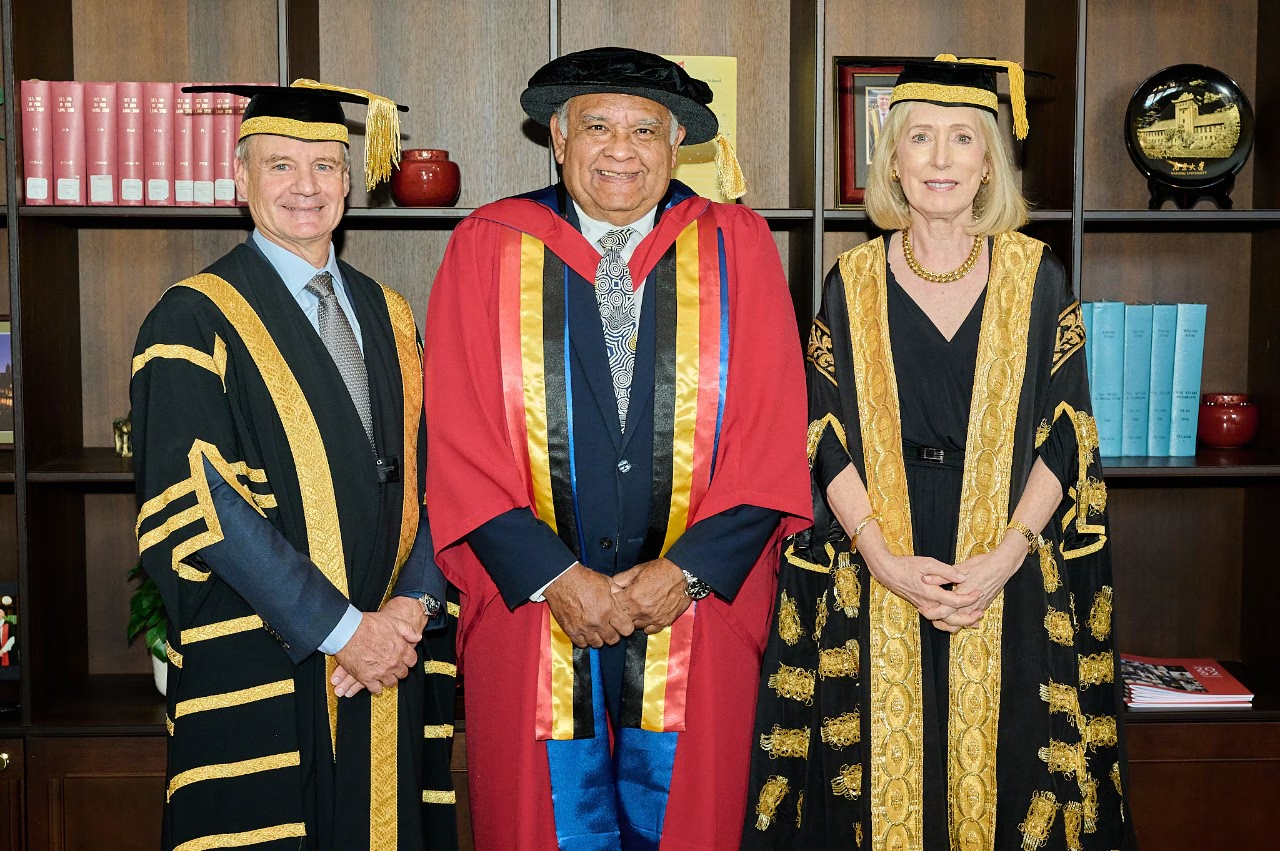
From his first job working to improve employment opportunities for remote Indigenous communities, to his leadership in the campaign for the Voice to Parliament, Professor Tom Calma AO has spent a lifetime advocating for Aboriginal and Torres Strait Islander peoples.  The University of Sydney has awarded an honorary doctorate to the Kungarakan elder and member of the Iwaidja people. The award recognizes Calma’s work in human rights and social justice, as well as his contribution to the public sector.

Chancellor Belinda Hutchinson AC presided over the ceremony, where Calma received the degree of Doctor of Letters (honoris causa).

“Throughout his life, Professor Calma has been a champion for empowerment and inclusion, improving the lives of Aboriginal and Torres Strait Islander peoples, and working for a better, fairer Australia,” the Chancellor said. “We’re delighted to recognise his extraordinary contribution with this honorary degree.”

Calma’s work across employment, education and training culminated in his role as Director of Employment and Training in the Commonwealth Department of Employment, Education and Training. He served as a senior Australian Diplomat in India and Vietnam from 1995 until 2002, advancing Australia’s education and training interests, and was later appointed Senior Advisor for Indigenous Affairs to the Honourable Philip Ruddock MP, then Minister of Immigration, Multicultural and Indigenous Affairs.

He served as Aboriginal and Torres Strait Islander Social Justice Commissioner at the Australian Human Rights Commission, and as Race Discrimination Commissioner. As Social Justice Commissioner, he reported to Parliament on issues facing Aboriginal and Torres Strait Islander communities, highlighting the discrepancy in life expectancy between Indigenous and non-Indigenous Australians. He went on to work with peak health bodies and human rights organisations to establish the Close the Gap campaign, advocating for governments to commit to eliminating the discrepancy within a generation.

He played an important role in Federal Parliament’s National Apology to Australia’s Indigenous peoples through his involvement in consultation with the Stolen Generation’s representative bodies. As Social Justice Commissioner, he gave the formal response to the Apology. “By acknowledging and paying respect, Parliament has now laid the foundations for healing to take place, and for a reconciled Australia in which everybody belongs,” he said.

To read more, go here.

Professor Tom Calma (centre) with Deputy Chancellor Richard Freudenstein and Chancellor Belinda Hutchinson.

Which way? World No Tobacco Day Webinar

Indigenous people, globally, continue to be impacted by commercial tobacco harms. This was embedded through colonisation, including rationing of tobacco in lieu of wages, and direct targeting by the Tobacco Industry.

While overall smoking prevalence has declined, 40.2% of Aboriginal and Torres Strait Islander adults smoke daily. Preventing tobacco uptake and providing cessation supports are essential in reducing smoking prevalence and tobacco related disease and death.

The Which Way project is leading community-led smoking cessation research that is developed for and by Aboriginal and Torres Strait Islander communities.

This webinar is held in partnership with AH&MRC in conjunction with World No Tobacco Day 2024 to share current Indigenous-led evidence on smoking cessation care and answer any questions communities have on providing culturally safe and responsive cessation care.

 This webinar, on World No Tobacco Day, May 31, features a panel of presenters from the Which Way team including A/Prof Michelle Kennedy, Mrs Joley Foster and Mr Kayden Roberts-Barker.

For more information, go here.

World No Tobacco Day is an annual awareness day taking place on 31 May.

Sector Jobs – you can see sector job listings on the NACCHO website here.

Advertising Jobs – to advertise a job vacancy click here to go to the NACCHO website current job listings webpage. Scroll down to the bottom of the page to find a Post A Job form. You can complete this form with your job vacancy details – it will then be approved for posting and go live on the NACCHO website.

World Schizophrenia Awareness Day – 24 May 2024

World Schizophrenia Awareness Day is observed on 24 May every year. The purpose of this day is to spread awareness about schizophrenia and eradicate the myths and superstitions around mental health in general. It is also a day to highlight the need for research and to develop new treatments to improve the quality of life for individuals experiencing schizophrenia.

Schizophrenia affects more than 21 million people worldwide according to the World Health Organization. It is characterised by persistent psychotic symptoms such as hallucinations, delusions, disorganised thoughts, and behaviour. The disorder often begins to manifest in the early twenties, but symptoms can also develop in childhood or adolescence. Men have a higher risk of experiencing schizophrenia and an earlier onset age than women. Men also tend to experience a more severe form of the disease with more negative symptoms, less chance of a full recovery and a worse outcome.

The history of schizophrenia dates to the 1700s, when cases were first recorded. The term ‘schizophrenia’ literally means “a splitting of the mind” and was coined in 1910 by Swiss psychiatrist Dr Paul Eugen Bleuler, a major figure in the early efforts to provide humane care and treatment. It was not until the 1980s that appropriate antipsychotic medications became available. These medications marked a significant breakthrough in the treatment of schizophrenia, making it possible for patients to receive the care and support they need.

Despite the significant progress made, schizophrenia remains a highly stigmatised mental health condition. The stigma surrounding schizophrenia can prevent individuals from seeking the help they may need. Talking openly about schizophrenia is an important way to raise awareness. It is important to challenge the social taboos and stereotypes that may surround schizophrenia and to promote understanding and acceptance.

You can find more information about schizophrenia on SANE’s website here. SANE is the leading national mental health organisation for people with complex mental health experiences in Australia and for the families and friends that may support them.

You can access An overview of Indigenous mental health and suicide prevention in Australia published by the Australian Institute of Health and Welfare last year, here.

Image source: American Psychiatric Association website.

23 May 2024

The NACCHO Aboriginal and Torres Strait Islander Health News is a platform we use to showcase the important work being done in Aboriginal and Torres Strait Islander health, focusing on the work of NACCHO, NACCHO members and NACCHO affiliates.

We also share a curated selection of news stories that are of likely interest to the Aboriginal and Torres Strait Islander health sector, broadly.

Aged Care Capital Assistance grants to support aged care providers in rural and remote communities

The Australian Government is investing $135 million to improve access to quality aged care services in First Nations, rural and remote communities. This investment directly supports aged care providers located outside of major cities, to build and modernise services so older Australians can access the aged care they need. This investment builds upon the $115 million to build four culturally safe, National Aboriginal and Torres Strait Islander Flexible Aged Care services in SA, the NT and QLD.

Round 1 of the Aged Care Capital Assistance Program (ACCAP) will deliver 76 infrastructure projects to upgrade aged care homes, build new staff accommodation, improve services for older people at risk of homelessness and enhance cultural care for older First Nations people.

More than $60 million will be awarded across 30 locations to support aged care providers to upgrade and expand their aged care homes, increase the number of beds and improve home care service delivery to better meet the needs of First Nations communities in remote and very remote locations.

$3 million will enable 11 National Aboriginal and Torres Strait Islander Flexible Aged Care Program providers to deliver more culturally appropriate care in First Nations communities.

$49 million will support 27 providers to address shortages in staff accommodation to attract and retain more workers so they can better meet 24/7 RN requirements, increase care minutes and reduce reliance on agency staff.

$22 million in funding will support 8 specialised services to improve access to aged care for older people who are homeless or at risk of homelessness.

“The Albanese Government is committed to improving aged care and health services for First Nations Elders and supporting them to remain close to their families and communities,” Assistant Minister for Indigenous Australians Malarndirri McCarthy said.

“This significant investment demonstrates that commitment and will see important infrastructure upgrades at facilities across the country.

“Elders play such an important role in our communities and it’s essential they are provided the very best care and support.”

Read more here.

Image source: iStock.

Red ribbon drops to celebrate return of Wujal Wujal health services

A red ribbon symbolised rebirth when stakeholders celebrated the official return of health services to Wujal Wujal on 14 May. A temporary modular clinic was installed in the community after its previous clinic was decimated by post-Tropical Cyclone Jasper flooding in December 2023, with last week’s formal opening ceremony signalling the return of doctor clinics, specialist and outpatient services, as well as allied health and midwifery outreach clinics.

The temporary clinic will remain in place while the Torres and Cape Hospital and Health Service (TCHHS) works with the Wujal Wujal Aboriginal Shire Council and other stakeholders over the coming months to develop options for a future permanent clinic to replace the old, flood-damaged facility.

Minister for Health, Mental Health, and Ambulance Services Shannon Fentiman said the State Government was “dedicated to providing the same high-quality levels of health care service to Wujal Wujal and the surrounding communities as prior to the flooding event”.

“I want to thank the community for its patience and the Wujal Wujal Aboriginal Shire Council for working closely with [TCHHS] to get services back up and running as quickly as possible,” she said.

“We will continue to support the Wujal Wujal and surrounding communities and ensure they are provided with the resources and services they need as they continue to rebuild after the flooding.’’

Read the full Cape York Weekly article here.

Senior health worker Anna Cleary, TCHHS chair Renee Williams, Wujal Wujal Aboriginal Shire Council Mayor Alister Gibson, Elder Kathleen Walker and Member for Cook Cynthia Lui cut the ribbon to mark the official opening of the community’s temporary clinic. Image source: Cape York Weekly.

Skye Stewart created a valuable resource for Aboriginal families. Now, she’s Midwife of the Year

Jiba Pepeny: Star Baby is the first stillbirth guide in the country and it was designed by and for Aboriginal families. Its creation came from the mind of Wergaia/Wemba Wemba midwife Skye Stewart, after witnessing the gap in stillbirth rates between Indigenous and non-Indigenous people and the impact it left on communities.

Ms Stewart has now been awarded Midwife of the Year at the 18th HESTA Australian Nursing and Midwifery Awards. The awards acknowledge the outstanding contribution of the country’s nurses, midwives, nurse educators, researchers, and personal care workers’ dedication to improving health outcomes.

The guide is a resource that Aboriginal families can turn to for additional cultural support during an emotional and often traumatising time. It includes advice on how to approach tough decisions, preparing for birth and provides spaces to write out thoughts and communicate wishes to extended family.

Ms Stewart, who is based in Woomelang in rural Victoria, said she sees creating the guide as part of her role as an Aboriginal midwife in community.

“My cultural role and responsibility as an Aboriginal midwife is to do what I can to ensure that Aboriginal mothers and their babies stay safe, alive, well, and together,” Ms Stewart said.

“To be recognised with this award means I’ve paid attention to where it matters, and I am doing what I am supposed to be doing. The award is a privilege, and I feel incredibly honoured and humbled.

“My work is rewarding because it supports families experiencing vulnerability at an acutely distressing time.”

Read the full NITV article here.

kye Stewart was recognised as Midwife of the Year 2024 at the HESTA Australian Nursing & Midwifery Awards. Source: NITV.

Call for applications: Aboriginal and Torres Strait Islander Health Practice Accreditation Committee

Applications are invited from registered Aboriginal and/or Torres Strait Islander health practitioners, educators and accreditation experts for appointment to the Aboriginal and Torre Strait Islander Health Practice Committee.

The role of the Committee is to exercise accreditation functions under the National Law assigned by the Aboriginal and Torres Strait Islander Health Practice Board of Australia (the Board). These functions are to:

  • develop accreditation standards for approval by the Board
  • assess, accredit, and monitor educator providers and their programs of study
  • make recommendations and give advice to the Board.

Applicants must have current or recent experience in:

  • Education – preferably with experience working in the Vocational Education and Training (VET) sector and in delivering training in Aboriginal and/or Torres Strait Islander Primary Health Care (Practice), and
  • Accreditation – preferably within the health sector.

Applications close on Sunday 30 June 2024 at 11:55pm, AEST.

For more information, go here.

Indigenous Cairns teenager promotes mental health through poetry.

Indigenous Cairns teenager Marianna Saba-Edge has been advocating for young people facing social and emotional wellbeing challenges through her poetry. At 16, she wrote a poem promoting radical self-acceptance and love among young women, highlighting the benefits of counselling. Ms Saba-Edge created the poem to cope with her own challenges and to support others struggling with self-love and acceptance. She attended school-based counselling through the Indigenous Mental Health program.

“I wrote what I always wanted to hear growing up,” she said.

“But there are so many girls like me who believe they are not capable of self-love.

“But they are, and this poem expresses what I wish I’d believed when I truly thought I wasn’t capable of love.”

The program, funded by the Northern Queensland Primary Health Network (NQPHN), is delivered by Ngak Min Health.

During her final session, she shared with her counsellor a poem she had written for a school project.

“I had been feeling really angry and guilty, and started writing about those feelings, which helped me understand them, but didn’t make me feel good,” she said.

“I thought, why write a story that brings me down, when I can create something that lifts people up?

“That’s when I started writing the poem – and I finished it in one English class. It just felt right.”

Writing down her feelings was a technique she learned while working with her Ngak Min Health counsellor.

“Working with Ngak Min was different compared to other councillors I have spoken with,” she said.

“To start with we mostly talked about Stranger Things, but I was soon able to open up about more personal things in my life that normally I wouldn’t tell anyone.

“I have always been a self-aware person, but I tend to deal with my problems on my own.”

Thankfully, Ms Saba-Edge now feels much happier in life.

“Writing the poem was really the start to having true self-love and is something I wish I’d had when I was younger,” she said.

“That’s why I tried hard to write it to stick in the reader’s head, and so they can feel empowered.”

Ms Saba-Edge remains as an example of why it’s so important for Indigenous women to have the freedom and courage to express themselves on their journey to healing.

Read the National Indigenous Times article here.

To all girls, everywhere by Marianna Saba-Edge.

Sector Jobs – you can see sector job listings on the NACCHO website here.

Advertising Jobs – to advertise a job vacancy click here to go to the NACCHO website current job listings webpage. Scroll down to the bottom of the page to find a Post A Job form. You can complete this form with your job vacancy details – it will then be approved for posting and go live on the NACCHO website.

Australia’s Biggest Morning Tea – 23 May 2024

Cancer is a group of diseases in which abnormal cells proliferate and spread. These cells can form a malignant tumour that can invade and damage the surrounding area and spread (metastasise) to other parts of the body through the bloodstream or the lymphatic system. If the spread of these tumours is not controlled, it can cause death. The effectiveness of treatment and survival rates can vary between different cancers and patients.

While the causes of many cancers are not fully understood, there are some known risk factors, some of which may be modifiable and some which are not. These risk factors include biomedical factors (for example genetic susceptibility and hormonal factors), behavioural factors (for example smoking, alcohol consumption and physical inactivity) and environmental factors (for example sunlight and radiation. Early diagnosis and access to culturally safe treatment are key to survival.

One in two Australians are diagnosed with cancer before the age of 85. Aboriginal and Torres Strait Islander people have a higher incidence of fatal, screen-detectable and preventable cancers and are more likely to be diagnosed at more advanced stages, often with comorbidities that are more complex. with non-Indigenous Australians diagnosed with the same cancer, Indigenous Australians are disadvantaged because they are usually diagnosed later with more advanced disease, are less likely to have treatment, and often have to wait longer for surgery than non-Indigenous patients. This highlights the inequities within the health system experienced by Indigenous Australians.

Australia’s Biggest Morning Tea Cancer Council Australia’s most popular fundraising event and the largest most successful event of its kind in Australia. Funds raised go towards Cancer Council Australia’s world class research and support programs.

You can find more information about Australia’s Biggest Morning Tea on Cancer Council Australia’s website here.

Australia’s Biggest Morning Tea 2024.

22 May 2024

The NACCHO Aboriginal and Torres Strait Islander Health News is a platform we use to showcase the important work being done in Aboriginal and Torres Strait Islander health, focusing on the work of NACCHO, NACCHO members and NACCHO affiliates.

We also share a curated selection of news stories that are of likely interest to the Aboriginal and Torres Strait Islander health sector, broadly.

Over-policing during pandemic amplified disadvantage

A new report has claimed disadvantaged and First Nations children in NSW were targeted by police during the COVID-19 pandemic, with fines up to $5,000 being issued, pushing families into financial hardship. Commissioned by the Redfern Legal Centre (RLC), the Public Interest Advocacy Centre (PIAC) and Aboriginal Legal Service (NSW/ACT) Limited (ALS), Children and Covid-19 Fines in NSW paints a troubling picture of the over-policing of disadvantaged communities during the pandemic which was “unsuitable for achieving positive public health outcomes for children”.

The report observes fines were disproportionately issued to marginalised groups throughout the state, including to Aboriginal and Torres Strait Islander children, children with cognitive disabilities, and children experiencing socio-economic challenges such as homelessness, or unsafe home environments. Between March 2020, and September 2022, 3,628 children in NSW received a penalty notice for a breach of a public health order. More than half of those were fixed at $1,000 and some were as high as $5,000.

Chair of the Aboriginal Legal Service (ALS) NSW/ACT, Karly Warner, said Aboriginal communities set the “gold standard” for caring for each other during the pandemic. “Yet our children paid a higher price because of the Government’s punitive approach to enforcing public health orders,” Ms Warner said. “Fines are an extension of the way Aboriginal children are criminalised and punished in NSW. It’s time to reform the archaic and unjust fines system.”

To view the National Indigenous Times article “Simply amplifies disadvantage”: First Nations and disadvantaged children targeted by NSW police during COVID lockdowns, report reveals in full click here.

Aboriginal Legal Service CEO Karly Warner portrait shot against ATSI crocodile painting

Aboriginal Legal Service CEO Karly Warner says the fines are an extension of the way Aboriginal children are criminalised. Photo: NATSILS. Image source: National Indigenous Times.

ACCHO purchases primary health centre

Gunditjmara Aboriginal Cooperative has announced its purchase of Lyndoch Living’s primary health centre. The building, which cost Lyndoch Living about $25m to build, went on the market in October 2023 – less than a year after it opened.  Gunditjmara had planned major renovations of its Kepler Street site but costs of the works soared to $9.5m in February 2024. Costs had blown out by more than $4m.

Gunditjmara CEO Danny Chatfield said a decision was made to make the move to the Hopkins River location. “The decision to purchase the Lyndoch primary health centre came just at the right moment, presenting an ideal alternative when opportunity knocked,” Mr Chatfield said in a statement.

“The facility, situated beside the significant Hopkins River – a site of profound cultural importance to the Maar society- came as a perfect fit. This idyllic and tranquil setting naturally aligns with Gunditjmara’s holistic approach to health and social care, which encompasses a full spectrum of services from birth to elderhood. Undoubtedly, it will enhance both the physical and cultural well-being of our community members, visitors, and staff,” Mr Chatfield said.

The above has been extracted from an article ‘Just at the right moment’: Gunditjmara buys Lyndoch primary health centre published in The Standard last night (21 May 2024).

Lyndoch Living primary health centre

Gunditjamara Aboriginal Corporative has bought Lyndoch Living’s primary health centre. Image source: The Standard.

Call for greater LGBTIQ+ inclusivity in palliative care

“Discrimination drives many LGBTIQ+ people to avoid healthcare or avoid disclosing their diverse bodies, sexual orientations or genders. This directly impacts on their end-of-life planning,” said Dr Ruth McNair, GP, and honorary Associate Professor at the University of Melbourne. “Barriers to end-of-life care for LGBTIQ+ people can be overcome. Further education within the healthcare sector would greatly improve awareness of issues unique to LGBTIQ+ patients.” These comments for greater inclusivity come ahead of National Palliative Care Week, happening from Sunday, 19 May to Saturday, 25 May 2024. “When healthcare providers encourage LGBTIQ+ people to establish an advanced care directive, it can have a ripple effect throughout LGBTIQ+ communities where other people also better prepare for end-of-life scenarios,” Dr McNair said.

Dr McNair has been deeply involved in the LGBTIQ+ health space for a long time, collaborating closely with LHA and actively participating in its LGBTIQ+ Palliative Care Project. This year, LHA launched the LGBTIQ+ Inclusive Palliative Care eLearning to promote inclusivity in palliative care. This program offers professional development for the palliative care workforce focused on providing safe, inclusive palliative care that respects and supports LGBTIQ+ people, ensuring they can access care, free from discrimination. The four-module eLearning program is accessible at no cost to those working in palliative care or with an interest in the field.

“Fears of homophobia, biphobia, transphobia, and elder abuse can be highly distressing to older people who have faced these challenges in the past. As such, there is an urgent need for the aged care and primary care sectors to address the unique challenges faced by LGBTIQ+ people when accessing palliative care services,” Dr McNair said.

To view the Healthcare Channel article Call for greater LGBTIQ+ inclusivity in palliative care in full click here.

LGBTIQ+ Health Australia logo & portrait shot of Dr Ruth McNair

LGBTIQ+ Health Australia logo & Dr Ruth McNair. Image sources: LGBTIQ+ Health Australia website & The University of Melbourne website.

First Nations Aged Care Commissioner reports in

The Interim First Nations Aged Care Commissioner Ms Andrea Kelly, who commenced in the role on 8 January 2024, is currently conductingnation-wide consultations, to hear directly from First Nations older people, families, carers, communities and providers about their experiences accessing and engaging in the aged care system. Commissioner Kelly has been visiting communities across Australia, ensuring there is a mix of very remote, remote, regional and urban locations. She has also been speaking with a mix of service types who provide aged care to older First Nations people.

During these consultations, Commissioner Kelly has invited feedback on two questions::

  • What changes are required to enable culturally safe, trauma-aware and healing-informed access to the aged care system for older First Nations people, carers, families and communities?
  • · Should there be a permanent, statutory First Nations Aged Care Commissioner? If so, what should their functions and authority be?

Commissioner Kelly is not surprised that the community-controlled sector and organisations with long standing relationships in these communities have the solutions to deliver aged care to older First Nations people.

Some of the key themes Commissioner Kelly has heard so far from older First Nations people and the sector include:

  • wait times from assessment through to service provision are taking too long
  • allowing flexibility in funding models mean that care is localised and reflective of the needs of the individual
  • employing staff to work in the sector is difficult due to the lack of safe and affordable accommodation for workforce, particularly in remote and very remote communities
  • the importance of culture and remaining connected to Country and community is significant to the mental health and social and emotional wellbeing of older First Nations people

You can access the Interim First Nations Aged Care Commissioner – Communique – May 2024 in full on the Australian Government Department of Health and Aged Care website here.

cover of Aust Govt DoHAC publication, text 'Communique - May 2024 Interim First Nations Aged Care Commissioner' & DoHAC logo & ATSI art in orange & aqua

Image source: Department of Health and Aged Care website.

Aged Care Star Ratings – have your say

The Australian Department of Health and Aged Care has engaged Allen + Clarke Consulting to undertake an evaluation of Star Ratings for residential aged care. As part of the evaluation, Allen + Clarke Consulting is undertaking consultation with consumers and a range of stakeholders across the aged care sector, including representatives from aged care organisations, advocacy groups, service providers, and staff working in residential aged care.

As part of their consultation process, Allen + Clarke Consulting invite you to an interview. Your participation in an interview will help Allen + Clarke Consulting to understand whether Star Ratings are contributing to improved quality of care in residential aged care homes, and how well Star Ratings are working to improve transparency and decision-making about aged care for older people and their families and carers. If you’d prefer, you can delegate this invitation to another colleague in your organisation. You are also welcome to bring one or two additional team members to participate in the interview.

The interview will be held online and will be up to 45 minutes in length.

Key areas that may be discussed include:

  • How well do Star Ratings address the specific challenges and requirements of First Nations people?
  • What is the level of awareness about Star Ratings among First Nations people making decisions about aged care for themselves or someone else?
  • Should Star Ratings be expanded to National Aboriginal Torres Strait Islander Flexible Aged Care (NATSIFAC) services?
  • What are the potential benefits and enablers for publishing Star NATSIFAC service types?
  • What challenges and considerations would need to be considered when implementing Star Ratings for MPS and NATSIFAC service types?

Interviews will run until Friday 31 May. If you would like to participate in an interview, please book a time here. If none of the dates offered are suitable, you can contact the evaluation team via email here and hey will find another time that is convenient for you. Prior to the interview, please review and sign the online consent form, available here. The online consent form also contains additional information on this work, including information about privacy and how your information will be handled.

Allen + Clarke Consulting will also be administering an online survey for sector stakeholders. If you are unable to participate in an interview, they would welcome your feedback through the survey. Please email the Allen + Clarke Consulting team, here, to request a link to the survey, if you have any questions or wish to know more. Alternatively, you can contact the Department of Health and Aged Care Star Ratings evaluation manager, Leanne Altinger via email here.

Sector Jobs – you can see sector job listings on the NACCHO website here.

Advertising Jobs – to advertise a job vacancy click here to go to the NACCHO website current job listings webpage. Scroll down to the bottom of the page to find a Post A Job form. You can complete this form with your job vacancy details – it will then be approved for posting and go live on the NACCHO website.

Exercise Right Week – 20–26 May 2024

Exercise Right is a public awareness campaign which was developed by Exercise & Sports Science Australia (ESSA) in 2014. Its purpose is to inspire and inform all Australians to move more and to demonstrate the importance of seeking the right exercise expert for their requirements. ESSA have an Exercise Right blog which aims to educate Australians about the importance of exercise for general health, as well as for the prevention and management of a range of chronic conditions and injuries. Content on the ESSA blog is all evidence based and written by ESSA members.

Exercise Right Week runs from the 20–26 of May 2024. The campaign is all about promoting the health benefits of physical activity and showing Australians how they can “Exercise Right” for their needs. This year, the theme for Exercise Right Week is “Just Move”. Exercise Right Week is promoted in the Department of Health’s national events calendar, and continues to gain recognition in the allied health community.

You can find more information on the Exercise Right Week website here.

OAMS tile text 'Exercise Right Week 20-26 May 2024 - Just Move.; OAMS walu-win garraba logo & 2 staff members

Image source: Orange Aboriginal Medical Service LinkedIn page.

21 May 2024

The NACCHO Aboriginal and Torres Strait Islander Health News is a platform we use to showcase the important work being done in Aboriginal and Torres Strait Islander health, focusing on the work of NACCHO, NACCHO members and NACCHO affiliates.

We also share a curated selection of news stories that are of likely interest to the Aboriginal and Torres Strait Islander health sector, broadly.

CTG won’t happen without appropriate SEWB funding

Following the delivery of the 2024–25 Budget this week, Gayaa Dhuwi (Proud Spirit) Australia welcomed funding for trauma-informed and culturally safe mentoring and assistance to Aboriginal and Torres Strait Islander people engaged in the justice system, as well as funding to continue delivery of targeted and culturally appropriate mental health supports. However, Gayaa Dhuwi is again calling for the Federal Government to appropriately fund Aboriginal and Torres Strait Islander social and emotional wellbeing (SEWB), mental health, and suicide prevention, as there was no mention of Aboriginal and Torres Strait Islander SEWB and mental health programs that exist beyond the health system.

“The Budget papers are disappointing, but not surprising”, said Gayaa Dhuwi (Proud Spirit) Australia CEO Ms Rachel Fishlock. “We need to be looking beyond the health system and supporting the SEWB and mental health of our people before they are in justice or acute crisis situations. “The work of Gayaa Dhuwi aims to ensure our people enjoy high levels of SEWB, particularly through the implementation of the Gayaa Dhuwi (Proud Spirit) Declaration. We’ll never close the gap without appropriately funded SEWB and mental health programs.”

“Our people have experienced a failed referendum, COVID, cost of living pressures, and natural disasters, all while dealing with the intergenerational impacts of colonisation”, said Professor Helen Millroy, Chair of Gayaa Dhuwi (Proud Spirit) Australia. “Aboriginal and Torres Strait Islander leaders, workforce, and community are working tirelessly to be present, lead, and excel within Australia’s mental health system and beyond it, but we can’t do it without appropriate funding”.

To view the Gayaa Dhuwi (Proud Spirit) media release We’ll never close the gap without appropriate funding for social and emotional wellbeing click here.

tile with Gayaa Dhuwi (Proud Spirit) Australia logo; image of Rachel Fishlock & text 'Gayaa Dhuwi (Proud Spirit) Australia CEO - Ms Rachel Fishlock'

Image source: Gayaa Dhuwi (Proud Spirit) Australia website.

ACCN to revolutionise cancer care

The landscape of cancer care in Australia is set to transform with the launch today of a new network, the Australian Comprehensive Cancer Network (ACCN), which will link cancer services across Australia, aiming to improve cancer outcomes and experiences for all Australians affected by cancer. While Australia boasts some of the world’s highest cancer survival rates, not all people experience equal outcomes. There are significant disparities in cancer outcomes for some populations, particularly affecting those in rural and remote regions, as well as Aboriginal and Torres Strait Islander communities.

The ACCN is a pioneering initiative that aims to address these disparities, emphasising coordinated and equitable access to comprehensive cancer services irrespective of where a person lives, and marking a significant milestone in the advancement of cancer care in Australia. Comprehensive Cancer Centres (CCCs) will serve as anchors in the ACCN, connecting various cancer control services nationwide. Through building partnerships and harnessing virtual connectivity, CCCs will collaborate with other cancer care centres, academic institutions, ACCHOs, regional hospitals and allied health services, among others.

The ACCN is a major action of the 10-year Australian Cancer Plan, launched in 2023 to improve cancer outcomes for all Australians, particularly for those groups whose health outcomes are poorest. Achieving equity in cancer outcomes is a fundamental measure of success for the Australian Cancer Plan and will align Australia with global calls to improve cancer outcomes for all people.

You can register interest in joining the ACCN and to learn more about this groundbreaking initiative here.

You can view the Australian Government Cancer Australia media release Australian Comprehensive Cancer Network (ACCN) launches to revolutionise cancer care across the country in full click here.

Cancer Australia tile with text 'Australian Comprehensive Cancer Network Innovations Showcase 21 May 0224'

Image source: Cancer Australia.

Power of Indigenous co-design and intervention

The National Health and Medical Research Council (NHMRC) is hosting a brand new Speaking of Science webinar series. During these of free virtual webinars participants will have the opportunity to engage with our nation’s outstanding researchers, high profile individuals, and scientific experts within their chosen fields, on different topics across the spectrum of health and medical research, as well as connect with peers across the wider sector. There will be a Q&A session at the end of each webinar and questions are encouraged.

During National Reconciliation Week, NHMRS will host distinguished researcher and Indigenous leader, Professor Maree Toombs, for their Speaking of Science May webinar. With over 20 years’ experience in teaching and developing curriculum with an Indigenous perspective both in education and health, Professor Toombs, now the Professor of Aboriginal and Torres Strait Islander Health in the UNSW School of Population Health, is a leader in research focused on mental health and suicide intervention.

In this webinar, Professor Toombs will discuss how unlocking the power of Indigenous co-design and intervention can lead to transformative outcomes through authentic collaboration.

The free webinar will be held from 11.00 am – 12.00 pm (AEST) on Thursday 30 May 2024. You can register here.

You can find more information about the webinar on the NHMRC ‘s Tracker newsletter webpage here.

Professor Maree Toombs & NHMRC speaking of SCIENCE logo

Professor Maree Toombs. Image source: NHMRC Building A Health Australia website.

Self-collection can help stamp out cervical cancer

Australia is on track to being the first country to eliminate cervical cancer, which we aim to do by 2035. To accelerate progress towards this goal, a government-funded national cervical screening campaign will kick off in September, promoting the cervical screening options now available to patients across the country. This campaign will be the first of its magnitude in over 20 years and will likely result in an increase in patient demand, particularly for human papillomavirus (HPV) self-collection.

The campaign will be primarily focused on priority patient groups, specifically Aboriginal and Torres Strait Islander women and people with a cervix as well as culturally and linguistically diverse patients, to lift screening rates and improve outcomes for these communities. Now is the time to contact your laboratory to ensure you have the correct swabs and instructions to offer self-collection as an option to all your eligible patients, and to make sure you know the facts about self-collection so that you can support all your patients in their decision making.

There is now a large body of evidence confirming that, provided high-precision polymerase chain reaction (PCR) testing is used for laboratory processing, self-collected samples are just as sensitive for the detention of CIN2+, adenocarcinoma in situe, and oncogenic HPV as clinician-collected cervical samples. HPV is the cause of almost all cervical cancers. All self-collected samples in the National Cervical Screening Program are processed using PCR technology, which is a regulatory requirement.

To view The Medical Republic article Self-collection can help stamp out cervical cancer in full click here.

real pink & white flower laid out to represent uterus & ovaries

Image source: The Medical Republic.

First Nations cancer clinic opens in Healesville

Eastern Health opened a new First Nations cancer clinic at Healesville Hospital earlier this month (9 May), aiming at delivering free, culturally safe oncology services to the region’s large Aboriginal population. Sadly, research shows that cancer disproportionately affects Aboriginal and Torres Strait Islander people in Victoria, with the five-year survival rate among Aboriginal Victorians 12% lower than non-Aboriginal Victorians.

Providing medical oncology services, the clinic is staffed with oncologists specially trained in treating the most common types of cancer for First Nations Australians such as lung, prostate, breast, and bowel cancers. Eastern Health cancer services director adjunct clinical professor Phillip Parente said the Aboriginal community chose Healesville to have a new First Nations cancer clinic for themselves.

“I knew from the Bureau of Statistics that the largest Aboriginal population within Victoria resides in Healesville, Eastern Health’s catchment area. I spoke to our Aboriginal health care team and made up a time to meet with patients and families who’ve been affected by cancer in Healesville,” he said. “It was pretty clear to me that the Aboriginal community did not want to go to other Eastern Health hospitals in Box Hill or Maroondah, they wanted to be at Healesville because it’s a culturally safe space for them at Healesville and that’s not replicated at other sites as much. Once I got what they wanted and that was really non-negotiable, if a culturally safe cancer clinic for Aboriginals was going to be set up, the location had to be Healesville.”
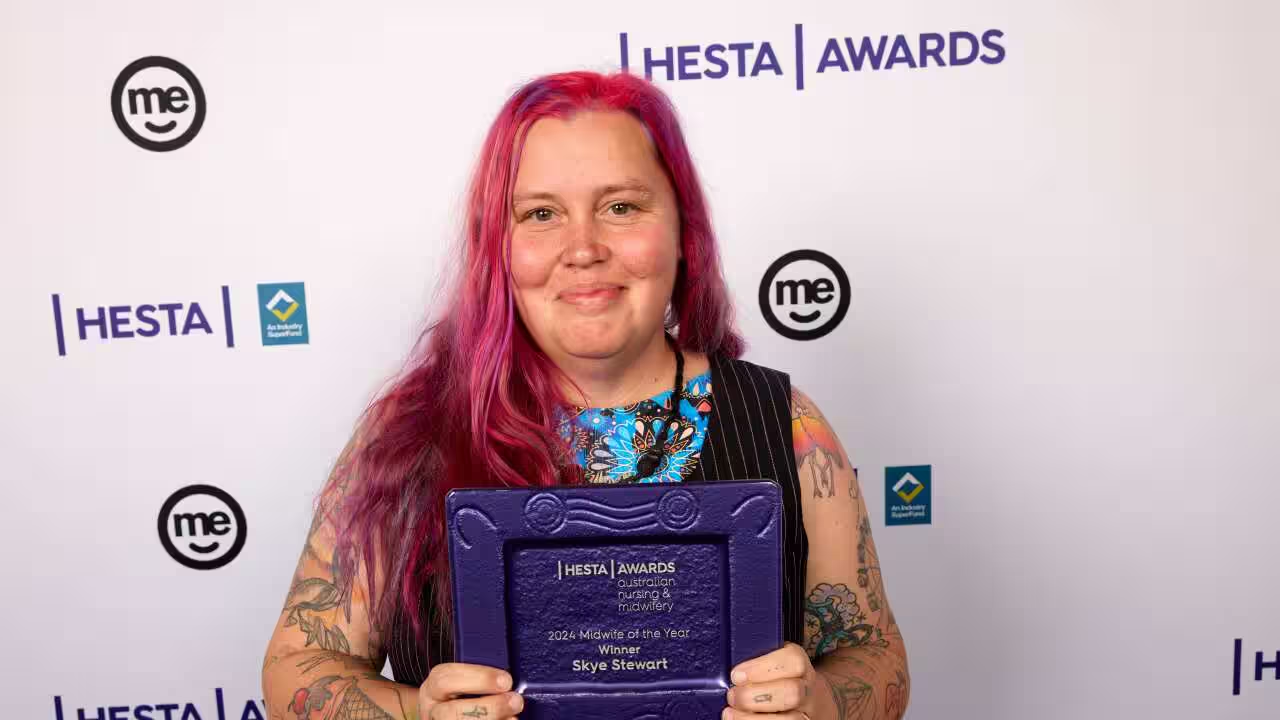
To view the Star Mail article One more step forward to making community more inclusive in full click here.

smoking ceremony conducted by Craig Murphy-Wandin, Healesville Hospital

The smoking ceremony conducted by Craig Murphy-Wandin. Photo: Eastern Health. Image source: Star Mail.

Sector Jobs – you can see sector job listings on the NACCHO website here.

Advertising Jobs – to advertise a job vacancy click here to go to the NACCHO website current job listings webpage. Scroll down to the bottom of the page to find a Post A Job form. You can complete this form with your job vacancy details – it will then be approved for posting and go live on the NACCHO website.

National Palliative Care Week 19–25 May 2024

National Palliative Care Week is running from 19 to 25 May 2024. Palliative care focuses on physical, emotional, spiritual and social aspects of care. Palliative care is family-centred. Family, loved ones and carers can also receive practical and emotional support. Early access to palliative care helps people to maintain quality of life by managing pain and symptoms. It’s never too soon to start the conversation about matters of life and death.

When Aboriginal and Torres Strait Islander Peoples are diagnosed with a life-limiting illness, or are approaching the end of their life, they should be able to access quality palliative and supportive care that is consistent with their wishes, when and where they need it, no matter where they live. Importantly, this care must be culturally safe and responsive, incorporating the social, emotional, and cultural well-being of the person, as well as their family and the community.

To that end, Palliative Care Australia (PCA) has developed a range of resources, available here, to assist the Aboriginal and Torres Strait Islander Peoples, their communities, and health professionals working within communities to ensure approaches and practises are culturally safe and respectful.

You can find advice, tools and support on the Palliative Care Australia website here.

tile with text 'National Palliative Care Week 19-25 Mat - Matters of life and death'

Image source: Palliative Care NSW website.

World Day for Cultural Diversity for Dialogue and Development – 21 May 2024

Held every year on 21 May, the United Nations Educational, Scientific and Cultural Organization (UNESCO) leads the celebration of World Day for Cultural Diversity for Dialogue and Development highlighting not only the richness of the world’s cultures, but also the essential role of intercultural dialogue for achieving peace and sustainable development.

The United Nations General Assembly first declared this World Day in 2002, following UNESCO’s adoption of the 2001 Universal Declaration on Cultural Diversity, recognising the need to “enhance the potential of culture as a means of achieving prosperity, sustainable development and global peaceful coexistence.”

With 89% of all current conflicts in the world occurring in countries with low intercultural dialogue, to forge effective cooperation and sustain peace, strengthening intercultural dialogue must be a priority.

You can find more information about World Day for Cultural Diversity for Dialogue and Development on the United Nations website here.

tile un logo; text World Day for Cultural Diversity for Dialogue & Development'; vector image of 10 different nationalities

Image source: MCIS Language Solutions website.