29 August 2024

The NACCHO Sector News is a platform we use to showcase the important work being done in Aboriginal and Torres Strait Islander health, focusing on the work of NACCHO, NACCHO members and NACCHO affiliates.

We also share a curated selection of news stories that are of likely interest to the Aboriginal and Torres Strait Islander health sector, broadly.

Milestone study reveals extreme staff turnover in remote health services

Researchers at Menzies School of Health Research found that Aboriginal Community Controlled Health Organisation (ACCHO) clinics in remote NT and WA experience a high staff turnover rate of 151% annually.

The study revealed that hiring local Aboriginal staff could lead to greater stability, as their turnover rate was found to be half that of non-Aboriginal staff. The high turnover adds to the cost of service delivery and has significant human resources impacts on remote ACCHOs.

The study highlighted the urgent need for more equitable, needs-based funding and expanded training opportunities for local Aboriginal people to enter the health workforce and create improved career pathways.

To read the paper in full, go here.

To read the media release in full, go here.

Hepatitis C is now curable but eliminating the disease from Australia comes with large challenges

Australia is struggling to meet its elimination targets for hepatitis C, with new infections continuing. Around 100,000 Australians have been cured, but about 70,000 people with hepatitis C have not been treated.

The virus disproportionately affects Indigenous Australians, and at the Deen Clinic in Perth, Donna Garcia helps convince other Indigenous people to get tested and treated. She combats stigma about the virus and emphasises the importance of treatment due to the long, slow progression of liver damage.

To read the article in full, go here.

A hepatitis C test at the Kombi Clinic. (ABC News: Christopher Gillette)

Dementia guidelines refresh underway

Monash University has received over $1 million in government funding to update Australia’s clinical guidelines for dementia care. The update aims to address issues of access to healthcare and services, provide evidence-based information to people impacted by dementia, and engage with individuals with lived experience of dementia.

The draft guideline will undergo independent review and a public consultation process before being finalised. The goal is to empower health and aged care professionals to provide high-quality dementia care in partnership with people living with dementia and their carers. Additionally, the update will consider the needs of vulnerable communities such as First Nations Australians, culturally and linguistically diverse communities, and younger people with dementia.

To read the media release, go here.

Photograph supplied

Work to start on new Pormpuraaw Primary Health Care Centre

Work on the new Pormpuraaw Primary Health Care Centre is about to commence, with main construction works starting early next year. The centre will offer a comprehensive range of services aimed at improving health outcomes for the community.

The project is part of the Miles Government’s more than $1 billion Building Rural and Remote Health Program. The full construction is expected to begin in early 2025 and be completed by mid-2026. The new facility will provide modern amenities and is key to closing the gap in health outcomes for First Nations Australians.

To read the media release in full, go here.

Image from heraldsun.com.au

Sharing an immersive journey into the Deep End of general practice – and the healing arts, gardens and graffiti

Dr Tim Senior, a GP, works in Aboriginal Community Control (a NACCHO service) and has been at the same service for nearly 20 years. He also works at the Royal Australian College of General Practitioners in Aboriginal and Torres Strait Islander Health, Standards, and Health Equity. He recently took the reins of @WePublicHealth to share some of his findings from a Churchill Fellowship investigating GPs and primary care teams working in marginalised communities in the United Kingdom and Ireland.

To read the full article, go here.

In London, gardens for health. Images by Dr Tim Senior.

ECU Health Centre Yanchep East officially opened, comprising half of $21m medical hub

ECU has officially launched its new health centre in Yanchep. The ECU Health Centre Yanchep East aims to provide better health care services for the rapidly growing far-northern corridor. The overall development will come with a $20.7 million price tag funded by the Australian Government, the State Government, and ECU.

Yanchep and surrounding suburbs are amongst the fastest-growing urban corridors in WA. Health and Mental Health Minister Amber-Jade Sanderson said the health centre would provide a range of healthcare services to a growing region.

To read the article in full, go here.

ECU Health Centre Yanchep East has opened. Credit: supplied

Sector Jobs – you can see sector job listings on the NACCHO website here.

Advertising Jobs – to advertise a job vacancy click here to go to the NACCHO website current job listings webpage. Scroll down to the bottom of the page to find a Post A Job form. You can complete this form with your job vacancy details – it will then be approved for posting and go live on the NACCHO website.

28 August 2024

The NACCHO Sector News is a platform we use to showcase the important work being done in Aboriginal and Torres Strait Islander health, focusing on the work of NACCHO, NACCHO members and NACCHO affiliates.

We also share a curated selection of news stories that are of likely interest to the Aboriginal and Torres Strait Islander health sector, broadly.

Help increase participation in the national cancer screening programs

We know cancer screening saves lives, but only around 50% of Australians eligible for the national cancer screening programs – BreastScreen Australia, National Bowel Cancer Screening Program and National Cervical Screening Program – complete the tests.

Australians diagnosed through the national cancer screening programs:

Research shows primary healthcare workers are key to motivating patients to participate in cancer screening.

In 2022, the Australian Government distributed GP cancer screening engagement packs to more than 7000 general practices across Australia including demo bowel screening kits, cervical screening swabs and waiting room posters.  This year new and updated kits will be mailed out, including translated materials, to distribute across practices to help encourage patients to screen for bowel, breast and cervical cancer.

The packs will include:

  • A3 posters, one for each national cancer screening program, with reminder messaging and information on how to book. We are encouraging practices and ACCHOs to hang these in waiting rooms and other high traffic areas to prompt conversations with healthcare professionals about cancer screening. Translations of the poster in over 20 languages will be available to be printed in-practice.
  • Demonstration samples of the bowel cancer screening home test kit and the cervical screening self-collection swab – these can be used to show patients how to do the tests.
  • Illustrated infographics on how to use the cancer screening tests and where to find educational resources on cancer screening. Translations of the illustrated guides will be available in over 20 languages online.

More information on cancer screening and resources for healthcare providers can be found on the Department of Health and Aged Care website.

The Australian Government Department of Health and Aged Care is seeking help from healthcare providers to increase participation in the national cancer screening programs (bowel, breast and cervical).

Eye Health 2024 Webinar Series: IUIH’s cataract pathway program

Join us on Wednesday September 4 (1-2 PM AEST) for the first of the Eye Health 2024 Webinar Series: IUIH’s cataract pathway program. ️

The Institute for Urban Indigenous Health (IUIH), a Southeast Queensland network of five Aboriginal and Torres Strait Islander Community Controlled Health Services, embeds eye health services within a primary care network.

This webinar will outline IUIH eye health pathways that provide holistic primary care services with a continuum into secondary and tertiary eye care.  These pathways demonstrate the importance of community-controlled health organisations as we provide the personalised approach ensuring continuous information flow for true patient-centred care. We will also yarn about our health promotion program Deadly Urban Eyes & the importance of regular eye checks.

Presenters:

  • Celia McCarthy: Celia was born and raised on Darumbal country, Central Queensland, and has called Southeast Queensland home since 1995. Celia’s role at the IUIH is Eye Health Services Manager.
  • Olivia Hillard: Olivia was born and raised on Turrbal Country, North Brisbane, and has worked as Eye Health Assistant at the Institute for Urban Indigenous Health for six years.

To register, go here.

Alice Springs leaders suggest alternatives to new CLP government’s promised crime reforms

Alice Springs organisations are advocating for alternative approaches to reduce crime, as the NT’s new CLP government pledges to toughen crime laws.

Donna Ah Chee, Central Australian Aboriginal Congress CEO said it was using $18 million from the federal government’s $250 million Alice Springs rescue package to treat a key driver of crime – young people suffering from brain development and mental health conditions. The NT’s youth detention royal commission found that many young people convicted of crimes have these conditions.

Ms Ah Chee is calling on both the new NT and federal governments to fund some new solutions.

“What we are advocating for is a long-term, secure care rehabilitation facility for traumatised kids, who have ongoing contact with the youth justice system,” she said.

“It would be mandated and therapeutic, and also ensures that they are reconnecting with education and training, and their family.”

Ms Ah Chee said Congress also wants a mandatory treatment facility for men perpetrating domestic violence, before or after prison.

To read the ABC News article in full, go here.

Donna Ah Chee said Congress wants young offenders to receive six months of mandatory treatment. (ABC News: Jane Bardon).

New ‘Super Kids’ ad helps families understand the importance of childhood immunisations

The Australian Government has launched new advertising for Aboriginal and Torres Strait Islander parents and carers reminding them about the importance of childhood vaccinations. The ‘Super Kids’ ad shows how being up to date with vaccinations means little ones can become superheroes who can help protect the entire community. This advertisement will be shown throughout Aboriginal Medical Centres and social media and as a reminder to get children vaccinated.

Vaccinations under the National Immunisation Program (NIP) are a safe, free and effective way to protect children and communities from diseases such as measles and whooping cough. Skipping or delaying vaccinations puts children and those around them at risk. Although in Australia we have high rates of childhood vaccination, recent data shows that routine childhood immunisation coverage rates have declined, particularly in Aboriginal and Torres Strait Islander communities.

We can contribute to growing vaccination rates by children receiving their free routine vaccines:

To learn more, go here.

The ‘Super Kids’ ad shows how being up to date with vaccinations means little ones can become superheroes who can help protect the entire community. Image source: Australian Government Department of Health and Aged Care.

Otitis Media Australia conference ‘Mob Only Day’

A key focus of OMOZ 2024 is the health and wellbeing of First Nations communities, who experience disproportionately high rates of chronic ear disease. Prominent Indigenous leaders, including Nathan Towney, Pro Vice-Chancellor of Indigenous Strategy and Leadership at the University of Newcastle, will emphasise the importance of Indigenous leadership in healthcare.

Professor Kong reiterated the significance of Indigenous voices attending the conference.

We want to ensure that Indigenous voices are not just heard but are central to the conversation. That’s why we’re dedicating the first day of the conference as a ‘Mob Only Day.’ It’s crucial that our communities lead the way in shaping solutions to the ear health challenges we face.”

For more information, go here.

Sector Jobs – you can see sector job listings on the NACCHO website here.

Advertising Jobs – to advertise a job vacancy click here to go to the NACCHO website current job listings webpage. Scroll down to the bottom of the page to find a Post A Job form. You can complete this form with your job vacancy details – it will then be approved for posting and go live on the NACCHO website.

27 August 2024

The NACCHO Sector News is a platform we use to showcase the important work being done in Aboriginal and Torres Strait Islander health, focusing on the work of NACCHO, NACCHO members and NACCHO affiliates.

We also share a curated selection of news stories that are of likely interest to the Aboriginal and Torres Strait Islander health sector, broadly.

13YARN and DrinkWise launch new campaign showing support options for Mob wanting help

The Indigenous mental health organization 13YARN has partnered with DrinkWise and Indigenous superstar Daniel Rioli in a campaign about alcohol consumption.

The campaign aims to remind First Nations people that support is available for those struggling with alcohol and encourages them to seek help without shame or judgment.

It includes a national crisis support line and will be promoted through TV, radio, and social media. With Daniel Rioli’s support, 13YARN and DrinkWise are working together to ensure the message reaches the community.

Visit the Support Services page on the DrinkWise website for a list of services that can provide advice and support.

To read the full article, go here.

Richmond superstar Daniel Rioli fronts the new campaign

AMSANT commits to working with new NT government to help close the gap

The peak Aboriginal medical body in the Northern Territory congratulated the CLP on their election win and expressed their commitment to working with the new government to improve the health of Aboriginal Territorians.

They highlighted the substantial gap in outcomes for First Nations Territorians and emphasised the need to address poverty and discrimination and improve health.

The latest Closing the Gap data revealed that eight out of the 17 targets in the NT were getting worse.

AMSANT delivered a six-point plan to all parties, emphasising the need to address housing and poor health for First Nations people and supporting evidence-based and community-led prevention, intervention, and diversion efforts.

To read the article in full, go here.

Australian Medical Services Alliance Northern Territory CEO John Paterson. (Image: Mitch Woolnough/ABC News)

Strength-based cultural care improves health outcomes for Aboriginal mothers and babies

Aboriginal women have been mothering for more than 65,000 years, yet there is still a vast underrepresentation of Aboriginal health clinicians in the perinatal sector. Bridgette Kelly and Trish Ratajczak from Murdoch University’s Ngangk Yira Institute for Change are passionate about changing this and addressing these gaps in their research theses.

Trish’s thesis discusses the Baby Coming You Ready (BCYR) program, which supports Aboriginal mothers in perinatal care. In Bridgette’s thesis, she explores strong, trusting relationships between child health nurses, Aboriginal clients, and their families. Both hope to inspire other Aboriginal people to seek culturally safe healthcare and pursue their academic dreams.

To read the media release, go here.

Photograph supplied

Strengthening Medical Workforce for Healthy Charleville

The Albanese Labor Government is investing $2.4 million in a new program to support rural healthcare in Queensland. The Single Employer Model (SEM) trial will provide cultural mentoring and support to up to six GP and rural generalist registrars in the Charleville region.

This initiative aims to make working in rural and general practice more attractive, improve recruitment and retention of GPs, and enhance healthcare services for First Nations people. The trial is part of an SEM expansion announced in the Federal Budgets of October 2022 and May 2023 and will run until 2028. This program is seen as a critical step in addressing GP shortages and ensuring that communities receive the care they need.

To read the article in full, go here.

Image: Aquariustraveller

IWC celebrates Stephanie’s achievements

Stephanie Rackemann, an IWC-endorsed midwife and leader of the IWC Connected Beginnings Program, recently received the Queensland Nurses and Midwives’ Union (QNMU) People’s Choice Award and the Bullwinkel Scholarship for 2024.

These accolades recognise her outstanding contributions to healthcare and her dedication to providing holistic care, particularly in rural areas. Stephanie’s role in delivering the Connected Beginnings Program and her completion of the Nurse Director Leadership Program through the Bullwinkel Scholarship have further equipped her to make a positive impact on the communities she serves.

To read the article in full, go here.

IWC-endorsed midwife Stephanie Rackemann was recently awarded the QNMU People’s Choice Award as well as the Bullwinkel Scholarship for 2024.

Sector Jobs – you can see sector job listings on the NACCHO website here.

Advertising Jobs – to advertise a job vacancy click here to go to the NACCHO website current job listings webpage. Scroll down to the bottom of the page to find a Post A Job form. You can complete this form with your job vacancy details – it will then be approved for posting and go live on the NACCHO website.

26 August 2024

The NACCHO Sector News is a platform we use to showcase the important work being done in Aboriginal and Torres Strait Islander health, focusing on the work of NACCHO, NACCHO members and NACCHO affiliates.

We also share a curated selection of news stories that are of likely interest to the Aboriginal and Torres Strait Islander health sector, broadly.

Yarrabah community asked to get vaccinated

An expanded immunisation clinic has been established at Yarrabah after two residents were admitted to hospital with symptoms of meningococcal and a third person treated for a suspected infection. After successful contact tracing and prophylactic treatment, Gurriny Yealamucka Health Services, in partnership with the Tropical Public Health Service expanded its immunisation clinic.

Free immunisation shots are available to all Yarrabah community members up to and including 23 years of age, severely immunocompromised people and residents that live in community that are household contacts or contacts of the confirmed cases.

The Gurriny Yealamucka Public Health team has carried out contact tracing on both confirmed cases and administered where appropriate antibiotics and offered an immunisation shot. Gurriny Yealamucka’s director medicine Dr Jason King said the service continued to provide access to child and adult immunisation free of charge to the Yarrabah community.

To read the article in full, go here.

Dr Peter Roach of Gurriny Yealamucka Health Services with Jaraymas Myngha and Lanyah, aged 3. Picture: Gurriny Yealamucka.

Strengthening the medical workforce for a healthy Charleville

A $2.4 million federal government investment is aiming to make it easier for rural Queenslanders to see a doctor. The new Single Employer Model (SEM) trial will support up to six GP and rural generalist registrars’ training in the Charleville region of QLD. The trial will be delivered by Queensland Aboriginal and Islander Health Council (QAIHC) in partnership with Charleville and Western Areas Aboriginal and Torres Strait Islander Community Health.

Registrars’ training will be packaged with high level cultural mentoring and support, to allow them to build strong connections with the community and expertise in delivering comprehensive primary health care for First Nations people.

Under the trial, GP and rural generalist registrars have the option of being employed as salaried employees. This would allow them to have a single employer while placed in GP practices in rural and regional locations across the state, instead of having to change employers every six or 12 months with each new placement.

By providing GP and rural generalist registrars with guaranteed income and entitlements such as annual leave, parental leave, sick leave and other remuneration and benefits received by doctors working in hospital settings, the SEM will make working in rural and general practice more attractive and improve recruitment and retention of GPs in regional and rural communities.

This will give medical graduates the best opportunity to build their careers while supporting our medical workforce in regional and rural areas, making it easier for people in Charleville and surrounding regions to see a doctor.

The new trial is part of an SEM expansion announced in the October 2022 and May 2023 Federal Budgets. Trials will run until 2028.

For more information, go here.

Charleville QLD.

Calls for minimum alcohol floor price to remain in the NT

The Australian Medical Services Alliance Northern Territory (AMSANT) has urged all sides of politics to commit to maintaining the minimum unit price, or floor price, of alcohol in the NT.

Dr John Paterson, AMSANT CEO said removing the floor price would lead to more alcohol abuse, more crime and more disadvantage.

“It’s a vicious cycle but for many people it all starts with cheap grog,” Mr Paterson said.

“Right now, the minimum price of alcohol is $1.30 and we expect that removing the floor price would see that drop to as little as 25 cents based on experience in other places.

“The result will be more problem drinking and we know the impact this has on communities and families, especially as it relates to domestic violence.

“No one wants to see more harm in our communities and a floor price on alcohol is one important tool in the kit to manage the problem.”

To read the National Indigenous Times article in full, go here.

Australian Medical Services Alliance Northern Territory CEO John Paterson. (Image: Mitch Woolnough/ABC News).

World Indigenous Suicide Prevention Conference: We can and we will heal our communities

The ongoing effects of generational trauma is evident across our communities globally: the dispossession and disparity is all too common, Joe Williams writes:

I was honoured to have been asked to deliver one of the keynote speeches at the 4th World Indigenous Suicide Prevention Conference (WISPC) last month. This gathering provided a culturally safe space for us to come together as a global community of original peoples; to share our experiences, work, story and collective efforts to heal our communities from the devastating impacts of suicide.

The common theme is that we all face similar challenges in our communities and are confronted with the enduring and ongoing impacts of trauma due to the forced changes from our original ways of doing and being. The ongoing effects of generational trauma is evident across our communities globally; the dispossession and disparity as a collective is all too common.

This year’s conference topic being ‘Reclaiming Indigenous resiliency and hope’, we came together at Niagara Falls to find collective solutions and to support one another in our journey towards healing. We can and will be able to heal the challenges our communities face, by community led solutions founded in grassroots initiatives – like our brothers and sisters are doing throughout the globe, we just need to be given the opportunity to do so.

To read the NITV article in full, go here.

Joe Williams writes about a recent visit to the USA to meet with global Indigenous leaders about the mental health issues facing our communities. Image source: NITV.

If this article brought up anything for you or someone you love, please reach out to, call or visit the online resources listed below for support. The four organisations in blue offer immediate help, 24 hours a day, 7 days a week.

New discussion papers on policy and reform approaches to reduce incarceration around Australia

The Justice Reform Initiative papers focus on what is required to reduce incarceration in seven priority reform areas: police, bail, courts, drug policy, post-release, youth justice and prisons. The discussion papers aim to both synthesise existing data, research, and analysis, and build on this work to establish clear, evidence-based policy positions.

Organisations are now invited to:

  • Review the discussion papers and provide feedback about any critical information that you consider to be missing, and/or any content in the papers that would make it difficult for your organisation to publicly endorse the discussion paper.
  • Provide endorsement of one or more discussion papers at the organisational level.

For more information, go here.

Sector Jobs – you can see sector job listings on the NACCHO website here.

Advertising Jobs – to advertise a job vacancy click here to go to the NACCHO website current job listings webpage. Scroll down to the bottom of the page to find a Post A Job form. You can complete this form with your job vacancy details – it will then be approved for posting and go live on the NACCHO website.
23 August 2024

The NACCHO Sector News is a platform we use to showcase the important work being done in Aboriginal and Torres Strait Islander health, focusing on the work of NACCHO, NACCHO members and NACCHO affiliates.

We also share a curated selection of news stories that are of likely interest to the Aboriginal and Torres Strait Islander health sector, broadly.

Webinar: Latest updates on Lung Cancer Screening for the ACCHO sector

On Wednesday, August 28, from 2-3PM AEST the NACCHO Cancer team will be hosting a webinar for ACCHO staff members, to provide an introduction to the new National Lung Cancer Screening Program that will start in July 2025.

The purpose of the webinar is to:

  • Provide an overview of the National Lung Cancer Screening Program
  • Identify the various opportunities for ACCHOs to provide input into the Program
  • Identify supports that will be available to ACCHOs

For more information and to register for the webinar, click here.

Strength-based cultural care improves health outcomes for Aboriginal mothers and babies

Aboriginal and Torres Strait Islander women have been providing maternal care for over 65,000 years, but there’s still a significant lack of First Nations health professionals in perinatal healthcare. Bridgette Kelly and Trish Ratajczak, from Murdoch University’s Ngangk Yira Institute for Change, are addressing this issue.

In Trish’s thesis the Baby Coming You Ready (BCYR) program, a model of care designed to overcome communication barriers between Aboriginal women and their healthcare providers, is shown to empower women’s decisions and voices in driving strong perinatal care.

Her findings demonstrated that BCYR both recognised and supported the resilience and self-efficacy of Aboriginal mothers and supported strengthening women’s perinatal mental health journeys. This strength-based cultural care, if implemented in the wider healthcare sector, would help to improve maternal and infant outcomes, while also building trust and continuity of care.

In Bridgette’s thesis, she explored what contributes to strong, trusting relationships between child health nurses, Aboriginal clients and their families. Her findings identified a critical gap that should be filled by a child health adaptation of BCYR, which would better support the needs of mothers with infants, child health nurses and community health services across WA.

To read the article in full, go here.

Image source: Murdoch University.

Property Rights Returned to Aboriginal Organisations

The VIC Government has announced the removal of first mortgages from four properties owned by Aboriginal Community Controlled Organisations. This gives Aboriginal organisations greater control of their assets and flexibility in planning for the future.

First mortgages removed include:

  • Victorian Aboriginal Health Service’s property in Clifton Hill, which currently operates as a mortuary and funeral support service. The Service delivers a range of comprehensive medical, dental and social services for Aboriginal Victorians across Melbourne and beyond.
  • Mungabareena Aboriginal Corporation’s two properties in Wodonga. Mungabareena provides early years, families, health, housing and justice services for Aboriginal people in the region.

First mortgages were originally in place to support Aboriginal organisations to purchase properties for aged care facilities, community centres, office spaces and medical centres. However, this also prevented the organisations from leveraging the property for future capital growth and economic stability.

For more information, go here.

Mungabareena Aboriginal Corporation.

NHMRC $1.3M grant to boost Indigenous health and wellbeing

A collaborative research project led by QUT and the Aboriginal and Torres Strait Islander Community Health Service (ATSICHS) Brisbane has been awarded more than $1.3M in funding through the NHMRC Partnerships Projects program.

Engendering agency in Aboriginal & Torres Strait Islander community health through responsive practice is a four-year program of work that aims to develop, implement and evaluate the impact of culturally appropriate, scalable tools for reflective practice in community-controlled health. These tools will allow practitioners to foster agency among consumers and allow Aboriginal and Torres Strait Islander clients greater control over their health and wellbeing needs.

To learn more, go here.

Image source: QUT.

Tech help for First Nations seniors

Aboriginal and Torres Strait Islander older people facing tech-related issues in Wagga Wagga can seek assistance at the Tolland Community Centre. The program, initiated by Wagga Wagga City Library with funding from the NSW Department of Communities and Justice, aims to address the digital divide among older First people. The initiative, led by Madison Williams and Caleb Atkinson, helps seniors troubleshoot issues with their mobile phones and laptops, emphasising the importance of technology in accessing government and health services.

Jeannie Hazell, the Library Services Team Leader, highlights the essential nature of technology assistance for older generations in maintaining connections and accessing vital health services. The program is designed to be friendly and accessible, encouraging First Nations seniors to bring their devices and tech-related problems for assistance without the need for prior appointments.

To learn more, go here.

Library Services Team Leader Jeannie Hazell with young First Nations tech helper Caleb Atkinson. Caleb is keen to help First Nations seniors needing assistance with their smart phones, laptops or accessing online services.

Sector Jobs – you can see sector job listings on the NACCHO website here.

Advertising Jobs – to advertise a job vacancy click here to go to the NACCHO website current job listings webpage. Scroll down to the bottom of the page to find a Post A Job form. You can complete this form with your job vacancy details – it will then be approved for posting and go live on the NACCHO website.

22 August 2024

The NACCHO Sector News is a platform we use to showcase the important work being done in Aboriginal and Torres Strait Islander health, focusing on the work of NACCHO, NACCHO members and NACCHO affiliates.

We also share a curated selection of news stories that are of likely interest to the Aboriginal and Torres Strait Islander health sector, broadly.

We need to better support First Nations women with violence-related brain injuries. Here’s how

The lasting impacts of domestic violence on women’s brains are significant. A 2008 study found that Aboriginal women experience head injuries, including traumatic brain injury, at a much higher rate due to assaults. The study also highlights the repetitive and prolonged nature of violence-related traumatic brain injuries experienced by Aboriginal and Torres Strait Islander women.

Accessing health care and support services after violence-related traumatic brain injury was not always an option for these women due to coercive control or fear of being reported to child protection authorities.

It is crucial to strengthen access to health care and support services for these women, including developing standardised coordinated care pathways, a specialised workforce with training in traumatic brain injury and violence, and the inclusion of traumatic brain injury pre-screening questions in primary health and family violence screening tools.

To read the full article, go here.

Healing Her Beautiful Mind 2023. Michelle Tyhuis/Health Expectations

Why is lupus more common and severe in Aboriginal and Torres Strait Islander peoples?

Lupus is an autoimmune illness where the body’s immune system mistakenly attacks itself. It can affect the skin, joints, and kidneys, and its symptoms can range from mild to life-threatening. It is more common and severe in certain ethnic groups, including Aboriginal and Torres Strait Islander peoples.

The reasons for this are not well understood, but socioeconomic, environmental, and biological factors may play a role. Improving access to specialist care, eliminating structural racism, and raising awareness of lupus in these communities are essential steps to improve outcomes.

To read the article in full, go here.

Image provided.

Australia-first diabetes trial at LRH

The high incidence of diabetes in First Nations People is the focus of an Australian-first clinical trial at Latrobe Regional Health (LRH). The trial uses a patch worn on the skin to measure glucose levels continuously and send the data to a mobile device in real-time.

This technology aims to offer an alternative care option for Aboriginal or Torres Strait Islanders with diabetes, better managing blood glucose levels and preventing diabetes-related complications. The trial is recruiting local Indigenous people to participate and will provide ongoing support and education sessions around diabetes.

More information about the Flash GM Trial can be found online at: lrh.com.au/research-clinical-trials

To read the media release, go here.

Working together: Latrobe Regional Health General Manager of Research and Partnerships, Dr Jhodie Duncan, Principal Investigator Flash GM Trial, Dr. Shree Nagendram, LRH Clinical Trial Coordinator, Kylea Williams and LRH Aboriginal Health Unit Manager, Troy Jennings. Photograph supplied

Gracelyn Smallwood talks remote health gaps, youth crime ‘myths’ at Bush Summit

Gracelyn Smallwood, a nurse and midwife with 40 years of experience in remote Indigenous communities, is speaking out about healthcare gaps and challenging views on health and crime in Indigenous communities.

She emphasises the need for Indigenous control over health and wellbeing and addresses the issue of youth crime, advocating for embracing and supporting Indigenous youth.

To read the article in full, go here.

Indigenous leader Gracelyn Smallwood will share her 40+ years of experience working in remote Indigenous communities at Friday’s Bush Summit. Picture: Evan Morgan

“There is nothing to fear or lose from the truth”: Linda Burney delivers her valedictory speech in federal parliament

Outgoing MP Linda Burney used her valedictory speech in Parliament to express her gratitude for the trust of Indigenous people. She reflected on her accomplishments, including advocating for Indigenous rights.

In her closing statement, she expressed pride in her Wiradjuri heritage and optimism for the future.

To read the article in full, go here.

Linda Burney waves towards the public gallery after delivering her valedictory speech at Parliament House in Canberra on Wednesday (Image: Lukas Coch/AAP)

Sector Jobs – you can see sector job listings on the NACCHO website here.

Advertising Jobs – to advertise a job vacancy click here to go to the NACCHO website current job listings webpage. Scroll down to the bottom of the page to find a Post A Job form. You can complete this form with your job vacancy details – it will then be approved for posting and go live on the NACCHO website.

21 August 2024

The NACCHO Sector News is a platform we use to showcase the important work being done in Aboriginal and Torres Strait Islander health, focusing on the work of NACCHO, NACCHO members and NACCHO affiliates.

We also share a curated selection of news stories that are of likely interest to the Aboriginal and Torres Strait Islander health sector, broadly.

Eye Health 2024 Webinar Series: IUIH’s cataract pathway program

Join us on Wednesday September 4 (1-2 PM AEST) for the first of the Eye Health 2024 Webinar Series: IUIH’s cataract pathway program. ️

The Institute for Urban Indigenous Health (IUIH), a Southeast Queensland network of five Aboriginal and Torres Strait Islander Community Controlled Health Services, embeds eye health services within a primary care network.

This webinar will outline IUIH eye health pathways that provide holistic primary care services with a continuum into secondary and tertiary eye care.  These pathways demonstrate the importance of community-controlled health organisations as we provide the personalised approach ensuring continuous information flow for true patient-centred care. We will also yarn about our health promotion program Deadly Urban Eyes & the importance of regular eye checks.

Presenters:

  • Celia McCarthy: Celia was born and raised on Darumbal country, Central Queensland, and has called Southeast Queensland home since 1995. Celia’s role at the IUIH is Eye Health Services Manager.
  • Olivia Hillard: Olivia was born and raised on Turrbal Country, North Brisbane, and has worked as Eye Health Assistant at the Institute for Urban Indigenous Health for six years.

To register, go here.

Achieving Health Equity in Cancer Care with Aboriginal and Torres Strait Islander Queenslanders

QAIHC and Queensland Health have released the ‘Achieving Health Equity in Cancer Care with Aboriginal and Torres Strait Islander Queenslanders: Joint Queensland Aboriginal and Islander Health Council and Queensland Health Framework 2024’.

Because cancer has such a profound impact on our people and communities, including on cancer survivors and their families and through Sorry Business, QAIHC and its members have partnered with Queensland Health to develop this framework.

This Framework is an important step in improving cancer care for Aboriginal and Torres Strait Islander communities, focusing on cultural safety, prevention, and patient-centred support.

To read the Framework, go here.

Image source: QAIHC.

Homebirth models of care must be ‘safe and resourced’: RACGP

Greater maternity choices for women and improved outcomes for Aboriginal and Torres Strait Islander people are part of current Government reforms underway. On the table is the enablement of privately practising midwives to provide maternity care services in low-risk homebirth settings and during labour outside a hospital and supporting Birthing on Country models of care.

The Department of Health and Aged Care (DoHAC) is seeking input from GP, midwife and obstetrician organisations. The RACGP’s submission to the DoHAC’s consultation on expanding MPIS for low-risk homebirths details recommendations for the proposed changes and criteria.

For Aboriginal and Torres Strait Islander people, there needs to be a clear distinction between Birthing on Country and homebirth, the college advises. The RACGP supports Birthing on Country models of care to be made ‘as safe and resourced as possible’ to provide optimum outcomes for Aboriginal and Torres Strait Islander families who have access to and choose them.

The college recommends the DoHAC consults Birthing on Country experts on what considerations need to be made for the MPIS, including indemnity insurance cover, as it relates to Birthing on Country models of care.

To read the article in full, go here.

Image source: Waminda.

Rumbalara Aboriginal Co-operative expanding services

Providing community-controlled, whole of life services that support, honour and respect First Nations People, Rumbalara Aboriginal Co-operative is pleased to announce they are expanding their impact and opening services in the Mitchell Shire area.

The new office will offer a range of ad-hoc essential services, including justice and community services, family violence support, health and wellbeing services including alcohol and other drugs, positive ageing and disability and support with NDIS, and engagement and family services.

To read the full article, go here.

Rumbalara Aboriginal Co-Operative has opened offices in Seymour.

Navigating the path to better health for the community

Kowanyama man Liamon Mudd is on track to become a key healthcare figure for his community by pursuing tertiary education with the support of the LEE Ming Tee Cape York Leaders scholarship.

In his first year of a Bachelor of Nursing at Deakin University, Mr Mudd aims to graduate by late 2026 and become a paediatric health nurse, providing essential services for future generations.

Mr Mudd said he chose nursing because he always had a passion for it and wants to be a “voice” for his community.

“I’ve always had a passion for health and because I had that nature of caring for people and a bubbly personality I chose nursing,” he said.

“I want to give back to my community and my people and make a positive impact in healthcare – provide a health service for our mob.

“Having our mob on the ground to provide that culturally safe healthcare service means families can live a healthier, happier lifestyle.”

To read the National Indigenous Times article in full, go here.

Liamon Mudd is pursuing higher education in healthcare after being inspired by his aunt’s pioneering journey. (Image: Cape York Partnership).

Sector Jobs – you can see sector job listings on the NACCHO website here.

Advertising Jobs – to advertise a job vacancy click here to go to the NACCHO website current job listings webpage. Scroll down to the bottom of the page to find a Post A Job form. You can complete this form with your job vacancy details – it will then be approved for posting and go live on the NACCHO website.

20 August 2024

The NACCHO Sector News is a platform we use to showcase the important work being done in Aboriginal and Torres Strait Islander health, focusing on the work of NACCHO, NACCHO members and NACCHO affiliates.

We also share a curated selection of news stories that are of likely interest to the Aboriginal and Torres Strait Islander health sector, broadly.

Kit the Koala: the mob-made animation destigmatising and embracing neurodivergence

In Australia and around the world, the month of September has been identified as FASD month – the ninth month of the year to raise awareness about FASD and the importance of alcohol-free pregnancies for the nine months of pregnancy.

Fetal Alcohol Spectrum Disorder (FASD) is a neurodevelopmental disability caused by exposure to alcohol before birth. A two-part animated series has been developed to educate about FASD and other neurodivergent conditions.

Nicole Hewlett hopes her animated characters will educate children, parents, and caregivers about the strengths of those who think differently. Hewlett, a proud Palawa woman and PhD student at the University of Queensland, has worked on strengths-based, healing-informed, and trauma-aware approaches to FASD for over ten years.

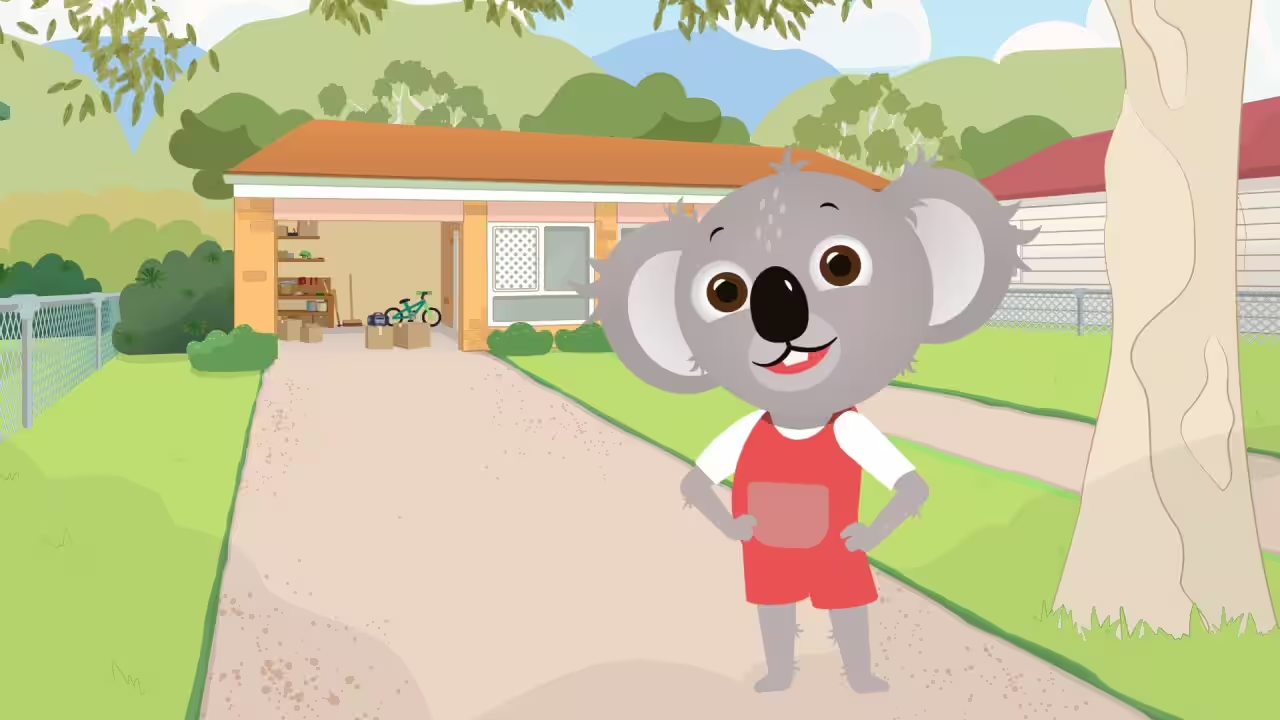
The project, a two-part animated series developed by Hewlett and the Strong Mothers group at Carbal Aboriginal Medical Service in Toowoomba, follows the adventures of Kit the Koala, who lives with FASD.

The goal is to reduce stigma, increase understanding, and create a more compassionate society for everyone.

For more information, go here.

To read the full article, go here.

The Carbal Strong Mothers group hopes Kit the Koala will help people all over the country. Credit: Supplied

Community cries out for culturally safe rehab centre to break cycles of trauma

Aunty Sue Smith lost both of her sons to mental health and addiction struggles in her rural Indigenous community. After their deaths, she met Dr Suruchi Amarasena, a General Practitioner specialising in Indigenous health, and together, they are working to build a holistic “transitional care” centre to help patients struggling with mental health and addiction.

They have already secured a block of land for the proposed wellness centre and are seeking funding to realise their dream. Both women are determined to break the cycles of trauma and advocate for the centre for as long as it takes to open in hopes of preventing others from suffering as Aunty Sue Smith’s sons did.

To read the article in full, go here.

Aunty Sue Smith, a proud Gomeroi woman, is pushing for improved Aboriginal health services in the name of her deceased sons, Arthur and Darren. Picture by Gareth Gardner

$20 million to establish world-leading clinical trial centre for all NSW residents

A $20 million donation to the NORTH Foundation from Greg Poche AO and the late Kay Van Norton Poche AO will increase access to international cancer clinical trials at the NORTH Sydney Trials and Research Van Norton Poche (NORTH S.T.A.R VNP) centre in Sydney.

The centre, a partnership between Northern Sydney Local Health District and Memorial Sloan Kettering Cancer Centre, will provide new treatments to patients across NSW and aims to attract the next generation of healthcare professionals to Australia.

The launch will open four new studies, including three clinical trials, and improve collaboration between hospitals and healthcare professionals to ensure patients’ access to clinical trials, with a focus on rural and regional residents and Aboriginal people.

To read the media release, go here.

Royal North Shore Hospital

Advocating for rural health services

Dr. Sonia Henry has worked as a GP in remote Australia and is passionate about addressing the lack of access to basic health services in rural communities. She’s concerned that people in remote areas don’t have the same access to medical care as those in metropolitan areas.

She advocates for health equity for rural and First Nations people and will be speaking about this at the National Rural Health Conference. Dr. Henry also highlights the disconnect between metropolitan and remote Australia in terms of health delivery access and outcomes and believes that the government needs to create better support systems for doctors working in remote areas.

To read the article in full, go here.

GP Dr Sonia Henry will be speaking at the 17th National Rural Health Conference, Australia’s largest rural health event. Picture supplied

NSW teacher training rules overhauled as accreditation process scrapped

The New South Wales education authority has made changes to teacher professional development requirements. Under the new regime, teachers will no longer complete 50 hours of accredited courses in mandated areas of curriculum delivery and assessment, disability, mental health and Aboriginal education.

Critics worry this change could lead to lower-quality courses and less accountability, while supporters believe it will reduce administrative workload and give more flexibility to schools.

To read the article in full, go here.

The state’s education authority has scrapped the accreditation process for teacher professional development courses. Credit:Steven Siewert

Sector Jobs – you can see sector job listings on the NACCHO website here.

Advertising Jobs – to advertise a job vacancy click here to go to the NACCHO website current job listings webpage. Scroll down to the bottom of the page to find a Post A Job form. You can complete this form with your job vacancy details – it will then be approved for posting and go live on the NACCHO website.

16 August 2024

The NACCHO Sector News is a platform we use to showcase the important work being done in Aboriginal and Torres Strait Islander health, focusing on the work of NACCHO, NACCHO members and NACCHO affiliates.

We also share a curated selection of news stories that are of likely interest to the Aboriginal and Torres Strait Islander health sector, broadly.

“Social prescribing” another stolen Indigenous concept?

Holistic comprehensive care is the core of community-controlled primary care services for Aboriginal and Torres Strait Islander peoples. To achieve this, Aboriginal and Torres Strait Islander community-controlled health organisations (ACCHOs) have routinely delivered or connected people using these services since 1971 to address socio-economic and cultural determinants through a caring approach rooted in Indigenous knowledge and practices. ACCHOs also offer social and cultural connections to housing, education, and legal aid services.

There has been a surge in social prescribing research and policy interest globally. However, the ACCHO model has been delivering holistic care for patients and the community with a more sustainable workforce model that needs to be recognised, celebrated, replicated and shared nationally and globally.

A national funding model must be developed to adequately support the ACCHO sector, provide flexible, holistic care models, and expertly guide how the concept is adopted by primary care. While doing so, it is crucial to have a directory of culturally safe and responsive services, need assessment tools, and linking data on referrals and services to people to measure outcomes.

Importantly, Australian academics, policy makers and the primary care sector should acknowledge this long history and learn from it by looking to Indigenous models of “social prescribing” that address the holistic needs of people to guide the implementation of social prescribing programs in Australia.

To read more, go here.

ACCHO Map.

Meningococcal B outbreak in Yarrabah community near Cairns

Two cases of meningococcal B have been detected in Yarrabah, an Indigenous community near Cairns, with authorities on the lookout for more infections. Contact tracing has begun with close contacts of the infected children to be given antibiotics.

The meningococcal B vaccine is free for Aboriginal and Torres Strait Islander babies under the age of two and for people with specified medical risk conditions that make them more vulnerable to the invasive disease. An immunisation program will begin in Yarrabah next week focusing on about 50 close contacts, and catch-up vaccinations for those who are eligible.

Suzanne Andrews, CEO of Gurriny Yealamucka Health Service, said the cases were compounded by an ongoing influenza outbreak. The Aboriginal community-controlled health organisation will deliver vaccinations in people’s homes as well as in its clinic.

To read the ABC News article in full, go here.

Professor Paul Dugdale and Suzanne Andrews believe close contacts through overcrowding are compounding the issue. (ABC Far North: Christopher Testa).

Disaster resilience inquiry highlights the need for better mental health support

The need to protect and support the mental health and wellbeing of disaster-affected people and communities is a key focus of the final report of the Select Committee inquiry on Australia’s Disaster Resilience. Evidence given during the inquiry showed the significant mental health impacts on people who live through and respond to natural disasters.

Three of the ten recommendations in the final report, ‘Boots on the ground: raising resilience’, tabled last week, incorporate suggestions to better address mental health and wellbeing of people involved in natural disasters:

  • The Australian Government should establish a national disaster mental health hub to coordinate and provide mental health resources, training, and support for first responders and communities affected by disasters across the nation. This hub should serve as a comprehensive resource centre for addressing the mental health needs of all stakeholders involved in disaster response and recovery efforts.
  • The Australian Government should design and implement consistent national trauma-informed care principles, ensuring that first responders – both professional and volunteer – receive training and support in these national principles to better address the mental health and wellbeing of disaster-affected individuals and communities.
  • The Australian Government should convene a disaster resilience mental health summit to hear from all related agencies and stakeholders to identify solutions to the mental health impacts of disasters.

The inquiry – chaired by Senator Jacqui Lambie – conducted 17 public hearings and received 174 written submissions, ten of which were made by health and social service organisations including the Department of Health and Aged Care, Rural Doctors Association of Australia, Lifeline Australia, Kimberley Aboriginal Medical Services and Australian Council of Social Services.

To read the Croakey Health Media article in full, go here.

Flooded road near Windsor, Western Sydney, 2022. Photo by Wes Warren on Unsplash.

Kit the Koala: the mob-made animation destigmatising and embracing neurodivergence

A two-part animated series developed by palawa woman Nicole Hewlett and the Strong Mothers group at Carbal Aboriginal Medical Service in Toowoomba, follows the adventures of Kit the Koala, who lives with fetal alcohol spectrum disorder (FASD). FASD is a term used to describe the life-long impacts on the brain and body that people can experience following prenatal exposure to alcohol.

“We hope to build the capacity of families to live well with those who have FASD and understand how we can better support our loved ones with FASD,” said Hewlett.

In the series, Kit is joined by a host of other cute characters – a possum living with autism, a wallaby with ADHD and a platypus with a combination of the two.

Hewlett, PhD student at the University of Queensland, has worked on strengths-based, healing-informed and trauma aware approaches to FASD for over ten years. She says the intention of the project is to change the narrative around neuro-divergence, especially FASD.

She said the project leans into the power of Aboriginal humour to connect with audiences and from start to finish, script, music and voices, is mob-made.

Carbal Aboriginal Medical Service brings together the Strong Mothers group to offer holistic support.

To read the NITV article in full, go here.

The Carbal Strong Mothers group hopes Kit the Koala will help people all over the country.

Waminda’s National Conference to highlight Birthing on Country

Waminda South Coast Women’s Health and Wellbeing Aboriginal Corporation is inviting all women and non-binary friends to come explore and experience the intricacies of Birthing on Country with the incredible team at Waminda’s National Conference taking place on the South Coast NSW from September 17 to September 19, 2024.

The two-day event is stacked with an incredible lineup of speakers and a dynamic and exciting agenda. During the conference the Waminda Executive Leadership team, Keynote Speakers, Waminda Program Managers and Coordinators, along with community leaders in the Aboriginal women’s health and wellbeing space will take you on a journey of looking back to celebrate how far Waminda has come; whilst giving insight into the now and inspiring what is emerging in Aboriginal women’s leadership, health, and wellbeing.

For more information and to register, go here.

Mel Briggs, Waminda Senior Balaang and Birthing on Country Manager.

Sector Jobs – you can see sector job listings on the NACCHO website here.

Advertising Jobs – to advertise a job vacancy click here to go to the NACCHO website current job listings webpage. Scroll down to the bottom of the page to find a Post A Job form. You can complete this form with your job vacancy details – it will then be approved for posting and go live on the NACCHO website.

15 August 2024

The NACCHO Sector News is a platform we use to showcase the important work being done in Aboriginal and Torres Strait Islander health, focusing on the work of NACCHO, NACCHO members and NACCHO affiliates.

We also share a curated selection of news stories that are of likely interest to the Aboriginal and Torres Strait Islander health sector, broadly.

AMSANT Remote Health Survey indicates concerning findings

In a new survey by peak body the Aboriginal Medical Services Alliance NT (AMSANT), the majority of remote health services are reporting a lack of resources to be able to deliver safe and acceptable health care in their communities. The results come from AMSANT’s 11 member services across the territory.

The survey, which is being released ahead of the NT election on August 24, found:

  • Nine services believe they don’t have the government resources to maintain safe and acceptable facilities.
  • Four have already been forced to scale back services this year.
  • All but three say poor housing and clinics are preventing them from recruiting and retaining staff.

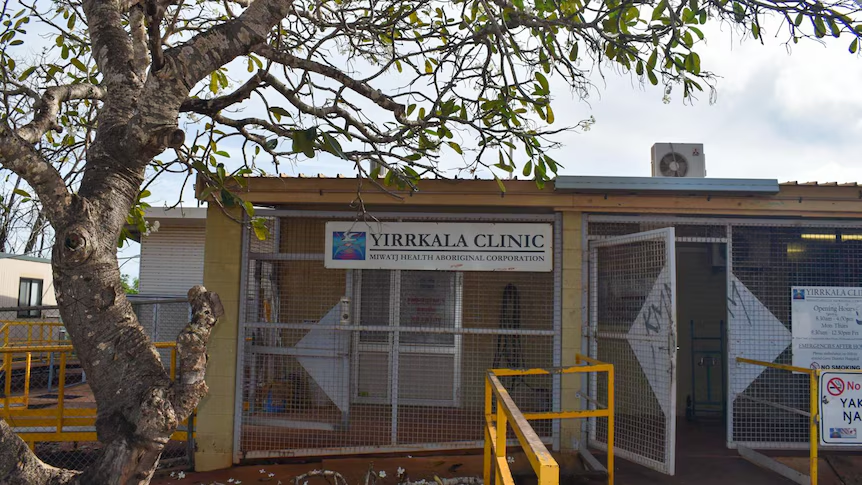
Miwatj Health runs clinics in east Arnhem Land, and its chief executive Steve Rossingh says old facilities has led to services being cut and patients being treated in sub-par environments.

“GPs have been seeing patients in corridors because there’s absolutely no space,” Mr Rossingh said in regards to Miwatj’s clinic in Yirrkala.

“…We need that infrastructure to be able to deliver the sort of service which is going to provide sustainable health benefits for our clients.”

AMSANT has delivered a six-point plan to the NT’s major parties, calling for urgent audits of all remote clinics and housing, and a plan for upgrading equipment and infrastructure.

To read the ABC News article in full, go here.

A report has revealed remote health services are lacking resources to deliver acceptable health care. Image source: ABC News.

Optus, Telstra delay 3G shutdown amid emergency calling concerns

Telstra and Optus have delayed the shutdown of their 3G networks due to concerns about emergency calling capabilities. This decision comes after a Senate inquiry and pressure from various organisations, including the National Aboriginal Community Controlled Health Organisation (NACCHO). The telcos will keep their 3G networks operational until at least October 28 to ensure that customers, including those with medical monitors and other IoT devices, have ample time to transition to newer technologies.

NACCHO’s submission warned that a shutdown would leave “Elders and their carers potentially the most vulnerable”.

“For Aboriginal and Torres Strait Islander people, disruptions to service disproportionately impacts their access to essential services including everyday consumables, healthcare, education, and emergency services,” it read.

To read the article in full, go here.

Optus and Telstra have delayed their 3G shutdown for at least two months amid rising concerns. Picture: NCA NewsWire / Diego Fedele.

Child and family programs funding boost for VIC ACCHOs

Wathaurong Aboriginal Cooperative is one of six Victorian Aboriginal-led child and family programs that have received funding boosts to help provide better access to culturally safe services. Wathaurong will receive $220,000 under the Specialist Prevention and Early Help Lead Practitioner grants and $480,000 to develop professional training and facilitate holistic practice across the Western District in family services and health services.

The funding is part of the state government’s Aboriginal Children and Families Innovation and Learning Fund and will see $2.3 million go to Aboriginal Community Controlled Organisations (ACCOs) across the state.

“We know Aboriginal people are best placed to lead the services that keep Aboriginal children and families safe and that’s exactly what these grants support,” Lizzie Blandthorn, Minister for Children said.

The six organisations announced by Ms Blandthorn at the Aboriginal Children’s Forum on Thursday August 15 are Gunditjmara Aboriginal Cooperative, Njernda Aboriginal Corporation, Rumbalara Aboriginal Cooperative, Victorian Aboriginal Child Care Agency, Wathaurong Aboriginal Co-Op and Victorian Aboriginal Children and Young People’s Alliance.

To read the article in full, go here.

Wathaurong Aboriginal Cooperative is one of six organisations receiving the funding.

Indigenous Doctors are part of the solution to the GP workforce shortage

The Department of Health and Aged Care’s GP workforce report has confirmed what many in the health sector already knew: Australia is facing a significant shortage of General Practitioners. The Australian Indigenous Doctors’ Association (AIDA) is highlighting the critical role that First Nations doctors play in addressing this workforce shortage.

“The Indigenous Medical Workforce is an important part of the workforce, and part of the solution. We know that 48% of Aboriginal and Torres Strait Islander doctors in training have chosen the route to become GPs or rural generalists with RACGP or ACRRM,” said Donna Burns, AIDA CEO.

“The Indigenous medical workforce is powerful for all of Australia. Indigenous doctors bring unique perspectives, cultural understanding, plus the ability to provide culturally safe care to Indigenous patients. By creating pathways for Indigenous students to become GPs, we can address the workforce shortage for all Australians, while also improving health outcomes for Indigenous communities.”

AIDA calls on the government to prioritise funding and resources to support Indigenous medical students and doctors in training, and to implement strategies that promote diversity and inclusion in the medical workforce.

To read the AIDA media release in full, go here.

Australian Indigenous Doctors’ Association stethoscope.

Innovative health solutions, a focus of Compass 2024

A gathering of healthcare experts from across the NT will address ongoing disparities in the sector for Indigenous communities. Compass 2024 is the NT’s leading professional development and networking event and a critical platform to discuss and then develop community-led health programs that meet the needs of Indigenous communities.

Event host Northern Territory Primary Health Network said more than 25 exhibitor booths and 400 healthcare professionals from fields such as nursing and Aboriginal health would attend.

Darcy Godden, the network’s executive manager of Aboriginal and Torres Strait Islander Health and a proud Kamilaroi and Wonnarua man, said Compass 2024 was an opportunity for the sector’s leading minds to collaborate and create innovative solutions to close the gap in health outcomes.

“It is essential that we centre our discussions on the unique health challenges faced by Aboriginal and Torres Strait Islander peoples in the Territory,” he said.

“Our collective goal should be to develop and implement culturally safe, community-led primary health programs that meet the needs of community – determined by community.”

Compass 2024 is on August 16-17 at the Darwin Convention Centre and includes the RACGP sponsored 2024 Health Professional of the Year Awards.

To register, go here.

To read the National Indigenous Times article in full, go here.

Image source: Compass2024

Sector Jobs – you can see sector job listings on the NACCHO website here.

Advertising Jobs – to advertise a job vacancy click here to go to the NACCHO website current job listings webpage. Scroll down to the bottom of the page to find a Post A Job form. You can complete this form with your job vacancy details – it will then be approved for posting and go live on the NACCHO website.

ACCHO Governance Workshops

Free, specialised governance workshops for ACCHOs will be delivered in multiple locations across the country during 2024 and 2025. 

Registrations are now open for:

  • Port Macquarie: 20-21 August
  • Dubbo: 22-23 August.

The program is delivered by legal experts and covers:  

  • Delegation of powers 
  • Finance for Boards
  • Governance documents
  • Managing conflicts of interest 
  • Managing risk  
  • Principles of good governance  
  • Structure and role of boards and sub-committees 

To register, go here.
For more information, please contact NACCHO using this email link.