NACCHO Sector News: 2 July 2025

The NACCHO Sector News is a platform we use to showcase the important work being done in Aboriginal and Torres Strait Islander health, focusing on the work of NACCHO, NACCHO members and NACCHO affiliates.

We also share a curated selection of news stories that are of likely interest to the Aboriginal and Torres Strait Islander health sector, broadly.

National lung cancer screening program launched

Starting July 1, 2025, the National Lung Cancer Screening Program aims to reduce illness and deaths from lung cancer by detecting it early using a free screening test. If you’re aged 50-70 and currently smoke or have quit in the last 10 years, yarn with your doctor or health worker about a referral for lung screening.

We know that more Aboriginal and Torres Strait Islander people participating in lung cancer screening means that more cancers will be detected early, when treatment is more likely to be effective.

NACCHO is working in partnership with the Department of Health, Disability and Ageing and Cancer Australia to ensure that the new National Lung Cancer Screening Program is equitable, accessible, and culturally safe for Aboriginal and Torres Strait Islander people and Communities.

People can participate in the program if they:

  • Are aged between 50 and 70 years; and
  • Are asymptomatic (no signs or symptoms suggestive of lung cancer); and
  • Currently smoke or have quit smoking in the past 10 years; and
  • Have a history of cigarette tobacco smoking of at least 30 pack-years (1 pack year is equivalent to 20 cigarettes each day for a year).

Learn more here.

Strength, resilience and self-determination: the power of the community controlled model

The Queensland Aboriginal and Islander Health Council (QAIHC) has called for immediate reform and genuine partnership with governments after an independent review found the National Agreement on Closing the Gap is failing to deliver on its commitments.

The call echoed many discussions at QAIHC’s recent statewide members conference, held amid issues and opportunities with data, partnerships, workforce, funding reform and a challenging political environment.

The two-day QAIHC event celebrated the unique role and approach of Aboriginal community controlled health organisations (ACCHOs), its role in Closing the Gap, and what it can teach mainstream health services.

Read more here.
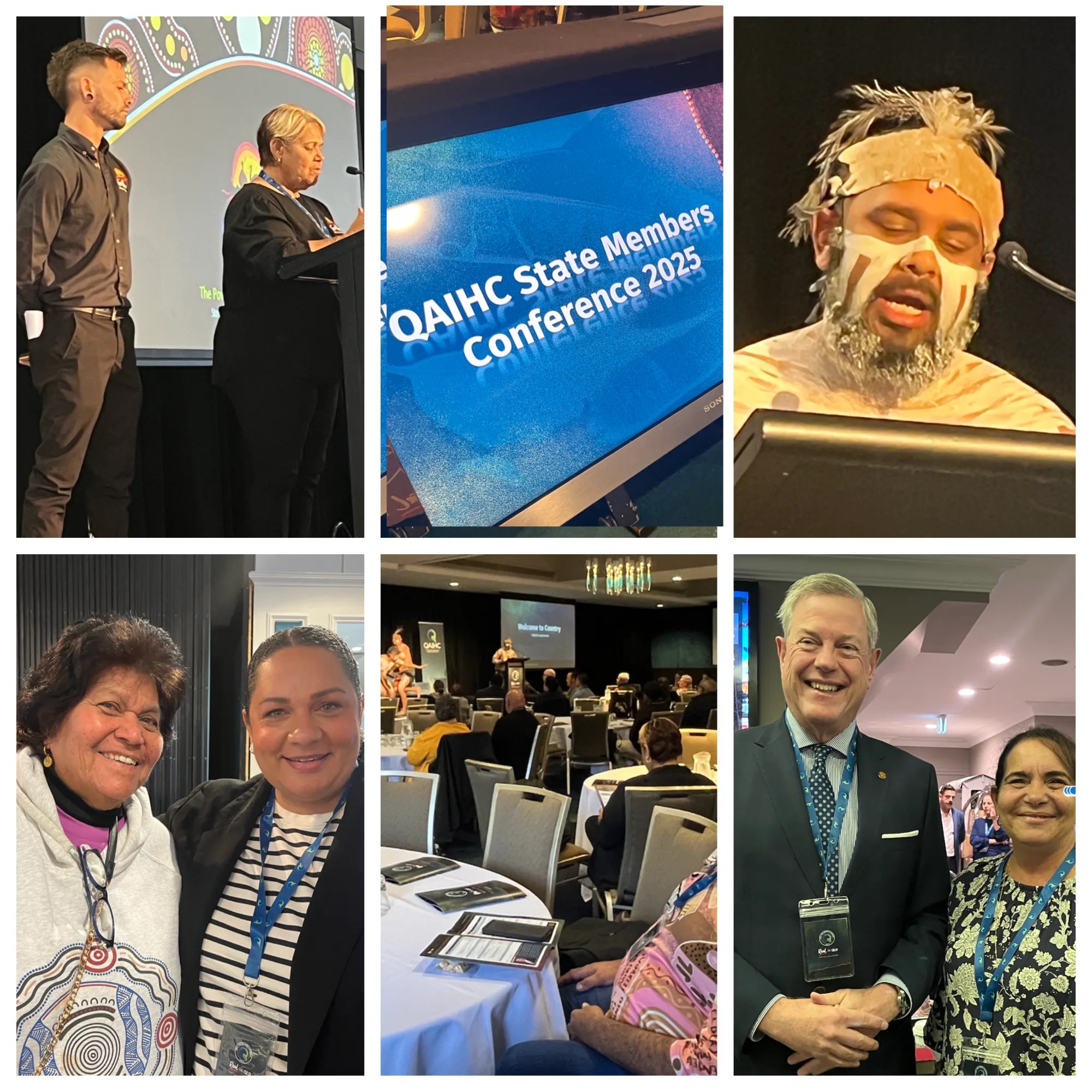
Image source: Croakey Health Media

Oral Health Online Yarning Circle

Oral health gaps affect our mob’s overall health – Join the conversation and be part of bridging the gap by informing the National Oral Health Plan (2025-2034).

Details:

Wednesday 2 July: 3.30-5PM AEST: Register here.

Friday 4 Jul: 11AM-12.30PM: Register here.

Speakers:

  • Cas Nest (She/her) Endorsed Midwife, Managing Director, First Peoples Health Consulting, Co-founder and Managing Director, Gullidala
  • Nadine Blair, Director ‑ Policy, NACCHO

Derby NAIDOC Award

Congratulations to Shelley Kneebone, CEO of Derby Aboriginal Health Service, on receiving the Derby NAIDOC Award for Caring for Country and Culture.

This award recognises Shelley’s strong leadership and her commitment to embedding traditional healing, cultural knowledge and connection to Country across health and wellbeing services in Derby and surrounding communities.

Image source: Walalakoo Aboriginal Corporation

Victoria’s true history on the record as Australia’s first Indigenous truth telling commission wraps up

The nation’s first truth telling inquiry has handed down its final report, including 100 recommendations for urgent change. The nation’s first truth telling inquiry has handed down its final report, including 100 recommendations for urgent change. Its two final reports, Yoorrook for Transformation and Yoorrook Truth Be Told, have been publicly released – the former containing 100 recommendations for urgent change.

Among the recommendations are calls for redress from the state government via the treaty process for all damages and loss stemming from colonial invasion and occupation of Indigenous peoples’ lands. This would include redress for economic loss, interest and redress for cultural loss. Yoorrook has suggested this redress could take the form of monetary compensation, tax relief, and the restitution of traditional lands, waters, and resources.

Read more here.

Image source: NITV

Sector Jobs – you can see sector job listings on the NACCHO website here.

Advertising Jobs – to advertise a job vacancy click here to go to the NACCHO website current job listings webpage. Scroll down to the bottom of the page to find a Post A Job form. You can complete this form with your job vacancy details – it will then be approved for posting and go live on the NACCHO website.

NACCHO Sector News: 28 May 2025

The NACCHO Sector News is a platform we use to showcase the important work being done in Aboriginal and Torres Strait Islander health, focusing on the work of NACCHO, NACCHO members and NACCHO affiliates.

We also share a curated selection of news stories that are of likely interest to the Aboriginal and Torres Strait Islander health sector, broadly.

Getting ready for the National Lung Cancer Screening Program: A checklist for primary healthcare services

From July 2025, some of your clients may be able to take part in the National Lung Cancer Screening Program.

Lung cancer screening involves a free low-dose CT scan every two years, or more often if needed, to check for early signs of lung cancer and monitor any changes. Screening helps detect cancer early – before symptoms appear, and when treatment is more likely to be effective.

Your health service and staff are essential to delivering the National Lung Cancer Screening Program in your community.

This checklist will provide information on how your service can prepare for the program:

  • Register with the National Cancer Screening Register (NCSR)
  • Complete lung cancer screening training and access program resources
  • Identify potential lung screening clients
  • Begin planning local implementation
  • Stay up to date with refresher courses to provide smoking cessation support

Learn more here.

Safety, food and hope replace youth crime at Fitzroy Crossing’s Night Place

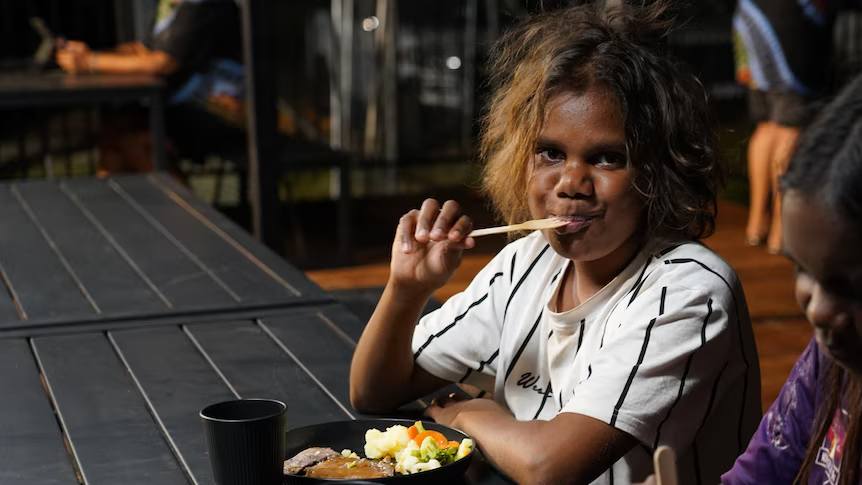
Since opening in September 2024, the Night Place, run by Marra Worra Worra Aboriginal Corporation (MWW), has become a central hub for youth in the remote town, 2,400 kilometres north of Perth.

The Aboriginal-led program was created in response to concerns over disengaged children wandering the streets and rising youth crime. Similar youth night spaces have also opened in Broome.

Research shows juvenile offenders make up just 3.7% of the Kimberley youth population, with poverty and disadvantage driving criminal acts. Services including night spaces are seen as part of the solution.

Nearly 400 young people have attended the space in its first seven months, with over 8,000 visits and 12,500 hot meals served.

The Night Place started as a pilot program but has since secured longer-term state government funding.

Read more here.

Cyeahni Wallaby, 11, attends the Fitzroy Crossing Night Place. (ABC Kimberley: Rosanne Maloney)

Groundbreaking NITV documentary series ‘Our Medicine’ shines a light on communities taking back control of Indigenous health

Powerful new documentary series, Our Medicine, takes viewers behind the frontline of Australia’s strained medical services, shining an important light on First Nations professionals working to achieve better health outcomes for Aboriginal and Torres Strait Islander patients and communities. The six-part observational series premieres on National Indigenous Television (NITV) and SBS and SBS On Demand from 29 May at 7.30pm.

Narrated by screen icon Leah Purcell AM (The Drover’s Wife: The Legend of Molly Johnson, High Country), the groundbreaking series offers unique access to Aboriginal and Torres Strait Islander doctors, nurses, paramedics, traditional healers and other medical professionals, following their day-to-day challenges as they support patients on their journey through the system.

Learn more here.

Image source: SBS.

RACGP 2025 Aboriginal and Torres Strait Islander health awards

Nominations are now open for the 2025 RACGP Awards. Aboriginal and Torres Strait Islander Health awards include:

  • Standing Strong Together Award: celebrating partnerships between GPs and communities
  • Growing Strong Award: recognising exceptional Aboriginal and Torres Strait Islander GPs in training
  • Rising Strong Medical Student Award: supporting current Aboriginal and Torres Strait Islander medical students currently studying at an Australian university
  • The Aunty Val Dahlstrom Award: for Aboriginal Health Excellence, recognising excellence in Aboriginal health by an RACGP staff member, supervisor or registrar

These awards celebrate outstanding contributions to general practice and shine a light on the GPs, practices, supervisors, medical educators and registrars going above and beyond for their communities.

Submit nominations by 9AM AEST, Monday 30 June.

Image source: RACGP

Western Australia announces long awaited Stolen Generations redress scheme

Stolen Generations survivors from Western Australia will soon be eligible for compensation for the harm and suffering caused by decades of forced removal policies.

Living survivors would be eligible for $85,000 under the state government scheme, which is expected to open for applications later this year. The scheme will only apply to people who were removed as children from their families in WA before July 1st 1972.

Stolen Generations survivor and Co-Chair of Bringing Them Home WA Tony Hansen said it was a important step forward.

“By acknowledging such a brutal history, and evil policies that ripped the hearts out of children and families, this day will go down in history as a powerful moment of truth-telling,” he said.

Read more here.

The announcement has been long awaited by the state’s Stolen Generations members. Source: AAP / Lukas Coch

Sector Jobs – you can see sector job listings on the NACCHO website here.

Advertising Jobs – to advertise a job vacancy click here to go to the NACCHO website current job listings webpage. Scroll down to the bottom of the page to find a Post A Job form. You can complete this form with your job vacancy details – it will then be approved for posting and go live on the NACCHO website.
NACCHO Sector News: 26 May 2025

The NACCHO Sector News is a platform we use to showcase the important work being done in Aboriginal and Torres Strait Islander health, focusing on the work of NACCHO, NACCHO members and NACCHO affiliates.

We also share a curated selection of news stories that are of likely interest to the Aboriginal and Torres Strait Islander health sector, broadly.

National Sorry Day 2025

26 May 2025 marks the 28th anniversary of the tabling of the Bringing them home report in the Australian Parliament in 1997 and commemorates Stolen Generations survivors.

The Bringing them home inquiry was a landmark truth-telling process, bringing to light the extent of Australia’s Stolen Generations history, and sharing this with the nation.

In 1997 the report made a series of recommendations to go some way in righting these past wrongs, yet almost 30 years on many crucial actions have not been taken.

A Healing Foundation report released earlier this year – Are you waiting for us to die? The unfinished business of Bringing them home – found only 6% of the Bringing them home report recommendations have been clearly implemented

A generation on, we have already lost many Stolen Generations survivors. Those who are left are ageing. The urgency of acting now, to support elderly survivors in their last years and decades, cannot be overstated.

To learn more, go here.

Image source: Healing Foundation.

Barkly residents set to learn more about FASD

Tennant Creek and Barkly residents learnt more about Foetal Alcohol Spectrum Disorder (FASD) with Aboriginal health service Anyinginyi and an expert from Curtin University.

8CCC Big Brekky presenter Shauna Upton spoke to Curtin University Medical School’s Dr Robyn Williams alongside Anyinginyi Aboriginal Health Corporation’s Molly Huntjens about FASD and the workshops.

The workshops focused on culturally-appropriate practices on how people in the community can help children, adults and families impacted by FASD.

Dr Williams said FASD was a global health issue, but people impacted First Nations people, and the workshops – which are already fully booked – will provide more information about how to manage it, best to avoid its impact and how to help other family members deal with it.

Read more here.

Listen to the full interview on the Big Brekky Podcast here.

For FASD resources, go here.

Image source: 8CCC Radio.

Kambu Member Elders Group

Last week Kambu Family Wellbeing Service held the ‘Kambu Member Elders Group.’

Kambu Health shared event highlights on social media:

Uncle Henry and Aunty PJ painted stunning vases, while Aunty Rhonda created an incredible goanna artwork. Aunty Deb, Aunty Ruth, and Aunty Pam were totally focused on painting their vases — Aunty Pam even made herself a lovely coaster!

Uncle Robert and Uncle Henry gave jewelry making a go, and Aunty Janelle got crafty building a fairy house with resin. She’s making a whole Fairy Garden for her granddaughter — how special is that?

Uncle Jo continued his turtle painting, and Uncle Anthony was outside working on a new masterpiece. Meanwhile, the courtyard was alive with music as Uncle Mick, Aunty Kaylene, and Uncle Ernie rehearsed for the Choir — and they even roped in Aunty PJ for a singalong!

We were treated to a delicious lasagna and salad (no photo… too busy enjoying it!) — and Aunty Kaylene’s damper was the highlight once again. A huge thank you to Aunty Kaylene and the amazing Laidley Family Wellbeing Service team for making the day so special.

Quote of the day:

“Sometimes you just have to jump in a mud puddle because it’s there. Never get so old that you forget about having fun.” – Tom Giaquinto

Image source: Kambu Health

Sector Jobs – you can see sector job listings on the NACCHO website here.

Advertising Jobs – to advertise a job vacancy click here to go to the NACCHO website current job listings webpage. Scroll down to the bottom of the page to find a Post A Job form. You can complete this form with your job vacancy details – it will then be approved for posting and go live on the NACCHO website.

Maximise Medicare for your ACCHO!

NACCHO, with support from the National Indigenous Australians Agency has free online courses to help ACCHO staff improve Medicare claiming and utilisation of other primary care funding sources.

Earn CPD points! These courses are fully accredited by RACGP, ACRRM, & NAATSIWHIP.

To register, go here.

For more information, go here.

NACCHO Sector News: 23 May 2025

The NACCHO Sector News is a platform we use to showcase the important work being done in Aboriginal and Torres Strait Islander health, focusing on the work of NACCHO, NACCHO members and NACCHO affiliates.

We also share a curated selection of news stories that are of likely interest to the Aboriginal and Torres Strait Islander health sector, broadly.

Anniversary call to support Stolen Generations survivors “before it’s too late”

Ahead of National Sorry Day on 26 May, a national body has called for an urgent healing package for ageing Stolen Generations survivors, saying “we cannot wait another generation”.

“All survivors must have access to equitable redress and to the records that hold their stories,” The Healing Foundation said on Thursday.

National Sorry Day is about honouring survivors and also marks the 1997 tabling of the Bringing Them Home report, which shared Australia’s Stolen Generations history with the nation, and made a series of recommendations to address the damaging impacts.

28 years on, only six per cent of these recommendations have been fully implemented.

The Healing Foundation’s CEO Shannan Dodson urged all those with a responsibility to support Stolen Generations survivors to act without delay.

“Stolen Generations survivors have been through so much. Many suffered abuse in care, on top of the trauma of being separated from their families. They have seen how their trauma has affected their families. They deserve justice,” Ms Dodson said.

“A comprehensive and coordinated response is required from all sides of politics, all levels of government, police, churches and others, before it’s too late.

Read the full National Indigenous Times article here.

Image: Mick Tsikas (AAP).

Join the Evaluation of the Own It Campaign

NACCHO is looking for ACCHO staff to participate in a qualitative evaluation to understand how the cervical screening ‘Own It’ campaign has impacted cervical screening awareness and uptake in your Community.

If you would like to take part in the evaluation, please complete this short form and a member of the NACCHO Cancer Team will be in touch.

  • Will I be compensated for my time? Yes, from $150 and up, depending on your role in the form of an e-gift card
  • How long will it take? 1 hour
  • Where will the interviews take place? Interviews can be conducted at your convenience, either via phone or MS teams video and will be held across late May/early June.

Help shape a national education program on antidepressant use in young people

NACCHO, as part of the Quality Use of Medicines (QUM) Alliance is helping to develop a new education program to improve the use of antidepressants in young people.

The Alliance is seeking the following groups to get involved in the co-design process:

For more information, contact info@qumconnect.com.au or medicines@naccho.org.au

Construction begins on ACT Aboriginal health precinct

Work is underway on Canberra’s Watson Health Precinct redevelopment, the ACT Government has announced.

ACT Minister for Health, Rachel Stephen-Smith said the renewed Watson Health Precinct will enable delivery of better health services for young people and the Aboriginal and Torres Strait Islander community in Canberra.

The upgrades will provide new purpose-built facilities to support alcohol and other drug rehabilitation services, as well as residential mental health care for young people.

The precinct will also expand to include a new residential rehabilitation facility specifically for Aboriginal and Torres Strait Islander people – designed, constructed and operated by Winnunga Nimmityjah Aboriginal Health and Community Services.

“The new residential rehabilitation facility is designed to support the need for both cultural and therapeutic programs specifically designed indoor and outdoor spaces to allow for a holistic approach for all programs to be deliver seamlessly,” said Winnunga Nimmityjah Aboriginal Health and Community Services CEO, Julie Tongs.

Learn more here.

Roadmap unveiled to support Aboriginal and Torres Strait Islander LGBTQA+ youth

A new roadmap has detailed actions that family and community, services, and government can take to support Aboriginal and Torres Strait Islander LGBTQIA+ young people’s mental health and wellbeing, including creating visibility, seeking wider education and advocating for safe spaces.

“Five years ago, there was almost no research that had been done with Aboriginal and Torres Strait Islander LGBTQIA+ young people,” the roadmap’s lead author, The Kids Research Institute Australia (The Kids) researcher and UWA PhD student Mx Shakara Liddelow-Hunt said.

“But with the release of our national survey, and other research happening across Australia, we now have a body of evidence showing that there is a huge need to better support Aboriginal and Torres Strait Islander LGBTQIA+ young people.

“The roadmap provides concrete actions that we can all take to achieve this. Our end goal in releasing this roadmap is to empower individuals, families, communities and services to ensure Aboriginal and Torres Strait Islander LGBTQIA+ young people are safe, healthy and thriving.”

Learn more here.

If this article brought up anything for you or someone you love, please reach out to, call or visit the resources listed below for support.

Sector Jobs – you can see sector job listings on the NACCHO website here.

Advertising Jobs – to advertise a job vacancy click here to go to the NACCHO website current job listings webpage. Scroll down to the bottom of the page to find a Post A Job form. You can complete this form with your job vacancy details – it will then be approved for posting and go live on the NACCHO website.

NACCHO Sector News: 31 March 2025

The NACCHO Sector News is a platform we use to showcase the important work being done in Aboriginal and Torres Strait Islander health, focusing on the work of NACCHO, NACCHO members and NACCHO affiliates.

We also share a curated selection of news stories that are of likely interest to the Aboriginal and Torres Strait Islander health sector, broadly.

Have your say on Closing the Gap

How can we strengthen the National Agreement on Closing the Gap? This is your chance to share your experiences and shape the future of how governments and Aboriginal and Torres Strait Islander organisations work together to deliver change.

– Take the short survey
– Make a written submission
– Join an in-person discussion in a place-based partnership community

Your perspective matters.

Have your say by 16 April. Learn more here.

Image source: Coalition of Peaks.

From Yarrabah to Beyond: The Hygiene Program Saving Indigenous Lives to Combat Rheumatic Heart Disease

In Yarrabah, kilometres east of Cairns Renee Grosso is implementing Innovative and fun strengths focused health programs the expand hygiene access and education with a keen focus on Rheumatic Heat Disease (RHD).

Renee is the public health coordinator at Gurriny Yealamucka Health Services’ (GYHSAC) bring an array of health and hygiene programs such as The Yarrabah soap program, Healthy skin hearoes and directly engaging with communities like Groote Eylandt, Jambun and Palm Island. The most recent program that is being championed is the MOOGOO Prevent RHD Program providing ongoing natural hygiene products, including its Milk Wash, to high-risk communities to reduce the likelihood of risks and infections.

Read more here.

Young Child In Yarrabah Practicing Healthy Skin Hero Program With Dolly. Image source: NITV.

The unfinished business of Bringing Them Home

A new Healing Foundation report has found only 6% of the Bringing them home report recommendations – made to support Stolen Generations survivors and their families almost 28 years ago – have been clearly implemented.

It recommends a National Healing Package of priority changes to enable remaining elderly survivors to live out their days with dignity.

The report offers practical policy solutions to some of the big challenges facing survivors and their families, including:

  • access to culturally safe, trauma informed aged care and health services
  • urgent equitable redress
  • prioritised access to records, and
  • investment in Stolen Generation Organisations.

Learn more here.

Image source: The Healing Foundation.

Indigenous-led quit smoking program upscales nationally to help close the gap

An Indigenous-led intervention program tackling smoking and vaping – the leading preventable cause of chronic disease and preventable death for Aboriginal and Torres Strait Islander people — will be upscaled nationally.

The Which Way? Quit Pack pilot program developed by a Newcastle research team has been awarded a $4.7m Medical Research Future Fund (MRFF)* Indigenous Health Research grant through the National Health and Medical Research Council (NHMRC).

Led by Wiradjuri woman, University of Newcastle Associate Professor Michelle Kennedy, of the HMRI** Equity in Health and Wellbeing program, the Which Way? smoking and vaping cessation program builds on existing research by the team, to evaluate the impact of the innovative intervention for Aboriginal and Torres Strait Islander adolescents and adults.

Learn more here.

Which Way? Quit Pack research team members (l-r) Felicity Collis (Gomeroi), Kayden Roberts-Barker (Wiradjuri), Jessica Bennett (Gamilaroi) and lead researcher Associate Professor Michelle Kennedy (Wiradjuri).

Sector Jobs – you can see sector job listings on the NACCHO website here.

Advertising Jobs – to advertise a job vacancy click here to go to the NACCHO website current job listings webpage. Scroll down to the bottom of the page to find a Post A Job form. You can complete this form with your job vacancy details – it will then be approved for posting and go live on the NACCHO website.

Governance Workshops for ACCHOs

Register now for the NACCHO Governance Workshops 2025.

Sydney is up next on Tuesday 15 April and Wednesday 16 April. 

NACCHO’s Governance Workshops are designed for people working in member ACCHOs and run by legal and other experts in the field. 

The workshops cover: 

  • Principles of good governance.  
  • Managing conflicts of interest. 
  • Managing risk (e.g. contract execution, etc.). 
  • Delegation of powers. 
  • Finance for Boards. 
  • Structure and role of boards and sub-committees; and 
  • Governance documents. 

NACCHO Sector News: 14 February 2025

The NACCHO Sector News is a platform we use to showcase the important work being done in Aboriginal and Torres Strait Islander health, focusing on the work of NACCHO, NACCHO members and NACCHO affiliates.

We also share a curated selection of news stories that are of likely interest to the Aboriginal and Torres Strait Islander health sector, broadly.

An innovative study, co-designed by Aboriginal Women, has led to remission of type 2 diabetes

The research described and measured how using Shared Medical Appointments, continuous glucose monitors and a sustainable, culturally relevant food program can develop self-management knowledge, skills and motivation to drastically improve glycaemic control in Aboriginal and Torres Strait Islander women.

The groundbreaking study is the first of its kind in Australia, led by South Coast Women’s Health and Wellbeing Aboriginal Corporation (Waminda) in collaboration with Southern Cross University and the Australasian Society of Lifestyle Medicine.

Lead investigator and Southern Cross University lecturer Associate Professor John Stevens said of the 25 women who’d been living with diabetes for more than 10 years, seven women completely reversed their diabetes for at least 12 months, and 18 women reduced their blood sugars to a healthier level.

Hayley Longbottom, Waminda Chief Executive Leader for Health and Wellbeing and co-author says the approach gives Aboriginal women the tools to feel in control to create self-determining outcomes.

“The Continuous Glucose Monitoring, alongside health coaching from diabetes educators, provided a unique experience for these women to learn about their own bodies and not only manage but reverse their diabetes, with Aboriginal Health Practitioners providing long-term support,” Ms Longbottom said.

“These women were empowered to make decisions about what was going to happen, which led to high engagement in the program and remarkable success.”

Read more here.

Women participating in the Waminda group

Stolen Generations survivors need support and urgent action from governments: new report

Nearly 30 years after the landmark Bringing them Home report made wide-ranging recommendations to bring healing and justice for the Stolen Generations, new research documents a collective failure by governments to act.

Only five of 83 recommendations made in the 1997 report have been clearly implemented in the ensuing decades, according to an analysis by University of Canberra researchers that is cited in a new report from the Healing Foundation.

The Healing Foundation’s report, ‘Are you waiting for us to die?’ The unfinished business of Bringing Them Home’, says the “woefully inadequate” responses of successive federal, state and territory governments have created further trauma and distress for the Stolen Generations, their families and wider communities.

The report makes 19 recommendations as part of a proposed National Healing Package for Stolen Generations survivors across six areas: reparations, rehabilitation and research, records, family tracing and reunions, acknowledgements and apologies, education and training, and monitoring and accountability.

Read the Croakey Health Media article here.

On the 17th anniversary of the National Apology to the Stolen Generations, more than 60 survivors and support people gathered in Canberra for the annual Apology anniversary breakfast at Parliament House. Image source: Healing Foundation.

AFL Social, Emotional and Cultural Wellbeing Framework

The AFL Social, Emotional and Cultural Wellbeing Framework drew upon the original work of expert SEWB advisors; Professor Helen Milroy AM, Professor Pat Dudgeon AM, Dr Graham Gee, Vanessa Edwige and Tanja Hirvonen.

This work has been contextualised within the framework for Australian Rules football through the lived experiences of Aboriginal and Torres Strait Islander peoples in the AFL.

Pat Turner, NACCHO CEO said:

“…SEWB is our foundation for physical, mental, and spiritual wellbeing. SEWB takes a holistic view of health. This Framework acknowledges, for the first time, the specific guidance on the importance of Social and Emotional Wellbeing and its determinants for Aboriginal and Torres Strait Islander players and people throughout the football Industry.

“The purpose of this Framework is to support the AFL Industry in contextualising SEWB for the AFL Industry and to provide guidance to AFL Clubs in strengthening SEWB.”

Read the framework here.

Image source: Centre of Best Practice in Aboriginal and Torres Strait Islander Suicide Prevention

The Gathering: a unique and powerful conversation to transform Indigenous kidney care

More than 120 people from across the country will come together next week for the second National Indigenous Kidney Transplantation Taskforce (NIKTT) Gathering, a landmark event focused on improving access to kidney transplantation for Aboriginal and Torres Strait Islander peoples.

Aboriginal and Torres Strait Islander patients, carers, and community members will sit and speak alongside non-Indigenous nephrologists, heads of renal units, and health system leaders and discuss how to create better pathways to transplantation and equitable care—ensuring that decisions about kidney health are shaped by the people most affected.

NIKTT’s National Community Engagement Coordinator, a Kaurna, Narungga, and Ngarrindjeri woman Kelli Owen, a kidney transplant recipient herself, said the event “is about making sure people with lived experience of kidney disease are at the centre of the conversation, not just as voices in the room, but as equal contributors in shaping solutions”.

Learn more here.

A scene from the 2022 Gathering. Image: NIKTT.

NACCHO Maternal and Child Health Newsletter EOI

NACCHO is excited to introduce our bi-monthly Maternal and Child Health Newsletter subscription!

To sign up, go here.

Sector Jobs – you can see sector job listings on the NACCHO website here.

Advertising Jobs – to advertise a job vacancy click here to go to the NACCHO website current job listings webpage. Scroll down to the bottom of the page to find a Post A Job form. You can complete this form with your job vacancy details – it will then be approved for posting and go live on the NACCHO website.

NACCHO Sector News: 13 February 2025

The NACCHO Sector News is a platform we use to showcase the important work being done in Aboriginal and Torres Strait Islander health, focusing on the work of NACCHO, NACCHO members and NACCHO affiliates.

We also share a curated selection of news stories that are of likely interest to the Aboriginal and Torres Strait Islander health sector, broadly.

Coalition of Peaks calls for urgent action to support Stolen Generation survivors

Seventeen years since the National Apology to the Stolen Generations, the Coalition of Peaks pays tribute to survivors and their families while calling on governments to uphold their commitments under the National Agreement on Closing the Gap, to prevent history from repeating itself.

Pat Turner AM, Lead Convenor of the Coalition of Peaks, said that while the Apology was a significant milestone, the trauma and injustices experienced by Stolen Generations survivors continue to impact them, their families, and their communities.

“The Stolen Generations are a gap within the gap. Survivors live with the devastating effects of forced removal and continue to experience poorer health, social, and economic outcomes than other Aboriginal and Torres Strait Islander people of the same age,” Ms Turner said.

A key Member of the Coalition of Peaks, the National Aboriginal Community Controlled Health Organisation (NACCHO), plays a critical role in developing services such as the Elder Care Support Program, so that Stolen Generations survivors – now older Aboriginal and Torres Strait Islander people – receive the culturally safe care and support they need to live with dignity.

Ms Turner reaffirmed that the National Agreement on Closing the Gap, signed by all governments in July 2020, was meant to mark a turning point.

“The four Priority Reforms in the Agreement reflect the change our people want, to lead the design and delivery of the services that impact our lives. Governments must uphold these commitments – our Elders and future generations depend on it.”

To read the full media release, go here.

#ThisDayMyWay 2025 recap

For many, January 26 is a complex day – one that can bring up deep emotions and reflections. This year, Mob took the lead in reclaiming the day in ways that feel right for them. From powerful conversations on TikTok to insights shared by Derbarl Yerrigan Health Service Aboriginal Corporation, Central Australian Aboriginal Congress and NACCHO staff, #ThisDayMyWay focused on connection, strength & resilience.

The campaign was developed by NACCHO youth in January 2024, to support Aboriginal and Torres Strait Islander people, and particularly to engage youth, in the lead up to January 26 and following the result of the referendum process in October 2023.

Thank you to everyone who got behind the campaign.

For mental health resources, go here.

2025 NAIDOC Local Grants Opportunity

The 2025 NAIDOC Local Grants Opportunity provides funding to Aboriginal and/or Torres Strait Islander and non-Indigenous organisations to contribute to the costs of local and regional NAIDOC activities across Australia that align with the 2025 theme The next generation: strength, vision and legacy.

This funding round aims to support activities being held during national NAIDOC Week 2025 (6-13 July) that celebrate Aboriginal and Torres Strait Islander histories, cultures, achievements and continuing contributions to our country and society.

Go here for eligibility and application details. Applications are due by 3:00pm (AEDT) on Thursday 20 February 2025.

Image source: NAIDOC.

PhD researcher and First Nations cancer scholar works to end medical system failing LGBTQISB+ mob

Thai, Wiradjuri, and Ngemba Wayilwan PhD student Khwanruethai Ngampromwongse wants to change the experience and effectiveness of the medical system for sexual and gender diverse mob, not just work within it.

On Tuesday, Ngampromwongse was named one of five inaugural recipients of a multi-million dollar-backed First Nations Cancer Scholarship helping Indigenous leaders in medical policy, research, care and improve cancer outcomes for Aboriginal and Torres Strait Islander people.

“The type of work that I’m looking into really focuses on those intersectional-based issues, where someone from multiple marginalised backgrounds experiences multiple layers of compounding systemic marginalisation,” Ngampromwongse told National Indigenous Times.

Continuing now as a scholar, the 26-year-old has started their PhD at the Australian National University, focused on strengthening culturally safe and affirming cervical screening for LGBTQISB+ First Nations people.

Read the full article here.

Khwanruethai Ngampromwongse, an inaugural First Nations Cancer Scholar, says “culturally safe, Indigenous-led sexuality and gender-affirming care must be implemented to meet our need”. (Image: supplied)

Sector Jobs – you can see sector job listings on the NACCHO website here.

Advertising Jobs – to advertise a job vacancy click here to go to the NACCHO website current job listings webpage. Scroll down to the bottom of the page to find a Post A Job form. You can complete this form with your job vacancy details – it will then be approved for posting and go live on the NACCHO website.

11 October 2024

The NACCHO Sector News is a platform we use to showcase the important work being done in Aboriginal and Torres Strait Islander health, focusing on the work of NACCHO, NACCHO members and NACCHO affiliates.

We also share a curated selection of news stories that are of likely interest to the Aboriginal and Torres Strait Islander health sector, broadly.

Gayaa Dhuwi (Proud Spirit) Australia calls for wellbeing and suicide prevention to be addressed “beyond the health system”

Content warning: this article contains reference to suicide. Please refer to the services at the bottom of this article for support.

Gayaa Dhuwi (Proud Spirit) Australia, the national peak body for Aboriginal and Torres Strait Islander social and emotional wellbeing, mental health, and suicide prevention, says Aboriginal and Torres Strait Islander health and wellbeing must be addressed beyond the health system.

In a statement issued Thursday the group noted that Aboriginal and Torres Strait Islander people “should have every opportunity to live happy and fulfilling lives… Instead, too many of our families are struggling with mental health challenges, continuing grief and trauma, and suicide”.

Rachel Fishlock Gayaa Dhwui chief executive said the organisation’s Declaration Implementation Plan and the NATSISPS provide positive ways for government and community to work together, “ensuring our people can get the support they need, where they seek it”.

The Gayaa Dhuwi Declaration Implementation Plan focuses on a “best of both worlds” approach to Aboriginal and Torres Strait Islander mental health, social and emotional wellbeing, and suicide prevention, promoting an appropriate balance of clinical and culturally informed mental health system responses.

To read more, go here.

Image source: Gayaa Dhuwi (Proud Spirit) Australia.

If this article brought up anything for you or someone you love, please reach out to, call or visit the online resources listed below for support.

Dignity for Elders within independent living community

A new independent living community for Aboriginal and Torres Strait Islander Elders has opened in Ballarat. The facility was a joint project between Ballarat and District Aboriginal Cooperative (BADAC), and the State Government, alongside input from Elders.

The living community is designed to provide a culturally safe space for Elders aged 50 years and over to live. There will be room for 16 Elders to live on site in eight self-contained one or two-bedroom units as well as a central hall for shared meals, managers’ quarters, medical treatment rooms and a vegetable garden.

Melissa Bray BADAC Community Home Support Program and NDIS manager said in the context of the Stolen Generation, it is important to provide Elders with a comfortable place to live.

“We found a need that a lot of our Elders were isolated, living on their own and being part of the Stolen Generation a lot of our Elders do not have families there to look after them and support them,” she said.

“That’s what’s important about the community that we have here today, it is to be able to support our Elders and be able to break that social isolation.”

Read more here.

Celebrating: Member for Eureka Michaela Settle unveiled a plaque outside the living community along with First Nations elders and members of BADAC. Photos: MIRIAM LITWIN.

Professor of genomics followed family path into medicine

Professor Alex Brown’s research into Indigenous genomics has been recognised with a fellowship with the Australian Academy of Technological Science and Engineering. Initially practising as a medical doctor, the Yuin man has had a career in Aboriginal and Torres Strait Islander health spanning 25 years.

Professor Brown’s focus on empowering Aboriginal and Torres Strait Islander people, identifying and overcoming health disparities, and addressing chronic disease in vulnerable communities led him to public health and research and the field of genomics.

“There’s a whole bunch of work around understanding what’s unique about Indigenous people’s genetic story, given we’ve been here for 65,000 years plus in Australia,” he said.

“That gives us a better way of understanding how people grow and develop in place, on Country for a long period of time, in a very stable, long-standing nexus between healthy people and healthy country.”

But to understand the genetic story of Aboriginal and Torres Strait Islander people, Professor Brown said communities had to be empowered to make their own decisions and their rights and interests protected.

To read NITV article, go here.

Medical doctor and genomics researcher Professor Alex Brown has been awarded a fellowship with the Australian Academy of Technological Science and Engineering. Credit: Ben McPherson/PR IMAGE.

New rural Aboriginal and Torres Strait Islander-led bladder health campaign launched in NSW

The first rural Aboriginal and Torres Strait Islander-led campaign focusing on the often sensitive topic of bladder control issues, such as incontinence, is urging Aboriginal and Torres Strait Islander communities to ‘have a yarn about our bladder’.

Hunter New England Local Health District alongside Narrabri, Armidale and Uralla Aboriginal and Torres Strait Islander Elders are sharing the important message ‘Speak up, there is no shame, and help is available’ through targeted new resources which focus on bladder health and treatment options.

Angela Knox, Aboriginal Health Practitioner and Narrabri Project Lead, Hunter New England Local Health District said Elders provide a vital understanding of how messaging on this sensitive topic is best communicated to the community, including in Men’s and Women’s business.

“This is the first initiative addressing this topic with an Aboriginal cultural lens, and we are excited that the work has been community-led. This is reflected by the artwork and language used in the resources and we hope these can be shared and adapted across NSW.”

To learn more, go here.

‘Have a yarn about our bladder’ launch. Image source: NBN News.

One Year On: Reflections from Yes

Join The Uluru Statement from the Heart this Sunday October 13, for a special online event. To mark the anniversary of the Voice Referendum the webinar will reflect and celebrate the efforts of our community.

On Sunday October 13, 7pm AEDT the webinar will feature Yes Campaigners and Uluru Dialogue figures as they share their favourite images from the Yes campaign and their personal reflections on these powerful moments.

Join Pat Anderson AO, Jill Gallagher, Professor Megan Davis, Sally Scales, Bridget Cama, Allira Davis,Dr Fiona Rowe Minniss and Geoff Scott as they reflect on the hard-fought Yes campaign. Moderated by Lucy Davis from Mob23, this photographic journey will capture the spirit of the campaign as we regroup and look ahead to what’s next.

To learn more, go here.

Image source: The Uluru Statement.

Sector Jobs – you can see sector job listings on the NACCHO website here.

Advertising Jobs – to advertise a job vacancy click here to go to the NACCHO website current job listings webpage. Scroll down to the bottom of the page to find a Post A Job form. You can complete this form with your job vacancy details – it will then be approved for posting and go live on the NACCHO website.

ACCHO Governance Workshops

Free, specialised governance workshops for ACCHOs will be delivered in multiple locations across the country during 2024 and 2025. 

Registrations are now open for:

  • Broome: 24-25 October

The program is delivered by legal experts and covers:  

  • Delegation of powers 
  • Finance for Boards
  • Governance documents
  • Managing conflicts of interest 
  • Managing risk  
  • Principles of good governance  
  • Structure and role of boards and sub-committees 

To register, go here.

For more information, please contact NACCHO using this email link.

13 September 2024

The NACCHO Sector News is a platform we use to showcase the important work being done in Aboriginal and Torres Strait Islander health, focusing on the work of NACCHO, NACCHO members and NACCHO affiliates.

We also share a curated selection of news stories that are of likely interest to the Aboriginal and Torres Strait Islander health sector, broadly.

Suicide linked to ongoing impacts of colonisation

Content warning: this article contains reference to suicide. Please refer to the services at the bottom of this article for support.

Following World Suicide Prevention Day on September 10, it is an important time to reflect on the impact of suicide on our Indigenous communities, in Australia and other colonised countries, and the things we can do to prevent it.

The suicide rate among Aboriginal and Torres Strait Islander adults is double that of other Australians, and suicide is the leading cause of death among our children – four times as high as other Australian kids.

Mental health services are important but Western approaches are not the main solution to suicide for Aboriginal and Torres Strait Islander people. We do not experience our mental health in isolation; our concept of social and emotional wellbeing encompasses much more: mind, body, spirit and connection to Country, kinship, community and culture. This is all in the context of our history and the social and political reality in which we are living.

Indigenous suicides have been linked to lasting impacts of colonisation, intergenerational trauma, grief, loss and social and economic disadvantage at individual, family and community levels. An effective suicide prevention response needs to acknowledge all these elements and re-empower our people with pride in our strength and resilience.

We know that strong community and cultural connections promote social and emotional wellbeing and protect against suicide, and we know that services and programs developed and led by Aboriginal and Torres Strait Islander people are essential.

Programs like Culture Care Connect, developed by the National Aboriginal Community Controlled Health Organisation (NACCHO) and adapted for local communities by individual ACCHOs, foster those strengths at the same time as providing immediate support at times of crisis.

To read the Koori Mail article by Professor Pat Dudgeon in full, go here.

To learn more about Culture Care Connect, go here.

NACCHO Culture Care Connect Summit 2024.

If this article brought up anything for you or someone you love, please reach out to, call or visit the online resources listed below for support. The four organisations in blue offer immediate help, 24 hours a day, 7 days a week.

Plans for a national Truth and Justice Commission are drawing support

Uluru Dialogues co-chairs Professor Megan Davis and Pat Anderson have urged allies of the Uluru Statement From the Heart to make submissions to a Parliamentary inquiry into a Truth and Justice Commission Bill, which has extended the original closing date for submissions to 20 September.

NACCHO has welcomed the Bill, saying a national framework for truth-telling about colonisation, dispossession, and systemic racism will raise public awareness and understanding, and advance reconciliation, justice and healing.

A member of the Coalition of Peaks which has signed the National Agreement on Closing the Gap with Australian governments, NACCHO says a Truth and Justice Commission should be established in partnership with Aboriginal and Torres Strait Islander people and align with the Agreement’s Priority Reform Areas.

“In Australia, the need for truth telling is exacerbated by the absence of treaties and all which they entail,” it said.

As well as advocating for a Truth and Justice Commission, NACCHO urged the Federal Government to take lead in driving the Treaty process, saying it was currently leaving this up to the eight state and territory jurisdictions.

Not all jurisdictions will deliver an adequate response, and some Aboriginal nations straddle state and territory boundaries,” it said. “Moreover, the Commonwealth has a moral obligation to deliver a national treaty as first promised by the Hawke Government.”

“While truth telling can be independent of treaty processes, ideally, it should not be as truth telling establishes a common ground on which to establish a genuine treaty.’

To read to Croakey Health Media article in full, go here.

Image source: Croakey Health Media.

‘Getting worse’: unsafe water plagues remote residents

Remote Aboriginal and Torres Strait Islander communities are dealing with inadequate drinking water, sanitation, and access to hygiene, but a lack of data hides the true extent of the problem.

An explainer from the Australian Academy of Technological Sciences and Engineering, released on Friday, said “water quality issues are long-term, persistent and, in some cases, getting worse in remote communities”.

“When you end up with bacteria in water, it potentially causes all sorts of illnesses, skin infections and eye infections, gastroenteritis – so vomiting and diarrhoea – and some of these illnesses can be very dangerous particularly for young children and the elderly,” said Prof Professor Stuart Khan, university of Sydney.

Prof Khan said there is no silver bullet solution to ensure safe water in remote communities, but understanding the extent of the issues was the first step.

Residents need to be engaged to find the most appropriate and culturally sensitive solutions, tailored to each community, he said.

“It’s not a ‘deliver something on the back of a truck and forget about it’ solution, it needs to be an ongoing relationship with those communities that ensures we have ongoing, sustainable solutions in place,” Prof Khan said.

To read the National Indigenous Times article in full, go here.

Small communities are excluded from water quality checks, leaving them vulnerable to health issues. (Image: Aaron Bunch/AAP PHOTOS).

Moort Boodjari Mia First Nations maternity service expansion

Expansion works of the Moort Boodjari Mia at St John of God Midland Public Hospital have been completed, marking a crucial development in providing culturally secure maternity health care to Indigenous women in Perth’s east.

Moort Boodjari Mia, a dedicated service offering culturally sensitive maternity care and education, has seen a notable increase in both referrals and registrations over the past year. The growing demand highlights the critical need for specialised Aboriginal and Torres Strait Islander maternity services in the region, and access to culturally secure midwifery care is essential for improving outcomes in maternal and neonatal health.

The Moort Boodjari Mia team offers comprehensive support throughout pregnancy, using Indigenous-specific resources and involving Aboriginal and Torres Strait Islander caregivers alongside professional midwives.

To learn more, go here.

Health and Mental Health Minister Amber-Jade Sanderson visited the facility and spoke with caregivers about the vital service. Image source: ECHO News.

Sector Jobs – you can see sector job listings on the NACCHO website here.

Advertising Jobs – to advertise a job vacancy click here to go to the NACCHO website current job listings webpage. Scroll down to the bottom of the page to find a Post A Job form. You can complete this form with your job vacancy details – it will then be approved for posting and go live on the NACCHO website.

Anniversary of the United Nations Declaration on the Rights of Indigenous Peoples

13 September marks the Anniversary of the United Nations Declaration on the Rights of Indigenous Peoples (UNDRIP). The Declaration is the most comprehensive international instrument on the rights of Indigenous peoples. It establishes a universal framework of minimum standards for the survival, dignity and well-being of the Indigenous peoples of the world.

It elaborates on existing human rights standards and fundamental freedoms as they apply to the specific situation of Indigenous peoples including colonisation, dispossession and denial of cultural practices. Indigenous peoples around the world, including Aboriginal and Torres Strait Islander peoples, were involved in its drafting.

To learn more, go here.

Image source: Reconciliation Australia.

2 September 2024

The NACCHO Sector News is a platform we use to showcase the important work being done in Aboriginal and Torres Strait Islander health, focusing on the work of NACCHO, NACCHO members and NACCHO affiliates.

We also share a curated selection of news stories that are of likely interest to the Aboriginal and Torres Strait Islander health sector, broadly.

Ongoing efforts to tackle syphilis in NT desert communities, as outbreak continues

Syphilis is continuing to spread in remote Indigenous communities across Australia. The sexually transmitted disease was almost eradicated, until an outbreak began in 2011. Central Australian health workers are hoping to stabilise numbers through more outreach and education.

Bradley Braun and Dominic Zambelli are part of a small team at local Indigenous health service the Central Australian Aboriginal Congress, which is working to screen and treat people for syphilis. They follow up on any positive results that come in from clinics and the Centre for Disease Control (CDC). Most days, they drive around town visiting known cases, with Bradley providing education and Dominic delivering treatment. But in a region with high levels of transience, it can be tough to track people down.

The federal government pledged about $126 million in this year’s budget to help tackle the spread of STIs, including funding for point-of-care testing. However, Dr Boffa, Congress chief medical officer says a workforce crisis means there’s a risk this important preventative healthcare could fall by the wayside.

Meanwhile, widespread shame and stigma is also preventing many from seeking testing and treatment. It’s a concerning trend that people like Bradley are working to change, one conversation at a time.

“We have to try and get past that stigma,” he says.

“A lot of men don’t really understand STIs or sexual health. It’s all about education.”

To read the ABC News article in full, go here.

Dominic Zambelli and Bradley Braun say more action needs to be taken to deal with the skyrocketing number of syphilis cases in Central Australia. (ABC News: Xavier Martin).

Growing the First Nations midwife workforce: NSW’s historic promise to end birth trauma

The NSW government has pledged support for all the recommendations of a state inquiry into birth trauma but mothers and advocates say they are disappointed by a lack of commitment to midwifery-led continuity of care. On Thursday, NSW Health Minister Ryan Park made a historic apology to any woman who had not received the required high standard of care as the state government accepted all recommendations from the final report of the Birth Trauma inquiry, which was handed down in May.

In its response, the government said it was committed to increasing the Aboriginal midwifery workforce through its Aboriginal Nursing and Midwifery Strategy, as well as scholarship programs. It also said it was committed to ensuring culturally safe practices such as those evident in the Aboriginal Community Controlled Health sector and organisations like Aboriginal-controlled birth centres such as Waminda in Nowra.

First Nations mother Sam Hall told SBS News she experienced a traumatic birth with her son Koah in 2022.

To read the SBS News article in full, go here.

Image source: Waminda.

Dementia treatment of Stolen Generations survivors must be culturally aware, experts to tell global conference

Dr Tiffany McComsey and Harpreet Kalsi-Smith, both with the Kinchela Boys Home Aboriginal Corporation, will present at the International Dementia Conference September 5-6 on what aged care providers should do to support Stolen Generations Survivors.

“We are concerned that many aged care providers and many dementia care spaces don’t actually understand this trauma and what it means for Stolen Generations survivors and their experience of dementia,” Dr McComsey said.

One innovation for aged care homes that the two experts would recommend is that every Stolen Generation survivor have their own life story poster to have with them to display in aged care settings.

Ms Kalsi-Smith said the power of life story work is well documented as people living with dementia often have problems with communication and memory that make it difficult to express who they are and what matters to them.

“Creating a life story is a useful way to record important information about Stolen Generations Survivors and help others understand and relate to them in a supportive way,” she said.

To read the National Indigenous Times article in full, go here.

KBH survivors, descendants and family members gathered recently for the KHBAC Walking Together program. Image: supplied.

More Men for Our Mob

August 7 marked the National Day of Recognition for Aboriginal and Torres Strait Islander Health Workers and Practitioners. This year’s theme was “More Men for Our Mob” and Nicole Jorgensen, Aboriginal Mental Health District Coordinator, says it shows the need for more male Aboriginal Health Workers.

“Many Aboriginal men may experience social isolation or disconnect from traditional support systems,” Nicole says.

“Male Aboriginal Health Workers can help bridge this gap, connecting individuals with community resources and support networks.

“Having more male Aboriginal Health Workers allows for the development of culturally appropriate mental health services that resonate with the community’s values and beliefs, enhancing the overall effectiveness of interventions.”

Nicole says male workers can better engage with male clients in community settings, leading to increased participation in mental health programs and initiatives targeted at men’s health.

“Overall, increasing the number of male Aboriginal Health Workers in mental health is vital for improving mental health outcomes, fostering community resilience, and promoting a holistic approach to health that respects cultural identity and values.”

To read the article in full, go here.

August 7 marked the National Day of Recognition for Aboriginal and Torres Strait Islander Health Workers and Practitioners.

Sector Jobs – you can see sector job listings on the NACCHO website here.

Advertising Jobs – to advertise a job vacancy click here to go to the NACCHO website current job listings webpage. Scroll down to the bottom of the page to find a Post A Job form. You can complete this form with your job vacancy details – it will then be approved for posting and go live on the NACCHO website.

FASD Awareness Month

Major landmarks across the country will go red this September to mark International Fetal Alcohol Spectrum Disorder (FASD) Awareness Month, encouraging conversations about FASD and the importance of supporting alcohol-free pregnancies.

More than 60 sites including Federation Square, the Story Bridge, the Matagarup Bridge and the Big Banana, will be lit up red on 9 September to mark FASD Awareness Day.

National Aboriginal Community Controlled Health Organisation (NACCHO) CEO Pat Turner AM said “For decades, the Aboriginal community has demonstrated leadership in responding to FASD. Having these important conversations is a vital step in supporting strong and healthy mums and bubs.”

FARE CEO Caterina Giorgi said, “The Red Shoes Rock campaign encourages people to wear red shoes or socks throughout September, to spark conversations about FASD, and to create supportive communities for alcohol-free pregnancies.”

The Red Shoes Rock campaign began in 2013 when RJ Formanek, a Canadian man who lives with FASD, started wearing red shoes as a conversation starter. The campaign is now recognised around the world every September.

For FASD Strong Born resources, go here.

To learn more, go here.

Image source: FARE.