NACCHO Sector News: 13 October 2025

Aboriginal and Torres Strait Islander Health News

The NACCHO Sector News is a platform we use to showcase the important work being done in Aboriginal and Torres Strait Islander health, focusing on the work of NACCHO, NACCHO members and NACCHO affiliates.

We also share a curated selection of news stories that are of likely interest to the Aboriginal and Torres Strait Islander health sector, broadly.

Air Force, NACCHO partnership supports Indigenous health in Far North Queensland

The Royal Australian Air Force is visiting Mareeba, Queensland, from 1 October to 6 November for Exercise Kummundoo 2025. The initiative will deliver essential health services and deepening ties with local Aboriginal and Torres Strait Islander communities across Far North Queensland.

Now in its 11th year, Exercise Kummundoo is a community engagement initiative delivered in partnership with the National Aboriginal Community Controlled Health Organisation (NACCHO). The program supports Air Force’s reconciliation commitments while contributing to better health outcomes in regional and remote Indigenous communities.

NACCHO CEO Pat Turner AM, emphasised the importance of community control in improving health outcomes.

“Through Exercise Kummundoo, the Air Force is walking alongside our sector, listening, learning, and contributing in practical ways that make a difference. This is how we strengthen trust, improve health, and create real opportunities for our communities,” Ms Turner said.

Read more here.

Chief of Air Force Air Marshal Stephen Chappell, DSC, CSC, OAM (right) and National Aboriginal Community Controlled Health Organisation Chairperson Donnella Mills formalise a renewed Memorandum of Understanding between the Royal Australian Air Force (RAAF) and NACCHO.

Help shape the new Aboriginal and Torres Strait Islander Peak Body for Family, Domestic and Sexual Violence – Survey deadline extended

You now have until 17 October to help shape the new National Aboriginal and Torres Strait Islander Peak Body for Family, Domestic and Sexual Violence.

Find out more and take the surveys now, here.

Your expertise – whether in response, prevention, early intervention or advocacy – is crucial in building a Peak Body that genuinely serves our communities and sector needs.

Understanding consultation fatigue, previous consultations have been used as a starting point. Specific feedback is now being sought on the Peak Body’s operational model and priorities. These surveys, together with a series of online workshops and sector engagement, will help shape how family violence is collectively addressed in our communities.

Image source: Coalition of Peaks

Ballarat Aboriginal Co-op becomes first ACCO to lead early years management in Victoria

The Victorian Government has announced the establishment of the first Aboriginal Community-Controlled Organisation (ACCO) to operate as an Early Years Management (EYM) authority.

The Ballarat and District Aboriginal Co-operative (BADAC) has been officially registered as the state’s first ACCO EYM.

BADAC currently oversees kindergartens at Perridak Burron in Brown Hill, Yirram Burron in Sebastopol, and Yaluk Burron in Ballan, providing culturally inclusive early learning programs to local families.

“We are very proud of the Early Years centres that we have established and the growth within the community over the past five years,” BADAC chief executive Karen Heap said.

“Becoming the first ACCO EYM enables us to guide, support and inspire other ACCOs across the state, ensuring Aboriginal and Torres Strait Islander families and children are supported in Early Years Education.”

Read more here.

Universities Australia welcomes more places for First Nations medical students

Universities Australia has welcomed the federal government’s decision to remove caps on Commonwealth Supported Places for First Nations medical students through the Education Legislation Amendment (Integrity and Other Measures) Bill 2025.

“If passed by the Parliament, it will be a really important reform that will change the lives of First Nations students, their families and communities, as well as our health system,” Universities Australia, Chief Executive Officer, Mr Luke Sheehy said this week.

The number of First Nations students studying medicine continues to grow, with 489 enrolled in 2024; a 17 per cent increase since 2021, including 124 new students.

“The growth in First Nations medical student numbers shows what’s possible when governments and universities work together to expand opportunity and support success,” Mr Sheehy said.

Read more here.

Indigenous medical school graduates celebrating, 2025.

Sector Jobs – you can see sector job listings on the NACCHO website here.

Advertising Jobs – to advertise a job vacancy click here to go to the NACCHO website current job listings webpage. Scroll down to the bottom of the page to find a Post A Job form. You can complete this form with your job vacancy details – it will then be approved for posting and go live on the NACCHO website.

Email us your story with some images to: NACCHOCommunicationsandMedia@naccho.org.au and we will feature it in the news.

Email us your story with some images to: NACCHOCommunicationsandMedia@naccho.org.au
and we will feature it in the news.

NACCHO Sector News: 1 October 2025

Aboriginal and Torres Strait Islander Health News

The NACCHO Sector News is a platform we use to showcase the important work being done in Aboriginal and Torres Strait Islander health, focusing on the work of NACCHO, NACCHO members and NACCHO affiliates.

We also share a curated selection of news stories that are of likely interest to the Aboriginal and Torres Strait Islander health sector, broadly.

NACCHO welcomes Maari Ma (NSW) and Indigenous Wellbeing Centre (Qld), growing the ACCHO network to 148

The National Aboriginal Community Controlled Health Organisation (NACCHO) has welcomed two new members, Maari Ma (New South Wales) and the Indigenous Wellbeing Centre (Queensland), bringing the national network to 148 Aboriginal Community Controlled Health Organisations (ACCHOs).

ACCHOs are locally governed, community-owned services that deliver comprehensive, culturally informed primary health care. They are built on a model of trust and accountability to community. This approach has consistently delivered better access, better engagement, and better outcomes for Aboriginal and Torres Strait Islander peoples for over 50 years.

NACCHO Chair, Donnella Mills, said the milestone is more than an increase in numbers; it is a story of community strength and determination.

“Every ACCHO begins with communities coming together and saying: we deserve better health, and we will take charge of it ourselves. To welcome Maari Ma and the Indigenous Wellbeing Centre into our fold is to welcome the voice and leadership of two more communities.

When communities run their own health services, they bring lived experience, culture, and deep knowledge of local needs to the centre of care. That is why ACCHOs have stood the test of time, because they are built by community, for community.

Reaching 148 members shows the resilience and growth of our sector. It’s proof that the community-controlled model not only works, it thrives. That is something to be proud of, and something Australia should celebrate.”

NACCHO CEO, Pat Turner AM, said the growth of the sector underscores the need for sustained investment in community-controlled health if Australia is to meet Closing the Gap targets.

“Community control is not just an idea; it is a proven model that delivers results. For over five decades, ACCHOs have shown that when Aboriginal and Torres Strait Islander peoples design, deliver, and govern their own health services, health outcomes improve. That is why the growth to 148 ACCHOs is so important.

More ACCHOs mean more access to culturally safe, comprehensive primary health care. This is Priority Reform Two in action: building the community-controlled sector to deliver services where they are needed most.

If governments are serious about Closing the Gap, they must continue to invest in what works. Our communities have spoken; they want community-controlled health care, and our sector is ready to deliver. We have the solutions, and we are growing stronger every day.”

NACCHO now represents 148 ACCHOs, operating more than 550 clinics nationwide and delivering over 3.6 million episodes of care annually. With Maari Ma and the Indigenous Wellbeing Centre joining the network, NACCHO’s reach is deeper than ever, and its message clearer: community control saves lives, strengthens communities, and is the path to health equity.

Now you can get PBS medicines for less or free through the Closing the Gap PBS Program

The Closing the Gap (CTG) PBS Program helps Aboriginal and Torres Strait Islander people and families access the medicines they need, wherever they live in Australia.

Once you’re registered, the price of most PBS medicines is reduced, and in some cases, they are even free. Registration is a one-time, for-life process. Yarn with your clinic, pharmacist or Aboriginal Health Practitioner to check your status and get registered.

Learn more here.

First Nations Economic Partnership formally signed at Parliament House

This week’s signing by Treasurer Chalmers represents a significant milestone in our journey toward economic self-determination.

The Partnership is a national commitment to fundamentally shift how governments and First Nations peoples work together to create secure and meaningful jobs in communities, grow Indigenous businesses through improved access to capital, and improve our people’s economic security.

The agreement emerged from extensive national engagement led by the Coalition of Peaks. Every commitment made was informed by Aboriginal and Torres Strait Islander insights and experiences.

Learn more.

Image source: Coalition of Peaks.

Strengthening diabetes care in Aboriginal and Torres Strait Islander communities

At the National Medicines Symposium 2025, hear from Dr Jason Agostino, NACCHO Senior Medical Advisor, as he explores how integrated care models can improve outcomes where diabetes, cardiovascular disease, and kidney disease frequently overlap.

This keynote will highlight:

  • Opportunities to improve access to new medicines
  • The role of integrated pharmacists in primary care teams
  • How culturally safe care supports quality use of medicines

Learn more here.

Image source: Australian Commission on Safety and Quality in Health Care

Sector Jobs – you can see sector job listings on the NACCHO website here.

Advertising Jobs – to advertise a job vacancy click here to go to the NACCHO website current job listings webpage. Scroll down to the bottom of the page to find a Post A Job form. You can complete this form with your job vacancy details – it will then be approved for posting and go live on the NACCHO website.

Email us your story with some images to: NACCHOCommunicationsandMedia@naccho.org.au and we will feature it in the news.

Email us your story with some images to: NACCHOCommunicationsandMedia@naccho.org.au
and we will feature it in the news.

NACCHO Sector News: 3 September 2025

Aboriginal and Torres Strait Islander Health News

The NACCHO Sector News is a platform we use to showcase the important work being done in Aboriginal and Torres Strait Islander health, focusing on the work of NACCHO, NACCHO members and NACCHO affiliates.

We also share a curated selection of news stories that are of likely interest to the Aboriginal and Torres Strait Islander health sector, broadly.

Stuart Yiwarr McGrath’s journey to become the first Yolŋu registered nurse: ‘None of us are in the health system’

Having overcome childhood adversity and language barriers, Stuart Yiwarr McGrath is using his platform to help address the root cause of health inequality in Indigenous communities

He became an Aboriginal health practitioner, then enrolled to study at university – a “foreign concept” in his family. He completed his bachelor of nursing at Charles Darwin University over five years, juggling study and parenting as a single father of two daughters.

The 34-year-old returned to Ramingining on Yolŋu country last year to work as a registered nurse with the Miwatj Health Aboriginal Corporation. Often, as he is placing an IV, his patients will tell him how proud they are. But while he loves the clinical work, McGrath believes it’s a Band-Aid solution to a much bigger problem. Ultimately, he wants to effect change at a higher level to address the root causes of health inequality, including a lack of cultural safety in healthcare settings.

Read the full article here.

Registered nurse and 2021 NT Australian of the Year Stuart Yiwarr McGrath on the job in Ramingining on Yolŋu country in east Arnhem Land, Northern Territory. Photograph: UNSW/Becky Laurence

Applications Now Open for the 2026 Puggy Hunter Memorial Scholarship

The Puggy Hunter Memorial Scholarship is the largest Aboriginal and Torres Strait Islander health scholarship program, named in honour of Dr Arnold “Puggy” Hunter.

It supports more than 100 Aboriginal and Torres Strait Islander students each year to study entry-level health qualifications, providing up to $15,000 per annum to help with expenses and cost of living.

The 2026 round is now open for applications: Empowering the Future of the Aboriginal and Torres Strait Islander Health Workforce

Indigenous Allied Health Australia (IAHA), the National Association of Aboriginal and Torres Strait Islander Health Workers and Practitioners (NAATSIHWP) and Rural Doctors Network (RDN) are proud to announce that applications for the 2026 Puggy Hunter Memorial Scholarship (PHMSS) round are now open. Aboriginal and Torres Strait Islander health students who are studying – or planning to enrol in – a health degree in 2026 are encouraged to apply between 1 September and 31 October 2025.

Learn more or apply now here.

Image source: Indigenous Allied Health Australia

Indigenous Literacy Day – Strength in Our Stories: For Now & Future Generations

Indigenous Literacy Day is proudly produced and presented by the Indigenous Literacy Foundation in collaboration with the Sydney Opera House. It’s an annual celebration of Aboriginal and Torres Strait Islander Peoples’ Stories, Cultures, and Languages.

Indigenous Literacy Day is held on the first Wednesday of September ‑ this year Wednesday 3 September. Sharing the diversity of First Nations languages and cultures with audiences across Australia.

Learn more here.

Image source: Indigenous Literacy Foundation

Top 3 health checks to schedule this Women’s Health Week

  • 715 Health Checks – Detect concerns early and help prevent future health issues.
  • Cancer Screenings – Cervical, breast, lung and bowel screenings can detect and prevent most related cancers.
  • Sexual Health Checks – Book in for an annual check, or every three months if you have multiple partners.

Remember, early detection saves lives. Have a yarn with your local ACCO about which checks and screenings are right for you.

Learn more here.

For culturally safe health information and resources, go here.

NACCHO is proud to be a Community Supporter of Women’s Health Week 2025.

Image source: VACCHO

Sector Jobs – you can see sector job listings on the NACCHO website here.

Advertising Jobs – to advertise a job vacancy click here to go to the NACCHO website current job listings webpage. Scroll down to the bottom of the page to find a Post A Job form. You can complete this form with your job vacancy details – it will then be approved for posting and go live on the NACCHO website.

Email us your story with some images to: NACCHOCommunicationsandMedia@naccho.org.au and we will feature it in the news.

Email us your story with some images to: NACCHOCommunicationsandMedia@naccho.org.au
and we will feature it in the news.

NACCHO Sector News: 4 August 2025

The NACCHO Sector News is a platform we use to showcase the important work being done in Aboriginal and Torres Strait Islander health, focusing on the work of NACCHO, NACCHO members and NACCHO affiliates.

We also share a curated selection of news stories that are of likely interest to the Aboriginal and Torres Strait Islander health sector, broadly.

Like writing in the sand: government promises of transformational change fail to eventuate

The latest Closing the Gap data has backed up earlier reviews showing that, when governments do relinquish total control and share decision-making with First Nations organisations, change is possible.

The latest update from the Productivity Commission found just four of the 19 targets were on track to be met by 2031. Closing the Gap targets are part of a national agreement aimed at reducing First Nations peoples’ disadvantage.

The findings echo those of the Independent Review of the National Agreement on Closing the Gap, released in June, which found that governments are falling short in their obligations and need to urgently shift how they work in partnership with Aboriginal and Torres Strait Islander people.

“Governments need to stop, take stock, and change their approach,” said Pat Turner, NACCHO CEO and lead convenor of the Coalition of Peaks, which represents Aboriginal community-controlled organisations.

“We now have two independent reports telling us the same thing: where our organisations lead and are properly supported, we see progress.

“But when governments fail to meet their commitments, the gap doesn’t just remain, it widens.”

Read the full article here.

NACCHO CEO Pat Turner says when governments share power with First Nations organisations Closing the Gap is possible. Source: AAP / LUKAS COCH/AAPIMAGE

Aboriginal and Torres Strait Islander Children celebrated as leaders of tomorrow

Aboriginal and Torres Strait Islander children took centre stage today as communities across the country came together to honour their strength, voice and deep cultural identity on National Aboriginal and Torres Strait Islander Children’s Day.

Catherine Liddle, CEO of SNAICC – National Voice for our Children, said Children’s Day plays a vital role in recognising, uplifting and raising the voices of Aboriginal and Torres Strait Islander children.

“It’s a day where our next-generation leaders get to share their culture and celebrate how special they are, how deeply they belong and how important their voice is, now and into the future,” Ms Liddle said.

“Our children carry the world’s oldest living culture. That’s something all Australians should take pride in.

“Celebrating Aboriginal and Torres Strait Islander children is how we protect and grow that legacy.

“We celebrate on August 4 as it has historically been used to communally celebrate the birthdays of Aboriginal and Torres Strait Islander children who were taken from their families without knowing their birthday – the Stolen Generations.”

Read the full media release here.

Image source: SNAICC – National Voice for our Children

Key health organisations stand with community sector for urgent climate action

Prominent health organisations have joined a call by Australia’s community sector for the Albanese Government to aim for net zero emissions by 2035. A statement signed by 88 organisations says that to protect people and the planet, “waiting until 2050 is too late”.

Signatories to the statement include the National Aboriginal Community Controlled Health Organisation (NACCHO), Consumers Health Forum of Australia, the Australian Health Promotion Association, Public Health Association of Australia, and community health service provider cohealth.

Read more here.

Image source: Croakey Health Media

Champion of truth-telling Sue-Anne Hunter appointed Commissioner for Aboriginal and Torres Strait Islander Children and Young People

The federal government has appointed Australia’s first permanent National Commissioner for Aboriginal and Torres Strait Islander Children and Young People.

Late on Sunday, Minister for Indigenous Australians, Malarndirri McCarthy, and Minister for Social Services, Tanya Plibersek, announced Adjunct Professor Sue-Anne Hunter will take on the role, commencing later this year.

A proud Wurundjeri and Ngurai Illum Wurrung woman, Professor Hunter brings more than 20 years of experience in the family services sector, including senior roles at SNAICC – National Voice of Our Children, the Victorian Aboriginal Child Care Agency (VACCA), and as a social worker.

Read more here.

Sue-Anne Hunter at the tabling of a Yoorrook Justice Commission report in September, 2023. Image: Joel Carrett (AAP).

Sector Jobs – you can see sector job listings on the NACCHO website here.

Advertising Jobs – to advertise a job vacancy click here to go to the NACCHO website current job listings webpage. Scroll down to the bottom of the page to find a Post A Job form. You can complete this form with your job vacancy details – it will then be approved for posting and go live on the NACCHO website.

NACCHO Sector News: 25 July 2025

The NACCHO Sector News is a platform we use to showcase the important work being done in Aboriginal and Torres Strait Islander health, focusing on the work of NACCHO, NACCHO members and NACCHO affiliates.

We also share a curated selection of news stories that are of likely interest to the Aboriginal and Torres Strait Islander health sector, broadly.

Walking Together: NACCHO and Air Force Renew Their Commitment to Community-led Health

Yesterday, the National Aboriginal Community Controlled Health Organisation (NACCHO) and the Royal Australian Air Force (RAAF) marked a significant step forward in Aboriginal and Torres Strait Islander health by signing a renewed Memorandum of Understanding (MoU) at the NACCHO offices on Ngunnawal and Ngambri lands in Canberra.

This partnership, rooted in respect, self-determination, and a shared vision for stronger communities, will see the Air Force and NACCHO continue to work side by side in supporting health and well-being across the country.

Central to this partnership is Exercise Kummundoo, a unique initiative that enables Air Force personnel to deploy into diverse Aboriginal and Torres Strait Islander communities. Under the guidance of local leaders, Air Force teams support community-led health initiatives, assist with essential infrastructure, and deepen their understanding of the strength, resilience, and leadership within community. This collaboration not only brings much-needed resources into remote areas but also fosters mutual learning and lasting relationships, ensuring that health solutions are shaped and led by those who know community best.

Reflecting on the significance of the partnership, NACCHO Board Chair Donnella Mills said:

“This partnership is about walking together in genuine collaboration to support healthier futures for Aboriginal and Torres Strait Islander people. Through Exercise Kummundoo and ongoing cooperation, we recognise the value of sharing knowledge, building capability, and respecting the strengths and leadership within community.

We also acknowledge the deep contributions and sacrifices of Aboriginal and Torres Strait Islander men and women who have served their communities, their country, and the Air Force with distinction. Today’s signing stands on the shoulders of their service and renews our shared commitment to a future led by community, culture, and respect.”

The Royal Australian Air Force, represented at the signing by Chief of Air Force, Air Marshal Stephen Chappell, DSC, CSC, OAM, also affirmed the enduring value of this partnership:

“The Royal Australian Air Force is proud to stand alongside NACCHO in renewing our commitment to improving health outcomes for Aboriginal and Torres Strait Islander communities. Exercise Kummundoo exemplifies the importance of partnership, learning, and respect, as Air Force personnel work hand-in-hand with community to deliver meaningful support.

We recognise the unique strengths, resilience, and leadership of Aboriginal and Torres Strait Islander people and are committed to listening, learning, and growing together.”

This renewed agreement continues a proud tradition of Aboriginal and Torres Strait Islander service, both in community and in the Air Force. It reflects the belief that true progress comes from respectful partnerships, mutual trust, and honouring the expertise that resides within community.

As Ms Mills affirmed, “NACCHO is proud to stand with the Air Force and our communities as we look to the future. When we work together, in true partnership, we create opportunities that are greater than the sum of their parts. The solutions are in community hands, guided by culture, wisdom, and a shared commitment to better health for all.”

As NACCHO and the Air Force move forward together, this partnership stands as a testament to what can be achieved when communities lead, and all partners work in the spirit of respect, unity, and shared purpose.

Chief of Air Force Air Marshal Stephen Chappell, DSC, CSC, OAM (right) and National Aboriginal Community Controlled Health Organisation Chairperson Donnella Mills formalise a renewed Memorandum of Understanding between the Royal Australian Air Force (RAAF) and the National Aboriginal Community Controlled Health Organisation (NACCHO). The formal signing of the Memorandum takes place at the NACCHO Offices in Canberra City.

Aboriginal Medical Services Alliance NT raises alarm over critical Bicillin shortage

The Aboriginal Medical Services Alliance Northern Territory (AMSANT) says it is “deeply concerned” about the escalating shortage of Bicillin L-A and its alternatives; essential medicines used to treat and prevent rheumatic heart disease (RHD) and other serious conditions.

In July, with no warning, the sponsor of the temporary alternative for Bicillin L-A (Extencilline) announced that Australian supplies had been exhausted and further imports from France would not be possible. This has left health services struggling for solutions.

“The NT has some of the highest rates of rheumatic heart disease in the world. Thousands of people, particularly in rural and remote communities, rely on uninterrupted access to Bicillin for monthly injections to prevent recurrent acute rheumatic fever and other life-threatening complications. Without it, lives are at risk,” said AMSANT chief executive Dr John Paterson.

In Maningrida, general manager of the Mala’la Health Service Jessica Gatti is staring down the barrel of having to choose who does or doesn’t get the treatment.

“It’s not a decision any clinician wants to make,” she said.

“We have 174 to 178 people who receive bicillin for rheumatic heart disease on a 21 to 28 day cycle. We have 30 doses on hand.”

A limited supply of one alternative – Brancaster – is currently available, but it is not listed on the Pharmaceutical Benefits Scheme, meaning health services must purchase it privately at significant cost; around $66 per vial. Another potential substitute – Benzatacil – is still awaiting emergency (Section 19A) approval for use in Australia.

AMSANT urged urgent national coordination and government support to secure supply, fast-track approvals, and ensure affordable access to all appropriate alternatives.

Read the full National Indigenous Times article here.

Read the full ABC article here.

Jessica Gatti is the general manager at Mala’la Health Service. (Supplied: Mala’la Health Service Aboriginal Corporation)

Webinar: Developing a National Cardiovascular Disease, Renal Disease and Diabetes Strategy

ACCHOs in Rural Areas (MMM 3- 5) ACCHO program managers and staff, register now for the Developing a National Cardiovascular Disease, Renal Disease and Diabetes Strategy Webinar.

These sessions will explore how ACCHOs and mainstream services can work together to deliver culturally responsive care for Aboriginal and Torres Strait Islander People.

Details:

  • Monday 28 July (2-3pm AEST)
  • Register here.

The Regional and Metropolitan (MMM 1- 2) webinar will be held on Wednesday 30 July.

Tasmanian Aboriginal Centre: Strong Born campaign behind the scenes

Tasmanian Aboriginal Centre is proud to share some behind-the-scenes photos taken during the development of the ngayapi rrala / strong born campaign, led by the Tasmanian Aboriginal Centre’s Health Worker trainees.

This Aboriginal-led, community-driven initiative aims to improve health outcomes through culturally grounded, values-based messaging. By centering Aboriginal leadership and lived experience, the campaign fosters meaningful engagement and supports positive and healthy pregnancies embedded within community strengths and cultural knowledge.

Drawing on a values-based framing approach, the TAC Health Workers developed a series of carefully curated messages designed to inspire action, reduce stigma, and strengthen support for positive and healthy pregnancy practices.

These behind-the-scenes images capture just a small glimpse of the collaborative effort and deep thinking that has gone into the nyagpi rrala/ Strong Born campaign. We are incredibly proud of Brooke, Shari, Phil, Holly, Bianca, and Alex, whose leadership and commitment are bringing this powerful vision to life and engaging health promotion messages to communities across Lutruwita.

See all photos here.

Image source: Tasmanian Aboriginal Centre

Sector Jobs – you can see sector job listings on the NACCHO website here.

Advertising Jobs – to advertise a job vacancy click here to go to the NACCHO website current job listings webpage. Scroll down to the bottom of the page to find a Post A Job form. You can complete this form with your job vacancy details – it will then be approved for posting and go live on the NACCHO website.

NACCHO Sector News: 2 July 2025

The NACCHO Sector News is a platform we use to showcase the important work being done in Aboriginal and Torres Strait Islander health, focusing on the work of NACCHO, NACCHO members and NACCHO affiliates.

We also share a curated selection of news stories that are of likely interest to the Aboriginal and Torres Strait Islander health sector, broadly.

National lung cancer screening program launched

Starting July 1, 2025, the National Lung Cancer Screening Program aims to reduce illness and deaths from lung cancer by detecting it early using a free screening test. If you’re aged 50-70 and currently smoke or have quit in the last 10 years, yarn with your doctor or health worker about a referral for lung screening.

We know that more Aboriginal and Torres Strait Islander people participating in lung cancer screening means that more cancers will be detected early, when treatment is more likely to be effective.

NACCHO is working in partnership with the Department of Health, Disability and Ageing and Cancer Australia to ensure that the new National Lung Cancer Screening Program is equitable, accessible, and culturally safe for Aboriginal and Torres Strait Islander people and Communities.

People can participate in the program if they:

  • Are aged between 50 and 70 years; and
  • Are asymptomatic (no signs or symptoms suggestive of lung cancer); and
  • Currently smoke or have quit smoking in the past 10 years; and
  • Have a history of cigarette tobacco smoking of at least 30 pack-years (1 pack year is equivalent to 20 cigarettes each day for a year).

Learn more here.

Strength, resilience and self-determination: the power of the community controlled model

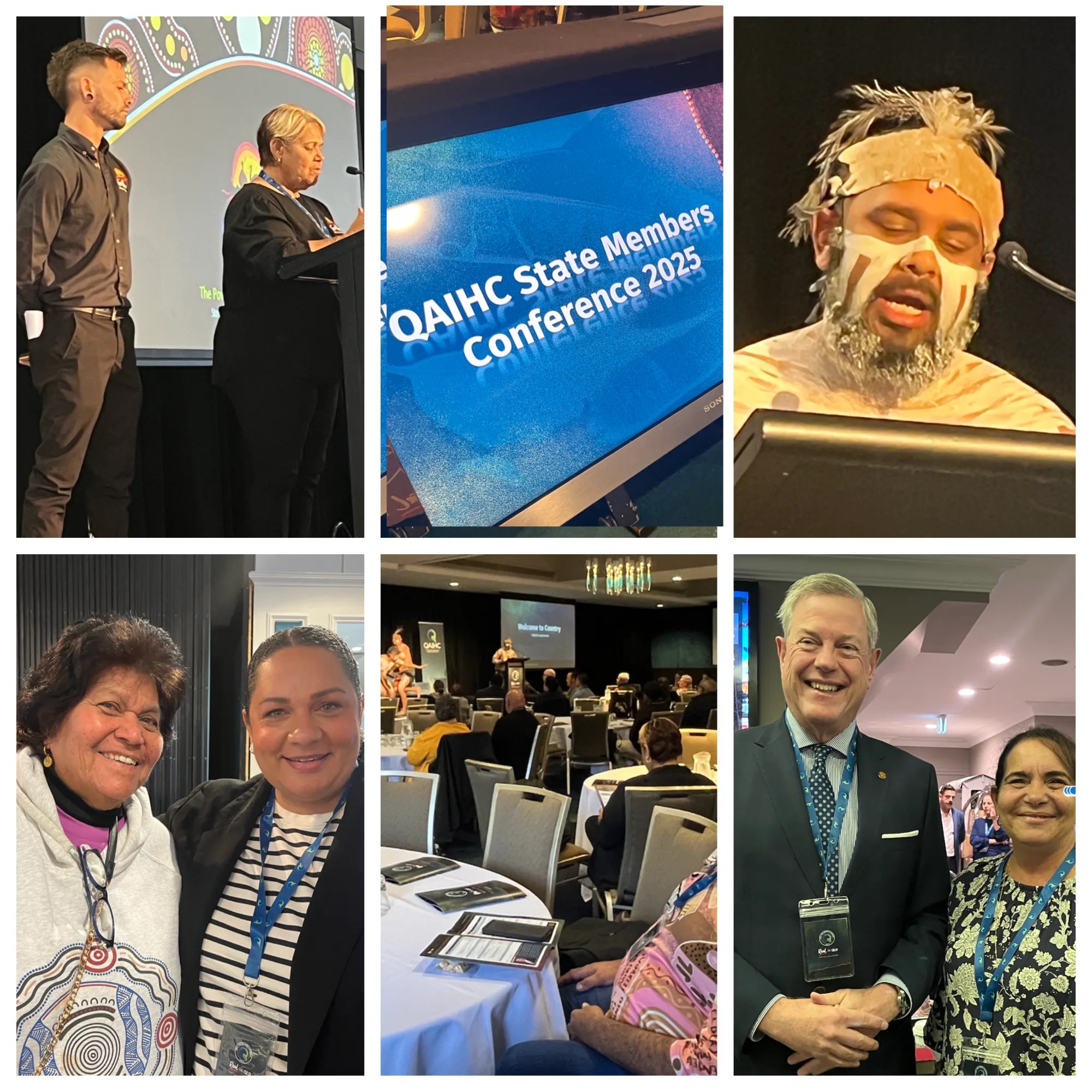
The Queensland Aboriginal and Islander Health Council (QAIHC) has called for immediate reform and genuine partnership with governments after an independent review found the National Agreement on Closing the Gap is failing to deliver on its commitments.

The call echoed many discussions at QAIHC’s recent statewide members conference, held amid issues and opportunities with data, partnerships, workforce, funding reform and a challenging political environment.

The two-day QAIHC event celebrated the unique role and approach of Aboriginal community controlled health organisations (ACCHOs), its role in Closing the Gap, and what it can teach mainstream health services.

Read more here.

Image source: Croakey Health Media

Oral Health Online Yarning Circle

Oral health gaps affect our mob’s overall health – Join the conversation and be part of bridging the gap by informing the National Oral Health Plan (2025-2034).

Details:

Wednesday 2 July: 3.30-5PM AEST: Register here.

Friday 4 Jul: 11AM-12.30PM: Register here.

Speakers:

  • Cas Nest (She/her) Endorsed Midwife, Managing Director, First Peoples Health Consulting, Co-founder and Managing Director, Gullidala
  • Nadine Blair, Director ‑ Policy, NACCHO

Derby NAIDOC Award

Congratulations to Shelley Kneebone, CEO of Derby Aboriginal Health Service, on receiving the Derby NAIDOC Award for Caring for Country and Culture.

This award recognises Shelley’s strong leadership and her commitment to embedding traditional healing, cultural knowledge and connection to Country across health and wellbeing services in Derby and surrounding communities.

Image source: Walalakoo Aboriginal Corporation

Victoria’s true history on the record as Australia’s first Indigenous truth telling commission wraps up

The nation’s first truth telling inquiry has handed down its final report, including 100 recommendations for urgent change. The nation’s first truth telling inquiry has handed down its final report, including 100 recommendations for urgent change. Its two final reports, Yoorrook for Transformation and Yoorrook Truth Be Told, have been publicly released – the former containing 100 recommendations for urgent change.

Among the recommendations are calls for redress from the state government via the treaty process for all damages and loss stemming from colonial invasion and occupation of Indigenous peoples’ lands. This would include redress for economic loss, interest and redress for cultural loss. Yoorrook has suggested this redress could take the form of monetary compensation, tax relief, and the restitution of traditional lands, waters, and resources.

Read more here.

Image source: NITV

Sector Jobs – you can see sector job listings on the NACCHO website here.

Advertising Jobs – to advertise a job vacancy click here to go to the NACCHO website current job listings webpage. Scroll down to the bottom of the page to find a Post A Job form. You can complete this form with your job vacancy details – it will then be approved for posting and go live on the NACCHO website.

NACCHO Sector News: 30 June 2025

The NACCHO Sector News is a platform we use to showcase the important work being done in Aboriginal and Torres Strait Islander health, focusing on the work of NACCHO, NACCHO members and NACCHO affiliates.

We also share a curated selection of news stories that are of likely interest to the Aboriginal and Torres Strait Islander health sector, broadly.

Oral Health Online Yarning Circle

Oral health gaps affect our mob’s overall health – Join the conversation and be part of bridging the gap by informing the National Oral Health Plan (2025-2034).

Details:

Wednesday 2 July: 3.30-5PM AEST: Register here.

Friday 4 Jul: 11AM-12.30PM: Register here.

Speakers:

  • Cas Nest (She/her) Endorsed Midwife, Managing Director, First Peoples Health Consulting, Co-founder and Managing Director, Gullidala
  • Nadine Blair, Director ‑ Policy, NACCHO

Proud Spirit Awards 2025

Do you know an Aboriginal and Torres Strait Islander person who deserves recognition for their work in the social and emotional wellbeing, mental health, and suicide prevention space? Nominations are now open for the following:

  • Leadership in social and emotional wellbeing, mental health, and suicide prevention
  • Community impact award
  • Lived experience champion award
  • Youth inspiration award
  • Cultural practice award

Learn more here.

Image source: Gayaa Dhuwi (Proud Spirit) Australia

ACT raises the age of criminal responsibility to 14

The ACT first raised the age of criminal responsibility to 12 in November 2023. It has now been increased to 14.

The move has been applauded by experts and advocates, who say locking up young people only entrenches crime and disproportionately impacts Aboriginal and Torres Strait Islander families.

But already-stretched services in the territory warn that without more funding, they will struggle to support the volume of children diverted their way.

Rather than facing charges, children will be referred to a therapeutic support panel to help address the causes of their offending.

Read more here.

The ACT is increasing the age of criminal responsibility to 14. (ABC News: Lily Nothling)

Ungooroo Health and Wellbeing Community Expo

Ungooroo Aboriginal Corporation is hosting a health and wellbeing community expo on Thursday 24 July 2025, from 10am-2pm at the Singleton Centre.

Community members will discover resources, information and services and support for families, youth and Elders.

The event will cover:

  • Health talks
  • Games and giveaways
  • Cultural dances and Didge playing
  • Fun activities
  • Lots of stalls to explore
  • NRL Indigenous players

First Nations peak children’s body urges Ministers to back ACCO childcare services

The peak body for Indigenous children is urging education ministers to work closely with Aboriginal community-controlled organisations to ensure the $1 billion Building Early Education Fund (BEEF) delivers the best outcomes for Aboriginal and Torres Strait Islander children.

As federal, state and territory education ministers meet in Adelaide on Friday, SNAICC – National Voice for our Children Chief Executive Catherine Liddle said targeted funding through BEEF must reach children in all locations to effectively close the education gap.

The Arrernte/Luritja woman from Central Australia said the fund presents a “huge opportunity to address the real and long-standing accessibility issues in early education” faced by Aboriginal and Torres Strait Islander children families.

“A childcare desert is defined as having more than three children per childcare place – that number is stretched even further for Aboriginal community-controlled (ACCO) ECEC [early childhood education and care] services,” Ms Liddle said.

Read more here.

SNAICC chief executive Catherine Liddle. (Image: Ian Redfearn/ABC News)

Sector Jobs – you can see sector job listings on the NACCHO website here.

Advertising Jobs – to advertise a job vacancy click here to go to the NACCHO website current job listings webpage. Scroll down to the bottom of the page to find a Post A Job form. You can complete this form with your job vacancy details – it will then be approved for posting and go live on the NACCHO website.

NACCHO Sector News: 27 June 2025

The NACCHO Sector News is a platform we use to showcase the important work being done in Aboriginal and Torres Strait Islander health, focusing on the work of NACCHO, NACCHO members and NACCHO affiliates.

We also share a curated selection of news stories that are of likely interest to the Aboriginal and Torres Strait Islander health sector, broadly.

Oral Health Online Yarning Circle

Oral health gaps affect our mob’s overall health – Join the conversation and be part of bridging the gap by informing the National Oral Health Plan (2025-2034).

Details:

Wednesday 2 July: 3.30-5PM AEST: Register here.

Friday 4 Jul: 11AM-12.30PM: Register here.

Speakers:

  • Cas Nest (She/her) Endorsed Midwife, Managing Director, First Peoples Health Consulting, Co-founder and Managing Director, Gullidala
  • Nadine Blair, Director ‑ Policy, NACCHO

New resources to support shared decision-making about lung screening

New resources are now available to support shared decision-making about lung cancer screening. The development of the shared decision-making model and resources was led by Yardhura Walani, National Centre for Aboriginal and Torres Strait Islander Wellbeing Research, Australian National University.

Learn more here.

Missed the webinar? Watch the recording, with guest presenter A/Prof Lisa Whop, to learn more about shared decision-making and why the new National Lung Cancer Screening Program is so important for mob.

Strong Born, Strong Futures

Strong Born, Strong Futures is a call to action for the community to ensure every Aboriginal and Torres Strait Islander child receives proper nutrition, regular prenatal care, a safe environment and that mothers are supported in avoiding harmful substances like alcohol before and during pregnancy.

Tasmanian Aboriginal Centre says ‘Strong Born, Strong Futures’ also highlights the importance for ningi/mothers to stay active, manage stress, and prioritise self-care. Building a strong bond and connection with pakata/baby during pregnancy and after is crucial for the health and well-being of every child.

When ningi/mothers receive wrap-around holistic and culturally safe support throughout pregnancy, our pakata /babies are born strong and healthy. ngayapi rrala/Strong born pakata/babies shape the way for a strong future, empowering takarilya/families and communities to thrive.

Learn more here.

Image source: Tasmanian Aboriginal Centre

Darwin bus dress code ‘punishes poverty’, AMSANT says

Signage on Darwin buses warning passengers they may be removed for wearing stained clothing has been slammed by the Aboriginal Medical Services Alliance Northern Territory (AMSANT), calling it a punitive response which targets the Territory’s most vulnerable.

AMSANT says the policy discriminates against people experiencing poverty, homelessness and mental ill health — particularly Aboriginal and Torres Strait Islander people, who make up a large proportion of those affected.

AMSANT Chief Executive Dr John Paterson said the NT has close to 6,000 people on the public housing waitlist and one of the highest rates of rough sleeping in the country — 13 times the national average. One in five Aboriginal people in the NT is experiencing homelessness.

Dr Paterson said the dress code is “another example of a government unnecessarily punishing people instead of addressing the root causes of disadvantage in our communities”.

Read the full article here.

Signage on Darwin buses warning passengers they may be removed for wearing stained clothing has been labelled a punitive response which targets the Territory’s most vulnerable. (Image: Annabel Bowles)

Leading the way in STI testing recovery post-COVID

Aboriginal Community Controlled Health Services in SA are leading one of the strongest comebacks in STI testing across Australia. After COVID-19 disrupted routine testing and delayed diagnoses nationwide, ACCHS in South Australia have not only bounced back — they’ve improved care.

  • 70% of STI testing episodes in 2023 included HIV and syphilis screening — a massive jump from just 19% in 2016
  • STI testing overall is just 5% below pre-pandemic peak levels from 2019

From health promotion campaigns to workforce training and targeted data use, AHCSA’s Sexual Health & BBV Program has been working alongside Member Services to support locally led recovery.

Learn more here.

Image source: AHCSA

Sector Jobs – you can see sector job listings on the NACCHO website here.

Advertising Jobs – to advertise a job vacancy click here to go to the NACCHO website current job listings webpage. Scroll down to the bottom of the page to find a Post A Job form. You can complete this form with your job vacancy details – it will then be approved for posting and go live on the NACCHO website.

NACCHO Sector News: 4 June 2025

The NACCHO Sector News is a platform we use to showcase the important work being done in Aboriginal and Torres Strait Islander health, focusing on the work of NACCHO, NACCHO members and NACCHO affiliates.

We also share a curated selection of news stories that are of likely interest to the Aboriginal and Torres Strait Islander health sector, broadly.

2025 Elders Olympics

The 2025 Aboriginal Elders Olympics took place on 9 April at McCosker Fields in Inverell, with more than 400 Elders from across New South Wales participating in a series of games and social activities.

The Elders Olympics serves as a platform to honour the contributions of Indigenous Elders, promote cultural heritage, and strengthen community bonds. It offers participants an opportunity to engage in physical activity, social interaction, and cultural exchange.

Read more here.

Biripi Elders at the 2025 Elders Olympics. Image source: Biripi ACMC


What does transformation look like through your lens?

The Coalition of Peaks ‘Through Our Lens’ photography competition is looking for photos that highlight your personal connection to transformation.

Images that capture the journey, the progress, and future legacy of our communities.

Capture your connection and enter now. There are great prizes up for grabs – entries close on 13 June.

Find out more and enter the competition here.

Image source: Coalition of Peaks

Wakai Waian Healing celebrates a decade of Indigenous mental health leadership and growth

Wakai Waian Healing, a proudly Torres Strait Islander-owned and led mental health service, recently celebrated ten years of walking alongside community – providing culturally safe, trauma-informed care across Queensland’s regional, remote, and island communities.

Founded by Masig man Ed Mosby in 2014, Wakai Waian Healing began with just one man, one laptop, and “a belief that our stories, our ways, and our healing journey must be led by our own people”.

Now, Wakai Waian Healing has grown into a organisation with over 40 staff, proudly standing on both the mainland and in the Torres Strait.

A major milestone came with the establishment of the Torres Strait Island office on Thursday Island – “a true homecoming”. The Thursday Island team now plays a central role in delivering services across Zenadth Kes, ensuring Islander voices, leadership, and cultural knowledge are at the heart of healing.

Read more here.

Wakai Waian Healing founder Edward Mosby. Image: Jarred Cross.

New ambulances set to arrive across Cape York

Health workers in a remote Far North Indigenous community will respond faster to medical emergencies with a new ambulance to be used for time-critical patients.

A hospital-based ambulance has been delivered to Hope Vale, around 200km north of Cairns in southern Cape York, with Mapoon, Lockhart River, Aurukun and Kowanyama, to receive ambulances of their own soon.

The new vehicle means health staff will no longer be forced to rely on non-ambulance vehicles during emergencies, health minister Tim Nicholls said.

“This expansion of the Hospital Based Ambulance service into the Cape will see five clinics receive a fully kitted-out ambulance, along with training and education, for health staff to respond in their remote community,” Mr Nicholls said.

Read more here.

Hope Vale mayor Bruce Gibson, health minister Tim Nicholls, Member for Cook David Kempton and Hope Vale deputy mayor Barry Bowen during a recent visit to southern Cape York.

Sector Jobs – you can see sector job listings on the NACCHO website here.

Advertising Jobs – to advertise a job vacancy click here to go to the NACCHO website current job listings webpage. Scroll down to the bottom of the page to find a Post A Job form. You can complete this form with your job vacancy details – it will then be approved for posting and go live on the NACCHO website.

Health, Climate & Our Future – Online Consultation for ACCHOs & ACCOs

Hey Mob, we want to hear from you! Climate change isn’t just something happening out there—it’s something we’re feeling in our Communities, in our health, and in the way we do our jobs. Join us for a deadly online yarn about how climate and environment shifts are impacting our ACCOs and ACCHOs, our way of working, and our ways of keeping Mob safe and strong.

Come along to one of the following upcoming sessions:

Session 1: Wednesday 11 June (3-4.30PM AEST)

Session 2: Friday 13 June (12-1.30PM AEST)

NACCHO Sector News: 30 May 2025

The NACCHO Sector News is a platform we use to showcase the important work being done in Aboriginal and Torres Strait Islander health, focusing on the work of NACCHO, NACCHO members and NACCHO affiliates.

We also share a curated selection of news stories that are of likely interest to the Aboriginal and Torres Strait Islander health sector, broadly.

Shining a light on trailblazers in Indigenous medicine

Tatum Bond is one of those “lucky people” who truly loves her job.

The Ngadjonji woman works in the emergency department at Cairns Base Hospital, and for the Royal Flying Doctors Service in Queensland.

Dr Bond is one of the Aboriginal and Torres Strait Islander medical professionals featured in the documentary series Our Medicine.

The series shines a spotlight on Aboriginal and Torres Strait Islander frontline workers across hospitals, ambulance services, traditional healing and other medical services who are working to improve health outcomes in their communities.

Dr Bond said, while she was initially nervous to be part of the six-part series, she hopes she can show others they can also achieve their dreams.

“The main reason I said yes is because this whole thing is empowering younger generations to come and do these jobs,” she said.

Read more here.

Watch ‘Our Medicine’ on SBS Demand here.

Dr Tatum Bond is one of the Indigenous medical professionals featured in the series Our Medicine. (Sbs/AAP PHOTOS) Credit: AAP

Reconciliation Week: Significant strides made in the South West but ‘long way to go’ still

A Noongar woman with more than 25 years experience in the First Nations health sector says there’s still “a long way to go” in the South West on the path towards reconciliation, despite significant improvements over the years.

Auntie Elsie Penny, OAM, has worked at the South West Aboriginal Medical Service since 1997, and is the cultural practice lead at Kwaba Bidi.

Despite the strides made in recent years, this Reconciliation Week Ms Penny said there was more to be done.

“We are getting there, we’ve still got a long way to go,” she said.

“On a personal level, having worked in Aboriginal health for over 30 years in Bunbury, I can see there’s been some good achievements.

“The opening of the South West Aboriginal Medical Service and other Aboriginal-controlled organisations which are doing their part towards reconciliation and closing the gap by delivering services that are important for our people and making a difference.”

Read the full article here.

Auntie Elsie Penny OAM. Credit: Sean Van Der Wielen

VACCHO community garden activity day

Last week, VACCHO’s Healthy Communities team joined GEGAC’s Community Garden Activity Day for a deadly day of learning, sharing, and connecting with Community.

The garden came alive with the energy of kinder kids, secondary school students, Elders, Community members, and staff as they planted seeds, prepared and shared food, got creative, and told stories together.

Grants were awarded to ACCOs to support the creation or expansion of health promotion and food initiatives for children and young people in their Communities.

These projects are all about Communities leading the way, creating gardens, sharing knowledge, and growing healthy futures, in line with the FoodPATH Project recommendations.

Image source: VACCHO.

Reconciliation News

This edition of Reconciliation News is about champions – champions of music, of advocacy, of culture, of education, of economic self-determination. Their legacies and ongoing work embody the spirit of the National Reconciliation Week 2025 theme: Bridging Now to Next.

Features:

  • Reconciliation Australia reflects on Corroboree 2000
  • Yorta Yorta man Ian Hamm on policy and the fundamental importance of the economy to progress
  • Shane Howard on his song Solid Rock – its genesis, its message and its enduring success
  • The impact of Reconciliation Action Plans in 2024
  • Island Stars’ cultural and economic leadership in Zenadth Kes (the Torres Strait Islands)
  • How Djarindjin’s award-winning Indigenous governance demonstrates the power of true economic self-determination.

Read it here.

Image source: Reconciliation Australia.

Sector Jobs – you can see sector job listings on the NACCHO website here.

Advertising Jobs – to advertise a job vacancy click here to go to the NACCHO website current job listings webpage. Scroll down to the bottom of the page to find a Post A Job form. You can complete this form with your job vacancy details – it will then be approved for posting and go live on the NACCHO website.