NACCHO Sector News: 24 September 2025

Aboriginal and Torres Strait Islander Health News

The NACCHO Sector News is a platform we use to showcase the important work being done in Aboriginal and Torres Strait Islander health, focusing on the work of NACCHO, NACCHO members and NACCHO affiliates.

We also share a curated selection of news stories that are of likely interest to the Aboriginal and Torres Strait Islander health sector, broadly.

Paracetamol use in pregnancy

Australia’s Chief Medical Officer and the TGA join with other global medicines regulators, leading clinicians and scientists worldwide in rejecting claims regarding the use of paracetamol in pregnancy, and the subsequent risk of development of ADHD or autism in children.

Robust scientific evidence shows no causal link between the use of paracetamol in pregnancy and autism or ADHD, with several large and reliable studies directly contradicting these claims.

Paracetamol remains the recommended treatment option for pain or fever in pregnant women when used as directed. Importantly, untreated fever and pain can pose risks to the unborn baby, highlighting the importance of managing these symptoms with recommended treatment. Pregnant women should speak to their healthcare professionals if they have questions about any medication during pregnancy.

Read more here.

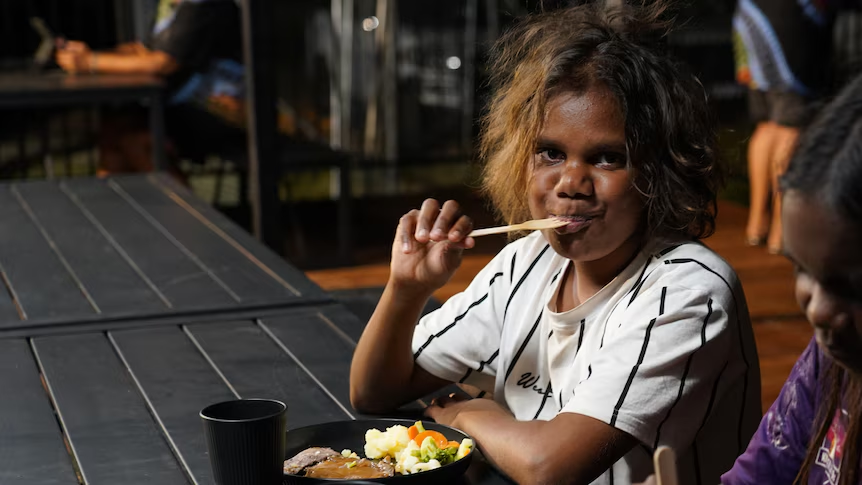
Image source: ABC: Josephine Asher

Mala’la Health Service Aboriginal Corporation takes home Northern Territory General Practice of the Year award

Mala’la Health Service Aboriginal Corporation is honoured to be named the Northern Territory General Practice of the Year by the Royal Australian College of General Practitioners (RACGP).

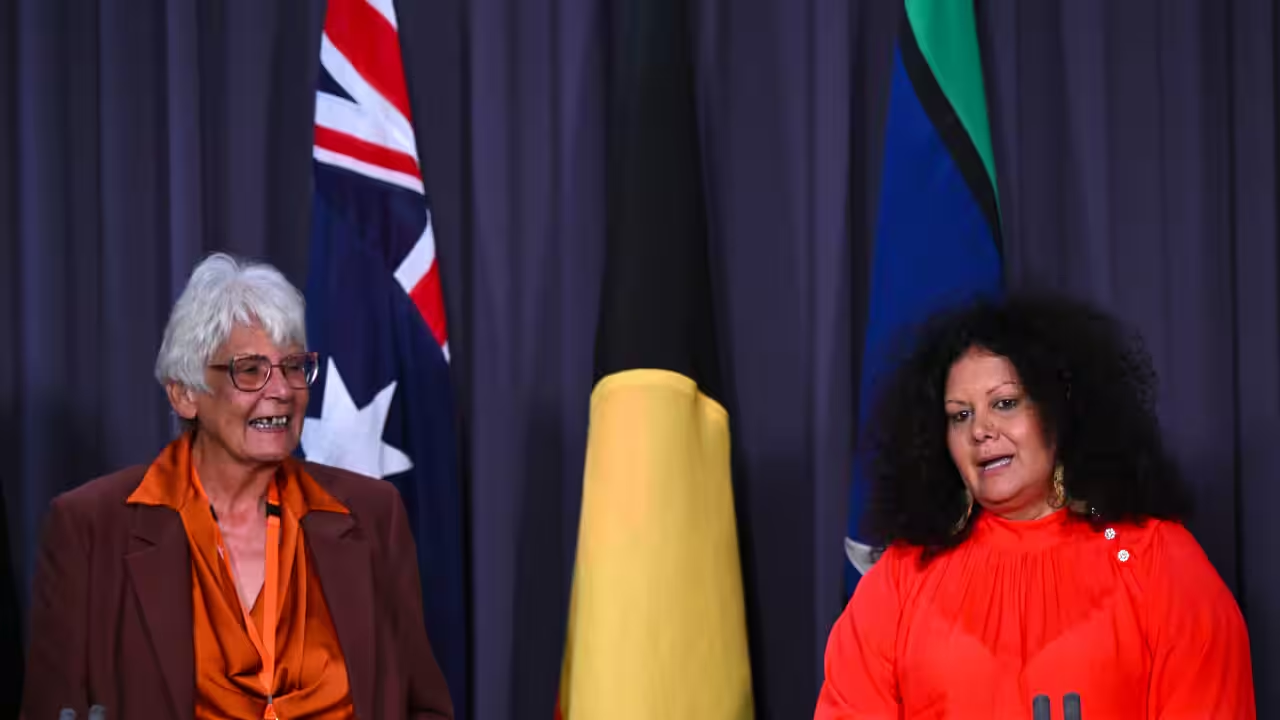
Charlie Gunabarra and Aileen Bell accepted the award at Parliament House in Darwin on behalf of our whole clinic.

“We’re very lucky to have received this prize and we’ll keep working hard to improve the health and wellbeing for our people,” Mala’la Health Service Aboriginal Corporation wrote on social media.

Learn more here.

Image source: Mala’la Health Service Aboriginal Corporation

Why Indigenous health workers should apply for this important scholarship

Named in honour of the late Dr Arnold ‘Puggy’ Hunter, a widely-respected leader in improving the health of Indigenous people who served as inaugural National Aboriginal Community Controlled Health Organisation (NACCHO) chair and led a list of other councils and groups, the scholarship offers cultural support, mentorship and other elements in addition to financial backing for students.

Recipients have access to $15,000 per year for full-time study, or $7,500 part-time, over the duration of their studies and training in a range of qualifications at universities, TAFE, higher education provided and registered training organisations.

This includes primary health, allied health, medicine, dentistry, nursing, midwifery and medicine.

Applicants are not required to currently enrolled in course so long as they intend to study in the coming year.

Online applications are open until October 30.

Read more here.

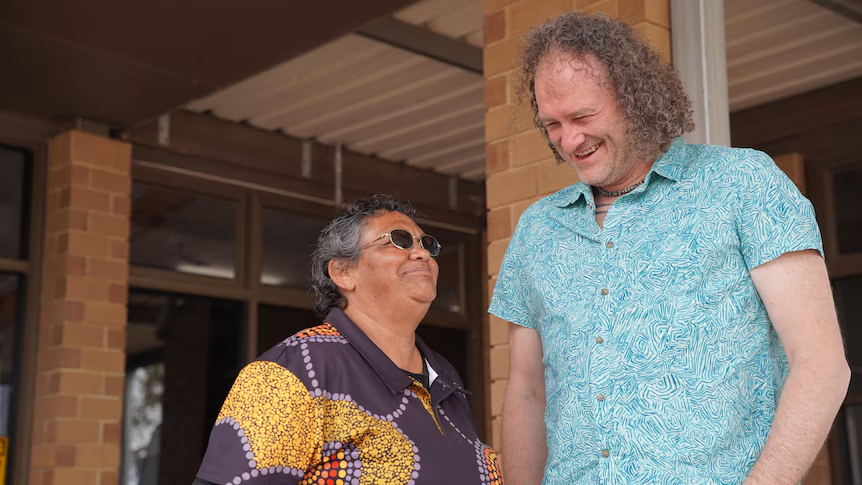
Image source: Indigenous Allied Health Australia (IAHA)

Bamaga nurse speaks from experience after winning diabetes educator award

A Bamaga nurse diagnosed with Type 1 diabetes early in her studies has been awarded for her educational work in the chronic disease.

Shirley Kusu was named Aboriginal/Torres Strait Islander Credentialled Diabetes Educator of the Year at an annual diabetes national conference.

She received the award during the recent Australasian Diabetes Congress on the Gold Coast.

Ms Kusu, a clinical nurse consultant and credentialled diabetes educator, works in a small team of health professionals supporting about 400 people living with diabetes across the Northern Peninsula area.

Read more here.

Image source: TCHHS

Have you explored ASTHMAXCHANGE yet?

ASTHMAXCHANGE, Asthma Australia’s dedicated hub for healthcare professional education, clinical resources and patient education tools is now live.

  • Explore the Paediatric Asthma Care collection – begin with a recap the principles of diagnosing and treating childhood asthma, then dive into Masterclass recordings and directly access resources related to practical engagement strategies, and addressing the complex cycle of reliever over-reliance
  • Download an interactive educational tool to enhance your consultation with families of children (under 12) living with asthma.
  • A growing library of collections – curated bundles of resources, each focused on a specific clinical topic and designed for seamless integration into practice.

Image source: Asthma Australia

Sector Jobs – you can see sector job listings on the NACCHO website here.

Advertising Jobs – to advertise a job vacancy click here to go to the NACCHO website current job listings webpage. Scroll down to the bottom of the page to find a Post A Job form. You can complete this form with your job vacancy details – it will then be approved for posting and go live on the NACCHO website.

Email us your story with some images to: NACCHOCommunicationsandMedia@naccho.org.au and we will feature it in the news.

Email us your story with some images to: NACCHOCommunicationsandMedia@naccho.org.au
and we will feature it in the news.

NACCHO Sector News: 28 August 2025

The NACCHO Sector News is a platform we use to showcase the important work being done in Aboriginal and Torres Strait Islander health, focusing on the work of NACCHO, NACCHO members and NACCHO affiliates.

We also share a curated selection of news stories that are of likely interest to the Aboriginal and Torres Strait Islander health sector, broadly.

Quiet Achiever recognised as RACGP NT GP of the Year

The Royal Australian College of GPs (RACGP) has named Darwin General Practitioner Dr Simone Raye as the NT GP of the Year for 2025.

Each year, the awards acknowledge GPs, registrars, and practices and practice teams who make an outstanding contribution to the health and wellbeing of their communities. The winners for 2025 are:

  • Northern Territory GP of the Year: Dr Simone Raye, a Medical Educator and GP based at Pandanus Medical in Darwin.
  • Northern Territory GP Supervisor of the Year: Dr Laura Wood, who currently supports two Registrars in the remote community of Wadeye.
  • Northern Territory GP in Training of the Year: Dr Arullan Naidoo, a recently fellowed GP working for NT Health Health across Top End remote communities.
  • Northern Territory General Practice of the Year: Manayingkarirra Primary Health Care Centre (Mala’la Health Service Aboriginal Corporation)

RACGP Northern Territory Chair Dr Sam Heard has congratulated this year’s award recipients, celebrating their vital contributions to the health and wellbeing of Territorians.

“These awards showcase the incredible work being done by GPs and their teams across the Territory,” he said.

Read the full article

R U Okay? A conversation could change a life.

Join the Winnunga Nimmityjah Aboriginal Health and Community Services (WNAHCS) for a free feed and coffee and a yarn in Winnunga’s Community room.
When: 11th September – 11am -2pm
Where: 63 Boolimba Cres, Narrabundah, ACT

R U Okay Day Event Poster

RACGP welcomes 149 new specialist GPs for Victoria

Australia’s leading general practice training college, the Royal Australian College of GPs (RACGP), proudly welcomed 149 new specialist GPs at a prestigious Fellowship ceremony on Sunday 24 August in Melbourne.

Fellowship of the RACGP (FRACGP) recognises a doctor’s qualification and expertise as a specialist GP. It is the gold standard of general practice in Australia and follows around 11 years of education, clinical training, rigorous assessment, and hands-on experience in primary care.

Among the newly recognised Fellows were four Rural Generalists (RGs) – GPs who undertake Additional Rural Skills Training in fields vital to rural communities, such as anaesthesia and obstetrics.

Two Aboriginal New Fellows received their papers at the ceremony.

New Fellow Dr Sharni Wilkes is a Yamatji woman whose Illawadjardi family group also have strong connections to the Malgana lands and waters of Shark Bay, WA, within Yamatji Country.

She had been interested in rural practice since university and completed the precursor to the Rural Generalist program, Fellowship in Advanced Rural General Practice (FARGP), with Additional Rural Skills Training in paediatrics.

Dr Wilkes now works at an Aboriginal Community Controlled Health Organisation and an alcohol and other drugs-focused practice in Warrnambool, applying her general practice and paediatrics training across generations of patients.

“There are a lot of challenges facing general practice in Australia, but I still couldn’t imagine doing anything else,” Dr Wilkes said.

“I love being rural, and my background in paediatrics means I often see entire generations of families, which is a massive privilege.

Read the full article

First Nations community involvement in quantum tech iron test development

A revolutionary iron test is set to be developed in partnership with First Nations communities in the Northern Territory.

Designed by FeBI Technologies, co-founded by University of Melbourne Associate Professor David Simpson, Florey Institute of Neuroscience and Mental Health Dr Nicole Jenkins and Associates Professor Gawain McColl, the new quantum-based blood test is able to measure iron levels cheaply, reliably and accurately.

The research project sees members of the development team head to the Northern Territory to gather gather real-world data to inform the design of a blood-test device which operates in a range of environments.

Recognising FeBI’s potential to transform clinical iron testing, the Australian Government’s Critical Technologies Challenge Program, which has a goal to foster First Nations engagement in developing quantum technology, has provided $494,000 to fund prototype development and First Nations engagement in Katherine.

University of Melbourne’s Director of Aboriginal and Torres Strait Islander Health group Onemda, Professor Sean Taylor, will lead the work in Katherine through FeBI’s partnership with Sunrise Health Service Aboriginal Corporation.

“Our work in the Northern Territory is vital to understand the features a FeBI device needs in order to be useful and valued – and to make sure it stands up in practical terms in a remote community,” Professor Taylor said.

Read the full article

University of Melbourne's Director of Aboriginal and Torres Strait Islander Health group Onemda, Professor Sean Taylor.

University of Melbourne’s Director of Aboriginal and Torres Strait Islander Health group Onemda, Professor Sean Taylor. (Image: The University of Melbourne)

Gaps in maternal health in Australia, USA, and UK

Women across Australia, the United States (USA) and the United Kingdom (UK) are having babies later in life, and a new international study warns that this shift brings rising health risks and widening inequalities in maternal care.

The review, led by researchers at Flinders University and published in the Journal of Clinical Medicine, explores how pregnancy and birth have changed in Australia, the USA and UK over the past twenty years.

Dr Anya Arthurs
“One of the most noticeable shifts is that women are having babies later in life,” says lead author, Dr Anya Arthurs, from Flinders University.

“The average age of first-time mothers has steadily increased, with many now starting their families aged 35 years or over, reflecting broader societal changes including career priorities, financial pressures and improved access to contraception.”

Dr Arthurs explains that while older mothers are more likely to engage with prenatal care, they also face higher risks of complications.

“We’re seeing increased rates of gestational diabetes, high blood pressure and caesarean sections among older mothers, which raises important questions about how maternity care systems are adapting,” she says.

The study also found that fertility rates are falling in all three countries, with birth rates now below the level needed to maintain population size without immigration. This decline is linked to economic factors, changing family structures and personal choices.

Despite the overall drop in births, the number of babies born to First Nations and minority women is increasing, however these groups continue to face significant health disparities.

Read the full article

Decorative image

Global study reveals alarming gaps in maternal health – Getty Images


Sector Jobs – you can see sector job listings on the NACCHO website here.

Advertising Jobs – to advertise a job vacancy click here to go to the NACCHO website current job listings webpage. Scroll down to the bottom of the page to find a Post A Job form. You can complete this form with your job vacancy details – it will then be approved for posting and go live on the NACCHO website.


Email us your story with some images to: NACCHOCommunicationsandMedia@naccho.org.au and we will feature it in the news.

Email us your story with some images to: NACCHOCommunicationsandMedia@naccho.org.au and we will feature it in the news.

NACCHO Sector News: 28 May 2025

The NACCHO Sector News is a platform we use to showcase the important work being done in Aboriginal and Torres Strait Islander health, focusing on the work of NACCHO, NACCHO members and NACCHO affiliates.

We also share a curated selection of news stories that are of likely interest to the Aboriginal and Torres Strait Islander health sector, broadly.

Getting ready for the National Lung Cancer Screening Program: A checklist for primary healthcare services

From July 2025, some of your clients may be able to take part in the National Lung Cancer Screening Program.

Lung cancer screening involves a free low-dose CT scan every two years, or more often if needed, to check for early signs of lung cancer and monitor any changes. Screening helps detect cancer early – before symptoms appear, and when treatment is more likely to be effective.

Your health service and staff are essential to delivering the National Lung Cancer Screening Program in your community.

This checklist will provide information on how your service can prepare for the program:

  • Register with the National Cancer Screening Register (NCSR)
  • Complete lung cancer screening training and access program resources
  • Identify potential lung screening clients
  • Begin planning local implementation
  • Stay up to date with refresher courses to provide smoking cessation support

Learn more here.

Safety, food and hope replace youth crime at Fitzroy Crossing’s Night Place

Since opening in September 2024, the Night Place, run by Marra Worra Worra Aboriginal Corporation (MWW), has become a central hub for youth in the remote town, 2,400 kilometres north of Perth.

The Aboriginal-led program was created in response to concerns over disengaged children wandering the streets and rising youth crime. Similar youth night spaces have also opened in Broome.

Research shows juvenile offenders make up just 3.7% of the Kimberley youth population, with poverty and disadvantage driving criminal acts. Services including night spaces are seen as part of the solution.

Nearly 400 young people have attended the space in its first seven months, with over 8,000 visits and 12,500 hot meals served.

The Night Place started as a pilot program but has since secured longer-term state government funding.

Read more here.

Cyeahni Wallaby, 11, attends the Fitzroy Crossing Night Place. (ABC Kimberley: Rosanne Maloney)

Groundbreaking NITV documentary series ‘Our Medicine’ shines a light on communities taking back control of Indigenous health

Powerful new documentary series, Our Medicine, takes viewers behind the frontline of Australia’s strained medical services, shining an important light on First Nations professionals working to achieve better health outcomes for Aboriginal and Torres Strait Islander patients and communities. The six-part observational series premieres on National Indigenous Television (NITV) and SBS and SBS On Demand from 29 May at 7.30pm.

Narrated by screen icon Leah Purcell AM (The Drover’s Wife: The Legend of Molly Johnson, High Country), the groundbreaking series offers unique access to Aboriginal and Torres Strait Islander doctors, nurses, paramedics, traditional healers and other medical professionals, following their day-to-day challenges as they support patients on their journey through the system.

Learn more here.

Image source: SBS.

RACGP 2025 Aboriginal and Torres Strait Islander health awards

Nominations are now open for the 2025 RACGP Awards. Aboriginal and Torres Strait Islander Health awards include:

  • Standing Strong Together Award: celebrating partnerships between GPs and communities
  • Growing Strong Award: recognising exceptional Aboriginal and Torres Strait Islander GPs in training
  • Rising Strong Medical Student Award: supporting current Aboriginal and Torres Strait Islander medical students currently studying at an Australian university
  • The Aunty Val Dahlstrom Award: for Aboriginal Health Excellence, recognising excellence in Aboriginal health by an RACGP staff member, supervisor or registrar

These awards celebrate outstanding contributions to general practice and shine a light on the GPs, practices, supervisors, medical educators and registrars going above and beyond for their communities.

Submit nominations by 9AM AEST, Monday 30 June.

Image source: RACGP

Western Australia announces long awaited Stolen Generations redress scheme

Stolen Generations survivors from Western Australia will soon be eligible for compensation for the harm and suffering caused by decades of forced removal policies.

Living survivors would be eligible for $85,000 under the state government scheme, which is expected to open for applications later this year. The scheme will only apply to people who were removed as children from their families in WA before July 1st 1972.

Stolen Generations survivor and Co-Chair of Bringing Them Home WA Tony Hansen said it was a important step forward.

“By acknowledging such a brutal history, and evil policies that ripped the hearts out of children and families, this day will go down in history as a powerful moment of truth-telling,” he said.

Read more here.

The announcement has been long awaited by the state’s Stolen Generations members. Source: AAP / Lukas Coch

Sector Jobs – you can see sector job listings on the NACCHO website here.

Advertising Jobs – to advertise a job vacancy click here to go to the NACCHO website current job listings webpage. Scroll down to the bottom of the page to find a Post A Job form. You can complete this form with your job vacancy details – it will then be approved for posting and go live on the NACCHO website.

NACCHO Sector News: 2 April 2025

The NACCHO Sector News is a platform we use to showcase the important work being done in Aboriginal and Torres Strait Islander health, focusing on the work of NACCHO, NACCHO members and NACCHO affiliates.

We also share a curated selection of news stories that are of likely interest to the Aboriginal and Torres Strait Islander health sector, broadly.

Closing the Gap Assembly

This week, more than 150 leaders from across the country have come together to strengthen our collective efforts to Close the Gap.

Yesterday’s discussions were honest and powerful — shining a light on what’s working, and what still isn’t, when it comes to how governments and mainstream institutions engage with Aboriginal and Torres Strait Islander people.

Because the gap we’re trying to close isn’t just about life outcomes — it’s also about the distance between systems and communities. A gap between the way governments operate and what our communities actually need.

That gap needs attention too.

Learn more here.

Have your voice heard by filling out a 10-minute survey or making a submission by 16 April, here.

Dr Dawn Casey, NACCHO Deputy CEO. Image source: Coalition of Peaks.

First Nations-led campaign promotes self-collection cervical screening

Australia has launched its first national cervical screening campaign in over two decades, aiming to increase participation rates with a new self-collection testing option.

The “Own It” campaign encourages individuals to take their own swab, providing a private and accessible alternative to traditional clinician-collected tests. With $10.2 million in funding, the initiative targets under-screened communities and will run across television, radio, and online platforms.

Dr. Dawn Casey, Deputy CEO of the National Aboriginal Community Controlled Health Organisation (NACCHO), emphasised the significance of the campaign for Aboriginal and Torres Strait Islander communities.

“I think it’s really important to have culturally appropriate campaigns,”

“The work that Dr. Lisa Whop did on cervical cancer and self-testing was really important, and this campaign builds on that. It strongly promotes self-collection and addresses concerns around privacy and comfort,” she said.

Read the full article here.

Racism in healthcare is unacceptable says RACGP

The Royal Australian College of GPs has outlined commitments to step towards eliminating racism in Australia’s healthcare system in a new position released today on the International Day for the Elimination of Racial Discrimination.

“We recognise the unique challenges and discrimination faced by Aboriginal and Torres Strait Islander peoples, their leadership in efforts to eliminate racism, and that truth telling is a fundamental step in eliminating racism…” said RACGP President Dr Michael Wright.

“The RACGP’s updated position on racism outlines our commitments to address it, including implementing our Aboriginal and Torres Strait Islander Cultural and Health Training Framework, which embeds Aboriginal and Torres Strait Islander values and ways of being and doing in GP education and training across Australia.”

RACGP Board Chair Dr Sian Goodson said racism is an urgent national health priority.

”… I also note our important and longstanding partnership with the National Aboriginal Community Controlled Health Organisation (NACCHO). Together, we jointly advocate for a culturally safe and accessible healthcare system that is free from racism, and develop key recourses, including the the NACCHO-RACGP National guide to preventive healthcare for Aboriginal and Torres Strait Islander people which includes a chapter on the health impacts of racism.”

Read the media release in full here.

NACCHO and RACGP launching the ‘National Guide to preventative healthcare for Aboriginal and Torres Strait Islander people – fourth edition’ at the 2024 NACCHO Members’ Conference

New Good Medicine Better Health module: Talk, Test, Protect

Complete the latest Good Medicine Better Health module to gain a better understanding of gonorrhoea – including testing, prevention and contact tracing.

The National Association of Aboriginal & Torres Strait Islander Health Workers has endorsed the activity with 1 CPD hour.

Start learning today.

Interim findings highlight positive impact of AHCWA’s Social and Emotional Wellbeing Model of Service

A recent evaluation of Aboriginal Health Council of Western Australia’s Social and Emotional Wellbeing (SEWB) Model of Service has highlighted positive impacts in supporting health outcomes for Aboriginal people and communities. This evaluation was undertaken by researchers Patricia Dudgeon, Rama Putu Agung-Igusti, and Emma Carlin from the School of Indigenous Studies University of WA and the University of WA, and Broome Rural Clinical School Division.

SEWB is a holistic concept encompassing the importance of connection to land, culture, spirituality, and ancestry, forming the foundation of physical and mental health for Aboriginal Australians. The Mental Health Commission funded AHCWA to undertake a three-year pilot project to support Aboriginal Community Controlled Health Services across WA. The SEWB Model of Service has embedded each site with a team encompassing seven positions with cultural and clinical expertise.

Learn more here.

Image source: AHCWA

Sector Jobs – you can see sector job listings on the NACCHO website here.

Advertising Jobs – to advertise a job vacancy click here to go to the NACCHO website current job listings webpage. Scroll down to the bottom of the page to find a Post A Job form. You can complete this form with your job vacancy details – it will then be approved for posting and go live on the NACCHO website.

Governance Workshops for ACCHOs

Register now for the NACCHO Governance Workshops 2025.

Sydney is up next on Tuesday 15 April and Wednesday 16 April. 

NACCHO’s Governance Workshops are designed for people working in member ACCHOs and run by legal and other experts in the field. 

The workshops cover: 

  • Principles of good governance.  
  • Managing conflicts of interest. 
  • Managing risk (e.g. contract execution, etc.). 
  • Delegation of powers. 
  • Finance for Boards. 
  • Structure and role of boards and sub-committees; and 
  • Governance documents. 

NACCHO Sector News: 28 February 2025

The NACCHO Sector News is a platform we use to showcase the important work being done in Aboriginal and Torres Strait Islander health, focusing on the work of NACCHO, NACCHO members and NACCHO affiliates.

We also share a curated selection of news stories that are of likely interest to the Aboriginal and Torres Strait Islander health sector, broadly.

RACGP-NACCHO agreement continues commitment to Aboriginal and Torres Strait Islander health

NACCHO and The Royal Australian College of General Practitioners (RACGP) have furthered their commitment to jointly advocate for Aboriginal and Torres Strait Islander health by signing their third Memorandum of Understanding (MOU).

This MOU between the two organisations will see ongoing work and shared advocacy for effective, culturally safe and clinically appropriate healthcare for Aboriginal and Torres Strait Islander people and communities across the country.

NACCHO CEO Pat Turner reaffirmed the significance of this partnership in strengthening Aboriginal and Torres Strait Islander healthcare.

“Renewing our collaboration with the RACGP reinforces our commitment to strengthening healthcare for Aboriginal and Torres Strait Islander people. For over a decade, this alliance has driven advocacy, informed policy, and supported high-quality, community-led care through our ACCHOs,” she said.

“This agreement highlights the critical role of ACCHOs in delivering culturally safe, comprehensive care. It also underscores the need for genuine cooperation that prioritises equity, self-determination, and the elimination of racism in healthcare.

“We look forward to continuing our partnership with RACGP to drive systemic change, shape policies, and create healthier communities.”

Read more here.

NACCHO and RACGP signing their third MOU.

Maximise Medicare for your ACCHO

NACCHO, with support from the National Indigenous Australians Agency has free online courses to help ACCHO staff improve Medicare claiming and utilisation of other primary care funding sources.

The purpose of this training is to strengthen the sectors capacity to deliver high quality, responsive, and culturally appropriate health services contributing to improved health outcomes for Aboriginal and Torres Strait Islander people.

A number of courses are available for free to anyone working within the ACCHO sector:

  1. ACCHO Orientation
  2. Medicare in ACCHOs
  3. Practice Incentive Items
  4. National Key Performance Indicators

These courses are fully accredited by the:

  • Royal Australian College of General Practitioners (RACGP),
  • Australian College of Rural and Remote Medicine (ACRRM), and
  • National Association of Aboriginal and Torres Strait Islander Workers in Health Practice (NAATSIWHIP).

For more information, go here.

To register, go here.

Exploring bush medicine in contemporary healthcare

Southern Cross University researcher Dr Alana Gall, who recently became an ANSTO research Fellow, has been awarded more than $640,000 to lead a research program focused on First Peoples’ Cultural Medicines (also called bush medicine) in Australian healthcare.

The grant is part of the prestigious $422-million National Health and Medical Research Council’s (NHMRC) Investigator Grants scheme, funded by the Federal government.

Dr Gall’s project spans two key areas. The first is embedding Cultural Medicines into Australian health policies to improve cultural safety, health and wellbeing. The second is to protect Cultural Medicine knowledge through research that informs research and development in drug discovery, and regulation and intellectual property legislation, to realise the self-determination of First Peoples and their communities.

“Despite initiatives, including Closing the Gap, disparities persist in health outcomes for First Nations peoples. We need to focus on community-driven solutions that align with First Peoples’ ways of knowing, being and doing,” said Dr Gall.

“This encompasses plant medicines, native foods, healing ceremonies, spiritual medicine, Traditional Healers, and both the tangible and intangible healing aspects of Country.”

Dr Gall’s project has the backing of three major partners: the National Aboriginal Community Controlled Health Organisation (NACCHO), CSIRO, and ANSTO.

Read more here.

Dr Alana Gall. Image source: ANSTO.

Remote NT community health staff celebrate upskilling in Alice Springs

Eight remote health workers are eager to get back to their communities and put their new training to use after they upskilled and graduated. At a graduation at the Desert Knowledge Precinct, south of Alice Springs on Thursday, they received their Certificate III training in Aboriginal and/or Torres Strait Islander Primary Health Care.

Jabison Williams, from Yuendumu, said he was excited to get back to his community and use his new skills.

While some of the study was “hard” he said completing it made him “strong” and his “kids and my family proud”.

NT Health Minister Steve Edgington said completing the training better equipped the workers to provide primary care in their communities.

“Aboriginal community workers within health services help bridge gaps and deliver culturally appropriate care to their communities,” he said.

“They are role models and building capacity through training ensures they continue to provide high-quality effective care that is tailored to the unique needs of their communities, in partnership with other health professionals.”

Read more here.

Charlene Malbunka, Clarence Campbell, Doreena Stirling. Geisha Tilmouth, Jabison Williams, Katricia Campbell, Rachel Kantawara, and Patricia O’Donohue and graduated their Certificate III training in Aboriginal and/or Torres Strait Islander Primary Health Care at the Desert Knowledge Precinct. Picture: Gera Kazakov

NACCHO Maternal and Child Health Newsletter

NACCHO is excited to introduce our bi-monthly Maternal and Child Health Newsletter subscription!

To sign up, go here.

Image credit: NACCHO

Image credit: NACCHO

Sector Jobs – you can see sector job listings on the NACCHO website here.

Advertising Jobs – to advertise a job vacancy click here to go to the NACCHO website current job listings webpage. Scroll down to the bottom of the page to find a Post A Job form. You can complete this form with your job vacancy details – it will then be approved for posting and go live on the NACCHO website.

NACCHO Sector News: 11 February 2025

The NACCHO Sector News is a platform we use to showcase the important work being done in Aboriginal and Torres Strait Islander health, focusing on the work of NACCHO, NACCHO members and NACCHO affiliates.

We also share a curated selection of news stories that are of likely interest to the Aboriginal and Torres Strait Islander health sector, broadly.

Closing the Gap success stories are being written by Aboriginal and Torres Strait Islander peoples: PM

While acknowledging there is still a lot of work ahead, Aboriginal and Torres Strait Islander leaders have said the National Agreement on Closing the Gap is beginning to show some improvements.

On Monday the Federal Government released the 2024 Closing the Gap report and 2025 implementation plan, with Prime Minister Anthony Albanese telling the Parliament that the road ahead wasn’t easy, but that the nation couldn’t “turn our back” to entrenched disadvantage and violence affecting Indigenous people.

Arrernte and Gurdanji woman Pat Turner, the lead convenor for the Coalition of peak Indigenous bodies, and CEO of NACCHO said the full impacts of the changes would take time to materialise.

“We have seen improvements in critical areas such as the proportion of First Nations babies born at a healthy weight and the increase in the land and sea country under Aboriginal and Torres Strait Islander control – these are significant achievements that deserve recognition,” she said.

“For the implementation to be successful, systems, policies, and governance must evolve; government must evolve.

“It is our responsibility, in partnership with governments, to strengthen the policies that are working and change the ones that are failing – those that continue to exclude the basic needs of our people.”

Read the full NITV article here.

Lead convener of the Coalition of Peaks Pat Turner and Minister for Indigenous Australians Malarndirri McCarthy. Source: AAP / LUKAS COCH/AAPIMAGE

Health impacts of climate change

Aboriginal and Torres Strait Islander communities are disproportionately impacted by climate change, facing rising seas, extreme weather, and health inequities. For the first time, the NACCHO Australia and The Royal Australian College of General Practitioners (RACGP) Guide to Preventive Health Care for Aboriginal and Torres Strait Islander peoples has a chapter on “Health Impacts of Climate Change”.

Ps and health professionals play a key role in preventing health risks from climate change by considering each patient’s context, including location, resources, and social factors. Best practices promote physical, social, and emotional wellbeing, supporting both patients and the planet. GPs should educate, design risk-reduction strategies, and advocate for policies that reduce environmental and health risks.

Read the full report here.

NACCHO and RACGP launching the ‘National Guide to preventative healthcare for Aboriginal and Torres Strait Islander people – fourth edition’ at the 2024 NACCHO Members’ Conference

Promote Cervical Screening in your ACCHO!

The ‘Own It’ toolkit provides communication materials on cervical screening directly targeted toward women and people with a cervix from Aboriginal and Torres Strait Islander communities.

Own It is an Australian Government–funded national campaign to raise awareness of the self-collect option when doing your Cervical Screening test.

In the toolkit you will find:

  • key messages
  • social media content to share
  • quotes from our volunteer talent on cervical screening
  • posters and email signature images
  • social media and posters you can add your own spin to
  • resources on cervical screening.

To download the toolkit, go here.

Derbarl’s healthy skin check day

Derbarl Yerrigan Health Service’s Healthy Skin Check Day saw kids enjoying soapy slime making, dolly washing and learning about the importance of healthy skin! The activities kept them entertained while waiting for a skin check and helping raise awareness about Rheumatic Heart Disease and the prevention of Group A Strep.

Learn more about Derbal’s health promotion activities here.

Image source: Derbarl Yerrigan Health Service

AIDA to lead the Leaders in Indigenous Medical Education (LIME) program

The Australian Indigenous Doctors’ Association (AIDA’s) journey as the national peak body for Aboriginal and Torres Strait Islander medical students, doctors, and workforce has resulted in a successful application worth nearly $3 million to lead the Leaders in Indigenous Medical Education (LIME) program.

By taking the lead on the LIME program, AIDA will further facilitate impactful and sustained transformation within the medical education sector. Amongst other key outcomes, AIDA will work with Universities to capture and annually report on the retention rate of Indigenous Medical Students and identify any gaps to student success.

AIDA CEO, Donna Burns said this will enable AIDA to continue working towards equitable health outcomes for Indigenous peoples.

“Gaining a deeper understanding of the barriers and opportunities within the medical education sector and partnering with universities to make positive change will result in more Indigenous doctors,” Ms Burns said.

Read the full media release here.

Image source: AIDA.

Sector Jobs – you can see sector job listings on the NACCHO website here.

Advertising Jobs – to advertise a job vacancy click here to go to the NACCHO website current job listings webpage. Scroll down to the bottom of the page to find a Post A Job form. You can complete this form with your job vacancy details – it will then be approved for posting and go live on the NACCHO website.

25 November 2024

The NACCHO Sector News is a platform we use to showcase the important work being done in Aboriginal and Torres Strait Islander health, focusing on the work of NACCHO, NACCHO members and NACCHO affiliates.

We also share a curated selection of news stories that are of likely interest to the Aboriginal and Torres Strait Islander health sector, broadly.

‘Actions-based’ updated National Guide launched

An updated guide on preventive healthcare for Aboriginal and Torres Strait Islander people has been launched on day two of GP24, with the new edition led by Aboriginal and Torres Strait Islander people including an increase of Aboriginal and Torres Strait Islander authors.

The fourth edition of the National guide to preventive healthcare for Aboriginal and Torres Strait Islander people comes after years of collaborative work from the RACGP and the National Aboriginal Community Controlled Health Organisation (NACCHO).

First conceived of by NACCHO in 2001, the now fourth edition consists of 21 chapters, including the six additions – health impacts of racism, healthy eating, sleep, vaping, preconception care, and health impacts of climate change.

NACCHO Senior Medical Advisor and GP Dr Jason Agostino told newsGP the updated National Guide has ‘a great focus on implementation’.

‘Not everyone works in Aboriginal community controlled health organisations like I do, and sees Aboriginal and Torres Strait Islander patients every day, but there are important differences in screening guidelines for certain conditions, as well as really important implementation tips about how we apply the evidence,’ he said.

Read more here.

The ‘National guide to preventive healthcare for Aboriginal and Torres Strait Islander people’ was officially launched at GP24 on Friday.

NACCHO National Youth Conference 2024: One week to go

The NACCHO National Youth Conference is just one week away, taking place Monday, December 2nd, on Ngunnawal and Ngambri Country at the National Convention Centre in Canberra. For people aged 18-26, this is an opportunity for youth to make their voices heard and help shape the future of Aboriginal and Torres Strait Islander health.

The National Youth Conference will bring together up to 100 youth from around Australia to gain experience and exposure to the Aboriginal and Torres Strait Islander sector on a national level. During the conference the youth will engage in discussion, share their experience and learn from other peers from across the country. The conference will allow the youth to learn about informing policy, influencing change and provide a pathway so their voices are heard and represented by NACCHO throughout the sector.

For more information, go here.

The Beautiful Shawl Project Wins Victorian Public Healthcare Award

The Beautiful Shawl Project has won the Excellence in Aboriginal Health and Wellbeing Award at the Victorian Public Healthcare Awards. The Project was established in 2018 as a collaborative partnership between the Victorian Aboriginal Community Controlled Health Organisation (VACCHO), the Victorian Aboriginal Health Service (VAHS) and BreastScreen Victoria.

Since the Project’s launch, VACCHO and BreastScreen Victoria have worked alongside 30 Aboriginal Community Controlled Organisations (ACCOs) and Aboriginal-led services, to perform a total of 1,342 breast screens for Aboriginal and Torres Strait Islander people across the state. The award recognises innovation in health service delivery that is culturally responsive, promotes inclusion, advances self-determination and improves health and wellbeing outcomes for Aboriginal and Torres Strait Islander people in Victoria.

VACCHO CEO, Dr. Jill Gallagher AO, said she is immensely proud of the continued achievements of the Beautiful Shawl Project, which she knows saves lives.

“The success of the Beautiful Shawl Project demonstrates the power of having Aboriginal women in the driver’s seat, and the positive health and wellbeing outcomes that it creates.”

Read more here.

Image source: VACCHO.

Upcoming webinars: Lung Cancer Screening and the NCSR

To mark Lung Cancer Awareness Month, NACCHO and Telstra Health are co-hosting an hour-long webinar for ACCHO staff. This session will explore the key touchpoints ACCHOs will have with the National Cancer Screening Register (NCSR) throughout the National Lung Cancer Screening pathway, as well as the activities ACCHOs will need to undertake in preparation for the Program.

We encourage you to join the discussion and share your insights on how ACCHOs can be best supported in preparing to interact with the NCSR.

There are two different date options for attending the webinar. If you are interested in attending, please register for the one that works best with your schedule:

Aged care facility helps WA elderly stay close to family in Roebourne

Across the entirety of WA’s Pilbara, there are just two aged care centres, the largest in Port Hedland, 1,630 kilometres north of Perth. It means residents — including from the Pilbara’s remote Indigenous communities — often have to leave the region to find adequate care. For Elders, this can result in a separation from their culture and heritage and a fear of dying away from their home country.

Addressing that concern is one of the key goals of the not-for-profit Yaandina aged care centre in the remote community of Roebourne. Yaandina manager Joan Watt said the centre was designed and operated differently to a typical aged care facility.

“Most of our residents were brought up on stations on country, so we have access to the outside … and the roof is open so that people are able to see the sky and the stars as they normally would have when they were growing up,” she said.

Read more here.

Older Indigenous residents return to Yaandina in Roebourne to see out the remainder of their days on country. (ABC Pilbara: Alex Govan).

Sector Jobs – you can see sector job listings on the NACCHO website here.

Advertising Jobs – to advertise a job vacancy click here to go to the NACCHO website current job listings webpage. Scroll down to the bottom of the page to find a Post A Job form. You can complete this form with your job vacancy details – it will then be approved for posting and go live on the NACCHO website.

2024 NACCHO Members’ Conference

The 2024 NACCHO Members’ Conference will be held at the National Convention Centre Canberra, Ngunnawal and Ngambri Country, on Wednesday 4 and Thursday 5 December as part of a broader program commencing on Sunday 1 December with the NACCHO Men’s Health Day, NACCHO Youth Conference on Monday 2 December and the 2024 NACCHO Annual General Meeting and Extraordinary General Meeting on Tuesday 3 December. A Conference dinner will be held on Wednesday 4 December.

If you are thinking about coming to the NACCHO Conference, the only way to register is via the NACCHO Website – www.naccho.org.au/conference. We are using the secure Cvent system for registrations. NACCHO will not call you directly about registering for the conference.

 If you have any queries, please contact the NACCHO Conference Team: conference@naccho.org.au

To register, go here.

22 November 2024

The NACCHO Sector News is a platform we use to showcase the important work being done in Aboriginal and Torres Strait Islander health, focusing on the work of NACCHO, NACCHO members and NACCHO affiliates.

We also share a curated selection of news stories that are of likely interest to the Aboriginal and Torres Strait Islander health sector, broadly.

Preventive care guidelines to improve health and wellbeing for Aboriginal and Torres Strait Islander people: GP24

The health impacts of climate change, vaping and racism are among new topics in the fourth edition of preventive healthcare guidelines for Aboriginal and Torres Strait Islander people, launching at Australia’s premier annual GP conference in Perth today.

It comes on day two of the Royal Australia College of GPs (RACGP) annual conference GP24, from 21 to 23 November at Perth Convention and Exhibition Centre.

Dr Karen Nicholls, Chair of RACGP Aboriginal and Torres Strait Islander Health, said: “I’m proud to be launching with NACCHO the fourth NACCHO-RACGP National guide to preventive healthcare for Aboriginal and Torres Strait Islander people.

NACCHO CEO Pat Turner said the launch of the fourth edition of the NACCHO-RACGP National guide to preventive healthcare for Aboriginal and Torres Strait Islander people is a vital step in addressing health inequities and empowering our communities to thrive.

“This guide reflects the collective wisdom of Aboriginal and Torres Strait Islander voices, ensuring culturally and clinically safe care is at the forefront. By tackling emerging challenges such as climate change, vaping, and racism, we are not only addressing immediate health concerns but also laying the foundation for a healthier future.

“NACCHO is proud to partner with RACGP in delivering this indispensable resource to support GPs and healthcare workers nationwide in providing the highest standard of preventive care for our people.”

Read the full media release here.

Upcoming webinars: Lung Cancer Screening and the NCSR

To mark Lung Cancer Awareness Month, NACCHO and Telstra Health are co-hosting an hour-long webinar for ACCHO staff. This session will explore the key touchpoints ACCHOs will have with the National Cancer Screening Register (NCSR) throughout the National Lung Cancer Screening pathway, as well as the activities ACCHOs will need to undertake in preparation for the Program.

We encourage you to join the discussion and share your insights on how ACCHOs can be best supported in preparing to interact with the NCSR.

There are two different date options for attending the webinar. If you are interested in attending, please register for the one that works best with your schedule:

“Enough is enough”: NT Government must fulfil promised $180m in funding for domestic violence services, AMSANT says

Ahead of a coroner’s findings into the deaths of four Indigenous women in the Northern Territory next week, the peak body for Aboriginal community-controlled health services in the Territory has called on the CLP government to fulfil its $180 million commitment to tackling domestic and family violence.

On Friday, the Aboriginal Medical Services Alliance Northern Territory (AMSANT) said the NT government needed to “draw a line in the sand” and commit to immediate action to address the “devastating rates of domestic and family violence” in the NT—the highest in the country.

AMSANT chief executive, Dr John Paterson, said the horrific details out of the inquest has “once again exposed the catastrophic extent” of the crisis in the NT, calling on the Territory government to outline how a previously promised $180 million in funding will be allocated to specialist services.

Both major parties committed to the funding before the August election, recognising the vital need for change, however Dr Paterson said since being elected, the new CLP government has offered “no details” on how the funding will be delivered.

He said the organisations and communities working on the frontline “simply cannot afford more government inaction,” urging the government to affirm its commitment to funding as well as providing clarity on how the funds will be allocated “to address the overwhelming demand for services”.

Read more here.

If you or someone you know is impacted by sexual assault, family or domestic violence, call 1800RESPECT on 1800 737 732 or visit www.1800RESPECT.org.au. In an emergency, call 000.

13YARN 13 92 76

Aboriginal Counselling Services 0410 539 905

(Image: Mitch Woolnough/ABC News)

Report reveals underfunding of Aboriginal and Torres Strait Islander-led child protection services despite growing need

An annual report has revealed that despite the growing over-representation of Aboriginal and Torres Strait Islander children in the child protection system, the organisations proven to get the best results in cultural support, reunification with kin and connection to culture receive the least amount of funding.

The 2024 Family Matters Report, released today by SNAICC – National Voice for our Children, shows Aboriginal community-controlled organisations (ACCOs), only receive 6 percent of government funding despite Aboriginal and Torres Strait Islander children making up 41 percent (22,908 in total) of children in out-of-home care (OOHC).

According to the report, this comes at a time when Aboriginal and Torres Strait Islander children’s likelihood of being in OOHC reaches a record high of 10.8 times the likelihood for non-Indigenous children.

SNAICC CEO Catherine Liddle said Aboriginal and Torres Strait Islander children have never been more likely to be in OOHC, yet the community-controlled sector, which is most likely to keep those children safe and cared for at home with family, and connected to kin and culture, continues to be woefully underfunded.

Read more here.

Image source: SNAICC – National Voice for our Children

Celebrating ten years with AHCWA

The Aboriginal Health Council of Western Australia (AHCWA) proudly celebrates Ear Health Program Coordinator Lorraine Taui on her 10-year milestone with the organisation.  In her years working at AHCWA, Lorraine has demonstrated exceptional devotion and leadership within the Public Health unit.

Always going above and beyond to improve health outcomes for Aboriginal and Torres Strait Islander people and communities, Lorraine consistently delivers the Ear Heath program to an exceptionally high standard. Consequently, her work has achieved great results for which Lorraine has been recognised as an expert within the sector. Lorraine’s approachable nature creates a safe and open space for any discussion or questions from her teammates. She is empathetic and friendly to every staff member that approaches her, making her an exemplary role model not only within her team but for all AHCWA staff.

Read more here.

Image source: AHCWA.

Sector Jobs – you can see sector job listings on the NACCHO website here.

Advertising Jobs – to advertise a job vacancy click here to go to the NACCHO website current job listings webpage. Scroll down to the bottom of the page to find a Post A Job form. You can complete this form with your job vacancy details – it will then be approved for posting and go live on the NACCHO website.

2024 NACCHO Members’ Conference

The 2024 NACCHO Members’ Conference will be held at the National Convention Centre Canberra, Ngunnawal and Ngambri Country, on Wednesday 4 and Thursday 5 December as part of a broader program commencing on Sunday 1 December with the NACCHO Men’s Health Day, NACCHO Youth Conference on Monday 2 December and the 2024 NACCHO Annual General Meeting and Extraordinary General Meeting on Tuesday 3 December. A Conference dinner will be held on Wednesday 4 December.

If you are thinking about coming to the NACCHO Conference, the only way to register is via the NACCHO Website – www.naccho.org.au/conference. We are using the secure Cvent system for registrations. NACCHO will not call you directly about registering for the conference.

 If you have any queries, please contact the NACCHO Conference Team: conference@naccho.org.au

To register, go here.

8 October 2024

The NACCHO Sector News is a platform we use to showcase the important work being done in Aboriginal and Torres Strait Islander health, focusing on the work of NACCHO, NACCHO members and NACCHO affiliates.

We also share a curated selection of news stories that are of likely interest to the Aboriginal and Torres Strait Islander health sector, broadly.

Health of the Nation 2024 reveals Australia’s ‘most satisfied’ GPs are working in Aboriginal and Torres Strait Islander Health Services

The 2024 Health of the Nation report from the Royal Australian College of GPs (RACGP) highlights that Australia’s most satisfied general practitioners (GPs) are those working in Aboriginal and Torres Strait Islander Health Services, particularly within Aboriginal Community Controlled Health Organisations (ACCHOs). These GPs report the highest job satisfaction rates and the best work-life balance, with 88% expressing job contentment, compared to 73% overall.

Pat Turner AM, CEO of NACCHO, emphasised the significance of this data, noting that it reflects the success of culturally grounded care models within ACCHOs. She stated, “The consistently high levels of job satisfaction among GPs working in ACCHOs reflect the strong, culturally grounded care models that are vital to the health and well-being of Aboriginal and Torres Strait Islander peoples.”

NACCHO and the Aboriginal community-controlled health sector’s advocacy continue to drive efforts to build a dedicated workforce for Aboriginal and Torres Strait Islander health, which is crucial to improving health outcomes across these communities. This report further highlights the critical role ACCHOs play, not only in patient care but also in ensuring healthcare professionals are well-supported and deeply connected to the communities they serve.

To read more, go here.

Image credit: Credit:fizkes Stock photo ID:1180549272

Yuin doctor dedicated to Aboriginal and Torres Strait Islander people’s ‘genetic story’

Professor Alex Brown, a Yuin man and a trailblazer in Aboriginal and Torres Strait Islander health, has been awarded a fellowship by the Australian Academy of Technological Sciences and Engineering. Initially set to become an engineer, his sister inspired Prof Brown to pursue medicine, leading to a 25-year career focused on improving health outcomes for Aboriginal and Torres Strait Islander communities.

As the National Centre of Indigenous Genomics director and a professor at The Kids Research Institute Australia and Australian National University, Prof Brown has dedicated his work to understanding how genetics can reveal health insights for Aboriginal and Torres Strait Islander people. His genomics research seeks to uncover unique genetic signals that have shaped Indigenous populations over 65,000 years, providing crucial insights into health and disease.

What makes this work so important is the emphasis on Aboriginal and Torres Strait Islander communities making decisions about their genetic heritage, ensuring their voices and rights are at the forefront of this new field of work.

This fellowship highlights the significance of Prof Brown’s contributions to science and public health. As he puts it, the real achievement is not personal recognition but striving for better outcomes for future generations of Aboriginal and Torres Strait Islander peoples.

To learn more, go here.

Professor Alex Brown. Image: Ben McPherson (Australian Academy of Technological Sciences and Engineering).

Cultural safety must be ‘hard-wired’ in our health care systems

The Lowitja Institute has outlined a new plan for national cultural safety training standards in health care that will improve health and safety of Aboriginal and Torres Strait Islander people.

The initiative aims to establish national standards for cultural safety training, making it a core, measurable practice across all health services. The focus is on addressing health’s social and cultural determinants and supporting culturally safe health care for Aboriginal and Torres Strait Islander people.

To review the discussion paper: Cultural safety discussion paper proposes

The paper reflects on the history of advocacy for cultural safety by Australian Aboriginal community-controlled health care organisations and is an amalgamation of crucial research and work done in the last fifteen years to promote cultural safety guidelines, including the original 2011 NACCHO Cultural Safety Training Standards.

Read more, here.

Image: insightplus.mja.com.au

Aboriginal and Torres Strait Islander knowledge systems to be a dedicated National Science priority

More than 1,400 global experts gathered in Brisbane for the world’s only scientific meeting focused exclusively on influenza—OPTIONS XII, hosted by the International Society for Influenza and Respiratory Virus Diseases. Over four days, the event highlighted groundbreaking research and data from world-renowned scientists and researchers.

A key takeaway from the conference was the Federal Government’s decision to prioritise Aboriginal and Torres Strait Islander knowledge systems as a dedicated National Science priority. This recognition opens new pathways for First Nations communities to integrate ancient knowledge systems in the prevention and treatment of disease and other health issues.

 Read more here.

Credit:fatido Stock photo ID:1787929621

Scotdesco Community leads the way in water security and sustainability

The remote Aboriginal community of Scotdesco on the Great Australian Bight has taken a significant step towards ensuring water security for its residents. This week marked the start of the Scotdesco Water Security Project, a community-driven initiative that celebrates self-reliance and connection to Country. Phase One saw the installation of rainwater tanks and gutters, alongside the replacement of existing pipes, allowing for better collection of rainwater to support the community’s needs.

While the Scotesco region receives limited rainfall, these upgrades demonstrate the strength and adaptability of the community in caring for its land and people. By improving water infrastructure, Scotdesco is taking control of its future, reinforcing the connection between water, Country, and health.

Minister for Indigenous Australians, Malarndirri McCarthy, praised the project, emphasising that access to clean and safe water is not only a basic right but a foundation for a healthier, stronger community. “This initiative enhances quality of life for the people of Scotdesco,” she said, “and sets a solid path for improving health and wellbeing.”

As part of the Federal Government’s broader strategy to support Aboriginal and Torres Strait Islander communities, the Scotdesco Water Security Project highlights the community’s leadership in sustainable solutions that honour Country while addressing critical infrastructure needs.

Read more here.

The remote community of Scotdesco received new equipment to allow residents to access clean drinking water this week. (Image: Isabella Higgins/ABC News)

On the right track: Broken Hill Men’s Walking Group

A walking group in Broken Hill, initiated by Ngiyampaa man Anthony Hayward, is helping Aboriginal and Torres Strait Islander men in the community reconnect with their health, culture, and each other.

Inspired by a Sydney-based men’s group, this initiative offers a supportive environment where participants can walk, talk, and share experiences. The walking group provides a positive mental and physical health outlet, encouraging stronger connections among Aboriginal and Torres Strait Islander men while promoting healthy lifestyles.

This project benefits individual well-being and fosters community cohesion, empowering Aboriginal men to stay on track and build a brighter future together.

Read more here.

Credit:FG Trade Latin Stock photo ID:2148261270

Sector Jobs – you can see sector job listings on the NACCHO website here.

Advertising Jobs – to advertise a job vacancy click here to go to the NACCHO website current job listings webpage. Scroll down to the bottom of the page to find a Post A Job form. You can complete this form with your job vacancy details – it will then be approved for posting and go live on the NACCHO website.

Eye Health 2024 Webinar Series: Eye Health and Children

Join us on Wednesday, October 9 (1-2 PM AEST) for the Eye Health 2024 Webinar Series: Eye Health and Children.

In the lead-up to World Sight Day, join us for an insightful webinar where we’ll explore:

  • Vision tests for children included in the Maternal Child Health and 715 Health Checks
  • Practical tips for performing these tests on infants and young children
  • An overview of various school vision screening programs

Don’t miss the chance to hear from QUT experts Dr. Shelley Hopkins, Optometrist and Dr. Ann Webber, Clinical Educator – Paediatric Optometrist.

To register, go here.

3 October 2024

The NACCHO Sector News is a platform we use to showcase the important work being done in Aboriginal and Torres Strait Islander health, focusing on the work of NACCHO, NACCHO members and NACCHO affiliates.

We also share a curated selection of news stories that are of likely interest to the Aboriginal and Torres Strait Islander health sector, broadly.

Support for Gudjaga Gunyahlamai Birth Centre and Community Hub

The South Coast Women’s Health and Wellbeing Aboriginal Corporation (Waminda) Gudjaga Gunyahlamai Birth Centre and Community Hub in Nowra will receive $45.5 million over seven years from the state government to support culturally safe holistic maternity care for Aboriginal and Torres Strait Islander women and their families in the South Coast region.

Birthing on Country supports Aboriginal and Torres Strait Islander women and their babies by providing culturally safe continuity of midwifery care through the pregnancy, from antenatal to birthing to postnatal support.

Waminda’s Minga Gudjaga and Birthing on Country Manager, Melanie Briggs, thanked all levels of government for their commitment to Birthing on Country which will “implement and improve the maternal and neonatal outcomes for Aboriginal families on the south coast of NSW”.

“The life expectancy gap between Aboriginal and non-Aboriginal people will be significantly improved through care that is culturally safe and respectful through Waminda’s Birthing on Country initiative,” she said.

“Waminda are honoured to continue our ancestors’ dreams for birthing that is woman centred, sacred and honours LORE and culture at its core.

“Waminda’s Birthing on Country initiative is a key milestone for increasing the First Nations workforce that will fundamentally enhance generational wealth and sustainability for our people.”

To read more, go here.

Nowra’s Waminda Gudjaga Gunyahlamai Birth Centre and Community Hub will receive $45.5 million from the NSW government to support culturally safe holistic maternity care for Aboriginal women and their families in the South Coast region. (Image: Waminda).

Aboriginal clinician Darryle Barnes is changing Indigenous health outcomes one GP visit at a time

After almost 20 years as a registered nurse, proud Barkindji man and Aboriginal clinician Darryle Barnes is now behind a push to close the gap in health outcomes for Indigenous communities in South Australia’s Riverland region. Mr Barnes has been at the helm of the Riverland’s only dedicated Aboriginal Health Clinic as team leader and nurse unit manager for 18 months. Mr Barnes has been at the helm of the Riverland’s only dedicated Aboriginal Health Clinic as team leader and nurse unit manager for 18 months.

Since Mr Barnes started working with the clinic the number of healthcare services available to First Nations people has increased by 30%. His self-described “takeaway menu” of health care includes more than 13 services such as podiatry, physiotherapy, rehabilitation services, diabetes, hearing, and social work clinics.

For local First Nations people, the efforts of Mr Barnes and his team to expand the availability of culturally safe health services in the Riverland have not gone unnoticed.

Nganguraku and Ngintait woman Sheryl Giles said the clinic was playing a vital role in “breaking down barriers” for local Aboriginal people seeking healthcare in the region.

“I now have people who understand and are culturally aware. The fact it is run by an Aboriginal, at the Aboriginal Health Clinic in Barmera, is a blessing,” she said.

To read more, go here.

Sheryl Giles says Darryle Barnes has managed to put a “cultural lens” on the health care he and his team are providing in the Riverland. (ABC Riverland: Will Hunter).

Push for MBS health assessment eligibility for all ages

As recommendations from the 2020 MBS Review Taskforce continue to be investigated, the RACGP has submitted its thoughts on the latest review of health assessment items and called for eligibility to be expanded.

In a submission to the Department of Health and Aged Care, the college stated ‘health assessments should be available to patients of all ages, with recommended intervals varying depending on healthcare need’.

It has also recommended expanding target groups for time-based assessments, and ensuring item 715 for Aboriginal and Torres Strait Islander health assessments align with the NACCHO-RACGP National Guide.

To read more, go here.

New study to improve health literacy in NSW prisons

People in NSW prisons, particularly Aboriginal and Torres Strait Islander people, have poorer health outcomes and lower health literacy than those in the broader community, according to recent research. Numerous studies have found that people in NSW prisons have higher rates of communicable and non-communicable diseases compared to the general population, including mental health conditions, Hepatitis A, B and C, HIV, drug and alcohol disorders, asthma, cardiovascular and pulmonary disease.

The landmark study is being delivered in partnership with the Swinburne University of Technology Centre for Global Health and Equity, as one of nine projects funded through the NSW Health Translational Research Grants Scheme (TRGS). The study aims to develop solutions that will provide people in NSW Correctional Centres with better and more equitable access to health information and services.

To read more, go here.

Image source: The Daily Aus.

Waminda celebrates 40th Anniversary with Yilaag Marring Family Fun Day

South Coast Women’s Health and Wellbeing Aboriginal Corporation (Waminda) 40th Anniversary celebrations continue with its Yilaag Marring Family Fun Day.

“The family fun day is all about celebrating 40 years of Waminda,” said Cleone Wellington, Waminda’s chief executive leader.

“It is about bringing our community together, having families come together to celebrate everything that Waminda is, and have a really fun day.”

To read more, go here.

Waminda’s chief executive leader Cleone Wellington and Senior Balaang and Birthing Country manager Melanie Briggs. Picture by Abi Kirkland.

Sector Jobs – you can see sector job listings on the NACCHO website here.

Advertising Jobs – to advertise a job vacancy click here to go to the NACCHO website current job listings webpage. Scroll down to the bottom of the page to find a Post A Job form. You can complete this form with your job vacancy details – it will then be approved for posting and go live on the NACCHO website.