The NACCHO Sector News is a platform we use to showcase the important work being done in Aboriginal and Torres Strait Islander health, focusing on the work of NACCHO, NACCHO members and NACCHO affiliates.
We also share a curated selection of news stories that are of likely interest to the Aboriginal and Torres Strait Islander health sector, broadly.
ACT is the first jurisdiction in the country to legislate its Closing the Gap commitments
The ACT is the first jurisdiction in the country to legislate its Closing the Gap commitments, with the bill passing late yesterday.
From July next year senior public servants will be required to uphold a “Closing the Gap principle”, with public sector entities to report annually on progress on the national agreement, which sets targets to address Indigenous inequality.
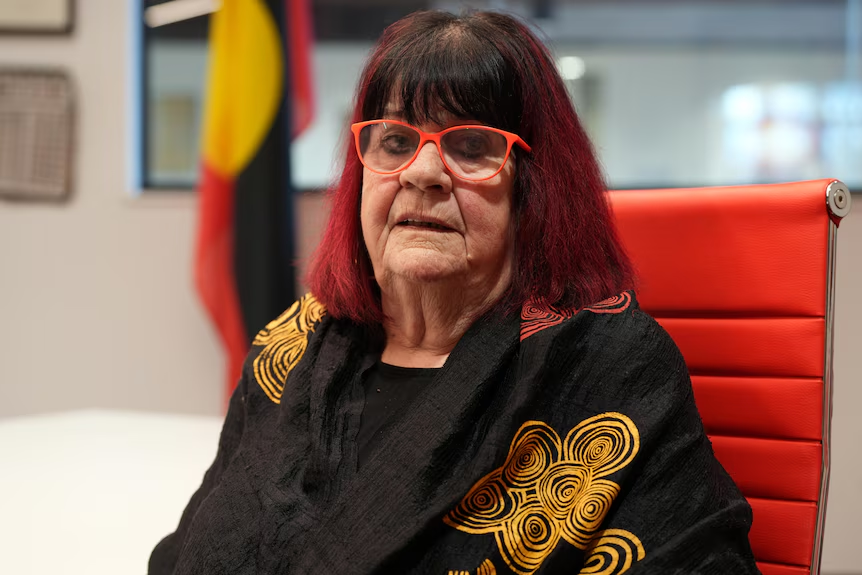
For Julie Tongs, the chief executive of Winnunga Nimmityjah Aboriginal Health and Community Services, it has “been a long time coming”.
“But the hard work’s still ahead,” she said.
“The proof is in the pudding, as they say, so we’ll see how this plays out in years to come, but this is a great first step.
“I hope that this is the turning point for [the government and its public servants], that they do take us seriously and that they take this bill seriously.”
Julie Tongs says the bill is a great first step, but there is still hard work ahead. (ABC News: Adam Shirley)
International Day of People with Disability
Today is International Day of People with Disability – a day to celebrate inclusion, equity, and community-led change.
At NACCHO, we’re proud of our Aboriginal Disability Liaison Officers (ADLOs) across the country who are helping our mob navigate the NDIS with cultural care and support.
ADLOs are more than connectors, they’re changemakers. They strengthen community ties, remove barriers, and make sure our people living with disability are supported in ways that reflect our culture, rights, and lived experiences.
As Dr Sarah Hayton, Executive Director at NACCHO, said:
“Our ADLOs are helping to transform access and inclusion through cultural connection, respect, and rights-based support.”
Let’s honour the strength and resilience of our people living with disability, their carers, and the community teams walking alongside them every day.
We recently held the NACCHO Elder Care Support Workshop, a two-day training program in Adelaide focused on strengthening care for Elders across our communities.
Key focus areas included:
Building workforce training pathways
Enhancing communications and engagement
Developing a robust data strategy
Supporting our sector and shaping the future of the program
It was a productive workshop filled with collaboration and valuable insights. A big thank you to all attendees for their contributions, and to the Australian Government Department of Health, Disability and Ageing representatives for sharing their perspectives.
New Great Southern Aboriginal Medical Service leads country’s first Indigenous-focused first aid sessions
Aboriginal communities in the Great Southern are the first in the country to benefit from a national initiative delivering vital emergency training, thanks to a newly established Indigenous health service.
More than 50 Aboriginal people attended the first sessions in Albany last week, with many more scheduled to attend sessions in Mt Barker, Tambellup, Katanning, Gnowangerup and Kojonup.
A joint effort between the newly formed Great Southern Aboriginal Medical Service, Community First Responders Australia and the Heart Foundation, the initiative teaches residents basic first aid, including how to use a defibrillator, to improve survival rates from sudden cardiac arrest.
Gwyn Nichols, Sarah Williams, Lindsay Dean, Professor Sandra Eades AO, Patricia Williams and Leon Landau. Credit: Laurie Benson
Sector Jobs – you can see sector job listings on the NACCHO website here.
Advertising Jobs – to advertise a job vacancy click hereto go to the NACCHO website current job listings webpage. Scroll down to the bottom of the page to find a Post A Job form. You can complete this form with your job vacancy details – it will then be approved for posting and go live on the NACCHO website.
The NACCHO Aboriginal and Torres Strait Islander Health News is a platform we use to showcase the important work being done in Aboriginal and Torres Strait Islander health, focusing on the work of NACCHO, NACCHO members and NACCHO affiliates.
We also share a curated selection of news stories that are of likely interest to the Aboriginal and Torres Strait Islander health sector, broadly.
A new era for aged care and First Nations health
NACCHO’s Elder Care Support program is hosting the National Yarning Circle event on the Gold Coast from 5‒6 June 2024. The event will gather community leaders, healthcare professionals, and key stakeholders to enhance support for older Aboriginal and Torres Strait Islander people, while also focusing on building a robust First Nations health workforce.
The event will feature a powerful keynote address by Andrea Kelly, the Interim First Nations Aged Care Commissioner, who will speak on the importance of culturally safe aged care services. Her insights will highlight the critical role of culturally competent care in improving health outcomes for Aboriginal and Torres Strait Islander communities, highlighting the significance of creating tailored, community-led pathways and support for the elderly.
The Commissioner stated, “The Elder Care Support program is a groundbreaking initiative that not only enhances the care for our Elders but also builds a strong First Nations health workforce. By focusing on culturally safe practices, we are paving the way for better health outcomes for Aboriginal and Torres Strait Islander people.”
Participants will engage in interactive workshops designed to provide practical knowledge and skills. These sessions will cover the My Aged Care Portal, the new Aged Care Act, and strategies for improving access to services. These workshops are essential for equipping attendees with the tools they need to navigate and implement aged care services effectively within their communities.
Donnella Mills, NACCHO Chairperson welcomes the event, stating, “The National Yarning Circle is an important platform for sharing knowledge and strategies to improve care of our elderly. By investing in Aboriginal and Torres Strait Islander health workers to participate in this space, we are empowering our communities and ensuring our Elders receive the best possible care.
The event will feature panel discussions with Janine Mohamed, Deputy CEO First Nations, National Disability Insurance Agency; representatives from NDIA, ACQSC, OPAN, and the Healing Foundation, exploring collaborative elder care approaches. Former NRL star Preston Campbell will lead a session on staying well and safe.
The Elder Care Support – Yarning Circle is a critical step in addressing the unique needs of older Aboriginal and Torres Strait Islander people. By fostering a collaborative and inspiring event, the initiative aims to create and foster positive networks across the country, build sustainable improvements in the aged care sector and support the ongoing development of the First Nations health workforce.
You can view the NACCHO media release A new era for aged care and First Nations health: NACCHO hosts inaugural Elder Care Support Yarning Circle at the Gold Coast, 5‒6 June 2024 in full here.
Bushtucker Bunji and Gabrielle Willie at the Elder Care Support National Yarning Circle. Image source: NACCHO.
Apunipima wins award for kidney care program
The Cape York Kidney Care (CYKC) program has won the Health and Wellbeing category of the Queensland Reconciliation Awards. To address the high rates of kidney disease and kidney failure needing dialysis in First Nations communities, Torres and Cape Hospital and Health Service (TCHHS) partnered with Apunipima Cape York Health Council in 2019 to reach six communities: Weipa, Napranum, Mapoon, Aurukun, Pormpuraaw and Kowanyama.
TCHHS nephrologist Dr Tahira Scott said the innovative model of care was the first of its kind in Australia, with its success apparent. She said the heart of the model was the involvement of First Nations health workers or practitioners, “We recognise that partnerships with ACCHOs like Apunipima can achieve real success in patient-centric health outcomes. We’re providing a gold standard nephrology service in the bush, meaning those who see the CYKC team are receiving the same level of care you would receive in a city through using a different integrative model of care, which is culturally safe.”
Outreach clinics were held at Apunipima’s facilities in the six communities, which are run by First Nations staff. Apunipima CEO Debra Malthouse said this partnership showed the strengths of each organisation in directly addressing these chronic health conditions in Cape York, “We are focused on providing comprehensive primary health care to the communities we serve. Our staff on the ground are able to provide the link between the community and the visiting outreach clinicians, making patients feel comfortable and supported through their healthcare journey.”
To view the Cape York Weekly article TCHHS and Apunipima win Queensland Reconciliation Award in full click here.
A partnership to address the high rates of kidney disease in Cape York First Nations communities has won a Queensland Reconciliation Award. Image source: Cape York Weekly.
Educating boys on healthy relationships vital
Lawyer Taylah Gray has worked on domestic violence cases and believes that women will not be safe from abusive men until the underlying causes of their aggressive behaviour are addressed. The Wiradjuri woman describes the practice of sending perpetrators to jail without addressing their behavioural issues as a “speed bump approach” to tackling the national crisis. “There comes a time where we can no longer run from this. We can no longer flee houses and be put into emergency accommodation,” she said. Ms Gray, who practises law in the NSW Hunter region, says more funding for men’s behaviour change programs is essential.
According to Australian government health data from 2021 to 2022 , First Nations people were 31 times more likely to be hospitalised due to family violence than non-Indigenous Australians. The data shows Aboriginal and Torres Strait Islander people are over-represented as both victim-survivors and perpetrators of family and domestic violence.
“Every time it [DV] involves an Aboriginal man, they’re more likely to go to prison,” Ms Gray said. “Aboriginal men are the most incarcerated people in Australia … every time there’s a DV case that arises … the avenue for men is jail. For Aboriginal women, every time DV comes up, they are the most vulnerable in this whole situation.”
To view the ABC News article Funding behaviour change programs, educating boys on healthy relationships vital, women’s safety advocates say in full click here.
Indigenous lawyer Taylah Gray says men need to be part of the conversation around domestic violence. Photo: Jesmine Cheong, ABC News.
Kunibidji people strike empowering LDM agreement
Self-determination of the NT’s Kunibidji people has been formalised after a Local Decision Making (LDM) Agreement was signed in the West Arnhem Land community of Maningrida. The LDM Agreement – the 15th of its kind across the NT – provides pathways for the Maningrida community and surrounding clan groups to advance cultural, social, economic and education development in the region.
The LDM was developed through an extensive consultation process led by the Dhukurrdji Development Corporation, who, in representing the Kunibidji people of Maningrida and neighbouring clan groups, identified 10 strategic priorities as part of the agreement, including, at the community’s request, agency over plans to support people with disabilities, after Maningrida was selected as one of two national trial sites by the National Disability Insurance Agency (NDIA).
After NIDA agreed to be a party to the LDM, the community-led trial, in partnership with the NT Government, will investigate a shift from the current underutilisation of individualised packages to exploring options to create efficiencies and improve accessibility of services.
To view the National Indigenous News article Territory’s Kunibidji people strike empowering Local Decision Making Agreement in full click here.
A Local Decision Making Agreement formalising self-determination for the Northern Territory’s Kunibidji people was recently signed in Maningrida. Image source: National Indigenous Times.
Cost-of-living hits remote communities the hardest
While limited, government data suggests the growth in living costs in remote communities is outpacing the rest of the country, impacting some of the most disadvantaged people in the country. “We are very remote and costs have definitely spiked,” explains Madeline Gallagher-Dann, CEO of the Kalumburu community on the northern tip of WA. “Our barge service costs around $25,000 a fortnight to get the food sent from Darwin, so it’s not a surprise, but it’s definitely a burden for local families.” Kalumburu is an extreme example of the ballooning costs in outback Australia. A comparison with metropolitan costs shows locals are paying twice as much for fuel and some basic food items. For example, a tin of baked beans costs $5.80, compared with the current online price of $2.80 at Coles and Woolworths. Beef mince sells for $20 a kilo, double the going rate at a regular supermarket.
Gaambera and Walbi elder Dorothy Djanghara says families regularly run out of money to buy food. “Everything costs more here,” she says. “Even things like sugar, milk, tea – when you run out, you run out, just can’t afford more that week.” The high costs are unsurprising given Kalumburu’s remote location. Road access is cut off for about half the year due to wet season road damage.
At many remote stores, unhealthy and packaged food costs more than fresh food, as managers – in this case the company Outback Stores – deliberately subsidise the cost of fruit and vegetables. The majority of the 400 residents are on small, fixed incomes. The stress of covering costs adds to tensions in a community already struggling to stabilise after decades of dislocation and dependency on the Catholic mission, which was established in 1908 and still manages the fuel supply to the isolated township.
To view the ABC News article Federal government acts to rein in chronically high cost of living in remote Indigenous communities in full click here.
Dorothy Djanghara says locals understand freight costs are mainly to blame for the high food costs. Photo: Erin Parke, ABC News.
Sector Jobs – you can see sector job listings on the NACCHO website here.
Advertising Jobs – to advertise a job vacancy click hereto go to the NACCHO website current job listings webpage. Scroll down to the bottom of the page to find a Post A Job form. You can complete this form with your job vacancy details – it will then be approved for posting and go live on the NACCHO website.
Pride Month – June 2024
Pride Month is an annual, dedicated month that focuses on and celebrates LGBTQ++ people and their history. Pride Month has its roots in the Stonewall Uprising, which occurred in New York City in June 1969. The uprising was a turning point in the LGBTQ+ rights movement, sparked by a series of protests against police harassment and discrimination. The following year, the first Pride marches were organised to commemorate the anniversary of the uprising. The first related march in Australia was held on 24 June 1978 in the form of the Sydney Gay and Lesbian Mardi Gras.
BlaQ Aboriginal Corporation is an Aboriginal community-controlled organisation committed to empowering the Aboriginal Torres Strait Islander LGBTQ+SB community through innovation, inclusion, understanding and advocacy. In an Instagram post a couple of days ago BlaQ Aboriginal Corporation said, “This Pride Month, we honour the vibrant and deadly spirit of our Aboriginal & Torres Strait Islander LGBTQ+SB community. From our Lesbian, Gay, Bisexual, Trans Mob, Queer, Sistergirl, and Brotherboy family, your stories are the heartbeat of our community.”
“Your journeys, rooted since time immemorial and blossoming in the face of adversity, remind us of the strength and beauty within us all. Let’s celebrate your courage, amplify your voices, and create a world where every identity is embraced with love and respect.”
You can find out more about Pride Monthhereand the BlaQ Aboriginal Corporationhere.
Artwork by Wiradjuri and Birpai man, Wayde Clark. Image source BlaQ Aboriginal Corporation Instagram post 1 June 2024.
The NACCHO Aboriginal and Torres Strait Islander Health News is a platform we use to showcase the important work being done in Aboriginal and Torres Strait Islander health, focusing on the work of NACCHO, NACCHO members and NACCHO affiliates.
We also share a curated selection of news stories that are of likely interest to the Aboriginal and Torres Strait Islander health sector, broadly.
Pandemic responses need to better involve mob
Indigenous communities must be genuinely embedded in the response to any future pandemics and other health emergencies, according to submissions to the Federal Government’s COVID-19 Response Inquiry. The inquiry, which is examining the Commonwealth’s pandemic response and will make recommendations on improving response measures in the event of future pandemics, has received more than 2,000 submissions from individuals and organisations since it was announced by PM Anthony Albanese in September 2023.
Responses from a range of Indigenous organisations across the country highlighted several common themes that the inquiry needed to consider, particularly the importance of ACCHOs in responding to the pandemic and the need to have Aboriginal workers embedded in any response in a genuine manner. Such embedding of Aboriginal and Torres Strait Islander workers from the outset would avoid a number of the issues identified in several of the responses, such as ineffective communication, inappropriate quarantine and travel restrictions and the effective administering of vaccines.
According to the Central Australian Aboriginal Congress (CAAC), ACCHOs “played a key role in keeping COVID-19 mortality in Aboriginal communities much lower than that experienced by comparable First Nations communities in other parts of the world”. This was because ACCHOs integrated community engagement and health promotion, which allowed for comprehensive primary healthcare that was culturally responsive. According to Congress, ACCHOs also advocated for healthy public policy as well as directly providing treatment and support for those with COVID-19, and their families.
Other organisations, including the Queensland Aboriginal and Islander Health Council (QAIHC), the Aboriginal Medical Services Alliance of the NT (AMSANT) and the Aboriginal Health Council of WA (AHCWA) told a similar story in their responses, saying ACCHOs — with their local knowledge, networks and earned trust — were best-placed to serve the needs of their communities.
To view the Croakey Health Media article Pandemic responses need to better involve Indigenous communities in full click here.
Food security is an everyday issue for remote communities that was exacerbated by the pandemic. Photo: Mick Haupt, Unsplash. Image source: Croakey Health Media.
ASbA option with Indigenous Allied Health Australia
A desire to work in health care has seen Poppy Chalmers embrace success via an Australian School-based Apprenticeship (ASbA). Poppy’s story is like many who choose a Vocational Education and Training pathway. She knew she didn’t want the university pathway but felt unsure which direction to take. In 2022, she started an Australian School-based Apprenticeship program with Indigenous Allied Health Australia (IAHA). The next year, she was named ACT Australian School-based Apprentice of the Year at the 2023 ACT Training Awards. She then went on to be a finalist at the 2023 Australian Training Awards. These awards recognise students’ commitment to formal studies at school and in the workplace.
Poppy had previously taken on leadership roles at school. She was selected as a Year 6 leader in 2017 and as a Year 10 Indigenous Leader in 2021. “I am a natural leader and see myself in a leadership position. I have a lot of ideas. I’m not sure where I want to end up, but I know I have what it takes to get there,” Poppy said. She completed a Certificate III in Allied Health Assistance under a new program in the ACT called the National Aboriginal and Torres Strait Islander Health Academy. “I didn’t particularly like school, it wasn’t something that I enjoyed. One of my friends got an ASbA in childcare and I thought that was cool, so I did a placement where she worked, and they offered me an ASbA,” Poppy said.
“Though my school supported me to do the ASbA in childcare, I had always been interested in working in the health industry so when an Auntie from the Community reached out with an opportunity to do an ASbA in Allied Health through an Aboriginal company, I applied and was successful. “I wanted to be a nurse, my Auntie was a nurse, I had spent a lot of time in hospitals because my sister has cystic fibrosis. I even went to school at the hospital. I saw the positive impact that nurses, doctors, and the hospital had on us all. “Through the ASbA I got to experience what nursing and working in a hospital is all about and what is out there in terms of a future job in Allied Health. I decided that I wanted to do social work, which is what I’m doing now.” Poppy says applying for the ASbA was seamless, with support available if she needed it.
To view the ACT Government’s Our CBR website article Embracing the ASbA option in full click here.
Young Canberran Poppy Chalmers is now working as a social work assistant. Image source: ACT Government Our CBR webpage.
Health: A Political Choice publication released
Global conversations on health have often overlooked the voices, knowledge and opinions of Indigenous populations. But in May 2023, a ground-breaking decision was reached at the 76th World Health Assembly, when the member states of the World Health Organization (WHO) unanimously adopted a resolution on the health of Indigenous peoples. This historic resolution marks a pivotal opportunity that sees the WHO mandated to spearhead the development of a Global Plan of Action, which will involve securing the necessary financial and human resources, engaging WHO regional offices and other United Nations agencies, and ensuring the meaningful participation of Indigenous peoples from the outset.
Health: A Political Choice – Advancing Indigenous peoples’ rights and well-being, available here, is a unique issue within the series, which is produced in collaboration with the WHO and the World Health Survey (WHS). The publication looks at where, why and how Indigenous voices have been excluded from global discussions, promises and actions on health – and what needs to be done to convert the substance of the resolution into reality. The editors said they were thrilled to welcome Catherine Chamberlain, an Indigenous leader on health equity from the University of Melbourne to join as guest editor.
The publication features original content from authors including Saia Ma’u Piukala, WHO Regional Director for the Western Pacific, who explores how the resilience of Indigenous communities and cultures has been sorely tested; Emma Rawson-Te Patu, president-elect, World Federation of Public Health Associations, who outlines why we need to decolonise our health institutions; and Raglan Maddox, Professor, National Centre for Aboriginal and Torres Strait Islander Wellbeing Research, Australian National University, who discusses the political choices made about tobacco use and control and the manipulation by the commercial tobacco industry, which has a significant negative impact on peoples’ health.
To view the ABN Newswire article “Health: A Political Choice – Advancing Indigenous peoples’ rights and well-being” in now released and accessible in full click here.
Image source: ABN Newswire.
Addressing needs of Australians with Intellectual Disability
Some of the greatest health disparities in Australia are experienced by people with intellectual disability due to mainstream health services being ill equipped to meet their needs. The poor health profile and health disparities experienced by this vulnerable population mean that they have a life expectancy 27 years less than people without intellectual disability. Much of this significant health gap is preventable, and a new overview article, available here published in the Journal of Policy and Practice in Intellectual Disabilities outlines how health services can be transformed to improve health outcomes for people with intellectual disability.
The paper, which was authored by Mater Researchers Dr Cathy Franklin, Dr Katie Brooker and Ruby De Greef, along with experts from the University of NSWs’ 3DN, addresses the progress that has been made in intellectual disability health, the challenges that are currently faced, and provides recommendations for future developments in this space. Queensland Centre for Intellectual and Developmental Disability Director Dr Franklin said that intellectual disability healthcare is at a dynamic point in Australia. “With so much currently happening in intellectual disability health, including the new National Roadmap, hearing from people with lived experience at the Disability Royal Commission, the new National Centre of Excellence in Intellectual Disability Health and the creation of an Intellectual Disability Health Capability Framework, now is the perfect time to take stock and plan for a better future,” Dr Franklin said.
“Individuals with intellectual disability often encounter barriers accessing services due to a lack of awareness and accommodation from healthcare services. This, along with lengthy waitlists and geographical barriers mean that people with intellectual disability face challenges in accessing services.” These barriers are even more significant for Aboriginal and Torres Strait Islander people with intellectual disability. Research Officer Dr Katie Brooker said that ACCHOs play an important role in delivering holistic, comprehensive, and culturally appropriate healthcare to the Aboriginal and Torres Strait Islander community who control it. These services are designed to be flexible and responsive to community need, however our study highlights the need for greater recognition of the unique healthcare and cultural needs of individuals with intellectual disabilities within these organisations,” Dr Brooker said.
To view the Mater Research News article Addressing the needs of Australians with Intellectual Disability in full click here.
Image source: Health Soul Disability Support for Indigenous Australians webpage.
‘One-stop-shop’ endometriosis clinics now up and running
Despite endometriosis impacting one in nine women or people assigned female at birth in Australia, it takes an average of six-and-a-half years to get a diagnosis — if at all. Many struggle to access appropriate treatment, facing lengthy waits and specialist fees. Those with other forms of persistent pelvic pain also come up against hurdles, their symptoms often dismissed as regular period pain.
In 2022, the federal government announced it would spend nearly $60m to help set up new endometriosis and persistent pelvic pain clinics in every state and territory. The service is designed to be a “one-stop shop”, bringing together services including doctors, pelvic floor physiotherapists and pain psychologists.
All 22, including Moreton Aboriginal and Torres Strait Islander Community Health Service (Moreton ATSICHS), Morayfield, Qld (a member of the Institute for Urban Indigenous Health Ltd), of those clinics are now operational.
To view the ABC News article Australia’s ‘one-stop shop’ endometriosis clinics are now up and running. Here’s what they’re doing for patients in full click here.
You can also read a story Australia’s first-ever endometriosis clinics rolled out in the 23 March 2023 edition of this newsletter here.
Endometriosis is a chronic and debilitating condition that affects approximately 11% of women in Australia. Photo: Alena Menshikova, Shutterstock. Image source: Health Digest.
Sector Jobs – you can see sector job listings on the NACCHO website here.
Advertising Jobs – to advertise a job vacancy click hereto go to the NACCHO website current job listings webpage. Scroll down to the bottom of the page to find a Post A Job form. You can complete this form with your job vacancy details – it will then be approved for posting and go live on the NACCHO website.
World Health Day – Sunday 7 April 2024
Around the world, the right to health of millions is increasingly coming under threat. Diseases and disasters loom large as causes of death and disability. Conflicts are devastating lives, causing death, pain, hunger and psychological distress. The burning of fossil fuels is simultaneously driving the climate crisis and taking away our right to breathe clean air, with indoor and outdoor air pollution claiming a life every 5 seconds.
The World Health Organization (WHO) Council on the Economics of Health for All has found that at least 140 countries recognise health as a human right in their constitution. Yet countries are not passing and putting into practice laws to ensure their populations are entitled to access health services. This underpins the fact that at least 4.5 billion people — more than half of the world’s population — were not fully covered by essential health services in 2021.
To address these types of challenges, the theme for World Health Day 2024 is ‘My health, my right’. This year’s theme was chosen to champion the right of everyone, everywhere to have access to quality health services, education, and information, as well as safe drinking water, clean air, good nutrition, quality housing, decent working and environmental conditions, and freedom from discrimination.
Yesterday the Western Plains App published an article Happy World Health! saying, “Our health is something not to be taken for granted. Across the Western Plains, though we lack some health services, we are lucky to receive the dedicated care that we do. For example, Coonamble Aboriginal Health Service recently completed their school screening program with all schools in Coonamble, helping identify students who need further follow up for hearing, eyesight, and oral health as well as general health issues. Concerningly, at one school 150 of the 180 students checked were in need of follow up for oral health issues and have been recommended a visit to the dentist.
You can find more information about World Health Dayhere and read the Western Plains App article Happy World Health Day! in full here.
Free, specialised governance workshops for ACCHOs will be delivered in multiple locations across the country during 2024 and 2025.
Registrations are open now for Perth: 16-17 April 2024.
The program is delivered by legal experts and covers:
The NACCHO Aboriginal and Torres Strait Islander Health News is a platform we use to showcase the important work being done in Aboriginal and Torres Strait Islander health, focusing on the work of NACCHO, NACCHO members and NACCHO affiliates.
We also share a curated selection of news stories that are of likely interest to the Aboriginal and Torres Strait Islander health sector, broadly.
What women want from their maternity care
With growing recognition that the social and emotional needs of women are not being met in their maternity care, it is vital that we understand the needs of the people who use our maternity care systems. Just over 300,000 women and gender diverse people give birth in Australia each year, and this group is incredibly diverse. Women and gender diverse people receive maternity care in many different models of care. Care is provided by a range of professionals, and can be provided in the public, private or Aboriginal community-controlled sectors. One approach to care is known as continuity of care, where the majority of a woman’s care is provided by one maternity professional, and this is typically provided in models such as midwifery group practice.
Generally, Australian maternity care services provide competent physical care, evidenced by low mortality and morbidity rates. However, there is growing recognition that the social and emotional needs of women are not being met, with occurrences of birth trauma and psychological distress on the rise. A parliamentary inquiry established in 2023 in NSW has been looking into birth trauma in that state, with over 4,000 submissions received to date.
Midwives are the largest professional group providing maternity care to Australian women. The Midwifery Futures team has been engaged by the Nursing and Midwifery Board of Australia to undertake a review of the midwifery workforce in Australia to ensure there are enough midwives, in the right places, providing care that meets women’s needs. Australian women have contributed to much research over the past decade, so rather than going and asking them, what is already known about what Australian women need from their maternity care was pulled together. Recognising that Aboriginal and Torres Strait Islander peoples, culturally and linguistically diverse women, women in rural and remote locations, and gender diverse people face specific challenges, we looked for research including these populations.
To view the AMA InSight+ article What women want from their maternity care in full click here.
First Nations midwives Mel Briggs, of Nowra, and Kady Colman are the faces of the Sister Scrubs campaign. Image source: Blue Mountains Gazette.
How accounting can make NDIS more equitable for mob
First Nations people in Australia face a higher risk of disability, with their struggles deeply connected to the country’s history of colonisation, ongoing racism, and the social challenges of living with disabilities. These challenges are even more significant for those in remote areas, where jobs are scarce, living conditions are poor, and access to health care and support services is limited. The funding that supports disability services is crucial, but unfortunately, the unique needs of First Nations people have often been overlooked, leading to significant gaps in the support they receive compared to the wider population. So, how can we bridge this gap?
A recent study, availablehere, has investigated how accounting — often seen just as a number crunching practice — can play a crucial role in transforming the National Disability Insurance Scheme (NDIS) to better serve First Nations communities, especially those in remote areas. The study focused on the public hearings of the recent Disability Royal Commission and examined how the NDIS’s funding approaches impact First Nations people with disabilities living in remote communities. A key idea explored was creating a “third space” that blends Western and First Nations perspectives to reform the NDIS funding model. The goal was to ensure that First Nations viewpoints on what proper care and support look like are integrated into the NDIS.
Disability services need to respect and include First Nations cultures. Funding models, which give individuals the power to choose and pay for their services, might not fit every community’s needs. Recognising and respecting this diversity is crucial. We also see accounting as more than a calculative tool; it can build a bridge between cultures and help develop inclusive support systems.
To view the University of Wollongong Australia’s The Stand article How accounting can make the NDIS more equitable in full click here.
William Tatipata, co-founder and owner of XtremeCARE Australia, sits with Charlie Kris, an NDIS participant, on Thursday Island, Torres Strait. Image source: Hireup website.
AMA urges take up of ‘safe’ flu vax as season begins
In an ABC Melbourne Radio interview yesterday, 2 April 2024, AMA President, Professor Stephen Robson spoke about the flu season beginning a little bit earlier each year and the need for everybody to start to prepare for the flu season, “Flu season is generally over the Australian winter, but we’ve noted recently over the last few years it’s beginning a little bit earlier each year. So I think it makes perfect sense that everybody starts to attune to that really now and start to prep for the flu season.”
Professor Robson said “the influenza vaccine will become available sometime this month. And of course it is developed looking at the types of influenza virus that affected the northern hemisphere. So this year’s concoction of vaccine will become available soon. And it’s really important that Australians make sure they’re ready, if they can get appointments to have vaccinations and things, because pre-pandemic there was a trend to reduced rates of influenza vaccination in Australia. And particularly in vulnerable groups – a great example being women who are pregnant. So there’s been some moves to try and just make sure it’s back on everybody’s radar. And I think the earlier that you try and get it on everybody’s radar, the better it is.”
Professor Robson continued, “we know that across the course of the pandemic, Australians have been asked to consider having lots of vaccinations for COVID, and there’s often been some at times difficult to decipher advice about when and whom is eligible for those vaccinations. So people have got a sense there’s vaccination going on, and it’s also seen a real swing toward mis and disinformation about vaccination. So there’s a sense that Australians are sort of taking a deep breath, yet another vaccination. But it’s really important to understand that influenza vaccination is simple. It is safe, it’s very effective, and it’s something that can protect the whole community at a time of great threat and great risk to a lot of vulnerable Australians.”
You can view the transcript of the interview in full here.
Photo: Shutterstock. Image source: UNSW Sydney Newsroom webpage.
Let’s Yarn About Sleep – Mt Isa Community Symposium
Researchers behind a sleep program delivering health benefits to First Nations youth have held a community symposium in Mount Isa to celebrate and discuss the program’s future direction. Community members, Elders and key stakeholders gathered inside the Buchanan Park Events Complex on Monday 25 March 2024, to reflect on the Let’s Yarn About Sleep (LYAS) program. The first of its kind, the program has garnered international attention for an often under recognised First Nations health issue – lack of sleep.
Researchers from the University of Queensland’s Poche Centre for Indigenous Health collaborated with more than 300 stakeholders from First Nations communities, industry partners and policymakers to develop and then deliver LYAS programs into communities. The centre’s principal research fellow, Associate Professor Yaqoot Fatima, said the symposium response was positive.
“It has helped us realise that events like this are really critical for hearing research outcomes with community members and there is an appreciation of those events and we should do more of them,” she said. Born in Mount Isa in 2020, the small project has grown to now include 54 teenagers. Professor Fatima said another 50 will join next term and schools Good Shepherd Catholic College and Spinifex State College have embedded the program in extra-curricular activities.
To view The North West Star article Isa hosts community symposium for innovative First Nations sleep program in full click here.
First Nations teenagers from Mount Isa were recruited to take part in the first program targeting improved sleep. Photo: Joanna Giemza-Meehan. Image source: The North West Star.
UWA optometry school boasts 100% grad employment
Forty new optometrists have entered the workforce as part of the inaugural graduate cohort from the University of Western (UWA) Australia optometry school, with every student securing employment and 90% staying to work in WA. After commencing in 2021, UWA’s post-graduate Doctor of Optometry (OD) program is the country’s newest optometry training course, featuring an innovative curriculum design, outback and overseas clinical placements, and a unique collaboration with the Lions Eye Institute (LEI) as a founding partner of the program.
The three-year program saw its first set of graduates completing their education in December 2023. It’s hoped they – and future graduating cohorts – will alleviate workforce pressures in WA that previously relied on graduates from the eastern seaboard. Professor Garry Fitzpatrick, foundation head of optometry at UWA said that without an optometry course in WA previously, this led to a transient workforce, “The UWA program is helping to address this issue and provide a more stable workforce for the future.”
Fitzpatrick said the UWA program sought to develop “socially responsible graduates” equipped to address the diverse needs of patients. To achieve this, UWA senior lecturerMr Neilsen De Souza said students undertook clinical placements and clinical rotations in various settings, working with different patient populations. “One of the strong features of our program is the opportunity for clinical rotations across Western Australia and Australia. This includes rotations that focus on providing optometry services to Aboriginal and Torres Strait Island people,” he said.
Another unique aspect is a UWA-initiated and funded “hub and spoke model” creating a “very rich rural and remote and cultural experiences” for optometry students, Fitzpatrick said. On Country, eye health centres acting as ‘hubs’ are led by local ACCHOs, with UWA employing a permanent onsite academic clinician at each hub in association with the region’s University Department of Rural Health (UDRH). UWA now has eye health hubs in Darwin, Geraldton, Broome, Bunbury and Karratha.
To view the Insight article UWA optometry school boasts 100% employment rate in first graduate cohort in full click here.
Image source: The University of WA Doctor of Optometry placement opportunities webpage.
Groundbreaking RSV immunisation program for infants
WA has launched an immunisation program aimed at safeguarding infants against respiratory syncytial virus (RSV). Starting from the 1 October 2023, babies have been eligible to receive the Therapeutic Goods Administration-approved antibody Nirsevimab at designated healthcare facilities, including GP practices, Community Health Clinics, and Aboriginal Medical Services providing childhood immunisations. Children born from the 1 October 2022, grappling with specific medical conditions heightening their susceptibility to hospitalisation, as well as Aboriginal children, fall within the eligibility criteria for this groundbreaking immunisation initiative.
RSV, a highly contagious respiratory virus continues to be the number one cause of hospitalisation for children aged five and under in Australia, with a quarter of these children needing intensive care. There has been a surge of RSV cases across Australian, with some states experiencing almost double the number of cases than the same time last year. Annually, RSV accounts for over 1,000 infant hospitalisations in WA alone. With an investment of $11m, the state’s RSV immunisation rollout anticipates averting over 700 RSV-related infant hospitalisations, alongside curbing 3,000 emergency department visits and 4,000 GP consultations this year. WA Premier Roger Cook said “WA is proud to be the first state in Australia to roll out an immunisation program to protect newborns and babies from RSV.”
NSW and Qld have announced similar programs. In NSW RSV immunisation will be immediately available to premature infants born after 31 October last year, as well as all Aboriginal and Torres Strait Islander infants born after that same date. Additional high-risk, eligible infants include those with chronic neonatal lung disease less than 12 months old, and babies with combined immunodeficiency. Similarly in Qld, those eligible for the RSV immunisation include all newborn infants, Aboriginal and Torres Strait Islander infants less than eight months of age, and those with complex medical conditions.
You can view the WAMN News article Western Australia Launches Groundbreaking RSV Immunization Program for Infants in full hereand the RACGP newsGP article NSW and Qld announce free infant RSV vaccines in full here.
Midwife Mel Briggs with baby Georgie Resch at Waminda’s Minga and Gudjaga clinic in Nowra. Photo: Janie Barrett. Image source: The Sydney Morning Herald.
Sector Jobs – you can see sector job listings on the NACCHO website here.
Advertising Jobs – to advertise a job vacancy click hereto go to the NACCHO website current job listings webpage. Scroll down to the bottom of the page to find a Post A Job form. You can complete this form with your job vacancy details – it will then be approved for posting and go live on the NACCHO website.
Free, specialised governance workshops for ACCHOs will be delivered in multiple locations across the country during 2024 and 2025.
Registrations are open now for Perth: 16-17 April 2024.
The program is delivered by legal experts and covers:
The image in the feature tile is from the Carbal Medical Services (Qld) website, Aboriginal Health Workers – Improving Crucial Health Outcomes In Our Community webpage here.
The NACCHO Aboriginal and Torres Strait Islander Health News is a platform we use to showcase the important work being done in Aboriginal and Torres Strait Islander health, focusing on the work of NACCHO, NACCHO members and NACCHO affiliates.
We also share a curated selection of news stories that are of likely interest to the Aboriginal and Torres Strait Islander health sector, broadly.
Let communities control their own destiny
Canberra’s most senior public servant has urged his colleagues to relinquish power over Indigenous funding decisions and allocations to First Nations communities themselves. Professor Glyn Davis, who is secretary of the Department of Prime Minister and Cabinet, told the Institute of Public Administration Australia on Tuesday this week (5 December 2023) that giving Indigenous communities budgets and control over their employment, health and housing services would close the gap better than Canberra bureaucrats.
In the wake of the failed Voice referendum, the federal public service boss told sector leaders he expected a more hybrid delivery of Indigenous services to evolve after repeated failures of private models tackling Indigenous disadvantage. Professor Davis said that after 40 years of increased outsourcing, the future of public administration was now up for debate. “Empowered communities provide a vital way to address consistent program failure,” he said. “We will never close the gap if public servants in Canberra think we can solve the housing, employment and educational challenges of (Indigenous communities).
Professor Davis’ comments follow a damning Productivity Commission draft report on the Closing the Gap Indigenous program, which was highly critical of federal attempts to work more collaboratively with communities. The report described engagement as “tokenistic”, citing unrealistic time frames for meaningful community input from agencies, who provided limited feedback on how input had shaped policy decisions.
To view the National Indigenous Times article Let Indigenous communities control their destiny, Canberra’s top public servant says full click here.
Professor Davis cited Papunya, 240 kms from Alice Springs as an example of why a change in thinking and approach are needed. Image source: BushTel Papunya Profile, NT Government.
2023 HIV Awareness Week Trivia Champions
Yesterday’s 2023 HIV Awareness Week Trivia competition was a resounding success – 36 teams registered and 19 teams completed all trivia questions on the day. Some interesting results from the quiz included:
10/19 teams successfully answered the question: What is unusual about an echidna’s penis? 1. It is wider than it is longer 2. It can rotate 360 degrees 3. It has four heads 4. It is green
4/19 teams were able to correctly answer one of the more difficult questions: What is the name of the HIV surface protein that binds with the CD4+ Receptor of the human immune cells? 1. P17 2. P24 3. Gp120 4. Gp41
only one question got 19/19 correct responses: There is often no sign or symptoms that you have HIV, and many people with HIV feel well for years? True or False
only 3/19 were able to correctly answer the following two questions: 1. What is the most consumed manufactured drink in the world? 2. How many vaginal tunnels does a female Koala have?
Everyone put your hands together for AWAHS – Albury Wadonga Aboriginal Health Service, who are the 2023 HIV Awareness WeekTRIVIA CHAMPIONS!
In second place we have Wurli Wonderers – Wurli Wurlinjang Health Service, Katherine, NT
And bronze goes to ST Mob – Central Australian Aboriginal Congress – Santa Teresa Clinic, NT
We asked you all to show up in your best sexual health costumes and you took us seriously! But there could only be one winner… a big shout out to Wurli Wurlinjang Health Service who took home Best Costume (voted by Dr Dawn Casey, NACCHO Acting CEO).
Congratulations also to Ord Valley Aboriginal Health Service for winning Best Prop for Dinosaur Bone (which can’t be posted here – if you know, you know 🦴).
VOTINGis now open for People’s Choice, using this link.
We hope you all had a fabulous time, and we can’t wait for next year! 🤩
NACCHO 2023 HIV Awareness Week Trivia host comedian Steven Oliver and NACCHO staff dressed for the event. Image source: NACCHO.
Experts respond to NDIS review recommendations
Findings from an extensive review of the National Disability Insurance Scheme (NDIS), available here, have been released with ideas on how to transform it. Scott Avery, Policy and Research Director, First Peoples Disability Network said “the barometer for judging the NDIS review is the extent to which it advances a vision for a disability services sector that is anti-ableist and anti-racist, and accommodates a First Nations culture inclusive of people with disability in both word and action.”
Mr Avery said “There is one overarching recommendation that is specific to First Nations people with disability which is for the establishment of an alternative commissioning process to be creating in partnership with First Nations representatives, communities, participants and relevant government agencies. This can be read alongside the recommendations of the disability royal commission to make the NDIS more inclusive of First Nations decision-making in its governance and leadership.”
“What is understated in this report and others,” Mr Avery continued, “is the extent of the organisational change the NDIS and other organisations in the disability sector need to own to give meaningful effect to the dream of an authentically inclusive scheme. First Nations people with disability have been lending their wisdom and voice to one inquiry or another for what has seemed like a generation. Each inquiry has delved deeply into the trauma stories from our community, but at the same time has placed decision-making on implementation into a holding pattern. Disability community leadership and self-determination seems to be the consensus recommendation both the NDIS review and the disability royal commission have landed on. Can we now just get on with it please?”
To view The National Tribune article Recommendations to reboot the NDIS have finally been released. 5 experts react in full click here. Below is the The Hon Bill Shorten MP, Minister for the National Disability Insurance Scheme, Minister for Government Services address to National Press Club of Australia yesterday on “The NDIS Review”.
Cultural lens on pandemic preparedness
The success of Indigenous communities and health services in protecting Elders during the first waves of the COVID-19 pandemic in Australia is known all over the world. What we know less about are the experiences and perspectives of those who were shielded. An interesting research project, presented at the recent HEAL 2023 Conference, sought to capture some of these experiences using yarning circle workshops. The research team, led by Professor Pat Dudgeon AM and Professor Helen Milroy AM from the Bilya Marlee School of Indigenous Studies, at the University of WA, also sought and received insights about how future public health responses could be improved. Their findings will help form a submission to an ongoing inquiry into Australia’s COVID-19 response.
At the HEAL 2023 Conference, Amie Furlong, from the University of Canberra, and Selina Edmonds, chair of the Miya Kaadadjiny (Learning Sanctuary) Community Centre in WA, delivered a joint presentation based on research undertaken to gain a better understanding about measures to keep Aboriginal Elders safe during the COVID-19 pandemic. Older people are more likely to be negatively impacted by COVID-19, and previous research and experience on disasters has shown that pandemic responses need to be “fair, equitable and dignified for Aboriginal people”, Edmonds told the conference.
Aboriginal people have often been left out of critical planning and decision-making in the past, Edmonds said. It is important to include their voices in disaster response and management plans. Furlong said the lessons from this research will help provide practical suggestions and lessons learned about the pandemic for governments and organisations working in public health and emergencies.
To view the Croakey Health Media article Bringing a cultural lens to pandemic preparedness: Aboriginal Elders share their learnings from COVID in full click here.
Artwork on display at the yarning workshops. Photo: Angela Ryder Am and Carolyn Mascall.
Fewer complaints about bad behaviour
The Australian Health Practitioner Regulation Agency (Ahpra)’s end of year report has some good news for medical professionals, with an 8.6% drop nationally in notifications made about bad behaviour and 1.5% of registered health practitioners having a concern raised about them in 2022–23. The 17,096 notifications made across the country related to 13,584 individuals.
Ahpra said the sustained increase in reports over the past two years reinforced its blueprint for reform, which has already seen a public review of the criminal history registration standard, the rollout of specialist investigators and an expansion of the Notifier Support Service, staffed by social workers.
Ahpra’s CEO Martin Fletcher said more work was needed to increase the rates of practitioners identifying as Aboriginal and Torres Strait Islander working in the nation’s health systems. In 2022-23, only 10,813 health practitioners identify as Aboriginal and Torres Strait Islander – just 1.2% of all registered health practitioners, and well short of the 3.8% representation in the general population.
To view the Medical Forum article Fewer complaints about bad behaviour in full click here.
Image source: Medical Forum.
ALP and NZ U-turn on Indigenous affairs
The Voice referendum dominated the national discourse for much of this year. The result was a major setback for the government. Where does that leave the PM’s policy on Indigenous affairs? When asked about his commitment to the Uluru Statement from the Heart on 15 October, he simply expressed his respect for the outcome of the referendum. There was no mention of treaty or truth telling.
No doubt ALP strategists are currently considering their political options. It would be surprising if they weren’t also analysing NZ’s latest election. The previous Labour government took many steps aimed at improving the lives of Indigenous NZers. These included establishing a separate Māori Health Authority, commissioning He Puapua (a report on meeting the goals in the UN Declaration on the Rights of Indigenous Peoples), promoting the use of the Māori language, and pursuing ‘co-governance’ (the sharing of certain governance arrangements between Māori and non-Māori). However, many of these steps proved controversial and were opposed during the election by National, ACT, and NZ First.
The election was a disaster for the Labour government. Its support crashed to just 27%, down from 50% in 2020. The number of its parliamentary seats nearly halved. There are many explanations offered for this wipeout – but the explanation that may trouble the ALP in Australia’s post-referendum environment is that significant sections of the kiwi electorate rejected Labour’s progressive agenda on Māori issues. Given the Voice referendum and the kiwi election, ALP strategists may worry that pursuing too progressive an Indigenous agenda in Australia could come at a significant electoral cost.
To view the Pearls and Irritations John Menadue’s Public Policy Journal article The ALP and NZ’s U-turn on Indigenous affairs in full click here.
Uluru Statement from the Heart. Image source: Pearls and Irritations blog.
Sector Jobs
Sector Jobs – you can see sector job listings on the NACCHO website here.
Advertising Jobs – to advertise a job vacancy click here to go to the NACCHO website current job listings webpage. Scroll down to the bottom of the page to find a Post A Job form. You can complete this form with your job vacancy details – it will then be approved for posting and go live on the NACCHO website.
The image in the feature tile is of comedian Steven Oliver – Bigger & Blacker: Steven Oliver, My Life in Cabaret, SBS OnDemand September 2021. Photo: Dylan Evan Photography.
The NACCHO Aboriginal and Torres Strait Islander Health News is a platform we use to showcase the important work being done in Aboriginal and Torres Strait Islander health, focusing on the work of NACCHO, NACCHO members and NACCHO affiliates.
We also share a curated selection of news stories that are of likely interest to the Aboriginal and Torres Strait Islander health sector, broadly.
Steven Oliver: HIV Awareness Week Trivia host!
NACCHO is beyond excited to announce the 2023 HIV Awareness Week Trivia host is the hilarious and wonderful STEVEN OLIVER! 🤩
Don’t miss out TOMORROW Thursday 7 December!!!! Join us for a hilarious time, and you might learn a thing or two… You can register here.
This outrageously fun event is open to individuals and teams, with generous PRIZES on offer for the winners.
Costumes and props are HIGHLY encouraged (just wait till you see what we are wearing). There will be prizes for best dressed and ‘innovative props.’ BE CREATIVE!
Get in early, as registrations are limited – ACCHOs will be given priority to join.
We can’t wait 🎉🍆
For all questions and queries please contact the Communicable Diseases team at NACCHO by email here.
You can find more information about HIV Awareness Week on the NACCHO website here.
Navigating the path the health justice
A year ago, at the Law Society’s Annual Members’ Dinner and Awards Night, Anthony Levin was elated to be the recipient of the John Hennessy Legal Scholarship. This award is made to a public sector solicitor interested in undertaking a research project on legal systems in another jurisdiction. “I’ve been working on prison health issues for about 10 years,” says Levin, who is Manager and Senior Solicitor in Legal Aid NSW’s Human Rights team.
He was researching on how the unmet health needs of Aboriginal and Torres Strait Islander people contribute to the cycle of incarceration, and how effective, culturally safe continuity of care could address health inequalities – for the benefit of both prisoners and the public.
Levin’s research led him to discover a new initiative in Prince George, British Columbia (BC), Canada. This is a patient navigator system for Indigenous prisoners, Levin explains, where each Indigenous patient navigator (IPN) “has the job of helping Indigenous people navigate the health system inside and also potentially on their return to the community outside, depending on the location of the navigator and the jail that they’re working in.
“So in some locations and prisons, the IPNs work almost exclusively with people inside, spending time with them to build rapport during cultural activities and culturally safe spaces that were purpose built in the prison. It struck me this could be useful for our justice system,” Levin adds. “I think there are certain universal principles that can be applied to addressing health inequalities.”
To read the Law Society Journal article Nudges, not earthquakes: Navigating the path to health justice in full click here.
Anthony Levin with two of the people he consulted in BC, Erin Patterson and Jennifer Isaac. Both work with Gladue reports – reports that give the court a complete picture of an Aboriginal person facing a bail or sentencing hearing. Image source: Law Society Journal.
Boosting sexual health engagement in rural areas
Young Aboriginal and Torres Strait Islander people in rural and remote regions are significantly more likely to be diagnosed with chlamydia, gonorrhoea and infectious syphilis than their non-Indigenous peers – but an innovative health information project is looking to change these statistics.
The Walkabout Barber Bus is a built for purpose barber shop on wheels. Recently, it travelled to Kempsey, a regional town on the traditional lands of the Dunghutti people, 423km north of Sydney, to provide free haircuts to young Aboriginal men in the area, and to open a judgement-free space for them to talk and learn about mental and sexual health.
Robert Monaghan, Manager of Aboriginal and Torres Strait Islander Health Research at the Kirby Institute, says awareness and engagement, particularly among young men, are crucial to drive down sexually transmissible infections (STIs). “We need to find new ways to engage young men, because what’s been done isn’t working,” says Mr Monaghan. “That’s where the Walkabout Barber comes in. We wanted to pilot an integration of sexual health information into the Walkabout Barber services. In this way, we can normalise conversations about sexual health.”
To read the University of NSW article ‘It’s about the conversation’: improving engagement in sexual health services in rural Aboriginal communities in full click here.
Rotavirus study aims to reduce child hospitalisation
Researchers in the NT are conducting a study to determine if an additional vaccination would better protect Indigenous infants from rotavirus. A highly infectious gastrointestinal disease which causes vomiting, diarrhoea and dehydration, rotavirus is the leading cause of paediatric diarrhoea deaths worldwide.
Since the global introduction of oral rotavirus vaccines in 2006, early childhood deaths due to the virus have dropped significantly having almost eliminated severe rotavirus disease for most Australian children. However according to the Royal Australasian College of Physicians (RACP) Foundation, hospitalisations of Aboriginal and Torres Strait Islander children in rural and remote northern Australia remain more than 20 times higher than for non-Indigenous children in southern states and territories.
The research project into whether Indigenous children six to 12 months old should receive a third booster dose of rotavirus vaccine is being headed by paediatrician and Royal Australasian College of Physicians Fellowship award recipient, Dr Bianca Middleton, who says clinicians are urgently seeking new ways to better protect Aboriginal and Torres Strait Islander children from diarrhoea illness. “Right now, the rotavirus vaccine is not fully protecting Aboriginal and Torres Strait Islander children against severe rotavirus disease, and we still see young children being admitted to hospital with rotavirus infection,” Dr Middleton said.
To view the National Indigenous Times article World first rotavirus study aims to reduce hospitalisation rates of Indigenous children in full click here.
Indigenous infants in the NT have been participating in the study since 2018. Image source: National Indigenous Times.
What’s needed to fix NDIS for mob
The federal government is this week expected to release the long-awaited National Disability Insurance Scheme (NDIS) review, laying out a suite of recommendations to improve the system and participant experience as the scheme buckles under surging costs.
Among those hoping for change are many in First Nations communities, where disability is more prevalent and complex, but the system is harder for some to access.
In an interview on ABC Rational National Breakfast yesterday, Scott Avery, Worimi man and Professor of Indigenous Health at the University of Technology Sydney spoke about what’s needed to fix the NDIS for Aboriginal and Torres Strait Islander people with disability.
You can listen to the ABC Rational National Breakfast interview What’s needed to fix the NDIS for First Nations people? in full here.
Policy and Research Director at First Peoples Disability Network, Scott Avery. Image source: ABC Radio National.
Seatbelts saving lives in remote WA
This December saw the launch of an important campaign to encourage Aboriginal people living in the Kimberley, Pilbara and Goldfields to ‘buckle up’. The radio campaign, voiced in Kimberley Kriol, Martu, Ngaanyatjarra, Plain English and Yindjibarndi will run on popular local radio stations. The sad truth is that Aboriginal people are more likely to die or suffer serious injury because of vehicle crashes compared to other Australians.
NACCHO’s 2021 submission to the Australian Parliament’s Joint Select Committee on Road Safety, available here, found that First Nations people are 2.7 times more likely to die and 1.4 times more likely to suffer serious injury in vehicle crashes than other Australians.
Why this is the case is difficult to establish but we know seatbelts save lives. Between 2018 and 2022 in the Kimberley, Pilbara and Goldfields, 25% of motor vehicle occupants killed or seriously injured in a crash were not wearing a seatbelt. The script for the radio advertisements was written and voiced by Aboriginal staff at the Aboriginal owned business, Aboriginal Interpreting WA.
To view the WA Government news article Putting on seatbelts and saving lives in the Kimberley, Pilbara and Goldfields in full click here.
Image source: WA Government website.
Sector Jobs
Sector Jobs – you can see sector job listings on the NACCHO website here.
Advertising Jobs – to advertise a job vacancy click here to go to the NACCHO website current job listings webpage. Scroll down to the bottom of the page to find a Post A Job form. You can complete this form with your job vacancy details – it will then be approved for posting and go live on the NACCHO website.
The NACCHO Aboriginal and Torres Strait Islander Health News is a platform we use to showcase the important work being done in Aboriginal and Torres Strait Islander health, focusing on the work of NACCHO, NACCHO members and NACCHO affiliates.
We also share a curated selection of news stories that are of likely interest to the Aboriginal and Torres Strait Islander health sector, broadly.
Webinar: The emerging shortage of long-acting benzathine benzylpenicillin
The NACCHO medicines team and medical advisors are hosting a webinar on the emerging shortage of long-acting benzathine benzylpenicillin, under the name Bicillin LA on Tuesday 28th of November from 3:30 – 4:30pm AEDST. This is an important medication for our sector, particularly for rheumatic heart disease and syphilis.
The webinar will provide further details on the expected scale of the Bicillin LA shortage and provide information on access to an alternative product from ORSPEC Pharma which has been approved for use in Australia under Section 19A. The webinar will also discuss possible alternatives to Bicillin LA as outlined in national guidelines and the CARPA manual and will provide a forum to ask questions of NACCHO staff and representatives from the Therapeutic Goods Administration.
For people who are unable to attend, a recording will be made available for people who have registered.
First Nations wisdom harnessed to protect the environment
Aboriginal and Torres Strait Islander people have been caretakers of Australia’s diverse environments and its wildlife for tens of thousands of years. The number of Aboriginal and Torres Strait Islander rangers is set to double by 2030 as part of federal government efforts to close the gap and centre First Nations knowledge in environmental protection. Linday Burney, Minister for Indigenous Austraians announced that the scheme will receive a $359 million boost to increase the number of Indigenous rangers from 1900 to 3800 by 2030.
“With more than 65,000 years of experience caring for country, Indigenous rangers hold unique and valuable skills in managing Australia’s natural environment,” Ms Burney said.
“This will mean more Aboriginal and Torres Strait Isaldner people will have the opportunity to do things like protect precious endangered species and control weeds and feral animals.”
The investment prioritises establishing new Indigenous Rangers Groups in protected areas that don’t already host the program, and hiring more Aboriginal and Torres Strait Isaldner women as they currently represent just 33 per cent of the program’s workforce.
“It’s important they have the opportunity to continue the work of their mothers, grandmothers and all their women ancestors and pass this knowledge onto the next generation, because there are no text books, no manuals,” Ms Burney said.
‘Healthy Skin, Healthy Heart: Let’s END RHD Together’
An initiative to end the spread of skin- and heart disease in Cherbourg received national recognition at an inaugural healthcare award ceremony in Canberra last week. ‘Healthy Skin, Healthy Heart: Let’s END Rheumatic Heart Disease Together’, a joint initiative between Darling Downs Health and the Cherbourg Aboriginal Shire Council, received the Excellence in Aboriginal and Torres Strait Islander Healthcare trophy at the National Rural and Remote Health Awards.
The award recognised the initiative’s efforts to deliver culturally-appropriate, collaborative and sustainable healthcare to Cherbourg, in an effort to stop the epidemic of rheumatic heart disease in the Burnett First Nations community. The rollout of the ‘Healthy Skin, Healthy Heart’ project by a dedicated team of DDH staff included a mobile heart screening initiative, a skin clinic, community education, and mass administration of medicine to Cherbourg’s residents.
“RHD disproportionately affects First Nations people and is a disease of disadvantage and we all have a role in closing the gap and achieving health equity,” said Dr Priya Janagaraj, Darling Downs Public Health physician.
“Mobilising actions within a community requires a ‘ground up’ approach, leveraging on collective expertise and commitment of a multidisciplinary team, united by a shared passion and drive to make a difference.”
Cherbourg Council and Darling Downs Health representatives accepted the Excellence in Aboriginal and Torres Strait Islander Healthcare award in Canberra. Image source: Burnett Today.
‘ALIVE & Kicking Goals!’ takes home the WA Mental Health Award
Individuals, schools and organisations have been recognised for their outstanding contributions to mental health at the 2023 WA Mental Health Awards. The Awards recognise and reward the achievements of those who demonstrate excellence, innovation and initiative in supporting consumers of mental health services, their families and carers.
ALIVE & Kicking Goals! Youth Suicide Prevention Program (AKG!)took home the Prevention and Promotion Award. Managed by Mens Outreach Service Aboriginal Corporation, AKG! focuses on early intervention and youth suicide prevention through peer-led workshops and one-on-one mentoring. The program was awarded for establishing a program which addresses rising suicide rates, primarily in the West Kimbelery.
If you are feeling stressed, not sleeping well or have increased anxiety and depression you can seek immediate help, 24 hours a day, 7 days a week from:
Truth-telling, local voices still on government’s radar
Truth-telling along with local and regional voices remain on the government’s agenda despite the failed referendum earlier this year. Linda Burney, Indigenous Australians minister will attend a Closing the Gap meeting, along with Aboriginal affairs ministers around the nation and peak body representatives. Just a month on from the failed Indigenous voice referendum, Ms Burney acknowledged that how community can move forward from the setback, would be top of the agenda. She said there would be specific discussions about housing, education and inland water targets. But she wouldn’t close the door on the government’s commitment to the Uluru Statement, which calls for a truth-telling process and a treaty along with a voice.
“Very much what I’m hearing moving around the country is ‘what does it mean for the rest of the Uluru statement?'” Ms Burney told ABC Radio.
“In particular, I’m hearing the importance of truth-telling. I am not saying I’ve got a model in my mind, but I am saying that what I’m hearing very clearly from Aboriginal communities is the importance of truth-telling.”
Read the full National Indigenous Times articlehere.
Image source: National Indigenous Times.
NDIS experiences told at the International Indigenous Disability Research Symposium
Professor John Gilroy, A Yuin man from the NSW South Coast, will see decades of his work come together in the International Indigenous Disability Research Symposium, commencing with the official opening of his art exhibition ‘People’s experience of the NDIS.’
“There is still a lot of work to be done to improve the lives of Indigenous Australians living with disability, but the events this week have helped me reflect on how far we have come in our knowledge and understanding,” said Professor Gilroy.
With representation from academics from Australia, the USA, Canada and Sweden, the goal of the event is to develop a global collaborative research community in Indigenous disability research guided by the UN’s Declaration on the Rights of Indigenous Peoples and the Convention on the Rights of People with Disabilities. One of the key focus areas of the symposium will be on how scholars can both empower and respect Indigenous people in disability research.
The artwork by Professor Gilroy seen below, surrounds incarceration of Aboriginal and Torres Strait Islander people with disability. There is a high prevalence of Aboriginal people with disability being unfairly and unjustly incarcerated due to the criminal justice system not properly equipped to support people with disability, such as brain injury or foetal alcohol syndrome (FASD). The NDIS is not properly engaged with state/territory health and housing systems to appropriately support people with disability to live in the community and prevent reoffending. People with disability have reported that the prison system punishes them as a person rather than helping them with issues pertaining to their mental health and disability.
Incarceration of Disability and Aboriginality by Professor John Gilroy.
Sector Jobs
Sector Jobs – you can see sector job listings on the NACCHO website here.
Advertising Jobs – to advertise a job vacancy click here to go to the NACCHO website current job listings webpage. Scroll down to the bottom of the page to find a Post A Job form. You can complete this form with your job vacancy details – it will then be approved for posting and go live on the NACCHO website.
The NACCHO Aboriginal and Torres Strait Islander Health News is platform we use to showcase the important work being done in Aboriginal and Torres Strait Islander health, focusing on the work of NACCHO, NACCHO members and NACCHO affiliates.
We also share a curated selection of news stories that are of likely interest to the Aboriginal and Torres Strait Islander health sector, broadly.
“There will be relief one way or another, but… you can never un-ring a bell” – The mental health impact of the Voice to Parliament
Cultural load can be described as the invisible workload placed on Aboriginal and Torres Strait Islander peoples to provide knowledge, education, and support to those around them on First Nations issues. NACCHO has distributed $7.8 million of government funding toward mental health programs for Aboriginal and Torres Strait Islander people in the lead-up to the referendum. NACCHO executive director, Monica Barolits McCabe said an increase in racism and discrimination towards First Nations people had seen a spike in suicide rates and calls for support amongst communities across the nation.
“It’s uglier than ever than I’ve experienced, and I think many of us have,” she said.
“People are coming up, they’re challenging us. It’s like, OK, this is an Aboriginal issue, so it’s free rein.
“Social media, walking down the street, in your own front yards, various other things.”
For Ms Barolits McCabe, juggling the enormous load, both in the workplace and her personal life, has been only part of the challenge.
“I can’t go a day without being asked by random people, ‘How am I voting? What do I think? Convince me to vote one way or another,” she said.
“It’s absolutely exhausting to be honest.”
13YARN reported a 108% increase in callers reporting abuse, racism, and trauma between March and June. Ms Barolits McCabe also has concerns about the continued impact the referendum debate could have on communities long after October 14.
“There will be relief one way or another, but… you can never un-ring a bell,” she said.
“The exposure to the high levels of ugliness and racism that we’ve experienced in discrimination… across all areas, where we wouldn’t normally want to see it or experience it, it is not going to just be fixed overnight.
“All the trauma is not going to go away. It’s still going to be there for quite some time.”
Access NACCHO’s Voice Referendum: Social and Emotional Wellbeing Resources and Informationhere.
If you are feeling stressed, not sleeping well, or have increased anxiety and depression you can seek immediate help, 24 hours a day, 7 days a week from:
Read the full ABC News article Voice to Parliament referendum impacting mental health of Indigenous Australians as charities report increase in racismhere.
Aboriginal and Torres Strait Islander peoples are grossly over-represented in the diabetes burden of disease compared to other Australians. The prevalence of diabetes in Aboriginal and Torres Strait Islander adults is three times the national rate for non-Indigenous people, and youth onset type 2 diabetes is rising rapidly. There is an urgent need for earlier diagnosis and a focus on prevention. Last month, NACCHO submitted an Inquiry into Diabetes to the Standing Committee on Health, Aged Care and Sport. The inquiry makes 17 recommendations, including that Government adopts a ‘health in all policies’ approach, recognising that health outcomes are influenced by a wide range of social, commercial, political, environmental, and cultural determinants.
The Inquiry into Diabetes also recommends Government work in partnership with the sector and young Aboriginal and Torres Strait Islander people to develop better health programs to support young people with diabetes. It comes as NACCHO members report a worrying trend in which young Aboriginal and Torres Strait Islander people consider a diabetes diagnosis to be inevitable. ACCHOs report a sense of doom in young people and a limited sense of agency that could support them to make healthier choices.
Another recommendation is for diabetes funding to be allocated based on burden of disease, not population. Aboriginal and Torres Strait Islander people experience disease burden at 2.3 times the rate of non-Indigenous Australians. For Aboriginal and Torres Strait Islander people to receive the same level of services as the general population, additional recurrent expenditure is needed to ensure Aboriginal and Torres Strait Islander people can access culturally safe comprehensive primary healthcare, which is key to reducing the burden of disease.
Read the full submission, with all recommendations here.
The rights of First Nations people with disability are tied to physical, cultural and spiritual health and wellbeing, Royal Commission finds
The Australian Government has been urged to establish a Disability Rights Act to recognise, protect and advance the human rights of people with disability in the final report of the Royal Commission into Violence, Abuse, Neglect and Exploitation of People with Disability published on Friday 29 September. The report calls for culturally safe support for Aboriginal and Torres Strait Islander people with disability. It also calls for a raise to the minimum age of criminal responsibility, cessation of certain restrictive practices in health and mental health settings, and equitable access to healthcare for people with disability.
Findings from the report state that Aboriginal and Torres Strait Islander people with disability should receive healthcare that is culturally safe and recognises the importance of their connection to community and Country.
“The rights of First Nations people with disability are tied to physical, cultural and spiritual health and wellbeing,” theCommission said in an additional brochure that was published to describe what was heard from First Nations people with disability and some of the changes needed to create a country where First Nations people with disability are included.
The Commission heard that the experiences of First Nations people with disability “cannot be separated from the ongoing impacts of colonisation, intergenerational trauma and racism”.
Some recommendations include to:
Strengthen the voices of First Nations people with disability through a First Nations Disability Forum
Revise the Disability Sector Strengthening Plan under the National Agreement on Closing the Gap
Develop disability-inclusive cultural safety standards for disability service provision
Boost the First Nations disability workforces in remote communities.
Read the full Croakey Health Media article hereand read the final report of the Royal Commission into Violence, Abuse, Neglect and Exploitation of People with Disability here.
Royal Commission into Violence, Abuse, Neglect and Exploitation of People with Disability Final Report Volume 9: First Nations people with disability.
Rates of preventable blindness have halved but to beat trachoma we need better housing
Between 2011 and 2021 rates of trachoma dropped from 7% to 3.3% of children aged 5-9 screened in remote communities. The number of hotspots has also fallen, from 21 to three, and the disease is on its way to being eradicated. AMSANT chief executive, John Paterson says working with Aboriginal and Torres Strait Islander communities has been the key to dropping trachoma rates.
“The sooner you involve Aboriginal communities in these processes, you’re much better off getting a better outcome,” he said.
Overall, rates of preventable blindness have been halved. However, health advocates say there is still more to do, and the complete eradication of trachoma is reliant on housing. Mr Paterson says housing should be the “number one priority” given good hygiene is essential to eradicating the disease.
“We need to avoid the current overcrowding where we have 25 to 30 people residing in a house [with] three bedrooms, one both, one toilet,” he said.
Mowanjum, near Derby, Western Australia, is the first community to receive improved water infrastructure under the Western Australia Government’s commitment to raise the standard of water services in Aboriginal communities across the state. The community-led project was delivered by an Aboriginal-owned contractor, Kimberley Civil and Drainage, and involved construction of two new wastewater treatment ponds and relining the existing treatment ponds. The upgrades will enhance the operational and environmental performance of the plant and support future population growth in the community.
Western Australia Water Minister, Simone McGurk, said, “Everyone has the right to safe and reliable water services, which is why the Cook Government is committed to ensuring that Aboriginal communities across Western Australia receive water services that meet or exceed the relevant standard under Closing the Gap.
“The upgrades in Mowanjum are the first, important step for this long-term program, which will progressively upgrade water infrastructure in Aboriginal communities over the next ten years.
“By working together with the communities, Water Corporation will not only be improving water services but also helping affect long-term change that improves the health and wellbeing of residents.”
Sector Jobs – you can see sector job listings on the NACCHO website here.
Advertising Jobs – to advertise a job vacancy click here to go to the NACCHO website current job listings webpage. Scroll down to the bottom of the page to find a Post A Job form. You can complete this form with your job vacancy details – it will then be approved for posting and go live on the NACCHO website.
The image in the feature tile is from an article Voice to parliament won’t give ‘special rights’ to Indigenous Australians, legal experts say published in The Guardian on 13 December 2022.
The NACCHO Aboriginal and Torres Strait Islander Health News is platform we use to showcase the important work being done in Aboriginal and Torres Strait Islander health, focusing on the work of NACCHO, NACCHO members and NACCHO affiliates.
We also share a curated selection of news stories that are of likely interest to the Aboriginal and Torres Strait Islander health sector, broadly.
Referendum an overwhelming time for mob
In an opinion piece about the Voice referendum proud Bundjalung woman and journalist Bronte Charles said “I get asked which way I’ll be voting. I’ve watched others speak over my people. I’ve seen the racist tweets and posts, and held my breath as discussions get more toxic. I hear the nasty conversations and go to bed feeling anxious. The referendum on the Voice to Parliament has brought with it a lot of emotions – some good, some bad, some eh. To put it mildly, it’s been an overwhelming time for mob. In a time full of uncertainty – one thing is for sure: whether the outcome of the referendum is a yes or a no, we need to be there for one another and, most importantly, be there for ourselves.”
Ms Charles spoke to three First Nations people working in the mental health space:
Tanja Hirvonen is a Jaru Bunuba clinical psychologist and Board Director of the Australian Indigenous Psychologists Association
Dr Clinton Schultz, a Gamilaroi psychologist and director at the Black Dog Institute
Maddison O’Gradey-Lee is a provisional psychologist and is currently completing a PhD that explores young mob’s mental health
who all agreed the Voice has fuelled bigoted attitudes and behaviours, with “a lot of mob are reporting that they’re finding that constant attention, as well as the criticism and debate, becoming quite toxic and impacting heavily on their social and emotional well-being. The psychological distress that we’re seeing amongst mob at the moment is definitely raised.”
Tanja Hirvonen said mob can look after themselves during the referendum by doing what mob do best: “check in on each other as well as your Elders. Draw on the strength of your ancestors and draw on the strength of your mob and make sure to look after yourself. Touch base with your family and have those conversations with your trusted peers or family members. Make sure that you’re connecting with people that are like-minded, who are going to give you that care and compassion and that warm hug that you might need.” Whether you’re voting yes, no or you still haven’t decided, Tanja says that mental health should be a priority.
To view the SBS NITV article OPINION: The referendum campaign already has me overwhelmed. Here’s how you can look after yourself in full clickhere.
Photo: AAP. Image source: SBS NITV article ‘The Voice will spark an improvement in Indigenous mental health, say peak bodies.
Maningrida named NDIS market gap trail site
The NT Labor Government has welcomed the announcement of Maningrida as the first of two trial sites in a $7.6m investment into the National Disability Insurance Scheme (NDIS). Minister for the NDIS, the Hon Bill Shorten MP revealed that Maningrida would be a beneficiary of the pilot program for alternative commissioning approaches in thin markets where there are not enough services available to meet participants’ needs.
This is to ensure that participants can better access supports in remote and First Nations communities and will build on the work the NT Government is undertaking in partnership with the community, NDIA and sector as part of the deep dive into how the NDIS is working in Maningrida. Alternative commissioning will be undertaken in partnership with First Nations and remote communities to ensure the pilot is both culturally appropriate and underpinned by an understanding of community strengths and preferences.
Minister Shorten announced Maningrida’s inclusion as a trial site following a gathering with all State and Territory Ministers for Disabilities for a meeting of the Disability Reform Ministerial Council (DRMC) in Darwin, saying “This pilot will allow us to gain invaluable information on how we can ensure Australians with disability living in remote and First Nation communities can access supports and provide lessons on how to build the capability of communities and governments, and the types of alternative commissioning that work best.”
You can view The National Tribune article Maningrida announced as first trial site in $7.6 million NDIS market gap investment in full here and a transcript of the doorstop interview where Minister Shorten refers to the Maningrida trial here.
L-R: Manuel Brown MP, Member for Arafura; Luke Gosling OAM, MP, Member for Solomon; Minister Bill Shorten; Member for Karama and NT Minister for Disabilities Ngaree Ah Kit. Image: Manuel Brown’s Facebook page.
NT CTG should start with kids
Human-rights activist Timmy Duggan OAM said the Aboriginal Deaths in Custody and Bringing Them Home reports highlighted the ‘urgent national crisis’ of the Gap more than 25 years ago. But as a history of generational trauma continues to weigh on the NT’s Aboriginal kids, he said it was clear more needed to be done to give today’s young people “doses of resilience”. “We can have an impact on them while their brain is still developing and provide good, positive experience[s], good, positive Aboriginal role models that they see day in and day out,” he said.
The NT’s first NBL player combined his sporting career and knowledge of Aboriginal health to launch Hoops 4 Health in 2002, with hopes to drive better outcomes for the NT’s kids. The organisation’s first base is set to open in about six weeks in one of Palmerston’s northern suburbs. Palmerston is home to 7.9% of the NT’s Indigenous population, according to 2021 census data from the Australian Bureau of Statistics. Mr Duggan said the organisation started as a way to give back to the NT community and engage with kids in the Palmerston and Darwin areas.
Following a royal commission into the protection and detention of children in the NT, he said he was spurred into action and has not missed a weekend session with the kids in Don Dale Youth Detention Centre since 2016. The latest Productivity Commission data shows 96% of NT kids in detention are Indigenous, with First Nations children locked up at a rate 33 times higher than non-Indigenous children. Mr Duggan said Hoops 4 Health was not just about basketball – it was based on Bruce Perry’s neurosequential model for addressing trauma. “Using the trauma-informed model and culturally-informed coaching … can have a big impact in addressing trauma and chronic traumatic experiences,” he said.
The above has been taken from an article Palmerston, NT Closing the Gap efforts should start with kids published in the Gold Coast Bulletin earlier today, 30 August 2023.
Hoops 4 Health founding director Timmy Duggan OAM said the Gap was reaching a ‘crisis’ point and more needed to be done to close it. Photo: Sierra Haigh. Image source: The Gold Coast Bulletin.
100% pass rate for GPs in training
The Royal Australian College of General Practitioners (RACGP) has today labelled a recent 100% exam pass rate for Aboriginal and Torres Strait Islander GPs in training as a phenomenal achievement. It comes following the recent results of the College’s Clinical Competency Exam (CCE), an exam designed to assess clinical competence and readiness for independent practice as a specialist GP.
RACGP Aboriginal and Torres Strait Islander Health Censor Dr Olivia O’Donoghue congratulated the GPs in training. “As Censor of the faculty this warms my heart and soul to see more of my peers achieving success in these high stakes assessment and moving onto RACGP Fellowship,” she said. “The RACGP Aboriginal and Torres Strait Islander Health faculty and assessment team have improved the Yagila Wadamba program – ‘Learn to heal’ in Wurundjeri – a culturally appropriate AKT and KFP intensive, and there are policies and procedures supported by the faculty Censor to provide additional advocacy and support through training and assessments. Moving towards training and workforce equity for Aboriginal and Torres Strait Islander GPs is a priority for the RACGP and a key performance indicator for our training program.”
Dr O’Donoghue said that she was keenly focused on boosting Aboriginal and Torres Strait Islander GP numbers. “We are making progress, but there is a lot more work to be done,” she said. “Numbers of self-identified Aboriginal and Torres Strait Islander trainees have been steadily increasing. The RACGP currently has 60 GPs in training and 124 Fellows. The aim is for greater than 3% representation across training and for Fellows.
To view the RACGP media release RACGP welcomes Aboriginal and Torres Strait Islander exam success in full click here.
Photo: James Cook University General Practice Training. Image source: RACGP newsGP.
IWC tackles antenatal care gap for mums-to-be
The healthcare gap between Indigenous and non-Indigenous Australians is well-known, but its extent concerning women’s antenatal and reproductive care remains relatively obscure. This is one of the reasons the Indigenous Wellbeing Centre Ltd (IWC) in Bundaberg, Qld, runs a midwifery program that offers monthly ante-natal check-ups, post-birth weigh-ins, and breastfeeding checks. Working alongside participants general practitioners or the hospital ante-natal clinic, this bulk-billed program provides expecting mothers of Bundaberg and North Burnett with vital continuity of care, which has been proven to improve a mum’s comfort level through her pregnancy and into early motherhood.
Through their dedicated work in this program, midwife Stephanie Rackemann and Indigenous health practitioner Lisa McGrady could not ignore the lack of engagement from Indigenous mums-to-be in mainstream healthcare services during their pregnancy in the Bundaberg and North Burnett region. “I’ve seen too many Indigenous mums late in their pregnancy who have not so much as had a GP appointment. It is sad to know that there is such a mistrust of the mainstream health care system that Indigenous mums would rather avoid care,“ Stephanie said.
“There are so many reasons these mums aren’t engaging in their healthcare, with barriers like lack of transport, a lack of understanding on the importance and not having the confidence to speak up and advocate for themselves in a clinical situation,“ Lisa explained. This is where the difference in the IWC Midwifery program comes in. Not only do these mums have access to a knowledgeable, experienced and approachable midwife, but they also have continued access to Lisa.
To view the Bundaberg Today article IWC tackles the gap in antenatal care for Indigenous mums-to-be in full click here.
Lisa McGrady, IWC Indigenous health practitioner with some of the valuable supplies provided by the community. Image source: Bundaberg Today.
Better access for people with diabetes and CVD
“Many Australians have diabetes and cardiovascular disease” (CVD), says Expert Advisory Panel member Professor John Prins. “These chronic diseases cause severe illness and death. But healthcare services are not uniform across Australia for people living with these diseases.” A new Targeted Translation Research Accelerator Research Plan calls for ‘better methods of getting that care to people.”
Prof Prins continued. “One way to improve care is to build our knowledge of the causes of diabetes and CVD. “If you have both these diseases, they get worse faster than if you had just one disease. If we can find common mechanisms causing both diseases we can attack them both at the same time. The research plan also calls for new ways to predict who is at risk of diabetes and CVD and their complications. This will help health practitioners get the right care to people at risk. We want health practitioners to recognise patients they need to escalate to that next level of care. That might be the GP 100kms down the road or a major centre that can do further investigations.”
The plan supports researchers to build our knowledge about disease mechanisms and risk prediction with Incubator project funding. This research will help develop new diagnostics, devices, therapies and risk predictors for people living with diabetes and CVD. The plan also supports funding for large-scale multidisciplinary projects that use technology and data to improve care. The large-scale projects will be codesigned with consumers and health services to:
improve remote patient monitoring
focus on urban, rural, regional and remote areas
focus on First Nations people
focus on culturally and linguistically diverse (CALD) people.
The aim of these projects is to improve access to high-quality, patient-centred care.
To view the Australian Government Department of Health and Aged Care news article Improving health outcomes for people with diabetes and cardiovascular disease in full click here.
Image source; Medical Journal of Australia.
Sector Jobs
Sector Jobs – you can see sector job listings on the NACCHO website here.
Advertising Jobs – to advertise a job vacancy click here to go to the NACCHO website current job listings webpage. Scroll down to the bottom of the page to find a Post A Job form. You can complete this form with your job vacancy details – it will then be approved for posting and go live on the NACCHO website.
The image in the feature tile is of the Chair of NACCHO, Donnella Mills.
The NACCHO Aboriginal and Torres Strait Islander Health News is platform we use to showcase the important work being done in Aboriginal and Torres Strait Islander health, focusing on the work of NACCHO, NACCHO members and NACCHO affiliates.
We also share a curated selection of news stories that are of likely interest to the Aboriginal and Torres Strait Islander health sector, broadly.
The NACCHO Board supports the Uluru Statement from the Heart
NACCHO supports constitutional recognition and a First Nations Voice to Parliament. We are an organisation representing 145 Aboriginal community-controlled health organisations operating over 550 clinics across Australia, delivering services to over 410,000 Australians.
NACCHO supports the full implementation of the Uluru Statement from the Heart, including a Voice, treaty, and truth.
Alignment with the National Agreement on Closing the Gap
The Voice also aligns with the National Agreement on Closing the Gap. Supporting self-determination and building the capacity of the community-control sector is central to the commitment that all Australian governments made as part of this seminal Agreement. The Voice will only lend strength to the Agreement and to existing Aboriginal and Torres Strait Islander community-controlled organisations and structures.
The power of a Voice
There is one excellent example of what happens when Aboriginal and Torres Strait Islander people have a voice. It was when we led the way during COVID. The Aboriginal community-controlled sector stepped up early, knowing that the COVID pandemic had the potential to cause devastation among our people.
Almost 2,000 Aboriginal and Torres Strait Islander lives were saved by allowing our communities to design their own COVID responses in their own communities, when the Commonwealth Government heard our voice and even handed over the COVID funding direct to our organisations.
In early 2020, our sector asked the Commonwealth to sit down with us and get an emergency plan in place. Together, we set up the National Indigenous COVID Advisory Committee co-chaired by NACCHO and the Australian Government and including representatives from all state and territory governments. In addition, there was timely funding provided by the Australian Government, disbursed to our members. They knew, better than anyone else, what our communities needed. This meant that targeted funding was on the ground within days. The response had to be rapid, and it was.
As a result of our own Aboriginal and Torres Strait Islander COVID response, lives were saved. The original estimate was that 2,200 Aboriginal and Torres Strait Islander people would die. This was the estimated share of deaths based on population share, burden of disease and comorbidities. Yet only about 250 Aboriginal and Torres Strait Islander people lost their lives. A voice and a genuine partnership with the Department of Health, therefore, saved almost 2,000 lives. This is the power of a Voice.
Honouring Elders and their contributions to health and wellbeing
This year’s NAIDOC Week theme is, ‘For our Elders’. This is a concept in action in Aboriginal Community Controlled Health Organisations (ACCHOs) and Aboriginal Community Controlled Organisations (ACCOs) around the country. ACCHOs and ACCOs are aware they stand on the shoulders of the Elders and older Aboriginal and Torres Strait Islander people, who are responsible for establishing systems and structures outside of the mainstream, to improve the health and wellbeing outcomes for Aboriginal and Torres Strait Islander people across the country.
These organisations are not only part of the fabric of the Aboriginal and Torres Strait Islander community, ACCHOs are now considered a leading model for primary healthcare in Australia and the world. Working alongside ACCOs, they deliver culturally secure and effective services, fostering engagement and improving health outcomes. Gunditjmara Aboriginal Cooperative and Kura Yerlo are among many organisations that have designed programs and events specifically tailored to support Aboriginal and Torres Strait Islander Elders. These initiatives aim to encourage cultural engagement, promote social connections and facilitate health and wellbeing.
Gunditjmara Aboriginal Cooperative Men’s Group is aware of the significant role of Elders in their community, what they have fought for, the culture they know, their wisdom and the importance of providing the space for that wisdom to be shared with younger generations. Levi Geebung, the Social & Emotional Wellbeing Caseworker who leads the Gunditjmara Aboriginal Cooperative Men’s Group stated:
“Elders are one of the main driving forces for why we do what we do, this is the passing down of knowledge and culture. If it wasn’t for the teaching I’ve received from my Elders, I wouldn’t be able to pass that knowledge on to those who attend our men’s group.”
To read the Croakey Health Media article Honouring Elders and their contributions to health and wellbeing in full click here.
Kura Yerlo Elders. Image source: Croakey Health Media.
The future of NDIS in remote communities
Local expertise and responses are urgently needed for remote Aboriginal and Torres Strait Islander communities, where little has been delivered since the National Disability Insurance Scheme (NDIS) was launched. Founding NDIS chair Bruce Bonyhandy, who is co-chairing the Independent Review Panel has also said the health and education sectors need to step up to ensure that the NDIS is sustainable and transformative for people with disability. It comes as the NDIS review panel released its interim report last week, ahead of the 10th anniversary of the NDIS and amid ongoing concerns for the scheme’s future.
In the NDIS Review’s interim report, a NDIS participant’s family member said, “I love the NDIS. It has been a life saver for my family but not without stress, anxiety…and seeing my family at breaking point. Every year we go through the same mundane crap and have to fight the fight, not knowing what the outcome will be.”
Members of the Review spent a week visiting the NT, spending time with Aboriginal and Torres Strait Islander communities. Bonyhandy said the lack of impact from the NDIS over eight years, especially in remote communities, “is not just disappointing; it is deeply shocking that so little has been achieved.” He said the NDIA is still flying or driving support workers into and out of remote communities, rather than building the NDIS community-by-community, training local Aboriginal and Torres Strait Islander people to be support workers, allied health assistants, recovery coaches and peer workers.
This would not only be more cost effective, “it would also boost remote economies, deliver culturally-safe services, and help Close the Gap,” he said.
Read the full Croakey Health Media article hereand to get involved with the NDIS Review go here.
NDIS Logo. Image Source: UNSW Canberra.
Health key policy area for the Voice
The Indigenous Voice to Parliament will be asked to give advice on four main policy areas including health, education, jobs and housing, if the referendum held later this year is successful. At the National Press Club on Wednesday Minister for Indigenous Australians Linda Burney said, “The Voice will be tasked with taking the long-view.
“I will be asking the Voice for their input to solve these most pressing issues,” she said.
Minister Burney said Australia needs new perspectives to solve old challenges. To illustrate how the Voice would work and how better policy can be developed, Ms Burney used the example of the Indigenous-led birthing on country movement.
“Aboriginal community-controlled health organisations have pioneered a more effective way of caring for mums and babies, one that embraces tradition and language so mothers feel safe accessing medical services early and often.
“And by respecting and elevating the role of the extended family Birthing on Country sets mums and babies up for a health beginning,’ she said.
Read the full National Indigenous Times article Voice to be asked for advice on four key policy areashere.
Minister for Indigenous Australians Linda Burney. Image source: Mick Tsikas AAP Photos.
TAC reflects on 50 years of providing care and advocacy
The Tasmanian Aboriginal Centre (TAC) has been dedicated to promoting Aboriginal and Torres Strait Islander rights, culture, health and wellbeing for 50 years. Serving the Tasmanian community for five decades, TAC northern regional manager, Lisa Coulson reflected on the adversity overcome by the organisation in its early days and the milestones achieved throughout the years.
“From its small beginnings in Tamar Street … to today with over 240 staff shows the growth of the organisation and the need within the Aboriginal community for the support of the programs that we deliver,” Ms Coulson said.
TAC has already ticked off a few celebratory events this year, including the Putalina Festival, “There was also the Invasion Day rally on January 26, and in March we celebrated a 30-year anniversary of the Palawa Kani language program,” said Ms Coulson.
Looking ahead TAC aims to expand its services, strengthen cultural education, and create sustainable economic opportunities for Aboriginal people and Torres Strait Islander people.
TAC northern regional manager Lisa Coulson. Image source: Rod Thompson.
Sector Jobs
Sector Jobs – you can see sector job listings on the NACCHO website here.
Advertising Jobs – to advertise a job vacancy click here to go to the NACCHO website current job listings webpage. Scroll down to the bottom of the page to find a Post A Job form. You can complete this form with your job vacancy details – it will then be approved for posting and go live on the NACCHO website.