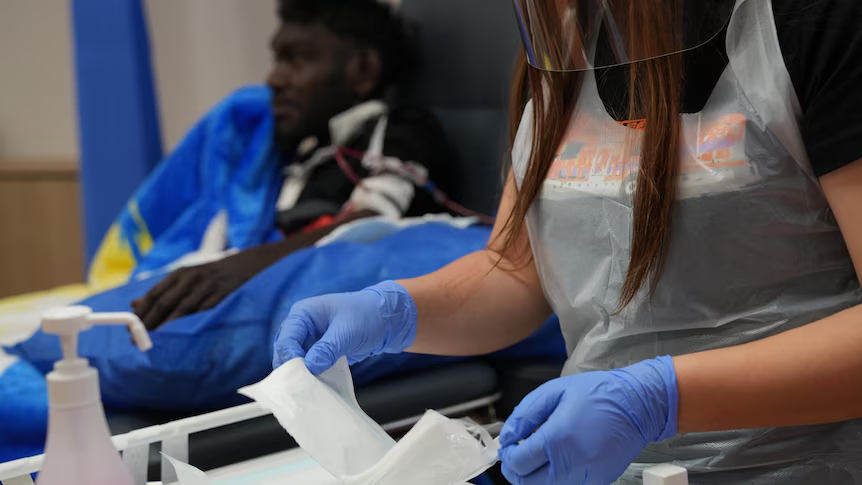
6 November 2024

The NACCHO Sector News is a platform we use to showcase the important work being done in Aboriginal and Torres Strait Islander health, focusing on the work of NACCHO, NACCHO members and NACCHO affiliates.

We also share a curated selection of news stories that are of likely interest to the Aboriginal and Torres Strait Islander health sector, broadly.

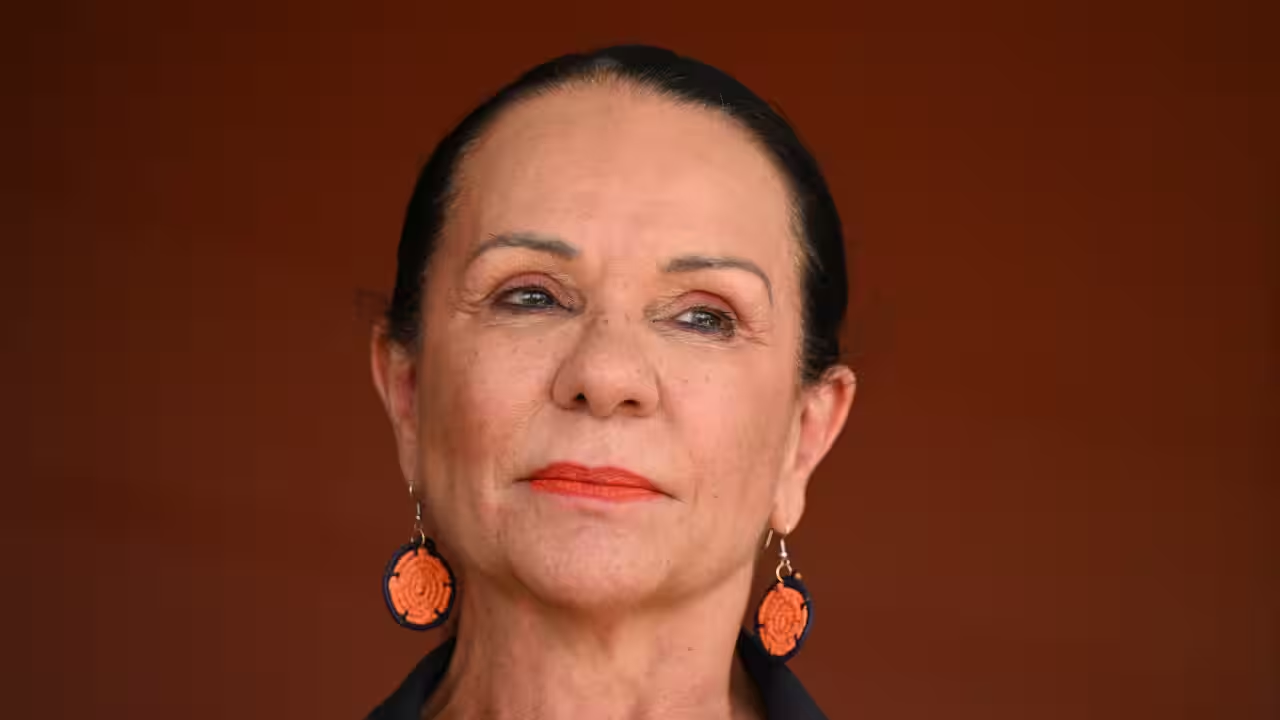
Kimberley Aboriginal Medical Services’ Dr Lorraine Anderson honoured as a Medicare Champion

Kimberley Aboriginal Medical Services (KAMS) is proud to announce that Dr Lorraine Anderson has been awarded the prestigious title of Medicare Champion in the Stronger Medicare Awards. Dr Anderson was honoured at an official ceremony at Parliament House in Canberra last night, recognising her exceptional contributions to primary health care, particularly in remote Western Australia.

As part of Medicare’s 40th anniversary, the Stronger Medicare Awards were established to celebrate the outstanding health professionals and teams who work tirelessly to deliver quality care and innovative solutions in primary health care settings nationwide. Dr Anderson’s achievement is a testament to her unwavering commitment to the health and wellbeing of remote Aboriginal and Torres Strait Islander communities and her decades-long career in primary health care.

A descendant of the Palawa people, Dr Anderson is a Specialist General Practitioner and serves as the Medical Director at KAMS in the Kimberley region of WA. KAMS is a regional, member-based, Aboriginal Community Controlled Health Service, providing over half of the primary health care services in the region, predominantly to Aboriginal patients. As Medical Director, Dr Anderson supports KAMS and eight independent Member Services.

“I’ve had many years in the primary health care field, and it is a great honour to have received this award. In particular, it’s meaningful to recognise the never-ending hard work that goes into this job, especially in the remote health sector – by everyone, not just myself,” said Dr Anderson.

Read more here.

Headshot, Dr Lorraine Anderson (source: KAMS)

Aboriginal Health Council of Western Australia gets behind Movember

Since its inception in 2003, Movember has evolved into a global movement dedicated to raising awareness and improving men’s health outcomes. Now, the time has come for those participating to pull out their clippers in 2024.

Currently, men face a variety of preventable health issues, leading to an average life expectancy that is four and a half years shorter than that of women. Movember prioritises tackling the biggest three causes—mental health and suicide, prostate cancer, and testicular cancer—with all raised funds used to make an impact both locally and globally. This is achieved by providing education, fostering positive behaviour changes, developing services tailored toward men, collaborating with experts, and actively supporting and advocating for men.

The men of AHCWA have already taken the first step by appearing clean-shaven this week in preparation for growing a Mo and raising awareness for a good cause.

Liam Guy, AHCWA Public Health Program Officer said, “Although the campaign runs in November, men’s health issues are not limited to this time. It acts as a reminder that we should regularly check in on the men in our lives, whether through having a chat, going for a coffee, or playing sports. Letting someone know you are there for them can be a powerful message that there is support there whenever they may need it.”

To read more, go here.

Image source: AHCWA.

Immunisation training for Aboriginal Health Practitioners

VACCHO and Benchmarque Group have worked together to create culturally safe immunisation training for Aboriginal and Torres Strait Islander Health Practitioners. It’s the first training of its kind – and will help increase Mob immunisation rates.

This workshop is:

  • Available for Victorian AHPRA-registered Aboriginal Health Practitioners
  • Undertaken over 5 consecutive days
  • Delivered face-to-face
  • Led by highly experienced trainers
  • Practical, hands-on and immersive.

VACCHO and Benchmarque Group – with support from the Department of Health – are offering 70 Victorian AHPRA registered Aboriginal Health Practitioners (AHP) the chance to enhance their immunisation skills – at no extra cost.

To register, go here.

Image source: VACCHO.

Strengthening the medical workforce for a healthy Charleville

Rural Queenslanders will be able to see a doctor easier, following the Australian Government $2.4 million investment in an innovative program to support stronger rural healthcare. The new Single Employer Model (SEM) trial will support up to six GP and rural generalist registrars’ training in Queensland’s Charleville region.

The trial will be delivered by the Queensland Aboriginal and Islander Health Council (QAIHC) in partnership with Charleville and Western Areas Aboriginal and Torres Strait Islander Community Health (CWAATSICH).

Registrars’ training will be packaged with high level cultural mentoring and support, to allow them to build strong connections with the community and expertise in developing comprehensive primary health care for Aboriginal and Torres Strait Islander people.

Under the trial, GP and rural generalist registrars have the option of being employed as salaried employees. This would allow them to have a single employer while places in GP practices in rural and regional locations across the state, instead of having to change employers every six or 12 months with each new placement.

This will give medical graduates the best opportunity to build their careers while supporting the medical workforce in regional and rural areas, making it easier for people in Charleville and surrounding regions to see a doctor.

Read more in the QAIHC Sector Leader October 2024 addition, here.

Image source: QAIHC.

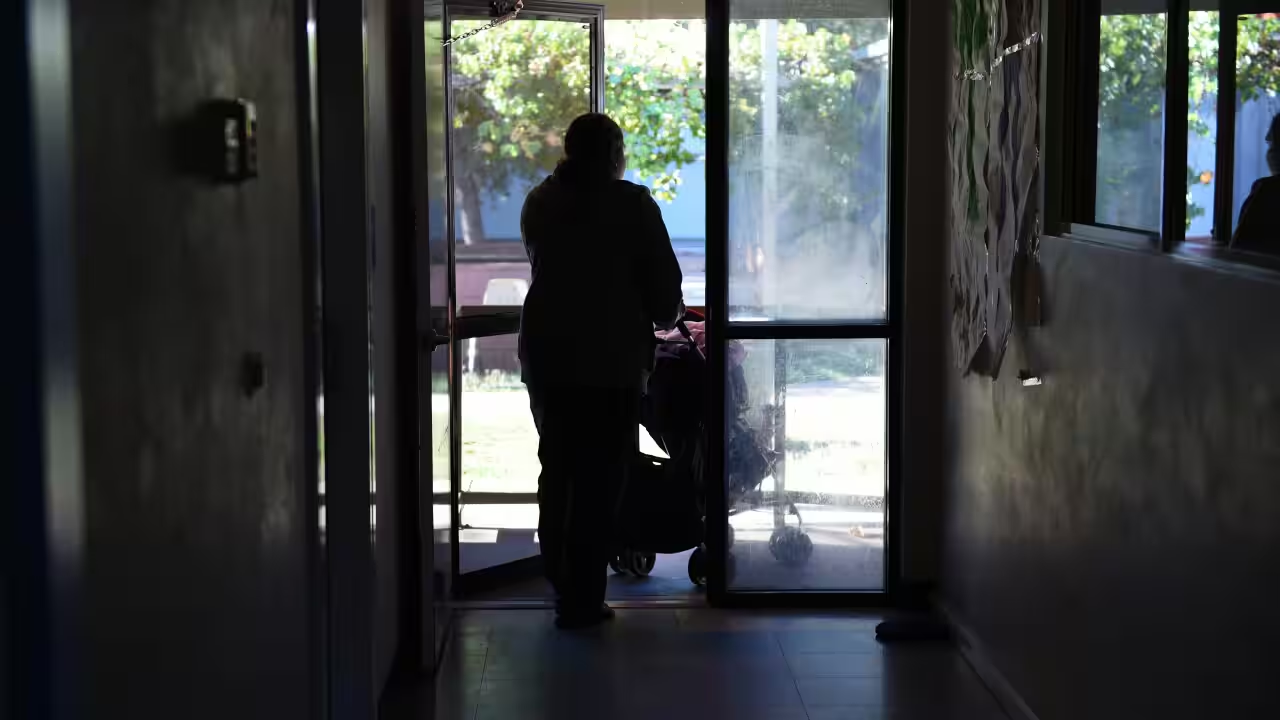
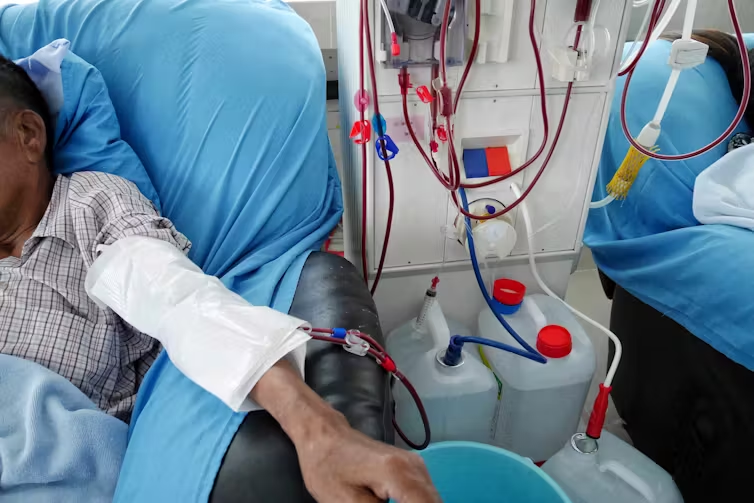
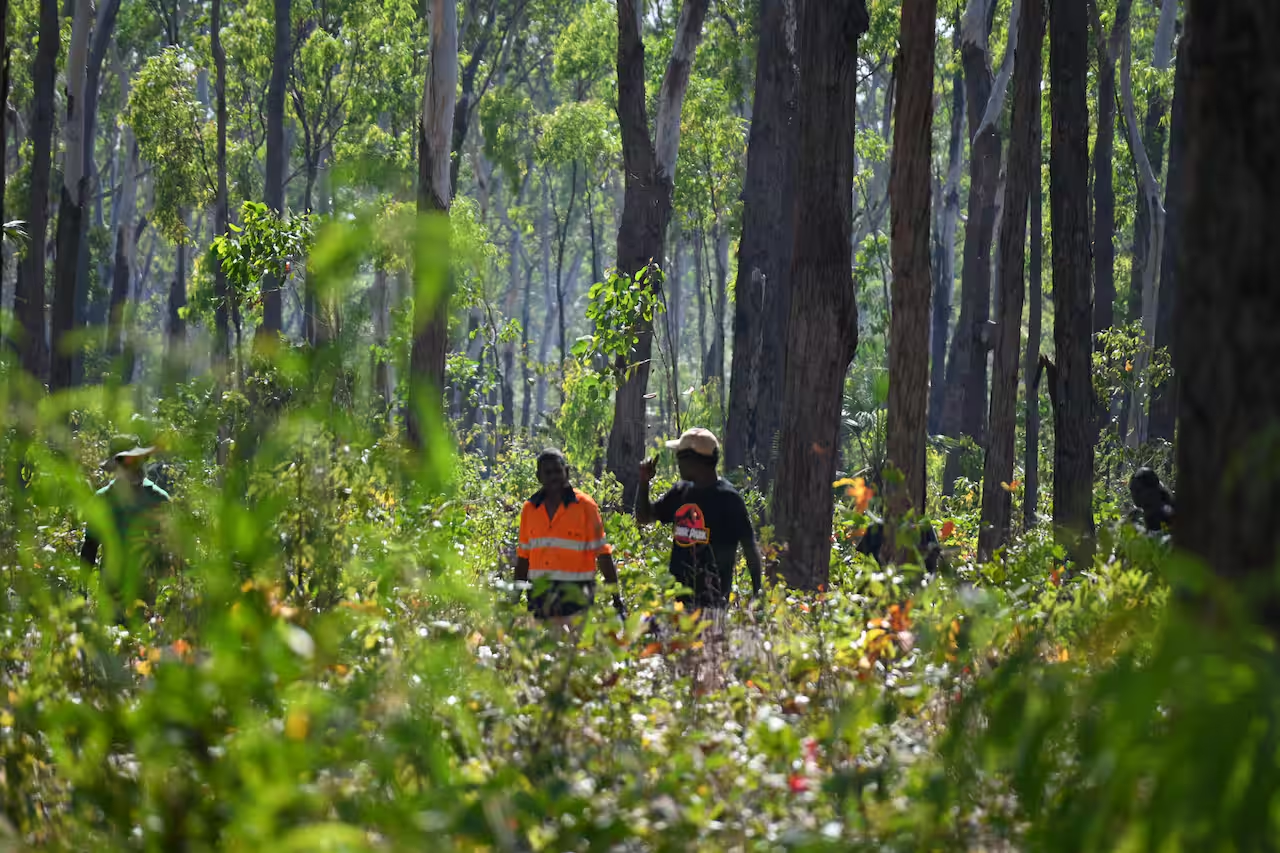
An urgent need for dialysis help is driving these Tribal Elders to achieve a state-wide first

In remote areas like Badu Island in the Torres Strait, a lack of access can see dialysis patients travelling far away from home. The federal government will contribute $3.5 million dollars towards plans for the first haemodialysis unit on Badu Island. Once built, the local Wakaid Tribal Council will become the first grassroots organisation in Queensland to own a dialysis unit.

Dialysis chairs on Waiben and Bamaga – which are within a 100-kilometre radius of Badu – are often full and families in the Torres Strait are forced to travel thousands of kilometres away from home for treatment.

Aragun Elder Dane Gagai said some families relocated down south until a place became available.

“[They] wait for a very long time, years and years,” he said.

“Some people, they go down, and they come up in boxes – the health system has to become stronger, fast.”

The announcement of the progress comes as the outcome of the Queensland election showed swings towards the LNP across the state. Federal Assistant Minister for Indigenous Health, Ged Kearney, said she was positive the project was secure if a change of federal government occurred.

To read the full article, go here.
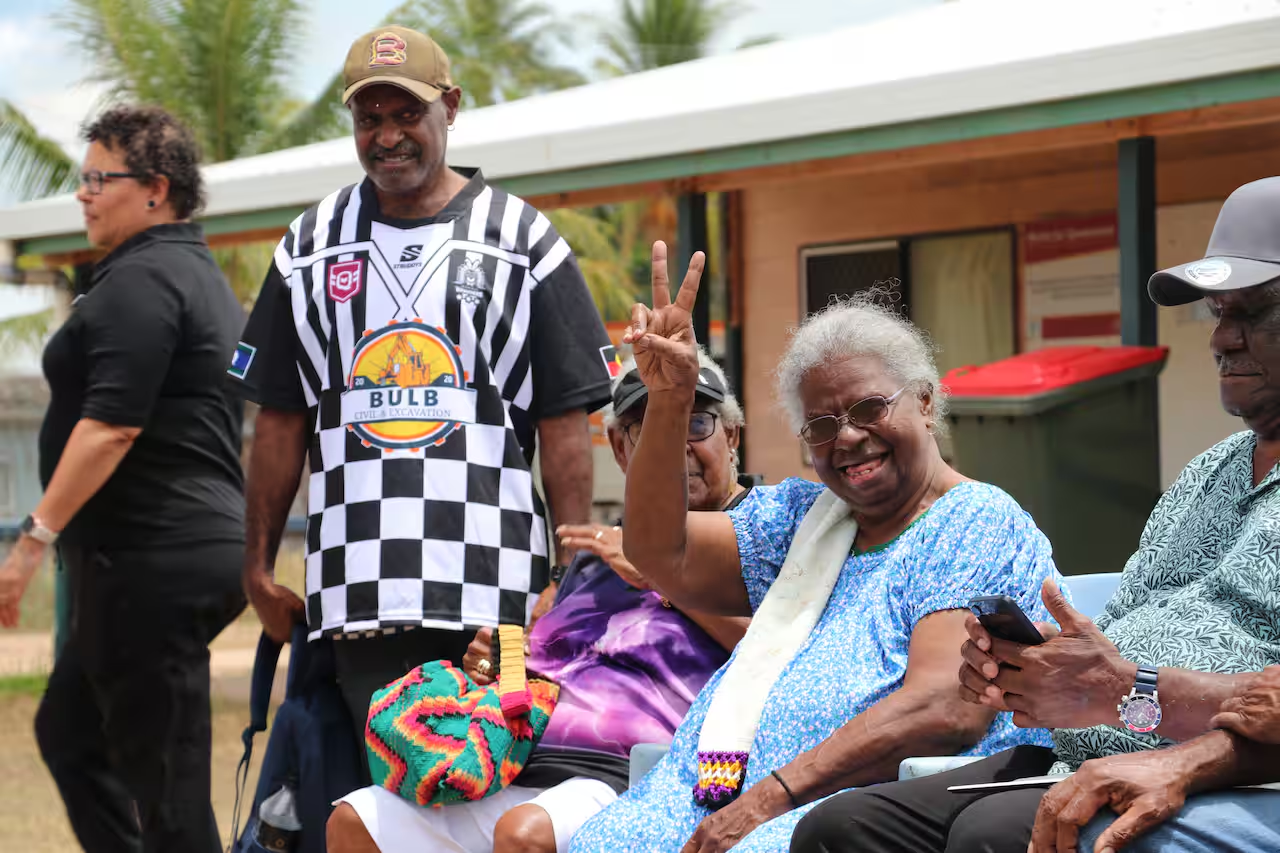
Elders and community members were excited to hear about the project’s progress. Image source: NITV.

Sector Jobs – you can see sector job listings on the NACCHO website here.

Advertising Jobs – to advertise a job vacancy click here to go to the NACCHO website current job listings webpage. Scroll down to the bottom of the page to find a Post A Job form. You can complete this form with your job vacancy details – it will then be approved for posting and go live on the NACCHO website.

28 October 2024

The NACCHO Sector News is a platform we use to showcase the important work being done in Aboriginal and Torres Strait Islander health, focusing on the work of NACCHO, NACCHO members and NACCHO affiliates.

We also share a curated selection of news stories that are of likely interest to the Aboriginal and Torres Strait Islander health sector, broadly.

Register now for the 2024 NACCHO National Youth Conference!

The 2024 NACCHO Youth Conference will be held at the National Convention Centre Canberra, Ngunnawal and Ngambri Country, on Monday 2 December as part of a broader program commencing on Sunday 1 December with the NACCHO Men’s Health Day, the 2024 NACCHO Annual General Meeting on Tuesday 3 December, and the NACCHO Members’ Conference on Wednesday 4 and Thursday 5 December 2024. A Conference dinner will be held on Wednesday 4 December 2024.

The National Youth Conference will bring together up to 100 youth from around Australia to gain experience and exposure to the Aboriginal and Torres Strait Islander sector on a national level. During the conference the youth will engage in discussion, share their experience and learn from other peers from across the country. The conference will allow the youth to learn about informing policy, influencing change and provide a pathway so their voices are heard and represented by NACCHO throughout the sector.

To register, go here.

If you have any queries, please contact the NACCHO Conference Team conference@naccho.org.au

‘Own It:’ Supporting choice in cervical screening

In September 2024, the ‘Own It’ campaign was launched, funded by the Commonwealth Government. The campaign focusses on supporting choice in cervical screening and increasing awareness and uptake of HPV self-collection.

Self-collection is:

  • available for all (asymptomatic) women and people with a cervix aged 25-74
  • highly accessible for many Aboriginal and/or Torres Strait Islander people
  • just as sensitive for detecting HPV and CIN2+/adenocarcinoma in situ as a clinician-collected test taken with a speculum.

The campaign has a particular focus on priority populations including Aboriginal and Torres Strait Islander women and people with a cervix, to ensure no one is left behind in the elimination of cervical cancer. The campaign will be delivered through paid media including national TV, Aboriginal Health TV (in select ACCHOs), social media, Spotify, YouTube, radio, community education and grassroots engagement.

We anticipate that the national campaign will drive demand for HPV self-collection, due to an increased awareness of this option. NACCHO has developed several clinical resources in collaboration with the Australian Centre for the Prevention of Cervical Cancer (ACPCC) to support services with this increased demand. To find out more about the resources available follow the links below:

If you have any questions, please contact the NACCHO Cancer Team at:cancer.team@naccho.org.au

Sydney eye clinic gives regional towns across NSW access to top doctors via remote retinal cameras

After once losing almost all of his vision, 30-year-old John Redi can now see images of his cornea, retina and optic nerve displayed in high-definition on a screen at the Sydney Eye Hospital.

Perhaps even more impressive, is that the images were taken on a machine that can be installed almost anywhere and operated by almost anyone. The machine is an auto-focusing retinal camera that roughly resembles a microscope. It’s designed to send high-quality images from patients in remote areas to specialists who are hundreds of kilometres away.

One retinal camera has already been installed at the Pius X Aboriginal Medical Service centre in Moree and another will soon be connected in Tamworth.

Professor Andrew Chang, Head of ophthalmology at the Sydney Eye Hospital hopes that by sending the new retinal cameras into regional and remote communities, patients will get access to specialist advice without having to make long and costly journeys to Sydney.

To read more, go here.

It’s hoped these new retinal cameras will be dispersed into regional and remote communities. (ABC News: Timothy Ailwood).

Breaking down the stigma of suicide: Aboriginal and Torres Strait Islander Lived Experience Centre gathers in Naarm for annual conference

Content warning: this article contains reference to suicide. Please refer to the services at the bottom of this article for support.

This year’s annual gathering of the Aboriginal and Torres Strait Islander Lived Experience Centre (ILEC) took place in Naarm. The aim of the ILEC, which is housed by the Black Dog Institute, is to elevate the voices of Aboriginal and Torres Strait Islander people with experiences of suicide – either those who have lost a loved one to suicide or survived a suicide attempt themselves – to help create a positive change across the entire mental health sector.

Not just a conference; the gathering was a space for connection, planning, empowerment and healing, with people coming from as far away as Broome and the Torres Strait Islands. It serves as a reminder to break down stigma, which only results in further tragedy when people remain silent, in a space of learning, healing and hope. By fostering connection and solidarity, organisers said the event strengthens the network’s resilience along with their capacity to drive meaningful change at both the local and national levels.

To read more, go here.

The Aboriginal and Torres Strait Islander Lived Experience Centre’s annual gagthering recently took place in Naarm. (Image: Dechlan Brennan).

If this article brought up anything for you or someone you love, please reach out to, call or visit the online resources listed below for support.

Borroloola community leaders appeal to federal government to make healthy food accessible

Residents in Borroloola, off the Gulf of Carpentaria, about 970 kilometres south-east of Darwin by road, have welcomed the Commonwealth’s commitment to build a new $13 million dialysis clinic in the community if it is re-elected – one of 30 promised for remote areas around Australia.

But many in the 900-strong community say they are worried the government’s commitment to reducing the effects of kidney disease will be undermined because many remote people cannot afford to eat healthily.

Borroloola Garawa community leader Keith Rory said the promised dialysis clinic was welcome after too many elders, including members of his own family, had to move hundreds of kilometres away to access regular treatment.

But, after a recent diabetes diagnosis of his own, Mr Rory says he worries residents will continue to struggle to afford the healthy, fresh food he has been told he needs to stave off kidney disease.

“We can see how the food prices [are] going up,” he said.

“We want the federal government to get more healthy food into our shop and reduce the price down. That’s what we need.

To read more, go here.

Keith Rory is worried he cannot afford the healthy diet he has been told he needs to manage his diabetes. (ABC News: Jane Bardon).

AHCWA Simon Says Ear Health Series

The latest instalment in the Aboriginal Health Council of Western Australia’s (AHCWA) Simon Says Ear Health Series is here! This time, Simon, Curtis, Keisha and friends tackle the topic of hearing loss.

Now an animation for the first time, this engaging and informative illustrated comic series has been purpose-created, responsive to the specific health promotion needs of AHCWA’s Member Services.

For more information, go here.

Sector Jobs – you can see sector job listings on the NACCHO website here.

Advertising Jobs – to advertise a job vacancy click here to go to the NACCHO website current job listings webpage. Scroll down to the bottom of the page to find a Post A Job form. You can complete this form with your job vacancy details – it will then be approved for posting and go live on the NACCHO website.


9 October 2024

The NACCHO Sector News is a platform we use to showcase the important work being done in Aboriginal and Torres Strait Islander health, focusing on the work of NACCHO, NACCHO members and NACCHO affiliates.

We also share a curated selection of news stories that are of likely interest to the Aboriginal and Torres Strait Islander health sector, broadly.

2024 NACCHO Members’ Conference registrations now open!

Registrations for the 2024 NACCHO Conference are now open – Register Here

This year’s event is being held at the National Convention Centre in Canberra, Ngunnawal and Ngambri country, and the program will include the NACCHO Men’s Health Day, National Youth Conference, the NACCHO AGM and our two-day members conference.

Dates:

  • Sunday 1 December: Men’s Health Day – this is a free event open to males (18+) working in ACCHOs or involved with the ACCH Sector.
  • Monday 2 December: Youth Conference – to register for this, you must be between the ages of 18 and 26. This is a free event which includes complimentary entry to the Members’ Conference for the first 100 Youth registrants.
  • Tuesday 3 December: AGM and possible EGM
  • Wednesday 4 and Thursday 5 December: NACCHO Members’ Conference

The fees for the Members’ Conference are:

  • Early Bird Special – register before 9 November 2024 – $1,200 plus GST
  • Normal Registration Fee – register between 10 November and 22 November 2024 – $1,300 plus GST
  • Late Registration – registrations received from 23 November 2024 – $1,500 plus GST

The fees above include complimentary admission to the Karaoke Dinner on Wednesday, 4 December 2024. The dress theme for Karaoke is the 1980’s including Country and Western.

Please contact conference@naccho.org.au if you have any questions.

For more information, go here.

Registrations for the 2024 NACCHO Conference are now open

Skin health study slashes infections among children in remote Kimberley communities

Aboriginal and Torres Strait Islander children living in remote communities have some of the highest rates of skin infections in the world. But a landmark skin health study says it has halved the infection rate. The trial followed 915 children and conducted 3,084 skin checks over a four-year period. It was led by The Kids Research Institute Australia, in partnership with Aboriginal health organisations and nine communities in WA’s Kimberley region.

The research findings have been published today in peer-reviewed journals, The Lancet Child & Adolescent Health and eClinicalMedicine.

When the project began in 2018, the rate of skin infections was close to 40% among the children who took part. By the end of the trial, this had been reduced to 20%. However, both reports noted the decline in impetigo and scabies could not be directly attributed to the SToP program.

To read the full article, go here.

The SToP program aimed to tackled skin infections among Indigenous children. (Reuters: Jaimi Joy).

Immunisation practice in Primary Healthcare

VACCHO and Benchmarque Group have worked together to create culturally safe immunisation training for Aboriginal and Torres Strait Islander Health Practitioners. It’s the first training of its kind – and will help increase Mob immunisation rates.

This workshop is:

  • Available for Victorian AHPRA-registered Aboriginal Health Practitioners
  • Undertaken over 5 consecutive days
  • Delivered face-to-face
  • Led by highly experienced trainers
  • Practical, hands-on and immersive.

VACCHO and Benchmarque Group – with support from the Department of Health – are offering 70 Victorian AHPRA registered Aboriginal Health Practitioners (AHP) the chance to enhance their immunisation skills – at no extra cost.

To register, go here.

Image source: VACCHO.

Hoop Dreams in the NT expands to Wangkatjungka

Hoop Dreams in the NT is a House of Darwin initiative that work to refurbish basketball courts in remote Aboriginal and Torres Strait Islander communities around Australia. The project aims to promote positive health and social and emotional wellbeing outcomes by refreshing basketball courts using a design created through community collaboration.

Funded by Gayaa Dhuwi (Proud Spirit) Australia and Kimberley Aboriginal Medical Services (KAMS), the community of Wangkatjungka was identified as in need of updated and improved facilities, with Wangkatjungka being selected as the fifth community to take part in the Hoop Dreams initiative.

The Wangkatjungka Community Court refurbishment project is set to be completed by Friday 11 October and will foster a culturally safe and inviting space for the local community.

Learn more here.

Image source: House of Darwin.

Chronic kidney disease webinar

Health professionals are invited to Kidney Health Australia’s Progressive Chronic Kidney Disease webinar on Tuesday 29 October, 7.30pm AEDT.

Late referral is common because 90% of kidney function can be lost before people experience symptoms. Sadly, 17% of people commence dialysis within 90 days of being referred to a kidney service.

A/Prof Ivor Katz (Nephrologist, St George Hospital, Sydney) and Dr Gary Chang (General Practitioner, Brisbane), will demonstrate how multiple morbidities can distract from noticing the clinical signs of CKD in this real-life deidentified case. How to manage CKD to slow progression in a complex presentation will be explored along with, when to refer to a nephrologist, and kidney failure treatment options. This webinar unpacks Chapter 5 of the Chronic Kidney Disease Management in Primary Care 5th handbook, Progressive CKD, and more.

To register, go here.

Image source: Kidney Health Australia.

Sector Jobs – you can see sector job listings on the NACCHO website here.

Advertising Jobs – to advertise a job vacancy click here to go to the NACCHO website current job listings webpage. Scroll down to the bottom of the page to find a Post A Job form. You can complete this form with your job vacancy details – it will then be approved for posting and go live on the NACCHO website

12 September 2024

The NACCHO Sector News is a platform we use to showcase the important work being done in Aboriginal and Torres Strait Islander health, focusing on the work of NACCHO, NACCHO members and NACCHO affiliates.

We also share a curated selection of news stories that are of likely interest to the Aboriginal and Torres Strait Islander health sector, broadly.

Program empowering pregnant First Nations women to live smoke-free expands nationally

The iSISTAQUIT Program, a ground-breaking initiative designed by community, has this week announced its national expansion. iSISTAQUIT developed to support pregnant Aboriginal and Torres Strait Islander women in quitting smoking as well as improving their health and wellbeing.

After clinical trials and testing of training and resources involving over 40 health services throughout Australia, including many Aboriginal Community Controlled Health Service (ACCHOs), the iSISTAQUIT program is now ready to expand its rollout. A self-paced four-hour online training is available now to individual health professionals (e.g., midwives, nurses, Aboriginal health workers, GPs and obstetricians) and health services (e.g., ACCHOs, Medical Centres and Hospitals).

For more information, go here.

Image source: iSISTAQUIT.

Ensuring the National Aboriginal and Torres Strait Islander Family Safety Plan reflects the needs of communities

SNAICC – the peak body for Indigenous children – will oversee the consultation process as the National Aboriginal and Torres Strait Islander Family Safety Plan is developed and is calling for submissions.

Catherine Liddle, SNAICC CEO said making a submission will help to ensure the plan reflects the needs and aspirations of Aboriginal and Torres Strait Islander communities.

“It’s vital we emphasise the importance of including voices from across the country, encompassing lived experiences, grassroots perspectives, organisations, and academics to inform a standalone plan to enhance safety for women and children,” Ms Liddle said.

To read the NITV article in full, go here.

Family violence survivors are being asked for their thoughts on how the abuse can be stopped. Credit: Dan Peled/AAPImage.

  • 1800 RESPECT (1800 737 732)
  • Lifeline 13 11 14
  • 13YARN 13 92 76

Increasing access to culturally safe oral health care

Members of the University of Adelaide’s AKction (Aboriginal Kidney Care Together – Improving Outcomes Now) team worked with TAFE SA dental hygiene students and educators including to co-design strategies to increase oral health care information and services for AKction’s Kidney Warriors (Aboriginal and Torres Strait Islander People living with kidney disease).

For those in remote or regional areas, access to oral health care is limited, which creates additional difficulties for those with kidney issues. Through the project, TAFE SA students visited Kanggawodli Aboriginal Hostel, a culturally safe accommodation service available to Aboriginal and Torres Strait Islander people who live more than 100km from Adelaide.

Three dialysis chairs have been installed at Kanggawodli, enabling Kidney Warriors to receive dialysis in a more culturally supportive environment.

“Accessing oral health care is often the one thing preventing Kidney Warriors from being on the kidney transplantation waitlist, and so accessing oral health care is so vitally important,” said University of Adelaide’s Nursing School Professor Janet Kelly.

“Good oral health is required for someone to become eligible for kidney transplantation, due to the increased risk of infection if there are dental problems post transplantation.”

To read the article in full, go here.

TAFE SA dental hygiene students speak to a resident at Kanggawodli Aboriginal Hostel during the project.

Connected Beginnings expands to Port Adelaide

The Federal Government’s Connected Beginnings program has again expanded, with the appointment of Kura Yerlo Incorporated to deliver the program in South Australia’s Port Adelaide.

Connected Beginnings is a key contributor to the early childhood targets set in Closing the Gap and is a community led initiative which aims to increase preschool enrolments and drive improvements to developmental outcomes.

The Government partners with SNAICC National Voice for our Children and the National Aboriginal Community Controlled Health Organisation (NACCHO) to deliver the Connected Beginnings program.

Dr Anne Aly, Federal Minister for Early Childhood Education announced that $1.8 million will be given to Kura Yerlo Incorporated for the program, which connects Aboriginal and Torres Strait Islander children aged zero to five years of age with a range of early childhood education, health and family support services, helping children meet the learning and development milestones necessary to achieve a positive transition to school.

The new site in Port Adelaide will support around 350 local Aboriginal and Torres Strait Islander children. Other Connected Beginnings sites in South Australia include, Ceduna, Port Augusta and Salisbury/Playford.

To read more, go here.

Image source: The Sector.

Recommendations to ensure access to latest medicines and treatments

The Albanese Government has released the final report of the Health Technology Assessment (HTA) Review. Health technology assessment involves a range of processes and mechanisms that use scientific evidence to assess health technologies for their quality, safety, efficacy, effectiveness and cost-effectiveness. This informs Australian Government decisions to fund and subsidise health technologies through programs such as the Pharmaceutical Benefits Scheme, Medicare Benefits Schedule and National Immunisation Program.

The HTA Review Report is a consensus report overseen by a Reference Committee that represent the views of experts and patient organisations, First Nations peoples, scientific and clinical practice, industry and government.

The HTA Review Report makes 50 recommendations across a range of areas, including improving access to new health technologies, tackling inequity, and making HTA processes simpler and easier for consumers and clinicians to participate in.

“The government acknowledges the expertise, dedication and tireless work of the Review Committee: Adjunct Professor Debora Picone (Chair), Dr Dawn Casey PSM, Ann Single, Professor Andrew Wilson AO, Professor Andrew Roberts AM, Adjunct Professor Adriana Platona PSM, and Medicines Australia CEO, Liz De Somer,” said Mark Butler, Minister for Health and Aged Care.

To learn more, go here.

Image source: health.gov.au

Sector Jobs – you can see sector job listings on the NACCHO website here.

Advertising Jobs – to advertise a job vacancy click here to go to the NACCHO website current job listings webpage. Scroll down to the bottom of the page to find a Post A Job form. You can complete this form with your job vacancy details – it will then be approved for posting and go live on the NACCHO website.
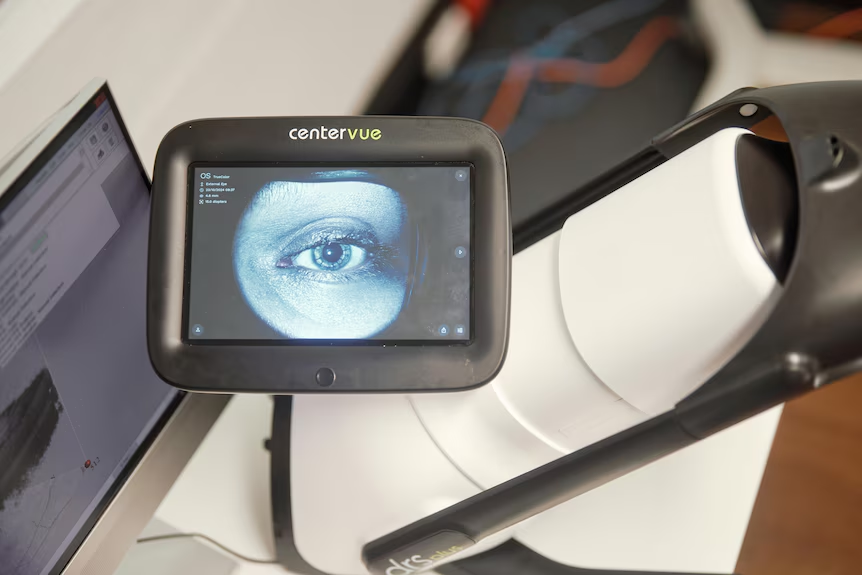
R U OK? Day

Thursday September 12 is R U OK? Day. However, people are encouraged to ask the question, R U OK? Any day if the year because a conversation could change a life.

By having regular, meaningful conversations, you build trust and normalise talking about what’s really going on, so when the people in your world find themselves struggling, they know you’re someone they can talk to.

Bailey Carney, Suicide Prevention Officer at Eleanor Duncan Aboriginal Services spoke with team members about the importance of asking R U OK?

To learn more about R U OK? Day, go here.

If this article brought up anything for you or someone you love, please reach out to, call or visit the online resources listed below for support. The four organisations in blue offer immediate help, 24 hours a day, 7 days a week.

26 July 2024

The NACCHO Sector News is a platform we use to showcase the important work being done in Aboriginal and Torres Strait Islander health, focusing on the work of NACCHO, NACCHO members and NACCHO affiliates.

We also share a curated selection of news stories that are of likely interest to the Aboriginal and Torres Strait Islander health sector, broadly.

Partnerships for culturally safe cancer care grant program

Cancer Australia has launched the Partnerships for culturally safe cancer care grant program, a new $16.9 million initiative aimed at accelerating the delivery of culturally safe cancer care for Aboriginal and Torres Strait Islander communities across Australia.

Addressing long-standing equity and cultural safety issues within mainstream health services, particularly in specialist cancer care, is crucial to ensuring Aboriginal and Torres Strait Islander people can access and complete treatments with improved outcomes. The program emphasises the importance of a culturally safe system, where respect for cultural values and elimination of racism and inequity are paramount. These are key outcomes of both the Australian Cancer Plan and the Aboriginal and Torres Strait Islander Cancer Plan.

This national grant program will allocate up to $16.9 million over three years to support up to 20 partnerships between cancer services and Aboriginal and/or Torres Strait Islander community-controlled organisations. Partnerships, with funding of up to $1 million each, will focus on innovative, community-driven local activities designed to improve the delivery of cancer care for Aboriginal and Torres Strait Islander people.

Applications for the Partnerships for culturally safe cancer care grant program are open until 23 October 2024.

For more information, go here.

Image source: Cancer Australia.

Linda Burney calls time on an extraordinary political career of firsts

Linda Burney has announced she will retire at the next election, and in the meantime will relinquish her role as Minister for Indigenous Australians and move to the backbench. Burney became the first Indigenous person to serve in the NSW parliament when she was elected as the Member for Canterbury in 2003. The Wiradjuri woman then stepped into federal politics in 2016, when she won the southern Sydney seat of Barton, becoming the first Aboriginal woman in the House of Representatives.

As Minister for Indigenous Australians, Burney pledged to work closely with Indigenous organisations on Closing the Gap and announced increased funding for justice reinvestment and Indigenous-led health programs in partnership with NACCHO.

An emotional Burney said that during her long career, she had seen a lot, including Paul Keating’s famous Redfern speech in 1993, the 2000 walk for reconciliation across the Sydney Harbour Bridge and Kevin Rudd’s Apology to the Stolen Generations in 2008.

“Progress doesn’t always move in a straight line,” she said.

“We make progress and then we have setbacks, that’s the history of Indigenous justice in this country.

“But with every passing generation, the arc bends a little bit more towards justice.”

Assistant Minister for Indigenous Australians Senator Malarndirri McCarthy is expected to move into the senior portfolio.

To read the NITV article in full, go here.

Minister for Indigenous Australians Linda Burney. Source: AAP / Lukas Coch.

Kowanyama man’s inspiring journey to close healthcare gap

A Kowanyama man is making strides in his dreams of becoming a nurse, empowering his community, and closing the gap in healthcare. Through his work at Mookai Rosie Bi-Bayan, a First Nations health and wellbeing facility for women and children from Cape York, Liamon Mudd has already made a significant impact in providing culturally safe care for his mob and is now pursuing a Bachelor of Nursing at Deakin University to further upskill.

“You can be anything you want to be if you’re passionate and want to make a difference for your community,” Mr Mudd said.

“I feel blessed to be connected with mob from the Cape and Torres and provide essential services.

“It’s good to see mob taking up work in the health industry; health is a big issue for First Nations people, and having our own people on the ground, providing a service for their own community and their own people will really help close the gap in healthcare.”

Mr Mudd’s passion for nursing initially led him to TAFE, where he undertook a Certificate IV in Aboriginal and Torres Strait Islander Primary Health Care and a Diploma of Aboriginal and Torres Strait Islander Primary Health Care Management. The aspiring nurse’s university degree will only add to his list of accomplishments – previously, he won the 2020 Tropical North Queensland Aboriginal and Torres Strait Islander Student of the Year and was a finalist for Vocational Student of the Year at the Queensland Training Awards.

Ultimately, Mr Mudd hopes to return to his community and improve health outcomes for Kowanyama’s next generation.

“I’ve got another couple of years before I graduate, but hopefully I can come out as a registered nurse so that one day, I can go back and make that change in healthcare for my community,” he said.

To read the Cape York Weekly article in full, go here.

Liamon Mudd is following his dreams of becoming a nurse as he pursues a Bachelor of Nursing at Deakin University. Image source: Cape York Weekly.

Lupus is more common and severe in Aboriginal and Torres Strait Islander peoples. Learning why is crucial

Lupus is an inflammatory autoimmune illness, where the body’s immune system mistakenly attacks itself. Lupus can affect virtually any part of the body, although it most commonly affects the skin, joints and kidneys. Lupus is two to four times more common in Aboriginal and Torres Strait Islander peoples compared to those who do not identify as Aboriginal or Torres Strait Islander. Lupus is also more common in Aboriginal and Torres Strait Islander children, with rates four to 18 times that of the general Australian child population.

Lupus also tends to present with different symptoms, and is more severe, in Aboriginal and Torres Strait Islander peoples. For example, Aboriginal and Torres Strait Islander peoples tend to develop more of the severe, life-threatening or organ-threatening symptoms of lupus, such as kidney problems. As a result, Aboriginal and Torres Strait Islander patients with lupus have high rates of kidney failure, and are more likely to require dialysis than non-Aboriginal and Torres Strait Islander patients.

The reasons for the increased rates and severity of lupus in Aboriginal and Torres Strait Islander peoples are not well understood. However, it’s likely that socioeconomic factors, environmental factors and biological factors all play a role. To date, no published studies have specifically explored this.

The reasons for the increased rates and severity of lupus in Aboriginal and Torres Strait Islander peoples are not well understood. However, it’s likely that socioeconomic factors, environmental factors and biological factors all play a role. To date, no published studies have specifically explored this. Drugs already in use which target these genes or proteins could also be better selected for patients who are likely to benefit from them. This may help treat lupus more effectively in Aboriginal and Torres Strait Islander peoples in the future.

Other strategies to improve outcomes for Aboriginal and Torres Strait Islander peoples with lupus include:

  • improving access to specialist care for patients living in rural and remote areas
  • eliminating structural racism in health care
  • raising awareness of lupus in Aboriginal and Torres Strait Islander communities.

To read The Conversation article in full, go here.

Image source: khawfangenvi16/Shutterstock.

Thousands of student nurses funded for placements in ACCHOs, community health and general practice

Thousands of student nurses will be funded for placements in primary care settings under federal government plans to support the sector while giving the students valuable experience. The plan will see an additional 6,000 nurses funded for placements across the country including in community health, Aboriginal community-controlled health organisations (ACCHOs), general practice and schools.

Assistant Minister for Health and Aged Care Ged Kearney – a former nurse – announced the $4.2m National Nurse Clinical Placements program details on Friday at the Australian Primary Health Care Nurses Association congress in Adelaide. The Association will work with education providers and clinical settings to place students. The move comes as this month the government boosts Medicare rebates for care provided by nurse practitioners by 30%, making such care more affordable and accessible, particularly in rural and regional areas.

To read the NT News article in full, go here.

Image source: ABC News.

Diabetes Management Workshop

The Diabetes Management Workshop is designed to support nurses, Aboriginal and Torres Strait Islander Health Practitioners and Health Workers, and other health professionals to better support patients with or at risk of developing diabetes.

Learning outcomes include:

  • refresh knowledge on the pathophysiology of diabetes and different types of diabetes mellitus
  • describe common diabetes medications, their actions, side effects and contraindications
  • discuss insulin therapy, including different modes of actions and the education to offer clients around insulin administration
  • demonstrate an understanding of hypoglycaemia, hyperglycaemia and diabetic ketoacidosis
  • review principles of blood glucose monitoring and the education to offer to clients regarding this
  • explore psychological impact of living with diabetes
  • understand local diabetes care pathways.

For workshop dates and registration, go here.

Image source: Benchmarque Group.

Sector Jobs – you can see sector job listings on the NACCHO website here.

Advertising Jobs – to advertise a job vacancy click here to go to the NACCHO website current job listings webpage. Scroll down to the bottom of the page to find a Post A Job form. You can complete this form with your job vacancy details – it will then be approved for posting and go live on the NACCHO website.

ACCHO Governance Workshops

Free, specialised governance workshops for ACCHOs will be delivered in multiple locations across the country during 2024 and 2025. 

Registrations are now open for:

  • Port Macquarie: 20-21 August
  • Dubbo: 22-23 August.

The program is delivered by legal experts and covers:  

  • Delegation of powers 
  • Finance for Boards
  • Governance documents
  • Managing conflicts of interest 
  • Managing risk  
  • Principles of good governance  
  • Structure and role of boards and sub-committees 

To register, go here.

For more information, please contact NACCHO using this email link.

18 July 2024

The NACCHO Sector News is a platform we use to showcase the important work being done in Aboriginal and Torres Strait Islander health, focusing on the work of NACCHO, NACCHO members and NACCHO affiliates.

We also share a curated selection of news stories that are of likely interest to the Aboriginal and Torres Strait Islander health sector, broadly.

New renal dialysis units announced for remote Australia

Three new renal dialysis units have been announced in remote WA and QLD which the federal government says will allow First Nations people with severe kidney disease better access to lifesaving treatment closer to their home, family, and Country. The units, to be delivered to the Wakaid Tribal Council for Badu Island in QLD, and the Pilbara Aboriginal Health Alliance for Tom Price and Ngangganawili Aboriginal Health Services for Wiluna, in WA, come as part of the federal government’s $73.2 million investment in towards better renal services for Indigenous people.

Data shows First Nations adults are twice as likely and non-Indigenous people to have chronic kidney disease, and four times as likely to die from the ailment. Assistant Minister for Indigenous Australians, Malarndirri McCarthy said on Wednesday it was “absolutely critical” the renal dialysis units were closer to the homes of remote communities in Australia.

“This is a scourge of a disease that impacts so many First Nations families right across Australia,” Senator McCarthy told ABC news radio.

“People on renal dialysis normally have to travel a long way from their home community and ultimately can never really return…as that Elder said, ‘a lot of them return to pretty much die on Country.'”

Senator McCarthy’s mother had to travel a 1000 km from her home Country of Borroloola to be looked after in Darwin when she needed kidney treatment, and the Labor senator said the travelling meant “we never were able to return her home to live on Country”.

When I travel Australia now to listen to the stories of First Nations families asking for these chairs in their remote areas, I can certainly understand fully the importance of that request,” she said.

For patients with end-stage kidney disease, dialysis is essential and lifesaving. Without it, the only treatment is a kidney transplant. The closer to home a patient is, the better support they receive, the government says, which in turn, improves their quality of life.

To read the National Indigenous Times article in full, go here.

Tommy with the new renal dialysis unit in Coober Pedy. Image source: National Indigenous Times.

New trial launched to support domestic violence victim-survivors in accessing mental health care

A trial aiming to increase access to mental healthcare for survivors of family, sexual and domestic violence (FSDV) is beginning across the country as the number of incidents continues to climb. Analysis from Australia’s National Research Organisation for Women’s Safety found for women experiencing violence, mental health problems can overlap with trauma, complex trauma and disability, making simple diagnoses and treatment difficult.

The $67.2 million Supporting Recovery Program will trial providing up to two years of case management and specialised mental health support for survivors, aiming to assist in long-term recovery. Funded in the 2022-23 budget, after years of consultation and planning the trial is now underway in South Western Sydney and Gippsland, with a further four areas to join before the year is out.

The trial has been designed in consultation with an expert reference group made up of service providers like MacKillop Family Services, peak bodies including the National Aboriginal Community Controlled Health Organisation (NACCHO), the National Women’s Safety Alliance and government departments.

To read the full ABC News article, go here.

If this article brought up anything for you or someone you love, please reach out to, call or visit the online resources listed below for support. The four organisations in blue offer immediate help, 24 hours a day, 7 days a week.

Family and domestic violence support:

Analysis from Australia’s National Research Organisation for Women’s Safety found for women experiencing violence, mental health problems can overlap with trauma, complex trauma and disability, making simple diagnoses and treatment difficult.(eyepark / iStock / Getty Images).

Culture Care Connect mental health first aid training in Warakurna

The Aboriginal Health Council of Western Australia (AHCWA) writes: Derise Jones and Wayne Coles delivered Aboriginal Mental Health First Aid Training in Warakurna last week. Warakurna is a remote Aboriginal community in WA, situated near the NT border. It is part of the Ngaanyatjarra lands, an area governed by the Ngaanyatjarra Council, which represents the interests of the Aboriginal people living in these communities. The community is rich in cultural traditions, languages, and practices. The Ngaanyatjarra people maintain a strong connection to their land, central to their identity and way of life. Traditional ceremonies, storytelling, and art are important aspects of their cultural heritage.

The communities of Warburton and Wingellina (surrounding Community) face numerous challenges, particularly in terms of housing, substance abuse, mental health, and high staff turnover. Despite these obstacles, significant efforts are being made to improve the situation through various support groups, Culturally appropriate professional services, and community engagement.

Several service providers from Warakurna, Wingalina, and Warburton participated. Four traditional owners were among the service providers. 14 participants commenced the training, and 9 completed it and can now become eligible to be Accredited Mental Health First Aiders.

Participants stated that doing this workshop is a bonus as they have been able to meet other service providers working on the lands, this has encouraged networking in the future, also there are participants in the group who have only been on the lands for the last month.

This training was delivered through the Culture Care Connect program AHCWA and Bega Garnbirringu Health Service.

For more information on the Culture Care Connect program, go here.

Image source: Aboriginal Health Council of Western Australia (AHCWA).

Meet the Tiwi man using the power of bush medicine to revive his community

Walking through the vast bushland of Wurankuwu on Bathurst Island – one of the Tiwi Islands just north of Darwin – Ron Poantumilui is proud to call this Country home. For generations, his people, the Wurankuwu clan, have harvested their Country for food and traditional bush medicine.

One of those is a species is the Corymbia Nesophila, a bloodwood tree endemic to northern Australia. Its thick, blood-red sap, crystalises like a ruby once dry and is known for its healing properties. Wurankuwu Elders say it can be processed into a paste to treat skin conditions.

“When someone has the scabies, when you put the cream on the scabies it will clean it after two days and then it will go away,” Mr Poantumiliui said.

It’s one of more than a dozen known medicinal plants found on the Tiwi Islands islands. Knowledge of how they’re used has been passed down for generations, with Tiwi Elders documenting it in a book.

“All those knowledge is part of our Tiwi foundation, it was given to us by our ancestors,” Tiwi Elder Molly Munkara told NITV.

With job creation and economic development in mind, elders on the Tiwi Islands partnered with Menzies School of Health Research and industry giant Integria Healthcare to explore the commercial potential for some of those species.

Botanist Dr Greg Leach has been instrumental in work to develop medicinal plants in the north. The Honorary Fellow at Menzies School of Health Research started documenting plant species from Alice Springs to the Top End 30 years ago. Working with Aboriginal communities, he documented more than a hundred medicinal plants as part of that collection.

“A lot of people challenge this sort of work about the Indigenous knowledge, but those books and other publications have effectively put that knowledge in the public domain,” Dr Leach said.

To read the NITV article in full, go here.

Charles Michael Tipungwuti, Paul Gerard Pilakui and Ron Poantimilui harvest plant samples on Bathurst Islands Source: NITV / Laetitia Lemke.

Workforce wellbeing guide for ACCHOs in the Kimberley

The Workforce wellbeing guide: a self-reflection and self-care resource for Aboriginal Community Controlled Health Services in the Kimberley focuses on the role of self-reflection and self-care in safeguarding and promoting worker wellbeing.

It includes practical activities and resources that can be used in a range of settings, by individual workers, supervisors or managers. The information and activities provided in the guide are centered around holistic understanding of wellbeing, in order to be broadly applicable to both Aboriginal and Torres Strait Isander and non-Indigenous workers.

The guide was developed by the Wellbeing Informed Care – Kimberley project team, in collaboration with Kimberley Aboriginal Medical Services, and the University of Western Australia’s Rural Clinical School and the School of Indigenous Studies.

To view the Workforce wellbeing guide: a self-reflection and self-care resource for Aboriginal Community Controlled Health Services in the Kimberley resource, go here.

Workforce wellbeing guide: a self-reflection and self-care resource for Aboriginal Community Controlled Health Services in the Kimberley. Image source: Kimberley Aboriginal Medical Services.

Working Together…ten years on

The Working Together…ten years on webinar will celebrate the 10-year anniversary of the groundbreaking book Working Together: Aboriginal and Torres Strait Islander Mental Health and Wellbeing Principles and Practice (second edition) with Professors Pat Dudgeon, Helen Milroy, and Roz Walker.

On Wednesday 31 July, the three co-editors will be yarning about the journey to publishing, the authors they worked with and the issues they explored in the text, and how the landscape for Aboriginal and Torres Strait Islander mental health and wellbeing has changed in the last ten years.

Hear from these leaders in social and emotional wellbeing about this groundbreaking text -the go-to book on Aboriginal and Torres Strait Islander mental health and social and emotional wellbeing in Australia.

For more information and to register, go here.

Image source: Centre of Best Practice.

Sector Jobs – you can see sector job listings on the NACCHO website here.

Advertising Jobs – to advertise a job vacancy click here to go to the NACCHO website current job listings webpage. Scroll down to the bottom of the page to find a Post A Job form. You can complete this form with your job vacancy details – it will then be approved for posting and go live on the NACCHO website.

4 July 2024

The NACCHO Sector News is a platform we use to showcase the important work being done in Aboriginal and Torres Strait Islander health, focusing on the work of NACCHO, NACCHO members and NACCHO affiliates.

We also share a curated selection of news stories that are of likely interest to the Aboriginal and Torres Strait Islander health sector, broadly.

$5.9m for First Nations Cancer Scholarship program

Applications are being sought for a ground-breaking new scholarship program for Aboriginal and Torres Strait Islander students, health professionals and researchers in the field of cancer. The First Nations Cancer Scholarship, led by the Aurora Education Foundation and backed by funding from the Australian Government through Cancer Australia, represents a significant investment of up to $5.9m over four years.

Aboriginal and Torres Strait Islander graduate students, early career researchers and health professionals can apply for financial support of up to $120,000 annually for up to 3 years, as well as academic, wellbeing and community support.

Cancer remains the leading cause of mortality among Aboriginal and Torres Strait Islander people, yet less than 1% of health professionals identify as Aboriginal and Torres Strait Islander.

Recognising the urgent need to strengthen the Indigenous cancer workforce, this scholarship program seeks to grow the capacity of Indigenous health professionals and researchers through advanced studies and research opportunities.

The goal of the scholarship program is to expand the network of Aboriginal and Torres Strait Islander people actively involved in cancer control, further embedding Indigenous voices into cancer policy making, research and care delivery.

Eligible candidates for the First Nations Cancer Scholarship must be Indigenous students engaged in full-time postgraduate studies or research within a cancer-related field covering health, research, or policy.

Expressions of Interest for the First Nations Cancer Scholarship are currently being accepted until Friday 30 August 2024.

To learn more about the scholarship program and to submit an application, click here. You can also view a flyer for scholarship program here.

Uniting Health Professionals to Ignite Change:
Good Medicine Better Health Online Yarning Circle About Vaping

NACCHO’s Good Medicine Better Health Program, in collaboration with Quit, is thrilled to announce the development of an innovative online Vaping Cessation learning module. This resource is designed specifically for Aboriginal Health Workers/Practitioners, and other Health Professionals working across the sector.

Our goal is to create a culturally relevant and effective learning module that addresses the unique needs and challenges faced by our communities. But before we begin crafting this crucial resource, we need your input!

We want to ensure this module is as impactful as possible, and that means hearing from you- the health professionals who are on the front lines. Your experiences, insights, and suggestions are invaluable to us.

Join us in this important yarning circle, and let’s work together to create a healthier future for all. Your voice is essential in developing a module that resonates with and supports our community effectively. Together, we can cook up something truly deadly!

Register your interest here

Empowering Aboriginal and Torres Strait Islander Leadership in Mental Health

Gayaa Dhuwi (Proud Spirit) Australia says it recognises the urgent need for Aboriginal and Torres Strait Islander leadership to be fully supported and integrated across all parts of the Australian mental health system. Gayaa Dhuwi (Proud Spirit) Australia calls for comprehensive strategies to ensure the presence, visibility, and influence of Aboriginal and Torres Strait Islander leaders, while also fostering their self-care, peer support, and accountability to Aboriginal and Torres Strait Islander communities.

To increase the visibility and influence of Aboriginal and Torres Strait Islander leaders across the Australian mental health system, Gayaa Dhuwi (Proud Spirit) Australia recommends the following:

  • Invest in comprehensive, culturally grounded leadership development programs tailored to the specific needs and aspirations of Aboriginal and Torres Strait Islander individuals. These programs should provide training in both Western and Indigenous leadership models, fostering a unique and powerful blend of skills and knowledge.
  • Establish formal mentorship programs and create spaces for informal networking to connect emerging Aboriginal and Torres Strait Islander leaders with experienced mentors and peers, fostering a strong and supportive community of practice.
  • Mandate comprehensive cultural responsiveness training for all mental health professionals, ensuring they understand and respect Aboriginal and Torres Strait Islander leadership styles, cultural protocols, and decision-making processes.
  • Allocate dedicated funding streams to support the professional development, self-care, community engagement, and cultural leadership activities of Aboriginal and Torres Strait Islander mental health leaders. This funding should be sufficient to address the unique challenges and opportunities faced by Aboriginal and Torres Strait Islander leaders and enable them to thrive in their roles.

Gayaa Dhuwi (Proud Spirit) Australia firmly believes that centring Aboriginal and Torres Strait Islander leadership, knowledge, and self-determination within the mental health sector is paramount to achieving culturally safe, effective, and sustainable mental health outcomes for their communities.

To read the Dhuwi (Proud Spirit) Australia position paper in full, go here.

WA government walks away from building Halls Creek renal centre before next state election

The WA government has walked away from a pledge to build a dialysis centre in Halls Creek within this term of government, blaming COVID-19 and once-in-a-century flooding for the delay. Announced in 2021, the $24 million, 20-bed renal hostel would have eight dialysis machines, cater for up to 32 patients, and include accommodation for staff.

Local Indigenous health leaders lobbied for the facility to ensure residents in Halls Creek and the surrounding communities, 2,600 kilometres north of Perth, could receive life-saving treatment without having to leave their family and country. The Kimberley maintains some of the highest rates of kidney disease in Australia.

In late 2021, then Minister for Health Roger Cook told the ABC in a statement that the government was committed to building the renal centre within the parliamentary term. In February this year, the minister’s office said that statement still stood, but in a press conference in Kununurra in June, Mr Cook all but confirmed it was unachievable.

Local Indigenous health leaders are frustrated by the slow progress, saying the government has failed to meaningfully consult. Kimberley Aboriginal Medical Services (KAMS) said the proposed Halls Creek facility was a crucial addition to its large regional network of operations, which were under strain from increasing demand.

In a statement to the ABC, chief executive Vicki O’Donnell criticised comments current Minister for Health Amber-Jade Sanderson made in a parliamentary committee in May.

The minister said the government was working with the relevant Indigenous health organisations in the Kimberley on the “model of delivery”.

Ms O’Donnell said there had been no formal meeting between state government representatives and KAMS or the locally based Yura Yungi Medical Service in the past 18 months.

“I’m disappointed … it seems the minister has been ill-advised,” she said.

“Along with the Halls Creek community, I am concerned that there was no allocation in the recent state budget for the total project to build a renal centre, renal hostel, and staff accommodation.

“More broadly, I am also concerned that the state government will fail to deliver on their Kidney Disease Strategy.”

To read the full ABC News article, go here.

Dialysis is an essential treatment for people with end stage kidney disease. (ABC News: Lee Robinson).

Fulfilling cultural safety expectations in specialist medical education and training

It is increasingly evident that health inequities within Indigenous populations “are primarily due to unequal power relationships, unfair distribution of the social determinants of health, marginalisation, biases, unexamined privilege, and institutional racism,” prompting the need for attention at a variety of levels within health care, including at the systemic, organisational and individual levels.

Specialist medical colleges are prominently placed to promote, facilitate, and enact the principles of cultural safety within their institutions. If we are to close the gap in health outcomes between Indigenous and non‐Indigenous communities, colleges must fully appreciate their role and the ongoing commitment required to realise such outcomes for its staff, members and the Indigenous community.

Colleges must direct efforts to centre the development of critical allyship to support Indigenous peoples in managing cultural load, ensure Indigenous employees are respectfully engaged in the prioritisation of tasks and roles, and facilitate critical immersive activities for trainees and Fellows.

They must always be conscious of the expectations of the Indigenous communities they profess to serve. It is not simply enough to undertake this journey as a reaction to the nudging stick of accreditation, rather it must be a genuine, proactive commitment that recognises the injustice of doing the bare minimum, progressing at a slow pace, or, worse, not progressing at all.

To read the full article Fulfilling cultural safety expectations in specialist medical education and training: considerations for colleges to advance recognition and quality in the Medical Journal of Australia Special Issue in partnership with the Lowitja Institute: centring Indigenous knowledges, go here.

The Medical Journal of Australia Special Issue in partnership with the Lowitja Institute: centring Indigenous knowledges.

Outreach immunisation clinic brings care closer for families

In the heart of La Perouse lies the Aboriginal Community Health Centre, where every second Tuesday morning, a dedicated team provides opportunistic immunisations to Aboriginal bubs and their families. This outreach initiative, led by Sydney Children’s Hospital, Randwick (SCH), in collaboration with the Public Health Unit (PHU), works to educate and support families about childhood immunisations, with a current focus this winter on flu and RSV.

“We’re seeing significant increases in hospitalisations due to flu and RSV, so it’s crucial that we provide better access to these immunisations for bubs and their families within their own community,” Emma Birrell, Registered Nurse in the Opportunistic Child Immunisation Service at SCH said.

Flu and RSV can be serious, especially for young bubs. In NSW, all Aboriginal bubs born after 31 October 2023 are eligible for the free RSV immunisation, Beyfortus. In addition, the flu immunisation is available free for the whole family. These immunisations are offered at the La Perouse clinic.

The immunisation clinic is run through the support of many staff including pharmacy, medical professionals, Aboriginal Health Workers (AHWs), and nurses. The team work together to engage local schools and childcare centres, to drive community engagement and awareness.

The clinic aims to overcome barriers preventing families from immunising their bubs, striving not only to increase immunisation rates but also to enhance accessibility. Integration into the La Perouse community is vital in achieving these goals.

“During visits to the Centre, we provide immunisations for bubs through working closely with our staff including Aunty Bev, Aunty Lola, and child and family health to ensure culturally safe care for the families we see. Families can just drop in to La Pa or give us a call and book an appointment”, Kelsey Fletcher, Registered Nurse in the Opportunistic Child Immunisation Service at SCH said.

However, the team’s role extends beyond immunisations. “Sometimes it’s just about having a yarn, I enjoy just chatting and spending time with families, building rapport and relationships,” Emma said.

To read the article in full, go here.

Image source: NSW Government.

Sector Jobs – you can see sector job listings on the NACCHO website here.

Advertising Jobs – to advertise a job vacancy click here to go to the NACCHO website current job listings webpage. Scroll down to the bottom of the page to find a Post A Job form. You can complete this form with your job vacancy details – it will then be approved for posting and go live on the NACCHO website.

5 June 2024

The NACCHO Aboriginal and Torres Strait Islander Health News is a platform we use to showcase the important work being done in Aboriginal and Torres Strait Islander health, focusing on the work of NACCHO, NACCHO members and NACCHO affiliates.

We also share a curated selection of news stories that are of likely interest to the Aboriginal and Torres Strait Islander health sector, broadly.

A new era for aged care and First Nations health

NACCHO’s Elder Care Support program is hosting the National Yarning Circle event on the Gold Coast from 5‒6 June 2024. The event will gather community leaders, healthcare professionals, and key stakeholders to enhance support for older Aboriginal and Torres Strait Islander people, while also focusing on building a robust First Nations health workforce.

The event will feature a powerful keynote address by Andrea Kelly, the Interim First Nations Aged Care Commissioner, who will speak on the importance of culturally safe aged care services. Her insights will highlight the critical role of culturally competent care in improving health outcomes for Aboriginal and Torres Strait Islander communities, highlighting the significance of creating tailored, community-led pathways and support for the elderly.

The Commissioner stated, “The Elder Care Support program is a groundbreaking initiative that not only enhances the care for our Elders but also builds a strong First Nations health workforce. By focusing on culturally safe practices, we are paving the way for better health outcomes for Aboriginal and Torres Strait Islander people.”

Participants will engage in interactive workshops designed to provide practical knowledge and skills. These sessions will cover the My Aged Care Portal, the new Aged Care Act, and strategies for improving access to services. These workshops are essential for equipping attendees with the tools they need to navigate and implement aged care services effectively within their communities.

Donnella Mills, NACCHO Chairperson welcomes the event, stating, “The National Yarning Circle is an important platform for sharing knowledge and strategies to improve care of our elderly. By investing in Aboriginal and Torres Strait Islander health workers to participate in this space, we are empowering our communities and ensuring our Elders receive the best possible care.

The event will feature panel discussions with Janine Mohamed, Deputy CEO First Nations, National Disability Insurance Agency; representatives from NDIA, ACQSC, OPAN, and the Healing Foundation, exploring collaborative elder care approaches. Former NRL star Preston Campbell will lead a session on staying well and safe.

The Elder Care Support – Yarning Circle is a critical step in addressing the unique needs of older Aboriginal and Torres Strait Islander people. By fostering a collaborative and inspiring event, the initiative aims to create and foster positive networks across the country, build sustainable improvements in the aged care sector and support the ongoing development of the First Nations health workforce.

You can view the NACCHO media release A new era for aged care and First Nations health: NACCHO hosts inaugural Elder Care Support Yarning Circle at the Gold Coast, 5­‒6 June 2024 in full here.

Gabrielle Willie & Bushtucker Bunji (wearing a blond curly wig) with Elder Care Support National Yarning Circle banner in the background

Bushtucker Bunji and Gabrielle Willie at the Elder Care Support National Yarning Circle. Image source: NACCHO.

Apunipima wins award for kidney care program

The Cape York Kidney Care (CYKC) program has won the Health and Wellbeing category of the Queensland Reconciliation Awards. To address the high rates of kidney disease and kidney failure needing dialysis in First Nations communities, Torres and Cape Hospital and Health Service (TCHHS) partnered with Apunipima Cape York Health Council in 2019 to reach six communities: Weipa, Napranum, Mapoon, Aurukun, Pormpuraaw and Kowanyama.

TCHHS nephrologist Dr Tahira Scott said the innovative model of care was the first of its kind in Australia, with its success apparent. She said the heart of the model was the involvement of First Nations health workers or practitioners, “We recognise that partnerships with ACCHOs like Apunipima can achieve real success in patient-centric health outcomes. We’re providing a gold standard nephrology service in the bush, meaning those who see the CYKC team are receiving the same level of care you would receive in a city through using a different integrative model of care, which is culturally safe.”

Outreach clinics were held at Apunipima’s facilities in the six communities, which are run by First Nations staff. Apunipima CEO Debra Malthouse said this partnership showed the strengths of each organisation in directly addressing these chronic health conditions in Cape York, “We are focused on providing comprehensive primary health care to the communities we serve. Our staff on the ground are able to provide the link between the community and the visiting outreach clinicians, making patients feel comfortable and supported through their healthcare journey.”

To view the Cape York Weekly article TCHHS and Apunipima win Queensland Reconciliation Award in full click here.

winners (7) of Qld Reconciliation Award - Health & Wellbeing Category

A partnership to address the high rates of kidney disease in Cape York First Nations communities has won a Queensland Reconciliation Award. Image source: Cape York Weekly.

Educating boys on healthy relationships vital

Lawyer Taylah Gray has worked on domestic violence cases and believes that women will not be safe from abusive men until the underlying causes of their aggressive behaviour are addressed. The Wiradjuri woman describes the practice of sending perpetrators to jail without addressing their behavioural issues as a “speed bump approach” to tackling the national crisis. “There comes a time where we can no longer run from this. We can no longer flee houses and be put into emergency accommodation,” she said. Ms Gray, who practises law in the NSW Hunter region, says more funding for men’s behaviour change programs is essential.

According to Australian government health data from 2021 to 2022 , First Nations people were 31 times more likely to be hospitalised due to family violence than non-Indigenous Australians. The data shows Aboriginal and Torres Strait Islander people are over-represented as both victim-survivors and perpetrators of family and domestic violence.

“Every time it [DV] involves an Aboriginal man, they’re more likely to go to prison,” Ms Gray said. “Aboriginal men are the most incarcerated people in Australia … every time there’s a DV case that arises … the avenue for men is jail. For Aboriginal women, every time DV comes up, they are the most vulnerable in this whole situation.”

To view the ABC News article Funding behaviour change programs, educating boys on healthy relationships vital, women’s safety advocates say in full click here.

Indigenous lawyer Taylah Gray

Indigenous lawyer Taylah Gray says men need to be part of the conversation around domestic violence. Photo: Jesmine Cheong, ABC News.

Kunibidji people strike empowering LDM agreement

Self-determination of the NT’s Kunibidji people has been formalised after a Local Decision Making (LDM) Agreement was signed in the West Arnhem Land community of Maningrida. The LDM Agreement – the 15th of its kind across the NT – provides pathways for the Maningrida community and surrounding clan groups to advance cultural, social, economic and education development in the region.

The LDM was developed through an extensive consultation process led by the Dhukurrdji Development Corporation, who, in representing the Kunibidji people of Maningrida and neighbouring clan groups, identified 10 strategic priorities as part of the agreement, including, at the community’s request, agency over plans to support people with disabilities, after Maningrida was selected as one of two national trial sites by the National Disability Insurance Agency (NDIA).

After NIDA agreed to be a party to the LDM, the community-led trial, in partnership with the NT Government, will investigate a shift from the current underutilisation of individualised packages to exploring options to create efficiencies and improve accessibility of services. 

To view the National Indigenous News article Territory’s Kunibidji people strike empowering Local Decision Making Agreement in full click here.

signing of Local Decision Making Agreement for NT Kunibidji people, Maningrida

A Local Decision Making Agreement formalising self-determination for the Northern Territory’s Kunibidji people was recently signed in Maningrida. Image source: National Indigenous Times.

Cost-of-living hits remote communities the hardest

While limited, government data suggests the growth in living costs in remote communities is outpacing the rest of the country, impacting some of the most disadvantaged people in the country. “We are very remote and costs have definitely spiked,” explains Madeline Gallagher-Dann, CEO of the Kalumburu community on the northern tip of WA. “Our barge service costs around $25,000 a fortnight to get the food sent from Darwin, so it’s not a surprise, but it’s definitely a burden for local families.” Kalumburu is an extreme example of the ballooning costs in outback Australia. A comparison with metropolitan costs shows locals are paying twice as much for fuel and some basic food items. For example, a tin of baked beans costs $5.80, compared with the current online price of $2.80 at Coles and Woolworths. Beef mince sells for $20 a kilo, double the going rate at a regular supermarket.

Gaambera and Walbi elder Dorothy Djanghara says families regularly run out of money to buy food. “Everything costs more here,” she says. “Even things like sugar, milk, tea – when you run out, you run out, just can’t afford more that week.” The high costs are unsurprising given Kalumburu’s remote location. Road access is cut off for about half the year due to wet season road damage.

At many remote stores, unhealthy and packaged food costs more than fresh food, as managers – in this case the company Outback Stores – deliberately subsidise the cost of fruit and vegetables.  The majority of the 400 residents are on small, fixed incomes. The stress of covering costs adds to tensions in a community already struggling to stabilise after decades of dislocation and dependency on the Catholic mission, which was established in 1908 and still manages the fuel supply to the isolated township.

To view the ABC News article Federal government acts to rein in chronically high cost of living in remote Indigenous communities in full click here.

Dorothy Djanghara from Kalumburu, NT

Dorothy Djanghara says locals understand freight costs are mainly to blame for the high food costs. Photo: Erin Parke, ABC News.

Sector Jobs – you can see sector job listings on the NACCHO website here.

Advertising Jobs – to advertise a job vacancy click here to go to the NACCHO website current job listings webpage. Scroll down to the bottom of the page to find a Post A Job form. You can complete this form with your job vacancy details – it will then be approved for posting and go live on the NACCHO website.
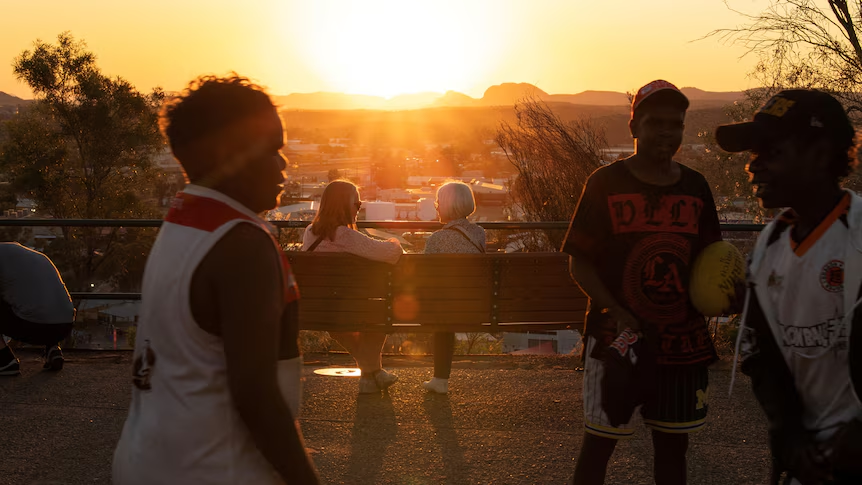
Pride Month – June 2024

Pride Month is an annual, dedicated month that focuses on and celebrates LGBTQ++ people and their history. Pride Month has its roots in the Stonewall Uprising, which occurred in New York City in June 1969. The uprising was a turning point in the LGBTQ+ rights movement, sparked by a series of protests against police harassment and discrimination. The following year, the first Pride marches were organised to commemorate the anniversary of the uprising. The first related march in Australia was held on 24 June 1978 in the form of the Sydney Gay and Lesbian Mardi Gras.

BlaQ Aboriginal Corporation is an Aboriginal community-controlled organisation committed to empowering the Aboriginal Torres Strait Islander LGBTQ+SB community through innovation, inclusion, understanding and advocacy. In an Instagram post a couple of days ago BlaQ Aboriginal Corporation said, “This Pride Month, we honour the vibrant and deadly spirit of our Aboriginal & Torres Strait Islander LGBTQ+SB community. From our Lesbian, Gay, Bisexual, Trans Mob, Queer, Sistergirl, and Brotherboy family, your stories are the heartbeat of our community.”

“Your journeys, rooted since time immemorial and blossoming in the face of adversity, remind us of the strength and beauty within us all. Let’s celebrate your courage, amplify your voices, and create a world where every identity is embraced with love and respect.”

You can find out more about Pride Month here and the BlaQ Aboriginal Corporation here.

flag in rainbow colours & Aboriginal art by Wiradjuri & Birpai man, Wayde Clark

Artwork by Wiradjuri and Birpai man, Wayde Clark. Image source BlaQ Aboriginal Corporation Instagram post 1 June 2024.

3 June 2024

The NACCHO Aboriginal and Torres Strait Islander Health News is a platform we use to showcase the important work being done in Aboriginal and Torres Strait Islander health, focusing on the work of NACCHO, NACCHO members and NACCHO affiliates.

We also share a curated selection of news stories that are of likely interest to the Aboriginal and Torres Strait Islander health sector, broadly.

Organ donation would be higher if more education

Leslie Schultz spent years watching birds flit past his window. But without their song in his ears, the scent of eucalypts in his nostrils nor the glorious outback sun on his back, the sight only made him homesick for the bush. For the Ngadju Elder, spending hour after hour, day after day, shut inside was one of the worst things about kidney failure. Sometimes it felt his entire life revolved around sitting in a chair, waiting for toxins to be flushed from his blood.

That was until the kindness of a stranger and their family gave him back his freedom. According to a recent inquiry, Australia’s organ donation and transplantation rates are among the lowest in the developed world, and only 36% of eligible adults are on the organ donation register. In 2022, 34 people died while on the waiting list for an organ.

Indigenous West Australians are among those most impacted by the shortfall. The community experiences chronic kidney disease at almost seven times the rate of the wider population — the biggest disparity of all Australian jurisdictions — yet, for a range of complex reasons, are far less likely to ever have the life-saving procedure.

To view the ABC News article Organ donation content rates would be better if there were more education about it, advocate says in full click here.

older ATSI man Leslie Schultz in hospital for kidney transplant

Leslie Schultz had his transplant about three years ago. Photo supplied by: Les Schultz. Image source: ABC News.

NT remote communities way behind on menstrual health

The NT is “behind the rest of Australia” regarding period health, claims a leading menstrual health advocate, who is calling on the Lawler government to make tampons and pads more accessible for remote communities. The claim comes after the Albanese government pledged $12.5m in period products toward remote Indigenous communities as part of the 2024–25 Budget announced in May. Rochelle Courtenay, who founded Share the Dignity – a not-for-profit charity dedicated to making period products accessible to vulnerable women says “The top half of Australia is where we spend most of our (organisation’s) money supporting women.”

This year, Share the Dignity launched a nationwide survey – the Big Bloody Survey – to understand the issues that Australian women face. The survey, which remains live, has garnered more than 150,000 responses so far, however less than 2,000 of the respondents were Territory-based. “There are barriers – not everyone has a laptop or even knows there is an online survey and because of that we don’t hear their voice.” Ms Courtenay said the survey’s preliminary findings were “really sad”. “So far, we know more than 25% of Australian women can’t afford period products and we know that in remote Indigenous communities this is much higher,” she said.

NT Health Minister Selena Uibo said her government had facilitated and signed 15 Local Decision Agreements where the community voices their priorities and are involved in solutions that work for their communities, which often include health priorities. “As part of this, close to half the Territory’s remote primary health centres are run by ACCHOs with local leadership for decision making.” Ms Courtenay, however, said the Territory had engaged with her organisation the least of any jurisdiction and maintained she would reapproach the NT government in the coming months.

The above is an extract from the article Northern Territory’s remote communities ‘way behind’ on menstrual health, says Share the Dignity founder published in the NT News yesterday, 2 June 2024.

NT Health Minister Selena Uibo

NT Health Minister Selena Uibo says the government has empowered local communities to make decisions around health issues. Image source: NT News.

Health campus native landscape use improving wellbeing

Health campuses across Australia can improve wellbeing for both patients and staff by incorporating the natural environment using biophilic design. Biophilic design is an architectural approach to the built environment that enhances human function through nurturing connectivity with nature. It seeks to improve cultural security and health outcomes for Indigenous peoples who are over-represented in Australian hospitals.

A volunteer project at Royal Darwin Hospital (RDH) is using native landscapes to adapt to climate while enhancing wellbeing, Indigenous cultural security and local biodiversity. Hospital-based care at RDH may be world-class from a Western perspective, but imposes cultural challenges for Indigenous patients who constitute almost 31% of the NT’s population but 56% of inpatients and 83% of renal dialysis patients. National Indigenous rates of “discharge against medical advice” are five times higher than than non-Indigenous rates, reflecting culturally unsafe hospital environments.

The causes for this disparity are complex, but encompass patients reporting loneliness, isolation and lack of cultural safety. 70% of Territorians who live remotely are Indigenous and reside in one of 600 communities or remote outstations. Access to specialist care by these patients comes at a price: separation from country, supportive family networks and place-based spiritual, cultural and healing practices that include the use of bush medicines. Many Indigenous patients prefer to sit outside where they can also avoid constraint by walls and the built environment. This creates a double jeopardy of reducing access to health care that the Western paradigm restricts to hospital interiors, and socialises the perverse view of Indigenous “non-compliance” with ward-based care.

To view the InSight+ article Top End hospital leads the green revolution in health care in full click here.

vegetation planted at the Royal Darwin Hospital

Vegetation planted at the Royal Darwin Hospital. Photo: Mark de Souza. Image source: InSight+.

Football team missing three future leaders this season

WARNING: Aboriginal and Torres Strait Islander readers are advised that this article contains the name of an Indigenous person who has died, used with the permission of their family. This article also contains references to suicide.

Kids and teenagers flock to an AFL field of a coastal Aboriginal community, 1,000 kms east of Darwin to watch the men of the Djarrak football club. Run by Elders of the Rirratjiŋu clan, Djarrak is one of four Aussie Rules clubs on the Gove Peninsula, where kids grow up on the sidelines of the footy field. But three of the club’s brightest leaders will be missing this season. The three Yolŋu men died in a series of sudden tragedies last year. The health crisis in north-east Arnhem Land is also playing out in First Nations communities across the NT and Australia. According to the AIHW, of the 10 Indigenous regions in Australia with the highest rates of avoidable deaths in 2018, six were in the NT.

Steve Rossingh, CEO of Miwatj Health, an ACCHO in NE Arnhem Land says that without the strong cultural leadership of Elders Yolŋu health would be far worse. But Mr Rossingh says barriers in the region including severe overcrowding, limited job opportunities, feelings of disempowerment and the impacts of colonialism and racism make it difficult to have a healthy lifestyle. “If you wanted to nail it onto one thing, it’s that people are living in poverty – which is really hard to believe in a first-world country like Australia, that we’ve got big cohorts in pockets of the country where people are living in poverty,” he says.

And when Yolŋu die young, Mr Rossingh says, the impacts ripple throughout the community, “They are the future leaders, and the less future potential leaders you have, the greater the difficulty in maintaining culture and maintaining order within communities.”

To view the ABC News article Arnhem Land football team without three future leaders this season following series of sudden tragedies in full click here.

Miwatj Health workers at a health promotion stand at the scratch match

Miwatj Health workers at a health promotion stand at the scratch match. Photo: Lillian Rangiah, ABC News.

If you need someone to talk to, call:

Call for First Nations Board member EOIs

The Australian Physiotherapy Council (the Council) is the accreditation authority for physiotherapy education and overseas practitioners who wish to practice physiotherapy in Australia. The Council’s purpose of ‘Ensuring tomorrow’s physiotherapy workforce through providing world class accreditation and assessment services’ is underpinned by a passionate and committed team of people.

As part of their ongoing commitment to diversity and representation, the Council are currently recruiting several Board member roles, including another First Nations Board member to join their Chair Elect Michael Reynolds.

For more details about the role and the application process, please refer to the Call for Expression of Interest, here. If you have any questions or require further information, please do not hesitate to contact the Council’s Company Secretary Emily Wiltshire here.

Australian Physiotherapy Council logo & vector image ATSI hand holding weight tile from CAAC physiotherapy webpage

Image sources: Australian Physiotherapy Council website; Central Australian Aboriginal Congress Physiotherapy webpage.

Sector Jobs – you can see sector job listings on the NACCHO website here.

Advertising Jobs – to advertise a job vacancy click here to go to the NACCHO website current job listings webpage. Scroll down to the bottom of the page to find a Post A Job form. You can complete this form with your job vacancy details – it will then be approved for posting and go live on the NACCHO website.

Mabo Day – 3 June 2024


Mabo Day is marked annually on 3 June. It commemorates Mer Island man Eddie Koiki Mabo and his successful efforts to overturn the legal fiction of terra nullius, or ‘land belonging to no-one’. Short for Mabo and others v Queensland (No 2) (1992), the Mabo case, led by Eddie Koiki Mabo, an activist for the 1967 Referendum, fought the legal concept that Australia and the Torres Strait Islands were not owned by Indigenous peoples because they did not ‘use’ the land in ways Europeans believed constituted some kind of legal possession.

Despite the fact that Aboriginal and Torres Strait Islander peoples occupied the land, spoke their own languages and had their own laws and customs before the British arrived in 1788, ‘Terra nullis’ was an attempt to give ‘legitimacy’ for the British and Australian governments to allow the dispossession of all Indigenous peoples of their land. Aboriginal and Torres Strait Islander people also had – and continue to have – a strong connection to ‘Country’ – the Australian land.

The Mabo case was heard over ten years, starting in the Queensland Supreme Court and progressed through to the High Court of Australia. Following the Mabo decision, Australia’s Federal Parliament passed the Native Title Act 1993 which established a legal framework for native title claims throughout Australia by Aboriginal and Torres Strait Islander peoples. Sadly, Eddie Mabo died 5 months before the historic decision came on 3 June 1992 that ‘native title’ did exist.

You can find more information about Mabo Day and Native Title on the Reconciliation Australia website here.

artwork of Eddie Mabo by Gordon Bennett

Eddie Mabo by Gordon Bennett 1996. Image source: Queensland Art Gallery website.

World Eating Disorders Action Day – 2 June 2024

World Eating Disorders Action Day is a grassroots movement designed for and by people affected by an eating disorder, their families, and the medical and health professionals who support them. Uniting activists across the globe, the aim is to expand global awareness of eating disorders as genetically linked, treatable illnesses that can affect anyone. The below list contains nine truths about eating disorders:

  • Many people with eating disorders may look healthy, yet they may be extremely ill.
  • Families are not to blame, and can be the patients and providers best allies in treatment.
  • An eating disorder diagnosis is a health crisis that disrupts personal and family functioning.
  • Eating disorders are not choices, but serious biologically influenced illnesses.
  • Eating disorders affect people of all genders, ages, races, ethnicities, body shapes, weights, sexual orientation, and socio-economic status.
  • Eating disorders carry an increased risk for both suicide and medical complications.
  • Genes and environment play important roles in the development of eating disorders.
  • Genes do not predict who will develop eating disorders.
  • Full recovery from an eating disorder is possible. Early detection and intervention are important.

You can find more information about eating disorders, including resources for Aboriginal and Torres Strait Islander people, on the Butterfly Foundation website here.

13 May 2024

The NACCHO Aboriginal and Torres Strait Islander Health News is a platform we use to showcase the important work being done in Aboriginal and Torres Strait Islander health, focusing on the work of NACCHO, NACCHO members and NACCHO affiliates.

We also share a curated selection of news stories that are of likely interest to the Aboriginal and Torres Strait Islander health sector, broadly.

Indigenous women most affected by family violence

This article contains information on deaths in custody and the violence experienced by First Nations people in encounters with the Australian carceral system. It also contains references to and the names of people who are now deceased.

As the country reels from women being killed due to violence, government has responded by calling urgent meetings and roundtables to address this national crisis. This must properly include Indigenous women, who experience shocking levels of family and domestic violence, and sexual assault. It must be recognised women are not a homogenous, collective group. The issues experienced by non-Indigenous women are not always the same as those experienced by Indigenous women. As such, it is imperative the voices of Indigenous survivors, researchers and advocates in addressing violence are fully heard and respected in the current debate.

According to recent research led by Kyllie Cripps, Aboriginal and Torres Strait Islander women are 32 times more likely to be hospitalised for injury associated with violence than non-Indigenous women. They are eight times more likely to be a victim of homicide. This figure is higher in some areas, such as WA, which recorded Aboriginal mothers as 17.5 times more likely to be a victim of homicide. Recently, the Domestic Family and Sexual Violence Commission convened an emergency roundtable. However, there are still concerns the outcomes of the roundtable do not respond to the serious and ongoing structural and systemic barriers Indigenous women face.

There are also concerns a significant investment recently announced in WA will not support Indigenous women. They’re based largely on an expansion of existing services, police, child protection and corrections, and non-Indigenous service responses. These decisions were made contrary to the states own Aboriginal family violence policy and in the absence of research or evidence base. Indigenous women have long argued for systemic reforms that address the underlying drivers of violence, support victim-survivors, ensure justice and demand accountability for offenders. This means not every support service can be for all women. They need to be tailored to meet the specific needs of Indigenous women.

To view The Conversation article Indigenous women are most affected by domestic violence but have struggled to be heard. It’s time we listened in full click here.

protest placard or Aboriginal flag with words 'Enough Is Enough'

Image source: The Conversation.

Australian Mental Health Prize nominations open

As nominations open for the 2024 Australian Mental Health Prize, Professor Maree Toombs, a proud Euahlayi and Kooma woman, is urging the community to recognise the unsung heroes championing mental health support, especially within Indigenous communities. Professor Maree Toombs, last year’s winner of the Professional category, has been at the forefront of developing culturally appropriate strategies to address the disproportionate mental health challenges faced by First Nations people.

In a conversation with NITV Radio Professor Toombs explained how her work has been driven by listening to the needs of her communities. “Through yarning with mob, I learned that mental health, suicide, and chronic diseases were the crucial areas requiring research and action,” Professor Maree Toombs said. “This insight led to the creation of the ground-breaking I-ASIST program, the first Indigenous-led and designed suicide intervention training in Australia.” I-ASIST empowers communities with life-saving skills tailored to their unique experiences incorporating traditional lands and cultural connections. “Suicide intervention training gives people the tools to support their families, friends, or community members who may be struggling with thoughts of ending their own life,”

As nominations open for the 2024 Mental Health Prize, Professor Toombs encourages everyone, especially within First Nations communities, to put forward the names of those who have dedicated themselves to improving mental health outcomes. “Together, we can break down stigmas, raise awareness, and create a future where mental well-being is prioritized for all.”

To  listen to, or read the transcript of, the NITV Radio podcast episode Indigenous mental health champion Professor Maree Toombs calls for nominations in full click here.

Professor Maree Toombs on tile for NITV Radio podcast with title 'Indigenous mental health champion Professor Maree Toombs calls for nominations'

Professor Maree Toombs, a proud Euahlayi and Kooma woman, has revolutionised mental health and suicide prevention within Indigenous communities and exemplifies the transformative power of culturally attuned practices. Image source: SBS NITV Radio.

Record high imprisonment due to policy failure

This article contains information on deaths in custody and the names of deceased people, and describes ongoing colonial violence towards Aboriginal and Torres Strait Islander people.

First Nations people in Australia are the most imprisoned people in the world. This unenviable record is consolidating rather than receding. In 2023, First Nations people accounted for 33% of the prison population – an all-time high. This mass incarceration is highly disproportionate: Indigenous people make up only 3% of the country’s population, yet they are 17 times more likely than non-First Nations people to be imprisoned. We refer to this as “hyperincarceration”.

This situation is the culmination of centuries of racism, punitive policy and persistent failures to listen to Aboriginal and Torres Strait Islander people. But understanding the drivers of such high levels of incarceration is key to dismantling them. The “law and order” mantra that has swept Australia since the 1990s has steadily driven up imprisonment rates. This is sometimes referred to as First Nations people being set up to fail. In reality, it’s policy that’s failing. Challenges that ought to be dealt with through public health measures (the effects of trauma, mental illness and addiction) are instead criminalised. Coupled with systemic racism in criminal law processes, the state has created a perfect storm for increased First Nations imprisonment.

In 2017, the Australian Law Reform Commission forensically analysed racism at every stage of criminalisation. The data shows police are more likely to arrest and charge First Nations people, bail is more likely to be denied to First Nations people, all-white juries are more likely to convict First Nations people, and sentencing courts are more likely to imprison First Nations people.

To view The Conversation article First Nations imprisonment is already at a record high. Unless government policy changes, it will only get worse in full click here.

Protesters marked the 30th anniversary of the Royal Commission into Aboriginal Deaths in Custody in 2021

Protesters marked the 30th anniversary of the Royal Commission into Aboriginal Deaths in Custody in 2021. Photo: Richard Wainwright, AAP. Image source: The Conversation.

Bush camp on front line of efforts to reduce youth crime

New data shows youth crime rates are increasing for the first time in more than a decade, while recidivism rates have been steadily increasing year to year. The Yiriman diversionary program for kids in the Kimberley, run by the Kimberley Aboriginal Law and Culture Centre, aims is to get at-risk Indigenous kids away from the temptations of town, and immerse them in culture and good health and personal pride. But the Yiriman project is yet to secure funding to be sustainable and expand. The program is surviving on a modest WA government grant, and some money scrounged from Commonwealth mental health funding.

The camp targets those who have been arrested on minor charges, or those considered at risk of getting in trouble in the future. The reasons the kids are on the streets and involved in crime in northern towns are simultaneously complex and simple. But underpinning their behaviour is a context of what some community leaders fear is intensifying household dysfunction among a small portion of the population, fuelled by overcrowding, alcohol abuse and intergenerational trauma.

In one recent example, a Broome magistrate acquitted a 15-year-old girl of stealing charges after the court heard she was homeless and hungry when she stole a bottle of water. “It’s not the children who are the problem … these children are just responding to their environment,” Magistrate Deen Potter commented during the court hearing.

To view the ABC News article Emotions run high at bush camp on front line of efforts to reduce youth crime in northern Australia in full click here.

Aboriginal kids at the Yiriman camp using plastic bucket as makeshift basketball ring

A plastic bucket is repurposed as a makeshift basketball ring by kids at the Yiriman camp. Photo: Erin Parke, ABC News.

CDU to establish NT’s first locally-run medical school

The NT’s first locally-run medical school is set to open in the next few years, after receiving almost $25m in federal funding to get it off the ground. The $24.5m in funding will grant 40 Commonwealth-supported student places to the program, a collaboration between the NT’s only university, Charles Darwin University (CDU) and Menzies School of Health Research. The only medical training in the territory at the moment is a rural health-focused program run by SA’s Flinders University, in partnership with CDU.

Thevini Abeywardana is likely to be one of the first students to be enrolled in the new course. The current CDU biomedical science student has wanted to become a doctor since childhood, but until now hasn’t been able to study medicine without leaving the NT. She missed out on a spot in the Flinders-run NT program, and was offered a spot at a Tasmanian university but ultimately turned it down to stay close to family.

Dr Stephens said the school was confident of securing annual funding for 40 students a year, with a vision of growing to 120 students within the next five years — a figure she cited as necessary to fill the current gaps in the NT’s under-stress health system. “We are desperate for medical workforce [staff] across the board. It’s in the hospitals, it’s in the Aboriginal-controlled community sector, and it’s in general practice,” she said. “There is a medical workforce deficit across the country, and it is amplified and much worse in the NT.”

To view the ABC News article Charles Darwin University wins funding to establish the NT’s first locally-run medical school in full click here.

architect image of new building to house CDU medical school

The new building that will house Charles Darwin University’s medical school. Photo: Charles Darwin University. Image source: ABC News.

Sector Jobs – you can see sector job listings on the NACCHO website here.

Advertising Jobs – to advertise a job vacancy click here to go to the NACCHO website current job listings webpage. Scroll down to the bottom of the page to find a Post A Job form. You can complete this form with your job vacancy details – it will then be approved for posting and go live on the NACCHO website.

International Nurses Day – Sunday 12 May 2024

International Nurses Day (IND) in held each year in May, the anniversary of Florence Nightingale’s birth.

Despite being the backbone of health-care provision, nurses often face financial constraints and their role is frequently undervalued. This year’s IND theme Our Nurses. Out Future. The economic power of care. aims to reshape perceptions of nursing, demonstrating how strategic investment in nursing can bring considerable economic and societal benefits.

The day highlights the vital role of nurses play and showcases the efforts to create evidence-based knowledge on nursing and to influence national policies that will lead to the provision of high-quality, accessible, equitable, efficient and sensitive health services.

The Congress of Aboriginal and Torres Strait Islander Nurses and Midwives (CATSINaM) is the peak advocacy body for Aboriginal and Torres Strait Islander Nurses and Midwives in Australia. CATSINaM’s purpose is to lead the nursing and midwifery workforce to improve health outcomes for Aboriginal and Torres Strait Islander people. You can find more information about CATSINaM on their website here.

You can also find more information abound International Nurses Day on the International Council of Nurses website here.

tile text 'International Nurses Day 12 May 2024' graphic images of gloves, mask, needle, stethoscope etc

Image source: Shutterstock.

Kidney Health Week – 11–17 May 2024

Kidney Health Week, also known as Kidney Action Week, aims to raise awareness about kidney disease in Australia.

Kidney disease has a big impact on Australians; 1.7 million Australians are affected by kidney disease and it is the 10th most common cause of death in Australia. According to the Australian Bureau of Statistics, over 50 people die from kidney related disease every day.

One in five First Nations Australians have signs of kidney disease. Aboriginal and Torres Strait Islander people experience disproportionate levels of kidney disease, regardless of whether they live in urban, regional or rural areas. Compared with the general population, they are twice as likely to develop kidney disease and four times as likely to die from kidney disease. In remote and very remote areas of Australia, the incidence of kidney failure among Aboriginal and Torres Strait Islander people is especially high, with rates up to 20 times higher than those of comparable non-Indigenous peoples.

Kidney Health Australia (KHA) says raising awareness about kidney health is not enough. We need ACTION! KHA are calling all Australians to take kidney disease seriously by understanding their risk of getting this incurable disease. Waiting for symptoms to appear is too late – you can lose 90% of kidney function without experiencing any symptoms. Taking action is simple. It only takes 2 minutes. KHA are calling all Australians to do the 2 minute online kidney risk test here.

You can find more about kidney health on the Kidney Health Australia website here.