NACCHO Sector News: 18 September 2025

Aboriginal and Torres Strait Islander Health News

The NACCHO Sector News is a platform we use to showcase the important work being done in Aboriginal and Torres Strait Islander health, focusing on the work of NACCHO, NACCHO members and NACCHO affiliates.

We also share a curated selection of news stories that are of likely interest to the Aboriginal and Torres Strait Islander health sector, broadly.

First Nations Wellbeing Conference comes to Magandjin for the first time

First Nations Wellbeing Conference returns in 2025 for its fifth year, and this year is set to bring record delegate numbers, for this first-ever trip to Magandjin/Brisbane.

The Conference (IWC25), hosted by the Australian & New Zealand Mental Health Association (ANZMHA) across October 20-21, will gather Indigenous and non-Indigenous professionals, Elders, community leaders, researchers, and practitioners to strengthen cultural identity, celebrate community resilience, and chart diverse pathways to health and wellbeing for First Nations Australians, Māori, and Pasifika peoples

Following last year’s record-breaking gathering in Aotearoa – New Zealand, IWC25 brings the conversation back to Australia, providing a powerful opportunity to reflect, learn, and collaborate on Indigenous-led approaches to flourishing futures.

This year’s theme, ‘Walking Together, Flourishing Together: Pathways to Indigenous Wellbeing’, highlights the importance of cultural connection, ancestral wisdom, climate stewardship, youth empowerment, and Indigenous models of care in shaping stronger, healthier communities.

Get more information on this conference.

Deanne Broome, Aunty Caroline Busch from Catholic Care NT, Dr Kriscia Tapia, and John Ryan at the 2023 Indigenous Wellbeing Conference in Darwin. Image: University of Sydney..

Deanne Broome, Aunty Caroline Busch from Catholic Care NT, Dr Kriscia Tapia, and John Ryan at the 2023 Indigenous Wellbeing Conference in Darwin. Image: University of Sydney..

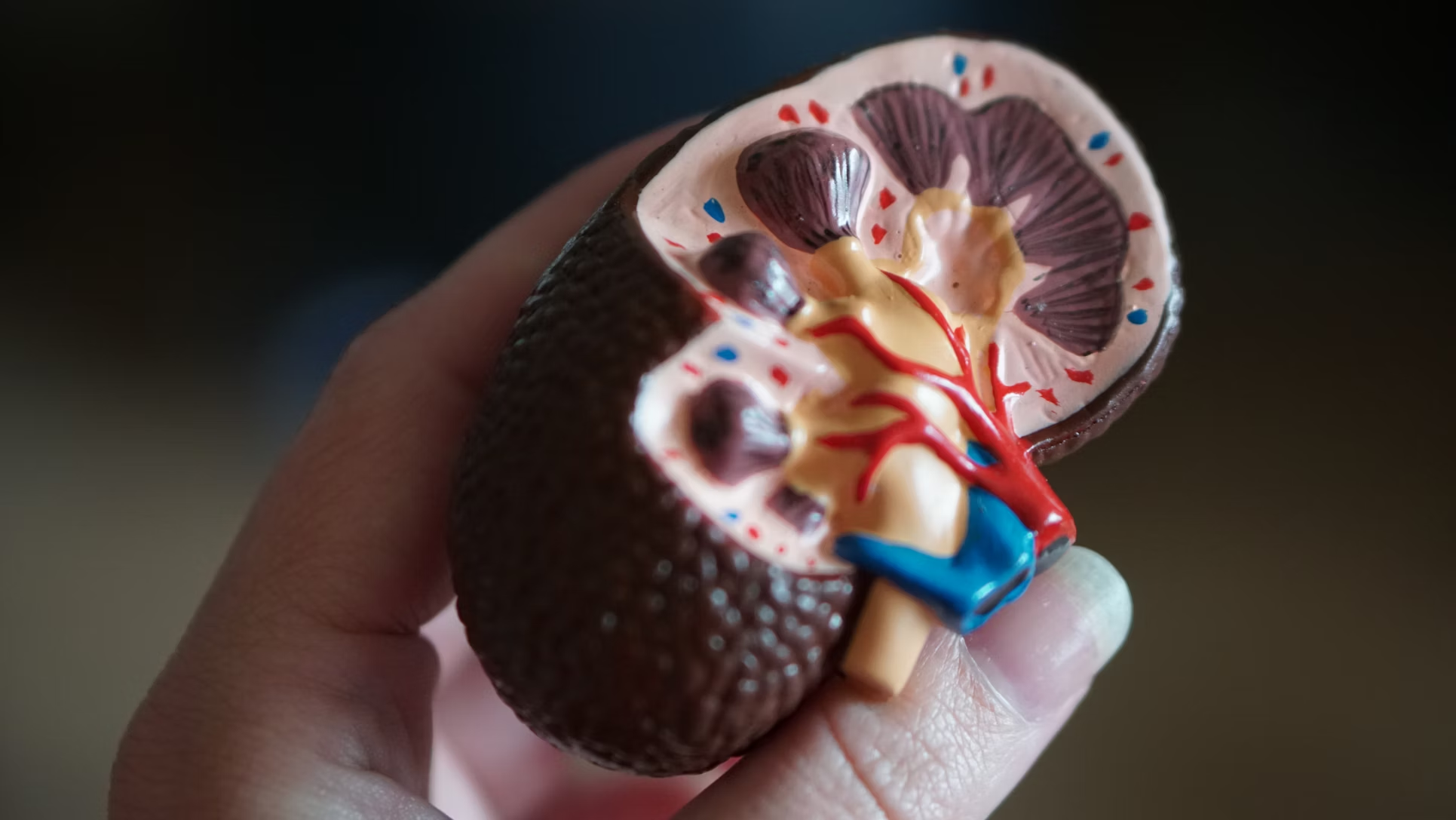
Kidney care program changing lives in Cape York

A Weipa-based team of clinicians delivering culturally centred kidney care to residents in six communities of the Westen Cape region is having a dramatic effect on progression of serious kidney disease and dialysis in the region.

Torres and Cape Hospital and Health Service (TCHHS) Dr Natalie Pink presented findings of the remarkable results of the Cape York Kidney Care team during the Cairns and Hinterland Hospital and Health Service Research Symposium on Friday.

The study found the number of people commencing dialysis in the western Cape had more than halved since the start of the CYKC service in 2020.

The CYKC team is made up of a rural generalist doctor, renal nurse practitioner, dietitian and Aboriginal and Torres Strait Islander health worker and currently sees around 400 patients across six communities – Aurukun, Pormpuraaw, Kowanyama, Napranum, Weipa and Mapoon.

Read the full article.

Staff from the Cape York Kidney Care team (l-r) Nurse Practitioner Kimberley Withers, dietitian Kaylah Schroeter, Dr Natalie Pink and Program Manager Natasha Wellby

Staff from the Cape York Kidney Care team (l-r) Nurse Practitioner Kimberley Withers, dietitian Kaylah Schroeter, Dr Natalie Pink and Program Manager Natasha Wellby

VACCHO: New aged care system could deepen inequality for First Nations Elders

Victoria’s former Treaty Commissioner has warned that upcoming changes to Australia’s aged care system risk becoming “yet another barrier” to closing the gap.

From November 1, the federal government will begin rolling out the Support at Home program, which will replace the existing Commonwealth Home Support Program (CHSP) and Home Care Packages (HCP) system.

The government says the changes respond to the Royal Commission into Aged Care Quality and Safety and are designed to provide a “simpler and more equitable system for older people that helps them to stay at home for longer.”

Support at Home will replace both the HCP and Short-Term Restorative Care (STRC) programs. The CHSP will transition to the new system no earlier than July 1, 2027, and will continue as a grant-funded program until then.

Read the full article.

VACCHO CEO Jill Gallagher.

VACCHO CEO Jill Gallagher. Image: Leroy Miller (First Peoples’ Assembly).

Meet the Kamilaroi gardener whose art is bringing joy to this children’s hospital

Brad Dodd spends his days tending to the gardens at Sydney’s Westmead Children’s Hospital, but his true passion brings even more colour into patients’ lives.
For Brad Dodd, bringing joy to others is the greatest privilege.

The Kamilaroi man has tended to the gardens at Westmead Children’s Hospital for more than five years.

He one of two gardeners maintaining the massive site on Dharug Country in Sydney’s West.
“I enjoy the instant satisfaction of when you cut grass and it looks neat and tidy once you’re done. It’s not a stressful job,” he laughed.

Much of the work is mowing, pruning and weeding, it means a lot to the young patients and their loved ones.

“It’s about having a nice place for kids to play, nice scenery for parents to come out and just chill for a bit too,” he told NITV.

“You just don’t know that that sort of impact has. It can make a big difference for people.

“I feel privileged to be part of that journey.”

Read the full article.

Brad Dodd is painting one of two large fibreglass cows which will stand in the gardens at Westmead Children's Hospital. Credit: Rachael Knowles

Brad Dodd is painting one of two large fibreglass cows which will stand in the gardens at Westmead Children’s Hospital. Credit: Rachael Knowles


Sector Jobs – you can see sector job listings on the NACCHO website here.

Advertising Jobs – to advertise a job vacancy click here to go to the NACCHO website current job listings webpage. Scroll down to the bottom of the page to find a Post A Job form. You can complete this form with your job vacancy details – it will then be approved for posting and go live on the NACCHO website.

Email us your story with some images to: NACCHOCommunicationsandMedia@naccho.org.au and we will feature it in the news.

Email us your story with some images to: NACCHOCommunicationsandMedia@naccho.org.au
and we will feature it in the news.

NACCHO Sector News: 9 September 2025

Aboriginal and Torres Strait Islander Health News

The NACCHO Sector News is a platform we use to showcase the important work being done in Aboriginal and Torres Strait Islander health, focusing on the work of NACCHO, NACCHO members and NACCHO affiliates.

We also share a curated selection of news stories that are of likely interest to the Aboriginal and Torres Strait Islander health sector, broadly.

Kidney doctor to highlight Cape York at national leadership conference | Cape York Weekly

A Cape York doctor working to improve kidney health in First Nations communities has been selected to represent the region at the Australian College of Rural and Remote Medicine (ACRRM) Emerging Leaders Conference.
Dr Natalie Pink was just one of 23 rural generalists from across the country to be invited to the inaugural event, which will be held in Western Australia from 19-21 October.
Her selection was based on her leadership of the Cape York Kidney Care program, which has shown promising results in slowing kidney disease progression and reducing the commencement of dialysis, thanks to the flexible, community-based model, and use of clinical yarning.

Read the full article

Dr Natalie Pink’s dedication to improving health outcomes in her community has earned her a spot at the Australian College of Rural and Remote Medicine Emerging Leaders Conference. Photo: Facebook (Indigenous General Practice Trainee Network).

Dr Natalie Pink’s dedication to improving health outcomes in her community has earned her a spot at the Australian College of Rural and Remote Medicine Emerging Leaders Conference. Photo: Facebook (Indigenous General Practice Trainee Network).

Business award finalist recognition for Orange Aboriginal Medical Service

An esteemed finalist award recognition highlights 20 years of achievements and dedicated work for the Orange Aboriginal Medical Service (OAMS).

As an Outstanding Community Organisation, OAMS is committed to delivering culturally safe, holistic health and wellbeing services for Aboriginal and non-Aboriginal people in the Central West.

From starting out with a team of five in 2005, OAMS now employs more than 140 professionals across general practice, allied health, dental care, mental health, suicide prevention, family services, NDIS, AOD and social and emotional wellbeing programs.

Their holistic approach ensures that health care is not just about treating illness, but about addressing the whole person, family and community context.

Read the full article

OAMIES Meg, dietitian, Ashley, allied health assistant trainee, Debbie, healthy aging manager, and Tara, community connector - healthy ageing.

OAMIES Meg, dietitian, Ashley, allied health assistant trainee, Debbie, healthy aging manager, and Tara, community connector – healthy ageing.

Buway Giz – Connection Before Correction: A Torres Strait restorative justice solution

For more than a decade I have worked in prisons, courts, and communities across Queensland. I have seen firsthand the cycle of incarceration that grips our people. I have sat with men behind bars who want to return to their families, with women who feel unsafe in their homes, and with young people who believe there is no future beyond the justice system.

Through all of this experience, one truth has become clear: the answers will not come from more prisons, more punishment, or more reports. The answers lie within our communities, our culture, and in approaches that restore relationships and responsibilities rather than simply punishing individuals.

Read the full article.

Ed Mosby, Senior Psychologist – Wakai Waian Healing

Ed Mosby, Senior Psychologist – Wakai Waian Healing

Dr Kelvin Kong is on a mission to make a difference in the lives (and ears) of children in rural communities

Dr Kelvin Kong is on a mission to make a difference in the lives (and ears) of children in rural communities. A middle ear infection is a rite of passage for most Aussie kids and is typically easily treated. However, for Aboriginal and Torres Strait Islander children, persistent infections can be life-altering. Thanks to telehealth, Kelvin is connecting remote health workers with specialists in Newcastle, getting treatments to children in just weeks.

See the full story.

Decorative image

Closing the genomics data gap in First Nations Australians: UNSW project nets ARC funding

It’s hoped the project will help make blood transfusions safer and more effective for First Nations Australians.

UNSW Sydney Professor Maree Toombs has been awarded $1.59 million from the Australian Research Council (ARC) to address a 60-year research gap in blood group genetics among First Nations Australians.

Aboriginal and Torres Strait Islander people who need blood transfusions currently face a higher risk of immune reactions, as for years they have been underrepresented in genomics data.

Prof. Toombs’ project aims to create the first large-scale map of blood group variation in Aboriginal and Torres Strait Islander peoples by utilising advanced DNA technology to map blood group genes and compile a detailed catalogue of genetic differences.

“This type of research is crucial because it fills a long-standing gap in understanding the blood group diversity of Australia’s First Peoples,” Prof. Toombs said.

“It could improve transfusion safety, lead to better medical treatments and create fairer blood typing methods.”

Read the full article.

Prof. Toombs says the underrepresentation of Indigenous Australians in genomics research has led to several serious challenges including blood transfusion complications.Photo: UNSW

Prof. Toombs says the underrepresentation of First Nations Australians in genomics research has led to several serious challenges including blood transfusion complications. Photo: UNSW

Landmarks turn red to raise awareness of hidden disability that affects up to one million Australians

Key Facts:

  • More than 70 Australian landmarks will light up red for Red Shoes Rock campaign, raising awareness of Fetal Alcohol Spectrum Disorder (FASD)
  • Up to one million Australians (3.64% of population) may have FASD, according to a new University of Sydney study that is the first ever to estimate prevalence in the general population of Australia
  • Alcohol consumed at any stage of pregnancy passes directly to the baby and can damage their developing brain, body and organs. This can lead to FASD, a lifelong disability
  • Campaign encourages wearing red shoes or socks in September to spark conversations about FASD and support alcohol-free pregnancies

More than 70 landmarks across Australia will light up in red today as part of Red Shoes Rock, a campaign to raise awareness of Fetal Alcohol Spectrum Disorder (FASD), a hidden and under-diagnosed disability that affects up to one million Australians.

The Red Shoes Rock campaign encourages people to wear red shoes or socks throughout September to spark conversations about FASD, and to create supportive communities for alcohol-free pregnancies.

Foundation for Alcohol Research and Education (FARE) CEO Ayla Chorley said alcohol consumed at any stage of pregnancy passes directly to the baby and can damage their developing brain, body, and organs, and this can lead to the lifelong disability called FASD.

“With the right supports and understanding from health professionals and communities, people who live with FASD can be given every opportunity to thrive. That’s why it’s so important to have conversations about FASD, and invest in prevention, early screening and informed supports,” she said.

Read the full article.

Decorative image

Sector Jobs – you can see sector job listings on the NACCHO website here.

Advertising Jobs – to advertise a job vacancy click here to go to the NACCHO website current job listings webpage. Scroll down to the bottom of the page to find a Post A Job form. You can complete this form with your job vacancy details – it will then be approved for posting and go live on the NACCHO website.

Email us your story with some images to: NACCHOCommunicationsandMedia@naccho.org.au and we will feature it in the news.

Email us your story with some images to: NACCHOCommunicationsandMedia@naccho.org.au
and we will feature it in the news.

NACCHO Sector News: 18 July 2025

The NACCHO Sector News is a platform we use to showcase the important work being done in Aboriginal and Torres Strait Islander health, focusing on the work of NACCHO, NACCHO members and NACCHO affiliates.

We also share a curated selection of news stories that are of likely interest to the Aboriginal and Torres Strait Islander health sector, broadly.

As Black families worry for their kids, new research shows the importance of culturally safe care

New research from headspace reveals that a majority of First Nation families are highly concerned for their young people’s mental well-being, a rate significantly higher than the general population. This concern is amplified by experiences like Kadijah McPherson-Jabateh’s, who found existing mental health systems to be ill-equipped and even oppressive for Black people, citing a lack of cultural understanding and First Nations staff.

Despite higher rates of community discussion about mental health among First Nations families, these conversations aren’t leading to increased professional help-seeking. Jacara Egan of headspace emphasizes the critical need for culturally safe and responsive services to ensure Aboriginal and Torres Strait Islander individuals receive understanding and support when they bravely seek help.

Read the full article.

Kadijah McPherson encountered problematic assumptions about their family life when seeking mental health support as a child.

Kadijah McPherson encountered problematic assumptions about their family life when seeking mental health support as a child.

PhD opportunities based with Onemda Aboriginal and Torres Strait Islander Health and Wellbeing

Please see two exciting PhD opportunities based with Onemda Aboriginal and Torres Strait Islander Health and Wellbeing at the University of Melbourne.

Research Degree Opportunity: Fostering a healthy start to life for Aboriginal and Torres Strait Islander families

Relighting the Firesticks is a community-based participatory research project. This research is based on our learnings and evidence from the pilot project, Healing the Past by Nurturing the Future (HPNF), and the scale up…

Learn more about this opportunity

PhD Scholarship Opportunity – Indigenous Health Equity Unit, Onemda – In Partnership with Nairm Marr Djambana

The Indigenous Health Equity Unit, Onemda (School of Population and Global Health), in partnership with Nairm Marr Djambana, is offering a fully funded PhD scholarship to undertake a community-led research project that supports the development and implementation of an evaluation framework for Aboriginal community programs.

Learn more about this opportunity

New nurse-led liver cancer support line fills critical care gap

The Liver Foundation has launched a nationwide, nurse-led support line offering free, specialised care to Australians diagnosed with primary liver cancer.

Until now, these patients, who are often managed outside traditional cancer centres, have had limited access to tailored support. The new service provides patients and carers with guidance from nurses experienced in liver cancer and liver disease.

It’s designed to bridge a long-standing care gap, particularly for people in regional and remote areas, Aboriginal and Torres Strait Islander peoples, and those with limited English proficiency.

Support is available for people diagnosed with liver disease or liver cancer; family, friends and carers of people diagnosed with liver disease or liver cancer; anyone who is supporting someone with liver disease, including friends, family, multicultural support workers, GPs, Aboriginal health workers; and anyone with general concerns about liver cancer symptoms or testing.

Read the full article.

With survival rates still alarmingly low, the Liver Foundation’s free initiative offers guidance for the 3000-plus Australians diagnosed each year.

With survival rates still alarmingly low, the Liver Foundation’s free initiative offers guidance for the 3000-plus Australians diagnosed each year.

Central Australia Justice Reinvestment initiative announced

The Albanese Labor Government has announced the latest initiative as part of the largest commitment to justice reinvestment ever delivered by the Commonwealth.

Central Australian Youth Link-Up Service (CAYLUS) will deliver Mampu-Maninjaku, a community-led crime prevention, alcohol and drug counselling, and diversion program.

This is the second initiative funded under the Justice Reinvestment in Central Australia Program and was selected following a rigorous assessment process undertaken by an independent panel.

The Mampu-Maninjaku initiative aims to reduce the over-representation of First Nations people in the criminal justice system. It will also target alcohol and drug use issues through a partnership consortium with the Australian Childhood Foundation and the Southern Tanami Kurdiji Indigenous Corporation.

Justice reinvestment is a long-term, community-led approach to preventing crime, improving community safety and reducing the number of Aboriginal and Torres Strait Islander adults and children in custody.

Read the full media release.

Sector Jobs – you can see sector job listings on the NACCHO website here.

Advertising Jobs – to advertise a job vacancy click here to go to the NACCHO website current job listings webpage. Scroll down to the bottom of the page to find a Post A Job form. You can complete this form with your job vacancy details – it will then be approved for posting and go live on the NACCHO website.


NACCHO Sector News: 25 June 2025

The NACCHO Sector News is a platform we use to showcase the important work being done in Aboriginal and Torres Strait Islander health, focusing on the work of NACCHO, NACCHO members and NACCHO affiliates.

We also share a curated selection of news stories that are of likely interest to the Aboriginal and Torres Strait Islander health sector, broadly.

New partnership to boost healthcare on Country

A landmark five-year partnership looks set to transform Aboriginal and Torres Strait Islander healthcare in remote communities across the Pilbara. The $5 million funding from Rio Tinto to the Pilbara Aboriginal Health Alliance will enhance vital Indigenous-led health care for families across the Pilbara and treat patients closer to Country.

For example, the new Tom Price Dialysis Unit – the partnership’s first project slated to open in 12-18 months – would provide transport, local accommodation and wraparound support for patients.

Construction of the renal dialysis unit, funded by the Federal Government, will operate six days a week and allow Aboriginal people to return home to Country while having treatment.

PAHA chief executive Ashley Councillor said the Rio partnership was significant for its community-led approach, with services tailored and enhanced to specific needs, priorities and aspirations of remote communities across the Pilbara.

Read more here.

Elder Kennedy Finlay at the PAMS Dialysis Centre in Newman.

Get the Facts: Supporting cervical screening in your community – webinar recording

This presentation was designed to provide education on self-collection in cervical screening and ways to support Aboriginal and Torres Strait Islander community members with this option.

Webinar hosted by Kate Armstrong from NACCHO, with presenters:

  • Professor Marion Saville from the Australian Centre for the Prevention of Cervical Cancer (ACPCC)
  • Nyheemah Cox from the Kimberly Aboriginal Medical Service (KAMS)
  • Dr Natalie Williamson from KAMS
  • Stephanie Long from Pika Wiya Health Service Aboriginal Corporation
  • Kylie Wagstaff from Albury Wodonga Aboriginal Health Service
  • Sally Conte from NACCHO

*This is a combined recording from two webinars held in July and August 2024.

Watch it here.

Image source: Own It

‘Celebrating the depth of our knowledge systems’

‘It’s an opportunity to celebrate the depth of our knowledge systems and showcase the role of First Nations peoples as the original scientists, health workers, and researchers on this continent.’

That is according to Lowitja Institute CEO Paul Stewart, speaking of this month’s International Indigenous Health and Wellbeing Conference.

The conference, held on Kaurna Country, Adelaide, from 16–19 June saw more than 1300 delegates gather to discuss health and wellbeing research from across Australia and internationally.

With more than 200 presentations, the conference prioritises First Nations voices, showcasing Aboriginal and Torres Strait Islander-led research, community controlled health innovations, and intergenerational knowledge exchange.

Read more here.

Donnella Mills, National Aboriginal Community Controlled Health Organisation Chair, giving her keynote address. (Image: Lowitja Institute, Dream Team Imaging)

Rural Australians’ ratings of Indigenous children’s books to support communication and literacy

Orange Aboriginal Medical Service (OAMS) co-presented on shared research ‘Rural Australians’ ratings of Indigenous children’s books to support communication and literacy’ at the recent Speech Pathology Australian National Conference in Adelaide.

The presentation from Sarah, CSU and OAMS CEO Jamie Newman was really well received, with Sarah saying that having Jamie’s voice really uplifted the impact of our message and inspired the audience.

Learn more about the conference here.

Image source: OAMS

‘Through Our Lens’ photo competition closing soon

Applications for the Coalition of Peaks First Nations-focused photography competition ‘Through Our Lens’ close this Friday 27 June.

Share the images that capture Country, culture, community, leadership, and/or transformation through your lens to win up to $1,500 in prizes.

Don’t miss out – submit your entry today.

Image source: Coalition of Peaks

Sector Jobs – you can see sector job listings on the NACCHO website here.

Advertising Jobs – to advertise a job vacancy click here to go to the NACCHO website current job listings webpage. Scroll down to the bottom of the page to find a Post A Job form. You can complete this form with your job vacancy details – it will then be approved for posting and go live on the NACCHO website.

NACCHO Sector News: 27 March 2025

The NACCHO Sector News is a platform we use to showcase the important work being done in Aboriginal and Torres Strait Islander health, focusing on the work of NACCHO, NACCHO members and NACCHO affiliates.

We also share a curated selection of news stories that are of likely interest to the Aboriginal and Torres Strait Islander health sector, broadly.

Aboriginal and Torres Strait Islander groups cautiously optimistic about budget

Money for early childhood development, mental health and infrastructure have left Aboriginal and Torres Strait Islander peak organisations with a feeling of ‘cautious optimism’ following the 2025 federal budget.

Much of the spending allocated in Tuesday night’s budget had been announced previously, including $50 million already earmarked to reduce the price of essential grocery items in remote communities.

Minister For Indigenous Australians Malarndirri McCarthy said she was “very pleased” with this effort towards food security in remote communities, and efforts to tackle rheumatic heart disease, with $11.4 million in the budget to establish or upgrade 12 laundry facilities in remote communities.

To read the full article, go here.

Indigenous Australians Minister Malarndirri McCarthy welcomed simple measures to improve lives. (Lukas Coch/AAP PHOTOS)

Rolling wrap of health sector reaction to the Budget

Many health initiatives in the Federal Budget had already been announced, although no doubt additional items of interest will be uncovered by those reading the Budget papers closely.

Croakey Media links us to key documents, and also a rolling wrap of reaction.

​To read more, go here.

Treasurer Jim Chalmers delivering the 2025-2026 Federal Budget

Plant-based diet trial boosts health for people living with kidney disease

World first research trial shows simple dietary changes can improve gut health and reduce toxins

New research from the University of Wollongong (UOW) has found that a diet rich in diverse plant foods can significantly benefit people living with chronic kidney disease (CKD).

To read the media release, go here.

Associate Professor Kelly Lambert says a diet rich in diverse plant foods can significantly benefit people living with chronic kidney disease. Photo: Michael Gray

Needs-based funding is a must for Aboriginal and Torres Strait Islander communities to access legal services

This powerful statement from Karly Warner, CEO of the Aboriginal Legal Service NSW/ACT, comes in response to Victoria’s controversial youth bail laws. Warner and other legal and community leaders are warning that such policies disproportionately harm Aboriginal and Torres Strait Islander children.

To read more, go here.

Victoria’s bail laws are being challenged (Image: Dechlan Brennan)

Disaster Resilience, Risk Reduction Projects – CLOSES Wed 2.4.25 – National

Funding is available for projects that support disaster resilience and risk reduction, including those that:

  • increase the understanding of natural disaster impacts, build resilience to future disasters and/or reduce natural disaster risk
  • target one or more eligible natural hazard types
  • deliver enduring benefits for communities at risk of future eligible disasters
  • involve one or more eligible activity types in the built, social, natural and/or economic domains.

For further information, applicants should contact the Lead Agency in their jurisdiction.

Sector Jobs – you can see sector job listings on the NACCHO website here.

Advertising Jobs – to advertise a job vacancy click here to go to the NACCHO website current job listings webpage. Scroll down to the bottom of the page to find a Post A Job form. You can complete this form with your job vacancy details – it will then be approved for posting and go live on the NACCHO website.

Sector News newsletter: 25 February 2025

The NACCHO Sector News is a platform we use to showcase the important work being done in Aboriginal and Torres Strait Islander health, focusing on the work of NACCHO, NACCHO members and NACCHO affiliates.

We also share a curated selection of news stories that are of likely interest to the Aboriginal and Torres Strait Islander health sector, broadly.

WA Aboriginal Health Council welcomes remote food plan, urges expansion to all communities

The Aboriginal Health Council of Western Australia (AHCWA) has expressed strong support for the federal government’s initiative to implement price caps on food and essential items in remote stores.

This policy is seen as a significant step towards improving food security and health outcomes in remote Aboriginal and Torres Strait Islander communities.

AHCWA emphasises that while this initiative is commendable, expanding its reach to include all communities would ensure broader access to affordable, nutritious food, promoting better health and well-being across the state.​

To read the full article, go here.

Prices of non-perishable items in remote Australia set to be capped under a federal government price levelling policy. Image supplied (via ABC).

Prices of non-perishable items in remote Australia set to be capped under a federal government price levelling policy. Image supplied (via ABC).

Pilbara Health Services strengthened in Aboriginal and Torres Strait Islander healthcare and dialysis support

Aboriginal and Torres Strait Islander communities in the Pilbara region will benefit from a $54.2 million investment aimed at expanding life-saving healthcare services and keeping people connected to Country.

A new eight-chair dialysis facility and renal hostel in Karratha, will provide local access to critical treatment, reducing the need for long and disruptive trips to Perth. This expansion builds on the four-chair dialysis unit recently opened at Karratha Health Campus, demonstrating a strong commitment to improving renal care in the region.

Additionally, Wirraka Maya Aboriginal Health Service in South Hedland will expand culturally appropriate healthcare services for Aboriginal and Torres Strait Islander communities. This upgrade will increase access to essential health services, including renal dialysis and dental care, ensuring local solutions for community health needs.

​To read more, go here.

Pilbara MLA Kevin Michel and Health Minister Amber-Jade Sanderson at Karratha Health Campus. Credit - Madelin Hayes

Pilbara MLA Kevin Michel and Health Minister Amber-Jade Sanderson at Karratha Health Campus. Credit – Madelin Hayes.

Malarndirri McCarthy on closing the gap

​The results in the latest Closing the Gap report are grim.

Only five of the 19 targets are on track, and Aboriginal and Torres Strait Islander incarceration rates are rising. But is the policy itself part of the problem?

To listen to the podcast, go here.

Malarndirri McCarthy. Image - www.nit.com.au.

Malarndirri McCarthy. Image: http://www.nit.com.au.

Kimberley Aboriginal Women’s Council head Janine Dureau honoured at Awards for Excellence in Women’s Leadership

​Kimberley Aboriginal Women’s Council chief executive Janine Dureau has been announced as the 2025 WA Award recipient of the Australian Awards for Excellence in Women’s Leadership.

This award celebrates exceptional Australian women who encourage change and make important contributions to advancing equity across all facets of our society.

The Australian Awards for Excellence in Women’s Leadership were created to honour women leaders nominated by the public for their outstanding contribution and lasting impact across business, government, and community in delivering positive outcomes for women, girls or other groups facing disadvantage.

Ms Dureau is a founding member of the Kimberley Aboriginal Women’s Council and prior to the KAWC, she was integral in leading campaigns including Stop the Forced Closures of Aboriginal Communities.

To read more, go here.

Janine Dureau. Image supplied. Picture - www.nit.com.au

Janine Dureau. Image supplied. Picture: http://www.nit.com.au

NACCHO Maternal and Child Health Newsletter

NACCHO is excited to introduce our bi-monthly Maternal and Child Health Newsletter subscription!

To sign up, go here.

Image credit: NACCHO

Image credit: NACCHO

Sector Jobs – you can see sector job listings on the NACCHO website here.

Advertising Jobs – to advertise a job vacancy click here to go to the NACCHO website current job listings webpage. Scroll down to the bottom of the page to find a Post A Job form. You can complete this form with your job vacancy details – it will then be approved for posting and go live on the NACCHO website.

NACCHO Sector News: 14 February 2025

The NACCHO Sector News is a platform we use to showcase the important work being done in Aboriginal and Torres Strait Islander health, focusing on the work of NACCHO, NACCHO members and NACCHO affiliates.

We also share a curated selection of news stories that are of likely interest to the Aboriginal and Torres Strait Islander health sector, broadly.

An innovative study, co-designed by Aboriginal Women, has led to remission of type 2 diabetes

The research described and measured how using Shared Medical Appointments, continuous glucose monitors and a sustainable, culturally relevant food program can develop self-management knowledge, skills and motivation to drastically improve glycaemic control in Aboriginal and Torres Strait Islander women.

The groundbreaking study is the first of its kind in Australia, led by South Coast Women’s Health and Wellbeing Aboriginal Corporation (Waminda) in collaboration with Southern Cross University and the Australasian Society of Lifestyle Medicine.

Lead investigator and Southern Cross University lecturer Associate Professor John Stevens said of the 25 women who’d been living with diabetes for more than 10 years, seven women completely reversed their diabetes for at least 12 months, and 18 women reduced their blood sugars to a healthier level.

Hayley Longbottom, Waminda Chief Executive Leader for Health and Wellbeing and co-author says the approach gives Aboriginal women the tools to feel in control to create self-determining outcomes.

“The Continuous Glucose Monitoring, alongside health coaching from diabetes educators, provided a unique experience for these women to learn about their own bodies and not only manage but reverse their diabetes, with Aboriginal Health Practitioners providing long-term support,” Ms Longbottom said.

“These women were empowered to make decisions about what was going to happen, which led to high engagement in the program and remarkable success.”

Read more here.

Women participating in the Waminda group

Stolen Generations survivors need support and urgent action from governments: new report

Nearly 30 years after the landmark Bringing them Home report made wide-ranging recommendations to bring healing and justice for the Stolen Generations, new research documents a collective failure by governments to act.

Only five of 83 recommendations made in the 1997 report have been clearly implemented in the ensuing decades, according to an analysis by University of Canberra researchers that is cited in a new report from the Healing Foundation.

The Healing Foundation’s report, ‘Are you waiting for us to die?’ The unfinished business of Bringing Them Home’, says the “woefully inadequate” responses of successive federal, state and territory governments have created further trauma and distress for the Stolen Generations, their families and wider communities.

The report makes 19 recommendations as part of a proposed National Healing Package for Stolen Generations survivors across six areas: reparations, rehabilitation and research, records, family tracing and reunions, acknowledgements and apologies, education and training, and monitoring and accountability.

Read the Croakey Health Media article here.

On the 17th anniversary of the National Apology to the Stolen Generations, more than 60 survivors and support people gathered in Canberra for the annual Apology anniversary breakfast at Parliament House. Image source: Healing Foundation.

AFL Social, Emotional and Cultural Wellbeing Framework

The AFL Social, Emotional and Cultural Wellbeing Framework drew upon the original work of expert SEWB advisors; Professor Helen Milroy AM, Professor Pat Dudgeon AM, Dr Graham Gee, Vanessa Edwige and Tanja Hirvonen.

This work has been contextualised within the framework for Australian Rules football through the lived experiences of Aboriginal and Torres Strait Islander peoples in the AFL.

Pat Turner, NACCHO CEO said:

“…SEWB is our foundation for physical, mental, and spiritual wellbeing. SEWB takes a holistic view of health. This Framework acknowledges, for the first time, the specific guidance on the importance of Social and Emotional Wellbeing and its determinants for Aboriginal and Torres Strait Islander players and people throughout the football Industry.

“The purpose of this Framework is to support the AFL Industry in contextualising SEWB for the AFL Industry and to provide guidance to AFL Clubs in strengthening SEWB.”

Read the framework here.

Image source: Centre of Best Practice in Aboriginal and Torres Strait Islander Suicide Prevention

The Gathering: a unique and powerful conversation to transform Indigenous kidney care

More than 120 people from across the country will come together next week for the second National Indigenous Kidney Transplantation Taskforce (NIKTT) Gathering, a landmark event focused on improving access to kidney transplantation for Aboriginal and Torres Strait Islander peoples.

Aboriginal and Torres Strait Islander patients, carers, and community members will sit and speak alongside non-Indigenous nephrologists, heads of renal units, and health system leaders and discuss how to create better pathways to transplantation and equitable care—ensuring that decisions about kidney health are shaped by the people most affected.

NIKTT’s National Community Engagement Coordinator, a Kaurna, Narungga, and Ngarrindjeri woman Kelli Owen, a kidney transplant recipient herself, said the event “is about making sure people with lived experience of kidney disease are at the centre of the conversation, not just as voices in the room, but as equal contributors in shaping solutions”.

Learn more here.

A scene from the 2022 Gathering. Image: NIKTT.

NACCHO Maternal and Child Health Newsletter EOI

NACCHO is excited to introduce our bi-monthly Maternal and Child Health Newsletter subscription!

To sign up, go here.

Sector Jobs – you can see sector job listings on the NACCHO website here.

Advertising Jobs – to advertise a job vacancy click here to go to the NACCHO website current job listings webpage. Scroll down to the bottom of the page to find a Post A Job form. You can complete this form with your job vacancy details – it will then be approved for posting and go live on the NACCHO website.

NACCHO Sector News: 3 February 2025

The NACCHO Sector News is a platform we use to showcase the important work being done in Aboriginal and Torres Strait Islander health, focusing on the work of NACCHO, NACCHO members and NACCHO affiliates.

We also share a curated selection of news stories that are of likely interest to the Aboriginal and Torres Strait Islander health sector, broadly.

Cervical screening merchandise available for ACCHOs

Promote cervical screening in your ACCHO! NACCHO currently has remaining cervical screening merchandise available to order (at no cost to ACCHOs) including:

  • Cervical screening polo shorts (please note we only have the following sizes in stock – small, 4XL and 6XL)
  • Self-swab lip-glosses (please note this is a health promotion tool, not a real swab)
  • Self-collection pouches (please note these are for use in the context of a self-collected Cervical Screening Test. Please do not distribute for health promotion purposes).

To place an order, go here.

FLIP THE VAPE: Anti-vaping campaign launched in VIC

The Koori Way, The Victorian Aboriginal Health Service (VAHS) Preventative Health Unit, in collaboration with Mo Works has launched ‘FLIP THE VAPE’ across Victoria. Given the rise of vape usage among young people, 10 young Koori’s across Victoria have taken the pledge to “FLIP THE VAPE” for good, encouraging young people to stop vaping for their health, their Community, and their Country.

From Mildura to Geelong to Bairnsdale to Shepparton and Melbourne, in most parts of Victoria you are likely come across our Flip The Vape campaign at Shopping Centres, on billboards, on public transport, street posters and on several social media platforms.

For support to quit, call Quitline on 13 78 48.

Image source: The Koori Way

Aboriginal homelessness target needed to provide accountability

Aboriginal and Torres Strait Islander leaders in Victoria have met with the federal housing minister to discuss the crisis of homelessness amongst Indigenous communities across the state. In a meeting hosted at the Ngwala Willumbong Aboriginal Corporation’s Homelessness Entry Point site, Labor Minister Clare O’Neil met with a number of organisations who are members of the Victorian Aboriginal Housing and Homelessness Forum (AHHF).

“This is a great first step in improving the state of housing for Aboriginal people in Victoria and ensuring that they have a safe home to live in,” Victorian Aboriginal Community-Controlled Health Organisation chief executive, Dr Jill Gallagher, said.

The gathering with Minister O’Neil focussed on several priorities, including the establishment of an appropriate Aboriginal homelessness target in Victoria.

AHHF chair and Aboriginal Housing Victoria chief executive, Darren Smith, said this would “provide the accountability needed to help close the gap”.

“Safe, secure, and culturally appropriate housing is essential to improving health and wellbeing outcomes in our communities,” Mr Smith said.

Read the full National Indigenous Times article here.

Aboriginal Housing and Homelessness Forum chair Darren Smith. (Image: supplied, Yoorrook Justice Commission)

Supporting equitable access to kidney transplant in remote WA

In the Kimberley, as in many other rural and remote regions of Australia, End-Stage Kidney Disease is a problem of epidemic proportions, creating a profound impact on communities and individuals forced to relocate from country to access treatment.

Research by Kimberley Renal Services, Royal Perth Hospital, and The Rural Clinical School of Western Australia found that their patients were either suitable for transplant workup or could improve their suitability with help improving their health risk factors and people want more support to achieve these changes. The results will be used to inform model of care development for transplant support within Kimberley Renal Services.

Full results from this study are available online here.

Image source: Unsplash.

Locals in the Torres Strait want homegrown doctors, but they say there are too many barriers

In 1999, Dr Karen Nicholls became the second ever Torres Strait Islander doctor known to graduate from university. Since then, she says there’s been a cultural shift in the health industry’s understanding of the valuable skill sets Indigenous professionals bring to the table.

“We become doctors, we become clinically good, but we can also provide cultural safety with the way in which we do things,” she said.

“…You cannot be clinically safe without being culturally safe – the two go hand in hand.”

Dr Nichols was part of a group of twenty Torres Strait Islander doctors that visited the Torres Strait last year, some connecting with their homelands for the first time. Organised by the Australian Indigenous Doctors Association (AIDA) and local Elders under the ‘Igilyawa Program’, doctors and students spent time in communities, schools, hospitals and local health services.

The report on the historic visit showed that 82% of the cohort were interested in coming home to work, and 100% were considering ways to further contribute to the health needs of Torres Strait Islanders.

AIDA CEO Donna Burns said the united voice of the doctors was powerful.

“These [doctors] expressed an interest in working back home with community, where we know the health disparity is so great,” she said.

“That cultural understanding will be so powerful in someone’s healing journey, and we are really committed to [advocating] to shake up a system.”

Read the full NITV article here.

Dr Karen Nicholls says being culturally safe means being clinically safe. Supplied: Carli Willis

Sector Jobs – you can see sector job listings on the NACCHO website here.

Advertising Jobs – to advertise a job vacancy click here to go to the NACCHO website current job listings webpage. Scroll down to the bottom of the page to find a Post A Job form. You can complete this form with your job vacancy details – it will then be approved for posting and go live on the NACCHO website.

13 November 2024

The NACCHO Sector News is a platform we use to showcase the important work being done in Aboriginal and Torres Strait Islander health, focusing on the work of NACCHO, NACCHO members and NACCHO affiliates.

We also share a curated selection of news stories that are of likely interest to the Aboriginal and Torres Strait Islander health sector, broadly.

Connected Beginnings National Gathering: Strong Born

NACCHO’s Maternal and Child Health team had the opportunity to promote Strong Born and Care for Kids Ears at the Connected Beginnings National Gathering on Kaura Country (Adelaide) last week.

Over 250 people at the conference were exposed to the Strong Born message, raising awareness of Fetal Alcohol Spectrum Disorder (FASD) and the harms of drinking alcohol while pregnant and breastfeeding.

At the event, Maternal and Child Health team distributed 110 Strong Born booklets, 50 Strong Born baby bucket hats, 42 Strong Born maternity tops, 25 Strong Born polo shirts, 2 Strong Born Baby Bags, 200 Care for Kids’ ears booklets and 100 Care for Kids’ Ears activity books and crayons.

The Strong Born animation was playing on the trade table over both days and received excellent feedback.

To learn more about Strong Born, go here.

To learn more about Care for Kids Ears, go here.

Baby Lyra in Strong Born merch.

More dialysis units for remote communities

Dialysis will be made available in more remote locations to allow Aboriginal and Torres Strait Islander people to stay closer to home and on Country during treatment for end-stage kidney disease.

Funding of $18.58 million has been made available for additional dialysis units under the third round of the Albanese Labor Government’s $73.2 million investment in Better Renal Services for First Nations Peoples.

This new grant opportunity will target seven remote locations:
•    Alekarenge (Ali Curung) (NT)
•    Galiwin’ku (NT)
•    Maningrida (NT)
•    Yuendumu (NT)
•    Jigalong (WA)
•    Warburton (WA)
•    Normanton (Qld).

Dialysis is essential, lifesaving treatment for patients with end stage kidney disease, which can otherwise only be treated by a kidney transplant. Aboriginal and Torres Strait Islander people are almost four times as likely to die from chronic kidney disease.

Aboriginal and Torres Strait Islander people in remote areas often travel hundreds of kilometres to access dialysis, making treatment difficult to maintain and resulting in poor health outcomes.

Providing dialysis treatment closer to home and on Country increases the likelihood of regular treatment, continued support and care from families and better management of health and wellbeing.

Read more here.

Image source: Purple House.

First Nations psychologists from around the world meet in BoorlooFirst Nations psychologists from around the world meet in Boorloo

A gathering of global Indigenous psychologists recently took place at the University of Western Australia on Whadjuk Noongar boodjar. Professor Pat Dudgeon, Chief Investigator of Transforming Indigenous Mental Health and Wellbeing and Australia’s first Indigenous psychologist, welcomed visiting scholars from Canada, the US, and New Zealand.

While in Boorloo, the cohort took the opportunity to visit Wungening Aboriginal Corporation and the Aboriginal Health Council of Western Australia (AHCWA) to network and share Indigenous knowledges from around the globe with local experts, and vice versa.

The public lecture centred around the theme ‘Mental Health is Political: Global Indigenous Struggles for Racial Justice and Collective Healing.’

“Indigenous research methods have shown community engagement and cultural empowerment is vital in understanding and addressing real-world issues,” Professor Dudgeon said.

The group of international Indigenous scholars and practitioners have committed to working together further in the future, collaborating on papers and research grants, and by continuing to share Indigenous knows of waying, being, and doing.

Read more here.

Image: supplied to National Indigenous Times.

NT Supreme Court ruling strengthens call for safe water in remote communities

In the wake of a landmark Northern Territory Supreme Court ruling, calls for safe drinking water are intensifying in remote Aboriginal and Torres Strait Islander communities after high fluoride levels were found to impair cognitive development in children.

A low dose of fluoride in drinking water has therapeutic purposes and reduces the likelihood of certain conditions, many of which require treatment with antibiotics, but the Central Australian communities of Nyirripi and Alpurrurulam (Lake Nash) have reported fluoride levels in their water that exceed the World Health Organisation’s safe limit, prompting concerns over children’s health and demands for swift governmental action.

The NT Supreme Court’s 2023 decision has been transformative for Indigenous rights to safe housing, legally mandating the NT government to provide potable water to its tenants. Originally centred on uranium contamination in Laramba’s water supply, the ruling set a precedent that empowers all tenants, particularly in remote Aboriginal and Torres Strait Islander communities, to demand access to safe, health-compliant drinking water.

Under the strengthened legal framework established by the NT Supreme Court, residents in communities facing unsafe water can now insist that the government meet minimum health standards for all tenants.

Read more here.

The remote community of Laramba (Image: Chris Taylor ABC news).

Sector Jobs – you can see sector job listings on the NACCHO website here.

Advertising Jobs – to advertise a job vacancy click here to go to the NACCHO website current job listings webpage. Scroll down to the bottom of the page to find a Post A Job form. You can complete this form with your job vacancy details – it will then be approved for posting and go live on the NACCHO website.

Cervical Cancer Awareness Week

Cervical Cancer Awareness Week (10-16 November 2024) is the Australian CervicalCancer Foundation’s annual awareness campaign. The cervix is the narrow passage that connects the vagina and the uterus (womb). Cervical cancer is the growth of cancerous cells in the lining of the cervix. Cervical cancer is usually caused by a HPV infection that stays in the body for a long time sometimes over 10-15 years without symptoms.

Why screen?

The Cervical Screening Test checks for the human papillomavirus (HPV), a common infection that can lead to cervical cancer.

Even if you’ve had the HPV vaccine, it’s still important to get regular Cervical Screening Tests. The vaccine doesn’t protect against all types of HPV that can cause cervical cancer.

Who needs to screen?

You should get a Cervical Screening Test every 5 years if you:

  • Are a woman or person with a cervix
  • Are between age 25-74 and
  • Have ever had sexual contact.

Where to screen:

You can get a Cervical Screening Test from most health clinics or services including your local Aboriginal Medical Service.

Cervical Screening Test options:

You have choices when it comes to your Cervical Screening Test:

  • Do the test yourself using a small self-swab.
  • Have a healthcare worker take a sample using a speculum to access your cervix. They can also assist with the self-swab if needed.

For more information, go here.

2024 NACCHO Members’ Conference

The 2024 NACCHO Members’ Conference will be held at the National Convention Centre Canberra, Ngunnawal and Ngambri Country, on Wednesday 4 and Thursday 5 December as part of a broader program commencing on Sunday 1 December with the NACCHO Men’s Health Day, NACCHO Youth Conference on Monday 2 December and the 2024 NACCHO Annual General Meeting and Extraordinary General Meeting on Tuesday 3 December. A Conference dinner will be held on Wednesday 4 December.

If you are thinking about coming to the NACCHO Conference, the only way to register is via the NACCHO Website – www.naccho.org.au/conference. We are using the secure Cvent system for registrations. NACCHO will not call you directly about registering for the conference.

 If you have any queries, please contact the NACCHO Conference Team: conference@naccho.org.au

To register, go here.

7 November 2024

The NACCHO Sector News is a platform we use to showcase the important work being done in Aboriginal and Torres Strait Islander health, focusing on the work of NACCHO, NACCHO members and NACCHO affiliates.

We also share a curated selection of news stories that are of likely interest to the Aboriginal and Torres Strait Islander health sector, broadly.

National roundtable to tackle food security in Aboriginal and Torres Strait Islander communities

NACCHO participated in a roundtable discussion hosted by Minister for Indigenous Australians Malarndirri McCarthy and Minister for Infrastructure Catherine King in Canberra, focused on enhancing food security and affordability in remote Aboriginal and Torres Strait Islander communities.

The Food Security Industry Roundtable gathered industry leaders, remote retailers, and community representatives to explore ways to improve remote supply chains and reduce the high cost of essentials like food, which is often double the price in remote areas compared to urban centres. Challenges include high operating costs and limited supply chains, which impact both price and quality of goods.

To read more, go here.

Food security roundtable participants in Canberra. Image - www.nit.com.au

Food security roundtable participants in Canberra on Wednesday. Image: http://www.nit.com.au

Community-led partnership to deliver sustainable dialysis services for remote Queensland communities

A new renal unit on Queensland’s Badu Island, will be providing vital dialysis services for Aboriginal and Torres Strait Islander communities on Badu, Mao, and Mabuyag Islands. This community-led project, will support Aboriginal and Torres Strait Islander people facing advanced kidney disease, allowing them to receive essential treatment closer to home rather than relocating to mainland Australia.

The project highlights the importance of cultural acceptance and community involvement in healthcare. The collaboration with local Elders to integrates community feedback and ensures that the initiative addresses local needs. They emphasise that having nearby treatment options can improve family wellbeing, as relatives often accompany patients forced to relocate for care. The Badu Island dialysis unit, part of the larger Kikirriu Dan Walmai (KDW) project, is one of many efforts focused on restoring health and sustainability for remote Aboriginal and Torres Strait Islander communities in the region.

To read more, go here.

Image Source: A partnership between the Wakaid Tribal Council and Flinders University's Rural and Remote Health is delivering sustainable renal dialysis services to communities on Badu Island, Mao Island and Mabuyag Island. (Image: Mailson Pignata/Getty Images)

Image Source: A partnership between the Wakaid Tribal Council and Flinders University’s Rural and Remote Health is delivering sustainable renal dialysis services to communities on Badu Island, Mao Island and Mabuyag Island. (Image: Mailson Pignata/Getty Images)

“Lives at risk” as Telstra cuts remote phone link

In remote Northern Territory, lives are at risk due to a sudden, week-long phone network shutdown affecting critical communication in Aboriginal and Torres Strait Islander communities, particularly in Ampilatwatja, northeast of Alice Springs. Telstra’s temporary suspension of 3G and 4G networks for upgrades has left Ampilatwatja Health Centre Aboriginal Corporation, which provides essential health services, unable to contact outstation health services.

CEO Darryl Coulstock highlighted the dangers, recounting a recent incident where an unconscious woman required an airlift for emergency care, only possible because a local resident drove to notify a nurse.

To read more, go here.

Credit: Lukas Coch (AAP).

Credit: Lukas Coch (AAP).

Malabar Midwives celebrate 18 years serving Aboriginal and Torres Strait Islander mums and bubs

The Malabar Midwifery Group Practice, also known as Malabar Midwives, recently celebrated its 18th anniversary, honouring its significant role in providing culturally respectful maternity care to Aboriginal and Torres Strait Islander women and families across New South Wales.

Since 2006, Malabar Midwives has supported over 1,500 births, fostering a continuity of care model that enables women to build strong relationships with their midwives throughout pregnancy, birth, and postnatal care. With two Aboriginal and Torres Strait Islander midwives on their team, Malabar Midwives operates with a 24-hour roster, ensuring families have access to a trusted caregiver at all times.

To read more, go here.

Image credit: The 18 year anniversary of the Malabar Midwives Aboriginal midwifery program was celebrated at the La Perouse Medical Centre on Wednesday. (Image: supplied)

Image credit: The 18 year anniversary of the Malabar Midwives Aboriginal midwifery program was celebrated at the La Perouse Medical Centre on Wednesday. (Image: supplied)

Yarn with me: Implementing Clinical Yarning to improve communication

The Clinical Yarning model, a culturally-focused communication framework will be implemented across the Midwest region to improve interactions between healthcare providers and Aboriginal and Torres Strait Islander patients. This model equips clinicians with practical skills to understand and integrate Aboriginal and Torres Strait Islander cultural perspectives into their practice, fostering culturally respectful communication.

Supported by the WA Department of Health’s Future Health Research Innovation Fund, the initiative provides both face-to-face and eLearning options. This training will benefit WA Country Health Service (WACHS) Midwest staff, with a particular focus on allied health, nursing, medical, and support staff, enhancing their cultural sensitivity and communication skills.

Ron Wynn, WACHS Midwest Executive Director, and Rani Randall, Regional Aboriginal Health Consultant, expressed strong support for the initiative, highlighting its potential to improve Aboriginal and Torres Strait Islander patient experiences and health outcomes by creating a culturally welcoming, responsive, and safe healthcare environment.

To read more, go here.

Sector Jobs – you can see sector job listings on the NACCHO website here.

Advertising Jobs – to advertise a job vacancy click here to go to the NACCHO website current job listings webpage. Scroll down to the bottom of the page to find a Post A Job form. You can complete this form with your job vacancy details – it will then be approved for posting and go live on the NACCHO website.