31 October 2024

The NACCHO Sector News is a platform we use to showcase the important work being done in Aboriginal and Torres Strait Islander health, focusing on the work of NACCHO, NACCHO members and NACCHO affiliates.

We also share a curated selection of news stories that are of likely interest to the Aboriginal and Torres Strait Islander health sector, broadly.

Central Australia health leader honoured as Menzies Medallion recipient

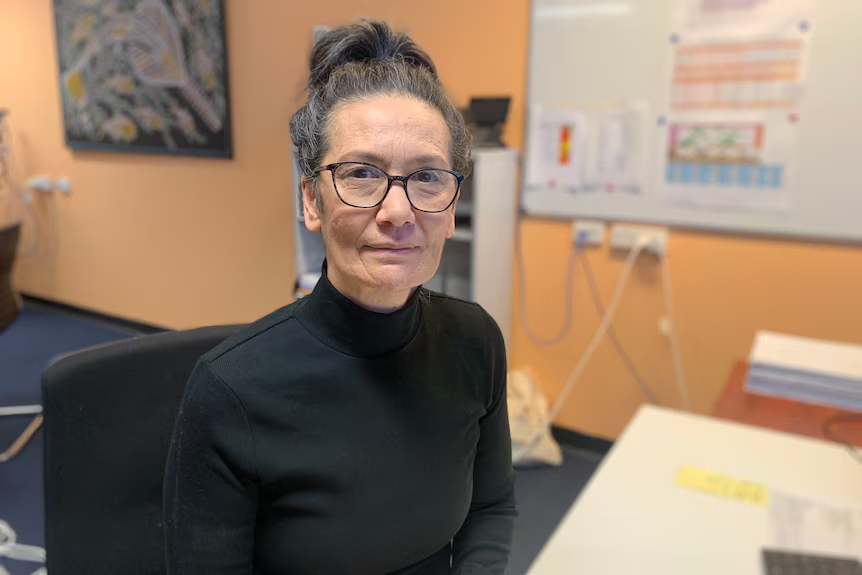
Dr Donna Ah Chee has been named as the recipient of the 2024 Menzies Medallion. The award is the highest offered by Menzies School of Health Research. Awarded by the Menzies Board, the honour recognises Dr Ah Chee’s outstanding health advocacy, leadership and unwavering commitment to working to create real and lasting improvements to the lives of all Territorians.

Dr Ah Chee, a proud Bundjalung woman who has called Central Australia home for over 30 years, serves as the chief executive of one of Australia’s largest Aboriginal Community Controlled Health Services; Central Australian Aboriginal Congress. The award acknowledges her significant contribution to improving the health and wellbeing of Central Australian Aboriginal communities.

“I am humbled to have been presented with the Menzies Medallion, especially in light of previous distinguished recipients of this award, especially those Aboriginal people whose leadership has been recognised,” she said.

“I accept the Medallion on behalf of the Board and staff of Central Australian Aboriginal Congress, because one thing I have learnt over my career is that Aboriginal Community Controlled Health Services like Congress really make a difference to the health of our communities.”

Read more, here.

Donna Ah Chee. Image: SBS.

119 students graduate from Nallei Jerring program

119 Aboriginal and Torres Strait Islander students have graduated from the Nallei Jerring program. The program, led by the Western Bulldogs Community Foundation (WBCF) provides a safe space for you Aboriginal and Torres Strait Islander people to join and unite in their shared cultural heritage, grow in confidence, and build a sense of community with others who share their culture.

Participants attended a workshop by the Victorian Aboriginal Health Service (VAHS) and Deadly Choices, a program dedicated to empowering Aboriginal and Torres Strait Islander peoples to make positive, healthy choices for themselves and their communities. This experience left a lasting impact, reinforcing the importance of health, culture, and community connection.

“In bigger spaces, it’s harder to share, but here we could talk about our culture and feel heard,” explained one participant.

“We built strong bonds here. It’s great to meet other young Indigenous people who understand where you’re coming from.”

Read more here.
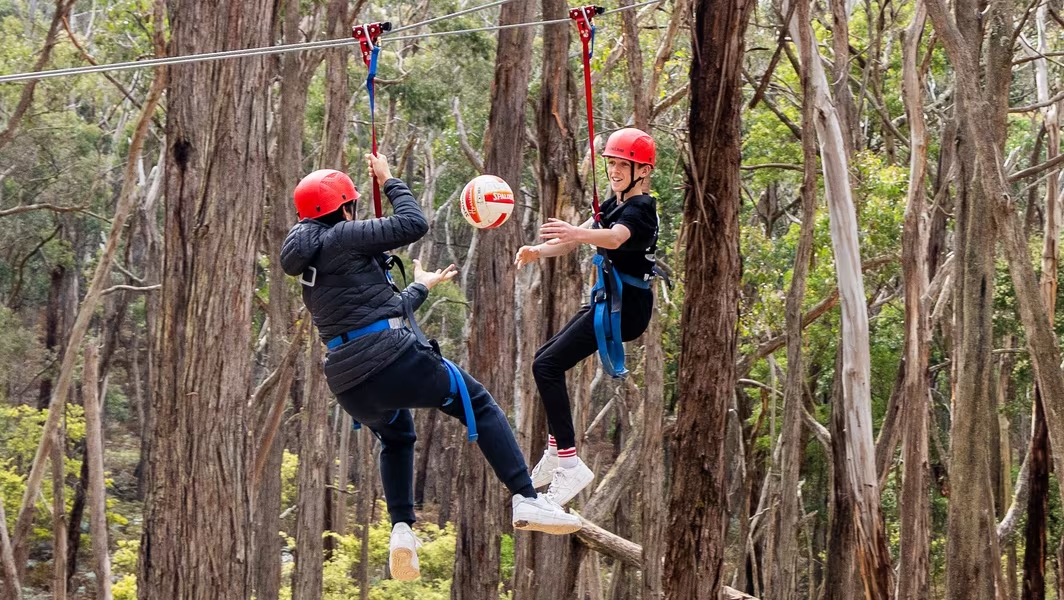
Nallei Jerring program graduates attending camp on Dja Dja Wurrung Country.

Bladder health campaign launched in Narrabri

A rural Aboriginal-led campaign focusing on the often sensitive topic of bladder control issues, such as incontinence, is urging Aboriginal and Torres Strait Islander communities to ‘have a yarn about our bladder’.

Hunter New England Local Health District alongside Narrabri, Armidale and Uralla Aboriginal Elders are sharing the important message ‘Speak up, there is no shame, and help is available’ through targeted new resources that focus on bladder health and treatment options.

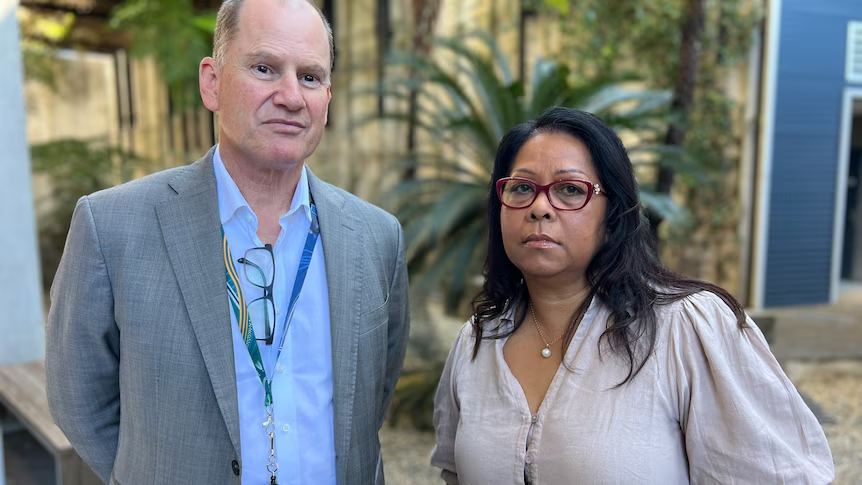
“Local Elders have driven the ‘Let’s have a yarn about our bladder’ project from the start, working in a true partnership with both Aboriginal and non-Aboriginal people and Hunter New England Local Health District clinicians,” said Angela Knox, Aboriginal Health Practitioner.

Read more here.

Karen Baker, Narrabri community nurse, Angela Knox, Narrabri project lead, and Tammy Baker, Narrabri Aboriginal liaison officer at the project launch held at Narrabri Hospital.

The Nyamal woman on a mission to build an army of Aboriginal and Torres Strait Islander psychologists

Nyamal woman Tracy Westerman grew up in some of the most remote parts of Western Australia, moving from a station to a town called Useless Loop, eventually landing in the mining town of Tom Price. She went on to become the first person who was educated entirely in Tom Price to go on to university.

When she arrived in Perth, she had never been on a bus or on an escalator, but she was fired up to study psychology.

Tracy wanted to use the skills she learned in the city to deliver practical mental health care to Aboriginal and Torres Islander people, and to help entire communities reeling from the impact of suicide and other mental health issues.

Along the way to obtaining her doctorate, Tracy has become a businesswoman, the WA Australian of the year, and she was awarded an Order of Australia Medal.

Her next mission is to build an army of Aboriginal and Torres Strait Islander psychologists to continue the work she’s already started.

Listen to the story here.

Tracy Westerman. Image source: ABC Listen.

Remote communities paying more than double capital city prices for groceries

People living in remote Aboriginal and Torres Strait Islander communities are paying more than double the capital city prices for everyday groceries; new research has found.

A basket of nine items, which included penne pasta, beef mince, teabags, carrots and Weet-Bix cost $99.38 on average at four remote community stores in Western Australia and the Northern Territory, the research by Choice found. The same items cost $44.70 when averaged out across Woolworths, Coles, Aldi and IGA stores in all of Australia’s capital cities, according to the consumer advocacy group.

Professor John Quiggin from the University of Queensland said government subsidies such as his state’s remote communities freight assistance scheme were a way to bring down prices.

“We need programs that reduce the cost of healthy food [in remote areas] and encourage people to have healthy diets,” he said.

“This is quite a separate problem from the problem we face in general, which is that prices have gone up and wages haven’t.”

To read more, go here.

Choice described the grocery price differences between remote Indigenous communities and Australian capital cities as ‘astounding’. Photograph: Alamy.

Sector Jobs – you can see sector job listings on the NACCHO website here.

Advertising Jobs – to advertise a job vacancy click here to go to the NACCHO website current job listings webpage. Scroll down to the bottom of the page to find a Post A Job form. You can complete this form with your job vacancy details – it will then be approved for posting and go live on the NACCHO website.

11 October 2024

The NACCHO Sector News is a platform we use to showcase the important work being done in Aboriginal and Torres Strait Islander health, focusing on the work of NACCHO, NACCHO members and NACCHO affiliates.

We also share a curated selection of news stories that are of likely interest to the Aboriginal and Torres Strait Islander health sector, broadly.

Gayaa Dhuwi (Proud Spirit) Australia calls for wellbeing and suicide prevention to be addressed “beyond the health system”

Content warning: this article contains reference to suicide. Please refer to the services at the bottom of this article for support.

Gayaa Dhuwi (Proud Spirit) Australia, the national peak body for Aboriginal and Torres Strait Islander social and emotional wellbeing, mental health, and suicide prevention, says Aboriginal and Torres Strait Islander health and wellbeing must be addressed beyond the health system.

In a statement issued Thursday the group noted that Aboriginal and Torres Strait Islander people “should have every opportunity to live happy and fulfilling lives… Instead, too many of our families are struggling with mental health challenges, continuing grief and trauma, and suicide”.

Rachel Fishlock Gayaa Dhwui chief executive said the organisation’s Declaration Implementation Plan and the NATSISPS provide positive ways for government and community to work together, “ensuring our people can get the support they need, where they seek it”.

The Gayaa Dhuwi Declaration Implementation Plan focuses on a “best of both worlds” approach to Aboriginal and Torres Strait Islander mental health, social and emotional wellbeing, and suicide prevention, promoting an appropriate balance of clinical and culturally informed mental health system responses.

To read more, go here.

Image source: Gayaa Dhuwi (Proud Spirit) Australia.

If this article brought up anything for you or someone you love, please reach out to, call or visit the online resources listed below for support.

Dignity for Elders within independent living community

A new independent living community for Aboriginal and Torres Strait Islander Elders has opened in Ballarat. The facility was a joint project between Ballarat and District Aboriginal Cooperative (BADAC), and the State Government, alongside input from Elders.

The living community is designed to provide a culturally safe space for Elders aged 50 years and over to live. There will be room for 16 Elders to live on site in eight self-contained one or two-bedroom units as well as a central hall for shared meals, managers’ quarters, medical treatment rooms and a vegetable garden.

Melissa Bray BADAC Community Home Support Program and NDIS manager said in the context of the Stolen Generation, it is important to provide Elders with a comfortable place to live.

“We found a need that a lot of our Elders were isolated, living on their own and being part of the Stolen Generation a lot of our Elders do not have families there to look after them and support them,” she said.

“That’s what’s important about the community that we have here today, it is to be able to support our Elders and be able to break that social isolation.”

Read more here.

Celebrating: Member for Eureka Michaela Settle unveiled a plaque outside the living community along with First Nations elders and members of BADAC. Photos: MIRIAM LITWIN.

Professor of genomics followed family path into medicine

Professor Alex Brown’s research into Indigenous genomics has been recognised with a fellowship with the Australian Academy of Technological Science and Engineering. Initially practising as a medical doctor, the Yuin man has had a career in Aboriginal and Torres Strait Islander health spanning 25 years.

Professor Brown’s focus on empowering Aboriginal and Torres Strait Islander people, identifying and overcoming health disparities, and addressing chronic disease in vulnerable communities led him to public health and research and the field of genomics.

“There’s a whole bunch of work around understanding what’s unique about Indigenous people’s genetic story, given we’ve been here for 65,000 years plus in Australia,” he said.

“That gives us a better way of understanding how people grow and develop in place, on Country for a long period of time, in a very stable, long-standing nexus between healthy people and healthy country.”

But to understand the genetic story of Aboriginal and Torres Strait Islander people, Professor Brown said communities had to be empowered to make their own decisions and their rights and interests protected.

To read NITV article, go here.

Medical doctor and genomics researcher Professor Alex Brown has been awarded a fellowship with the Australian Academy of Technological Science and Engineering. Credit: Ben McPherson/PR IMAGE.

New rural Aboriginal and Torres Strait Islander-led bladder health campaign launched in NSW

The first rural Aboriginal and Torres Strait Islander-led campaign focusing on the often sensitive topic of bladder control issues, such as incontinence, is urging Aboriginal and Torres Strait Islander communities to ‘have a yarn about our bladder’.

Hunter New England Local Health District alongside Narrabri, Armidale and Uralla Aboriginal and Torres Strait Islander Elders are sharing the important message ‘Speak up, there is no shame, and help is available’ through targeted new resources which focus on bladder health and treatment options.

Angela Knox, Aboriginal Health Practitioner and Narrabri Project Lead, Hunter New England Local Health District said Elders provide a vital understanding of how messaging on this sensitive topic is best communicated to the community, including in Men’s and Women’s business.

“This is the first initiative addressing this topic with an Aboriginal cultural lens, and we are excited that the work has been community-led. This is reflected by the artwork and language used in the resources and we hope these can be shared and adapted across NSW.”

To learn more, go here.

‘Have a yarn about our bladder’ launch. Image source: NBN News.

One Year On: Reflections from Yes

Join The Uluru Statement from the Heart this Sunday October 13, for a special online event. To mark the anniversary of the Voice Referendum the webinar will reflect and celebrate the efforts of our community.

On Sunday October 13, 7pm AEDT the webinar will feature Yes Campaigners and Uluru Dialogue figures as they share their favourite images from the Yes campaign and their personal reflections on these powerful moments.

Join Pat Anderson AO, Jill Gallagher, Professor Megan Davis, Sally Scales, Bridget Cama, Allira Davis,Dr Fiona Rowe Minniss and Geoff Scott as they reflect on the hard-fought Yes campaign. Moderated by Lucy Davis from Mob23, this photographic journey will capture the spirit of the campaign as we regroup and look ahead to what’s next.

To learn more, go here.

Image source: The Uluru Statement.

Sector Jobs – you can see sector job listings on the NACCHO website here.

Advertising Jobs – to advertise a job vacancy click here to go to the NACCHO website current job listings webpage. Scroll down to the bottom of the page to find a Post A Job form. You can complete this form with your job vacancy details – it will then be approved for posting and go live on the NACCHO website.

ACCHO Governance Workshops

Free, specialised governance workshops for ACCHOs will be delivered in multiple locations across the country during 2024 and 2025. 

Registrations are now open for:

  • Broome: 24-25 October

The program is delivered by legal experts and covers:  

  • Delegation of powers 
  • Finance for Boards
  • Governance documents
  • Managing conflicts of interest 
  • Managing risk  
  • Principles of good governance  
  • Structure and role of boards and sub-committees 

To register, go here.

For more information, please contact NACCHO using this email link.

27 September 2024

The NACCHO Sector News is a platform we use to showcase the important work being done in Aboriginal and Torres Strait Islander health, focusing on the work of NACCHO, NACCHO members and NACCHO affiliates.

We also share a curated selection of news stories that are of likely interest to the Aboriginal and Torres Strait Islander health sector, broadly.

New Jabiru Health Centre now open

The new Jabiru Health Centre is now officially open, with primary health services delivered by Aboriginal Community Controlled Health Organisation (ACCHO), Red Lily Health Board Aboriginal Corporation (Red Lily). The new $20 million purpose-built health centre will increase access to medical services in the West Arnhem region.

The new health centre features eight consulting suites, including paediatric rooms, four multi-purpose allied health examination rooms, a four-chair renal ready room, and a dental surgery complete with sterilisation and work rooms, dedicated male and female waiting areas and a health store.

Specialised facilities include an audiology consulting room with a hearing booth, an X-ray room, a four-berth morgue with a viewing area and an external, culturally appropriate ceremony area adjacent to the morgue.

There are also emergency capabilities at the health centre, such as a drive through ambulance bay and an emergency department with two resuscitation bays.

“Red Lily Health Board welcomes the opportunity to provide culturally-appropriate health care from a ‘purpose-built’ facility in Jabiru,” June Nadjamerrek, Chair of Red Lily Health Board.

To learn more, go here.

Image source: NT News.

Deadly Choices program expands to Winnunga

Deadly Choices, an initiative of the Institute for Urban Indigenous Health (IUIH), has significantly added 10 ATSICCHS to its footprint to deliver its signature health check incentive strategy. The program offers 80-plus shirt varieties which carry co-branded designs from NRL, AFL, Super Netball, Tennis Australia, Patty Mills and Professional Bull Riders to First Nations clients who complete a 715 Health Check (MBS 715 – Aboriginal and Torres Strait Islander specific health check focusing on key areas of risk).

Winnunga Nimmityjah Aboriginal Health and Community Services is the latest ATSICCHS to announce its intention to embed Deadly Choices in ACT, celebrating with a Community Day.

Julie Tongs, Winnunga CEO is excited to be hosting the Deadly Choices expansion program in Ngunnawal/Ngambri Country (Canberra).

“The Deadly Choices program is a great initiative, it is an important health promotion tool for our Mob who may not be engaged to come and have a 715 Health Check and receive a Deadly Choices shirt to wear in the community,” confirmed Ms. Tongs.

“Deadly Choices is about promoting healthy lifestyles through healthy eating, the importance of sport and physical activity, learning about the negative impacts of smoking & vaping and getting regular health checks to ensure healthy and strong families and communities.”

To read the article in full, go here.

Image source: Winnunga.

Ensuring First Nations children in VIC are school ready

The Australian Government is expanding the Connected Beginnings program in Bairnsdale, Victoria, with more than $2 million in funding. The Government partners with SNAICC National Voice for our Children and the National Aboriginal Community Controlled Health Organisation (NACCHO) to deliver the program.

The initiative supports First Nations children aged 0-5 by connecting them with early childhood education, health, and family services. The program aims to improve developmental outcomes and school readiness, contributing to the Closing the Gap targets. This expansion will benefit 100 local children and is part of a broader investment to support up to 20% of First Nations children nationwide.

To read the full media release, go here.

Image: Connected Beginnings | Early Years Program | SNAICC

CRAICCHS welcomes new CEO

A morning tea was held in Cherbourg on Wednesday to welcome the new CEO of the Cherbourg Regional Aboriginal & Islander Community Controlled Health Services (CRAICCHS). It provided an opportunity for community members and representatives from other local organisations to meet the new CEO, Jessica Scott, as well as CRAICCHS directors.

CRAICCHS chair Uncle Les Stewart did the Welcome to Country and shared the history of the organisation. Ms Scott introduced herself as a proud Narungga woman and shared her background in the industry, work in other communities and what led her to CRAICCHS.

To read the article in full, go here.

Chair Uncle Les Stewart, directors Tammy Brown and Jacqui Tapau and CEO Jessica Scott (Photo: CRAICCHS).

Lunch & Learn Webinar: Helping Mob Live Healthy and Prevent Cancer

The Cancer Institute NSW is pleased to offer a free webinar on using the Helping Mob Live Healthy and Prevent Cancer Toolkit to improve community awareness, access and participation in cancer screening and living healthy for cancer prevention.

  • Date: Tuesday 22 October 2024
  • Time: 12:00pm – 1:00pm AEST
  • Location: Online, via Microsoft Teams

Designed for people working in Aboriginal and Torres Strait Islander health, the webinar will focus on:

  • Accessing the Toolkit’s culturally tailored and strengths-based information as a platform to build your expertise and confidence in providing community education on screening programs, healthy living and quit smoking behaviours and support services.
  • Navigating and integrating the Toolkit resources into your day-to-day conversations with clients and/or local promotional activities.

To register, go here.

Image source: Cancer Institute NSW.

Sector Jobs – you can see sector job listings on the NACCHO website here.

Advertising Jobs – to advertise a job vacancy click here to go to the NACCHO website current job listings webpage. Scroll down to the bottom of the page to find a Post A Job form. You can complete this form with your job vacancy details – it will then be approved for posting and go live on the NACCHO website.
28 August 2024

The NACCHO Sector News is a platform we use to showcase the important work being done in Aboriginal and Torres Strait Islander health, focusing on the work of NACCHO, NACCHO members and NACCHO affiliates.

We also share a curated selection of news stories that are of likely interest to the Aboriginal and Torres Strait Islander health sector, broadly.

Help increase participation in the national cancer screening programs

We know cancer screening saves lives, but only around 50% of Australians eligible for the national cancer screening programs – BreastScreen Australia, National Bowel Cancer Screening Program and National Cervical Screening Program – complete the tests.

Australians diagnosed through the national cancer screening programs:

Research shows primary healthcare workers are key to motivating patients to participate in cancer screening.

In 2022, the Australian Government distributed GP cancer screening engagement packs to more than 7000 general practices across Australia including demo bowel screening kits, cervical screening swabs and waiting room posters.  This year new and updated kits will be mailed out, including translated materials, to distribute across practices to help encourage patients to screen for bowel, breast and cervical cancer.

The packs will include:

  • A3 posters, one for each national cancer screening program, with reminder messaging and information on how to book. We are encouraging practices and ACCHOs to hang these in waiting rooms and other high traffic areas to prompt conversations with healthcare professionals about cancer screening. Translations of the poster in over 20 languages will be available to be printed in-practice.
  • Demonstration samples of the bowel cancer screening home test kit and the cervical screening self-collection swab – these can be used to show patients how to do the tests.
  • Illustrated infographics on how to use the cancer screening tests and where to find educational resources on cancer screening. Translations of the illustrated guides will be available in over 20 languages online.

More information on cancer screening and resources for healthcare providers can be found on the Department of Health and Aged Care website.

The Australian Government Department of Health and Aged Care is seeking help from healthcare providers to increase participation in the national cancer screening programs (bowel, breast and cervical).

Eye Health 2024 Webinar Series: IUIH’s cataract pathway program

Join us on Wednesday September 4 (1-2 PM AEST) for the first of the Eye Health 2024 Webinar Series: IUIH’s cataract pathway program. ️

The Institute for Urban Indigenous Health (IUIH), a Southeast Queensland network of five Aboriginal and Torres Strait Islander Community Controlled Health Services, embeds eye health services within a primary care network.

This webinar will outline IUIH eye health pathways that provide holistic primary care services with a continuum into secondary and tertiary eye care.  These pathways demonstrate the importance of community-controlled health organisations as we provide the personalised approach ensuring continuous information flow for true patient-centred care. We will also yarn about our health promotion program Deadly Urban Eyes & the importance of regular eye checks.

Presenters:

  • Celia McCarthy: Celia was born and raised on Darumbal country, Central Queensland, and has called Southeast Queensland home since 1995. Celia’s role at the IUIH is Eye Health Services Manager.
  • Olivia Hillard: Olivia was born and raised on Turrbal Country, North Brisbane, and has worked as Eye Health Assistant at the Institute for Urban Indigenous Health for six years.

To register, go here.

Alice Springs leaders suggest alternatives to new CLP government’s promised crime reforms

Alice Springs organisations are advocating for alternative approaches to reduce crime, as the NT’s new CLP government pledges to toughen crime laws.

Donna Ah Chee, Central Australian Aboriginal Congress CEO said it was using $18 million from the federal government’s $250 million Alice Springs rescue package to treat a key driver of crime – young people suffering from brain development and mental health conditions. The NT’s youth detention royal commission found that many young people convicted of crimes have these conditions.

Ms Ah Chee is calling on both the new NT and federal governments to fund some new solutions.

“What we are advocating for is a long-term, secure care rehabilitation facility for traumatised kids, who have ongoing contact with the youth justice system,” she said.

“It would be mandated and therapeutic, and also ensures that they are reconnecting with education and training, and their family.”

Ms Ah Chee said Congress also wants a mandatory treatment facility for men perpetrating domestic violence, before or after prison.

To read the ABC News article in full, go here.

Donna Ah Chee said Congress wants young offenders to receive six months of mandatory treatment. (ABC News: Jane Bardon).

New ‘Super Kids’ ad helps families understand the importance of childhood immunisations

The Australian Government has launched new advertising for Aboriginal and Torres Strait Islander parents and carers reminding them about the importance of childhood vaccinations. The ‘Super Kids’ ad shows how being up to date with vaccinations means little ones can become superheroes who can help protect the entire community. This advertisement will be shown throughout Aboriginal Medical Centres and social media and as a reminder to get children vaccinated.

Vaccinations under the National Immunisation Program (NIP) are a safe, free and effective way to protect children and communities from diseases such as measles and whooping cough. Skipping or delaying vaccinations puts children and those around them at risk. Although in Australia we have high rates of childhood vaccination, recent data shows that routine childhood immunisation coverage rates have declined, particularly in Aboriginal and Torres Strait Islander communities.

We can contribute to growing vaccination rates by children receiving their free routine vaccines:

To learn more, go here.

The ‘Super Kids’ ad shows how being up to date with vaccinations means little ones can become superheroes who can help protect the entire community. Image source: Australian Government Department of Health and Aged Care.

Otitis Media Australia conference ‘Mob Only Day’

A key focus of OMOZ 2024 is the health and wellbeing of First Nations communities, who experience disproportionately high rates of chronic ear disease. Prominent Indigenous leaders, including Nathan Towney, Pro Vice-Chancellor of Indigenous Strategy and Leadership at the University of Newcastle, will emphasise the importance of Indigenous leadership in healthcare.

Professor Kong reiterated the significance of Indigenous voices attending the conference.

We want to ensure that Indigenous voices are not just heard but are central to the conversation. That’s why we’re dedicating the first day of the conference as a ‘Mob Only Day.’ It’s crucial that our communities lead the way in shaping solutions to the ear health challenges we face.”

For more information, go here.

Sector Jobs – you can see sector job listings on the NACCHO website here.

Advertising Jobs – to advertise a job vacancy click here to go to the NACCHO website current job listings webpage. Scroll down to the bottom of the page to find a Post A Job form. You can complete this form with your job vacancy details – it will then be approved for posting and go live on the NACCHO website.

16 August 2024

The NACCHO Sector News is a platform we use to showcase the important work being done in Aboriginal and Torres Strait Islander health, focusing on the work of NACCHO, NACCHO members and NACCHO affiliates.

We also share a curated selection of news stories that are of likely interest to the Aboriginal and Torres Strait Islander health sector, broadly.

“Social prescribing” another stolen Indigenous concept?

Holistic comprehensive care is the core of community-controlled primary care services for Aboriginal and Torres Strait Islander peoples. To achieve this, Aboriginal and Torres Strait Islander community-controlled health organisations (ACCHOs) have routinely delivered or connected people using these services since 1971 to address socio-economic and cultural determinants through a caring approach rooted in Indigenous knowledge and practices. ACCHOs also offer social and cultural connections to housing, education, and legal aid services.

There has been a surge in social prescribing research and policy interest globally. However, the ACCHO model has been delivering holistic care for patients and the community with a more sustainable workforce model that needs to be recognised, celebrated, replicated and shared nationally and globally.

A national funding model must be developed to adequately support the ACCHO sector, provide flexible, holistic care models, and expertly guide how the concept is adopted by primary care. While doing so, it is crucial to have a directory of culturally safe and responsive services, need assessment tools, and linking data on referrals and services to people to measure outcomes.

Importantly, Australian academics, policy makers and the primary care sector should acknowledge this long history and learn from it by looking to Indigenous models of “social prescribing” that address the holistic needs of people to guide the implementation of social prescribing programs in Australia.

To read more, go here.

ACCHO Map.

Meningococcal B outbreak in Yarrabah community near Cairns

Two cases of meningococcal B have been detected in Yarrabah, an Indigenous community near Cairns, with authorities on the lookout for more infections. Contact tracing has begun with close contacts of the infected children to be given antibiotics.

The meningococcal B vaccine is free for Aboriginal and Torres Strait Islander babies under the age of two and for people with specified medical risk conditions that make them more vulnerable to the invasive disease. An immunisation program will begin in Yarrabah next week focusing on about 50 close contacts, and catch-up vaccinations for those who are eligible.

Suzanne Andrews, CEO of Gurriny Yealamucka Health Service, said the cases were compounded by an ongoing influenza outbreak. The Aboriginal community-controlled health organisation will deliver vaccinations in people’s homes as well as in its clinic.

To read the ABC News article in full, go here.

Professor Paul Dugdale and Suzanne Andrews believe close contacts through overcrowding are compounding the issue. (ABC Far North: Christopher Testa).

Disaster resilience inquiry highlights the need for better mental health support

The need to protect and support the mental health and wellbeing of disaster-affected people and communities is a key focus of the final report of the Select Committee inquiry on Australia’s Disaster Resilience. Evidence given during the inquiry showed the significant mental health impacts on people who live through and respond to natural disasters.

Three of the ten recommendations in the final report, ‘Boots on the ground: raising resilience’, tabled last week, incorporate suggestions to better address mental health and wellbeing of people involved in natural disasters:

  • The Australian Government should establish a national disaster mental health hub to coordinate and provide mental health resources, training, and support for first responders and communities affected by disasters across the nation. This hub should serve as a comprehensive resource centre for addressing the mental health needs of all stakeholders involved in disaster response and recovery efforts.
  • The Australian Government should design and implement consistent national trauma-informed care principles, ensuring that first responders – both professional and volunteer – receive training and support in these national principles to better address the mental health and wellbeing of disaster-affected individuals and communities.
  • The Australian Government should convene a disaster resilience mental health summit to hear from all related agencies and stakeholders to identify solutions to the mental health impacts of disasters.

The inquiry – chaired by Senator Jacqui Lambie – conducted 17 public hearings and received 174 written submissions, ten of which were made by health and social service organisations including the Department of Health and Aged Care, Rural Doctors Association of Australia, Lifeline Australia, Kimberley Aboriginal Medical Services and Australian Council of Social Services.

To read the Croakey Health Media article in full, go here.

Flooded road near Windsor, Western Sydney, 2022. Photo by Wes Warren on Unsplash.

Kit the Koala: the mob-made animation destigmatising and embracing neurodivergence

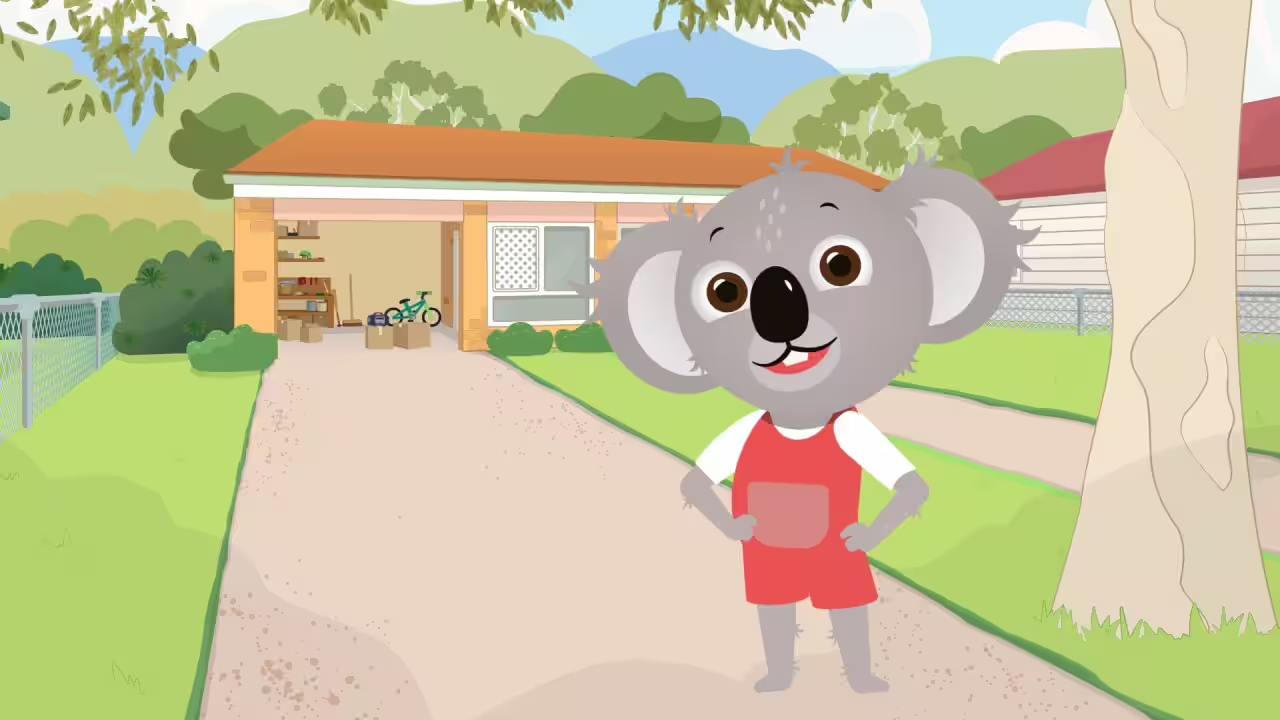
A two-part animated series developed by palawa woman Nicole Hewlett and the Strong Mothers group at Carbal Aboriginal Medical Service in Toowoomba, follows the adventures of Kit the Koala, who lives with fetal alcohol spectrum disorder (FASD). FASD is a term used to describe the life-long impacts on the brain and body that people can experience following prenatal exposure to alcohol.

“We hope to build the capacity of families to live well with those who have FASD and understand how we can better support our loved ones with FASD,” said Hewlett.

In the series, Kit is joined by a host of other cute characters – a possum living with autism, a wallaby with ADHD and a platypus with a combination of the two.

Hewlett, PhD student at the University of Queensland, has worked on strengths-based, healing-informed and trauma aware approaches to FASD for over ten years. She says the intention of the project is to change the narrative around neuro-divergence, especially FASD.

She said the project leans into the power of Aboriginal humour to connect with audiences and from start to finish, script, music and voices, is mob-made.

Carbal Aboriginal Medical Service brings together the Strong Mothers group to offer holistic support.

To read the NITV article in full, go here.

The Carbal Strong Mothers group hopes Kit the Koala will help people all over the country.

Waminda’s National Conference to highlight Birthing on Country

Waminda South Coast Women’s Health and Wellbeing Aboriginal Corporation is inviting all women and non-binary friends to come explore and experience the intricacies of Birthing on Country with the incredible team at Waminda’s National Conference taking place on the South Coast NSW from September 17 to September 19, 2024.

The two-day event is stacked with an incredible lineup of speakers and a dynamic and exciting agenda. During the conference the Waminda Executive Leadership team, Keynote Speakers, Waminda Program Managers and Coordinators, along with community leaders in the Aboriginal women’s health and wellbeing space will take you on a journey of looking back to celebrate how far Waminda has come; whilst giving insight into the now and inspiring what is emerging in Aboriginal women’s leadership, health, and wellbeing.

For more information and to register, go here.

Mel Briggs, Waminda Senior Balaang and Birthing on Country Manager.

Sector Jobs – you can see sector job listings on the NACCHO website here.

Advertising Jobs – to advertise a job vacancy click here to go to the NACCHO website current job listings webpage. Scroll down to the bottom of the page to find a Post A Job form. You can complete this form with your job vacancy details – it will then be approved for posting and go live on the NACCHO website.

23 July 2024

The NACCHO Sector News is a platform we use to showcase the important work being done in Aboriginal and Torres Strait Islander health, focusing on the work of NACCHO, NACCHO members and NACCHO affiliates.

We also share a curated selection of news stories that are of likely interest to the Aboriginal and Torres Strait Islander health sector, broadly.

Six remote urgent care clinics for the NT

Six Medicare Urgent Care Clinics (Medicare UCCs) will be established in remote regions of the NT providing free, culturally appropriate urgent care services to local communities. Existing remote urgent care clinics in Alyangula (Groote Eylandt), Wurrumiyanga (Tiwi Islands), and Maningrida (Top End Region) will transition to become part of the Medicare Urgent Care Clinic program. In addition, a further three remote clinics will also be established in Galiwinku (Elcho Island), Lajamanu (Big Rivers Region), and Ali-Curung (Barkly Region).

These locations were chosen in partnership with NT Health and Aboriginal Medical Services Alliance Northern Territory to better meet the needs of First Nations communities while also creating new workforce models and increasing the capacity of primary care services in remote areas.

Funding has been provided to expand the remote urgent care clinics through increased workforce support, additional infrastructure and equipment to support urgent care delivery. Current opening hours will also be extended.

These clinics have been adapted to operate differently to other Medicare UCCs across the country. This is because of the remote location of the clinics and the need to adapt to local circumstances, including workforce availability and limited medical services in the area.

In 2023–23, about 52 per cent of presentations to hospitals in the NT were for non-urgent or semi-urgent care. Establishing these new remote Medicare UCCs will help reduce the number of aeromedical retrievals, ease the burden of urgent conditions on existing primary care centres and provide care closer to home.

There are already two Medicare UCCs in the Northern Territory located in Palmerston and Alice Springs. There have been more than 582,000 visits across Australia since the first Medicare UCCs opened in June 2023, with more than 19,000 of these visits happening in the two NT clinics.

The six remote Medicare UCCs in the NT are part of the extra 29 clinics announced and funded through the 2024-25 Budget as part of a $227 million expansion of the Medicare UCC Program.

To read the media release in full, go here.

Upcoming Webinars – Get the facts: supporting self-collect cervical screening in your Community

NACCHO is hosting two CPD accredited webinars for healthcare workers on the cervical screening self-collection option. The webinars will focus on how to support Aboriginal and/or Torres Strait Islander women and people with a cervix in their cervical screening.

Did you know, rates of cervical cancer for Aboriginal and Torres Strait Islander women are three times the non-Indigenous population? The option to self-collect a Cervical Screening Test is one of our most effective tools in encouraging patients to undergo regular cervical screening. Offering under or never-screened patients the option to collect their own Cervical Screening Test provides greater choice and empowerment in screening and discussing screening in a culturally sensitive manner can remove many barriers to participation.

NACCHO will deliver one-hour webinars for staff from ACCHOs and AMSs. Other healthcare workers who work with Aboriginal and/or Torres Strait Islander patients can also attend. Come along to learn more about how we can increase cervical screening awareness and participation amongst Aboriginal and/or Torres Strait Islander women and people with a cervix.

RACGP and/or ACRRM CPD points are available for attending this training.

Hear from:

  • ACCHO sector staff on how self-collect is being implemented in their Community
  • Professor Marion Saville, Executive Director at the Australian Centre for the Prevention of Cervical Cancer

Dates:

A link to the webinar recording will be sent following the training date to those who register.

The webinars will be delivered in partnership with the Australian Government Department of Health and Aged Care and the Australian Centre for the Prevention of Cervical Cancer.

For more information, go here.

Exploring the future of healing programs that address family violence

A new report led by Distinguished Professor Bronwyn Carlson, from Macquarie University’s Department of Critical Indigenous Studies, explores the future of healing programs that address family violence. The report, commissioned by Australia’s National Research Organisation for Women’s Safety (ANROWS), also aimed to specifically investigate the availability of such programs for Aboriginal and/or Torres Strait Islander LGBTQIASB+ people and those with disability.

Healing programs can take many forms, from cultural and gender specific camps, dedicated programs that focus on trauma within health and wellbeing services, and outreach services that deliver face-to-face in home or community support.

Family violence serves as both a cause and effect of intergenerational trauma experienced by Aboriginal and Torres Strait Islander peoples. This trauma stems from colonial violence, including settler policies of extermination, segregation, and cultural and racial elimination, and is perpetuated by continuing policies and practices that target Aboriginal and Torres Strait Islander peoples such as high levels of incarceration and removal of children.

“People who have experienced family violence need to be front and centre in conceptualising, developing, and evaluating healing programs that are preventative and that target people who have perpetrated family violence.”

Healing programs are not distinct services and activities. They are integral components in the fostering of health and wellbeing of Aboriginal and Torres Strait Islander communities. Healing programs need to target those who have perpetrated family violence as well as those who have experienced it. Responses should focus on rehabilitation and healing, rather than criminalisation and removal of the offender. They should incorporate the community as a whole.

Professor Bronwyn Carlson says programs that respond to family violence must be conceptualised and led by Aboriginal and Torres Strait Islander peoples at a local level. As respondents said, “Mob needs to be the ones designing programs for mob.”

To read the article in full, go here.

If this article brought up anything for you or someone you love, please reach out to, call or visit the online resources listed below for support. The four organisations in blue offer immediate help, 24 hours a day, 7 days a week.

Family and domestic violence support:

Distinguished Professor Bronwyn Carlson. Image source: Macquarie University, The Lighthouse.

New advance care yarning resources for First Nations Queenslanders

Your care, your choice, your belonging. This is the catch cry for the new advance care yarning resources made with and for First Nations Queenslanders. Advance care yarning is the process of letting others know about what you want for your future and ongoing health care. The resources feature a suite of three short education videos and a brochure that support the important processes of planning for future health care.

The videos share information about the importance of advance care yarning, the relevant forms used in Queensland and give an example of a family advance care yarning conversation. The videos feature local First Nations Elders, First Nations health professionals and a family story shared by Uncle Stan Barry and his daughter Bonnie.

The resources were produced by the PallConsult First Nations Palliative Care Project, with funding from the First Nations Health Office, Queensland Health.

To access the resources, go here.

NAATSIHWP Scope of Practice Consultations for VIC

NAATSIHWP is conducting a national consultation to understand more about your scope of practice and the way it aligns to your qualification. This project will result in greater national consistency for the Aboriginal and/or Torres Strait Islander Health Worker and Health Practitioner professions. The consultations will assist in the delivery of recommendations on national minimum scopes of practice and the harmonisation of regulations governing the workforce across jurisdictions.

Upcoming consultations for VIC:

  • Melbourne: 5 August
  • Shepparton: 6 August
  • Kalgoorlie: 8 August
  • Online: 13 August

Project background:

The need for a national minimum scope of practice supported by harmonised legislation has been a goal of the workforce for decades. The need was first acknowledged in government policy over ten years ago in the Health Workforce Australia Final Report. It was then made a commitment by the COAG Health Council in August 2018. Following this, the National Aboriginal and Torres Strait Islander Health Workforce Strategic Framework and Implementation Plan 2021–2031 (National Workforce Plan) was developed by Aboriginal and/or Torres Strait Islander people in partnership with the federal government.

For more information, go here. To see upcoming consultations in other states/territories, go here.

Puntukurnu healthy hygiene behaviours music video

This animated music video aims to promote healthy hygiene behaviours including washing faces, cleaning ears and brushing teeth for good health. The video was produced by Puntukurnu Aboriginal Medical Service (PAMS) as part of its environmental health program that draws on the No Germs on Me health promotion campaign. It was developed for children and their families living in the remote Jigalong, Parnngurr, Kunawarritji and Punmu communities in the Pilbara region of WA, and features lyrics in both English and Martu languages.

To watch the healthy hygiene behaviours music video, go here.

Image source: Australian Indigenous HealthInfoNet.

Sector Jobs – you can see sector job listings on the NACCHO website here.

Advertising Jobs – to advertise a job vacancy click here to go to the NACCHO website current job listings webpage. Scroll down to the bottom of the page to find a Post A Job form. You can complete this form with your job vacancy details – it will then be approved for posting and go live on the NACCHO website.

ACCHO Governance Workshops

Free, specialised governance workshops for ACCHOs will be delivered in multiple locations across the country during 2024 and 2025. 

Registrations are now open for:

  • Port Macquarie: 20-21 August
  • Dubbo: 22-23 August.

The program is delivered by legal experts and covers:  

  • Delegation of powers 
  • Finance for Boards
  • Governance documents
  • Managing conflicts of interest 
  • Managing risk  
  • Principles of good governance  
  • Structure and role of boards and sub-committees 

To register, go here.

For more information, please contact NACCHO using this email link.

17 June 2024

The NACCHO Aboriginal and Torres Strait Islander Health News is a platform we use to showcase the important work being done in Aboriginal and Torres Strait Islander health, focusing on the work of NACCHO, NACCHO members and NACCHO affiliates.

We also share a curated selection of news stories that are of likely interest to the Aboriginal and Torres Strait Islander health sector, broadly.

New guaranteed funding boosts ACCHOs nationwide

First Nations health services will have certainty to plan for the medium-term future, as the federal government announced four-year rolling funding agreements from 1 July, along with a $300m funding boost. ACCHOs play an integral role in First Nations health and self-determination, delivering holistic, comprehensive, and culturally appropriate health care to the community which controls it. Last year, 120 ACCHOs delivered health care to more than 410,000 people in First Nations communities across the country. NACCHO Acting CEO Dawn Casey said the new rolling arrangements and increased funding would provide “crucial financial stability” for the sector. “This recognition further reflects the Sector’s longstanding provision of healthcare across diverse settings, from very remote to urban areas,” Dr Casey said.

Indigenous Minister Linda Burney said the government knows “communities have the solutions to so many challenges that face us. This new funding agreement will give ACCHOs the certainty they need to plan for the future, and work towards long term solutions.” Assistant Minister for Indigenous Australians, Malarndirri McCarthy said ACCHOs “are a place that’s culturally safe for First Nations people to go to. They are also fluent in languages; for example, in Miwatj with the Yolngu language in central Australia, there are certainly languages there that need to be spoken and interpreted. So, it is a place that First Nations people feel they can go to talk about really important health issues.”

She highlighted the role ACCHOs play in education, noting it is a key component of chronic disease prevention. In reference to the NT – where more than 30% of residents identify as First Nations – Senator McCarthy said places such as Ampilatwatja which will see its funding increase by 5%, while there will also be increases for Anyinginyi in Tennant Creek, Katherine West, the Laynhapuy Homelands in northeast Arnhem Land and the Marthakal Homelands Aboriginal Corporation.

To view the National Indigenous Times article New funding and four-year guarantee boosts Aboriginal Community Controlled Health Organisations nationwide in full click here.

Linda Burney and Malarndirri McCarthy

L-R: Linda Burney and Malarndirri McCarthy say ACCHOs are vital for First Nations health outcomes. Photo: AAP. Image source: National Indigenous Times.

Telstra outage causes ACCHOs to temporarily shut

Two SA Aboriginal health services say they have had to temporarily close their clinics due to a nationwide data outage impacting some Telstra customers, which has also left three councils unable to perform critical services for almost two weeks. Yadu Health Aboriginal Corporation in Ceduna, on the west coast of SA, is one of the organisations impacted. Its CEO, Simon Prideaux, said the corporation had been without access to patient medical records, allergy information, specialist letters or appointment bookings since 1 June, prompting it to temporarily close its clinic this week.

“It’s extremely limiting the medical care that we’re able to provide safely … [and] it’s very concerning considering most of our cohort are Aboriginal people with chronic illnesses,” Mr Prideaux said. “We’ve had a loss of specialists coming over with their flights, their salaries and their accommodation that we’ve already pre-paid. We’ve had to cancel diabetes educators because we’re unable to access their bookings and phone numbers for clients, so the list is quite extensive.”

The Nunyara Aboriginal Health Service in Whyalla has also had to cancel its services, including visiting specialists. “It’s very frustrating not only for the backlog of work that people are going to have to do, but for all of the patients who are really quite vulnerable, walking around not being able to access healthcare,” Nunyara CEO Cindy Zbierski said. “It’s a lot safer to not provide a service and so we’ve been providing transport to other services and the hospital.”

To view the ABC News article Telstra outage forces Aboriginal health clinics to temporarily shut and causes ‘frustrating’ disruptions at regional councils in full click here.

sign at front of Nunyara Aboriginal Health Service Inc indicating location of parking

The Nunyara Aboriginal Health Service at Whyalla is one of the medical clinics that has been forced to shut. Photo: Nunyara Aboriginal Health Service. Image source: ABC News.

Telehealth program to provide support after infant loss

Cassidy Barlow’s friends didn’t understand when she told them her daughter was born sleeping. Health workers and relatives couldn’t always find the right words to comfort the 18-year-old after Delylah was stillborn at 24 weeks in 2020. With the Queensland health system in lockdown at the height of the COVID-19 pandemic, Barlow was often alone without any visitors. Then when she tried to access mental health support, she was turned away due to long waiting lists. “Having a healthy baby is isolating on its own but having a baby where you don’t get to bring them home is even more isolating,” Barlow said.

Barlow is one of many women whose stories informed the launch of a new national perinatal psychology service. The telehealth program is run by social enterprise Rural Health Connect. It is funded by the federal government for four years to support rural, Indigenous, migrant and young women and families after infant loss. Rural Health Connect founder Megan Gomez said the service aims to overcome common barriers to accessing care, like distance, social stigma, long waiting times and high costs.

“Telehealth has really changed everything for people living in the bush,” Gomez said. “Before, you had to drive to the practitioner you wanted to see and you didn’t have any choice in who you could see. Now, suddenly, you can access an expert in a particular field even if they live in another state.” The platform’s psychologists have been given specialist training in perinatal support, including culturally sensitive care. Patients need to be referred by their GP and bulk billing or low gap fees are available for those in financial need.

To view the SBS News article When Cassidy’s baby was stillborn, she couldn’t access support. Now, that’s changing in full click here.

Waminda midwife Mel Briggs

Waminda midwife Mel Briggs says stillbirth can be reduced in Aboriginal communities through early and frequent access to trusted, professional and community-based maternity care that is immersed in tradition and culture. Photo: Janie Barrett. Image source: The Sydney Morning Herald.

‘If the land is sick, so are we’

First Nations peoples have been present on the Australian continent for more than 65,000 years. During this time, they have managed to develop and maintain continuous, unbroken connections with the land, water and sky. Understanding the deep interrelatedness between humans and their (human and nonhuman) kin and ancestors instilled a sense of responsibility, through custodianship of their environment. The aim of this was to survive, and to promote a sense of ecological and cosmological balance. Indigenous Australian spiritualities understand this balance, which is essential to living in harmony with all things in creation.

More than two-thirds of young Australians are experiencing eco-anxiety, while almost half of Australians believe our country is in “decline”. First Nations spiritualities may have some answers. First Nations spirituality promotes a strong sense of interrelatedness and interconnectedness between all things, particularly people and the planet. Aboriginal Elders have said we are a reflection of the Country: if the land is sick, so are we. If the land is healthy (or punyu), so are we.

Wik First Nations scholar Tyson Yunkaporta says our collective wellbeing can only be sustained through a life of communication with a sentient landscape and all things on it. In a time when we as a global human population are navigating the complex challenges of modernity, an immersion into First Nations’ spirituality may help us better live in harmony with all things – and importantly, ourselves and each other. We can explore the depths of these teachings and learn to appreciate them (rather than appropriating them) by reconnecting with the land in meaningful ways, under the guidance of First Nations Elders and Traditional Custodians.

To view The Conversation article ‘If the land is sick, so are we’: Australian First Nations spirituality explained in full click here

Nourlangie Rock, the site of Aboriginal rock art in the World Heritage listed Kakadu National Park

Nourlangie Rock, the site of Aboriginal rock art in the World Heritage listed Kakadu National Park. Photo: Dean Lewins/AAP. Image source: The Conversation.

Indigenous knowledge and global health strategies

The first regional World Health Summit took place in Melbourne earlier this year (22–24 April 2024), bringing together participants from around the world to explore the intersection of Indigenous knowledge, climate change and planetary health. Under the bold theme, “Shape the future of health across Asia and the Pacific”, this ground-breaking conference, the first of its kind in the region, united over 1,100 participants from Australia, the Pacific region and worldwide from diverse spheres of global health. During the Summit emphasis was placed on the intersection of Indigenous knowledge, climate change and planetary health.

The health of Indigenous peoples, and their long-held world views were repeatedly highlighted for inclusion and respect in global health strategies. The challenges and opportunities presented by the intertwined issues of Indigenous knowledge, climate change and planetary health are vast and demand a hopeful and deeply considered approach to discourse and action. The way forward must be collaborative, integrating scientific research with Indigenous wisdom to develop health strategies that are effective, sustainable and culturally respectful.

The summit’s focus on planetary health, emphasised by the presence of global health leaders and Indigenous scholars, sends a strong message: the health of humanity is inextricably linked to the health of our planet. This realisation should drive all stakeholders, including governments, health care providers and academia, to pursue a more integrated approach to health that respects and learns from Indigenous ways of knowing, being and doing. The Summit set the stage for continued dialogue and action that bridges Indigenous knowledge and scientific research to tackle the pressing health challenges of our time. As we move forward, it is essential that these discussions translate into actionable strategies that prioritise the health of both the planet and its people, ensuring a sustainable future for generations to come.

To view the InSight+ article Indigenous knowledge meets global health strategies at regional World Health Summit in full click here

gathering of World Health Summit Regional Meeting 2024 at Melbourne Convention & Exhibition Centre foyer

The World Health Summit Regional Meeting 2024 was held at the Melbourne Convention and Exhibition Centre Photo: World Health Summit Melbourne. Image source: InSight+.

Bra fittings helping save rural women’s lives

Not far from yacht clubs, shimmering beaches and five star resorts, a homeless woman had sought shelter from the summer heat and humidity. Crisis counsellor Jane Holmes found her beneath the Sundale Bridge on Queensland’s Gold Coast, in agony. Lily quietly lifted her shirt to reveal severe chafing, having never been able to afford a bra. “It was absolutely horrific, it really shook me to the core,” Ms Holmes said. “I couldn’t believe in a first world country that is so wealthy we had a person in a situation where she couldn’t afford a bra.”

Lily was the catalyst for Ms Holmes to launch the charity Support the Girls, which offers free bra fittings, underwear and menstrual products to women in rural and Indigenous communities. A van dubbed Brabarella hits the road with volunteers and donated items on board, reaching more than 2,000 women in regional Queensland and NSW each year. The organisation has partnered with BreastScreen NSW and Aboriginal health organisations to encourage more than 400 Indigenous women to have mammograms since last May.

The program boosted screening rates from 9% to 74%in some areas, providing scans and fittings in culturally safe environments that fostered conversation and compassion. It’s crucial to reach Indigenous women, who are often highly reluctant to get checked, BreastScreen NSW health promotion officer Heather Hillam says. “For Aboriginal women, the idea of being vulnerable and standing naked from the waist up and having someone touch and move their breast … a word you hear a lot is ‘shame’,” she said. “But the prospect of having a bra fitting and a lovely, supportive women-only environment has been enough to get a lot of women over that fear.”

To view the Australian Associated Press article How bra fittings are helping save rural women’s lives in full click here.

Support the Girls worker sorting bras

Support the Girls offers free bra fittings to rural and Indigenous women. Photo: Support the Girls/AAP. Image source: The Advocate.

Sector Jobs – you can see sector job listings on the NACCHO website here.

Advertising Jobs – to advertise a job vacancy click here to go to the NACCHO website current job listings webpage. Scroll down to the bottom of the page to find a Post A Job form. You can complete this form with your job vacancy details – it will then be approved for posting and go live on the NACCHO website.

6 March 2024

The NACCHO Aboriginal and Torres Strait Islander Health News is a platform we use to showcase the important work being done in Aboriginal and Torres Strait Islander health, focusing on the work of NACCHO, NACCHO members and NACCHO affiliates.

We also share a curated selection of news stories that are of likely interest to the Aboriginal and Torres Strait Islander health sector, broadly.

Saving mums and bubs from dangerous birth deliveries

Charles Darwin University’s (CDU) mission to save Indigenous mothers and their babies from dangerous birth deliveries has been given a major lift. CDU’s Molly Wardaguga Research Centre has received $5m from the federal government’s Medical Research Future Fund to expand its support for Birthing on Country services, aimed at enabling First Nations women to undergo childbirth in rural, remote and very remote locations.

Centre director Professor Yvette Roe said the research would be “informed” by First Nations people and support “maternal health justice”. “Preterm birth is one of the largest causes of stillbirth, infant and child mortality, and a significant contributor to lifelong disability and chronic diseases in First Nations Australians,” Prof Roe said. Alice Springs and Galiwin’ku have been nominated, to evaluate the remote and very remote demonstration sites respectively and Nowra, NSW, was selected as the rural location.

“Our goal in these three demonstration sites is to reduce preterm babies,” Prof Roe said. “This has already been done in an urban setting where a study has found a 38 per cent reduction in preterm babies.” As part of the new funding, the centre will look to develop and evaluate an educational program on supervision, cultural safety and trauma-informed care as well as a clinical midwifery program. Deputy director Professor Sue Kildea said the funding would support future efforts to provide Birthing on Country services.

The above has been extracted from an article CDU’s Birthing on Country Program gets Federal Government backing published in the Gold Coast Bulletin earlier today, Wednesday 6 March 2024.

Aboriginal hands holding feet of Aboriginal baby

Indigenous women face greater risk in childbirth than other Australians. Image source: Gold Coast Bulletin.

Hot weather making those on low incomes sick

Australians say they’re experiencing heat stroke as they try and keep power bills down amid record heatwaves across the country, a new report by the Australian Council of Social Services has found. Of 1,007 people surveyed 60% were having trouble paying their energy bills, and 80% said high temperatures in their home had made them unwell. ACOSS chief executive Dr Cassandra Goldie said 14% also went to see a doctor. “Heatwaves are by far the biggest cause of hospitalisations when it comes to extreme weather events and we’ve got to do more to protect people on low incomes from the damage they cause,” she said. “It’s hugely concerning that people are suffering from headaches, heat rash, breathing problems and even nose bleeds because their houses are too hot. Not only is this a health crisis, but also a cost-of-living crisis.”

National Rural Health Alliance chief executive Susi Tegan said Donna’s plight was common around the country. “When you’re only earning $100 a week or are on very low income, any increase in electricity fees has a major impact,” she said. “I think we need to have some basic standards that every Australian can rely on, whether it’s public or private housing.” Ms Tegan said as temperatures began to rise, governments need to consider how poorly built social housing was becoming a public health issue. “It’s particularly important for rural and remote and regional people for this to be addressed, because those people already have to deal with the impact of droughts, floods and fires more than any other Australian, because they’re dealing with it regularly,” she said.

The ACOSS report also found 72% of Indigenous people had problems cooling their homes, an issue long advocated for in the top end of the country. Daniel Kelly is a remote housing advocate and was part of the legal team that took on the NT government over poor housing in Aboriginal communities near Alice Springs. He said getting the government to come to the table on remote housing was near impossible.

To view the ABC News article Hot weather making Australians on low incomes sick, says Australian Council of Social Services in full click here.

aerial view of remote Indigenous community

Many Indigenous communities and remote towns have trouble getting access to reasonably priced electricity providers. Photo: Andrew Seabourne, ABC News. Image source: ABC News.

Critical Health Services to return to Wujal Wujal

Works to establish a temporary health service in a southern Cape York community devastated by flooding have started, with authorities hoping to provide services to residents by late April. Wujal Wujal Primary Health Centre was inundated in December 2023 with hundreds of residents evacuated from the remote Indigenous community just days before Christmas.

The new facility, located at Yindili’mu Bayan Eco Lodge, will include four consultation rooms and two emergency beds, Torres and Cape Hospital and Health Service (TCHHS) chief executive Rex O’Rourke said. “Within 60 days we will have a clinic up and running there,” Mr O’Rourke said. “It will be temporary. It won’t have everything but it will have a significant amount of people (working onsite). It will have a service with four nurses and health workers as well. Doctors will come in-and-out. It won’t have x-ray or dental (services) but people will transport patients into Cooktown.”

Mr O’Rourke, who took over at TCHHS in January, said he was overwhelmed by the damage caused by flooding in Degarra, Bloomfield and Wujal Wujal after visiting the disaster affected communities last month. “It was a sobering experience but at the same time I saw the dedication and commitment of our staff,” he said. The work of ACCHOs who have provided care to Wujal Wujal residents living away from home in Cairns, Mossman, Cooktown, Mareeba and beyond was to be commended, Mr O’Rourke said. “We have great partners,” he said. “Services like Wuchopperen and Apunipima have been fantastic. We’re also working with RFDS (Royal Flying Doctors Service) in terms of providing psychological and psychosocial support.

The above is an extract from an article Critical health services set to return to disaster stricken remote Indigenous community of Wujal Wujal next month published in the Mercury yesterday, Tuesday 5 March 2024.

man shows how high water reached at clinic during floods

Wujal Wujal Director of Nursing Vince Connellan shows Torres and Cape Hospital and Health Service (TCHHS) chief executive Rex O’Rourke how high the water reached at the town’s clinic during the December floods. Image source: Mercury.

Study looks at use of Quitline by mob

The Australian Government Tackling Indigenous Smoking (TIS) program aims to reduce tobacco use among Aboriginal and Torres Strait Islander peoples, delivering locally tailored health promotion messages, including promoting the Quitline. Earlier this week, the results of an analysis of data on use of the Quitline by Aboriginal and Torres Strait Islander peoples nationally, specifically in TIS and non-TIS areas was published in the Sax Institute’s peer-reviewed journal Public Health Research and Practice.

The usage of the Quitline in seven jurisdictions across Australia in areas with and without TIS teams (TIS areas and non-TIS areas respectively) between 2016–2020 was analysed. Demographic and usage characteristics were quantified, and clients and referrals as a proportion of the current smoking population were calculated for each year, 2016–2020. From 2016–2020, 12,274 Aboriginal and Torres Strait Islander people were clients of the Quitline in included jurisdictions. Most (69%) clients were living in a TIS area. Two-thirds (66.4%) of referrals were from third party referrers rather than self-referrals. Overall, between 1.25% and 1.62% of Aboriginal and Torres Strait Islander peoples who currently smoked were clients of Quitline (between 1.15–1.57% in TIS areas and 0.82–0.97% in non-TIS areas).

The researchers concluded that Quitline provided smoking cessation support to approximately 2,500–3,000 Aboriginal and Torres Strait Islander clients annually between 2016–2020. Referrals from third parties including Aboriginal and Torres Strait Islander services were found to be an important pathway connecting community members to an evidenced-based cessation support service.

To view the paper Aboriginal and Torres Strait Islander peoples’ Quitline use and the Tackling Indigenous Smoking program in full click here.

Dr Amy Thunig on breaking generational cycles

Writer and academic Dr Amy Thunig knows what it’s like to be ostracised. Growing up, Amy and their family experienced adversity and racism. As a child, Amy Thunig did well in school and followed all the rules. But the teachers still hated her. “For no reason other than where my family was from,” says Amy. If you can acknowledge that I’ve developed strong analytical skills and I’ve learned to be articulate and to navigate certain systems, where do you think I learned that from? Like, I’m the first in my family to get a PhD, but I’m not the first in my family to have been capable. My success is reflective of the kind of parents that they were because they were incredibly loving. They were the first people to tell me that I could succeed and they repeatedly told me that I would.

Today Dr Thunig is a prominent academic and writer who advocates for better representation of Indigenous voices and knowledge.

In an SBS Audio SEEN podcast episode, Dr Thunig challenges us to check our own biases. Dr Thunig and Yumi Stynes reflect on the generational cycles that shape us, and in spite of the challenges, how beautiful they can be. They share stories of their experiences with racism and classism, reminding us that parents are doing their best with what they have.

To listen to the SBS Audio Seen podcast Dr Amy Thunig: Gomeroi writer and academic breaking generational cycles in full here.

Sector Jobs – you can see sector job listings on the NACCHO website here.

Advertising Jobs – to advertise a job vacancy click here to go to the NACCHO website current job listings webpage. Scroll down to the bottom of the page to find a Post A Job form. You can complete this form with your job vacancy details – it will then be approved for posting and go live on the NACCHO website.

March into Yellow – March 2024

March is Endometriosis Awareness Month. The March into Yellow campaign has been designed as a fun and easy way to open up a conversation about this invisible disease, an opportunity for others community to show support, and a way to raise funds for Endometriosis Australia who support endometriosis education and research.

Endometriosis is a common yet under-recognised chronic disease with one in nine (more than 830,000) women and those assigned female at birth diagnosed with endometriosis by the age of 44 years in Australia. In 2018, Australia was the first country to develop a roadmap and blueprint to tackle endometriosis in a nationwide, coordinated manner. This blueprint is outlined in the National Action Plan for Endometriosis (NAPE), created from a partnership between government, endometriosis experts and advocacy groups. The NAPE aims to improve patient outcomes in the areas of awareness and education, clinical management and care and research. A priority under the Australian Government’s National Action Plan for Endometriosis, available here, is the identification and support to develop endometriosis-specific education and awareness materials that are tailored for Aboriginal and Torres Strait Islander communities.

You can find more information about the March into Yellow campaign on the Endometriosis Australia website here.

You can also read a recent research paper Indigenous Peoples’ Experience and Understanding of Menstrual and Gynecological Health in Australia, Canada and New Zealand: A Scoping Review here.

yellow tile, vector image uterus, text 'March into yellow this month for endometriosis awareness'

Image source: IPN Medical Centres.

Free, specialised governance workshops for ACCHOs will be delivered in multiple locations across the country during 2024 and 2025. 

Registrations are open now for Sydney and Perth:  

  • Sydney – 19-20 March 2024
  • Perth – 16-17 April 2024

The program is delivered by legal experts and covers:  

  • Delegation of powers
  • Finance for Boards
  • Governance documents
  • Managing conflicts of interest 
  • Managing risk  
  • Principles of good governance  
  • Structure and role of boards and sub-committees 

To register, click here.

For more information, please contact NACCHO using this email link.

27 February 2024

The NACCHO Aboriginal and Torres Strait Islander Health News is a platform we use to showcase the important work being done in Aboriginal and Torres Strait Islander health, focusing on the work of NACCHO, NACCHO members and NACCHO affiliates.

We also share a curated selection of news stories that are of likely interest to the Aboriginal and Torres Strait Islander health sector, broadly.

Indigenous-led model sees decrease in infant removals

Women who receive support through an Indigenous-led model of maternity care are three times less likely to have Indigenous newborn children removed by child protection services, new research has shown. It comes in the wake of a scathing Productivity Commission report which threw a spotlight on the failure by successive governments to reduce the issues of out-of-home care for Indigenous children.

The research, from the Institute for Urban Indigenous Health (IUIH), highlighted data collected at UIH’s Salisbury ‘Birthing in Our Community’ (BiOC) Community Hub in from 2013 to 2019. The results showed a significant decrease in the number of mothers who had their children removed when undertaking the BiOC service model, as opposed to the standard care.

Bundjalung woman and BiOC’s service development manager, Kristie Watego, said the results confirmed it was possible to make meaningful changes to metrics with “holistic co-designed services”. “Existing maternity care models, and child protection systems, lack preventative measures and fail to prioritise family preservation,” Ms Watego said. “IUIH’s BiOC service is a holistic, Indigenous-led and governed, multi-agency partnership between ACCHOs and hospitals in parts of SE Queensland.”

Data from 2021-2022 in the South-Queensland jurisdiction where the research is recorded, Indigenous children made up 43% of all infants in out-of-home care whilst only accounting for 9.7% of the infant population. Ms Watego said the research showed the care improved family outcomes, reduced child protection intervention, and significantly reduced related costs for the health system.

To view the National Indigenous Times article Indigenous-led model sees a reduction in Indigenous infants being removed by child services  in full click here.

portrait shot of Kristie Watego wearing black shirt with IUIH logo

Kristie Watego says holistic co-designed services can improve outcomes for Indigenous mothers and their children. Photo: Chris Gillette/ABC News. Image source: National Indigenous Times.

Clinical redesign improves follow-up care

Nepean Blue Mountains Local Health District’s Walanga Gul service, formerly known as the 48 Hour Follow Up Service, is improving service engagement and health outcomes for First Nations clients following a clinical redesign implemented by Primary Care and Community Health staff. One of the project innovators, Kaysan Penning, AHW with Primary Care and Community Health said, “First Nations people living with chronic disease are more likely to be re-admitted to hospital within 28 days compared to non-Aboriginal people. At the commencement of the redesign, it was found that only 47% of clients referred to the service could be contacted within 48 hours, with 32% of clients unable to be contacted at all. Data also showed that one in 10 clients re-presented to Nepean Hospital within 28 days of discharge.

A lack of cultural connection to the service and worry that they might be asked to return to the hospital were reported by clients as barriers that affected participation in the service. To improve the service on offer for First Nations people and increase cultural connection to the service, the redesign project renamed the 48 Hour Follow Up Service to Walanga Gul, which means ‘follow up’ in Darug language. “This was an important part of the redesign that immediately identifies it as a First Nations service and also lets our clients know that we’re just calling to have a yarn after their hospital visit,” says Kaysan.

“Our redesign also identified a lack of culturally appropriate patient experience measure tools available to collect client feedback, so while updating the existing model of care, we worked with the local community to co-design a culturally appropriate patient reported experience measure.” While the project continues in the implementation phase, the redesign and rebranding has so far increased completion of referrals within 48 hours, increased contact with clients and decreased hospital representations within 28 days of discharge.

To view the NSW Government Nepean Blue Mountains LHD Latest News article Clinical redesign improves follow-up care in full click here.

from left: Anna Esdaile, Belinda Fowler and Kaysan Penning, wach holding a booklet, with Kim Sutherland, ACI Evidence Director

From left: Project innovators, Anna Esdaile, Belinda Fowler and Kaysan Penning with Kim
Sutherland, ACI Evidence Director. Image source: NSW Government Latest News webpage.

AMA Qld against proposed pharmacy ownership laws

AMA Queensland has urged a parliamentary inquiry to recommend against proposed pharmacy business ownership laws that would make it harder for new owners to enter the market. The Productivity Commission, the Queensland Aboriginal and Islander Health Council (QAIHC) and the RACGP have also expressed serious concerns about the Pharmacy Business Ownership Bill 2023, which was negotiated secretly from October 2022 to March 2023.

AMA Queensland CEO Dr Brett Dale warned of the potential impacts on First Nations communities if ACCHOs were banned from running pharmacies, “To be frank, it is outrageous that the bill shows disregard for the National Agreement on Closing the Gap and potentially will undermine the provisions for culturally safe services for First Nations communities.” Allowing ACCHOs to own on-site pharmacies would provide culturally safe and appropriate care, improve compliance with medication and accessibility and lead to better health outcomes, he said.

QAIHC deputy chief executive David Harmer called for the bill to be amended to expressly exempt Aboriginal and Torres Strait Islander community-controlled services from the ownership requirements. Without culturally safe service provision, Indigenous people tend not to comply with the instructions related to the use of medicines and, as a consequence, do not use medicines appropriately or at all, he said. “This results in a significant underspend on the use of safe medicines for Aboriginal and Islander people. In fact, it is estimated that for every $1 spent on other Australians just 30 cents is spent on Aboriginal and Islander people,” Mr Harmer said.

To view the AMA Queensland article Draft pharmacy ownership laws bad for consumers in full click here.

hand holding blister packs, other hand holding clipboard & pen, background shelves of medicines

Image source: AMA website.

2024 IAHA Leadership Program EOIs close Thursday

The 2024 Indigenous Allied Health Australia (IAHA) Leadership Program is open for expressions of interest until Thursday 29 February 2024. The IAHA program has been designed to promote a greater understanding of Aboriginal and Torres Strait Islander leadership, cultural governance, advocacy, influencing others, community development and Nation-building approaches, according to IAHA.

The IAHA says the program will be guided by “Aboriginal and Torres Strait Islander ways of working, including knowing, being and doing. The Program develops the attributes and skills to become an effective, culturally responsive Aboriginal and Torres Strait Islander leader”. The program will take approximately 60 hours spread across a nine-month duration, averaging approximately one and a half hours a week commitment from those taking part.

Cory Paulson, who completed the program in 2022, said “one key take away of the program was how the First Nations’ cultural ways of knowing, being, and doing, connects to how we lead in health and other industries. The benefit was the IAHA’s network of First Nations leaders and knowledge holders’ expertise that supported, educated, and mentored us through the program and who were able to generate insights on leadership through a cultural lens.” Mr Paulson also cited continuous involvement, where possible, with the organisation post-program, including attendance at their annual events and cultural learning opportunities, as well as regular engagement with the IAHA membership network.

You can find more information relating to the program, as well as the EOI form here and view the Barrier Truth article IAHA Leadership Program opens in full click here.

ATSI man with VtP Yes t-shirt speaking into microphone on outside stage

Image source: Barrier Truth.

Review of mob’s experiences with cancer care

Persistent disparities exist between Aboriginal and Torres Strait Islander peoples and non-Indigenous Australians associated with cancer, with Aboriginal and Torres Strait Islander peoples experiencing a longer time to treatment, higher morbidity rates, and higher mortality rates. A systematic review has investigated findings and recommendations in the literature about the experiences and supportive care needs of Aboriginal and Torres Strait Islander peoples with cancer in Australia.

Six key themes were determined: Culture, family, and community; cancer outcomes; psychological distress; access to health care; cancer education and awareness; and lack of appropriate data. Culture was seen as a potential facilitator to achieving optimal cancer care, with included studies highlighting the need for culturally safe cancer services and the routine collection of Aboriginal and Torres Strait Islander status in healthcare settings.

The review concluded that future work should capitalise on these findings by encouraging the integration of culture in healthcare settings to increase treatment completion and provide a positive experience for Aboriginal and Torres Strait Islander peoples with cancer.

To view the BMC Public Health article Systematic review of Aboriginal and Torres Strait Islander peoples’ experiences and supportive care needs associated with cancer in full click here.

You can also view a range of resources on the Australian Government Cancer Australia website here which provide practical advice for non-Indigenous health professionals to optimise culturally safe and responsive communication with Aboriginal and Torres Strait Islander patients, their families and carers.

ATSI middle-aged woman

Image source: The Social Deck webpage Training videos to support non-Indigenous health care professionals caring for Aboriginal and Torres Strait Islander cancer patients.

Sector Jobs – you can see sector job listings on the NACCHO website here.

Advertising Jobs – to advertise a job vacancy click here to go to the NACCHO website current job listings webpage. Scroll down to the bottom of the page to find a Post A Job form. You can complete this form with your job vacancy details – it will then be approved for posting and go live on the NACCHO website.

Summer’s Day – Thursday 29 February 2024

Summer’s Day, held on the last day of summer each year, was established in honour of Summer Steer, who died as a result of a preventable injury, swallowing a button battery. The day is a time to stop and remember all the children who have lost their lives as a result of an unintentional injury, and acknowledge those children and families living with the consequences of preventable injury. Accidental injury can snatch the life of a child whose parents have taken every precaution just as surely as one whose parents simply haven’t realised the dangers of growing up in today’s world.

In Australia, more than one child each month sustains a time-critical or severe injury related to swallowing or inserting (into nose or ears) a button battery, with children under the age of five being at greatest risk. Button batteries present a problem whether they are ingested or inserted in an ear or nose; wherever they have prolonged local contact with the body.

Damage occurs when the battery charge generates a chemical reaction that causes a localised caustic injury – a burn. It is vital to detect a swallowed battery as soon as possible because of the nature of the threat involved. Depending on their size, button batteries have a tendency to lodge in the oesophagus (food pipe). Damage can begin after only 1-2 hours. If the ingestion is not recognised, the battery can erode through into vital organs, causing catastrophic damage and sometimes death. If parents believe their child has swallowed a battery, call the 24/7 Poisons Information Centre on 13 11 26 and not give any food or water.

You can find more information about:

  • button batteries on the Kidsafe Qld Inc website here, and
  • the Summer’s Day Button Battery Safety Campaign here.

17 November 2023

feature tile: ATSI man's hands through blue prison bars; text 'Calls for Aboriginal Health Workers to be based in the prison system “day and night”

The image in the feature tile is from an article Calls for ‘Urgent Reform’ to Address Skyrocketing Indigenous Incarceration Rate published by Pro Bono Australia on 11 July 2017.

The NACCHO Aboriginal and Torres Strait Islander Health News is a platform we use to showcase the important work being done in Aboriginal and Torres Strait Islander health, focusing on the work of NACCHO, NACCHO members and NACCHO affiliates.

We also share a curated selection of news stories that are of likely interest to the Aboriginal and Torres Strait Islander health sector, broadly.

Calls for AHWs in prisons “day and night”

The mother-in-law of Wayne Ugle, the young Noongar father who died in custody on 6 November, has called for Aboriginal Health Workers to be based in the prison system “day and night”. Margaret Kelly said the family received formal confirmation that Mr Ugle had dies in custody eight hours after he passed away, having heard earlier only through a relative in prison.

Mr Ugle’s family said earlier this week that Mr Ugle had asked for heart medication before his death in custody, but his requests were ignored. Ms Kelly said she had urged investigating officers to get Aboriginal Health Workers in to work in lock-ups. “We spoke with the Coroner Detectives and we put it to them they need to get Derbarl Yerrigan (Health Service) in the prison system, even for the overnight prisoners in the Watch Houses, they need to get Aboriginal Health Workers in there night and day.

Ms Kelly said the detectives had provided a pamphlet to her with a counseling service number, and that the Department of Child Protection had offered to assist her daughter Natasha, who, with Mr Ugle, had been caring for six foster children (four of whom are still minors) in addition to their three children.

You can view the National Indigenous Times article Family calls for Aboriginal health workers in prison system “day and night” after death in custody in full here.

Margaret Kelly (right) with her daughter Natasha Ugle (centre) with two of Ms Ugle's children

Margaret Kelly (right) with her daughter Natasha Ugle (centre) with two of Ms Ugle’s children. Photo: Rhiannon Clarke. Image source: National Indigenous Times.

Work with researchers to prevent cervical cancer

NACCHO members are invited to consider working with researchers to help prevent and eliminate cervical cancer for Aboriginal and Torres Strait Islander communities. Screen Your Way is one of a number of research projects designed to work in concert in achieving elimination of cervical cancer by reducing incidence and lives lost from this almost entirely preventable cancer. The research, which aims to increase participation in cervical screening among Aboriginal and Torres Strait Islander women and people with a cervix using self-collection cervical screening, will be led by Associate Professor Lisa Whop (Wagadagam), who is based at the National Centre for Aboriginal and Torres Strait Islander Wellbeing Research.

Screen Your Way aims to support services to increase screening in a sustainable, community-led way, through working with your service and community to design and put in place strategies to increase self-collection and cervical screening in line with your community priorities. This research will be conducted by, with, and for the benefit of Aboriginal and Torres Strait lslander communities.

To find out more, submit an expression of interest or get in touch, you can visit the National Centre for Aboriginal and Torres Strait Islander Wellbeing Research website here. You can also contact the research team directly by email here for more information .

Senator the Hon Penny Wong and the Hon Ged Kearney MP’s joint media release Making History by Eliminating Cervical Cancer in Australia and Our Region issued today (Friday 17 November 2023) can also be read in full here.

poster aqua & purple snake with text 'Eliminate Cervical Cancer' by ATSI artists Simone Arnol and Bernard Lee Singleton, Yalma

Artwork by Simone Arnol and Bernard Lee Singleton, Yalma. Image source: Cervical Cancer Elimination website.

HIV Awareness Week community grants now open

The NACCHO BBVSTI and ESR Programs have secured funding from the Commonwealth to fund ACCHOs who are raising awareness for HIV in Community. Funding of up to $1000 (excl. GST) is available to support your ACCHO to participate in for Aboriginal and Torres Strait Islander HIV Awareness Week 2023!

To apply: please complete this form, including a description of HIV awareness activities to be undertaken, if successful in receiving funding.

Funding can be used for:
– Internal ACCHO wide training and presentations (tea break, or lunch sessions)
– Health promotion stalls in the clinic waiting room or at another event
– Community engagement activities
– Incentives to encourage screening during HIV awareness week
– Art and/or design competitions promoting awareness, screening, treatment etc.

Reporting requirements for the funding will be involve completion of an online form (similar to this one) with a few paragraphs and lots of photos!! If you have any photos in the lead up to your event, please send to the NACCHO BBVSTI team using this email, so NACCHO can promote your event!

NACCHO would like to acknowledge Prof. James Ward, University of Queensland’s Poche Centre for Indigenous Health and SAHMRI, creators of Aboriginal and Torres Strait Islander HIV Awareness Week. HIV Awareness week will continue to build on the successes of the previous programs for years to come. For more information on the original program and the history, please visit the ATSIHIV website here.

tile text 'HIV AWARENESS WEEK COMMUNITY GRANTS NOW OPEN! etc. Aboriginal art & vector blue condom face, red ribbon & red cape

Mt Druitt Elder who touched lives, honoured

When the students from Chifley College in Mount Druitt speak about Aunty Gloria Matthews, their faces light up. One of the students whose life was touched by Aunty Gloria is Shaylah Hampton Dixon, a young Kamilaroi and Wiradjuri student at the college. He says that she meant everything to him. “She was the first Aboriginal Education Officer here and helped us with our education,” he said. “She gave me freedom.”

Aunty Gloria, a Yorta Yorta Elder from Cummeragunja Mission, began as an Aboriginal Health Worker in 1973, working at the grassroots level in health and education. The mural celebrates the work that Aunty Gloria did for mob, as well as where she came from and her story. The mural features Cummeragunja Mission, where Aunty Gloria grew up, and the Murrumbidgee River, where she used to swim and fish.

Words like ‘activist’ adorn the mural, highlighting what Aunty Gloria meant to the community. Artist Alex Grils worked on the mural for three weeks alongside students from Chifley College. “I came into the project and spent three weeks learning about her achievements and the things she’s done for the people and community here,” Mr Grils said.

To read the NITV article This Elder touched the lives of school students in Mount Druitt. Now she’s being honoured with a mural in full click here.
mural of Aunty Gloria Matthews at Chifley College in Mount Druitt

The mural of Aunty Gloria Matthews at Chifley College in Mount Druitt. Photo: Tim Hagan/NITV.

First Nations runners complete New York Marathon

Ten First Nations people have embarked on the trip of a lifetime, travelling over 15,000 kms to successfully complete the 2023 New York Marathon. The participants formed the squad of the Indigenous Marathon Foundation (IMF), a health promotion charity that uses running to celebrate Indigenous resilience and achievement, and create inspirational Indigenous leaders.

Sissy Austin, Jamie Collins, Peter Farrell, Joel Etherington, Arthur Pitt, Jobastin Priest, Faith Stevens, Jack Stevens, Lauren Vanson and Jade Ware were the ten members who passed the final selection stage, which included the successful completion of a 30 km test run in Alice Springs. The majority of the squad were from non-running backgrounds and had to work hard throughout the year to prepare their bodies for the arduous 42km run. The marathon was the culmination of a six-month program, which also included a personal commitment to health and nutrition, engaging in a Cert II or IV in Indigenous Leadership and Health Promotion, and specialised training in running, coaching, media, First Aid and Aboriginal and Torres Strait Islander First Aid.

The IMF’s official website states that the completion of the education and leadership component will ‘give them the skills and confidence to be impactful role models within their communities’. Former marathon world champion and founder of the IMF Robert de Castella says the squad showed a tremendous commitment to the project. “The marathon is synonymous with struggle, endurance, and achievement, so to go from no running to running the biggest marathon in the world, in the biggest city in the world, in just six months, is almost beyond comprehensive,” de Castella said.

To read the National Indigenous Times article First Nations runners complete New York Marathon in full click here.

Gunai Kurnai, Yuin and Palawa man Joel Etherington wearing black polo with Indigenous Marathon Project 2023 Squad logo

Gunai Kurnai, Yuin and Palawa man Joel Etherington ran a time of 3:54:42 at this year’s New York Marathon. Image source: National Indigenous Times

Deadly Runners a way to improve mob’s health

Pro Bono Australia has run a story about change maker Georgia Weir, founder of Deadly Runners. Georgia’s vision is to grow the network of local Indigenous running clubs by upskilling and employing local community leaders. Georgia is an Aboriginal woman who experienced the transformative power of running first-hand. She had been struggling with addiction and mental health issues and says running saved her life. She wants to enable First Nations people across Australia to experience the power of running, as well as the social connections that come from being part of a local group that gathers around a positive activity.

Deadly Runners is a grassroots running club for First Nations people, working in collaboration with local community leaders and Aboriginal Health Organisations to improve physical and mental health outcomes and enable people to make life changes. Pro Bono Australia interviewed recently interviewed Georgia, asking the following questions:

  • Describe your career trajectory and how you got to your current position.
  • What does this role mean to you?
  • Take us through a typical day of work for you.
  • What is the biggest challenge you’ve encountered in your career, and how did you overcome it?
  • If you could go back in time, what piece of advice would you give yourself as you first embarked on
    your career?
  • How do you unwind after work?
  • What was the last thing you watched, read or listened to?

To view the Pro Bono Australia article Improving Aboriginal health through the power of running in full click here.

Georgia Weir wearing running tank top with words 'Deadly Runners'

Founder of Deadly Runners, Georgia Weir. Image source: Pro Bono Australia.

Sector Jobs

Sector Jobs – you can see sector job listings on the NACCHO website here.

Advertising Jobs – to advertise a job vacancy click here to go to the NACCHO website current job listings webpage. Scroll down to the bottom of the page to find a Post A Job form. You can complete this form with your job vacancy details – it will then be approved for posting and go live on the NACCHO website.