12 November 2024

The NACCHO Sector News is a platform we use to showcase the important work being done in Aboriginal and Torres Strait Islander health, focusing on the work of NACCHO, NACCHO members and NACCHO affiliates.

We also share a curated selection of news stories that are of likely interest to the Aboriginal and Torres Strait Islander health sector, broadly.

Aboriginal Community Controlled Health Service staff share why the industry is a rewarding choice for GPs

The Royal Australian College of General Practitioners has revealed via their annual Health of the Nation report that GPs working within Aboriginal Community Controlled Health Organisations settings have the highest level of job satisfaction in the industry.

A nationwide survey of practising GPs, non-practising GPs, and GPs in training found that from 2023 to 2024, overall job satisfaction increased from 66% to 73%. However, GPs in Aboriginal community-governed health services reported the highest fulfilment at 88%.

Aboriginal Community Controlled Health Service (ACCHS) staff have shared some of their personal reasons why the industry is a rewarding choice for GPs. You can hear their experiences firsthand in AHCWA’s new video feature promoting the sector as part of a local and international recruitment drive.

Share the video with your contacts to promote these exciting opportunities, highlight the important work being done, and help build the sector so that GPs may continue delivering exceptional care to our communities.

AMSANT 30th anniversary celebration

Aboriginal Medical Services Alliance Northern Territory (AMSANT) recently celebrated its 30th anniversary. On attending the celebration, Professor Dianne Stephens OAM said:

“An inspiring evening of celebration of resilience and courage of the trail blazers who established this critical organisation to advocate for Aboriginal community controlled health and wellbeing services for the First Nations people of the Northern Territory.

“It was such a privilege to be at such an important celebration and to hear the stories of overcoming challenges to make a difference. An amazing community of heath care professionals making a difference everyday.”

Image source: AMSANT.

Eye Health 2024 Webinar Series: Eye Health and Diabetes

Join us on Wednesday November 13 (1-2 PM AEDT) for the third Eye Health 2024 Webinar Series: Eye Health and Diabetes.

Ahead of World Diabetes Day join NACCHO & Diabetes Australia for an insightful webinar where we’ll explore:

  • The importance of Aboriginal and Torres Strait Islander people with diabetes getting YEARLY eye checks to reduce their risk of vision loss and blindness.
  • Diabetes management for preventing vision loss and blindness.
  • How ACCHOs can be supported by Diabetes Australia to help patients with diabetes and promote positive messages to communities.

Don’t miss the chance to hear from Deanne Minniecon – National Manager of Aboriginal and Torres Strait Islander Engagement at Diabetes Australia & Linda Karlsson – Stakeholder Engagement Manager at KeepSight, a program run by Diabetes Australia.

To register, go here.

Practising culture on Country can improve health and wellbeing

New research, published in The Lancet explores the impact of “cultural camps” on Aboriginal and Torres Strait Islander people’s health and wellbeing. The study shows that when Aboriginal and Torres Strait Islander people are facilitated by cultural knowledge holders to practice culture on Country, they feel a positive impact.

The research conducted by the Gaawaadhi Gadudha Research Collaborative involved cultural camps across various nations, emphasising the interconnections between people, culture, and the land. Participants reported significant improvements in their sense of connection to Country, pride in their Aboriginal identity, and knowledge of cultural practices. Almost all attendees (97.5%) felt a sense of healing from their experiences at the camps, showcasing the power of cultural engagement in enhancing wellbeing.

These findings underscore the importance of integrating Aboriginal and Torres Strait Islander ways of knowing and being into health frameworks. By moving away from a deficit model and recognising the cultural strengths of Aboriginal and Torres Strait Islander peoples, we can better support their health outcomes and promote healing through connection to culture and Country.

To read the full article, go here.

Camps are facilitated by cultural knowledge holders, including Warren Foster Snr – photographed here collecting biddiga (oysters) on Yuin Djirringanj Country. Aryati Yashadhana.

4th International Indigenous Health and Wellbeing Conference 2025 theme

Lowitja Institute is proud to launch the theme for the 4th International Indigenous Health and Wellbeing Conference 2025. Next year’s theme, ‘Strong, Fearless, Together’, honours the legacy of Lowitja Institute’s co-patron and namesake, the late Dr Lowitja O’Donoghue AC CBE DSG.

Dr O’Donoghue’s legacy inspires the 2025 conference theme to stand STRONG, be FEARLESS and work TOGETHER for the health and wellbeing of Indigenous peoples.

Lowitja Institute’s International Indigenous Health and Wellbeing Conference is a biennial event attracting a global audience committed to sharing knowledge for the health and wellbeing of Indigenous peoples and communities from around the world. It is a space for sharing innovative ideas and transformational research grounded in our ways of knowingbeing and doing.

To learn more, go here.

Image source: Lowitja Institute.

Sector Jobs – you can see sector job listings on the NACCHO website here.

Advertising Jobs – to advertise a job vacancy click here to go to the NACCHO website current job listings webpage. Scroll down to the bottom of the page to find a Post A Job form. You can complete this form with your job vacancy details – it will then be approved for posting and go live on the NACCHO website.

2024 NACCHO Members’ Conference

The 2024 NACCHO Members’ Conference will be held at the National Convention Centre Canberra, Ngunnawal and Ngambri Country, on Wednesday 4 and Thursday 5 December as part of a broader program commencing on Sunday 1 December with the NACCHO Men’s Health Day, NACCHO Youth Conference on Monday 2 December and the 2024 NACCHO Annual General Meeting and Extraordinary General Meeting on Tuesday 3 December. A Conference dinner will be held on Wednesday 4 December.

If you are thinking about coming to the NACCHO Conference, the only way to register is via the NACCHO Website – www.naccho.org.au/conference. We are using the secure Cvent system for registrations. NACCHO will not call you directly about registering for the conference.

 If you have any queries, please contact the NACCHO Conference Team conference@naccho.org.au

Register here.

1 November 2024

The NACCHO Sector News is a platform we use to showcase the important work being done in Aboriginal and Torres Strait Islander health, focusing on the work of NACCHO, NACCHO members and NACCHO affiliates.

We also share a curated selection of news stories that are of likely interest to the Aboriginal and Torres Strait Islander health sector, broadly.

Pandemic planning and responses must address equity concerns: national inquiry

Aboriginal and Torres Strait Islander people, culturally and linguistically diverse (CALD) groups, people with disability, and children are among those who should be prioritised in planning and preparation for future pandemics. This is a key message from the COVID-19 Response Inquiry, whose findings underscore longstanding concerns about the inequitable impacts of both the pandemic and responses.

The inquiry found that early success in minimising harms to Aboriginal and Torres Strait Islander people was largely the result of a rapid community-led response aligned with the Closing the Gap Priority Reforms.

Aboriginal and Torres Strait Islander Community Controlled Health Services played a central role in developing and delivering local community responses, reflecting existing trusted relationships, effective planning, coordination and consultation, and flexible funding to the community-controlled sector.

Some stakeholders criticised government communications with Aboriginal and Torres Strait Islander communities, and the report recommended that in a future pandemic, the community-controlled health sector should have responsibility for and funding to tailor and deliver public health communications to Aboriginal and Torres Strait Islander people, with clear links into broader government communications activities.

To read the article in full, go here.

Image source: Katherine West Health Board.

Last study block for AHCSA Certificate 3 students

Last week, the Aboriginal Health Council of South Australia (AHCSA) saw seven students from the Certificate 3 class attend their last study block at AHCSA.

The week consisted of students demonstrating all their skills and underpinning knowledge all that was taught throughout the last 12 months.

AHCSA wrote:

“It was a real pleasure for the educators to assess and witness so much knowledge that all the students demonstrated.

“They all take back more knowledge and skills to their communities which will increase their individual scopes of practice and enable them to use their new skills and provide more quality care to their communities.

“We wish them all the best for the future and can’t wait to hear the amazing successful stories they will all have.”

Image source: AHCSA.

Joint First Nations Forum sparks vital conversations between ACCHOs and health services

Building strong partnerships between Aboriginal Community Controlled Health Organisations (ACCHOs) and Hospital and Health Services (HHSs) to improve the health of Aboriginal and Torres Strait Islander Queenslanders was the key priority at the inaugural Joint First Nations Forum in August.

Over the two days, Queensland Aboriginal and Islander Health Council (QAIHC) Members and Queensland Health staff engaged in an open and honest discussion on how they could work together to help close the gap.

Tabletop discussion focused on partnership health checks, partnership health plans, place-based solutions health checks, and place-based solutions health plans. The forum wrapped up with key actions for each region to take on.

Minister for Health, Mental Health and Ambulance Services, Shannon Fentiman MP joined the Forum to launch the QAIHC/Queensland Health co-designed Aboriginal and Torres Strait Islander cancer care framework, Achieving Health Equity in Cancer Care with Aboriginal and Torres Strait Islander Queenslanders.

To read more, read QAIHC Sector Leader October 2024 addition here.

Image source: QAIHC.

Riverina Medical & Dental Aboriginal Corporation receives funding for new post-custodial support program

Nearly $10m has been pledged for drug and alcohol treatment services in southern NSW, as the 2024 NSW Drug Summit kicks off in Griffith today. New post-custodial support programs, provided by Directions Health and the Riverina Medical & Dental Aboriginal Corporation, will be rolled out with the fresh funding.

Designed to minimise the risk of drug dependency and reincarceration for vulnerable community members and support reintegration into the community, the new programs will be given $3.6m in funding. Community members will receive support before they leave custody which will flow on for an additional 12 months.

To read more, go here.

Riverina Medical & Dental Aboriginal Corporation receives funding for new post-custodial support program. Image source: ABC Riverina: Michael Patterson.

AMA Indigenous Medical Scholarship 2025

Established in 1994, the AMA Indigenous Medical Scholarship contributes to growing the number of Aboriginal and Torres Strait Islander doctors by supporting First Nations people who are studying a medical degree at an Australian university.

The scholarship targets Aboriginal and Torres Strait Islander medical students who demonstrate a commitment to their community and to medicine, and who may not have the financial means to realise their dream.

The value of the scholarship is currently $11,000 per annum, which is awarded for the full course of a medical degree, subject to the conditions of award.

Past scholarship winners have gone on to become prominent leaders in health and medicine after completing their medical degrees, including Associate Professor Kelvin Kong, Australia’s first Aboriginal surgeon, and Professor Alex Brown, a medical doctor and leading researcher.

Applications close January 31, 2025.

To learn more, go here.

Image source: AMA.

Sector Jobs – you can see sector job listings on the NACCHO website here.

Advertising Jobs – to advertise a job vacancy click here to go to the NACCHO website current job listings webpage. Scroll down to the bottom of the page to find a Post A Job form. You can complete this form with your job vacancy details – it will then be approved for posting and go live on the NACCHO website.

11 October 2024

The NACCHO Sector News is a platform we use to showcase the important work being done in Aboriginal and Torres Strait Islander health, focusing on the work of NACCHO, NACCHO members and NACCHO affiliates.

We also share a curated selection of news stories that are of likely interest to the Aboriginal and Torres Strait Islander health sector, broadly.

Gayaa Dhuwi (Proud Spirit) Australia calls for wellbeing and suicide prevention to be addressed “beyond the health system”

Content warning: this article contains reference to suicide. Please refer to the services at the bottom of this article for support.

Gayaa Dhuwi (Proud Spirit) Australia, the national peak body for Aboriginal and Torres Strait Islander social and emotional wellbeing, mental health, and suicide prevention, says Aboriginal and Torres Strait Islander health and wellbeing must be addressed beyond the health system.

In a statement issued Thursday the group noted that Aboriginal and Torres Strait Islander people “should have every opportunity to live happy and fulfilling lives… Instead, too many of our families are struggling with mental health challenges, continuing grief and trauma, and suicide”.

Rachel Fishlock Gayaa Dhwui chief executive said the organisation’s Declaration Implementation Plan and the NATSISPS provide positive ways for government and community to work together, “ensuring our people can get the support they need, where they seek it”.

The Gayaa Dhuwi Declaration Implementation Plan focuses on a “best of both worlds” approach to Aboriginal and Torres Strait Islander mental health, social and emotional wellbeing, and suicide prevention, promoting an appropriate balance of clinical and culturally informed mental health system responses.

To read more, go here.

Image source: Gayaa Dhuwi (Proud Spirit) Australia.

If this article brought up anything for you or someone you love, please reach out to, call or visit the online resources listed below for support.

Dignity for Elders within independent living community

A new independent living community for Aboriginal and Torres Strait Islander Elders has opened in Ballarat. The facility was a joint project between Ballarat and District Aboriginal Cooperative (BADAC), and the State Government, alongside input from Elders.

The living community is designed to provide a culturally safe space for Elders aged 50 years and over to live. There will be room for 16 Elders to live on site in eight self-contained one or two-bedroom units as well as a central hall for shared meals, managers’ quarters, medical treatment rooms and a vegetable garden.

Melissa Bray BADAC Community Home Support Program and NDIS manager said in the context of the Stolen Generation, it is important to provide Elders with a comfortable place to live.

“We found a need that a lot of our Elders were isolated, living on their own and being part of the Stolen Generation a lot of our Elders do not have families there to look after them and support them,” she said.

“That’s what’s important about the community that we have here today, it is to be able to support our Elders and be able to break that social isolation.”

Read more here.

Celebrating: Member for Eureka Michaela Settle unveiled a plaque outside the living community along with First Nations elders and members of BADAC. Photos: MIRIAM LITWIN.

Professor of genomics followed family path into medicine

Professor Alex Brown’s research into Indigenous genomics has been recognised with a fellowship with the Australian Academy of Technological Science and Engineering. Initially practising as a medical doctor, the Yuin man has had a career in Aboriginal and Torres Strait Islander health spanning 25 years.

Professor Brown’s focus on empowering Aboriginal and Torres Strait Islander people, identifying and overcoming health disparities, and addressing chronic disease in vulnerable communities led him to public health and research and the field of genomics.

“There’s a whole bunch of work around understanding what’s unique about Indigenous people’s genetic story, given we’ve been here for 65,000 years plus in Australia,” he said.

“That gives us a better way of understanding how people grow and develop in place, on Country for a long period of time, in a very stable, long-standing nexus between healthy people and healthy country.”

But to understand the genetic story of Aboriginal and Torres Strait Islander people, Professor Brown said communities had to be empowered to make their own decisions and their rights and interests protected.

To read NITV article, go here.

Medical doctor and genomics researcher Professor Alex Brown has been awarded a fellowship with the Australian Academy of Technological Science and Engineering. Credit: Ben McPherson/PR IMAGE.

New rural Aboriginal and Torres Strait Islander-led bladder health campaign launched in NSW

The first rural Aboriginal and Torres Strait Islander-led campaign focusing on the often sensitive topic of bladder control issues, such as incontinence, is urging Aboriginal and Torres Strait Islander communities to ‘have a yarn about our bladder’.

Hunter New England Local Health District alongside Narrabri, Armidale and Uralla Aboriginal and Torres Strait Islander Elders are sharing the important message ‘Speak up, there is no shame, and help is available’ through targeted new resources which focus on bladder health and treatment options.

Angela Knox, Aboriginal Health Practitioner and Narrabri Project Lead, Hunter New England Local Health District said Elders provide a vital understanding of how messaging on this sensitive topic is best communicated to the community, including in Men’s and Women’s business.

“This is the first initiative addressing this topic with an Aboriginal cultural lens, and we are excited that the work has been community-led. This is reflected by the artwork and language used in the resources and we hope these can be shared and adapted across NSW.”

To learn more, go here.

‘Have a yarn about our bladder’ launch. Image source: NBN News.

One Year On: Reflections from Yes

Join The Uluru Statement from the Heart this Sunday October 13, for a special online event. To mark the anniversary of the Voice Referendum the webinar will reflect and celebrate the efforts of our community.

On Sunday October 13, 7pm AEDT the webinar will feature Yes Campaigners and Uluru Dialogue figures as they share their favourite images from the Yes campaign and their personal reflections on these powerful moments.

Join Pat Anderson AO, Jill Gallagher, Professor Megan Davis, Sally Scales, Bridget Cama, Allira Davis,Dr Fiona Rowe Minniss and Geoff Scott as they reflect on the hard-fought Yes campaign. Moderated by Lucy Davis from Mob23, this photographic journey will capture the spirit of the campaign as we regroup and look ahead to what’s next.

To learn more, go here.

Image source: The Uluru Statement.

Sector Jobs – you can see sector job listings on the NACCHO website here.

Advertising Jobs – to advertise a job vacancy click here to go to the NACCHO website current job listings webpage. Scroll down to the bottom of the page to find a Post A Job form. You can complete this form with your job vacancy details – it will then be approved for posting and go live on the NACCHO website.

ACCHO Governance Workshops

Free, specialised governance workshops for ACCHOs will be delivered in multiple locations across the country during 2024 and 2025. 

Registrations are now open for:

  • Broome: 24-25 October

The program is delivered by legal experts and covers:  

  • Delegation of powers 
  • Finance for Boards
  • Governance documents
  • Managing conflicts of interest 
  • Managing risk  
  • Principles of good governance  
  • Structure and role of boards and sub-committees 

To register, go here.

For more information, please contact NACCHO using this email link.

8 October 2024

The NACCHO Sector News is a platform we use to showcase the important work being done in Aboriginal and Torres Strait Islander health, focusing on the work of NACCHO, NACCHO members and NACCHO affiliates.

We also share a curated selection of news stories that are of likely interest to the Aboriginal and Torres Strait Islander health sector, broadly.

Health of the Nation 2024 reveals Australia’s ‘most satisfied’ GPs are working in Aboriginal and Torres Strait Islander Health Services

The 2024 Health of the Nation report from the Royal Australian College of GPs (RACGP) highlights that Australia’s most satisfied general practitioners (GPs) are those working in Aboriginal and Torres Strait Islander Health Services, particularly within Aboriginal Community Controlled Health Organisations (ACCHOs). These GPs report the highest job satisfaction rates and the best work-life balance, with 88% expressing job contentment, compared to 73% overall.

Pat Turner AM, CEO of NACCHO, emphasised the significance of this data, noting that it reflects the success of culturally grounded care models within ACCHOs. She stated, “The consistently high levels of job satisfaction among GPs working in ACCHOs reflect the strong, culturally grounded care models that are vital to the health and well-being of Aboriginal and Torres Strait Islander peoples.”

NACCHO and the Aboriginal community-controlled health sector’s advocacy continue to drive efforts to build a dedicated workforce for Aboriginal and Torres Strait Islander health, which is crucial to improving health outcomes across these communities. This report further highlights the critical role ACCHOs play, not only in patient care but also in ensuring healthcare professionals are well-supported and deeply connected to the communities they serve.

To read more, go here.

Image credit: Credit:fizkes Stock photo ID:1180549272

Yuin doctor dedicated to Aboriginal and Torres Strait Islander people’s ‘genetic story’

Professor Alex Brown, a Yuin man and a trailblazer in Aboriginal and Torres Strait Islander health, has been awarded a fellowship by the Australian Academy of Technological Sciences and Engineering. Initially set to become an engineer, his sister inspired Prof Brown to pursue medicine, leading to a 25-year career focused on improving health outcomes for Aboriginal and Torres Strait Islander communities.

As the National Centre of Indigenous Genomics director and a professor at The Kids Research Institute Australia and Australian National University, Prof Brown has dedicated his work to understanding how genetics can reveal health insights for Aboriginal and Torres Strait Islander people. His genomics research seeks to uncover unique genetic signals that have shaped Indigenous populations over 65,000 years, providing crucial insights into health and disease.

What makes this work so important is the emphasis on Aboriginal and Torres Strait Islander communities making decisions about their genetic heritage, ensuring their voices and rights are at the forefront of this new field of work.

This fellowship highlights the significance of Prof Brown’s contributions to science and public health. As he puts it, the real achievement is not personal recognition but striving for better outcomes for future generations of Aboriginal and Torres Strait Islander peoples.

To learn more, go here.

Professor Alex Brown. Image: Ben McPherson (Australian Academy of Technological Sciences and Engineering).

Cultural safety must be ‘hard-wired’ in our health care systems

The Lowitja Institute has outlined a new plan for national cultural safety training standards in health care that will improve health and safety of Aboriginal and Torres Strait Islander people.

The initiative aims to establish national standards for cultural safety training, making it a core, measurable practice across all health services. The focus is on addressing health’s social and cultural determinants and supporting culturally safe health care for Aboriginal and Torres Strait Islander people.

To review the discussion paper: Cultural safety discussion paper proposes

The paper reflects on the history of advocacy for cultural safety by Australian Aboriginal community-controlled health care organisations and is an amalgamation of crucial research and work done in the last fifteen years to promote cultural safety guidelines, including the original 2011 NACCHO Cultural Safety Training Standards.

Read more, here.

Image: insightplus.mja.com.au

Aboriginal and Torres Strait Islander knowledge systems to be a dedicated National Science priority

More than 1,400 global experts gathered in Brisbane for the world’s only scientific meeting focused exclusively on influenza—OPTIONS XII, hosted by the International Society for Influenza and Respiratory Virus Diseases. Over four days, the event highlighted groundbreaking research and data from world-renowned scientists and researchers.

A key takeaway from the conference was the Federal Government’s decision to prioritise Aboriginal and Torres Strait Islander knowledge systems as a dedicated National Science priority. This recognition opens new pathways for First Nations communities to integrate ancient knowledge systems in the prevention and treatment of disease and other health issues.

 Read more here.

Credit:fatido Stock photo ID:1787929621

Scotdesco Community leads the way in water security and sustainability

The remote Aboriginal community of Scotdesco on the Great Australian Bight has taken a significant step towards ensuring water security for its residents. This week marked the start of the Scotdesco Water Security Project, a community-driven initiative that celebrates self-reliance and connection to Country. Phase One saw the installation of rainwater tanks and gutters, alongside the replacement of existing pipes, allowing for better collection of rainwater to support the community’s needs.

While the Scotesco region receives limited rainfall, these upgrades demonstrate the strength and adaptability of the community in caring for its land and people. By improving water infrastructure, Scotdesco is taking control of its future, reinforcing the connection between water, Country, and health.

Minister for Indigenous Australians, Malarndirri McCarthy, praised the project, emphasising that access to clean and safe water is not only a basic right but a foundation for a healthier, stronger community. “This initiative enhances quality of life for the people of Scotdesco,” she said, “and sets a solid path for improving health and wellbeing.”

As part of the Federal Government’s broader strategy to support Aboriginal and Torres Strait Islander communities, the Scotdesco Water Security Project highlights the community’s leadership in sustainable solutions that honour Country while addressing critical infrastructure needs.

Read more here.

The remote community of Scotdesco received new equipment to allow residents to access clean drinking water this week. (Image: Isabella Higgins/ABC News)

On the right track: Broken Hill Men’s Walking Group

A walking group in Broken Hill, initiated by Ngiyampaa man Anthony Hayward, is helping Aboriginal and Torres Strait Islander men in the community reconnect with their health, culture, and each other.

Inspired by a Sydney-based men’s group, this initiative offers a supportive environment where participants can walk, talk, and share experiences. The walking group provides a positive mental and physical health outlet, encouraging stronger connections among Aboriginal and Torres Strait Islander men while promoting healthy lifestyles.

This project benefits individual well-being and fosters community cohesion, empowering Aboriginal men to stay on track and build a brighter future together.

Read more here.

Credit:FG Trade Latin Stock photo ID:2148261270

Sector Jobs – you can see sector job listings on the NACCHO website here.

Advertising Jobs – to advertise a job vacancy click here to go to the NACCHO website current job listings webpage. Scroll down to the bottom of the page to find a Post A Job form. You can complete this form with your job vacancy details – it will then be approved for posting and go live on the NACCHO website.

Eye Health 2024 Webinar Series: Eye Health and Children

Join us on Wednesday, October 9 (1-2 PM AEST) for the Eye Health 2024 Webinar Series: Eye Health and Children.

In the lead-up to World Sight Day, join us for an insightful webinar where we’ll explore:

  • Vision tests for children included in the Maternal Child Health and 715 Health Checks
  • Practical tips for performing these tests on infants and young children
  • An overview of various school vision screening programs

Don’t miss the chance to hear from QUT experts Dr. Shelley Hopkins, Optometrist and Dr. Ann Webber, Clinical Educator – Paediatric Optometrist.

To register, go here.

3 October 2024

The NACCHO Sector News is a platform we use to showcase the important work being done in Aboriginal and Torres Strait Islander health, focusing on the work of NACCHO, NACCHO members and NACCHO affiliates.

We also share a curated selection of news stories that are of likely interest to the Aboriginal and Torres Strait Islander health sector, broadly.

Support for Gudjaga Gunyahlamai Birth Centre and Community Hub

The South Coast Women’s Health and Wellbeing Aboriginal Corporation (Waminda) Gudjaga Gunyahlamai Birth Centre and Community Hub in Nowra will receive $45.5 million over seven years from the state government to support culturally safe holistic maternity care for Aboriginal and Torres Strait Islander women and their families in the South Coast region.

Birthing on Country supports Aboriginal and Torres Strait Islander women and their babies by providing culturally safe continuity of midwifery care through the pregnancy, from antenatal to birthing to postnatal support.

Waminda’s Minga Gudjaga and Birthing on Country Manager, Melanie Briggs, thanked all levels of government for their commitment to Birthing on Country which will “implement and improve the maternal and neonatal outcomes for Aboriginal families on the south coast of NSW”.

“The life expectancy gap between Aboriginal and non-Aboriginal people will be significantly improved through care that is culturally safe and respectful through Waminda’s Birthing on Country initiative,” she said.

“Waminda are honoured to continue our ancestors’ dreams for birthing that is woman centred, sacred and honours LORE and culture at its core.

“Waminda’s Birthing on Country initiative is a key milestone for increasing the First Nations workforce that will fundamentally enhance generational wealth and sustainability for our people.”

To read more, go here.

Nowra’s Waminda Gudjaga Gunyahlamai Birth Centre and Community Hub will receive $45.5 million from the NSW government to support culturally safe holistic maternity care for Aboriginal women and their families in the South Coast region. (Image: Waminda).

Aboriginal clinician Darryle Barnes is changing Indigenous health outcomes one GP visit at a time

After almost 20 years as a registered nurse, proud Barkindji man and Aboriginal clinician Darryle Barnes is now behind a push to close the gap in health outcomes for Indigenous communities in South Australia’s Riverland region. Mr Barnes has been at the helm of the Riverland’s only dedicated Aboriginal Health Clinic as team leader and nurse unit manager for 18 months. Mr Barnes has been at the helm of the Riverland’s only dedicated Aboriginal Health Clinic as team leader and nurse unit manager for 18 months.

Since Mr Barnes started working with the clinic the number of healthcare services available to First Nations people has increased by 30%. His self-described “takeaway menu” of health care includes more than 13 services such as podiatry, physiotherapy, rehabilitation services, diabetes, hearing, and social work clinics.

For local First Nations people, the efforts of Mr Barnes and his team to expand the availability of culturally safe health services in the Riverland have not gone unnoticed.

Nganguraku and Ngintait woman Sheryl Giles said the clinic was playing a vital role in “breaking down barriers” for local Aboriginal people seeking healthcare in the region.

“I now have people who understand and are culturally aware. The fact it is run by an Aboriginal, at the Aboriginal Health Clinic in Barmera, is a blessing,” she said.

To read more, go here.

Sheryl Giles says Darryle Barnes has managed to put a “cultural lens” on the health care he and his team are providing in the Riverland. (ABC Riverland: Will Hunter).

Push for MBS health assessment eligibility for all ages

As recommendations from the 2020 MBS Review Taskforce continue to be investigated, the RACGP has submitted its thoughts on the latest review of health assessment items and called for eligibility to be expanded.

In a submission to the Department of Health and Aged Care, the college stated ‘health assessments should be available to patients of all ages, with recommended intervals varying depending on healthcare need’.

It has also recommended expanding target groups for time-based assessments, and ensuring item 715 for Aboriginal and Torres Strait Islander health assessments align with the NACCHO-RACGP National Guide.

To read more, go here.

New study to improve health literacy in NSW prisons

People in NSW prisons, particularly Aboriginal and Torres Strait Islander people, have poorer health outcomes and lower health literacy than those in the broader community, according to recent research. Numerous studies have found that people in NSW prisons have higher rates of communicable and non-communicable diseases compared to the general population, including mental health conditions, Hepatitis A, B and C, HIV, drug and alcohol disorders, asthma, cardiovascular and pulmonary disease.

The landmark study is being delivered in partnership with the Swinburne University of Technology Centre for Global Health and Equity, as one of nine projects funded through the NSW Health Translational Research Grants Scheme (TRGS). The study aims to develop solutions that will provide people in NSW Correctional Centres with better and more equitable access to health information and services.

To read more, go here.

Image source: The Daily Aus.

Waminda celebrates 40th Anniversary with Yilaag Marring Family Fun Day

South Coast Women’s Health and Wellbeing Aboriginal Corporation (Waminda) 40th Anniversary celebrations continue with its Yilaag Marring Family Fun Day.

“The family fun day is all about celebrating 40 years of Waminda,” said Cleone Wellington, Waminda’s chief executive leader.

“It is about bringing our community together, having families come together to celebrate everything that Waminda is, and have a really fun day.”

To read more, go here.

Waminda’s chief executive leader Cleone Wellington and Senior Balaang and Birthing Country manager Melanie Briggs. Picture by Abi Kirkland.

Sector Jobs – you can see sector job listings on the NACCHO website here.

Advertising Jobs – to advertise a job vacancy click here to go to the NACCHO website current job listings webpage. Scroll down to the bottom of the page to find a Post A Job form. You can complete this form with your job vacancy details – it will then be approved for posting and go live on the NACCHO website.

19 September 2024

The NACCHO Sector News is a platform we use to showcase the important work being done in Aboriginal and Torres Strait Islander health, focusing on the work of NACCHO, NACCHO members and NACCHO affiliates.

We also share a curated selection of news stories that are of likely interest to the Aboriginal and Torres Strait Islander health sector, broadly.

Goondir celebrates 30 years of dedication to First Nations health

Goondir Health Services is celebrating 30 years of providing culturally sensitive healthcare to Indigenous communities in southwest Queensland. The celebrations include community events in Dalby, Chinchilla, St George, and Oakey, culminating in a gala dinner on October 4.

Founded in 1994 with support from the Aboriginal and Torres Strait Islander Commission (ATSIC), Goondir now serves over 4,500 clients across 72,000 square kilometres, offering a range of clinical and social programs. The organisation has achieved dual accreditation and received accolades for its innovative initiatives.

Looking ahead, Goondir plans to develop new projects to further support the health and wellbeing of Aboriginal and Torres Strait Islander communities.

To read the full article, go here.

Goondir Health Services employees Mardi-Leigh Rolls and Charlie Thomas in front of the clinic’s bus. (Image: Sam Flanagan)

Digital health research can be positive for Indigenous people, but it needs to follow these principles

Aboriginal and Torres Strait Islander peoples are the most researched human beings in the world, according to the National Health and Medical Research Council. However, much of this research has not directly benefited them. This has created a sense of scepticism about research among some Indigenous people.

Researchers who want to explore the role of digital innovations in Aboriginal and Torres Strait Islander health care need to consider whether it is beneficial for those Indigenous communities – not just the science community.

Trust helps researchers establish credibility while allowing participants to have confidence in the research. Trust may depend on a number of factors, including the community’s past experiences of research, whether researchers follow cultural protocols, and their institutions’ track record working with Indigenous people. Aboriginal Community Controlled Health Organisations – or ACCHOs – play a crucial role creating strong and trust-based partnerships.

Building trust might look like:

  • using devices people are already familiar with
  • engaging people in eHealth services at an ACCHO or another culturally safe setting
  • using eHealth to complement existing health care and workers
  • respecting the diversity of individuals and their communities
  • acknowledging technology is not always relevant and has its limitations.

To read the full article, go here.

Aboriginal and Torres Strait Islander communities are often the subject of research, but researchers need to ensure it actually benefits them. Michael Hall/Getty Images.

Everyone in the Kimberley knows someone who is impacted by kidney disease

This year, more than one thousand delegates have gathered in Perth for the National Rural Health Conference.

With a spotlight on the unique challenges faced by Aboriginal and Torres Strait Islander communities in some of Australia’s most remote locations, this year’s gathering has placed particular emphasis on the efforts required to close the gap in health equity for First Nations people.

Some of the most remote communities in Australia are located in Western Australia, with access to life-saving technology and services often thousands of kilometres away.

To access the podcast and the full transcript, go here.

original and Torres Strait Islander Australians in remote areas face unique health challenges (AAP) Credit: DEAN LEWINS/AAPIMAGE

Kimberley men take charge of health and wellbeing at groundbreaking gathering

The Kimberley Aboriginal Medical Service (KAMS) hosted the Kimberley Regional Aboriginal Men’s Health Gathering, bringing together more than 40 men to discuss health and wellbeing issues.

The workshops aim to contribute to the development of the Kimberley Aboriginal Men’s Health Strategy, focusing on building a health workforce and ensuring access to annual health checks for Aboriginal men in the Kimberley. The gathering was facilitated by Scott Wilson and aimed to empower Aboriginal men to take charge of their health while staying connected to culture.

To read the article in full, go here.

Participants Kimberley Aboriginal Regional Men’s Health Gathering. Credit: Supplied

The Kids Research Institute Australia’s 10-year strategy has strong focus on First Nations health

The Kids Research Institute Australia in Western Australia has rebranded and is now focusing more on Indigenous health. It is working closely with communities and organisations to improve the health and well-being of Aboriginal and Torres Strait Islander children. Its 10-year strategy, “Research Reimagined,” aims to have an even greater impact on children’s health globally.

Director First Nations Strategy and Leadership, Associate Professor Glenn Pearson, told National Indigenous Times Aboriginal health has always been a critical part of the institute’s work.

“The most important message is that this endeavour, this mission, is about working with communities, Elders and Aboriginal organisations to bring about sustainable measurable health and wellbeing benefit to Aboriginal and Torres Strait Islander kids in Australia,” the Noongar academic said.

To read the full article, go here.

Associate Professor Glenn Pearson (centre). Image: supplied.

Indigenous-led resilience and recovery gathering

The National Indigenous Disaster Resilience (NIDR) Gathering 2024, which will be held from September 24 to 26 in Lismore, will showcase Indigenous leadership and excellence in disaster resilience.

The program, which will be held in Bundjalung Country, will highlight the resilience, emergency management, community recovery, and Caring for the Country of the Aboriginal and Torres Strait Islander communities.

Representatives from disaster resilience and emergency management sectors, government, researchers, non-government organisations, Aboriginal Community Controlled Health Organisations, Indigenous ranger groups, Native Title groups, and other land and water management organisations are invited to attend the event to share knowledge, connect, and support an Indigenous-led conversation.

To read the article in full, go here.

Dr Amy Cardinale Christianson works with Indigenous peoples from around the world. Photo: SUPPLIED

Sector Jobs – you can see sector job listings on the NACCHO website here.

Advertising Jobs – to advertise a job vacancy click here to go to the NACCHO website current job listings webpage. Scroll down to the bottom of the page to find a Post A Job form. You can complete this form with your job vacancy details – it will then be approved for posting and go live on the NACCHO website.

18 September 2024

The NACCHO Sector News is a platform we use to showcase the important work being done in Aboriginal and Torres Strait Islander health, focusing on the work of NACCHO, NACCHO members and NACCHO affiliates.

We also share a curated selection of news stories that are of likely interest to the Aboriginal and Torres Strait Islander health sector, broadly.

Women’s health high on agenda as conference gets underway

As Waminda South Coast Women’s Health and Wellbeing Aboriginal Corporation is celebrating 40 years of Aboriginal Women in Leadership with the “Strong Women, Strong Community, Leading the Way” conference in Nowra, its Birthing on Country model is being showcased.

In the ABC News video segment, Aboriginal mother Emma Ardler said, “It’s women’s business, so feeling secure and having you know people around you that care that nurture you, protect you and your family.”

Waminda’s new model of care allows Aboriginal and Torres Strait Islander women to have their own private midwife available in a public hospital.

Aboriginal mother Kathleen Smith said, “we are doing things the way that we should have been for a long time and opportunities that were taken away from us are now being given back and that’s really empowering.”

Up until now insurance conditions prevented private midwives working in public hospitals, leaving many Aboriginal and Torres Strait Islander women without cultural support and safety.

Tahlia Avolio, Waminda midwife said, “I think it’s relieving for women to know that they’re gonna have their midwife present at their birth, because they know what to expect, they know that their space is going to be super safe and they’re able to birth the way they choose.”

To watch the ABC News segment, go here.

To learn more about the Birthing on Country model, go here.

Image source: Waminda.

Ensuring First Nations children in Queensland are school ready

The Albanese Government is expanding the Connected Beginnings program, helping more First Nations children thrive in the crucial early years. Minister for Early Childhood Education Dr Anne Aly yesterday announced $2.9 million for Kummara Limited to deliver the Connected Beginnings program in Ipswich.

The program connects First Nations children aged zero to five with a range of early childhood education, health and family support services – helping children meet the learning and development milestones necessary to achieve a positive transition to school.

The new site in Ipswich will support around 1,900 local First Nations children. The Ipswich site joins 45 other locations across the country supporting more than 21,900 First Nations children.

The community-led program is a key contributor to the early childhood Closing the Gap targets, driving an increase in preschool enrolments and improvements to developmental outcomes. The Government partners with SNAICC National Voice for our Children and the National Aboriginal Community Controlled Health Organisation (NACCHO) to deliver the program.

To read the full article, go here.

To learn more about Connected Beginnings, go here.

Image source: SNAICC National Voice for our Children.

National Australian Pharmacy Students’ Association elects Indigenous Chair

The National Australian Pharmacy Students’ Association (NAPSA) says it is proud to announce the election of Shi-Anne Wallace to the role of Indigenous Chair, an inaugural role within the association.

The role of Indigenous Chair has come to fruition after being advised, and then appropriately deciding, to separate the Indigenous portfolio and Rural portfolio.

NAPSA says, “we look forward to supporting Shi-Anne as she takes on this role and announcing NAPSA’s inaugural Indigenous Committee later this year.”

Shi-Anne is also a recipient of the NACCHO 2024 Aboriginal and Torres Strait Islander Pharmacist Scholarship.

To learn more, go here.

Image source: NAPSA.

New research confirms the health benefits of native bushfood Indigenous people have used for millennia

University of Queensland research has confirmed antioxidant properties in an Australian bushfood used by Aboriginal and Torres Strait Islander people for generations. Dr Oladipupo Adiamo from UQ’s Centre for Nutrition and Food Sciences is investigating the safety and efficacy of powdered Kakadu plum as a food ingredient.

“Kakadu plum has been eaten and used for generations by Indigenous communities to treat headaches, colds and flu, and as an antiseptic,” Dr Adiamo said.

“But before the food industry can use it, they need scientific data to confirm what the fruit contains and what it does.”

Dr Adiamo says beyond its well-studied high vitamin C content, the fruit has polyphenolic compounds that give it antioxidant properties to prevent or delay cell damage.

“Polyphenolic compounds are found naturally in plant-based foods and can help lower risk for certain diseases,” he said.

To read the National Indigenous Times article in full, go here.

Dr Oladipupo Adiamo with fresh Kakadu plums.

Improving food security in remote communities

Residents of Bulla in the NT now have improved access to affordable food and other essentials, as part of the Albanese Labor Government’s continued investment in improving food security in remote First Nations communities.

Government-owned company, Outback Stores, has assisted the community to re-open the Janyima local store following several years of closure, improving in-community access for residents of Bulla, 60 kilometres west of Timber Creek.

Outback Stores provided $60,000 to purchase stock and more than $200,000 to improve store infrastructure, after the community asked for assistance to re-open the store and manage it going forward.

Local stores are crucial for First Nations food security, providing more than 90% of food consumed in remote communities. The next nearest store can be hundreds of kilometres away.

To read the media release in full, go here.

Image source: Outback Stores.

Sector Jobs – you can see sector job listings on the NACCHO website here.

Advertising Jobs – to advertise a job vacancy click here to go to the NACCHO website current job listings webpage. Scroll down to the bottom of the page to find a Post A Job form. You can complete this form with your job vacancy details – it will then be approved for posting and go live on the NACCHO website.

17 September 2024

The NACCHO Sector News is a platform we use to showcase the important work being done in Aboriginal and Torres Strait Islander health, focusing on the work of NACCHO, NACCHO members and NACCHO affiliates.

We also share a curated selection of news stories that are of likely interest to the Aboriginal and Torres Strait Islander health sector, broadly.

Kimberley Aboriginal Men’s Health Gathering celebrates success

The Kimberley Regional Aboriginal Men’s Health Gathering, proudly hosted by the Kimberley Aboriginal Men’s Health Sub-Committee of the Kimberley Aboriginal Health Planning Forum, concluded successfully (on 12 September) after three days of critical discussions and collaboration at Djarindjin Campground on the Dampier Peninsula, Western Australia.

With the theme “STRONG MEN, Strong Culture, Strong Community,” the gathering brought together over 40 men each day, representing various Kimberley communities, services, and organisations. The gathering focused on key health and wellbeing issues, including cultural safety, role models, the importance of regular 715 health checks, alcohol and other drugs, family and domestic violence, and chronic disease. The event provided a platform for men to connect, share their experiences, and work towards a healthier future for Aboriginal and Torres Strait Islander men in the Kimberley. It aimed to strengthen Culture throughout life, improve health and wellbeing, and promote the use of culturally appropriate health services.

To read more, go here.

Photo of participants Kimberley Aboriginal Regional Men’s Health Gathering.

50 recommendations to ensure access to latest treatments

The federal government has released the final report of the Health Technology Assessment (HTA) Review. The report makes 50 recommendations to improve access to new health technologies, tackle inequity, and simplify HTA processes for consumers and clinicians. It will inform decisions on funding and subsidising health technologies.

The government is also releasing the companion report, the Enhance HTA Report, which delivers 10 recommendations to elevate the consumer and patient voice in health technology assessment processes. An implementation group will be established to guide the HTA reform process.

To read the full article, go here.

Image credit: iStock.com/Nastco

Leave no‐one behind: reducing health disparities for women experiencing homelessness in Australia

The Medical Journal of Australia highlights the growing health disparities for homeless women, emphasising the urgent need for better prevention, early intervention, and trauma-informed care. Women experiencing homelessness face higher risks of violence, health issues, and barriers to accessing care.

Given the disproportionate rate of homelessness in Aboriginal and Torres Strait Islander women, and recognising intergenerational homelessness and the ongoing impacts of colonisation, cultural safety and trauma‐informed care are essential. Involvement and acknowledgement of the expertise of Aboriginal controlled organisations and Aboriginal health workers is vital for health services committed to providing equitable care.

To read the full article, go here.

(Image: The Medical Journal of Australia)

Waminda South Coast Women’s Health and Wellbeing Aboriginal Corporation is celebrating 40 years of Aboriginal Women in Leadership

Waminda South Coast Women’s Health and Wellbeing Aboriginal Corporation is celebrating 40 years of Aboriginal Women in Leadership with the “Strong Women, Strong Community, Leading the Way” conference in Nowra, NSW.

The conference will feature Waminda’s leadership team, keynote speakers, and community leaders, reflecting on Waminda’s journey, current achievements, and the future of Aboriginal women’s leadership, health, and well-being.

Listen to Cleone Wellington on Waminda’s 40 years of championing Aboriginal women’s voices in health and leadership here.

From left to right: Kristine Falzon, Chief Executive Leader – Policy & Operations; Lisa Wellington, Chief Executive Leader – Family & Community Client Services; Cleone Wellington – Chief Executive Leader – Culture & Connection; Hayley Longbottom, Chief Executive Leader – Health & Wellbeing.

NRL announce finalists for 2024 Veronica White Medal

The National Rugby League (NRL) has announced the finalists for the 2024 Veronica White Medal—Woman of the Year. This award recognises the efforts of an NRLW player who has achieved not only on the field but has also committed time off the field to community projects.

From an inspiring field of nominees, Kimberley Hunt (Dragons), Mahalia Murphy (Eels), Millie Elliott (Roosters), and Jaime Chapman (Titans) have been selected for going above and beyond in their commitment and contributions to their communities. They are also passionate advocates in the arenas of Aboriginal and Torres Strait Islander health and engagement and inclusion of all abilities.

To read the article in full, go here.

Credit: Image from http://www.nrl.com.

Federal boost for Yolngu business growth in East Arnhem

The Commonwealth government has invested an additional $500,000 to support Indigenous business development in East Arnhem Land, bringing its total commitment to $1 million over four years. The funds will go to Developing East Arnhem Limited (DEAL), which helps Yolngu-owned businesses with business planning, governance, financial support, and mentorship.

Minister for Indigenous Australians Malarndirri McCarthy said the investment to help bring about change in the community.

This initiative aims to empower Yolngu businesses, create jobs, and foster economic self-determination in the region.

To read the article in full, go here.

Caption: Minister McCarthy in Nhulunbuy. Credit: Image supplied.

Sector Jobs – you can see sector job listings on the NACCHO website here.

Advertising Jobs – to advertise a job vacancy click here to go to the NACCHO website current job listings webpage. Scroll down to the bottom of the page to find a Post A Job form. You can complete this form with your job vacancy details – it will then be approved for posting and go live on the NACCHO website.

ACCHO Governance Workshops: Katherine, NT

Free, specialised governance workshops for ACCHOs will be delivered in multiple locations across the country during 2024 and 2025.

Registrations are now open for Katherine for Wednesday 2 October and Thursday 3 October.

The program is delivered by legal experts and covers:

  • Delegation of powers
  • Finance for Boards
  • Governance documents
  • Managing conflicts of interest
  • Managing risk
  • Principles of good governance
  • Structure and role of boards and sub-committees

To register, go here.

For more information, please contact NACCHO using this email link.

13 September 2024

The NACCHO Sector News is a platform we use to showcase the important work being done in Aboriginal and Torres Strait Islander health, focusing on the work of NACCHO, NACCHO members and NACCHO affiliates.

We also share a curated selection of news stories that are of likely interest to the Aboriginal and Torres Strait Islander health sector, broadly.

Suicide linked to ongoing impacts of colonisation

Content warning: this article contains reference to suicide. Please refer to the services at the bottom of this article for support.

Following World Suicide Prevention Day on September 10, it is an important time to reflect on the impact of suicide on our Indigenous communities, in Australia and other colonised countries, and the things we can do to prevent it.

The suicide rate among Aboriginal and Torres Strait Islander adults is double that of other Australians, and suicide is the leading cause of death among our children – four times as high as other Australian kids.

Mental health services are important but Western approaches are not the main solution to suicide for Aboriginal and Torres Strait Islander people. We do not experience our mental health in isolation; our concept of social and emotional wellbeing encompasses much more: mind, body, spirit and connection to Country, kinship, community and culture. This is all in the context of our history and the social and political reality in which we are living.

Indigenous suicides have been linked to lasting impacts of colonisation, intergenerational trauma, grief, loss and social and economic disadvantage at individual, family and community levels. An effective suicide prevention response needs to acknowledge all these elements and re-empower our people with pride in our strength and resilience.

We know that strong community and cultural connections promote social and emotional wellbeing and protect against suicide, and we know that services and programs developed and led by Aboriginal and Torres Strait Islander people are essential.

Programs like Culture Care Connect, developed by the National Aboriginal Community Controlled Health Organisation (NACCHO) and adapted for local communities by individual ACCHOs, foster those strengths at the same time as providing immediate support at times of crisis.

To read the Koori Mail article by Professor Pat Dudgeon in full, go here.

To learn more about Culture Care Connect, go here.

NACCHO Culture Care Connect Summit 2024.

If this article brought up anything for you or someone you love, please reach out to, call or visit the online resources listed below for support. The four organisations in blue offer immediate help, 24 hours a day, 7 days a week.

Plans for a national Truth and Justice Commission are drawing support

Uluru Dialogues co-chairs Professor Megan Davis and Pat Anderson have urged allies of the Uluru Statement From the Heart to make submissions to a Parliamentary inquiry into a Truth and Justice Commission Bill, which has extended the original closing date for submissions to 20 September.

NACCHO has welcomed the Bill, saying a national framework for truth-telling about colonisation, dispossession, and systemic racism will raise public awareness and understanding, and advance reconciliation, justice and healing.

A member of the Coalition of Peaks which has signed the National Agreement on Closing the Gap with Australian governments, NACCHO says a Truth and Justice Commission should be established in partnership with Aboriginal and Torres Strait Islander people and align with the Agreement’s Priority Reform Areas.

“In Australia, the need for truth telling is exacerbated by the absence of treaties and all which they entail,” it said.

As well as advocating for a Truth and Justice Commission, NACCHO urged the Federal Government to take lead in driving the Treaty process, saying it was currently leaving this up to the eight state and territory jurisdictions.

Not all jurisdictions will deliver an adequate response, and some Aboriginal nations straddle state and territory boundaries,” it said. “Moreover, the Commonwealth has a moral obligation to deliver a national treaty as first promised by the Hawke Government.”

“While truth telling can be independent of treaty processes, ideally, it should not be as truth telling establishes a common ground on which to establish a genuine treaty.’

To read to Croakey Health Media article in full, go here.

Image source: Croakey Health Media.

‘Getting worse’: unsafe water plagues remote residents

Remote Aboriginal and Torres Strait Islander communities are dealing with inadequate drinking water, sanitation, and access to hygiene, but a lack of data hides the true extent of the problem.

An explainer from the Australian Academy of Technological Sciences and Engineering, released on Friday, said “water quality issues are long-term, persistent and, in some cases, getting worse in remote communities”.

“When you end up with bacteria in water, it potentially causes all sorts of illnesses, skin infections and eye infections, gastroenteritis – so vomiting and diarrhoea – and some of these illnesses can be very dangerous particularly for young children and the elderly,” said Prof Professor Stuart Khan, university of Sydney.

Prof Khan said there is no silver bullet solution to ensure safe water in remote communities, but understanding the extent of the issues was the first step.

Residents need to be engaged to find the most appropriate and culturally sensitive solutions, tailored to each community, he said.

“It’s not a ‘deliver something on the back of a truck and forget about it’ solution, it needs to be an ongoing relationship with those communities that ensures we have ongoing, sustainable solutions in place,” Prof Khan said.

To read the National Indigenous Times article in full, go here.

Small communities are excluded from water quality checks, leaving them vulnerable to health issues. (Image: Aaron Bunch/AAP PHOTOS).

Moort Boodjari Mia First Nations maternity service expansion

Expansion works of the Moort Boodjari Mia at St John of God Midland Public Hospital have been completed, marking a crucial development in providing culturally secure maternity health care to Indigenous women in Perth’s east.

Moort Boodjari Mia, a dedicated service offering culturally sensitive maternity care and education, has seen a notable increase in both referrals and registrations over the past year. The growing demand highlights the critical need for specialised Aboriginal and Torres Strait Islander maternity services in the region, and access to culturally secure midwifery care is essential for improving outcomes in maternal and neonatal health.

The Moort Boodjari Mia team offers comprehensive support throughout pregnancy, using Indigenous-specific resources and involving Aboriginal and Torres Strait Islander caregivers alongside professional midwives.

To learn more, go here.

Health and Mental Health Minister Amber-Jade Sanderson visited the facility and spoke with caregivers about the vital service. Image source: ECHO News.

Sector Jobs – you can see sector job listings on the NACCHO website here.

Advertising Jobs – to advertise a job vacancy click here to go to the NACCHO website current job listings webpage. Scroll down to the bottom of the page to find a Post A Job form. You can complete this form with your job vacancy details – it will then be approved for posting and go live on the NACCHO website.

Anniversary of the United Nations Declaration on the Rights of Indigenous Peoples

13 September marks the Anniversary of the United Nations Declaration on the Rights of Indigenous Peoples (UNDRIP). The Declaration is the most comprehensive international instrument on the rights of Indigenous peoples. It establishes a universal framework of minimum standards for the survival, dignity and well-being of the Indigenous peoples of the world.

It elaborates on existing human rights standards and fundamental freedoms as they apply to the specific situation of Indigenous peoples including colonisation, dispossession and denial of cultural practices. Indigenous peoples around the world, including Aboriginal and Torres Strait Islander peoples, were involved in its drafting.

To learn more, go here.

Image source: Reconciliation Australia.

23 August 2024

The NACCHO Sector News is a platform we use to showcase the important work being done in Aboriginal and Torres Strait Islander health, focusing on the work of NACCHO, NACCHO members and NACCHO affiliates.

We also share a curated selection of news stories that are of likely interest to the Aboriginal and Torres Strait Islander health sector, broadly.

Webinar: Latest updates on Lung Cancer Screening for the ACCHO sector

On Wednesday, August 28, from 2-3PM AEST the NACCHO Cancer team will be hosting a webinar for ACCHO staff members, to provide an introduction to the new National Lung Cancer Screening Program that will start in July 2025.

The purpose of the webinar is to:

  • Provide an overview of the National Lung Cancer Screening Program
  • Identify the various opportunities for ACCHOs to provide input into the Program
  • Identify supports that will be available to ACCHOs

For more information and to register for the webinar, click here.

Strength-based cultural care improves health outcomes for Aboriginal mothers and babies

Aboriginal and Torres Strait Islander women have been providing maternal care for over 65,000 years, but there’s still a significant lack of First Nations health professionals in perinatal healthcare. Bridgette Kelly and Trish Ratajczak, from Murdoch University’s Ngangk Yira Institute for Change, are addressing this issue.

In Trish’s thesis the Baby Coming You Ready (BCYR) program, a model of care designed to overcome communication barriers between Aboriginal women and their healthcare providers, is shown to empower women’s decisions and voices in driving strong perinatal care.

Her findings demonstrated that BCYR both recognised and supported the resilience and self-efficacy of Aboriginal mothers and supported strengthening women’s perinatal mental health journeys. This strength-based cultural care, if implemented in the wider healthcare sector, would help to improve maternal and infant outcomes, while also building trust and continuity of care.

In Bridgette’s thesis, she explored what contributes to strong, trusting relationships between child health nurses, Aboriginal clients and their families. Her findings identified a critical gap that should be filled by a child health adaptation of BCYR, which would better support the needs of mothers with infants, child health nurses and community health services across WA.

To read the article in full, go here.

Image source: Murdoch University.

Property Rights Returned to Aboriginal Organisations

The VIC Government has announced the removal of first mortgages from four properties owned by Aboriginal Community Controlled Organisations. This gives Aboriginal organisations greater control of their assets and flexibility in planning for the future.

First mortgages removed include:

  • Victorian Aboriginal Health Service’s property in Clifton Hill, which currently operates as a mortuary and funeral support service. The Service delivers a range of comprehensive medical, dental and social services for Aboriginal Victorians across Melbourne and beyond.
  • Mungabareena Aboriginal Corporation’s two properties in Wodonga. Mungabareena provides early years, families, health, housing and justice services for Aboriginal people in the region.

First mortgages were originally in place to support Aboriginal organisations to purchase properties for aged care facilities, community centres, office spaces and medical centres. However, this also prevented the organisations from leveraging the property for future capital growth and economic stability.

For more information, go here.

Mungabareena Aboriginal Corporation.

NHMRC $1.3M grant to boost Indigenous health and wellbeing

A collaborative research project led by QUT and the Aboriginal and Torres Strait Islander Community Health Service (ATSICHS) Brisbane has been awarded more than $1.3M in funding through the NHMRC Partnerships Projects program.

Engendering agency in Aboriginal & Torres Strait Islander community health through responsive practice is a four-year program of work that aims to develop, implement and evaluate the impact of culturally appropriate, scalable tools for reflective practice in community-controlled health. These tools will allow practitioners to foster agency among consumers and allow Aboriginal and Torres Strait Islander clients greater control over their health and wellbeing needs.

To learn more, go here.

Image source: QUT.

Tech help for First Nations seniors

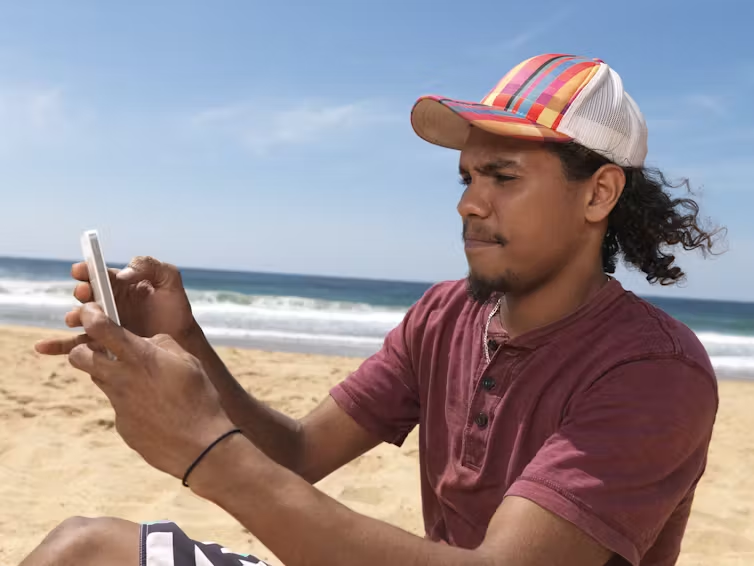
Aboriginal and Torres Strait Islander older people facing tech-related issues in Wagga Wagga can seek assistance at the Tolland Community Centre. The program, initiated by Wagga Wagga City Library with funding from the NSW Department of Communities and Justice, aims to address the digital divide among older First people. The initiative, led by Madison Williams and Caleb Atkinson, helps seniors troubleshoot issues with their mobile phones and laptops, emphasising the importance of technology in accessing government and health services.

Jeannie Hazell, the Library Services Team Leader, highlights the essential nature of technology assistance for older generations in maintaining connections and accessing vital health services. The program is designed to be friendly and accessible, encouraging First Nations seniors to bring their devices and tech-related problems for assistance without the need for prior appointments.

To learn more, go here.

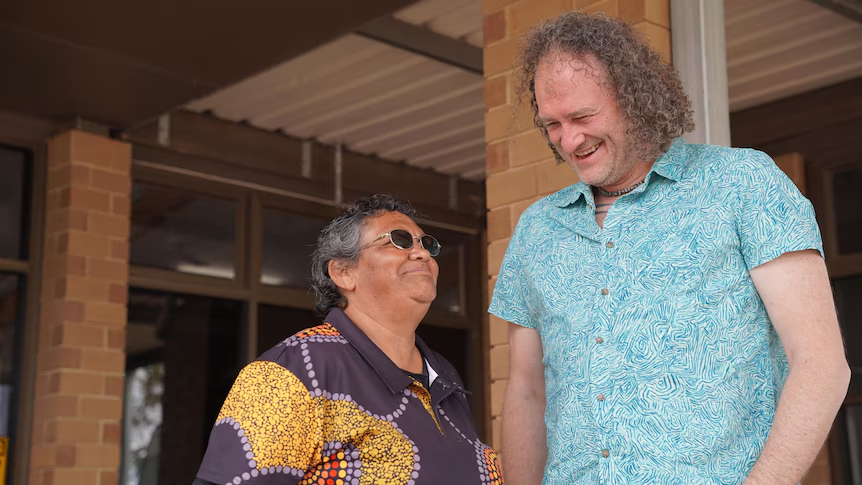
Library Services Team Leader Jeannie Hazell with young First Nations tech helper Caleb Atkinson. Caleb is keen to help First Nations seniors needing assistance with their smart phones, laptops or accessing online services.

Sector Jobs – you can see sector job listings on the NACCHO website here.

Advertising Jobs – to advertise a job vacancy click here to go to the NACCHO website current job listings webpage. Scroll down to the bottom of the page to find a Post A Job form. You can complete this form with your job vacancy details – it will then be approved for posting and go live on the NACCHO website.