NACCHO Sector News: 22 August 2025

The NACCHO Sector News is a platform we use to showcase the important work being done in Aboriginal and Torres Strait Islander health, focusing on the work of NACCHO, NACCHO members and NACCHO affiliates.

We also share a curated selection of news stories that are of likely interest to the Aboriginal and Torres Strait Islander health sector, broadly.

What happens when strong voices, shared purpose, and the right partnerships come together?

Last week on Turrbal and Yuggera Country in Meanjin (Brisbane), NACCHO, in partnership with Bupa, brought together 16 outstanding trainers and assessors to strengthen diabetes education across our communities.

Grounded in culture, connection and lived experience, they shared knowledge, explored best practice, and began shaping national training resources that reflect the strength, diversity, and realities of mob.

This gathering wasn’t just about ticking compliance boxes; it was about empowering local leaders to drive change, build capability, and deliver training that truly speaks to community.

Together, we’re building a workforce ready to make a lasting impact in diabetes prevention and care.

Meet the Worimi doctor fighting high rates of cervical cancer among First Nations women

For the past 20 years Dr Marilyn Clarke has worked on Gumbaynggirr Country as an obstetrician and gynaecologist.

The rate of cervical cancer among Aboriginal and Torres Strait Islander women in Australia is more than double the rate among non-Indigenous women. Cultural barriers, lack of awareness, logistical challenges, and historical and systemic issues contribute to under-screening and late detection of pre-cancerous lesions, representing a system failure for Aboriginal women.

Dr Marilyn Clarke hopes to see those statistics change for the better. SISTASCREEN is a co-designed strategy being developed which aims to increase cervical screening rates by offering the test during routine antenatal checkups at Aboriginal-led health services.

“Antenatal visits at their local Aboriginal community-controlled health service is an opportune time to engage First Nations women in cervical screening in a way which ensures culturally safety and empowerment,” Dr Clarke said.

The project is set to be led by Southern Cross University in partnership with the National Aboriginal Community Controlled Health Organisation (NACCHO), with $2.4 million in funding over three-years from the federal government through Cancer Australia.

The project will see six “early adopter” sites established from the outset: the first is the Bullinah Aboriginal Health Service in Ballina on the New South Wales Coast.
Its goal is to establish 50 sites at Aboriginal community controlled health organisations across the country over the next three years.

NACCHO CEO Pat Turner AM has welcomed the partnership.

“For too long, our women have faced barriers to lifesaving screening and care, barriers rooted in systems that weren’t designed for us, by us,” Ms Turner said.

“We cannot eliminate cervical cancer in Australia while Aboriginal and Torres Strait Islander women continue to be left behind.”

Read the full article here.

Worimi woman Dr Marilyn Clarke currently works for the Southern Cross University Faculty of Health at the Coffs Harbour campus.

Wuchopperen’s $2.6m air quality upgrade helping control respiratory diseases

A Far North primary health provider was awarded $2m in government funds to upgrade its clinic’s air quality, but the measure is unlikely to be rolled out across other centres in the region.

Wuchopperen Health Service tipped in about $600,000 of its own funds to upgrade air conditioning in three of its eight buildings at the Manoora clinic.

The improved filtration system, which features negative pressure rooms, will help prevent the spread of airborne infectious diseases through the centre’s ducts – an issue heightened during the Covid pandemic.

Wuchopperen chief executive Joy Savage said the project dubbed “breathe easy” was helping deliver the highest standard of air ventilation and quality, often reserved for hospitals’ acute care providers.

“We all now realise even in a primary care setting … how the air quality, how the ventilation can play an added protective weight in containing infection,” Ms Savage said.

“It is always the ambition of any health care provider to have the latest facilities available to both aid the provision of service and to keep the visitors and patients in an environment that is certainly not going to cause any harm or add any risk to their health.”

Read the full article here.

Wuchopperen chief executive Joy Savage, Assistant Health Minister Rebecca White and Member for Leichhardt, Matt Smith.

Aboriginal-led organisations honoured for suicide prevention work

Waterlily Healing Indigenous Corporation and Perfectly Imperfect Consulting, based on Larrakia Country in Darwin, have received the ‘Community’ Award at the 2025 Barbara Hocking Memorial Awards.

Hosted by suicide prevention organisation R U OK?, the awards recognise efforts to create a world where we are all connected and protected from suicide across four categories: Workplace, Education, Community and Conversation Leader.

The judging panel recognised Karyn Anne Moyle and her team for “empowering those in their world to meaningfully connect and lend support to each other when they are struggling with life, particularly through culturally safe, trauma-informed programs that empower Aboriginal communities to speak openly about mental health, grief, and suicide”.

Read the full article here.

If this article brought up anything for you or someone you love, please reach out to, call or visit the resources listed below for support.

Image: supplied.

Sector Jobs – you can see sector job listings on the NACCHO website here.

Advertising Jobs – to advertise a job vacancy click here to go to the NACCHO website current job listings webpage. Scroll down to the bottom of the page to find a Post A Job form. You can complete this form with your job vacancy details – it will then be approved for posting and go live on the NACCHO website.

NACCHO Sector News: 14 August 2025

The NACCHO Sector News is a platform we use to showcase the important work being done in Aboriginal and Torres Strait Islander health, focusing on the work of NACCHO, NACCHO members and NACCHO affiliates.

We also share a curated selection of news stories that are of likely interest to the Aboriginal and Torres Strait Islander health sector, broadly.

Southern Cross University project aims to improve cervical cancer screening for First Nations women

A project led by NSW’s Southern Cross University is aiming to overcome systemic and cultural barriers which have left Indigenous women at significantly higher risk of cervical cancer.

SISTASCREEN, a federally-funded initiative, will receive almost $2.5 million over three years from Cancer Australia’s Partnerships for Cancer Research grant program. The project will co-design and deliver strategies to increase cervical screening uptake during pregnancy and the postpartum periods for First Nations women.

The project will see Southern Cross University (SCU) work in close partnership with the National Aboriginal Community Controlled Health Organisation (NACCHO), with plans to reach 50 Aboriginal Community Controlled Health Organisations (ACCHOs) nationwide over the next three years.

NACCHO chief executive officer Pat Turner AM said the initiative was vital to ensuring equity in cancer care.

“For too long, our women have faced barriers to lifesaving screening and care—barriers rooted in systems not designed for us,” Ms Turner said.

“SISTASCREEN is about putting Aboriginal and Torres Strait Islander women at the centre of solutions. This is a chance to provide care in a culturally safe, empowering way that builds trust and saves lives.”

Six “early adopter” sites, including Ballina’s Bullinah Aboriginal Health Service on the NSW North Coast, will help co-design the resources while playing a critical role in shaping the program’s nationwide rollout.

Read the full National Indigenous Times article here.

Southern Cross University has been awarded $2.5 million over three-years through Cancer Australia’s Partnerships for Cancer Research grant program for the innovative project, SISTASCREEN. (Image: Jeferson Santu/SCU)

Celebrating 25 years of CAAFLU

Central Australian Aboriginal Family Legal Unit (CAAFLU) celebrated 25 years. Last week, dedicated CAAFLU staff, board members, Sister Organisation, and key individuals who have helped shape CAAFLU came together to reflect on and celebrate the incredible impact made across Central Australia and the Barkly Region.

Image source: CAAFLU

Prof. Pat Dudgeon’s groundbreaking life and work on social emotional wellbeing

In this inspiring instalment of Never the Same, host Dr Tony Pisani welcomes Professor Pat Dudgeon, the first Aboriginal psychologist in Australia and a global voice for First Nations mental health.

Pat describes how confronting the racism in the system sparked her mission to “decolonise” psychology and build a new framework called Social and Emotional Wellbeing, a model that places self, family, community, culture, and Country at the centre of healing.

Across the episode, Pat and Tony revisit moments such as the Ways Forward national report, discuss why Aboriginal and Torres Strait Islander suicide demands distinct responses, and celebrate community-led successes, from Indigenous Rangers caring for land to universities rewriting psychology curricula.

Listen here.

Calling the next generation of First Nations leaders

Applications for the Queensland Indigenous Youth Leadership Program (QIYLP) close soon, 17 August 2025.

From 22-28 November 2025, this program offers:

  • Leadership workshops led by respected First Nations leaders
  • Networking with politicians, elders, and community leaders
  • Career development pathways and mentoring
  • A seat in the Eric Deeral Indigenous Youth Parliament

To apply, go here.

Sector Jobs – you can see sector job listings on the NACCHO website here.

Advertising Jobs – to advertise a job vacancy click here to go to the NACCHO website current job listings webpage. Scroll down to the bottom of the page to find a Post A Job form. You can complete this form with your job vacancy details – it will then be approved for posting and go live on the NACCHO website.

NACCHO Sector News: 1 August 2025

The NACCHO Sector News is a platform we use to showcase the important work being done in Aboriginal and Torres Strait Islander health, focusing on the work of NACCHO, NACCHO members and NACCHO affiliates.

We also share a curated selection of news stories that are of likely interest to the Aboriginal and Torres Strait Islander health sector, broadly.

ACCOs lead the way in the new Lung Cancer Screening Program

The Victorian Aboriginal Health Service (VAHS) and Gippsland and East Gippsland Aboriginal Co-Operative (GEGAC) are paving the way for culturally safe lung cancer screening for Aboriginal and Torres Strait Islander people in Victoria.

The Victorian Aboriginal Community Controlled Health Organisation (VACCHO) has partnered with the Victorian Comprehensive Cancer Centre (VCCC) Alliance to support VAHS and GEGAC in the implementation of the lung cancer screening pilot project.

As part of the project, VAHS and GEGAC will design, implement and promote screening initiatives, and research key factors that encourage and support eligible Aboriginal and Torres Strait Islander people’s participation in the National Lung Cancer Screening program, which launched across Australia on 1 July 2025.

Learn more about the National Lung Cancer Screening Program here.

Read the full media release here.

Image source: VACCHO

Aboriginal Medical Services call for community-led solutions as Territory’s Closing the Gap targets “go backwards”

The Aboriginal Medical Services Alliance Northern Territory (AMSANT) expressed “deep concern” at the continued failure to meet Closing the Gap targets in the Northern Territory, following the release of the Productivity Commission’s 2025 Annual Data Compilation Report on Wednesday night.

While the Alliance welcomed improvements in some national indicators, such as healthy birthweight, it said the latest data “makes clear that the NT is being left behind; with many critical targets not only off track, but worsening”.

“This report serves as a stark reminder that the current approach isn’t working for the Northern Territory, and it is not delivering the change our communities need, particularly for the next generation,” said AMSANT chief executive Dr John Paterson.

“The NT is home to some of the highest levels of disadvantage in the country, yet too many targets are going backwards.”

Read the full article here.

Aboriginal Medical Services Alliance Northern Territory chief executive Dr John Paterson. Image: AMSANT.

What are the four Priority Reforms in the Closing the Gap Agreement?

The four Priority Reforms in the Closing the Gap Agreement have been designed to shift power to Aboriginal and Torres Strait Islander people and organisations so they can drive the change that affects their lives.

They’re not about fixing symptoms – they’re about changing the system. Here’s why they matter:

  • When we have a seat at the table, solutions are stronger – grounded in culture, community, and lived experience.
  • When our organisations are properly funded, services have greater impact, because they’re trusted, local, and long-term.
  • When governments change how they work, services become safer, fairer, and more culturally respectful.
  • When we have the right data, communities can make better decisions and hold governments to their commitment.

This is how we create real, lasting change. Learn more here.

PSA25 Excellence Awards announced

The winners of the highly anticipated 2025 PSA Symbion Excellence Awards were announced this morning at PSA25 in Sydney.

Jaimee Anderson of Katherine, NT, was named PSA Symbion Pharmacist of the Year, recognised for her exceptional leadership, innovation, and “unwavering commitment to the health and wellbeing of the Katherine community”.

Working initially in one of Katherine’s two pharmacies, Anderson has built a reputation for delivering high-quality, patient-centred care to both urban and remote populations.

She played a key role in the rollout of the NT’s pharmacy-based vaccination services, and then became involved in primary healthcare teams working with First Nations people.

Identifying a critical gap in diabetes care, she became a credentialed diabetes educator (CDE) and now serves as the pharmacist CDE at Wurli Wurlinjang Health Service, providing culturally safe, trauma-informed care to First Nations clients.

Read the full article here.

Image source: Pharmacy Daily.

Sector Jobs – you can see sector job listings on the NACCHO website here.

Advertising Jobs – to advertise a job vacancy click here to go to the NACCHO website current job listings webpage. Scroll down to the bottom of the page to find a Post A Job form. You can complete this form with your job vacancy details – it will then be approved for posting and go live on the NACCHO website.

NACCHO Sector News: 18 July 2025

The NACCHO Sector News is a platform we use to showcase the important work being done in Aboriginal and Torres Strait Islander health, focusing on the work of NACCHO, NACCHO members and NACCHO affiliates.

We also share a curated selection of news stories that are of likely interest to the Aboriginal and Torres Strait Islander health sector, broadly.

As Black families worry for their kids, new research shows the importance of culturally safe care

New research from headspace reveals that a majority of First Nation families are highly concerned for their young people’s mental well-being, a rate significantly higher than the general population. This concern is amplified by experiences like Kadijah McPherson-Jabateh’s, who found existing mental health systems to be ill-equipped and even oppressive for Black people, citing a lack of cultural understanding and First Nations staff.

Despite higher rates of community discussion about mental health among First Nations families, these conversations aren’t leading to increased professional help-seeking. Jacara Egan of headspace emphasizes the critical need for culturally safe and responsive services to ensure Aboriginal and Torres Strait Islander individuals receive understanding and support when they bravely seek help.

Read the full article.

Kadijah McPherson encountered problematic assumptions about their family life when seeking mental health support as a child.

Kadijah McPherson encountered problematic assumptions about their family life when seeking mental health support as a child.

PhD opportunities based with Onemda Aboriginal and Torres Strait Islander Health and Wellbeing

Please see two exciting PhD opportunities based with Onemda Aboriginal and Torres Strait Islander Health and Wellbeing at the University of Melbourne.

Research Degree Opportunity: Fostering a healthy start to life for Aboriginal and Torres Strait Islander families

Relighting the Firesticks is a community-based participatory research project. This research is based on our learnings and evidence from the pilot project, Healing the Past by Nurturing the Future (HPNF), and the scale up…

Learn more about this opportunity

PhD Scholarship Opportunity – Indigenous Health Equity Unit, Onemda – In Partnership with Nairm Marr Djambana

The Indigenous Health Equity Unit, Onemda (School of Population and Global Health), in partnership with Nairm Marr Djambana, is offering a fully funded PhD scholarship to undertake a community-led research project that supports the development and implementation of an evaluation framework for Aboriginal community programs.

Learn more about this opportunity

New nurse-led liver cancer support line fills critical care gap

The Liver Foundation has launched a nationwide, nurse-led support line offering free, specialised care to Australians diagnosed with primary liver cancer.

Until now, these patients, who are often managed outside traditional cancer centres, have had limited access to tailored support. The new service provides patients and carers with guidance from nurses experienced in liver cancer and liver disease.

It’s designed to bridge a long-standing care gap, particularly for people in regional and remote areas, Aboriginal and Torres Strait Islander peoples, and those with limited English proficiency.

Support is available for people diagnosed with liver disease or liver cancer; family, friends and carers of people diagnosed with liver disease or liver cancer; anyone who is supporting someone with liver disease, including friends, family, multicultural support workers, GPs, Aboriginal health workers; and anyone with general concerns about liver cancer symptoms or testing.

Read the full article.

With survival rates still alarmingly low, the Liver Foundation’s free initiative offers guidance for the 3000-plus Australians diagnosed each year.

With survival rates still alarmingly low, the Liver Foundation’s free initiative offers guidance for the 3000-plus Australians diagnosed each year.

Central Australia Justice Reinvestment initiative announced

The Albanese Labor Government has announced the latest initiative as part of the largest commitment to justice reinvestment ever delivered by the Commonwealth.

Central Australian Youth Link-Up Service (CAYLUS) will deliver Mampu-Maninjaku, a community-led crime prevention, alcohol and drug counselling, and diversion program.

This is the second initiative funded under the Justice Reinvestment in Central Australia Program and was selected following a rigorous assessment process undertaken by an independent panel.

The Mampu-Maninjaku initiative aims to reduce the over-representation of First Nations people in the criminal justice system. It will also target alcohol and drug use issues through a partnership consortium with the Australian Childhood Foundation and the Southern Tanami Kurdiji Indigenous Corporation.

Justice reinvestment is a long-term, community-led approach to preventing crime, improving community safety and reducing the number of Aboriginal and Torres Strait Islander adults and children in custody.

Read the full media release.

Sector Jobs – you can see sector job listings on the NACCHO website here.

Advertising Jobs – to advertise a job vacancy click here to go to the NACCHO website current job listings webpage. Scroll down to the bottom of the page to find a Post A Job form. You can complete this form with your job vacancy details – it will then be approved for posting and go live on the NACCHO website.


NACCHO Sector News: 17 July 2025

The NACCHO Sector News is a platform we use to showcase the important work being done in Aboriginal and Torres Strait Islander health, focusing on the work of NACCHO, NACCHO members and NACCHO affiliates.

We also share a curated selection of news stories that are of likely interest to the Aboriginal and Torres Strait Islander health sector, broadly.

Australia’s new lung cancer screening program has chosen simplicity over equity, and we’re concerned

Australia’s lung cancer screening program launched on July 1, and marks real progress and opportunity.

It aims to reduce the number of people dying from lung cancer by offering regular low-dose CT scans to people who smoke, and those who have quit. The aim is to detect and treat cancer early before it has spread.

But the program’s design may further disadvantage Aboriginal and Torres Strait Islander peoples, who are disproportionately affected by lung cancer.

So Australia’s first new cancer screening program in almost 20 years risks entrenching health inequities rather than addressing them.

Read the full article.

L-R: Shane Bradbrook, Tom Calma and Shannon best are among many guests at the Oceania Tobacco Control Conference.

L-R: Shane Bradbrook, Tom Calma and Shannon best are among many guests at the Oceania Tobacco Control Conference in Oct 2024. Source

The hidden harm of fluctuating ear disease in First Nations Children

Following NAIDOC Week 2025 (6–13 July), renewed attention is being drawn to the issue of preventable ear disease among Aboriginal and Torres Strait Islander children.

New findings from Hearing Australia show that more than one in three (35 per cent) young First Nations children experience fluctuating ear disease, with 8 per cent living with persistent ear trouble.

These findings have prompted calls for a sustained, nationwide effort to improve early detection and treatment ensuring that children do not miss out on critical speech, learning and social development opportunities.

Middle ear infection, or otitis media, remains one of the most common health conditions affecting First Nations children in the early years, often without obvious symptoms. It can cause significant impacts on a child’s ability to hear, speak, and participate in early learning.

“It can often start in infancy without clear signs, which is why regular ear health checks are so important,” said Kirralee Cross, a Yorta Yorta woman and Partnership Specialist at Hearing Australia.

Read the full article

Photo of a headphone

A welcome to babies

Dhelkaya’s Aboriginal Health Liaison team partnered with Mount Alexander Shire Council to bring a much-anticipated event to Castlemaine – the very first Welcome Baby to Country ceremony, held last Wednesday at the Botanic Gardens during NAIDOC Week.

The Maternal and Child Health staff, along with the Midwifery Group Practice staff, all contributed to this cultural welcoming.

Thanks to Uncle Rick and Aunty Kerri, a large number of local families brought their babies and toddlers along to be welcomed to country and community, and to be blessed with a spot of ochre on their foreheads.

Read the full article

L-R: Aysha Nelson and her two children with Uncle Rick Nelson at the Welcome Baby to Country ceremony. Photo: Penny Ryan

L-R: Aysha Nelson and her two children with Uncle Rick Nelson at the Welcome Baby to Country ceremony. Photo: Penny Ryan

Little footsteps big future! Aboriginal and Torres Strait Islander children’s day

Join Winnunga’s “Connected Beginnings” team in celebrating our little ones with a day full of food, activities, and fun! Featuring Gugan Gulwan Troupe.

Monday 4th August 2025 – 11am – 2pm at Winnunga Community Room

Little footsteps big future! Aboriginal and Torres Strait Islander children's day poster.

Little footsteps big future! Aboriginal and Torres Strait Islander children’s day poster.

Sector Jobs – you can see sector job listings on the NACCHO website here.

Advertising Jobs – to advertise a job vacancy click here to go to the NACCHO website current job listings webpage. Scroll down to the bottom of the page to find a Post A Job form. You can complete this form with your job vacancy details – it will then be approved for posting and go live on the NACCHO website.


NACCHO Sector News: 9 July 2025

The NACCHO Sector News is a platform we use to showcase the important work being done in Aboriginal and Torres Strait Islander health, focusing on the work of NACCHO, NACCHO members and NACCHO affiliates.

We also share a curated selection of news stories that are of likely interest to the Aboriginal and Torres Strait Islander health sector, broadly.

National Lung Cancer Screening Program: “It’s about starting a conversation… not about blame”

As of 1 July 2025, our Mob can get free lung scans to find cancer early – when it’s easiest to treat.

Director of Cancer at NACCHO, Peter Bligh had a yarn with the National Indigenous Radio Service about the new National Lung Cancer Screening Program:

“The National Lung Cancer Screening Program is a non-invasive screening program, designed to check the lungs for early signs of cancer before symptoms appear.”

“The program is for people aged 50-70, who smoke or have quit in the past 10 years. It’s not about judgement, it’s about supporting people who’ve smoked for a long time, many of whom started young and many of whom were targeted by the tobacco industry.”

“…It’s about starting a conversation really, not about blame, and looking forward not back. It’s about understanding how much you’ve smoked and what we can do now to protect your future.”

“…The best way to get help is to chat with your doctor or Aboriginal Health Worker, that’s probably the first step, they’ll help work out if lung screening is right for you and support people in every step of the way.”

Listen here (13:55 – 18:20)

Mob turn out across Tasmania to celebrate NAIDOC Week

Aboriginal people in Tasmania have begun marking NAIDOC Week’s 50th iteration with ceremonies and events held across the state. Addressing the crowd of hundreds, Tasmanian Aboriginal Centre campaign coordinator, Nala Mansell, said this year’s theme hours past generations through the actions of young Aboriginal people.

“Our Elders fought their whole lives against racist policies that said we didn’t exist, so seeing young people today caring for countries, speaking their language and speaking about our rights … it really honours every single Aboriginal person who’s gone before them,” she said, The Mercury reports.

Read more here.

Children’s sing to the crowd at a community event as part of NAIDOC Week celebrations in Hobart on Monday. (Image: Linda Higginson)

Indigenous doctor wants to inspire next generation in healthcare

Dr Kieran Cubby, proud Wiradjuri Murrawarri man from Dubbo is a resident medical officer at John Hunter Hospital after completing a Bachelor of Medical Science/Doctor of Medicine through the University of Newcastle’s Commonwealth Supported Places (CSP) initiative.

“There’s three areas where Indigenous people are underrepresented that I know of and that’s teaching, law and medicine,” he said.

With few Indigenous doctors across the country, it was a driving force for Dr Cubby to pursue a career in medicine finding his passion in orthapeadics.

“It was something that was really a big driving force for me especially with the Aboriginal health statistics as they are. I thought I could have a lot of impact in the area,” he said.

“Someone like myself who comes from not only my Aboriginal background but a low socio-economic background, I can relate to a certain amount of our patients where I feel like maybe some other health professionals can’t,” he said.

Read more here.

Resident medical officer at John Hunter Hospital Dr Kieran Cubby. Picture supplied

Expressions of interest paid internship in Indigenous genomics

SAGC – in conjunction with ALIGN and Wardliparingga – are seeking expressions of interest from Indigenous students, researchers or professionals to participate in a full time 12-week paid internship in genomics commencing November 2025. The internship will provide opportunities for hands-on lab training in genomics; to learn how genomic sequencing is conducted; to conduct a small genomics project; and to expand your knowledge and understanding of Aboriginal health research in SA.

The successful candidate will:

  • Identify as Aboriginal or Torres Strait Islander.
  • Be an undergraduate or postgraduate student, professional or researcher looking for practical placement experience in genomics.
  • Have a background in biology, genetics, biotechnology, health and medical sciences or another relevant discipline and want to expand their knowledge in Indigenous genomics.
  • Have prior knowledge of or exposure to a laboratory environment.
  • Be available to undertake the placement.

To submit your expression of interest, please upload your CV and cover letter outlining your interest in Indigenous genomics and how this placement opportunity will support your career or study aspirations here.

Sector Jobs – you can see sector job listings on the NACCHO website here.

Advertising Jobs – to advertise a job vacancy click here to go to the NACCHO website current job listings webpage. Scroll down to the bottom of the page to find a Post A Job form. You can complete this form with your job vacancy details – it will then be approved for posting and go live on the NACCHO website.


NACCHO Sector News: 8 July 2025

The NACCHO Sector News is a platform we use to showcase the important work being done in Aboriginal and Torres Strait Islander health, focusing on the work of NACCHO, NACCHO members and NACCHO affiliates.

We also share a curated selection of news stories that are of likely interest to the Aboriginal and Torres Strait Islander health sector, broadly.

First Nations mental health advocates welcome ACT reform on criminal responsibility, urge action nationwide

Gayaa Dhuwi (Proud Spirit) Australia has welcomed the ACT government’s decision to raise the minimum age of criminal responsibility to 14 years, describing it as “a significant and long-overdue step toward a justice system that is more developmentally and culturally appropriate for Aboriginal and Torres Strait Islander children and young people”.

Under the reform, children aged 13 and under will no longer be held criminally responsible for harmful behaviour, with exceptions for a limited range of serious and intentionally violent offences. Instead, children will be referred to a Therapeutic Support Panel that connects them with services such as mental health, housing, and education.

Gayaa Dhuwi, the national peak body for Aboriginal and Torres Strait Islander social and emotional wellbeing, mental health, and suicide prevention, said on Monday that the reform marks a “crucial milestone in acknowledging what Aboriginal and Torres Strait Islander communities have long known: our children need care, not custody”.

“This reform reflects a growing understanding that punitive systems do not heal trauma, they compound it,” said Gayaa Dhuwi chair, Professor Helen Milroy.

Read the full article.

The ACT's Legislative Assembly building. Image: Jordan-Mirchevski (Canberra Daily).

The ACT’s Legislative Assembly building. Image: Jordan-Mirchevski (Canberra Daily).

Aboriginal and Torres Strait Islander voices on the National Lung Cancer Screening Program: a qualitative study from Worimi and Awabakal country

Objective: To gather communities’ perspectives on the upcoming National Lung Cancer Screening Program (NLCSP) to guide appropriate and equitable access and uptake.

Design: Qualitative study using Yarning methods.

Setting, participants: Yarning circles were conducted with Aboriginal and Torres Strait Islander people on Awabakal and Worimi country in December 2023.

Results: Twenty‐nine Aboriginal and Torres Strait Islander people participated in Yarning circles held at three locations across Awabakal and Worimi country. Community participants felt that the need for equitable and culturally safe NLCSP pathways is critical, with the NLCSP implementation plan and associated guidelines requiring multiple modes of health promotion, flexible eligibility that is equitable, alternative referral pathways to overcome barriers to access, and screening pathways and processes that are culturally responsive and community led.

Conclusions: The NLCSP provides a timely opportunity to improve health outcomes for Aboriginal and Torres Strait Islander peoples. To achieve this, it is essential that the NLCSP is tailored to the needs of each community in accessing preventive health care and upholds rights to self‐determination.

Read the full article.

‘Stick with it’: Greg Inglis leads national mental health push for mob

Greg Inglis has launched the Stick With It campaign to raise mental health awareness in First Nations communities. The campaign encourages people to share messages of support on sports tape, with funds going toward education and outreach.
A powerful new mental health campaign is putting visibility, connection, and culture at the centre of healing – and it’s led by NRL great and Dunghutti man Greg Inglis.

Launched through his mental health organisation, the Goanna Academy, the Stick With It campaign invites people to write messages of strength, remembrance or hope on sports tape – a small gesture aimed at sparking big conversations.
“No matter what you’re going through – even if it feels tough or you’re not sure about the process – we want people to stay with it,” Inglis said.

“There’s always a light at the end of the tunnel.”

The campaign comes as new figures show more than one in three Aboriginal and Torres Strait Islander adults report having a current mental health condition, a rate significantly higher than for non-Indigenous Australians.

Read the full article.

Greg Inglis places a message on a mural in Redfern covered with handwritten notes, part of the Stick With It campaign raising awareness for mental health in First Nations communities.

Greg Inglis places a message on a mural in Redfern covered with handwritten notes, part of the Stick With It campaign raising awareness for mental health in First Nations communities.

Voice, Treaty, Truth key to closing health gap: GPs body takes a stand on NAIDOC Week

First Nations representation, leadership, community-controlled organisations, and cultural and practical knowledge are critical to achieving health equity, the Royal Australian College of General Practitioners says.

The RACGP have marked NAIDOC Week by reiterating its commitment to the Uluru Statement from the Heart with the launch of a position statement.

Group president Dr Michael Wright and Aboriginal and Torres Strait Islander Healthcare Chair Dr Karen Nicholls both highlighted improved health outcomes out of Indigenous-led care.

RACGP backed Aboriginal and Torres Strait Islander-led efforts for reform, broadly, alongside ongoing commitments to working with ACCHOs and First Nations health sector peak bodies, advocated for and called on Primary Health Networks to strengthen the space for Aboriginal and Torres Strait Islander health workers and service delivery, and backed those workers’ roles in closing the health gap.

RACGP acknowledged “the cultural and practical knowledge within the Aboriginal and Torres Strait Islander health sector as essential to improving the health and wellbeing of Aboriginal and Torres Strait Islander peoples to achieve health equity” in its position statement.

Read the full article

The Royal Australian College of General Practitioners has launched a position statement reiterating support of the Uluru Statement from the Heart. (Image: RACGP)

The Royal Australian College of General Practitioners has launched a position statement reiterating support of the Uluru Statement from the Heart. (Image: RACGP)

MBS webinar recording and FAQs now available

‘Understanding upcoming MBS changes’, the webinar recording and supporting FAQs are now accessible via the NACCHO LMS.
Simply log in (https://learn.naccho.org.au/) and search “MBS Optimisation” to view the recording.

Don’t have a NACCHO LMS account? Apply here.

Sector Jobs – you can see sector job listings on the NACCHO website here.

Advertising Jobs – to advertise a job vacancy click here to go to the NACCHO website current job listings webpage. Scroll down to the bottom of the page to find a Post A Job form. You can complete this form with your job vacancy details – it will then be approved for posting and go live on the NACCHO website.


NACCHO Sector News: 2 July 2025

The NACCHO Sector News is a platform we use to showcase the important work being done in Aboriginal and Torres Strait Islander health, focusing on the work of NACCHO, NACCHO members and NACCHO affiliates.

We also share a curated selection of news stories that are of likely interest to the Aboriginal and Torres Strait Islander health sector, broadly.

National lung cancer screening program launched

Starting July 1, 2025, the National Lung Cancer Screening Program aims to reduce illness and deaths from lung cancer by detecting it early using a free screening test. If you’re aged 50-70 and currently smoke or have quit in the last 10 years, yarn with your doctor or health worker about a referral for lung screening.

We know that more Aboriginal and Torres Strait Islander people participating in lung cancer screening means that more cancers will be detected early, when treatment is more likely to be effective.

NACCHO is working in partnership with the Department of Health, Disability and Ageing and Cancer Australia to ensure that the new National Lung Cancer Screening Program is equitable, accessible, and culturally safe for Aboriginal and Torres Strait Islander people and Communities.

People can participate in the program if they:

  • Are aged between 50 and 70 years; and
  • Are asymptomatic (no signs or symptoms suggestive of lung cancer); and
  • Currently smoke or have quit smoking in the past 10 years; and
  • Have a history of cigarette tobacco smoking of at least 30 pack-years (1 pack year is equivalent to 20 cigarettes each day for a year).

Learn more here.

Strength, resilience and self-determination: the power of the community controlled model

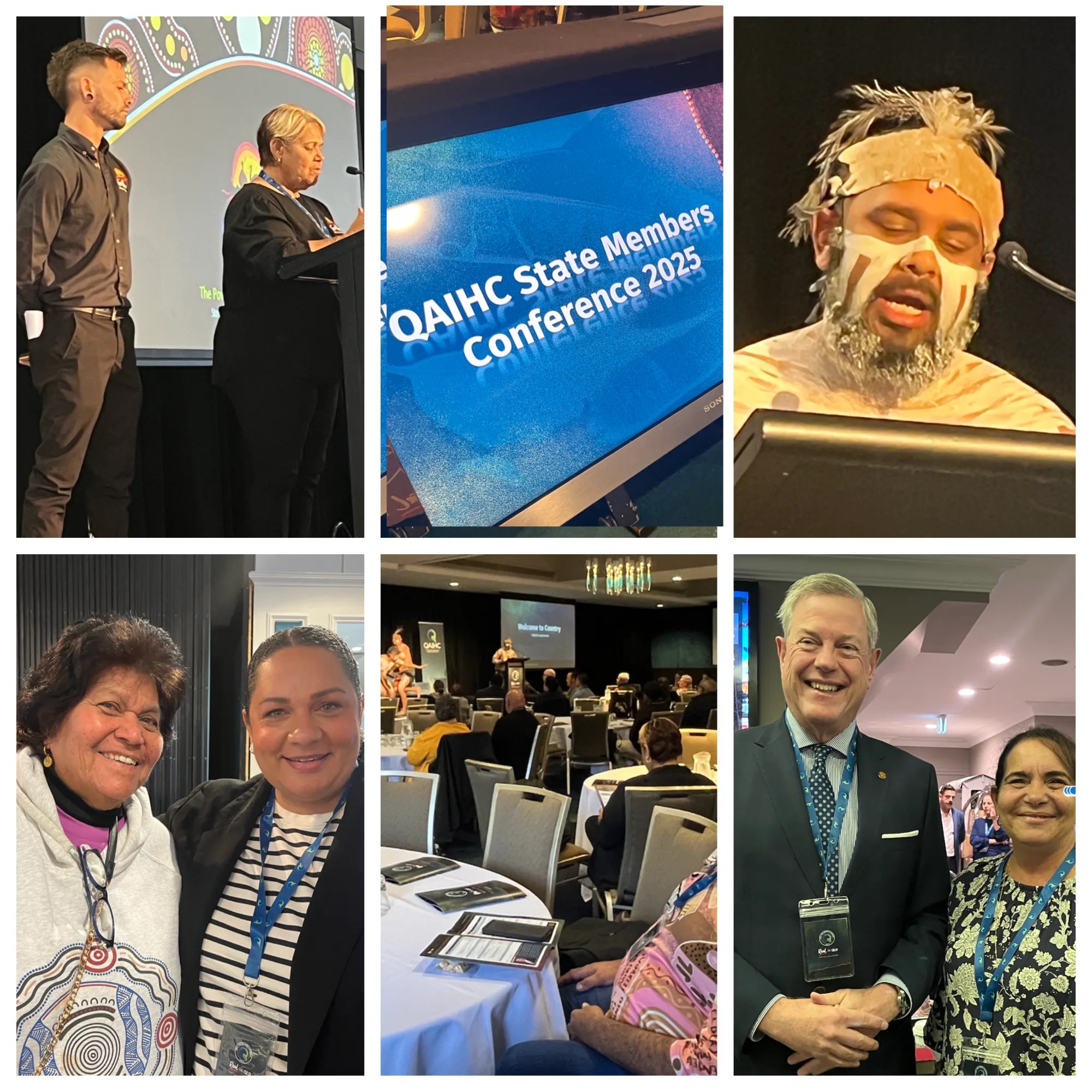
The Queensland Aboriginal and Islander Health Council (QAIHC) has called for immediate reform and genuine partnership with governments after an independent review found the National Agreement on Closing the Gap is failing to deliver on its commitments.

The call echoed many discussions at QAIHC’s recent statewide members conference, held amid issues and opportunities with data, partnerships, workforce, funding reform and a challenging political environment.

The two-day QAIHC event celebrated the unique role and approach of Aboriginal community controlled health organisations (ACCHOs), its role in Closing the Gap, and what it can teach mainstream health services.

Read more here.

Image source: Croakey Health Media

Oral Health Online Yarning Circle

Oral health gaps affect our mob’s overall health – Join the conversation and be part of bridging the gap by informing the National Oral Health Plan (2025-2034).

Details:

Wednesday 2 July: 3.30-5PM AEST: Register here.

Friday 4 Jul: 11AM-12.30PM: Register here.

Speakers:

  • Cas Nest (She/her) Endorsed Midwife, Managing Director, First Peoples Health Consulting, Co-founder and Managing Director, Gullidala
  • Nadine Blair, Director ‑ Policy, NACCHO

Derby NAIDOC Award

Congratulations to Shelley Kneebone, CEO of Derby Aboriginal Health Service, on receiving the Derby NAIDOC Award for Caring for Country and Culture.

This award recognises Shelley’s strong leadership and her commitment to embedding traditional healing, cultural knowledge and connection to Country across health and wellbeing services in Derby and surrounding communities.

Image source: Walalakoo Aboriginal Corporation

Victoria’s true history on the record as Australia’s first Indigenous truth telling commission wraps up

The nation’s first truth telling inquiry has handed down its final report, including 100 recommendations for urgent change. The nation’s first truth telling inquiry has handed down its final report, including 100 recommendations for urgent change. Its two final reports, Yoorrook for Transformation and Yoorrook Truth Be Told, have been publicly released – the former containing 100 recommendations for urgent change.

Among the recommendations are calls for redress from the state government via the treaty process for all damages and loss stemming from colonial invasion and occupation of Indigenous peoples’ lands. This would include redress for economic loss, interest and redress for cultural loss. Yoorrook has suggested this redress could take the form of monetary compensation, tax relief, and the restitution of traditional lands, waters, and resources.

Read more here.

Image source: NITV

Sector Jobs – you can see sector job listings on the NACCHO website here.

Advertising Jobs – to advertise a job vacancy click here to go to the NACCHO website current job listings webpage. Scroll down to the bottom of the page to find a Post A Job form. You can complete this form with your job vacancy details – it will then be approved for posting and go live on the NACCHO website.

NACCHO Sector News: 27 June 2025

The NACCHO Sector News is a platform we use to showcase the important work being done in Aboriginal and Torres Strait Islander health, focusing on the work of NACCHO, NACCHO members and NACCHO affiliates.

We also share a curated selection of news stories that are of likely interest to the Aboriginal and Torres Strait Islander health sector, broadly.

Oral Health Online Yarning Circle

Oral health gaps affect our mob’s overall health – Join the conversation and be part of bridging the gap by informing the National Oral Health Plan (2025-2034).

Details:

Wednesday 2 July: 3.30-5PM AEST: Register here.

Friday 4 Jul: 11AM-12.30PM: Register here.

Speakers:

  • Cas Nest (She/her) Endorsed Midwife, Managing Director, First Peoples Health Consulting, Co-founder and Managing Director, Gullidala
  • Nadine Blair, Director ‑ Policy, NACCHO

New resources to support shared decision-making about lung screening

New resources are now available to support shared decision-making about lung cancer screening. The development of the shared decision-making model and resources was led by Yardhura Walani, National Centre for Aboriginal and Torres Strait Islander Wellbeing Research, Australian National University.

Learn more here.

Missed the webinar? Watch the recording, with guest presenter A/Prof Lisa Whop, to learn more about shared decision-making and why the new National Lung Cancer Screening Program is so important for mob.

Strong Born, Strong Futures

Strong Born, Strong Futures is a call to action for the community to ensure every Aboriginal and Torres Strait Islander child receives proper nutrition, regular prenatal care, a safe environment and that mothers are supported in avoiding harmful substances like alcohol before and during pregnancy.

Tasmanian Aboriginal Centre says ‘Strong Born, Strong Futures’ also highlights the importance for ningi/mothers to stay active, manage stress, and prioritise self-care. Building a strong bond and connection with pakata/baby during pregnancy and after is crucial for the health and well-being of every child.

When ningi/mothers receive wrap-around holistic and culturally safe support throughout pregnancy, our pakata /babies are born strong and healthy. ngayapi rrala/Strong born pakata/babies shape the way for a strong future, empowering takarilya/families and communities to thrive.

Learn more here.

Image source: Tasmanian Aboriginal Centre

Darwin bus dress code ‘punishes poverty’, AMSANT says

Signage on Darwin buses warning passengers they may be removed for wearing stained clothing has been slammed by the Aboriginal Medical Services Alliance Northern Territory (AMSANT), calling it a punitive response which targets the Territory’s most vulnerable.

AMSANT says the policy discriminates against people experiencing poverty, homelessness and mental ill health — particularly Aboriginal and Torres Strait Islander people, who make up a large proportion of those affected.

AMSANT Chief Executive Dr John Paterson said the NT has close to 6,000 people on the public housing waitlist and one of the highest rates of rough sleeping in the country — 13 times the national average. One in five Aboriginal people in the NT is experiencing homelessness.

Dr Paterson said the dress code is “another example of a government unnecessarily punishing people instead of addressing the root causes of disadvantage in our communities”.

Read the full article here.

Signage on Darwin buses warning passengers they may be removed for wearing stained clothing has been labelled a punitive response which targets the Territory’s most vulnerable. (Image: Annabel Bowles)

Leading the way in STI testing recovery post-COVID

Aboriginal Community Controlled Health Services in SA are leading one of the strongest comebacks in STI testing across Australia. After COVID-19 disrupted routine testing and delayed diagnoses nationwide, ACCHS in South Australia have not only bounced back — they’ve improved care.

  • 70% of STI testing episodes in 2023 included HIV and syphilis screening — a massive jump from just 19% in 2016
  • STI testing overall is just 5% below pre-pandemic peak levels from 2019

From health promotion campaigns to workforce training and targeted data use, AHCSA’s Sexual Health & BBV Program has been working alongside Member Services to support locally led recovery.

Learn more here.

Image source: AHCSA

Sector Jobs – you can see sector job listings on the NACCHO website here.

Advertising Jobs – to advertise a job vacancy click here to go to the NACCHO website current job listings webpage. Scroll down to the bottom of the page to find a Post A Job form. You can complete this form with your job vacancy details – it will then be approved for posting and go live on the NACCHO website.

NACCHO Sector News: 25 June 2025

The NACCHO Sector News is a platform we use to showcase the important work being done in Aboriginal and Torres Strait Islander health, focusing on the work of NACCHO, NACCHO members and NACCHO affiliates.

We also share a curated selection of news stories that are of likely interest to the Aboriginal and Torres Strait Islander health sector, broadly.

New partnership to boost healthcare on Country

A landmark five-year partnership looks set to transform Aboriginal and Torres Strait Islander healthcare in remote communities across the Pilbara. The $5 million funding from Rio Tinto to the Pilbara Aboriginal Health Alliance will enhance vital Indigenous-led health care for families across the Pilbara and treat patients closer to Country.

For example, the new Tom Price Dialysis Unit – the partnership’s first project slated to open in 12-18 months – would provide transport, local accommodation and wraparound support for patients.

Construction of the renal dialysis unit, funded by the Federal Government, will operate six days a week and allow Aboriginal people to return home to Country while having treatment.

PAHA chief executive Ashley Councillor said the Rio partnership was significant for its community-led approach, with services tailored and enhanced to specific needs, priorities and aspirations of remote communities across the Pilbara.

Read more here.

Elder Kennedy Finlay at the PAMS Dialysis Centre in Newman.

Get the Facts: Supporting cervical screening in your community – webinar recording

This presentation was designed to provide education on self-collection in cervical screening and ways to support Aboriginal and Torres Strait Islander community members with this option.

Webinar hosted by Kate Armstrong from NACCHO, with presenters:

  • Professor Marion Saville from the Australian Centre for the Prevention of Cervical Cancer (ACPCC)
  • Nyheemah Cox from the Kimberly Aboriginal Medical Service (KAMS)
  • Dr Natalie Williamson from KAMS
  • Stephanie Long from Pika Wiya Health Service Aboriginal Corporation
  • Kylie Wagstaff from Albury Wodonga Aboriginal Health Service
  • Sally Conte from NACCHO

*This is a combined recording from two webinars held in July and August 2024.

Watch it here.

Image source: Own It

‘Celebrating the depth of our knowledge systems’

‘It’s an opportunity to celebrate the depth of our knowledge systems and showcase the role of First Nations peoples as the original scientists, health workers, and researchers on this continent.’

That is according to Lowitja Institute CEO Paul Stewart, speaking of this month’s International Indigenous Health and Wellbeing Conference.

The conference, held on Kaurna Country, Adelaide, from 16–19 June saw more than 1300 delegates gather to discuss health and wellbeing research from across Australia and internationally.

With more than 200 presentations, the conference prioritises First Nations voices, showcasing Aboriginal and Torres Strait Islander-led research, community controlled health innovations, and intergenerational knowledge exchange.

Read more here.

Donnella Mills, National Aboriginal Community Controlled Health Organisation Chair, giving her keynote address. (Image: Lowitja Institute, Dream Team Imaging)

Rural Australians’ ratings of Indigenous children’s books to support communication and literacy

Orange Aboriginal Medical Service (OAMS) co-presented on shared research ‘Rural Australians’ ratings of Indigenous children’s books to support communication and literacy’ at the recent Speech Pathology Australian National Conference in Adelaide.

The presentation from Sarah, CSU and OAMS CEO Jamie Newman was really well received, with Sarah saying that having Jamie’s voice really uplifted the impact of our message and inspired the audience.

Learn more about the conference here.

Image source: OAMS

‘Through Our Lens’ photo competition closing soon

Applications for the Coalition of Peaks First Nations-focused photography competition ‘Through Our Lens’ close this Friday 27 June.

Share the images that capture Country, culture, community, leadership, and/or transformation through your lens to win up to $1,500 in prizes.

Don’t miss out – submit your entry today.

Image source: Coalition of Peaks

Sector Jobs – you can see sector job listings on the NACCHO website here.

Advertising Jobs – to advertise a job vacancy click here to go to the NACCHO website current job listings webpage. Scroll down to the bottom of the page to find a Post A Job form. You can complete this form with your job vacancy details – it will then be approved for posting and go live on the NACCHO website.