- Federal intervention is necessary for any change in youth justice
- Julyardi and Kanyirninpa Jukurrpa Aboriginal Corporations to Lead Vital Youth Initiative in Newman
- Ochre Ribbon marks 10 years of campaign to end family and domestic violence
- Graduate paves the way for her remote community
- Sector Jobs
The NACCHO Sector News is a platform we use to showcase the important work being done in Aboriginal and Torres Strait Islander health, focusing on the work of NACCHO, NACCHO members and NACCHO affiliates.
We also share a curated selection of news stories that are of likely interest to the Aboriginal and Torres Strait Islander health sector, broadly.
Federal intervention is necessary for any change in youth justice
Australia’s youth justice system is under review as a Parliamentary inquiry examines the balance between policy and evidence-based reform. Pat Turner, lead convener of the Coalition of Peaks, and CEO of NACCHO, highlighted the importance of focusing on solutions that support Indigenous children rather than policies shaped by election-driven narratives.
She emphasised that some recent state laws have significant impacts on young people, particularly in Queensland and the Northern Territory, where changes in sentencing laws have drawn attention.
The inquiry also explored how the federal government could work with states to align youth justice policies with Closing the Gap commitments.
To read the full article, go here.

Pat Turner, lead convener of the Coalition of Peaks, and CEO of NACCHO.
Julyardi and Kanyirninpa Jukurrpa Aboriginal Corporations to Lead Vital Youth Initiative in Newman
The Pilbara Safe Spaces program, co-designed with Aboriginal Community-Controlled Organisations (ACCOs), will provide safe spaces for at-risk youth in Hedland and Newman. Julyardi Aboriginal Corporation will manage the Hedland site, while Kanyirninpa Jukurrpa Aboriginal Corporation will lead in Newman.
The Pilbara Development Commission, Department of Communities, and ACCOs are supporting the rollout, aligning with WA’s Aboriginal Empowerment Strategy. The program aims to divert young people from antisocial behaviour through culturally responsive support, family follow-ups, and pathways to education and employment.
To read more, go here.

The Safe Spaces program is expected to launch by mid-year.
Ochre Ribbon marks 10 years of campaign to end family and domestic violence
Joyleen Butler has achieved a remarkable milestone as the first person from her remote community of Kaltukatjara (Docker River) to graduate high school in a decade. Her dedication and perseverance have not only brought pride to her family but also served as an inspiring example for her community.
Joyleen’s accomplishment highlights the positive impact of education and the potential for success, even in remote areas. Her story underscores the importance of supporting educational opportunities in all communities, fostering hope and motivation for future generations.
To read more, go here.

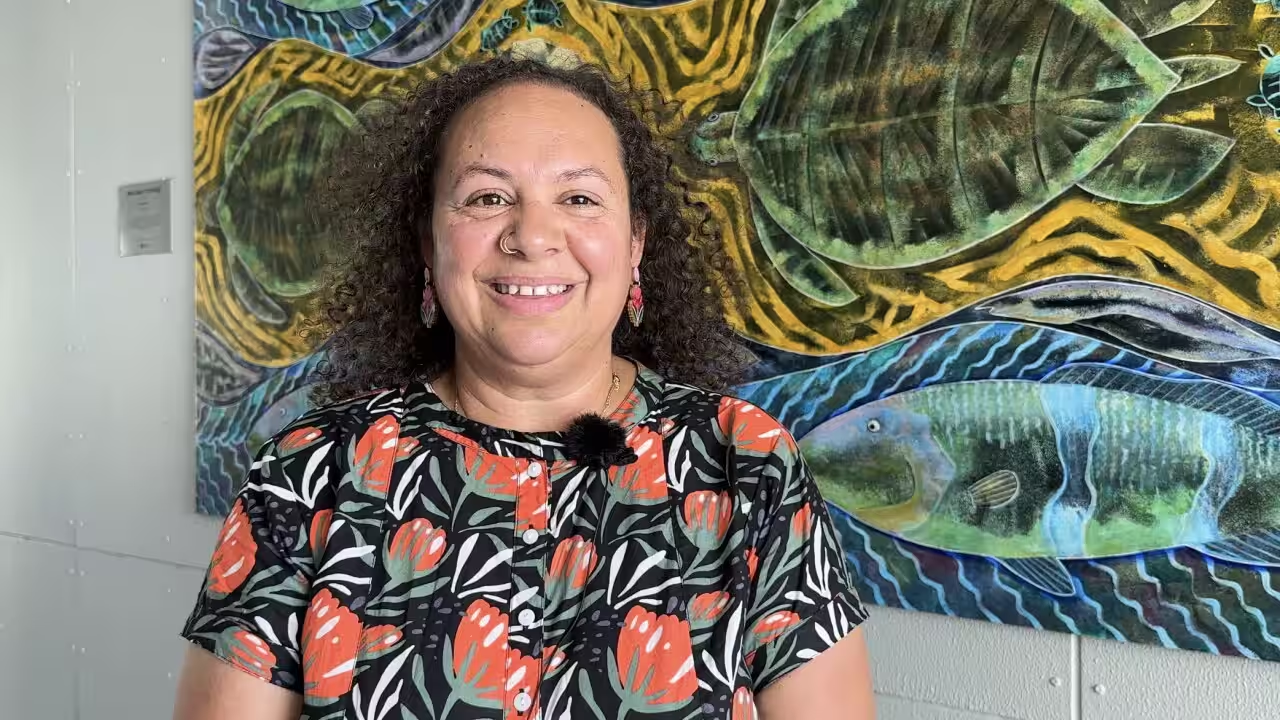
AFLS chief executive Corina Martin. Image: Kimberley Echo.
Graduate paves the way for her remote community
Joyleen Butler has become the first person in a decade from Kaltukatjara (Docker River), a remote community in the Northern Territory, to graduate from high school. Her dedication and perseverance have set a positive example for her community, highlighting the importance of education and determination.
Joyleen’s accomplishment not only marks a personal milestone but also serves as an inspiration for others in Kaltukatjara to pursue their educational goals.
To read more, go here.

Joyleen Butler has returned to work in her community after graduating high school. (Supplied)

Sector Jobs – you can see sector job listings on the NACCHO website here.
Advertising Jobs – to advertise a job vacancy click here to go to the NACCHO website current job listings webpage. Scroll down to the bottom of the page to find a Post A Job form. You can complete this form with your job vacancy details – it will then be approved for posting and go live on the NACCHO website.