The NACCHO Sector News is a platform we use to showcase the important work being done in Aboriginal and Torres Strait Islander health, focusing on the work of NACCHO, NACCHO members and NACCHO affiliates.
We also share a curated selection of news stories that are of likely interest to the Aboriginal and Torres Strait Islander health sector, broadly.
NACCHO welcomes Maari Ma (NSW) and Indigenous Wellbeing Centre (Qld), growing the ACCHO network to 148
The National Aboriginal Community Controlled Health Organisation (NACCHO) has welcomed two new members, Maari Ma (New South Wales) and the Indigenous Wellbeing Centre (Queensland), bringing the national network to 148 Aboriginal Community Controlled Health Organisations (ACCHOs).
ACCHOs are locally governed, community-owned services that deliver comprehensive, culturally informed primary health care. They are built on a model of trust and accountability to community. This approach has consistently delivered better access, better engagement, and better outcomes for Aboriginal and Torres Strait Islander peoples for over 50 years.
NACCHO Chair, Donnella Mills, said the milestone is more than an increase in numbers; it is a story of community strength and determination.
“Every ACCHO begins with communities coming together and saying: we deserve better health, and we will take charge of it ourselves. To welcome Maari Ma and the Indigenous Wellbeing Centre into our fold is to welcome the voice and leadership of two more communities.
When communities run their own health services, they bring lived experience, culture, and deep knowledge of local needs to the centre of care. That is why ACCHOs have stood the test of time, because they are built by community, for community.
Reaching 148 members shows the resilience and growth of our sector. It’s proof that the community-controlled model not only works, it thrives. That is something to be proud of, and something Australia should celebrate.”
NACCHO CEO, Pat Turner AM, said the growth of the sector underscores the need for sustained investment in community-controlled health if Australia is to meet Closing the Gap targets.
“Community control is not just an idea; it is a proven model that delivers results. For over five decades, ACCHOs have shown that when Aboriginal and Torres Strait Islander peoples design, deliver, and govern their own health services, health outcomes improve. That is why the growth to 148 ACCHOs is so important.
More ACCHOs mean more access to culturally safe, comprehensive primary health care. This is Priority Reform Two in action: building the community-controlled sector to deliver services where they are needed most.
If governments are serious about Closing the Gap, they must continue to invest in what works. Our communities have spoken; they want community-controlled health care, and our sector is ready to deliver. We have the solutions, and we are growing stronger every day.”
NACCHO now represents 148 ACCHOs, operating more than 550 clinics nationwide and delivering over 3.6 million episodes of care annually. With Maari Ma and the Indigenous Wellbeing Centre joining the network, NACCHO’s reach is deeper than ever, and its message clearer: community control saves lives, strengthens communities, and is the path to health equity.
Now you can get PBS medicines for less or free through the Closing the Gap PBS Program
The Closing the Gap (CTG) PBS Program helps Aboriginal and Torres Strait Islander people and families access the medicines they need, wherever they live in Australia.
Once you’re registered, the price of most PBS medicines is reduced, and in some cases, they are even free. Registration is a one-time, for-life process. Yarn with your clinic, pharmacist or Aboriginal Health Practitioner to check your status and get registered.
First Nations Economic Partnership formally signed at Parliament House
This week’s signing by Treasurer Chalmers represents a significant milestone in our journey toward economic self-determination.
The Partnership is a national commitment to fundamentally shift how governments and First Nations peoples work together to create secure and meaningful jobs in communities, grow Indigenous businesses through improved access to capital, and improve our people’s economic security.
The agreement emerged from extensive national engagement led by the Coalition of Peaks. Every commitment made was informed by Aboriginal and Torres Strait Islander insights and experiences.
Strengthening diabetes care in Aboriginal and Torres Strait Islander communities
At the National Medicines Symposium 2025, hear from Dr Jason Agostino, NACCHO Senior Medical Advisor, as he explores how integrated care models can improve outcomes where diabetes, cardiovascular disease, and kidney disease frequently overlap.
This keynote will highlight:
Opportunities to improve access to new medicines
The role of integrated pharmacists in primary care teams
How culturally safe care supports quality use of medicines
Image source: Australian Commission on Safety and Quality in Health Care
Sector Jobs – you can see sector job listings on the NACCHO website here.
Advertising Jobs – to advertise a job vacancy click hereto go to the NACCHO website current job listings webpage. Scroll down to the bottom of the page to find a Post A Job form. You can complete this form with your job vacancy details – it will then be approved for posting and go live on the NACCHO website.
The NACCHO Sector News is a platform we use to showcase the important work being done in Aboriginal and Torres Strait Islander health, focusing on the work of NACCHO, NACCHO members and NACCHO affiliates.
We also share a curated selection of news stories that are of likely interest to the Aboriginal and Torres Strait Islander health sector, broadly.
Sector leadership this FASD Awareness Month
“Our communities have led the way in responding to FASD for decades. We know what works: culturally informed care, early diagnosis, and wrap-around support for families.” – Pat Turner, NACCHO CEO.
Tuesday 9 September marked international FASD Awareness Day – a day to increase awareness, reduce stigma and celebrate the leadership of Aboriginal Community Controlled Health Organisations (ACCHOs) in FASD support and prevention.
Fetal alcohol spectrum disorder, or FASD, describes the range of developmental disabilities in children due to alcohol exposure during pregnancy. To represent 9 months of pregnancy, September is FASD awareness month. It’s a time to build understanding about FASD and open discussions about the importance of creating supportive communities for alcohol-free pregnancies.
A couple of weeks ago, NACCHO attended the FASD Awareness Month event at Parliament House. Aboriginal and Torres Strait Islander leaders, health experts, and policy makers gathered wearing red shoes and socks to discuss the importance of FASD and its interaction with the justice system.
The event highlighted the importance of FASD education, early diagnosis, cross-sector partnerships in the areas of health and justice, as well as support for families. Minister for Health and Aged Care, the Hon Mark Butler spoke to the importance of ongoing health promotion for FASD, and a panel discussion followed which included NACCHO Board Chair Donnella Mills and FASD Working Group Member, Jenni Rogers from Ord Valley Aboriginal Health Service (OVAHS).
Around Australia, ACCHO’s continue to put on amazing FASD awareness events using the Strong Born resources. Through this campaign, NACCHO works with ACCHOs across Australia to deliver strengths-based health information, culturally safe conversations, and locally led prevention strategies, breaking down the shame, blame, and stigma that can prevent families from seeking help.
Localised Strong Born events have supported conversations about FASD across the country. The Tasmanian Aboriginal Centre created Ngayapi Rrala – we are Palawa, we are Strong Born a localised campaign to support babies to grow up with a clear spirit, strong bodies, and ready to strengthen Culture and community into the future. On Wannaruah country, Ungooroo Aboriginal Corporation hosted aCommunity Health and Wellbeing Expo with NRL Players modelling Strong Born t-shirts and messages. In WA on the lands of the Noongar Boodjar people, South West AMS held staff and community training on FASD to help the team stay up to date on the latest research and support pathways. New bubs and families at the Albury Wodonga Aboriginal Health Service participated in a Welcome & Smoking ceremony to connect, promote protection and show acknowledgement of births.
So, what can you do for FASD Awareness Month?
Visit the NACCHO website toread FASD FAQsor watch the Strong Born videos.Find out more about FASD and how to support alcohol free pregnancies.
Download free Strong Born resources from the NACCHO website.Click hereto find posters, booklets and social media tiles for your service.
Run a local FASD awareness campaign using the Strong Born resources – take photos and tag NACCHO on social media.
Share NACCHO’s posts and fellow member services’ great work on social media.
Early bird registrations for the 2025 NACCHO Members’ Conference close tomorrow!
Early bird registrations for the 2025 NACCHO Members’ Conference close tomorrow, Saturday 13 September.
This year’s program includes the NACCHO Members’ Conference, National Youth Conference, and AGM – taking place from 8-10 December at the Royal Randwick Racecourse on Bidjigal & Gadigal Country, Sydney. The 2025 theme is: Strength Comes from Community Control.
Don’t miss out – secure your place today at the early bird rate! Register here.
Early Bird Registration Close 13 September.
Bringing passion and purpose to men’s health in Mparntwe
A chance encounter with some dear friends after a holiday in Mparntwe/Alice Springs led Queenslander Jacob Murray, a proud Noonuccal and Kombumerri man from the Quandamooka Nation, to a new chapter in his nursing journey, and one that’s already having a visible impact on the lives of Aboriginal men in Central Australia.
Mr Murray, a registered nurse with experience working across rural and remote Queensland, recently joined the team at the Central Australian Aboriginal Congress, Ingkintja, a men’s health clinic in Mparntwe/Alice Springs.
For the past six months, he’s been supporting Aboriginal men with their health needs, from comprehensive check-ups and sexual health conversations to helping them understand medications and their cultural and social wellbeing.
New Medicare mental health centre for Alice Springs
A new Medicare Mental Health Centre will soon open in Mparntwe/Alice Springs, providing free support for people in distress without the need for an appointment, referral or treatment plan.
Central Australia Aboriginal Congress (CAAC) CEO, Donna Ah Chee, said it was crucial that Australia’s health system improves access to care — particularly for people with severe mental illness.
“The impact of intergenerational trauma means that Central Australia has a high prevalence of severe mental illness, and these people need better community-based, ongoing care. Their families also need a place they can more easily turn to for support,” she said.
The Northern Territory Primary Health Network is commissioning the centre, with CAAC and Neami National selected as providers.
Assistant Minister for Mental Health and Suicide Prevention, Emma McBride, said: “Alice Springs residents will soon be able to walk in and access the free support and care they need from a multidisciplinary care team. The centre will be led by Congress and Neami, delivering strong cultural and community connections across Alice Springs and Central Australia.”
Ms Ah Chee said CAAC welcomed the partnership with Neami National to establish a “really accessible new Mparntwe Medicare Mental Health Centre”.
A new Medicare Mental Health Centre is set to open soon in Mparntwe/Alice Springs. (Image: AAP)
Alarm about impact of aged care reforms upon Aboriginal and Torres Strait Islander Elders
The Federal Government has been urged to abandon aged care reforms amid concerns they will cause deep hardship and suffering for Aboriginal and Torres Strait Islander Elders.
Dr Jill Gallagher AO, the CEO of the Victorian Aboriginal Community Controlled Health Organisation (VACCHO), has called on the Government to immediately exempt Aboriginal and Torres Strait Islander Elders from income-tested fees and co-contributions under the new Support at Home program.
It is also critical that Aboriginal Community Controlled Organisations (ACCOs) are involved in the design and delivery of aged care, she writes below.
“Our Elders deserve aged care systems that honour their dignity, history and sovereignty,” she says. “They are the holders and keepers of the oldest living culture in the world, and they do not deserve more policies that once again leave them behind.”
Dr Jill Gallagher AO and her mother, Francis Gallagher.
Sector Jobs – you can see sector job listings on the NACCHO website here.
Advertising Jobs – to advertise a job vacancy click hereto go to the NACCHO website current job listings webpage. Scroll down to the bottom of the page to find a Post A Job form. You can complete this form with your job vacancy details – it will then be approved for posting and go live on the NACCHO website.
The NACCHO Sector News is a platform we use to showcase the important work being done in Aboriginal and Torres Strait Islander health, focusing on the work of NACCHO, NACCHO members and NACCHO affiliates.
We also share a curated selection of news stories that are of likely interest to the Aboriginal and Torres Strait Islander health sector, broadly.
Launch of the National Lung Cancer Screening Program
This week, Donnella Mills, NACCHO Chair and NACCHO Cancer Team members joined the Hon. Mark Butler MP, Minister for Health, Disability and Ageing, Cancer Australia and an incredible group of experts, clinicians and lived experience advocates at Parliament House to celebrate the launch of the National Lung Cancer Screening Program.
The National Lung Cancer Screening Program is the first new national cancer screening program in nearly 20 years. NACCHO’s partnership with the Department of Health, Disability and Ageing highlights the value of prioritising equitable, accessible and culturally safe cancer care for Aboriginal and Torres Strait Islander communities.
If you’re aged 50-70 years and currently smoke or have quit in the past 10 years, yarn with your doctor or health worker about being screened.
Donnella Mills, NACCHO Chair and NACCHO Cancer Team members.
Aboriginal Community Controlled and First Nations Led Registered Training Organisations CoP
Over the past two days, NACCHO and the Aboriginal Community Controlled (ACC) and First Nations Led (FNL) Registered Training Organisations (RTOs) came together on Bidjigal & Dharawal County at AH&MRC in Little Bay for the first ACC & FNL RTO Community of Practice (CoP) meeting.
We networked, shared best practice and had collaborative conversations on all thing’s RTOs. For many it was the first time coming together with like-minded people with a focus on building the capability and capacity of the ACC & FNL RTO sector. This ensures Community has opportunities to access Culturally Safe and relevant training.
ACC & FNL RTO Community of Practice (CoP) members at AH&MRC
New Closing the Gap data confirms what works: partnership and community control
The latest Productivity Commission annual Closing the Gap data report confirms that when Aboriginal community-controlled organisations are treated as partners and properly resourced, they deliver real results.
The findings echo those of the Independent Review of the National Agreement on Closing the Gap, released last month, which found that governments are falling short in their obligations and need to urgently shift how they work in partnership with Aboriginal and Torres Strait Islander people.
“Governments need to stop, take stock, and change their approach,” said Pat Turner AM, Lead Convenor of the Coalition of Peaks, which represents Aboriginal community controlled organisations.
“We now have two independent reports telling us the same thing: where our organisations lead and are properly supported, we see progress. But when governments fail to meet their commitments, the gap doesn’t just remain, it widens.”
Closing the Gap progress report: QAIHC says same, same – now we need different
The Queensland Aboriginal and Islander Council (QAIHC) is urging governments nationally to strengthen their commitment to the National Agreement on Closing the Gap and its priority reforms, with yet another progress report highlighting few improvements over the past 12 months.
Only four out of 19 targets in the National Agreement on Closing the Gap remain on track to be met by 2031, according to the Productivity Commission’s new 2025 Annual Data Compilation Report.
Although healthy birthweights (Target 2) are improving, they remain off track. Four key targets are continuing to worsen – suicide rates (Target 14), incarceration rates for adults (Target 10), developmental outcomes for children (Target 4), and the number of children in out-of-home care (Target 12).
“This year’s CTG report card remains disappointing and continues to demonstrate a lack of collective focus on delivering priority reforms. We need local practical solutions to the challenges of Closing the Gap,” QAIHC Acting Chief Executive Officer Paula Arnol said.
Sector Jobs – you can see sector job listings on the NACCHO website here.
Advertising Jobs – to advertise a job vacancy click hereto go to the NACCHO website current job listings webpage. Scroll down to the bottom of the page to find a Post A Job form. You can complete this form with your job vacancy details – it will then be approved for posting and go live on the NACCHO website.
The NACCHO Sector News is a platform we use to showcase the important work being done in Aboriginal and Torres Strait Islander health, focusing on the work of NACCHO, NACCHO members and NACCHO affiliates.
We also share a curated selection of news stories that are of likely interest to the Aboriginal and Torres Strait Islander health sector, broadly.
Seeking expressions of interest: Present at the 2025 NACCHO Members’ Conference
The deadline for submitting an EOI to present at the 2025 NACCHO Members’ Conference has been extended to 14 August 2025. Express your interest here.
This year’s NACCHO Members’ Conference will take place from Tuesday 9 to Wednesday 10 December 2025 at the Royal Randwick Racecourse, on Bidjigal & Gadigal Country, Sydney. The Conference theme is ‘Strength Comes from Community Control.’
For more information about the conference, go here.
On World Hepatitis Day, experts urge nationwide action for First Nations hepatitis
On World Hepatitis Day this week NACCHO and Hepatitis Australia called for urgent national action, as Australia approaches its 2030 target to eliminate Hepatitis B and C.
With Hepatitis B and C disproportionately affecting Aboriginal and Torres Strait Islander communities, healthcare organisations are urging stronger, community-led efforts to close the gap in healthcare treatment and access.
Both NACCHO and Hepatitis Australia emphasised that reaching the 2030 target cannot be done without the full involvement of those most affected – such as Aboriginal and Torres Strait Islander communities:
“As a country, we can’t claim progress if the most affected communities are still missing out,” said NACCHO Chair, Donnella Mills.
“The way forward is in our hands, and with real commitment, we can end viral hepatitis for everyone, leaving no one behind.”
Elder Care Support workers come together to connect, learn, and strengthen their ability to care for Elders
Last month, frontline Elder Care Support (ECS) workers came together to connect, learn, and strengthen their ability to care for Elders.
From powerful yarns about Rumbalara Aboriginal Co-Operative’s aged care journey to essential updates on aged care reforms from the Australian Government Department of Health, Disability and Ageing of Health, Disability and Ageing, the gathering offered space for honest conversations and real solutions.
The gathering explored dementia support, elder abuse prevention, and heard from the Aboriginal Health Council of South Australia (AHCSA) as they presented their newly developed ECS Resource Pack. Together, these sessions offered practical tools and insights to strengthen care and advocacy across Community.
This event created space for frontline workers to reflect, recharge, and walk away better equipped to support Elders.
Revamped medical clinic set to boost Indigenous health outcomes
Ground was broken on the $14 million upgrade of the Werin Medical Clinic on Friday, July 25. The new facility is expected to be open in late 2026.
Werin Aboriginal Medical Service will deliver primary healthcare, including chronic disease management, maternal and child health, mental health, and health promotion, which will help reduce health inequities and improve access to care.
The completed project will include twelve consultation rooms on the bottom floor and a wellbeing centre on the top floor, with improved vehicle access to the site and parking facilities.
Werin Medical Clinic Chairperson Uncle Brian King said the service will be more than a clinic; it will be a place of healing, belonging, and empowerment.
“This investment supports the national Closing the Gap targets by placing Aboriginal health in Aboriginal hands and creating local employment and training opportunities,” Mr King said.
An artist’s impression of the upgraded Werin Medical Clinic, which is set to open in late 2026.
Sector Jobs – you can see sector job listings on the NACCHO website here.
Advertising Jobs – to advertise a job vacancy click hereto go to the NACCHO website current job listings webpage. Scroll down to the bottom of the page to find a Post A Job form. You can complete this form with your job vacancy details – it will then be approved for posting and go live on the NACCHO website.
The NACCHO Sector News is a platform we use to showcase the important work being done in Aboriginal and Torres Strait Islander health, focusing on the work of NACCHO, NACCHO members and NACCHO affiliates.
We also share a curated selection of news stories that are of likely interest to the Aboriginal and Torres Strait Islander health sector, broadly.
NACCHO calls for greater investment in community-led diabetes care
NACCHO is using Diabetes Awareness Week to call for urgent and sustained investment in community-led solutions to tackle diabetes in Aboriginal and Torres Strait Islander communities.
Representing 146 Aboriginal Community-Controlled Health Organisations (ACCHOs) across the country, NACCHO says community-driven care is delivering results — but much more is needed to close the gap in health outcomes.
In a statement, the organisation highlighted a drop in diabetes-related deaths among Indigenous Australians from 100 per 100,000 people in 2008 to 70 per 100,000 in 2019 — a change NACCHO attributes to culturally safe, community-led care.
“Every improvement, every life changed, comes from Aboriginal and Torres Strait Islander people leading the solutions, for our families and for the next generation,” NACCHO Chair Donnella Mills said.
“But the numbers tell us there is still so much to do. This Diabetes Awareness Week, we’re calling on government and partners to invest in what works so that we can turn today’s progress into tomorrow’s healthy futures.”
Orange Aboriginal Medical Service Men’s Three Rivers Fishing Group
Orange Aboriginal Medical Service (OAMS) Biliingarra Bagurany Barraminya Culture Care Connect Men’s Three Rivers Fishing Group recently celebrated the finish of the program for the first group of participants with a presentation of a certificate of appreciation, a personalised fishing shirt (which the men designed and created).
Due to the high demand, OAMS are looking at making more spots available in the near future for men in our community to engage in this highly successful program.
Fifty years of strength, struggle and legacy detailed in moving NAIDOC Week address
In front of more than 8,000 people gathered on Larrakia Country for the 2025 National NAIDOC Week celebration, Aboriginal Medical Services Alliance Northern Territory (AMSANT) CEO, John Paterson, delivered a rousing speech which honoured the past, celebrated the present, and empowered the next generation to carry forward a powerful legacy.
Reflecting on the theme ‘The Next Generation: Strength, Vision and Legacy’, Dr Paterson paid deep tribute to the Elders, activists, and communities who have led the way over decades of resistance and reform.
“It’s been 50 years since we began formally celebrating NAIDOC Week,” he said.
“That’s 50 years of lifting up our culture, our truth, and our strength. Fifty years of pride. Fifty years of resilience. And always – 50 years of vision and hope.”
Aboriginal Medical Services Alliance Northern Territory CEO John Paterson.
National Conference to Shape a ‘Proud Future’ for Aboriginal and Torres Strait Islander Social and Emotional Wellbeing
Gayaa Dhuwi (Proud Spirit) Australia will be holding its 2025 National Conference on 28 and 29 August 2025 in Garramilla (Darwin) on Larrakia Country.
Held in one of the most culturally rich parts of the country, the conference will bring together national thought leaders, policymakers, community champions, and emerging voices to shape the next generation of Aboriginal and Torres Strait Islander social and emotional wellbeing, mental health, and suicide prevention.
This year’s theme, ‘Proud Futures’, describes how we will recognise and celebrate the strength of Aboriginal and Torres Strait Islander peoples in championing the next generation by celebrating identity, being strong in self-determination, and creating a future legacy for cultural continuity for the next 65,000+ years.
“This is more than a conference, it’s a movement for change. We’re calling on our sector, our allies, and our decision-makers to be in the room where bold ideas, hard conversations, and legacy-shaping decisions are taking place,” said Rachel Fishlock, Chief Executive Officer of Gayaa Dhuwi.
The 2025 event marks several milestones:
Ten years since the launch of the Gayaa Dhuwi (Proud Spirit) Declaration.
Five years since the establishment of Gayaa Dhuwi as the national peak body.
And the celebration of Gayaa Dhuwi Day on 27 August 2025.
Attendees can expect:
Unmissable keynote addresses and panel sessions from leading voices in Aboriginal and Torres Strait Islander social and emotional wellbeing, mental health and suicide prevention.
Unpacking of current and future policy environments.
Celebration of successful community-led programs and initiatives, both local and national.
A platform for Aboriginal and Torres Strait Islander perspectives, innovation, and lived experience to shape systems change.
Registrations are now open, and tickets are strictly limited. Register here.
Sector Jobs – you can see sector job listings on the NACCHO website here.
Advertising Jobs – to advertise a job vacancy click hereto go to the NACCHO website current job listings webpage. Scroll down to the bottom of the page to find a Post A Job form. You can complete this form with your job vacancy details – it will then be approved for posting and go live on the NACCHO website.
The NACCHO Sector News is a platform we use to showcase the important work being done in Aboriginal and Torres Strait Islander health, focusing on the work of NACCHO, NACCHO members and NACCHO affiliates.
We also share a curated selection of news stories that are of likely interest to the Aboriginal and Torres Strait Islander health sector, broadly.
NACCHO Celebrates NAIDOC Week 2025: Honouring Strength, Vision & Legacy in Community Health
As NAIDOC Week approaches, the National Aboriginal Community Controlled Health Organisation (NACCHO) embraces this year’s theme: The Next Generation: Strength, Vision & Legacy. This theme resonates deeply with our 146 Aboriginal Community Controlled Health Organisations (ACCHOs), which all advance the health and well-being of Aboriginal and Torres Strait Islander peoples.
NAIDOC Week, observed from 6 to 13 July 2025, has been celebrating Indigenous voices, culture, and resilience for decades. Its longevity is a testament to the enduring strength of Aboriginal and Torres Strait Islander peoples and their ongoing contributions to Australia’s identity.
Empowering the Next Generation
“Our communities have always been defined by strength, guided by vision, and enriched by the legacy of our Elders,” said Donnella Mills, NACCHO Chair. “This NAIDOC Week, we honour the next generation who carry forward this legacy, shaping a future grounded in self-determination and cultural integrity.”
Our 146 ACCHOs and their 550 clinics are at the forefront of this movement, providing culturally safe care and working hard to strengthen their communities. They are instrumental in addressing the health gap and fostering environments in which the next generation can thrive.
Celebrating Community-Led Achievements
“Our young leaders are not just the future; they are the present, actively contributing to the health and well-being of our people,” said Pat Turner, CEO of NACCHO. “Their commitment to community-led initiatives ensures that our cultural practices and knowledge systems continue to flourish.”
A Call to Action
NACCHO calls upon all Australians to engage with and support our communities. By participating in NAIDOC Week events, learning about our cultures, and advocating for equitable health outcomes, we can all contribute to a more inclusive and just society.
“Let’s walk together, honour our past, embrace the present, and deliver a future where the health and wellbeing of our peoples are central to our national identity,” said Ms. Mills.
AMSANT welcomes government action on syphilis outbreak
The Aboriginal Medical Services Alliance Northern Territory (AMSANT) has welcomed the NT government’s decision to commission a dedicated Incident Management Team (IMT) to respond to the ongoing syphilis outbreak in the Territory.
AMSANT described the move as “a long overdue but critical step in addressing this public health issue” in a statement on Wednesday.
“Syphilis is a serious public health issue that has quietly worsened for more than a decade,” said Barbara Molanus, Sexual Health Coordinator at AMSANT.
“The decision to commission an IMT is a step in the right direction that can bring a renewed focus to community-wide testing.
“Testing is key to identifying cases early. By starting treatment straight away and treating partners, we can prevent further transmission and the potentially devastating effects of untreated syphilis on babies and people who go on to develop tertiary syphilis.”
‘Good medicine’: Elders playgroup brings joy to all ages
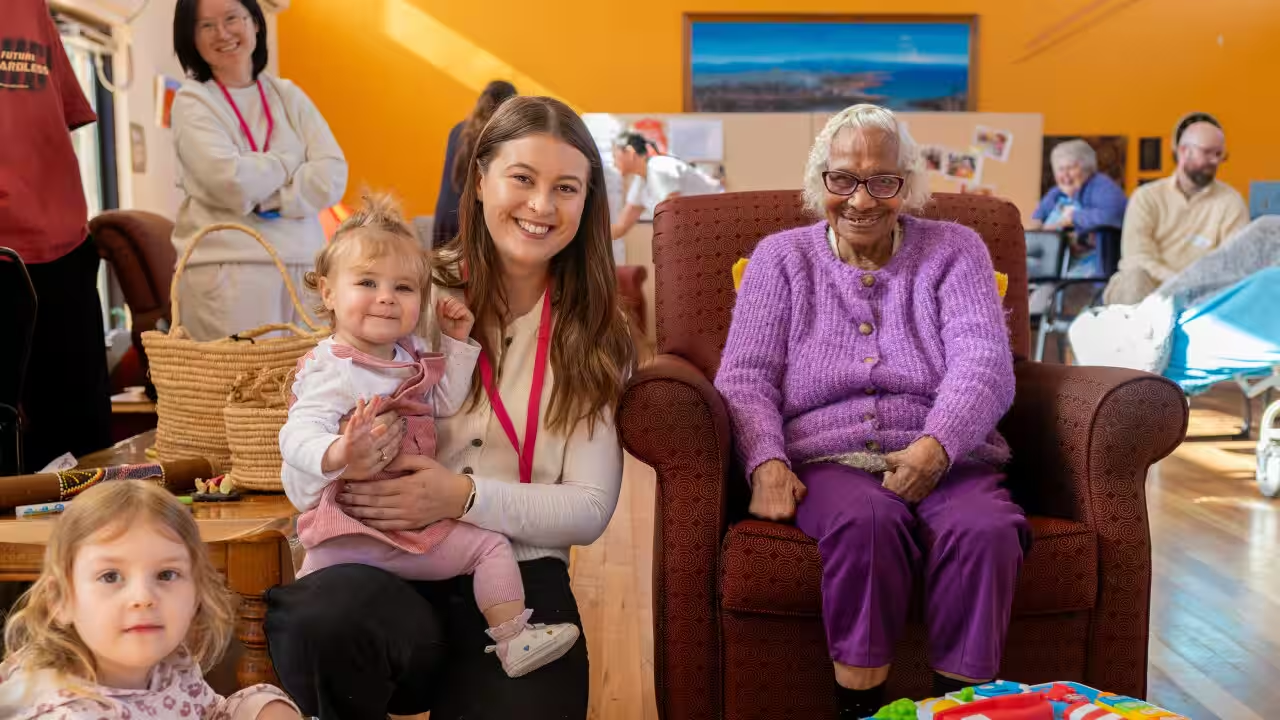
Each fortnight at the Marra Elders Playgroup, run in collaboration with Aboriginal Community Services, Playgroup SA and local cultural community centre Marra Dreaming, Elders and children come together for painting, cooking, storytelling, music and weaving activities.
“For our Elders, this exciting new program brings joy, purpose and connection, reducing isolation and celebrating their vital role in raising strong, culturally connected children,” said Graham Aitken, chief executive of Aboriginal Community Services, which runs the village.
“This is a true community approach where young and old come together to support one another, learn from each other and build strong, inclusive communities.”
The Marra Elders Playgroup is helping bring First Nations generations together. Credit: Hughes PR/AAPIMAGE
New research reveals the hidden harm of fluctuating ear disease in First Nations children
More than one third (35%) of young Aboriginal and Torres Strait Islander children experience fluctuating ear disease and 8% experience persistent ear trouble, according to new clinical findings from Hearing Australia. As NAIDOC Week kicks off this Sunday (6-13 July 2025), Hearing Australia is calling for urgent action to detect and treat ear disease early – giving children the best start in speech, learning and social development before school.
Middle ear infection (otitis media) in Aboriginal and Torres Strait Islander children remains among the highest globally.
“It can often start in early infancy without any obvious symptoms which is why regular ear health checks are important,” says Yorta Yorta woman Kirralee Cross, Partnership Specialist at Hearing Australia.
“It can impact a child’s hearing over time and their ability to develop important listening, speech and language skills. Our findings are a powerful reminder that the fight against preventable hearing loss must remain a national priority, especially in a child’s early years.”
Sector Jobs – you can see sector job listings on the NACCHO website here.
Advertising Jobs – to advertise a job vacancy click hereto go to the NACCHO website current job listings webpage. Scroll down to the bottom of the page to find a Post A Job form. You can complete this form with your job vacancy details – it will then be approved for posting and go live on the NACCHO website.
Oral Health Online Yarning Circle
Oral health gaps affect our mob’s overall health – Join the conversation and be part of bridging the gap by informing the National Oral Health Plan (2025-2034).
The NACCHO Sector News is a platform we use to showcase the important work being done in Aboriginal and Torres Strait Islander health, focusing on the work of NACCHO, NACCHO members and NACCHO affiliates.
We also share a curated selection of news stories that are of likely interest to the Aboriginal and Torres Strait Islander health sector, broadly.
First Nations Cancer Scholarship – Open for applications
Cancer Australia, in partnership with the Aurora Education Foundation is calling for applications for the second round of the First Nations Cancer Scholarships program.
Aboriginal and Torres Strait Islander post graduate students, early career researchers and health professionals in cancer related fields are encouraged to apply for up to $120,000 annually for up to 3 years, as well as academic, wellbeing and community support.
Recognising the urgent need to strengthen the Aboriginal and Torres Strait Islander cancer workforce, this scholarship program seeks to grow the capacity of Indigenous health professionals and researchers through advanced studies and research opportunities.
Expressions of Interest for the First Nations Cancer Scholarship are currently being accepted until 12 September 2025.
Image source: Australian Government – Cancer Australia
4th International Indigenous Health and Wellbeing Conference 2025
This morning, at Lowitja Institute’s 4th International Indigenous Health and Wellbeing Conference the Opening Plenary featured Lowitja Institute Co-Patron Pat Anderson AO; the Hon Mark Butler Minister for Disability and the National Disability Insurance Scheme; Keynote Speaker, Donnella Mills, Chair of NACCHO; and Deb Edwards, Head of the Lowitja O’Donoghue Foundation.
Lowitja Institute’s International Indigenous Health and Wellbeing Conference is a biennial event attracting a global audience committed to sharing knowledge for the health and wellbeing of Indigenous peoples and communities from around the world. It is a space for sharing innovative ideas and transformational research grounded in our ways of knowing, being and doing.
Donnella Mills, Chair of NACCHO. Image source: Lowitja Institute
Empowering youth through connection, culture, and conversation
Over the past month, the Winnunga Nimmityjah Aboriginal Health and Community Services ‘Tackling Indigenous Smoking (TIS)’ team has continued to engage and inspire young people from the Ted Noffs Foundation through a series of enriching outdoor and wellness-focused activities. These included a relaxing day at Casuarina Sands, a dynamic boxing session at Cuz Boxing, and a fun-filled golf day at the Canberra Golf Club—each offering unique opportunities to connect, learn, and grow.
Across all activities, the TIS team focused on creating safe, engaging environments where young people could build skills, strengthen relationships, and reflect on their choices. These sessions not only promoted physical health but also nurtured emotional resilience and confidence.
Image source: Winnunga Nimmityjah Aboriginal Health and Community Services
Sector Jobs – you can see sector job listings on the NACCHO website here.
Advertising Jobs – to advertise a job vacancy click hereto go to the NACCHO website current job listings webpage. Scroll down to the bottom of the page to find a Post A Job form. You can complete this form with your job vacancy details – it will then be approved for posting and go live on the NACCHO website.
Webinar: Shared decision-making for Aboriginal and Torres Strait Islander people – National Lung Cancer Screening Program
On Wednesday 25 June (1-2pm AEST) the Shared decision-making for Aboriginal and Torres Strait Islander people – National Lung Cancer Screening Program webinar will explore how to support meaningful shared decision-making with Aboriginal and Torres Strait Islander people. The webinar will feature guest presenter, Associate Professor Lisa Whop.
Shared decision-making is an essential part of the lung screening process. It involves both receiving and understanding key information about lung cancer screening, that enables individuals to make informed decisions about participation based on their values, preferences and personal circumstances. The way this conversation is held plays a vital role in building trust and fostering understanding.
The NACCHO Sector News is a platform we use to showcase the important work being done in Aboriginal and Torres Strait Islander health, focusing on the work of NACCHO, NACCHO members and NACCHO affiliates.
We also share a curated selection of news stories that are of likely interest to the Aboriginal and Torres Strait Islander health sector, broadly.
‘Time for the rubber to hit the road’: Pat Turner calls on re-elected Labor government to step up
In the wake of the Albanese government’s landslide re-election, the longtime advocate, CEO of NACCHO, and convenor of the Coalition of Peaks is calling for stronger leadership on Closing the Gap.
“I expect [much] stronger leadership from the second term of the Labor government when it comes to the National Agreement on Closing the Gap,” Turner told Karla Grant on Living Black.
Aunty Pat Turner says she expects stronger leadership from the second term of the Labor government when it comes to Closing the Gap. Source: AAP / LUKAS COCH/AAPIMAGE
Tom Calma call to change Indigenous Closing the Gap strategy
The decade-long national agreement on Closing the Gap signed in 2020 includes a promise to invest heavily in community-controlled Aboriginal organisations so they can do the work in key areas, including Indigenous health, child protection and crime prevention. This is based on evidence that results are often better when the service provider is a local Aboriginal organisation with locals on its board.
However, Tom Calma, whose 2005 social justice report inspired Kevin Rudd to create the first Closing the Gap agreement, says community-controlled organisations should not be bolstered at the expense of all else.
The former social justice commissioner says big numbers of Indigenous Australians use mainstream services and there should be a focus on ensuring those deliver what they are paid to deliver.
“Those community-controlled organisations by and large deliver a great service but we need to look at a move away from just investing in community-controlled Indigenous organisations and work much more with the private and public systems to ensure their services are culturally sound and safe,” Professor Calma told The Australian on Tuesday.
Aboriginal leader Tom Calma. Picture: NewsWire / Martin Ollman
New campaign urges greater awareness and screening for cervical cancer in First Nations communities
Four of Australia’s leading health organisations recently joined forces with the federal government to ensure no one is left behind in the drive to eliminate cervical cancer in Australia.
The Australian Centre for the Prevention of Cervical Cancer (ACPCC), the National Aboriginal Community Controlled Health Organisation (NACCHO), ACON and the Australian Multicultural Health Collaborative have united in a new federally funded campaign – the Own It campaign – to improve cervical screening rates by highlighting Australia’s world-leading HPV self-collect test.
NACCHO Deputy CEO Dr Dawn Casey said the new national campaign is “a significant step forward in raising awareness about cervical screening within Aboriginal and Torres Strait Islander communities”.
“It builds on the successful implementation of human papillomavirus (HPV) self-collection already taking place in Aboriginal Community Controlled Health Organisations,” she said.
New leadership for PSA Aboriginal and Torres Strait Islander Pharmacy Practice CSI
The Pharmaceutical Society of Australia (PSA) is proud to announce the appointment of a new leadership group for the Aboriginal and Torres Strait Islander Pharmacy Practice (ATSIPP) Community of Specialty Interest (CSI), chaired by respected pharmacist and proud Nywaigi Mamu woman, Chastina Heck MPS.
The ATSIPP CSI plays a vital role in championing culturally safe pharmacy practices, supporting Aboriginal and Torres Strait Islander pharmacists, and improving health outcomes across communities. With the appointment of this new leadership group, PSA reaffirms its commitment to equity, representation, and empowering Indigenous voices within the profession. PSA recognises culturally safe care and equity of health care access as critical drivers to improving health outcomes.
he 2025 Aboriginal and Torres Strait Islander Pharmacy Practice CSI Leadership Group includes:
4th International Indigenous Health and Wellbeing Conference 2025: Donnella Mills keynote speaker
Lowitja Institute is proud to welcome Donnella Mills as a keynote speaker at the 4th International Indigenous Health and Wellbeing Conference 2025.
A proud Torres Strait Islander woman with family ties to Masig and Nagir, Donnella is the Chair of NACCHO, a strong advocate for justice and community controlled health, and a dedicated legal professional. Her career spans frontline legal work, pioneering health justice partnerships, and national leadership roles that continue to shape policy and outcomes for Aboriginal and Torres Strait Islander peoples.
For more information and the conference and to register, go here.
Image source: Lowitja Institute
Sector Jobs – you can see sector job listings on the NACCHO website here.
Advertising Jobs – to advertise a job vacancy click hereto go to the NACCHO website current job listings webpage. Scroll down to the bottom of the page to find a Post A Job form. You can complete this form with your job vacancy details – it will then be approved for posting and go live on the NACCHO website.
The NACCHO Sector News is a platform we use to showcase the important work being done in Aboriginal and Torres Strait Islander health, focusing on the work of NACCHO, NACCHO members and NACCHO affiliates.
We also share a curated selection of news stories that are of likely interest to the Aboriginal and Torres Strait Islander health sector, broadly.
Some good news for Aboriginal and Torres Strait Islander health
The National Aboriginal Community-controlled Health Organisation (NACCHO) is pleased to hear of measures which should have a positive effect on Aboriginal and Torres Strait Islander health.
The Chair of NACCHO, Donnella Mills, speaking in Melbourne this evening said, ‘We knew what was coming for our sector from the announcements related to the $842m package (over six years) that the Government negotiated with our colleagues at APONT in the Northern Territory. And we were also aware of some injections of funding in critical programs such as rheumatic heart disease (RHD). There is also funding for the Coalition of Peaks, which we are pleased to see. These are welcome announcements.’
In Canberra last night, Pat Turner, the CEO of NACCHO said, ‘The big thing for our sector in this Budget is the increased access to Medicare and the PBS. The $8.5b Medicare package will not only help our ACCHOs, but the better access to bulkbilling and medicines will directly benefit the half a million or so Aboriginal and Torres Strait Islander people who access our 550 clinics. It was also pleasing to hear that the Coalition supports this critical announcement.’
Notwithstanding the measures in tonight’s Budget, more needs to be done if we are serious about closing the health gap. NACCHO has been working with the Department of Health for over seven years on a new funding model for the ACCHO sector. Currently, most of the funding is tied to historical decisions, which can no longer be justified. So, we are on the cusp of instituting a new and fairer model which represents the best chance we have had in a generation to deliver real reform.
The Aboriginal Health Council of South Australia (AHCSA) were proud to attend the official opening of Nunkuwarrin Yunti’s new medical facility.
Designed with multiple consulting rooms for GPs, nurses, counsellors, and other health practitioners, this space will undoubtedly make a positive impact on the community.
“We look forward to seeing the continued growth and success of Nunkuwarrin Yunti as they serve the health and wellbeing of the community,” AHCSA wrote on social media.
Image source: AHCSA.
‘Excited to serve the community’: new gym is a first of its kind for Orange
Some of the equipment on offer includes attachments which allow users to lift weights as well as a ceiling hoist and plinth to tackle balancing exercises to work core muscles.
The gym will be operated by Neuromoves – a specialised service from Spinal Cord Injuries Australia – and will be open to all members of the public, not just OAMS patients.
The new gym for Orange’s disabled community, located out of the Orange Aboriginal Medical Service. Picture by Carla Freedman
Good Medicine Better Health: Understanding and Managing Vaping
Vaping is on the rise, and understanding its risks is more important than ever. The latest Good Medicine Better Health module on Understanding and Managing Vaping is here to help.
After support to quit vaping or smoking? Reach out to Quit on 13 78 48, or go here.
‘Inspiring’ basketball program keeps young people out of prison system
First Nations-led basketball program Hoops 4 Health gave peer mentor Aaron Hyde the boost he needed to chase his dreams while serving time in prison.
The recently paroled 28-year-old now runs workshops for young people and adults in the Alice Springs men’s prison and in communities to help them tackle trauma.
Founded in Darwin in 2001 by Warumungu and Nyikina man and former pro-baller Timmy Duggan, the basketball program was rolled out in the territory’s youth detention centres in 2016.
Mr Duggan said the initiative combined peer-led emotional regulation sessions, basketball and money skills.
“It’s a traumatic experience going to prison, and what a lot of our participants have faced might have been intergenerational trauma as well, so we’re using this model around healing-centred sport to address it,” he said.
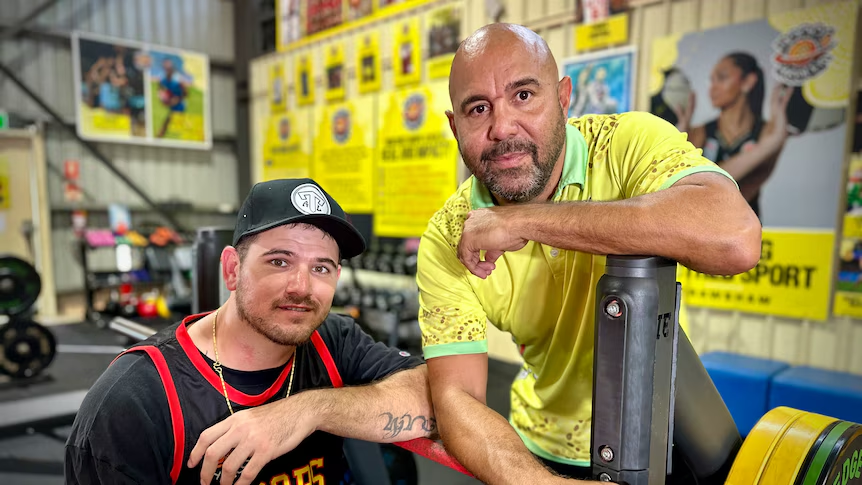
Aaron Hyde (left) and Timmy Duggan run trauma-informed basketball workshops in communities and prisons. (ABC News: Michael Donelly)
Sector Jobs – you can see sector job listings on the NACCHO website here.
Advertising Jobs – to advertise a job vacancy click hereto go to the NACCHO website current job listings webpage. Scroll down to the bottom of the page to find a Post A Job form. You can complete this form with your job vacancy details – it will then be approved for posting and go live on the NACCHO website.
The image in the feature tile is of Walter McGuire giving the Welcome to Country on Day 1 of the 2023 NACCHO Members’ Conference. Walter McGuire is a descendent of several tribal groups in the SW of WA and a Traditional Owner of Noongar Boodjar which includes the Whadjuk lands on which Perth City stands.
The NACCHO Aboriginal and Torres Strait Islander Health News is platform we use to showcase the important work being done in Aboriginal and Torres Strait Islander health, focusing on the work of NACCHO, NACCHO members and NACCHO affiliates.
We also share a curated selection of news stories that are of likely interest to the Aboriginal and Torres Strait Islander health sector, broadly.
It’s a wrap – 2023 NACCHO Members’ Conference
A record-breaking year, the 2023 NACCHO Members’ Conference saw more than 800 delegates come together on Noongar Boodjar (Perth). Surrounding the theme Working Together, we are Stronger, the conference did just that – with feedback from delegates reporting the collaborative nature of the conference was invaluable. Members and affiliates attended numerous sessions on topics spanning from cancer screening to syphilis outbreak response in ACCHOs, prison health care, and many more. The sessions saw the sector celebrate successes, provide advice and guidance, and advocate for community-developed health solutions that contribute to the quality of life and improved health outcomes for Aboriginal and Torres Strait Islander people.
In her address to the conference, NACCHO Chair Donnella Mills touched on the referendum result and the role of the sector moving forward, “If anyone can lead us out of a crisis, a crisis of division, it is this sector. In the context of our disappointment in the wake of the 14 October result, we now, more than ever, need to build a stronger NACCHO and get a stronger commitment from the nine governments to the Coalition of Peaks National Agreement on Closing the Gap,” she said.
Breaking out in song and even a booty boogie, Health and Aged Care Minister Mark Butler performed his rendition of Burning Love, available here, by Elvis Presley on karaoke night. However, when addressing the conference the minister opted for a more serious tone, praising the leadership that NACCHO and ACCHOs around the country played in rallying the health sector behind the Yes vote.
“The theme of this conference is timely: ‘Working Together, we are Stronger,’” he said. “Working together, we are stronger. Because if ever there was a time to come together, to work together, to be stronger together, it is right now.”
The NACCHO Youth Conference saw more than 80 young people from across the country yarn about youth leadership, their place in the community-controlled health sector, and their unique position of being able to learn from Elders and determine what the future looks like. AHCWA Youth Committee member, Soleil White said her main takeaway from the Youth Conference was “just the whole room, you’re bringing youth from all around the country together and that’s really powerful, and it just empowers me to go home and to keep fighting the battles and to keep moving ahead so that we can have a voice for our youth and that we can have better outcomes for our First Nations people.”
A sincere thank you from NACCHO to all who attended and contributed to making it a deadly week.
2023 NACCHO Members’ Conference Day 1.
Helping mob live healthy and prevent cancer
The Cancer Institute NSW has released a new Helping Mob Live Healthy and Prevent Cancer toolkit – a free online resource that provides culturally tailored, strengths-based information on cancer screening and prevention for the Aboriginal health workforce.
The toolkit features:
cancer screening information – breast, cervical and bowel cancer screening + tips on testing for other cancers
cancer prevention tips about healthy living and being smoke- and vape-free
social and emotional wellbeing information and links to trusted resources and support services
downloadable resources which can be used to support yarns with your clients about the benefits of taking part in cancer screening and healthy living. They include tailored checklists for men’s and women’s business and templates to support local promotion of screening and prevention programs
a resource directory featuring links to a range of tailored cancer screening and healthy living resources from trusted Australian health and cancer organisations.
All resources have been developed in consultation with Aboriginal health organisations, workers and community members.
Please explore the toolkit here and help spread the word by sharing it with your networks.
For more information, please contact the Cancer Institute NSW using this email link.
You can also view the NSW Government Cancer Institute webpage NSWPromote this toolkit with your networkshere.
Image source: social media tile from NSW Government Cancer Institute NSW webpage: Promote this toolkit with your networks.
“Our work continues as it has always done”
Less than 14 days after the resounding rejection of the Voice, Indigenous leaders and thinkers are already in talks with each other and with the government in order to find a new path for better outcomes and social justice. In response to the referendum result, and after a week of silence, a 12-point open letter, drafted by up to 85 Indigenous leaders from various fields, was sent to the PM and every member of the House of Representatives and the Senate. In stark contrast to the Uluru Statement from the Heart, the letter was no humble offering on a united way forward.
The letter offered no pragmatic resolution or new beginning. Instead, it gave an early, detailed synopsis of what had just happened and why. It acknowledged the shock and grief at the result and the rejection both of First Nations people and their good-faith attempts at reconciliation. “The truth is that the majority of Australians have committed a shameful act whether knowingly or not,” the letter reads, “and there is nothing positive to be interpreted from it. We needed truth to be told to the Australian people.”
The letter continued, “We want to talk with our people and our supporters about establishing – independent of the Constitution or legislation – an Aboriginal and Torres Strait Islander Voice to take up the cause of justice for our people. Rejection of constitutional recognition will not deter us from speaking up to governments, parliaments and to the Australian people. We have an agenda for justice in pursuit of our First Nations rights that sorely need a Voice – we will continue to follow our law and our ways, as our Elders and Ancestors have done. We will regather in due course and develop a plan for our future direction. While this moment will be etched into Australia’s history forever, today we think of our children, and our children’s children. Our work continues as it has always done. We will continue to fight to seek justice for our peoples.”
To view The Saturday Paper article The ‘Yes’ case responds: ‘It’s a white flag from Labor’ by Yorta Yorta man and award-winning writer and broadcaster Daniel James in full click here.
Australia has voted against enshrining an Indigenous Voice to Parliament, with the results being called early. Photo: Con Chronis, AAP. Image source: NITV.
Dedication, empathy and leadership
In a ceremony that took place on Gadigal Land last week, inspirational GPs received awards from Dr Karen Nicholls, Chair of the RACGP Aboriginal and Torres Strait Islander Health Faculty, and RACGP President Dr Nicole Higgins.
Duel winners of the Standing Strong Together Award were:
Dr Kali Hayward – Dr Nicholls paid tribute to Warnman woman Dr Hayward, describing her as ‘an outstanding mentor’, and a ‘shining example of dedication, empathy and leadership, both regionally and nationally’ whose ‘unwavering commitment’ to quality healthcare and raising awareness of Aboriginal and Torres Strait Islander culture has led to ‘more respectful, inclusive healthcare services’ as well as improved patient satisfaction and outcomes.
Dr Mark Daley – Dr Nicholls described Dr Daley, a GP at the First People’s Health and Wellbeing clinic in NSW, as “passionate and committed to providing the highest quality of culturally safe, trauma-informed care to his patients, many of whom have some of the toughest and most complex health, social and emotional wellbeing issues as a result of colonisation, and the impacts of intergenerational trauma, dispossession and discrimination.”
The Growing Strong Award, which goes to a GP in training, went to Dr Patrick McNamara, who is one of only two Aboriginal and Torres Strait Islander doctors in the Australian Defence Force. “He continuously strives to provide the highest care for Defence Force personnel, and goes above and beyond to ensure that healthcare received by Indigenous soldiers is safe and culturally appropriate,” Dr Nicholls said.
This year’s Medical Student Bursary went to Loyala Wills, a Torres Strait Islander woman and final year Flinders University medical student who runs an online platform called Med School Made Colourful, which offers medical education support to Aboriginal and Torres Strait Islander students.
To view the RACGP newsGP article ‘A shining example of dedication, empathy and leadership’ in full click here.
Clockwise from top left: Dr Karen Nicholls; Dr Nicole Higgins with Dr Kali Hayward; Associate Professor Brad Murphy; Dr Mark Daley. Image source: RACGP newsGP.
Vaping resources for young mob
Together with the Tackling Indigenous Smoking team, Na Joomelah and National Best Practice Unit (NBPU), Lung Foundation Australia has developed new vaping resources for Aboriginal and Torres Strait Islander young people. The resources include three short animations and an accompanying fact sheet covering key topics in vaping and helping empower young people to choose to be vape free.
You can watch the animations, including the one below, and download the factsheet by visiting the Lung Foundation Australia First Nations e-cigarettes and vaping webpage here.
If you have any questions please contact Paige Preston from Lung Foundation Australia using this email link.
Concerns on handling of public drunkenness
Melbourne’s new sobering up centre will have capacity for 140 people a week when public drunkenness is decriminalised next month, but the state’s new system for handling intoxicated Victorians could quickly be tested. The centre’s capacity could be strained if the changes lead to major diversions of low-risk patients away from hospitals. The state government has used 2019 crime statistics for the public intoxication offence to predict that the new sobering-up centre would handle at least 3,700 people a year. But the documents warn that estimate may drastically understate the total demand.
From November 7, the offence of public drunkenness will be abolished and health services will take charge of many cases typically handed by police or paramedics. The reform was legislated in 2021 following the death of Yorta Yorta woman Tanya Day, who suffered a fall while in custody. Intoxicated people who commit crimes, are dangerous or need serious medical support will still be handled by emergency services, but people who are merely drunk in public and need help will be treated by support workers from different providers cross the state. Call-outs for Aboriginal Victorians in Melbourne will be handled separately and have been estimated to be in the range of 330 per year.
Victorian Aboriginal Community Controlled Health Organisation CEO Jill Gallagher said repealing public drunkenness was vital to improving safety for First Peoples. “For the same behaviour, Aboriginal and Torres Strait Islander people in Victoria have faced inordinately higher rates of incarceration for public drunkenness than non-Aboriginal Victorians face,” she said. “Alcohol misuse is a public health issue, not a crime, and therefore should be treated as such.”
The above has been extracted from an article Sobering concerns on new handling of public drunkenness published in The Sydney Morning Herald on 29 October 2023. A related article Melbourne sobering centre facing delays ahead of Victorian public drunkenness overhaul published by ABC News yesterday can be view in full here.
The location of the Victorian Government’s first sobering-up centre in Collingwood. Photo: Joe Armao. Image source: The Sydney Morning Herald.
Sector Jobs
Sector Jobs – you can see sector job listings on the NACCHO website here.
Advertising Jobs – to advertise a job vacancy click here to go to the NACCHO website current job listings webpage. Scroll down to the bottom of the page to find a Post A Job form. You can complete this form with your job vacancy details – it will then be approved for posting and go live on the NACCHO website.