NACCHO Sector News: 1 September 2025

Aboriginal and Torres Strait Islander Health News

The NACCHO Sector News is a platform we use to showcase the important work being done in Aboriginal and Torres Strait Islander health, focusing on the work of NACCHO, NACCHO members and NACCHO affiliates.

We also share a curated selection of news stories that are of likely interest to the Aboriginal and Torres Strait Islander health sector, broadly.

New international brand of benzathine benzylpenicillin PBS listed during Bicillin LA shortage

The NACCHO medicines team would like to thank the sector for the immense amount of work done responding to the Bicillin LA shortage. The determined and concerted efforts of the Aboriginal and Torres Strait Islander community health sector has resulted in timely listing of another international brand- Lentocilin S 1200 (Portugal) on the PBS. It is critical to managing Rheumatic Heart Disease, preventing recurrence of Acute Rheumatic Fever and other infections. This replacement will save ACCHOs tens of thousands of dollars. It is also critical to treat syphilis. This will greatly assist NACCHO and the sector’s work as part of syphilis being declared a Communicable Disease Incident of National Significance by Australia’s Chief Medical Officer, Professor Michael Kidd AO, on 7th of August. This follows ongoing and concerning rises in syphilis case numbers in Australia.

Information on using this product is available from the Australian Commission on Safety and Quality in Health Care.

Each vial also contains an English language product information sheet. The product has arrived in Australia and expected to start moving through supply chains later this week.

Let’s talk about women’s business: Women’s Health Week 2025

NACCHO is proud to be a Community Supporter of Jean Hailes for Women’s Health Women’s Health Week 2025.

It’s important to talk about women’s business so you know how to keep healthy. If you have worries about women’s business, talk to a local health worker this Women’s Health Week.

Removing barriers that prevent Aboriginal and Torres Strait Islander women from accessing maternity care, Winnunga Nimmityjah provides a midwifery program that provides culturally safe, non-judgemental and flexible care, says CEO Julie Tongs.

Covering topics from pregnancy and birthing to substance use, smoking during pregnancy, SIDS, breastfeeding and nutrition, Julie says the group also provides an opportunity for pregnant women to meet and talk about any concerns or issues.

“The midwifery team offers antenatal and postnatal care, community at home support, baby health checks, breastfeeding support, immunisations, and a range of women’s health services,” she says.

Read the full article here.

For culturally safe health information and resources, go here.

Artwork by Samantha Campbell from Coolamon Creative.

Congress Healthy Kids Clinic now open!

Central Australian Aboriginal Congress is proud to open the Healthy Kids Clinic in Todd Mall, Mparntwe. This is a safe and welcoming place where families can come for support, ask questions, and celebrate their children’s growth and milestones.

From free health checks and immunisations to parenting advice and links to other services, the Healthy Kids Clinic is here to walk alongside families — helping our little ones grow up strong, healthy and connected.

Learn more here.

Image source: Central Australian Aboriginal Congress

New resource for Elders

A suite of culturally safe resources is now available through LiveUp to support older First Nations peoples and their families, in staying strong and independent through the use of simple, everyday tools. The Everyday Tools to Help Mob Guide introduces a range of low-risk, low-cost assistive products that can make daily life easier, like kettle tippers, furniture risers, easy grip gardening tools, and more. These tools help First Nations Elders, older people, and their families, to continue doing the things they love as they age.

The resources were created in partnership by LiveUp, the Victorian Aboriginal Health Service (VAHS), the Victorian Aboriginal Community Controlled Health Organisation (VACCHO), an Elder working group, and First Nations creative agency, Little Rocket.

The resources were officially launched with a community celebration at the new VAHS outdoor space in Fitzroy, Melbourne.

To explore and download the resources, including the guide, go here.

Image source: LiveUp

Sector Jobs – you can see sector job listings on the NACCHO website here.

Advertising Jobs – to advertise a job vacancy click here to go to the NACCHO website current job listings webpage. Scroll down to the bottom of the page to find a Post A Job form. You can complete this form with your job vacancy details – it will then be approved for posting and go live on the NACCHO website.

Email us your story with some images to: NACCHOCommunicationsandMedia@naccho.org.au and we will feature it in the news.

Email us your story with some images to: NACCHOCommunicationsandMedia@naccho.org.au
and we will feature it in the news.

NACCHO Sector News: 7 August 2025

The NACCHO Sector News is a platform we use to showcase the important work being done in Aboriginal and Torres Strait Islander health, focusing on the work of NACCHO, NACCHO members and NACCHO affiliates.

We also share a curated selection of news stories that are of likely interest to the Aboriginal and Torres Strait Islander health sector, broadly.

First Nations solutions to HIV and hepatitis receive GLOWS grant support

Ten First Nations-led projects have received grants totalling $2.3 million under the inaugural round of the Guiding Local Opportunities for Wellbeing (GLOWS) First Nations Health Grant program.

The GLOWS initiative is a three-year, $4.4 million partnership between the Lowitja Institute and Gilead Sciences to support First Nations-led solutions addressing HIV and viral hepatitis.

The program is designed to build health equity by funding community-controlled research, knowledge-sharing events, and training for early-career researchers in Aboriginal and Torres Strait Islander communities across the country.

Ngarabul woman and Lowitja Institute Executive Manager of Policy and Consulting Rosemary Smith said the initiative responds to community needs by investing directly in First Nations workforce development and service delivery.

“GLOWS gives us two things our communities have asked for,” she said.

“First, it builds a pipeline of Aboriginal and Torres Strait Islander researchers and practitioners who can walk with our peoples on the journey to eliminate HIV and viral hepatitis.

“Second, it directs funds straight to community-controlled organisations so they can design and deliver the care models that work for our mob.”

Read the full article.

Lowitja Institute Executive Manager of Policy and Consulting Rosemary Smith says the grants program responds to community needs by investing directly in Indigenous workforce development and service delivery.

Lowitja Institute Executive Manager of Policy and Consulting Rosemary Smith says the grants program responds to community needs by investing directly in First Nations workforce development and service delivery. (Image: Lowitja Institute)

Celebrating Aboriginal and Torres Strait Islander Health Workers

The National Day of Recognition for Aboriginal and/or Torres Strait Islander Health Workers and Practitioners falls annually on 7 August. This day serves as a powerful tribute to a workforce that is renowned as a vital and reliable resource critical to improved health and wellbeing outcomes.

The deep roots of this profession are highlighted by the careers of dedicated individuals at Nepean Blue Mountains Local Health District (NBMLHD) like Clarke Scott and Donna Jory, whose decades of service have shaped a genuine connection with Aboriginal people.

Clarke Scott, now the Aboriginal Health Programs Manager for Drug & Alcohol Services, holds a unique place in the history of the District. He was proudly the first person employed in an Aboriginal identified position, starting as an Aboriginal Liaison Officer 30 years ago.

Reflecting on his work, Clarke speaks to the importance of connecting with the community and guiding them through the health system. “On home visits, I would go along and help the community feel relaxed. Just having another Aboriginal person there really helps.”

Read the full article.

Clarke Scott and Donna Jory

Clarke Scott and Donna Jory

Trek tackles heart disease cruelling Aboriginal and Torres Strait Islander lives

Medical specialists, cultural guides and local medicos are teaming up for a Top End trek to tackle a disease affecting Aboriginal and Torres Strait Islander people the most.

Aboriginal and Torres Strait Islander Australians are 64 times more likely to have rheumatic heart disease than non-Indigenous, with women and young people most affected.

The disease begins with a common strep A infection – a sore throat or skin sore that can lead to lifelong complications, invasive treatments and premature death if left untreated.

A team of paediatric cardiologists, nurses, sonographers, Aboriginal cultural guides and local health professionals have embarked on a trek across the Big Rivers region of the NT. The Deadly Heart Trek focuses on education, early diagnosis and treatment of the disease and its precursor acute rheumatic fever, with echocardiographic heart checks and skin checks performed by health professionals.

“It’s a national shame that this disease has been eradicated in every developed country except Australia,” the trek’s cultural lead Aunty Vicki Wade told AAP. Now in its fifth year, the trek will visit nine communities before finishing on August 15.

Read the full article

Medical specialists are teaming up for a Top End trek to tackle heart disease.

Medical specialists are teaming up for a Top End trek to tackle heart disease. (Image: Rudi Maxwell/AAP PHOTOS)

Help celebrate healthcare excellence

Nominations are now open for the 2025 Murrumbidgee Primary Healthcare Awards, and Murrumbidgee Primary Health Network (MPHN) is calling on the community to help recognise the region’s dedicated and passionate primary healthcare professionals.

From general practitioners and nurses to allied health, First Nations health, and community care workers, the awards celebrate the people and teams making a meaningful difference to health and wellbeing across the region.

MPHN chair Dr Jodi Culbert said the awards were a valuable opportunity to recognise the dedication of those working across the primary healthcare sector.

“These are the people who care for us when we’re unwell, support us through challenging times, and work every day to keep us and our loved ones healthy and out of hospital,” Dr Culbert said.

“Many rural and regional communities rely heavily on their local primary healthcare professionals. The Murrumbidgee Primary Healthcare Awards are a chance to recognise their tireless efforts and lasting impact. We encourage everyone across the region to nominate someone who makes a difference and help us shine a light on the outstanding talent we have here in the Murrumbidgee.”

Read the full article

Last year’s award winners celebrate excellence in healthcare with nominations now open for the 2025 awards.

Last year’s award winners celebrate excellence in healthcare with nominations now open for the 2025 awards.

Largest ever investment for Aboriginal-led early learning in NSW

Aboriginal-led early learning in New South Wales has received a record boost as part of the state’s 2025-26 budget.

The $200.9 million investment, touted as the largest investment in Aboriginal controlled and owned early learning in NSW history, will be delivered in partnership with local Aboriginal communities through the NSW Childcare and Economic Opportunity Fund.

Allocated over four years, the investment will increase the number of places in existing Aboriginal Community Controlled Organisation (ACCO) early childhood services and establish new ACCO-led early childhood services across NSW.

The NSW Government says the investment will support programs to grow and strengthen the Aboriginal early childhood education and care workforce, from study preparation and scholarships to mentoring, professional learning and peer support.

More than 15 new services are set to join the 41 existing ACCO-led early childhood services across the state, with a projected 870 new places for Aboriginal children created through the expansion.

The announcement comes shortly after National Aboriginal and Torres Strait Islander Children’s Day, which is celebrated on August 4th every year.

SNAICC – National Voice for our Children chief executive Catherine Liddle said Aboriginal-led early learning centres will help close the gap between Indigenous and non-Indigenous children.

Read the full article

The New South Wales Government has announced a record $200.9 million investment into Aboriginal-led early learning through the NSW Childcare and Economic Opportunity Fund.

The New South Wales Government has announced a record $200.9 million investment into Aboriginal-led early learning through the NSW Childcare and Economic Opportunity Fund. (Image: 33 Creative)


Sector Jobs – you can see sector job listings on the NACCHO website here.

Advertising Jobs – to advertise a job vacancy click here to go to the NACCHO website current job listings webpage. Scroll down to the bottom of the page to find a Post A Job form. You can complete this form with your job vacancy details – it will then be approved for posting and go live on the NACCHO website.

NACCHO Members’ Conference

Read about the NACCHO Members’ Conference on December 8 2025

NACCHO Sector News: 31 March 2025

The NACCHO Sector News is a platform we use to showcase the important work being done in Aboriginal and Torres Strait Islander health, focusing on the work of NACCHO, NACCHO members and NACCHO affiliates.

We also share a curated selection of news stories that are of likely interest to the Aboriginal and Torres Strait Islander health sector, broadly.

Have your say on Closing the Gap

How can we strengthen the National Agreement on Closing the Gap? This is your chance to share your experiences and shape the future of how governments and Aboriginal and Torres Strait Islander organisations work together to deliver change.

– Take the short survey
– Make a written submission
– Join an in-person discussion in a place-based partnership community

Your perspective matters.

Have your say by 16 April. Learn more here.

Image source: Coalition of Peaks.

From Yarrabah to Beyond: The Hygiene Program Saving Indigenous Lives to Combat Rheumatic Heart Disease

In Yarrabah, kilometres east of Cairns Renee Grosso is implementing Innovative and fun strengths focused health programs the expand hygiene access and education with a keen focus on Rheumatic Heat Disease (RHD).

Renee is the public health coordinator at Gurriny Yealamucka Health Services’ (GYHSAC) bring an array of health and hygiene programs such as The Yarrabah soap program, Healthy skin hearoes and directly engaging with communities like Groote Eylandt, Jambun and Palm Island. The most recent program that is being championed is the MOOGOO Prevent RHD Program providing ongoing natural hygiene products, including its Milk Wash, to high-risk communities to reduce the likelihood of risks and infections.

Read more here.

Young Child In Yarrabah Practicing Healthy Skin Hero Program With Dolly. Image source: NITV.

The unfinished business of Bringing Them Home

A new Healing Foundation report has found only 6% of the Bringing them home report recommendations – made to support Stolen Generations survivors and their families almost 28 years ago – have been clearly implemented.

It recommends a National Healing Package of priority changes to enable remaining elderly survivors to live out their days with dignity.

The report offers practical policy solutions to some of the big challenges facing survivors and their families, including:

  • access to culturally safe, trauma informed aged care and health services
  • urgent equitable redress
  • prioritised access to records, and
  • investment in Stolen Generation Organisations.

Learn more here.

Image source: The Healing Foundation.

Indigenous-led quit smoking program upscales nationally to help close the gap

An Indigenous-led intervention program tackling smoking and vaping – the leading preventable cause of chronic disease and preventable death for Aboriginal and Torres Strait Islander people — will be upscaled nationally.

The Which Way? Quit Pack pilot program developed by a Newcastle research team has been awarded a $4.7m Medical Research Future Fund (MRFF)* Indigenous Health Research grant through the National Health and Medical Research Council (NHMRC).

Led by Wiradjuri woman, University of Newcastle Associate Professor Michelle Kennedy, of the HMRI** Equity in Health and Wellbeing program, the Which Way? smoking and vaping cessation program builds on existing research by the team, to evaluate the impact of the innovative intervention for Aboriginal and Torres Strait Islander adolescents and adults.

Learn more here.

Which Way? Quit Pack research team members (l-r) Felicity Collis (Gomeroi), Kayden Roberts-Barker (Wiradjuri), Jessica Bennett (Gamilaroi) and lead researcher Associate Professor Michelle Kennedy (Wiradjuri).

Sector Jobs – you can see sector job listings on the NACCHO website here.

Advertising Jobs – to advertise a job vacancy click here to go to the NACCHO website current job listings webpage. Scroll down to the bottom of the page to find a Post A Job form. You can complete this form with your job vacancy details – it will then be approved for posting and go live on the NACCHO website.

Governance Workshops for ACCHOs

Register now for the NACCHO Governance Workshops 2025.

Sydney is up next on Tuesday 15 April and Wednesday 16 April. 

NACCHO’s Governance Workshops are designed for people working in member ACCHOs and run by legal and other experts in the field. 

The workshops cover: 

  • Principles of good governance.  
  • Managing conflicts of interest. 
  • Managing risk (e.g. contract execution, etc.). 
  • Delegation of powers. 
  • Finance for Boards. 
  • Structure and role of boards and sub-committees; and 
  • Governance documents. 

NACCHO Sector News: 11 February 2025

The NACCHO Sector News is a platform we use to showcase the important work being done in Aboriginal and Torres Strait Islander health, focusing on the work of NACCHO, NACCHO members and NACCHO affiliates.

We also share a curated selection of news stories that are of likely interest to the Aboriginal and Torres Strait Islander health sector, broadly.

Closing the Gap success stories are being written by Aboriginal and Torres Strait Islander peoples: PM

While acknowledging there is still a lot of work ahead, Aboriginal and Torres Strait Islander leaders have said the National Agreement on Closing the Gap is beginning to show some improvements.

On Monday the Federal Government released the 2024 Closing the Gap report and 2025 implementation plan, with Prime Minister Anthony Albanese telling the Parliament that the road ahead wasn’t easy, but that the nation couldn’t “turn our back” to entrenched disadvantage and violence affecting Indigenous people.

Arrernte and Gurdanji woman Pat Turner, the lead convenor for the Coalition of peak Indigenous bodies, and CEO of NACCHO said the full impacts of the changes would take time to materialise.

“We have seen improvements in critical areas such as the proportion of First Nations babies born at a healthy weight and the increase in the land and sea country under Aboriginal and Torres Strait Islander control – these are significant achievements that deserve recognition,” she said.

“For the implementation to be successful, systems, policies, and governance must evolve; government must evolve.

“It is our responsibility, in partnership with governments, to strengthen the policies that are working and change the ones that are failing – those that continue to exclude the basic needs of our people.”

Read the full NITV article here.

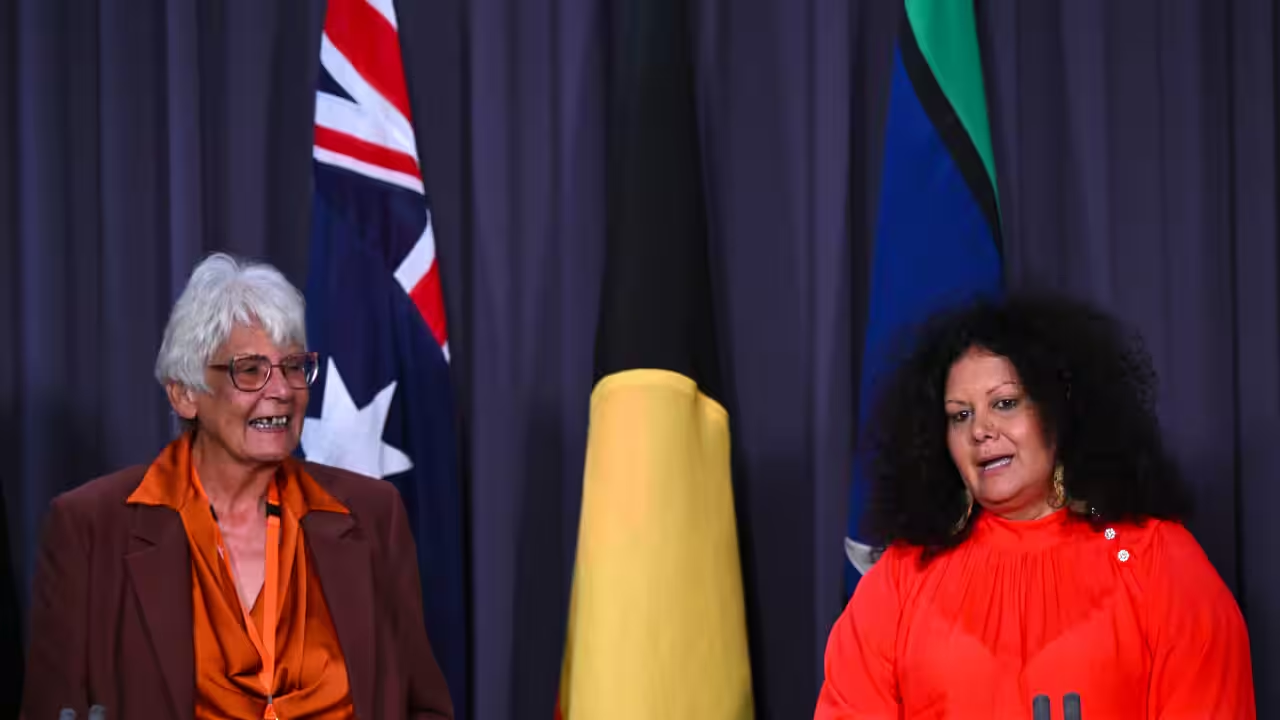
Lead convener of the Coalition of Peaks Pat Turner and Minister for Indigenous Australians Malarndirri McCarthy. Source: AAP / LUKAS COCH/AAPIMAGE

Health impacts of climate change

Aboriginal and Torres Strait Islander communities are disproportionately impacted by climate change, facing rising seas, extreme weather, and health inequities. For the first time, the NACCHO Australia and The Royal Australian College of General Practitioners (RACGP) Guide to Preventive Health Care for Aboriginal and Torres Strait Islander peoples has a chapter on “Health Impacts of Climate Change”.

Ps and health professionals play a key role in preventing health risks from climate change by considering each patient’s context, including location, resources, and social factors. Best practices promote physical, social, and emotional wellbeing, supporting both patients and the planet. GPs should educate, design risk-reduction strategies, and advocate for policies that reduce environmental and health risks.

Read the full report here.

NACCHO and RACGP launching the ‘National Guide to preventative healthcare for Aboriginal and Torres Strait Islander people – fourth edition’ at the 2024 NACCHO Members’ Conference

Promote Cervical Screening in your ACCHO!

The ‘Own It’ toolkit provides communication materials on cervical screening directly targeted toward women and people with a cervix from Aboriginal and Torres Strait Islander communities.

Own It is an Australian Government–funded national campaign to raise awareness of the self-collect option when doing your Cervical Screening test.

In the toolkit you will find:

  • key messages
  • social media content to share
  • quotes from our volunteer talent on cervical screening
  • posters and email signature images
  • social media and posters you can add your own spin to
  • resources on cervical screening.

To download the toolkit, go here.

Derbarl’s healthy skin check day

Derbarl Yerrigan Health Service’s Healthy Skin Check Day saw kids enjoying soapy slime making, dolly washing and learning about the importance of healthy skin! The activities kept them entertained while waiting for a skin check and helping raise awareness about Rheumatic Heart Disease and the prevention of Group A Strep.

Learn more about Derbal’s health promotion activities here.

Image source: Derbarl Yerrigan Health Service

AIDA to lead the Leaders in Indigenous Medical Education (LIME) program

The Australian Indigenous Doctors’ Association (AIDA’s) journey as the national peak body for Aboriginal and Torres Strait Islander medical students, doctors, and workforce has resulted in a successful application worth nearly $3 million to lead the Leaders in Indigenous Medical Education (LIME) program.

By taking the lead on the LIME program, AIDA will further facilitate impactful and sustained transformation within the medical education sector. Amongst other key outcomes, AIDA will work with Universities to capture and annually report on the retention rate of Indigenous Medical Students and identify any gaps to student success.

AIDA CEO, Donna Burns said this will enable AIDA to continue working towards equitable health outcomes for Indigenous peoples.

“Gaining a deeper understanding of the barriers and opportunities within the medical education sector and partnering with universities to make positive change will result in more Indigenous doctors,” Ms Burns said.

Read the full media release here.

Image source: AIDA.

Sector Jobs – you can see sector job listings on the NACCHO website here.

Advertising Jobs – to advertise a job vacancy click here to go to the NACCHO website current job listings webpage. Scroll down to the bottom of the page to find a Post A Job form. You can complete this form with your job vacancy details – it will then be approved for posting and go live on the NACCHO website.

10 October 2024

The NACCHO Sector News is a platform we use to showcase the important work being done in Aboriginal and Torres Strait Islander health, focusing on the work of NACCHO, NACCHO members and NACCHO affiliates.

We also share a curated selection of news stories that are of likely interest to the Aboriginal and Torres Strait Islander health sector, broadly.

Community-led health trial halves skin infection rates in remote Aboriginal and Torres Strait Islander communities

A new skin health study, led by The Kids Research Institute Australia, in partnership with Aboriginal and Torres Strait Islander health organisations, including Kimberley Aboriginal Medical Service, has made significant strides in reducing skin infections among Aboriginal and Torres Strait Islander children living in remote communities in Western Australia’s Kimberley region.

The SToP (See, Treat, Prevent) trial has successfully halved the rate of skin infections, dropping from 40% to just 20% over four years involving 915 children and 3,084 skin checks.

The impact of the programs demonstrates successful approaches to improving skin health in addition to the power of community-driven approaches. The SToP trial was guided by local Aboriginal and Torres Strait Islander health leaders and actively involved 152 community members, school staff, and clinic workers. By using culturally relevant resources, such as books in local languages and descriptions of bush medicines, the trial effectively promoted skin health in a way that resonated deeply with the community.

To read more, go here.

Image credit: (Reuters: Jaimi Joy)

Election promise to boost Winnunga Nimmityjah Aboriginal Health and Community Services’ funding

Ahead of the ACT election, the Canberra Liberals have vowed to boost Winnunga Nimmityjah Aboriginal Health and Community Services’ funding by $2 million and hand an extra $250,000 to Gugan Gulwan for an expanded tutoring program.

The opposition would also transition control of Boomanulla Oval back to Canberra’s Indigenous community and hand the Ngunnawal Bush Healing Farm to an Aboriginal community controlled organisation.

ACT Labor promised to return Boomanulla Oval to community control before the 2016 election and again in 2020. Established in 1984, the oval’s lease was passed back to the ACT government in 2014 after the corporation that managed it was wound up. The government in 2018 rejected a plan to return the oval to Indigenous control.

Ahead of this month’s election, Labor has promised to work with the Aboriginal and Torres Strait Islander Elected Body to establish an interim management committee for Boomanulla Oval ahead of returning it to community control.

To read the full article go here.

Chief executive of Winnunga Nimmityjah Aboriginal Health and Community Services Julie Tongs and staff called for Boomanulla Oval to be returned to the Indigenous community prior to the most recent ACT election. Photo by Jamila Toderas

Significant progress in eye health for Aboriginal and Torres Strait Islander communities

The prevalence of active trachoma, a highly infectious eye disease, among Aboriginal and Torres Strait Islander children has declined by 87% since 2007, according to the latest report from the Australian Institute of Health and Welfare. This reduction—from 14% in 2007 to just 1.8% in 2023—reflects the dedication and impact of ongoing eye health initiatives in our communities.

Trachoma can lead to severe consequences like blindness if left untreated, making this achievement critical to protecting the long-term vision and quality of life for our children. NACCHO and Aboriginal Community Controlled Health Organisations (ACCHOs) have  are strong advocates of eye and vision health and increasing awareness and supporting screening and treatment programs in communities.

The report also showed encouraging trends in adult eye health, including increased cataract surgeries—addressing cataracts, the leading cause of blindness among Aboriginal and Torres Strait Islander adults.

Eye health remains a key priority, with an ongoing focus on providing equitable access to screenings and treatment for all Aboriginal and Torres Strait Islander people.

To read more, go here.

Image credit: AAP

Prime Minister’s science prize acknowledges Aboriginal and Torres Strait Islander scientific contributions

The Albanese Government has announced a new award in the Prime Minister’s Prizes for Science, dedicated to honouring the significant contributions of Aboriginal and Torres Strait Islander knowledge systems. This new category will spotlight the achievements of Aboriginal and Torres Strait Islander people and their unique scientific perspectives, with the aim of encouraging greater participation in the science sector.

Recognising the importance of 65,000 years of unbroken connection to Country, this award places Aboriginal and Torres Strait Islander knowledge systems alongside Western science in addressing medical challenges, including finding new medicines.

This is a step closer to Aboriginal and Torres Strait Islander knowledge informing and guiding future health and medical innovations, in a meaningful way.

To read more, go here.

Credit: Evgenyi Eg Stock photo ID:1288566413

Community-led solutions creating safer, stronger communities

In Katherine, Northern Territory, community-led solutions are driving positive change to address the root causes of crime. The recent ‘Katherine Justice Reinvestment: Have Your Say’ symposium brought together community members, researchers, and experts from various sectors to explore local strategies for a safer future.

These innovative approaches, supported by federal funding, focus on prevention by addressing social determinants of health like unemployment, homelessness, and poverty rather than incarceration.

The symposium highlighted how justice reinvestment empowers Aboriginal and Torres Strait Islander communities, enabling them to create tailored local solutions. By investing in programs that support at-risk individuals, the initiative is transforming the justice system and showing that the key to reducing crime lies in investing in people, not prisons. This approach fosters meaningful connections and behavioural transformation, laying a strong foundation for a healthier, more connected Katherine community.

To read more, go here.

Participants in the symposium, Katherine Justice Reinvestment: Have Your Say. Photograph by Oli Dubsky

Sector Jobs – you can see sector job listings on the NACCHO website here.

Advertising Jobs – to advertise a job vacancy click here to go to the NACCHO website current job listings webpage. Scroll down to the bottom of the page to find a Post A Job form. You can complete this form with your job vacancy details – it will then be approved for posting and go live on the NACCHO website.

World Mental Health Day 2024

This World Mental Health Day, we celebrate the incredible people across the country who dedicate their time and heart to supporting, nurturing, and protecting our mob. Your work is complex, but your impact is deeply felt and truly appreciated. Thank you for all you do! 💛🌟

At NACCHO, we are committed to enhancing the social and emotional wellbeing of our people through all our initiatives. One key program is Culture Care Connect—an innovative initiative supporting ACCHOs to lead community-driven suicide prevention and holistic aftercare services.

In September, we had the privilege of hearing from some of these remarkable individuals at the Culture Care Connect Summit. Check out their inspiring insights. 🌟👇

For support and resources, visit: https://www.naccho.org.au/connection-strength-resilience/

ACCHO Governance Workshops

Free, specialised governance workshops for ACCHOs will be delivered in multiple locations across the country during 2024 and 2025. 

Registrations are now open for:

  • Broome: 24-25 October

The program is delivered by legal experts and covers:  

  • Delegation of powers 
  • Finance for Boards
  • Governance documents
  • Managing conflicts of interest 
  • Managing risk  
  • Principles of good governance  
  • Structure and role of boards and sub-committees 

To register, go here.

For more information, please contact NACCHO using this email link.

27 September 2024

The NACCHO Sector News is a platform we use to showcase the important work being done in Aboriginal and Torres Strait Islander health, focusing on the work of NACCHO, NACCHO members and NACCHO affiliates.

We also share a curated selection of news stories that are of likely interest to the Aboriginal and Torres Strait Islander health sector, broadly.

New Jabiru Health Centre now open

The new Jabiru Health Centre is now officially open, with primary health services delivered by Aboriginal Community Controlled Health Organisation (ACCHO), Red Lily Health Board Aboriginal Corporation (Red Lily). The new $20 million purpose-built health centre will increase access to medical services in the West Arnhem region.

The new health centre features eight consulting suites, including paediatric rooms, four multi-purpose allied health examination rooms, a four-chair renal ready room, and a dental surgery complete with sterilisation and work rooms, dedicated male and female waiting areas and a health store.

Specialised facilities include an audiology consulting room with a hearing booth, an X-ray room, a four-berth morgue with a viewing area and an external, culturally appropriate ceremony area adjacent to the morgue.

There are also emergency capabilities at the health centre, such as a drive through ambulance bay and an emergency department with two resuscitation bays.

“Red Lily Health Board welcomes the opportunity to provide culturally-appropriate health care from a ‘purpose-built’ facility in Jabiru,” June Nadjamerrek, Chair of Red Lily Health Board.

To learn more, go here.

Image source: NT News.

Deadly Choices program expands to Winnunga

Deadly Choices, an initiative of the Institute for Urban Indigenous Health (IUIH), has significantly added 10 ATSICCHS to its footprint to deliver its signature health check incentive strategy. The program offers 80-plus shirt varieties which carry co-branded designs from NRL, AFL, Super Netball, Tennis Australia, Patty Mills and Professional Bull Riders to First Nations clients who complete a 715 Health Check (MBS 715 – Aboriginal and Torres Strait Islander specific health check focusing on key areas of risk).

Winnunga Nimmityjah Aboriginal Health and Community Services is the latest ATSICCHS to announce its intention to embed Deadly Choices in ACT, celebrating with a Community Day.

Julie Tongs, Winnunga CEO is excited to be hosting the Deadly Choices expansion program in Ngunnawal/Ngambri Country (Canberra).

“The Deadly Choices program is a great initiative, it is an important health promotion tool for our Mob who may not be engaged to come and have a 715 Health Check and receive a Deadly Choices shirt to wear in the community,” confirmed Ms. Tongs.

“Deadly Choices is about promoting healthy lifestyles through healthy eating, the importance of sport and physical activity, learning about the negative impacts of smoking & vaping and getting regular health checks to ensure healthy and strong families and communities.”

To read the article in full, go here.

Image source: Winnunga.

Ensuring First Nations children in VIC are school ready

The Australian Government is expanding the Connected Beginnings program in Bairnsdale, Victoria, with more than $2 million in funding. The Government partners with SNAICC National Voice for our Children and the National Aboriginal Community Controlled Health Organisation (NACCHO) to deliver the program.

The initiative supports First Nations children aged 0-5 by connecting them with early childhood education, health, and family services. The program aims to improve developmental outcomes and school readiness, contributing to the Closing the Gap targets. This expansion will benefit 100 local children and is part of a broader investment to support up to 20% of First Nations children nationwide.

To read the full media release, go here.

Image: Connected Beginnings | Early Years Program | SNAICC

CRAICCHS welcomes new CEO

A morning tea was held in Cherbourg on Wednesday to welcome the new CEO of the Cherbourg Regional Aboriginal & Islander Community Controlled Health Services (CRAICCHS). It provided an opportunity for community members and representatives from other local organisations to meet the new CEO, Jessica Scott, as well as CRAICCHS directors.

CRAICCHS chair Uncle Les Stewart did the Welcome to Country and shared the history of the organisation. Ms Scott introduced herself as a proud Narungga woman and shared her background in the industry, work in other communities and what led her to CRAICCHS.

To read the article in full, go here.

Chair Uncle Les Stewart, directors Tammy Brown and Jacqui Tapau and CEO Jessica Scott (Photo: CRAICCHS).

Lunch & Learn Webinar: Helping Mob Live Healthy and Prevent Cancer

The Cancer Institute NSW is pleased to offer a free webinar on using the Helping Mob Live Healthy and Prevent Cancer Toolkit to improve community awareness, access and participation in cancer screening and living healthy for cancer prevention.

  • Date: Tuesday 22 October 2024
  • Time: 12:00pm – 1:00pm AEST
  • Location: Online, via Microsoft Teams

Designed for people working in Aboriginal and Torres Strait Islander health, the webinar will focus on:

  • Accessing the Toolkit’s culturally tailored and strengths-based information as a platform to build your expertise and confidence in providing community education on screening programs, healthy living and quit smoking behaviours and support services.
  • Navigating and integrating the Toolkit resources into your day-to-day conversations with clients and/or local promotional activities.

To register, go here.

Image source: Cancer Institute NSW.

Sector Jobs – you can see sector job listings on the NACCHO website here.

Advertising Jobs – to advertise a job vacancy click here to go to the NACCHO website current job listings webpage. Scroll down to the bottom of the page to find a Post A Job form. You can complete this form with your job vacancy details – it will then be approved for posting and go live on the NACCHO website.

11 July 2024

The NACCHO Sector News is a platform we use to showcase the important work being done in Aboriginal and Torres Strait Islander health, focusing on the work of NACCHO, NACCHO members and NACCHO affiliates.

We also share a curated selection of news stories that are of likely interest to the Aboriginal and Torres Strait Islander health sector, broadly.

NACCHO and Snow Foundation partner to tackle RHD

NACCHO and The Snow Foundation have announced their partnership to prevent acute rheumatic Fever (ARF) and rheumatic heart disease (RHD) in remote Aboriginal and Torres Strait Islander communities. The Snow Foundation’s grant of $1m will expand NACCHO’s ARF and RHD Prevention Program into more ACCHOs and their communities.

ARF and RHD are preventable diseases triggered by a bacterial streptococcal infection with lifelong impact. The effects are compounded by the ongoing effects of colonisation, poverty and inadequate access to comprehensive, culturally safe primary health care. A person diagnosed with either ARF or RHD requires lifelong care, including many years of preventive antibiotics and, sometimes, invasive cardiac surgery.

According to the latest Australian Institute of Health and Welfare (AIHW) report released in March 2024, Australia continues to record some of the highest rates of RHD globally. This disease disproportionately affects Aboriginal and Torres Strait Islander people.

“As Australia’s peak community-controlled body for Aboriginal and Torres Strait Islander peoples’ health and wellbeing, NACCHO acknowledges The Snow Foundation as one of the first in Australia to support community-controlled program design and delivery. We all have a part to play in closing the gap,” Dr Dawn Casey, Acting CEO of NACCHO said.

To view the media release NACCHO and The Snow Foundation partner to empower Aboriginal and Torres Strait Islander communities to tackle rheumatic heart disease published by medianet. in full click here

Members of the NACCHO ARF & RHD Prevention Program Community of Practice, at their first national CoP and Echo Familiarisation session on Larrakia Country (Darwin) in June 2023

Members of the NACCHO ARF and RHD Prevention Program Community of Practice, at their first national CoP and Echo Familiarisation session on Larrakia Country (Darwin) in June 2023. Image source: medianet.

National Healthcare Identifiers Roadmap released

The Australian Digital Health Agency (ADHA) has released its National Healthcare Identifiers Roadmap – a five-year plan to support the wider uptake of healthcare identifiers. Developed in conjunction with the Department of Health and Aged Care (DoHAC) and Services Australia, the Health Identifiers (HIs) Roadmap provides a framework for bringing in HIs — unique numbers used to identify individuals and are used by healthcare providers and healthcare organisations to connect the right information with the right person at the point of care – and a crucial part of progressing interoperability across the sector.

“Healthcare identifiers are the linchpin for safe, secure and seamless information sharing across the nation’s healthcare system in near real time,” said the ADHA’s chief digital officer Peter O’Halloran. “Increased adoption of the national healthcare identifiers will mean Australians will avoid having to retell their story as they move across the health system,” said Mr Cleverley.

Work is set to being on conducting analysis and engagement with ACCHOs and key stakeholders to work on developing and implementing a plan of identified data matching improvements for Aboriginal and Torres Strait Islander peoples. It will include investigation into possible design model(s) of interaction with the HI Service for Aboriginal and Torres Strait Islander peoples that will ensure accurate and consistent identification, with trust and community at the centre.

To view The Medical Republic article Drive to healthcare identifiers begins with roadmap’s release in full click here

text 'START' in yellow on highway

Image source: The Medical Republic.

Consulting Elders delivers better mental health services

Aboriginal Elders in Perth are working with mainstream mental health service leaders to improve mental health services for their community. The Looking Forward research project has enabled mental health service providers in Perth and Nyoongar Elders to be active partners in a steady and sustained engagement process. In this part of the project, four elders worked with one mental health service leader for eight years to pass on this knowledge and transform the way his service treats Aboriginal and Torres Strait Islander consumers.

A recent research paper shows how Perth-based mental health services are now becoming more culturally informed and responsive, with Aboriginal people more likely to feel acknowledged, respected and safer when accessing services. The Elders stressed it was vital to work boss to boss, or biddiya to biddiya in Nyoongar language. Strong leadership is needed to ensure changes are embedded across all levels of services.

It is unrealistic to expect quick-fixes and rapid changes to the western medical model, which tends to function in a transactional and clinical way. There is limited scope and time for service providers to interact more personably, so consumers often feel unheard and alienated. For Aboriginal people in particular, the western medical model has done very little for them to feel culturally safe. Cultural safety requires an understanding of their specific needs, as well as the time and commitment of service providers to be respectful and responsive.

To view The Conversation article Mental health services that consult with Elders can deliver better care to Aboriginal people in full click here

Curfews have a long history of causing harm

When news about youth crime hits the headlines in the US, the response has often been to introduce curfews even though the evidence shows these are ineffective. The extent of youth crime is often greatly overstated in the US, especially by politicians, while less attention is paid to issues affecting at-risk children such as trauma, poverty and a criminal justice system that has been historically unfair.

In Australia Commissioners from the Australian Human Rights Commission has criticised the tough on crime rhetoric that is infecting Queensland election debate, and the controversial new laws introduced in the NT in May giving the Police Commissioner the power to declare snap, three-day curfews over areas of the NT in response to “public disorder”, which may be extended for a further seven days if the Police Minister approves.

Professor Thalia Anthony and Professor Juanita Sherwood, from the University of Technology Sydney have conducted a review of the colonial history of curfews and research about their contemporary use, and concluding the approach has “high risks for little proven gain”. Those most at risk include Aboriginal young people, people who are homeless, young people in the child protection system, and people with mental health and trauma needs.

To view the Croakey Health Media article Curfews have a long history of causing harm, and their use is not backed by evidence in full click here.

red alarm light

Photo: Pixabay. Image source: Croakey Health Media.

Leadership reflections, Mabo and beyond

In the 2023 Eddie Mabo Lecture recorded by James Cook University in Cairns on 16 May 2024 Yuin woman Ngiare Brown reflects on Indigenous leadership, and explores how we can create the right conditions for all Indigenous people to flourish, and to “leave a legacy that uplifts, enriches and empowers”.

Ngiare Brown, now the Chancellor of James Cook University, was one of Australia’s first Aboriginal medical graduates, and went on to become a senior leader in Indigenous health. N

To listen to the ABC Radio National Big Ideas podcast episode A reflection on Indigenous leadership, from Mabo and beyond click here.

ABC Radio National Big Ideas podcase banner with text 'A reflection on Indigenous leadership, Mabo and beyond'

Image source: ABC News website.

Caring for First Nations women facing violence

Family violence disproportionately affects First Nations women. In fact, Aboriginal and Torres Strait Islander women are 33 times more likely to be hospitalised due to family violence than non-Indigenous women. Antoinette Braybrook AM has been working on the frontline of Indigenous women’s safety for more than two decades, and she has only seen the rate of male violence against women increase. Yet in her work with governments on coming up with solutions, she is still sidelined, excluded and shut out of important conversations.

“This is because what I have to say represents the real experiences of Aboriginal women and children and makes some people uncomfortable,” Braybrook said. “It’s also because what I have to say is about Aboriginal women leading and determining solutions for ourselves.”

Antoinette Braybrook is the CEO of Djirra, Victoria’s first specialty family violence legal service established, designed and led by and for Aboriginal women. Her organisation provides holistic care for First Nations women in Victoria who experience family, domestic and sexual violence. “All Djirra’s programs support Aboriginal women’s journey to safety and wellbeing,” Braybrook said.

“We identified a gap in support services in Victoria that rendered Aboriginal women invisible at a time when staying silent was often the safest option and where existing legal and other support services reinforced the paternalistic and racist practices of the past 200 years.” As family, domestic and sexual violence continues to have detrimental health impacts on Aboriginal women in Australia, Braybrook is committed to accessing more government funding and support – now more than ever. “Djirra means everything to me. It is in my blood, it is who I am,” Braybrook said.

To view the Women’s Agenda article Antoinette Braybrook’s fire is burning as bright as ever as she cares for First Nations women facing violence in full click here

Antoinette Braybrook

Antoinette Braybrook. Image source: Women’s Agenda.

Sector Jobs – you can see sector job listings on the NACCHO website here.

Advertising Jobs – to advertise a job vacancy click here to go to the NACCHO website current job listings webpage. Scroll down to the bottom of the page to find a Post A Job form. You can complete this form with your job vacancy details – it will then be approved for posting and go live on the NACCHO website.

12 June 2024

The NACCHO Aboriginal and Torres Strait Islander Health News is a platform we use to showcase the important work being done in Aboriginal and Torres Strait Islander health, focusing on the work of NACCHO, NACCHO members and NACCHO affiliates.

We also share a curated selection of news stories that are of likely interest to the Aboriginal and Torres Strait Islander health sector, broadly.

NACCHO to co-design lung cancer screening program

Australia’s first new cancer screening program in 20 years, the National Lung Cancer Screening Program (NLCSP) is on track to start in July 2025. The program will be available to people aged 50 to 70 years who have a history of cigarette smoking and do not have symptoms of lung cancer. It will support free, low-dose computed tomography (CT) scans every 2 years, with new Medicare items.

The Australian Parliament passed the National Lung Cancer Screening Amendment Bill 2024 on 16 May 2024 to allow the program to be established. The Australian Government has invested more than $60m in organisations assisting with designing and developing the program, including a partnership with NACCHO to co-design the program with and for First Nations people, ensuring it is culturally safe.

Lung cancer is the most common cause of cancer-related death in Australia, and disproportionately affects First Nations people and people living in rural and remote areas. In 2023, an estimated 14,800 Australians were diagnosed with lung cancer and 8,700 Australians died from lung cancer. By finding lung cancer in its early stages, when it is more treatable, the program is expected to save around 500 lives each year.

You can read more about the National Lung Cancer Screening Program here and view the Australian Government Department of Health and Aged Care media release Progress towards the National Lung Cancer Screening Program in full click here.

tile vector of lungs & text 'National Lung Cancer Screening Program'

Image source: Cancer Council NSW – X Post 4 May 2023.

Culturally informed model helps mob with heart disease

Aboriginal and Torres Strait Islander people are more likely to have a heart attack, and be on average 20 years younger than the non-Indigenous patient in the hospital bed next to them when they do.  Staff at the Princess Alexandra Hospital in Brisbane could see first-hand that our health system wasn’t delivering the care First Nations patients needed, so they sought to develop a culturally informed model of care for First Nations patients with heart disease. The results of a trial of the model indicate this culturally informed model of care eliminated the gap between First Nations patients and non-Indigenous patients when we looked at heart health outcomes after they left hospital.

The model was developed for First Nations patients with acute coronary syndrome and the project co-designed with First Nations stakeholders. Training was tailored and delivered to build cultural capability across the cardiology department and to increase staff knowledge of relevant services available to First Nations patients outside the hospital. Staff formed formal partnerships with local ACCHOs. They improved the hospital environment with First Nations artwork and uniforms (displaying First Nations flags and artwork). They brought together a “Better Cardiac Care” team including an Aboriginal and Torres Strait Islander hospital liaison officer, a cardiac nurse and a pharmacist. This team visited First Nations patients at their bedside, providing additional support, advocacy, education and care co-ordination.

Patients could confidently ask questions and yarn about their diagnosis and treatment in their own words without feelings of shame or embarrassment. The team was focused on the patient’s needs. For example, they could co-ordinate accommodation for a patient’s relative who was travelling to the hospital from far away. They could tell a patient’s doctor if the patient needed more time to talk or make a decision, or a better explanation. Before the patient left hospital, the team could co-ordinate with the patient’s local chemist to supply their medications and book a follow-up appointment with their GP.

To view the The Conversation article How a culturally informed model of care helped First Nations patients with heart disease in full click here.

Aboriginal woman in hospital bed with woman from the Aboriginal Interpreter Service & health professional

Photo: Menzies School of Health Research. Image source: CKN article Single test could rule out heart attack in Indigenous Australians.

Stigma less but schizophrenia services haven’t improved

Raewyn Pepper screamed for days when she checked into a Tamworth mental health hospital in 1996, thinking she had been operated on. By that stage, the then 38-year-old had been suffering from hallucinations and hearing voices in her head for several months. “I was apparently screaming for a couple of days before I had any intervention.” She was diagnosed with schizophrenia, brought on by extreme pressures from her transport business and family life.

Ms Pepper said during the 1990s she was able to receive in-home care, with mental health nurses visiting her regularly. Now she can get medication to help manage lingering symptoms and local services to help with basic living assistance. But when more severe symptoms emerge she heads to the emergency department. “Before you could ring the local mental health hospital, or your mental health nurse and they would come and support you,” Ms Pepper said. Her concern with the current system is that people experiencing schizophrenia may not go to hospital on their own because they are unaware of what is happening to them. “By the time they get noticed they are very unwell,” she said.

Mental Illness Fellowship of Australia chief executive Tony Stevenson said mental health had been neglected by state and federal governments for decades. “Governments promised when they closed psychiatric institutions in the 1980s that there would be support available for people to live well and to live safely in the community,” he said. “That’s with housing, employment, just the daily living skills.” Recently, the NSW Legislative Council found the fragmentation of mental health services in NSW had led to extraordinary difficulties for mentally ill people and their carers.

To view the ABC News article Stigma around schizophrenia has improved but services have not, Raewyn Pepper says in full click here.

Dr Amanda Cohn

Dr Amanda Cohn says people with complex mental health issues do not know where to go for support. Image source: ABC News.

Smokers and vapers urged to ‘Give Up For Good’

Advertising agency BMF has created the integrated ‘Give Up For Good’ campaigns for the Australian Government. The national public health campaigns work to help Australians give up vaping and smoking, particularly targeting at-risk groups and young Australians. Falling under the behaviour change platform, the campaigns are structured around three streams: Youth Vaping, Tobacco, and Adult Vaping. All campaigns are aimed at increasing awareness and reinforcing the harms of vaping and smoking, and highlighting the tools and resources available to help people quit.

Tom Hoskins, group creative director, at BMF, said: “Recent research revealed that people who vape are more likely to take up cigarette smoking, compared to those who have never vaped. And, with access to these products becoming increasingly difficult due to regulatory change, there is an increasing need to support people to quit. So, addressing the wider issue effectively meant creating nuanced and audience-specific work that talks to the insidious nature of both vaping and smoking.

The anti-smoking campaign for the Australian Government Department of Health and Aged Care – targeted to all adult Australian smokers – highlights why smoking is one of the most harmful behaviours we can adopt, acknowledging that whilst quitting is hard, the alternative is harder. The adult anti-vaping campaign reinforces the support and tools available to vapers, to help them quit the habit.  The youth anti-vaping campaign aims to re-frame the social norm of vaping, asking young Australians to have a moment of self-reflection and ‘join the thousands quitting vapes’. Also under the ‘Give Up For Good’ platform Carbon Creative have developed anti-smoking messaging to communicate with Aboriginal and Torres Strait Islander people.

To view the Mediaweek article BMF encourages smokers and vapers to ‘Give Up For Good’ in government campaigns in full click here.

Dr Helen Milroy keynote speaker at AIFS conference

The Australian Institute of Family Studies (AIFS) biennial conference commences in Melbourne today, with internationally renowned researchers and experts in the family wellbeing space gathering at the Melbourne Convention and Exhibition Centre. Importantly for the early childhood education and care (ECEC) sector, AIFS’ Dr Kristel Alla will be presenting a preliminary report on the benefits of nature play, highlighting that children spend a large proportion of their time indoors, and why this is problematic.

Keynote speakers include:

  • expert in gender equity, family care time, employment-care balance and social policy, Professor Lyn Craig
  • Australia’s first Indigenous doctor and child psychiatrist, and expert in Aboriginal mental health provision, Dr Helen Milroy
  • clinical psychologist, researcher and leading men’s mental health expert, Dr Zac Seidler, and
  • speech pathologist, autism researcher, community advocate for children and science communicator, Professor Andrew Whitehouse.

More than 700 delegates from the child and family wellbeing sector are expected to attend the conference, held over four days with speakers including researchers, policy makers, service providers, practitioners and thought leaders from around Australia and overseas. Dr Emily Stevens will present a new report on improving the safety and wellbeing of vulnerable children – a collaboration between AIFS and the Australian Human Rights Commission, with funding from The Ian Potter Foundation.

You can find more information about the conference here and view The Sector article AIFS biennial conference kicks off at Melbourne Convention and Exhibition Centre in full click here

portrait photo of Prof Helen Milroy & AIFS 2024 conference logo

Professor Helen Milroy. Image source: Gayaa Dhuwi (Proud Spirit) Australia website. AIFS 24 Conference logo from AIFS website.

Sector Jobs – you can see sector job listings on the NACCHO website here.

Advertising Jobs – to advertise a job vacancy click here to go to the NACCHO website current job listings webpage. Scroll down to the bottom of the page to find a Post A Job form. You can complete this form with your job vacancy details – it will then be approved for posting and go live on the NACCHO website.

International Men’s Health Week – 10–16 June 2024

International Men’s Health Week celebrates its 30th anniversary this year and takes place from Monday 10 June to Sunday 16 June 2024. This year’s theme is Men’s Health Checks.

International Men’s Health Week is a great opportunity for organisations, workplaces, and communities to focus on some of the different ways to keep men and boys healthier, including taking advantage of the Australian Men’s Health Forum’s (AMHF) free Know Your Man Facts toolkits. These toolkits cover a range of men’s health topics, such as Men’s Mental Health, Men’s Heart Health, Exercise + Men’s Health, and Mateship + Men’s Health. The latest toolkit on Men’s Health Checks, explains how health checks can save lives, and which ones men should have at different life stages.

You can access the Know Your Man Facts toolkits and find more information about Men’s Health Week 2024 on the AMHF website here.

2024 International Men's Health Week 10-16 June; older ATSI man having a vaccine

Image source: Healthy male webpage Support the Aboriginal and Torres Strait Islander Male Health project.

2 April 2024

The NACCHO Aboriginal and Torres Strait Islander Health News is a platform we use to showcase the important work being done in Aboriginal and Torres Strait Islander health, focusing on the work of NACCHO, NACCHO members and NACCHO affiliates.

We also share a curated selection of news stories that are of likely interest to the Aboriginal and Torres Strait Islander health sector, broadly.

QAIHC slams QLD ban on First Nations health groups owning pharmacies

The Queensland Aboriginal and Islander Health Council (QAIHC) has expressed disappointment over the exclusion of Aboriginal and Torres Strait Islander community controlled health organisations from owning pharmacies under new business ownership laws. QAIHC Public Health Medical Director, Associate Professor Sophia Couzos, criticised new pharmacy ownership laws as anti-competitive and limiting, proven successful models of care essential for culturally appropriate health care for Queensland’s Indigenous people.

“The new pharmacy ownership laws are anti-competitive, inequitable, and restrict options for proven successful models of care desperately needed to support the provision of culturally appropriate, comprehensive health care to Queensland’s Aboriginal and Torres Strait Islander peoples,” she said.

“It is frustrating that the Queensland Government ignored strong advice from QAIHC, AMA Queensland, the RACGP, Productivity Commission and community groups to reject the laws.

“This puts the private profits of pharmacy owners ahead of Aboriginal and Torres Strait Islander communities and their need to quality, culturally safe access to medicines.”

New laws allow ACCHOs to operate all aspects of a collaborative health service except pharmacies.

“It’s disappointing considering there could have been an exemption in the bill to permit Aboriginal health services to own pharmacies,” Prof. Couzos said.

“They are run by the community, for the community.

“So, extending the care provision to include the owning of a community pharmacy makes sense.”

Read the full National Indigenous Times article here.

Associate Professor Sophia Couzos expressed her dissatisfaction with the new business laws exlucing ACCHO’s from owning pharmacies. Image source: National Indigenous Times.

Ear, ear, for SWAMS Maternal and Child Health champions

The South West Aboriginal Medical Service (SWAMS) Boodjari Moort Maternal Child Health Team have been recognised for their contribution and leadership in child health and in particular, ear health. SWAMS Maternal and Child Health Coordinator, Jodie Ingrey and hypnobirthing practitioner Mariah Egan were delighted to be presented with the President’s Award for a local Indigenous project at the 74th Annual ASOHNS Scientific Meeting at Crown Perth last month. ASOHNS is the representative organisation for Ear Nose and Throat Head and Neck Surgeons in Australia. The team was nominated by Perth Children’s Hospital ENT surgeon Jafri Kuthubutheen.

Mel Robinson, Kelvin Kong (first Aboriginal ENT surgeon from NSW), Jodie, Mariah and our award nominator ENT surgeon Jafri Kuthubutheen. Image source: SWAMS.

More new housing for NT remote communities

Nine families moved into new and upgraded homes across the NT on easter weekend. The NT government has partnered with their federal counterparts to invest in housing in remote communities and Homelands, hoping to reduce overcrowding by upgrading fit-for-purpose homes in these communities. Families in Warruwi, both in South Golburn Island and Galiwinku, in Arnhem Land and the Rockhole and Binjari communities in the Big Rivers Region, have moved into their new homes. Warruwi resident Gail Ngalwungirr lives in a home with three generations of her family together. The new investment means the family can continue practising and celebrating culture under one roof.

“The two bedrooms makes a huge difference for my family,” Ms Ngalwungirr said.

“It will also provide space for my grandmother who lives in Darwin and comes to visit us often.

“My children will have their own bedrooms, so they are looking forward to that.”

In Warruwi, the last two homes scheduled to receive extensions under the Room to Breathe program have been completed. Houses containing three bedrooms and one bathroom have been renovated to now contain five bedrooms and an extra bathroom.

Arafura MP Manuel Brown said the upgrades in Warruwi make “such a difference” to the families as well as the community.

“I have heard great feedback from the community that the works had a quick two-month turn around, and families were able to move back into their homes sooner than expected,” Mr Brown said.

Read the full National Indigenous Times article here.

Gail and her family receiving new house keys from Arafura MP Manuel Brown. Image source: National Indigenous Times.

Deadly Heart Trek works with Community to help eliminate RHD

The Deadly Heart Trek is visiting to check children in Alice Springs for possible signs of acute rheumatic fever and rheumatic heart disease, which has been all but eliminated everywhere in Australia except in Aboriginal and Torres Strait Islander communities. The Deadly Heart Trek brings together paediatric cardiologists, skin specialists, Aboriginal health workers, local health workers, sonographers, and educators. At the pop-up clinics, kids have their skin checked and their hearts scanned with a mobile echocardiogram – a type of medical imaging that uses ultrasound. If a child is found to have possible symptoms, they are linked with local health services and their name goes on the national rheumatic heart disease register for follow-up.

For Noongar woman Vicki Wade, a director at RHDAustralia and Deadly Heart board member and cultural lead, the trek is “magic”.

“We can connect community and schools, and then make sure local mob know about it … That’s what makes it different to other projects that I’ve seen before that aren’t as integrated,” she said.

The trek began in the Top End and has visited the Barkley region, North Queensland and 22 remote central Australian communities.

Read the full article here.

Image source: Adobe Stock.

Inspiring First Nations youth to become leaders in their communities

My Voice My Journey, now in its third year, is a program that has been developed for First Nations youth. Based on Yuin Country in Eurobodalla on the south coast, the program takes emerging First Nations leaders on journeys that connect them with Country, Elders and culture. Todman Chatfield, a proud Wiradjuri man, is the founder and program manager. He wanted to start the organisation so that young people were better equipped to take control of their own futures.

“One thing that occurred to me straight away is that when we talk about young people, we generally don’t have young people sitting around the table.

“We need to change that. It’s about them, they should be included in the conversation because it’s their futures we are talking about,” he said.

The students have the opportunity to co-design their itinerary with the guidance of Tod and the team, helping map the locations they visit, the cultural activities they participate in, as well as the cultural knowledge holders and Elders that are engaged in each community. A big part of the program is connecting the students with culture, positive role models and creating a safe space for them by participating in yarning circles and group reflections.

Read the full NITV article here.

The program has continued to thrive and grow over three years, with sixty students so far completing the ten-week program. Credit: Michael Lawrence-Taylor.

Sector Jobs – you can see sector job listings on the NACCHO website here.

Advertising Jobs – to advertise a job vacancy click here to go to the NACCHO website current job listings webpage. Scroll down to the bottom of the page to find a Post A Job form. You can complete this form with your job vacancy details – it will then be approved for posting and go live on the NACCHO website.

World Autism Awareness Day 

April 2, World Autism Awareness Day, has been an officially sanctioned United Nations General Assembly Day of Observance since 2008, with this year’s theme being “Empowering Autistic Voices”, aiming to provide more support and power to individuals with this condition to lead meaningful lives and pursue successful careers. Last year, Autism Spectrum Australia (Aspect) asked the Autistic community what they would like people to know if they find out that a person is Autistic. This year, they want to create actionable change and have asked the Autistic community what people should know, what can they do, or say to be helpful and supportive. In speaking to the Autistic community Aspect says one message stands out…. be patient and kind, don’t judge. Aspect suggests that if you can only make one change, this simple accommodation is a good starting point, but they hope you’ll be encouraged to do more!

The Aspect website contains guidance from autistic people about what an autistic person wants you to know; what you could do; and what you might say according to the following topics:

  • Autism looks different for everyone
  • Fitting in can be exhausting
  • I feel things deeply, I may not show it
  • I’ve been wearing a mask my whole life
  • My strengths and interests are what drive and motivate me
  • I’m always listening, I just may not always make eye contact
  • Things may seem calm on the surface, but underneath I am working so hard

Aspect has developed a range of very useful resources for individuals, schools, organisations, older Australians, sports clubs, and the media. You can find out more about autism and what changes you can make to help support and understand Autistic people here.

According to the Macquarie University We Look After Our Own Mob research, very little is known about how autism is understood and supported in culturally and linguistically diverse communities, including First Nations People. As a result, there are very few culturally-sensitive resources and teaching materials available. You can also view an article on the launch of the first major report into autism in Aboriginal and Torres Strait Islander communities, conducted by researchers at Macquarie University here.

Positive Partnerships, is a national project funded by the Australian Government Department of Education, Skills and Employment through the Helping Children with Autism package, has created a vast array of dedicated Aboriginal and Torres Strait Islander resources to create opportunities for a more inclusive culture where Autistic students belong and thrive. The resources, which include books, videos, podcasts, storyboards and talking points, have been developed with the support, guidance and input of Aboriginal and Torres Strait Islander families, schools, and communities across the country, and can help guide Aboriginal and Torres Strait Islander family’s conversations about how children and students learn and behave.

You can:

  • view a short video from Autism Queensland featuring a young boy called Ned, created to help Aboriginal and Torres Strait Islander families understand and recognise the early signs of Autism, here.
  • find out more information about World Autism Awareness Day 2024 on the United Nations website here.
  • access the August 2022 NACCHO Submission to the National Guideline for Supporting Learning, Participation, and Wellbeing of Autistic Children here.

Image source: United Nations World Autism Awareness Day 2 April webpage.

Free, specialised governance workshops for ACCHOs will be delivered in multiple locations across the country during 2024 and 2025. 

Registrations are open now for Perth: 16-17 April 2024. 

The program is delivered by legal experts and covers:  

  • Delegation of powers 
  • Finance for Boards
  • Governance documents
  • Managing conflicts of interest 
  • Managing risk  
  • Principles of good governance  
  • Structure and role of boards and sub-committees 

To register, go here.

For more information, please contact NACCHO using this email link.

12 February 2024

Feature Tile - NACCHO logo; text 'Aboriginal and Torres Strait Islander Health News' on white background; NACCHO graphic art sea; desert; river; black eagle

The NACCHO Aboriginal and Torres Strait Islander Health News is a platform we use to showcase the important work being done in Aboriginal and Torres Strait Islander health, focusing on the work of NACCHO, NACCHO members and NACCHO affiliates.

We also share a curated selection of news stories that are of likely interest to the Aboriginal and Torres Strait Islander health sector, broadly.

Australia’s rheumatic fever strategy three years on

In a world first, NACCHO has partnered with the Australian Government to establish a community-led initiative to combat acute rheumatic fever (ARF) and rheumatic heart disease (RHD) in Aboriginal and Torres Strait Islander communities throughout Australia. In an article published today in the Medical Journal of Australia, Ms Pat Turner, CEO of NACCHO and Dr Dawn Casey, Deputy CEO NACCHO discuss how the partnership shifts power and decision-making to Aboriginal and Torres Strait Islander community control.

Ms Turner and Dr Casey note that unprecedented levels of ARF in Aboriginal children were reported in the Medical Journal of Australia over 40 years ago, and the implementation of a comprehensive prevention system at a community level are long overdue. “Such a system is most effectively implemented through comprehensive community controlled primary health care firmly in the hands of Aboriginal and Torres Strait Islander communities,” they wrote. “We know what needs to be done, and we know that it can be done.”

NACCHO has been instrumental in establishing the partnership, co-designing the national governance structure, appointing an RHD Expert Working Group, and co-chairing a national Joint Advisory Committee. “NACCHO is now responsible for dispersing over $30m in service enhancement grants to enable Aboriginal and Torres Strait Islander communities and their community-controlled health services to address their local priorities, building on their own strengths and assigning resources to strategies they know will work,” NACCHO CEO Patricia Turner AM and Deputy CEO Dr Dawn Casey wrote in their perspective.

More than 15 ACCHOs have already secured funding to participate in the NACCHO program. The initiative came about as a result of the Australian Government’s commitment to eradicate ARF and RHD in Australia by 2031.

To view The Medical Journal of Australia article Australia’s rheumatic fever strategy three years on in full click here.

Dr Casey’s address to the World Congress on RHD

Last year Dr Dawn Casey, Deputy CEO NACCHO, addressed the World Congress on rheumatic heart disease (RHD), in Abu Dhabi, UAE. In her address Dr Casey explained that NACCHO is the national peak body for 145 ACCHOs that deliver comprehensive primary health care to over half of the Indigenous population in Australia. Dr Casey said that Australia’s earliest ACCHO predated the World Health Organization’s declaration on Alma Ata in 1978 and the ACCHO model continues to be acknowledged in multiple forums and in research as the best example of sustainable and equitable healthcare. The community-controlled health sector delivers 3,000,000 clinical episodes of care per year through its 550 clinics.

And there’s even more not so easily quantified in our community led population and public health work, including intersectoral partnerships and health promotion. We know the requirements for better health as a whole of community; self-determination and individual spiritual, cultural, physical, social and emotional well-being. Yet sadly, in a colonized country, disease rates not seen since 1900 in non-Indigenous populations are still commonplace in 2023 in our Indigenous peoples.

RHD is the greatest cause of cardiovascular inequity for Aboriginal and Torres Strait Islander people and until recently was the leading cause of death, only just overtaken recently by cancer. RHD is the epitome of health gaps between our Indigenous peoples and other Australians. It spans from housing to primary care to open heart surgery. The Indigenous Peoples of Australia have the highest number of rheumatic heart disease in the world.

To view the transcript of Dr Casey’s address Aboriginal and Torres Strait Islander Leadership in ARF and RHD: Priorities, Partnerships and Progress presented to the World Congress on Rheumatic Heart Disease on 3 November 2023 click here. You can also view Dr Casey’s presentation slides on NACCHO website ARF and RHD webpage here.

panel at World Congress on RHD, L to R: Georgina Byron, CEO Snow Foundation; Jonathan Carapetis, Director, Telethon Kids Institute; Dawn Casey, Deputy CEO, NACCHO; and Bo Remenyi, Paediatric Cardiologist, Menzies School of Health Research

L to R: Georgina Byron, CEO Snow Foundation; Jonathan Carapetis, Director, Telethon Kids Institute; Dawn Casey, Deputy CEO, NACCHO; and Bo Remenyi, Paediatric Cardiologist, Menzies School of Health Research.

SPHA calls for improved medicines access

The Society of Hospital Pharmacists of Australia (SHPA) is calling for cost-effective solutions that enhance the efficiency and capacity of Australia’s healthcare system as part of its 2023–25 Federal Budget Submission, available here. Calling for investment across three key focus areas – medicines access, scope of practice, and workforce development and sustainability – SHPA’s recommendations aim to optimise patient care, improve medication safety, and provide equitable and affordable access to medicines for all Australians.

SHPA President Tom Simpson says hospital pharmacists, skilled in providing clinical pharmacy services, can provide cost-effective healthcare solutions by limiting medication wastage, reducing medication-related harms, optimising medication use; as well as decreasing patient length of stay in hospital and hospital readmissions. “The value of clinical pharmacy services is well-established in the literature, with an Australian economic analysis indicating a $23 return for every $1 invested in clinical pharmacy services. Pharmacists can alleviate pressures on our medical colleagues by working to their full scope of practice which can itself translate to significant cost benefits. For example, recent research has shown that the health system can reduce admission lengths by ~10% and save $726 each time a patient receives care through the Partnered Pharmacist Medication Charting (PPMC) model.”

“Pharmacy technicians also working to their full scope of practice through more efficient inpatient medication management systems and assisting in clinical support roles, enable pharmacists and nursing staff to spend more of their time delivering direct patient care and other clinical activities, improving patient outcomes and health system efficiency. We are therefore calling for our skilled workforce to be fully harnessed so that the Federal Government can better mitigate unnecessary health costs and optimise patient care for all Australians.”

To view the SHPA media release Harnessing workforce and improving medicines access key to optimising care for all Australians click here.

SHPA logo & empty Australian HoRs chamber

SHPA website.

HTA policies and methods reform options survey

Access to the Health Technology Assessment (HTA) Review Consultation 2 online survey is now available on the Office of Health Technology Assessment Consultation Hub, here. The survey will allow stakeholders to provide feedback on the Options Paper prepared by the HTA Review Reference Committee including:

  • whether proposed option/s will achieve intended outcomes
  • what the potential impact on stakeholders may be
  • any unintended outcomes or challenges stemming from the proposed options

The Reference Committee will consider responses to Consultation 2, as well as the evidence and input it has received throughout the HTA Review, before finalising its recommendations to the Government by 15 April 2024. Responses to Consultation 2 will be accepted up to 23:30 AEDT on Friday 23 February 2024.

If you have any questions or concerns relating to the HTA Review or Consultation 2, please email the HTA Review Consultation using this email address.

desk with laptop, clipboard, stethoscope, hands typing & overlaid with graph graphics

Image source: The University of Melbourne, Health Technology Assessment webpage.

Supporting People with Cancer grant round OPEN

A new round of funding to support Australians living with cancer opened on 18 January 2024 with the Assistant Minister for Indigenous Health Malarndirri McCarthy announcing the latest Supporting People with Cancer (SPWC) Grant initiative. The Australian Government, through Cancer Australia, is inviting grassroots community organisations and Aboriginal and Torres Strait Islander organisations working to improve outcomes for people affected by cancer to apply for grants of up to $120,000 each.

The SPWC Grant initiative, an annual program, aims to enhance support for individuals affected by cancer by promoting equity in cancer outcomes and experiences. This includes a focus on Aboriginal and Torres Strait Islander people and other priority population groups identified in the Australian Cancer Plan (ACP), available here.

Since 2005, the Australian Government has contributed over $11.5m to 137 community grants nationwide through the SPWC Grant initiative. Successful projects from the 2023 round tailored support for diverse population groups, such as Indigenous communities, regional and rural communities, children affected by cancer, LGBTQ+ people, and culturally and linguistically diverse communities.

Full details of the funding are available at the Australian Government’s grant website GrantConnect here.

The deadline for submissions is Thursday 29 February 2024.

You can read Senator the Hon Malarndirri McCarthy’s media release Grant applications now open for community and Indigenous organisations for funding to support people with cancer in full here.

2 tiles: text 'Grant Round Open - 2024 Supporting people with cancer grant initiative' & ATSI woman with hands of ATSI woman & man (probably her children) held to her chest

Image source: Cancer Australia, Instagram, 18 January 2024.

NACCHO tile; NACCHO logo top left; text Aboriginal and Torres Strait Islander Health Sector Jobs & www.naccho.org.au/sector-jobs in white font; red background; NACCHO Aboriginal dot art branding along right-hand side of tile

Sector Jobs

Sector Jobs – you can see sector job listings on the NACCHO website here.

Advertising Jobs – to advertise a job vacancy click here to go to the NACCHO website current job listings webpage. Scroll down to the bottom of the page to find a Post A Job form. You can complete this form with your job vacancy details – it will then be approved for posting and go live on the NACCHO website.


ATSIHN key dates banner, top of rectangle navy line, second line yellow, ochre ATSI dot art, 3rd line text in navy blue 'Key Dates' - white background

Key Dates – WA Sexual Health Week – 12–18 February 2024

WA Sexual Health Week (SHW) runs from Monday 12 February to Sunday 18 February in 2024. The theme of SHW this year is ‘Absolutely Everybody’, aiming to celebrate the right to sexual health for all people. This theme asks us to think creatively about how we can promote positive and respectful approaches to sexuality and sexual relationships while also creating supportive, inclusive, and safe spaces for everyone to achieve positive and enjoyable sexual health.

As part of SHW, WAAC is unpacking the following common myths about sex, to demonstrate how sexual health applies to Absolutely Everybody:

  • Positive sexual health is only for people who have sex
  • It’s only sex if there is penetration
  • People living with HIV or other STIs can have sex without transmitting the STI to another person
  • Condoms are the only way to have safer sex
  • Not everyone is having sex
  • STI testing is scary
  • Being sex-positive means having lots of sex

You can find more information about WA Sexual Health Week 2024 and the common myths about sex listed above, on the WAAC’s website here.

WWAC banner text 'Sexual Health Week 2024 - Absolutely Everybody - February 12-18; 10 vector images of people different ages, sex, nationality, ability

Image source: WAAC website.