
- Cervical screening merchandise available for ACCHOs
- FLIP THE VAPE: Anti-vaping campaign launched in VIC
- Aboriginal homelessness target needed to provide accountability
- Supporting equitable access to kidney transplant in remote WA
- Locals in the Torres Strait want homegrown doctors, but they say there are too many barriers
- Sector Jobs
The NACCHO Sector News is a platform we use to showcase the important work being done in Aboriginal and Torres Strait Islander health, focusing on the work of NACCHO, NACCHO members and NACCHO affiliates.
We also share a curated selection of news stories that are of likely interest to the Aboriginal and Torres Strait Islander health sector, broadly.
Cervical screening merchandise available for ACCHOs
Promote cervical screening in your ACCHO! NACCHO currently has remaining cervical screening merchandise available to order (at no cost to ACCHOs) including:
- Cervical screening polo shorts (please note we only have the following sizes in stock – small, 4XL and 6XL)
- Self-swab lip-glosses (please note this is a health promotion tool, not a real swab)
- Self-collection pouches (please note these are for use in the context of a self-collected Cervical Screening Test. Please do not distribute for health promotion purposes).
To place an order, go here.
FLIP THE VAPE: Anti-vaping campaign launched in VIC
The Koori Way, The Victorian Aboriginal Health Service (VAHS) Preventative Health Unit, in collaboration with Mo Works has launched ‘FLIP THE VAPE’ across Victoria. Given the rise of vape usage among young people, 10 young Koori’s across Victoria have taken the pledge to “FLIP THE VAPE” for good, encouraging young people to stop vaping for their health, their Community, and their Country.
From Mildura to Geelong to Bairnsdale to Shepparton and Melbourne, in most parts of Victoria you are likely come across our Flip The Vape campaign at Shopping Centres, on billboards, on public transport, street posters and on several social media platforms.
For support to quit, call Quitline on 13 78 48.

Image source: The Koori Way
Aboriginal homelessness target needed to provide accountability
Aboriginal and Torres Strait Islander leaders in Victoria have met with the federal housing minister to discuss the crisis of homelessness amongst Indigenous communities across the state. In a meeting hosted at the Ngwala Willumbong Aboriginal Corporation’s Homelessness Entry Point site, Labor Minister Clare O’Neil met with a number of organisations who are members of the Victorian Aboriginal Housing and Homelessness Forum (AHHF).
“This is a great first step in improving the state of housing for Aboriginal people in Victoria and ensuring that they have a safe home to live in,” Victorian Aboriginal Community-Controlled Health Organisation chief executive, Dr Jill Gallagher, said.
The gathering with Minister O’Neil focussed on several priorities, including the establishment of an appropriate Aboriginal homelessness target in Victoria.
AHHF chair and Aboriginal Housing Victoria chief executive, Darren Smith, said this would “provide the accountability needed to help close the gap”.
“Safe, secure, and culturally appropriate housing is essential to improving health and wellbeing outcomes in our communities,” Mr Smith said.
Read the full National Indigenous Times article here.

Aboriginal Housing and Homelessness Forum chair Darren Smith. (Image: supplied, Yoorrook Justice Commission)
Supporting equitable access to kidney transplant in remote WA
In the Kimberley, as in many other rural and remote regions of Australia, End-Stage Kidney Disease is a problem of epidemic proportions, creating a profound impact on communities and individuals forced to relocate from country to access treatment.
Research by Kimberley Renal Services, Royal Perth Hospital, and The Rural Clinical School of Western Australia found that their patients were either suitable for transplant workup or could improve their suitability with help improving their health risk factors and people want more support to achieve these changes. The results will be used to inform model of care development for transplant support within Kimberley Renal Services.
Full results from this study are available online here.
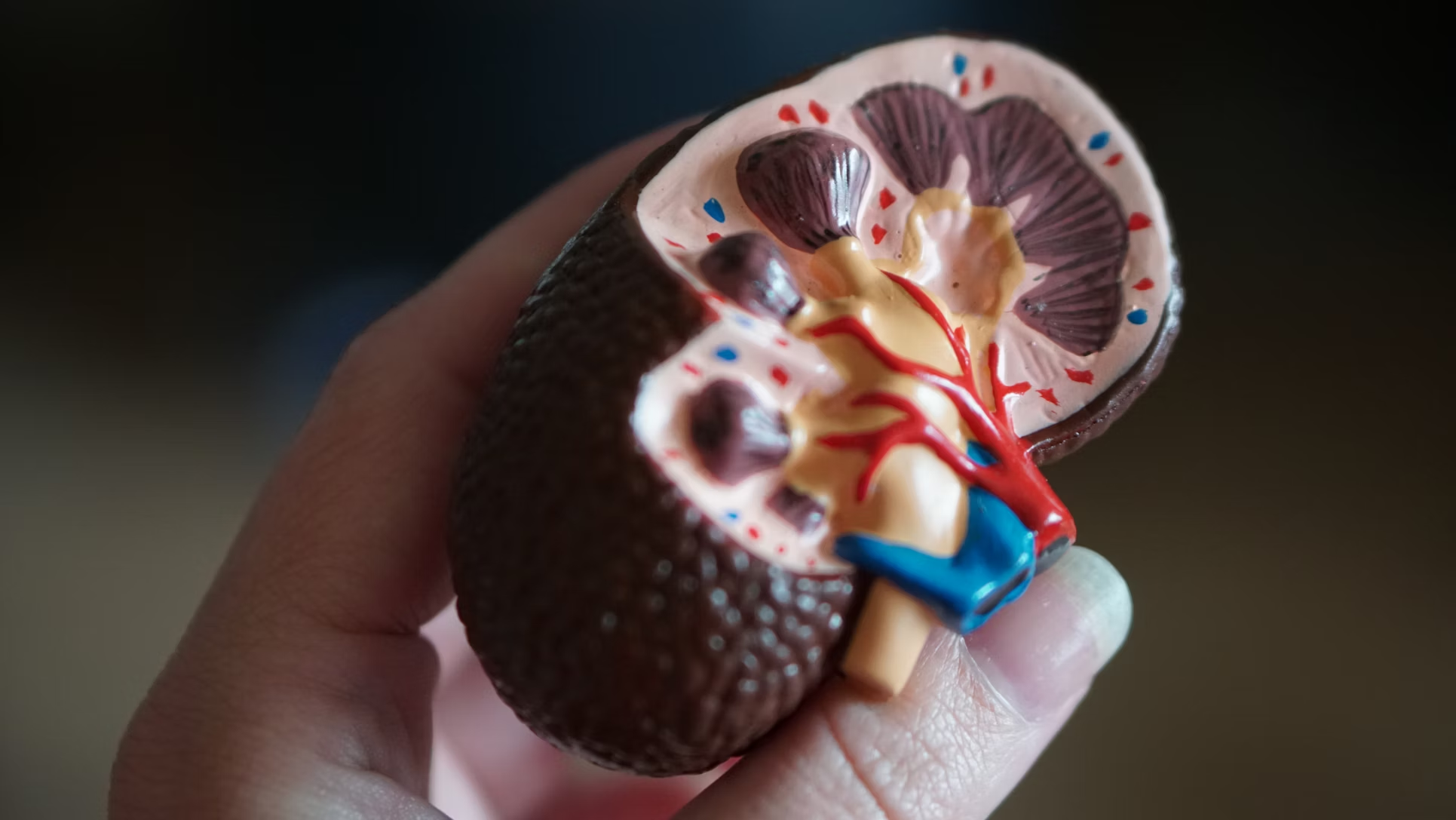
Image source: Unsplash.
Locals in the Torres Strait want homegrown doctors, but they say there are too many barriers
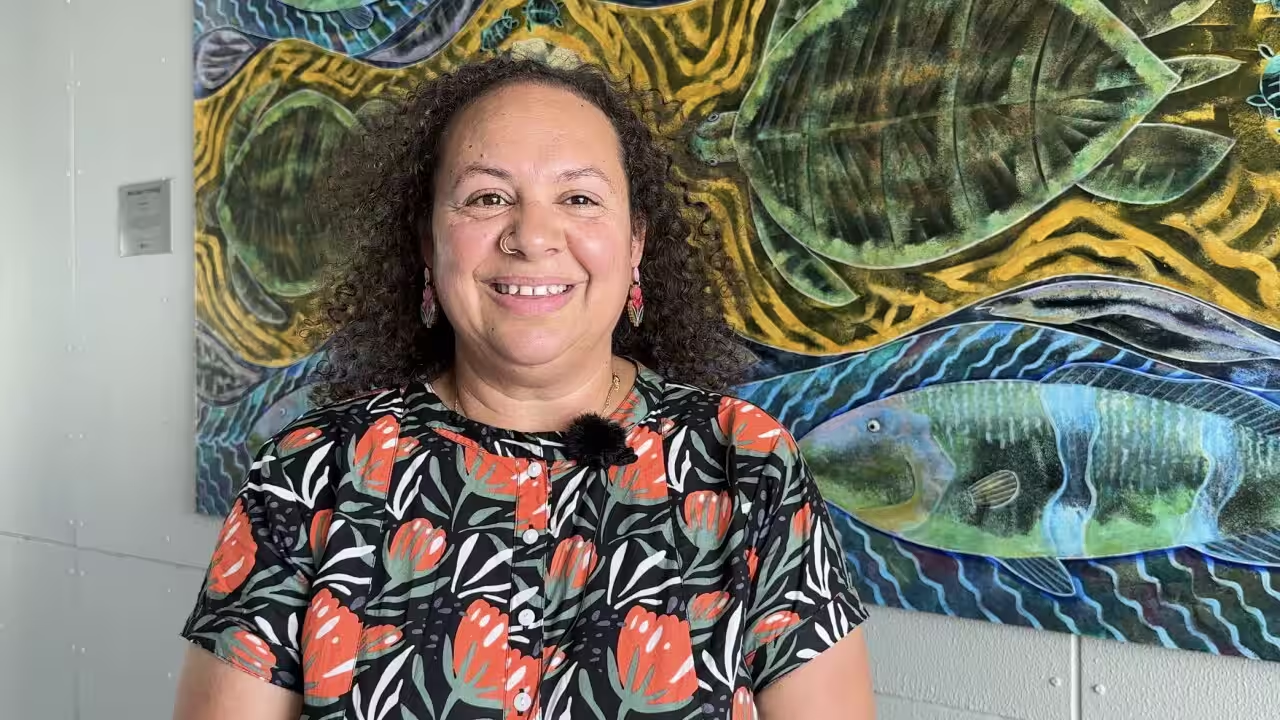
In 1999, Dr Karen Nicholls became the second ever Torres Strait Islander doctor known to graduate from university. Since then, she says there’s been a cultural shift in the health industry’s understanding of the valuable skill sets Indigenous professionals bring to the table.
“We become doctors, we become clinically good, but we can also provide cultural safety with the way in which we do things,” she said.
“…You cannot be clinically safe without being culturally safe – the two go hand in hand.”
Dr Nichols was part of a group of twenty Torres Strait Islander doctors that visited the Torres Strait last year, some connecting with their homelands for the first time. Organised by the Australian Indigenous Doctors Association (AIDA) and local Elders under the ‘Igilyawa Program’, doctors and students spent time in communities, schools, hospitals and local health services.
The report on the historic visit showed that 82% of the cohort were interested in coming home to work, and 100% were considering ways to further contribute to the health needs of Torres Strait Islanders.
AIDA CEO Donna Burns said the united voice of the doctors was powerful.
“These [doctors] expressed an interest in working back home with community, where we know the health disparity is so great,” she said.
“That cultural understanding will be so powerful in someone’s healing journey, and we are really committed to [advocating] to shake up a system.”
Read the full NITV article here.
Dr Karen Nicholls says being culturally safe means being clinically safe. Supplied: Carli Willis

Sector Jobs – you can see sector job listings on the NACCHO website here.
Advertising Jobs – to advertise a job vacancy click here to go to the NACCHO website current job listings webpage. Scroll down to the bottom of the page to find a Post A Job form. You can complete this form with your job vacancy details – it will then be approved for posting and go live on the NACCHO website.
