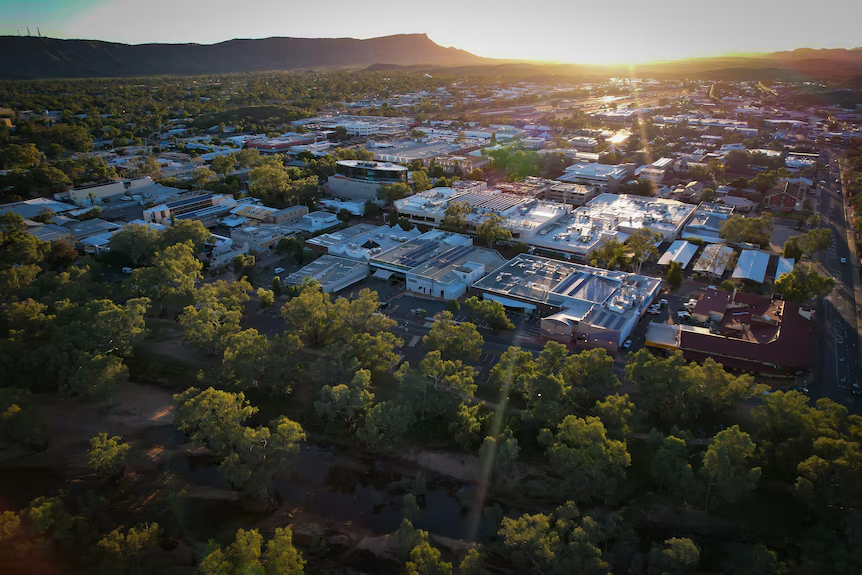
- AMSANT Remote Health Survey indicates concerning findings
- Optus, Telstra delay 3G shutdown amid emergency calling concerns
- Child and family programs funding boost for VIC ACCHOs
- Indigenous Doctors are part of the solution to the GP workforce shortage
- Innovative health solutions, a focus of Compass 2024
- Sector Jobs
- Events and training
The NACCHO Sector News is a platform we use to showcase the important work being done in Aboriginal and Torres Strait Islander health, focusing on the work of NACCHO, NACCHO members and NACCHO affiliates.
We also share a curated selection of news stories that are of likely interest to the Aboriginal and Torres Strait Islander health sector, broadly.
AMSANT Remote Health Survey indicates concerning findings
In a new survey by peak body the Aboriginal Medical Services Alliance NT (AMSANT), the majority of remote health services are reporting a lack of resources to be able to deliver safe and acceptable health care in their communities. The results come from AMSANT’s 11 member services across the territory.
The survey, which is being released ahead of the NT election on August 24, found:
- Nine services believe they don’t have the government resources to maintain safe and acceptable facilities.
- Four have already been forced to scale back services this year.
- All but three say poor housing and clinics are preventing them from recruiting and retaining staff.
Miwatj Health runs clinics in east Arnhem Land, and its chief executive Steve Rossingh says old facilities has led to services being cut and patients being treated in sub-par environments.
“GPs have been seeing patients in corridors because there’s absolutely no space,” Mr Rossingh said in regards to Miwatj’s clinic in Yirrkala.
“…We need that infrastructure to be able to deliver the sort of service which is going to provide sustainable health benefits for our clients.”
AMSANT has delivered a six-point plan to the NT’s major parties, calling for urgent audits of all remote clinics and housing, and a plan for upgrading equipment and infrastructure.
To read the ABC News article in full, go here.
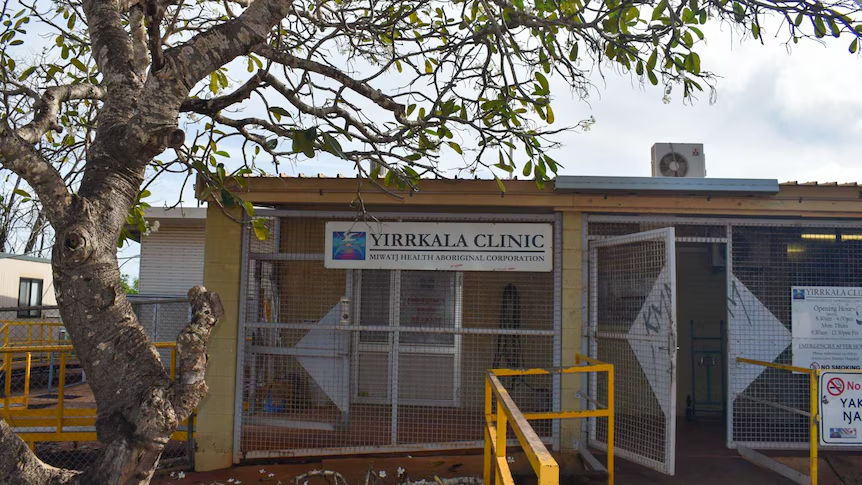
A report has revealed remote health services are lacking resources to deliver acceptable health care. Image source: ABC News.
Optus, Telstra delay 3G shutdown amid emergency calling concerns
Telstra and Optus have delayed the shutdown of their 3G networks due to concerns about emergency calling capabilities. This decision comes after a Senate inquiry and pressure from various organisations, including the National Aboriginal Community Controlled Health Organisation (NACCHO). The telcos will keep their 3G networks operational until at least October 28 to ensure that customers, including those with medical monitors and other IoT devices, have ample time to transition to newer technologies.
NACCHO’s submission warned that a shutdown would leave “Elders and their carers potentially the most vulnerable”.
“For Aboriginal and Torres Strait Islander people, disruptions to service disproportionately impacts their access to essential services including everyday consumables, healthcare, education, and emergency services,” it read.
To read the article in full, go here.

Optus and Telstra have delayed their 3G shutdown for at least two months amid rising concerns. Picture: NCA NewsWire / Diego Fedele.
Child and family programs funding boost for VIC ACCHOs
Wathaurong Aboriginal Cooperative is one of six Victorian Aboriginal-led child and family programs that have received funding boosts to help provide better access to culturally safe services. Wathaurong will receive $220,000 under the Specialist Prevention and Early Help Lead Practitioner grants and $480,000 to develop professional training and facilitate holistic practice across the Western District in family services and health services.
The funding is part of the state government’s Aboriginal Children and Families Innovation and Learning Fund and will see $2.3 million go to Aboriginal Community Controlled Organisations (ACCOs) across the state.
“We know Aboriginal people are best placed to lead the services that keep Aboriginal children and families safe and that’s exactly what these grants support,” Lizzie Blandthorn, Minister for Children said.
The six organisations announced by Ms Blandthorn at the Aboriginal Children’s Forum on Thursday August 15 are Gunditjmara Aboriginal Cooperative, Njernda Aboriginal Corporation, Rumbalara Aboriginal Cooperative, Victorian Aboriginal Child Care Agency, Wathaurong Aboriginal Co-Op and Victorian Aboriginal Children and Young People’s Alliance.
To read the article in full, go here.

Wathaurong Aboriginal Cooperative is one of six organisations receiving the funding.
Indigenous Doctors are part of the solution to the GP workforce shortage
The Department of Health and Aged Care’s GP workforce report has confirmed what many in the health sector already knew: Australia is facing a significant shortage of General Practitioners. The Australian Indigenous Doctors’ Association (AIDA) is highlighting the critical role that First Nations doctors play in addressing this workforce shortage.
“The Indigenous Medical Workforce is an important part of the workforce, and part of the solution. We know that 48% of Aboriginal and Torres Strait Islander doctors in training have chosen the route to become GPs or rural generalists with RACGP or ACRRM,” said Donna Burns, AIDA CEO.
“The Indigenous medical workforce is powerful for all of Australia. Indigenous doctors bring unique perspectives, cultural understanding, plus the ability to provide culturally safe care to Indigenous patients. By creating pathways for Indigenous students to become GPs, we can address the workforce shortage for all Australians, while also improving health outcomes for Indigenous communities.”
AIDA calls on the government to prioritise funding and resources to support Indigenous medical students and doctors in training, and to implement strategies that promote diversity and inclusion in the medical workforce.
To read the AIDA media release in full, go here.

Australian Indigenous Doctors’ Association stethoscope.
Innovative health solutions, a focus of Compass 2024
A gathering of healthcare experts from across the NT will address ongoing disparities in the sector for Indigenous communities. Compass 2024 is the NT’s leading professional development and networking event and a critical platform to discuss and then develop community-led health programs that meet the needs of Indigenous communities.
Event host Northern Territory Primary Health Network said more than 25 exhibitor booths and 400 healthcare professionals from fields such as nursing and Aboriginal health would attend.
Darcy Godden, the network’s executive manager of Aboriginal and Torres Strait Islander Health and a proud Kamilaroi and Wonnarua man, said Compass 2024 was an opportunity for the sector’s leading minds to collaborate and create innovative solutions to close the gap in health outcomes.
“It is essential that we centre our discussions on the unique health challenges faced by Aboriginal and Torres Strait Islander peoples in the Territory,” he said.
“Our collective goal should be to develop and implement culturally safe, community-led primary health programs that meet the needs of community – determined by community.”
Compass 2024 is on August 16-17 at the Darwin Convention Centre and includes the RACGP sponsored 2024 Health Professional of the Year Awards.
To register, go here.
To read the National Indigenous Times article in full, go here.

Image source: Compass2024

Sector Jobs – you can see sector job listings on the NACCHO website here.
Advertising Jobs – to advertise a job vacancy click here to go to the NACCHO website current job listings webpage. Scroll down to the bottom of the page to find a Post A Job form. You can complete this form with your job vacancy details – it will then be approved for posting and go live on the NACCHO website.

ACCHO Governance Workshops
Free, specialised governance workshops for ACCHOs will be delivered in multiple locations across the country during 2024 and 2025.
Registrations are now open for:
-
Port Macquarie: 20-21 August
-
Dubbo: 22-23 August.
The program is delivered by legal experts and covers:
- Delegation of powers
- Finance for Boards
- Governance documents
- Managing conflicts of interest
- Managing risk
- Principles of good governance
- Structure and role of boards and sub-committees
To register, go here.
For more information, please contact NACCHO using this email link.